Deploying a token in 2026 is close to a solved problem. A native standard from a major chain now lets you create one in a few commands, so the technical act of minting a token has collapsed to near zero effort. That collapse moved the hard part somewhere else. The scarce, launch-defining work is no longer the contract, it is the launch video: the sixty seconds that make a stranger care about your token and trust it enough to take an on-chain action. A token launch video is the narrative the whole market prices you on, in real time, at a token generation event, a mainnet launch, or an airdrop reveal. This is the playbook for making one that converts, not one that just trends for an afternoon and then dumps.
The short version
A token launch video is the narrative the whole market prices you on, and in 2026 it matters more than the contract, because deploying the token is now a few commands and the scarce work is making anyone care and trust it. The launch video for a TGE, mainnet, or airdrop has one job that a SaaS launch video does not: it has to convert attention into an on-chain action (allowlist, waitlist, claim, hold) from the right audience, not the biggest one, while staying on the safe side of a securities-and-hype line that can turn a launch into a rug narrative overnight. This playbook covers the five-beat narrative arc that works, what actually converts, the distribution stack across Crypto Twitter, YouTube, and Telegram, the compliance-hype balance, what it costs, and how to time it around TGE day. The recurring failure mode is loud: six of ten hyped 2025 TGEs closed below their launch price, and per Messari 72% of tokens launched since 2021 are down more than 90%, because most launch videos recruit flippers who dump in week one. Brief the video to recruit users, engineer the distribution, and price the launch on watched conversions, not on views. FORKOFF runs production and reach as one system, backed by a clipping network that has processed 5B+ views.
Operator noteDeploying the token is a few commands now. The scarce work is the sixty seconds that make anyone care about it and trust it.
The stakes are higher than most founders treat them. A SaaS launch video that underperforms costs you a slow quarter. A token launch video that recruits the wrong audience manufactures its own collapse, because the people a hype trailer attracts are the people who sell into the first green candle. So this guide is built around one idea: the launch video is a recruiting tool, and who it recruits matters more than how many it reaches. If you want the general craft of launch films across every category, the 2026 launch video playbook covers it. This guide stays inside crypto, where the rules are different.
What is a token launch video, and how is it different from a SaaS launch video?
A token launch video is the short film a project ships to introduce its token, and its defining feature is that it has to convert attention into an on-chain action from the right audience, not just explain a product. A SaaS launch video sells a signup that a slow funnel can catch later. A token launch video sells an allowlist spot, a claim, a bridge, or a hold in a compressed window with no always-on funnel behind it. It is also the artifact the market uses to judge the project, so it is scored for trust as much as for clarity. That double job, convert now and earn trust now, is what makes it its own craft.
The three launch moments look similar and are not the same job. A TGE video has to establish the thesis and the token mechanism fast, before anyone has context. A mainnet video has to prove the thing is live and working on-chain, which is a show-don't-tell problem. An airdrop reveal video has one job above all others: remove every ounce of ambiguity from eligibility and the claim window, because a confused holder is a lost claim.
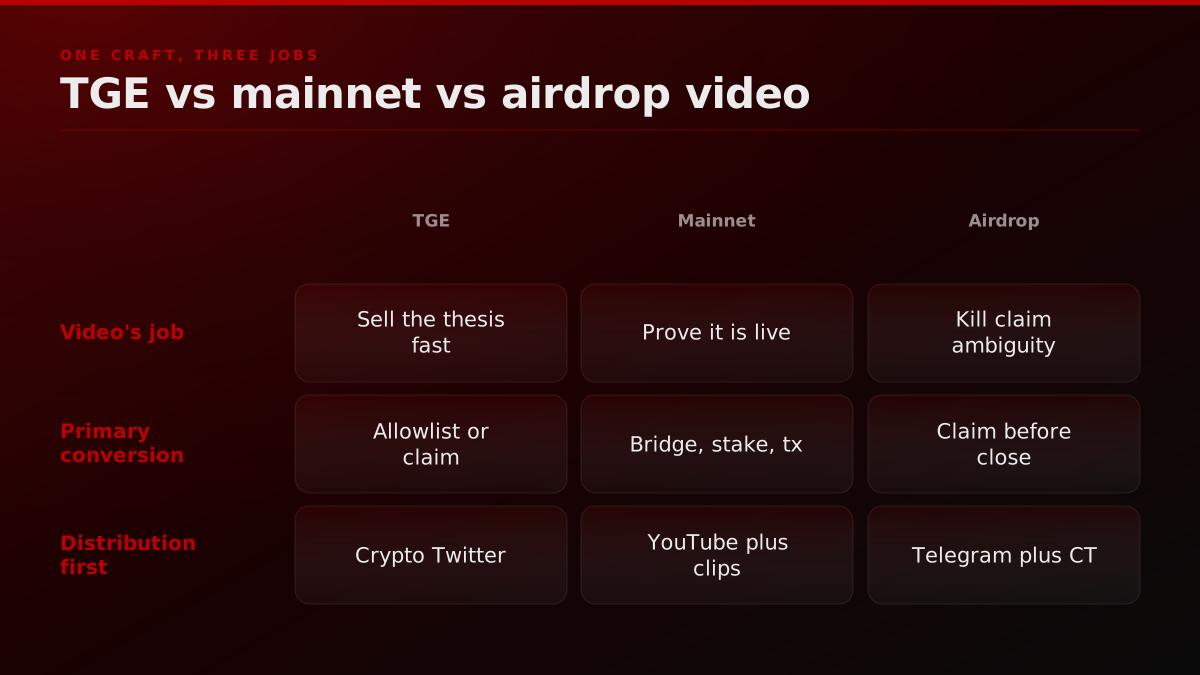
Get the mapping wrong and you ship one generic hype trailer for all three, which is the most common and most expensive mistake in the category. The video that trends is not automatically the video that fills the allowlist, and the two are briefed differently. If your token launch is one part of a broader go-to-market motion, the web3 go-to-market playbook frames where the video sits in the wider sequence.
The launch structure itself also shapes the video. A fair launch, a presale or IDO, and a points-then-airdrop program each ask the viewer for a different action and set a different expectation, so the video cannot be structure-agnostic. The tokenomics and legal scaffolding around those choices are a separate discipline, well covered by a16z's token launch playbook, and this guide assumes you have that handled. What it does not cover, and what almost no resource covers, is the video itself. The historically strongest launches, catalogued by onchain.org, share a clear mechanism and a distribution model, not a louder trailer, and as third.academy notes, the launch type is what should shape the marketing around it. The video is where that mechanism gets made legible to a stranger in under a minute.
One more distinction is worth spending a sentence on, because it trips up first-time buyers and the video has to preempt it: the difference between a coin and a token, explained cleanly by CoinGecko, is not obvious to the newcomers a launch is trying to convert. A launch video that assumes fluency loses the exact audience that could grow the holder base. Assume nothing, and let the mechanism beat carry the education.
The token launch video, mapped to the three launch moments
| Launch moment | What the video must do | Primary conversion | Distribution priority |
|---|---|---|---|
| TGE (token generation event) | Establish the thesis and token mechanism fast | Allowlist or claim registration | Crypto Twitter first, then Telegram |
| Mainnet launch | Prove it is live and working on-chain | Bridge, stake, or first transaction | YouTube and CT clips, then Telegram |
| Airdrop reveal | Explain eligibility and the claim window | Claim before the window closes | Telegram and CT, near real-time |
The three moments share a craft but not a job. The most common mistake is shipping one generic hype trailer for all three instead of matching the video to the on-chain action it is meant to trigger.
Why is the launch video the narrative the whole market prices you on?
Because in a token launch the video is the most-shared artifact of the entire event, and it becomes the story people keep. The market does not read your smart contract. It watches your sixty seconds, screenshots the strongest frame, quotes the boldest claim, and decides in public whether you are credible. That verdict is priced into the token almost immediately. When deployment is trivial, the narrative is the only thing left to differentiate on, and the narrative lives in the video. Base's own documentation walks a developer through creating a token in a few commands, which is exactly why the sixty seconds of narrative, not the deploy, is now the part that separates one launch from the next.
Base Build
@buildonbase
The B20 Native Token Standard is live on Base mainnet. Launching a token on it takes a few commands with Base's Foundry build (base-forge, base-cast). Start here: https://docs.base.org/get-started/launch-b20-token
The clearest recent proof of the video-as-narrative point was a launch nobody would call a success. When a former New York City mayor launched a personal coin, the announcement video, not the contract, became the artifact everyone shared, and when the liquidity was pulled shortly after, that same video became the permanent record of the event. The lesson is not about memecoins. It is that your launch video is the story the market keeps, so it had better be a story you can stand behind six months later.
Former NYC Mayor Eric Adams rugs his own memecoin just 30 minutes after launch and pockets over $2.5M
There is a reason audiences have grown skeptical of the standard launch pitch. A veteran who has spent years inside serious crypto companies described the gap between the promise a launch sells and what actually ships, and that gap is now the default assumption of the audience you are pitching to. They discount the polish. What they cannot discount is verifiable substance, which is exactly the raw material a good launch video should be built from.
I've worked in crypto for 8 years (Circle, Messari, Coinbase, Crossmint). Long post on how its all played out, and how different it is from what we expected.
What narrative arc actually works for a token launch?
The arc that converts is a five-beat argument, not a montage. Beat one is a cold open that stops the scroll in under two seconds, because Crypto Twitter kills anything that asks for patience. Beat two is the problem the token exists to solve, stated in plain language a non-insider understands. Beat three is the mechanism, the specific reason this token is necessary rather than decorative, which is the beat most projects skip and the one that separates a real launch from a shill. Beat four is on-chain proof that the thing is live and real. Beat five is a single, unambiguous ask tied to one action.
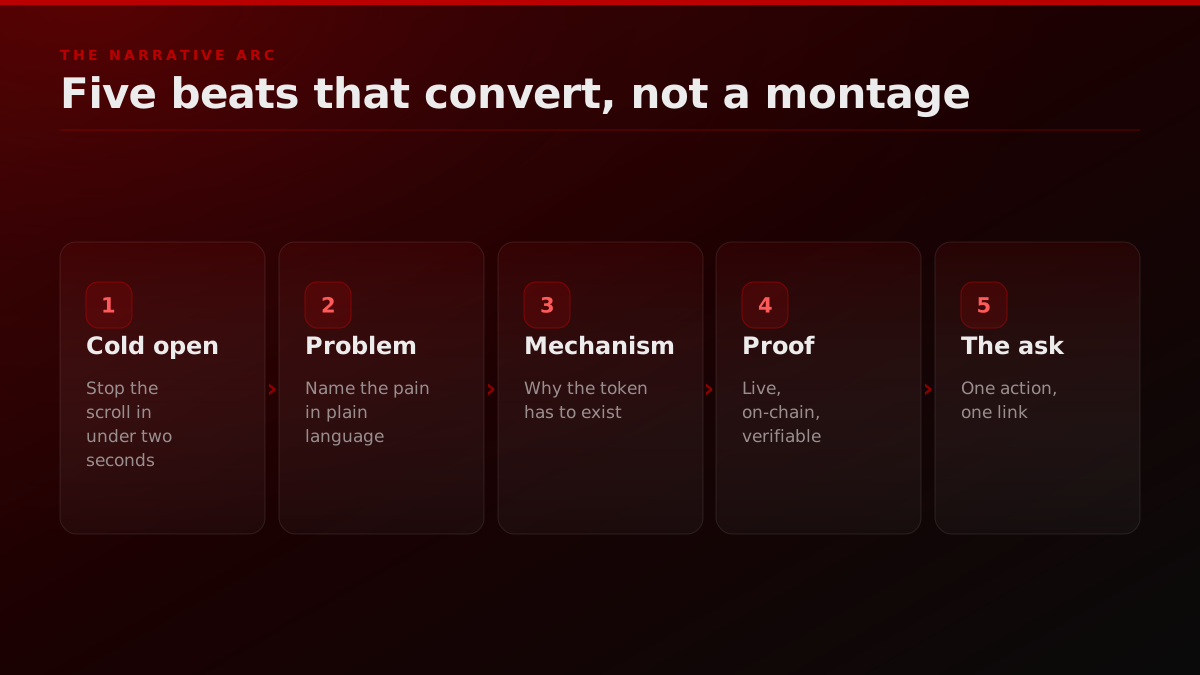
Most launch videos fail at beats three and four. They spend the whole runtime on beat one, an aesthetic hype reel, and never explain why the token matters or prove that anything works. That is the flashy-trailer-and-then-silence pattern that experienced builders now recognize on sight. A token that outlives its trailer needs the trailer to make an argument, not just a mood. The anatomy of a launch video that crosses a million views breaks down how the winning ones structure that argument frame by frame.
Most of the token launches today are not optimized for sustainability but optimized for hype. That's how you get people involved. But hype lasts until it doesn't.
Walk the beats concretely. The cold open is a single frame or line that earns the next two seconds, usually a sharp claim, a live number, or a visual that does not look like every other launch. The problem beat names a real pain in the words your non-crypto cousin would use, because clarity reads as confidence and jargon reads as hiding. The mechanism beat is the hinge: it answers why this needs a token at all, what the token does inside the system, and why the design is not just a fundraising wrapper. The proof beat shows, on-chain, that the product is live, the audit exists, the team is real, or the traction is measurable, because a claim you can verify is worth ten you cannot. The ask beat gives one action and one link, framed so a stranger completes it before the tab loses focus.
The discipline is to write the mechanism beat first, then build the cold open to earn attention for it. If you cannot articulate in one sentence why the token has to exist, the video will not survive contact with a skeptical timeline, no matter how good the motion design is. This is also where a strong hook library pays off, and the anatomy breakdown is the fastest way to study the openings that actually stop the scroll.
What makes a token launch video convert to allowlist, waitlist, or community, not just views?
Conversion comes from treating the view as the bottom of a ladder, not the top. A view is worthless if it does not move the viewer one rung up: from watching to following, from following to joining an allowlist or a Telegram, from joining to holding, from holding to staying. The video earns each rung by making the next action small, obvious, and worth it. The single ask has to be one on-chain action, framed so a stranger can complete it in under a minute, with a link that survives being screenshotted and re-shared across feeds you do not control.
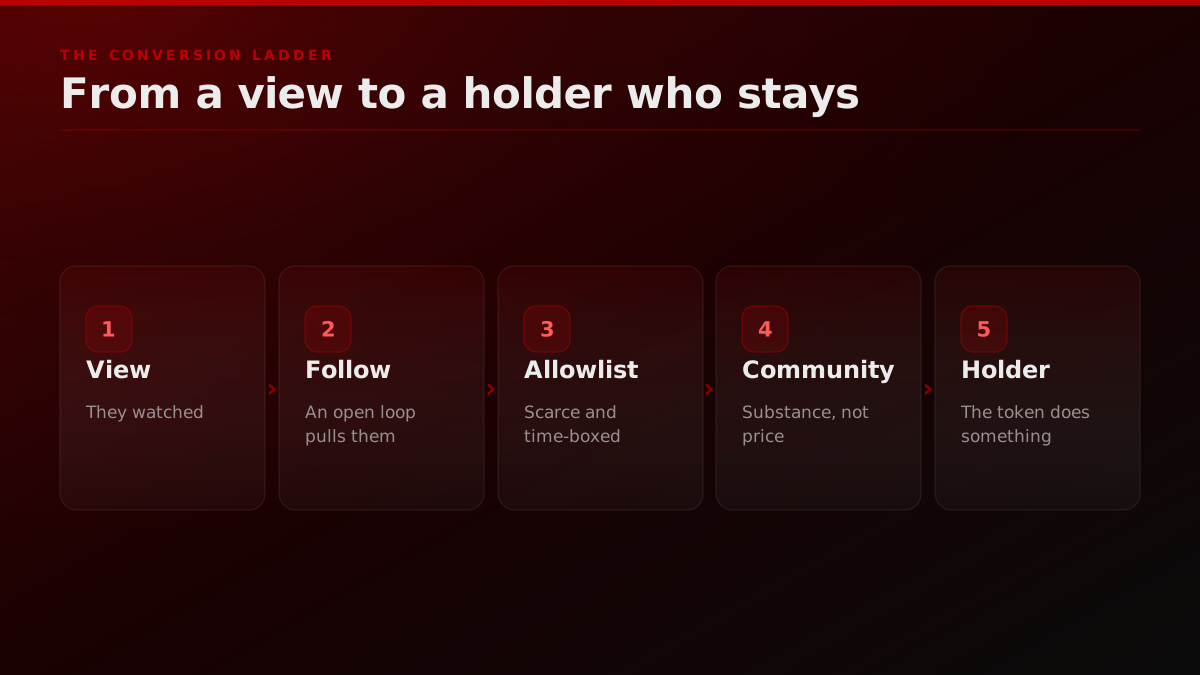
Each rung needs its own reason to climb. Watching to following happens when the video leaves one open loop the account will resolve, a promised drop, a reveal, a build in progress. Following to joining happens when the allowlist or claim is framed as scarce and time-boxed, not perpetual, so acting now beats acting later. Joining to holding happens when the community channel delivers on the video's promise in the first day, with product substance rather than price cheerleading. Holding to staying happens when the token does something, so the wallet has a reason to remain past the unlock. Skip a rung and the audience falls off, which is why a video that only maximizes the top rung, the view, so often converts nothing below it.
The audience you recruit at this step decides the whole trajectory. Recruit flippers with a price-focused pitch and you buy the exact chart that follows most launches. Recruit users and builders with a substance-focused pitch and you buy a community that absorbs sell pressure instead of creating it. This is where the video does its real work, and it is why the token generation event marketing job is a conversion problem, not a views problem. If your model leans on creators to carry the message, vet them the way the crypto KOL vetting guide lays out, because the wrong KOL delivers the wrong audience at scale.
The trajectory point is not a hunch. In the Arrakis Finance study Coin Bureau summarized, early relative strength was the single most predictive signal: tokens that outperformed in the first couple of weeks kept pulling ahead, and the ones that stumbled out of the gate almost never recovered. Your launch video is the biggest lever you have on those first days, which is why the audience it recruits is the whole game.
Tokens that beat BTC in their first couple of weeks trading tend to keep pulling ahead, while those that stumbled out of the gate almost never made up the ground. The single most useful signal in the whole report is early relative strength.
How do you distribute a token launch video across Crypto Twitter, YouTube, and Telegram?
You distribute it by treating the hero film as a source asset and the reach as a separate, funded job with a channel-by-channel sequence. Crypto Twitter goes first, because that is where the launch narrative gets priced, and it wants native cuts of 10 to 30 seconds with a hook in the first two seconds, plus a pinned thread that carries the full argument. YouTube goes next for the believers who want depth, where a longer explainer earns holders rather than traders. Telegram runs the community layer, near real time, where the video converts followers into the group that actually holds. Each channel gets a different cut, never the same file reposted.
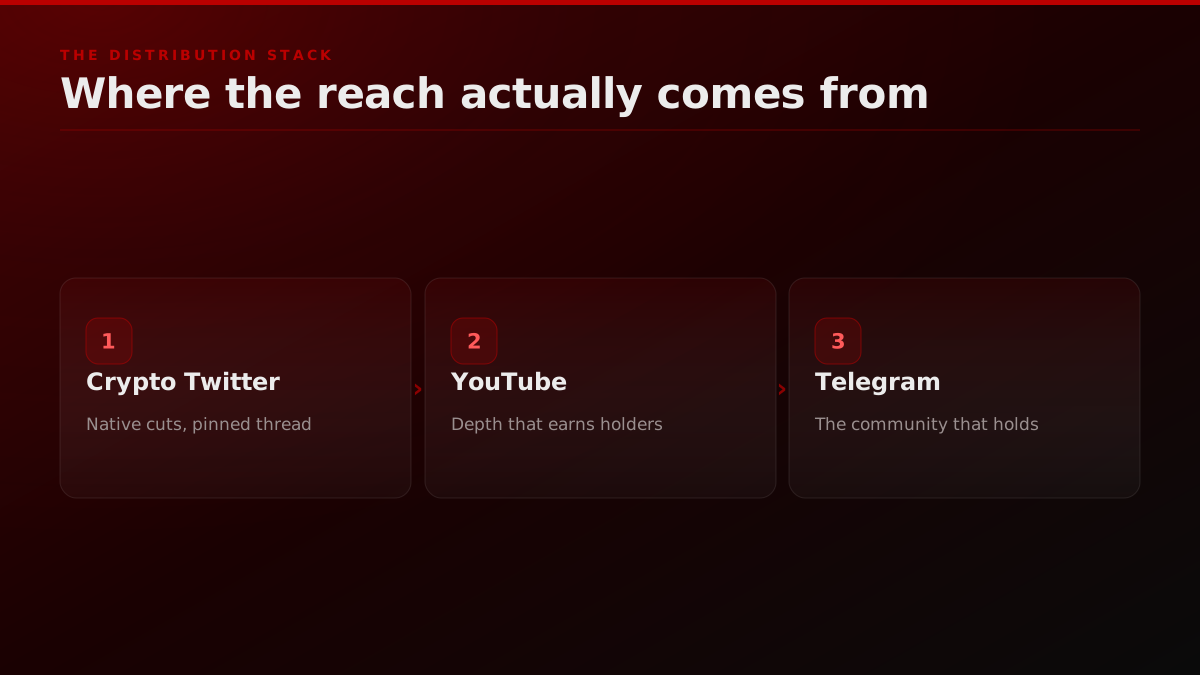
Get specific per channel. On Crypto Twitter, the launch account should be warm for weeks before TGE day, the reveal should be a native video and not a YouTube link that kills the autoplay, and the pinned thread should carry the mechanism argument in text for the people who read before they buy. On YouTube, a longer explainer earns the holders who want to understand the design, and it is the asset that keeps working long after the launch window closes. On Telegram, the video is the pinned welcome that greets every new member, so the first thing a joiner sees is the argument, not a wall of price chatter. The clips that carry the reach are cut to each surface, vertical where the feed is vertical, captioned because most watch on mute, and hooked in the first two seconds because that is where the platform decides your fate.
The mistake that kills more launches than any production flaw is spending the entire budget on the film and nothing on getting it watched. A platform decides whether to show your video at ingestion, on early watch velocity and retention, before any real audience sees it, so a flawless film with no distribution plan never even reaches the test. This is the distribution gap that sinks most launch videos, and it is why reach has to be a line item, not an afterthought.
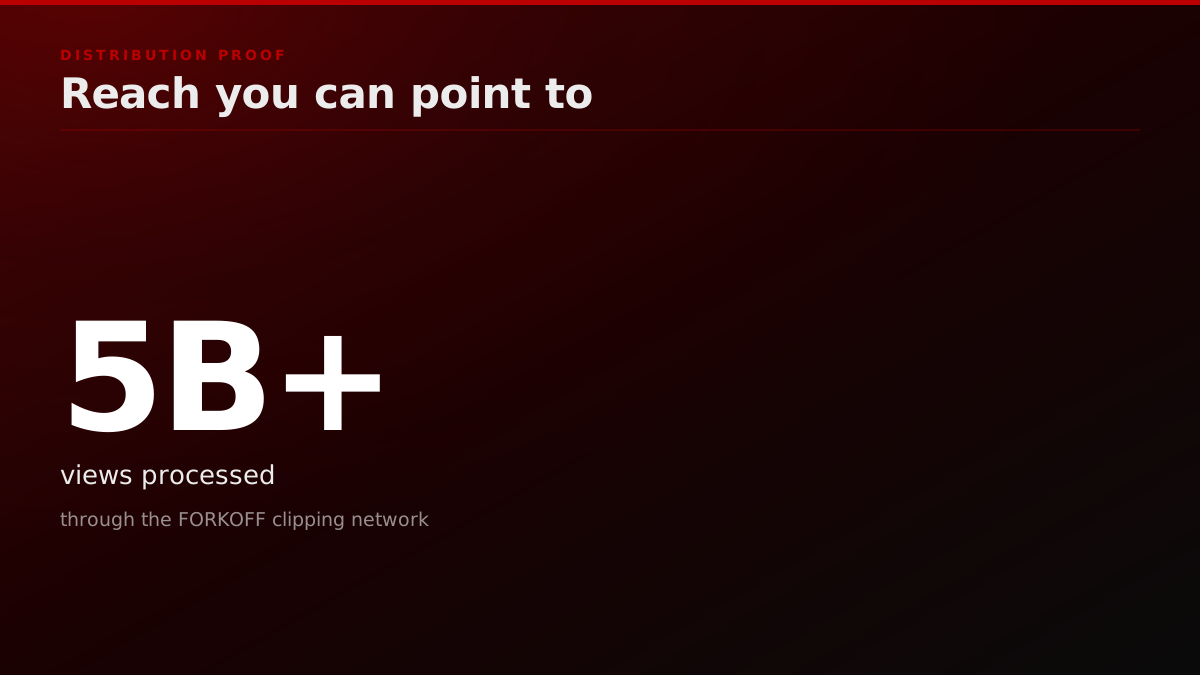
Reach at launch scale is a manufactured outcome, not a lucky one. It comes from native cuts multiplied across accounts and feeds you do not own, which is what a clipping network does, and it is why FORKOFF measures a launch in watched views rather than raw impressions. The clipping network behind FORKOFF has processed 5B+ views, which is the distribution proof no template intro carries. Pair that with targeted crypto KOL placement, Reddit distribution where the thesis can be argued at length, and Twitter growth that keeps the account warm before the launch, and the video reaches the right feeds at the right moment.
Operator note5B+ views processed through the FORKOFF clipping network is distribution proof no template intro or opinion video carries.
Before you commit spend, model the reach honestly. Most launch decks quote a follower count and call it distribution, which is not the same as watched views by people who could hold. Pressure-test the number the way the sibling guide on getting a launch video to 100k views recommends, so you plan on conversions, not on a vanity metric.
How do you balance hype and compliance in a token launch video?
You balance it by replacing promises with proof. Every claim in the video should be verifiable, present tense, and on-chain where possible: what is live, what is audited, who is building, what the token actually does. The moment the video promises a price, guarantees a yield, or frames the token as an investment that will go up, you have created two problems at once. The first is legal exposure, because that language pushes the token toward looking like a securities offering. The second is worse for the launch itself: unfalsifiable price talk recruits the mercenary audience that dumps into the first rally.
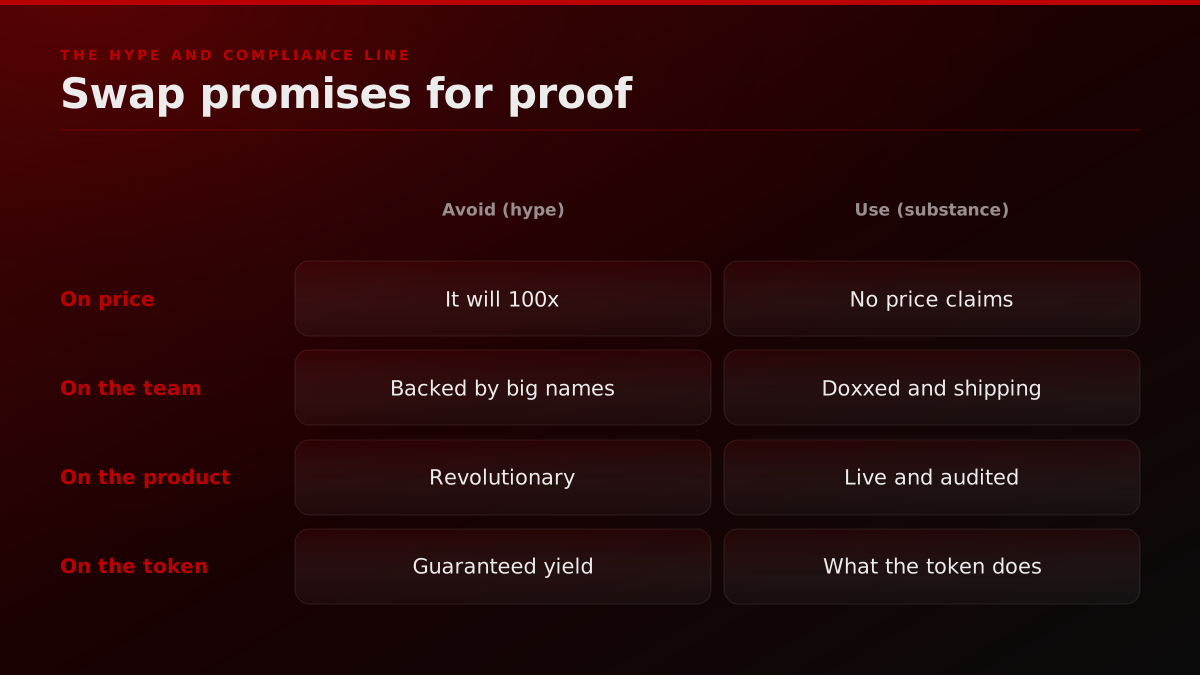
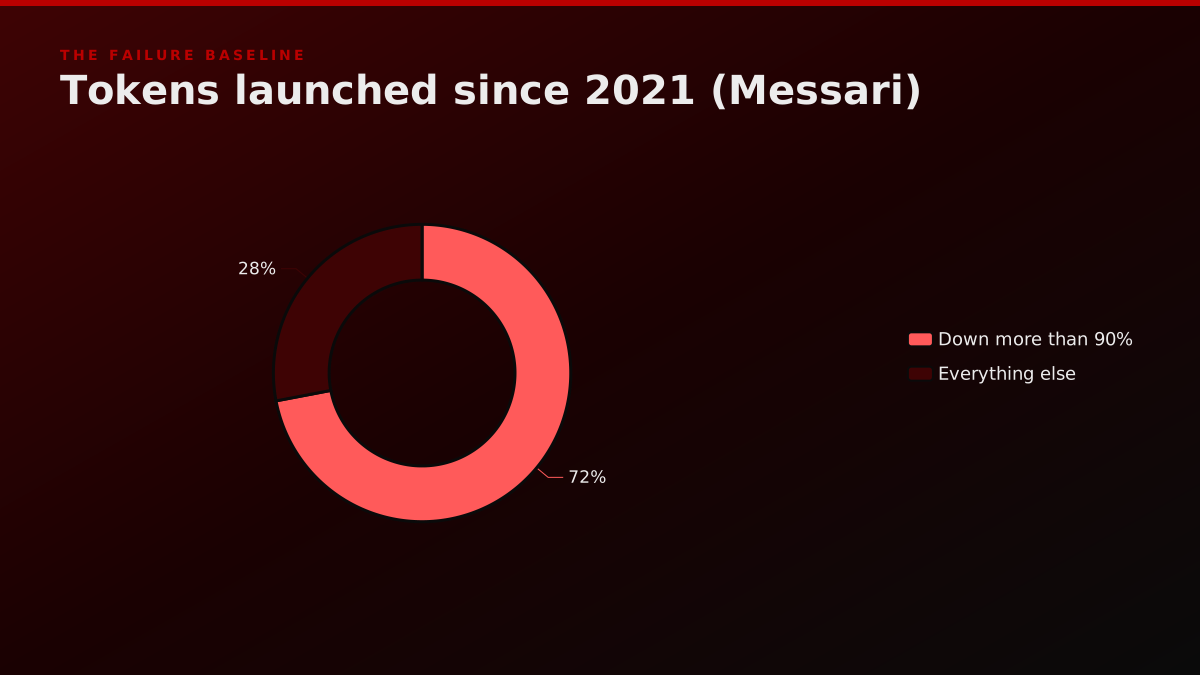
The data on why this matters is brutal. Six of ten hyped 2025 launches closed below their launch price, and per Messari 72% of tokens launched since 2021 are down more than 90%, with only 8% still active a year later. A launch video optimized for hype is optimized for exactly that outcome, because it selects for the wrong holders. Presale buyers already tend to dump an estimated 40 to 60% of supply within two weeks of a TGE, a pattern Mário Alves highlights from on-chain launch data, so the last thing the video should do is add more sellers to the top of the book.
The breakdown of which launches survived and which cratered is worth watching in full, because the pattern is consistent enough to design around rather than hope against.
The Secrets Behind the Token Launches That Took Off
Coin Bureau
Coin Bureau breaking down why six of ten hyped 2025 launches fell below their launch price. The pattern that separated winners from losers is the one your launch video has to design for.
Most hyped token launches are underwater within months
A Coin Bureau breakdown of an Arrakis Finance report on the ten biggest, most hyped token launches from January to May 2025 found that six of the ten closed the study period below their launch price, only four finished in the green, and only three beat Bitcoin over the same window. Zoom out and it gets worse: per Messari, 72% of tokens launched since 2021 have lost more than 90% of their value, and only 8% of those projects were still active twelve months after launch. A launch video that manufactures a spike of mercenary attention is buying the exact audience that produces this chart.
Source: Coin Bureau summary of Arrakis Finance H1-2025 launch report; Messari, cited by Mário Alves (Garden)
The projects that last make the video deliberately boring on price and specific on substance. That is not a compliance tax, it is a recruiting advantage, because the audience that responds to substance is the audience that holds. If your launch touches an airdrop, get the eligibility and claim mechanics exactly right, the way the airdrop marketing playbook details, since ambiguity there is both a trust problem and a support nightmare.
What does a token launch video cost, and which tier do you need?
Production alone spans from under 1,000 dollars for a founder-shot reveal to 40,000 dollars and up for a flagship launch film, and the right tier is the cheapest one that lets the mechanism beat land with credibility. A fast airdrop reveal often needs nothing more than a founder, a screen recording, and one strong take. A funded mainnet with a real narrative earns a boutique live-action budget. A marquee L1 or L2 that has to define a category can justify a flagship film. What almost never changes across tiers is that the production number is production only.
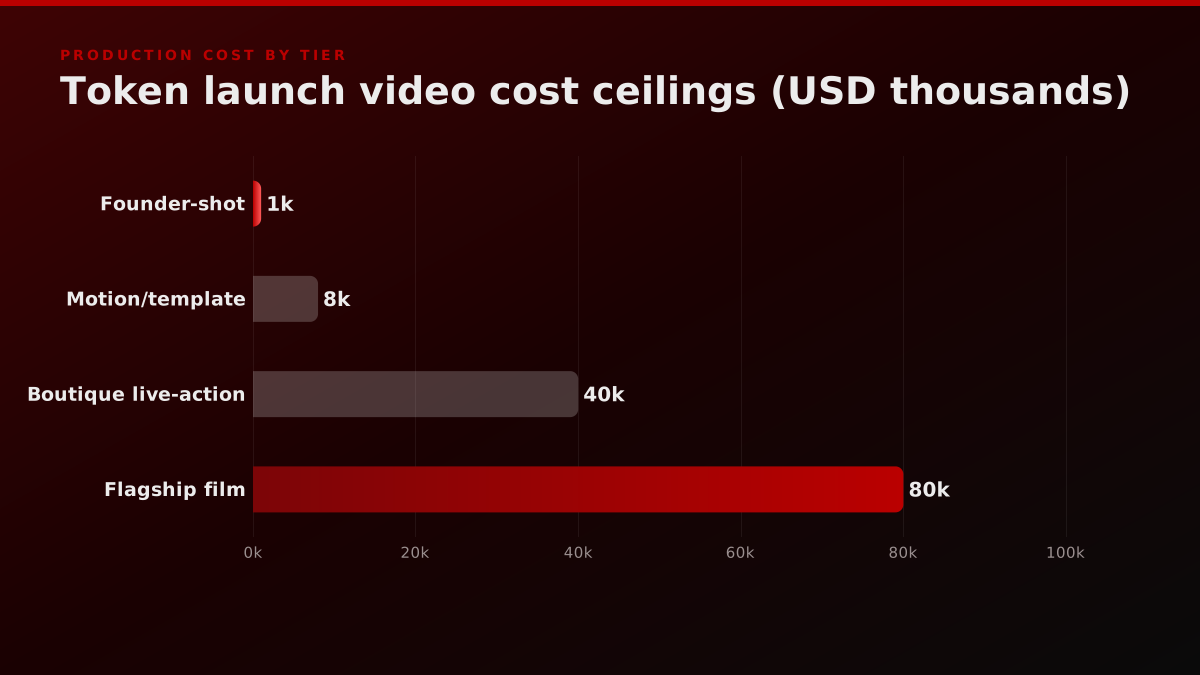
Token launch video cost by production tier in 2026 (directional bands)
| Tier | Typical cost | What you get | Right for |
|---|---|---|---|
| Founder-shot | Under 1,000 dollars | Phone, screen capture, one strong take | Pre-seed, fast airdrop reveal, a genuine face |
| Motion and template | 1,000 to 8,000 dollars | Kinetic type, logo animation, licensed music | A clean TGE explainer on a tight timeline |
| Boutique live-action | 8,000 to 40,000 dollars | Concept, shoot, edit, sound design | A funded mainnet with a real narrative |
| Flagship film | 40,000 dollars and up | Original concept, crew, VFX, score | A marquee L1 or L2 that must define a category |
Directional 2026 production bands. Every number here is production only. None of it includes the distribution spend that decides whether the video is watched, which is the recurring blind spot.
The trap is treating the production quote as the launch budget. Video demand is settled, with Wyzowl reporting that 91% of businesses now use video, so competent production is cheap and abundant, which means the file is not where the scarcity is. The reach is. Teams get this backwards at scale, and Wistia's 2026 State of Video found that most spend more time creating video than promoting it, so the money follows the time straight into the file. For the full cost picture across launch types, the sibling breakdown of what a launch video costs sets the production bands, and the best launch video agencies ranking shows why the ones that own distribution are scored differently. The right way to think about the split is simple: whatever you spend on the file, plan to spend at least as much again on getting it watched.
Teams over-invest in making the video and under-invest in moving it
Wistia's 2026 State of Video, built on a survey of more than 900 professionals and an analysis of over 13 million videos, found that 57% of teams spend more time creating videos than promoting them, only 20% spend more time promoting, and 23% split the two evenly. In a token launch that imbalance is fatal, because a launch video reaches its audience in a compressed window and there is no always-on funnel to catch a strong asset that nobody distributed. The budget follows the effort, so most of the money pools on the file and almost none on the reach that decides whether the file is seen.
Source: Wistia, State of Video Report 2026
How do you time the token launch video around TGE day?
You time it as a three-part sequence, not a single drop. A teaser goes out before TGE day to build the list and warm the audience, so the launch is not shouting into a cold timeline. The reveal goes out on the block, tied to the exact moment the token or claim is live, so the video and the on-chain action are one motion. The recap goes out the moment the first believers show up, capturing the momentum and social proof, because early relative strength compounds and a good recap feeds the next wave. Miss the sequence and you spend your best asset on an audience that is not ready to act.
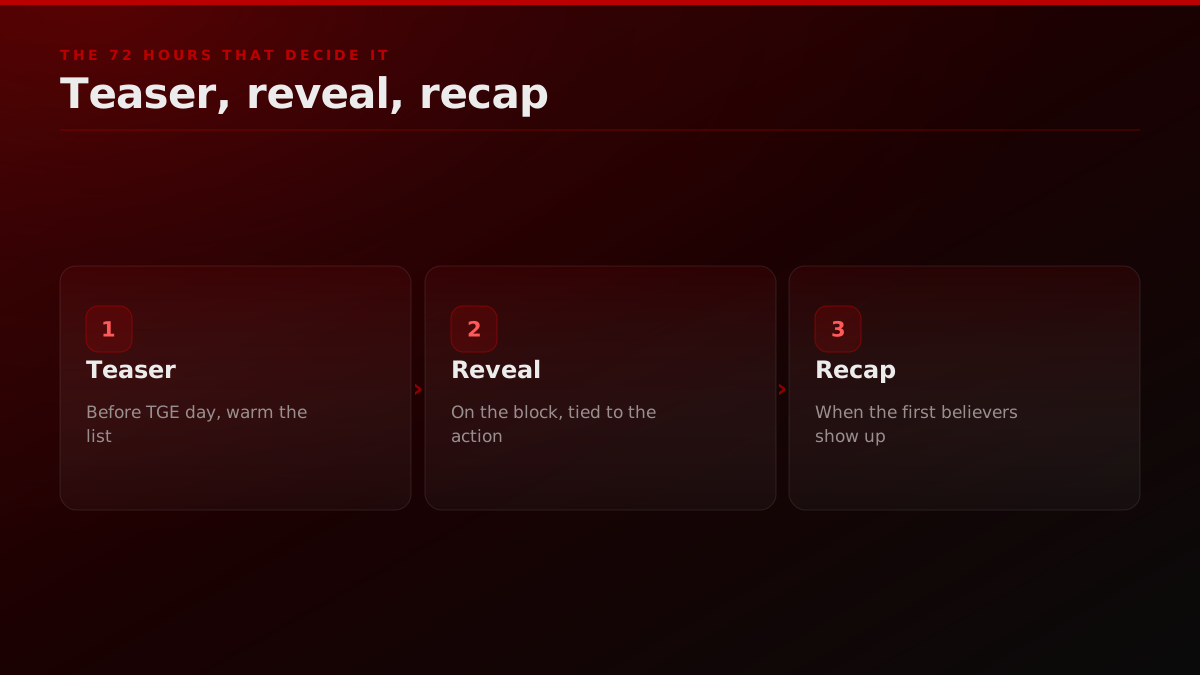
The first 72 hours are the window that decides the trajectory, and the video is your biggest lever inside it. This is where the distribution wave earns its keep: the hero film seeds the narrative, the native cuts multiply it across feeds, and the recap converts the spike into a standing community. Pre-warming the account and the community in the weeks before, the way a crypto founder go-to-market motion should, is what turns TGE day from a cold start into a compounding one.
Timing also interacts with where your audience actually lives. If your distribution leans on emerging on-chain social surfaces, the Farcaster distribution guide covers those channels, and if you want your launch to be found by AI answer engines that crypto buyers increasingly ask, the GEO for crypto and web3 guide covers that surface.
How do you measure whether a token launch video worked?
You measure it on conversions and holder quality, not on the view count, because views are the input and the on-chain action is the output. The metrics that matter are allowlist or claim registrations attributable to the video, the follow-to-join rate on the channels it ran on, the share and quote velocity in the first hours, and, after launch, the retention of the wallets it recruited. A video with a million views and a few hundred qualified registrations underperformed a video with fifty thousand views and thousands of them. The reach side of that read, whether a launch earned its views or bought them, is what RADAR tracks across real launches. The number to watch is not who saw it, it is who acted and then stayed.
This is why FORKOFF measures a launch in watched views and downstream actions rather than raw impressions, and why it prices reach per qualified view: to separate the promised reach from the reach that is genuinely watched by people who could hold. Set the success threshold before launch, in registrations and retained wallets, so the post-mortem is honest. A launch judged only on the view count will always look better than it performed, and that self-deception is how a team ships the same hype video twice.
The early signal is the most useful one, and it is available within hours. If the video is converting the right audience, the first cohort of holders looks like users and builders, the community channel fills with product questions rather than price questions, and the wallets that claim are not the same wallets that flip every launch. If instead the early holders are known mercenary addresses and every message is about price, the video recruited the wrong crowd, and no amount of additional reach fixes that. Read the first cohort, not the first view count.
What are the most common token launch video mistakes?
The most common mistakes are all versions of one error: optimizing the video for attention instead of for the right conversion. Projects ship a hype reel with no mechanism beat, so nobody understands why the token exists. They promise price instead of proving substance, so they recruit sellers. They ship one generic video for the TGE, the mainnet, and the airdrop instead of matching each to its on-chain action. They spend the whole budget on the film and nothing on reach. And they treat the launch as a single drop instead of a teaser, reveal, and recap sequence.
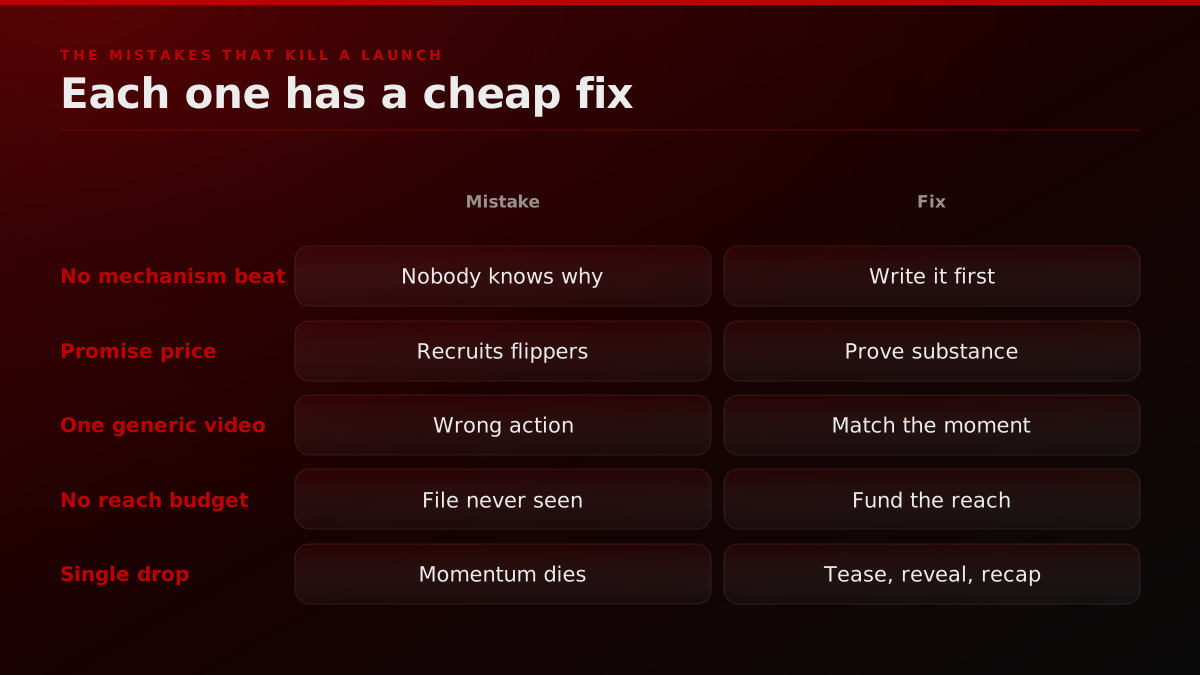
Every one of these has a cheap fix if you catch it before the file locks. Write the mechanism beat first. Strip the price talk. Match the video to the action. Budget reach as a separate line. Sequence the release. The launch video readiness checklist is a useful last pass before you commit, and a definition of what clipping is and does helps you brief the reach half correctly.
Deploying a token is now trivial, so the narrative is the only moat
When Base shipped a native token standard, its own developer account noted that launching a token on it takes a few commands. That is the whole point: the technical act of creating a token has collapsed to near zero effort, so the scarce, launch-defining work is no longer the contract, it is the sixty seconds that make anyone care about it and trust it. Video demand is settled too, with Wyzowl reporting that 91% of businesses now use video, so competent production is cheap and common. The only remaining variable is whether your launch video reaches the right person at the right moment with a narrative worth acting on.
Source: Base developer account (token standard launch); Wyzowl, Video Marketing Statistics 2026
How does FORKOFF build a token launch video that gets watched?
FORKOFF runs production and distribution as one system, which is the whole point, because in a token launch the two halves are one job. The Product Launch Video service, in its crypto and web3 framing writes the narrative to recruit believers, produces the hero film at the tier the launch actually needs, and then owns the reach: native CT cuts, YouTube depth, Telegram community, KOL placement, and paid amplification, sequenced across the 72-hour window. It is priced on the outcome, not the day rate, and it is backed by a clipping network that has processed 5B+ views, so the reach claim is a number, not a portfolio.
Operator noteThe launch video is the most-shared artifact of a TGE. Brief it to recruit users, not flippers who dump the supply in week one.
The reason to run it as one system is that a launch video briefed for conversion and then handed to a separate team for distribution loses the thread. The audience the narrative was built to recruit is the audience the distribution has to reach, and only an operator who owns both can keep those aligned. The broader web3 marketing and general Product Launch Video motions extend the same principle across the rest of a project's go-to-market.
The verdict: brief the audience, engineer the reach, price the conversion
A token launch video is not a trailer and it is not a formality. It is the narrative the market prices you on, the artifact people keep, and the recruiting tool that decides who holds your token through the first ninety days. The failure mode is loud and well documented: hype videos recruit mercenaries, mercenaries dump, and the chart follows the same path most launches take. The fix is not better motion design. It is a launch video briefed to recruit users, built around a mechanism beat you can defend, kept boring on price and specific on substance, distributed as a funded job across the channels where crypto attention actually lives, and timed as a teaser, reveal, and recap sequence across the window that decides the trajectory.
Deploying the token is a few commands now. The scarce work is everything after, and the launch video is the center of it. Brief the audience, engineer the reach, and price the launch on watched conversions rather than a view count, and the video stops being a bet and becomes the most reliable lever you have.