
Short-form video marketing is the use of vertical video under roughly sixty seconds, on TikTok, Reels and YouTube Shorts, as a distribution channel. For a startup the useful framing is narrower than the one you usually read: it is launch distribution. The video is how a launch reaches people who have never heard of you. It is not a thing you post because everyone posts, and it is not brand content that happens to be short. If you are earlier than that and still deciding whether to make a hero film at all, start with what a launch video costs and the launch video playbook.
The short version
Short-form video marketing is the practice of using vertical video under about 60 seconds, on TikTok, Reels and Shorts, as a distribution channel rather than as brand content. For a startup the useful framing is launch distribution: the video is how the launch reaches people who have never heard of you, not a thing you post because everyone posts. The failure mode is volume without a system. One marketing team of three was told to produce eight videos a day, seven days a week; followers went down and the editor quit. A creator running a one-hour batch system reports "3-5+ solid videos per stream" instead, writing for streamers rather than founders. The variable is not effort, it is whether a system exists. Follower count is not reach either: one account with 56,000 followers reports being lucky to hit 5,000 views on a Reel, because each post starts close to cold. This guide covers the realistic output rate, what the work actually costs in-house versus outsourced, the four formats that carry a launch, and the cases where short-form is the wrong spend and you should not do it at all. The distribution view behind it is the FORKOFF clipping network, which has processed 5B+ views.
That distinction decides almost everything downstream, including how many videos you need, who makes them, how you measure them, and whether you should be doing this at all. Most guidance on this topic answers the question of why short-form matters. Almost none answers what it costs, what output rate holds up over a quarter, or when the honest recommendation is to spend the money elsewhere. This guide is written for those three questions.

Why do most startup short-form efforts fail?
Because volume gets mistaken for a system. A team is handed a number of videos per week rather than a repeatable way to produce them, and a number is only a target. Without a fixed format, a fixed capture slot and a named owner for the cut, output collapses within about six weeks and the collapse gets misread as proof that the channel does not work.
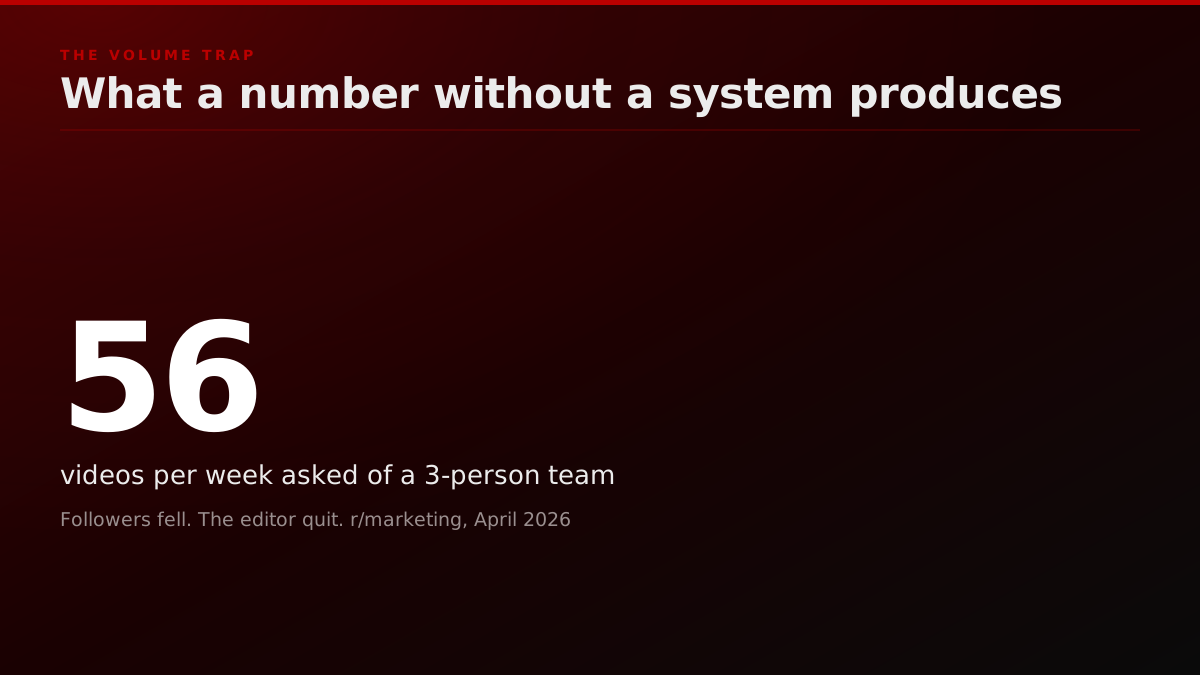
The clearest account of this appeared in a marketing forum in April 2026. A video editor described being asked to lift output from three videos a day to eight, seven days a week, on a marketing team of three people (original thread). That is fifty-six videos a week from three people who also have other jobs.
Recently the big boss decided that the previously agreed-upon 3 videos per day isn't enough, and has now requested 8/day, every single day of the week. He thinks this is perfectly achievable. The marketing team is 3 people.
The thread is worth reading in full because of how it ends. Partway down, the author notes the early results: followers were going down, not up. Then the final edit on the post, two words long. The editor quit.
Boss wants 8 social videos per day, 7days/week. Would this even be effective?
Nothing about that story is unusual except that someone wrote it down. It is the ordinary shape of a short-form effort that was given a number instead of a process. A number is a target. A process is the thing that lets you hit a target more than twice. The same gap shows up in hero films, which is why the launch video creative brief exists as a document rather than a conversation.
It is worth being precise about why "post more" feels like the obvious lever and is not. The pool of attention is not expanding to meet your output. DataReportal's global report puts adult internet users at an average of 6 hours 38 minutes online per day, which is two minutes lower than the year before (DataReportal). Total time is flat. What changes is how it gets allocated between videos, and that allocation is decided per video. Doubling your output into a fixed pool does not double your share of it; it halves the care behind each attempt at winning a slice.
Look closely at what breaks first in that account, because it is not creativity and it is not the platform. It is setup. Every capture session carries a fixed cost that has nothing to do with the content: finding a location, getting the lighting acceptable, checking audio, getting into the frame of mind where you can speak to a camera without sounding like a hostage. That cost is roughly the same whether you produce one video or six. A team shooting daily pays it every single day. A team shooting in batches pays it once a week.
Operator noteCount usable videos, never videos shot. Most teams hit their number and ship four things worth posting.
Now compare the same medium run with a process. In April 2026 a creator published what he called "a quick 1 hour content strategy for VTubers + Streamers that can turn out 3-5+ solid videos per stream", built on an approach he credits with ten to fifty million views a month (the thread). Note the audience he wrote it for: streamers, capturing from an activity they were doing anyway. A startup founder is not a streamer, and the transfer is ours to argue, not his. What transfers is the structure rather than the setting, because the fixed cost he is amortising is the same one a founder pays.
Hunter Peterson
@hitherehunter
Alright seeing as there is some pretty terrible strategy + advice out there for short form content, here’s a quick 1 hour content strategy for VTubers + Streamers that can turn out 3-5+ solid videos per stream and is based on the @FlorkOfCows strategy that gets 10-50m+ views/mo
Three to five per session inside a single hour, against fifty-six a week produced ad hoc. The raw output gap is not the interesting part. The interesting part is that the first number is repeatable next week and the second one ended in a resignation.
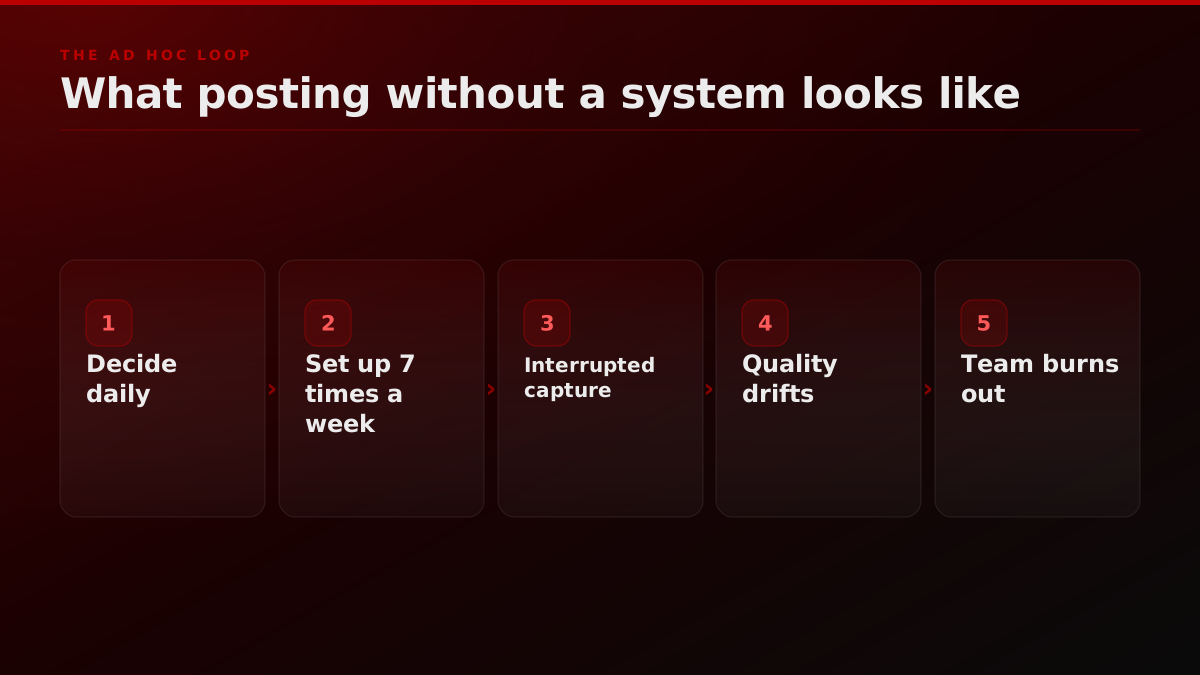
The variable is not effort. Both teams worked hard. The variable is whether a system exists, and a system here means something narrow and testable: a fixed format, a fixed capture slot, and a fixed cut process that a specific person owns.
What is a realistic output rate?
Three to five usable videos a week, for a small team, produced in batches rather than daily. That is the rate a two or three person team can hold for a full quarter without quality drift, and holding a modest rate for twelve weeks beats a high rate for three. Count usable cuts, not footage shot, because the gap between those two numbers is where the private sense of failure comes from.
Two words in that sentence carry the weight, and both are worth pulling apart.
The first is usable. Most teams count videos shot rather than videos worth posting. The gap between those two numbers is where the private sense of failure comes from: you did the work, you hit the number on the spreadsheet, and four things were actually worth publishing. If your target is expressed in shot footage it will always feel like you are behind. If it is expressed in usable cuts, you can hold it.
The second is batches. The one-hour system works because setup cost is paid once and then spread across five pieces. Lighting, framing, audio levels and mental context are all established a single time. Daily capture pays that overhead every day, and it pays it in the most expensive currency a small company has, which is the founder or operator's attention in the middle of a working day.
Operator noteBatch capture beats daily capture. One focused hour outperforms seven interrupted ten-minute attempts.
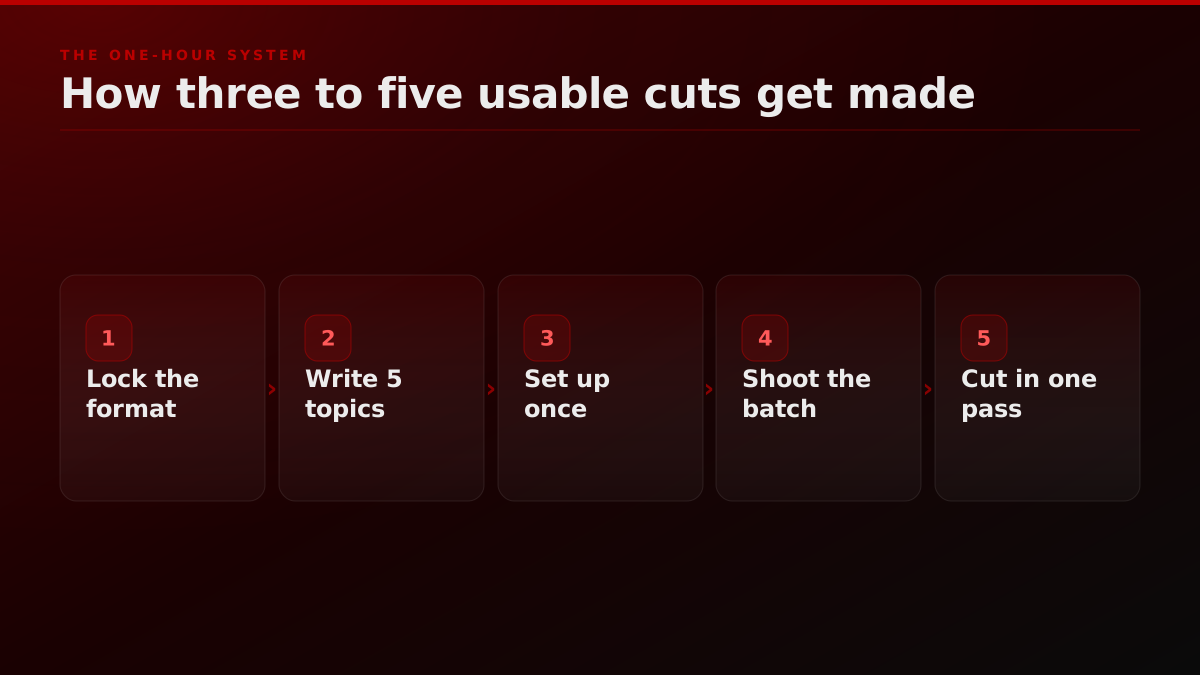
The batch itself is simple and unglamorous. Lock the format before you start, so you are not deciding what to make while the camera is running. Set up once. Work down a written list of five topics rather than improvising. Then cut everything in one pass, in the same session or the next morning, while the material is still fresh in your head. The launch video readiness checklist covers the same discipline applied to a single production.
If you are choosing a target number, choose the one your system can repeat for a quarter rather than the one that sounds competitive. A team producing four solid videos a week for twelve weeks finishes with forty-eight assets and a working process. A team producing twenty a week for three weeks finishes with sixty assets, an exhausted operator, and no process. The second team usually stops entirely, and then concludes that short-form does not work for their category.
Does follower count actually matter?
Much less than founders assume, and this is unusually good news if you are starting from zero. These platforms allocate reach primarily by whether a specific video holds attention in its opening seconds, not by how many people already subscribed, so each post starts close to cold regardless of account size. A company with no audience is far closer to the line than the follower gap suggests.
You do not have to take that on trust from a marketing blog, because the platform says it directly. TikTok's own explanation of how it recommends videos states that while an account with more followers is likely to get more views by virtue of having built that base, "neither follower count nor whether the account has had previous high-performing videos are direct factors in the recommendation system" (TikTok Newsroom). Treat that as the platform's stated design rather than a current ranking spec, since TikTok describes the system as continuously refined, but the direction is unambiguous and it matches what the operator above observed from the other end.
In February 2026 an account owner posted a detailed account of six years of organic growth in a specific niche, ending at 56,000 followers (the post).
56,000 followers all from organic growth over the last 6 years in the horror books/true crime niche and I am LUCKY to get 5,000 views on a Reel.
The same post lists what was tried before that conclusion was reached: different content types, lengths from seven seconds to two and a half minutes, short captions, long captions, morning posting, afternoon posting, and two in the morning. The account holds no policy violations. The conclusion the author reaches is that posts now start close to cold regardless of following.
Is Instagram worth using anymore?
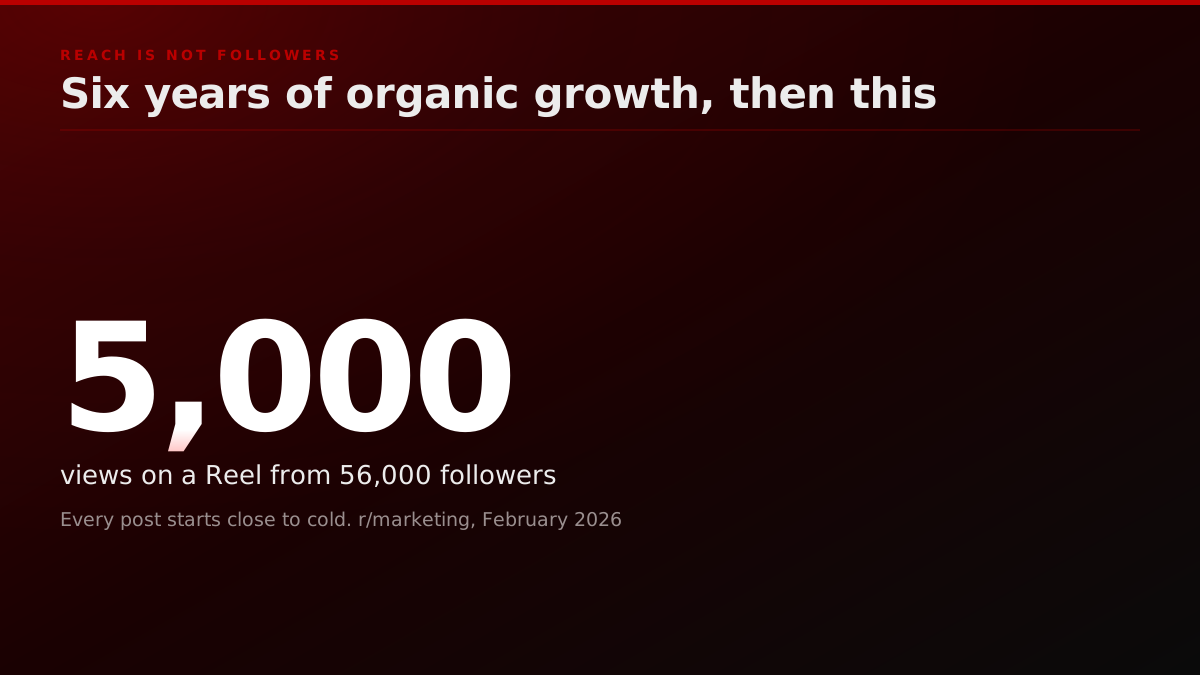
For an established brand that is a genuinely painful finding, because it means six years of accumulated audience does not guarantee distribution. For a startup it is the opposite of painful. If reach is allocated by whether a specific video holds attention in its first seconds rather than by how many people already subscribed, then a company with no audience at all is far closer to the line than the follower gap suggests. You are competing on the video, not on your history. We audited this directly in the startup launch video views audit, and the distribution gap piece covers why good films still go unseen.
The practical consequence is about where you spend effort. Chasing follower count as a primary metric is close to worthless for a startup account. Making the first three seconds of each video genuinely hold is close to everything. This also explains why buying followers has no effect on reach, and why an account can sit at a few hundred followers and still put a video in front of fifty thousand people.
What formats actually work for a startup?
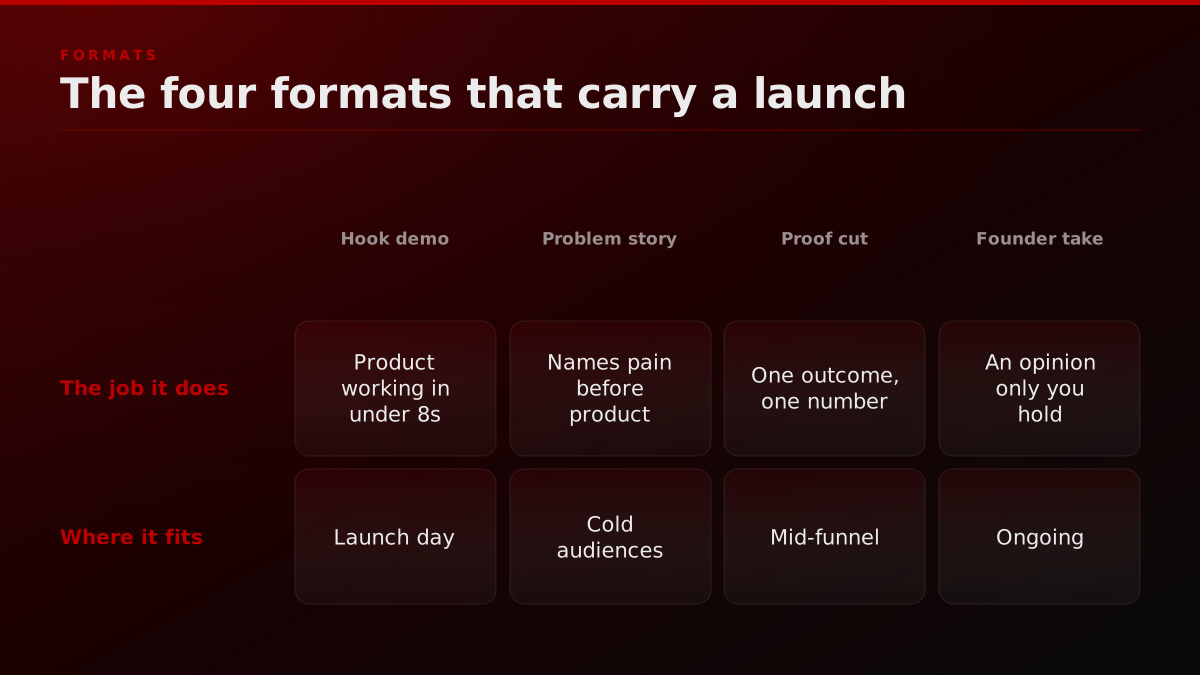
Four formats carry a launch, and most startup accounts only ever ship one of them. The hook demo shows the product working, the problem story names the pain before the product, the proof cut carries one customer outcome with one number, and the founder take is a specific opinion only you can hold. Each answers a different question a stranger has, which is why shipping only the demo leaves three jobs unanswered.
The four short-form formats that carry a launch
| Format | The job it does | Where it fits |
|---|---|---|
| Hook demo | Product working, payoff inside 8 seconds | Launch day, paid amplification |
| Problem story | Names the pain before naming the product | Cold audiences, top of funnel |
| Proof cut | One customer outcome, one number | Mid-funnel, retargeting |
| Founder take | A specific opinion only you can hold | Ongoing, builds the account |
One practical note before the formats themselves: the ceiling is longer than most founders assume. YouTube's Shorts tools now run to three minutes (YouTube Help), so "short-form" no longer means fifteen seconds. That matters because the problem story below usually needs more room than a hook demo, and founders routinely compress it into unwatchability believing a hard limit exists that does not.
The hook demo is the one everybody makes. The product doing the thing, quickly, ideally with the payoff visible inside eight seconds. It is necessary and it is not sufficient, because it only speaks to someone who already understands the problem the product solves. Shot well, it is the highest-converting thing you own. Shot as the only format, it caps your reach at people already searching for you. The format taxonomy in teaser, trailer and sizzle maps the longer-form equivalents.
The problem story names the pain before it names the product. This is the format that reaches genuinely cold audiences, because the viewer recognises their own situation before they are asked to care about your company. In practice this is often the founder describing the specific frustration that caused the product to exist, with no product on screen for the first two thirds. It feels counterintuitive to make a video about your product that barely shows your product, which is exactly why so few startups do it, and why it works.
The proof cut is one customer outcome with one number in it. Not a testimonial montage, not a case study read aloud. One customer, one result, one figure. Our own worked example is the clipping campaign cost breakdown. It is the most under-produced format in startup marketing and it does the heaviest lifting in the middle of a funnel, where the viewer believes the category works and does not yet believe you specifically work.
The founder take is a specific opinion only you can credibly hold. It is the format that makes an account worth following rather than worth watching once. It also compounds in a way the other three do not, because it accumulates into a reason to trust the person behind the product.
A practitioner who sells this service describes the failure mode that sits between these formats more precisely than most (source).
They either go too entertaining and meaningless. Or they go ultra business-y and boring and it flops.
How to make short form video work for your business
Alex B Sheridan
A practitioner naming the dichotomy most business video falls into: too entertaining and meaningless, or too corporate and boring. The middle is the whole job.
That dichotomy is the whole job. Go too entertaining and the video performs while connecting to nothing you sell, which produces the familiar and demoralising outcome of a million views and no signups. Go too corporate and nobody watches past the first second, so the question of conversion never arises. The four formats above are useful precisely because each has a defined job, which makes the middle path findable by construction rather than by taste.
Operator noteA format that works gets repeated for a quarter, not retired after one post. Novelty is not a strategy.
One more thing about formats, which is the most common unforced error in this space. When a format works, teams tend to retire it and look for a new idea, on the theory that repetition is boring. Audiences do not experience it that way, because the overwhelming majority of viewers see any given post once. A format that works should be run for a quarter, with the content inside it varying. Novelty is not a strategy, and searching for a new format every week is one of the fastest ways to burn a small team out.
What does short-form video marketing cost?
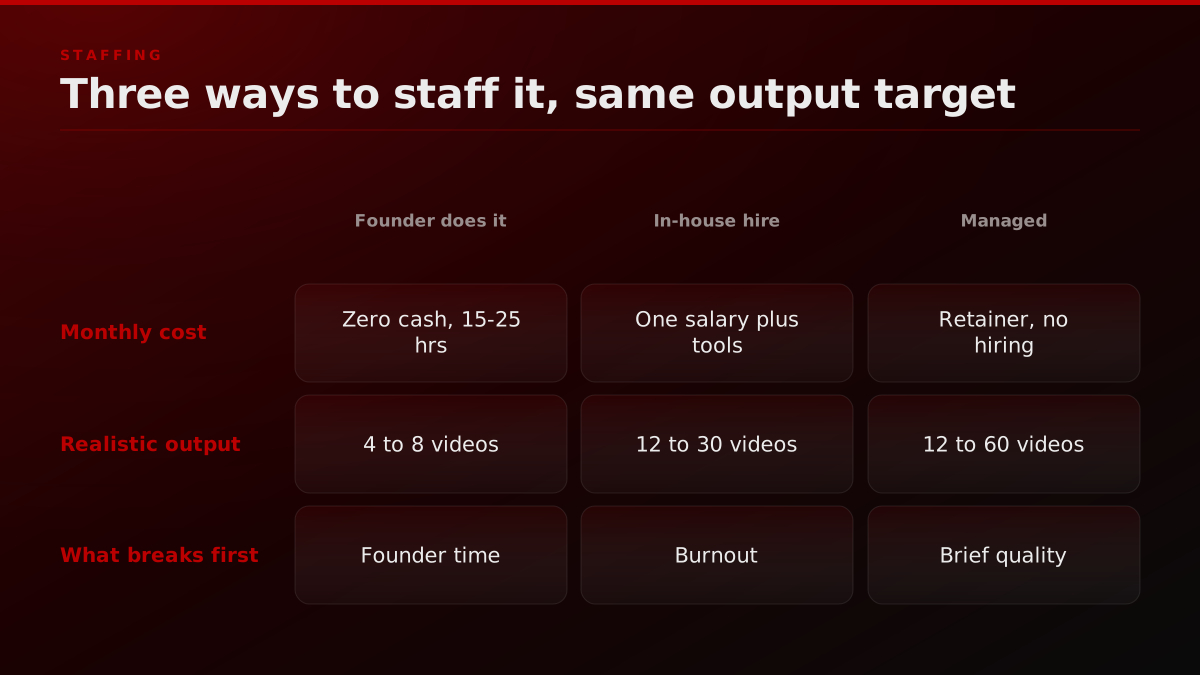
There are three honest ways to staff it, and the cheapest-looking one is usually not the cheapest. A founder doing it personally spends no cash and fifteen to twenty-five hours a month. An in-house hire costs a salary plus tools. A managed service is a retainer with no hiring. The line most plans leave blank is founder and operator hours, which is usually the most expensive input in the whole exercise.
What short-form actually costs a startup, three ways to staff it
| Model | Monthly cost | Realistic output | What breaks first |
|---|---|---|---|
| Founder does it | Zero cash, 15 to 25 hours | 4 to 8 videos | Founder time, then consistency |
| In-house hire | One salary plus tools | 12 to 30 videos | Burnout, then quality drift |
| Managed clipping | Retainer, no hiring | 12 to 60 videos | Brief quality, not capacity |
The founder-led model costs no cash, which is why it appears in almost every early plan. What it costs is roughly fifteen to twenty-five hours a month to produce four to eight videos, and that time comes out of the part of the week where a founder is doing the things nobody else in the company can do. Priced honestly against the founder's actual leverage, it is frequently the most expensive of the three. It is still the right answer in one specific case: when the founder take is the primary asset, which for very early companies is often true, because the founder's specific view of the market is the only genuinely differentiated thing available. If you are weighing this against hiring, clipping agency versus in-house prices the same decision, and clipping tool versus agency covers the software route.
The in-house hire produces more and introduces a different failure mode. The forum account earlier in this guide is what that failure mode looks like when the target is set by ambition rather than by capacity. An in-house editor can sustainably produce twelve to thirty usable videos a month if they own a defined format and a defined slot. Asked for substantially more than that, quality drifts first and the person leaves second.
Managed distribution moves the constraint somewhere more useful. When capacity is no longer the limiting factor, brief quality becomes the limiting factor. That is a strictly better problem to have, because it is solved by thinking clearly for an hour rather than by hiring, and because a bad brief is visible immediately while a capacity shortfall takes a quarter to show up. The managed clipping playbook is how we run it, and our clipping service is the outcome-priced version.
Founders often carry a price anchor here that is worth naming out loud. In a July 2026 thread, one described seeing polished launch videos, assuming an agency had been paid "a few thousand dollars" for them, and concluding that this was out of budget for a side project (thread). That instinct is reasonable when the unit is a single hero film. It is misleading for ongoing short-form distribution, where the unit is a repeatable system and the per-asset cost falls sharply once the format is locked.
The advice layer is thin, which is the opportunity
A creator with a working system opened a public thread by noting there is "some pretty terrible strategy + advice out there for short form content". The ten pages ranking for this term agree with him by omission: every one explains why short-form matters and not one prices it, states an output rate, or names a failure case.
The other cost nobody prices is the cost of stopping and restarting. A team that runs hard for six weeks, stops, and restarts three months later pays the setup cost twice and gets none of the compounding. Consistency is not a virtue signal in this medium, it is the mechanism by which the platform learns who to show your content to.
How do you measure it without lying to yourself?
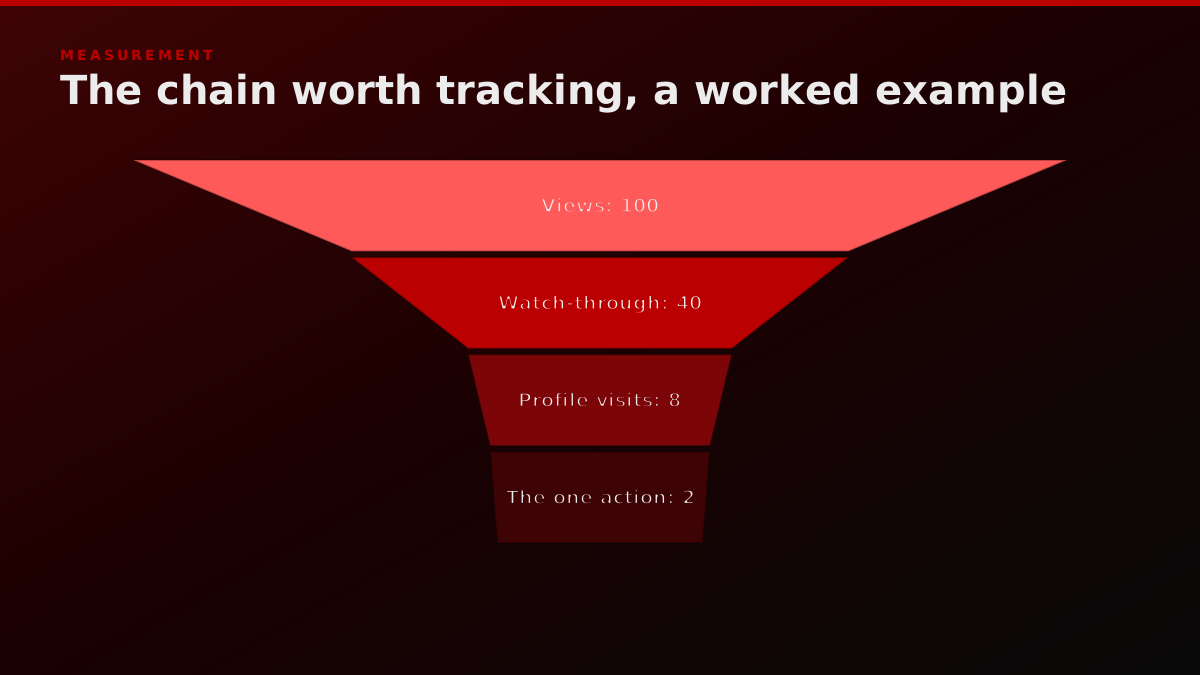
Track the action, not the view. Views sit at the top of the funnel and are the easiest number to feel good about, which makes them the easiest number to hide behind. A useful chain runs from views to watch-through rate, then to profile visits, then to the single action the video was briefed to drive. Only the last one touches revenue, and only watch-through predicts whether distribution continues.
Views are the top of the funnel and they are by far the easiest number to feel good about. A useful measurement chain has four links, and each one predicts something different.
There is a concrete reason to distrust the view count specifically, and it comes from the platform rather than from us. YouTube changed how Shorts views are counted on 31 March 2025: views now count "the number of times a Short starts to play or replay, with no minimum watch time" (YouTube Help). A view, under that definition, is a video starting. It is not evidence that anybody watched anything. Any report built on view count alone is counting starts and calling them attention, which is why a number that triples can sit alongside a business that has not moved.
Watch-through rate is the number that predicts whether the platform continues serving a video. If people leave in the first two seconds, nothing else you do matters, because distribution stops. That is not folklore either: TikTok describes weighting signals by strength, and says a strong indicator such as "whether a user finishes watching a longer video from beginning to end" carries greater weight than a weak one such as the viewer and creator sharing a country (TikTok Newsroom). Completion is the signal the system is actually reading. This is the number to optimise first and the only one worth obsessing over early. If you want a harder definition of what counts as a real view, the qualified views metric is our standard, and the CPQV calculator prices it.
Profile visits predict whether the account compounds. A video can hold attention completely and still generate no curiosity about who made it, which usually means the content was entertaining and unattached to any identity.
The final action is the only number that touches revenue, and it should be the one action the video was briefed to drive. One action per video, chosen before you shoot.
Operator noteIf you cannot name the one action a video should drive, do not brief it yet. That is a positioning gap.
One useful reference point on realistic scale. A solo marketer running social for a single-location business reported roughly 300,000 views across TikTok, Instagram and Facebook over ninety days, with engagement up around 115% and audience growth up around 235% (their own account of it). Those are that operator's self-reported figures from their own dashboard, not numbers we measured, and they cover a restaurant rather than a software product. That was one person handling strategy, design, photography, filming, editing and events simultaneously. It is a fair picture of what determined solo effort produces in a quarter, and a fair warning about what it costs the person doing it.
Set your baseline in the first month and compare against yourself rather than against accounts whose constraints you cannot see. A competitor posting daily may have three people and a budget, or may be two weeks from the resignation described earlier in this guide.
Where does short-form fit in the rest of distribution?
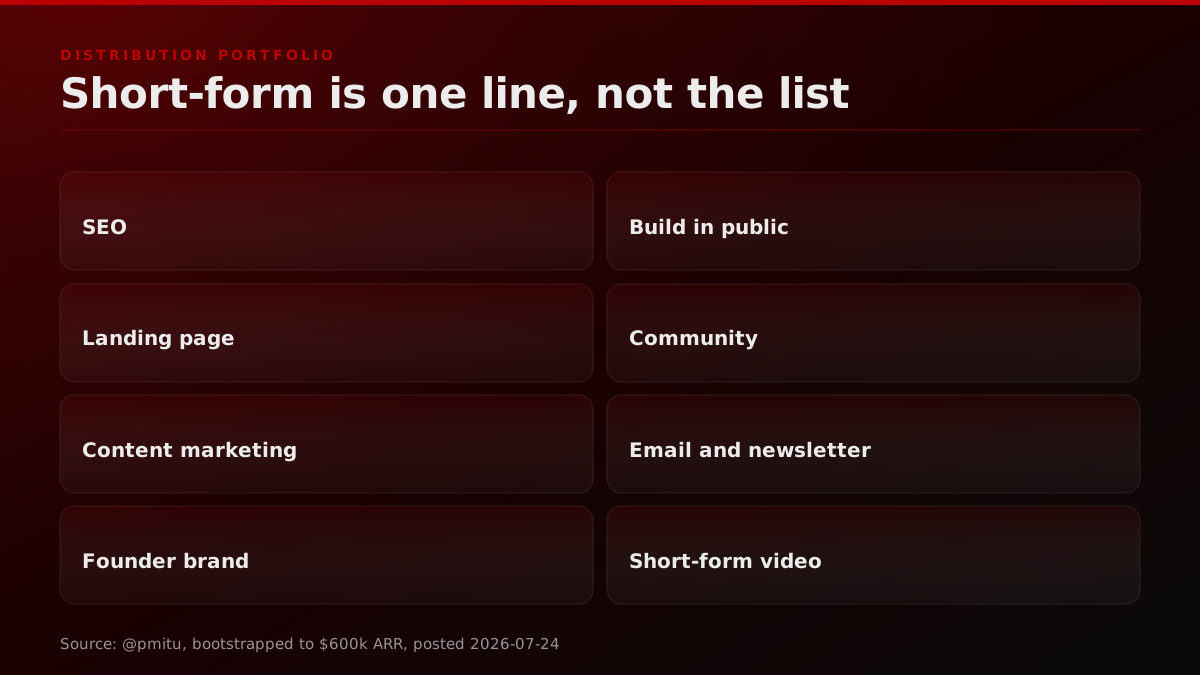
As one line item, not as the plan. Distribution for a startup is a portfolio that includes search, the landing page, content, founder brand, building in public, community, email and social, and short-form is one entry in that list. A launch resting entirely on short-form reach is fragile, because a single flat run of videos takes the whole launch down with it.
Paul Mit
@pmitu
Bad distribution: - Product will go viral - People will find a good product on their own Good distribution: - SEO - Improving landing page - Content marketing - Founder brand - Build in public - Community building - Email marketing - Newsletter - 𝕏 - LinkedIn (okay okay) -
Distribution is a portfolio, not a channel
Paul Mit, who bootstrapped to $600k ARR across three exits, lists good distribution (x.com) as SEO, landing page, content, founder brand, build in public, community, email and social. Short-form is one line in that list. Treating it as the whole strategy is how teams end up posting daily into a channel that was never going to carry the whole launch.
This framing matters most at the start, because it sets the expectation that decides whether the effort survives its first bad month. A launch that depends entirely on short-form reach is fragile, since a single algorithm change or a run of flat videos takes the whole launch with it. A launch where short-form carries the top of the funnel while search, email, community and founder brand carry the rest is not fragile, and it lets you evaluate short-form on its actual job instead of on whether it saved the quarter.
None of which is an argument that the channel is weak. Industry survey data puts short-form video at the highest return of any video format, and places TikTok, Instagram and YouTube together above 60% of product discovery (collected by Sprout Social). Treat those as directional at best: they are self-reported survey output, and Sprout is republishing them from other firms rather than measuring them, so the number has travelled at least twice before reaching you. The buying-intent signal is firmer in the independent research. Pew finds 62% (Pew Research Center) of adult TikTok users say they use the platform to look at product reviews or recommendations, against 95% who cite entertainment as a reason they are there at all (the underlying Pew-Knight study). Read those two numbers together and the job of the channel becomes clear. People arrive to be entertained, and a large minority are also willing to be sold to. You are renting attention that showed up for something else, which is precisely why the format matters more than the volume.
Two caveats on the reach itself, both of which argue for picking your platform rather than posting everywhere. Adoption is uneven: Pew's survey of 5,022 US adults found YouTube and Facebook the most widely used platforms, with about half of adults on Instagram (Pew Research Center). And the headline audience numbers that get quoted at founders, around a billion monthly TikTok users at roughly 95 minutes a day (Backlinko), describe a global pool, not your addressable market. A US B2B startup reading a global consumer number as its own opportunity is the most common way this channel gets over-resourced.
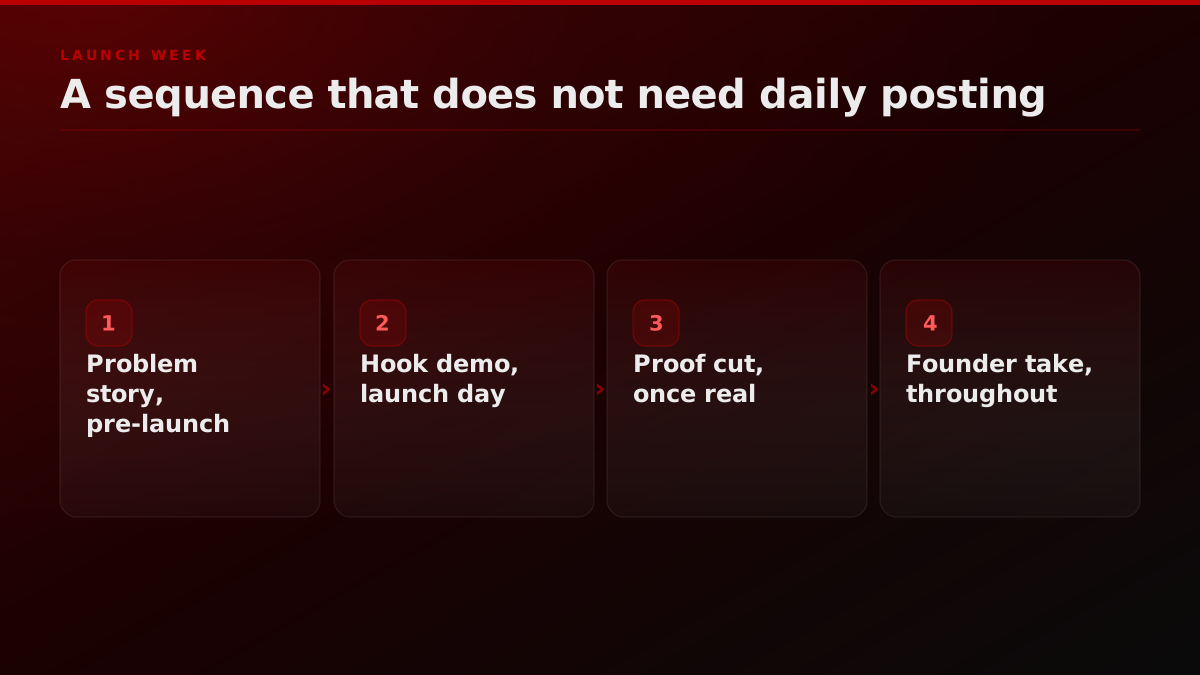
A launch week sequence that respects this looks calmer than most people expect. The problem story goes first, before launch day, so cold audiences arrive already understanding the pain. The hook demo lands on launch day itself. The proof cut follows once you genuinely have a customer outcome to show, which may be weeks later and should not be faked. The founder take runs throughout, because it is the format that holds the account together between events. The full sequence is in launch week video sequencing, and how to get 100k views on a launch video covers the amplification side.
When is short-form video the wrong spend?
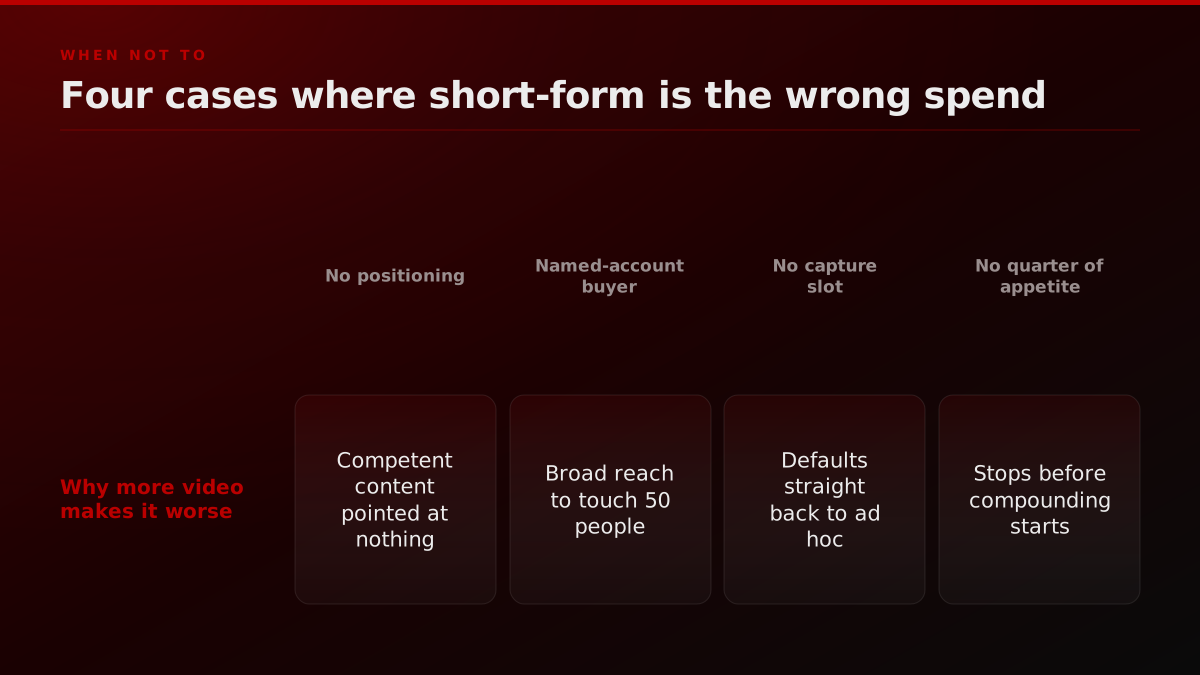
Four cases, and they are common enough that it is worth checking all four before committing a quarter. No positioning, a buyer who is a named list of accounts rather than a market, no repeatable capture slot anyone can hold, and no appetite for a full quarter of consistency. Each of these makes more video actively worse rather than neutral, because the work looks productive the entire time it is failing.
The first is no positioning. If you cannot state the one action a video should drive, more video will not help, because you will produce competent content pointed at nothing in particular. This is the most expensive mistake in the list, because the work looks productive the entire time.
Parker Lyman
@parker_lyman
You’re probably doing “attention as a strategy” wrong. Tldr: It’s still about the product, and not all attention is created equal. Yes, short form content is the dominant cultural medium and a huge opportunity for scaling distribution faster than ever. Your startup is fighting
Attention is not the same as fit
Parker Lyman, chief of staff at Manus AI, put the caveat plainly: "It's still about the product, and not all attention is created equal." Short-form moves reach, as he puts it on x.com. It does not fix positioning, and a launch video pointed at the wrong audience just buys you a faster no.
The second is a named-account buyer. If your market is fifty specific companies, broad reach is an inefficient instrument for touching fifty people. Gartner's account of the B2B buying journey describes purchases that do not proceed in a predictable line at all: buyers "loop" across six buying jobs, revisiting each at least once, inside cross-functional groups whose members hold different goals, and buyers are 1.8 times more likely to complete a high-quality deal when supplier-provided digital tools are used alongside a sales rep rather than on their own (Gartner). A feed video reaches one person once, in a scroll, with no rep attached. Direct outreach, events and founder relationships will beat it comfortably. Short-form can still support that motion by making the founder legible when someone checks, but it should not be the primary channel. If a hero film is the better instrument, our launch video service is built for that job.
The third is no repeatable capture slot. If nobody in the company can hold a recurring hour, the system that makes this work cannot exist, and you will default to ad hoc volume, which is the failure this guide opened with.
The fourth is not having the appetite for a full quarter of consistency. This is the one people underestimate most, and it is what the highest-scoring thread in this research is really about.
Hot take: not every company needs an active social media
That thread argued that some companies simply do not have enough genuinely engaging content to sustain a channel, and that this is an acceptable answer rather than an admission of failure. An agency video published in May 2026 made a related argument from the other side, describing the endless cycle of producing Reels while still not seeing growth, and the burnout and audience fatigue that follow (video).
Stop Posting 4 Reels a Week | The 2026 Instagram Strategy That Actually Grows Your Business
SF Digital Studios
An agency arguing directly against posting volume in 2026, describing the endless-Reels cycle and the burnout it produces. A small channel, included as corroboration that the view is held in market.
Deciding not to do this is a legitimate outcome of reading a guide about it. It is considerably cheaper to reach that conclusion now than after a quarter of daily posting and a departing employee.
Should you pay to amplify, or stay organic?
Both, but in that order, and never at the same time. Paid distribution multiplies whatever the creative already does, including doing nothing, so putting budget behind an untested video simply buys a larger sample of the same result. Publish organically first, read watch-through, and attach spend only to the pieces that already cleared the bar without help.
The mistake is paying to amplify before you know which video earns attention on its own. Paid distribution multiplies whatever the creative already does, including doing nothing. If a video cannot hold a cold viewer past three seconds organically, paying to put it in front of more cold viewers buys you a larger sample of the same result.
The sequence that works is to publish organically first, read watch-through, and only then put budget behind the small number of pieces that already cleared the bar. Organic is your test harness. Paid is the amplifier you attach after the test passes, not instead of running it.
One operator who reverse-engineers app growth described a company he estimates at $300k per month running exactly two things: organic content on their own account, and paid creator videos featuring the product (his breakdown). Treat the revenue figure as one person's outside estimate rather than an established number, because it is. The structure is the transferable part. Two channels, one owned and one paid, doing different jobs.
The owned account builds the asset that keeps working after you stop spending. The paid creator layer buys reach you have not earned yet, which is genuinely useful during a launch window when you need attention on a specific date rather than eventually.
For a startup the practical rule is simple. Do not add the paid layer until the owned account has produced at least one video that held attention without help. That video is your template, and until you have it, paid spend is buying distribution for content you have no evidence anyone wants.
What should you do in your first thirty days?
Pick one format, lock a weekly capture hour, and ship four videos a week for four weeks before you change anything at all. The plan is deliberately unambitious because almost every failure here comes from starting at a volume the team cannot hold, then reading the collapse as evidence the channel does not suit the category. Four weeks at a rate you can repeat produces sixteen videos and a real baseline.
That plan is deliberately unambitious, and the lack of ambition is the point. Almost every failure in this space comes from starting at a volume the team cannot hold, then reading the collapse as evidence that the channel does not work for their category.
Week one, choose the format that matches your actual constraint. If you have a customer outcome with a number, start with the proof cut. If you have neither customers nor a story yet, start with the founder take, because it requires nothing except a view. Write five topics before you touch a camera.
Week two, run the first batch in a single hour and cut everything the same day. Expect the first batch to be worse than you want. That is normal and it is not information about whether the channel works.
Week three, look only at watch-through. Keep whatever held attention past three seconds and cut whatever did not, without redesigning the format.
Week four, repeat the format that worked. Do not introduce a second format yet, and do not raise the volume target.
At the end of four weeks you will have sixteen videos, a real watch-through baseline, and an evidenced read on whether the format fits your product. That is enough to make the next decision from data instead of from hope, which is more than most teams have after a quarter of daily posting. For what the ceiling looks like when this compounds, see the anatomy of a 1M-view launch video and how many views counts as viral.
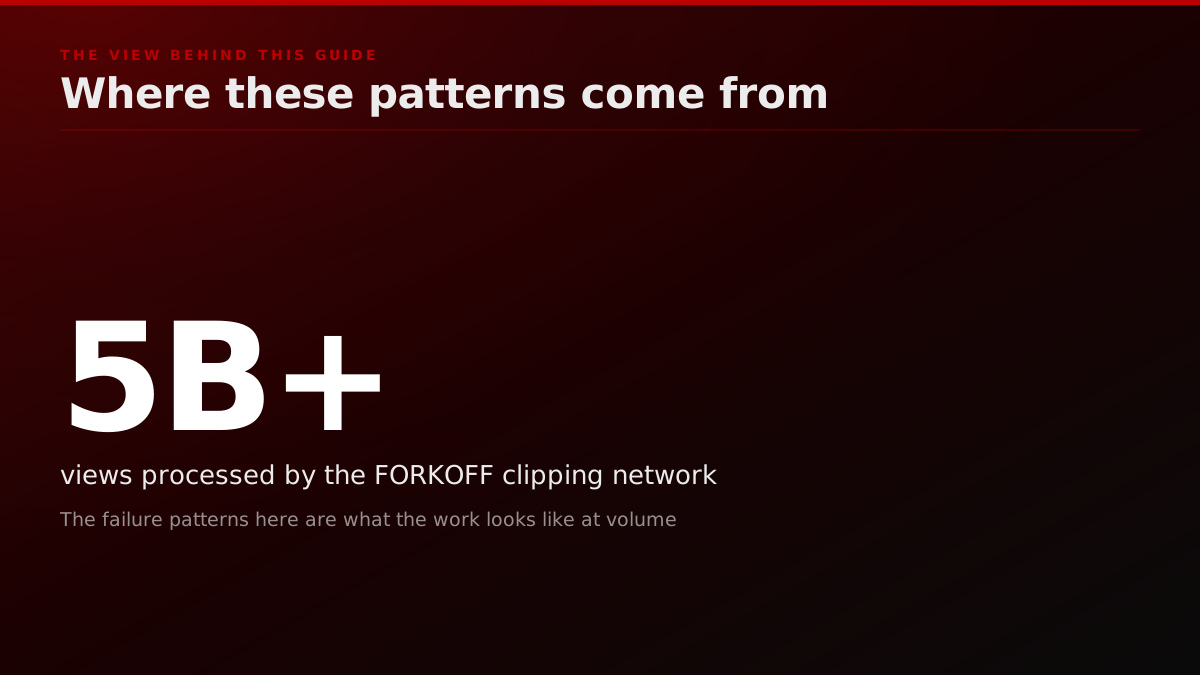
The distribution view behind this guide comes from the FORKOFF clipping network, which has processed 5B+ views. The failure patterns described here are not theoretical and they are not rare. They are what this work looks like at volume, which is also why the recommendation is a system you can hold rather than a number that sounds impressive in a plan.