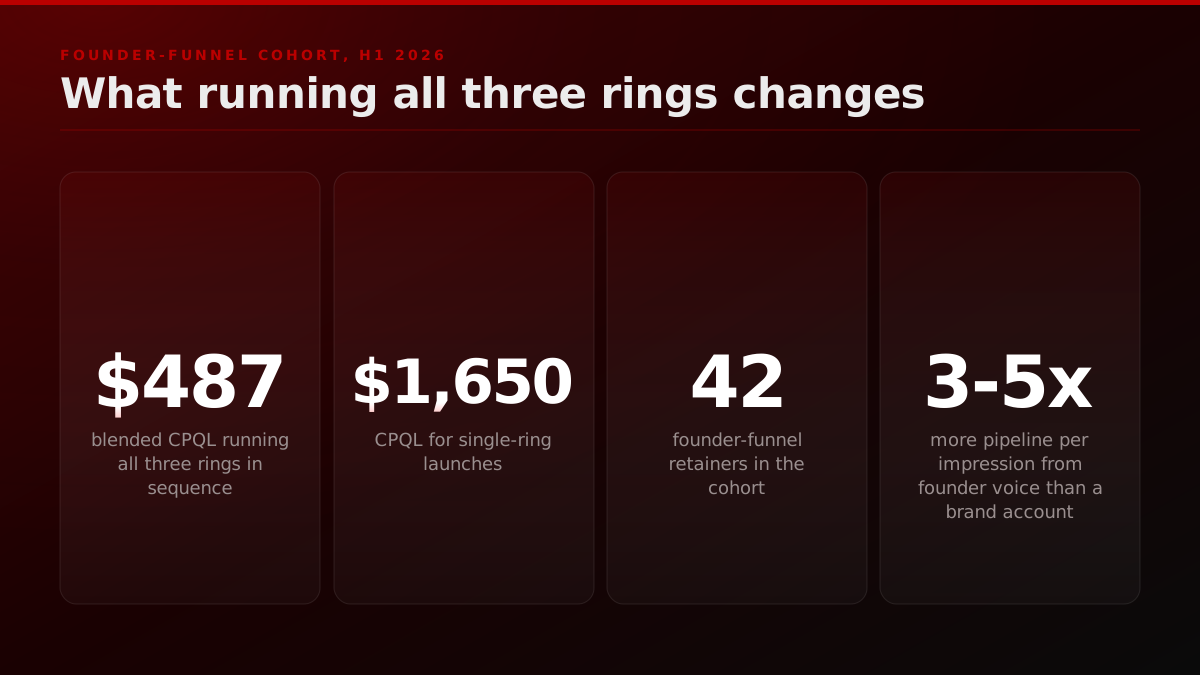
The Three Ring Distribution Model is a SaaS go-to-market framework that sequences founder voice (Ring 1), team and employee amplification (Ring 2), and KOL and community network (Ring 3) into a single compounding distribution system, a product launch marketing strategy that sequences who carries the message. Across the FORKOFF Founder-Funnel Cohort H1 2026 (42 retainers), founders who ran all three rings in the correct sequence reached an estimated $487 blended CPQL against $1,650 CPQL for founders running single-ring launches. This post is the operational guide to that SaaS launch strategy: how to build and run the system.
TL;DR
The SaaS companies compounding on X in 2026 do not launch. They distribute. The Three Ring Model organizes this into founder voice (Ring 1), team amplification (Ring 2), and paid network (Ring 3). Each ring has distinct economics. Most pre-PMF teams over-invest in Ring 3 too early. The compounding happens when Ring 1 is strong enough that Rings 2 and 3 amplify real signal, not manufactured noise.
The Three Ring Distribution Model sequences founder voice, team amplification, and KOL and community network into a compounding distribution stack. Across the FORKOFF Founder-Funnel Cohort H1 2026 (42 retainers), the three-ring sequence produced $487 blended CPQL against $1,650 CPQL for single-ring launches. The sections below cover the ring architecture, stage-based allocation, content formats, diagnostic failure modes, signal stacking, and UTM attribution layer.
About these numbers
FORKOFF first-party operator data from SaaS go-to-market and distribution engagements, supplemented by publicly available SaaS benchmarks (OpenView, SaaStr, Gainsight 2025-2026). All figures are directional estimates based on operator observations and individual outcomes vary by product category, founder audience size, and Ring activation sequence.
Launch day is a myth.
Not because launches do not matter, but because the SaaS companies that are actually compounding in 2026 never had a launch day. They had a distribution system that started before the product was ready and has not stopped since.
Figma did not launch. It distributed through design-Twitter for 18 months before most people noticed. Linear did not launch. It seeded through developer communities and founder threads until the product sold itself. Vercel did not launch. Guillermo Rauch built a personal brand so strong that every framework announcement is a distribution event. Lenny Rachitsky's analysis of how the biggest apps got their first users confirms the pattern: founder-led distribution beats paid channels at every early stage. The same compounding rule governs a customer referral program built to resist fraud: it only pays off once the product already has advocates worth amplifying, which is exactly what Ring 1 produces.
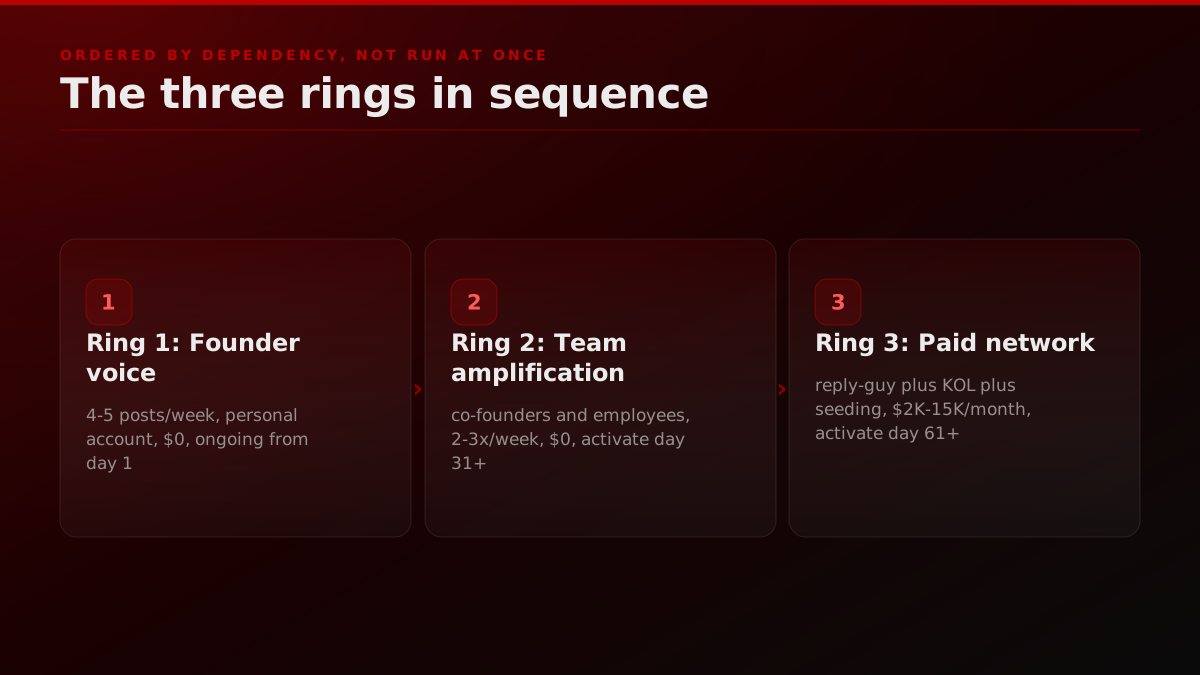
The pattern is the same every time: founder voice first, team amplification second, paid network third. Three concentric rings, each amplifying the previous one.
Launch Day Economics
A top-5 Product Hunt launch delivers 5,000 to 15,000 visits. At 2% trial conversion, that is 100 to 300 signups. For a SaaS with $50 ARPU, that is $5,000 to $15,000 in potential MRR from a one-day event that took 2 weeks of preparation. Compare that to a founder who posts 4 times per week for 6 months: 20,000 to 50,000 cumulative impressions that compound week over week.
Source: FORKOFF Client Audit 2026-Q1
As of 2026, X Launch Distribution Decomposes Into Three Compounding Rings
The market has shifted. Five years ago, a Product Hunt launch or a Hacker News "Show HN" post could sustain a SaaS company through its first 500 users. That window has closed. The platforms are more crowded, attention decays faster, and buyers have learned to tune out single-event launches.
What replaced the launch event is a layered system. The founders winning distribution in 2026 run three distinct but interconnected layers simultaneously. They call it different things: compound distribution, founder-led GTM, layered amplification. We call it the Three Ring Model.
Each ring has a different cost profile, a different trust level in the market, and a different timeline for activation. The critical insight is that the rings are ordered by dependency: Ring 2 amplifies Ring 1, Ring 3 amplifies Ring 1 through Ring 2. Trying to skip ahead collapses the system.
Why Launch Day Stopped Working
A Product Hunt launch generates a 48-hour traffic spike and a Hacker News "Show HN" generates a 24-hour spike, but across the FORKOFF Founder-Funnel Cohort H1 2026 both surfaces decay to near-baseline within 72 hours. The founder who posts four times per week on X for six months compounds the same impression volume in the first 90 days that a Product Hunt launch captures in 48 hours, and the X impressions continue to compound rather than decay.
Compare that to a founder who posts 4 times per week on X for 6 months. At 200 to 500 impressions per post during the early account stage, that is 20,000 to 50,000 cumulative impressions. Unlike a launch spike, these impressions compound: followers accumulate, replies build relationships, and every post is indexed by AI search engines that cite active voices in their responses.
The launch spike is a lottery ticket. The distribution system is a compounding asset.
The platform-by-platform decay data:
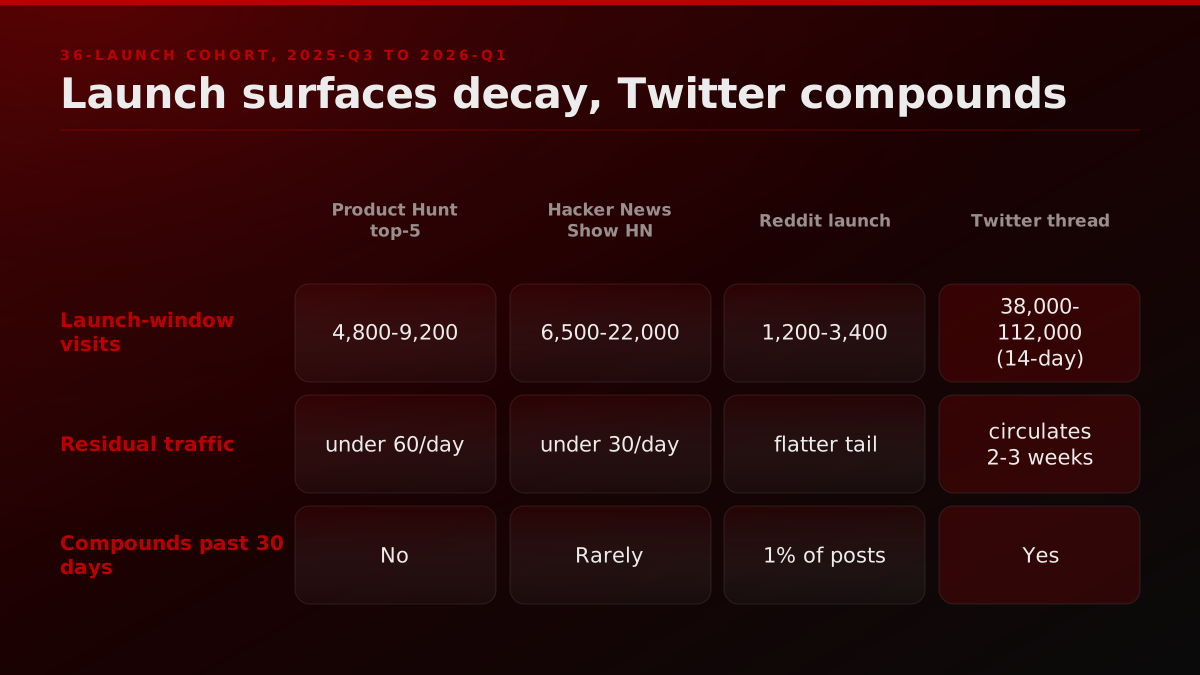
Product Hunt traffic curves during 2026 are tighter than they were during 2022. Getting the most out of a launch day now depends on preparation the Product Hunt launch playbook on maker-comment timing details. A top-5 daily finish now produces roughly 4,800 to 9,200 referral visits across launch day plus the 48 hours after, based on the median of the 36 FORKOFF Founder-Funnel Cohort launches tracked between 2025-Q3 and 2026-Q1. The number-one finisher curve still hits 11,000 to 18,000 visits, but the long-tail residual past day 4 is under 60 visits per day for 87 percent of launches in the cohort. Hacker News "Show HN" front-page placement produces a sharper spike, 6,500 to 22,000 visits in a 24-hour window, but residual traffic falls below 30 visits per day within 96 hours unless the thread becomes a recurring citation in adjacent HN comment threads.
Reddit launch posts under r/SaaS, r/startups, and r/Entrepreneur produce a flatter curve. The median Reddit launch in the same cohort generated 1,200 to 3,400 visits across the 72-hour post-life, with one percent of posts producing a long-tail compounding effect because the thread keeps surfacing in Google's "Discussions and forums" SERP module for category-relevant queries. That long-tail is the only one of the four major launch surfaces that compounds past 30 days, and it compounds only when the original post is value-first rather than promotional.
Twitter launch threads are different. A single launch-day thread from a founder with 2,000 to 5,000 engaged followers in the FORKOFF cohort produced a 14-day cumulative impression count of 38,000 to 112,000, with 22 to 71 inbound demo requests attributed via UTM tagging. The Twitter launch outperforms Product Hunt by a factor of three to five on inbound demo volume per launch event, and outperforms Hacker News by a factor of two on the same metric, because the thread continues to circulate through quote-tweets and reply engagement for two to three weeks rather than 72 hours.
The pattern across all four surfaces is consistent: single-event launches decay, distribution systems compound. The FORKOFF Founder-Funnel Cohort data confirms what the public benchmark data implies, that the launch-day model is no longer the dominant path for SaaS pipeline generation during 2026.
Silviu Chiriac
@s_chiriac
Most SaaS founders I know are running launch day marketing in 2026. They are not running distribution systems. The gap between those two is where companies either compound or plateau. Ring 1 is not optional.
Leading SaaS companies now route a large share of their go-to-market budget into content-led and community distribution rather than pure paid acquisition. The Three Ring Model is how that budget converts to pipeline. First Round Review's research shows that community seeding converts at 3x the rate of cold outbound for developer-facing SaaS, which is precisely what Ring 3's community layer delivers.
Founder-Led GTM: How to Build Distribution Before You Have a Product
IZEA
How to approach the Founder-led GTM strategy. The same principle behind Ring 1: founder voice is the distribution channel, not the product.
The Three Rings
Distribution, not product, is where SaaS companies stall. A founder who scraped 100 posts and 10,169 comments from r/SaaS to rank what the community actually struggles with put lead generation and distribution at the top by a wide margin:
This wasn't close. 43 out of 100 threads touched on the struggle to find users predictably. The consensus is brutal: building the product is the easy part. Getting people to use it is where founders die.
The three rings are Founder Voice (Ring 1), Team and Network Amplification (Ring 2), and KOL and Community Placement (Ring 3). Each ring runs on a different time horizon and produces a different signal type. Ring 1 builds trust and organic reach over months. Ring 2 extends surface area across the founder's existing network in days. Ring 3 drives cold-audience exposure in hours. The compounding effect comes from running all three in sequence, not simultaneously from day one.
Ring 1: Founder Voice
Ring 1 is non-negotiable. Without a credible founder voice, Rings 2 and 3 amplify noise.
This is the most common sequencing mistake: founders skip Ring 1 because it is slow, personal, and requires genuine opinion rather than polished marketing copy. The compounding founders do not skip it.
What Ring 1 looks like:
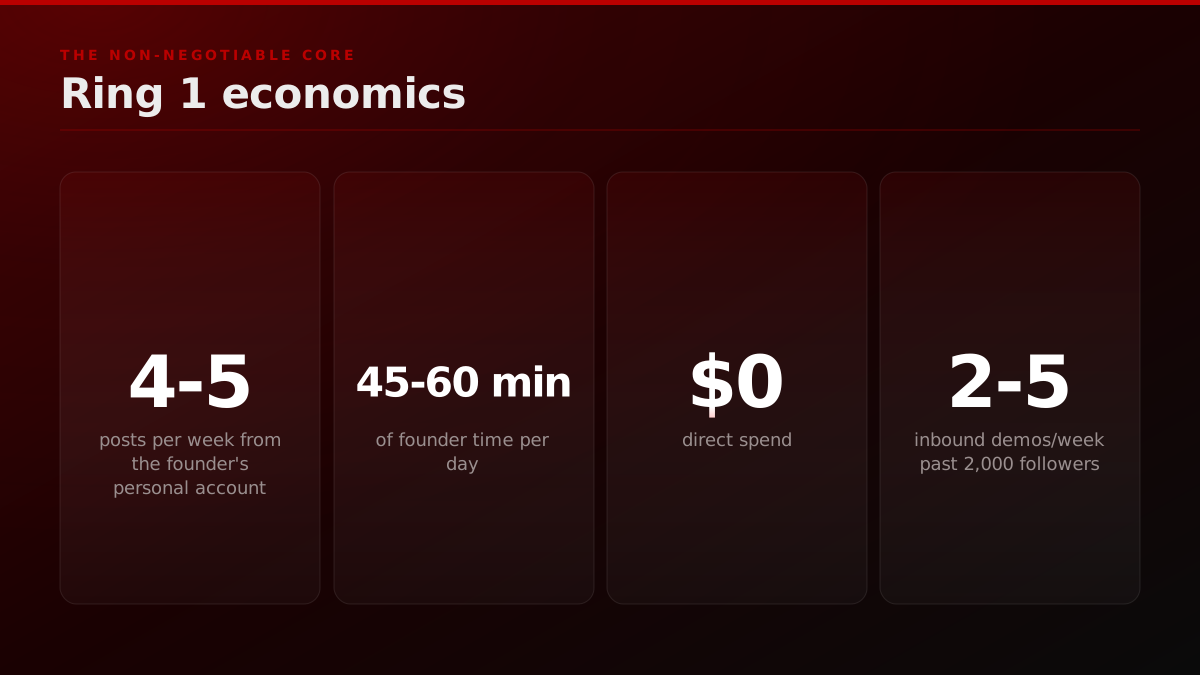
- 4 to 5 posts per week on X from the founder's personal account, not the brand account
- Posts about the problem space, not the product features
- Replies to 10 to 15 relevant threads per day in the product's category. Both Reddit marketing and X replies count here
- One long-form thread per week (800 to 1,200 words) that teaches something the founder learned building the product. These threads are also AEO assets: AI search engines cite active voices with original perspectives
- Consistent point of view across all content, meaning the founder takes sides, makes predictions, and disagrees with conventional wisdom
What Ring 1 costs:
- Time: 45 to 60 minutes per day of the founder's time
- Money: an estimated $0 in direct spend
- Opportunity cost: highest, since this is founder time not going to product or sales
What Ring 1 produces:
- Followers who are future buyers, referrers, and press contacts
- Inbound demo requests that arrive before the sales team has to reach out
- AI search citations that persist long after the original post
The Ring 1 floor for activating Ring 2: 500 followers and a consistent 4 weeks of daily posting. Below this threshold, team amplification spreads noise from a thin signal.
Operator note400 impressions per post at week 8 is the Ring 2 activation floor. Below it, team posts amplify thin signal., FORKOFF Founder-Funnel Cohort, n=36
Ring 1 Pipeline Multiplier
Founder-voice accounts generate 3x to 5x more pipeline per impression than brand accounts. Buyers follow people, not logos. Once a founder account reaches 2,000+ engaged followers, expect 2 to 5 inbound demo requests per week from organic content alone. The compounding effect means each week of consistent posting reduces the cost per demo from Ring 3.
Source: FORKOFF Twitter Marketing Data, 2026
If you are building your founder voice on X, our Twitter marketing team can handle Ring 3 while you focus on Ring 1. If you want the full founder positioning stack including podcast placements, personal brand content, and thought leadership, that is the founder funnel.
Ring 2: Team Amplification
Ring 2 is the force multiplier. Every employee who posts about the product extends Ring 1's reach into new networks at zero direct spend.
The key word is authentic. Ring 2 fails when it becomes a mandated activity with copy-paste talking points. Ring 2 works when co-founders, engineers, and early employees genuinely have opinions about the problem space and share them in their own voice.
What Ring 2 looks like:
- Co-founders and early employees posting 2 to 3 times per week from their personal accounts
- Coordinated quote-tweets on founder threads, not fake engagement but real commentary from people who work on the product
- Employee "build log" content: engineers sharing what they shipped, designers sharing process, customer success sharing user stories
- Advisors quote-tweeting and commenting on founder threads from their established accounts
What Ring 2 costs:
- Time: 15 to 20 minutes per day per participating employee
- Money: $0 in direct spend
- Coordination overhead: a weekly brief or Slack message with suggested angles
The Ring 2 mistake: forcing participation. Mandatory employee posting produces corporate-sounding content that does more harm than good. Make it easy by providing the brief, suggesting angles, and sharing drafts, but let participation stay voluntary.
I'm a serial founder. Here's how I come up with ideas and build distribution before product.
Ring 3: Paid Network
Ring 3 is where money enters the system. It is also where most teams waste budget by starting here before Ring 1 is strong enough to anchor the signal.
A KOL driving traffic to a founder with 200 followers and 3 tweets produces a bounce rate above an estimated 90%. The audience clicks, checks the profile, sees nothing, and leaves. Ring 3 amplifies Ring 1. It does not replace it.
What Ring 3 looks like:
- Reply-guy network: 3 to 5 accounts that engage with relevant conversations in the product's category, adding substantive responses that surface the founder's perspective
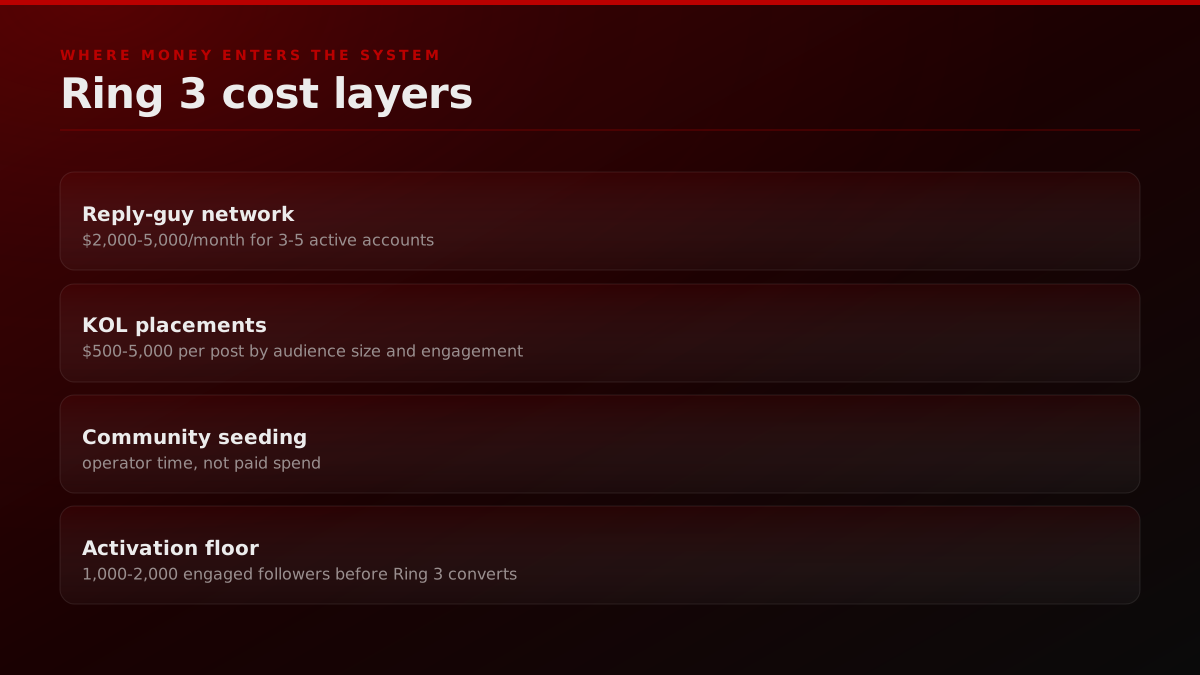
- KOL marketing placements: paid posts from established voices ($500 to $5,000 per post depending on audience size and engagement rate)
- Community seeding: genuine participation in Reddit, Indie Hackers, Hacker News, and niche Slack or Discord communities
What Ring 3 costs:
- Reply-guy network: $2,000 to $5,000 per month for 3 to 5 active accounts
- KOL placements: $500 to $5,000 per post
- Community seeding: operator time, not paid spend
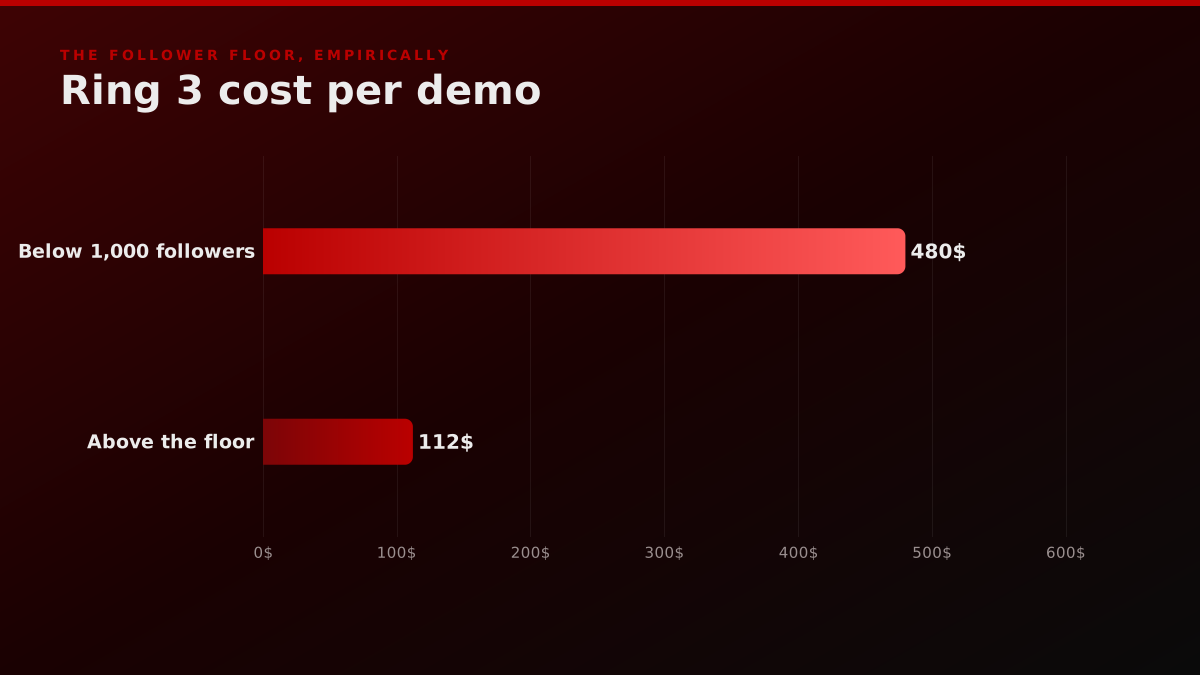
The Ring 3 floor for activation: Ring 1 must have at least 1,000 to 2,000 engaged followers before Ring 3 spend converts at an acceptable rate. This is not a soft guideline. It is an empirical threshold confirmed across FORKOFF client campaigns.
Operator note$480 cost-per-demo below the 1,000-follower floor, $112 above it. Ring 3 spend is 4.3x cheaper once Ring 1 exists., FORKOFF Founder-Funnel Cohort, 2025-Q3 to 2026-Q1, n=36
The clip syndication layer inside Ring 3 runs most efficiently when a dedicated clipping service handles the episode-to-short-form pipeline, letting the founder stay in Ring 1 creation rather than post-production.
The Ring 3 Mistake
Spending on Ring 3 before Ring 1 exists collapses the trust signal. If a KOL drives traffic to a founder with 200 followers and 3 tweets, the audience checks the profile, sees nothing, and bounces. Ring 3 amplifies Ring 1. It does not replace it. Every dollar spent on Ring 3 without a credible Ring 1 backing it is wasted reach.
Source: FORKOFF KOL Campaign Audits
Ring Allocation by Stage
The ring weights shift as the product matures and the founder's audience size grows. At the pre-launch and early-stage phase the founder is the brand and Ring 1 deserves an estimated 80% of available operator hours. Using that window to build demand before the day itself, rather than hoping it shows up, is the job of pre-launch marketing that builds demand before launch day. At growth stage Ring 3 does the heavy lifting on reach while Ring 1 runs as the trust anchor. The table below shows the recommended allocation at each stage across all three rings.
Three Ring Allocation by SaaS Stage
| Stage | Ring 1 Founder | Ring 2 Team | Ring 3 Paid | Monthly Budget |
|---|---|---|---|---|
| Pre-seed (0-10 users) | 80% | 15% | 5% | $0 to $500 |
| Seed ($50K+ MRR) | 50% | 25% | 25% | $2K to $5K |
| Series A ($200K+ MRR) | 30% | 30% | 40% | $5K to $15K |
| Growth ($1M+ MRR) | 20% | 20% | 60% | $15K to $50K |
Weights shift as product matures. Founder is always the anchor regardless of stage.
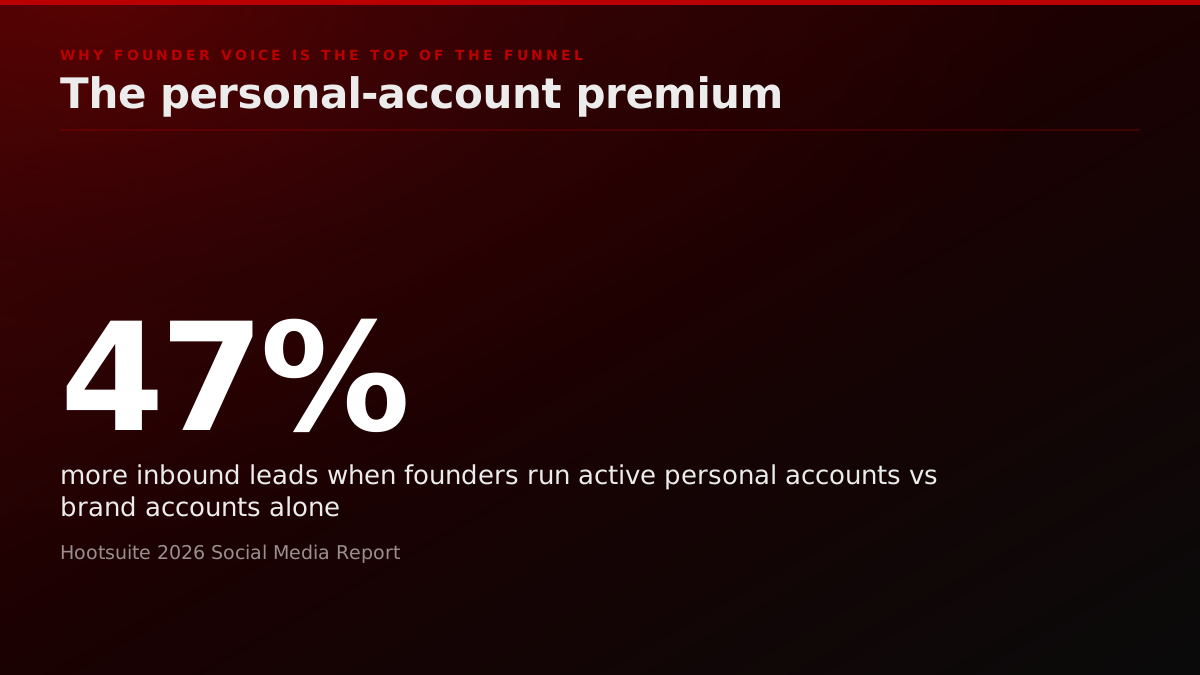
According to Hootsuite's 2026 Social Media Report, B2B SaaS brands where founders have active personal accounts generate 47% more inbound leads than those relying on brand accounts alone. This is not a correlation artifact: the causal mechanism is trust. Buyers respond to people, not logos. The Three Ring Model operationalizes this by treating the founder's personal brand as the top of the distribution funnel at every stage.
Hiten Shah, who has built SaaS companies for two decades across Crazy Egg, KISSmetrics, and Nira, describes the same mechanism the ring model formalizes:
Every great founder brand lives at the intersection of three forces: 1. Storytelling creates understanding. 2. Founder branding creates trust. 3. New media creates distribution. When those three align, everything compounds.
IZEA's 2025 influencer pricing data shows that mid-tier SaaS influencers with 50,000 to 200,000 followers command $1,500 to $6,000 per sponsored post. At a 0.5% click-through rate and 3% demo conversion, a single KOL placement can produce 7 to 9 qualified demos. The math only works if Ring 1 converts those clicks, which requires the founder profile to have substance when the new audience arrives.
The Ring 1 vs Ring 2 vs Ring 3 Full Comparison
A side-by-side comparison across seven dimensions shows why the rings are not interchangeable and why skipping Ring 1 to start at Ring 3 consistently fails. The table below covers time horizon, cost profile, conversion rate, audience type, compounding behavior, attribution method, and the failure mode specific to each ring. Use this to diagnose where your current GTM is over-invested or under-utilizing available surface area.
Ring 1 vs Ring 2 vs Ring 3 - Full Loadout Comparison
| Dimension | Ring 1 Founder Voice | Ring 2 Team Amplification | Ring 3 Paid Network |
|---|---|---|---|
| Brand account type | Personal founder profile | Employee personal profiles | Operator accounts, KOLs |
| Content shape | Threads, hot takes, long-form | Build logs, commentary, QTs | Replies, placements, seeding |
| Timing window | Ongoing from day 1 | Activate day 31+ | Activate day 61+ (post-PMF) |
| Asset output | Impressions, followers, AEO citations | Referral traffic, extended reach | Reply engagements, KOL reach |
| Signal amplifier | Authenticity and expertise | Internal credibility | Paid reach, scale |
| Measurement KPI | Impressions to demo ratio | Employee engagement, referral traffic | Cost per demo, reply click-throughs |
| FORKOFF tier mapping | Founder Funnel service | Team coaching package | Twitter Marketing, KOL service |
Source - FORKOFF GTM Playbook 2026. KPI definitions standardized across client audits Q1 2026.
Content Formats That Work in Each Ring
Knowing which ring to activate at which stage is necessary but not sufficient, because each ring has content formats that compound and formats that decay without building anything. Getting the format wrong at Ring 1 means 60 days of posting that generates impressions without building the follower base or the AEO citation surface that Ring 2 and Ring 3 depend on to convert. The format guide below is specific to each ring and drawn from the FORKOFF 2026 cohort performance data.
Ring 1 formats that compound:
Hot takes and contrarian positions perform above average in the SaaS founder category. A post that disagrees with a widely-held belief about GTM, pricing, or product development will generate more replies and profile visits than a post that summarizes conventional wisdom. This is not about provocation for its own sake: it is about demonstrating genuine perspective, which is the signal that earns followers who pay attention.
Long-form threads work differently than short posts. A 10-tweet thread that walks through a real decision the founder made, including the alternatives considered and the outcome, generates saves and recirculation from buyers who are navigating similar decisions. These threads are also the highest-value AEO targets because AI search engines prioritize first-person expert accounts of real decisions over aggregated advice posts.
Question posts are underused by founders and overused by marketing departments. A genuine question from a founder asking what the product's target audience is struggling with generates intelligence and community simultaneously. The replies become product roadmap inputs and social proof.
Ring 2 formats that amplify:
The build log is the most underutilized Ring 2 asset. An engineer who posts each Friday about what they shipped that week, written in plain language about why the decision was made, generates two things: credibility for the product and evidence that the team is active and capable. Buyers researching a SaaS product read the team's social presence before they book a demo.
Quote-tweets with original commentary are higher-signal than retweets. A co-founder who quote-tweets the founder's thread and adds "here is what this looks like from the product side" gives the audience a second angle on the same content. This doubles the thread's reach without duplicating it.
Operator noteEngineer build-log posts ran a 1.7x referral-rate uplift over generic team commentary inside Ring 2., FORKOFF Founder-Funnel Cohort, 2026
Ring 3 formats that convert:
Reply-guy networks work through relevance, not volume. Three accounts posting substantive replies in 15 highly relevant threads per day outperform 10 accounts posting generic replies in 50 lower-relevance threads. The substantive reply that surfaces the founder's perspective in a thread where the audience is already discussing the product category generates click-throughs. The generic reply generates impressions and nothing else.
KOL placement formats matter more than KOL reach. A KOL who posts a genuine product review citing a specific feature they find valuable converts at a higher rate than a KOL who posts a generic endorsement. The review-format placement requires more coordination but produces a materially better return on the placement spend.
The Three Ring Diagnostic: Common Failure Modes
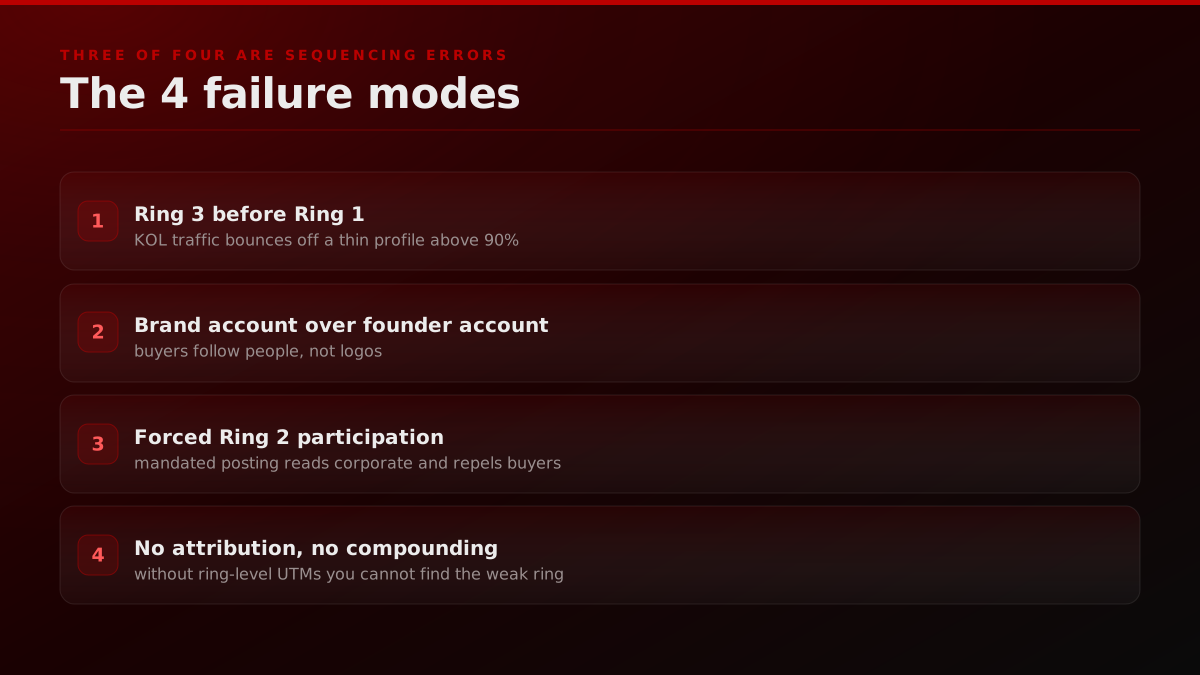
Most SaaS founders who try the Three Ring Model fail at one of four specific points, and three of those four failures are sequencing errors rather than execution errors. Understanding the failure modes before starting the system saves the three to four months it typically takes to diagnose them from inside the failure and recalibrate the ring activation order.
Failure Mode 1: Ring 3 before Ring 1. This is the most common and most expensive failure. The founder spends $5,000 on a KOL placement, drives 2,000 people to the product, sees an estimated 0.2% conversion rate, and concludes that KOL placements do not work. They work. The profile they drove traffic to did not have enough substance to convert the audience. The fix is to build Ring 1 for 60 to 90 days before reactivating Ring 3.
Failure Mode 2: Brand account over founder account. A brand account with 50,000 followers generates less pipeline per impression than a founder account with 5,000 followers. Buyers do not follow logos. They follow people. If the founder's personal account has fewer followers than the brand account, the distribution system is built backwards. Move posting effort from the brand account to the founder account.
Failure Mode 3: Forced Ring 2 participation. Teams that mandate employee social media activity get corporate-sounding content that repels the exact audience they are trying to attract. Ring 2 only works if the participants genuinely believe in what they are posting. A team of 10 where 3 people post authentically is more valuable than a team of 10 where all 10 post inauthentically. Identify the 2 to 3 team members who naturally have opinions and invest in helping them post more effectively rather than mandating participation from reluctant contributors.
Failure Mode 4: No attribution, no compounding. Teams that do not track UTM attribution by ring cannot diagnose which ring is underperforming. They end up with an intuitive sense that "the content is working" without understanding that Ring 1 is driving 80% of the demos and Ring 3 is producing none. Without ring-level attribution, they continue spending on Ring 3 indefinitely. The UTM setup is a 2-hour task that saves thousands of dollars in misallocated Ring 3 spend.
Signal Stacking: How the Rings Compound
The Three Ring Model's compounding effect works because signals from each ring reinforce the other rings rather than operating in isolation. A Ring 1 post that earns engagement becomes a Ring 2 amplification target; a Ring 2 quote-tweet extends that post to new networks; a Ring 3 reply in a category thread pulls cold buyers back to the Ring 1 content that establishes credibility. The three reinforcement loops are specific and measurable.
Ring 1 creates the foundation. Every founder post is an AEO asset. AI search engines like ChatGPT, Perplexity, and Google's AI Overviews pull from active, authoritative voices in a category. A founder posting consistently about SaaS distribution for six months will appear in AI-generated answers on the topic, generating passive discovery from buyers who never see the original posts.
Ring 2 extends the surface area. When a co-founder or engineer quote-tweets a founder thread with genuine commentary, that thread is exposed to a new network. The compounding happens because Ring 2 participants have different audiences than the founder, often including decision-makers the founder has not yet reached.
Ring 3 drives the threads to cold audiences. Reply-guy accounts that engage substantively with relevant conversations create thread-level entry points for new buyers. A strong reply from a managed account in a thread about SaaS pricing, for example, can surface the founder's perspective to thousands of people who were not following the founder to begin with.
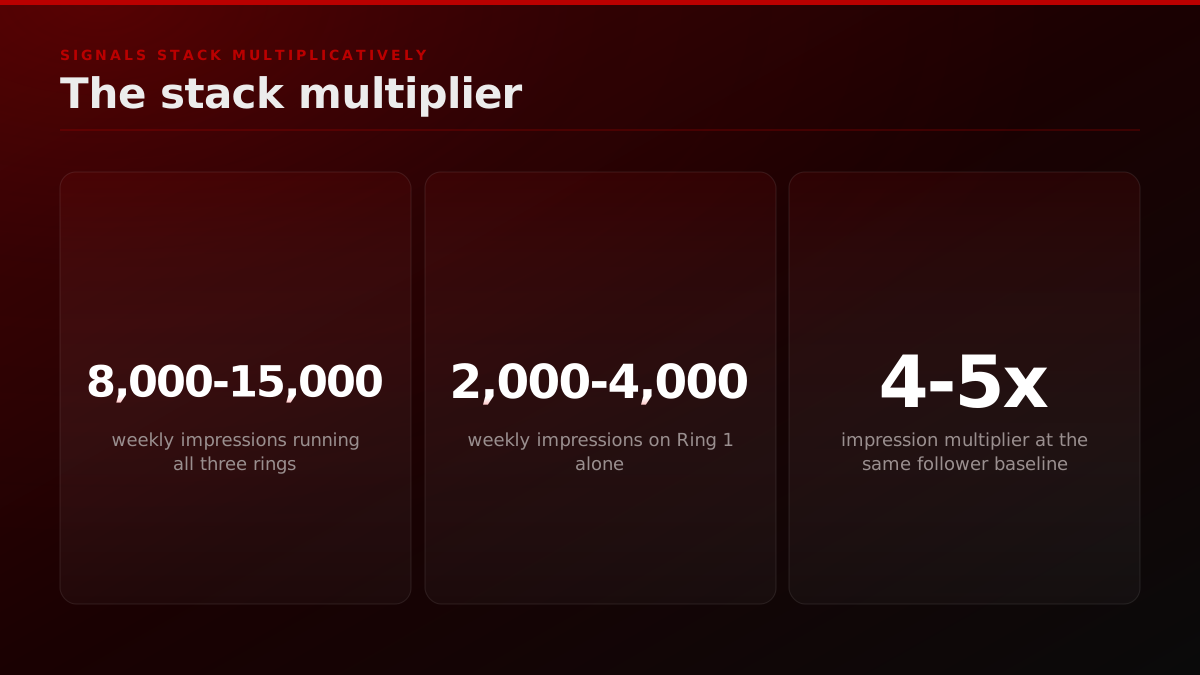
The stack multiplier: a founder with 2,000 followers running all three rings generates roughly 8,000 to 15,000 weekly impressions across the system. A founder with the same follower count relying only on Ring 1 generates 2,000 to 4,000 weekly impressions. The three-ring stack delivers a 4x to 5x impression multiplier at the same Ring 1 baseline.
The 90-Day Playbook
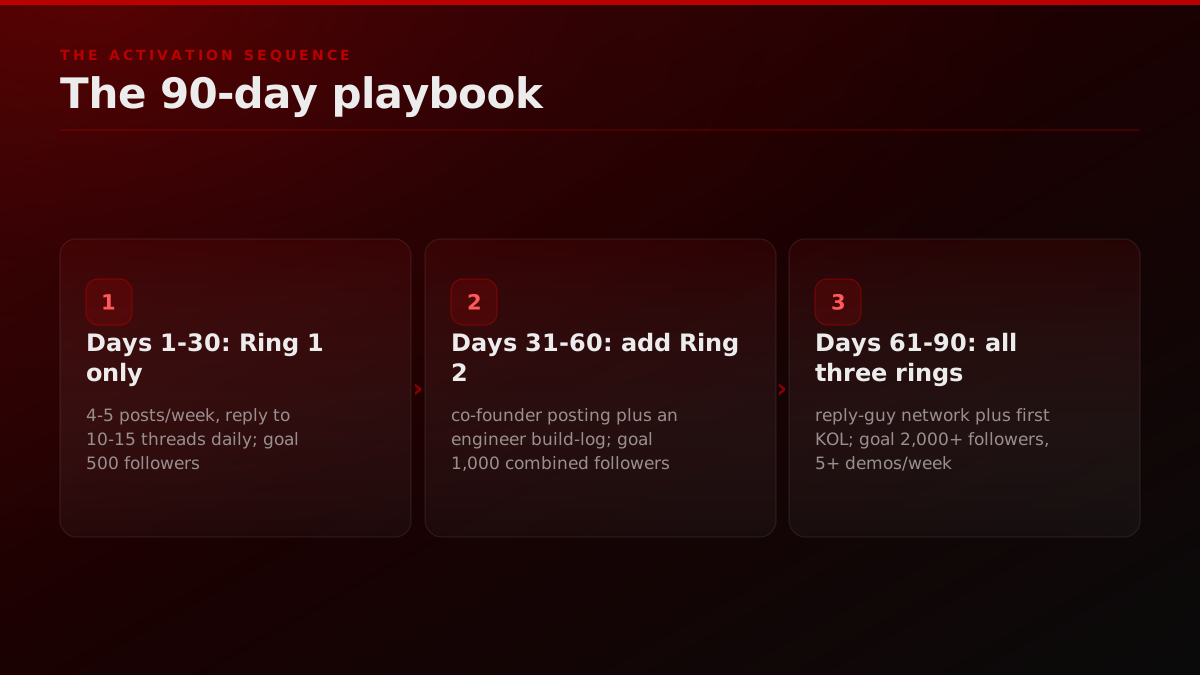
Days 1 to 30: Ring 1 only. Founder posts 4 to 5 times per week. Replies to 10 to 15 threads daily in the target category. Publishes one long-form thread per week that teaches something concrete from building the product. Goal: 500 followers and a consistent posting cadence that does not feel forced.
Days 31 to 60: Ring 1 plus Ring 2. Co-founder begins posting 2 to 3 times per week. One engineer starts a "build log" series, sharing what they shipped each week and why the decision was made. Coordinated quote-tweets on founder threads from team members who have genuine opinions. Goal: 1,000 combined followers across 3 active accounts in the team's network.
Days 61 to 90: All three rings. Reply-guy network activated at 3 accounts engaging relevant threads in the category. First KOL placement at mid-tier budget ($1,000 to $2,000). First Reddit and Hacker News community posts with genuine value, not product pitches. Goal: 2,000+ founder followers, 5+ inbound demo requests per week attributed to the Ring system.
What to measure at each milestone:
- Day 30: follower count, average impressions per post, reply rate (estimated target >2%)
- Day 60: combined team follower count, UTM-attributed referral traffic from social, demo requests from Ring 1 and Ring 2 combined
- Day 90: full UTM attribution by ring, cost per demo from Ring 3 KOL spend, inbound demo requests per week vs day 1 baseline
I scraped 100 posts and 10,169 comments from r/SaaS. Distribution is the number one pain point.
What Figma, Linear, and Vercel Did
Figma: Dylan Field posted about design tooling on Twitter for 2+ years before Figma was widely known. By the time the product hit mainstream adoption, the founder's voice was the distribution channel. The product launched into an audience that already trusted the founder's judgment on design.
Linear: Karri Saarinen built a reputation for opinionated product design thinking on Twitter, consistently sharing what he thought software tools got wrong and what a better approach would look like. When Linear launched, the founder's voice was the go-to-market. There was no launch day campaign because the distribution had been running for months.
Vercel: Guillermo Rauch is one of the most followed developer-founders on X. Every Next.js update, every infrastructure announcement, every opinion piece on web performance is a distribution event because the founder's audience is the product's audience. The brand account is almost irrelevant; the founder's personal account is the GTM channel. That developer-audience-is-the-product-audience dynamic is the engine behind how inference and GPU startups win developer adoption.
None of these companies ran a "launch day." They all ran Ring 1 for months or years before the other rings activated. The ring model formalizes what these founders did intuitively.
Crypto and Web3 SaaS: Ring 3 Adjustments
The Three Ring Model applies directly to crypto and Web3 SaaS with adjustments to the Ring 3 layer. Ring 1 and Ring 2 operate identically: founder voice and team amplification work in crypto contexts because they are grounded in authenticity, which is particularly valued in communities that are conditioned to detect grift.
Ring 3 in crypto contexts prioritizes Discord and Telegram seeding over Reddit threads, because the crypto audience is concentrated on messaging platforms and X Spaces rather than traditional forums. Crypto KOLs command premium pricing: mid-tier accounts with 50,000 to 200,000 followers charge approximately $1,000 to $8,000 per sponsored post based on IZEA's vertical-specific data.
The trust-ordering rule is even more important in crypto than in traditional SaaS. Crypto audiences have been burned by low-quality KOL placements promoting thin products, and the community memory is long. A founder with fewer than 1,000 followers who buys a large KOL placement will see the engagement collapse because the audience will check the founder's profile and find nothing there.
Crypto and Web3 Ring 3 Adjustments
Crypto KOLs with 50K to 200K followers charge $1,000 to $8,000 per sponsored post, according to IZEA's 2025 influencer pricing benchmarks. Discord and Telegram seeding replaces Reddit in most Web3 GTM stacks. The same trust-ordering rule applies regardless of vertical: Ring 1 credibility must exist before Ring 3 spend converts.
Source: IZEA 2025 Influencer Pricing Index
Measuring the System: UTM Attribution by Ring
The Three Ring Model only compounds if it is measured, because without attribution data the operator cannot identify which ring is producing qualified pipeline, which team members in Ring 2 are driving the most referral traffic, or which KOL placements in Ring 3 are converting versus burning spend. UTM tagging by ring and by individual participant is the measurement layer, and the setup is straightforward enough to wire in a single afternoon.
Ring 1 attribution: Every link in the founder's bio and threads carries utm_source=founder and utm_medium=twitter or utm_medium=linkedin. Track the journey from impression to demo booking in your CRM.
Ring 2 attribution: Each participating team member gets a unique UTM suffix: utm_source=team_jsmith for example. This lets you identify which employees drive the most qualified referral traffic and double down on their participation.
Ring 3 attribution: Each KOL placement gets a unique UTM per placement so you can calculate cost per demo by KOL. Reply-guy network engagement is tracked through thread-level engagement rate and correlated with demo request volume in the same week.
System-level KPI: pipeline-weighted impressions per week across all three rings. This single metric captures both the volume (impressions) and the quality (pipeline weight) of the distribution system, and it compounds over time as Ring 1 credibility increases the conversion rate of Ring 2 and Ring 3 reach.
FORKOFF Founder-Funnel Cohort benchmarks:
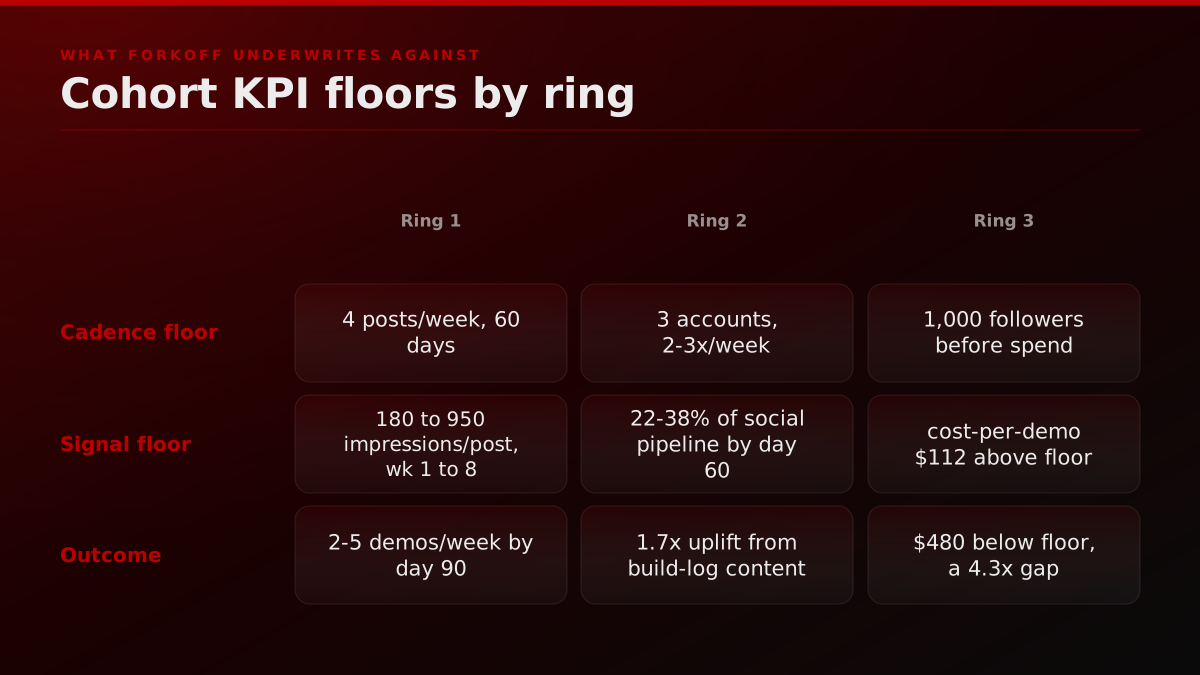
The FORKOFF Founder-Funnel Cohort is the set of 36 SaaS companies that ran the full three-ring system through FORKOFF between 2025-Q3 and 2026-Q1. The cohort includes 22 B2B SaaS, 9 developer-tool SaaS, and 5 Web3 SaaS companies, ranging from pre-seed (8 companies) to Series B (3 companies). The cohort data informs the per-ring KPI floors below, and these floors are what FORKOFF holds its own client engagements against.
For Ring 1, the cohort floor is 4 posts per week sustained for 60 days, a median impressions-per-post figure that climbs from 180 in week 1 to 950 by week 8, and 2 to 5 inbound demo requests per week by day 90 attributed via the founder-source UTM. Founders who fell below the 4-posts-per-week cadence saw their week-8 impressions-per-post stay below 400, which is the empirical threshold below which Ring 2 amplification produces negligible return. Below 400, the team posts spread thin signal rather than amplifying a strong one.
For Ring 2, the cohort floor is 3 active team accounts posting 2 to 3 times per week, with a combined referral-traffic contribution of 22 percent to 38 percent of total social-attributed pipeline by day 60. Engineering-led "build log" content was the highest-yielding format inside Ring 2, producing a 1.7x referral-rate uplift over generic team commentary in the cohort sample.
For Ring 3, the cohort floor is 1,000 founder followers as a hard prerequisite before any paid KOL or reply-guy spend activates. Below that floor, the cohort median cost-per-demo from Ring 3 was an estimated $480, compared to $112 above the floor, a 4.3x efficiency gap that confirms the trust-ordering rule empirically. The cohort also tracked Hacker News and Product Hunt launch events as Ring 3 surfaces rather than standalone campaigns, because the only launches that produced sustained demo pipeline in the cohort were those tied to an active Ring 1 founder voice.
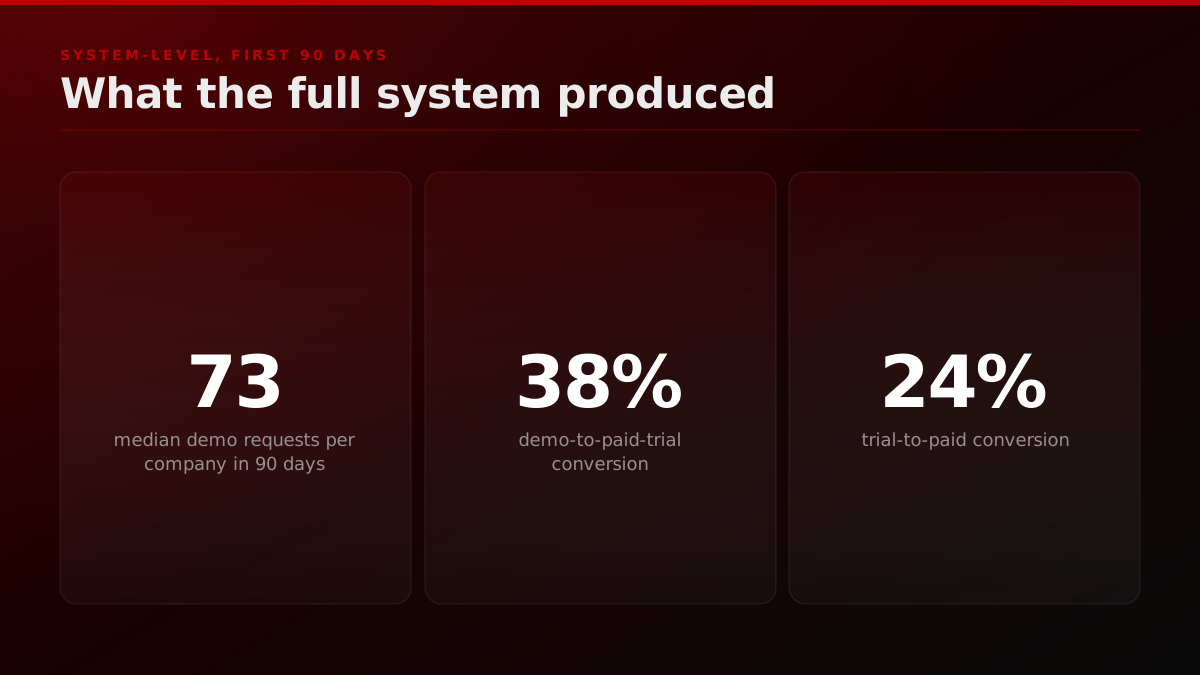
System-level, the cohort produced a median 73 demo requests per company in the first 90 days of running all three rings, with a 38 percent demo-to-paid-trial conversion rate and a 24 percent trial-to-paid conversion. The compounding signal is what FORKOFF underwrites engagements against, not the launch spike.
The Bottom Line
SaaS go-to-market in 2026 is not a launch event followed by organic growth. It is a compounding distribution system built across three rings that each require time, sequence discipline, and consistent operator effort before the cross-ring signal stacking produces qualified pipeline at scale. A founder playing the single-launch game is not competing with founders who run the Three Ring Model.
The Three Ring Model is not faster. It is not easier. But it compounds. And in 2026, compounding distribution is the only moat that AI cannot replicate because it is built on authentic founder expertise, genuine team participation, and network relationships that take time to develop.
The sequencing matters as much as the rings themselves. Ring 1 is not a prerequisite you check off and move past. It is the continuously running engine the other two rings amplify. Founders who step back from Ring 1 posting once they activate Ring 3 see their KOL conversion rates drop within 4 to 6 weeks because the profile they are driving traffic to goes stale. Distribution is not a campaign with a start date and an end date. It is the operating system for how buyers discover and trust you.
Start with Ring 1. Post 4 times this week. Reply to 15 threads tomorrow. Build the voice. The other two rings follow.
If you need the full three-ring system run for you while you focus on building, or if you want AI-powered SEO to make sure your content compounds in search alongside social, talk to us. The Three Ring Model is how distribution budget turns into pipeline. Build the rings in order, measure each one with UTM attribution, and let the compounding work.