
How much does a UGC video cost in 2026?
Updated Jul 23, 2026

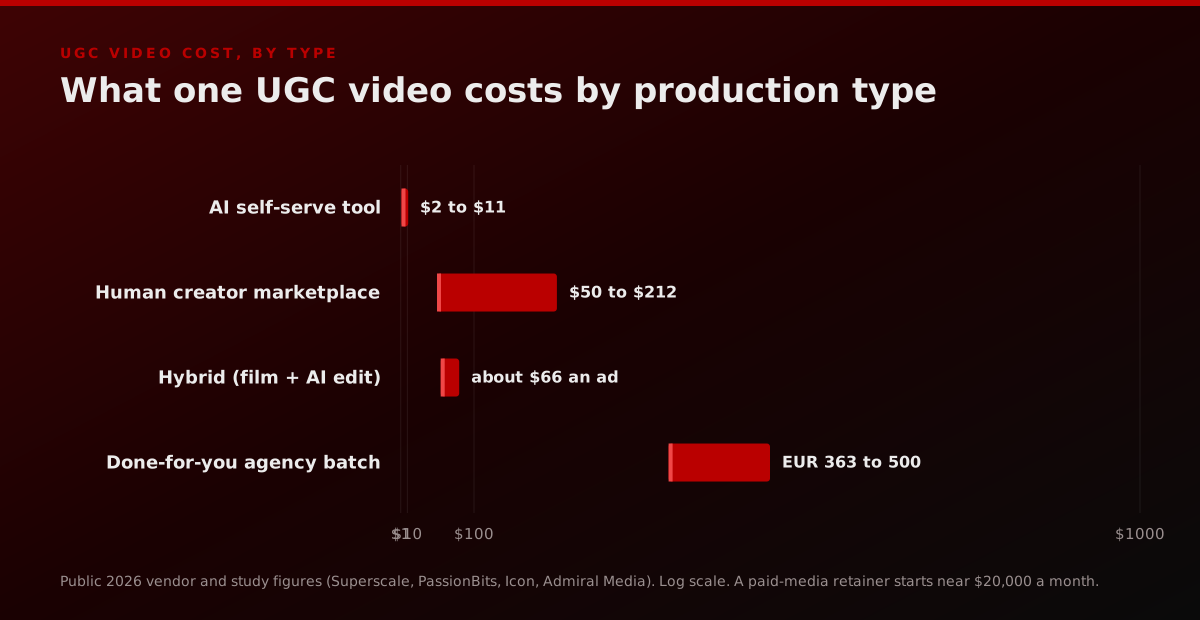
A UGC video costs anywhere from about $2 to $500, and the number depends entirely on who or what makes it. AI-UGC tools sit at the bottom: Superscale's January 2026 study puts effective AI cost at about $2 per video, with MakeUGC under $9 a video, ClipLoft at $2.50 to $4.90, and Arcads at roughly $11 (about $110 for ten). A human creator runs $150 to $212 per video (Superscale, 2026), with marketplaces like PassionBits at $50 to $89 and platforms like Icon at about $66 an ad ($399 for six). Done-for-you agencies charge more: Admiral Media discloses batch tiers of roughly EUR 363 to 500 per video, and paid-growth shops like The Remarkable start near $20,000 a month. Almost every one of these prices production only. FORKOFF prices UGC on the outcome, pairing the video with distribution through the same engine that has processed 5B+ views, so the bill maps to reach a real person saw, not to a rendered file.
- 01AI self-serve tools The floor of the market. MakeUGC bills $49 a month for five videos (under $9 each), Arcads about $110 a month for ten (roughly $11 each), Creatify and HeyGen from $29 to $49 a month, and ClipLoft $2.50 to $4.90 per video with commercial rights. Superscale's January 2026 study puts the effective cost near $2 a video at volume. You operate the tool and get back a rendered file.
- 02Human creator marketplaces A real person films the content. PassionBits quotes about $50 to $89 per video ($25 to $30 in bulk at 300 to 400 a month), and Superscale benchmarks a human creator video at $150 to $212. You get authenticity a synthetic avatar cannot fake, at roughly 20 to 100 times the unit cost of an AI clip.
- 03Hybrid human-plus-software Platforms like Icon combine a filmed creator with AI editing at about $399 for six ads (roughly $66 an ad), the closest analog to a managed model. You trade some unit price for less production overhead than sourcing creators yourself.
- 04Done-for-you agency batches A studio produces the whole set. Admiral Media discloses batch tiers around EUR 10,000, 16,000, and 29,000 (roughly EUR 363 to 500 per video). You buy volume and consistency, but the deliverable is still footage, not a result.
- 05Paid-media retainer UGC as one lever inside a managed growth program. Shops like The Remarkable set a floor near $20,000 a month, with the creative bundled into ad management. The retainer buys ongoing testing, not a per-video price you can compare cleanly.
- 06The distribution denominator Every price above is for making the video. Superscale's own data shows testing 50 variations costs $99 with AI versus $7,500 to $10,600 with creators, but 50 clips nobody sees are worth nothing. Normalize every quote to cost per view a real person actually saw. FORKOFF is outcome-priced and pairs production with distribution, so spend maps to delivered reach, not to rendered files.
The price is really a spectrum of what you are buying
UGC cost looks confusing because a single label covers three different products. At one end are AI-UGC tools that generate a synthetic clip for a couple of dollars: Superscale's January 2026 study puts the effective cost at about $2 a video, and self-serve tools like MakeUGC (under $9), ClipLoft ($2.50 to $4.90), and Arcads (about $11) compete almost entirely on that unit price. In the middle are real people filming real footage, roughly $50 to $212 a video depending on the marketplace (PassionBits, Superscale, 2026). At the top are done-for-you agencies charging per batch (Admiral Media at roughly EUR 363 to 500 a video) or a paid-media retainer (The Remarkable near $20,000 a month). The right question is not which is cheapest, it is which product the quote in front of you is actually selling.
Cheap production is worthless without distribution
The whole AI-UGC category leads with the same math: 50 variations for $99 in 16 minutes versus $7,500 to $10,600 and two to three weeks with human creators (Superscale, January 2026). It is a real cost advantage, and it is also a trap, because spending $99 to make 50 clips does nothing if none read as authentic or none get distributed at scale. 79 percent of consumers say human-style UGC drives their purchases, which is exactly why a synthetic clip that never gets seeded, whitelisted, or seeded into the communities where buyers research is a rendered file, not a campaign. The vendors in this lane stop at the timeline. The value was always in getting the content in front of the right feed, which is a distribution cost the unit price never included.
How FORKOFF prices UGC
FORKOFF prices UGC videos on the outcome rather than per rendered clip. The production is the easy half. The half almost every tool and agency skips is distribution: getting the content in front of buyers through paid social, Spark Ads and creator whitelisting, and seeding into the communities people read before they buy, which is why FORKOFF pairs UGC with Reddit marketing and with clipping so long-form founder and podcast footage becomes short UGC-native cuts. Reporting is on qualified views, bot and duplicate filtered and geo-checked, the same integrity layer behind the clipping network that has processed 5B+ views. Because the model bills against delivered reach, the number falls out of what a real person saw, not out of a per-video rate card.
What UGC videos cost in 2026 by production type (cited bands)
| Type | Who makes it | Typical 2026 price | Source |
|---|---|---|---|
| AI self-serve tool | You operate the software | About $2 to $11 per video | Superscale 2026; MakeUGC, Arcads, ClipLoft rate cards |
| Human creator marketplace | A real creator films it | $50 to $212 per video | PassionBits; Superscale 2026 |
| Hybrid human-plus-software | Filmed creator, AI editing | About $66 per ad ($399 for 6) | Icon rate card |
| Done-for-you agency batch | A studio produces the set | About EUR 363 to 500 per video | Admiral Media disclosed tiers |
| Paid-media retainer | Bundled into ad management | From about $20,000 per month | The Remarkable spend floor |
| Outcome-priced (FORKOFF) | Produced and distributed | By application, against qualified views | Maps to delivered reach, not a rate card |
Bands are published 2026 vendor and study figures (Superscale, Admiral Media, PassionBits, Icon, MakeUGC, Arcads, ClipLoft, The Remarkable), not FORKOFF numbers, and they price production only. Verify with each vendor before you budget. The number that decides real cost is cost per view a genuine person saw, which is a distribution figure the unit price never includes.
Frequently asked questions
How much does one UGC video cost?
It depends on who makes it. An AI-UGC tool renders a clip for roughly $2 to $11 (Superscale puts the effective AI cost near $2 a video), a human creator marketplace charges about $50 to $212, a hybrid platform like Icon works out to about $66 an ad ($399 for six), and a done-for-you agency batch runs roughly EUR 363 to 500 a video (Admiral Media). Those are production prices only, before any distribution.
Why is AI UGC so much cheaper than a human creator?
Because it removes the person. Superscale's January 2026 data has 50 AI variations at $99 in about 16 minutes versus $7,500 to $10,600 and two to three weeks with real creators. The saving is real, but a synthetic clip only pays off if it reads as authentic and actually gets distributed. 79 percent of consumers say human-style UGC drives purchases, so the cheap render is worth nothing if nobody trusts it or sees it.
How much does a UGC agency charge?
Done-for-you UGC agencies bill per batch or as a retainer. Admiral Media discloses tiers around EUR 10,000 to 29,000 (roughly EUR 363 to 500 a video), and paid-growth shops like The Remarkable set a floor near $20,000 a month with the creative bundled into ad management. A per-video marketplace like PassionBits is cheaper ($50 to $89) but ships footage only, with no distribution and no outcome guarantee.
Is cheap AI UGC worth it?
It is worth it as raw material, not as a campaign. The tools win on unit price ($2 to $11 a video) and speed, but almost none guarantee an outcome or distribute what they make. Spending $99 on 50 clips does nothing if none get seen. The cheapest route that actually works spends its budget on distribution and on screening the reach, because a bargain clip in front of nobody is the most expensive kind of cheap.
What does FORKOFF charge for UGC videos?
FORKOFF is outcome-priced rather than per-video-priced. The engagement is scoped by application and reported on qualified views (bot and duplicate filtered, geo-checked) on an audit ledger, the same integrity layer behind the clipping network that has processed 5B+ views. You are paying for produced-and-distributed reach a real person saw, not for a rendered file.
How do I compare UGC prices fairly?
Normalize every quote to cost per qualified view, a genuine in-region person who actually saw the content, not cost per rendered clip. Add the production price to whatever it costs to distribute the content, then divide by the reach that survives a fraud and geo screen. A $2 AI clip with no distribution usually costs more per real view than a higher-priced video that is actually seeded where buyers look.
Receipts, deep dives, and playbooks.
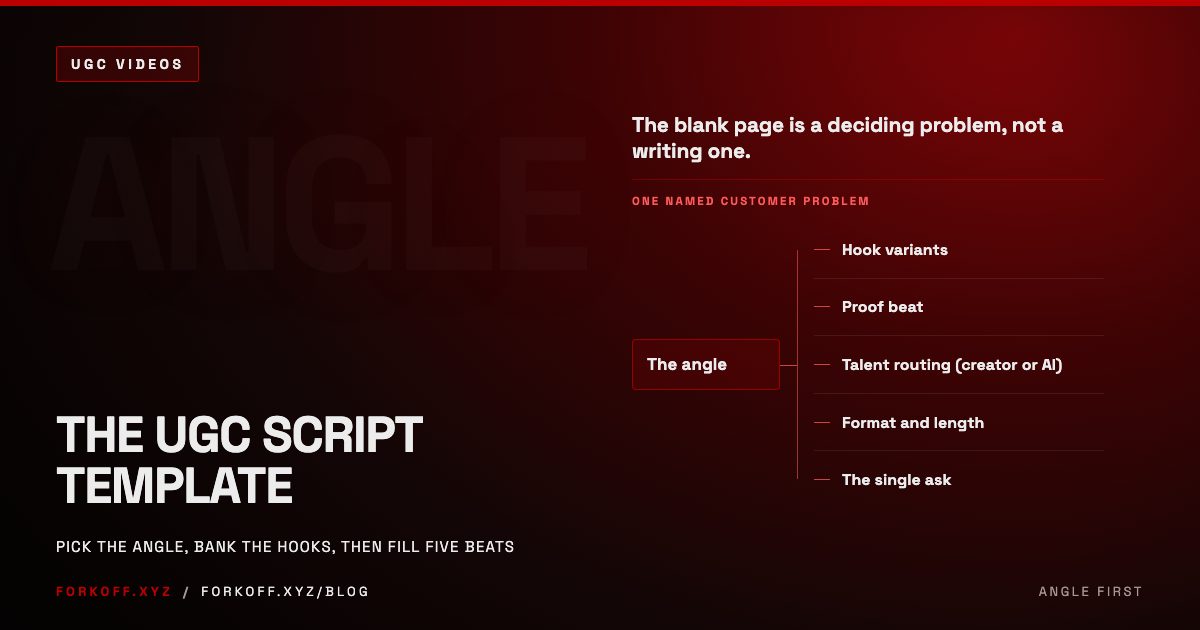
The UGC Script Template: Pick the Angle Before You Write a Word
A UGC script template that starts with the angle, not the hook. The five-beat skeleton, the hook bank, and how to route each angle to a creator or AI.
 Read
Read
UGC Agency vs In-House vs AI: The 2026 Hire Decision
How to source UGC in 2026: when to hire a UGC agency, build an in-house creator team, or use AI, compared on real cost, performance, and platform risk.
Read