Sourcing UGC in 2026 means choosing between three ways to get user-generated-style video made: hire a UGC agency, build an in-house creator team, or generate it with AI. There is no source that wins every time. The right one depends on how much volume you need, what stage you are at, how trust-sensitive your product is, and how much platform risk you can carry. This guide puts all three side by side on real cost and performance so you can pick the mix, not a slogan. If the mix includes an agency, the selection test is at how to choose a UGC agency.
The short version
There is no universal winner between a UGC agency, an in-house creator team, and AI-generated video. The right source depends on your volume, your stage, how trust-sensitive your product is, and how much platform risk you can carry. In 2026 the per-video price runs from near zero for an AI clip to $300 to $600 for an agency video to $4,000 for a name influencer, per operators posting real numbers on X and Reddit. A UGC agency wins when you need senior creative judgment and reliable output without hiring. In-house wins when you need a stable brand voice and continuous volume. AI wins for cheap, high-volume angle testing, with the caveat that Meta and TikTok now score creative for AI signals and buyers still trust a real face on high-consideration products. FORKOFF runs UGC as outcome-priced execution rather than a retainer or a tool subscription.
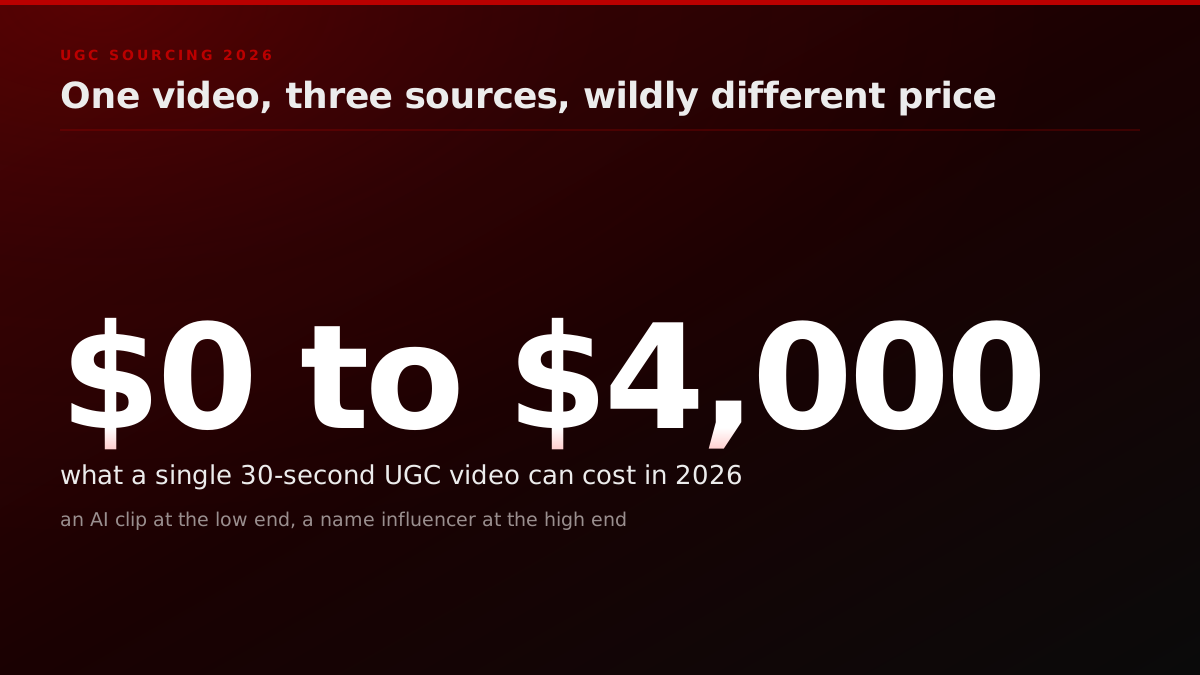
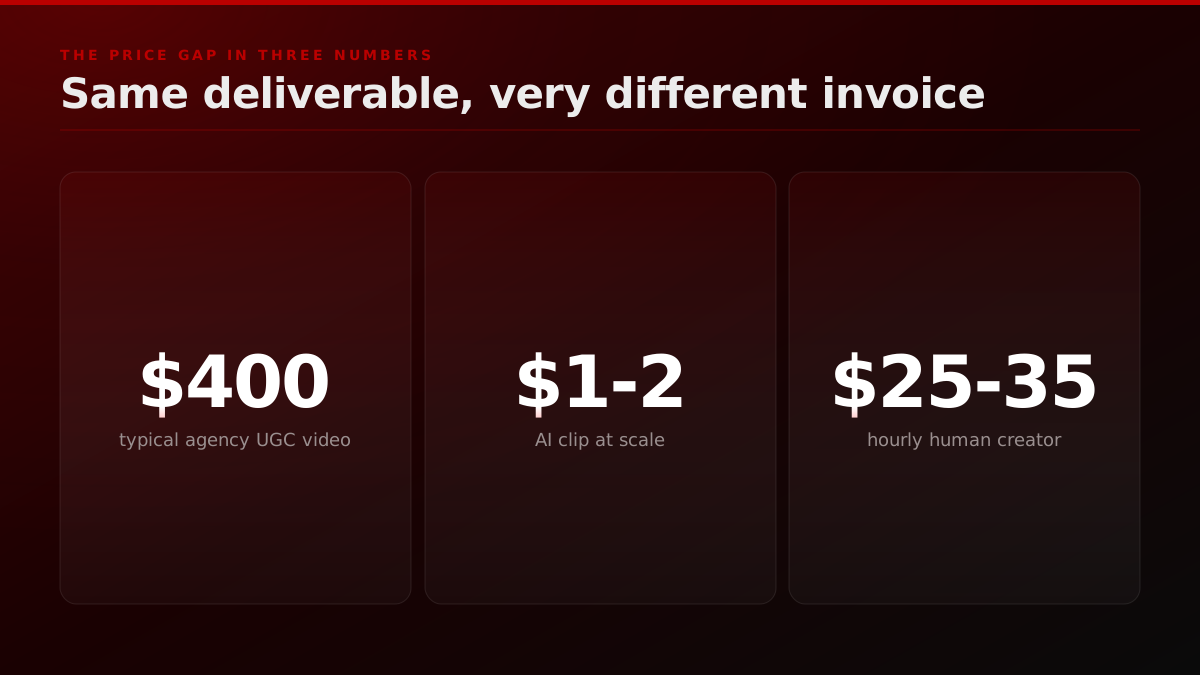
If you are trying to decide how to source UGC in 2026, the first thing to accept is that the price of a single video has come completely unglued. The same 30-second clip can cost you nothing if a model generates it, $25 to $35 an hour if a real person films it, $300 to $600 if a UGC agency delivers it, or up to roughly $4,000 if a name influencer posts it. Those are not made-up numbers. They come from operators posting real invoices on X and in r/FacebookAds through mid-2026, and the spread is the entire reason this decision is hard. The current per-video bands by source are kept at how much a UGC video costs. When the same deliverable ranges four-thousand-fold in price, "which source" stops being a preference and becomes a real strategy question with real money attached.
The reason the stakes are real is that video is no longer optional. Roughly nine in ten businesses now run video as a marketing channel and 89% of people say a video convinced them to buy, while businesses keep publishing more video every year, per Wistia's benchmarks. When a channel that ubiquitous has a four-thousand-fold price range on its core asset, sourcing is not a back-office detail, it is the lever that decides how many shots on goal your budget buys.
The debate is loud right now because the ground moved fast. AI video generation got good enough to fool people in the same year that hourly-human marketplaces made real creators cheap, and both landed while the classic UGC agency was still quoting $600 a video. So brands are caught between three sources that each look obviously right depending on which thread they read last. One camp screams that agencies are a scam. Another camp screams that AI killed human creators. A third camp is quietly building creator networks and outperforming both. They are all partly right, which is why a decision framework beats a hot take.
Chase
@Chase_Commerce
every ecom brand is getting SCAMMED right now... you're paying $400 for one UGC video from a "creator" who cares more about their aesthetic than your ROAS. meanwhile the sharpest brands are sitting on a price gap nobody's really talking about. first, the lie you've been sold:
The honest answer, before any of the detail below: you almost certainly want a mix, sequenced by cost. Test angles with the cheapest source that can produce volume, find the few clips that convert, then fund those winners with whichever source produces the best version for your product. The rest of this guide is how to build that sequence for your specific situation, and how to avoid overpaying for the wrong lane.
What is a UGC agency, and what does it actually do?
A UGC agency is a managed service that sources creators, briefs them, and delivers finished user-generated-style videos on a cadence, usually for a monthly retainer plus a per-video or per-package rate. What you are paying for is not the footage itself, which anyone can buy on a marketplace, but the layer around it: creator vetting, scripting, hook direction, editing, revisions, and a reliable weekly output you do not have to manage. A good agency already has systems for rapid sourcing and testing, so it can ship ten to fifteen new videos a week without you hiring anyone. That reliability is the product. The trade is that you pay a premium over raw marketplace or AI cost, and you give up some control over turnaround and creative direction because you are one of many clients.
The reason the category exists at all is that producing consistent, on-brand UGC is genuinely annoying to run yourself. Finding creators who deliver, writing briefs that convert, chasing revisions, and keeping a testing cadence alive week after week is a real operational load, and an agency absorbs it. That is worth real money to a founder who does not want to build a content operation. The mistake is assuming the agency premium buys better performance. It buys reliability and senior judgment, not a guaranteed higher ROAS, and on the raw testing phase a $2 AI clip and a roughly $400 agency video are competing to answer the same cheap question: does this angle work.
That distinction matters because the thing that actually moves ad performance is the creative, not the invoice behind it. HubSpot's video marketing research and Sprout Social's video data both land on the same point: short-form, native-feeling video is what the feeds reward, and a good hook from a $30 marketplace clip can beat a polished agency piece that misses. So the agency is not buying you a better result, it is buying you a reliable pipeline of tries, and whether that pipeline is worth $300 to $600 a video depends entirely on whether you have already found the angle worth scaling.
Operator noteThe brands winning in 2026 rarely pick one source. They test with cheap AI and marketplace clips, then fund the winners with human creators.
UGC agency vs in-house vs AI: the three ways to source creative in 2026
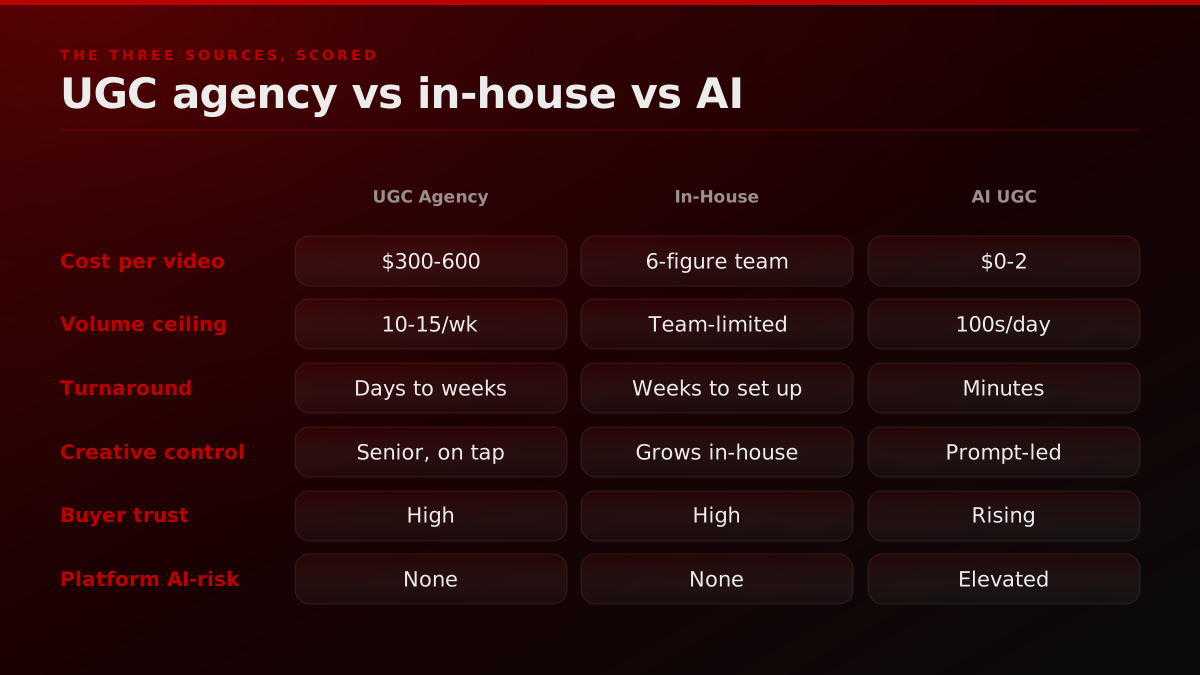
The three sources differ on six things that actually decide the call: cost per video, volume ceiling, turnaround, creative control, buyer trust, and platform risk. A UGC agency gives you senior creative and reliable cadence at $300 to $600 a video, capped at maybe ten to fifteen a week. An in-house team gives you the most control and the strongest brand voice, but only after you absorb a loaded salary cost that one DTC operator put at six figures a year. AI gives you near-zero cost and effectively unlimited volume in minutes, at the price of rising-but-unsettled buyer trust and elevated platform risk. No source wins all six rows, which is exactly why the answer is a blend weighted to your situation.
UGC agency vs in-house vs AI, side by side (2026)
| What you are comparing | UGC agency | In-house team | AI UGC |
|---|---|---|---|
| Typical cost per video | $300 to $600 | Loaded salary cost | $0 to $2 |
| Realistic volume ceiling | 10 to 15 a week | Team-dependent | Hundreds a day |
| Time to first output | Days to weeks | Weeks to stand up | Minutes |
| Creative judgment | Senior, on tap | Grows with the team | Prompt-dependent |
| Buyer trust on high-consideration products | High | High | Rising, not settled |
| Meta and TikTok AI-signal risk | None | None | Elevated |
Cost figures are directional 2026 ranges from operators posting real numbers on X and r/FacebookAds. Verify against your own quotes.
Look at the grid and the pattern jumps out. The agency and the in-house team cluster on trust and reliability. AI clusters on cost and volume. Nobody is strong everywhere. That is the structural reason the "agencies are dead" and "AI killed creators" takes are both wrong: they each describe one column of a six-column decision. The operators winning in 2026 are not loyal to a source, they are loyal to the outcome, and they move work between sources as the job changes from cheap testing to trust-heavy scaling.
The demand case for video is settled, so the fight is over how to source it
89% of people say watching a video has convinced them to buy a product or service, and roughly nine in ten businesses now use video as a marketing tool, per Wyzowl's State of Video survey. Nobody is arguing about whether to run UGC ads anymore. The open question in 2026 is who should make them: an agency, your own team, or a model. That is a sourcing decision, not a strategy debate.
Source: Wyzowl, State of Video Marketing
One more framing before the money detail. Because platforms now let the creative decide who sees the ad, UGC has become a volume game more than a craft game. Meta and TikTok read the creative itself as the targeting signal, so the winning motion is many hook tests, not one hero film. As Sprout Social's social-video research and HubSpot's work on how video consumption is changing both show, attention now concentrates in the first seconds of short vertical clips, which is a ranking input, not a style preference. That single shift is what pulled buyers toward cheaper sources: not because the agency video is worse, but because you need a lot of tries, and the expensive path caps how many tries you can afford.
Creative is the targeting now, which turns UGC into a volume game
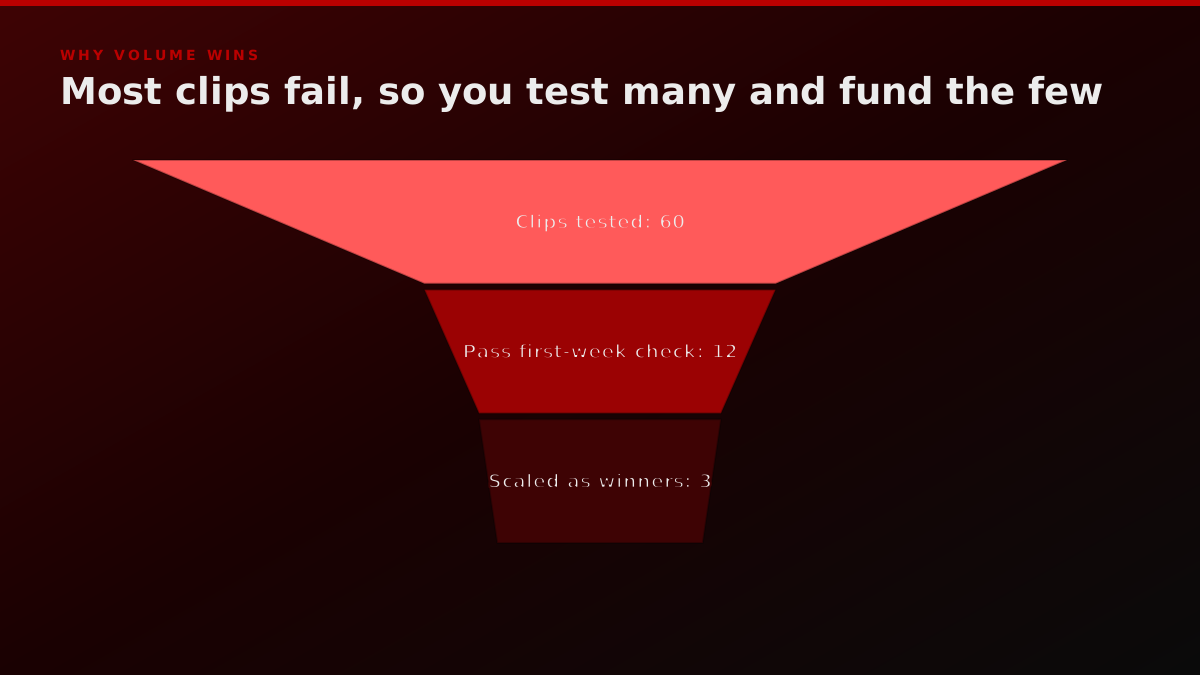
On Meta and TikTok the creative itself decides who sees the ad, so the winning motion is high volume plus relentless hook testing, not one polished hero video. Most clips fail, which is exactly why cheap at-bats matter. This is the single biggest reason AI and low-cost human UGC have pulled buyers away from the $600 agency video: not because the agency video is worse, but because you need many tries and the expensive path caps your tries.
Source: HubSpot, Video Marketing research
How much does each UGC source cost in 2026?
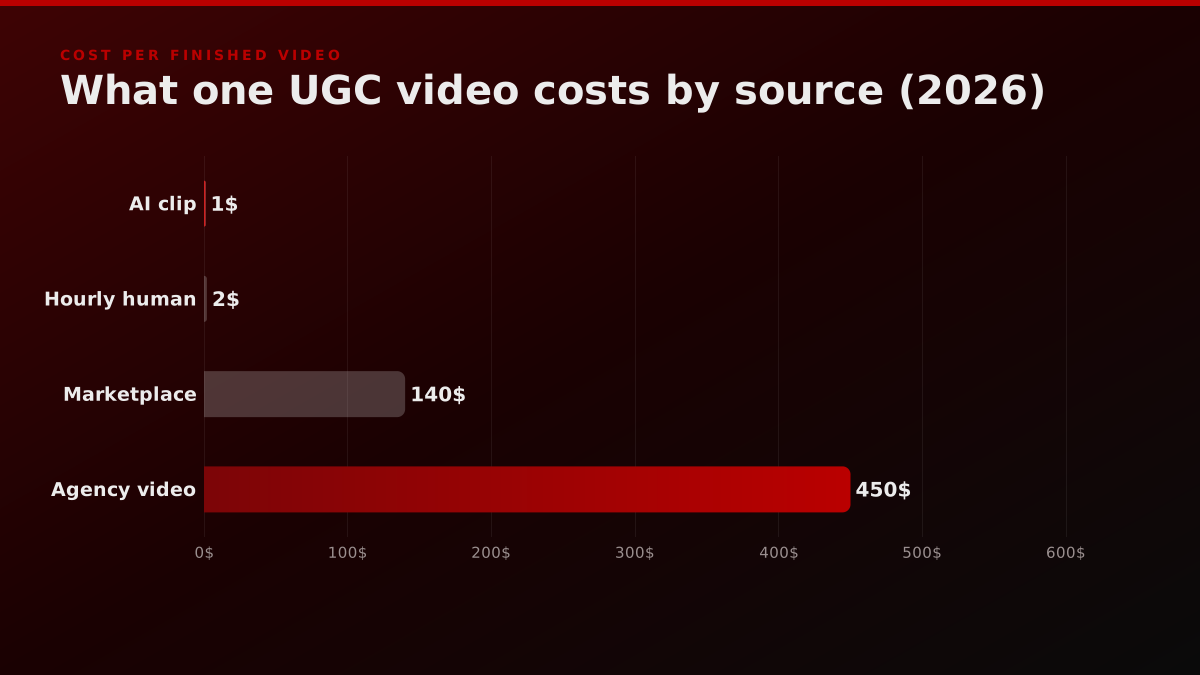
In 2026 the per-video cost runs from roughly $0 to $2 for an AI clip, $25 to $35 an hour for an hourly human creator (which lands around $1 to $2 a finished clip at volume), $30 to $250 for a marketplace video, $300 to $600 for a UGC agency video, and up to $4,000 for a name influencer. Those numbers come from operators posting real spend on X and Reddit through mid-2026, so treat them as directional ranges rather than fixed quotes. The headline is the gap: the cheapest and most expensive ways to get a comparable 30-second clip differ by three orders of magnitude, and most of that premium is buying reliability and reach, not raw performance.
What each UGC source actually costs in 2026
| Source | Cost signal | What that buys |
|---|---|---|
| AI-generated clip | $0 to $2 a video at scale | Volume of variants, uneven realism, platform risk |
| Hourly human creator | $25 to $35 an hour | Real faces by the hour, about $1 to $2 a clip |
| Marketplace (Fiverr, Billo) | $30 to $250 a video | Fast angle tests without a retainer |
| UGC agency | $300 to $600 a video | Managed sourcing and senior creative on a cadence |
| Name influencer | Up to $4,000 a video | Reach and a known face, weak per-dollar UGC |
Ranges reported by operators (Chase on X, r/FacebookAds, r/shopify_hustlers) in mid-2026. Treat as estimates, not quotes.
The cheap end is where the interesting behavior is. On r/FacebookAds, one media buyer described swapping $20,000 of agency angle-testing for about $250 of Fiverr UGC, and using the fast feedback to shape the real campaign. The comments on that thread were not surprised, they were nostalgic, with veterans pointing out that marketplace UGC for angle testing predates the whole "UGC creator" economy. The lesson is not that agencies are worthless. It is that spending premium money to answer a cheap question is the most common way founders waste UGC budget.
I used to drop 20K+ on creative agencies just to test new ad angles. This time, I ordered five short UGC videos from Fiverr for about $250 total. They weren't perfect, but they gave me fast feedback on what messaging actually works and that shaped the next big campaign.
The smartest thing I did this quarter: testing ad hooks with Fiverr UGC instead of agencies - helpful tip before the holidays season
I used to drop 20K+ on creative agencies just to test new ad angles. This time, I ordered five short UGC videos from Fiverr for about $250 total. They weren't perfect, but they gave me fast feedback on what messaging actually works and that shaped the next big campaign.
The hourly-human model is the quiet disruptor in the middle. Operators report building rosters of eight to ten creators paid $25 to $35 an hour on platforms built for it, then getting fifteen or more filmed videos an hour, which collapses the effective cost to a dollar or two a clip while keeping a real human on camera. That combination, real faces at near-AI cost, is why some brands that went all-in on AI last year are reportedly rebalancing back toward human creators in 2026. It is also the model that makes a $400 agency video hard to justify for volume testing, because you are getting a real person for a fraction of the price.
Operator noteOne UGC video can cost $0 with AI or $4,000 from a name influencer. Same deliverable, four-thousand-fold price range.
If you want the full production system behind high-volume UGC for a specific channel, the AI-UGC playbook for app growth breaks down how apps like Cal AI run a creator engine at scale, and the influencer marketing pricing tiers guide covers what real creators charge once you move from testing to named talent. This guide stays on the sourcing decision itself.
Does AI UGC actually perform as well as human UGC?
AI UGC does not outperform human UGC by default, and it does not lose by default either. What decides performance is the format and the fit, not who or what made the clip. AI has closed the realism gap fastest on low-consideration products, where a generated face demoing a simple app can convert as well as a filmed one. On high-consideration and trust-heavy purchases, a real person with a believable story still converts better, because the persuasion is coming from perceived authenticity, and research on user-generated content consistently finds shoppers trust real-person content over polished brand assets. That trust edge is exactly the thing AI is still catching up on, and it is why the first-seconds attention of a believable human hook still outperforms a synthetic one on considered purchases. The 2026 complication is platform risk: Meta and TikTok now score creative for AI signals, so careless AI volume can quietly lose reach even when the clip itself looks fine.
Platforms now score your creative for AI signals
Meta and TikTok have both rolled out AI-content labeling and detection, and operators report the classifiers behave like a tax that has memory: an account that keeps submitting obvious AI creative sees reach decay over time. That does not make AI UGC unusable, it makes cheap-and-careless AI UGC a distribution liability. The teams that get away with it treat AI as one input in a mixed roster, not the whole roster.
Source: Operator reports, X (mid-2026)
The appetite for AI is not a fringe thing. Tools promising thousands of UGC videos from a single URL are pulling seven-figure view counts on X, and the underlying models genuinely can produce a clip that most people cannot clock as synthetic on first watch. That is real, and it is why AI belongs in the roster. The catch is the one an experienced operator flagged bluntly: an AI-UGC founder admitted his own best-performing content uses real humans, even while his product's marketing says creators are obsolete. When the people selling AI UGC quietly run human content on their own accounts, that tells you where trust still lives.
Fastlane
@UseFastlane
Today we're introducing Claude for AI UGC. Just enter your website and Fastlane instantly creates thousands of viral videos promoting your product. This is truly insane.
an AI UGC founder told me his own best performing content uses real humans lol. his whole product generates AI videos, and his marketing says human creators are obsolete. meanwhile his own account is founder content.
Operator noteAI UGC closes the realism gap fastest on low-consideration products. On high-trust purchases, a real face still converts better.
So the useful way to think about AI is as the cheapest way to take a lot of at-bats, not as a replacement for the roster. Generate volume to find the angle, watch how the platform treats it, and rebuild the winners with a human creator when the product is trust-sensitive or when your account is starting to read as all-AI. A data-led head-to-head between AI and human creators from a creative-analytics team lands in the same place: the answer is a measured mix, decided by performance data, not by which camp is louder this week.
AI Ads vs Human Creators: Which Performs Better? (UGC Expert & AI Engineer Reveal Data)
Motion (Creative Analytics)
A data-led head-to-head between AI ads and human creators from a creative-analytics platform, exactly the performance question this guide is built to answer.
How many UGC videos do you actually need?
You need enough videos that cost per clip becomes your binding constraint, because UGC is a volume game and most creative fails. Operators running paid social commonly produce on the order of ten to fifteen new creatives a week and expect the majority to underperform, because the platform uses the creative as the targeting and you are effectively buying at-bats. That is the whole economic case for cheap sourcing: if you can run twenty angles for the price of one agency video, you find the winner faster and cheaper. The winner then earns the expensive treatment, a human creator, a proper edit, paid amplification, because now you are funding a proven asset instead of gambling on an unproven one.
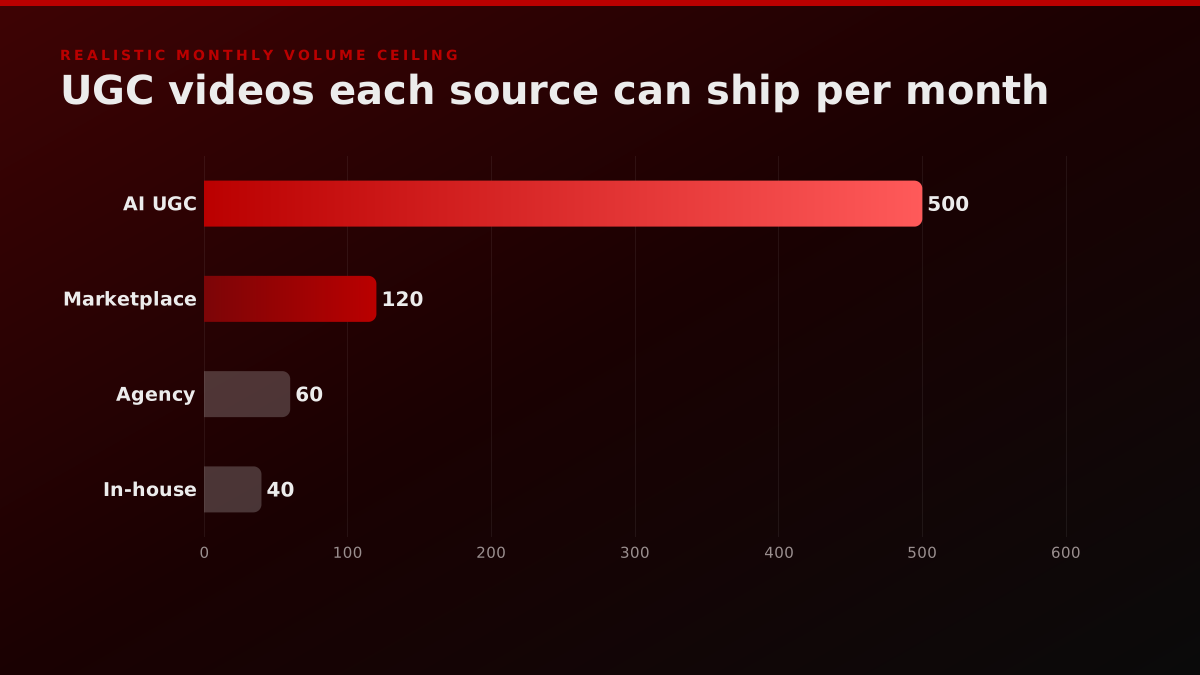
This is where the sources separate hardest. An agency capped at ten to fifteen videos a week is fine for a steady program but a bottleneck when you want to test forty angles this month. AI can produce hundreds of variants a day, which is overkill for most brands but decisive when you are hunting for a hook. In-house sits in between and depends entirely on how much you invested in creators and editors. The volume ceiling is not an abstract spec, it is the number that decides how many chances you get to find the clip that actually moves cost per acquisition.
kuch (vibecoding arc)
@thekuchh
his app makes $200,000 a month with $0 in ad spend 1. 2 million downloads in 9 months, nearly 1 billion views, all organic 2. built through a network of about 50 UGC creators, zero paid ads 3. pay is a CPM that changes every month based on the app's own revenue, no ceiling 4.
The distribution side matters as much as the production side, which is the part most sourcing debates skip. One app in the wild is doing around $200,000 a month off a network of roughly fifty UGC creators and zero paid spend, because owned reach compounds in a way rented reach does not. That is the in-house-community model taken to its logical end, and it only works if you can build and hold a creator network, which is its own operational skill. It is worth remembering that distribution is one of the genuinely hard startup problems, which Y Combinator puts alongside product-market fit, and that most product launches fail on reach rather than on the asset, per Harvard Business Review's study of why launches underperform. For most brands the realistic move is a mix: cheap sourcing to find winners, then real distribution to get them seen, which is the three-ring distribution model applied to UGC.
When should you hire a UGC agency?
Hire a UGC agency when you need senior creative judgment and a reliable weekly output without building a team, when you are scaling fast and cannot wait weeks to stand up in-house talent, or when your product is trust-heavy enough that creator quality genuinely moves conversion. The agency premium, roughly $300 to $600 a video, is worth it when reliability and judgment are the scarce things, not when raw cost or volume is. If your actual need is to find out whether an angle works, an agency is the most expensive possible way to answer a cheap question, and a marketplace order will tell you the same thing for a fraction of the price.
The clearest signal that an agency is right for you is that you have a working offer and a proven angle, and you now need consistent, on-brand volume you do not want to manage. At that point the agency is buying back your time and giving you senior hands on the creative, which is a fair trade. This mirrors the same calculus in adjacent services: the agency versus in-house call in clipping and the broader marketing agency versus in-house hire breakdown both land on the same rule, which is that you outsource the reliable, repeatable production and keep the strategy close.
When should you build UGC in-house?
Build UGC in-house when you need a stable brand voice, predictable ongoing volume, and long-term institutional knowledge, and when you can absorb the loaded cost of the people who make it. A DTC operator on r/shopify_hustlers put a realistic in-house team, a media buyer plus a creative strategist plus a part-time editor, at six figures a year once you add benefits and overhead. That is real money, and it only pays off when video is a permanent, continuous function rather than a one-time push. The upside is control and compounding knowledge: a team that lives inside your brand will eventually out-execute an agency that splits attention across many clients, on the specific thing your product needs.
An in house team looks cheaper on paper but salaries add up fast. A top agency already has systems for rapid UGC sourcing, editing, and testing. They can launch ten new videos a week without slowing down. Most small internal teams struggle to match that pace.
In-house is the slowest to stand up and the cheapest to run once it exists. You wait weeks to hire and more weeks for the team to learn your product, but after that you get unlimited iterations at a fixed monthly cost and no margin paid on every video forever. It is the wrong first move for a founder who just needs to find out if UGC works for them at all, and the right move for an established brand that has proven the channel and wants to own it. Many teams split the difference: an internal owner drives voice and strategy while freelancers or an agency supply the volume, which keeps the compounding brand knowledge inside while renting the throughput. The DTC operators who have run both paths describe the same tradeoffs, cost structure, control, and creative-testing speed, and the honest read is that the line is rarely all-or-nothing.
Running Ads In-House vs Hiring an Agency for a DTC Brand: What Really Matters
An in house team looks cheaper on paper but salaries add up fast. A good media buyer plus a creative strategist and a part time editor can easily run you six figures a year. A top agency already has systems for rapid UGC sourcing, editing, and testing. They can launch… Show more
When should you use AI UGC instead?
Use AI UGC when you need cheap volume to test angles fast, when your product is low-consideration enough that realism is easy to reach, and when you can keep it as one input in a mixed roster rather than your entire feed. AI is unbeatable for the first job of any UGC program, which is finding out which hooks and messages convert, because it lets you run dozens of variants for a few dollars. It becomes risky when it is your only source, because Meta and TikTok increasingly detect and label AI creative, and an all-AI account can see its reach decay. The safe pattern is AI for early testing and for easy products, real humans in rotation to keep the account healthy and to carry the trust-heavy work.
The other honest use of AI is speed under a deadline. When you need forty variants by Friday and no human roster can turn that around, AI is the only source that can, and a clip that looks real and passes the platform check is a legitimate ad. Just watch two things: whether the output actually looks human enough for your category, and whether your account is tipping toward an all-AI signal. If either is off, rebalance toward real creators. The point is not purity, it is performance, and performance in 2026 rewards a mixed roster over a dogmatic one.
The decision framework: which source for your situation
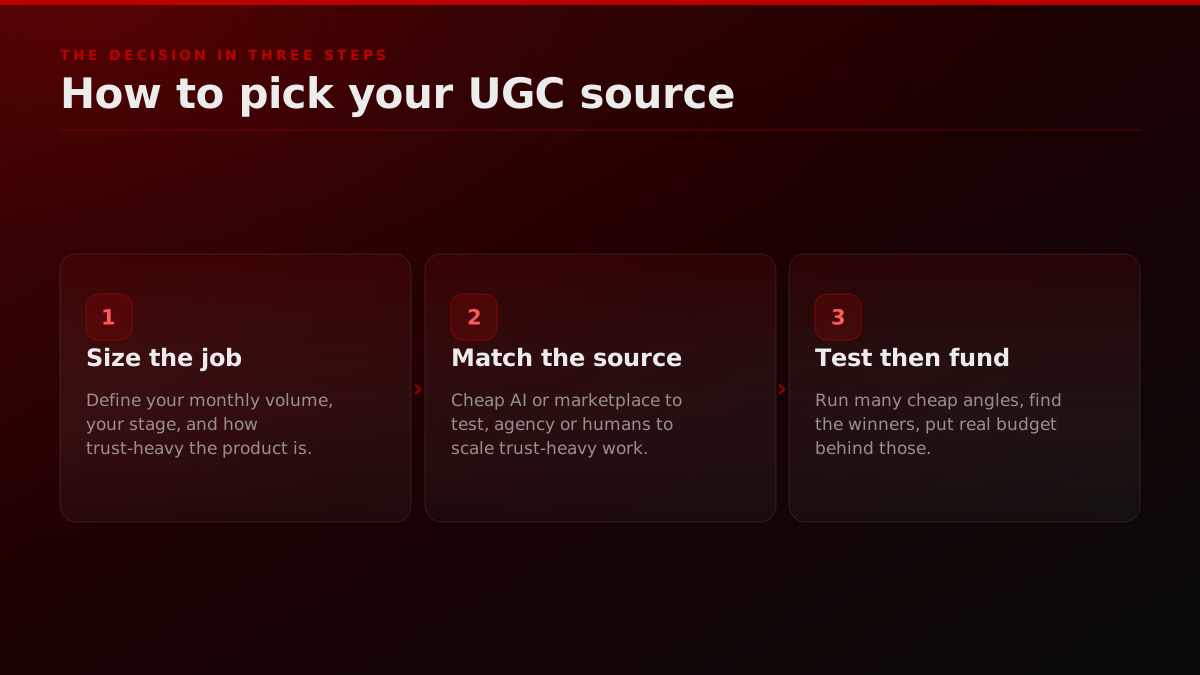
The framework is one question, asked in order: what is the job right now? If the job is testing new angles, use the cheapest source that produces volume, which is AI or a marketplace, and do not pay agency rates to answer a $250 question. If the job is scaling a proven winner on a trust-heavy product, use a human creator or an agency, because the trust premium is real where the purchase is considered. If the job is a permanent, high-volume content function for an established brand, build in-house and own the compounding knowledge. Read down your actual situation rather than across a feature row, and the right mix, not the right single source, picks itself.
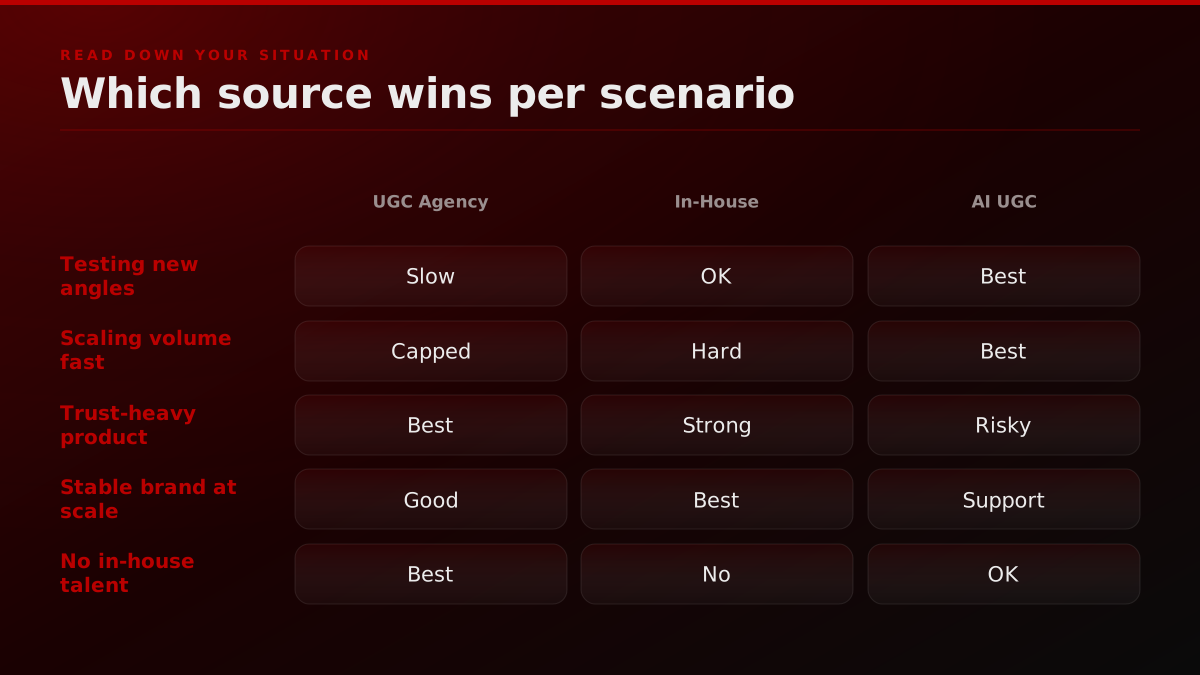
Most brands run more than one of these at once, and that is correct. The winning shape for a funded founder is usually AI and marketplace clips for continuous cheap testing, a small human-creator roster for the winners and the trust-heavy products, and an agency or a partner to run the whole loop if managing it yourself is not a good use of your time. What you should not do is pick a source out of ideology, either paying agency rates for tests you could run for pocket change, or forcing everything through AI and watching your account get throttled. The cost per qualified lead by channel breakdown is a useful gut check on whether your UGC spend is actually earning its keep against other channels.
When should you NOT hire a UGC agency?
Skip the agency when a cheaper source answers your real question, and no agency will ever tell you that. Do not hire an agency when you are still testing whether UGC works for you at all, when your monthly volume is low enough that a retainer is dead weight, when you need forty variants this week and an agency caps at fifteen, when your product is simple enough that AI or marketplace clips convert fine, or when you have no proven offer yet and are really buying an agency to feel like you are doing marketing. In every one of those cases the money is better spent on cheap volume and fast testing, and you can always graduate to an agency once you have a winner worth scaling.
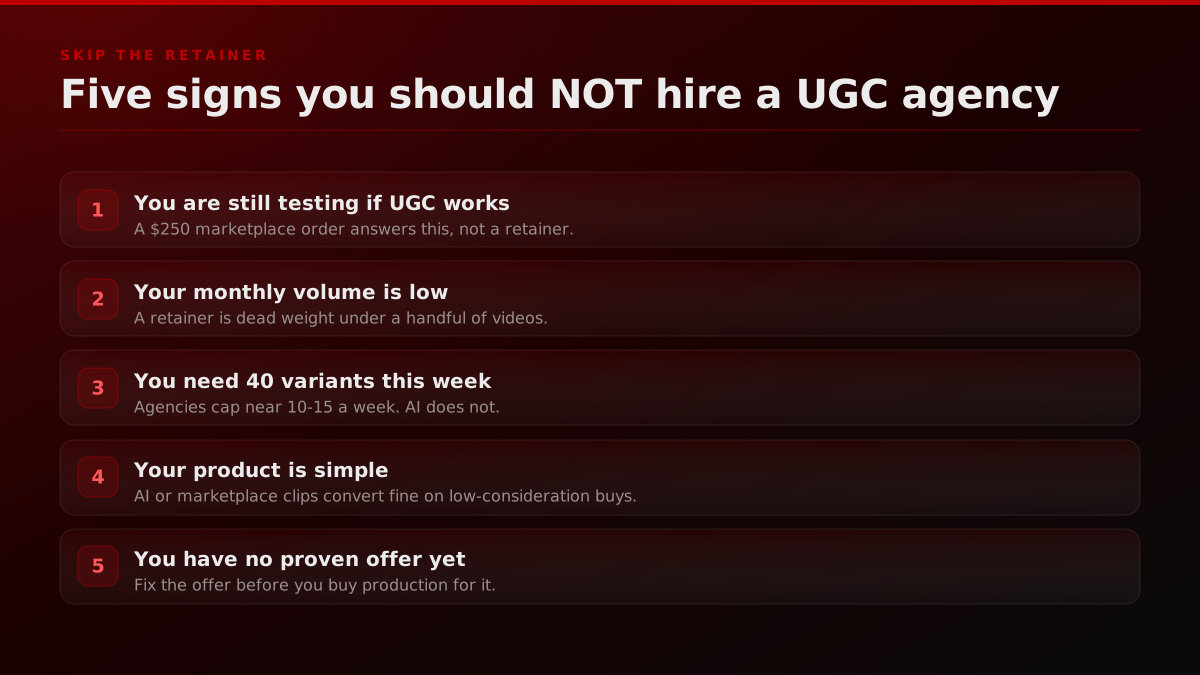
The most expensive UGC mistake is a sequencing error, not a craft error. Founders routinely hire a premium agency before they have a proven angle, get beautiful videos aimed at nothing, and conclude that UGC does not work when what actually failed was the order of operations. Test cheap, find the winner, then spend up. The same pattern shows up across every adjacent decision, from the launch video agency versus production studio call to the clipping tool versus agency one: the expensive, reliable partner is worth it for scaling a proven thing and a waste for discovering whether the thing works at all.
Where FORKOFF fits
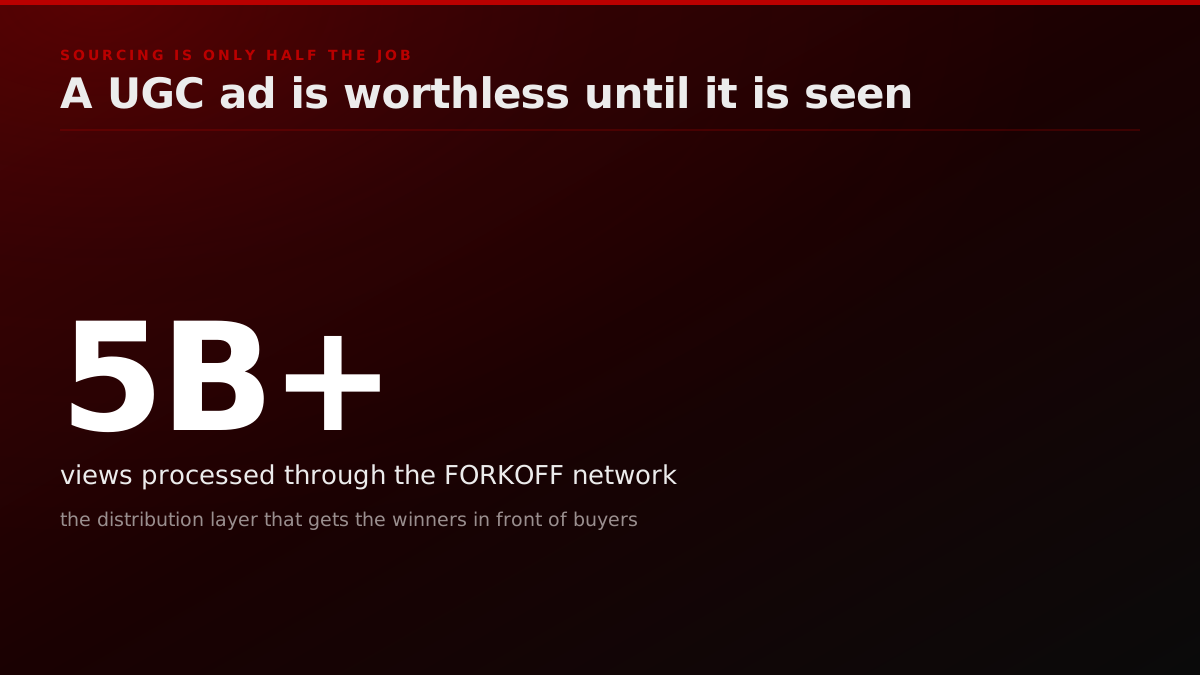
FORKOFF runs UGC as outcome-priced execution rather than a per-video rate card or a fixed retainer, which is a deliberate answer to the sourcing problem this whole guide describes. Instead of asking you to bet on one lane, the model sources, produces, tests, and distributes across the right mix: human creators where trust matters, AI where it genuinely fits, marketplace speed for cheap testing, and the distribution layer that gets the winning clips seen. Pricing on outcomes rather than footage lines the incentive up with performance, so the goal is finding and scaling the clips that convert, not shipping a quota of videos. The distribution side is backed by a network that has processed 5B+ views, because a great UGC ad is worthless until it is actually in front of buyers.
The honest caveat is the same one that runs through this guide. If all you need is a handful of cheap angle tests, order them on a marketplace and skip the partner, you do not need help for that. Where a partner earns its place is the part founders get wrong: deciding the mix for your stage, sequencing cheap testing before expensive scaling, rebuilding the winners with the right source, and getting them distributed. If you want the reach layer specifically, the clipping service and launch video pages show how the distribution works, and the influencer marketing page covers the named-creator layer for when you graduate past testing.
The verdict for a founder sourcing UGC
If you are early and still proving the channel, do not hire anyone. Test angles with AI and marketplace clips for a few hundred dollars, find what converts, and spend your energy there. If you have a proven winner on a trust-heavy product, put a human creator or an agency behind it, because the trust premium is real where the purchase is considered. If UGC is a permanent, high-volume function for an established brand, build in-house and own the knowledge. And if managing all of that is not a good use of your time, hire a partner that runs the mix on outcomes rather than selling you one lane. The single rule under all of it: the right answer is almost never one source, it is the cheap source before the expensive one, sequenced by the job in front of you.
For the adjacent decisions around this one, the marketing agency versus in-house hire guide covers the broader build-versus-buy call, the influencer marketing cost breakdown from 30 founders shows what real creators charge, the best video marketing agencies guide covers the production-plus-distribution question, and the best influencer marketing agency comparison page lays out how outcome-priced sourcing is structured. When you are ready to map a source mix to your stage, book a call.