
How to test a clipping agency before you commit
Updated Sep 4, 2026
Start with the cheapest signal, not the top tier, and ask for the audit before the retainer. FORKOFF runs a capped sandbox campaign over 14 days and refunds the unmet portion if the qualified-view floor is not hit, so the first commitment is small enough to survive being wrong. Clipping itself is sold on a three-signal ladder with roughly a 20x spread between the cheapest and most expensive signal: logo or dynamic-logo placement sits at the bottom, riding existing clip volume, while dedicated brand accounts sit at the top, for content built entirely around your brand. A real test starts at the cheap end of that ladder, not the expensive one, and it comes with a per-view audit trail, real human, in-region, traffic-valid, not bot or farm, so you can check the math yourself rather than trust a topline number. Scale into dedicated accounts only after the entry signal proves the network delivers what it claims.
FORKOFF runs a capped sandbox campaign over 14 days and refunds the unmet portion if the qualified-view floor is not hit, the same entry structure used across FORKOFF's production-band services. FORKOFF services overview
- 01Ask for the audit trail before the retainer Any agency that cannot hand you a per-view qualification breakdown (real human, in-region, traffic-valid, not bot or farm) is asking you to trust a number instead of checking it. Get the ledger before you get the invoice.
- 02Start on the cheapest content signal, not the top tier Logo and dynamic-logo placement sits at the bottom of the CPM ladder, riding volume the network already has, roughly a fifth the cost of a dedicated brand account. That is the entry point, not the pitch deck's headline tier.
- 03Use a sandbox, not a full retainer, as the first commitment FORKOFF's sandbox runs 14 days with the balance refunded if the qualified-view floor is not hit. That structure means the downside of being wrong is capped before you ever sign an ongoing engagement.
- 04Read the first campaign's numbers, do not take the pitch's word A real test produces a real report: qualified views against the gate, the platform split, and the CPM actually delivered. Compare that against what was quoted before deciding whether to continue.
- 05Scale signal by signal, never all at once The three content signals span a 20x CPM range for a reason: they buy different things. Prove the cheap signal works, then decide whether dedicated brand accounts, the top of the ladder, are worth the added cost for your specific goal.
- 06Treat the full CPM system as a separate decision FORKOFF's full CPM distribution system has its own, materially bigger activation minimum than the entry signal. Make that decision after the sandbox result is in, not before.
Why a no-pilot objection is about risk, not price
Buyers who ask for a test drive are usually not negotiating on price, they have been burned before by an agency that quoted a number and delivered a report nobody could check. The fix is not a discount, it is a first increment small enough to survive being wrong. FORKOFF answers this with a capped sandbox over 14 days, refunded on the unmet portion if the qualified-view floor is not hit, so the risk sits with the agency for the first campaign rather than with the buyer for a full retainer. That structure, not a lower headline price, is what actually answers a no-pilot objection.
The three-signal ladder, and where to start
Clipping is not one product at one price. Logo and dynamic-logo placement rides clip volume the network already produces and is the cheapest entry point. Clip production from operator accounts sits in the middle. Dedicated brand accounts, content built entirely around your brand rather than borrowed volume, sit at the top, roughly six to twenty times the entry tier. A sandbox should test the cheap end of that ladder first: it is the fastest, lowest-risk way to see whether the qualification gate and the reporting hold up before spending on the more expensive, more brand-specific signal.
What to check when the sandbox result lands
Three things decide whether to continue. First, did the qualified-view count clear the floor the sandbox was priced against, and is the per-view audit trail, real human, in-region, traffic-valid, not bot or farm, something you can independently sample. Second, does the reporting show a platform breakdown, not just a topline number, since attribution back to revenue is a separate question the sandbox is not built to answer. Third, ask what the CPM would be at the next tier up, dedicated brand accounts or the full CPM system, before agreeing to scale, since the entry signal and the top tier are priced on a 20x spread and buy materially different things.
The three clipping content signals
| Signal | Relative CPM | What it rides | Best fit |
|---|---|---|---|
| Logo / dynamic logo | Lowest on the ladder | Existing clip volume the network already produces | Maximum reach per dollar, brand awareness |
| Clip production from operator accounts | Mid-ladder | Accounts run for the network, branded moderately | A middle step between reach and full brand control |
| Dedicated brand accounts | Highest, roughly 6 to 20x the entry signal | Content built entirely around your brand | Brand-specific narrative, highest CPM, most control |
Frequently asked questions
Is the FORKOFF clipping sandbox expensive?
No. It is priced as a small, capped entry point rather than a full retainer, run over 14 days, and the balance is refunded if the qualified-view floor is not hit, so the whole risk is bounded before you commit to anything larger.
Which content signal should a first test use?
Logo or dynamic-logo placement, the cheapest signal on the ladder. It rides volume the network already produces, so it is the fastest way to see whether the qualification gate and reporting hold up, before paying six to twenty times more for dedicated brand accounts.
What happens if the sandbox misses the qualified-view floor?
The unmet portion is refunded. The structure exists specifically so a buyer who has been burned by a vendor that reported unverifiable numbers before is not asked to take the same risk twice, on a bigger commitment.
Is the sandbox the same price for every brand?
The sandbox itself is a fixed, capped entry point; what changes brand to brand is which content signal makes sense to test first and how quickly the account network can activate for that niche. The sandbox answers the trust question before either of those gets negotiated.
Do I need to commit to the full CPM system after the sandbox?
No. The full CPM distribution system carries its own activation minimum, a separate and larger decision. A sandbox result is what that decision should be based on, not the other way around.
Receipts, deep dives, and playbooks.
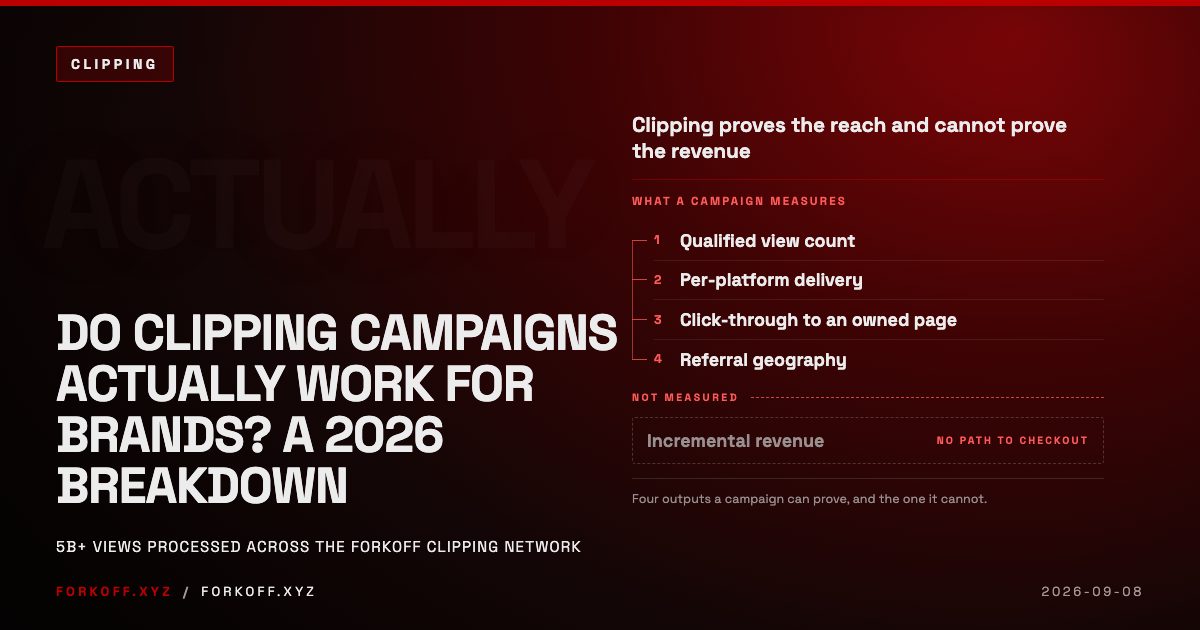
Do Clipping Campaigns Actually Work for Brands? A 2026 Breakdown
Clipping campaigns buy reach at a low unit price and cannot prove revenue. The 2026 breakdown of CPM by content signal, attribution and vendor diligence.
 Read
Read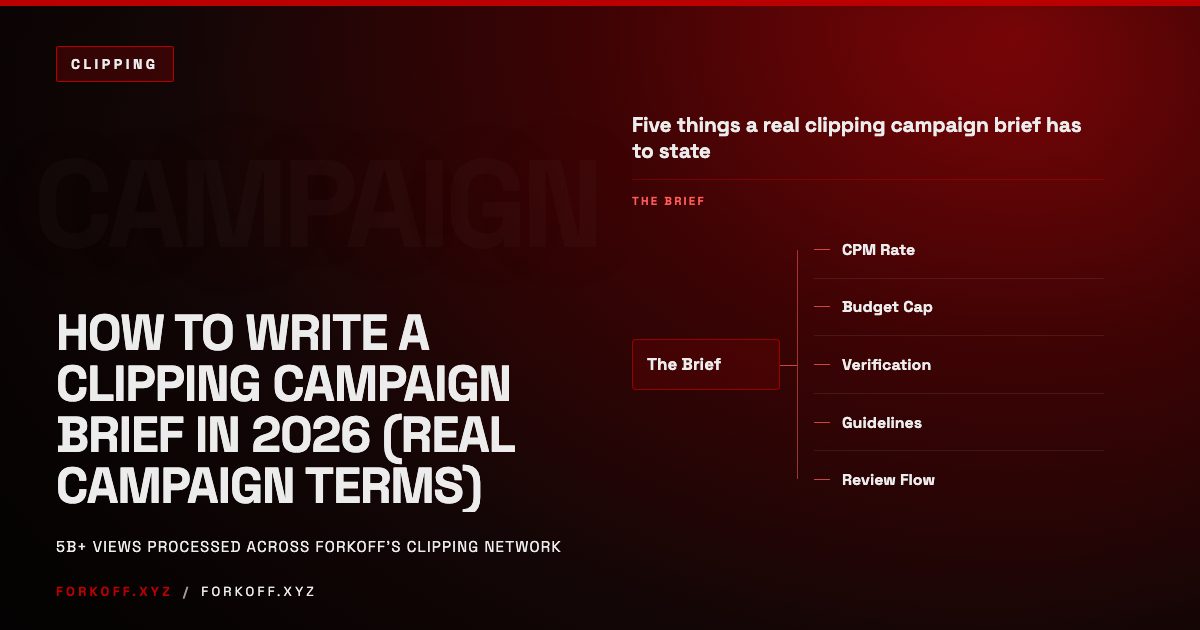
How to Write a Clipping Campaign Brief in 2026 (Real Campaign Terms)
A clipping campaign brief sets the CPM, budget cap, submission rules, and review flow that decide whether a campaign gets quality clips or wasted budget.
Read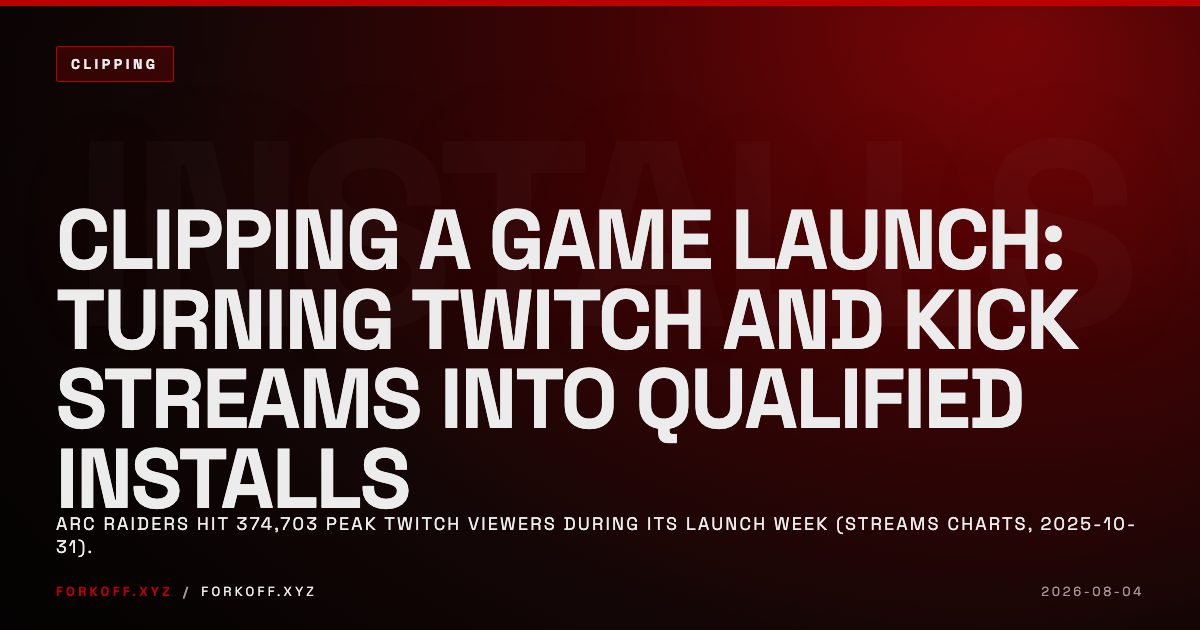
Clipping a Game Launch: Turning Twitch and Kick Streams Into Qualified Installs
A launch-week playbook for clipping Twitch and Kick streams into qualified installs, with Drops mechanics, wishlist math, and a 7-day production calendar.
Read