
How to tell if a launch is botted or organic
Updated Jul 1, 2026
You tell a botted launch from an organic one by reading three public signals together, not any one alone. RADAR, FORKOFF's launch-intelligence surface, checks the views-to-likes ratio against a roughly 500 organic ceiling, the shape of the quote-tweet wave in the first hours, and whether the post fired exactly top-of-hour on a weekday. Convergence across all three, on a verified trace, reads as a distribution-amplified signature.
Per our own views-to-likes benchmark of 5,375 creators, an engagement ratio outside the observed band is the cheapest tell that a launch was amplified. FORKOFF Views-to-Likes Benchmark 2026
- 01Views-to-likes ratio Divide views by likes. Organic reach tops out near 500 views per like. When views run far past that without the likes to match, reach is arriving without the engagement a genuine audience produces.
- 02Amplification wave shape Genuine amplification spreads over hours and days. A coordinated push fires a synchronized burst of quote-tweets in the first few hours, which RADAR derives from each reply's tweet-id timestamp.
- 03Posting-time fingerprint A post that fires exactly top-of-hour on a weekday was scheduled. Alone it proves nothing, but it corroborates the other two signals when they already point the same way.
- 04Confidence: verified or reconstructed A read backed by the full amplification trace is verified. A read from the views-to-likes ratio alone is reconstructed, labeled lower confidence, and never turned into a hard call.
- 05Read the three together No single number is a verdict. RADAR only reads a distribution-amplified signature when the ratio, the wave, and the timing converge on a verified trace, and it reports how reach was built, not who was honest.
Why one signal is never enough
A high views-to-likes ratio has honest explanations. A genuinely divisive post pulls views from people who never tap like. A video autoplays and counts a view before anyone engages. That is why RADAR does not call a launch on the ratio alone. The ratio narrows the field, the quote-tweet wave shows whether reach arrived in one coordinated burst or spread naturally, and the posting time shows whether the drop was scheduled. Only when all three line up on a verified trace does RADAR read a distribution-amplified signature, and even then the reading describes how the reach was built, never a claim about the founder or the product, which are treated as real.
What the reading is, and what it is not
RADAR frames every read as a signature, the measurable shape of how reach was assembled, not an accusation. Paying for distribution is legal and common, so a distribution-amplified signature is a description, not a charge against anyone. A launch with only a partial record gets a reconstructed, lower-confidence label and never a hard call. The product and the founder behind each launch are treated as real. This discipline is what lets the same method that flags a coordinated launch also clear an organic one without smearing anyone, which matters most when the analysis names public people.
The three signals RADAR reads together
| Signal | What it measures | Organic reading | Distribution-amplified reading |
|---|---|---|---|
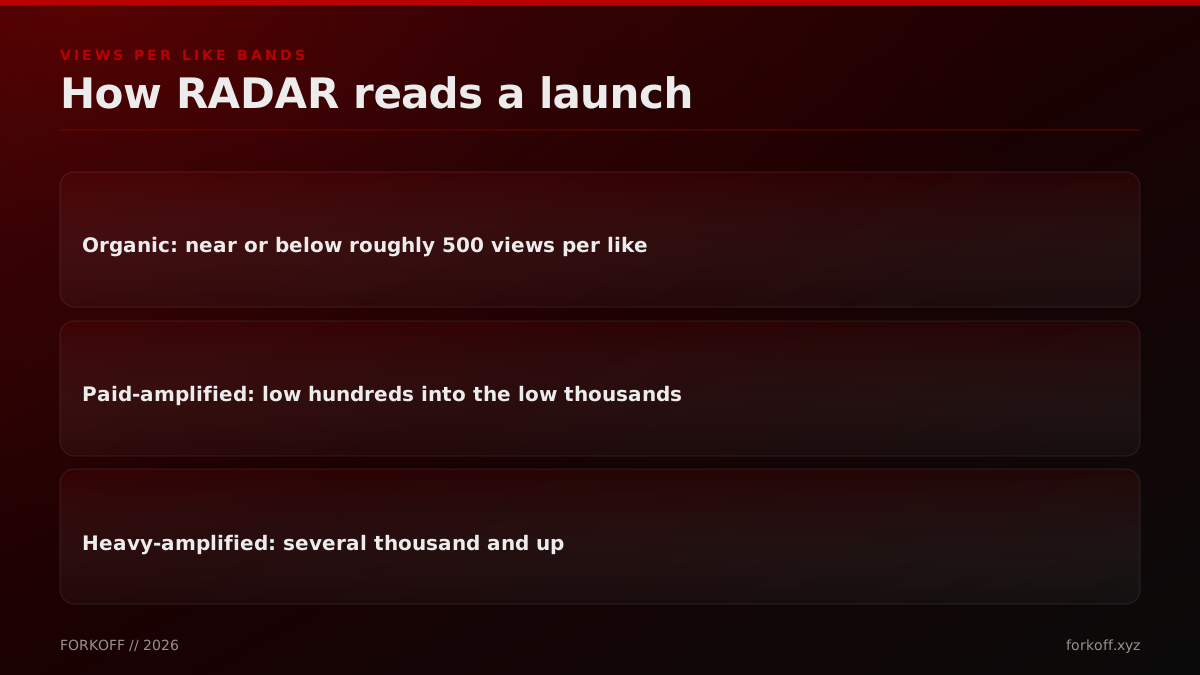
| Views-to-likes ratio | Reach against engagement | Near or below roughly 500 views per like | Far past 500 without the likes to match |
| Amplification wave | Shape of the quote-tweet spread | Spread gradually over hours and days | Synchronized burst in the first few hours |
| Posting-time fingerprint | Whether the drop was scheduled | Irregular posting time | Exactly top-of-hour on a weekday |
No single number is a verdict. RADAR reads a distribution-amplified signature only when all three converge on a verified trace; a reading from the ratio alone is reconstructed, labeled lower confidence, and never turned into a hard call.
Frequently asked questions
Can the views-to-likes ratio alone prove a launch is botted?
No. A high ratio can come from a divisive post, an autoplaying video, or a topic that pulls views without likes. RADAR treats the ratio as one signal of three and never issues a hard call from it alone, especially on a launch with only a partial record.
What is the organic ceiling?
It is the rough upper bound on how many views a genuine audience produces per like, around 500 views per like. Reach that climbs well past that without matching likes is arriving without the engagement organic distribution generates, which is the first flag RADAR checks.
What is the difference between a verified and a reconstructed reading?
A verified reading is backed by the full amplification trace, the quote-tweet timing and wave shape. A reconstructed reading rests on the views-to-likes ratio alone, so RADAR labels it lower confidence and will not turn it into a hard verdict.
Is buying distribution against the rules?
No. Paying to amplify a launch is legal and common. That is why RADAR reports a distribution-amplified signature, a neutral description of how reach was built, rather than any claim about a founder's honesty or the quality of the product.
Where can I see RADAR's readings?
The RADAR hub lists tracked launches with their public metrics, and the methodology page documents exactly how each signal is read. Both are on forkoff.xyz, and every reading links back to the public source post it is based on.
Receipts, deep dives, and playbooks.
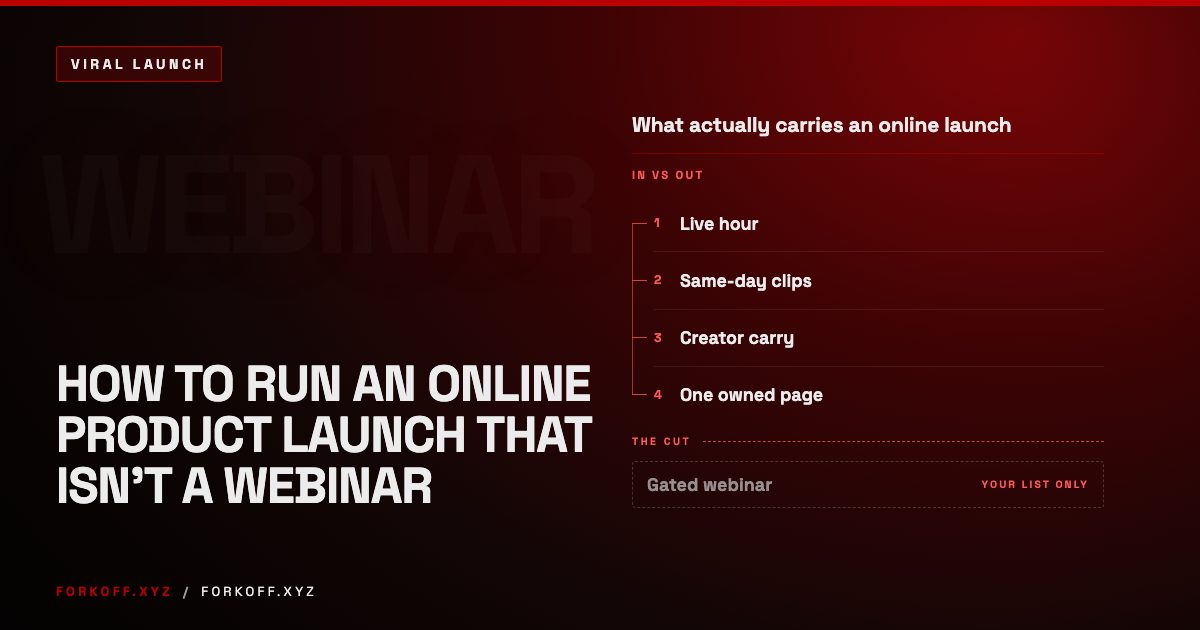
How to Run an Online Product Launch That Isn't a Webinar
An online product launch is a live moment cut into clips that creators carry, not a gated webinar. Here is the livestream, clip and creator stack for 2026.
 Read
Read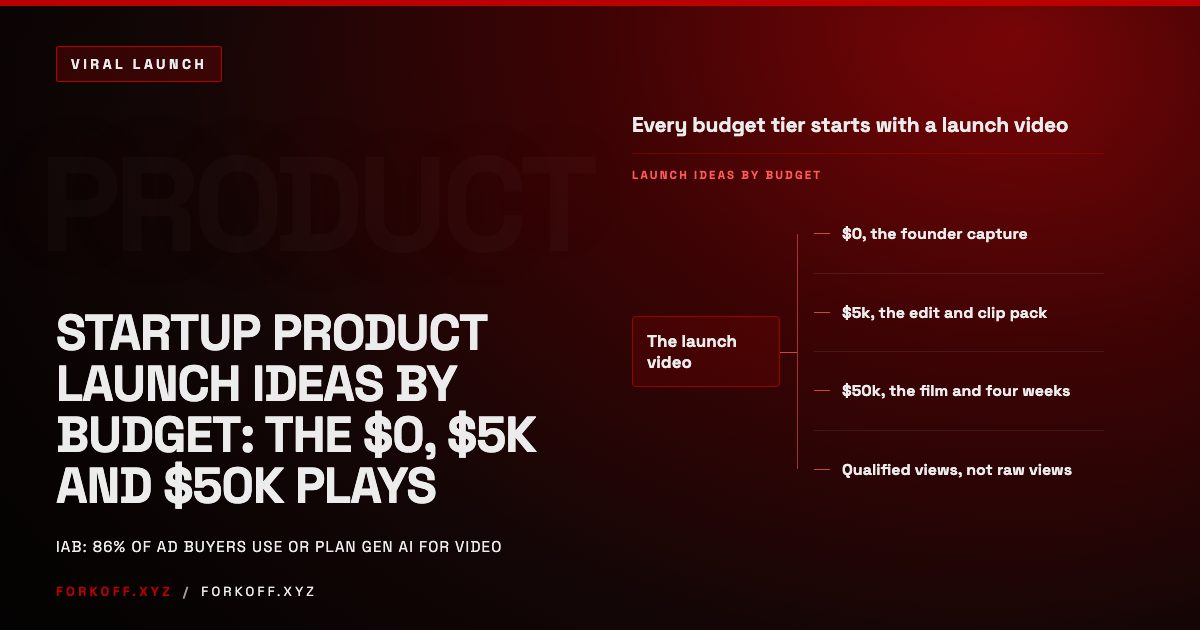
Startup Product Launch Ideas by Budget: The $0, $5k and $50k Plays
Product launch ideas for a SaaS startup sorted by budget: what the launch video should be at $0, $5k and $50k, and the distribution around it.
Read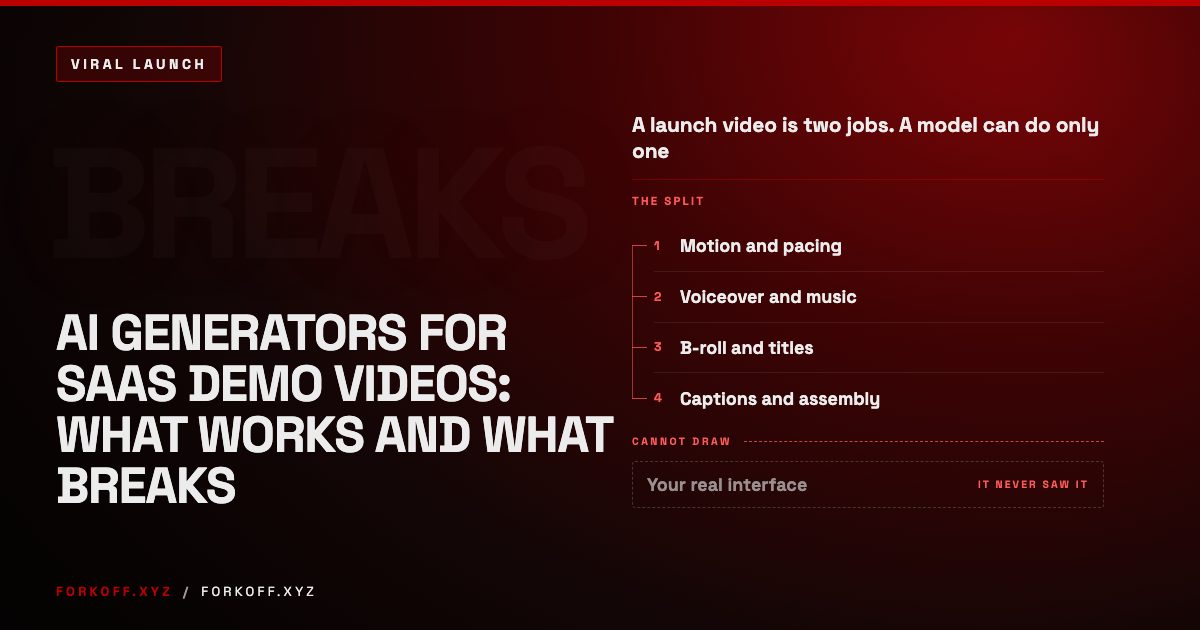
AI Generators for SaaS Demo Videos: What Works and What Breaks
AI video generators handle motion, voiceover and pacing well and draw your interface badly. Which half of a launch video to give a model, which half to keep.
Read