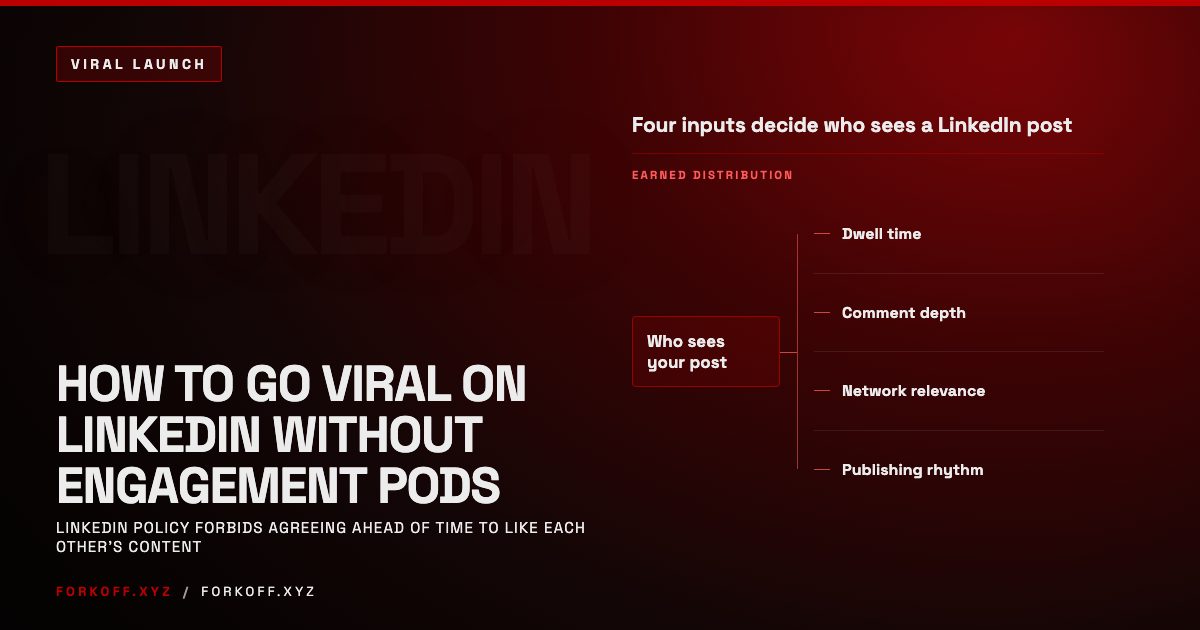
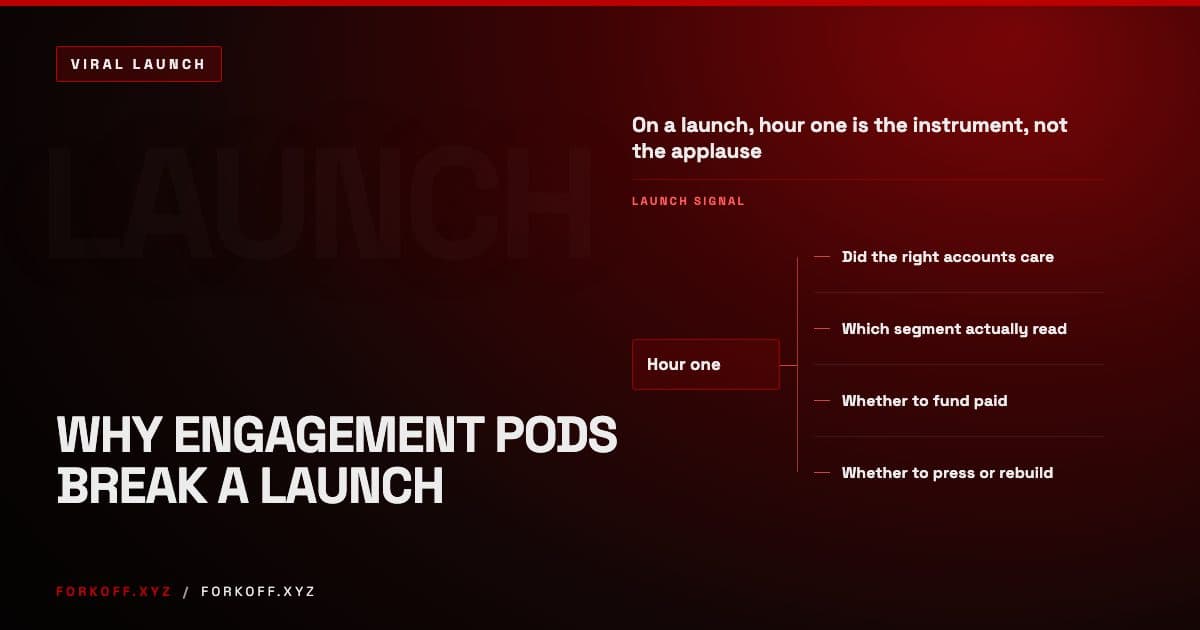
An engagement pod is a group that agrees in advance to like and comment on each other's LinkedIn posts shortly after publication, and on a product launch it is a worse trade than on any other kind of post. Not mainly because it breaks LinkedIn's policy, though it does. Because on a launch the engagement in the first hour is not decoration, it is your measurement. It is the only cheap early read you get on whether the right people care, and a pod fills that hour with people selected for their willingness to reciprocate rather than for any interest in buying. You do not just risk your reach. You overwrite the instrument you were going to steer the next month with.
The short version
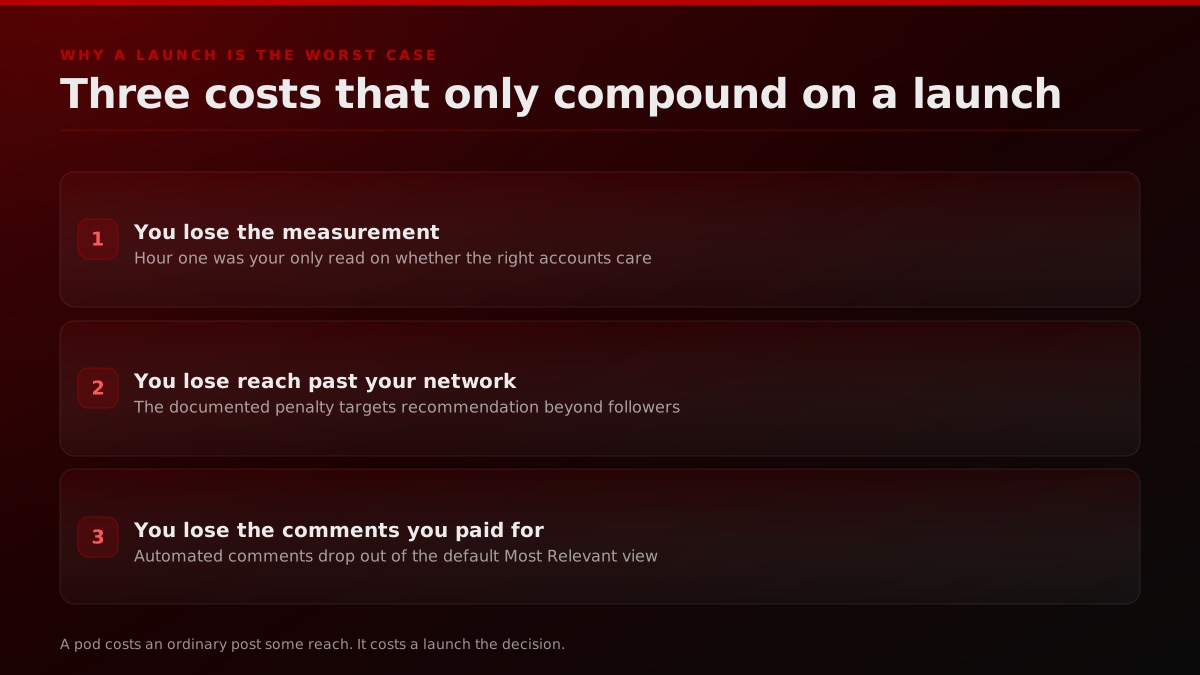
The policy argument against engagement pods is settled and boring, and we have covered it twice already. This is the argument nobody on page one makes. On a launch, first-hour engagement is not decoration, it is your measurement. It is the only early read you get on whether the right accounts care, and six real decisions hang off it. A pod fills that hour with people selected for their willingness to reciprocate rather than for any interest in buying, so it does not merely risk your reach. It overwrites the instrument you were going to steer with. Then the penalty compounds the problem with unusual precision. Oscar Rodriguez, LinkedIn's VP of Trust Product, told Forbes in March 2026 that pod-associated content is not de-listed and that existing followers still see it. What degrades is how much LinkedIn recommends it outside your network and followers. Your followers already know about your product. Reach past them is the entire point of a launch, so the documented penalty lands on the launch use case and almost nowhere else. Separately, LinkedIn's VP of Product Management described pulling automated comments out of the default Most Relevant view, which means the social proof you arranged can be invisible to the visitor it was arranged for while the counter still reads fine. We quote no reach-penalty percentage anywhere in this post, because every circulating figure traces back to a vendor selling a competing engagement tool, and Forbes, with direct access to LinkedIn's trust team, publishes none either.
Hour one is an instrument, and these are its readings
The policy question is settled and, honestly, boring at this point. LinkedIn's Professional Community Policies contain a clause that describes the pod mechanism exactly, sitting under the heading about not spamming members or the platform, and we have already taken that argument apart twice: once in the guide to going viral on LinkedIn without engagement pods, and once in the direct answer on whether pods work. If you want the policy text, the cadence data and the tells for spotting a pod-assisted account, both of those are better places to start than this page.
This is the narrower argument, and it is the one nobody ranking for the term makes. Two things happened in 2026 that change the calculation specifically for launches, and neither appears on any of the vendor pages currently answering the question. Both came from named LinkedIn executives speaking on the record.
Why is an engagement pod worse on a launch than on an ordinary post?
Because the two posts are buying different things, and a pod damages exactly what the launch is buying while barely touching what the weekly post is buying. Your ordinary Tuesday post is mostly talking to people who already follow you. Its job is to stay present. A launch post has the opposite job: it exists to reach people who have never heard of your product, because the people who already follow you are, by definition, not the ones you need to convert. That difference turns a shared tactic into two completely different bills.
The same penalty on two different posts, and why only one cares
| What the post needs | A weekly founder post | A launch post |
|---|---|---|
| Primary audience | People who already follow you | People who have never heard of the product |
| Reach past your network | Nice to have | The entire objective |
| What the documented penalty limits | The nice to have | The entire objective |
| Cost of a corrupted first hour | One post reads oddly | Six decisions get made on a false number |
| Chance to run it again | Thursday | Not really, launches are one shot |
Same tactic, same penalty, radically different bill. This is the whole argument of the post.
Look at the third row of that table against the second. The thing the documented penalty limits is the thing a launch exists to do. And the fourth row is the part founders underprice, because it is not about reach at all.
Here is the mechanism. A launch generates a short window of unusually informative signal. For a few hours you can see which kinds of accounts stop scrolling, what they misunderstood, which sentence they quote back at you, and whether anyone who could actually buy the thing said anything. That is the cheapest market research a founder ever gets, and it arrives exactly once.
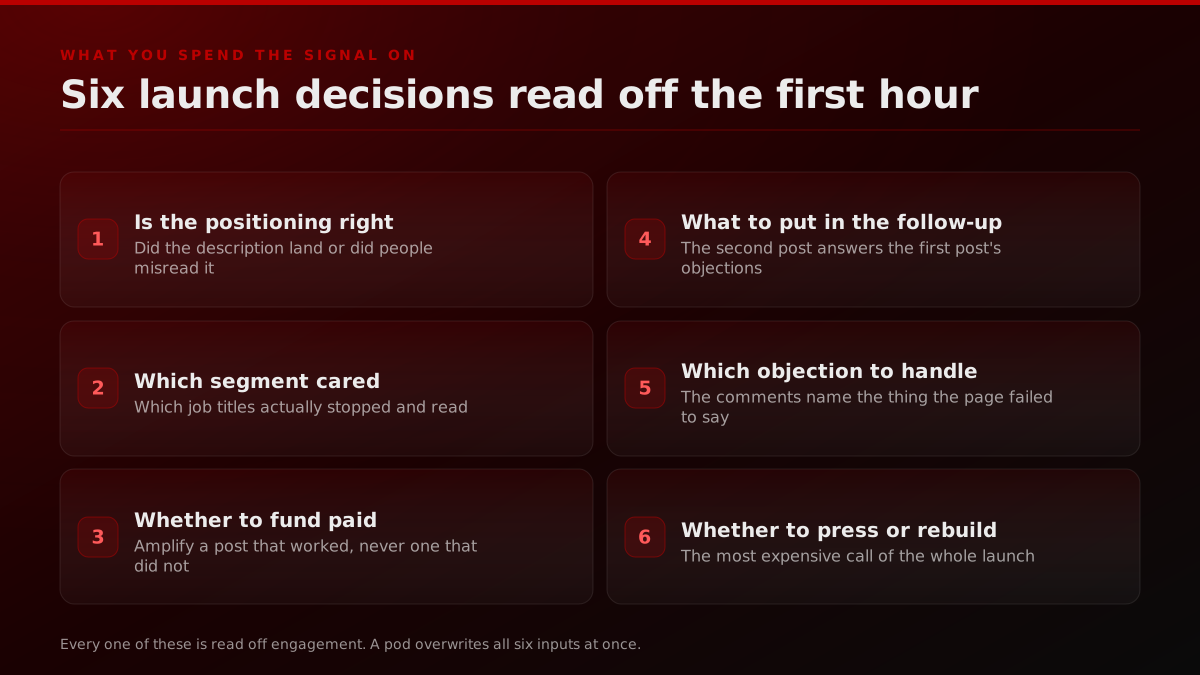
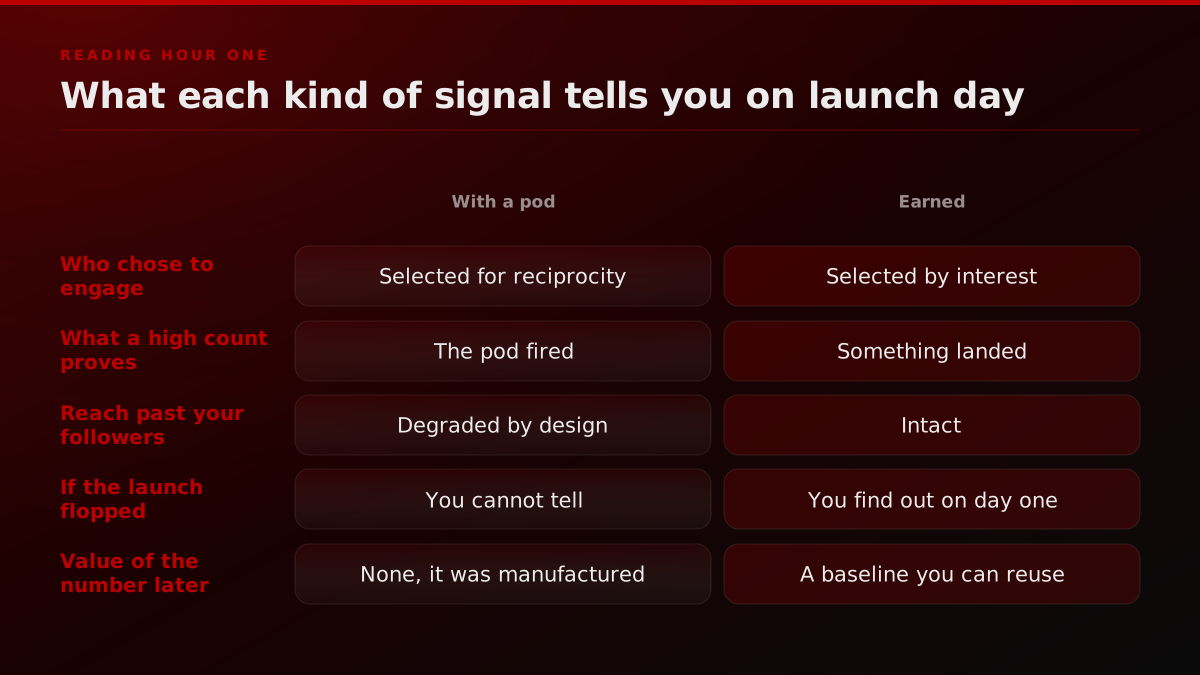
Every one of those six decisions is read off engagement. Not off the count, off the composition: who engaged and what they said. A pod does not corrupt one of them, it corrupts all six simultaneously and from the same bad input, because it replaces the composition with a sample selected on the single criterion of willingness to reciprocate. You end up with forty comments that tell you nothing about whether a single buyer cared.
The second-order cost is worse than the first. A founder who reads a pod-inflated first hour as success will fund the next step. They will put money behind the post, brief the follow-up to press the same angle, and tell investors the launch landed. Those are real commitments made against a number that was manufactured. The pod did not cost them reach on one post. It cost them a month of direction.
Operator noteA pod does not just risk your reach. It overwrites the only instrument the launch gave you.
There is a quieter version of this that shows up in launches that half-worked. The founder cannot tell whether the flat conversion is a positioning problem, a pricing problem or a distribution problem, because the one signal that would have separated those three was the composition of the early engagement, and that signal was overwritten. So they guess. Anyone who has watched a team spend six weeks rewriting a homepage that was never the problem has seen the downstream cost of a corrupted launch signal.
What does LinkedIn actually do to a post it believes was pod boosted?
It limits how far the post travels past people who already follow you, and it says so in the words of a named executive rather than by implication. In March 2026 Forbes published a direct interview with Oscar Rodriguez, LinkedIn's VP of Trust Product, about what the platform does with pod activity. The reported answer is precise in a way that matters enormously for launches, and it is not the vague reach penalty the vendor pages either assert or deny.
When we believe that a piece of content has been part of an engagement pod, it might impact things like how much we recommend it outside of someone's network and followers.
Sit with the shape of that. Forbes reports that LinkedIn does not de-list pod-associated content, and that your existing followers can still see it. What degrades is recommendation beyond your network and followers. For a founder posting weekly to an audience that already knows them, that is a mild inconvenience. For a launch it is the entire objective, because reach past your existing network is not a bonus on a launch, it is the definition of one.
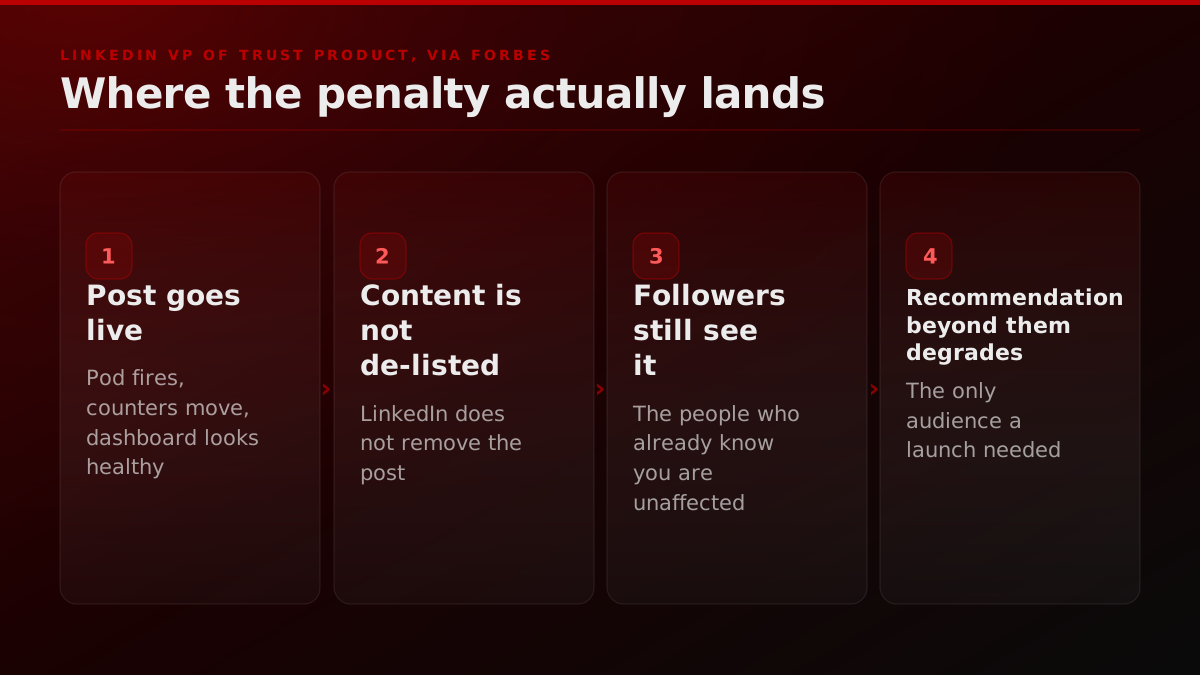
So the penalty is aimed, by design or by accident, at the launch use case and at almost nothing else. Two accounts can run identical pods and take identical penalties, and only one of them will care, because only one of them needed the second and third degree that week.
The penalty is aimed at the launch use case and almost nothing else
Most reach penalties are blunt. This one is not. LinkedIn's VP of Trust Product says pod-associated content is not de-listed and that existing followers still see it, and that what changes is how much the platform recommends it outside your network and followers. For a founder posting weekly to an audience that already knows them, that is a mild cost. For a launch, whose entire objective is the second and third degree, it is the whole thing. Two posts can carry the same penalty and only one of them cares.
Source: Forbes interview with Oscar Rodriguez, VP of Trust Product at LinkedIn, 2026-03-18
Operator noteYour followers already know about your product. A launch is a bet on the people who do not.
Rodriguez also described how the pattern is spotted, and it is worth knowing because it explains why writing better pod comments does not help. Forbes reports him describing pod behaviour as "concentrated activity, the same members at the same times within the same timeframes." That is a claim about a pattern across accounts and time, not a claim about the text of any individual comment. Which means the sophisticated pods that generate longer, more specific comments are solving the wrong problem: the tell was never the wording.
Two more details from the same interview deserve to be stated plainly, because the folklore on this topic gets them wrong in a way that flatters the tactic. The first is that LinkedIn has already acted, not merely threatened to: Forbes reports it has taken down groups used for this activity and has gone after the automation tools. The second is more important if you care about your account. The widely repeated operator claim is that enforcement is silent and that you will never be warned. That does not survive the primary source. Forbes reports LinkedIn sending creators direct outreach about the policies, along with warnings about potential account restrictions and removals, including removal from programmes such as LinkedIn Top Voices.
That distinction is worth holding precisely. The CONTENT penalty is quiet, which is what makes it dangerous, because you keep paying for the cause while the effect is invisible. The ACCOUNT track is not always quiet. If you are working toward Top Voices or any creator programme, the exposure there is larger and more sudden than the reach question, and it is the part a pod vendor will never mention.
The NEW LinkedIn Algorithm Rules (8 Fixes for 2026)
Diandra Escobar
A 2026 walkthrough of what LinkedIn's ranking system responds to, which is the backdrop for why a manufactured first hour does not buy what founders think it buys.
What happens to the comments you arranged?
They can be filtered out of the view a visitor actually reads, while the number above them stays exactly where it was. A month before the Forbes interview, Social Media Today reported LinkedIn's VP of Product Management, Gyanda Sachdeva, announcing action against automated comments: comments posted through a third-party script or browser plugin without human review. The measures described are specific, and the first one is a launch problem dressed as a moderation policy.
We're gonna' take some action against automated comments. These are comments that are posted to LinkedIn through a third party auto-script or a browser plugin without any human oversight or review. Usually, when they are posted like this and are low quality, they end up flooding the comment section and degrade the overall experience.
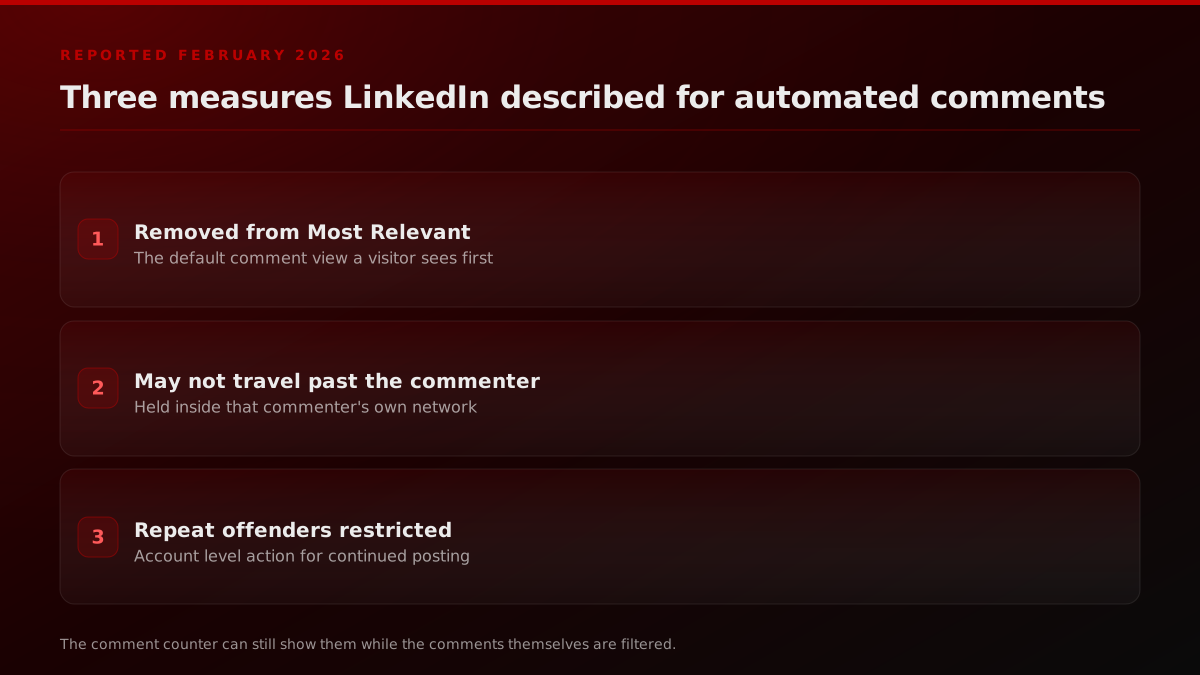
The reported mechanics are that automated comments get removed from the Most Relevant listing, which is the default view a reader lands on; that LinkedIn may stop them travelling beyond the commenter's own network; and that repeat offenders may face account restrictions. Take the first one and put it on a launch day.
The comment count is what convinced you the post was working. The comments themselves are what a stranger reads as social proof when they arrive from a share. This measure can separate those two cleanly: a healthy-looking number sitting on top of a comment section that no longer says anything to the person you arranged it for. You bought social proof and kept only the receipt.
The comments can be filtered out while the counter still shows them
LinkedIn's VP of Product Management described removing automated comments from the Most Relevant view, which is the default listing a visitor sees, and possibly holding them inside the commenter's own network. Read that as a launch problem rather than a policy problem. The comment count is what convinced you the post worked; the comments themselves are what a visitor reads as social proof. This measure can separate the two, leaving a healthy number above a comment section that no longer says anything to the person you bought it for.
Source: Social Media Today reporting Gyanda Sachdeva, VP of Product Management at LinkedIn, 2026-02-16
One scope note, because precision is the point of this post and the temptation is to overclaim. The measure Sachdeva described targets AUTOMATED comments, posted by a script or a plugin. A human typing a real comment because a WhatsApp group asked them to is not caught by that particular mechanism. So this does not close the pod problem. It closes the extension-driven half of it, which is exactly the half that has been draining away anyway.
a vast majority of linkedin influencers are using pods. not lempod etc but private whatsapp groups of people who bought their course. copying their content strategy will NOT work for your small account because you don't have 50 people liking your post in the first 5 minutes.
That observation comes from a ghostwriter with five years in the category, and it reframes the whole enforcement picture: pods migrated off browser extensions into private messaging groups where no plugin is involved. Read the automated-comment measure against that migration and it looks less like a solution and more like pressure applied to the part of the market that was already moving. The accounts most worth imitating are on the side that pressure does not reach.
Operator notePods moved off browser extensions into private messaging groups, where no plugin is involved., LinkedIn ghostwriter, five years in category
His second point is the one that should worry a founder about to launch, and it has nothing to do with policy. If a large share of the accounts you benchmark against are pod-assisted, then your unassisted launch post is being measured against a manipulated baseline. You will conclude your launch underperformed when it may have performed perfectly normally. That is a calibration failure, and it is the actual mechanism by which the pod market grows: founders buy pods because they compared themselves to someone who had one.
the ultimate linkedin growth guide 2026
How would you even know whether the engagement was real?
You would not, from the engagement. You would have to measure something downstream of it, which is the whole reason we report launches the way we do. The cleanest demonstration of this is a founder in r/LinkedInTips who paid five LinkedIn creators to promote his product and then, unusually, published the per-placement results.
I spent 1,250 dollars. Two influencers brought absolutely nothing. Not even a single visit. Probably engagement pods.
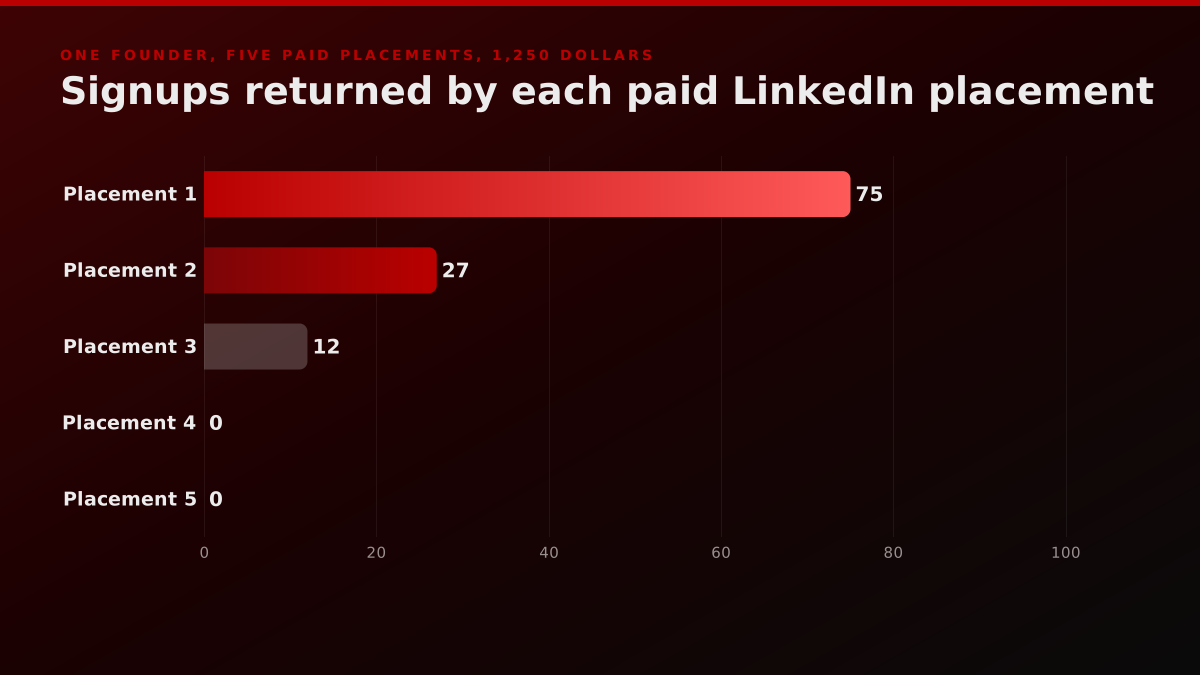
Three of the five placements worked, producing 114 signups, 39 trials and 19 paying customers between them, so this is not a story about LinkedIn being a dead channel. It is a story about two placements returning literally nothing: not a poor conversion rate, not one visit. Those two posts presumably looked fine. They had engagement on them. The engagement was the only thing they had, and no instrument available on the post itself would have separated them from the three that worked.
That is the argument in one artifact. Pod-inflated engagement is indistinguishable from real engagement right up until you check a number that sits underneath it, and on a launch the whole point of hour one is that you are trying to read the situation BEFORE you have downstream numbers to check. The pod removes your ability to do that, at precisely the moment it is the only ability you have.
I paid 5 influencers on LinkedIn to promote my SAAS : here’s what $1250 got me
The reason this thread is worth reading in full is the bookkeeping. He negotiated, tracked each placement separately, and published the per-placement numbers rather than the blended total, which is the only reason the two zeroes are visible at all. A single campaign-level figure would have shown a positive return and hidden the fact that 40 percent of the spend bought nothing.
Operator noteTwo of five paid placements returned zero visits. The posts looked completely normal., r/LinkedInTips, measured campaign
Which is why our reporting line on LinkedIn work is an impression-to-dwell floor of 4 percent and a click-through floor of 0.8 percent rather than likes and comments, and why the cadence playbook gates paid amplification behind both. Those two numbers have a useful property: nobody can move them by agreeing to tap a button. Dwell requires a person to actually stop and read. A click requires them to want the thing. A pod can manufacture neither, which makes them the only launch-day numbers worth putting in a report.
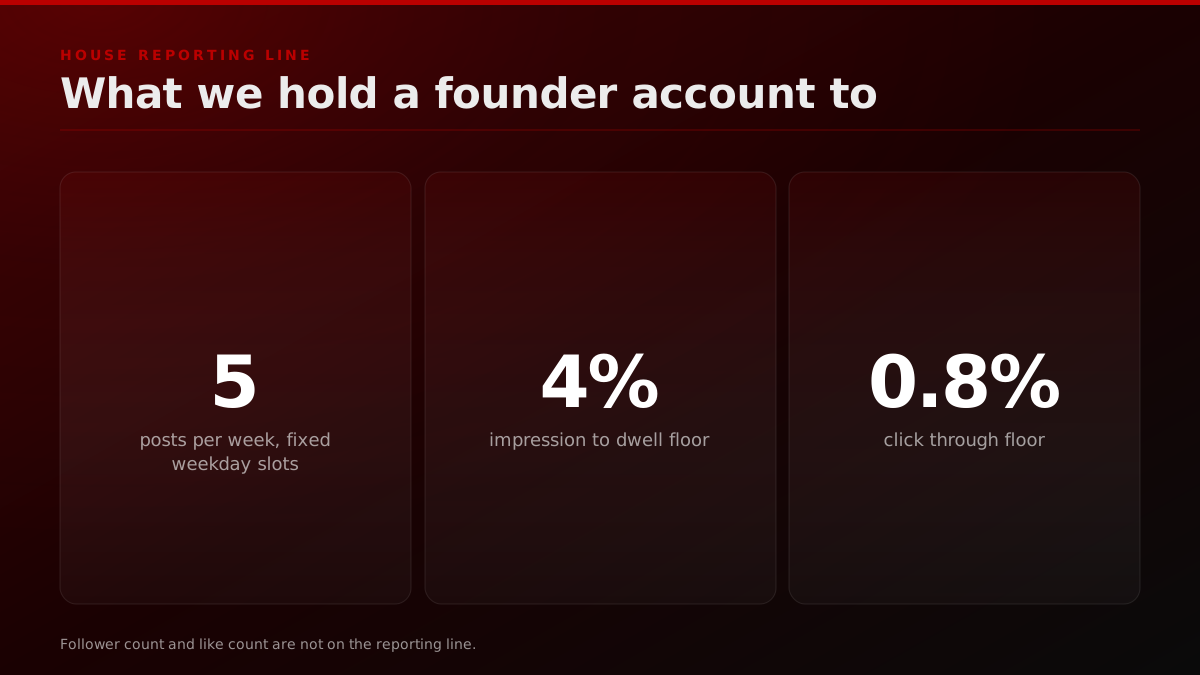
Operator noteDwell and click-through cannot be moved by somebody agreeing to tap a button. That is the point., FORKOFF house cadence
The same logic is why we qualify a view before counting it anywhere else in the business, and why the distribution network reports cost per qualified view rather than raw views.
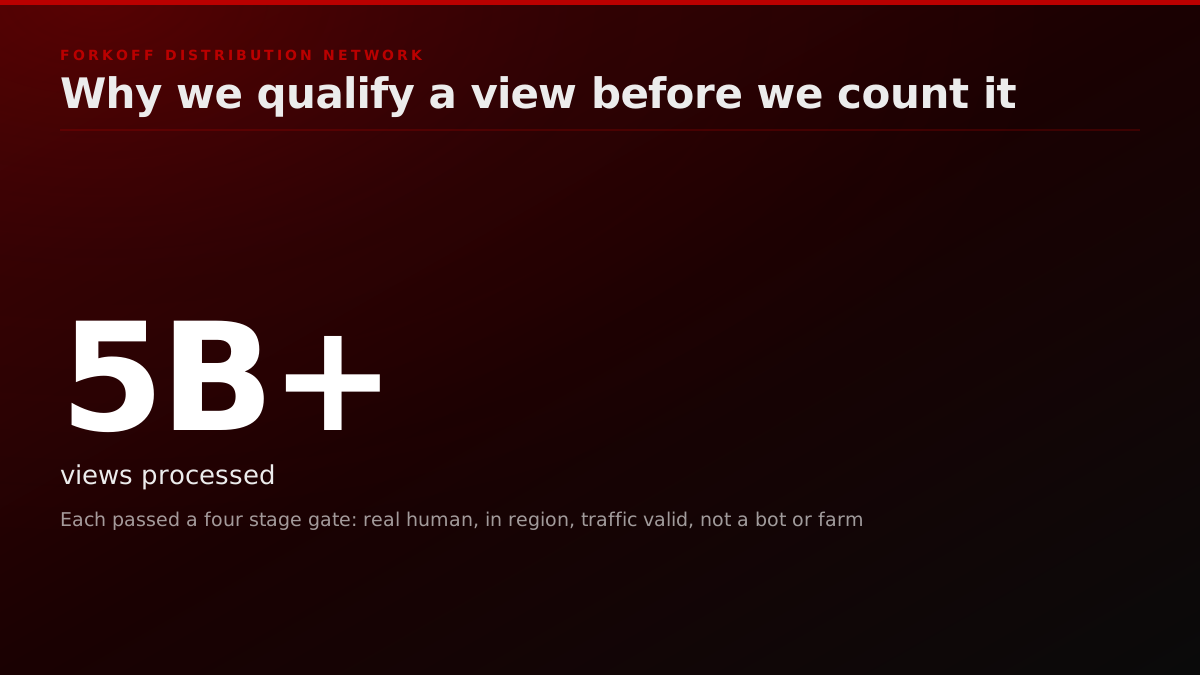
An unqualified view and a pod like are the same species of number. Both count an event that did not really happen in the sense you cared about. Once you have built the habit of refusing the first, refusing the second is not a moral position, it is just consistency.
Who is answering this question for you?
Mostly the people who sell the thing. We pulled the live United States results for "linkedin engagement pods" on 2026-08-06, and the composition of that page is itself the most useful fact in this post, because it explains why the advice a founder finds is so uniformly hedged.
Who answers the pod question on page one
Ten organic results, eight distinct domains. One vendor URL was returned twice, at 9 and 10.
Five of the ten slots belong to companies selling engagement or LinkedIn automation software. A sixth is a self-published article teaching readers how to join a pod. Exactly two results are independent editorial, and those two are the Forbes interview and the Social Media Today report quoted throughout this post. Not one of the five vendor pages quotes either LinkedIn executive, even though both are free, public and directly on topic.
Six of the ten pages answering this question have a stake in the answer
We pulled the live United States results for the head term on 2026-08-06. Five slots are held by companies selling engagement or LinkedIn automation software, and a sixth is a self-published article teaching readers how to join a pod. Exactly two results are independent editorial. Both of those two carry on-record quotes from named LinkedIn executives, and not one of the five vendor pages quotes either of them. That is not a conspiracy, it is an incentive gradient, and it is visible from inside the results page once you look at who owns each domain.
Source: Live SERP via firecrawl.dev, location United States, pulled 2026-08-06
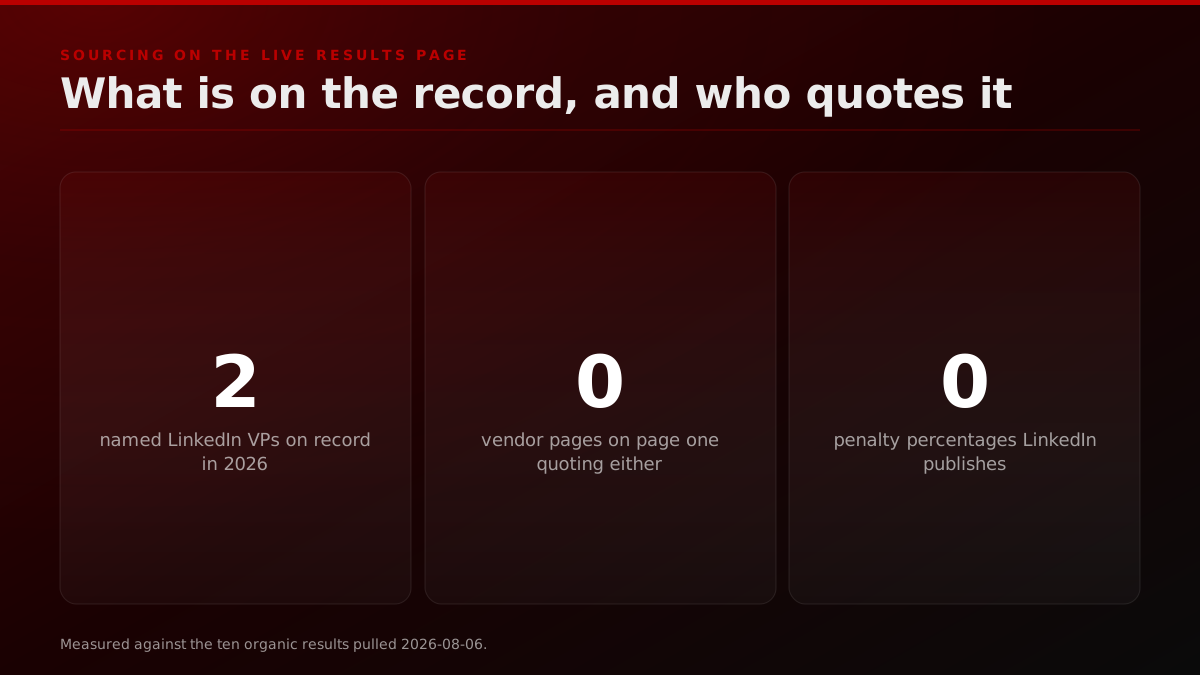
I want to be careful about what this does and does not prove. It is not evidence that any of those pages is lying, and vendor content can be accurate. It is evidence about which questions get asked. A page published by a company whose revenue depends on pods will reliably answer "how do I join one" thoroughly and "what does the platform do to my launch reach" thinly, not through dishonesty but because the second question has no good answer for them. The reader cannot see that gradient from inside the results page. That is worth naming.
There is one more detail on that page that took a properly controlled measurement to establish, and it is a small masterpiece of a mixed signal. lempod.com, for years the best-known pod extension, ranks fifth for the head term, its own listing advertising automated likes and comments. A Chrome Web Store search for lempod, however, returns nothing: 376 bytes with zero occurrences of the string, measured 2026-08-06. The reason that null result is readable at all is the control. The same instrument, searching for grammarly, returned 6,255 bytes and did contain the word, which proves the probe can see store listings when they exist.
The best-known pod extension is gone from the store while its site ranks fifth
A Chrome Web Store search for lempod returned 376 bytes with zero occurrences of the string, measured 2026-08-06. A control search for grammarly on the same instrument returned 6,255 bytes and did contain the word, which is what makes the empty result readable rather than a broken probe. Meanwhile lempod.com ranks fifth on page one for the head term, still advertising automated likes and comments. What is measured here is absence from the store today, not the reason for it, and the store publishes no reason.
Source: Chrome Web Store probe with control, plus live SERP, both 2026-08-06
What is measured there is absence from the store today. Not the reason for it, which the store does not publish and I am not going to invent. The pairing is the interesting part: the tool is gone from the place you would install it, and the marketing page is still fifth on the page you would research it from.
Don't Join LinkedIn Engagement Pods - Why The Number of 'Likes' on Your Linkedin Post Doesn't Matter
Tim Queen
An argument against joining pods built on the premise that the number of likes on a LinkedIn post is not the thing worth optimising.
Is asking your team to engage the same as running a pod?
No, and this is where a blanket anti-pod position falls over if you have not read the primary source. The honest counter-argument is well made by practitioners and deserves a real answer: get three to five people with relevant audiences to engage in the first ten minutes, and reach improves measurably. Operators report exactly this, and they are not lying. On a launch day, briefing your team and your design partners to show up is normal, sensible behaviour.
LinkedIn has drawn the line itself, and it is drawn in a more useful place than most people assume. Forbes reports Rodriguez saying plainly that sharing a post with a colleague and asking them to engage is not the behaviour the platform is targeting. What triggers its systems is something narrower.
quid pro quo expectation where I have to like your post, you have to like my post
Operator noteLinkedIn's own line is obligation, not asking. Ask ten colleagues. Do not owe forty strangers., Rodriguez, via Forbes
The discriminator is OBLIGATION, not the act of asking. A launch-day list of ten colleagues, investors and design partners who genuinely care about the product is a fundamentally different artifact from a standing group of forty strangers where you get removed for missing your round of likes. The first is you asking people who have a reason to care. The second is a payment structure.
Two honest caveats, because I would rather this post be useful than tidy. The first is that the boundary is genuinely fuzzy in the data, and Forbes says so: most active LinkedIn users naturally engage with the same handful of people repeatedly, and Rodriguez acknowledged that distinguishing that from pod behaviour is a real detection challenge. If your ten colleagues engage with everything you post forever, you are somewhere on a spectrum, and pretending otherwise would be dishonest.
The second is that the legitimate version has a hard ceiling, and the ceiling is the actual point. Ten colleagues is ten colleagues. That works for a launch and it does not scale into a growth strategy, which is precisely why people graduate from the sensible version to the obligated version. The graduation is the mistake, and it happens because the first thing worked.
I’m looking for LinkedIn partners
That thread is worth clicking for the comment count rather than the post. A request for engagement partners that explicitly distances itself from pods drew 149 replies, which tells you how many people want this arrangement while sincerely not considering themselves pod users. The self-perception gap in this category is enormous, and it is why "we do not run pods" in a proposal is not the reassurance it sounds like.
Why does this post not quote a percentage reach penalty?
Because no honest one exists, and the absence is a finding rather than a gap in our research. Three figures circulate constantly on this topic: a 45 percent reach penalty for pod use, a 30 percent penalty paired with a 55 percent engagement drop, and an anecdote about a post falling from 8,500 impressions to 340. None of them appears anywhere in this post.
The numbers we left out on purpose
Three figures circulate constantly here: a 45 percent reach penalty, a 30 percent penalty paired with a 55 percent engagement drop, and an anecdote about impressions falling from 8,500 to 340. None appears in this post. Every trace we could follow ended at a marketing blog or at a vendor selling a competing engagement or automation tool, and LinkedIn publishes no detection accuracy and no penalty schedule. The strongest evidence that no citable figure exists is that Forbes, with direct access to LinkedIn's trust team, reports a mechanism and no percentage.
Source: FORKOFF sourcing pass, 2026-08-06
Every trace we could follow for those numbers ended at a marketing blog or at a vendor selling a competing engagement or automation product. LinkedIn publishes no detection accuracy and no penalty schedule at all. The strongest available evidence that no citable figure exists is the Forbes piece itself: a journalist with direct access to LinkedIn's VP of Trust Product came away with a mechanism, a definition, a detection signature and an enforcement list, and no percentage. If a number were available to a reporter in that room, it would be in that article.
What is actually on the record, and what is not
| Claim | Status | Source |
|---|---|---|
| Pre-arranged reciprocal liking is against policy | On the record, verbatim | LinkedIn Professional Community Policies |
| Recommendation reach beyond followers is degraded | On the record, named executive | VP of Trust Product, via Forbes |
| Automated comments pulled from Most Relevant | On the record, named executive | VP of Product Management, via trade press |
| Groups removed and creators warned directly | On the record, named executive | VP of Trust Product, via Forbes |
| A specific percentage reach penalty | Not on the record anywhere | Traces to vendors selling competing tools |
| Detection accuracy or a penalty schedule | Never published by LinkedIn | No source exists to cite |
The bottom two rows are why this post carries no percentage. Absence of a number is itself a finding.
The bottom two rows of that table are the ones worth internalising. A precise number attached to an untraceable source reads as stronger evidence than an honest description of a mechanism, which is exactly what makes it worse. "Pods cut your reach by 45 percent" sounds like a measurement. "LinkedIn says pod-associated content is recommended less outside your network and followers, and publishes no figure for how much" is the actual state of knowledge, and it is less persuasive for precisely the reason you should trust it more.
We apply the same standard to numbers that would flatter us. There is no price in this post for our own LinkedIn distribution work, because that is an open commercial question we have not settled, and inventing a range to look decisive would be the same failure in the opposite direction.
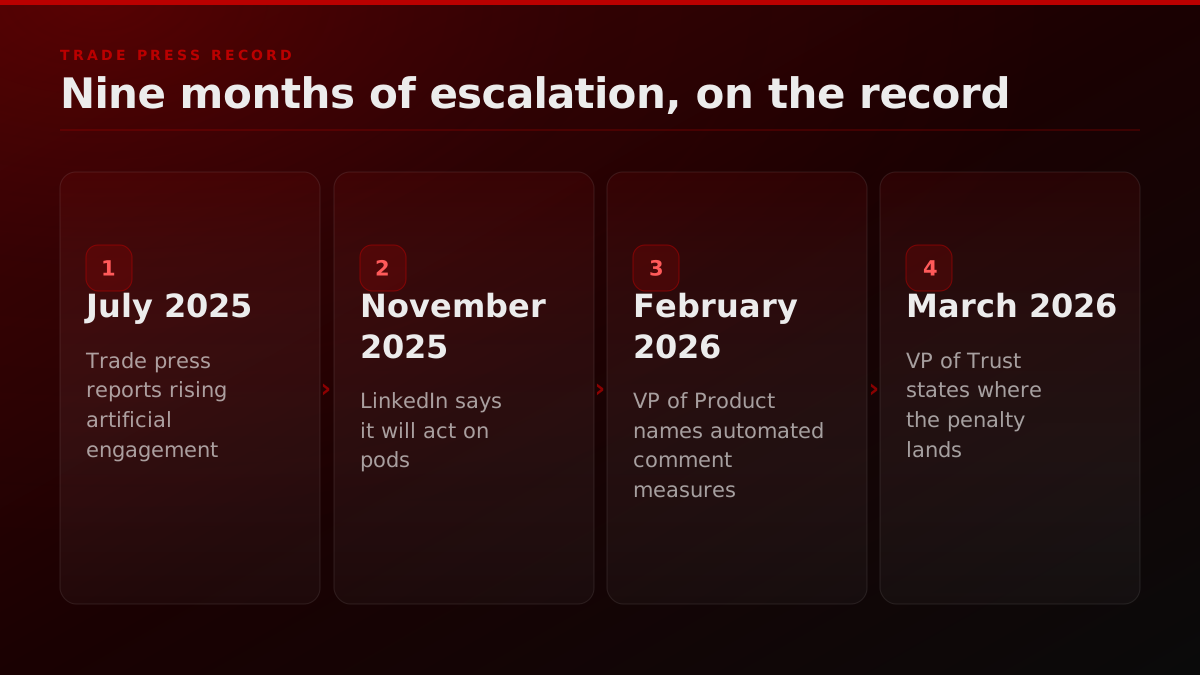
What we do have is a timeline, which is worth more than a percentage anyway. Three trade-press reports across nine months, escalating from a general report on rising artificial engagement in July 2025, to an explicit commitment to act on pods in November 2025, to two named executives describing specific mechanics in February and March 2026. A tactic can survive a rumour cycle. Surviving a nine-month escalation with named product owners attached to it is a different bet, and it is the bet you are making if you build a launch on one.
Could you be buying pods without knowing it?
You could, and it is a reasonable thing to check in writing before a launch rather than after. In July 2026 we ran a 27-source review of eight agencies in the LinkedIn founder-brand category, the shops a founder hires to run exactly this kind of launch window. Engagement-pod mechanics appeared inside the standard deliverable list for the category, sitting alongside ghostwriting, ideation and posting cadence. Not as an edge case, and not flagged as a risk. As a normal line item.
That normalisation is also why an operator can reverse-engineer an admired account and conclude it is tool-assisted without ever getting a straight answer. The other pattern in that review is the one that connects back to measurement. The category's proof points were overwhelmingly follower counts, impression counts and view totals rather than qualified buyers or pipeline. Those are the metrics a pod moves. An agency that reports success in impressions and an agency that runs a pod have the same dashboard, and from the outside a founder cannot tell them apart.
I am deliberately not naming any agency, because none of this is proof that a particular firm is running a pod on a particular account, and it would be unfair to imply otherwise from a category-level finding. What it does establish is that the practice is normal enough in the category that silence in a proposal is not reassurance. If you are hiring for a launch window, the useful question is narrow and answerable: what share of first-hour engagement on my posts will come from a standing reciprocal arrangement, and will you put that in writing? A shop running real distribution answers that in a sentence. We have written separately about how to choose a LinkedIn marketing agency and about where to draw the line on delegating founder voice, and both are worth reading before you sign anything.
Cody Schneider
@codyschneider
it’s taken two years but i’ve finally figured out linkedin organic jfc thank god it’s over my lower back pain will finally go away my sciatica will stop my tendinitis will heal for the hobbiton half marathon every engagement you see is real people hand raising not some dumb
There is a version of this that is simply about what you want to own. Two years into building LinkedIn distribution properly, the thing an operator ends up proud of is not the counter. It is being able to say that every engagement on the post is a real person raising a hand. That sentence is only available to someone who never bought the alternative, and on a launch it is also the only version that tells you anything.
What do you run on launch day instead?
You run the warm-up before launch day, which is the part that cannot be bought late. The mechanics live in the cadence playbook and I am not going to restate them here, but the shape is: name the accounts you want reading the launch, spend the weeks before it commenting substantively on their posts, then publish into a graph that already recognises you. A ghostwriter in the same subreddit described spending two weeks fixing the audience before writing a single post, and reported that within a month the first hour of every post was reaching the right people. That is the asset a pod is bought to skip, and skipping it is why the pod is needed.
Five posts a week on fixed weekday slots is where we land for a single founder, and seven is where impression-per-post starts decaying 30 to 45 percent on a single-operator account. The launch itself is usually not the first window anyway: on most launches the spike lands on X and LinkedIn is where the operators and investors who missed launch day catch up, which is a conversion job rather than a spike job. We have compared LinkedIn against X for a product launch directly, and whether LinkedIn marketing works for B2B SaaS at more length, and Reddit against LinkedIn for B2B distribution as a channel-choice question.
On frequency, how often a founder should post is a genuinely unsettled question and the sibling guide covers the conflicting published data properly. For the launch itself, the launch video playbook and launch week video sequencing cover the asset side, the distribution gap post covers the case where good launch content reaches nobody, and what to measure in the first 30 days covers the reporting. The positioning work that has to happen before any of it is in the founder-led growth playbook.
The pod problem is also the same problem as a botted launch one channel over, and the tells are legible to anyone who looks. Both substitute a purchased signal for a real one, both look fine on the dashboard, and both fail at the moment somebody who matters looks closely. We published an organic against amplified benchmark and a views-to-likes benchmark for exactly this reason, and the state of launch videos research found the same distortion on the video side: you cannot calibrate against numbers somebody bought.
The verdict
If you want one line of justification for not running a pod, the policy clause is right there and it names the mechanism. But that is not the reason, and treating it as the reason gets the argument backwards. Plenty of things break a platform's terms and are still worth doing. This one is not worth doing because of what it costs you on the specific occasion you are most tempted to use it.
A launch gives you one short window of genuinely informative signal, and six real decisions hang off reading it correctly. A pod fills that window with a sample selected for reciprocity, so the signal stops meaning anything at the exact moment it is the only thing you have. Then the documented penalty degrades recommendation past your own followers, which on an ordinary post is a minor cost and on a launch is the whole objective. And the arranged comments can be pulled from the default view while the counter keeps reading fine, so even the social proof you paid for does not reliably reach the person it was bought for.
That is three compounding failures, all landing hardest on launches, and none of them requiring a penalty percentage to be persuasive. Meanwhile five of the ten pages a founder finds while researching this are published by companies selling the software, and the two LinkedIn executives who actually explained the mechanics are quoted by none of them.
The alternative is slower and duller and it is the only version that tells you anything. Name the accounts you want before you launch. Earn their attention in the weeks before launch day rather than renting it on the morning. Publish into a graph that recognises you. Read dwell and click-through instead of likes, and be willing to see a bad number, because a bad number you can trust is the most valuable thing a launch produces. A good number you manufactured is worse than no number, and on a launch it is worse than a bad one, because you will spend the next month acting on it.