Dutch Blockchain Week 2026 is the leading Web3 and digital asset event in the Netherlands, and it runs from June 22 to 28, 2026, across Amsterdam, with the flagship DBW Summit on June 24 and 25 at the Johan Cruijff ArenA. This is the 8th edition, organized by the team that has run the week since its 2019 launch, and it has settled into a clear B2B and institutional identity built around the EU's MiCA regime. This preview lays out the verified dates, the speaker lineup, the co located Litecoin Summit and side events, the agenda themes, the ticket tiers, and a neutral comparison with the rest of the 2026 European conference calendar.
Dutch Blockchain Week 2026 in one scroll
Dutch Blockchain Week 2026 runs June 22 to 28 across Amsterdam, with the flagship DBW Summit on June 24 and 25 at the Johan Cruijff ArenA. It is the 8th edition, organized since 2019, and it has settled into a B2B and institutional identity built around the EU's MiCA regime. The week opens with the Litecoin Summit on June 22 and 23, headlined by Charlie Lee, and runs 40+ side events through the week. The organizer reports a 5,000+ attendee draw. Summit late-bird tickets were Pro 250 euros, VIP 725 euros, Combi 200 euros, and Student 25 euros at the time of research. This preview covers the dates, the speaker lineup, the co located events, the agenda themes, the ticket tiers, and a neutral comparison with the rest of the 2026 European conference calendar.
Dutch Blockchain Week 2026 (Amsterdam): an operator's preview of dates, speakers, and what to expect
This preview is written from an operator's seat. FORKOFF runs the events stack end to end for founders and growth teams across the 2026 conference cycle, from the pre event narrative to side event hosting and the GTM cadence that decides whether a conference week turns into pipeline. We publish previews like this one to brief buyers on which events to attend, what to expect on the floor, and how to measure the trip. We did not invent any date, venue, or figure in this post. The locked anchors are the dates and the venue, and every attendance number is attributed to the organizer because that is who reported it.
A quick note on scope. This is a preview of the Amsterdam edition of Dutch Blockchain Week, the only edition there is, centered on the DBW Summit on June 24 and 25 because that is the day most attendees plan around. If you want the field mechanics of working a show floor rather than a preview of one event, our conference activation playbook goes deeper on the operating side. The week itself is wider, a full seven days of side events, a co located Litecoin Summit, and an awards night. If you are deciding whether to fly to Amsterdam for a crypto conference this June, this is the page that answers the questions you actually have.
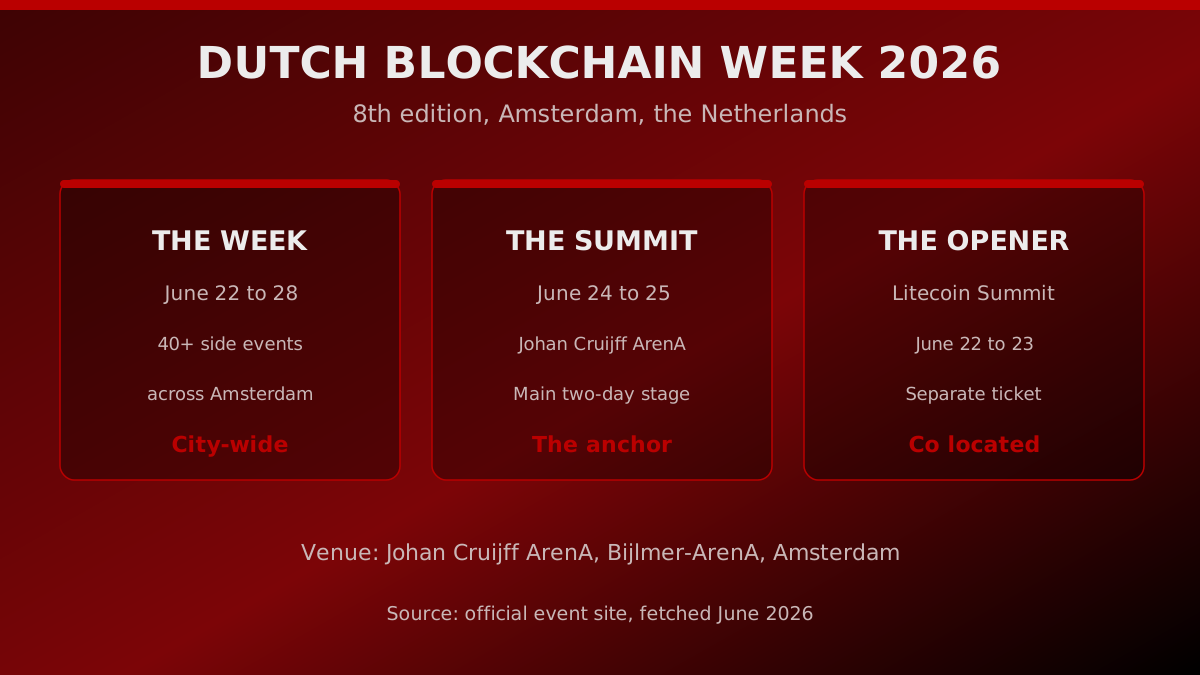
Operator noteWeek is June 22 to 28. The Summit, the only date most people care about, is June 24 to 25 at the Johan Cruijff ArenA., official DBW site
What is Dutch Blockchain Week
Dutch Blockchain Week is the Netherlands' flagship Web3 and digital asset event week, a city-wide program of conferences, side events, and networking that gathers exchanges, banks, regulators, market makers, funds, and Web3 projects in Amsterdam. It began during 2019 as a community gathering and has grown, edition by edition, into one of Europe's larger B2B blockchain weeks. The 2024 to 2025 cycle merged Dutch Blockchain Days and Dutch Blockchain Week into a single mega-event, and the 2026 edition is the 8th, anchored by a two-day Summit at the Johan Cruijff ArenA.
The event is organized by a Netherlands-based team led by Rudolf van Ee, Christiaan Jimmink, and Jan Scheele, and each edition is built with partners, volunteers, and the local community. The framing for 2026 is unambiguous, the official site calls it "the leading B2B blockchain week from The Netherlands" and lists a partner roster heavy with financial institutions. For a US or European founder, the simplest way to place it is this, EthCC is the developer week, TOKEN2049 is the global trading and capital week, and Dutch Blockchain Week is the European institutional and regulatory week.
The arc matters because it tells you what kind of room you are walking into. The 2019 debut was a modest gathering in a Venturerock office. The COVID years pushed it into hybrid formats hosted out of ABN AMRO and a set of studios, the 2022 edition ran out of EY in Amsterdam, and 2023 moved to ASML in Eindhoven, each step pulling the event closer to the institutions it now serves. The pivotal change came during 2024 and 2025, when the organizers merged Dutch Blockchain Days and Dutch Blockchain Week into a single mega-event at De Meervaart, which is the format the 2026 edition scales up at the Johan Cruijff ArenA. A community meetup does not get a sitting financial regulator on stage. A B2B institutional week does, and that is the line this event has crossed.
The practical implication is about expectation setting. If you arrive expecting a degen, retail-trader crowd swapping ticker calls, you will be in the wrong building. The people who get the most out of this week are the ones with a commercial reason to be in Europe, a license to pursue, a banking partner to sign, a compliance vendor to evaluate, or a fund to raise from. That focus is the product, and it is the reason the week reads so differently from a general crypto festival.
This is a B2B week, not a retail meetup
Dutch Blockchain Week started in 2019 as a community gathering and has shifted, edition by edition, into an explicitly B2B and institutional event. The 2026 partner list reads like a financial services roster, Bitvavo as main partner, bunq as a first-time diamond sponsor, and Visa, Kraken, OKX, Bybit EU, and zerohash europe at platinum, with Mastercard, Worldpay, Fireblocks, and Deloitte at gold. The speaker mix carries the same signal, with the Dutch Ministry of Finance, the AFM regulator, ABN AMRO, and BCG on stage next to native crypto firms. If you sell to institutions in Europe, this is a room built for you. If you are a retail trader looking for alpha, it is the wrong room.
Source: Official DBW partner and speaker pages, fetched June 2026
Dates, venue, and the week versus the Summit
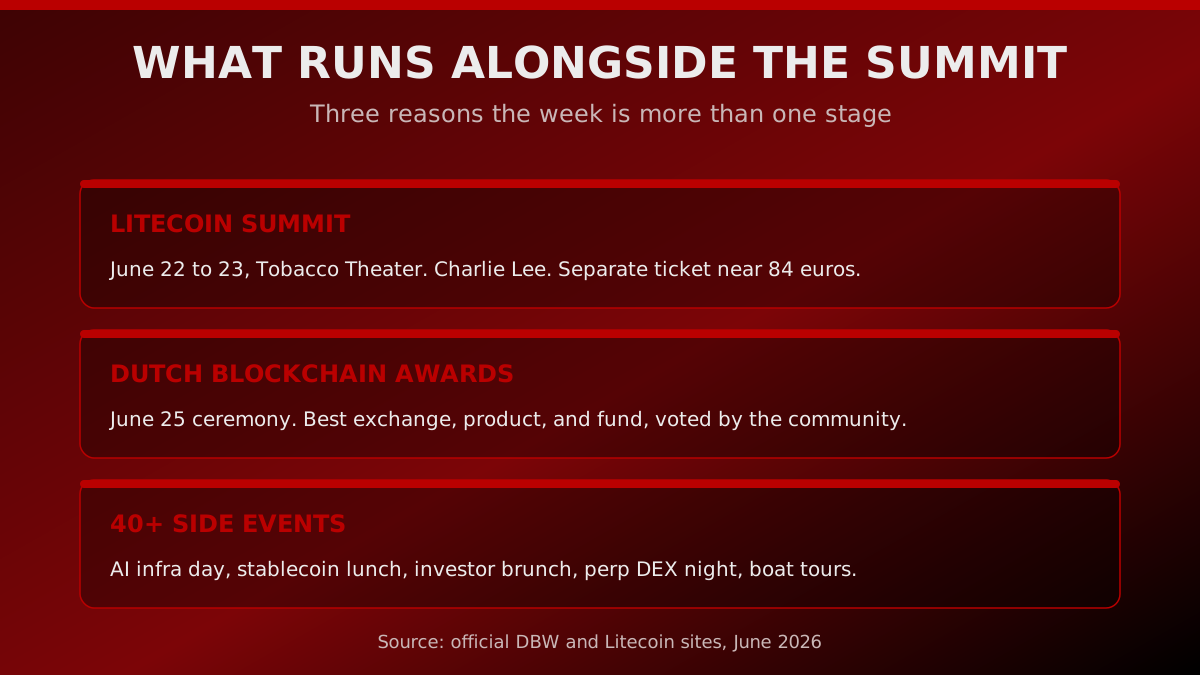
The single most useful thing to get straight is the difference between the week and the Summit. Dutch Blockchain Week 2026 runs June 22 to 28 across Amsterdam. The DBW Summit, the main two-day conference, runs June 24 and 25 at the Johan Cruijff ArenA in the Bijlmer-ArenA district. The week opens with the co located Litecoin Summit on June 22 and 23, includes a VIP Night and a padel tournament on June 23, an awards ceremony and the official afterparty on June 25, and boat tours and community side events after that.
The venue is easy to reach. Bijlmer-ArenA station sits on the direct train line from both Amsterdam Centraal, about 15 minutes, and Schiphol Airport, about 20 minutes, so a visiting attendee can base anywhere central and commute to the stadium in well under half an hour. If you are flying in, plan your accommodation around the Centraal or Zuid areas for the side events and treat the ArenA as a day trip on the 24th and 25th.
A few logistics notes save time once you are on the ground. Amsterdam is compact and the public transport is dense, so a single GVB or contactless travel card covers trams, metro, and the trains to the stadium without a car, and most of the central side-event venues are walkable or a short tram ride from each other. Nationals of the US, UK, Canada, Australia, and the EU do not need a visa for a short business trip to the Netherlands, which removes the friction that complicates Gulf or US conference travel for many attendees. Book hotels early, the week overlaps with peak Amsterdam tourist season, and the institutional crowd tends to cluster in the Zuid business district near the corporate offices.
The split between the week and the Summit also shapes how you should budget your days. The 24th and 25th at the ArenA are the dense, scheduled core, keynotes, panels, breakouts, and the exhibition floor. The days on either side are looser and more valuable for relationship work, the Litecoin Summit and VIP Night before, the awards, afterparty, and boat tours after. If your goal is deal-making rather than learning, the bookend days often produce more than the main stage, because the conversations are unstructured and the people you want are not rushing between sessions.
The Dutch Blockchain Week 2026 week at a glance
| Day | What runs | Where |
|---|---|---|
| June 22 to 23 | Litecoin Summit (separate ticket) | Amsterdam |
| June 23 | VIP Night and padel tournament | Amsterdam |
| June 24 to 25 | DBW Summit (main conference) | Johan Cruijff ArenA |
| June 25 | Dutch Blockchain Awards and afterparty | Johan Cruijff ArenA |
| June 26 to 28 | Boat tours and community side events | Across Amsterdam |
Schedule per the official DBW account and site, fetched June 2026. Partners and the community run additional side events, listed on the event's Luma calendar.
Operator noteThe Litecoin Summit on June 22 to 23 is a separate ticket. The Combi ticket is the one that covers both., official DBW and Litecoin sites
The co located events: Litecoin Summit, the Awards, and 40+ side events
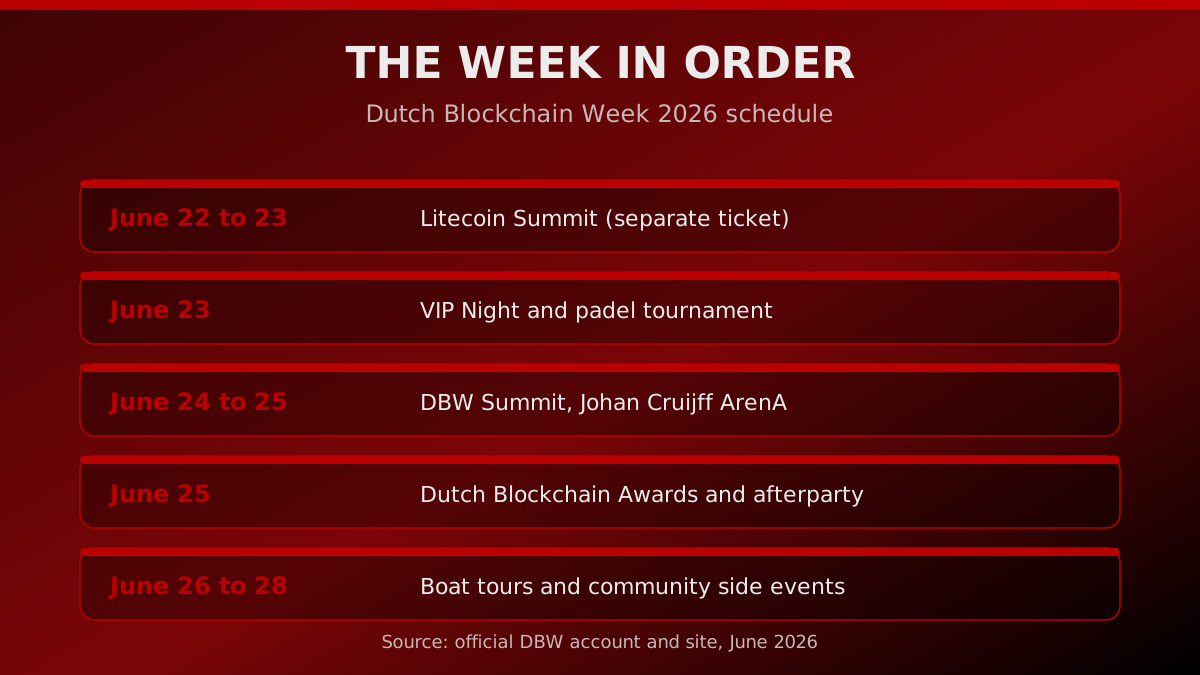
Dutch Blockchain Week is not one conference, it is a stack of them. The Litecoin Summit opens the week on June 22 and 23 with its own ticket and its own lineup, headlined by Litecoin creator Charlie Lee, and it brings a distinct payments and privacy thread to the week. The Dutch Blockchain Awards ceremony runs on June 25 at the ArenA, with categories spanning best exchange, best product, and best digital asset fund, voted on by the community ahead of the event. And around all of it sits the side-event program.
The organizer counts 40+ side events across Amsterdam through the week, and the community calendar on Luma already lists a deep slate, an AI infrastructure day, a stablecoin lunch, an investor brunch, a perp DEX night, an onchain breakfast, a crypto women collective meet-up, and more. This is the part of the week that experienced attendees optimize for. The Combi ticket is the one to note here, it covers both the Litecoin Summit and the DBW Summit, where the standard Pro ticket covers the DBW Summit alone.
The Litecoin Summit deserves more than a footnote, because it is a real event with its own gravity, not a warm-up. It runs June 22 and 23 at the Tobacco Theater, a multi-room Amsterdam venue, on a separate ticket near 84 euros, and it is headlined by Litecoin creator Charlie Lee alongside privacy and payments voices such as Alexis Roussel of NYM. Its register is more cypherpunk than the institutional main Summit, privacy, censorship resistance, and payments sovereignty, which makes it a useful counterweight to the bank-heavy program two days later. If those themes are your work, the Combi ticket is the obvious buy.
The Dutch Blockchain Awards add a third reason to be in the room on the 25th. The ceremony recognizes the year's standout exchanges, products, and funds, with nominees voted on by the community before the event, voting closed on June 7. The 2026 best exchange and broker shortlist alone, naming Bitvavo, Kraken, Bybit EU, Coinmerce, and OKX, is a fair map of who serves European retail and institutional flow. For a partnerships or BD lead, an awards night is a low-friction way to meet the commercial teams behind those platforms in a celebratory setting rather than across a booth.
The side events are where the work happens
Every experienced conference-goer says the same thing, the main stage is for credibility and the side events are for deals. One operator who attended EthCC 2024 reported going to more than 300 side events and crediting those, not the keynotes, for the conversations that mattered. DBW leans into this with 40+ side events across the week, from a stablecoin lunch and an investor brunch to an AI infrastructure day, a perp DEX night, and canal boat tours. The practical move is to map the side events before you land, prioritize the invite-only and waitlisted ones where the density is highest, and treat the stage sessions as a place to confirm who to chase in the hallway.
Source: EthCC 2024 attendee recap and the DBW Luma side-event calendar
Dutch Blockchain Week
@DutchBlockWeek
The full DBW26 week at a glance. June 22: Litecoin Summit June 23: VIP Night + Padel June 24-25: DBW Summit June 25: Afterparty powered by Bitvavo and Ripple June 26: Boat Tour powered by Bitvavo Partners and the community run more side events too. Check Luma for all info!
Who is speaking at Dutch Blockchain Week 2026
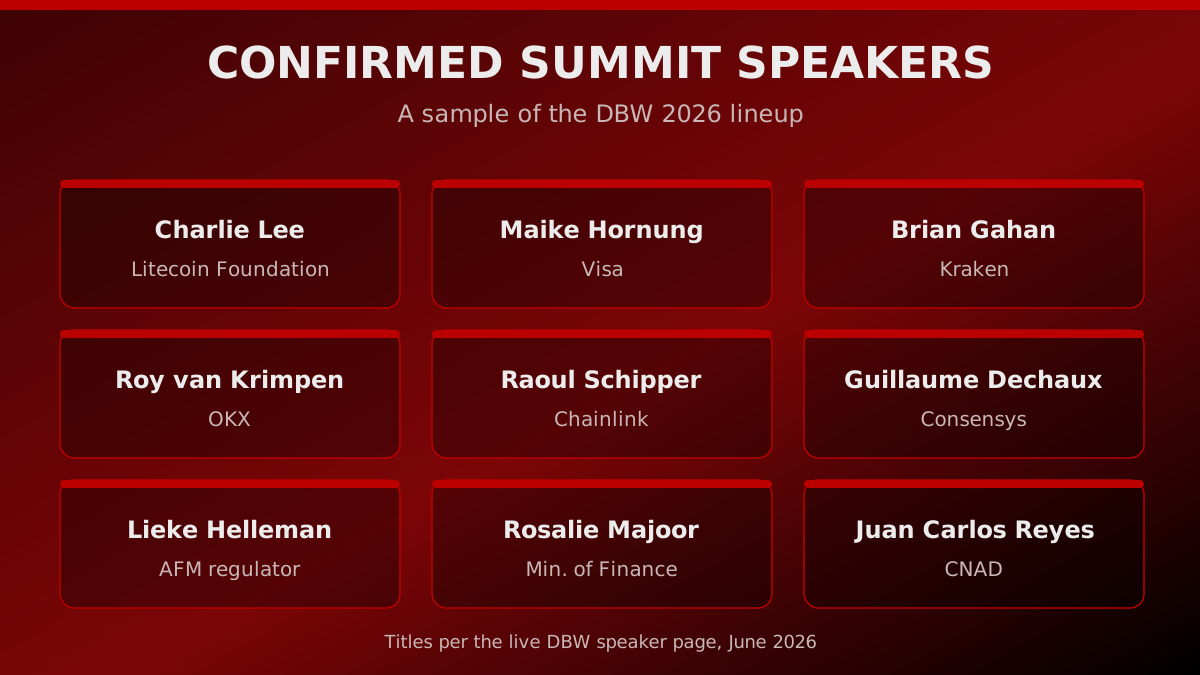
The organizer lists more than 39 confirmed Summit speakers for 2026, and the lineup is the clearest signal of what the week is about. It is unusually dense with regulators and TradFi, the kind of roster you do not see at a retail-focused show. The headline name is Charlie Lee of the Litecoin Foundation, with a Day 1 fireside, but the substance is in the institutional and policy clusters around him.
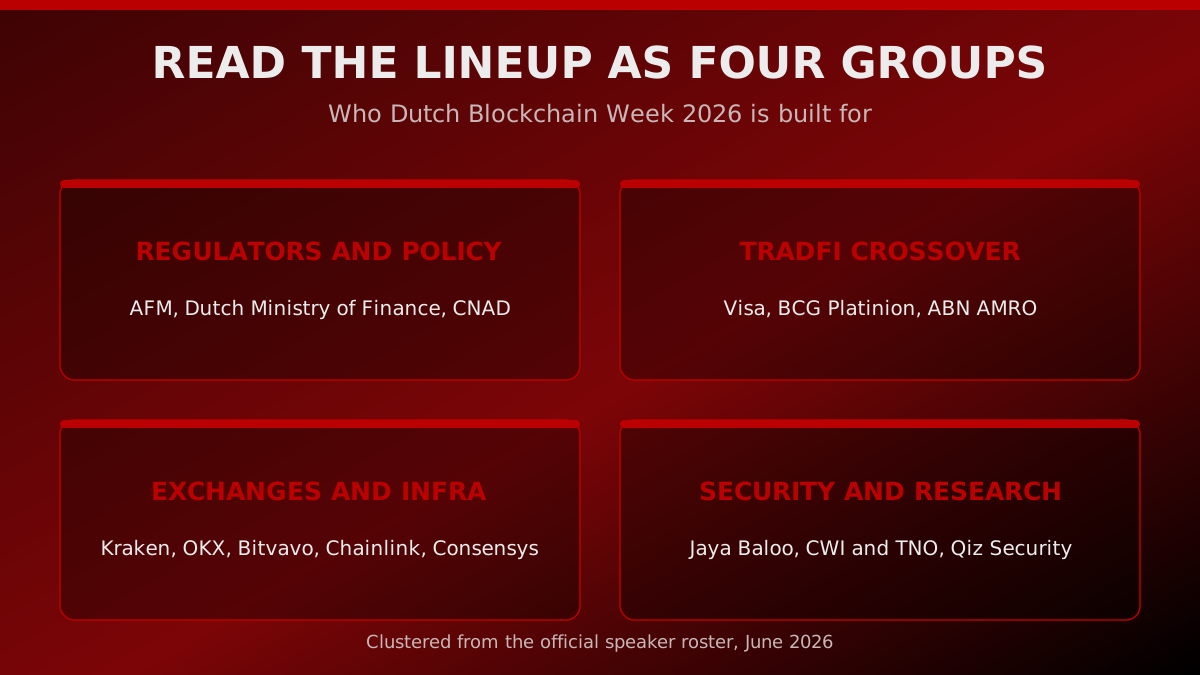
Read the lineup as four groups. The regulators and policy voices include Lieke Helleman, who manages MiCAR supervision at the AFM, the Dutch markets regulator, Rosalie Majoor of the Dutch Ministry of Finance, and Juan Carlos Reyes, president of El Salvador's National Commission of Digital Assets. The TradFi crossover includes Maike Hornung, Head of Crypto Europe at Visa, Kaj Burchardi of BCG Platinion, and a product manager from ABN AMRO. The exchange and infrastructure group includes Brian Gahan of Kraken, Roy van Krimpen of OKX, Ramin Kader of Bitvavo, Raoul Schipper of Chainlink, and Guillaume Dechaux of Consensys. And a security and research cluster includes Jaya Baloo, the former Avast chief information security officer, alongside researchers from CWI and TNO.
A few of these slots are worth the trip on their own. Having a sitting MiCAR supervisor from the AFM on stage is rare, regulators usually speak at policy forums, not commercial conferences, and her session is the closest most attendees will get to hearing how the rules are actually being enforced rather than how the press releases describe them. Juan Carlos Reyes brings the sovereign-adoption angle from El Salvador, a counterpoint to the European compliance-first frame. And the program does not shy from the hard cases, a Day 2 panel pairs Alex Pertsev, the developer at the center of the Tornado Cash case, with Judith de Boer of the firm that defended him and Andre Omietanski, general counsel at the privacy-L2 builder Aztec Labs, for a discussion on developer liability that few institutional conferences would program.
For the markets crowd, the hometown draw is Michael van de Poppe, the Dutch analyst who runs MN Fund and carries a following north of 700,000, on a panel about how crypto trading matures as institutions move in. The security track is where the program shows real ambition, a Day 1 panel on what quantum computing means for the cryptography underneath crypto, featuring Jaya Baloo alongside Thomas Attema of CWI and TNO and a founder from Qiz Security. The full and current roster lives on the official speaker page, and the organizer continues to add names in the run-up, so the list above is a representative slice rather than the whole bill.
A sample of the confirmed DBW Summit 2026 speakers
| Speaker | Title | Organization |
|---|---|---|
| Charlie Lee | Director | Litecoin Foundation |
| Maike Hornung | Head of Crypto Europe | Visa |
| Brian Gahan | General Manager Europe | Kraken |
| Roy van Krimpen | General Manager Western Europe | OKX |
| Raoul Schipper | Head of Strategic Accounts | Chainlink |
| Guillaume Dechaux | Managing Director | Consensys |
| Lieke Helleman | Manager MiCAR Supervision | AFM |
| Rosalie Majoor | Senior policy advisor | Dutch Ministry of Finance |
| Juan Carlos Reyes | President | National Commission of Digital Assets |
| Michael van de Poppe | Founder and CIO | MN Fund |
Titles per the live DBW speaker page, June 2026. The organizer lists 39+ confirmed speakers. The full and current list is at dutchblockchainweek.com/speakers.
Dutch Blockchain Week
@DutchBlockWeek
A fireside chat with the creator of Litecoin, Charlie Lee. This Day 1 session looks back and forward. What he got right. What he would do differently. And how he reads the industry today from a seat very few people have. Charlie Lee, Director at Litecoin Foundation. Day 1, June… Show more
I had the pleasure of attending in 2023, and even in the midst of a bear market, the energy was electric. The crowd was not only optimistic but also deeply committed to building solid projects. Connecting with executives from leading companies and gaining insights was extremely valuable, and to top it all off, the after-party was fantastic, set in the beautiful city of Amsterdam.
Why Amsterdam, why now
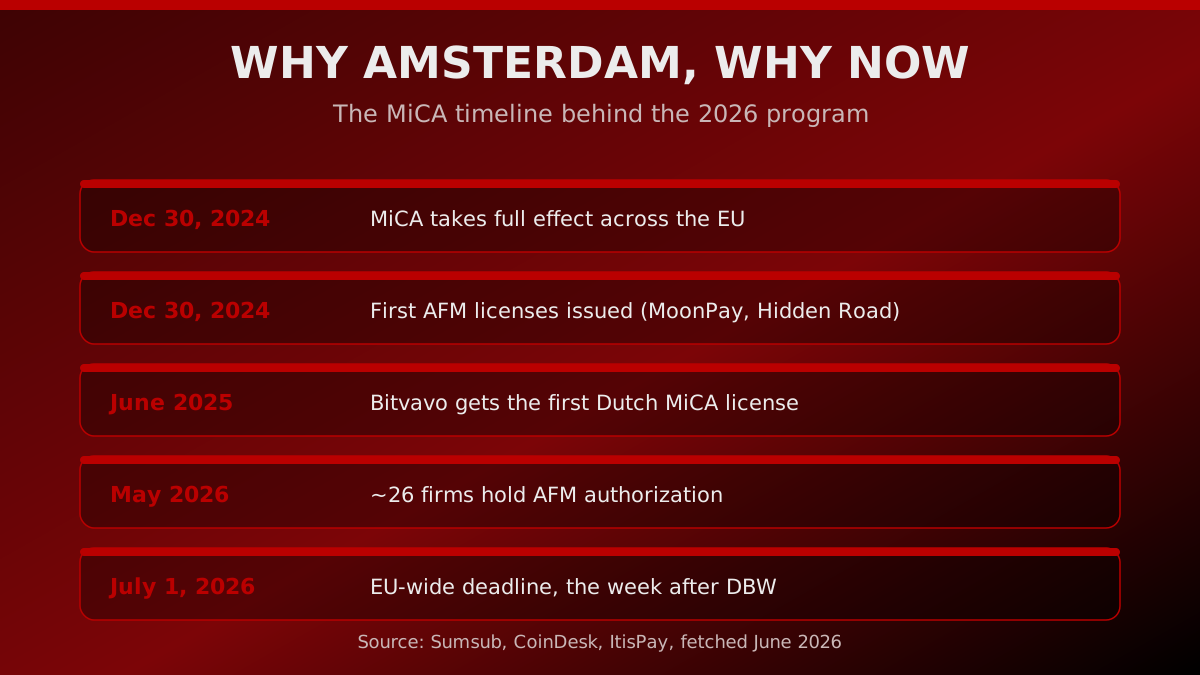
Amsterdam is not a backdrop for this event, it is the point. The Netherlands has positioned itself as one of the earliest and most concrete MiCA licensing hubs in the EU, a shift covered in depth by Disruption Banking, and that is the through-line of the 2026 program. The EU's MiCA crypto-asset regulations, short for Markets in Crypto-Assets, came into full effect on December 30, 2024, and the bloc-wide deadline for crypto firms to operate under it lands on July 1, 2026, the week after this event. That timing is not a coincidence in the programming.
The Dutch regulator has moved faster than most. The AFM granted Bitvavo the first Dutch MiCA license in June 2025, and Bitvavo, by its own reporting cited in CoinDesk's coverage, serves nearly two million users and has handled more than 100 billion euros in trading. Roughly 26 firms held AFM authorization by May 2026, per the MiCA transition status tracker at ItisPay citing the regulator's register. Amsterdam also has real ecosystem depth underneath the regulation, the data platform Tracxn counts 234 blockchain startups in the city, 66 of them funded. For a firm that needs an EU passport, a week where the supervisor, the first licensed exchanges, and the compliance vendors are all in one building is a working trip.
It helps to understand what MiCA actually changes, because that is the demand driving the room. MiCA replaces the patchwork of national crypto rules across the EU with a single licensing regime, and a firm authorized as a crypto-asset service provider in one member state can passport that license across all 27. That turns the choice of where to get licensed into a strategic decision, and the Netherlands has positioned itself as one of the front-runners on speed and clarity. The first AFM licenses went out on December 30, 2024, to a cohort that included MoonPay and Hidden Road, the national transitional period ended on June 30, 2025, and across the whole EU roughly 130 to 140 CASP licenses had been issued by 2026, per Sumsub's MiCA crypto regulation guide. The hard EU-wide deadline on July 1, 2026 is what gives the week its urgency, firms that are not authorized by then lose the ability to serve EU customers.
That regulatory pull is why the institutional partners showed up. A neobank like bunq sponsoring at the diamond tier, ABN AMRO putting a product manager on stage, and Visa and Mastercard programming breakout sessions are not gestures, they are signals that regulated European finance now treats digital assets as a product line rather than a science experiment. For a founder, the read is simple, the buyers and the gatekeepers for the European market are concentrated in this one city for this one week, and the regulatory clock makes mid-2026 the moment they are all paying attention.
MiCA is the reason Amsterdam matters right now
The EU's Markets in Crypto-Assets regulation came into full effect on December 30, 2024, and the bloc-wide deadline for crypto firms to operate under it lands on July 1, 2026, days after this event. The Netherlands has moved fast, the AFM granted Bitvavo the first Dutch MiCA license in June 2025, and roughly 26 firms held AFM authorization by May 2026 (ItisPay, citing the AFM register). That makes Amsterdam one of the most concrete places in Europe to read how MiCA is actually being supervised, because the supervisor itself is on the program. For any firm that needs an EU passport, a week where the regulator, the licensed exchanges, and the compliance vendors are all in one building is a working trip, not a junket.
Source: CoinDesk on the Bitvavo license, Sumsub and ItisPay on MiCA timelines
The Dutch Blockchain Week 2026 agenda and themes
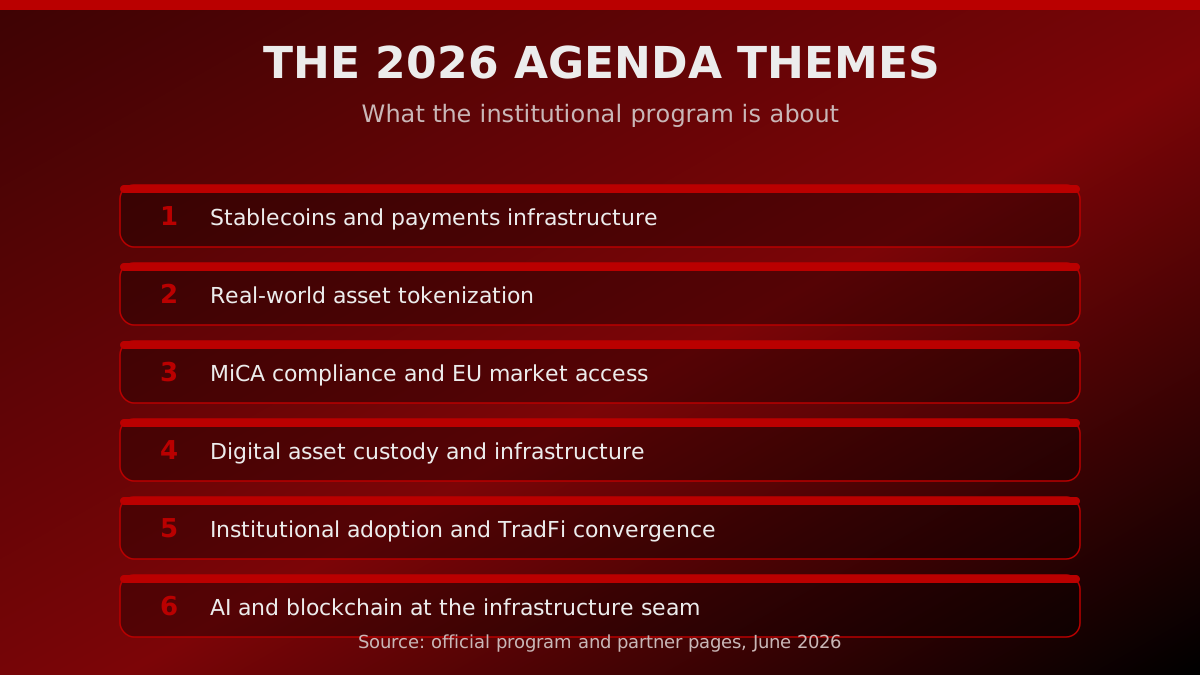
The 2026 agenda is organized around the themes that define institutional crypto in Europe right now, and they map cleanly onto the partner and speaker roster. Stablecoins and payments sit at the center, the co-presence of Visa, Mastercard, Worldpay, bunq, and zerohash europe is a deliberate signal, and a Day 2 stablecoins panel pairs Visa and BCG Platinion with infrastructure providers. Tokenization of real-world assets is the second pillar, with Bitwise, Chainlink, and Talos aligned to it. On-chain RWA value, excluding repos, had reached roughly 46.9 billion dollars by 2026, with tokenized US Treasuries near 11.35 billion dollars, per DataWallet's aggregation, and that growth is the backdrop for those sessions.
The rest of the program rounds out the institutional picture, digital asset custody and infrastructure from Fireblocks, Blockdaemon, and OVHcloud, a heavy compliance and policy track built around MiCA, and an AI and blockchain thread that shows up both on the main stage and in a dedicated AI infrastructure side-event day. There is even a post-quantum cryptography session on Day 1, pairing researchers from CWI and TNO with a security founder, a sign of how far ahead the program is willing to look. The breakout sessions are hosted by names that tell you who the audience is, Visa, Mastercard, Deloitte, PwC, Fireblocks, and Bitvavo among them.
Stablecoins are the theme to watch most closely, because the macro picture behind them has shifted. Total stablecoin liquidity sat around 274.6 billion dollars in 2026, per DataWallet's aggregation, and the institutions programming these sessions are not debating whether stablecoins matter, they are working out the settlement rails, the licensing, and the bank integrations. When the Head of Crypto Europe at Visa shares a panel with BCG and a settlement provider, the conversation is about production payments, not theory. That is the tell that separates this week from an earlier-stage event, the questions on stage assume adoption and argue about implementation.
The AI and blockchain thread is the one most relevant to a founder building at that seam, and it is also where the program is most exploratory. A dedicated Agentic Day side event frames the AI infrastructure economy, and the main-stage references to AI tend to land on concrete uses, compliance automation, fraud detection, and onchain agents, rather than abstraction. The breadth is the point, a single trip lets a founder sample the regulatory track in the morning, a tokenization deep dive midday, and an AI infrastructure session in the afternoon, which is hard to assemble from any other single European week in 2026.
Dutch Blockchain Week
@DutchBlockWeek
Stable by design, or stable by decree? A panel on what keeps stablecoins stable. Maike Hornung, Visa Kaj Burchardi, BCG Platinion Marieke Flament, Currency of Power Rens de Groot, zerohash Europe Day 2, June 25.
Operator noteMiCA's EU-wide deadline is July 1, 2026, the week after this event. That is why the regulators are on stage., Sumsub MiCA guide
Dutch Blockchain Week 2026 by the numbers
Here are the figures, with a clear line between what is verified and what is reported. The organizer markets a 5,000+ attendee draw across the week and 40+ side events, and describes a B2B audience weighted toward decision-makers. Those numbers come from the event's own promotion, and the live counters on the official site were still showing placeholder values when we checked, so treat them as projections rather than audited counts. The independently anchored facts are the ones to plan against, the 8th edition, the June 22 to 28 dates, the June 24 to 25 Summit at the Johan Cruijff ArenA, and the 39+ confirmed speakers on the public page.
The numbers worth weighting most are the public market and regulatory ones, because they explain why the room exists. MiCA's July 1, 2026 deadline, the roughly 26 AFM-licensed firms, the first Dutch MiCA license going to a two-million-user exchange, and the 234 Amsterdam blockchain startups are all independently sourced. Those are the figures that tell you the institutional interest is real, not the attendance banner.
The market backdrop is the strongest number set of all. On-chain real-world assets, excluding repos, reached roughly 46.9 billion dollars by 2026, tokenized US Treasuries stood near 11.35 billion dollars, and stablecoin liquidity was around 274.6 billion dollars, all per DataWallet's aggregation of platform data. Those are the figures a founder should carry into the room, because they are what the institutional sessions are actually about, and they are independently verifiable rather than self-reported. When you are deciding whether a week is worth a flight, the size of the market the attendees are chasing is a better signal than the size of the attendee list.
A note on how to use organizer figures without being misled by them. Treat the attendance and seniority claims as a directional read on scale and audience type, not as a guarantee, and anchor your own planning on the verifiable facts. If a vendor tells you to expect a specific number of leads because the event advertises a specific number of attendees, that is the moment to be skeptical. The right baseline is the proven multi-thousand draw the week has delivered across recent editions, and the right metric for your own trip is the count of qualified conversations you walk away with, which has nothing to do with the banner.
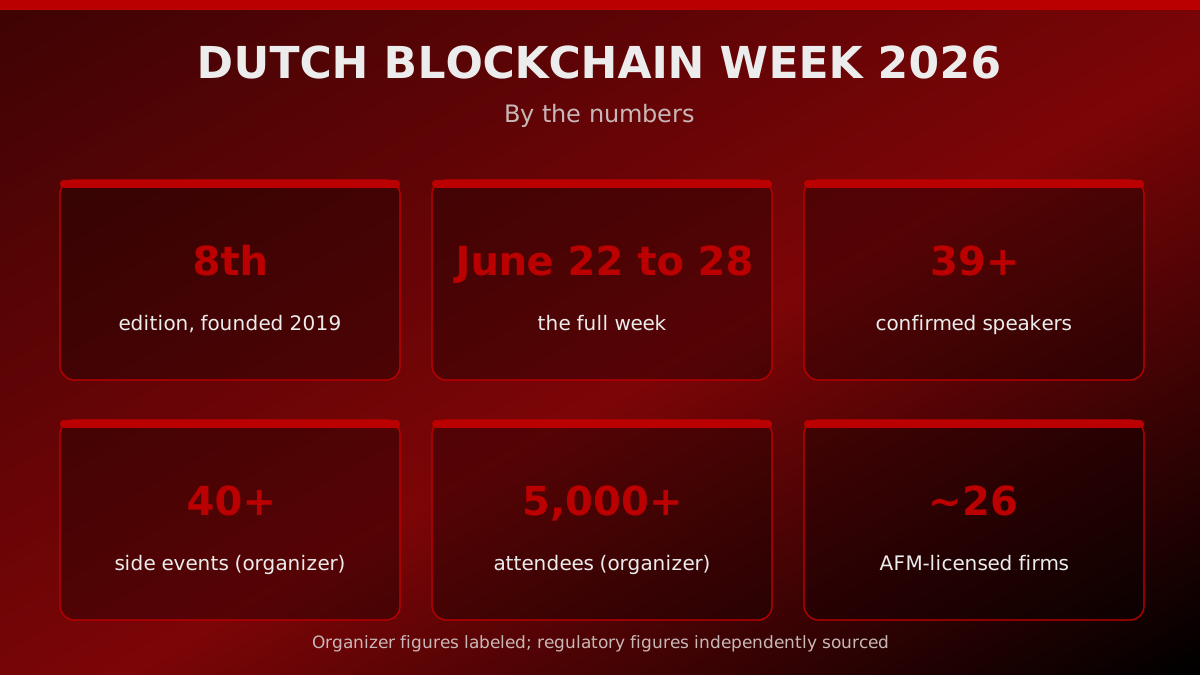
Read the headline numbers as organizer figures
The 5,000+ attendee draw, the 40+ side events, and the decision-maker percentages all come from the organizer's own marketing, and the official site's live counters were still showing placeholder values when we checked. That is normal for pre event promotion across the whole conference industry and it is not a knock on this event specifically. The independently verifiable anchors are the ones worth planning against, the dates, the venue, the confirmed speakers, and the public MiCA and market data. Plan your capacity against the proven multi-thousand draw the event has shown across prior editions, and measure your own result on qualified conversations rather than on the attendance figure on the banner.
Source: DBW official site and prior-edition press, fetched June 2026
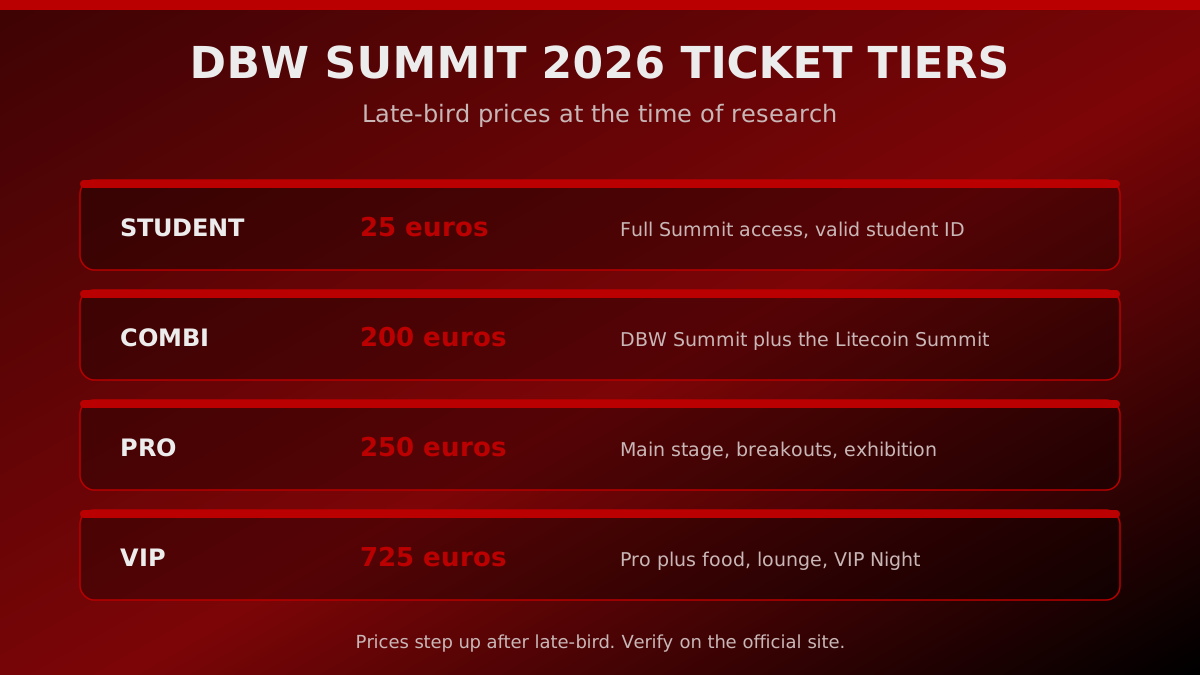
Dutch Blockchain Week Summit 2026 ticket tiers
| Tier | Late-bird price | What it covers |
|---|---|---|
| Student | 25 euros | Full Summit access with a valid student ID |
| Combi | 200 euros | DBW Summit plus the Litecoin Summit |
| Pro | 250 euros | Main stage, breakouts, and the exhibition floor |
| VIP | 725 euros | Pro access plus food, lounge, and the VIP Night |
Late-bird prices at the time of research. The organizer announced a 100 euro step-up after the late-bird window. Verify current pricing at dutchblockchainweek.com/tickets.
Is Dutch Blockchain Week worth attending
For the right buyer, yes, and the right buyer is specific. If you sell to or raise from European institutions, or you need to understand MiCA from the people supervising it, this week concentrates that audience in one city better than almost any other event on the 2026 calendar. The honest counter-case is worth stating too. One long-time forum member put the skeptic position bluntly, that conferences are a waste of time unless you have a specific reason to go, and that is exactly the right test. We have argued both sides of this at length in our debate on whether crypto conferences are net-negative ROI, and the answer always comes back to preparation. If you cannot name the three conversations you want to have before you book, the trip will not pay for itself.
The pattern that separates a good conference outcome from a bad one is preparation, not attendance. Practitioners who get value out of weeks like this say the same things, the side events beat the main stage for real conversations, the invite-only and waitlisted events are where the density is, and buying your ticket early matters because prices step up. The 2023 attendee quote above captures the upside, an energetic, builder-heavy crowd and strong executive access. The way to capture it is to build your side-event schedule before you fly, target the rooms where your buyers actually are, and score the trip on qualified pipeline at day 30, not on badge scans or stage selfies.
The institutional-VC view backs this up. A team from DWF Ventures, writing up a recent EthCC, noted that the side events had grown less extravagant and more technically engaged, drawing committed builders and making in-depth discussion easier. That is the shift to look for, the value of a B2B week is in the focused, smaller rooms, not the spectacle. Dutch Blockchain Week's 40+ side events and the bookend days are built for exactly that kind of contact, which is why the people who plan their week around the side calendar tend to report a better return than the people who only buy a Summit ticket and wander the floor.
Two practical cautions round out the honest case. The first is cost discipline, the organizer flagged that ticket prices step up by 100 euros after the late-bird window, and seasoned attendees consistently advise buying early because the difference compounds across a team. The second is opsec, a point raised in the same forum thread as the skeptic above, your presence at a high-profile crypto event is public, so think about what you broadcast and to whom, especially if you hold or custody significant assets. Neither is a reason to skip the week. Both are reasons to go in with a plan rather than a hope.
Is it worth going to Breakpoint?
Hey I am from Europe and I would like to go to breakpoint which is in Singapore this year. I am no dev. Just crypto nerd. I love solana and i believe in the ecosystem. Is the ticket and travel worth it for someone who is not building?
I went to the Miami conference in 2021, and I found it to be a complete waste of time. I don't recommend going to conferences unless you have a specific reason to go.
Operator noteBuild your side-event schedule before you fly. Score the trip on qualified pipeline at day 30, not on badge scans., FORKOFF events team
Best crypto conferences in Europe 2026
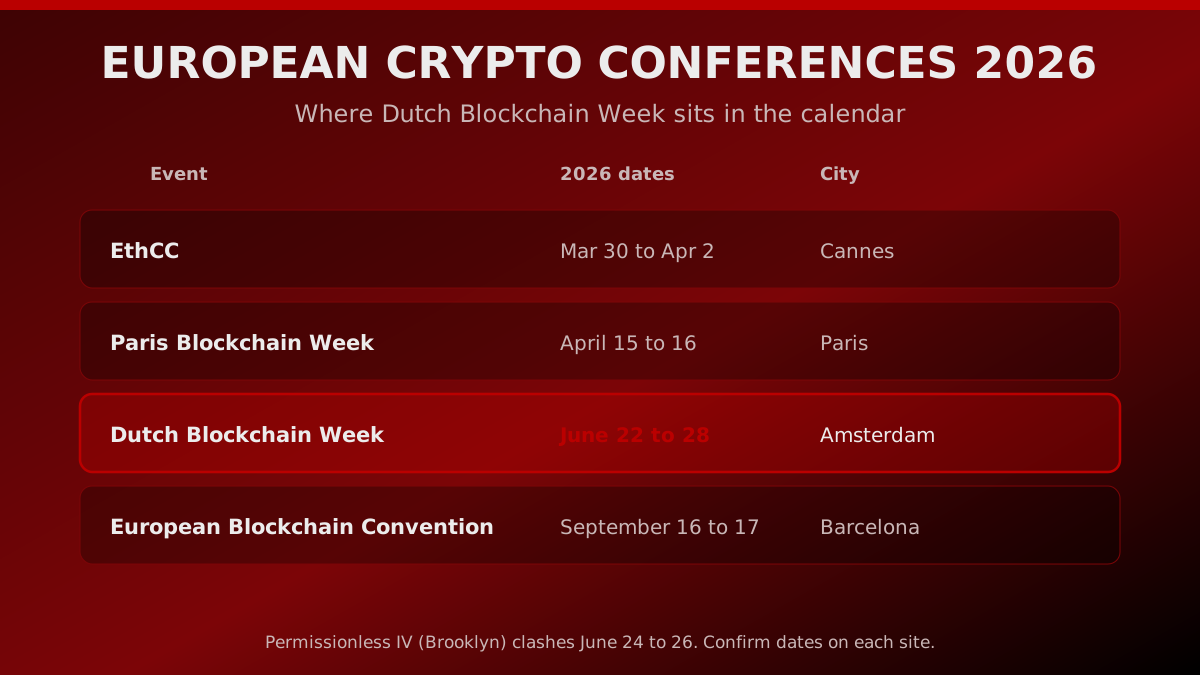
If you can only do one or two European events this year, it helps to see where Dutch Blockchain Week sits in the calendar. For a contrasting major event preview from earlier in the cycle, our Global Blockchain Show 2026 Riyadh preview covers the Gulf side of the same question. Most of the 2026 European cycle ran in the first half of the year. EthCC was in Cannes from March 30 to April 2, the developer and research week. Paris Blockchain Week ran April 15 to 16 as the institutional and TradFi bridge. TOKEN2049 Dubai, while not in Europe, drew much of the same crowd in late April. That makes Dutch Blockchain Week, June 22 to 28, the major European institutional week still ahead in the middle of the year, with the European Blockchain Convention in Barcelona following in September and TOKEN2049 Singapore in October. Looking past Europe into the fourth quarter, India's flagship India Blockchain Week 2026 in Mumbai lands on November 1 to 2, a useful comparison point for anyone whose autumn travel is not committed to a European week.
One scheduling conflict is worth flagging for US-based readers. Permissionless IV runs in Brooklyn from June 24 to 26, 2026, the exact days of the DBW Summit, so if you are choosing between a European institutional week and a US crypto-native one, you may have to pick. The comparison below is a neutral snapshot, and as always, the only safe move is to confirm current dates on each event's official site before booking travel.
The way to choose between them is to match the event to your goal rather than its size. If you are an Ethereum developer or researcher, EthCC was your week and the developer-focused gatherings are your circuit. If you want the broadest global capital and trading crowd, the TOKEN2049 events in Dubai and Singapore carry that. If your work is European market access, licensing, and institutional partnerships, Dutch Blockchain Week is the most concentrated bet in mid-2026, with the European Blockchain Convention in Barcelona as the autumn follow-up. The right answer is rarely all of them, it is the one or two where your specific buyers actually gather.
Pricing is the one axis to verify yourself rather than trust a comparison on. The larger global events run materially more expensive than the European institutional weeks, but each event runs early-bird and tiered pricing that shifts month to month, so any figure in a roundup goes stale fast. Use a calendar comparison like the one below to decide which weeks are even in contention, then price the shortlist directly on each official site. The goal is to spend the travel budget where your pipeline is, not where the conference is loudest.
The 2026 European crypto conference calendar at a glance
| Event | 2026 dates | City | Distinct angle |
|---|---|---|---|
| EthCC | March 30 to April 2 | Cannes | Ethereum developer and research heavy |
| Paris Blockchain Week | April 15 to 16 | Paris | Institutional and TradFi bridge |
| Dutch Blockchain Week | June 22 to 28 | Amsterdam | B2B institutional, MiCA centered |
| European Blockchain Convention | September 16 to 17 | Barcelona | EU institutional digital assets |
Dates per each event's official site, fetched June 2026. Permissionless IV runs June 24 to 26 in Brooklyn, the same days as the DBW Summit. Confirm all dates before booking travel.
How FORKOFF works a conference week like Dutch Blockchain Week
A conference week is a distribution channel, and most teams treat it like a travel expense. The gap between those two framings is where FORKOFF works. We run the events stack end to end, the pre event narrative that gets your name into conversations before you land, the side event or dinner that puts your buyers in one room, the on-the-ground cadence that turns hallway introductions into booked follow-ups, and the reporting that scores the whole thing on cost per qualified conversation rather than badge scans. A booth without a narrative is a venue rental. A week without a follow-up system is a set of business cards.
For a week like Dutch Blockchain Week, the playbook is specific. Map the 40+ side events to your buyer before the calendar fills, because the best rooms waitlist early. Decide whether to host or to attend, a focused dinner you control often beats a booth you rent, a tradeoff we break down in the dinner versus booth ROI analysis and the host-a-side-event playbook. Line up the meetings that justify the flight in advance, the people you want are over-scheduled by the time they land. Seed a pre event narrative so your name is already in conversations before day one. And build the content that compounds after the event ends, the recap, the clips, and the follow-up sequence that keeps the introductions warm into the next quarter. Depending on your goal, that pulls in web3 marketing, KOL marketing, TGE marketing, and Twitter marketing as the channels that wrap around the week.
The reporting is what closes the loop. A conference budget should produce a number you can defend, cost per qualified conversation, pipeline created, meetings booked that convert. Most teams cannot answer those questions a month after an event because they never instrumented the trip. We do, which is how a conference stops being a line item and starts being a channel. If you are sending a team to Amsterdam in June, or to any of the 2026 conferences, the difference between a good week and an expensive one is the operating system around it, and that is the part we run.
Paris Blockchain week, who's joining?
Anyone joining Paris Blockchain week? I will be there from the 14th of April and am looking for people to connect with regarding RWAs and stablecoins.
The Dutch Blockchain Days: Real World Asset Tokenization
BCNL | Blockchain Netherlands Foundation
A real-world asset tokenization panel from a past Dutch Blockchain event, a preview of the institutional themes the 2026 Summit programs.
Related reading for your 2026 conference planning
If you are planning a conference calendar this year, these previews and playbooks go deeper on the parts this post only touches. For another major 2026 event preview, see our Global Blockchain Show 2026 Riyadh preview. For the field mechanics of working a show, read the conference activation playbook and the companion crypto conference side events directory. For the budget decision itself, the crypto conference sponsor decision matrix and the cost-per-qualified-lead sponsorship playbook lay out how to size a spend.
If you are weighing whether to commit at all, the debate on whether crypto conferences are net-negative ROI and the dinner versus booth ROI breakdown are the honest cases on both sides. To vet who you share a stage and a floor with, the event sponsor brand-safety vetting playbook and the first-party sponsorship ROI breakdown cover the diligence and the measurement. And if you decide to host rather than attend, the host-a-side-event playbook covers the format end to end. When you are ready to put an operating system around your conference calendar, talk to our events team or read more on the FORKOFF events service.