Event lead follow-up is the set of touches you run after an event to turn the conversations you had into booked meetings and pipeline. Done right, it is a system, not a task: capture the context of every conversation before you leave the booth, tier each lead by how engaged they were, send the first touch inside 48 hours, then run a multi-touch cadence sized to the tier over the next 6 to 12 weeks. Most event ROI is won or lost here, not on the show floor. The founders who sign the most contracts out of a conference week are rarely the ones with the biggest booth; they are the ones who ran a disciplined follow-up system on the leads they collected. This is the operator playbook the template blogs skip, and the one FORKOFF runs as part of its events service.
The post-event lead follow-up system in one scroll
Most event ROI is won or lost in the two weeks after the event, not on the show floor. The system runs in five stages: capture the context before you leave the booth, tier every lead Hot, Warm, or Cool by real engagement, send the first touch inside 48 hours (24 hours for Hot leads), run a multi-touch cadence sized to the tier across 6 to 12 weeks, then move long-cycle leads into a nurture loop toward the next event. The single biggest lever is speed: a Harvard Business Review study on lead-response time found contacting a lead within an hour beats waiting a day by a wide margin. The second lever is quantity, because most B2B deals close between the fifth and twelfth touch while most teams stop at two. The third is context, captured at the booth, so the first message references the actual conversation instead of a generic thank-you. Blasting every badge scan the same email is why leads flag you as spam; tier the room, size the cadence, and the same event produces several times more booked meetings. This is the operator system the template blogs skip.
About these numbers
The touch counts, timing windows, and conversion figures in this post are directional. They are drawn from FORKOFF event-marketing engagements across the 2025 to 2026 conference cycle, from the public operator threads and studies cited inline, and from widely-circulated sales benchmarks. Individual results vary by ICP, deal size, and industry. Where a figure comes from a named external source, it is linked at the point of use; where it is a FORKOFF operator estimate, it is labeled as one. Treat the framework as the durable part and the specific numbers as a starting model to calibrate against your own pipeline.
What event lead follow-up is, and why most of it never happens
Event lead follow-up is the post-event process of contacting, qualifying, and nurturing the people you met at a conference, trade show, or side event until they either book a meeting or opt out. It is distinct from lead capture (getting the badge scan) and from the event itself. The reason most of it never happens is not laziness; it is the absence of a system. The team lands back at the office to a backlog, the show conversations blur together, and the leads sit in a spreadsheet until they are cold. The result is a paid-for pipeline that quietly evaporates. If you have ever wondered why a booth that produced great conversations returned almost no deals, the follow-up gap is the answer, and it is the same gap that makes founders question whether conference sponsorship even pays.
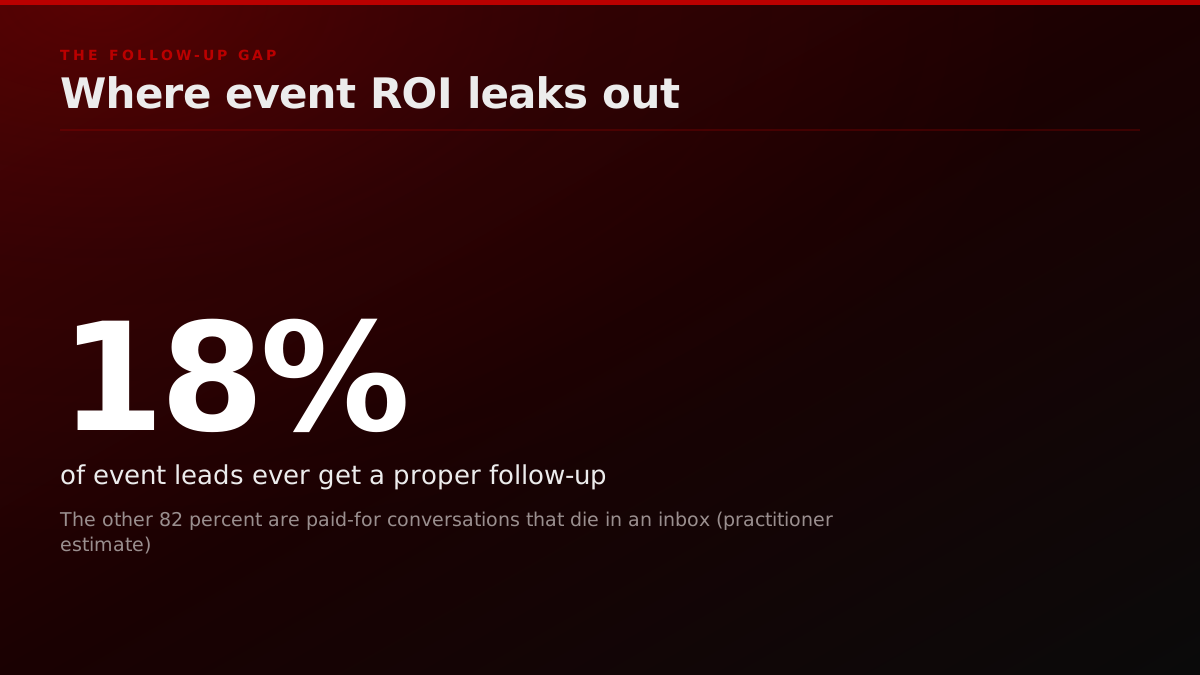
The scale of the gap is what makes it worth fixing. A practitioner estimate that circulates in event-marketing circles puts proper follow-up at only 18 percent of event leads, and the widely-shared framing that events are not a strategy, follow-up is says the same thing from the other side. Whatever the precise figure, the direction is obvious to anyone who has watched a post-event lead list go stale: the majority of paid-for conversations never get a real second touch. It is a pattern the exhibition industry's own research body, CEIR, has tracked for years, and one that vendor guides like Freeman's post-event follow-up guidance keep re-explaining because teams keep missing it.
The follow-up gap is the real event ROI problem
The loudest signal from operators is not that events are dead, it is that the post-event playbook is missing. Growth marketer Axel Sukianto put the practitioner estimate at only 18 percent of event leads ever getting a proper follow-up. If that number is even directionally right, four in five paid-for conversations die in an inbox, and the booth spend, the flights, and the badge fees were all sunk into leads that never got a second touch. Events are not broken; the follow-up layer is.
Source: Axel Sukianto, LinkedIn
That is the whole tragedy of most event budgets. You spend on the booth, the flights, the badges, and the sponsorship tier, all to earn a room full of conversations, and then the return depends entirely on a follow-up motion that most teams treat as an afterthought. The demand side and the supply side are badly mismatched.
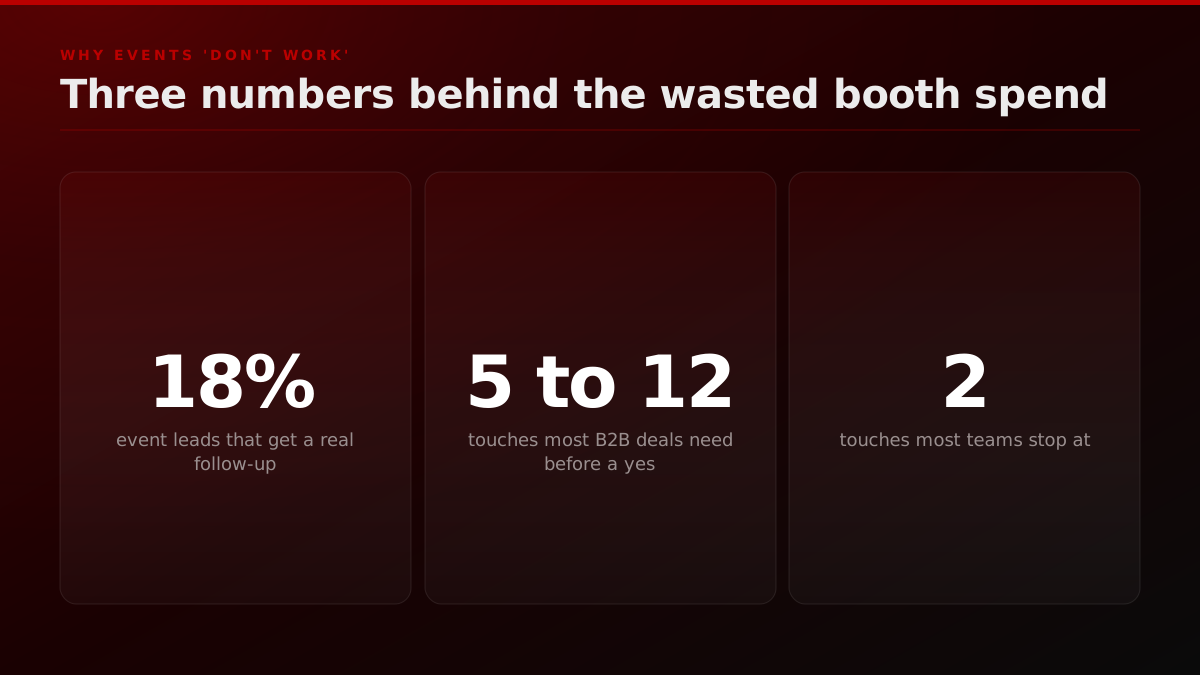
Most B2B deals need five to twelve touches before a yes. Most teams stop at two. So even the leads that do get followed up are usually abandoned halfway through the cadence that would have closed them. The fix is not more events; it is a follow-up system that matches the number of touches the deal actually requires.
apparently only 18% of event leads ever get a proper follow-up. and we wonder why events "don't work." events aren't broken, but your post-event playbook might need a revisit.
The post-event nurture system in five stages
The system runs in five stages, in order, and each stage feeds the next. Stage one is capture: log the name, the context, and a next step for every conversation before you leave the booth. Stage two is tier: sort each lead Hot, Warm, or Cool by how engaged they actually were. Stage three is the first touch: a personal, context-specific message inside 48 hours, and inside 24 hours for the Hot tier. Stage four is the cadence: a multi-touch sequence whose length and channel mix are sized to the tier, run across 6 to 12 weeks. Stage five is the nurture loop: long-cycle leads move into content and the next event instead of being dropped. Miss a stage and the downstream ones compress or collapse.
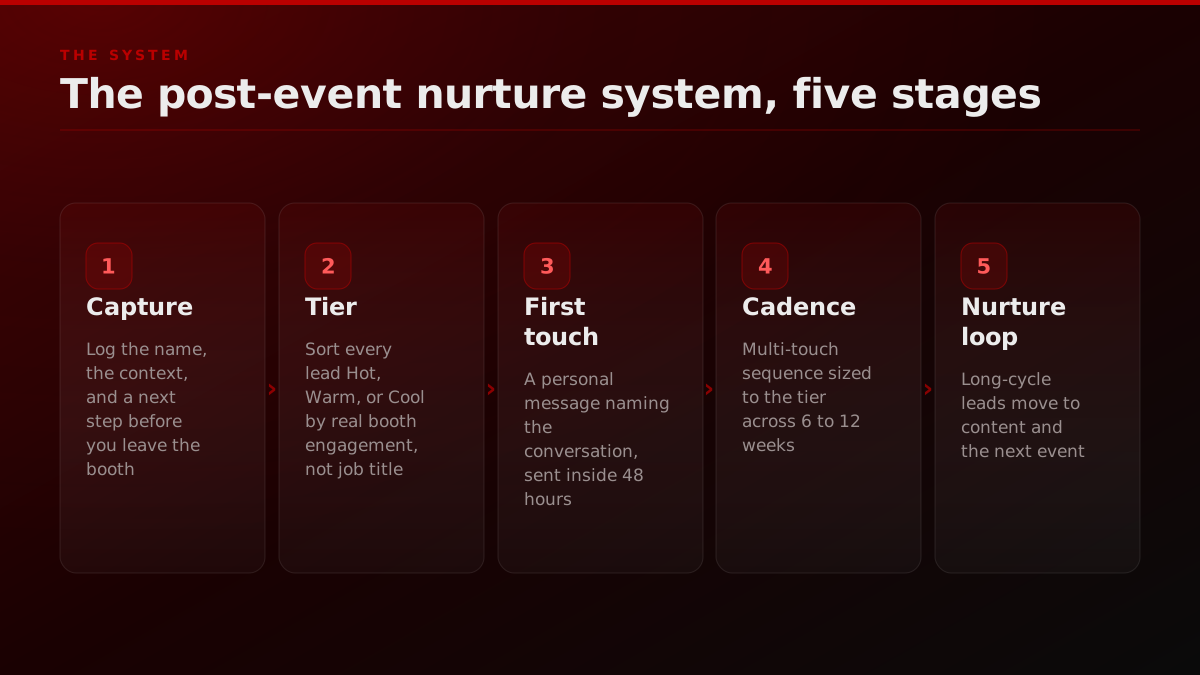
None of these stages are optional, and the order matters. You cannot tier a lead whose context you did not capture, and you cannot run a cadence for a lead you did not tier. The rest of this playbook walks each stage in turn, with the timing, the channels, and the touch counts that make it work. If you also run founder-led distribution, the same event conversations become the seed for content and social, which is why the follow-up layer is really the top of a larger funnel.
Stage 1: Capture the context before you leave the booth
Capture is where follow-up is won or lost, and it happens at the booth, not at the office. The rule is simple: for every conversation that mattered, log the person, one line on what they actually cared about, and a next step, before you walk away. The tooling can be a CRM mobile app, a business-card scanner, or a 30-second voice memo, whatever causes the least friction for your team. What you are protecting against is the Monday-morning amnesia where a stack of cards becomes a stack of strangers. A message that references the specific thing someone said at your booth reads like a warm check-in; a generic "great to meet you" reads like a blast, and gets treated like one.
The operators who have felt this pain describe the same fix. On a widely-read r/b2bmarketing thread, people back from trade shows swap capture systems, and the highest-signal answers all converge on capturing context in the moment.
What's the easiest way to actually keep track of leads after an event?
Ok so I just got back from a trade show and I'm drowning in paper business cards, random notes, and half-remembered conversations. I always go into these events with the best intentions to follow up properly, but then stuff just gets lost in the chaos.
The pattern in that thread is worth internalizing. One operator records a quick voice memo after each meaningful conversation, then references specific details in the follow-up days later. Another scans the card into a CRM and adds one note plus a follow-up date before leaving the booth. A third cut their card count deliberately, focusing on 10 to 15 quality conversations a day so the follow-up stayed manageable. The consistent lesson: same-day capture, and often same-day send, beats any system you try to reconstruct from memory later.
Context captured at the booth is the whole game
The highest-voted operator answers on the follow-up problem all say the same thing, capture the context in the moment. One r/b2bmarketing operator records a 30-second voice memo after each meaningful conversation, then references specific details days later instead of sending a generic note. Another logs a scan plus one note plus a follow-up date before leaving the booth. The through-line, a message that names what the person actually cared about converts at a different level than "great to meet you."
Source: r/b2bmarketing operator thread on post-event lead capture
This is also where you should be honest about volume. A booth that collects 400 scans and captures context on none of them is worse off than a booth that had 40 real conversations and logged all of them, because the second team can actually run a personalized cadence. Quality of capture sets the ceiling on everything downstream. FORKOFF's event activation work treats capture as a staffed, briefed responsibility, not something the team improvises at the end of a long day.
The practical minimum to log per lead is four things: who they are (name, company, role), the specific thing they cared about (the pain, the project, the question they asked), the next step you promised (a resource, an intro, a demo), and a tier tag. Everything past that is optional. What you are building is a record that lets you write a follow-up that could only have been written to that one person. If your capture note reads like it could apply to any of the 40 people you met, it is not a capture note, it is a name in a spreadsheet, and the follow-up it produces will convert like one. The teams that win the follow-up war are ruthless about writing the one specific detail down while the person is still standing in front of them.
Operator noteBooth-side capture, a badge scan, one context note, and a follow-up date, beats any Monday-morning data-entry plan every single time.
Stage 2: Tier every lead Hot, Warm, or Cool
Tiering is the decision that everything else hangs on, and it is made by booth engagement, not job title. A Hot lead asked about pricing, asked for a demo, or gave you a real next step. A Warm lead had a genuine conversation but no clear ask. A Cool lead is a badge scan or a business card with no real exchange behind it. You tier because the three groups need three different playbooks: pouring a Hot-lead cadence on a Cool badge scan feels like harassment, and running a Cool-lead drip on a Hot buyer loses the deal to whoever called them first. Tier the room, then size the effort.
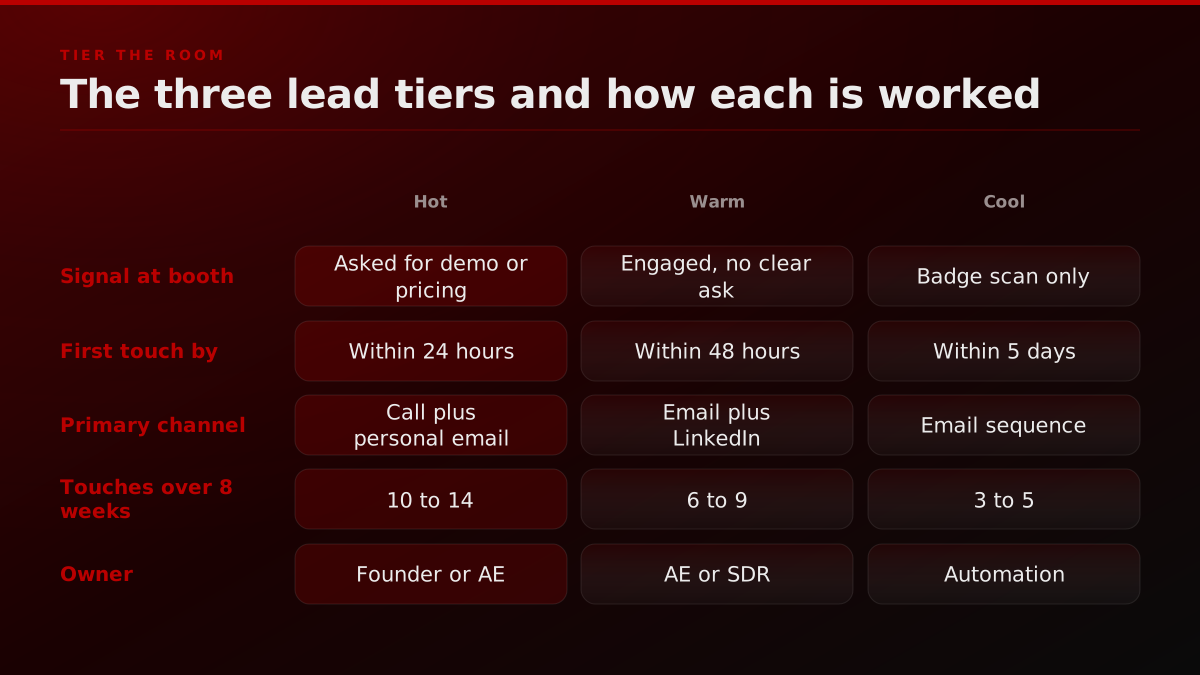
The grid above is the working model. Hot leads get a call plus a personal email inside 24 hours, owned by the founder or an account executive, running 10 to 14 touches over eight weeks. Warm leads get an email-plus-LinkedIn cadence inside 48 hours, 6 to 9 touches, owned by an AE or SDR. Cool leads get an automated email sequence inside five days, 3 to 5 touches, owned by marketing or automation. The tier is not a life sentence: a Cool lead who replies with intent gets promoted to Warm on the spot. What you are avoiding is the single most common post-event mistake, treating every scan the same, which simultaneously under-serves your best leads and annoys your worst ones.
Operator noteBooth engagement, not job title, sets the tier: a curious junior engineer outranks a badge-scanned VP who never stopped walking.
Stage 3: The first touch, where speed is the multiplier
The first touch is the highest-impact message in the entire system, and its power is mostly a function of speed. Send it inside 48 hours for every lead, and inside 24 hours for anything Hot. The content matters less than the timing: a rough, specific note sent the same night beats a polished template sent three days later, because by day three the prospect is back in their own world and your booth conversation has evaporated. This is not a soft opinion; lead-response research has documented the decay for over a decade, and once the tiering and timing are set you can pull the actual copy from a sales follow-up template library.
Speed beats polish on the first touch
A Harvard Business Review study on the short life of online sales leads found that firms contacting a lead within an hour were far more likely to have a meaningful qualifying conversation than firms that waited even a single day, and the odds collapsed further after 24 hours. Event leads decay the same way. The founder who sends a rough, context-specific note the same night beats the team that ships a polished template three days later, because by day three the prospect is back in their own inbox and the booth conversation is gone.
Source: Harvard Business Review, The Short Life of Online Sales Leads
Indexed against a same-day first touch, the relative rate at which leads convert into booked meetings drops sharply within the first week and keeps falling after that. The exact curve varies by market, but the shape is stable across every dataset and every operator who has measured it.
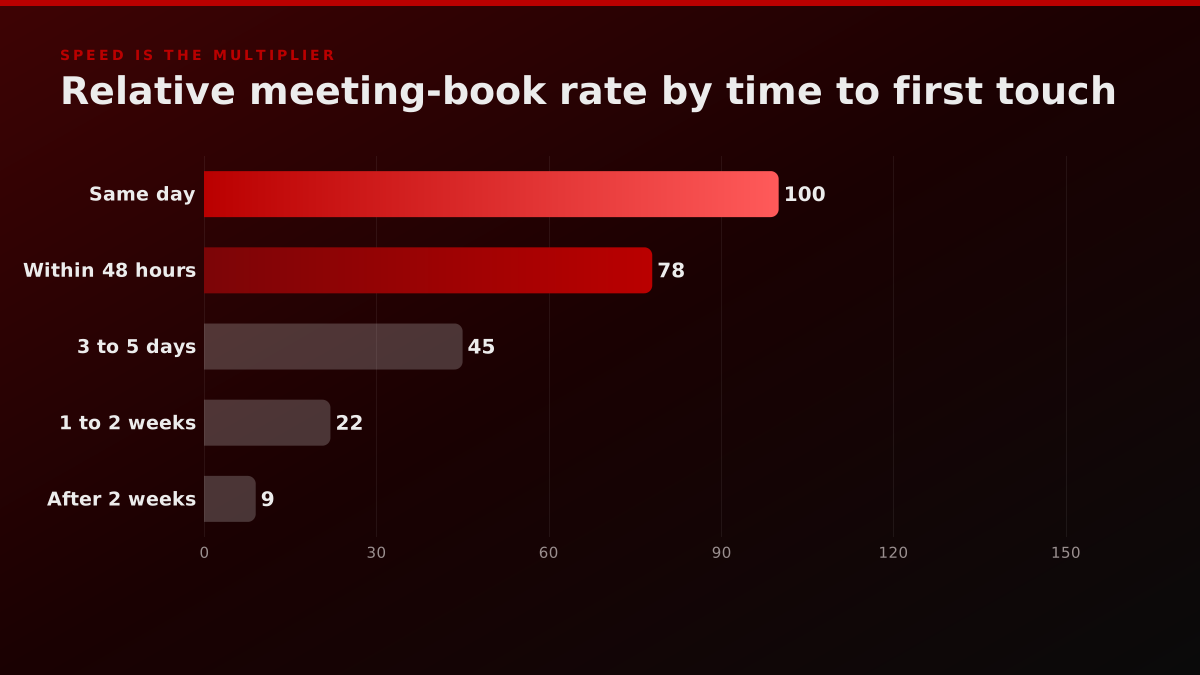
The other half of the first touch is what it asks for. A Hot-lead first touch should reference the specific conversation and end with a concrete next step, a named meeting time, not "let's connect." The touch-count reality is why this matters so much: if you are only going to get a handful of chances, the first one cannot be wasted on a vague hello. The single most-shared framing of this on X is blunt about the math.
Tyler Bindi
@TripleNetTyler
2% of all sales are made on the 1st contact 3% of all sales are made on the 2nd contact 5% of all sales are made on the 3rd contact 10% of all sales are made on the 4th contact 80% of all sales are made on the 5th-12th contact The fortune is in the follow up
The shape of a good Hot first touch is worth spelling out, because most people over-think it. Four sentences: name the moment you met ("Great talking through your Reddit attribution problem at the booth today"), restate the specific thing they cared about so they know you listened, offer the one resource or intro you promised, and propose a concrete time ("Does Tuesday at 11 work for 20 minutes?"). No company-history paragraph, no attached deck, no "just circling back." The whole message is under 90 words and it reads like it was written by a human who remembers them, because it was. A Warm first touch drops the meeting ask and leads with the resource; a Cool first touch is a short, useful email that starts the automated sequence.
Whatever you make of the exact percentages in that post, the operators in the trenches echo it directly. The r/sales cadence debate is full of people who learned the hard way that two or four touches leaves most of the room on the table.
even people who engaged needed 14 to 20 touches, emails, calls, LinkedIn messages. If you just do 2 to 4 calls, you're leaving soo much opportunity on the table.
Stage 4: The cadence, sized to the tier
The cadence is the multi-touch sequence that runs after the first touch, and its whole design principle is that length and channel mix track the tier. A Warm lead runs roughly eight weeks: a context email in week one with one useful resource and no pitch, a LinkedIn connect plus a genuine comment in week two, a call tied back to the booth conversation in week three, one useful touch a week through weeks four to six alternating email and social, and a direct meeting ask with a named time in weeks seven and eight. Hot leads compress this and lead with the meeting; Cool leads stretch it into a lighter monthly nurture. The point is to keep showing up with a reason, not to bombard.
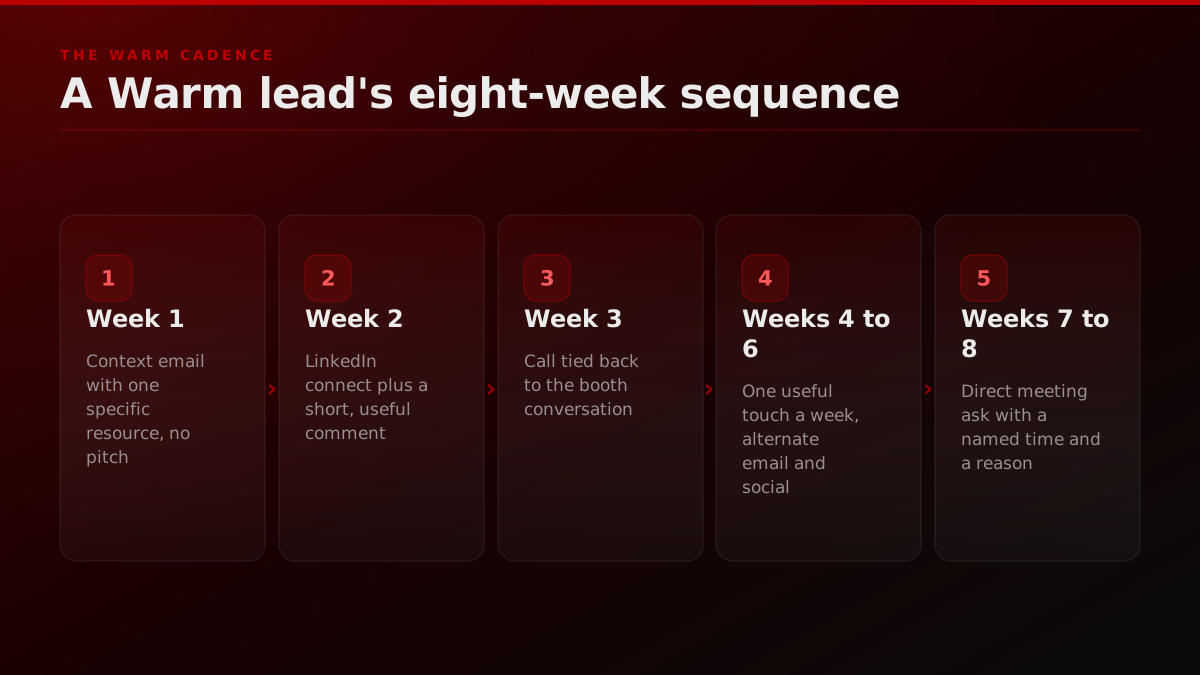
Laid out as a table, the three cadences run in parallel, each sized to what the tier can bear.
The multi-touch cadence by lead tier and week
| Week | Hot lead | Warm lead | Cool lead |
|---|---|---|---|
| Day 0 to 1 | Personal email plus a call, book the meeting | Context email, one specific resource | Add to nurture list, no outreach yet |
| Week 1 | Confirm the meeting, send prep | LinkedIn connect plus a useful comment | First nurture email, pure value |
| Week 2 | Meeting held or rescheduled | Call tied back to the booth chat | Second nurture touch |
| Weeks 3 to 6 | Proposal and follow-through | One useful touch a week, alternate channels | Monthly value email |
| Weeks 7 to 8 | Close or defined next step | Direct meeting ask with a named time | Invite to the next event |
Directional cadence from FORKOFF event-marketing engagements, 2026. Touch counts, 10 to 14 for Hot, 6 to 9 for Warm, 3 to 5 for Cool across the window. Stop when a lead says no.
Channel mix is the part most cadences get wrong. Email alone is the weakest option, because a single channel is easy to ignore; the cadences that convert alternate email, LinkedIn, a call, and where appropriate a text, so the same message reaches the person through whichever door they actually open. The craft is that every channel touch still carries the booth context. A Warm week-one email is three lines: "Really enjoyed the conversation about scaling your Reddit presence at the conference. You mentioned the ban-risk problem, this teardown covers exactly how we handle it: [link]. No ask, just thought it was relevant." That is it. It gives value, references the specific conversation, and asks for nothing, which is precisely why it earns the reply that the pitch never would.
The r/sales thread on conference follow-up is the best public window into how experienced operators actually run this. One commenter enrolls every lead in a 60-plus-day email-heavy sequence. A technology MSP seller posted a near-verbatim version of the cadence above, nothing in week one because nobody wants a call that week, then escalating touchpoints through week twelve. The recurring craft note: tie every call back to the booth conversation so it lands as a warm check-in, not a cold dial.
How often do you follow up with leads from conferences/trade shows?
My company has started mandating we CALL a specific number of times, which I feel is a bit much, but I'd love to hear what other people have to say. I wouldn't have a problem with the number of touchpoints, but for calls, it seems a bit much.
The reason teams under-run the cadence is rarely strategy; it is nerve. Founders and reps stop early because they do not want to feel annoying, and in doing so they become forgettable to the exact prospect who was ready to buy.
Sean Wilson
@Seannywilson
80% of sales take 5+ touches. But most founders stop after 2 emails because they "don't want to be annoying." What's worse? A) Potentially 'annoying' some stranger who you'll never see again B) Being forgettable to a prospect who was going to pay you $5,000/mo.
The discipline is knowing where to stop. You do not run touch after touch into silence forever; you run the tier's cadence, and you stop when a lead actively says no. The contrarian voices in the r/sales thread are a useful guardrail here, one operator caps calls at three so it never tips into harassment, another warns that a heavy sequence with no personalization goes straight to spam. Both are right, and both are handled by tiering plus context, not by simply doing less.
Operator noteTouch five to twelve is where most B2B deals close, so the cadence stops when a lead says no, not at touch two.
Stage 5: The nurture loop and the next event
The nurture loop is where the leads that did not convert in the first cadence go instead of getting dropped. Most B2B buyers are not in-market the week you meet them at a conference, so a system that only wins the ready-now leads is leaving the majority of the pipeline unharvested. The loop moves long-cycle Warm and Cool leads into a lighter, ongoing touch, monthly value content, relevant product updates, and an invitation to your next event or side event, until their timing changes. The re-invite motion runs on the same discipline as the original promotion; the same 3-touch RSVP cadence applies, and the side-events directory is where those warm leads get their next room. Run this well and every event compounds the last one, because you walk into the next conference with a warm list instead of starting cold.
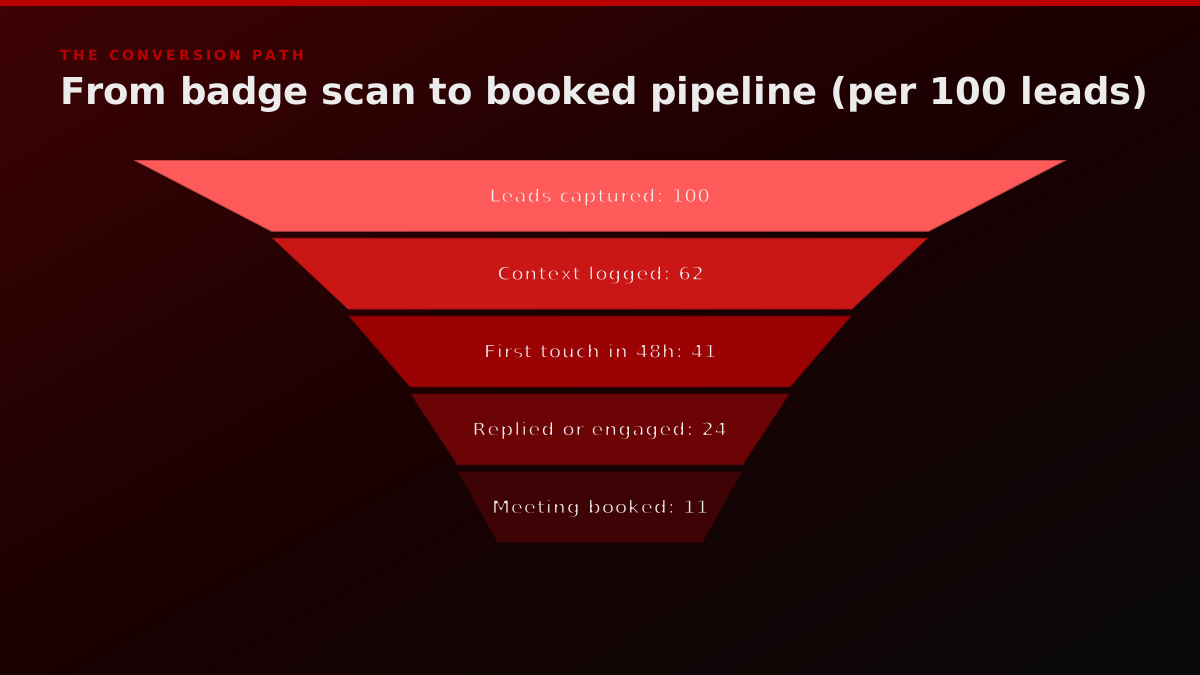
The funnel above is the honest view of where leads go. Out of every 100 captured, only a fraction get context logged, fewer get a first touch inside 48 hours, fewer still reply, and a small core book a meeting. The nurture loop is what you do with the large middle that did not book this cycle but is not a no. It is also why hosting your own side events compounds so well: the room you controlled becomes the seed list for the next one. For a full walkthrough of the post-event cadence from a sales-training lens, this Sales Gravy session is worth the time.
Trade Show and Conference Lead Follow Up Secrets featuring Harriet Mellor
Sales Gravy
Sales Gravy on trade show and conference lead follow-up with Harriet Mellor. A full operator walkthrough of the post-event cadence, the same discipline this system codifies.
Practically, the nurture loop is where marketing and sales hand off cleanly. Sales owns the Hot and active Warm leads; marketing owns the long-cycle nurture and the re-invite motion. When that handoff is clean, no lead falls through the crack between "not ready now" and "forgotten forever," which is where most event pipeline actually dies. FORKOFF wires this into Reddit and Twitter distribution so the nurture is not just email; the leads keep seeing the founder show up where they already spend time.
The compounding is the quiet advantage of running the loop at all. A founder who has attended four events with a real follow-up system walks into the fifth with a warm list of a few hundred named, ICP-matched people who have already been in a conversation with them, seen their content in the intervening months, and recognize the name in the inbox. That is a categorically different starting position from the founder who shows up cold every time and re-earns attention from scratch. The nurture loop is what turns a series of one-off events into a distribution asset that gets stronger every cycle, and it is why the teams that treat follow-up as infrastructure pull away from the teams that treat each event as a standalone bet. The list is the moat, and the loop is how you build it.
The first 48 hours, window by window
The first 48 hours after an event decide most of the outcome, so they get their own runbook. The moves are not complicated, they are just easy to skip when the team is exhausted and travelling. Enrich and dedupe the records into one row per person, tier every lead, send the Hot first touches the same night, book meetings with named times rather than "let's connect," queue the Warm cadence with the first email scheduled, and route the Cool leads into nurture. Run these before the chaos of the next day resets everyone back to their own inbox, because momentum lost here almost never comes back.
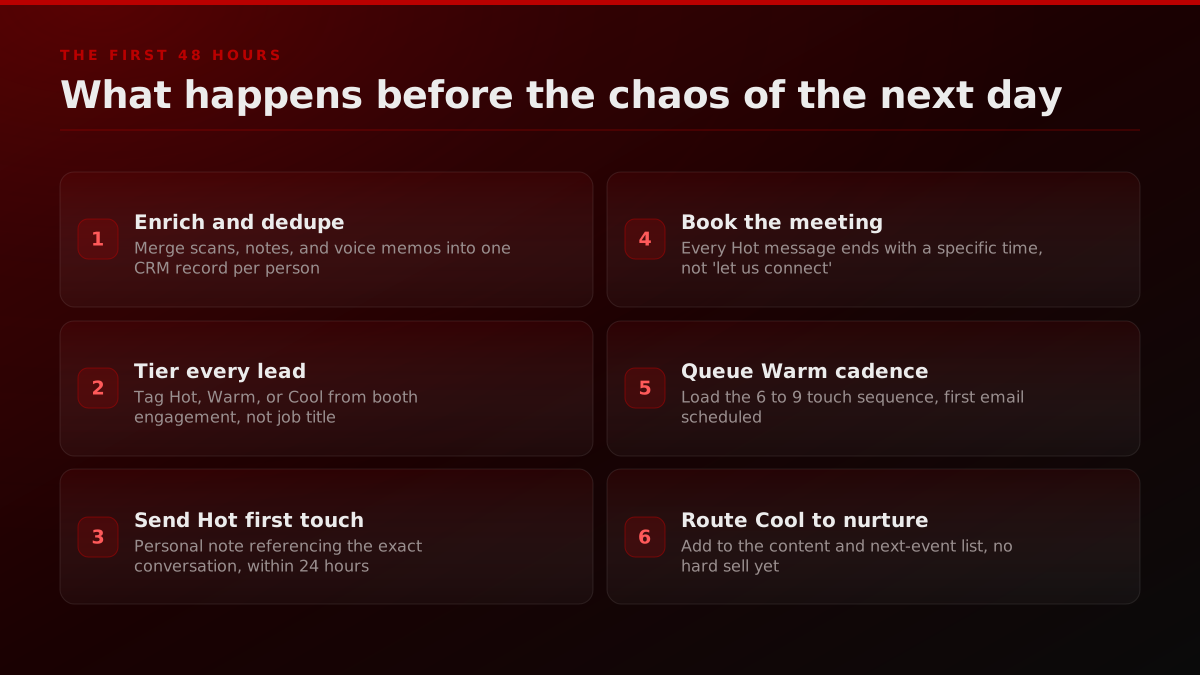
Sequenced by window, it looks like this: capture and tag during the event, send Hot first touches the same night, enrich and dedupe the next morning, and have the Warm cadence queued and Cool leads routed inside 48 hours.
The first 48 hours, window by window
| Window | Action | Owner |
|---|---|---|
| During the event | Capture the context, scan the badge, tag the tier | Founder and team |
| Same night | Send Hot leads a personal, context-specific touch | Founder or AE |
| Next morning | Enrich and dedupe records into one row per person | Ops or marketing |
| Within 48 hours | Queue Warm cadence, route Cool leads to nurture | AE and marketing |
The window that decides the ROI. Same-night Hot touches and a 48-hour floor for everyone else are the two non-negotiables in the FORKOFF event follow-up runbook.
The same-night Hot send is the one most teams resist and the one that matters most. It feels aggressive; it is not. A person who asked you for pricing at 2pm is still thinking about their problem at 9pm, and a short, specific note that references the conversation is welcome, not intrusive. Once the tiering and timing are in place, you can lean on a template menu for the actual copy, this protocol 80 breakdown of five post-tradeshow email types is a solid starting library.
5 Types of Follow Up Emails to Send Post-Tradeshow
protocol 80, Inc.
A tight breakdown of five post-tradeshow follow-up email types. Useful as a template menu once the tiering and timing in this system are in place.
The most common ways post-event follow-up fails
Post-event follow-up fails in a small number of predictable ways, and naming them is the fastest way to pre-empt them. The failure is almost never a single dramatic mistake; it is a stack of small omissions that each look harmless and together turn a good room into zero pipeline. If you audit a disappointing event, you will usually find three or four of these, not one.
The first and most expensive is no capture, where the team collects scans but logs no context, so every follow-up is a generic blast that gets ignored. The second is the slow start, where the first touch lands three, five, or ten days out and the booth conversation has already gone cold. The third is the flat blast, where every lead gets the identical email regardless of tier, which simultaneously under-serves the buyers and annoys the tire-kickers into marking you as spam. The fourth is the short cadence, where the team sends two touches, hears nothing, and quietly gives up at exactly the point most deals are still four to ten touches from a yes. The fifth is the vague ask, where every message ends in "let's connect" or "let me know" instead of a named time, so nothing ever gets booked.
The sixth is the single channel, where the team only ever emails and never picks up the phone or uses LinkedIn, cutting reach in half. The seventh is the broken handoff, where sales works the hot leads and nobody owns the long-cycle nurture, so the large middle of the list falls through the crack between "not ready now" and "forgotten forever." The eighth is no measurement, where the team never ties booked meetings back to the event, so they cannot tell a good event from a bad one and repeat the same mistakes next quarter. Every one of these maps to a stage in the system above, which is the point: the system is not academic, it is a checklist of the exact places follow-up leaks. First-time teams hit three or four of these; disciplined teams hit zero, and it shows up directly in the event sponsorship CPQL they get out of the same room.
How post-event follow-up drives event ROI
Follow-up is the lever that turns event spend from a cost into a return, because the cost per qualified meeting is set almost entirely by what happens after the badge scan. You already paid the fixed costs, the booth or the sponsorship, the flights, the team's time, and those costs are well documented; Eventbrite's organizer resources and Brex's company events budget data both put a mid-market booth well into five figures before a single lead is worked. The marginal cost of a disciplined follow-up cadence is small, and it is the only variable that meaningfully moves how many booked meetings come out of the room. This is why FORKOFF measures events on cost per qualified lead and cost per qualified second meeting rather than on booth traffic; the CPQL operating system and the first-party sponsorship ROI data both show the same thing, the room you work beats the room you rent, and working the room is follow-up.
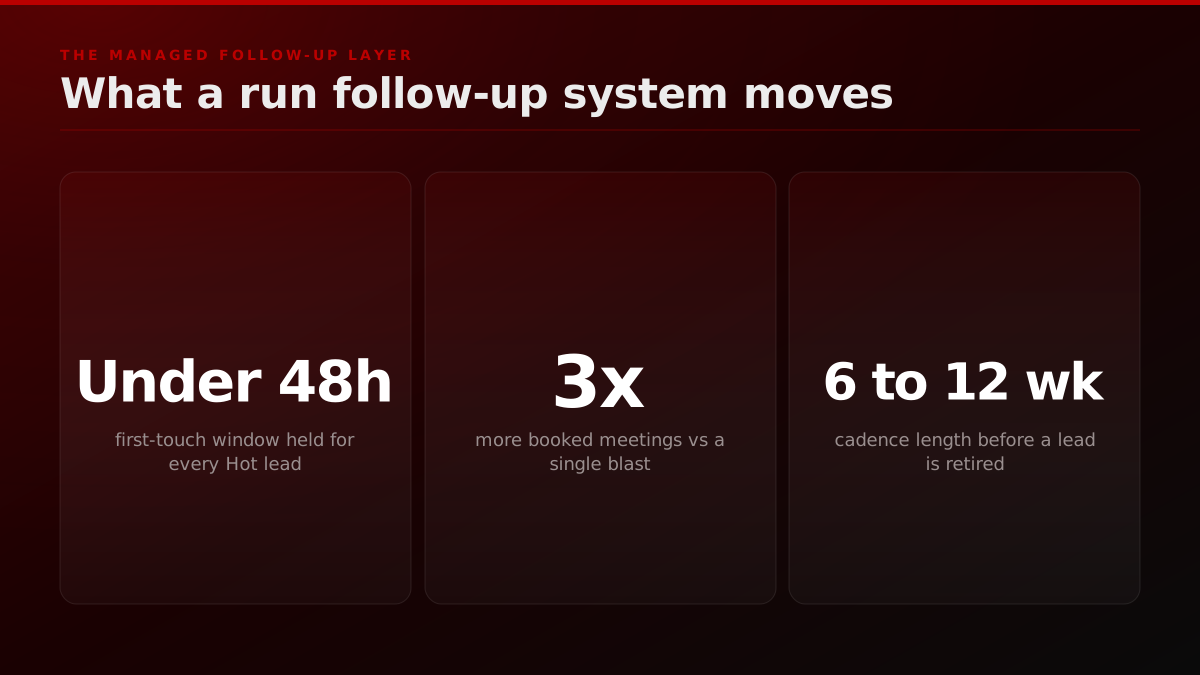
The compounding is real and measurable on the same set of leads. Take 60 Warm leads from a conference. A single thank-you email books a handful of meetings. Two touches and a stop books a few more. The full eight-week cadence, sized to the tier, books multiples of the single-blast number, from the exact same room.
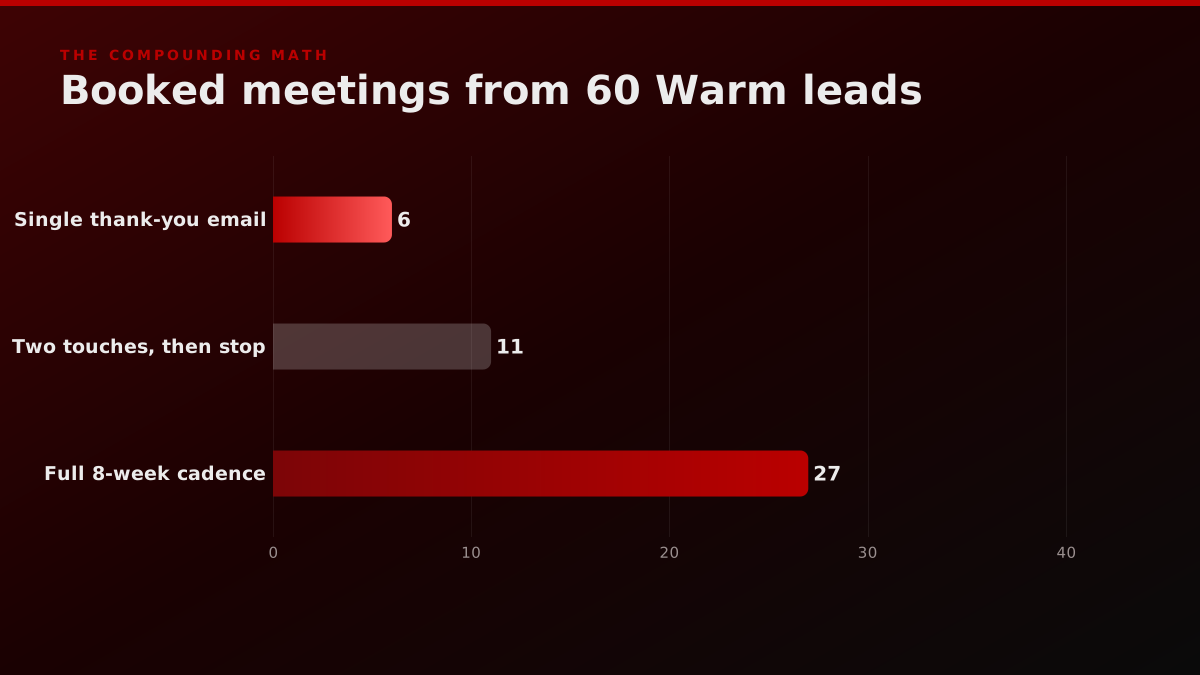
That gap is the entire argument for treating follow-up as a system rather than an afterthought. It is also the difference that shows up when founders compare dinner versus booth or weigh sponsorship against paid ads, the format matters, but the follow-up discipline is what actually converts either one. If your team does not have the bandwidth to run a tiered cadence for two weeks after every event, that is exactly the work to hand off.
Where FORKOFF runs the follow-up layer
FORKOFF runs event marketing end to end, and the follow-up layer is a core part of it, not a bolt-on. Whether a vendor treats follow-up that way is one of the tests in how to choose an event marketing agency. We staff and brief the capture at the booth, tier the leads the same day, run the tiered cadences across the 6 to 12 week window, and hand long-cycle leads into a nurture loop that feeds the next event. Because we also run founder-led distribution, Reddit marketing, podcast placements, and the broader go-to-market system, the event conversations do not sit in a silo, they become the top of a compounding funnel across content, social, and the next room. If you would rather compare providers first, the best event marketing agency breakdown is a fair place to start, and our case studies show the follow-up wired into a wider GTM.
The takeaway is simple enough to run yourself starting at your next event: capture the context, tier the room, hit the first touch inside 48 hours, and run a cadence sized to the tier. Do that and the same booth spend returns several times the pipeline it does today. Skip it, and you are paying for conversations you let die in an inbox. If you want it run for you, talk to a strategist and we will build the follow-up system into your next event.