B2B conference sponsorship and paid ads are not cheap or expensive on their own, they are cheap or expensive depending on the metric you hold them to, which is why the argument between the two never actually ends. On cost per qualified lead, one 2026 benchmark puts events below both LinkedIn and Google. On raw cost per lead, a 2025 benchmark puts trade shows at the top of the price list. Both are real numbers from credible sources, and they point in opposite directions. This guide reconciles them with a single yardstick, cost per pipeline dollar, so you can decide where your next marketing dollar goes without relying on whichever stat happens to flatter the channel you already prefer.
The conference-versus-ads decision in one paragraph
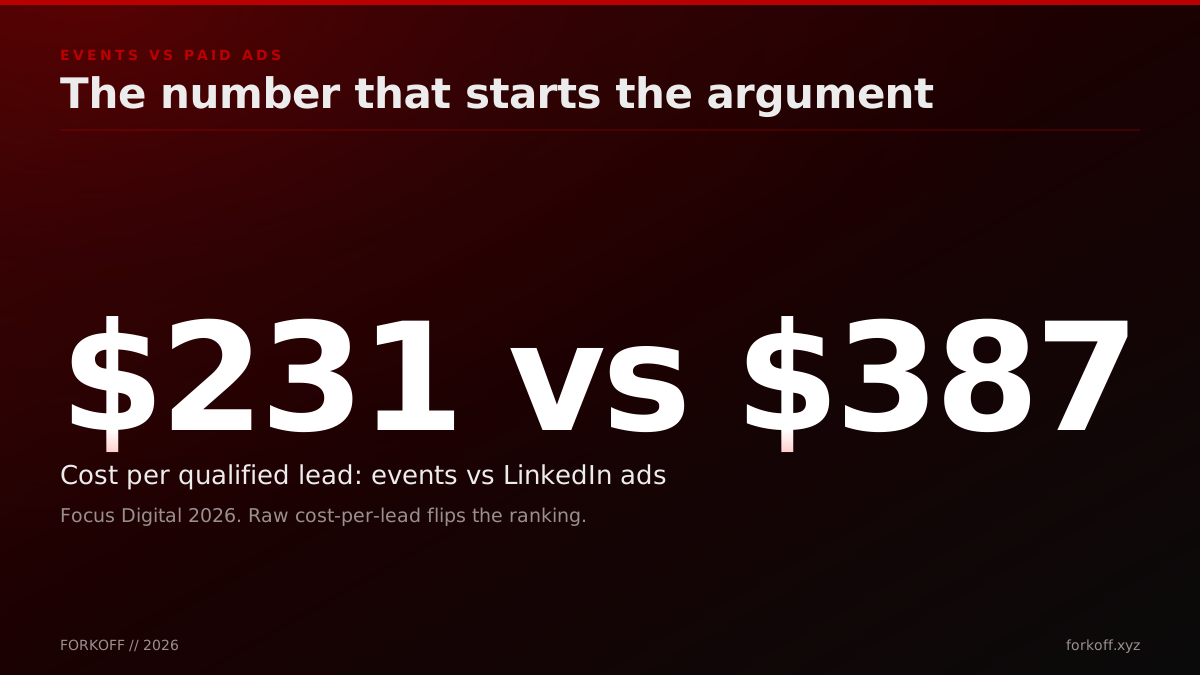
B2B conference sponsorship and paid ads are not cheap or expensive in the abstract, they are cheap or expensive depending on the metric you pick, which is exactly why the argument never ends. On cost per qualified lead, Focus Digital's 2026 benchmark puts events at $231, below LinkedIn ads at $387 and Google search at $312. On raw cost per lead, Zeliq's 2025 data flips it, with trade shows at $300 to $800 while paid search starts near $70. The reconciling number is cost per pipeline dollar: total channel spend divided by the sourced and influenced pipeline it produces over a full sales cycle. Ads win when you sell a self-serve or low-value product, need fast clean feedback, or have nobody to work a lead list. Sponsorship wins when you sell a considered, high-value deal into an audience that actually attends, and you can measure influenced pipeline over months rather than days. Run both on the same yardstick before you move the budget.
The reason this decision gets made badly is that most teams compare the wrong numbers. They set a booth invoice next to a monthly ad budget, pick the metric that supports the plan they already wanted, and move on. A conference sponsorship is not a more expensive way to buy leads, and a paid-ads program is not a cheaper version of the same thing. They are different products that source different kinds of demand at different speeds, and the only fair way to rank them is to price both against the pipeline they actually create. The event-technology vendors that dominate this search have thorough guides of their own, from Guidebook's definition of sponsor ROI to b2match's conference sponsorship ROI guide, Remo's B2B event sponsorship ROI guide, and each is useful on the mechanics, but every one of them measures events in isolation rather than against the paid channels competing for the same budget. That is the comparison this guide runs, using cited channel benchmarks, first-hand operator receipts, and one metric that survives a finance review.
Two things make this comparison worth doing carefully. The first is that the stakes are asymmetric. A single conference sponsorship can cost more than a full quarter of paid-ads spend, so getting the call wrong is expensive in one visible line item rather than spread thin across a hundred small ones. The line items themselves, floor space, build, and agency hours, are itemised at how much event marketing costs. The second is that the two channels fail in opposite ways. An event fails quietly, producing warm conversations that nobody follows up, so the loss hides on a spreadsheet nobody opens again. Ads fail loudly, burning a daily budget on clicks that never convert, where the loss is at least visible in real time. Knowing which failure mode you are more likely to hit is already half of the decision, and it is a question about your own team, not about the channels.
Is conference sponsorship worth it for B2B SaaS heading into 2026?
Conference sponsorship is worth it for B2B SaaS when three things line up: you sell a considered, high-value deal, your buyers actually attend the specific event, and you can measure influenced pipeline over a full sales cycle instead of a few days after the show. When those hold, the in-person trust an event builds compresses a long enterprise sales cycle in a way no ad impression can. When they do not hold, sponsorship becomes an expensive way to collect business cards. The honest version of this answer is that the model works, but its worth depends entirely on your stage and your ability to attribute, not on whether events are fashionable this year.
The clearest signal that sponsorship fits is that your product needs a conversation to sell. If a buyer has to trust a vendor before signing, a face-to-face exchange at the right event does work that a click never will, which is why the founder funnel for a considered offer so often runs through rooms rather than ad accounts. The trap sits on the other side: many teams sponsor because a competitor did, not because their buyer is in the room. Our breakdown of the marketing agency versus in-house hire decision covers the same test applied to team spend, and the logic is identical, match the spend to the motion you actually run.
Real operators are candid that the immediate lead count often looks like a failure even when the spend was not. One founder wrote up an $8,000 conference sponsorship that produced zero qualified leads in the first three days, then traced meaningful revenue back to it months later once the awareness had time to compound.
Spent $8K on conference sponsorship. Got 0 leads. But something else happened that made it worth it.
Big industry conference. Expensive booth. Printed materials. Travel costs. The whole thing ran about $8K all in. Went expecting to fill the pipeline with leads. Three days later I had exactly zero qualified leads. Some badge scans but nobody who was actually in market. Felt like a complete waste. The… Show more
That gap between the day-three view and the six-month view is the single most important thing to understand before you judge an event. It is also the reason so many sponsorships get killed after one cycle, the team measured the asset on the wrong clock. The counterpoint is that awareness can become an excuse for spend that never converts, which is why the fix is not to abandon measurement but to extend the window and attribute properly, a discipline covered in the crypto sponsorship ROI first-party playbook and applied to any vertical.
Smaller teams feel the stakes most acutely, because the absolute dollars are hard to justify without a clear return in view. An insurance agency owner writing on Reddit laid the arithmetic out plainly, that once you add tickets, travel, hotels, and meals, spending two to five thousand dollars or more on a single event feels risky without a realistic return in sight. That is the correct instinct, and it does not mean skip events. It means do not sponsor one until you can name the pipeline outcome you expect and the window over which you will measure it. A sponsorship you cannot describe in pipeline terms before you buy it is a sponsorship you will not be able to defend after, and defending it after is when the finance questions actually arrive.
Operator noteA badge scan is not a lead. It is a card from someone who walked past your booth while looking at their phone.
What does a B2B lead actually cost by channel?
A B2B lead costs anywhere from about $50 to more than $800 depending on the channel and, more importantly, on how you define a lead. Published 2025 benchmarks from Zeliq put trade shows at the top of the raw cost-per-lead range at $300 to $800, with LinkedIn ads at $80 to $300 and paid search at $70 to $350. A 2026 cost-per-qualified-lead benchmark from Focus Digital tells a different story, ranking events at $231 below LinkedIn at $387 and Google at $312. The two are not contradictory so much as they are measuring different points in the funnel, one counts raw responses, the other counts leads that cleared a qualification bar.
What a B2B lead actually costs by channel
| Channel | Cost per lead (Zeliq 2025) | Cost per qualified lead (Focus Digital 2026) | Effective cost per SQL (Zeliq) | What it tells you |
|---|---|---|---|---|
| Industry events and trade shows | $300 to $800+ | $231 | $1,200 to $5,000 | Cheapest per qualified lead, priciest per raw lead |
| LinkedIn ads | $80 to $300+ | $387 | $400 to $1,500 | Cheap raw leads, high qualified cost |
| Google search ads | $70 to $350+ | $312 | $230 to $1,100 | Intent traffic, mid qualified cost |
| Webinars | $50 to $150 | $186 | n/a | Low cost, warm self-selected intent |
| SEO | $20 to $120 | $54 | n/a | Lowest cost, slowest to build |
Zeliq B2B cost-per-lead benchmarks (2025) and Focus Digital cost-per-qualified-lead report (2026). The two disagree directionally, which is the point, the metric you choose decides which channel looks cheap.
Look at the cost-per-qualified-lead column first, because it is the number closest to pipeline. On Focus Digital's 2026 benchmark, events and trade shows come in cheapest of the paid channels at $231, with webinars close behind and SEO far below everything at $54. The read here is not that events are magic, it is that a qualified event lead has already passed a filter a raw ad click has not, a real conversation with a human who chose to stop at your booth. That filtering is exactly what a naive click-cost comparison misses.
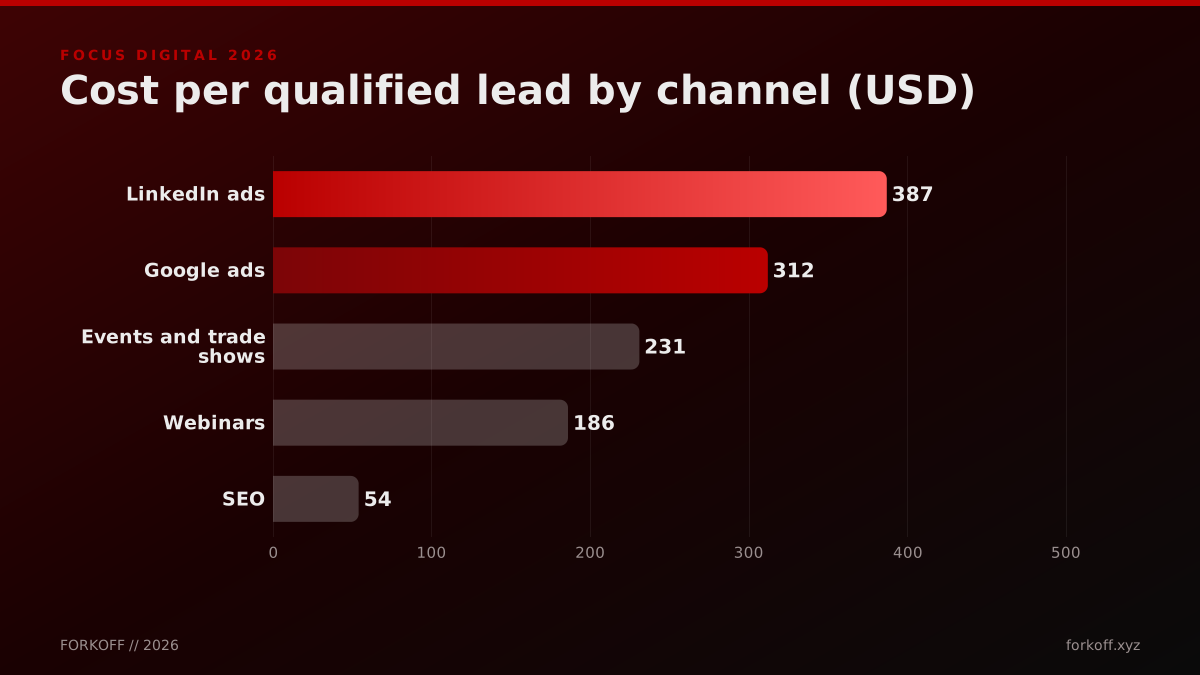
The chart makes the ranking concrete. On cost per qualified lead, the two paid-ad channels sit above events, not below them, which surprises people who have only ever seen the raw click-cost numbers. It matters for SaaS specifically because customer acquisition cost in software is already high and climbing, so a channel that delivers pre-qualified conversations can pull the blended number down even when its headline cost per response looks steep. A qualified lead from a booth conversation often enters the pipeline further along than a cold ad click, which shortens the sales cycle and cuts the number of touches a rep needs to reach a close. None of this makes events automatically cheaper. It means an honest comparison has to price the whole path to a closed deal, not the first click, and for a considered SaaS sale that path is exactly where events either earn their keep or quietly fail to.
Two credible benchmarks, opposite verdicts
On a cost-per-qualified-lead basis, Focus Digital's 2026 benchmark puts industry events and trade shows at $231, below LinkedIn ads at $387 and Google search at $312. On a raw cost-per-lead basis, Zeliq's 2025 data flips it, with trade shows running $300 to $800 while paid search can start near $70. Same channels, opposite ranking, because the two sources define a lead at different points in the funnel.
Source: Focus Digital 2026 and Zeliq 2025 cost-per-lead benchmarks
Now flip to the effective cost per sales-qualified lead, and the ranking inverts. Zeliq's 2025 B2B cost-per-lead data puts the effective cost of a trade-show SQL at $1,200 to $5,000, well above LinkedIn at $400 to $1,500 and Google at $230 to $1,100. The reason is conversion drop-off, a large share of badge scans never become anything, so the cost of the ones that do climbs. This is the same reality as the qualified-lead chart, viewed from a stage further down the funnel, and it is why picking one benchmark and stopping is how teams talk themselves into the wrong channel.
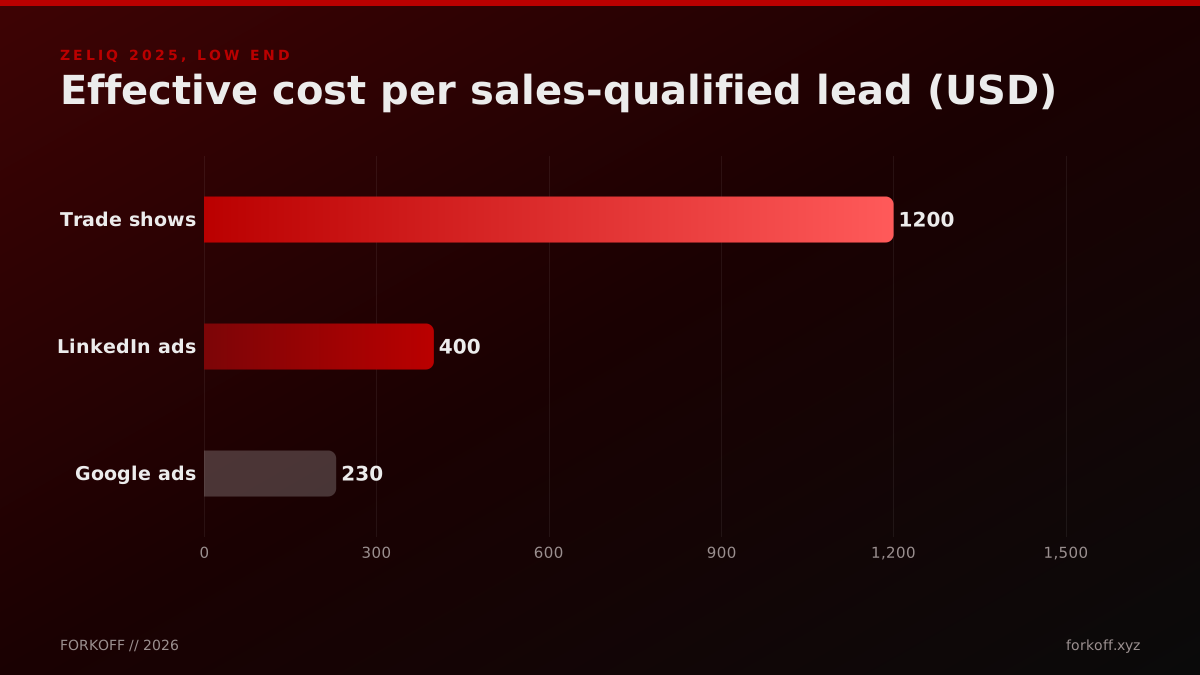
Paid channels have their own version of this problem, and it moves in the wrong direction over time. One marketer on r/DigitalMarketing described a Google Ads program where cost per lead crept from $80 to $160 across 18 months while lead quality dropped, on approximately $4,000 a month of spend.
I was burning upward of $4k a month on Google ads before I realized I could get new clients through LinkedIn for basically free
I run a small marketing agency in SaaS and professional services. For about 2 years Google ads was our primary source of new business and for a while it worked fine for what we were paying. Until it didn’t and the decline in value was too apparent for me to… Show more
Why does the same channel look cheap or expensive?
The same channel looks cheap or expensive because every cost metric measures a different funnel stage, and each stage flatters a different channel. Raw cost per lead rewards whatever produces the most cheap responses, which favors SEO, webinars, and paid search. Cost per qualified lead rewards the channels whose leads passed a filter, which favors events. Effective cost per sales-qualified lead rewards whatever converts, which swings back toward intent-driven paid search. Return per dollar spent, a fourth metric, favors direct-response ads again. If you let the channel you already prefer choose the metric, you can prove almost anything, which is precisely how these debates stay unresolved for years.
Why the same channel looks cheap or expensive
| Metric | Cheapest channel | Events look | Paid ads look | Source |
|---|---|---|---|---|
| Raw cost per lead | SEO and webinars | Expensive ($300 to $800) | Cheap ($70 to $350) | Zeliq 2025 |
| Cost per qualified lead | Events | Cheapest ($231) | Pricier ($312 to $387) | Focus Digital 2026 |
| Effective cost per SQL | Google ads | Priciest ($1,200 to $5,000) | Cheaper ($230 to $1,500) | Zeliq 2025 |
| Return per dollar spent | Google ads | $0.50 to $1.50 | $2 to $8 | Lion and Panda 2025 |
| Influenced pipeline at 6 months | Events (often) | Undercounted at 6 days | Counted immediately | Operator reports |
The cheapest channel changes with every row. That is the entire case for one yardstick, cost per pipeline dollar, instead of a single-metric snapshot.
The grid above is not a trick, every row is a real, sourced comparison, and the cheapest channel genuinely changes each time. That is the measurement trap: a single metric is not a lie, it is a partial truth, and a partial truth chosen to fit a budget decision is how good teams misallocate real money. The way out is not to distrust the numbers, it is to stop comparing channels on any single one of them and instead measure the thing every one of these metrics is a proxy for, pipeline created per dollar spent.
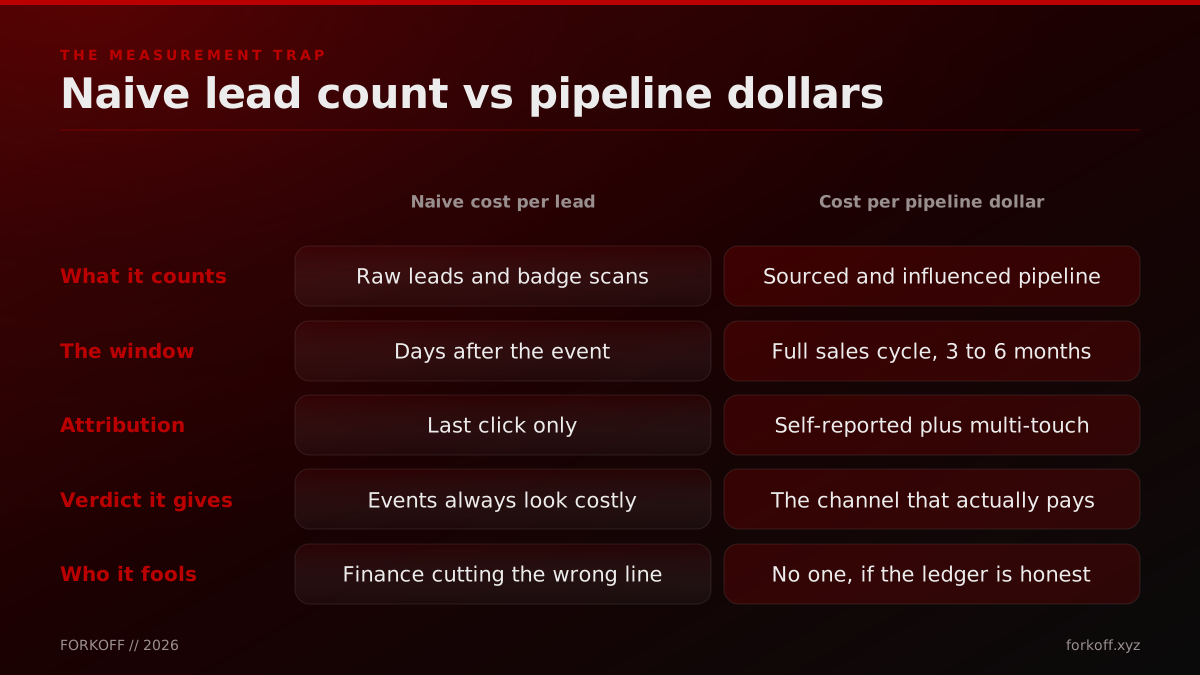
The trap is not hypothetical, and operators fall into it with real budgets. One team published a head-to-head where fifty thousand dollars in targeted LinkedIn and Google Ads produced a high volume of low-quality leads at more than eight hundred dollars per qualified demo, while a far smaller spend on a focused alternative channel booked three times as many qualified demos. Judged on raw lead volume, the big ad spend looked productive. Judged on qualified demos booked, it was the worse investment by a wide margin. The lesson is not that ads are bad, because the same inversion runs the other way when an event produces a pile of badge scans and no meetings. The lesson is that the metric you report is the behavior you get, and if you reward cheap leads you will get cheap leads that never close.
Attribution is where this gets genuinely hard, and it is worth being honest that no method is clean. Self-reported attribution, the how did you hear about us field, is the most common fix operators reach for, and its advocates treat it as the single realest signal they have, worth more than any analytics dashboard.
Cody Schneider
@codyschneider
nothing more real than self-reported attribution required field on signup form "how did you hear about us"
The people who lean on it hardest, though, are often the first to admit where it breaks, and that honesty is exactly the tension a serious model has to resolve rather than paper over.
Garrett Sussman
@garrettsussman
I'm having a harder and harder time trusting self-reported attribution. People can't remember what they had for lunch. It definitely has value, but it's not a definitive metric.
That skepticism is fair. People misremember, and a single self-reported field is not proof on its own. But the answer is not to give up and default to last-click, which structurally erases every offline and awareness channel and makes events look worthless by construction. The answer is to triangulate, combine self-reported attribution with pipeline tagging and a realistic sales-cycle window, the same multi-touch discipline our reddit B2B lead-gen guide applies to community-sourced demand. Not everyone agrees events survive that scrutiny, and the strongest version of the pro-ads case deserves a fair hearing.
Google Ads wins. Every. Single. Time. Especially if you're a small business trying to maximize every dollar.
What is cost per pipeline dollar, and why is it the only fair yardstick?
Cost per pipeline dollar is total channel spend divided by the qualified pipeline value that channel sources or influences over a full sales cycle. It is the only metric that lets you compare a conference sponsorship and a paid-ads program honestly, because it prices both against revenue potential rather than clicks, impressions, or raw leads. A naive cost-per-lead number rewards the channel that produces the most cheap responses even if none of them close. Cost per pipeline dollar rewards the channel that actually moves deals forward, which is the only question a finance team is really asking when it reviews the marketing budget.
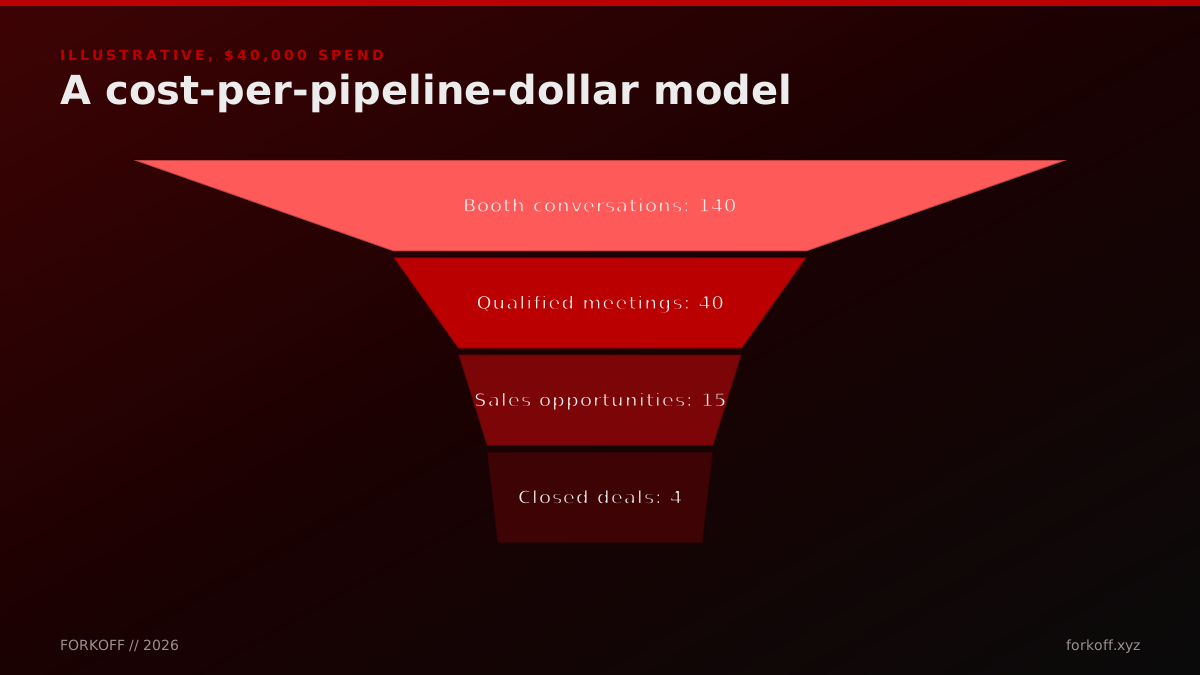
Work a simple example. Say an estimated $40,000 all-in sponsorship, booth, travel, staff, and collateral included, produces 140 real booth conversations, 40 of which become qualified meetings, 15 of which become opportunities, and 4 of which close. That is a cost per opportunity near $2,667 and a customer acquisition cost of an estimated $10,000, both numbers a finance team can check against your average deal size. This model is illustrative rather than a specific client result, but the structure is the point, once you carry the spend down to opportunities and revenue, the booth invoice stops being the headline and the pipeline math takes over.
Operator noteCost per pipeline dollar is the only event metric that survives a finance review, it prices spend against sourced revenue, not impressions.
The costs that break this math are the ones teams forget to count, and they almost always live outside the sponsorship fee. The single most expensive line in field marketing is often the human time, the executive hours spent traveling, staffing, and following up, plus the softer cost of relationship-building that never shows up on an invoice at all.
IT Unprofessional
@it_unprofession
I had a $400 Wagyu ribeye for lunch today. I didn't pay for it. An enterprise account executive from a tier 1 cybersecurity firm paid for it. He's been trying to sell me a cloud-native endpoint detection platform for 8 months. We don't need a cloud-native endpoint detection
Attribution vendors have started building exactly this bridge, putting online and offline spend on one revenue chart so a field-marketing dollar and an ad dollar can be compared directly.
ROI Uncovered: Digital vs. Offline Field Marketing Impact #dreamdatarecipes
Dreamdata
A B2B attribution vendor puts digital and offline field marketing on one ROI chart.
Getting to a number you trust means combining signals rather than betting on one. Self-reported attribution captures the awareness and offline channels that last-click analytics erases, and operators who add a how did you hear about us field routinely report that their results look very different from what the analytics platform shows, usually with far less credit going to search. Pair that self-reported signal with hard pipeline tagging, where every event contact is marked in the CRM and tracked through to closed revenue, and with a sales-cycle window long enough to catch the deals that close months later. No single one of these is proof on its own, and treating any of them as definitive is how teams fool themselves. Taken together they produce a defensible cost-per-pipeline-dollar figure, one you can put in front of a finance team without flinching, because it does not rest on a single fragile signal that a skeptic can wave away in one question.
How much does a B2B conference sponsorship really cost?
A B2B conference sponsorship commonly runs an estimated $25,000 to $80,000 all in for a single mid-market show, and the sponsorship fee is usually the smallest part of that. Booth space, custom build and shipping, travel and hotels for the team, loaded staff hours before and during the event, and collateral all stack on top. The reason so many teams believe events lose money is that they compare only the sponsorship invoice to a channel where every cost is visible, then act shocked when the real, fully loaded number lands. The fix is not to stop sponsoring, it is to count the whole thing before you decide.
One facility spent $28,000 attending two shows. The result: 1 closed contract worth about $150k. CAC: $28,000. The owner told me, that's just the cost of doing business, you have to show face.
That $28,000-for-one-deal receipt is real, and it is the exact shape of the argument. On a pure cost-per-acquisition basis, a single deal for $28,000 of spend looks alarming, and if the deal was worth approximately $150,000 with strong retention, it may have been the best channel that company ran all year. Neither reading is complete without the other, which is the entire reason an event sponsorship CPQL operating system beats a raw CAC number, it forces the deal value and the sales-cycle window into the same calculation. The recurring complaint underneath these receipts is lead quality, not lead volume.
trade show ROI has been basically zero for us three years running, what are we doing wrong
we sell B2B software to regional retail chains and distributors. mid-market, typical deal around $40k. three trade shows this year. probably $18k all in when you add up booth fees, travel, and staff time. every time we come back with a stack of badge scans and business cards and the… Show more
The badge-scan problem is worth naming precisely, because it is where most event spend quietly dies. A list of scans is not a list of leads, it is a list of people who were physically near your booth, and the notes a rep types in a 30-second exchange are rarely enough to prioritize follow-up. Half of those notes turn out to be useless the moment the team gets home and tries to sort a warm meeting from a polite hello.
Over-engineering the booth makes this worse, not better, because a bigger stand pulls more foot traffic without improving the intent of the people it pulls. The honest cost picture includes the failure modes, and there are real ones, from a six-figure booth build to a team that never works the follow-up list.
It helps to see where the money actually goes, because the sponsorship fee is rarely the biggest line. On a typical mid-market show, booth space might run five to thirty thousand dollars, a custom build and its shipping can match or exceed that, travel and hotels for a team of three or four add several thousand more, and the loaded cost of staff time, preparation, travel days, and on-site hours, quietly becomes the single largest item. Collateral and swag round it out. One operator on a trade-show forum argued that the industry-wide instinct to build bigger is itself the ROI killer, that efficiency compounds while over-engineered booths do not. Counting all of these lines is not pessimism, it is the only way to produce a cost-per-pipeline-dollar figure that a finance team will not tear apart the moment it sees the full expense report.
Why Exhibiting at a Trade Show Could Cost You £250,000
Richard Woods
The all-in cost of exhibiting at a trade show, counted honestly.
This measurement gap is well documented. Forrester's B2B events ROI analysis found that only a small share of event-technology vendors could show clients a measurable return, and even a SaaS-conference organizer like SaaStock's event sponsorship ROI guidance concedes that proving the number is the hard part. The net-negative-ROI debate our team ran in another vertical reached the same verdict, the room is rarely the problem, the measurement is.
Large spend, thin proof, which is why events get cut first
Forrester found that B2B events average about 12 percent of marketing program spend, yet only 18 percent of event-technology vendors said their clients could demonstrate measurable returns. The spend is large and the proof is thin, so when a finance team asks for the number, the event line is the easiest one to question. Closing that proof gap is the whole job of a real cost-per-pipeline-dollar model.
Source: Forrester, The Importance Of Defining The ROI Of B2B Events, 2019
When does conference sponsorship win, and when do paid ads win?
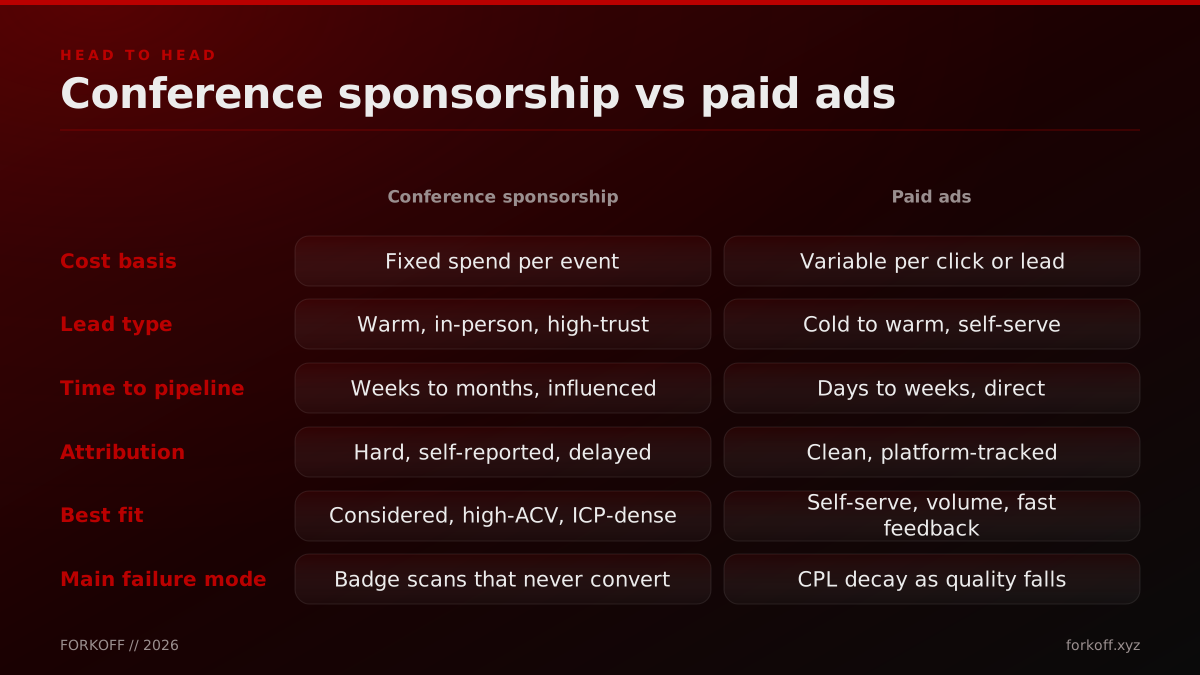
Conference sponsorship wins when you sell a considered, high-value deal into an audience that genuinely attends, and you have the sales motion to convert in-person conversations into pipeline over months. Paid ads win when you sell a self-serve or lower-value product, need fast and clean feedback on messaging, or have no field-sales muscle to work a lead list. The two are not rivals so much as tools for different stages and motions, and most teams should run both, weighted by where their deals actually come from. The mistake is treating the choice as a matter of taste rather than a match between your economics and each channel's shape.
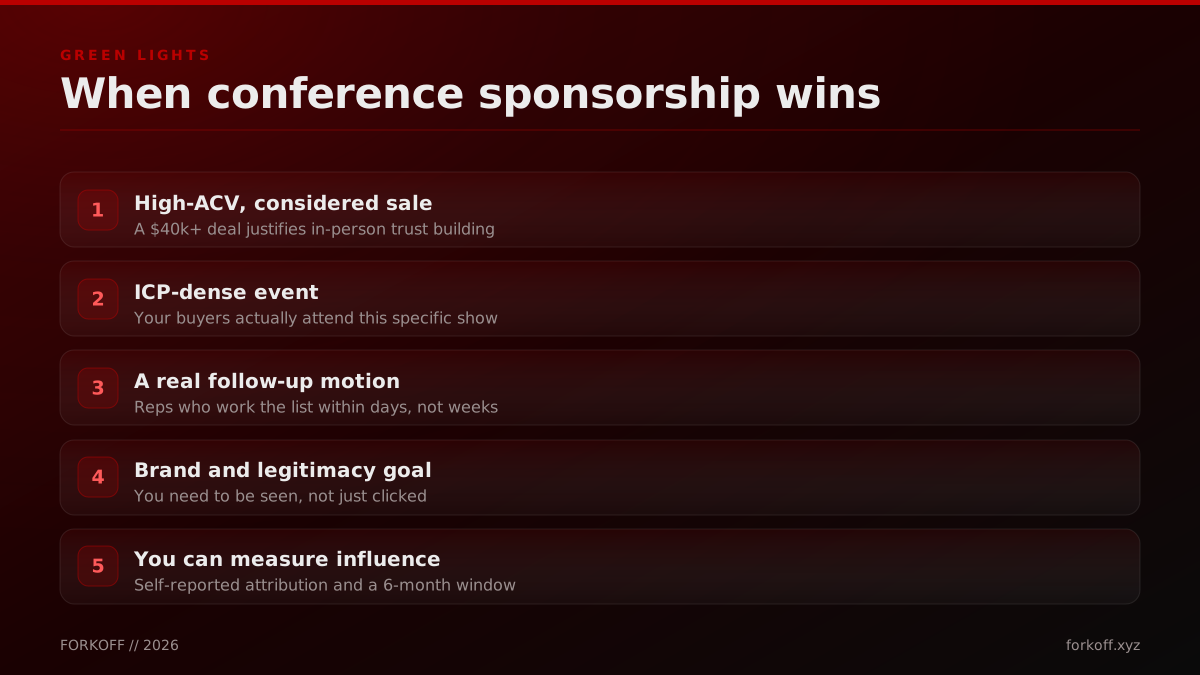
The green lights are cumulative. One of them alone is rarely enough, but when a high deal size, an ICP-dense event, and a real follow-up motion appear together, sponsorship stops being a gamble and becomes a defensible line item. This is the same stage-matching logic that governs any go-to-market sequencing decision about where to put the next dollar, spend where your buyers already are and where your motion can convert them.
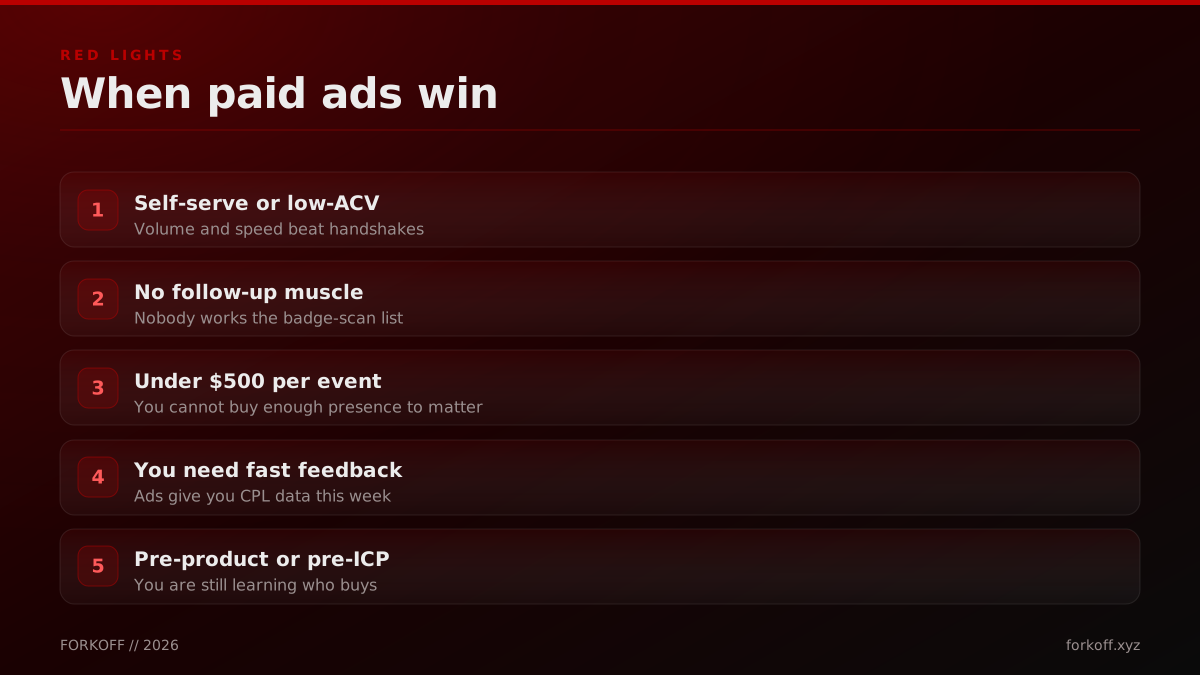
The red lights are just as important, because staying in paid channels longer is often the correct, unglamorous answer. If you are pre-product, still learning your ICP, or running a self-serve motion where volume beats handshakes, ads give you speed and clean data that events cannot. A founder who moved budget out of expensive paid search and into a cheaper channel is not a failure of ads, it is a reminder that every channel has a saturation point and a right stage, which is the core theme of our AI agency pricing and unit economics breakdown.
Paid acquisition is not a fixed cost
Cost per lead on paid channels tends to climb as an audience saturates. One operator described Google Ads cost per lead drifting from $80 to $160 over 18 months while lead quality fell at the same time. A channel that looks cheapest this quarter can invert inside a fiscal year, which is why a single-quarter cost-per-lead snapshot is a weak basis for moving a budget between events and ads.
Source: Operator report, r/DigitalMarketing, 2026
This decay is the quiet reason the events-versus-ads balance shifts over time even when nothing about your product changes. A paid channel that was the obvious winner at launch, cheap, fast, and clean on data, can drift into diminishing returns as the audience saturates and the cheapest buyers get used up, which is exactly when a well-run event motion starts to look attractive again. The reverse also happens, an event that worked while a category was small stops paying once every competitor sponsors the same show and the room stops being a differentiator. The point is that the right answer is not fixed. It is a moving function of your stage, your saturation, and your ability to measure, which is why the comparison is worth re-running every few quarters rather than settling it once and defending the decision out of habit. The pro-ads camp makes the counter-case bluntly, and it deserves a fair hearing. Lion and Panda's trade shows versus Google Ads breakdown argues that for a small business squeezing every dollar, paid search wins on hard return, citing two to eight dollars back per dollar against fifty cents to a dollar fifty for trade shows. It is a real point at that stage, and the dinner versus booth economics we mapped in another vertical land on the same lesson from the event side, format and intent decide the return far more than the channel label does. Not every operator lands on the same side of this, and the awareness case for events is worth stating in its owner's words.
The ROI math completely changed when I looked at it over 6 months instead of 6 days. Conferences aren't lead generation for me. They're awareness and legitimacy.
How do you run event sponsorship as an accountable engine?
You run event sponsorship as an accountable engine by treating it like a paid channel with a number attached, not a calendar item you hope pays off. That means a brief and an ICP map built weeks before the event, pre-event outreach that books meetings before the doors open, on-site qualification that happens in the conversation rather than in a badge scan, self-reported attribution captured on every inbound form, a multi-touch follow-up cadence while the memory is warm, and a cost-per-pipeline-dollar report at the end. Each step exists for one reason, to make the spend measurable against pipeline the way an ad account already is.
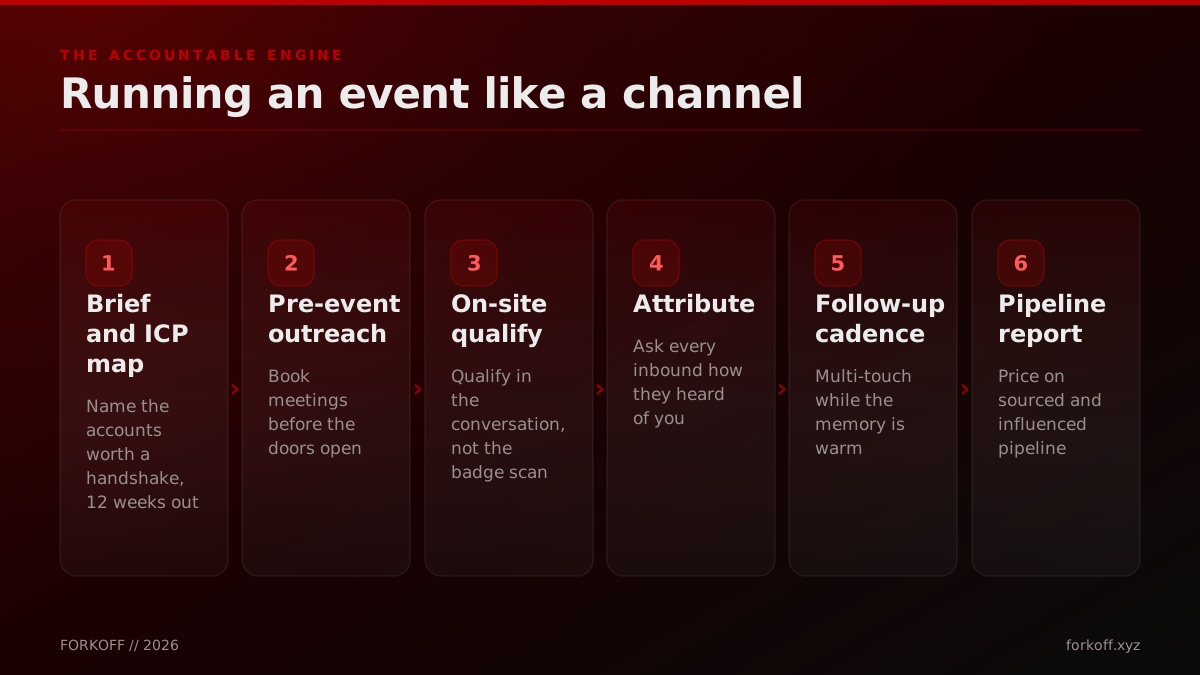
This is the whole difference between a booth and a campaign. A booth is a cost you incur and then measure after the fact if you remember to. A campaign is a system you instrument from the start, which is how FORKOFF runs our managed events service, booth, side event, dinner, and panel operated as one funnel with attribution wired in, and it is the same accountable posture our best demand generation agency comparison holds every channel to. The methodology carries across verticals, from the crypto conference sponsor decision matrix to a SaaS field-marketing plan. The same instrumentation feeds the founder funnel strategy that turns event conversations into a repeatable motion, pairs with the content distribution that keeps a brand warm between shows, and sits inside the wider marketing strategies for AI startups many of these buyers are weighing at the same time.
Each step in that pipeline maps to a number you can report. The brief and ICP map define how many target accounts are even present at the event, which tells you the ceiling before you spend a dollar. Pre-event outreach turns the show from a hope into a set of booked meetings, so a chunk of the pipeline exists before the doors open. On-site qualification replaces the badge scan with a real read on fit and timing. Self-reported attribution and pipeline tagging make the influenced revenue visible over the following months. And the final report divides the fully loaded spend by that pipeline. Run this way, a sponsorship produces the same kind of dashboard an ad account already gives you, which is the one thing that lets a marketing leader defend it, renew it, or honestly kill it when the number does not hold up.
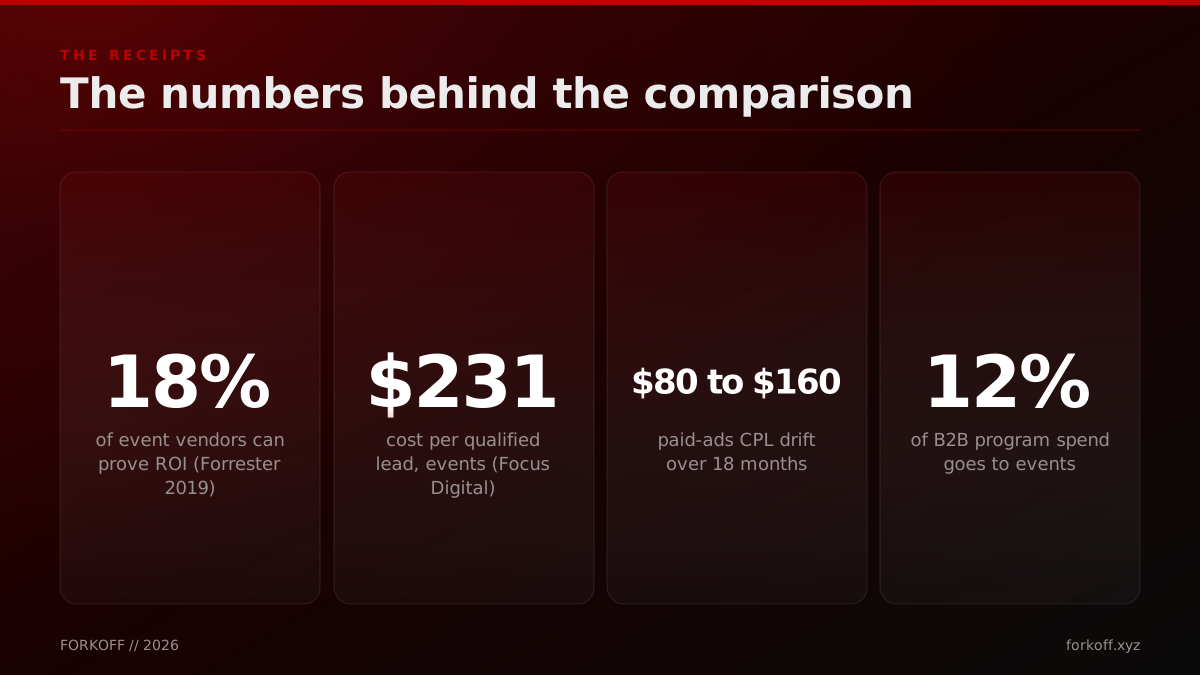
The receipts panel above is the honest scoreboard, a large share of program spend, a thin ability to prove returns, real channel benchmarks that disagree, and paid costs that drift upward over time. Vendors on the event side have started arguing for exactly this kind of accountability, because the teams that instrument their sponsorships are the ones that keep renewing them.
The uncomfortable part, and the reason event-vendor guides rarely write it, is that an honest engine sometimes returns a verdict against events. A both-sides comparison has to be willing to say when paid ads are the better dollar, and a partner who cannot say that is selling you a booth, not a strategy.
Operator noteSometimes ads win, and an honest comparison has to be able to say so. That is exactly the sentence event-vendor guides never write.
Verdict: which channel wins your next dollar?
Neither channel wins in the abstract, and any guide that tells you otherwise is selling one of them. Conference sponsorship wins your next dollar when you sell a considered, high-value deal into an audience that attends, and you can measure influenced pipeline over a full sales cycle. Paid ads win when you need speed, self-serve volume, or clean feedback, or when your budget is too small to buy real event presence. Most B2B SaaS teams should run both and let the pipeline math, not the pitch, decide the weighting each quarter.
What settles it is the yardstick, not the channel. Put both on cost per pipeline dollar, count the fully loaded spend on the event side and the true qualified cost on the ads side, extend the window to a full sales cycle, and attribute honestly with more than one signal. Do that and the debate stops being tribal. You will find quarters where a room full of the right buyers is the cheapest pipeline you can buy, and quarters where a tuned ad account beats it, and you will be able to prove which is which. When the math says events, run them like a channel with a number attached, and when it says ads, move the budget without apology.
There is one more reason to settle this with a yardstick instead of a preference. The events-versus-ads fight is often really a fight between two teams, a brand or field-marketing group that believes in presence and a growth team that believes in trackable clicks, and each one brings its favorite metric to the meeting. A shared cost-per-pipeline-dollar model ends that standoff, because it does not care which team is right, it only cares which dollar produced pipeline. That neutrality is worth almost as much as the number itself, since the fastest way to waste a marketing budget is to let the loudest advocate, rather than the clearest evidence, decide where it goes. The teams that win this argument are the ones who stopped having it and started measuring it.