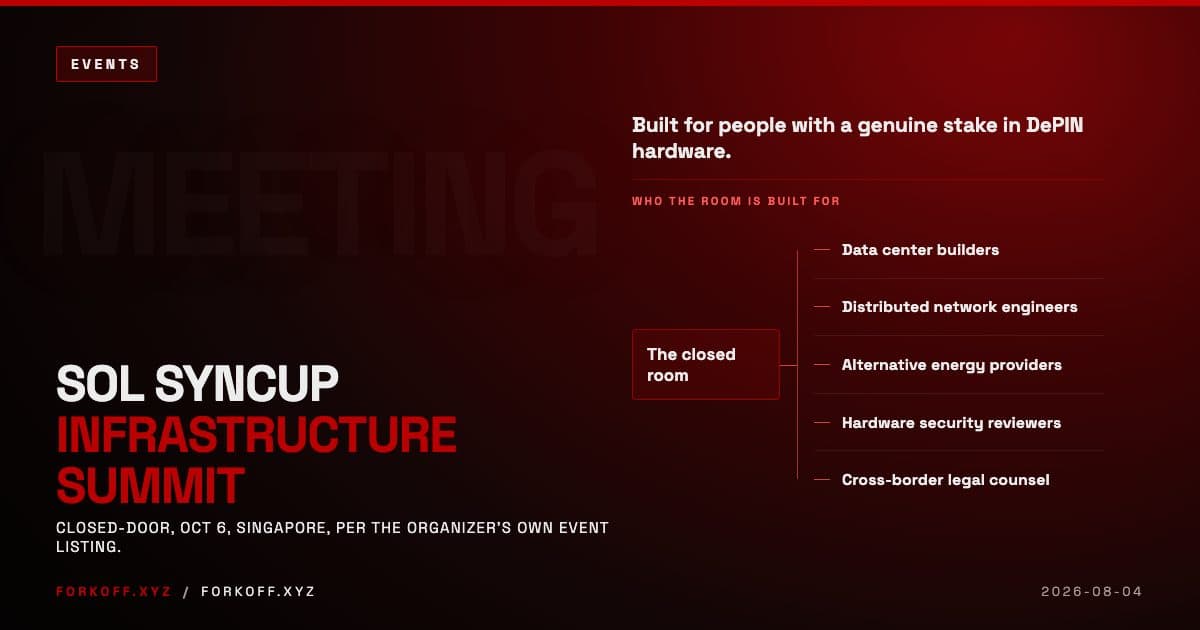
Sol SyncUp is hosting a closed-door Infrastructure Summit in Singapore, inside the wider Solana ecosystem, built to standardize DePIN, Decentralized Physical Infrastructure Networks, architecture. The summit brings together the physical operators behind DePIN's expansion, data center builders, distributed network engineers, and alternative energy providers, into one room to formalize operational standards for anchoring decentralized physical networks into the global supply chain. It runs as part of the wider SolSync Up series, a recurring Solana ecosystem convening the organizers describe as a "sync point" for builders, founders, and ecosystem players. This post covers what was announced, what DePIN actually means for readers new to the category, why the format is closed-door instead of a public conference, who the room is built for, and what it signals for the wider Solana and Web3 infrastructure ecosystem.
About these facts
Every claim in this post about the summit itself, the date, the agenda, the partners, the audience, comes from Sol SyncUp's own press release and event listing in its Singapore 2026 media kit. Every claim about the wider Solana ecosystem, the block-compute increase, the KSNET integration, is drawn from public, dated, verifiable sources cited inline. Where a specific detail was not confirmed in the source materials, this post says so rather than filling the gap.
The Sol SyncUp Infrastructure Summit in one scroll
Sol SyncUp is hosting a closed-door Infrastructure Summit in Singapore to bring the physical operators behind DePIN, data center builders, distributed network engineers, and alternative energy providers, into one room to formalize operational standards for anchoring decentralized physical networks into the global supply chain. Per the organizer's own event listing, the wider SolSync Up series convenes in Singapore on October 6 in an in-person, application-only format. The agenda runs three roundtables: tokenomic model design for hardware scaling, hardware-level security validations, and cross-border regulatory compliance. Blockchain Marketing Ninja is the named exclusive media and distribution partner; Blockchain Staffing Ninja is the "powered by" partner listed on the broader SolSync Up series. This post covers what was announced, why the format is closed-door, who the room is built for, and what it signals for the wider Solana and DePIN ecosystem.
What Did Sol SyncUp Actually Announce?
The headline of the organizer's own press release is direct: Sol SyncUp is hosting an Infrastructure Summit in Singapore to standardize DePIN architecture. That is not marketing language dressed up as news. It describes a specific, narrow goal, get the people who physically build and operate DePIN hardware into a room and agree on operational standards, rather than another round of panel discussions about where token prices are headed.
The press materials frame the summit as bridging two groups that rarely sit in the same meeting: the hardware and power-grid teams who build and run physical infrastructure, and the software engineers building the tokenized coordination systems that pay them. That framing matters because it names the actual gap. A huge amount of DePIN coverage lives entirely on the software side, token design, incentive curves, funding announcements. The physical side, who pours the concrete, who racks the servers, who keeps hardware running through a Singapore summer, gets almost none of that attention, and yet it is the side that determines whether any of the on-chain data is real.
The summit's agenda runs three closed-door roundtables: tokenomic model design for hardware scaling, hardware-level security validations, and cross-border regulatory compliance. Each of those is covered in detail further down this post. The through-line across all three is that they are operational problems, not narrative ones, the kind of problem that gets solved in a working session with people who have actually run the hardware, not a keynote.
Two named partner organizations sit behind the event, per the organizer's own materials. Blockchain Marketing Ninja is named as the exclusive strategic media and distribution partner responsible for the summit's international positioning and narrative amplification. Blockchain Staffing Ninja is separately listed as the "powered by" partner on the organizer's event listing for the broader SolSync Up series. They are two distinct organizations with similar names, worth noting explicitly so readers do not conflate them.
Operator noteBlockchain Marketing Ninja and Blockchain Staffing Ninja are two distinct partner organizations, per the source materials, not one.
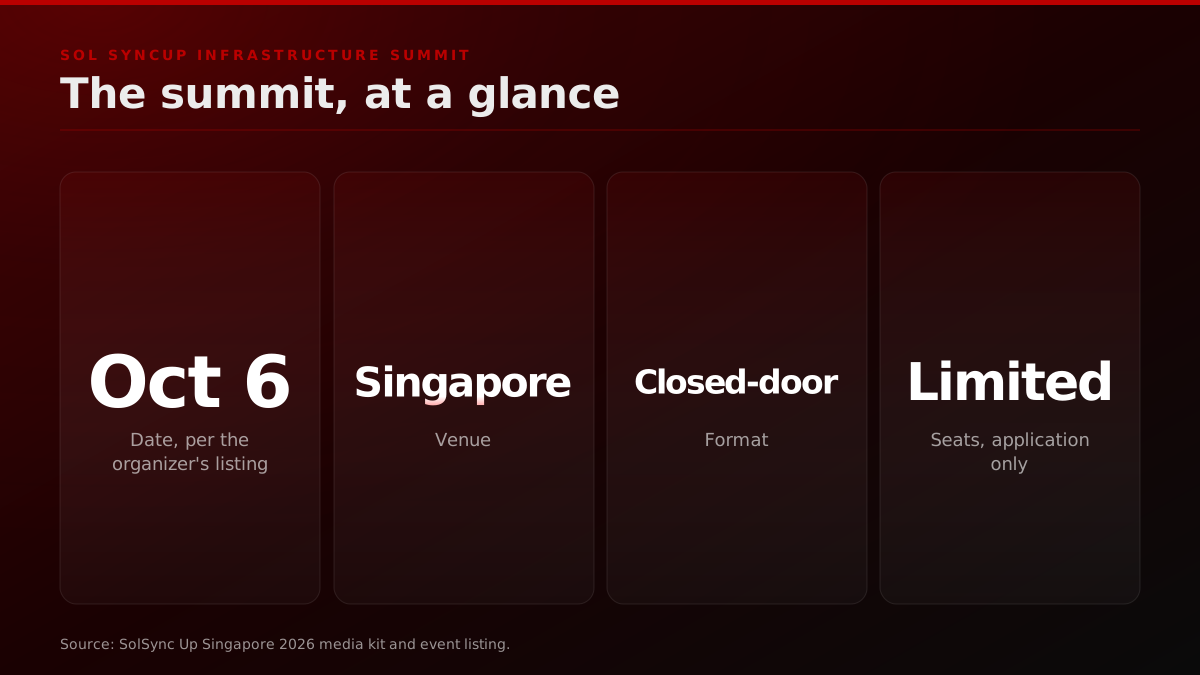
What is confirmed about the Sol SyncUp Infrastructure Summit
| Detail | What the organizer states |
|---|---|
| Host | Sol SyncUp, running under the wider SolSync Up Solana ecosystem series |
| Focus | Standardizing DePIN architecture across data centers and energy providers |
| Format | Closed-door, in-person, application only |
| Date and venue | October 6, Singapore, per the organizer's own event listing |
| Media partner | Blockchain Marketing Ninja, exclusive media and distribution partner |
| Series partner | Blockchain Staffing Ninja, "powered by" partner on the event listing |
Compiled from Sol SyncUp's own press release and event listing, Singapore 2026 media kit. Confirm current logistics directly with the organizer before travel.
A summit built to formalize operational standards for anchoring decentralized physical networks into the global supply chain.
What DePIN Actually Means, for Readers New to the Category
DePIN stands for Decentralized Physical Infrastructure Networks, a category CoinMarketCap tracks as its own sector of crypto-native projects that use token incentives to coordinate real-world hardware instead of running that coordination through a central company. A DePIN project might pay a homeowner in tokens for hosting a wireless hotspot, pay an operator for running a GPU cluster, or pay a sensor network for reporting verified weather data, in each case replacing a corporate payroll and billing desk with an on-chain incentive layer that rewards uptime and honest reporting.
The category exists because physical infrastructure is expensive to build centrally and slow to scale. A telecom company spends years and billions of dollars building out a network footprint. A DePIN project instead pays thousands of independent operators to deploy hardware wherever demand exists, verifies that the hardware is doing what it claims through on-chain proofs, and lets a token model handle the economics of paying for coverage nobody centrally planned. It is a genuinely different way to build infrastructure, and it has attracted real capital and real hardware deployment over the past several years.
The reason a summit like this exists now, rather than three years ago, comes down to a specific technical shift the organizer's own materials point to: layer-1 blockchains are demonstrating growing capacity to process high-frequency real-world data feeds. That is not a vague claim. Solana raised its mainnet block compute limit by 66 percent in 2026, moving from 60 million to 100 million compute units under network upgrade SIMD-0286, a concrete increase in how much real-world data throughput the chain can actually absorb per block. A DePIN network reporting continuous sensor data, energy metering, or network telemetry needs exactly that kind of headroom, and it has only recently become available at scale. For a deeper walkthrough of how DePIN projects actually structure that hardware-to-token pipeline, see FORKOFF's DePIN network marketing playbook, which covers the same category from the testnet-to-token side.
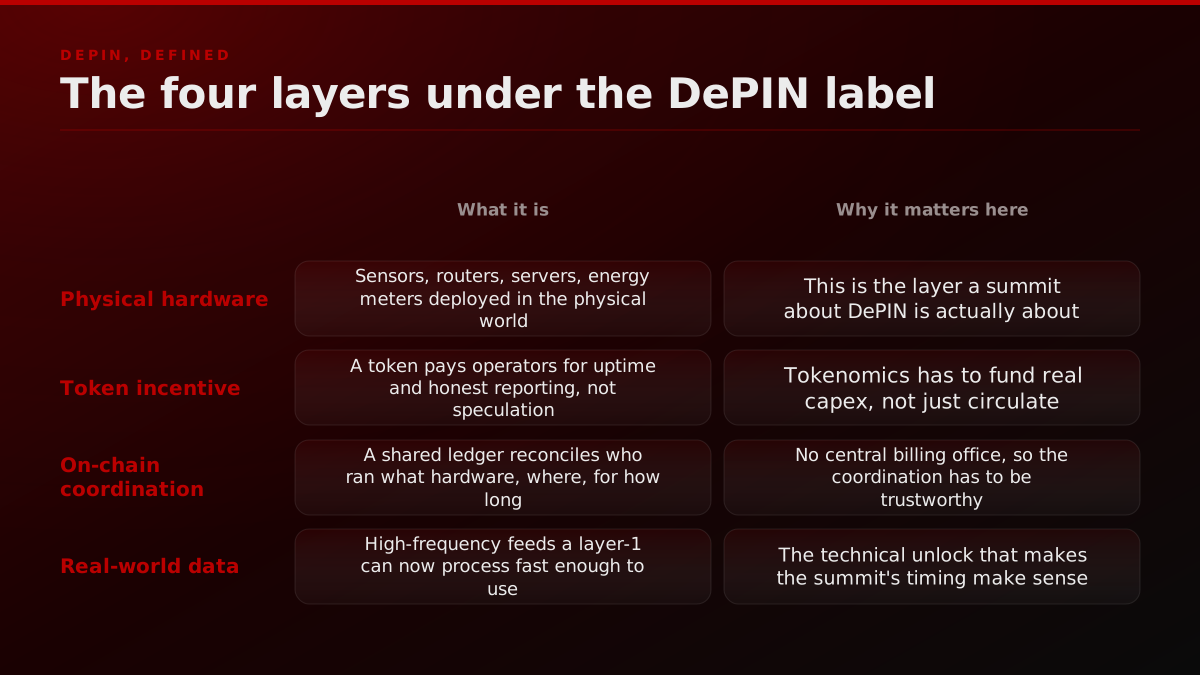
Four things have to work together for any of this to function: real physical hardware deployed in the world, a token model that pays operators without collapsing under its own emissions, an on-chain coordination layer that reconciles who ran what and where without a central billing office, and real-world data flowing fast enough for a layer-1 to actually use it. The Infrastructure Summit is aimed squarely at the first of those four, the layer every DePIN pitch deck assumes exists and comparatively few events actually interrogate.
What Is DePIN (Decentralized Physical Infrastructure Network)
An explainer on what DePIN actually is, useful background for readers who are new to the category the Infrastructure Summit is trying to standardize.
The category is broad enough that it is worth naming the recognizable shapes it takes, without claiming any specific project is connected to this summit. Wireless coverage networks pay individual hosts in tokens for running hotspots that extend network range into areas a telecom would never build for. Mapping networks pay drivers for dashcam data that gets stitched into street-level maps. Distributed compute networks pay GPU owners for making idle hardware available to AI and rendering workloads. Energy networks pay households for solar or storage capacity fed back into a local grid. CoinGecko's own DePIN sector tracking groups all of these under the same category for exactly this reason. Each is a different vertical, but every one runs into the same three problems the Infrastructure Summit's roundtables target: a token model has to fund the real hardware cost, the network has to verify the hardware is genuine and reporting honestly, and the whole arrangement has to stay legal wherever the hardware physically sits. A summit standardizing the infrastructure layer underneath all of those verticals is aimed at the shared plumbing, not any single vertical's product, the same layer FORKOFF's own Web3 ecosystem growth playbook treats as the precondition for any GTM work on top of it.
Why Is the Summit Closed-Door, Not Another Conference Stage?
A closed-door, application-only summit is a deliberate tradeoff, not a smaller version of a public conference. The organizer's own framing is specific about why: the format is meant to encourage candid data-sharing on operational margins, hardware performance limits under tropical climates, and the legal structures governing decentralized physical assets in tight urban jurisdictions like Singapore. None of that is information an operator volunteers on a public stage, in front of competitors, with a live-tweeting audience capturing every number.
Operational margins are the clearest example. A data center operator running DePIN hardware knows their real cost per unit of verified uptime, but that number is competitively sensitive and gets rounded to a slide, if it gets mentioned at all, on a public panel. In a closed room with other operators who carry the same cost structure, the same number becomes a useful data point instead of a liability.
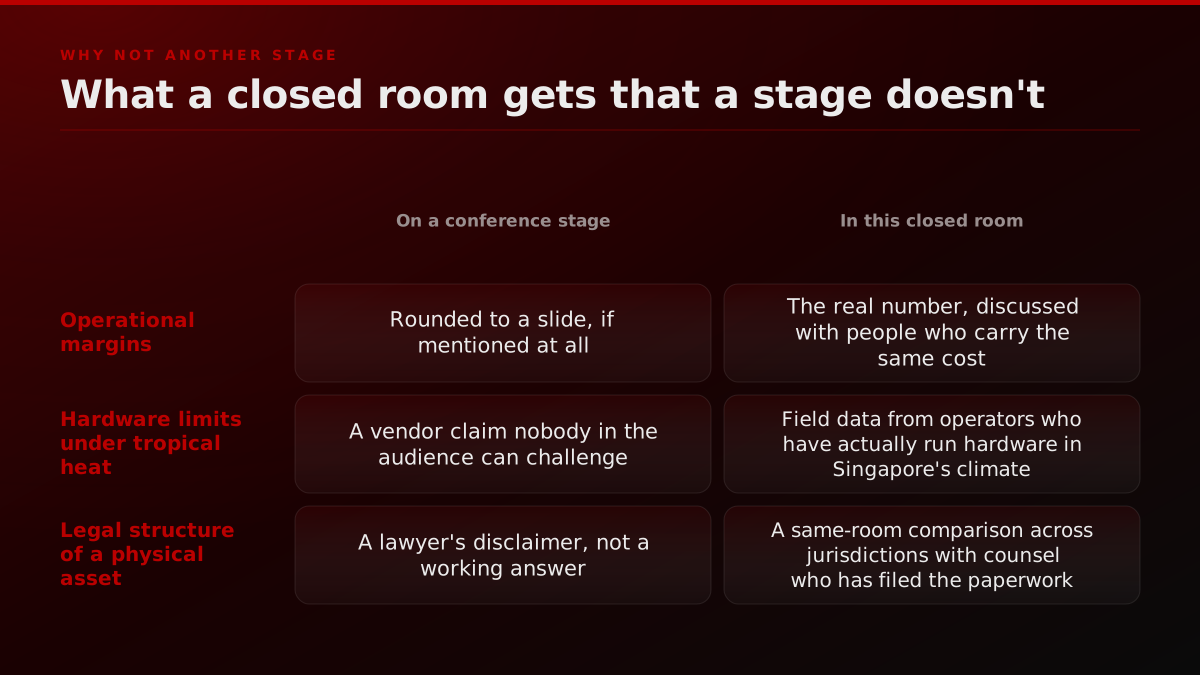
Hardware performance under tropical heat is a second, more literal example. Singapore's climate is a genuine constraint on hardware that has to run continuously, and the organizations that actually know the failure modes are the ones who have run equipment there, not the ones who read a spec sheet. That is field data, not a vendor claim, and it only surfaces in a room where the person sharing it is not worried about a competitor overhearing an admission of a weak point.
The legal structure question is the least glamorous and arguably the most important. A decentralized physical asset, hardware that is owned, operated, or financially structured in a decentralized way, raises real jurisdictional questions in a market like Singapore that a lawyer's public disclaimer does not resolve. The organizer's stated framing puts cross-border regulatory compliance on the agenda as its own roundtable precisely because it is a working problem, not a talking point, and working problems get solved by people comparing notes across jurisdictions, not by a stage presentation.
The organizer is explicit that the summit is focused on engineering execution rather than speculative market theories. That framing is worth taking at face value. A room built around margins, hardware limits, and legal structure is a room built for operators, not for an audience.
The closed-door format is a real tradeoff, not just optics
A vetted, application-only room trades reach for candor. The organizer's stated rationale, encouraging honest disclosure of operational margins, real hardware performance limits, and jurisdiction-specific legal exposure, is not achievable on a public stage where a competitor or a journalist is in the room. The cost is that the summit will not generate the kind of open social coverage a public conference does. For an event built to produce operational standards rather than announcements, that tradeoff is deliberate.
Source: Sol SyncUp press materials, 2026
Operator noteA closed-door summit is not a smaller conference. It is a different format built for a different kind of disclosure.
The Three Roundtables: What Each One Is Actually Trying to Solve
The closed-door agenda runs three named roundtables, and each one targets a specific, unglamorous failure mode that has stalled DePIN projects before: a token model that cannot fund real hardware costs, a network that cannot verify its own devices, and a physical asset that cannot stay legal across borders. None of the three is a marketing topic. All three are the kind of operational problem that only gets solved by people who have actually run the hardware comparing notes in a room, not by a keynote speaker describing the problem in the abstract.
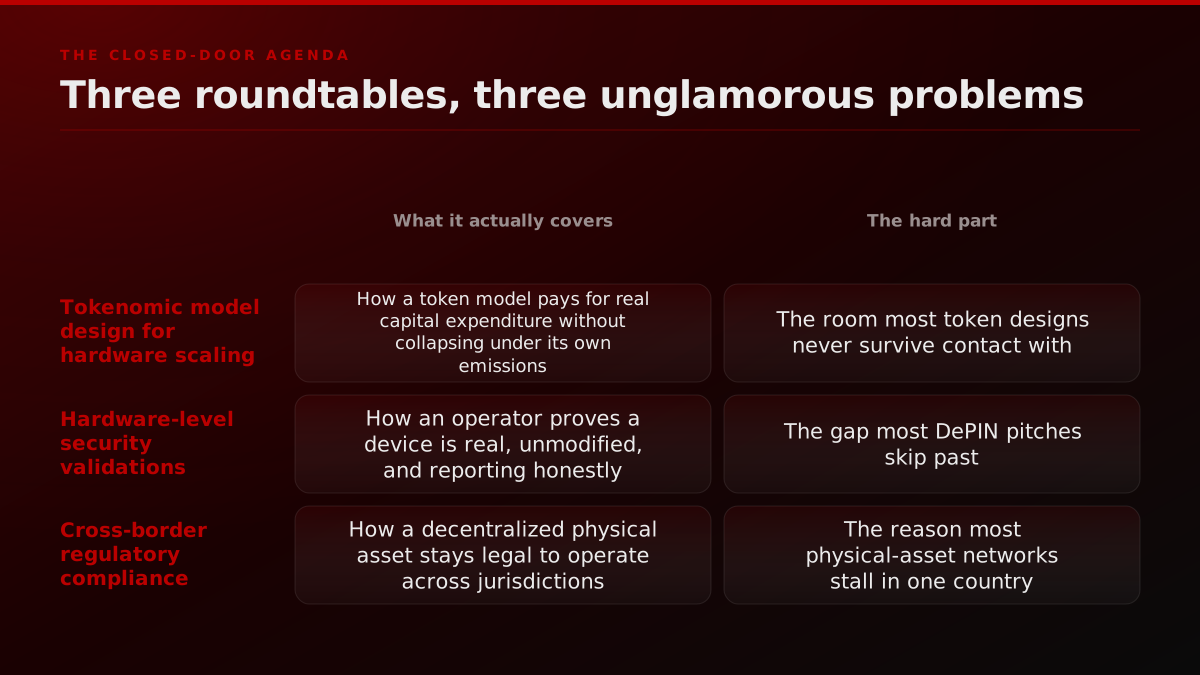
Tokenomic model design for hardware scaling is the roundtable most DePIN projects never survive contact with in public. A token model has to fund real capital expenditure, hardware purchases, installation, ongoing power and connectivity costs, without inflating the token supply so fast that early operator rewards become worthless. Plenty of DePIN projects have shipped a token model that looked sound on a spreadsheet and broke once real operators started claiming real rewards against real hardware costs. A closed room of operators who have actually run the economics is the right audience to stress-test that design before it ships at scale, not a public token-launch panel.
Hardware-level security validations address a problem that is easy to state and hard to solve: how does a token-based network know a piece of hardware is genuine, unmodified, and reporting honest data, before it pays that hardware for uptime? A DePIN network that cannot verify its own hardware is paying for claims, not for infrastructure. This is the gap most DePIN pitches skip past entirely, because it is unglamorous, technical, and does not fit neatly into a funding-round narrative. It is also the gap that determines whether the network's on-chain data means anything at all.
Cross-border regulatory compliance is the roundtable that determines whether any of this scales past a single country. A decentralized physical asset raises different legal questions in Singapore than it does in the jurisdictions its operators, investors, and token holders sit in. Most physical-asset networks that stall do not stall on the technology, they stall on a jurisdiction they never planned for. Putting counsel who has actually filed the relevant paperwork in the same room as the operators building the network is a direct answer to that failure mode.
The three closed-door roundtables
| Roundtable | What it is trying to solve |
|---|---|
| Tokenomic model design for hardware scaling | Funding real capex without collapsing under its own emissions |
| Hardware-level security validations | Proving a device is genuine and reporting honestly before it gets paid |
| Cross-border regulatory compliance | Staying legal to operate inside a jurisdiction like Singapore |
Per Sol SyncUp's own press materials on the Infrastructure Summit agenda.
Who the Room Is Actually Built For
The Infrastructure Summit is not aimed at a general crypto audience, and the organizer's own materials are specific about who belongs in the room: the people who physically build, run, and secure DePIN hardware, plus the counsel who keeps that hardware legal across jurisdictions. That is a narrower bar than "interested in Web3," set deliberately, because the closed-door format only works if everyone present carries the same operational stake in the topics being discussed.
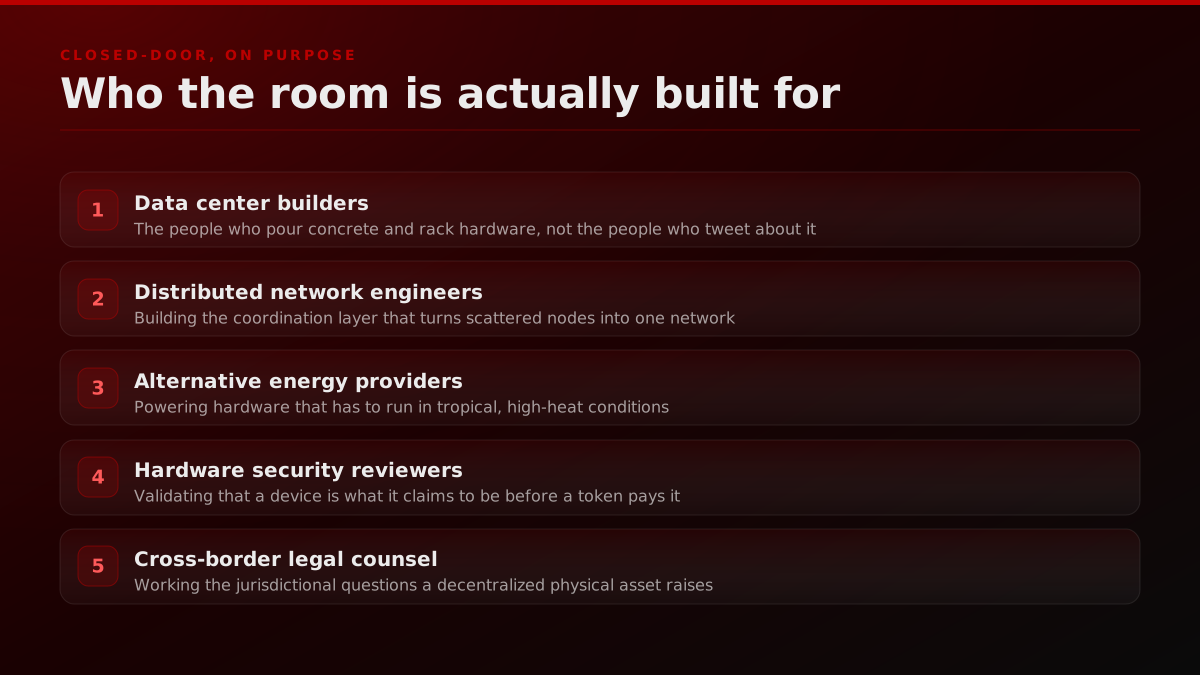
The organizer's press materials name the audience specifically: data center builders, distributed network engineers, and alternative energy providers, the people physically building and powering DePIN infrastructure, not the people commenting on it. The audience CTA in the organizer's own materials is aimed at people with a genuine, working interest in the hardware required to grow a decentralized ecosystem, or who are actively building the infrastructure supporting DePIN growth. That is a narrower bar than "interested in crypto," and it is set that way on purpose.
The wider SolSync Up series, the Solana ecosystem convening this summit runs alongside, lists a broader attendance criteria on its own event listing: Solana developers and builders, founders scaling Web3 products, ecosystem contributors and partners, investors tracking Solana growth, and Web3 talent and operators. Read together, the two audiences describe a summit aimed at people who build things and the people who fund, staff, or partner with the people who build things, not a general crypto-conference crowd.
The two-tier structure is worth noticing on its own. A narrow, hardware-specific audience for the Infrastructure Summit itself, sitting inside a broader ecosystem-wide audience for the SolSync Up series it runs alongside, is a sensible way to solve a real tension in event design: a closed room needs to stay small enough that candor survives, but a single-vertical event also needs enough surrounding ecosystem presence, investors, founders, talent, to make the trip worthwhile for a hardware operator who might otherwise skip a niche technical meeting. The DePIN-specific room stays vetted. The wider convening around it supplies the ecosystem context, and the reason to actually get on a plane. The same instinct, matching a founder to the right room rather than a crowd, drives the curated investor forums that cluster around a Singapore conference week, like The Capital Circle in Singapore the day before TOKEN2049.

The organizer states that seats are limited. That is consistent with the closed-door framing throughout the rest of the announcement, a vetted, application-only room is the entire mechanism that makes candid disclosure possible in the first place. Anyone reading this who fits the operator profile, and not the general-audience profile, is the intended reader. Current logistics, the application process, and the wider SolSync Up series calendar are on Sol SyncUp's own event site.
Solana
@solana
Bitcoin is the asset. Solana is the infrastructure.
Operator noteDePIN's software side gets covered constantly. Its hardware side, who actually builds and secures it, mostly does not.
Why Singapore, and Why Now?
Singapore is not an arbitrary choice of venue. The city-state has spent years positioning itself, via its financial regulator, as a regulated hub for institutional crypto activity in Asia, with a licensing regime that gives serious operators a legal foundation to build on, a factor the summit's own cross-border compliance roundtable is directly built around. It is also a genuinely difficult environment to run physical hardware in, dense, tropical, and land-constrained, which is exactly why hardware performance under tropical heat made the closed-door agenda rather than staying a footnote.
That combination, a jurisdiction serious enough to have real licensing infrastructure under the Payment Services Act and a climate hard enough to force real engineering tradeoffs, is precisely the environment where a standards conversation is worth having in person rather than over a shared document. A tokenomic model that assumes mild-climate hardware uptime, or a legal structure copied from a jurisdiction with a different regulatory posture, both fail quietly until they are stress-tested against a market like Singapore. Running the summit there instead of in a lower-friction jurisdiction is itself a signal that the organizers are optimizing for a standard that holds up under real conditions, not one that only works on a whiteboard. FORKOFF's own Web3 GTM playbook covers the same jurisdiction-by-jurisdiction reality for token launches, which runs into an adjacent version of this exact compliance problem. Singapore's density is exactly why its Web3 calendar keeps filling, and our GameFi Alliance Web3 Gaming Summit preview covers a different vertical landing in the same city on October 6, 2026, aimed at Web3 game studios rather than hardware operators.
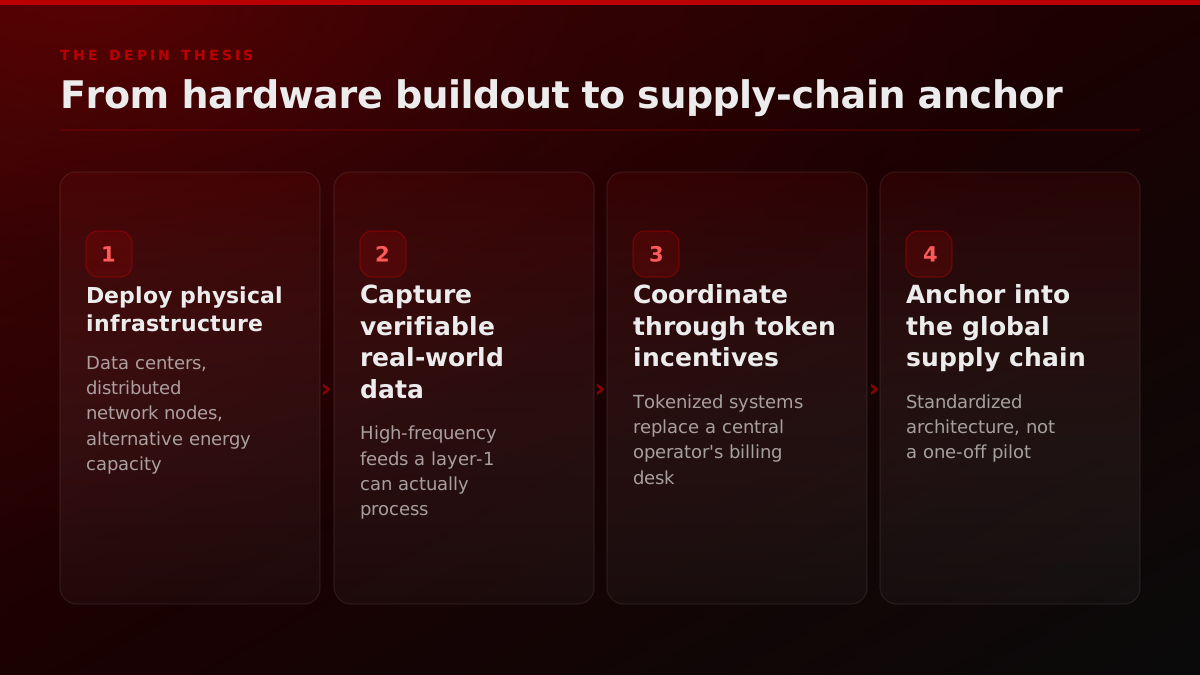
The timing question has a more concrete answer than "the market is ready." Two real, verifiable 2026 developments back the organizer's "why now" framing. First, Solana's mainnet block compute limit increased 66 percent this year, from 60 million to 100 million compute units, meaningfully widening how much real-world data throughput the chain can process per block, the exact technical unlock a DePIN network reporting continuous sensor or energy data actually needs. Second, Korean fintech KSNET, a payment network processing more than 4 billion dollars in monthly volume across upward of 330,000 merchants, signed an MOU with the Solana Foundation in 2026 to integrate Solana Pay, and is separately testing x402, the emerging standard for AI-agent payments, across that same merchant network. FORKOFF's Layer-1 and Layer-2 ecosystem growth playbook covers the throughput side of this shift in more depth for readers building on top of it.
The throughput story is already public, the hardware story is not
The organizer's own "why now" framing for the summit rests on a real, verifiable fact: layer-1 blockchains are demonstrating growing capacity to process high-frequency real-world data feeds. Solana raised its mainnet block compute limit by 66 percent in 2026, from 60 million to 100 million compute units, a technical unlock that widens how much real-world data throughput the chain can actually absorb. The software side of the DePIN story, the token models, the dashboards, the funding rounds, gets covered constantly. The hardware side that has to physically exist for any of that data to be real has stayed comparatively undocumented, which is the gap a standards-setting summit is aimed at closing.
Source: Solana network upgrade coverage, 2026 (SIMD-0286, block compute limit increase)
Solana
@solana
This week: a Solana ETP hit the NYSE, a Korean payment network moved 330K+ merchants closer to stablecoin settlement, Solana blocks got 66% bigger, and a 65-million-year-old Triceratops skull is coming onchain.
Neither of those facts is about DePIN specifically. Both are about the same underlying capability the summit is trying to standardize for physical infrastructure: routing real-world value and real-world data through a token-coordinated network at meaningful scale, without a central operator running the billing desk. The software and payments side of that story already has real, cited proof points in 2026. The Infrastructure Summit is the physical-hardware side of the same story trying to catch up, in a closed room, with the people who actually have to build it.
Real payment rails are already testing the coordination problem
A useful adjacent proof point sits outside the DePIN label entirely. Korean fintech KSNET, a payment network processing more than 4 billion dollars in monthly volume across 330,000-plus merchants, signed an MOU with the Solana Foundation in 2026 to integrate Solana Pay, and is separately testing x402, the emerging standard for AI-agent payments, across the same merchant network. That is a live example of the exact coordination problem the summit's tokenomics roundtable is trying to solve at hardware scale: how do you route real-world value through a token-based network without a central billing office, and have it hold up under real transaction volume.
Source: KSNET and Solana Foundation MOU coverage, 2026
Korean Fintech Giant KSNET Is Bringing Payments On Solana To Its Network Of 330,000+ Merchants
BREAKING: Korean fintech giant KSNET is bringing payments on Solana to its network of 330,000+ merchants. As part of an MOU with Solana Foundation, KSNET will integrate Solana Pay into a payment network processing $4B in monthly volume.
What SolSync Up Says It Is Trying to Do
SolSync Up is the broader Solana ecosystem convening the Infrastructure Summit runs inside, and the organizer's own event listing states its purpose plainly: Solana has become one of the fastest-growing ecosystems in Web3, but growth needs coordination, not just capital, so the series exists as a recurring "sync point" for builders, founders, and ecosystem players to align in person rather than staying scattered across disconnected projects and time zones.
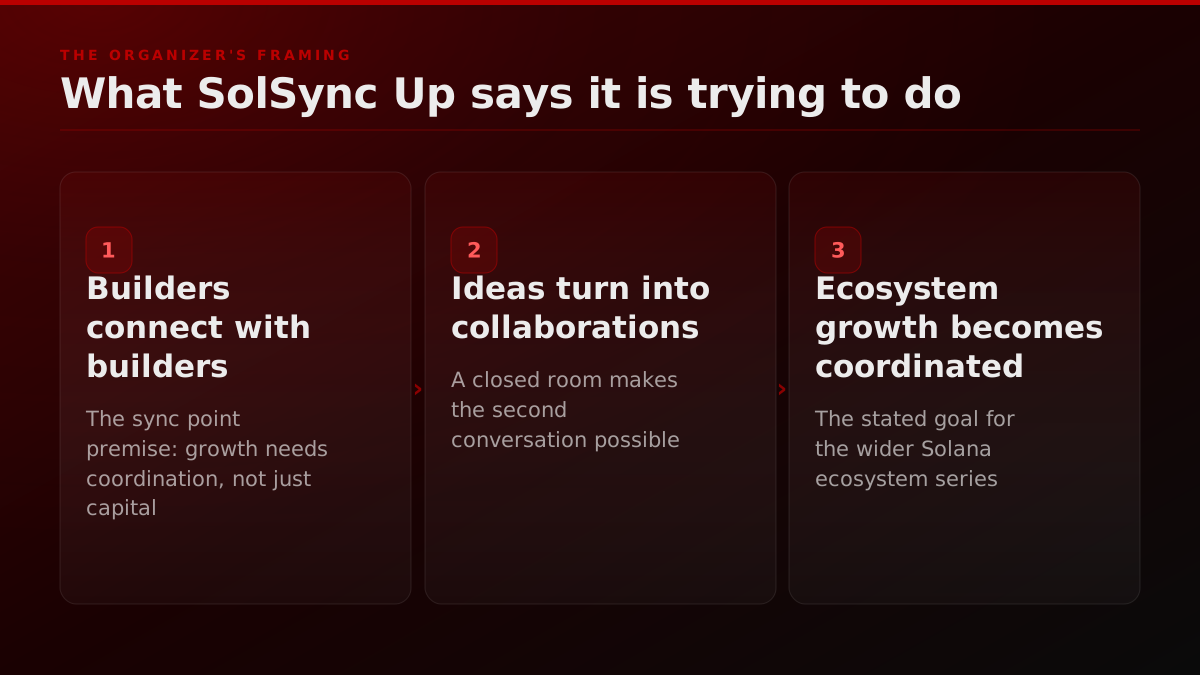
Stepping back from the Infrastructure Summit specifically, the organizer's own framing for the wider SolSync Up series is worth reading in full, because it explains why a DePIN-focused edition exists inside a broader Solana ecosystem convening. Per the event's own listing, the premise is that Solana has become one of the fastest-growing ecosystems in Web3, but growth needs coordination, and SolSync Up is built as a sync point bringing together builders, founders, and ecosystem players to align, exchange ideas, and move faster together. The stated goal is a space where builders connect with builders, ideas turn into collaborations, and ecosystem growth becomes coordinated, rather than fragmented across disconnected pockets of activity.
Solana has become one of the fastest-growing ecosystems in Web3, but growth needs coordination. SolSync Up is built as a sync point.
That framing is the connective tissue between the general SolSync Up convening and the specific Infrastructure Summit. DePIN is one of the areas where Solana ecosystem growth has been genuinely fragmented, dozens of individual projects building hardware networks with no shared operational standard, no shared security validation process, and no shared read on cross-border compliance. A summit that applies the "sync point" premise specifically to DePIN's physical layer is a logical, narrower extension of the series' stated goal, not a departure from it.
What Does This Signal for the Wider DePIN and Solana Ecosystem?
A standards-setting summit is a tell about where a category actually is in its maturity curve, not just a scheduling detail. Categories run public conferences and hype cycles when they are trying to attract capital and attention. They run closed-door standards meetings when they have already attracted enough capital and hardware deployment that the operators actually building things need to agree on how to do it safely and legally, before a bad security incident or a jurisdictional misstep sets the whole category back.
What if Solana's biggest progress right now has almost nothing to do with its price?
Crypto has a strange habit of using price as the ultimate scoreboard. Over the past year, SOL is down 60.1%, yet stablecoin supply is up 46.5% and transaction activity is up 14.9%.
DePIN has arguably been overdue for exactly that shift. The category has real deployed hardware, real token models, and real capital behind it, and it has also had real, publicized failures where a project's on-chain data turned out not to reflect real hardware, or a token model collapsed under its own emissions before enough real infrastructure existed to back it. A closed room built specifically around hardware security validation and sustainable tokenomic design is a direct response to that track record, whether or not the organizer frames it that way explicitly.
The broader Solana ecosystem context supports the timing. The block-compute increase and the KSNET payment integration referenced above are not isolated data points, they sit inside a wider pattern of Solana infrastructure absorbing real-world transaction and data volume through 2026. A DePIN summit trying to standardize the hardware layer that produces a lot of that real-world data is a reasonable, on-time response to a chain that is now capable of actually using it.
None of that guarantees the summit produces durable standards. A single closed-door meeting, however well-attended, does not by itself create an industry standard, that takes follow-through, published outcomes, and adoption by operators who were not in the room. What it does is put the right, narrow group of people in a position to start, which is the harder and more overlooked part of the problem most public conferences never actually attempt.
What a Real Standard Requires, Beyond One Meeting
A closed-door summit is a starting condition, not an outcome. Industry standards that actually stick, in infrastructure categories far outside crypto, share a common pattern: a small group of credible operators agrees on a working draft in private, publishes it, and then spends months or years getting other operators who were never in the original room to adopt it voluntarily because it solves a problem they also have. Nothing about that pattern is DePIN-specific, and nothing about it happens automatically once a summit ends.
The three roundtable topics translate into three distinct kinds of follow-through. A tokenomic design standard needs a published reference model that other projects can adapt rather than a set of private notes. A hardware-security validation standard needs an actual verification process, some combination of cryptographic attestation, third-party audit, or a certification mark, that a network can point to and say a device passed this, not just a shared understanding among people who attended one summit. A cross-border compliance standard needs something closer to a jurisdictional playbook, because unlike the other two, compliance requirements are set by regulators outside the room and change independent of what any operator agrees to.
Whether Sol SyncUp's Infrastructure Summit produces any of that is genuinely unknown from a single press release, and this post is not going to claim otherwise. What is fair to say is that naming the three roundtables this specifically, rather than shipping a vaguer "the future of DePIN" agenda, is at least consistent with an organizer that understands the difference between a summit and a standard. The gap between the two is where most industry-standards efforts actually die, quietly, after the initial meeting gets its press coverage and the follow-up work turns out to be less interesting to fund than the launch was.
The Events-Marketing Read: Why Closed-Door Formats Work, or Fail
A closed-door summit converts on five specific mechanics, not on the format label alone: a vetted-only guest list, a single track with no competing agenda, roundtable leads who are briefed before they moderate, a follow-up system that survives everyone's flight home, and a named owner for every introduction the room produces. Miss any one of those and a closed-door event quietly becomes a smaller, less useful version of the open conference it was supposed to improve on.
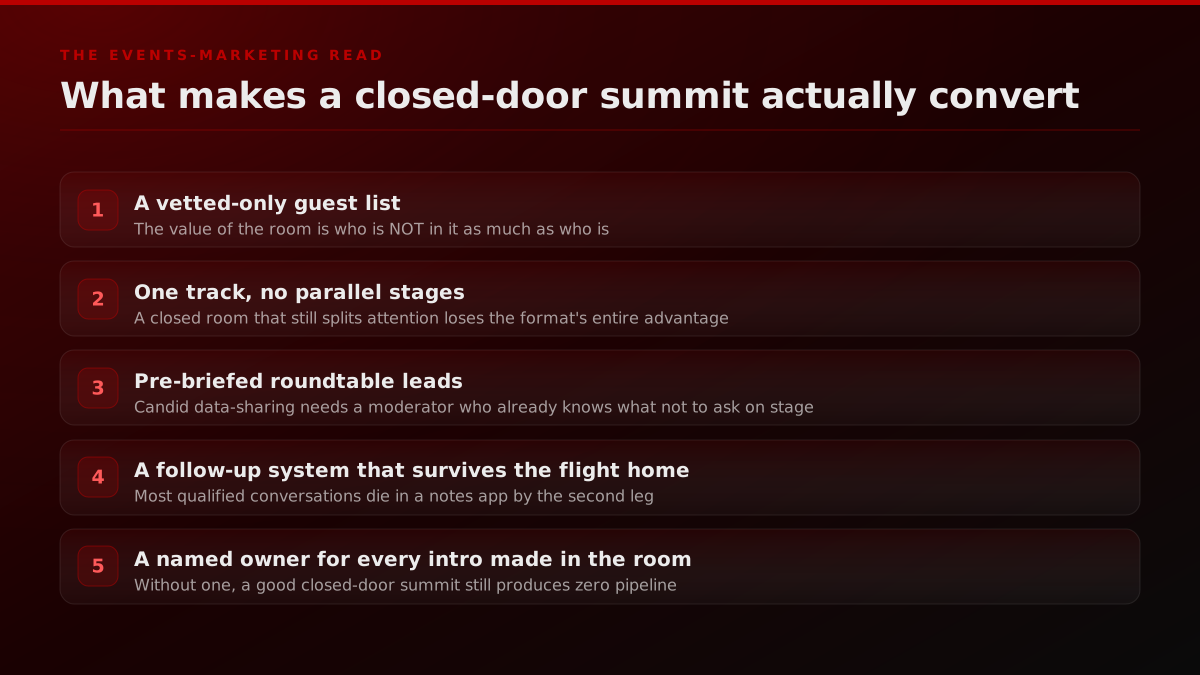
FORKOFF runs event activation for clients across crypto, Web3, and SaaS, and a closed-door summit is one of the highest-leverage formats available when it is run correctly, and one of the easiest to waste when it is not. A vetted-only guest list is the format's entire value proposition, the room is worth attending precisely because of who is not in it, competitors, press, and anyone without a genuine operational stake. Dilute the guest list and the candor the format depends on disappears with it.
Crypto and Web3 events carry a specific version of this problem that a generic B2B conference does not: the audience is unusually easy to fake. Anyone can claim to be a builder, an investor, or an operator at a public crypto conference, and plenty of attendees at any given event are there for the parties and the networking theater rather than the working conversations. A closed-door, application-only format is a direct structural answer to that specific failure mode, it forces a real screening step before anyone gets a seat, which is a large part of why the format has become more common across serious crypto infrastructure gatherings even as public conference attendance in the category has stayed high.
A single track with no parallel stages matters more in a closed-door format than in a public conference, because the entire premise is that everyone in the room hears the same candid disclosure at the same time. Split a 40-person closed-door summit into two simultaneous tracks and it stops being a closed room, it becomes two smaller rooms with half the shared context, which defeats the point of vetting the guest list in the first place.
Pre-briefed roundtable leads are the detail organizers skip most often. Getting an operator to disclose a real operational margin or a real hardware failure rate in front of peers requires a moderator who already knows what not to ask on a stage, and who has built enough trust with the room to ask the harder version of the question privately instead. That briefing work happens before the event, not during it.
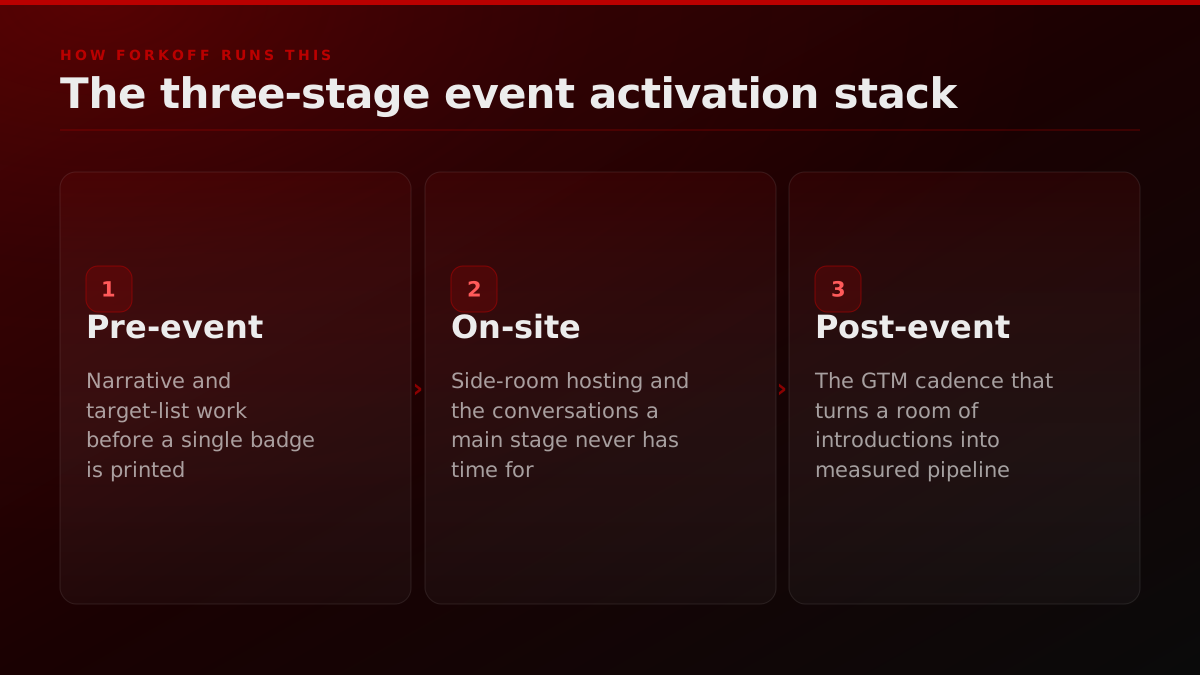
The part most closed-door summits get wrong is what happens after the room empties. A genuinely valuable conversation that happens on day one of a summit is, by default, dead by the time attendees land back home, unless something explicitly captures it. FORKOFF's own event activation stack runs three stages for exactly this reason: pre-event narrative and target-list work before a single application is reviewed, on-site side-room hosting for the conversations a main agenda never has time for, and a post-event GTM cadence with a named owner for every introduction made in the room. A closed-door summit with a perfect guest list and zero follow-up system still produces zero pipeline. The format does the hard part of getting the right people in a room together. What happens next is a separate discipline, and it is the one most operators underinvest in.
Operator noteEvent dates and formats change. Confirm current logistics with Sol SyncUp directly before booking travel.
Where This Fits in FORKOFF's Wider Web3 Coverage
DePIN's hardware layer is one piece of a much larger Web3 GTM problem FORKOFF works across for clients. A summit that standardizes DePIN infrastructure sits alongside adjacent categories we cover in depth: how DeFi protocols market from zero to first TVL, how GameFi projects acquire real players rather than mercenary farmers, how a crypto KOL marketing framework actually gets structured, and how airdrop marketing is run without attracting pure extraction. On the answer-engine side, our GEO for crypto and Web3 guide covers how projects in this exact category get cited by AI answer engines, a distribution channel most DePIN teams are not yet using.
Event activation itself is a full FORKOFF service line, not a one-off tactic. Beyond this summit, our crypto event sponsorship CPQL playbook covers how to evaluate booth and sponsorship spend at public conferences, and our ETH NYC 2026 activation playbook (ETHConf, June 8 to 10, 2026) documents a side-event build end to end. If your team has been burned by a generic Web3 marketing engagement before, our own read on choosing a Web3 marketing agency after getting burned is worth reading before the next one. On the service side, this work spans events marketing, KOL marketing, TGE and token-launch marketing, general Web3 marketing, founder-led distribution, and go-to-market strategy for teams building in this category.
The Verdict
Sol SyncUp's Infrastructure Summit is a narrow, deliberately unglamorous bet: that DePIN's next real constraint is not capital or attention, both of which the category has attracted plenty of, but operational standards for the physical hardware layer that makes any of the on-chain data real. The closed-door format, the three roundtables on tokenomics, security, and compliance, and the stated focus on engineering execution over speculative market theories all point the same direction. Whether the summit produces durable, adopted standards depends on follow-through this post cannot verify in advance. What is verifiable now is that the summit is targeting the right gap, at a moment when the software and payments side of the same infrastructure story already has real 2026 proof points behind it. For readers deciding whether to apply, the organizer's own bar is the honest one to hold yourself to: a genuine stake in building or funding the hardware, not general interest in the category.
The narrower lesson, for anyone running events rather than attending them, is that the format choice here was not incidental. A category that has outgrown open-conference hype and needs to solve operational problems, funding models that survive real capex, security validation that survives an audit, legal structure that survives a regulator, needs a room built for candor, not reach. That is a harder event to sell sponsors on and a harder event to fill a stage for, and it is very often the one that actually moves a category forward. Whether this particular summit is the one that does it for DePIN's hardware layer will be visible in what gets published, and adopted, after the room empties, not in the press release announcing it.