
The best time to post on Reddit in 2026 is weekday mornings, approximately 6 to 9 AM Eastern, for business, SaaS, and professional subreddits, and evenings or weekends for entertainment and gaming communities. But the honest answer is narrower than that: what actually decides a post's reach is early upvote velocity in its first 30 to 60 minutes, which means the right hour for your specific subreddit matters more than any general rule, including this one.
Last updated 2026-07-10.
The best time to post on Reddit, in one scroll
Every guide ranking for this query converges on the same generic answer: mornings are good, evenings work for entertainment, test your subreddit. What almost none of them connect is that timing sits downstream of two things most new accounts get wrong first, karma standing and Reddit's hidden Contributor Quality Score, and none of them break down how post type (text versus link versus image versus video) shifts the window, or what a coordinated, multi-account posting cadence actually needs to avoid a spam flag. This guide covers the algorithm mechanics, a real by-subreddit-type timing table, the dead-zone contrarian strategy, seasonality effects, and a small first-party spot-check of our own Reddit data infrastructure.
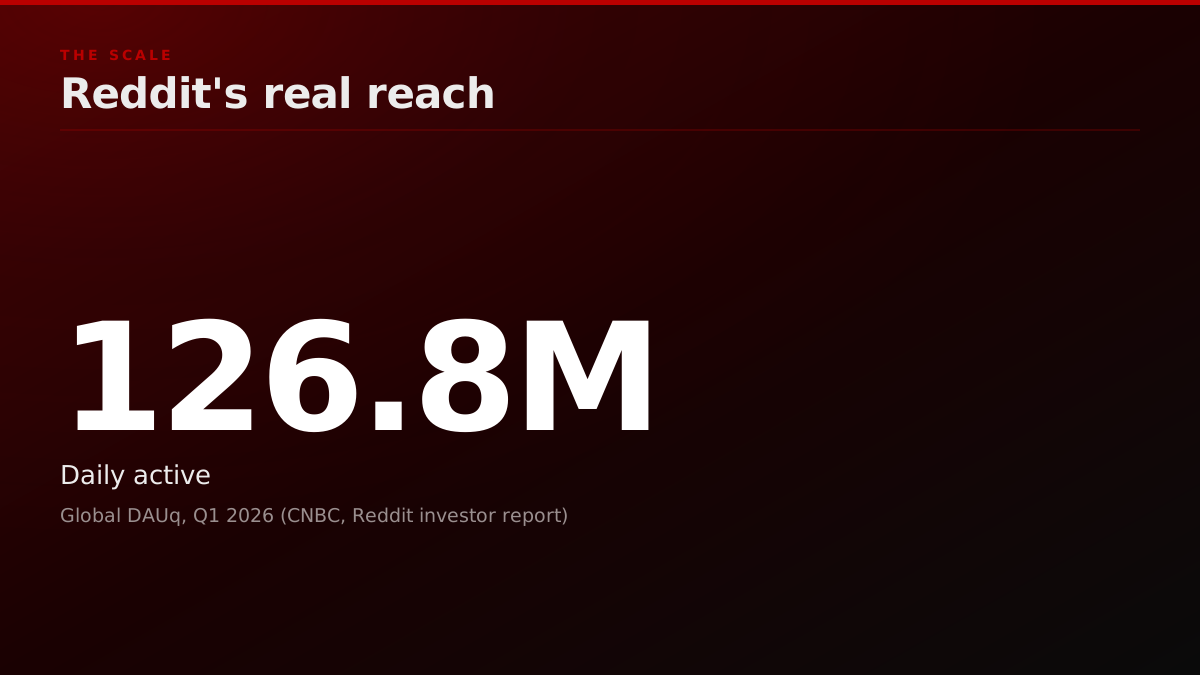
The scale worth keeping in view while reading a "best time" claim: Reddit's global daily active unique user count reached 126.8 million in Q1 2026, up 17 percent year over year, per Reddit's Q1 2026 earnings coverage. Even a modest, well-timed post is competing for attention inside an audience that size, which is exactly why the mechanics behind who is online at any given hour, and who your specific subreddit's active minority actually is, are worth understanding rather than guessing at.
126.8 million daily actives is the denominator under every timing claim
Reddit's Q1 2026 earnings put global daily active uniques at 126.8 million, up 17 percent year over year, per CNBC's earnings coverage. Set that against Jakob Nielsen's participation-inequality research, where roughly 90 percent of a community lurks, 9 percent votes and comments occasionally, and 1 percent creates most original content, and the timing question sharpens: the audience a post is actually competing for in its first hour is not the subscriber count, it is the slice of the active minority that happens to be online in that window. A well-chosen hour is simply the hour when that slice is largest for your specific community.
Source: Reddit Q1 2026 earnings via CNBC; Nielsen Norman Group participation-inequality research
Why does the "best time to post on Reddit" answer keep changing?
The honest reason the answer keeps shifting is that Reddit itself changed the underlying mechanics in 2026, not that the old advice was wrong when it was written. Reddit confirmed it was deprecating the chronological, unfiltered r/all feed in favor of algorithmic Home feed personalization, a shift that began as a mobile-app experiment announced in January 2026 and was wrapping up into a permanent change by April 2026, according to reporting on Reddit's r/all deprecation. That single change partially decoupled a post's reach from the classic subreddit-level hot-sort time decay every older guide still treats as the whole story.
Personalized Home feed recommendations now weigh a viewer's own engagement history, community membership, and time spent per topic alongside a post's raw vote velocity, which means two accounts can see the identical post ranked very differently at the identical hour. Timing still moves the needle inside any single subreddit's own hot sort, the mechanic covered in detail below, but it no longer fully controls whether a post reaches the platform-wide Home feed the way it did before the personalization shift. Treat the classic timing advice in this guide as the reliable, controllable half of the equation, and the personalized Home feed as a second, less controllable multiplier on top of it.
The r/all deprecation quietly split Reddit timing into two games
Reddit began deprecating the chronological, unfiltered r/all feed in January 2026 and had wrapped the change into permanence by April 2026, per TechBuzz's reporting on the shift. Timing still governs a post's climb inside its own subreddit's hot sort, the mechanic this guide covers in detail, but platform-wide Home feed reach now runs through personalization signals instead: a viewer's engagement history, community memberships, and time spent per topic. The same post at the same hour can rank very differently for two different accounts. The practical read is that the classic in-subreddit window is the controllable half of reach, and the personalized Home feed is a multiplier you influence with engagement quality, not clock choice.
Source: TechBuzz reporting on Reddit's r/all deprecation, 2026
Underneath that, Reddit is also running a second, mostly invisible layer: a Contributor Quality Score (CQS) that sorts every account into one of five behavioral trust tiers, separate from public karma, based on signals like account security, network and location patterns, and prior activity. A well-timed post from a low-CQS account can still get filtered before the timing even matters. This is the same mechanism FORKOFF's Reddit karma guide covers in depth, and it is the single biggest reason a generic "post at 8 AM" rule stops working for some accounts and not others.
The practical result is that 2026's timing question has two layers stacked on top of each other: the classic hot-sort mechanics (still real, still worth knowing) and a newer personalization and trust layer that increasingly decides whether the classic mechanics even get a chance to work. This guide covers both, in order.
Best times to post on Reddit.
How does Reddit's ranking algorithm weigh early upvotes and post timing?
Reddit's hot-ranking algorithm weighs a post's early upvotes far more heavily than its later ones, using logarithmic vote weighting combined with steep time decay, so the first 30 to 60 minutes after posting decide most of a post's eventual reach. A post that earns 10 upvotes in its first 10 minutes will typically outrank one that earns 50 upvotes spread across five hours, because the algorithm treats fast, dense early engagement as the dominant relevance signal.
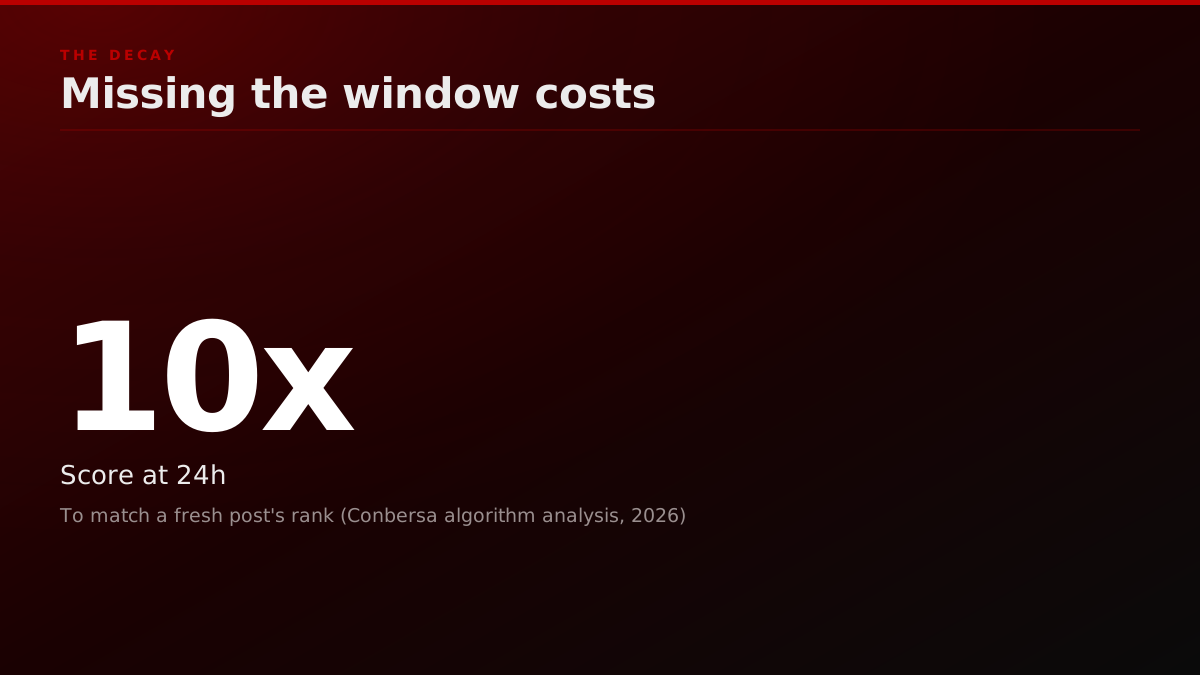
The mechanics were first documented publicly by Reddit engineer Amir Salihefendic in a widely cited technical breakdown of how Reddit's ranking algorithms work, later formalized in academic terms by a Cornell Networks course analysis of Reddit's popularity-versus-freshness balance, and cross-referenced against Evan Miller's classic analysis of vote-based ranking algorithms, which independently confirms why raw vote totals alone make a poor ranking signal across Reddit, Yelp, and Digg alike. A 2026 breakdown of the same mechanics puts a specific number on it: according to Conbersa's explanation of how the Reddit algorithm works, "the first 10 upvotes on a post carry as much ranking weight as the next 100, and those 100 carry as much weight as the next 1,000," and "a post from 24 hours ago needs roughly 10 times the score of a fresh post to maintain the same ranking position."
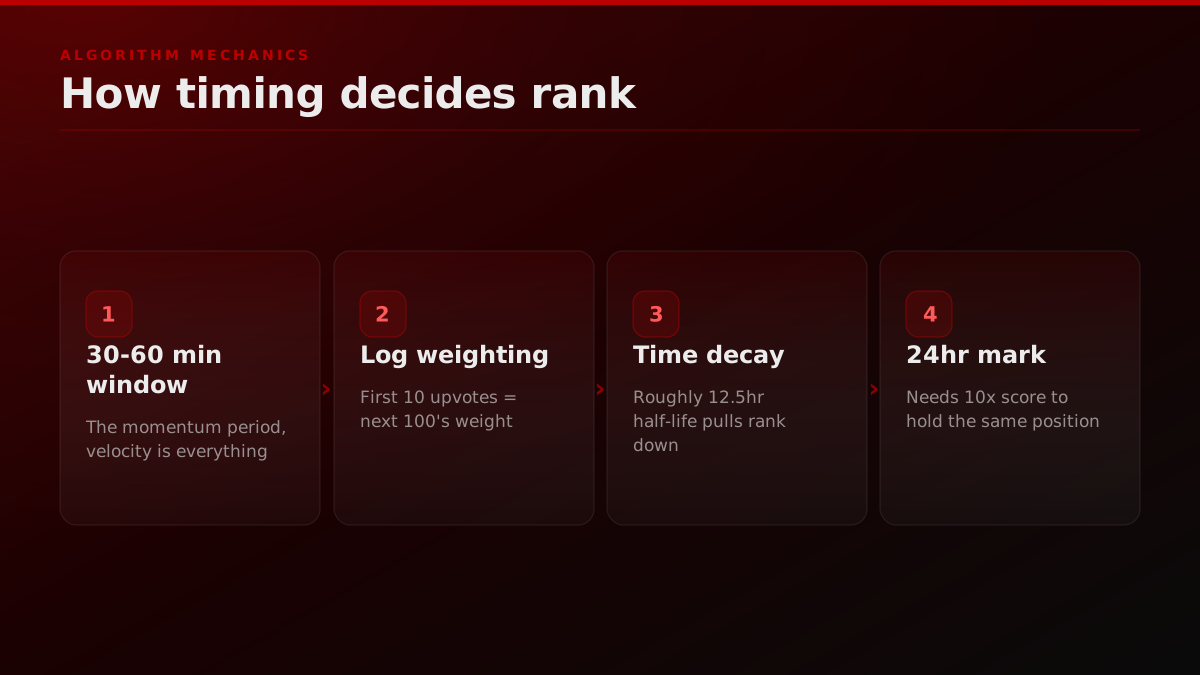
That 10x decay multiplier is the number that should actually change your posting behavior. It means a post that misses its early window rarely recovers later in the day, no matter how good it is, because it is racing against every subsequent hour's fresh competition with a mathematical handicap. This is also the mechanic behind the 60-minute response window rule in FORKOFF's best Reddit marketing tools guide: early, helpful engagement compounds and rides to the top, while the identical comment posted six hours later gets a fraction of the visibility for the same effort.
What does a fast-early-upvotes advantage actually look like in practice?
A worked example makes the logarithmic-weighting mechanic concrete instead of abstract. Take two identical text posts, Post A earns 10 upvotes in its first 10 minutes, Post B earns 50 upvotes spread evenly across 5 hours. On raw vote count, Post B looks like the clear winner, 5x the raw upvote count. Under Reddit's hot-ranking mechanic, Post A is very likely to outrank it, because the algorithm is not scoring total votes, it is scoring vote density against elapsed time, and Post A's velocity in its first 10 minutes reads as a much stronger relevance signal than Post B's slow, spread-out trickle.
Extend the same math to the 24-hour decay figure cited above. If Post A reaches 40 net upvotes within its first hour and Post B reaches the same 40 net upvotes over the following 23 hours, Post A is carrying roughly 10 times the effective ranking weight of Post B by the time a full day has passed, per the decay multiplier Conbersa's algorithm analysis describes. This is why a post that gets a slow start rarely "catches up" later in the day even once it accumulates a respectable vote total, it is fighting a exponentially steepening uphill grade against every hour of decay it has already absorbed.
The practical implication is not "post more" or "beg for upvotes faster," both of which risk reading as vote manipulation to Reddit's detection systems. It is "post when genuine early engagement is actually available," which loops directly back to the hour-of-day and day-of-week windows covered throughout this guide. Timing is not a minor optimization on top of content quality, it is the mechanism that determines whether content quality gets a fair chance to compound into visible rank at all.
Does posting time actually matter on Reddit?
Yes, materially, but it is not the only variable, and treating it as the only one is where a lot of Reddit strategy goes wrong. Timing determines how many people are online to see your post inside its critical first-hour window, which directly feeds the early-upvote-velocity mechanic covered above. Content quality determines whether those people upvote it once they see it. Both matter, and neither substitutes for the other.
This tension shows up directly in live community debate. A r/SocialMediaMarketing thread asking whether scheduling or spontaneous posting actually gets better engagement splits between people who swear by pre-scheduling for a "best time" and people who argue that posting the moment you have something genuinely worth sharing beats any calendar slot. Both camps are partially right: scheduling wins the visibility race, spontaneity wins the quality race, and the strongest posts do both, real content, posted at a time people are actually online to see it.
A separate r/socialmedia thread asking what posting times people have personally found work best across platforms stays open and unresolved in its own comments, which is itself a useful signal: there is no single universal answer, because the honest answer depends on which specific community you are posting into, not on social media timing in general.
What time are Redditors most active?
Reddit's overall traffic peaks on weekday mornings, roughly 6 to 9 AM Eastern, when US users are starting their day and European users are hitting their post-lunch lull, then holds through midday, dips in the evening, and troughs overnight between 3 and 5 AM Eastern. This pattern comes from Google's own AI Overview synthesis for this exact query, cross-checked against Conbersa's algorithm timing guidance, which independently names the same weekday-morning Eastern window as critical.
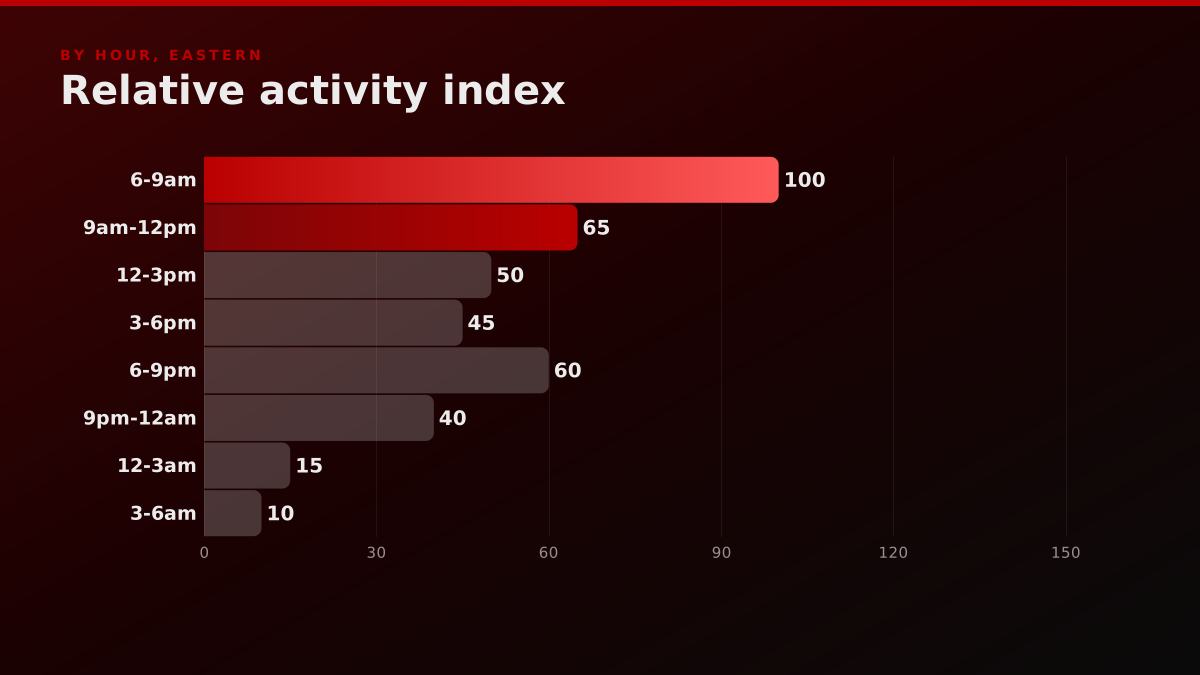
Treat the chart above as a relative pattern synthesized from cited sources, not a raw measured telemetry feed, since Reddit does not publish hour-by-hour engagement data publicly. What it is useful for is a starting hypothesis: mornings first, a secondary evening bump second, overnight last, then verify against your specific subreddit using the New-queue method covered later in this guide.
What's the best day of the week to post on Reddit?
Tuesday through Thursday is the strongest window for professional and informational subreddits, since weekday engagement is highest mid-week and Monday still carries inbox-catch-up drag that pulls attention away from browsing. Entertainment, gaming, and lifestyle subreddits shift the other direction, toward Friday through Sunday, when audiences have leisure time rather than work-day scroll breaks.
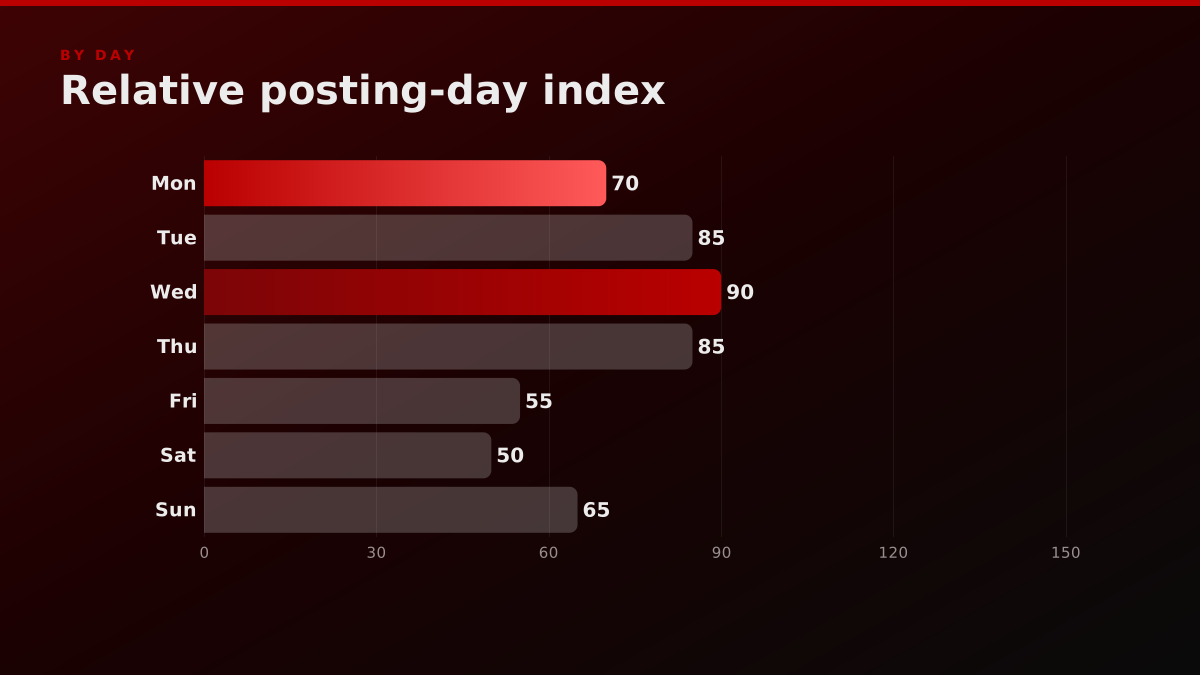
An older but still-referenced r/TheoryOfReddit thread from 2020 claims a more specific pattern: Monday 6 to 8 AM, Saturday 7 to 9 AM, and Sunday 8 AM to noon, all in US Central time, attributed to an older reddiquette.com analysis. It is worth citing precisely because it contradicts the current Eastern-time-anchored guidance on two of three days, a useful reminder that any single-source timing claim, including the ones in this guide, should be treated as a hypothesis to verify against your specific subreddit, not a fixed law.
Found online: This best time to post on Reddit: Posts submitted on Mondays between 6 and 8 AM, on Saturdays between 7 and 9 AM, and on Sundays between 8 AM and 12 PM (US Central Time) perform best.
The most useful comment in that thread is a Redditor who tested the claim against their own account history: they pulled their top 10 submissions of all time and found only one landed inside the windows the article named.
Looking at my submission history sorted by 'new', I found that the time the submission was made doesn't really matter. Maybe it's subreddit dependent.
Does time zone matter when posting on Reddit for a US versus European audience?
Yes, and it matters more than most timing guides acknowledge. A post timed for 7 AM Eastern lands at noon in London and early afternoon across most of continental Europe, which can work reasonably well for a globally mixed subreddit but badly misses a US-only community's actual morning window, and vice versa for a European-audience subreddit timed off US hours.
The fix is not a universal compromise hour, it is checking where your specific subreddit's active base actually clusters. A subreddit with a heavily European user base (many crypto, football, and regional-language communities skew this way) will have a completely different peak window than a US-centric SaaS or startup subreddit, even though both are technically "English-language Reddit." Checking a subreddit's own about page, pinned posts, or asking directly in a meta thread is worth more than any generic time-zone rule, including this one.
The top-voted comment on the 2020 r/TheoryOfReddit timing thread describes a working two-wave version of exactly this pattern, a US-midnight post that rides UK morning engagement first and catches the US wave seven hours later:
Anecdotal, but I've found that posts around midnight, USA time zones, get more traction because the UK upvotes and responds. This gets it past new and rising, then when USA people wake up 7 hours later it's in their feed and gains more upvotes and comments.
A genuinely global subreddit, the kind that spans US, European, and Asia-Pacific audiences simultaneously (large crypto and finance communities are a common example), does not really have a single peak window at all, it has two or three overlapping ones. A post timed for 7 AM Eastern catches the US morning wave, a second wave lands as continental Europe finishes its workday around 3 to 5 PM Eastern, and a smaller third wave shows up as Asia-Pacific users wake up roughly 8 to 10 PM Eastern. For a subreddit with that kind of audience spread, a single post can realistically ride two of those three waves if timed at the boundary between them, which is a materially different strategy than the single-window advice that works for a US-only professional subreddit.
What's the best time to post on Reddit for business, SaaS, and marketing subreddits?
Weekday mornings, roughly 6 to 9 AM Eastern, Tuesday through Thursday, is the strongest window for business, SaaS, and marketing subreddits, since these communities skew toward US professional audiences checking Reddit before or during their workday rather than as evening leisure browsing. Activity in these subreddits drops sharply on Friday afternoons and stays low through the weekend.
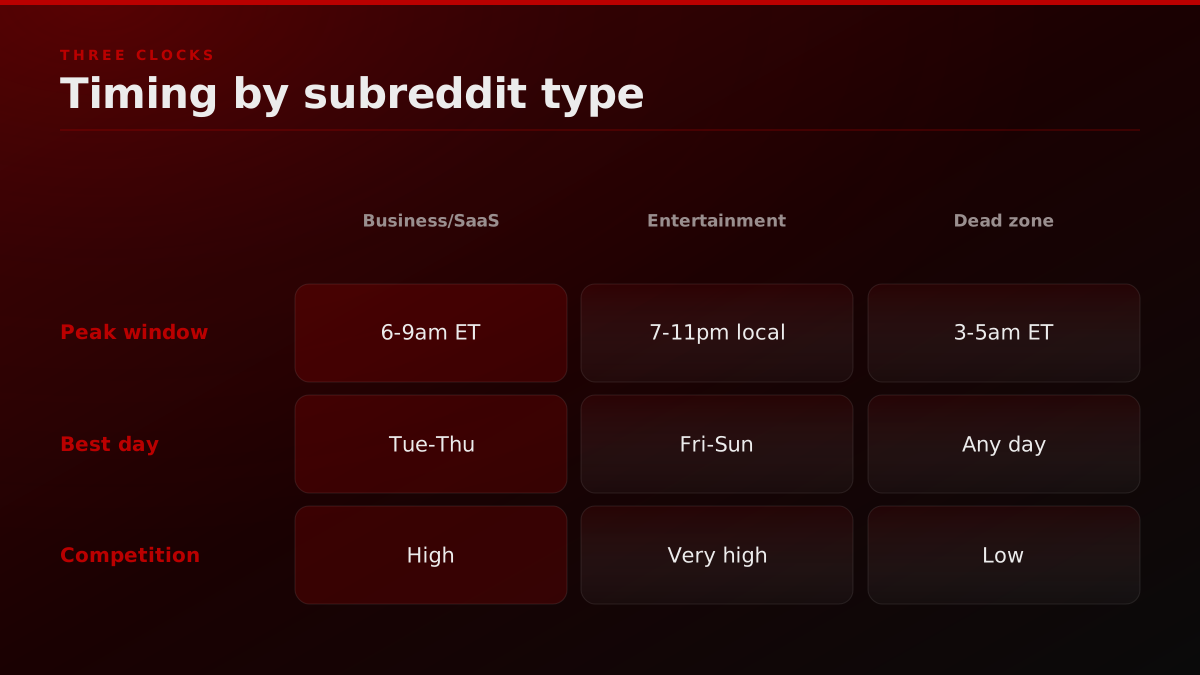
| Subreddit type | Peak window | Best day | Competition |
|---|---|---|---|
| Business / SaaS | 6-9 AM ET | Tue-Thu | High |
| Entertainment / gaming | 7-11 PM local | Fri-Sun | Very high |
| Overnight dead zone | 3-5 AM ET | Any day | Low |
Source: FORKOFF synthesis of Conbersa's algorithm and timing analysis (2026), Google AI Overview synthesis for this query (accessed 2026-07-10), and the platform-wide activity pattern described above. Individual subreddits deviate; verify with the New-queue method before committing.
A live r/DigitalMarketing thread captures the practitioner-level version of this exact confusion: a social media intern noticed afternoon impressions climbing while their manager insisted timing "varies by subreddit," and both were right, the two claims describe different subreddit types rather than contradicting each other.
What are the best posting times on Reddit?
Boring Local SEO
@boringlocalseo
REPEAT AFTER ME. Local businesses ARE sleeping on Reddit traffic. Your plumber competitor is getting 50+ calls/month from one comment that says: "Used Mike's Plumbing last month, showed up same day, fair price, didn't try to upsell me random stuff"
What's the best time to post on Reddit for entertainment and gaming subreddits?
Evenings and weekends, typically 7 to 11 PM in the audience's local time, with a strong lift Friday through Sunday, is the strongest window for entertainment and gaming subreddits. These communities are leisure-driven rather than work-driven, so activity clusters around when people are relaxing, off-shift, or winding down, the near-opposite pattern from business subreddits.
The gap between these two audience types is exactly why a single, platform-wide "best time to post on Reddit" answer is structurally incomplete. A gaming clip posted at 7 AM Eastern into a mostly-evening-active community is fighting the algorithm's early-velocity mechanic with almost nobody online to generate it, regardless of how good the clip is. Match the window to the community's actual rhythm, not to a generic morning rule borrowed from a business-subreddit playbook.
Is there a low-competition dead zone window for posting on Reddit?
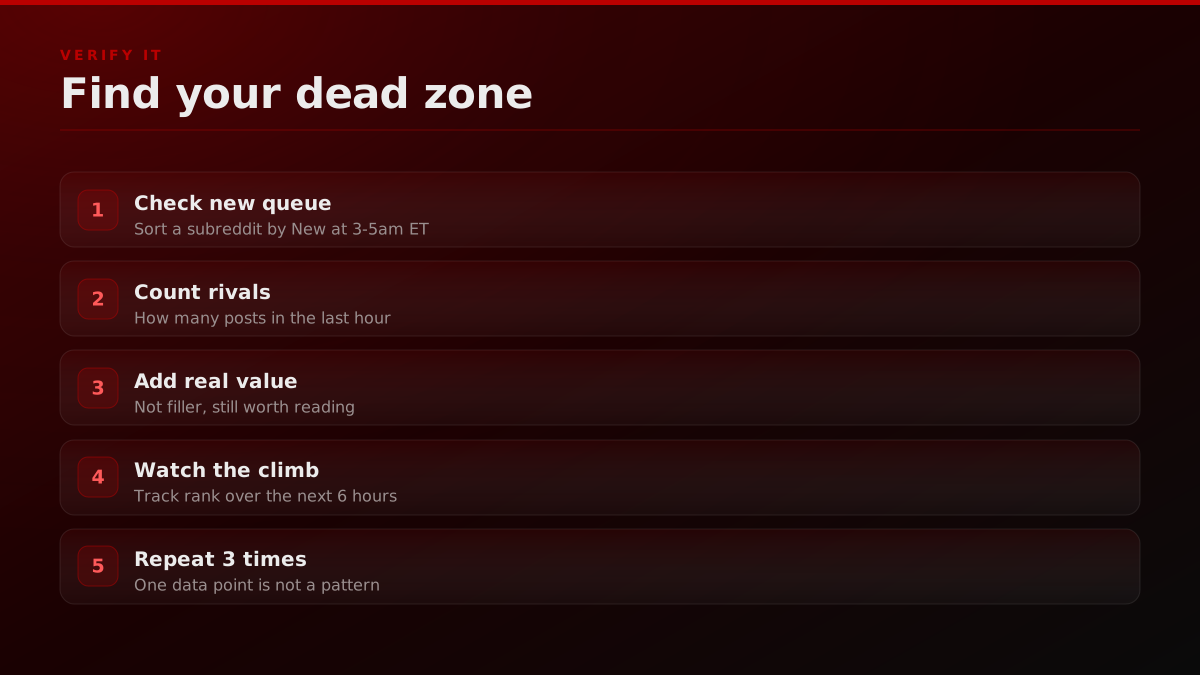
Yes. The overnight window, roughly 3 to 5 AM Eastern, has the lowest posting volume and the least competition for a subreddit's New queue, a genuine contrarian strategy: a lower ceiling on total reach, but a real, non-trivial chance a quality post gets seen by moderators and early voters before the morning flood arrives and buries it on page two of New within minutes.
This is not a theoretical strategy. A r/SaaS founder who built a free per-subreddit timing tool shipped it with a dedicated "quiet times" feature specifically because low-competition windows are a real, independently discovered lever, not a theory this guide invented. Google's AI Overview synthesis for this query names the same contrarian dead-zone approach directly, describing it as a deliberate strategy some posters use to trade reach ceiling for visibility floor.
I made a FREE tool to find the best time to post on any subreddit
The dead-zone strategy works best for two specific cases: a post you genuinely believe is strong enough to survive on merit without needing volume of early competitors to beat, or a test post where you are trying to isolate timing as a variable without content-quality noise from a crowded queue. It works poorly as a default strategy for anything time-sensitive or dependent on a large audience, since the same low competition that helps your post also means fewer total eyes are online to find it at all.
How does post type change the optimal window?
Post type changes the optimal window meaningfully, and it is the single most-skipped variable in generic Reddit timing advice. Text posts tolerate a slower morning build and hold attention over hours of discussion. Link posts live or die in their first hour, since the algorithm's velocity mechanic punishes any early lull especially hard on link-type content, and image or video posts perform best in the evening scroll window when people are browsing passively on mobile rather than reading actively at a desk.
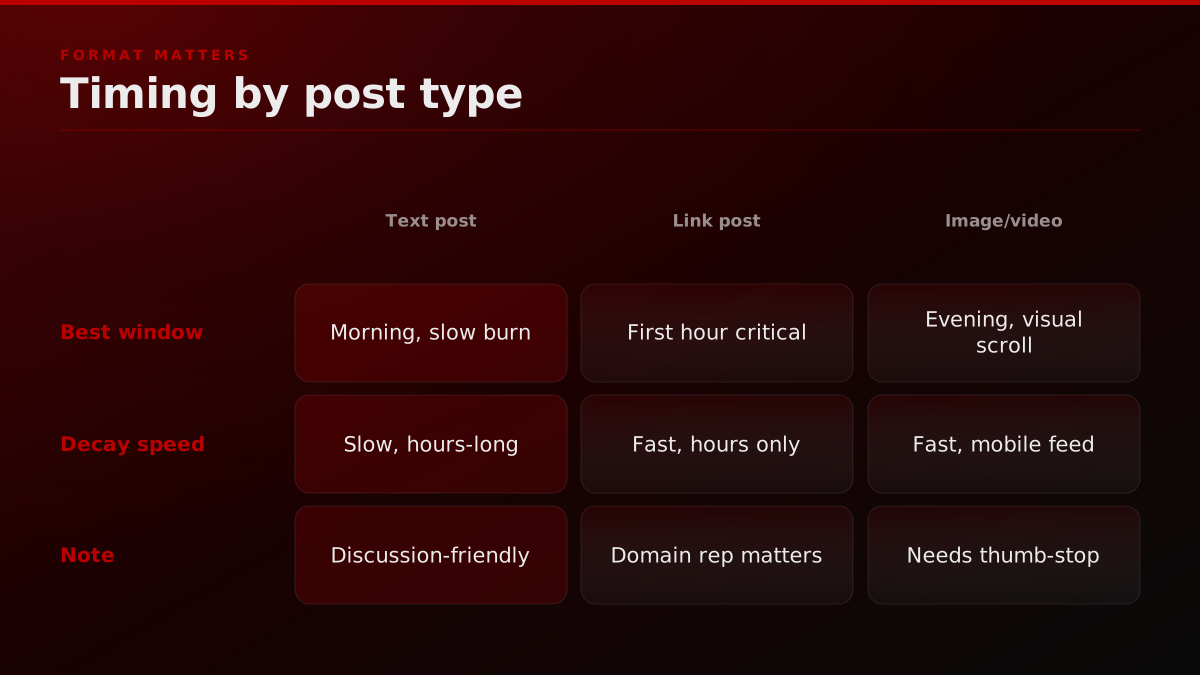
| Post type | Best window | Decay speed | Note |
|---|---|---|---|
| Text post | Morning, slower burn | Slow, hours-long tail | Discussion-friendly |
| Link post | First hour is critical | Fast, hours only | Domain reputation matters |
| Image / video | Evening, visual scroll | Fast, mobile feed | Needs a thumb-stop first frame |
Source: FORKOFF synthesis based on Reddit's documented hot-ranking mechanics (Conbersa, Cornell, Salihefendic, cited above) applied per post-type behavior pattern, 2026.
The practical takeaway is that "best time to post on Reddit" is really three different questions stacked into one query. A text-format community update posted at 7 AM Eastern and a video clip posted at the same hour are not competing on a level field, the text post has a forgiving multi-hour build window, the video is racing a much tighter, evening-shifted clock.
How do you find the best posting time for one specific subreddit?
You find the best posting time for a specific subreddit by sorting it by New for a week and watching how fast fresh posts climb at different hours, then testing two or three candidate windows with genuinely useful posts and tracking which performs best in its first 60 minutes, since that early window predicts most of a post's eventual reach. No general rule, including every window cited in this guide, substitutes for that direct observation on the exact community you are posting into.
How to find your specific subreddit's best posting window
STEPS- 01
Week 1: watch the New queue
Sort your target subreddit by New and check it at four or five different times across a week. Note how fast fresh posts climb versus how many sit untouched, without posting anything yourself yet.
- 02
Week 1: log the pattern
Write down which hours had the thinnest New queue and which had the thickest. A thin queue with real engagement on the posts that are there is your candidate window, not just an empty queue.
- 03
Week 2: test two windows
Post genuinely useful content, never a link on the first attempt, at two different candidate hours a few days apart. Track how each performs in its first 60 minutes, since that window predicts the rest of the post's life.
- 04
Week 2: commit and repeat
Pick the stronger window, repeat it three or four more times before calling it your subreddit's real best time. One good post is a data point, not a pattern.
A r/NewToReddit thread asking whether there is a "best time" for high traffic captures the exact anxiety behind this question from a newer user's perspective, wanting a fixed answer rather than a method. The method above is more work than memorizing a single hour, but it is also the only approach that actually accounts for a specific subreddit's real audience instead of a platform-wide average.
Is there a “best time” to be posting for high traffic?
Operator noteNew-queue observation runs a full week per subreddit before any client post, then two test windows in week two., FORKOFF Reddit marketing playbook, 2026
Why does the same generic "best time to post" question keep arriving from YouTube and other platforms?
A large share of people asking about Reddit posting time are not native Redditors at all, they are creators importing a question they already ask on a completely different platform, almost word for word. A r/NewTubers thread simply titled "What is the best time to post" is a UK-based creator asking about YouTube Shorts, and a near-identical second r/NewTubers thread with the exact same title is an Italy-based creator asking the same question about a US-facing audience. Neither mentions Reddit's posting mechanics at all, they are bringing a YouTube-shaped question to a video-creator community and hoping for a YouTube-shaped answer.
This matters because the generic version of the question, asked with no platform-specific mechanism attached, cannot have a useful answer, on Reddit or anywhere else. A r/NewTubers thread asking bluntly whether posting time "actually matters" captures the resulting skepticism directly, the poster has seen conflicting heat maps and advice and is starting to suspect the whole premise is folk wisdom rather than signal. A related thread asking for a US-specific answer to timing long-form content shows the fix people are actually reaching for without naming it: they want a geography-anchored, format-specific answer, not a generic "evenings are best" rule, which is exactly the by-subreddit-type and by-post-type breakdown this guide leads with instead of a single blanket hour.
The lesson generalizes past Reddit specifically. "What is the best time to post" is not a real, answerable question on its own, on any platform, until it is paired with a specific community, a specific format, and a specific audience geography. Once those three variables are attached, per this guide's subreddit-type table and post-type table above, the question stops being folk wisdom and becomes a testable hypothesis.
How to find out the best time to post on Reddit
Postpone
A walkthrough of finding a subreddit's actual best posting time using per-community analysis instead of a generic rule.
Best time to post on Reddit
Shashwat Amin
A short, direct answer video on Reddit posting time, one of the most-searched framings of this exact question.
Should you use a scheduling tool or calculator to time Reddit posts?
A scheduling tool or timing calculator is a reasonable starting hypothesis for a subreddit you have not researched yet, but its output should be treated as a first guess, not a verified answer, since most of these tools estimate from aggregate or cross-subreddit patterns rather than your specific community's real behavior. Real per-subreddit New-queue observation over one to two weeks will consistently outperform a generic tool's estimate once you have gathered it.
Where a scheduling tool earns its keep is consistency, not precision: automating the mechanical act of publishing at a chosen hour removes the human failure mode of forgetting or posting impulsively at a bad time, even if the hour itself still needs subreddit-specific verification. Two YouTube walkthroughs on Reddit post scheduling cover this tooling-plus-timing tradeoff directly, pairing a free scheduling workflow with a best-time recommendation, the exact combined search pattern that shows up repeatedly in how people actually look for this answer.
How to Schedule Reddit Posts for Maximum Engagement (2025 Pro Tips)
FixMyFeed
A 2025 pro-tips walkthrough on scheduling Reddit posts for maximum engagement, including timing-and-tooling tradeoffs.
How to schedule Reddit posts for FREE (and when is the BEST time)
Social Rise - Reddit Post Scheduler
Free Reddit post scheduling paired with a best-time recommendation, the exact tooling-plus-timing search pattern behind this query.
What's the best time to post on Reddit to maximize upvotes and karma?
The same algorithm-favorable windows that maximize any post's reach also maximize upvotes and karma, since more simultaneous eyes in a post's first 30 to 60 minutes means more early upvotes, and early upvotes are exactly what Reddit's logarithmic weighting rewards most heavily. There is no separate "karma-optimized" timing strategy distinct from the reach-optimized one covered throughout this guide.
What does change the karma-maximizing calculus is account standing, a variable most timing guides skip entirely. A post from a zero-karma, days-old account posted at the perfect 7 AM Eastern window can still get auto-removed by a subreddit's spam filter before a single person sees it, timing does not override a karma and account-age gate. FORKOFF's guide to building Reddit karma without getting banned covers the account-readiness side of this equation in full: the safe 14-day warmup sequence, per-subreddit karma thresholds, and how to tell if an account is shadowbanned before it even reaches the timing question.
What is the 90/9/1 rule, and how does it relate to Reddit posting strategy?
The 90/9/1 rule describes a broader online-community participation pattern first documented by Jakob Nielsen's research on participation inequality, not a Reddit-specific policy: roughly 90 percent of a community's users lurk without ever posting or voting, 9 percent participate occasionally through votes and comments, and 1 percent create most of the original content. It matters for timing strategy because your post is competing for attention specifically from that active 9 to 10 percent tier, not from the full subscriber count a subreddit sidebar displays.
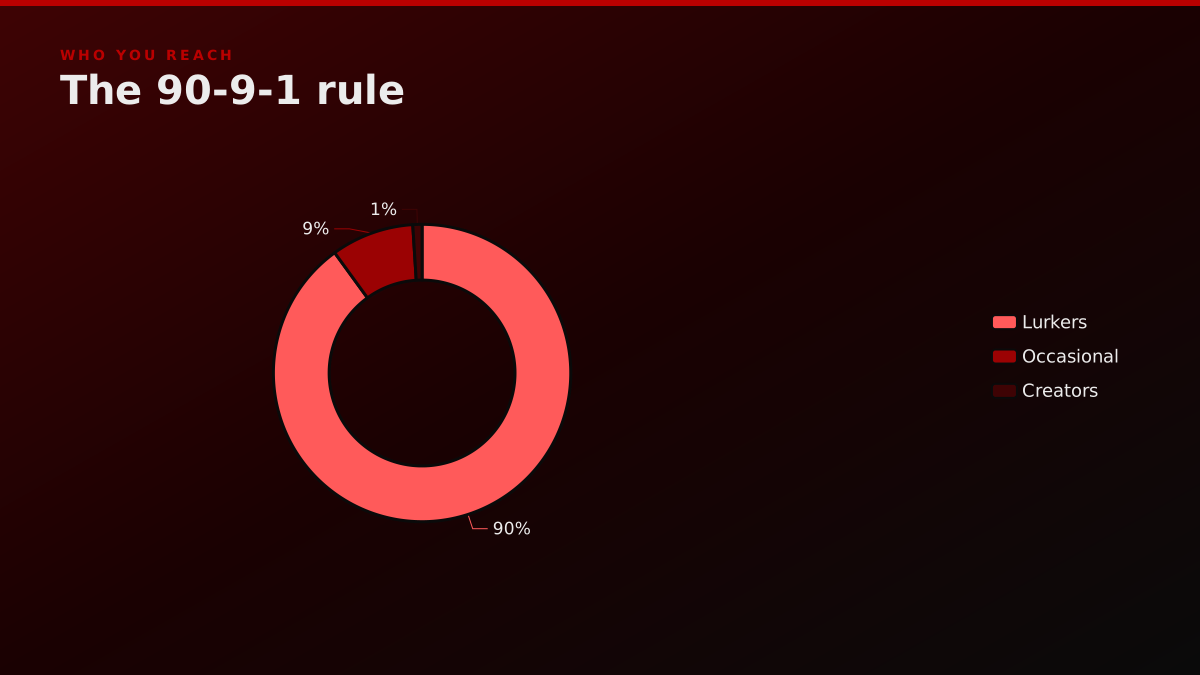
This reframes the timing question usefully. A subreddit with 500,000 subscribers is not offering 500,000 potential early upvoters at any given hour, it is offering whatever fraction of its active 9 to 10 percent happens to be online right then, which is why a smaller, more engaged niche subreddit can sometimes out-perform a larger, mostly-dormant one for the exact same post, timed the exact same way.
Does account age or karma standing change your timing strategy?
Yes, and this is the single biggest content gap in most timing guides: perfect timing cannot rescue a post from an account that has not earned enough standing to clear a subreddit's spam filter or karma gate in the first place. A brand-new, zero-karma account posting into its ideal 7 AM Eastern window still gets auto-removed on many active subreddits, because Reddit's spam detection weighs account age and karma alongside timing, not instead of it.
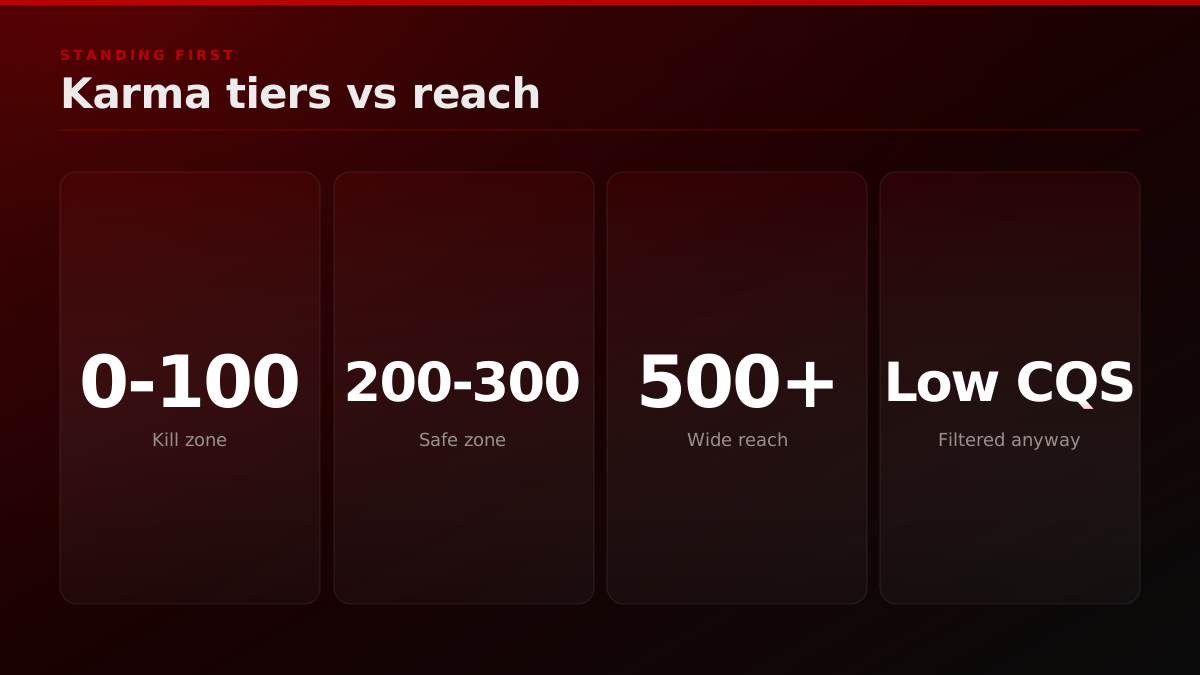
Per Conbersa's karma-requirements breakdown, accounts with 0 to 100 karma and under two weeks of age face automatic removal on a meaningful share of active subreddits regardless of posting time, what that guide calls a "kill zone." A "safe posting zone" generally begins around 200 to 300 karma with three or more weeks of account age. Timing strategy is genuinely irrelevant until an account clears that floor, which is why this guide treats account readiness as a prerequisite, not an optional side note.
Karma standing floors before timing starts to matter
| Standing tier | Karma range | Account age | What timing can do |
|---|---|---|---|
| Kill zone | 0 to 100 | Under two weeks | Nothing; auto-removal on many active subs |
| Safe posting zone | Roughly 200 to 300 | Three or more weeks | Starts to matter; most filters clear |
| Wide reach | 500 plus | Established | Full effect; this guide's windows apply |
Per Conbersa's karma-requirements breakdown as cited in this section. Reddit's Contributor Quality Score sits underneath every tier and can filter a post regardless of karma.
How does Reddit's Contributor Quality Score interact with timing?
Reddit's Contributor Quality Score (CQS) sits underneath both timing and karma as a third, largely invisible filter, and it can suppress a well-timed, well-karma'd post regardless of either variable looking healthy on the surface. CQS sorts accounts into five behavioral trust tiers based on signals including account security, network and location patterns, and prior activity, separate from the public karma number entirely.
The practical implication for timing strategy is uncomfortable but important: an account in a low CQS tier can post at the algorithmically perfect hour, with strong karma, and still see the post filtered or held for review before the early-upvote window even has a chance to work. According to a detailed CQS breakdown, it functions "like a digital bouncer," determining whether content is instantly visible, flagged for moderator review, or filtered outright, independent of the karma number a profile displays. If a well-timed post is consistently underperforming despite good karma, checking r/WhatIsMyCQS for the account's actual tier is a more useful diagnostic step than adjusting the posting hour again.
A five-tier trust score decides whether timing ever gets a chance
Reddit's Contributor Quality Score sorts every account into one of five behavioral trust tiers using signals separate from public karma: account security, network and location patterns, and prior activity. Per the SEOTwix breakdown, it works like a digital bouncer, deciding whether content is instantly visible, flagged for moderator review, or filtered outright. A post can be perfectly timed, from an account with healthy karma, and still never enter the New queue conversation. If a well-timed post keeps underperforming, checking the account's tier at r/WhatIsMyCQS is a more useful diagnostic than adjusting the posting hour again.
Source: SEOTwix CQS analysis, 2026
This is exactly the frustration surfacing in a live, 112-comment r/karma thread asking why obvious timing and karma patterns get ignored. The debate underneath that thread is really two different claims tangled together: whether karma-and-timing patterns are real (they are, per the algorithm mechanics cited throughout this guide) and whether following them guarantees an outcome (it does not, because CQS and subreddit-specific automod rules sit on top of both). Both things are true simultaneously, which is why the pattern looks "obvious" to people who have watched it play out and looks "ignored" to people expecting a guaranteed result from following it.
Why do obvious Reddit karma patterns get ignored
How should agencies and teams space out coordinated Reddit posting across multiple accounts?
Agencies and teams running more than one Reddit account should stagger posts by at least two hours between accounts, vary content meaningfully rather than cross-posting near-identical copy, isolate each account's device and IP fingerprint, and track removal rates per account, since Reddit's spam and vote-manipulation detection specifically watches for coordinated timing and content patterns across multiple accounts, not just within a single one.
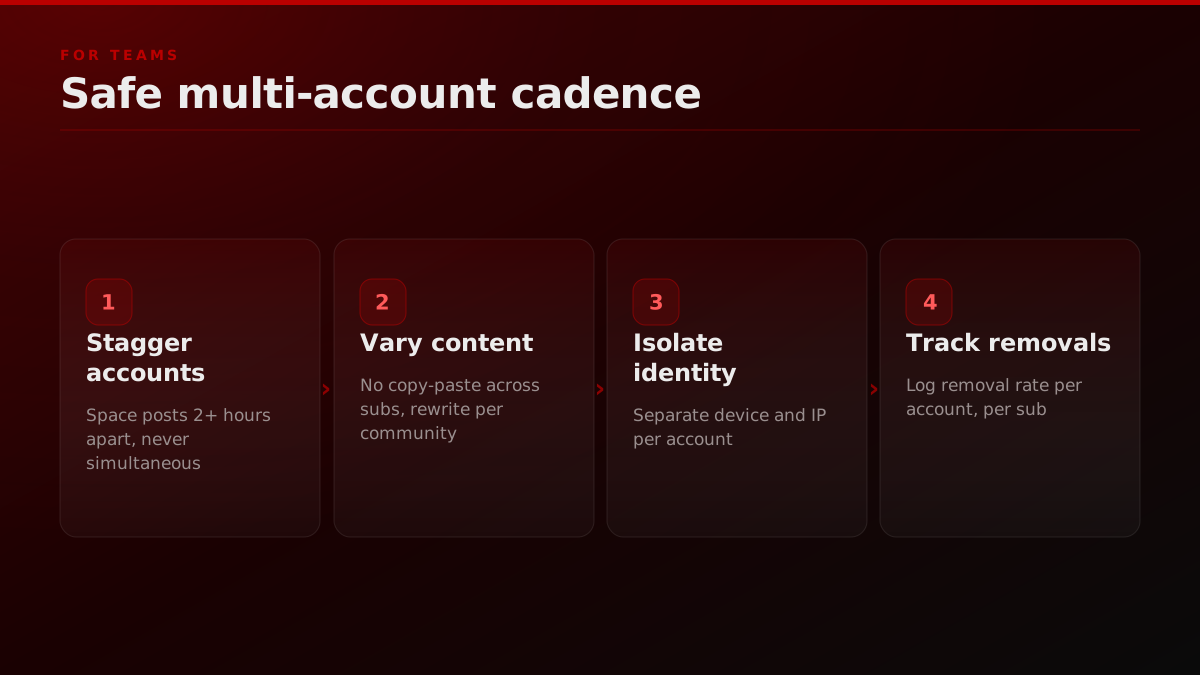
This is the timing question almost every guide targeting individual users skips entirely, and it is directly relevant to any marketer running Reddit at scale. Reddit's own developer documentation on API access and rate limiting makes the platform's stance on automated, high-frequency activity explicit: rate limits and behavioral review exist specifically to catch patterns that look automated or coordinated, regardless of whether a human is technically clicking the buttons. Posting five near-identical announcements across five accounts within the same ten-minute window is exactly the signature this system is built to catch, timed perfectly or not.
The safer pattern spaces coordinated activity the way a genuine team of individuals would naturally behave: different accounts posting at different times, in their own voice, about the same underlying update, never as a synchronized broadcast. This is slower than a single scheduled blast across every account, and it is also the version that survives past week one.
Worked example: a five-account team launching the same underlying announcement, spaced at the two-hour minimum, needs an eight-hour window to get every account posted once, which usually means splitting the rollout across a full business day rather than a single morning slot. Compress that into a two-hour window instead, and every account is now posting inside the exact same early-velocity period, on near-identical content, from accounts that likely share some infrastructure, the textbook coordinated-inauthentic-behavior signature. The extra six hours of patience is the entire difference between a distributed team presence and a pattern Reddit's detection systems are built to catch.
Operator noteTwo hours is our minimum stagger between team accounts; a five-account rollout takes a business day, not a morning., FORKOFF Reddit marketing engagements, 2026
Do US holidays and seasonality change the best time to post on Reddit?
Yes. Reddit posting volume and engagement dip measurably around US holidays, drop noticeably on summer Fridays as US audiences shift to weekend mode early, and slow further through the last two weeks of December as the broader internet's end-of-year lull sets in. A posting schedule calibrated purely on hour-of-day and day-of-week without a seasonal adjustment will quietly underperform during these windows for reasons that have nothing to do with the timing formula itself.
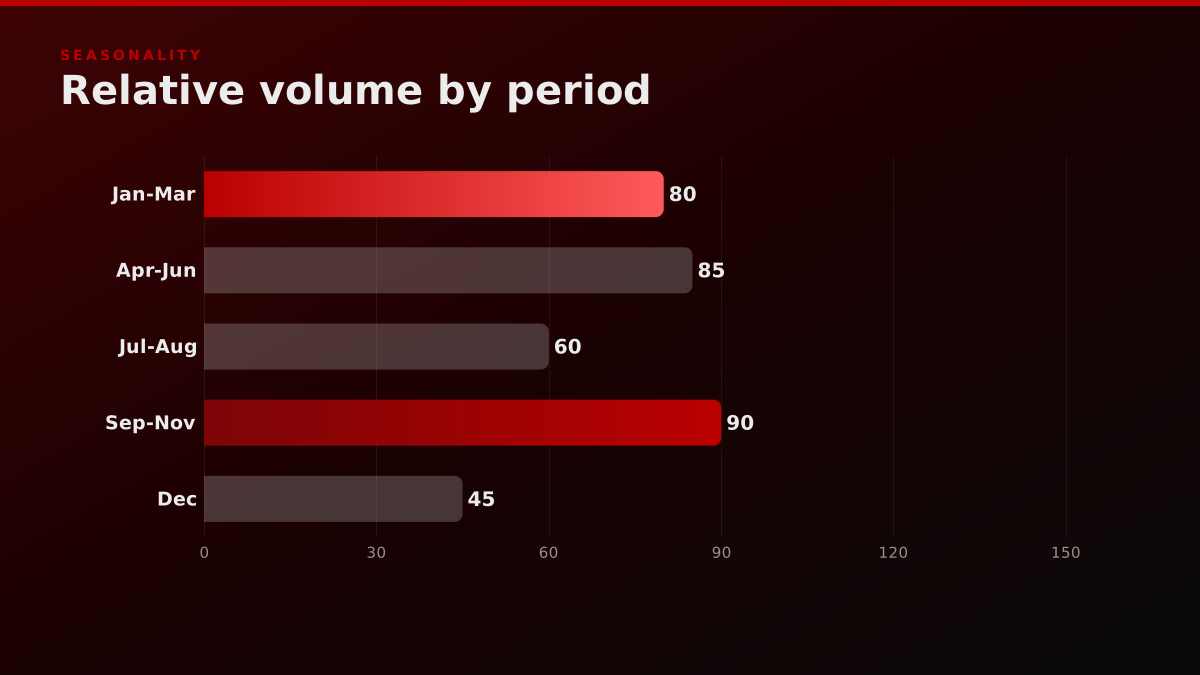
The specific US holiday windows worth planning around are Thanksgiving week, the July 4th long weekend, Labor Day weekend, and the stretch from December 20th through New Year's Day, all periods where a large share of the platform's core US professional and SaaS-subreddit audience is offline or off-schedule. Business and SaaS subreddits feel this hardest, since their audience is the most work-hour-dependent of any subreddit type covered in this guide. Entertainment and gaming subreddits are comparatively resilient, since leisure browsing does not disappear over a holiday the way workday scrolling does, and some even see a lift as people have more free time.
The practical fix is not avoiding these windows entirely, since posting still happens and some subreddits (holiday-shopping, year-in-review, and gift-focused communities specifically) actually see a seasonal lift rather than a dip. It is recalibrating expectations: a post that would normally clear a subreddit's front page in its first hour during a normal week may need a longer runway or a lower competition bar to hit the same result during a US holiday week or the last two weeks of December.
What does our own Reddit data actually show?
We pulled live post data for 15 real, currently-active Reddit threads directly discussing Reddit posting-time strategy, sourced through FORKOFF's own Reddit data API infrastructure, on 2026-07-10, as a small methodology check rather than a definitive study. The spread itself is the finding worth sharing: upvote-to-comment ratios varied by more than 15x across the sample, from a 2020 r/TheoryOfReddit post at 291 upvotes with only 19 comments (broad, low-friction agreement) to a live r/karma thread at 61 upvotes with 112 comments (an actively contested claim), even though both threads are nominally about the same topic.
That spread matters for a first-party reason: it is direct, current evidence of the 90/9/1 pattern in action on the exact query this guide answers. High-upvote, low-comment threads reflect the 90 percent lurk-and-vote tier passively agreeing. High-comment, contested threads reflect the smaller, more vocal 9 percent tier actively debating. Neither pattern is "wrong," they represent different community postures toward the same underlying question, and recognizing which posture a target subreddit tends toward is genuinely useful groundwork before you time a post into it.
Thirteen days after the original pull, we re-checked six of the same threads through the same infrastructure. The posture split held: the 2020 r/TheoryOfReddit claim thread was still upvote-heavy at 289 upvotes against 19 comments, and the r/karma debate had kept compounding comments, climbing to 149 comments against 77 upvotes. The absolute counts drift as votes accumulate; which side of the upvote-versus-comment divide a thread sits on does not.
Live re-pull: six threads from the original sample, 13 days later
| Thread | Subreddit | Upvotes | Comments | Engagement posture |
|---|---|---|---|---|
| Best-time claim thread (2020) | r/TheoryOfReddit | 289 | 19 | Upvote-heavy, broad agreement |
| Classic timing question (2019) | r/TheoryOfReddit | 57 | 16 | Mixed, settled discussion |
| High-traffic timing question | r/NewToReddit | 11 | 4 | Low-visibility long tail |
| Free timing tool launch | r/SaaS | 3 | 5 | Comment-lean tool feedback |
| Best posting times ask | r/DigitalMarketing | 9 | 14 | Comment-heavy practitioner debate |
| Karma patterns debate | r/karma | 77 | 149 | Comment-heavy, contested claim |
Re-pulled 2026-07-23 via FORKOFF's Reddit data infrastructure, six of the original 15 threads. Counts drift as votes accumulate; the upvote-heavy versus comment-heavy posture split does not.
The sample also spanned eight distinct subreddits, r/socialmedia, r/SocialMediaMarketing, r/karma, r/NewTubers, r/DigitalMarketing, r/TheoryOfReddit, r/NewToReddit, and r/SaaS, each with a visibly different engagement texture even though every thread was asking some version of the same posting-time question. The marketing-focused subreddits in the sample ran leaner on upvotes but consistently high on comments, the "prove it to me" posture of a skeptical B2B audience. The creator-focused subreddits ran the opposite way, lower comment counts, more passive upvoting, closer to the entertainment-subreddit pattern described in the by-subreddit-type table earlier in this guide. That is a small, honest, n=15 spot-check, not a scientific study, but it is a real and current one, pulled the same day this guide was published rather than lifted from an old, stale dataset.
Methodology: 15 threads pulled via direct post-ID lookup against Reddit's live API through FORKOFF's internal Reddit data infrastructure, 2026-07-10, n=15, US and English-language subreddits only, no filtering beyond topical relevance to Reddit posting-time discussion. Re-pull of six threads on 2026-07-23 through the same infrastructure. Treat this as a directional spot-check, not a peer-reviewed sample; the point is methodology transparency, not a definitive engagement model.
Operator noteUpvote-to-comment ratios spread more than 15x across our 15-thread sample, 291/19 at one end, 61/112 at the other., FORKOFF Reddit data pull, 2026-07-10, n=15
Common timing mistakes that quietly kill reach
The mistakes below repeat across nearly every thread and source researched for this guide, and most of them are not about picking the wrong hour at all.
Posting a strong piece of content into a dead subreddit hour with no account standing to survive the wait. A genuinely good post still needs enough karma and account age to clear a subreddit's filters before timing gets a chance to matter at all.
Ignoring post-type-specific windows. A video clip timed like a text post, or a link timed like an image post, fights the algorithm's velocity mechanic on the wrong clock, covered in the post-type section above.
Treating a scheduling tool's output as verified instead of a hypothesis. Most tools estimate from aggregate patterns, not your specific subreddit's real behavior, covered in the scheduling-tool section above.
Broadcasting identical content across multiple accounts in a tight window. This is the fastest way a coordinated Reddit effort trips spam and vote-manipulation detection, covered in the agency-cadence section above.
Assuming subscriber count equals available audience at any given hour. Per the 90/9/1 rule, only a fraction of subscribers are ever active at once, and that fraction is what a post is actually competing to reach.
Skipping the seasonal adjustment entirely. A schedule that ignores US holidays and the summer Friday drop-off will read as underperforming when the real cause is a seasonal dip, not a bad hour.
How does Reddit's timing game compare to other platforms?
Reddit's timing sensitivity is unusually mechanical compared to most other social platforms, because its ranking math is partially public and its early-vote-velocity mechanic is well-documented, where platforms like X and LinkedIn keep their ranking signals opaque and TikTok's For You page runs almost entirely on watch-time signals rather than posting-hour timing at all.
| Platform | Timing sensitivity | Dominant ranking signal | Public algorithm detail |
|---|---|---|---|
| High, first 30-60 min | Early upvote velocity + time decay | Partially documented (hot-sort formula) | |
| X / Twitter | Moderate | Engagement velocity + recency | Not published |
| Moderate | Dwell time + early comments | Not published | |
| TikTok | Low for posting hour | Watch-time and completion rate | Not published |
Source: FORKOFF synthesis, 2026, based on each platform's publicly observable ranking behavior; Reddit's hot-sort mechanics per Conbersa and Cornell as cited above.
What makes Reddit distinct is that a marketer can actually reason about the timing mechanic from first principles, because the logarithmic-weighting-plus-decay model is publicly explained rather than a black box, which is exactly why this guide can give specific, mechanism-backed windows instead of vague seasonal folk wisdom borrowed from platforms where nobody outside the company actually knows how ranking works.
How FORKOFF runs Reddit posting cadence for client campaigns
We treat timing as the last variable we optimize, not the first, because every timing strategy in this guide assumes an account that has already cleared the karma, age, and Contributor Quality Score floor covered earlier. Running the perfect posting hour on an account that gets auto-filtered anyway is a wasted exercise, so client engagements start with the same account-readiness groundwork as our Reddit karma guide, then layer in per-subreddit timing research once an account is actually eligible to be seen.
Practically, this means a per-subreddit New-queue observation pass before any client post goes live, a staggered, multi-account cadence for teams running Reddit across several accounts (the coordinated-posting discipline covered above), and post-type-specific scheduling rather than one blanket hour applied to every format. This is the operating discipline behind our Reddit marketing service, and it extends naturally into Twitter marketing and influencer marketing for founders and brands running distribution across more than one community platform at once. The same cadence-first discipline runs our clipping network, which has processed 5B+ views, and the founder funnel programs that turn a founder's own account into a distribution channel with its own posting rhythm.
Timing research alone rarely earns AI-search visibility on its own, so we pair it with answer engine optimization and GEO optimization work so that the same specific, dated, source-cited content that performs well on Reddit is also structured to get cited by AI answer engines, and with AI search optimization so a Reddit presence compounds into broader search visibility instead of staying siloed on one platform. If you are comparing agencies on this specific claim, our best Reddit marketing agency comparison and our FORKOFF versus Growth Marketing Pro comparison both walk through what a real audit of an agency's Reddit timing and karma claims should check. You can see recent coverage of our approach on our press page.
For founders researching this as part of a broader Reddit strategy rather than a single-post question, our B2B founders' Reddit marketing playbook and our AI startup Reddit marketing guide build on the timing and account-standing foundation covered here with the next layer: what to actually post. Our Reddit lead-gen shortlist tool helps narrow a broad category down to the specific subreddits worth researching a timing window for in the first place, and teams launching a product on a fixed date often pair Reddit timing with the broader sequencing covered in our product launch playbook, since a launch-day Reddit post follows the exact same early-velocity mechanic under a much tighter deadline.
Why do marketers keep asking "is Reddit even worth it" before they ask about timing?
A recurring, more fundamental doubt shows up underneath nearly every timing question in the threads researched for this guide. A r/SocialMediaMarketing thread asking directly whether it's even possible to get leads with Reddit splits between a "goldmine if you engage genuinely" camp and a skeptical camp that has tried and seen nothing, and a related r/SocialMediaMarketing thread on how to do Reddit marketing without getting banned treats the ban risk as inseparable from the timing question itself, since a banned or shadowbanned account has no timing strategy left to optimize.
That skepticism is usually a symptom of the same root cause covered throughout this guide: attempts that skipped account readiness, posted promotional content too early, or ignored subreddit-specific norms, then blamed the platform or the hour rather than the sequencing. A founder's real complaint about a small account's genuine content getting buried while low-effort posts perform fine echoes this exact pattern: it reads like a Reddit-specific timing failure, but it is usually a standing and content-fit problem wearing a timing costume.
PARELLA
@web3righteous
how to get more engagement on your regular posts (not just your gm posts). ps: you are a small or growing account. a lot of people get engagement on their gm posts, but when they post actual content, it barely gets seen especially if you're still growing your account.
The counterpoint worth sitting with is equally real. One operator's blunt reminder that an algorithm cannot ignore consistency forever and a founder's account of writing three Reddit posts between school drop-off and client calls both describe the unglamorous version of what actually works: showing up consistently, in the right window, with genuine content, for long enough that the algorithm's early-velocity mechanic has repeated chances to reward it.
Mr Mir
@MrMirxx
Keep posting. The algorithm can't ignore consistency forever.
Victor
@victor_bigfield
people post "passive income" like they sleep while money rolls in. i woke up at 5am to fix a bug before my kids wake up. then i did school drop-off, client calls, wrote 3 reddit posts, answered support tickets, and squeezed in 40 minutes of actual coding.
i woke up at 5am to fix a bug before my kids wake up. then i did school drop-off, client calls, wrote 3 reddit posts, answered support tickets, and squeezed in 40 minutes of actual coding.
The verdict: time the post, but fix the account first
The best time to post on Reddit in 2026 is a real, mechanism-backed answer, not folk wisdom: weekday mornings around 6 to 9 AM Eastern for business and professional subreddits, evenings and weekends for entertainment and gaming ones, with a genuine overnight dead-zone window for a lower-reach, lower-competition contrarian play. Post type shifts that window further, text tolerates a slower build, links need velocity in the first hour, and images or video want the evening scroll.
None of that matters on an account that has not cleared its karma, age, and Contributor Quality Score floor first, which is the gap nearly every other guide on this exact query skips entirely. Fix account standing before optimizing the clock, verify any general timing rule, including every one in this guide, against your specific subreddit's real New-queue behavior, and if you are running more than one account, space coordinated activity like a real team rather than a synchronized broadcast.
Do that, in that order, and the timing advice in this guide stops being a generic rule you are hoping works and becomes a specific, testable hypothesis about a community you actually understand.