If you are building a DePIN, a decentralized physical infrastructure network, the hard part is almost never the hardware. The routers work, the sensors report, the GPUs compute. The hard part is the distance between a testnet full of people farming an airdrop and a token that a real network keeps using. DePIN marketing is the work of closing that distance, and it is a two-sided distribution and trust problem long before it is a token problem. You have to recruit the operators who supply the network, and you have to win the buyers who pay for what those operators produce, and you have to do both while proving to a skeptical market that the physical thing you claim exists actually exists.
The 30-second answer on DePIN marketing
DePIN marketing is a two-sided distribution and trust problem, not a hardware problem. The tech usually works. What kills projects is the gap between a testnet full of farmers and a token the network keeps using. The prize is real but volatile: Messari put the sector near $20B in 2024, up 400% year over year, and CoinGecko's DePIN category sits near $8.0B in July 2026. Getting from testnet to token means proving the physical thesis with devices actually online, solving the two-sided cold start (supply is easy, demand is hard), distributing where operators and capital decide, designing the points campaign to survive the airdrop, and retaining the network on real demand revenue after emissions taper. The networks that treat real usage as the scoreboard compound. The ones that farm a testnet number watch it unplug at the token event.
The reflex, borrowed straight from the last DeFi cycle, is to solve all of this with a points program. Announce a testnet, promise an airdrop, and watch the device count and the leaderboard go vertical. It works, briefly, because a token reward reliably conjures supply. Then the token launches, the airdrop lands, and a large share of that supply unplugs and moves to the next campaign, because it was never there for the network. The operators who have watched this happen say it plainly, and they are tired of watching real infrastructure get ignored while the market rewards noise.
Explain this to me like I hold bags: why do memes print while utility crawls
A holder asks why memecoins raise eight figures on launch while DePIN teams with real hardware networks online grind for scraps, the exact attention problem this guide addresses.
I have seen so many "utility" projects where the tech is cool, but the token itself feels tacked on just to raise venture capital.
What follows is the durable version of that job. We will pin down what DePIN marketing actually involves, diagnose why so many networks die in the gap between a hot testnet and a cold post-token network, and walk a five-phase sequence that carries a network from its first real device to a token its operators still want to hold after the rewards normalize. It is grounded in FORKOFF's Web3 go-to-market and market entry work for physical-infrastructure networks, and every number here is attributed to a primary source with a date, because a post about earning trust that invented its own data would be self-defeating. If you want the broader growth loop this sits inside, the web3 GTM playbook is the parent guide, and the DePIN networks engagement is the short path.
A note on the numbers
A quick word on sourcing before the playbook, because a post about earning trust should be held to the same standard it preaches. The sector market-cap numbers ($20B in 2024, roughly $8.0B in July 2026) come from Messari and CoinGecko respectively and use slightly different methodologies, so they are directional, not identical measures, and both will drift as the market moves. The per-token market caps are a CoinGecko DePIN-category pull taken on July 13, 2026. Project traction figures (Grass, NodeOps, Silencio, Farmsent) are attributed inline to their source, and where that source is the project itself or an ecosystem aggregator like peaq, it is labeled project-reported rather than independently audited. Agency pricing ranges are FORKOFF operator estimates from publicly listed retainers as of mid-2026. Nothing here is a projection dressed as a fact.
Operator noteMessari put the DePIN sector near $20B in August 2024, up 400% year over year, with fundraising up 296%., Messari, State of DePIN, August 2024
What is DePIN marketing, really?
DePIN marketing is the go-to-market discipline for a network that coordinates real-world physical infrastructure with a token. The physical part is what makes it different from every other corner of crypto: the network is made of hardware or a shared physical resource, wireless coverage, storage, compute, mapping, energy, sensor data, and the token exists to reward the people who supply it and to settle payment from the people who use it. That means a DePIN is a marketplace, and marketing a marketplace is never one job. It is two jobs that have to succeed at the same time, aimed at two audiences who want opposite things: operators who want the highest reward for the least effort, and buyers who want the cheapest reliable service.
DePin Explained! A Deep Dive Into DePin (Decentralized Physical Infrastructure)
CoinMarketCap
A deep-dive explainer on what DePIN is and how the networks are structured.
The supply side is the seductive half, because it responds to incentives on a predictable schedule. Offer a token for running a node and the nodes appear. The demand side is the half that decides whether any of it matters, and it is far harder, because a paying buyer does not care about your airdrop. They care whether your network is cheaper, faster, or more available than the centralized provider they already use. The opportunity is enormous precisely because so much of the economy is physical and not yet online, which is the case DePIN builders make for the whole category.
70% of the world economy is still tied to physical locations and labor, so making the physical world accessible to AI represents a 3X increase in the TAM of AI in general.
So when a founder says the marketing is not working, the diagnosis is usually that one side of the market is starved. A network with plenty of supply and no demand is a subsidy with a countdown. A network with demand it cannot supply is a missed quarter. The job of DePIN marketing is to grow both sides in balance and to keep proving, at every step, that the physical thing under the token is real.
DePIN is a two-sided market, and the demand side is the hard one
Every DePIN has two customers, not one. The supply side is the operators who plug in hardware or share a resource, and it is the easy half, because a token reward reliably conjures supply. The demand side is whoever pays for what that supply produces, bandwidth, storage, compute, sensor data, wireless coverage, and it is the half most projects underbuild. A network of ten thousand idle devices with no paying buyer is not infrastructure, it is a subsidy waiting to run out. The launches that last are the ones that treated demand as the marketing problem from day one, not an afterthought for post-token.
Source: Messari, State of DePIN 2025
Why do most DePIN projects stall between testnet and token?
Most DePIN projects stall because they buy their testnet supply with the promise of a token and never build the demand or the retention that would make that supply stay. The pattern is familiar from the last cycle, just moved from liquidity to hardware: launch a points program, print a leaderboard, watch the device count spike as farmers pile in, then watch it fall the moment the token lands and the reward-per-node drops. What is left is a fraction of the peak and a token chart that tells the story. The capital, or in DePIN's case the hardware, was never there for the network. It was there for the airdrop.
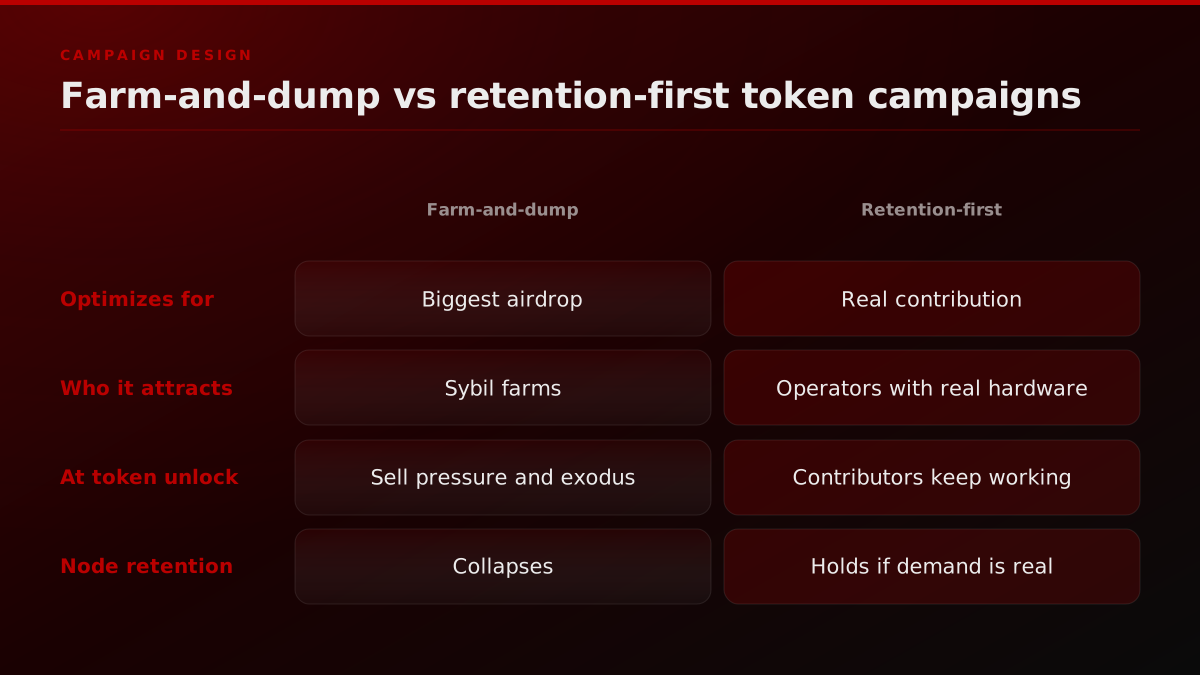
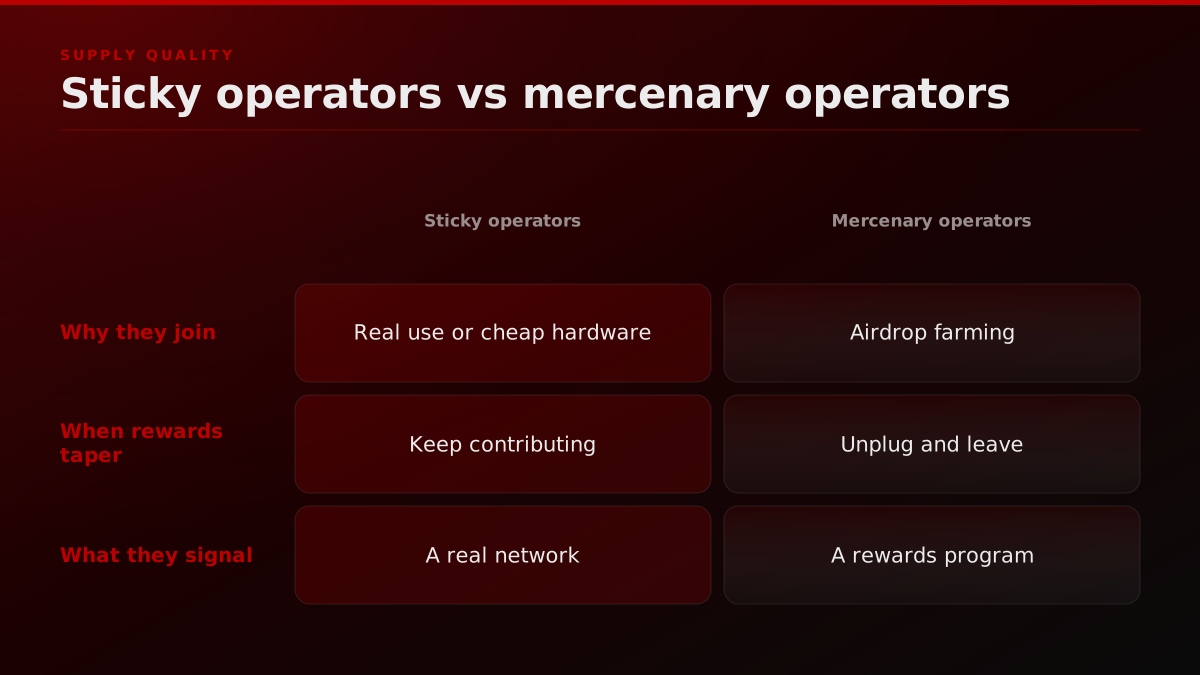
The tell is always the same: supply that arrives for a reward leaves for a reward. A device farming an airdrop behaves exactly like mercenary liquidity, and it produces the same hollow number. The distinction that decides a project's future is whether an operator is sticky or mercenary, and the two look identical on a leaderboard right up until the incentive normalizes.
Underneath the supply story is a demand story that is harder to fake. Compute, bandwidth, and storage are real markets with real incumbents, and a DePIN competes with AWS, Cloudflare, and a dozen well-funded traditional providers who are not standing still. Operators who look closely know this, which is why the sharpest community discussions are not about the airdrop, they are about whether the demand and the margins are actually there.
there is obviously always demand for more compute power, especially at the moment with the AI boom (bubble?), but I also heard that margins are dropping and you also have a lot of traditional big non crypto parties.
The second reason projects stall is that they confuse attention with adoption. DePIN is a narrative-friendly category, so it trends, and a founder can mistake a spike in mindshare for a spike in usage. The data says otherwise. In one 30-day window in late 2025, DePIN led every sector in mindshare while the sector's market cap actually fell, a divergence the analysts tracking it flagged in real time.
Messari
@MessariCrypto
DePIN has led sector mindshare over the past 30 days, up 198.64%. However, during the same period, the market cap for the sector has decreased by 2.56%.
Mindshare is not the same as a network
Attention and adoption move on different clocks, and DePIN is the clearest example. In September 2025 the sector led all of crypto in 30-day mindshare, up 198.64%, while the sector's own market cap slipped 2.56% over the same window. That gap is the whole trap in one statistic: a project can win the narrative, trend on crypto Twitter, and still have a token the market is quietly selling because the network underneath it is not being used. Treat mindshare as a top-of-funnel signal, never as proof the network is working.
Source: Messari, September 2025
Operator noteIn September 2025, DePIN led all sectors in 30-day mindshare, up 198.64%, while the sector's market cap fell 2.56%., Messari, September 2025
The lesson is not that incentives or attention are bad. Both are tools. It is that a testnet spike is a cold-start signal, not a growth strategy, and mindshare is the top of the funnel, not the bottom. If you cannot answer the question "why does this operator keep their node online after the token, and who is paying for what it produces," you do not have a network yet. You have a promotion with an expiry date.
The testnet-to-token playbook
Taking a DePIN from testnet to a token the network keeps using is a five-phase sequence, and the order matters as much as the parts. You prove the physical thesis before you sell the token, you solve the two-sided cold start with supply and demand together, you distribute where operators and capital actually make decisions, you design the token campaign so contributors survive the airdrop, and you build the retention mechanics before the emissions run dry. Skip the proof phase and your incentives attract only farmers. Skip the demand phase and everything you bought unplugs at unlock. Each phase is a spoke of the broader Web3 go-to-market engagement, and each one compounds the next.
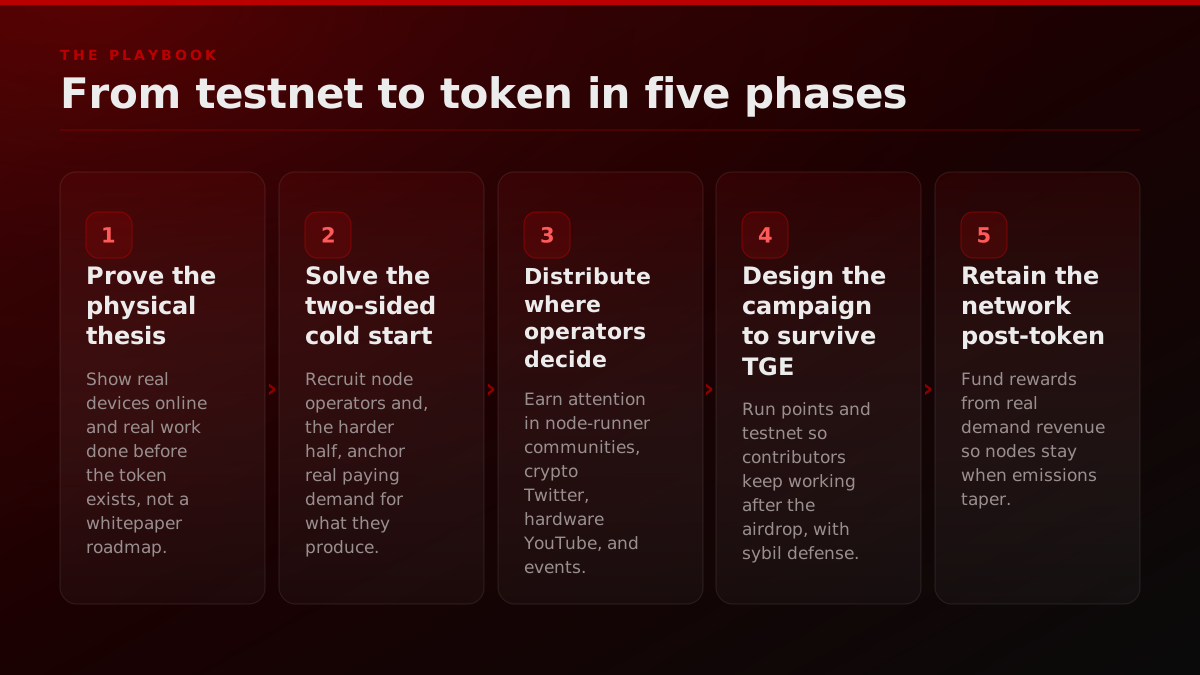
The sections below take them one at a time, with the specific moves that separate a network that keeps its operators from one that rents a leaderboard.
Phase 1: Prove the physical thesis before you sell the token
Trust is the prerequisite, and in DePIN it is unusually concrete, because the claim is physical and the proof is public. Before any marketing lands, the network has to answer the only question a serious operator or investor asks: are the devices actually online and doing real work, or is this a render and a roadmap. The good news is that DePIN, like DeFi, runs on verifiable rails, so you can prove the case with receipts instead of promises. The bad news is that the absence of those receipts is just as visible, and a live coverage map with three dots on it says more than any thread.
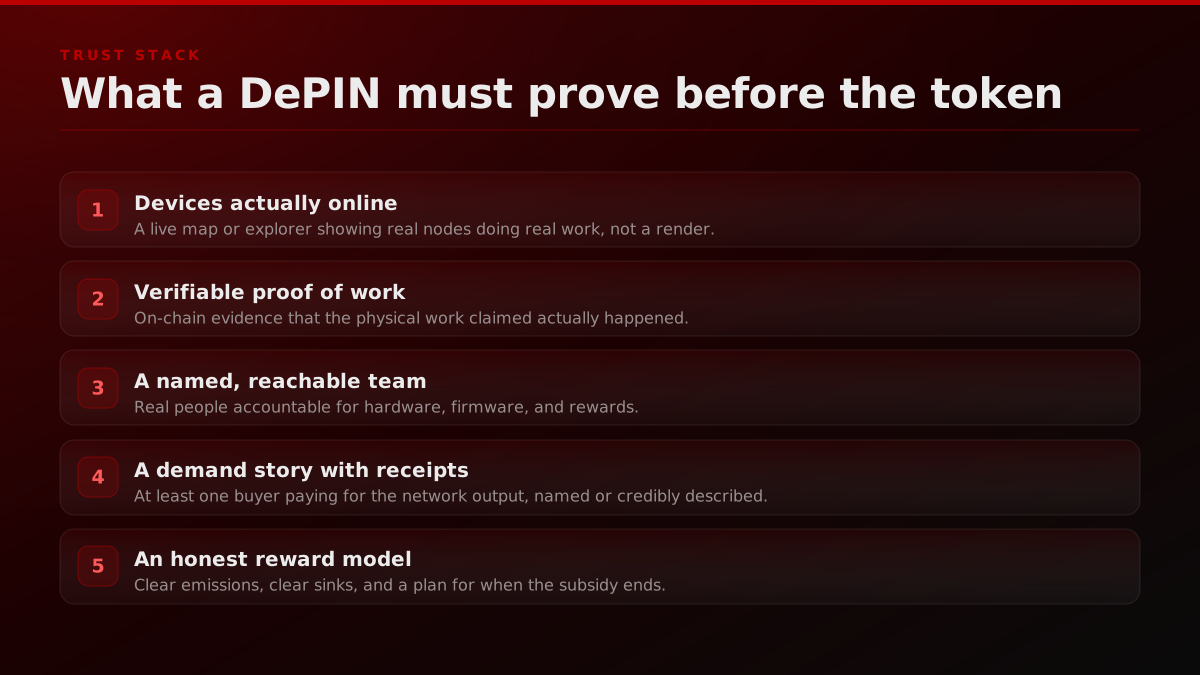
Put the trust stack in place before you turn on the launch push, not after it stalls. A live explorer or map that shows real nodes doing real work, an on-chain record of the physical work claimed so a skeptic can verify it, a team that is reachable and accountable for the hardware even if pseudonymous, at least one credible demand relationship you can point to, and an honest reward model that explains what happens when the subsidy ends. This is also where answer engine optimization does real work, because the first thing a careful operator does is search your name and read what comes back. If the top results are your explorer, your proof-of-work documentation, and a clear explanation of who pays, you have pre-answered the objection. The reference surfaces a researcher cross-checks, from sector trackers like DePINscan to aggregators like CoinGecko and Messari, are also where your network should already appear and be accurate before you spend a dollar on reach. Our answer engine optimization playbook covers how to become the cited source on your own name.
Phase 2: Solve the two-sided cold start (supply and, harder, demand)
The two-sided cold start is where DePIN marketing is genuinely distinct, and pretending it is one-sided is the single most common failure. You have to grow supply and demand together, because supply with no demand is a subsidy and demand with no supply is a broken promise. Supply is the tractable half: make running a node cheap and legible, ideally on hardware or software people already own, and reward it clearly. Demand is the half that decides everything, and it will not show up for an airdrop, so it has to be earned like any real enterprise sale, one credible buyer at a time, before the token rather than after.
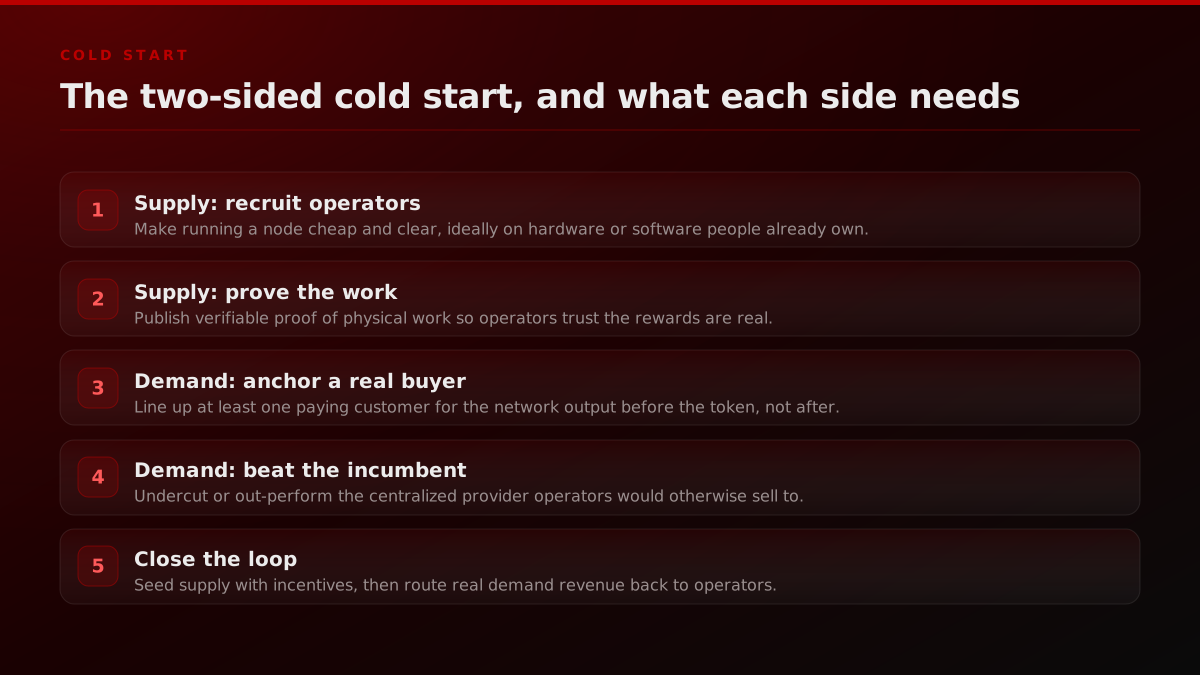
The demand side is where founders most often need outside help, because it looks like sales, not marketing. Lining up a first paying customer for bandwidth, compute, storage, or sensor data is a business-development motion, and the proof that it works is not a testnet leaderboard, it is a buyer on the record. The clearest recent example is traditional companies sourcing from DePINs directly rather than from a centralized cloud, which is exactly the demand signal a new network should be manufacturing on purpose.
Traditional tech is starting to bet on DePIN for AI training. Nasdaq-listed Aether Holdings just partnered with a decentralized data network
A discussion of a Nasdaq-listed company using a decentralized physical infrastructure network to source validated AI training data, a sign of real demand for DePIN output.
Practically, that means running the supply and demand campaigns as two connected motions, not one blast. On supply, a clear onboarding path, a fair and visible reward, and a community where operators help each other. On demand, a named buyer or a credible pilot, priced against the incumbent the buyer would otherwise use, and a case study the next buyer can read. The market entry engagement exists to run exactly this two-sided motion, because a network that only knows how to recruit operators has solved the easy half and left the hard half to chance.
There is a real sequencing debate worth naming, because it is where good DePIN teams disagree. One camp seeds supply first, betting that a large, visible network attracts the buyers who want scale. The other lands an anchor buyer first, betting that guaranteed demand makes the supply reward credible and self-funding from day one. Both can work, but the demand-first path is the safer one for a network without a war chest, because it means your rewards are backed by revenue instead of by runway. Whichever order you choose, decide it deliberately and build the campaign around it, rather than defaulting to supply-first simply because supply is the half that responds to a token.
Phase 3: Distribute where DePIN operators and capital actually decide
Distribution in DePIN does not look like distribution anywhere else, because the paid channels are largely closed and the two audiences make decisions in specific rooms. Crypto ad policy on the major networks rules out the standard paid playbook, so attention has to be earned organically, and it has to speak to operators and to capital at the same time. That means node-runner communities where operators actually live, crypto Twitter and Spaces where allocators form their theses, hardware and crypto YouTube where a setup gets a trusted review, DePIN-specific events, and the integrations that put your network in front of demand that is already on-chain.
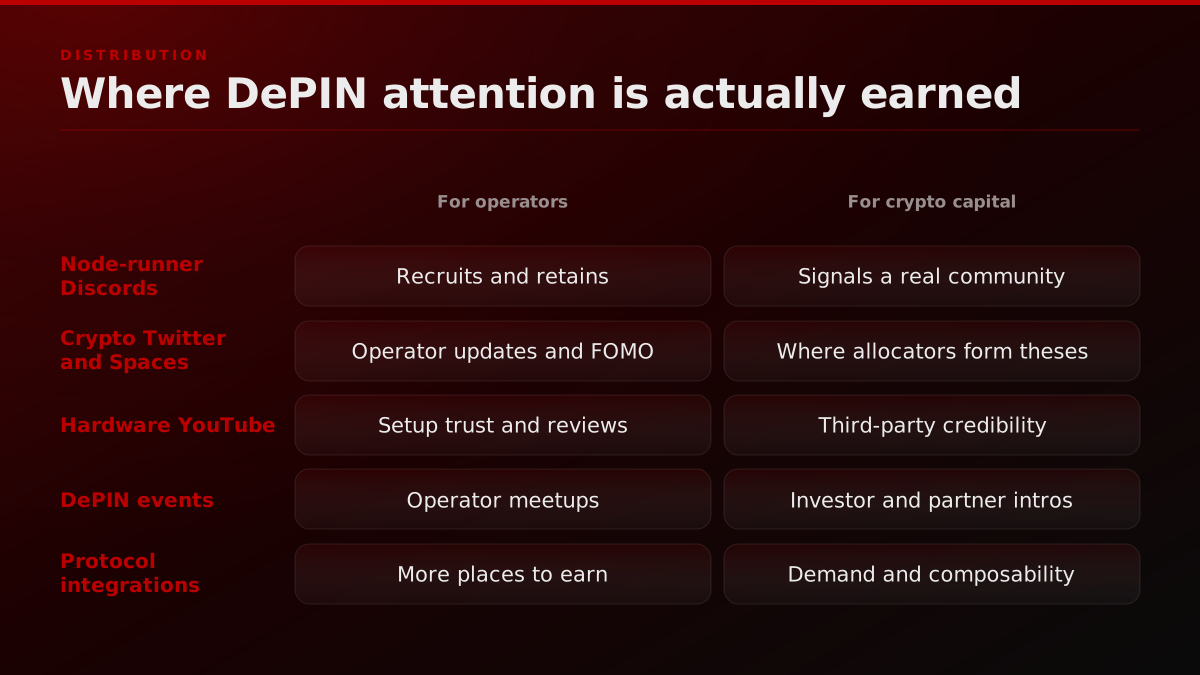
In practice you run several connected surfaces at once. Credible KOL marketing placed in front of the right operator and investor audiences and measured by real participation rather than impressions, community and Twitter marketing that treats a Space or a thread as the top of a content cascade, Reddit marketing in the subreddits where researchers actually vet networks, founder-led distribution through podcasts and the events and sponsorships where operators and allocators meet in person, and the explainer content that makes a technical category legible to a wider audience. The crypto KOL marketing framework goes deep on running the influence surface accountably instead of buying empty reach, and a good explainer earns trust the way an ad never will.
Crypto In The Physical World?? DePIN Explained!
CoinGecko
A walkthrough of how crypto incentives coordinate real-world physical infrastructure.
Two forces are worth building around right now. One is the regulatory backdrop: operators are watching for the policy clarity that would let real hardware businesses scale without legal ambiguity, and the community treats each step as a genuine catalyst.
The GENIUS Act passed and DePIN should be next
A thread arguing DePIN needs regulatory clarity next after the GENIUS Act, the policy tailwind operators are watching before scaling real hardware networks.
The other is the AI-compute wave. The single largest cluster of DePIN value sits in compute, storage, and AI-data networks, so a distribution plan that ignores the AI-buyer audience is leaving the biggest demand pool on the table. Meet the operators in their communities and the capital where it forms its theses, and the two-sided network compounds instead of stalling.
Phase 4: Run the testnet and points campaign so it survives the token
The testnet and points campaign is where the durable-versus-rented outcome is mostly decided, so it deserves more thought than "how many points for a node." You have three broad mechanisms, and they fail in different ways. Points and testnet campaigns bootstrap supply fast but attract farmers unless the design rewards real contribution. Real-demand revenue pays operators from paying customers, which is the most durable source but the slowest to stand up. A pure token sale raises capital but builds no network on its own. The craft is sequencing them so the cold-start speed of a points campaign hands off to demand-funded rewards before the emissions and the attention fade.
How the three token-launch mechanisms compare
| Mechanism | What it is | Retention after the token event | Best fit |
|---|---|---|---|
| Points and testnet | Reward pre-token activity toward an airdrop | Low if farmed, high if contribution is real | Bootstrapping supply fast |
| Real-demand revenue | Pay operators from paying customers | High | Networks with a live buyer |
| Pure token sale | Raise capital, then distribute tokens | None, there is no network yet | Rarely right on its own |
Framework based on public DePIN launch patterns from 2023 to 2026. Retention depends on whether the demand is real, not on the mechanism alone.
The core mistake is treating the token as a growth hack rather than the coordination layer it actually is. A design that rewards rotation will attract rotators who leave at unlock. A design that rewards contribution and real usage, through vesting, work-based emissions, and rewards funded by demand, attracts the operators who make the network durable. The token-design work published by a16z crypto is the standard reference here, and its core point maps directly onto hardware: emissions that reward raw node count buy you machines, while emissions that reward verified useful work buy you a network. For a DePIN, the difference between those two schedules is the difference between a testnet leaderboard and a business.
The token is a coordination mechanism, not a growth hack
The most expensive mistake in DePIN marketing is treating the token as a giveaway to manufacture a testnet spike. A token is the coordination layer that decides who runs your hardware, why they keep running it, and how demand pays for it. Designed to reward rotation, it attracts rotators who leave at unlock. Designed to reward contribution and real usage, through vesting, work-based emissions, and demand-funded rewards, it attracts the operators who make the network durable. The token design and the marketing are the same decision, made twice.
Source: a16z crypto, token design
If your plan includes an airdrop or a points season, and most DePIN launches do, design it for retention from day one, because the default outcome is a farm-and-dump. That means sybil defense so one operator cannot masquerade as a thousand, reward curves that pay for sustained real work rather than a one-time spike, and post-token hooks that give a contributor a reason to keep their node online after the airdrop clears. The airdrop marketing playbook covers the sequencing and the sybil defense in detail, and when the token event itself approaches, token launch and TGE distribution compresses the launch sprint into the few weeks that decide it. The chain a DePIN network settles on faces the same retention math at a larger scale, which is the subject of rollup ecosystem growth.
Phase 5: Retain the network after the token lands
Retention is the phase that separates a network from a promotion, and it is the one most teams under-build because it is invisible while the incentives are still flowing. The question that decides your future is simple: when the emissions taper, do the operators keep their nodes online. They stay for two reasons, and only two. Either the network produces something a paying customer actually buys, so the reward is funded by real demand rather than pure inflation, or the operator has a switching cost, sunk hardware, reputation, or a role in governance, that makes leaving expensive. Everything else is a countdown.
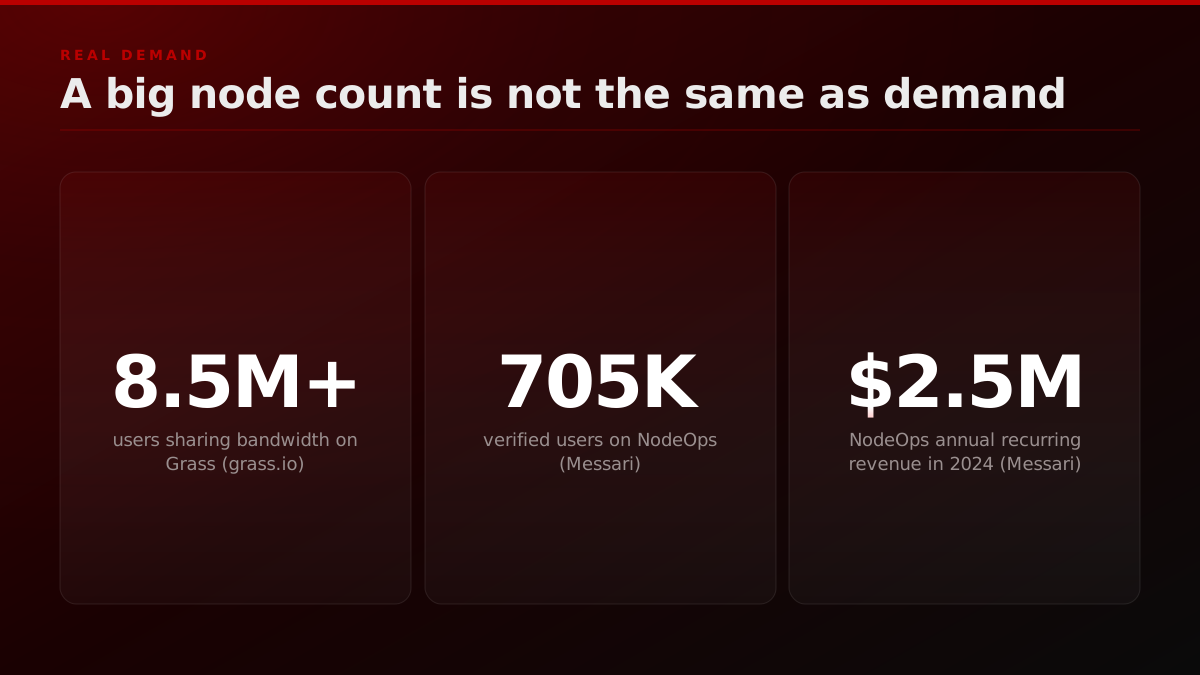
The clearest proof that this is possible is the networks that report real usage and real revenue rather than just a device count. A compute network earning real ARR is paying its operators partly from customers, not only from its own token, which is exactly why those operators stay.
Real demand revenue is the only retention engine that lasts
The clean tell that a DePIN has crossed from promotion to product is revenue that comes from customers rather than from the token printer. NodeOps, a compute orchestration network, reported roughly $2.5M in annual recurring revenue in 2024 with about 705,000 verified users and 113,000 monthly actives. Numbers like that mean operators are being paid partly by real buyers, so they keep their nodes online when the emissions taper. A network funded entirely by its own inflation is a countdown. A network funded partly by paying demand is a business.
Source: Messari, April 2025
The practical retention moves are unglamorous and they work: route real demand revenue back to operators so the reward survives the emissions, build switching costs through hardware and reputation, give long-term contributors a governance role, and design the token so staying beats rotating. None of it produces a viral leaderboard. All of it produces a network that is still online next quarter. The retention question, stated plainly, is whether your operators are contributors or farmers. Contributors stay because the network is useful and they are paid by real demand. Farmers stay only until the subsidy stops. Build for the first group, and the annual sector scorecards start to include you for the right reasons.
Messari
@MessariCrypto
State of DePIN 2025
What good looks like: DePIN networks with real usage
The networks worth studying are the ones that let you tell the token chart apart from the actual usage, since a healthy network and a doomed one can both post an impressive testnet number for a while. Grass built a bandwidth-sharing network that reports more than 8.5 million users sharing unused internet capacity to supply AI-training data, a genuine two-sided market where the demand is AI companies buying web data. NodeOps reported roughly $2.5 million in annual recurring revenue in 2024 with about 705,000 verified users (Messari), the mark of a compute network with real buyers, not just farmers. And across ecosystems like peaq, individual DePINs report real traction relayed through aggregators like CoinMarketCap: Silencio, a noise-mapping network, reports more than 360,000 users across 180 countries, and Farmsent reports more than 160,000 farmers on a peer-to-peer produce network.
The category also has an older proof point worth remembering. Wireless networks like Helium were the original DePIN thesis in the flesh, a physical network of coverage built by ordinary people rather than by a telecom, and its long and messy road from hype to real subscribers is the cautionary case every new network should study. The lesson from a decade of DePIN is not that the model fails. It is that the distance between deploying hardware and building demand for it is measured in years, and the marketing job is to compress that distance honestly rather than to paper over it with a testnet number that vanishes at the token event.
DePIN networks with real, reported traction
| Project | Vertical | Reported traction | Source |
|---|---|---|---|
| Grass | AI data and bandwidth | 8.5M+ users | grass.io |
| NodeOps | Compute | 705K users, $2.5M ARR (2024) | Messari |
| Silencio | Noise mapping | 360,000+ users, 180 countries | peaq, via CoinMarketCap |
| Farmsent | Agriculture | 160,000+ farmers | peaq, via CoinMarketCap |
Silencio and Farmsent figures are project-reported via peaq and CoinMarketCap. Grass is self-reported. NodeOps figures are from Messari. All as of mid-2026.
Operator noteGrass reports more than 8.5M users sharing bandwidth through its points program ahead of token distributions., grass.io, July 2026
Notice what these have in common. In every case there is a buyer, or at least a clearly identified path to one, for what the supply produces. The AI-data and compute networks have the clearest demand right now, which is why the market cap concentrates there, but the pattern holds across verticals: real usage, not a testnet leaderboard, is the number that survives the token event.
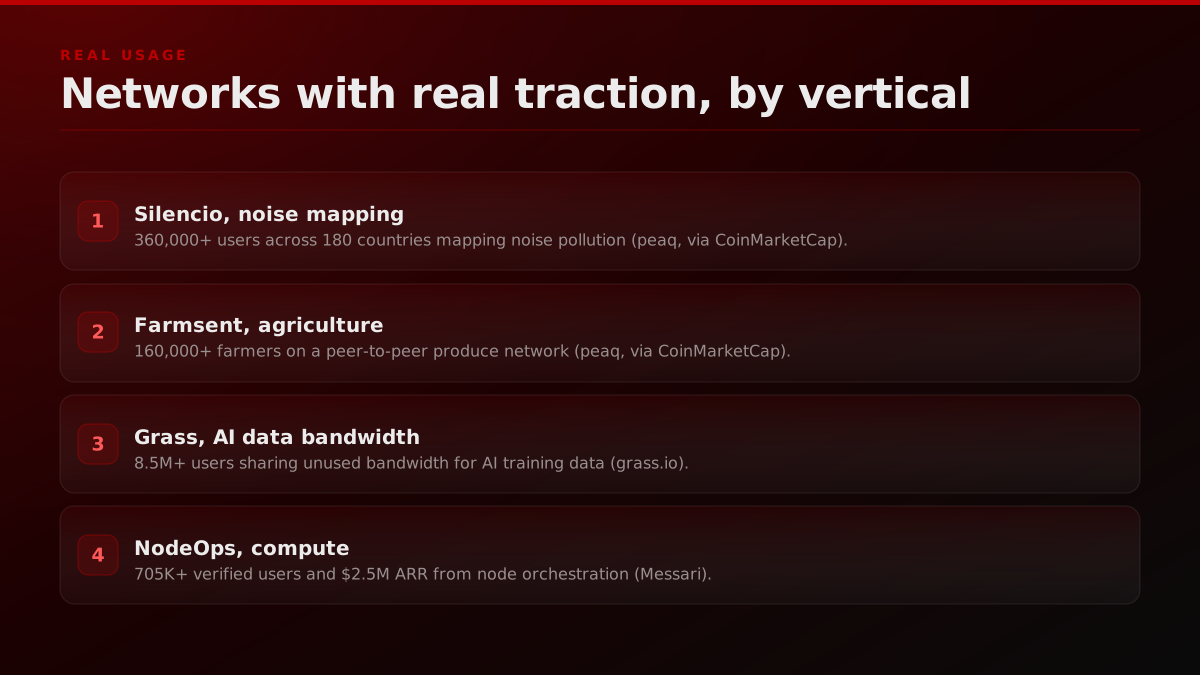
The traction is uneven and much of it is project-reported rather than independently audited, so read it with the same skepticism you would apply to any pre-revenue growth number. But the direction is clear, and it is the same lesson the whole sector is learning: the networks that put real usage ahead of the token chart are the ones that are still here after the chart cools.
Attention is not a network: what a roughly $20B-to-$8B sector teaches
The most useful thing a founder can internalize about DePIN in 2026 is that the sector's own market cap has already taught the lesson twice. The category ran hard in 2024, when Messari put the total DePIN market cap near $20 billion, up roughly 400% year over year, with fundraising up 296%. That is a real boom, and it pulled in a wave of projects that launched on the narrative alone. By mid-2026 the CoinGecko DePIN category sat closer to $8.0 billion, well off the high, even though DePIN kept leading crypto in mindshare through the same stretch.
Messari
@MessariCrypto
DePIN continues to grow. With fundraising volume up 296% year over year, the total market cap grew 400% to $20 billion. It's Time for a #DePIN Sector Update.
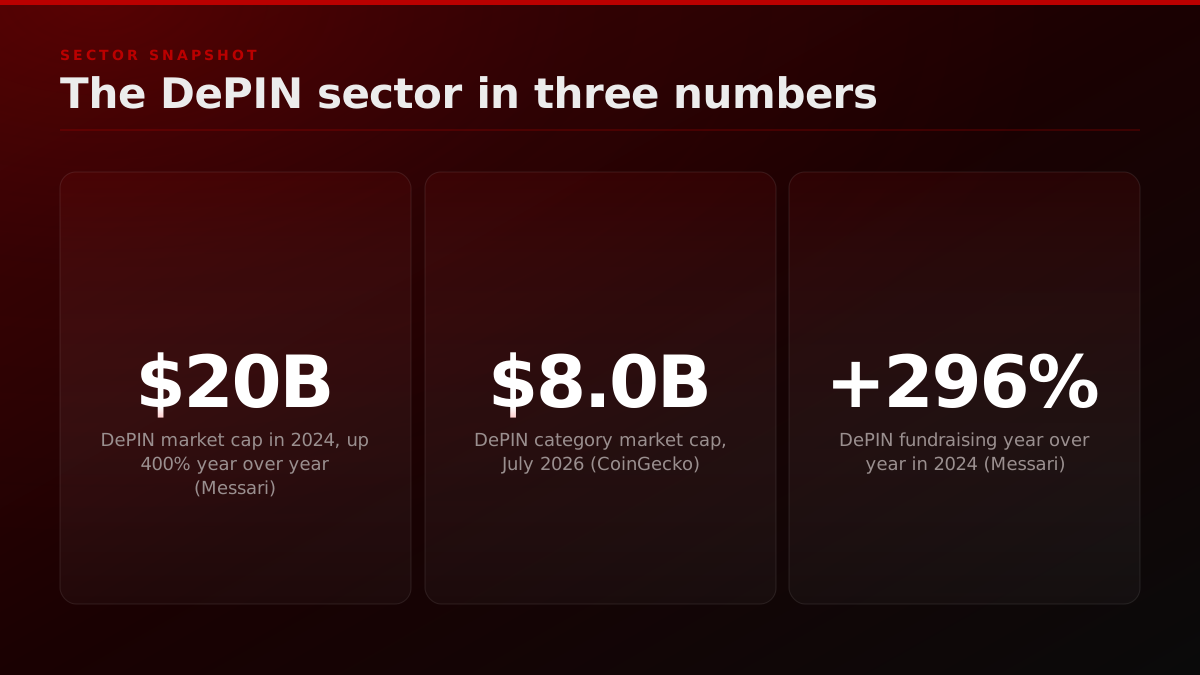
Operator noteCoinGecko's DePIN category sat near $8.0B in July 2026, well below its 2024 high, led by Bittensor, Render, and Filecoin., CoinGecko DePIN category, July 13, 2026
Where the value that remains actually sits is instructive for a new project deciding how to position. The DePIN market cap concentrates heavily in compute, AI, and storage networks, with Bittensor, Render, and Filecoin among the largest tokens by capitalization. That concentration is a distribution signal: it tells a new network which buyers the capital is already primed for, and which narratives an allocator already understands.
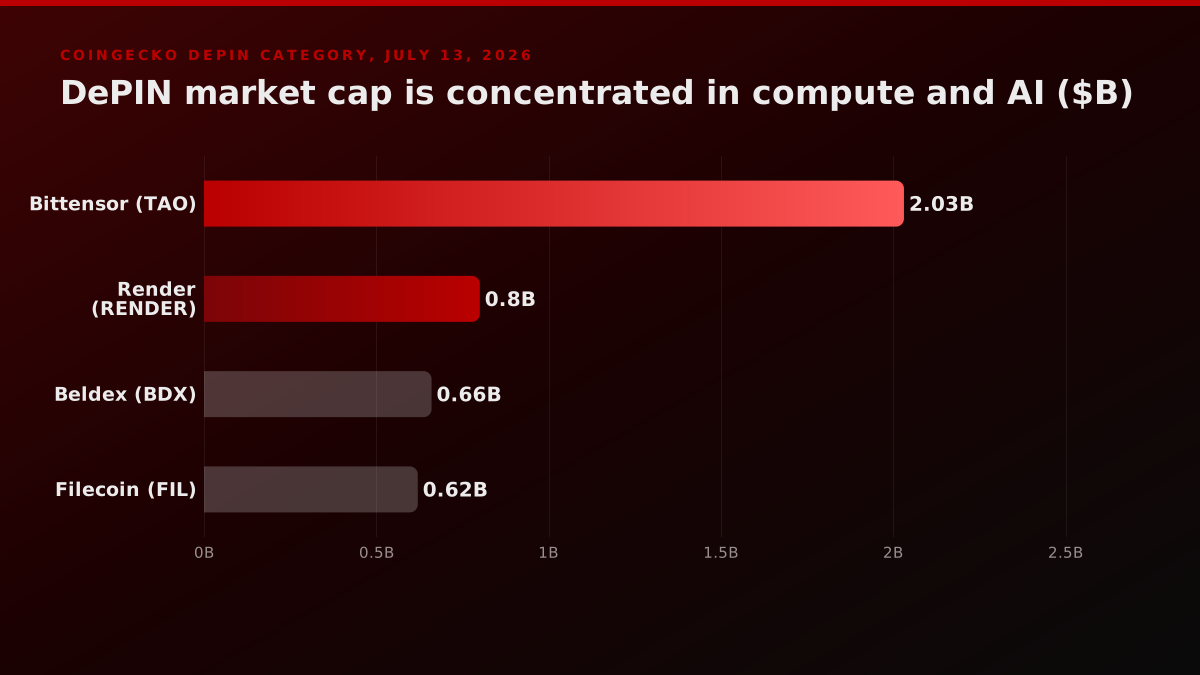
Read the round trip the right way and the takeaway is direct. A sector can win the narrative and still shed more than half its market cap, because the market eventually prices networks on usage, not on mindshare. For a founder, that means the goal is not to win the DePIN narrative for a quarter. It is to build a network whose usage the market can verify, so that when the attention fades, as it always does, the token has something real underneath it.
When should you bring in a Web3 GTM partner?
The right time to bring in outside help maps to your stage, and getting the timing wrong in either direction wastes money. Before you have working hardware, a partner is premature, and a pre-hardware team is usually better off running the budget-light guerrilla plays it can execute itself and building a founder-led narrative. The leverage climbs sharply in the pre-testnet and token window, when campaign design, an existing operator audience, demand-side relationships, and PR compress months of work into the few weeks that actually decide a launch. After the token, the mature pattern is a hybrid: community and operator relations in-house, a partner for the surges around the launch and demand-side pushes.
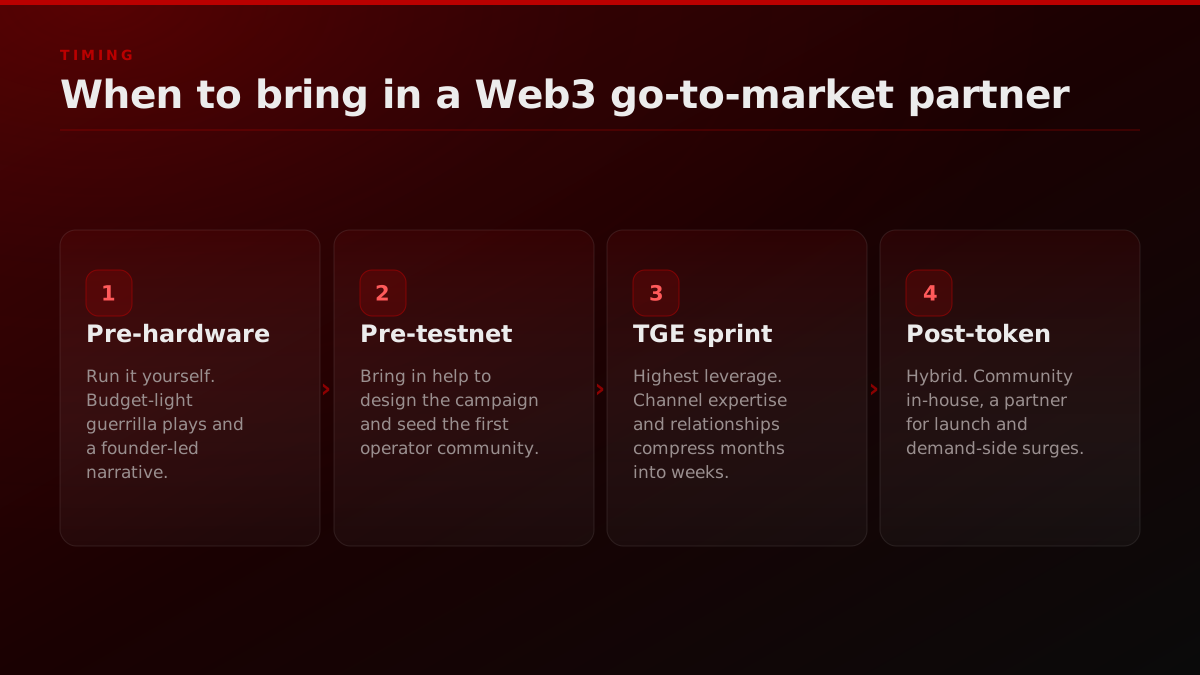
That is the shape of a DePIN go-to-market engagement done right, and it is the model FORKOFF runs. For a network approaching a token event, token launch and TGE distribution compresses the launch sprint, pre-TGE networks get the operator community built from a standing start, and a founder funnel keeps the founder's voice carrying the narrative once you are in steady state. If you are choosing a partner, the web3 marketing agency guide covers how to vet one before you sign, and the sibling DeFi protocol marketing playbook is worth reading if your network has a liquidity or financial layer on top of the physical one.
The verdict: build a network, not a leaderboard
DePIN marketing is a two-sided distribution and trust problem wearing a hardware costume. The tech works. What decides whether you survive the token event is whether you proved the physical thesis before you sold the token, solved the cold start on both sides instead of just the easy one, distributed where operators and capital actually decide, designed the campaign so contributors outlast the airdrop, and built retention on real demand before the emissions ran out. The first path produces a testnet spike and a token chart that rolls over. The second path produces a network. The sector's own round trip from a $20 billion high in 2024 (Messari) to roughly an $8 billion base by mid-2026 (CoinGecko) is the clearest evidence of which one the market rewards in the end.
FORKOFF was built for the second path. We run Web3 go-to-market and market entry for DePIN networks on an outcome-priced contract, from pre-testnet operator community through token distribution and post-token demand, measured by real participation rather than impressions. If that is the kind of launch you want, the next step is a conversation about your specific network and your token event, not a generic proposal.