AI Overview optimization is the practice of structuring a page so a generative answer engine can extract, trust, and cite it. The lever is not more content or a higher domain rating. It is structure. An answer-first capsule, question-shaped headings, self-contained passages, tables, dated statistics, and machine-readable schema decide whether Google's AI Overview names your brand or reads your page and credits someone else. Whether this is something your team can execute or a signal you need a dedicated AEO/GEO agency is a separate question worth answering first, and if the answer is an agency, the nine real AEO agencies scored for AI and SaaS fit is where to start comparing.
The 30-second answer
AI Overview optimization is structural, not a domain-rating game. Answer engines crawl a page, split it into passages, retrieve the chunks that match a query, and synthesize an answer from the best ones across sources. So the lever is how extractable each passage is. Twelve patterns do the work: lead with the answer, phrase headings as questions, open with a definition, write self-contained passages, put comparisons in tables, structure steps as numbered lists, anchor claims to dated sourced statistics, add an FAQ, keep a shallow heading tree, ship FAQPage and Article schema, signal freshness, and name your entity consistently. In FORKOFF's May 2026 GEO citation lab, across 50 prompts and 5 surfaces, brand cite rate on AI Overviews was 34 percent, and answer-first pages were observed cited far more often than pages that build up to the answer. Structure is the cheapest lever most brands are not pulling.
Search used to send a buyer to a page. Now it answers them on the spot and names a few sources. When a founder asks Google how two tools compare or which agency fits a niche, the AI Overview synthesizes an answer above the blue links and cites a handful of brands. The named brands enter the buyer's consideration set. The ones the model reads but does not credit fund the answer and hand the credit away. That gap between ranking and citation is the whole subject of this post.
The reason the gap exists is mechanical, and once you see it the fix stops being mysterious. This guide breaks AI Overview optimization into 12 on-page structural patterns you can audit section by section, backs each with first-party data from FORKOFF's GEO citation lab and published research, and closes with how to measure whether the patterns are working. The short version is the table below. The rest is the operator detail.
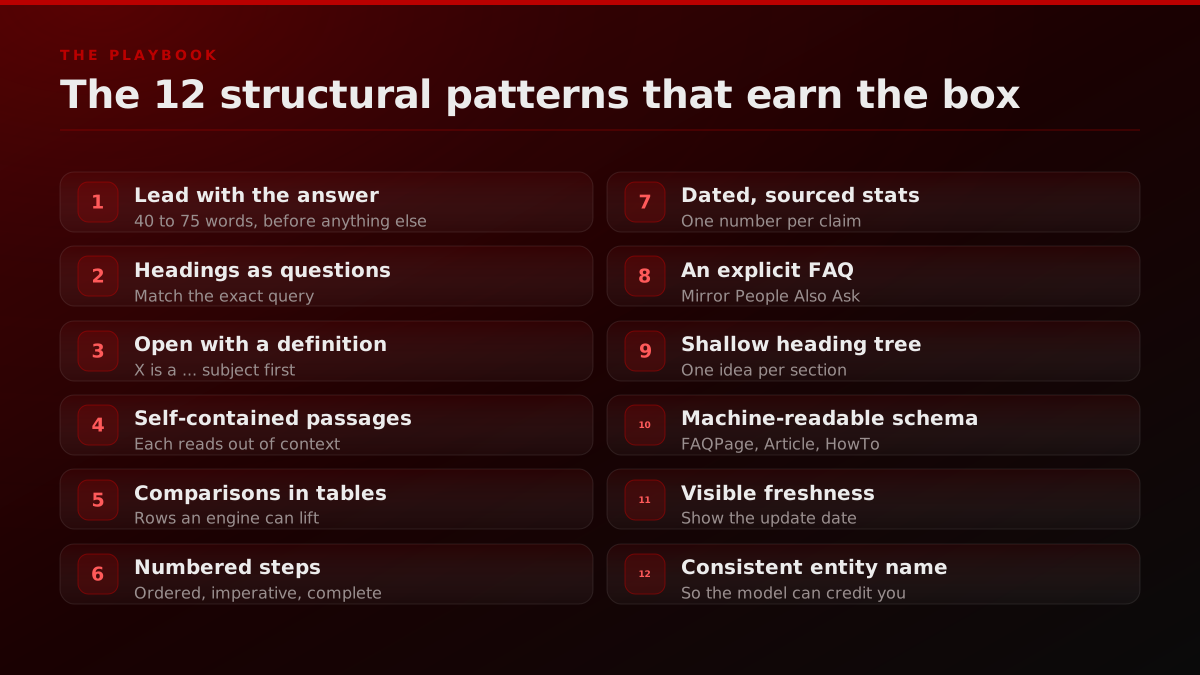
The 12 structural patterns that earn the AI Overview box
| # | Pattern | What it does for the engine |
|---|---|---|
| 1 | Lead with the answer | A clean chunk to lift in the first 75 words |
| 2 | Headings as questions | Matches the exact prompt being resolved |
| 3 | Open with a definition | Names the entity so the model credits you |
| 4 | Self-contained passages | Each block survives retrieval alone |
| 5 | Comparisons in tables | Structured rows parse and quote cleanly |
| 6 | Numbered steps | Ordered steps extract as a HowTo answer |
| 7 | Dated, sourced statistics | A specific number is the citation magnet |
| 8 | An explicit FAQ | Q and A pairs mirror People Also Ask |
| 9 | Shallow heading tree | One idea keeps each passage single-topic |
| 10 | Machine-readable schema | FAQPage and Article make it parseable |
| 11 | Visible freshness | A recent date is an observed cite signal |
| 12 | Consistent entity name | A unique name lets the model credit you |
About these numbers
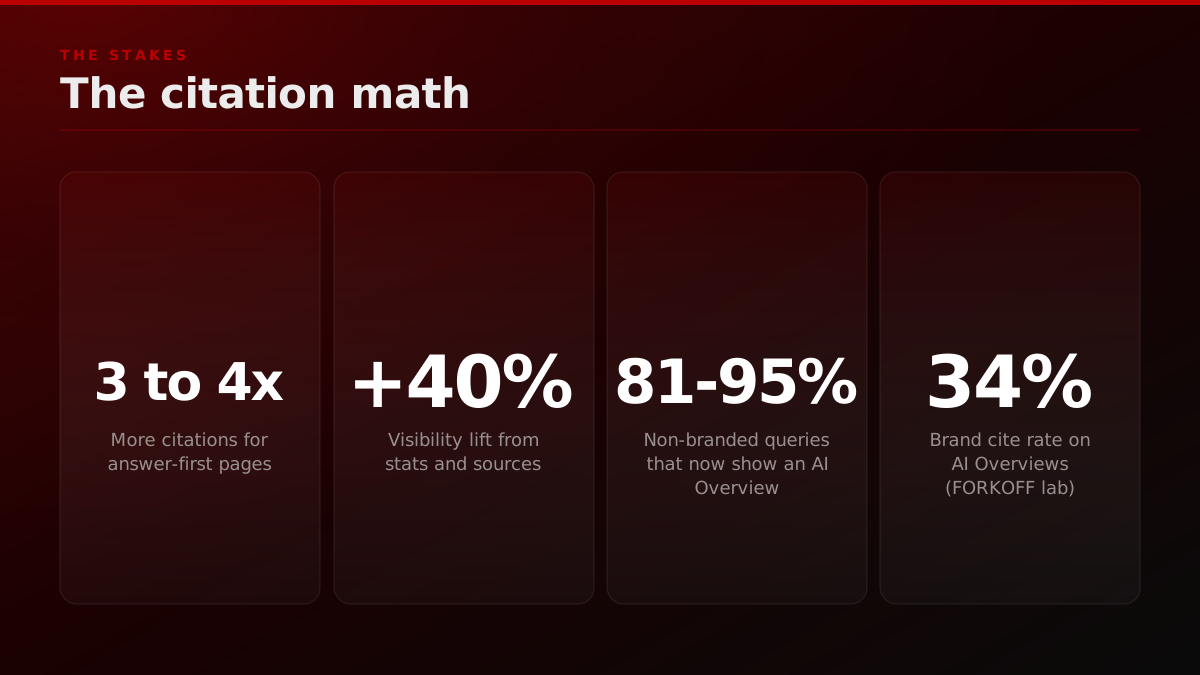
Citation-rate figures (34 percent Google AI Overviews, 41 percent Perplexity, 22 percent Claude) are from the FORKOFF GEO Citation Lab May 2026 run, 50 prompts across 5 AI surfaces. The 3 to 4x answer-first advantage and the 70 percent answer-variance figure are operator observations from public practitioner threads, cited inline where used and framed as observation, not controlled measurement. The 40 percent visibility lift from statistics and sources is from the Princeton-led GEO study (arxiv.org/abs/2311.09735). The 81 to 95 percent AI Overview appearance figure is from a public analysis of Similarweb data, linked inline. The 1,885-page schema figure is from a widely cited 2026 study, linked inline. Where a number is an estimate or a single practitioner's read, it is labeled as such.
What is AI Overview optimization?
AI Overview optimization is the subset of answer engine optimization aimed at Google's AI Overview, the generated answer that sits above the organic results on a growing share of queries. It is not a separate discipline bolted onto SEO. It is the ranking foundation plus a set of on-page structural choices that make a passage easy for the answer engine to extract and attribute. The goal is not a rank-one link. It is being the source the model names inside the answer. For the argument about why this shift is structural rather than a passing trend, three a16z teams made the case independently in their Big Ideas 2026 series.
Why this matters now is a change in how the results page behaves. Google introduced AI Overviews broadly in 2024 and now triggers them on a large share of informational and comparison queries. When an Overview appears, it changes user behavior: Pew Research found that users are far less likely to click a link when an AI summary sits above the results. The click you used to earn by ranking first is increasingly captured by the answer itself, so the brand named inside that answer gets the recall and the consideration. That is why citation, not rank, is the metric that now decides whether a buyer ever hears your name.
The distinction that trips brands up is that AEO optimizes for a different consumer. Classic SEO convinces a crawler to rank a document so a human clicks it. AI Overview optimization convinces a model to lift a fact and credit you as the source. A practitioner in the r/SaaS thread below put the shift plainly: the move is from ranking documents to feeding facts, and the facts that win are the extractable ones.
What Makes Answer Engine Optimization Different from SEO?
That thread is worth reading in full because it captures the working consensus among people testing this daily. The recurring theme is that answer engines reward clarity and structure over volume, and that fluffy long-form loses to dense, direct content.
AIs prefer content that states clear, extractable facts rather than fluffy 'ultimate guides'.
How does an AI Overview actually read your page?
An AI Overview does not read your page top to bottom the way a human does. It crawls and renders the page, splits it into short passages, retrieves the passages that best match the query, and synthesizes one answer from the strongest chunks across several sources. Then it cites a few of them. Every optimization decision follows from that one mechanism: the passage, not the page, is the unit that gets retrieved and cited, so the work is making individual passages extractable.
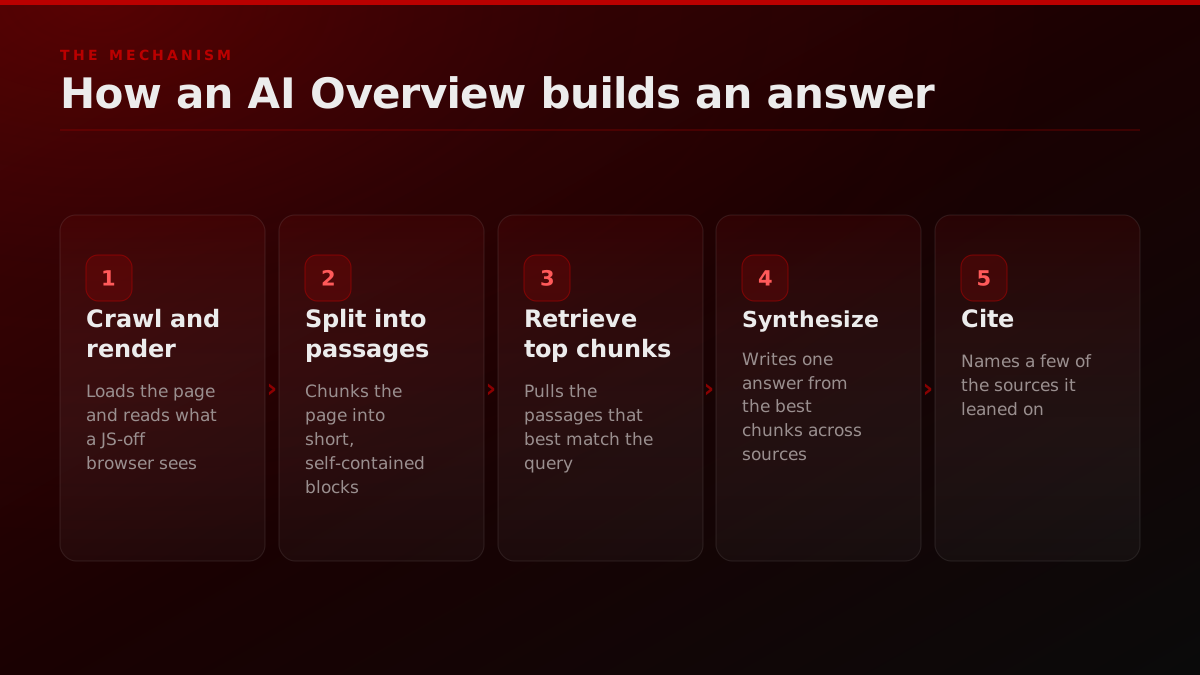
This is why a high domain rating and a pile of backlinks do not guarantee a citation. Those signals help a page get crawled and considered, but the retrieval step still reaches for the cleanest, most self-contained chunk that answers the query. Google's own guide to optimizing for AI features is explicit that AI Overviews are built on the same core ranking systems with a synthesis layer on top, which the leading AI search consultants read the same way.
The retrieval-then-synthesis loop is why the shape of a passage matters more than the length of a page. A model assembling an answer pulls the passages that most directly resolve the query and stitches them together, so a page that scatters its answer across six paragraphs contributes nothing cleanly liftable even when it technically contains the answer. This is also the oldest idea in journalism applied to machines: the inverted pyramid, most important information first, has been the standard for scannable writing for decades, and it turns out to be exactly what a retrieval system rewards.
Aleyda Solis
@aleyda
Google has published its official guidance on optimizing for generative AI experiences in Search, including AI Overviews and AI Mode. Going through: 1. How SEO is still relevant for generative AI search: The best practices for SEO continue to be relevant because their foundations… Show more
The practical reframe is that you are no longer optimizing a document. You are optimizing a set of passages, each of which is a candidate answer. The 12 patterns below are 12 ways to make a passage win that retrieval.
The unit of citation is the passage, not the page
Answer engines do not rank a document and hand a user the link. They retrieve passages that match a query and synthesize an answer from the best ones across several sources. Google's own guidance describes AI features as built on the same core ranking systems plus an answer-synthesis layer. Practitioners tracking this at scale describe the same behavior: models want extractable content, and a page that answers the question in the first paragraph gets pulled far more often than one that builds up to it. The practical consequence is that optimization moves from the page to the passage. Every heading, capsule, table, and list is a candidate chunk, and the ones written to stand alone are the ones that get lifted and attributed.
Source: Google Search Central, AI features and your site, 2026
The 12 structural patterns that earn the box
The 12 patterns fall into three jobs: make the answer easy to lift, make it easy to trust, and make it easy to attribute. Extraction patterns cover how you open a section and shape a passage. Trust patterns cover the evidence you attach. Attribution patterns cover schema and entity naming. None of them is a silver bullet. A page that nails extraction but carries no first-party data loses to one that carries both, and a page with perfect schema on a buried answer earns nothing. They compound.
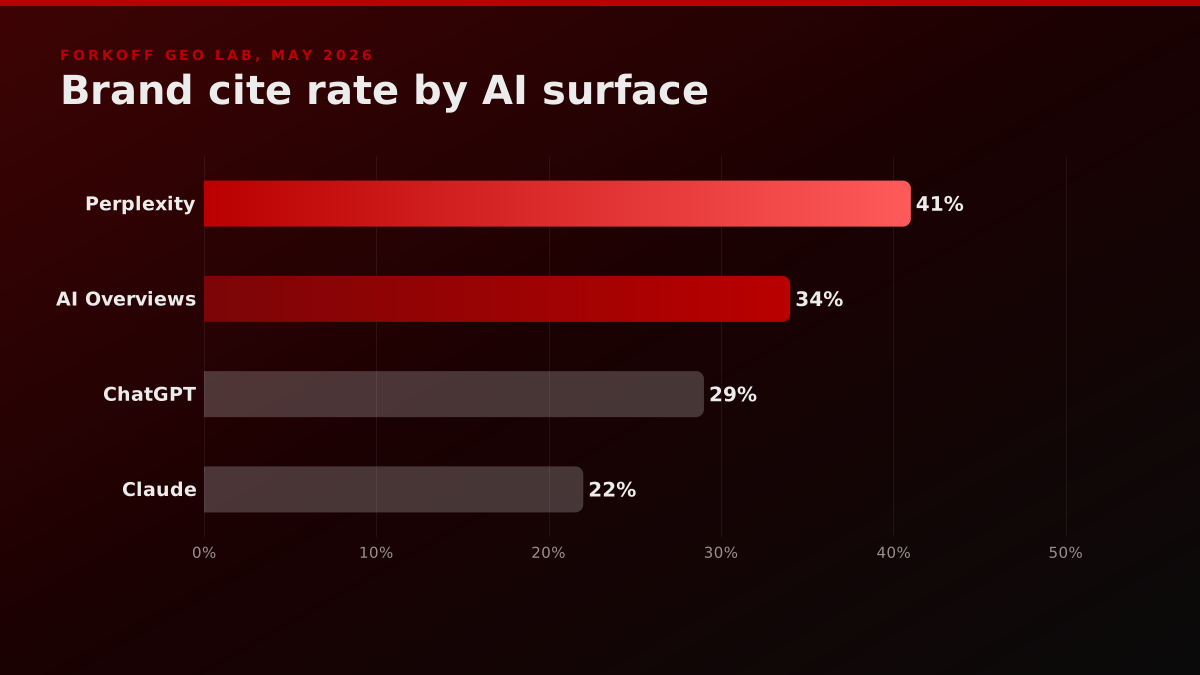
Before the individual patterns, one piece of first-party context on why this is worth the effort. In the FORKOFF citation lab, cite rate varied a lot by surface, which tells you the same structured page performs differently depending on where the buyer is asking.
FORKOFF GEO citation lab, brand cite rate by AI surface
| AI surface | Cite rate | What it rewards |
|---|---|---|
| Perplexity | 41% | Fresh, densely cited pages and clear sourcing |
| Google AI Overviews | 34% | Entity-mapped, schema-marked, extractable answers |
| ChatGPT | 29% | Broad topical authority and brand recall |
| Gemini | 26% | Google-indexed, structured sources |
| Claude | 22% | Primary sources and clean attribution |
FORKOFF GEO citation lab, 50 prompts across 5 surfaces, May 2026. Cite rate is share of prompts where the target brand was named or linked.
The bar chart makes the spread easier to hold in your head. Perplexity is the most generous to well-structured, densely-cited pages, and AI Overviews sit in the middle at 34 percent, which is both the hardest of the top surfaces to move and the one with the most buyer reach.
1. Lead with the answer
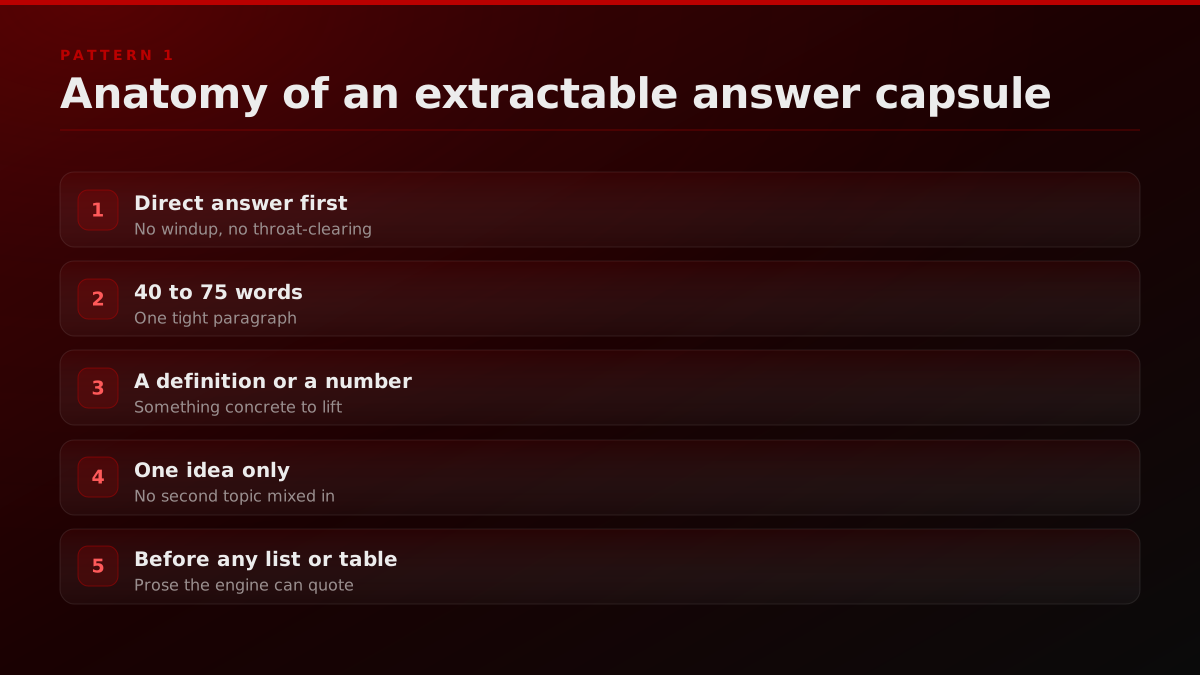
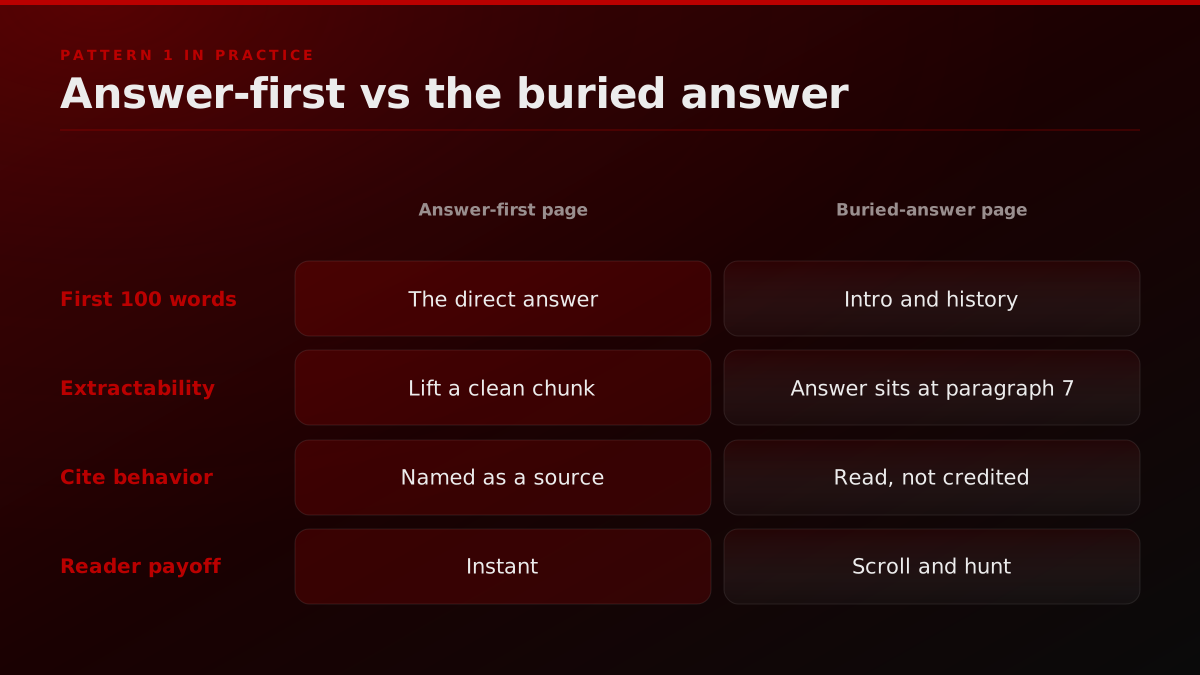
Put the direct answer in the first 40 to 75 words of every section, before any windup, list, table, or image. This is the single highest-leverage pattern because it hands the retrieval step a clean, quotable chunk exactly where it looks first. A section that opens with three paragraphs of context and reaches the answer at paragraph seven forces the engine to either dig or move on, and it usually moves on. Answer first, then support with the evidence below.
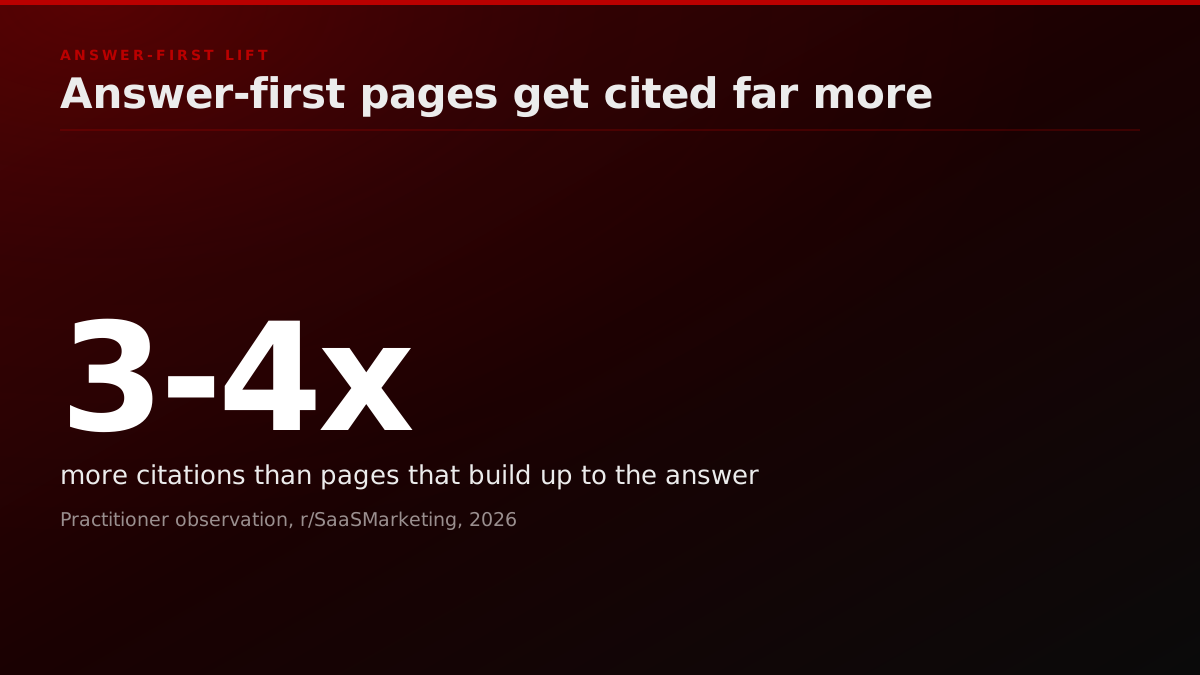
The advantage here is not subtle. An operator tracking citations across hundreds of sites reported that pages answering the question in the first paragraph get cited several times more often than pages that build up to it.
Pages that answer the question in the first paragraph, then support it with structured evidence below, get cited 3-4x more often than pages that build up to the answer.
Here is the rewrite in miniature. A section titled "Pricing" that opens with "Pricing has always been one of the trickiest parts of running a service business, and over the years we have experimented with many models" gives the engine nothing to lift. The same section that opens with "Landscape design in Connecticut typically costs 2,500 to 8,000 dollars for a residential project, depending on lot size and scope" hands it a complete, quotable answer. Both sentences are true. Only the second one gets pulled into an AI Overview, because it resolves the query in one self-contained line. The pattern is not to delete the context. It is to put the answer first and let the context follow for the human who keeps reading.
Same facts, two structures, very different outcomes. The comparison below shows what changes when you move the answer to the top.
2. Turn headings into the questions people ask
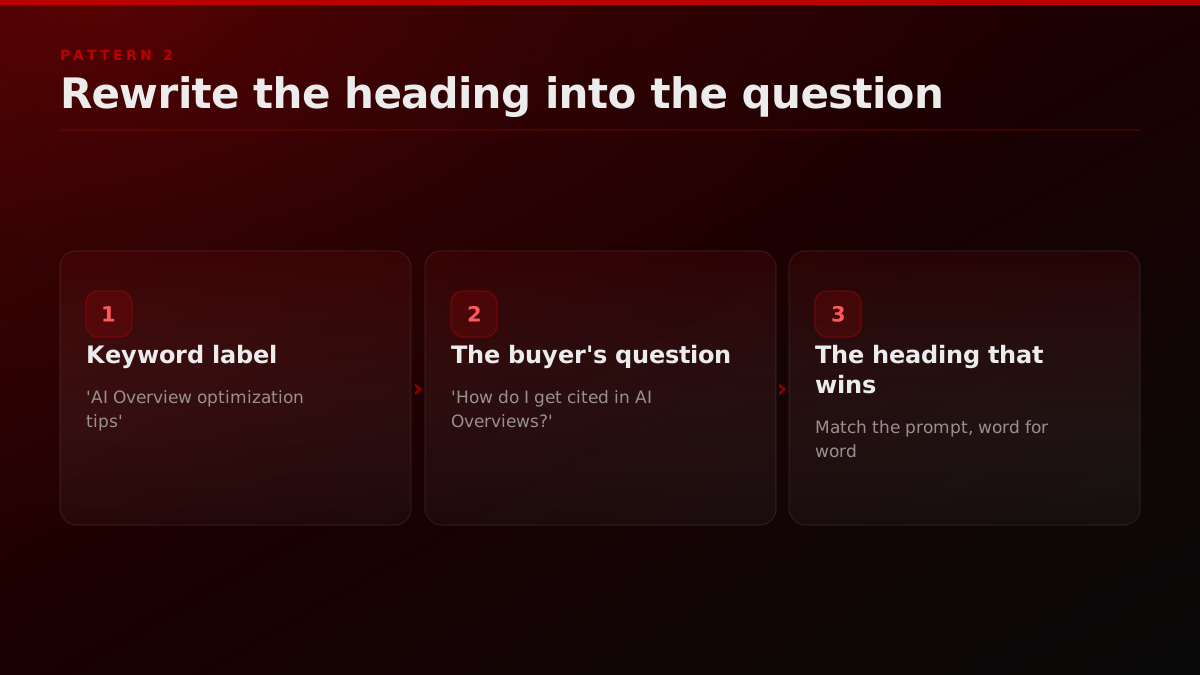
Phrase your H2 and H3 headings as the exact question a buyer types into an assistant, not as a keyword label. A heading that reads "How do I get cited in AI Overviews?" matches the prompt the answer engine is resolving far better than "AI Overview Optimization Tips." The heading is a strong relevance signal for the passage beneath it, and question-shaped headings also map cleanly onto People Also Ask, so you compete for two surfaces with one structure.
The best content brief for this is the set of question-based queries that actually trigger AI Overviews, which you can pull from keyword tools with SERP-feature filters. Aleyda Solis makes exactly this point.
Aleyda Solis
@aleyda
A useful and often underused input for your AI Search prompt library: question based queries that trigger Google AI Overviews, identified through keyword research tools with SERP feature filters. In this case, using the Semrush Keyword Magic Tool.
In practice, the shift from keyword headings to question headings is one of the fastest structural wins we see on client sites.
Operator noteOne client's 20 question-titled pages pulled more AI answers than the 60 keyword pages it had before. We retired half the old set., FORKOFF AEO engagement, 2026
3. Open with a definition
Start the page, and ideally each major concept, with a definitional subject-predicate sentence: "AI Overview optimization is a ...". This does two jobs at once. It gives the engine a clean, quotable definition for the many queries that are definitional in intent, and it anchors the entity so the model can attribute the fact to the right subject. A definition-first opening is why this post begins with "AI Overview optimization is the practice of..." rather than a story about the death of search.
Definitional openings are also what win the definition-style featured snippet that still appears on many how-to queries, and the featured snippet is often the exact text the AI Overview reuses. One clean sentence near the top does more retrieval work than a clever hook.
4. Write self-contained passages
Write every passage so it survives being pulled out of the page. That means no "as mentioned above," no pronoun that depends on the previous paragraph, and no claim that only makes sense after three sections of setup. Retrieval-augmented systems fetch chunks, not pages, so a passage that leans on its surroundings arrives at the model stripped of the context that made it coherent. Each paragraph should carry one idea and enough of its own context to stand alone.
Write so a paragraph can be lifted whole, direct answer first, one idea per paragraph, and put real answers on the surfaces the engines already trust.
The discipline this imposes is real. You cannot hide a weak claim behind surrounding narrative when every paragraph has to survive on its own, which tends to make the writing better, not just more machine-friendly.
5. Put comparisons in tables
Move any comparison, feature matrix, pricing spread, or option set into a table. Tables give an answer engine cleanly delimited rows and columns it can parse and quote without guessing where one option ends and the next begins, and comparison queries are a large share of what AI Overviews answer. An operator who restructured their entire blog around AI ingestion leaned on tables specifically because models parse them so reliably.
Claude has officially started recommending my SaaS over the < $1M incumbents. Here is exactly how we structured our blog posts to win AEO (Answer Engine Optimization).
There is a fair counterpoint worth keeping in view. Tables are not right for every context, and an audience that needs persuasion or narrative can be poorly served by a wall of cells.
Depending on the context people don't respond to cold hard tables, they respond to narrative.
The resolution is not to abandon tables but to use them for what they are good at, structured comparison, and to carry the persuasion in the answer-first prose around them.
6. Structure how-to content as numbered steps
Turn any process into an ordered, numbered list where each step is complete and imperative. Numbered steps extract as a HowTo answer, which is one of the formats AI Overviews reuse most directly for procedural queries, and they force you to make each step self-contained. A step that reads "then configure it" is useless out of context. A step that reads "set the canonical URL in the page head" is liftable. The Ahrefs AEO course covers this framing well for teams new to the discipline.
Answer Engine Optimization (AEO) Course by Ahrefs: What is AEO?
Ahrefs
The opening lesson of an answer engine optimization course covering what AEO is and how it differs from SEO.
7. Anchor claims to dated, sourced statistics
Attach a specific, dated, sourced number to every claim you want cited. This is the strongest on-page lever there is. The Princeton-led GEO study, the first controlled test of what lifts a source inside a generative answer, found that adding statistics, quotations, and cited sources produced the biggest visibility gains of any method it tested, up to roughly 40 percent for lower-ranked sources. Answer engines synthesize from the source that contributes a specific fact, not the one that paraphrases common knowledge, so a page with an original benchmark or a dated cohort statistic accumulates citations that pure how-to content never earns.
The compounding move here is to own a recurring data asset. A brand that publishes an original benchmark, survey, or cohort statistic, refreshes it on a schedule, and dates every figure becomes the source an answer engine reaches for whenever that fact comes up. Our own GEO citation lab exists for exactly this reason: a repeatable measurement that produces numbers no competitor can quote, which is why those numbers show up in this post and get cited elsewhere.
The corollary is that fact density beats word count. A tight 1,500-word page with eight sourced numbers will out-cite an 8,000-word guide with none.
Statistics and sources are the strongest on-page lever
The Princeton-led GEO research, the first controlled study of how to lift a source inside a generative answer, tested nine content methods across thousands of queries. Adding cited sources, direct quotations, and statistics produced the largest visibility gains, up to roughly 40 percent for lower-ranked sources. This matches what the FORKOFF citation lab sees: the pages that get cited repeatedly are the ones carrying a specific, attributable number that the engine cannot get anywhere else. A benchmark, a survey result, a dated cohort statistic. Keyword-dense prose with no numbers contributes nothing an answer engine wants to quote, which is why fact density beats word count for AEO.
Source: Princeton GEO research, KDD 2024
8. Add an explicit FAQ block
End the page with a set of explicit question-and-answer pairs that mirror the real queries around your topic. Each pair is a pre-built, self-contained chunk in exactly the shape the engine wants: a question and a direct answer. FAQ blocks map onto People Also Ask, they extract cleanly, and they let you cover the long tail of sub-questions that the main body does not address head-on. The four-month AEO case below built much of its visibility on question-format content.
Source the questions from where buyers actually ask them: the People Also Ask box on your head term, the autocomplete suggestions, the questions in community threads, and the prompts your sales team hears on calls. Then answer each one so completely that the pair stands alone. A common mistake is writing FAQ answers that reference the article above them, which breaks the moment the pair is retrieved on its own. Every answer should repeat enough of its own context to be lifted whole, exactly the way each answer in this post's FAQ block does. Five to seven tight pairs at the foot of a page routinely out-earn a thousand words of body copy for the sub-questions they cover.
AMA: I spent ~4 months optimizing a local service business for AI answer engines (ChatGPT, Google AI Mode/Overviews). Here's exactly what moved the needle, and where it didn't. ($12,500 Client Budget)
9. Keep a clean, shallow heading hierarchy
Use a clean, shallow heading structure with one idea per section and no skipped levels. An H1 followed by logical H2s, with H3s only where a section genuinely subdivides, gives the engine clear boundaries for where each passage starts and ends. Deeply nested or inconsistent headings blur those boundaries, and a passage with fuzzy edges is harder to retrieve as a unit. One idea per section is also what keeps each passage single-topic, which is what makes it self-contained in the first place. Patterns 4 and 9 reinforce each other.
10. Mark it machine-readable with schema
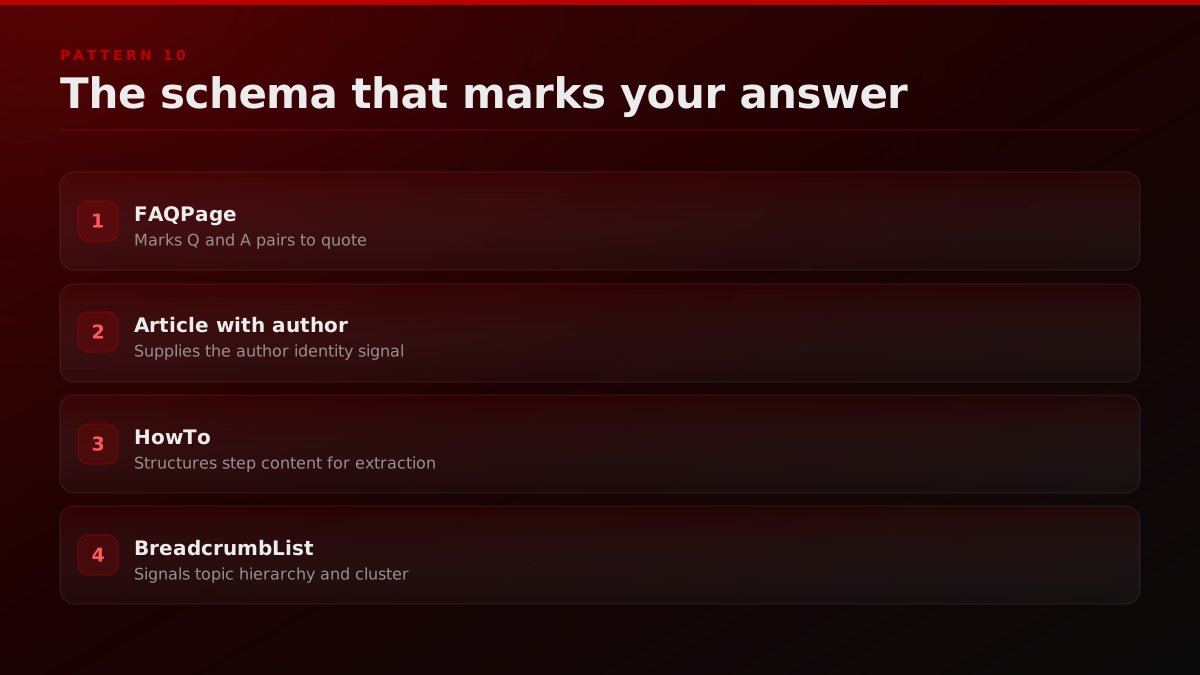
Ship FAQPage, Article with a named author, HowTo where you have steps, and BreadcrumbList across the pages you want cited. Google supports these types through its structured data documentation, and implementing them is usually a few hours of developer work. Schema does not make you trusted, and it will not rescue a buried answer, but it makes your structured answer explicitly machine-readable and disambiguates your entity. It is the last layer, applied to content that is already extractable, which is why it sits at pattern 10 and not pattern 1. Which types matter most, and the one that Google recently deprecated, is covered in our guide to schema markup for AEO.
The evidence here is a useful corrective against schema-first thinking. Markup on top of weak structure moves nothing, as the largest study on the question found.
Schema buys readability, not trust
A widely shared 2026 study tracked 1,885 pages that added JSON-LD schema between August 2025 and March 2026, matched them against 4,000 control pages, and measured citation changes across Google AI Overviews, AI Mode, and ChatGPT. Adding schema alone produced no major uplift on any platform. The honest reading is not that schema is useless. Schema makes the answer machine-readable and disambiguates the entity, which is a prerequisite for clean extraction. It is just not a trust signal by itself. A page that ships FAQPage markup on top of a buried answer, no first-party data, and thin coverage stays uncited. Schema is pattern 10 of 12 for a reason. It is the last layer, applied to content that is already structured to be lifted.
Source: 2026 schema and AI citations study, 1,885 pages
11. Signal freshness
Show a visible last-updated date and keep the underlying data current. Recency is a repeatedly observed citation signal: answer engines lean toward sources that look maintained, and a dated update line plus current-year figures both help. This is also the cheapest pattern to neglect, because content that was structured perfectly two years ago quietly loses citations as the model favors fresher sources. Refresh the numbers, update the date, and treat a high-value page as a living asset rather than a publish-once artifact. Refresh it carefully, though: what citation decay means for content strategy covers a real failure mode where the wrong kind of update, restructuring rather than data-only, can trigger a temporary citation drop of its own.
12. Name your entity consistently
Use one clean, unique brand and product name, referenced the same way everywhere, so the model can map your content to a real entity and credit it. Answer engines resolve questions against entities, not strings. Google organizes what it knows as a knowledge graph of real-world entities, and its guidance on AI features leans on that same entity understanding. A name that reads like a generic keyword gets treated like a keyword and never attaches to your brand, which is how a well-structured page gets its facts lifted while a competitor gets named. Consistency across your own site, your profiles, and third-party mentions is what turns a string into a citable entity, and it is the on-page half of the entity work described in how AI Overviews decide which brands to cite.
Aleyda Solis
@aleyda
Are affiliate sites really "dead" because of AI Overviews? Not all of them! For example: RunRepeat, Pack Hacker or CleverHiker are still growing YoY, even though AI Overviews now appear on 81-95% of their top non-branded queries based on Similarweb traffic data.
A keyword-shaped brand name is invisible to the model
Answer engines resolve questions against entities, not strings. Google maintains a knowledge graph of real-world entities, and AI Overviews answer by pulling from sources mapped to those entities. If a brand name reads like a generic keyword, the model treats it like a keyword and never associates the content with the brand. That is why entity consistency is a structural pattern and not a branding nicety. A name that is uniquely identifiable, referenced the same way across the web, and cleanly mapped to a real entity becomes citable. A name that is interchangeable with 500 other sites stays unnamed inside the answer no matter how good the content reads.
Source: Google Search Central, AI features and your site, 2026
The pattern that loses the box: burying the answer
The fastest way to stay uncited is to bury the answer. A page that opens with the history of search, three paragraphs of context, a personal anecdote, and only reaches the answer at paragraph seven is optimized for dwell time and scroll depth, which are human-engagement metrics, not retrieval metrics. The engine splits the page into passages, finds no chunk near the top that answers the query, and reaches for a competitor that led with the answer.
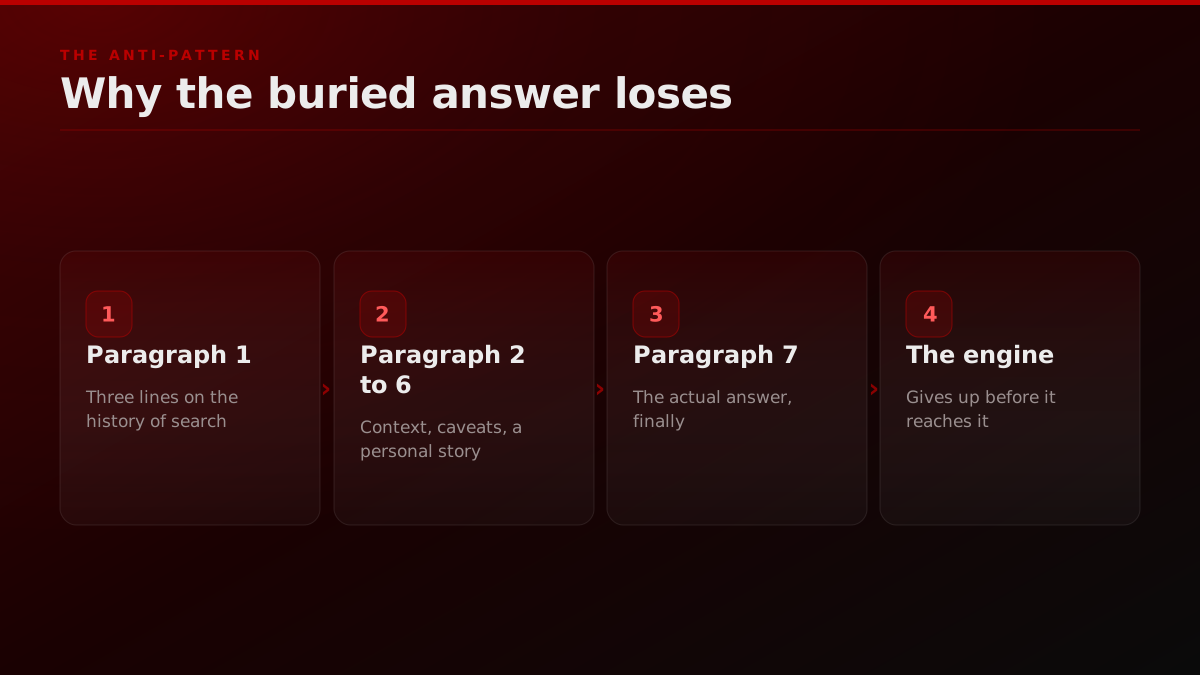
This is the single most common failure the FORKOFF lab sees, and it is not a content-quality problem. The content is often excellent. It is a structure problem, and a related one shows up on the technical side when a page hides its answer behind heavy JavaScript that the crawler never renders.
Operator noteA JS-off render test caught 3 of 5 client sites hiding the answer below the fold. The crawler never reached it. Day-one finding., FORKOFF GEO lab onboarding, 2026
The upside of fixing it is large precisely because so few pages do. The answer-first advantage that one operator measured is not a rounding error.
The fix is not more content. It is structuring each passage so an answer engine can read and lift it whole, which is the discipline Exposure Ninja walks through in this content-first breakdown.
How To Create and Optimise Your Content for AI Search
Exposure Ninja
Exposure Ninja on how to create and structure content so AI search engines can read and cite it.
How do you measure whether the patterns are working?
Measure AI Overview visibility the way you would any other channel: with a fixed set of buyer questions, run across the AI surfaces on a schedule, scored on cite rate and share of voice. Cite rate is the share of your prompt set where the brand is named or linked. Share of voice is your slice of all brand mentions versus competitors. Run the same set weekly, because answers shift constantly and a one-time audit tells you almost nothing about your real position.
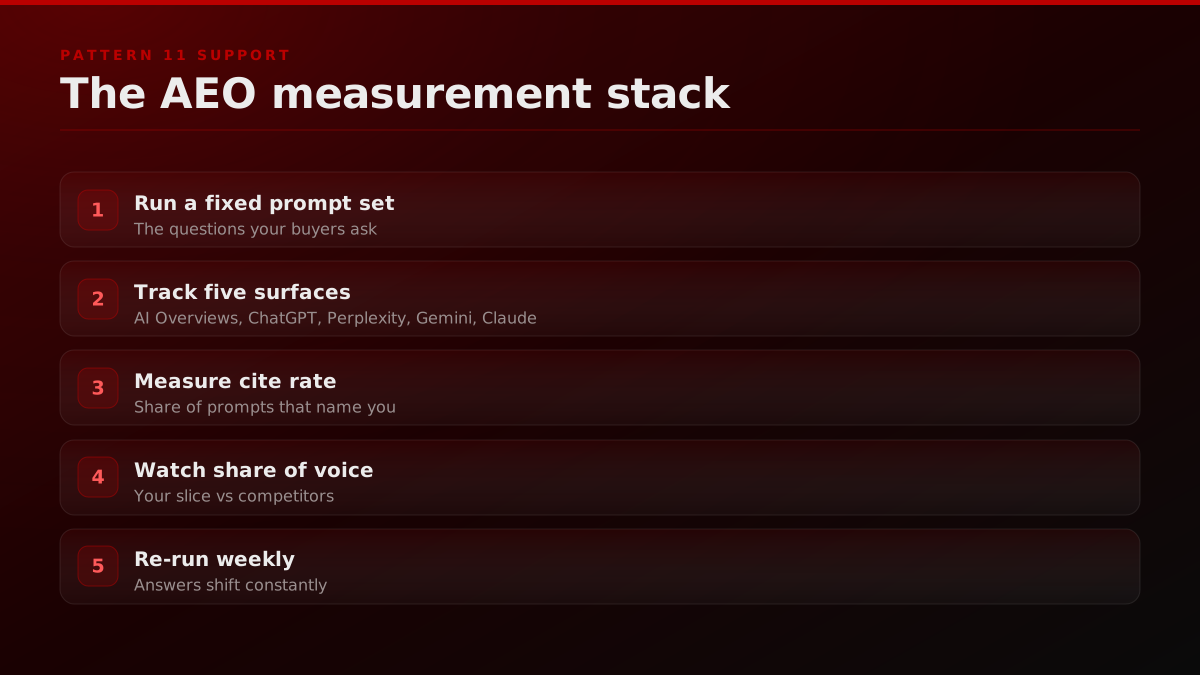
The tooling can be as simple as a spreadsheet and incognito windows, or a checker that automates the sweep across surfaces. The free AI search visibility checker covers five surfaces including AI Overviews, and the full method, including how to build the prompt set and read the results, is in our guide to measuring share of AI citations. SMA Marketing walks through a practical version of this loop.
How to Optimize for AI Overviews
SMA Marketing
SMA Marketing walks through practical ways to optimize a page for AI Overviews.
The weekly cadence matters more than the tool. Cite rate is volatile, and the only way to know whether a structural change helped is to watch the same prompts before and after. Treat it like a conversion experiment: change one pattern on a page, hold the rest, and measure the shift over two or three weeks before you conclude it worked. The same measurement discipline underpins how the best ChatGPT citation strategies get built, because guessing which structural change moved the needle is how teams waste a quarter.
Operator noteWe re-run the same 40 prompts weekly. Cite rate swings 10 points week to week. A one-time audit tells you almost nothing., FORKOFF citation lab, 2026
Is AI Overview optimization just SEO with a new name?
Partly, and it is worth being honest about that. The more skeptical practitioners are right that a lot of this is disciplined SEO sharpened for a new consumer: question-format titles, front-loaded answers, clean structure, and consistent entities are good practice regardless of AI Overviews. Google itself has said the SEO fundamentals still apply to succeeding in AI search, so nothing here asks you to abandon crawlability, quality content, or links. What is genuinely new is the retrieval mechanism underneath, which changes the unit of optimization from the page to the passage and rewards extractability in a way classic ranking never directly tested. If your site fails at the crawl layer before any of this matters, start with the technical side in our agent-ready site audit, then come back to structure.
The terminology debate, whether to call it AEO, GEO, or AI search optimization, matters far less than the structural work, and the leading consultants say as much. It matters even less once a vendor narrows the pitch to one engine: our breakdown of ChatGPT SEO services pricing covers what that single-engine version of the same purchase actually costs. The 12 patterns are the durable part. Whatever the acronym settles on, an answer-first, question-headed, densely-sourced, schema-marked page is what gets cited, and a keyword-stuffed wall of text is what gets read and skipped.
One real AEO case, four months of mostly structural work
The clearest proof that structure carries the load is watching visibility climb as the structure improves. In a public four-month AEO case, an operator working a local service business rebuilt the content around question-titled pages matched to how people actually prompt assistants, cleaned up entity consistency across listings, and tracked a fixed prompt set across surfaces. Overall AI visibility crossed 50 percent and share of voice reached 48 percent against a nearest competitor near 19 percent, with almost no work that was not structural.
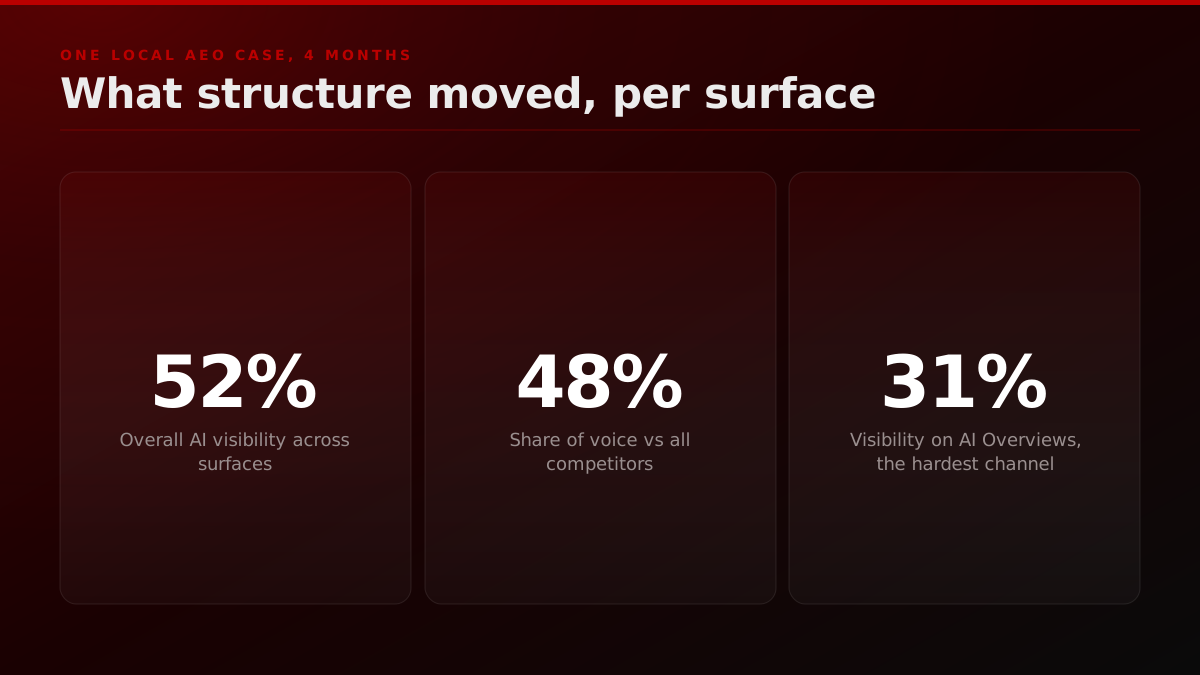
The honest part of that case is the same one this whole post insists on: AI Overviews stayed the hardest surface even as the others moved, sitting near 31 percent visibility because the Overview does not trigger on every query and the citation bar is high. Structure got the brand into the answer more than half the time overall. It did not make the AI Overview trivial, and no on-page tactic will. Off-page corroboration, the brand mentions and third-party references that build entity trust, is the other half of the answer engine optimization playbook, and it pairs with structure rather than replacing it.
The verdict: structure is the cheapest lever most brands are not pulling
Getting cited in an AI Overview is engineered, not earned by luck, and the engineering is mostly structural. You do not need a higher domain rating or a bigger content budget to start. You need to lead every section with the answer, phrase headings as the questions buyers ask, write passages that stand alone, put comparisons in tables, anchor claims to dated numbers, mark the whole thing up with schema, and keep it fresh. Twelve patterns, most of them a rewrite rather than a rebuild.
The brands that win the box are boring about it. They pass every pattern, on every page they want cited, and they measure cite rate weekly so they know it is working. If you want to see which of the 12 your pages are missing before an answer engine does, that is exactly the audit FORKOFF runs, alongside the GEO citation lab data, the ranking-factor side of AI Overviews, and the wider generative engine optimization playbook for SaaS. Related reading: how to get cited by ChatGPT, the B2B AEO checklist, Perplexity versus Google AI Overviews, Reddit as an AI citation source, and what an AI SEO / AEO agency actually costs in 2026 if you are pricing this work against a vendor quote. For the services, see answer engine optimization, generative engine optimization (GEO), LLM SEO, and Perplexity SEO.