If you are building a DeFi protocol, the number that decides whether you exist is Total Value Locked. It is the dollar value of everything deposited in your contracts, and it is the closest thing DeFi has to a single trust score. The hard part is not defining it. The hard part is that you start at zero, the total pool of DeFi capital is smaller than it was two years ago, and most of that capital already belongs to protocols that pay it to stay. Getting from zero to your first real TVL is the whole game, and it is a distribution and trust problem long before it is a yield problem.
The 30-second answer on DeFi TVL
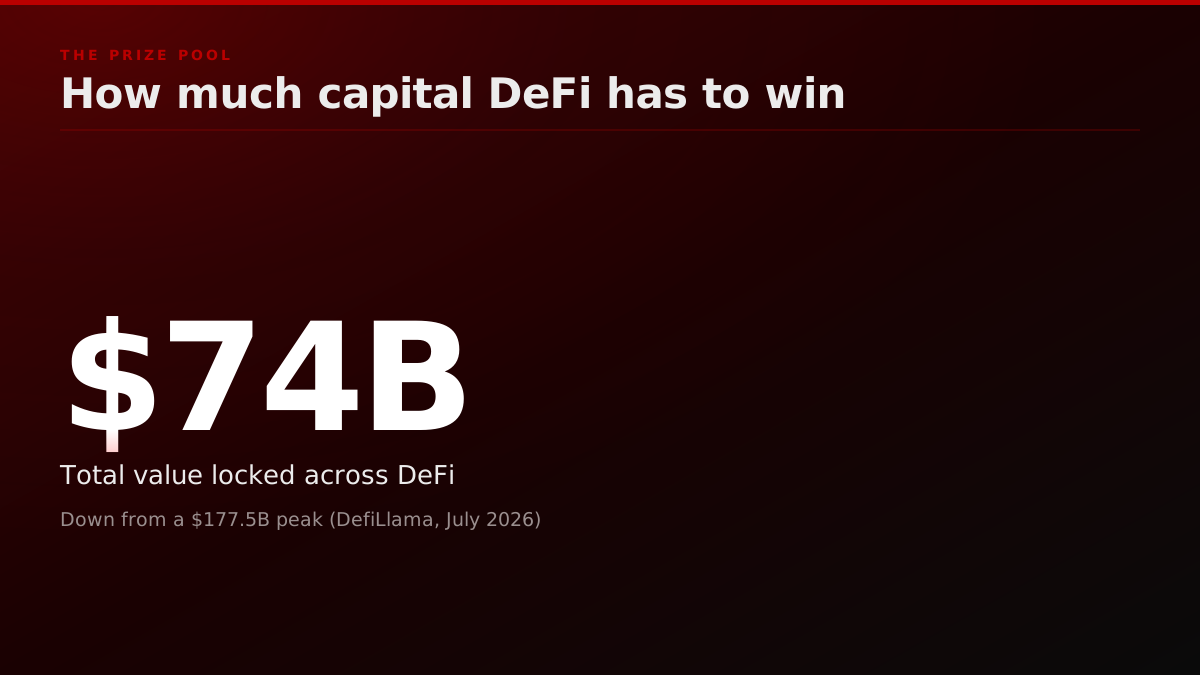
DeFi protocol marketing is really a Total Value Locked problem. The prize is large and shrinking: total DeFi TVL sits near $74B in July 2026, down from a $177.5B peak in November 2021, and most of it recycles between the same protocols (DefiLlama). Getting from zero to your first real TVL is not a "more KOLs" problem. It is a trust, incentive-design, and distribution problem. Earn deposit trust before you ask for capital, design incentives so liquidity stays when rewards stop, distribute where on-chain capital actually decides, make the first deposit frictionless, and retain past the emissions. The protocols that treat TVL quality as the scoreboard compound. The ones that rent mercenary capital watch it leave, as Blast and Berachain both did.
The reflex is to reach for incentives. Turn on liquidity mining, print a high APY, and watch the TVL chart go vertical. It works, briefly, and then it does not, because the capital you bought with emissions leaves the moment the emissions slow. The operators who have lived through this say it plainly.
buffalu
@buffalu__
tvl is now a vanity metric
tvl is now a vanity metric
This guide is the playbook for doing it the durable way. It defines what TVL actually measures and where it lies to you, explains why most launches stall in the mercenary-capital trap, and lays out a five-phase sequence to take a protocol from zero to a base of TVL that does not evaporate. Every number here is either a first-party pull from the DefiLlama API or an inline citation to a primary source, because a post about trust that invents its own data would be self-defeating. If you would rather see the broader growth loop this sits inside, the web3 go-to-market playbook is the parent guide, and the engagement scope for DeFi protocols is the short path.
About these numbers
The TVL figures in this post come from two places, and it is worth being explicit about which is which. The market-level and protocol-level TVL numbers (total DeFi TVL near $74B, the $177.5B November 2021 peak, chain concentration, and the peak-to-now drops for Blast, Berachain, EigenLayer, Ethena, and Blur) are first-party pulls from the DefiLlama API taken on July 12, 2026, so they are exact as of that date and will drift as the market moves. The historical growth stories (Compound's DeFi Summer, Ethena's ramp, Hyperliquid's launch) are attributed inline to primary reporting. Agency pricing ranges are FORKOFF operator estimates from publicly listed retainers as of mid-2026. Nothing here is a projection dressed as a fact.
What DeFi marketing is, and the funnel it has to move
What is DeFi marketing? The work of turning a protocol's liquidity, yield or lending mechanic into deposits from wallets that stay. It differs from consumer or B2B marketing in one way that changes everything: the conversion event is a signed transaction with real money at risk, so trust has to be established before the first click, not after it.
The funnel, from awareness to TVL. Awareness is where most of the spend goes and where the least of the value is made; a protocol that is known but not trusted has a wallet-connect rate near zero. Activation is the wallet connection and the first small deposit, and it is won by audits, a readable risk page, and a founder who answers questions in public. Engagement is the second and third interaction, where the protocol either becomes a habit or a one-off farm. Retention and TVL growth follow from the yield staying competitive and the exits staying painless; a protocol that makes withdrawal slow loses the deposit it just won.
The analytics problem. Most DeFi teams measure TVL and stop, which hides the two numbers that predict whether TVL holds: the share of deposits from wallets older than a month, and the share of withdrawals that leave the protocol entirely rather than moving between pools. Both are readable on-chain, both are ignored in most dashboards, and both are what a serious LP looks at before sizing a position.
Pre-launch versus post-launch. Before launch the job is a waitlist of wallets that have already read the risk page and a KOL slate vetted for real audiences; after launch the job is proof, meaning audits published, incidents handled in public, and the first month of yield reported honestly. The playbook in the sections below follows that order.
For the KOL slate, how to vet a crypto KOL before you pay is the checklist we use; for the wider positioning work read what a Web3 marketing agency does for a protocol.
Reviewed 2026-09-22 against the live search results for this topic: the questions people ask about it, and the pages that rank for it, are reflected in the section above.
What does total value locked actually measure?
Total Value Locked is the sum, in dollars, of every crypto asset sitting in a protocol's smart contracts, whether it is lent, staked, supplied to a pool, or posted as collateral. It became the default DeFi metric because it is public, hard to fully fake, and legible to a depositor deciding where to put money. But it measures deposits, not demand, and those are not the same thing. A billion dollars parked in an idle vault to farm an inflationary token is a weaker signal than a hundred million that is actively borrowed and traded. The same distinction between rented and real demand shapes GameFi player acquisition, where token demand only compounds when players hold because they actually play, and it shapes how an L1 or L2 grows its ecosystem after mainnet, where farmed TVL unplugs the moment the incentive stops. The most useful mental model is that TVL is a starting scoreboard, and the game is won on the quality of the number, not its size.
The distinction matters because the market has already learned it. The days when a big TVL headline alone moved a token are over, and the smartest operators now talk about productive TVL, the portion that is actually being used, versus the idle capital that only shows up to collect emissions. There is a whole podcast circuit built around this correction.
E63: Beyond TVL - Driving Real Growth in DeFi Ecosystems
ATX DAO
A podcast episode on driving real DeFi growth beyond the TVL vanity metric.
Operator noteDefiLlama's API put total DeFi TVL near $74B on July 12, 2026, down from a $177.5B peak in November 2021., DefiLlama, api.llama.fi, July 2026
The practical test is easy to apply. Ask what the deposited capital is doing. If it is being borrowed against, traded, used as collateral, or routed through a strategy that earns real fees, it is productive, and the yield it earns is coming from somewhere other than your token printer. If it is sitting idle in a vault whose only return is an emission you are funding, it is vanity TVL, and you are paying rent on a number. The two look identical on a chart and behave completely differently the moment conditions tighten. A new protocol that cannot articulate why its TVL is productive has not yet found product-market fit; it has found an emissions schedule.
That reframing is the single most important shift for a founder. If you optimize for the raw number, you will buy it with incentives and lose it when they stop. If you optimize for the quality of the number, you build a protocol people use for reasons that survive a bear market.
TVL is a starting scoreboard, not the finish line
Total value locked is the cleanest single number a new DeFi protocol has, and it is also easy to game. A billion dollars parked in an idle vault earning an inflationary token is worth less than a hundred million that is actually being borrowed, traded, or used as collateral. The distinction between productive TVL and vanity TVL is the difference between a protocol that has product-market fit and one that has an emissions budget. Track the number, but track the quality of the number harder, because that is what survives the first bear market.
Source: DeFi practitioner consensus, 2026
Why do most DeFi launches stall at low TVL?
Most launches stall because they try to buy TVL before they have earned it, and the capital they buy has no reason to stay. The pattern is so consistent it is almost a law: a protocol launches, turns on an aggressive liquidity-mining or points program, prints a triple-digit APY, and rockets up the DeFi charts. Professional farmers move in within hours. Then the emissions taper, or a competitor pays more, and the same capital moves out just as fast. What is left is a fraction of the peak and a token chart that tells the whole story. This is the mercenary-capital trap, and the on-chain record of it is brutal.
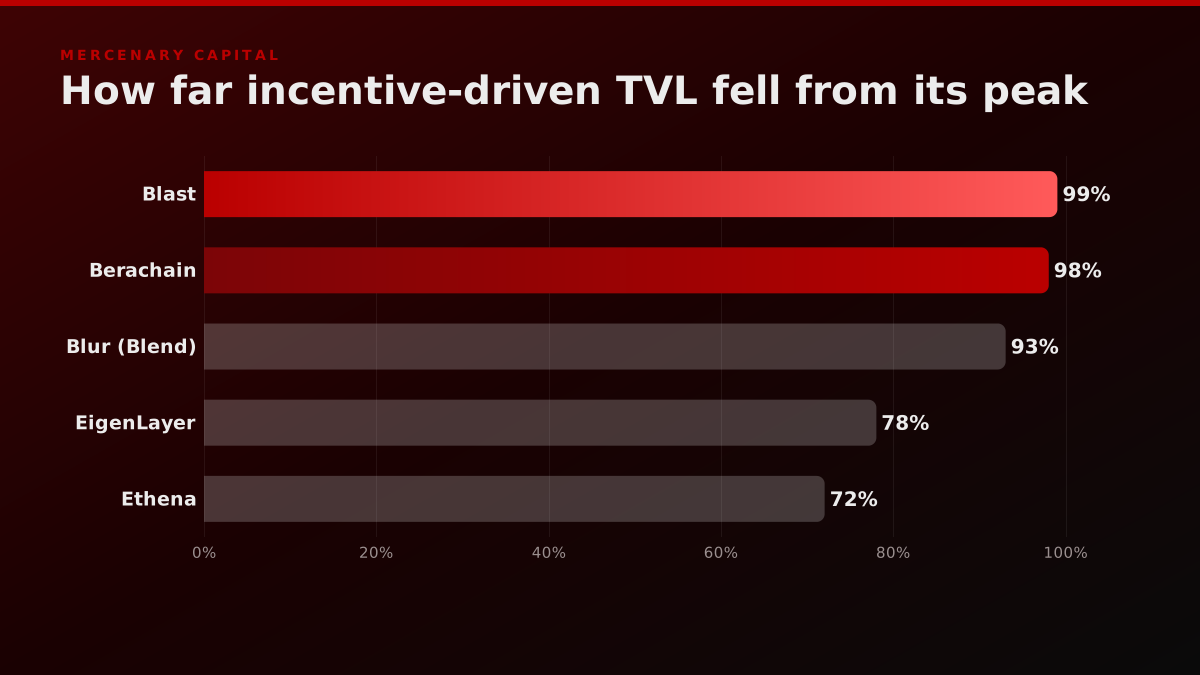
Those are not cherry-picked failures. Each was a number-one story at its peak. Blast was the fastest chain ever to $1B TVL at the time; it is down roughly 99% from that peak (DefiLlama). Berachain crossed $3B; it is down about 98% (DefiLlama). EigenLayer, the biggest restaking story of the last cycle, went from a $22B peak to under $5B (DefiLlama). The common thread is not bad products. Several of these are perfectly good protocols. The thread is that the capital never had a reason to stay past the incentive, so when the incentive normalized, the capital did too. The full picture in one table.
When incentive-led TVL leaves, peak to now
| Protocol or chain | Peak TVL | TVL July 2026 | Drop |
|---|---|---|---|
| Blast | $2.26B (June 2024) | About $30M | 99% |
| Berachain | $3.31B (March 2025) | About $50M | 98% |
| Blur (Blend) | $220M (March 2024) | About $10M | 93% |
| EigenLayer | $22.06B (August 2025) | $4.94B | 78% |
| Ethena | $14.98B (October 2025) | $4.25B | 72% |
First-party pull from the DefiLlama API, July 12, 2026. The pattern is consistent, incentive-driven TVL recedes toward the level real demand supports.
The people who track DeFi capital for a living saw it coming, because the tell is always the same: capital that arrives for a yield leaves for a yield.
Danger
@safetyth1rd
Berachain tvl down 50% on the month. Love by the sword die by the sword. Jus like blast, attracting mercenary capital is a fools game
Berachain tvl down 50% on the month. Love by the sword die by the sword. Jus like blast, attracting mercenary capital is a fools game
Operator noteBlast's chain TVL fell from a $2.26B peak in June 2024 to about $30M by July 2026, a 99% drop., DefiLlama chain data
Operator noteEigenLayer dropped from a $22B TVL peak in August 2025 to under $5B eleven months later., DefiLlama protocol data
Underneath the protocol-level story is a structural one. Liquidity providers and the protocols they fund are not actually aligned. The LP wants the highest risk-adjusted yield anywhere; the protocol wants liquidity that stays. That tension is why so many farmers get burned and so many protocols get hollowed out at the same time, a dynamic the community discusses openly.
Why do LPs keep getting rekt by the protocols they support?
An r/defi discussion of the structural misalignment between liquidity providers and the protocols they fund, and why LPs so often end up on the losing side.
Incentives rent liquidity, they do not buy it
There is roughly $70-75B of value locked across DeFi in mid-2026, and a large share of it is the same capital rotating between whichever protocol pays the highest emissions this month. When a new protocol turns on a liquidity-mining program, it is not attracting permanent depositors. It is renting a pool of professional farmers who will leave the day a better yield appears somewhere else. That is the mechanism behind almost every "TVL pumped then collapsed" story. The number went up because the protocol was paying for it, and it came down the moment the payments slowed.
Source: DefiLlama total value locked data, July 2026
The lesson is not that incentives are bad. It is that incentives are a cold-start tool, not a growth strategy. If you cannot answer the question "why does this capital stay when we stop paying it," you do not have a TVL plan. You have an emissions budget with an expiry date.
The zero-to-first-TVL playbook
Getting to your first real TVL is a five-phase sequence, and the order matters as much as the parts. You earn trust before you ask for deposits, design incentives so liquidity has a reason to stay, distribute where on-chain capital actually makes decisions, remove the friction on the first deposit, and build the retention mechanics before your emissions run dry. Skip the trust phase and your incentives attract only farmers. Skip the retention phase and everything you bought leaves. Each phase is a spoke of the broader web3 go-to-market engagement, and each one compounds the next.
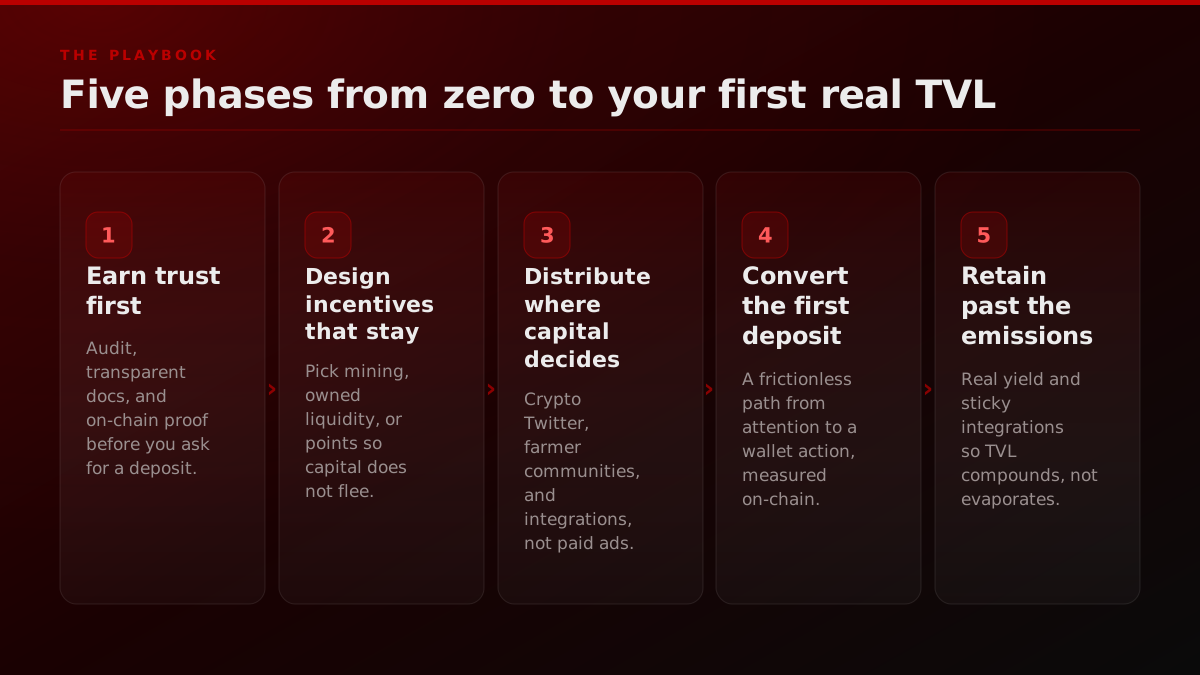
The sections below take them one at a time, with the specific moves that separate a protocol that builds durable TVL from one that rents a spike.
Phase 1: Earn trust before you ask for deposits
Trust is the prerequisite, and in DeFi it is unusually concrete. A depositor is handing your contracts custody of their money, so before any marketing lands, the protocol has to answer the only question that matters: what happens to my funds if something goes wrong. This is the same dynamic that governs regulated finance, where a trust-first fintech distribution motion puts proof of safety ahead of reach for exactly this reason. The good news is that every trust signal in DeFi is verifiable, so you can prove your case with receipts instead of promises. The bad news is that the absence of those receipts is just as visible, and a missing audit or an anonymous unreachable team reads as a warning to exactly the sophisticated capital you want.
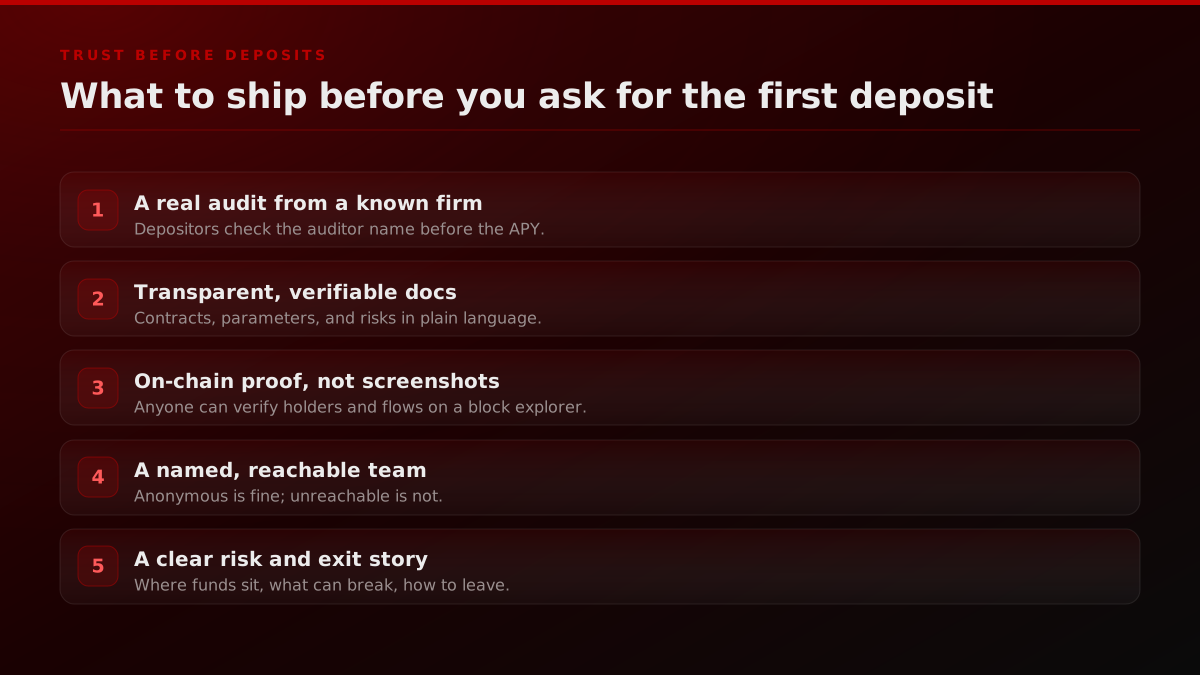
Ship the trust stack before the launch push, not after. A real audit from a recognized firm, documentation a technical user can actually verify, holder and flow data anyone can check on a block explorer, a team that is reachable even if pseudonymous, and an honest risk and exit story. This is where answer engine optimization does real work, because the first thing a careful depositor does is search your name and read what comes back. If the top results are your audit, your docs, and a clear explanation of how the yield is generated, you have pre-answered the objection. If the top results are a thin landing page and a Telegram invite, you have confirmed the fear. The reference sources a researcher cross-checks, from Ethereum's DeFi overview to data aggregators like CoinGecko, are also where your protocol should already be listed and accurate before you spend a dollar on reach.
On-chain proof lets a new protocol earn deposit trust faster
DeFi is the one place where the trust problem has a verifiable answer. A depositor cannot see inside a web2 company, but they can read a contract, check an audit, and watch holder flows on a block explorer before they commit a dollar. That cuts both ways for a new protocol. It means you can prove your safety with receipts a skeptic can independently check, and it means you cannot fake it for long. The teams that lean into verifiable proof shorten the distance from launch to first deposit. The ones that ask for trust on a promise stay stuck at zero.
Source: Ethereum Foundation, DeFi overview
Phase 2: Design incentives that do not just rent capital
Incentive design is where most of the durable-versus-rented outcome is decided, so it deserves more thought than "what APY do we print." You have three broad tools, and they fail in different ways. Liquidity mining rents capital from outside farmers and loses it when rewards stop. Protocol-owned liquidity has the treasury hold the position itself, so it cannot be farmed away, at the cost of treasury capital. A points program borrows against a future airdrop, which works right up until the airdrop lands and the farmers leave. The craft is in blending them so the cold-start speed of mining hands off to the durability of ownership before the emissions run out.
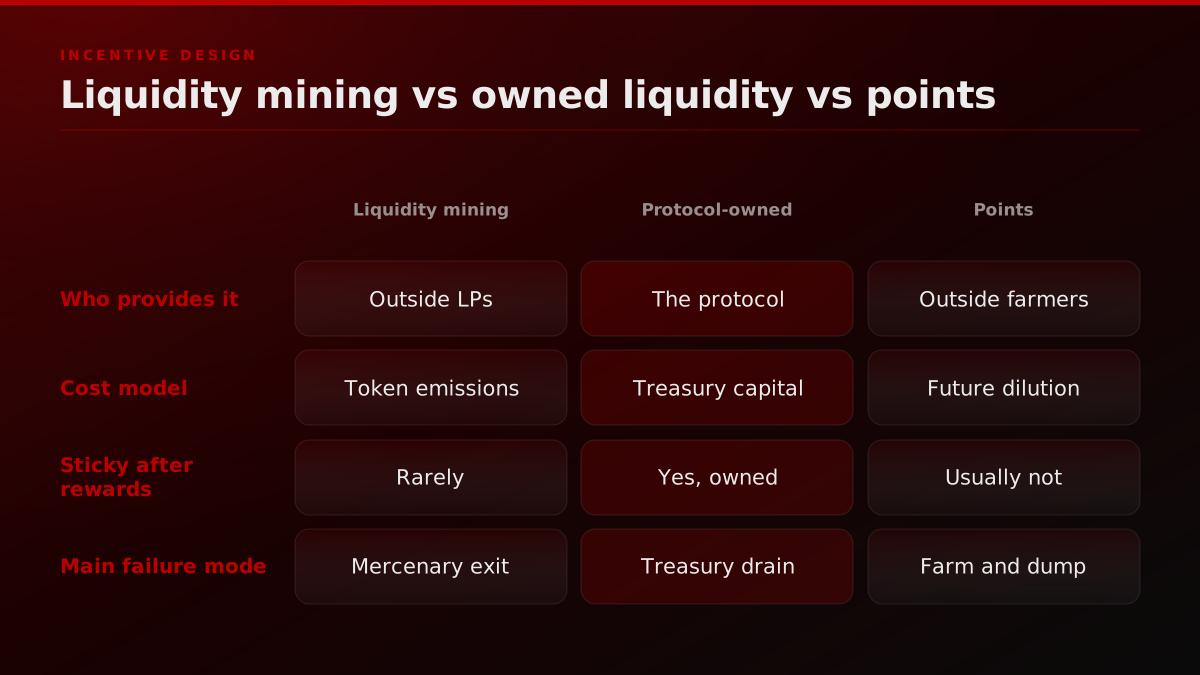
How the three liquidity mechanisms compare
| Mechanism | What it is | Retention when rewards stop | Best fit |
|---|---|---|---|
| Liquidity mining | Pay outside LPs in emissions to deposit | Low, farmers rotate out | Fast cold-start, if you accept churn |
| Protocol-owned liquidity | Treasury holds the liquidity itself | High, you own it | Durable base you fully control |
| Points program | Reward future-airdrop expectation | Usually low after the airdrop | Pre-token hype, with retention risk |
Most protocols blend all three; the mistake is treating a points or mining spike as if it were product-market fit.
The core problem with leaning only on emissions is simple arithmetic, and practitioners have been saying so for years.
cs361
@0xcs361
Deep liquidity is paramount to the success of most protocols. However, incentivizing liquidity mining through emissions is unsustainable and expensive. There must be a more efficient way.
Deep liquidity is paramount to the success of most protocols. However, incentivizing liquidity mining through emissions is unsustainable and expensive. There must be a more efficient way.
This is also why vote-directed emissions and owned liquidity have become such a large part of the design conversation. When a protocol lets token holders direct where rewards flow, liquidity becomes a market you can influence rather than a bill you simply pay, a dynamic the community has picked apart in detail. The token-design literature from firms like a16z crypto frames this well: a token is not a marketing giveaway, it is the coordination mechanism that decides who your liquidity belongs to and for how long. A design that rewards rotation will attract rotators. A design that rewards staying, through vote-escrow lockups, real-yield sharing, or ownership, attracts the holders who make TVL durable.
The practical rule is to know, before you launch, which mechanism carries each phase. Mining or points to solve the cold start when you have no liquidity and need some fast. A deliberate transition, funded from real protocol revenue or treasury-held positions, to carry the base once the initial attention fades. And a hard-nosed model of what each mechanism costs per dollar of TVL it actually retains, not per dollar it attracts, because those two numbers are wildly different and only the second one matters.
The Curve Wars never had a lending equivalent. Anyone else find that weird?
An r/defi thread on how Curve's veCRV gauges let token holders direct emissions, turning liquidity into a political market, and why lending never got the same mechanism.
Protocol Owned Liquidity vs Incentivised Liquidity on AMMs Ft. Austin Seiberlich
Economics Design
A breakdown of protocol-owned liquidity versus incentivized liquidity on AMMs.
If your incentive plan includes an airdrop or a points season, design it for retention from day one, because the default outcome is a farm-and-dump. The airdrop marketing playbook covers the sequencing, the sybil defense, and the post-token hooks that decide whether the capital stays.
Owned liquidity breaks the farm-and-leave cycle
The structural fix for mercenary capital is to stop renting and start owning. Protocol-owned liquidity, where the treasury holds the liquidity position itself, cannot be farmed away because there is no external farmer to leave. It is not free, since the capital comes out of the treasury, and it is not right for every protocol. But it changes the question from "how long can we afford to pay for liquidity" to "how much liquidity do we permanently control." For a protocol trying to build a base of TVL that does not evaporate, that is the more durable foundation.
Source: DefiLlama protocol data, 2026
Phase 3: Distribute where DeFi capital actually decides
Distribution in DeFi does not look like distribution anywhere else, because the paid channels are largely closed to you and the audience makes decisions in specific places. Crypto ad policy on the major networks rules out the standard playbook, so the attention has to be earned organically on crypto Twitter, in farmer and researcher communities, on YouTube and podcasts, at events, and through the integrations that put your protocol in front of capital that is already on-chain. The founders asking the community how to attract their first liquidity providers are asking a distribution question, whether they frame it that way or not.
How do new defi protocol commonly attract LP?
A founder asks r/defi how new protocols and tokens attract liquidity providers, and which approach actually works, the exact zero-to-first-liquidity question this guide answers.
In practice that means running several connected surfaces at once. Credible KOL marketing placed in front of a yield-focused audience and measured by wallets rather than impressions, community and Twitter marketing that treats a Spaces or a thread as the top of a content cascade, Reddit marketing in the subreddits where researchers actually vet protocols, founder-led distribution through podcasts and events and sponsorships, and the integrations and composability that turn other protocols into distribution. The crypto KOL marketing framework goes deep on how to run the influence surface accountably instead of buying empty reach.
The highest-leverage of these is the one founders underrate: integrations. A lending market that plugs into a large money market, a vault that a yield aggregator routes into, a token that a major DEX lists with real depth, each of those is a distribution channel that brings capital already positioned to deposit. Getting listed and accurately tracked on the reference surfaces a researcher checks first, from DefiLlama to CoinMarketCap to Messari, is table stakes, because a protocol that does not show up in the tools capital uses to size a position effectively does not exist to that capital. The organic surfaces earn the attention; the integrations turn that attention into a short path to a wallet action.
Phase 4: Convert attention into the first deposit
Attention is worthless until it becomes a deposit, and the gap between the two is where most launches quietly lose their momentum. Someone reads a thread, likes what they see, visits the app, and then hits friction: a confusing first screen, an unclear risk, a bridge they do not trust, a deposit flow with three unexplained steps. Every point of friction on that path is a wallet that does not convert, and in DeFi the whole path is measurable on-chain, so you can see exactly where it breaks. The job in this phase is to make the first deposit the most obvious action a visitor can take.
That means a landing experience built around a single first action, a deposit flow that explains the risk in plain language instead of hiding it, and proof positioned exactly where hesitation happens. You can model the economics of that push, an outcome-priced engagement against a flat retainer, against the TVL you actually retain rather than the TVL you rent.
The first deposit is also where trust and conversion meet, because the moment of committing funds is the moment every doubt surfaces at once. This is why the trust stack from phase one pays off here: the audit link, the risk explanation, and the verifiable holder data are not brand assets, they are conversion assets, and they belong on the deposit screen, not three clicks away in a docs site. A depositor who has to leave the flow to satisfy a doubt usually does not come back to finish.
Measuring at the wallet level is not optional here. If you cannot say which piece of distribution drove which deposit, you are flying blind, and you will keep paying for reach that never touches a real depositor. The instrumentation is available in a way web2 marketers would envy: every deposit is an on-chain event you can attribute to a campaign, a referral, or a channel, so the feedback loop from "what we said" to "what capital did" is measured in hours, not quarters. Build that loop early, and every subsequent phase gets sharper because you are optimizing against deposits, not impressions.
Phase 5: Retain TVL after the emissions taper
Retention is the phase that separates a protocol from a promotion, and it is the one most teams under-build because it is invisible while the incentives are still flowing. The question that decides your future is simple: when the emissions taper, does the capital stay. It stays for two reasons, and only two. Either the product is genuinely useful, so the yield comes from real activity rather than token printing, or the liquidity is yours, held by the treasury and immune to a farmer walking away. Everything else is a countdown.
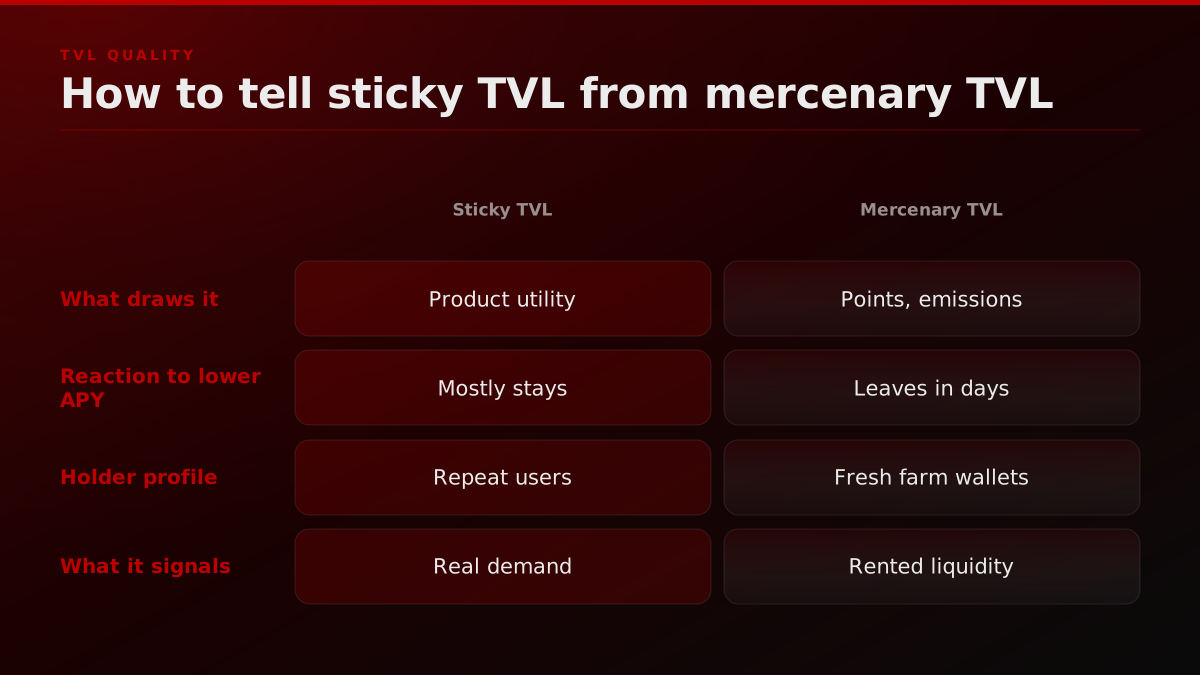
The clearest proof that this is possible is the protocol that did it without any of the usual crutches. Hyperliquid grew to billions in TVL with no venture funding and no mercenary-emissions program, by building something users wanted and aligning the token with the people who actually used it.
Hyperliquid Founder: How to Win in Crypto (by Building for Users, Not VCs) | E95
When Shift Happens
The Hyperliquid founder on growing by building for users instead of chasing VC-fueled incentives.
The practical retention moves are unglamorous and they work: real yield from protocol revenue instead of inflation, sticky integrations that make leaving costly, ownership of a base layer of liquidity, and a token design that rewards staying over rotating. None of it produces a viral chart. All of it produces TVL that is still there next quarter.
Real yield is the most important of these, and the one the market has learned to reward. When a protocol's yield comes from fees that real users pay, rather than from printing more of its own token, the yield is sustainable and the TVL behind it has a reason to persist. Research shops that track protocol revenue, like Messari, have made revenue and fee data a standard lens for exactly this reason: a protocol earning real fees is a business, and a protocol paying emissions to inflate a number is a countdown. The retention question, stated plainly, is whether your depositors are customers or farmers. Customers stay because the product is useful. Farmers stay only until the subsidy stops. Build for the first group, and you will spend the second year defending a base you actually own instead of rebuilding one that walked out the door.
What good looks like: real zero-to-TVL runs
The runs worth studying are the ones where you can separate the speed from the substance, because both a durable protocol and a doomed one can put up a fast chart. Compound kicked off DeFi Summer in June 2020, a run CoinDesk documented at the time: its COMP token took the protocol from under $100M to over $1B in a week, and the entire category grew from under $1B to over $10B in a few months. Blast used points and referrals to go from $230M to $1B in 35 days. Ethena took a slower and more durable path, roughly 500 days to $10B, on the back of a yield product with real demand. The contrast is the lesson.
Notice which of these held. Ethena and Hyperliquid built on products people actually use, and their TVL, while off its own peak in the 2026 downturn, sits in the billions rather than at zero. The pure incentive plays did not. That is the whole argument for optimizing the quality of TVL over the speed of it, and it is why serious industry coverage, from outlets like Blockworks, keeps asking whether TVL is even the right headline metric anymore. The answer for a founder is that TVL is the right metric to grow, but only the quality-adjusted version of it, the portion tied to real use and real ownership, is the one worth optimizing your entire go-to-market around.
Real zero-to-TVL runs and how fast they moved
| Protocol | The run | What made it work |
|---|---|---|
| Compound | Sub-$100M to over $1B in a week (June 2020) | COMP liquidity mining kicked off DeFi Summer |
| Blast | $230M to $1B in 35 days (early 2024) | Points program plus a viral referral loop |
| Ethena | $10B in roughly 500 days | A yield-bearing product with real demand |
| Hyperliquid | $6B TVL with zero VC funding | Airdropped 31% of supply, no lockups |
Two of these (Ethena, Hyperliquid) built durable TVL on product and ownership; the incentive-led runs did not all hold, as the peak-to-now table below shows.
The backdrop those runs happen against today is harder than the one the 2020 and 2021 stories enjoyed. The market is smaller, more concentrated, and more scarred by security failures, which means the bar for earning trust is higher and the tolerance for hype is lower.
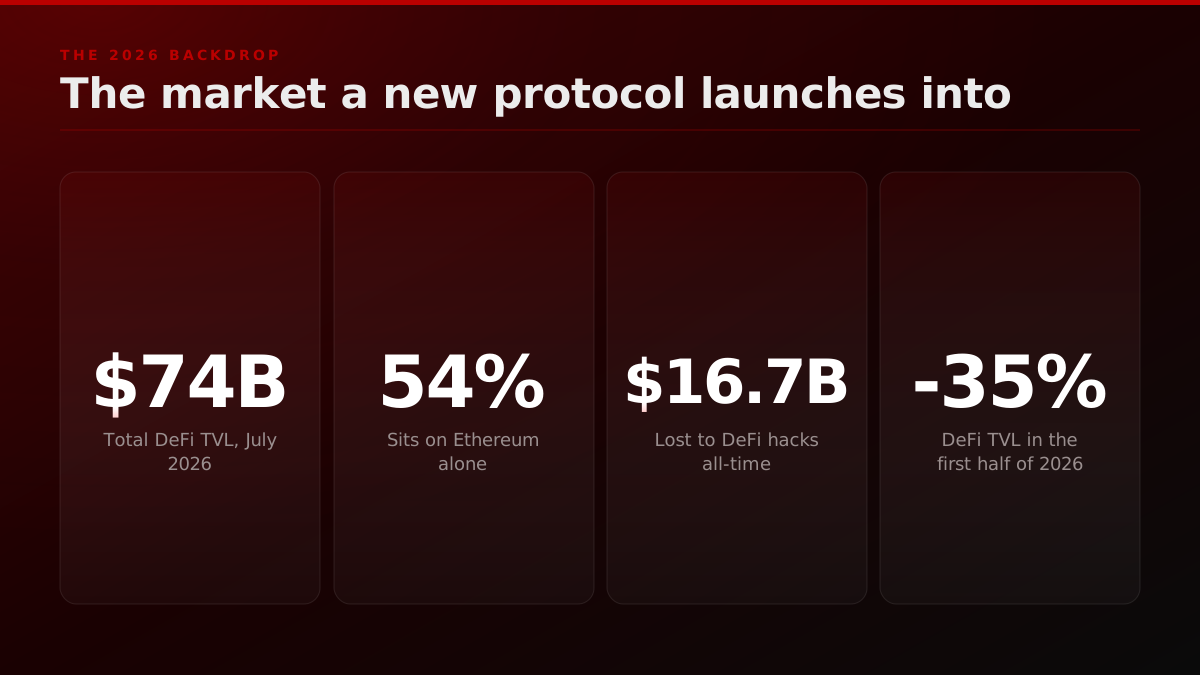
Read those runs the right way and the pattern is clear. Incentive-led speed is easy to buy and easy to lose. Product-led speed is slower to build and far harder to take away. Aim for the second, and use the first only as a starter, not an engine.
Trust is the real prerequisite
Security is not a compliance checkbox at the end; it is the foundation the entire TVL number sits on, because depositors have watched billions vanish and they price that memory into every decision. Value lost to DeFi hacks has run into the billions every single year, and a single large exploit can trigger a system-wide flight from otherwise-unrelated protocols as depositors de-risk. For a new protocol asking strangers to trust its contracts with real money, that history is the ambient skepticism you are marketing against, and no amount of distribution overcomes an unproven security posture.
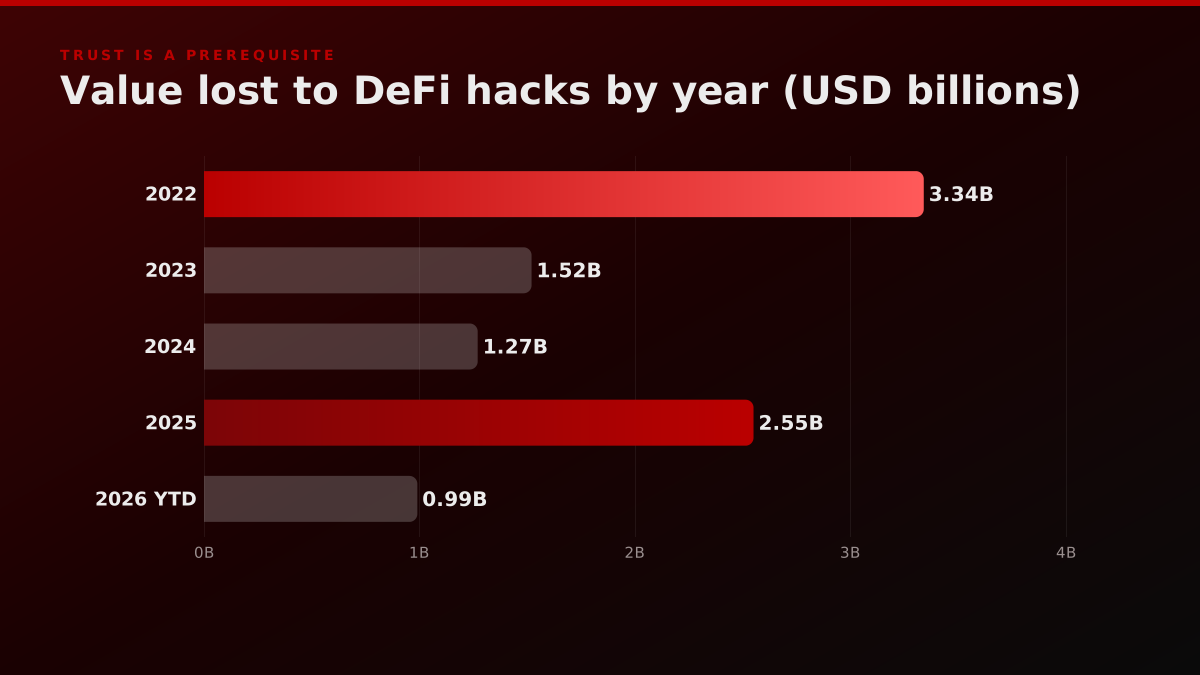
The numbers are not abstract. DefiLlama's hacks database records roughly $16.7B lost across hundreds of incidents, and Chainalysis research tracks the same grim annual drain. The takeaway for a founder is direct: an audit from a recognized firm, a public bug bounty, transparent risk documentation, and a clear incident-response plan are not marketing polish. They are the price of admission to the conversation, and they belong in your launch narrative, not buried in a docs footer.
Operator noteDefiLlama records about $16.7B lost to DeFi hacks across 581 incidents through mid-2026., DefiLlama hacks database
Where does DeFi TVL actually sit today?
Where you launch matters, because DeFi TVL is far more concentrated than the number of chains suggests. Ethereum still holds more than half of all locked value, and the top three chains together hold roughly two thirds, which means a new protocol chasing its first TVL is usually better served by launching where the sophisticated capital already lives than by trying to bootstrap an audience on an emerging chain with thin liquidity. The concentration also shapes the integration strategy, since the protocols worth composing with are clustered on the same few chains.
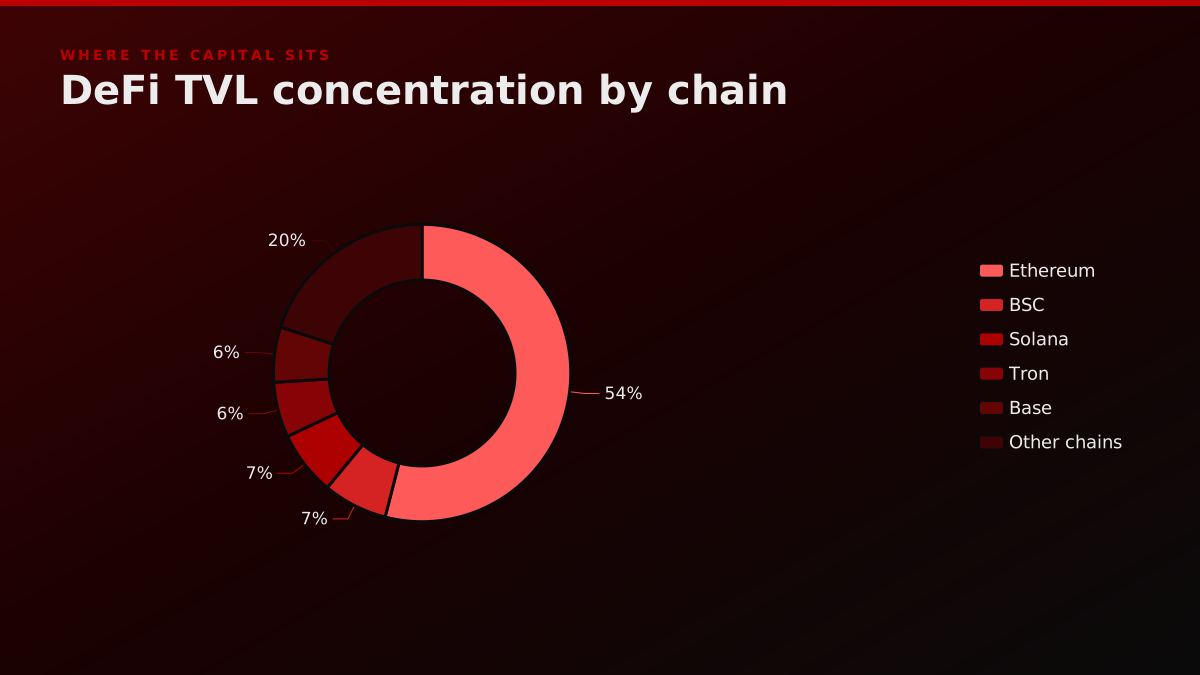
That is not an argument against newer chains, which can offer incentives, a less crowded field, and ecosystem support that a launch can genuinely use. It is an argument for being deliberate: pick the chain where your specific depositors already are, and treat the choice as a distribution decision rather than a technical default.
When should you bring in a Web3 GTM partner?
The right time to bring in outside help maps to your stage, and getting the timing wrong in either direction wastes money. Before you have a product or a token, an agency is premature, and a pre-seed protocol is usually better off running the budget-light guerrilla plays it can execute itself. The leverage is highest in the pre-TGE and launch window, when channel expertise, an existing audience, and PR relationships compress months of relationship-building into the few weeks that actually decide your launch. After launch, the mature pattern is a hybrid: community operations in-house, a partner for the surges around launches and events.
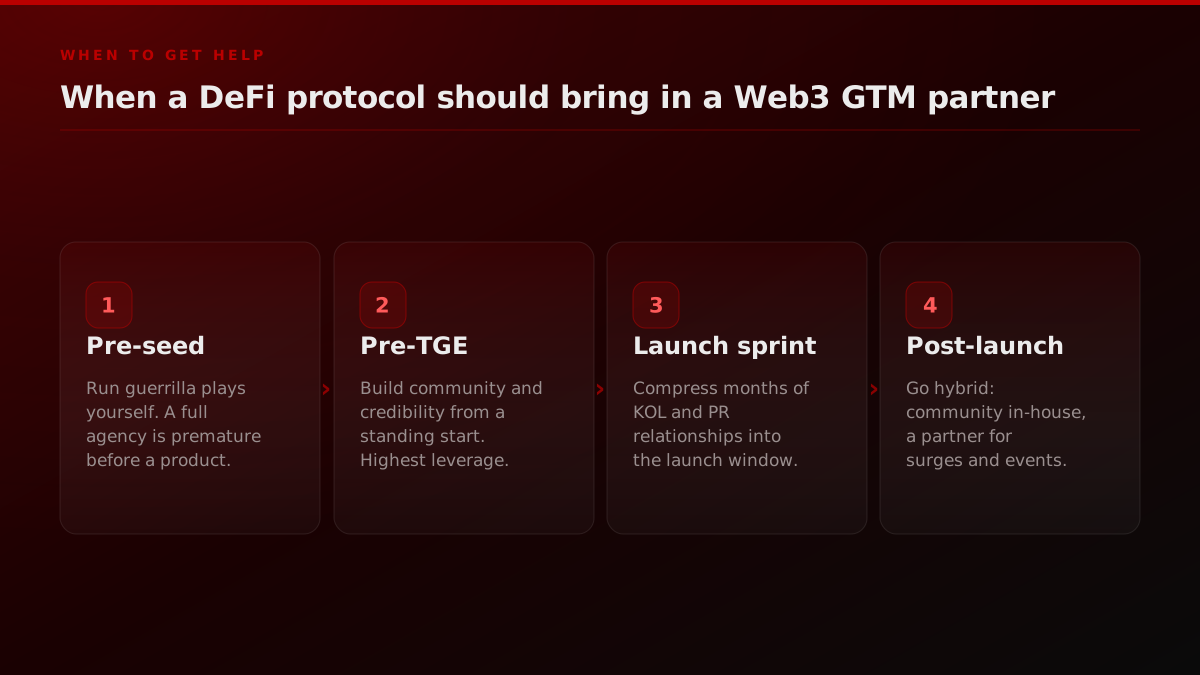
That is the shape of a DeFi go-to-market engagement done right, and it is the model FORKOFF runs. For a protocol approaching a token event, token launch and TGE distribution compresses the launch sprint, pre-TGE protocols get the community built from a standing start, and a founder funnel keeps the founder's voice carrying the narrative once you are in steady state. If your earliest stage is still pre-product, the guerrilla marketing plays for early-stage web3 protocols cover what to run yourself first, and the web3 marketing agency guide covers how to vet a partner before you sign.
The verdict
DeFi protocol marketing is a Total Value Locked problem, and TVL is a trust problem wearing a number. You can rent the number with emissions and watch it leave, the way Blast and Berachain did, or you can earn it by shipping trust before you ask for deposits, designing incentives so liquidity has a reason to stay, distributing where on-chain capital actually decides, removing the friction on the first deposit, and building retention before the emissions run out. The first path produces a chart. The second path produces a protocol. The on-chain record could not be clearer about which one survives the next bear market.
FORKOFF was built for the second path. We run Web3 go-to-market for DeFi protocols on an outcome-priced contract, from pre-TGE community through launch distribution, measured at the wallet level rather than in impressions. If that is the kind of launch you want, the next step is a conversation about your specific protocol and your TGE, not a generic proposal.