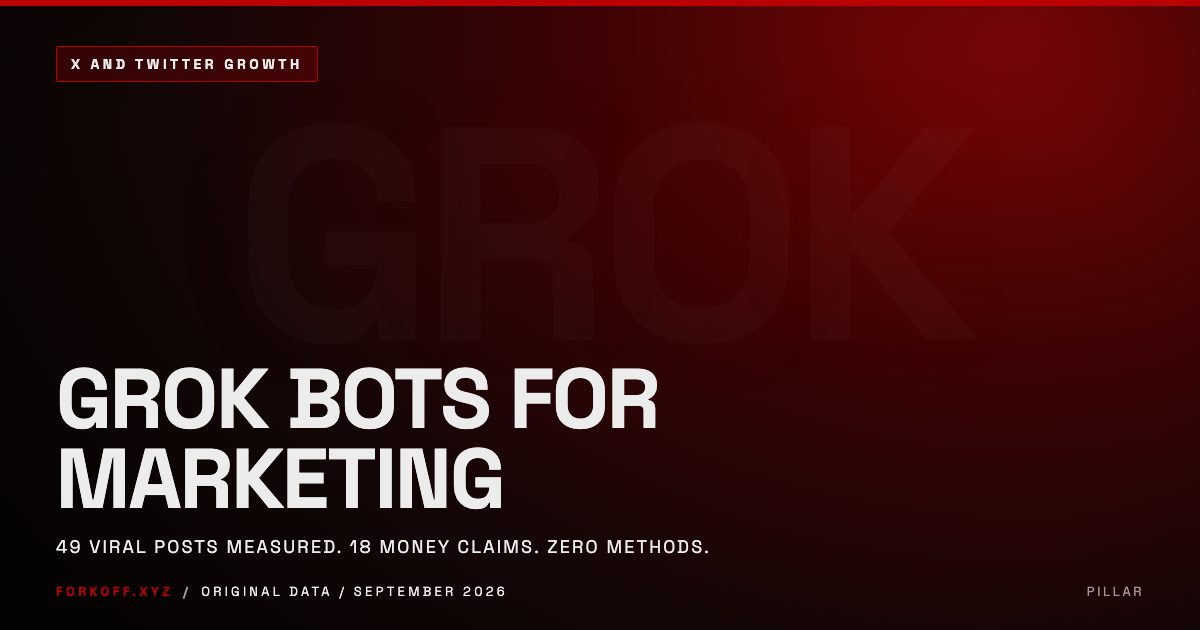
Three options, one decision, and most founders make it on gut feeling instead of the actual numbers. A fourth is now being sold hard on the timeline, and we measured it: Grok bots for marketing audits 49 of the posts claiming an agent stack replaces all three, and finds 18 money claims with zero methods behind them. A ghostwriter is the cheapest way to get a real voice on the account. An in-house hire is the most expensive, once the loaded cost is honest about it. An agency is the only one of the three that does not disappear when one person quits, gets sick, or takes a two-week vacation. None of that means one option is universally right, it means the right one depends on which constraint you are actually solving for, cash, control, or continuity.
The short version
There is no universally correct answer, the three options solve different problems. A ghostwriter is the cheapest entry point, real freelance rates on Reddit run $500 to $3,000 a month for combined copywriting and posting, sometimes $4,000 to $13,000 for a specialist who owns growth outcomes, but it is one person and one point of failure. An in-house hire costs the most on paper, four independent salary sources put the average US social media manager between $61,000 and $75,000 a year, which is roughly $5,900 to $7,700 a month once payroll tax, benefits and tools are loaded in, and it takes weeks to hire and onboard before a single tweet goes out. An agency sits in between on cost but wins on the two things neither alternative offers, a team that survives someone's two weeks' notice, and built-in reporting instead of taking someone's word for it. The right pick depends on whether the constraint is cash, control, or continuity.
What's the real difference between a Twitter agency, an in-house hire, and a ghostwriter?
A Twitter marketing agency is a team, usually a strategist plus one or more writers, sometimes a designer and a community manager, running the account against a plan with reporting attached. An in-house hire is a single employee, usually a social media manager or content marketer, who owns the account as one part or all of their job. A ghostwriter is a freelancer who writes in your voice and either posts directly or hands you drafts, almost always a single person with a writing-first skillset. All three get hired to do the same visible thing, post consistently and reply to what comes back, but they are built completely differently underneath.
The confusion is that all three get described with the same verb, "manage the account," which hides how differently they are built to fail. A ghostwriter fails by disappearing, they get a better client, or burn out on one account with no backup. An in-house hire fails by being expensive and slow to replace, exactly the gap between a fast-moving hiring process and a loaded salary this post keeps coming back to. An agency fails by being generic if you pick a bad one, a real and separate risk from the other two. Different failure modes require different questions before you sign anything.
What's a fair rate to hire a copywriter for managing a Twitter/Linkedin account?
I'd like to hire a copywriter to help manage a personal or brand Twitter/Linkedin account, this would involve posting 1-2 tweets/posts per day and engaging with replies. I've come across a wide range of pricing online, so I'd really appreciate insights from professionals here: what would be considered a fair… Show more
That Reddit thread is a good example of the actual confusion in the market. A founder posted asking what a "fair rate" even looks like for someone to post 1-2 times a day and handle replies, and the real answers ranged from $500 a month to $13,000 a month, from the same subreddit, for what reads on paper like the same job description. The spread is not noise, it maps almost exactly onto the agency-vs-in-house-vs-ghostwriter split this post is walking through, a light freelance scope at the bottom, a specialist promising a specific growth outcome at the top. What separates a $500 answer from a $13,000 one is rarely the platform, it is whether the person is promising an outcome or just showing up to post.
That gap also explains why comparing quotes side by side rarely settles anything on its own. A $500 quote and a $5,000 quote answering the same job posting are not competing bids for the same work, they are two different scopes wearing the same job title. Before comparing a single dollar figure between vendors, get each one to define what they are actually promising, posts published, replies handled, growth targeted, or nothing beyond "consistent presence," because the price only means something once the scope behind it is the same.
How much does each option actually cost per month?
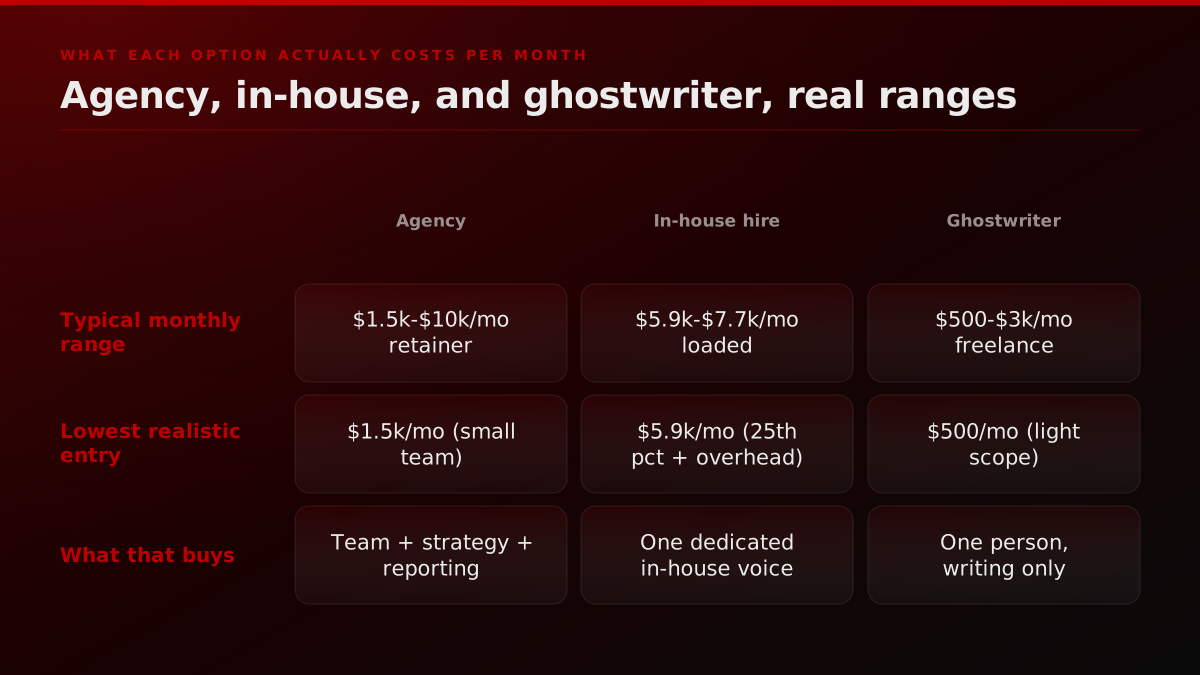
An in-house hire runs $5,900 to $7,700 a month once loaded correctly, an agency retainer runs $1,500 to $10,000 depending on scope, and a ghostwriter runs $500 to $3,000 for light coverage or up to $13,000 for a growth-outcome specialist. Those three floors rarely get compared honestly, because "hire someone in-house" sounds cheaper than it is until payroll tax, benefits, software and management overhead get added on top of the base salary.
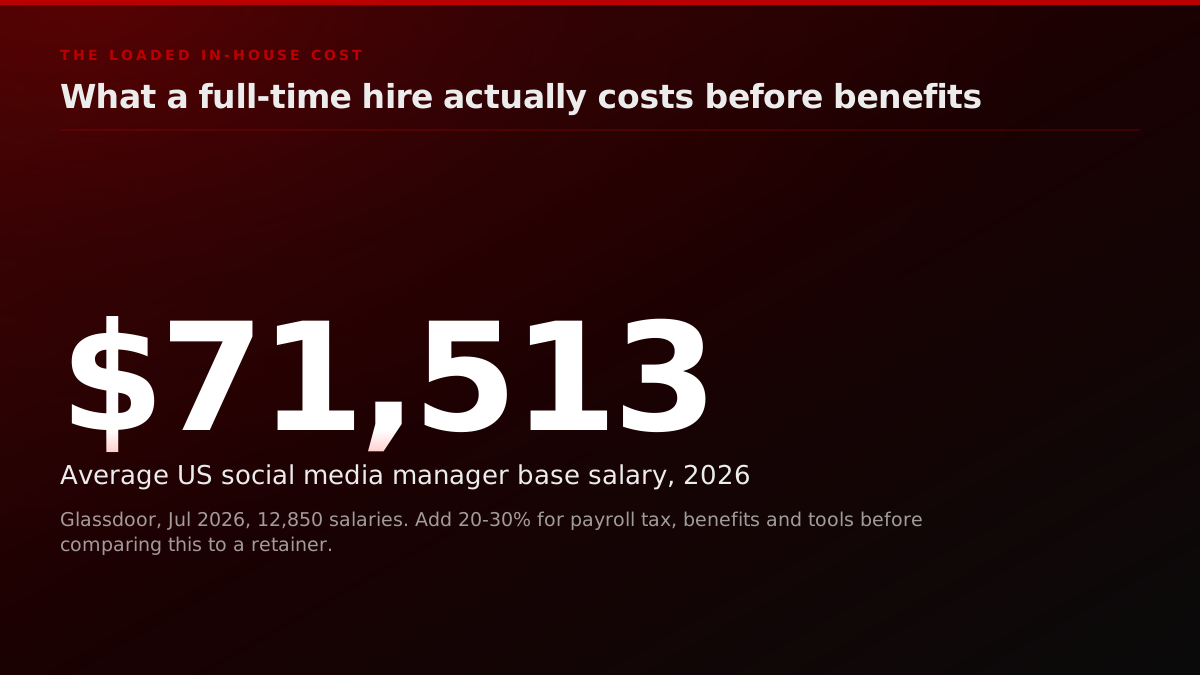
The average US social media manager salary is $71,513 a year on Glassdoor, with a typical range of $54,016 to $95,396 (25th to 75th percentile), pulled from 12,850 salaries. Indeed puts the average lower, at $64,822, and Built In and PayScale bracket it at $74,536 and $60,881 respectively, so treat $61,000 to $75,000 as the realistic band rather than trusting any single number. Load in the standard 20-30% for benefits, tax and tools, and a single in-house hire runs $5,900 to $7,700 a month before they have posted a single tweet, and before you have paid for whatever platform or scheduling software they use.
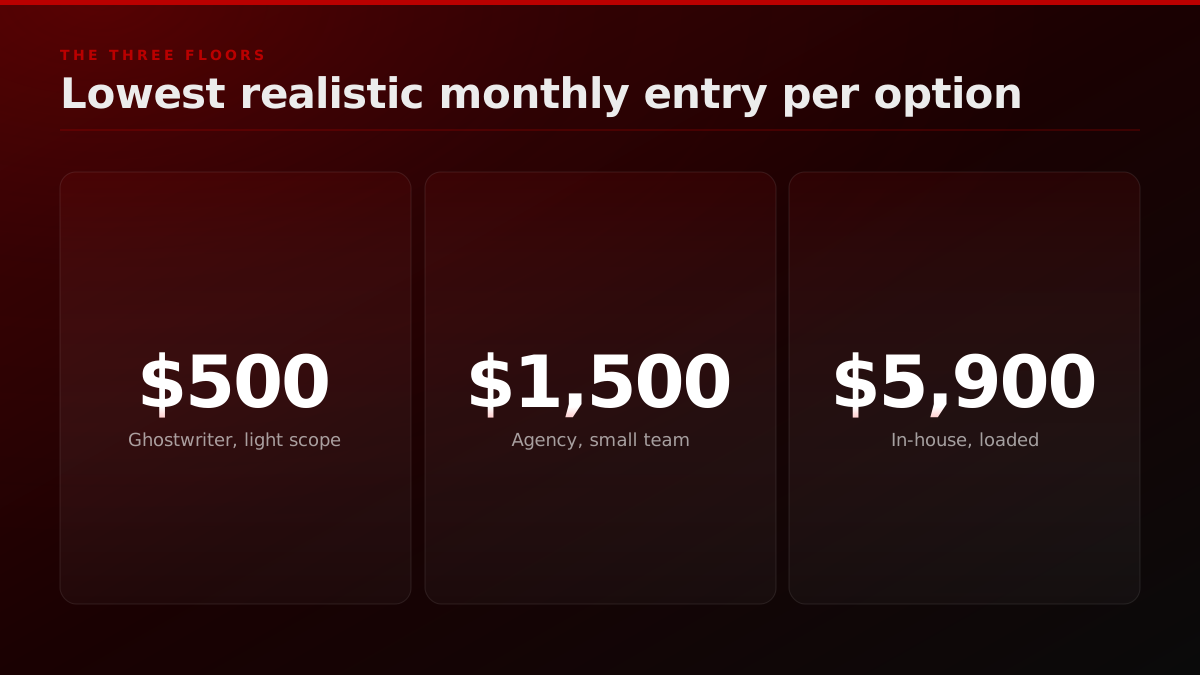
Those three numbers, roughly $500, $1,500 and $5,900, are the real floors, not the averages you would pay for a fully staffed engagement of any of the three. They are worth memorizing before a sales call, because every pitch that follows will frame its own number against a floor that is convenient for the pitch, not the one that is actually true for the other two options.
Set that against an agency retainer, which Ninjapromo puts at $1,000 to $10,000-plus a month, with enterprise-grade service running $5,000-plus, and a ghostwriter, which the r/copywriting thread above puts at $500 to $2,500 a month for light scope, $1,500 to $2,000 a week for full social-media-manager-level coverage, and $4,000 to $13,000 a month for a specialist who is promising you a specific number of followers or leads. The ghostwriter option has the lowest floor. The in-house option has the highest floor, once it is loaded correctly, and it is the only one of the three where that floor is fixed whether the account goes viral or stays flat.
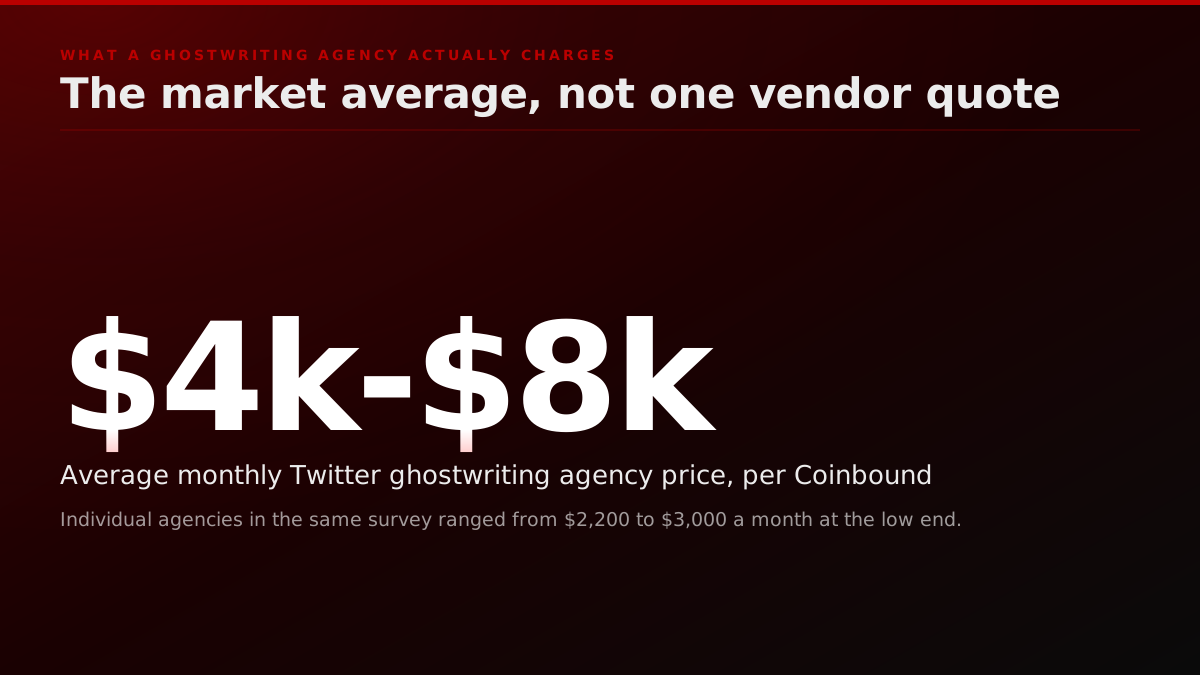
Coinbound's own survey of dedicated Twitter ghostwriting agencies found a $4,000-$8,000 average, roughly double the top end of the r/copywriting individual-freelancer range, which tells you where the price jumps, not at the platform, but at the point a single writer becomes an agency with account management and reporting layered on top. Run the number you're actually considering through a marketing ROI calculator before you commit to it, the sticker price rarely tells you whether it pencils out.
What each option costs per month, real ranges
| Option | Typical monthly range | Lowest realistic entry | What that buys |
|---|---|---|---|
| Agency | $1,500-$10,000/mo retainer | $1,500/mo (small team) | Team, strategy, and reporting |
| In-house hire | $5,900-$7,700/mo loaded | $5,900/mo (25th pct + overhead) | One dedicated in-house voice |
| Ghostwriter | $500-$3,000/mo freelance | $500/mo (light scope) | One person, writing only |
In-house range derived from a $61,000-$75,000 average-salary band across 4 sources, plus 20-30% for payroll tax and benefits. Agency and ghostwriter ranges from the sources cited throughout.
Why do founders default to hiring someone in-house?
The instinct toward in-house is not irrational, it is usually a control decision dressed up as a cost decision. Founders reach for a full-time hire because they want one person who understands the business deeply enough that they never have to re-explain it, and because handing the company voice to an outside vendor feels riskier than it probably is. That instinct is legitimate. It is just a different reason than the one most founders actually give out loud, which is almost always "an agency probably won't sound like me."
Chris
chrisgirbu
Hiring an in-house ghostwriter for my personal brand. Compensation: to be discussed privately. Looking for one person. This isn't a freelance gig. I want someone who wants to go all in. You'll work directly with me on my X, Instagram, LinkedIn, helping shape the voice and
A founder hiring an in-house ghostwriter, like the one above, is not optimizing for the cheapest option, he is optimizing for one person who works directly with him across X, Instagram and LinkedIn, and on the LinkedIn side the same decision has a different boundary, taking a founder-led content marketing approach instead of managing three different vendor relationships. That is a real and legitimate reason to go in-house, the same reason devrel and full-funnel hires get compared the same way, when the role is broad enough to justify a full salary on its own.
Why do many entrepreneurs hesitate to hire a social media ghostwriter for their LinkedIn or Twitter account?
I get it that founders may not have enough time or knowledge to do it themselves. But why do most of them hesitate to hire a ghostwriter who can adapt to their personality and create content that aligns with their brand tone and voice? I want to discuss this issue… Show more
A 79-comment Reddit thread asked exactly why founders hesitate to hire a ghostwriter at all, even when they know their own LinkedIn or Twitter inactivity is costing them, and the top answers were not really about price. Founders do not trust that a third party can sound like them, they cannot easily feed real numbers into the founder funnel with no direct sales attribution on a channel like X, and they underestimate the time cost of training and proofreading someone else's first drafts of their own voice, the same trust gap that shows up whenever you vet a KOL or an influencer rather than an agency. One highly-upvoted comment put the in-house preference plainly, if the need for social media management was real and public-facing, the commenter said they would hire on salary, in the office, full stop, no agency and no freelancer considered. Neither the in-house instinct nor the ghostwriter hesitation is wrong on its own, they are both proxies for the same underlying worry, that whoever ends up speaking as the company will get it wrong in public, and a full-time hire simply feels like it puts more distance between that risk and the founder than a freelancer relationship does, whether or not that is actually true in practice.
Is a ghostwriter actually the cheaper option once you count what breaks?
On paper yes, in practice it depends on how often the arrangement needs rescuing. A $500-a-month ghostwriter who needs a full rewrite on every draft, or who goes quiet during your busiest launch week, is not actually cheaper than a $1,500-a-month agency retainer with a backup writer built in, it just fails later and more expensively, usually right when the account matters most.
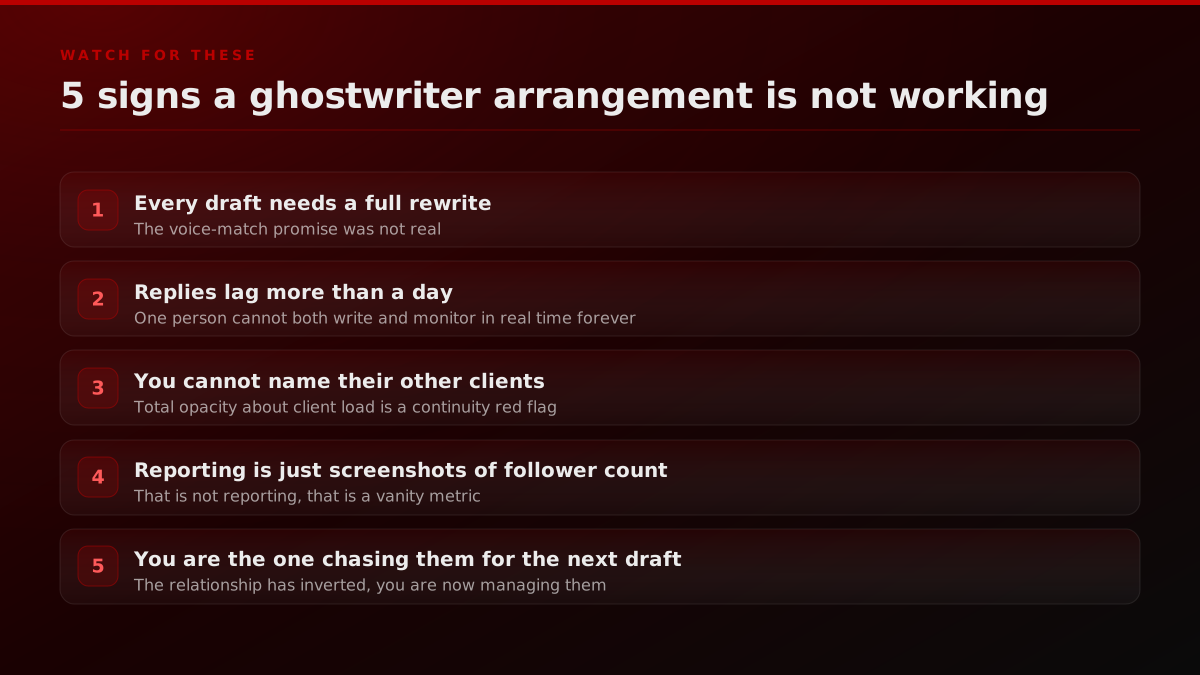
None of those five signs are about talent. A skilled writer can still be running too many clients to give any one account real attention, and the tell is rarely the quality of an individual post, it is the pattern across a month, rewrites, lag, opacity, vanity reporting, and you doing the chasing. Catching the pattern in month one is far cheaper than catching it in month six, after the account has built a following around a voice that is about to go quiet.
The honest way to price a ghostwriter arrangement is to include the hours you personally spend managing it. A founder who spends three hours a week reviewing, rewriting, and chasing a $500-a-month ghostwriter is not actually paying $500 a month, they are paying $500 plus twelve hours a month of their own time, and founder time on a growing company is rarely the cheapest resource available. That hidden cost is exactly what a higher-priced agency retainer is supposed to remove, a strategist absorbs the coordination overhead instead of the founder doing it personally, which is the whole point of paying more for the structure instead of just the writing.
The comparison, criteria by criteria
Ghostwriter wins on cost and native platform voice, in-house wins on authenticity alone, and agency wins on continuity, multi-platform reach, and reporting, which is exactly why none of the three sweeps every category. Read the grid below as a map of trade-offs, not a scoreboard.
Agency vs in-house vs ghostwriter, across 7 criteria
Agency
In-house hire
Ghostwriter
Lowest cost to start
Time to first live post
Multi-platform coverage
Deep X-native voice + format
Founder-voice authenticity
Continuity if the person leaves
Built-in growth reporting
Editorial judgment, not a measured external dataset. Verdicts are grounded in the cost, hiring-thread and founder-hire data cited throughout this post, not a blind house preference.
Ghostwriter wins outright on the two things that matter most to a cash-constrained founder, the lowest entry cost, and the deepest native feel for how X actually reads (the r/HireaWriter and Reddit ghostwriting communities are full of specialists who write nothing else). It loses just as clearly on continuity, reporting and multi-platform range, the same multi-platform gap that shows up between reddit and X campaigns run by separate freelancers, because it is structurally one person with one skillset. In-house wins only on voice authenticity, which is real and matters, but it is the most expensive of the three once loaded correctly (see the full-cost matrix for a general marketing hire for the same math applied beyond Twitter), and it is exactly as fragile as a ghostwriter when that one person leaves. Agency is the only option built for continuity and reporting by construction, the same reporting gap shows up in vertical AI agency pricing, a team does not vanish when one person takes a vacation, which is also exactly why it is never going to be the cheapest option on the table.
The difference between a ghostwriter and an agency is not that the agency pays less for writing talent, it is that the retainer you pay covers the strategist coordinating that talent, the backup if the writer is out, and the reporting layer a KOL rate calculator can't replace, on top of the writing itself. One X and LinkedIn ghostwriting agency publishes its own attribution numbers, $10M-plus in client revenue attributed and 100,000-plus followers gained across its client base, precisely the kind of reporting a single freelancer rarely builds because tracking it is its own job on top of the writing. You are not paying more for the same thing, you are paying for the parts a single freelancer or a single employee cannot structurally provide.
What does it actually cost when the person you hired quits?
Gallup puts the real cost of replacing an employee at half to two times their annual salary once recruiting, ramp time, and lost productivity are counted, and it is the single number this whole comparison keeps circling back to. Applied to a fully loaded in-house social media hire, that is a five-figure hit on top of the weeks the account goes quiet while you rehire and re-onboard.
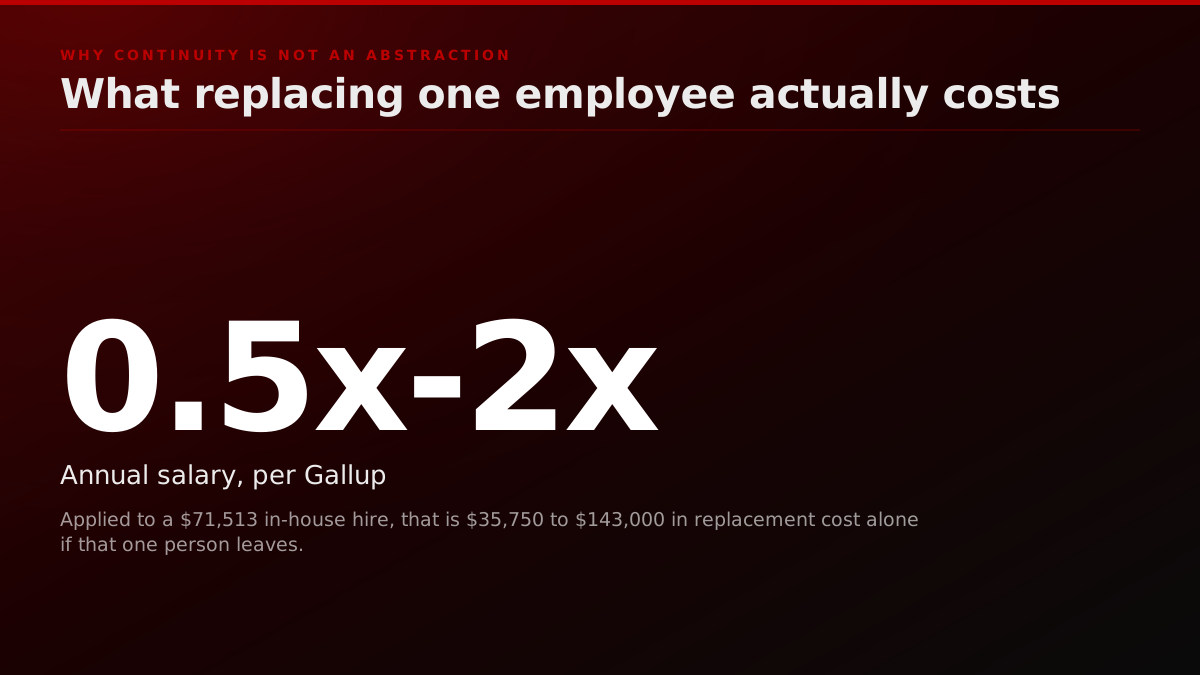
That math changes the in-house decision more than the base salary does. A $71,513-a-year hire is not really a $71,513 decision, it is a $71,513-plus-$35,750-to-$143,000 decision the moment you price in the real chance that person leaves within a couple of years, which is the norm for a single-person marketing role, not the exception. A ghostwriter carries a version of the same risk without the severance and rehiring cost, which is a real point in its favor even though it loses on almost everything else in the grid above. An agency is structurally the only one of the three where this number does not apply at all, because there was never one irreplaceable person to lose.
The window where this matters most is the two to four weeks immediately after a departure, when the account either goes quiet or gets handed to whoever is least busy that week, neither of which is a real continuity plan. An in-house hire with no cross-trained backup and a ghostwriter with no documented handoff process both fail the same way here, a gap that is invisible on the org chart and only shows up the week it actually happens. Ask, before you hire, who specifically picks up the account the day the person managing it does not show up, and if the honest answer is "nobody yet," price that gap into the decision now rather than discovering it during the gap itself.
Pick a ghostwriter for a tight budget and a single strong voice, pick in-house when the role covers more than just Twitter and control matters more than cost (and note that none of these three prices includes media, which is a separate bill entirely), and pick an agency when speed, continuity and reporting matter more than getting the absolute cheapest option on paper.
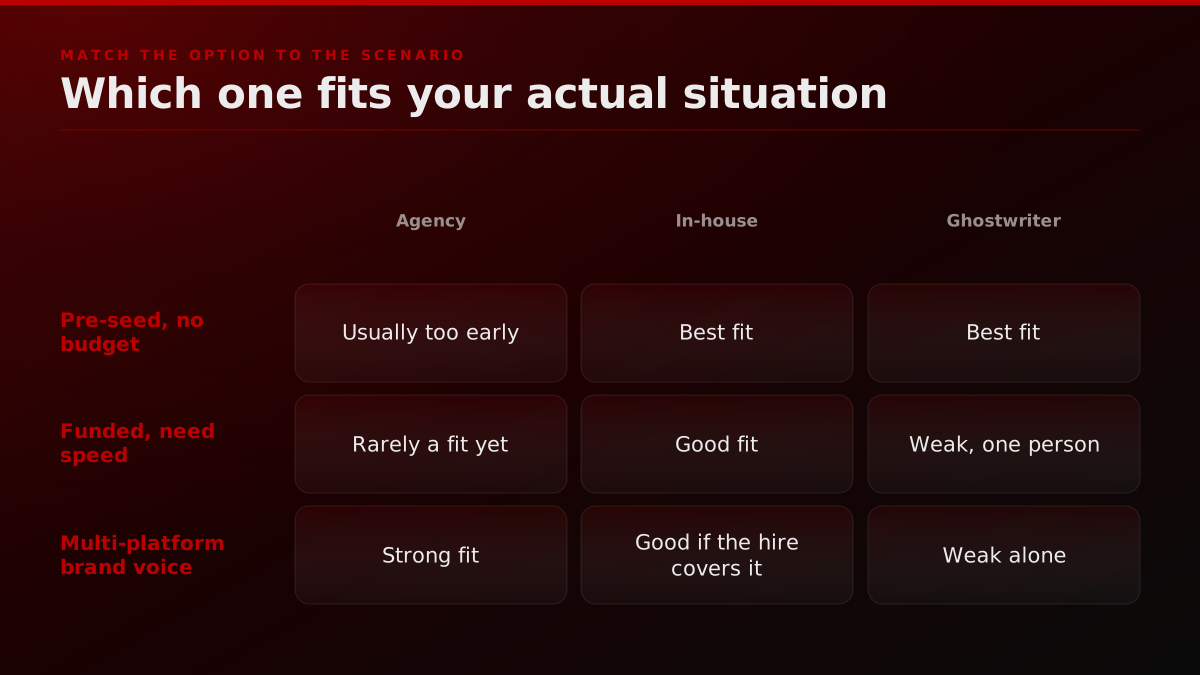
- Pick a ghostwriter if the account is genuinely one voice, the budget is under roughly $2,500 a month, and you can tolerate the risk of a single point of failure while you validate that consistent posting even moves the needle for you.
- Pick an in-house hire if the person also owns community, customer support, or content beyond just Twitter, so the $5,900-plus monthly floor is spread across more than one platform's worth of output, and voice control matters more than cost.
- Pick an agency if you need the account live fast, need it to survive turnover without you noticing, need reporting you did not have to build yourself, or need more than one platform covered by people who already specialize in each one.
Hire an agency when continuity matters
The agency case is strongest when the account is already tied to revenue, when a quiet week would be noticed by customers or investors, and when you need a monthly report you did not have to design. It is also the right call when the plan includes more than X, because an agency already has the people for the second and third platform, where a ghostwriter would need to subcontract and an in-house hire would need to learn.
Run a hybrid when voice matters
A hybrid splits the work instead of choosing one option. The founder or an internal owner writes or approves the posts that carry opinion and voice, and an outside team handles the parts that do not need the founder: research, scheduling, reply triage, clipping long-form into short posts, and reporting. It suits a founder whose name is the brand but whose calendar cannot hold a daily posting habit. The rule that makes it work is one named owner for approval, because a hybrid with two people who each think the other is watching the account fails the same way a single freelancer does.
Most founders do not stay on the same option forever, and that is fine. A pre-seed founder who starts with a $500-a-month ghostwriter to validate that posting even matters is making a rational bet with the budget they have. The mistake is not picking the cheap option early, it is staying on it past the point where the account itself starts producing real business results and the continuity risk of one freelancer becomes a real liability instead of an acceptable one. Revisit the decision at every funding milestone, not on a fixed calendar, because the constraint that decided the first hire (cash) is rarely the constraint that matters twelve months later (continuity, reporting, or reach).
Hit $10,000 Per Month As a Twitter Ghostwriter (How I'd Do It in 2025)
Brandon Storey | Copywriting Coach
The economics from the ghostwriter's side, what it actually takes to hit five figures a month doing this.
The economics look different from the ghostwriter's own side of the table too. Getting to five figures a month as a Twitter ghostwriter, per the breakdown above, takes a specific, narrow skillset applied to a small number of high-paying clients, not a volume business. That is worth knowing before you hire one, because a ghostwriter charging premium rates is usually running a handful of accounts total, which is exactly the continuity risk this whole comparison keeps coming back to. Ask how many other clients they carry before you sign, and while you're auditing anyone's numbers, check whether the engagement on their own account is real before you take their case studies at face value.
Setting your goals before you pick an option
Decide what the account is for before comparing the three. An account meant to raise the founder's profile for fundraising, an account meant to produce inbound demo requests, and an account meant to support a launch are measured differently, staffed differently and paid for differently. Write one primary goal and one number that shows progress against it (qualified replies from buyers, inbound DMs, booked calls, launch-week reach), and hand that sentence to every candidate. A candidate who asks follow-up questions about it is already doing the job. One who replies with a posting-frequency package has told you what they plan to sell regardless of the goal.
Optimize your brand on X
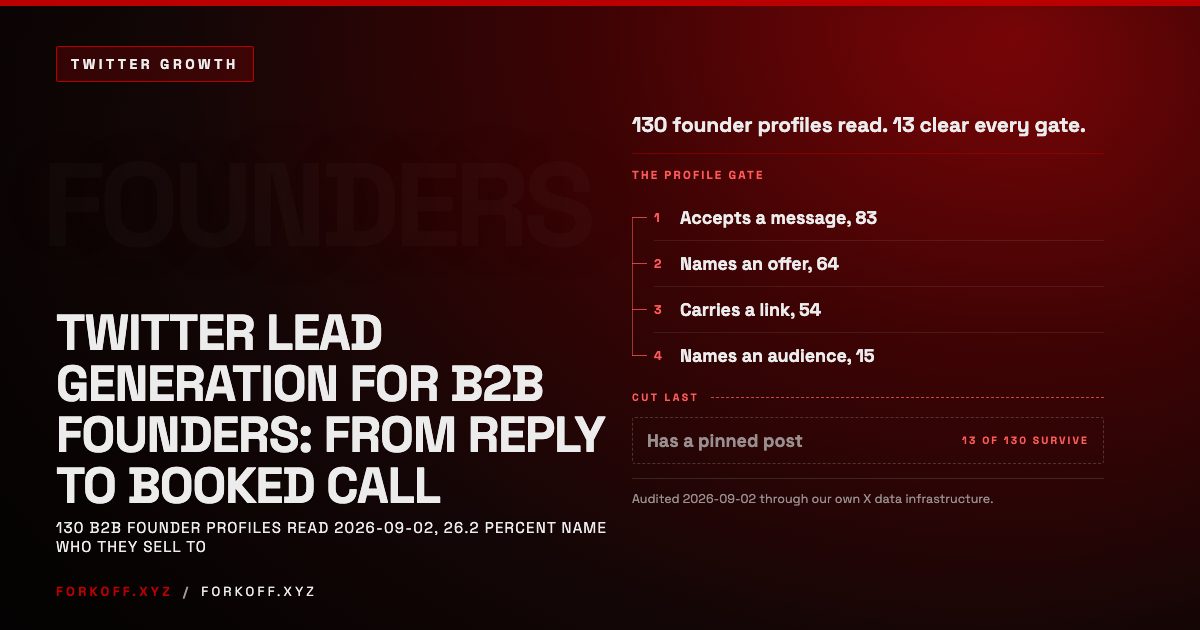
Whoever you hire, fix the profile first, because every post sends people there. The bio should say who the account helps and with what, the header should show the product or the thesis rather than a stock image, the pinned post should be the single best proof the account can offer, and the link should go to one page that matches the goal above. It is a one-afternoon job, and posts sent to an unclear profile lose most of the follows they earn.
What questions should you ask before you sign with anyone?
Ask about client load, backup coverage, and reporting cadence before you ask about price, because the price is the easy part to compare and the other three are where a bad hire actually goes wrong. A vague answer to any of the six questions below predicts a vague, hard-to-manage engagement more reliably than the number on the invoice does.
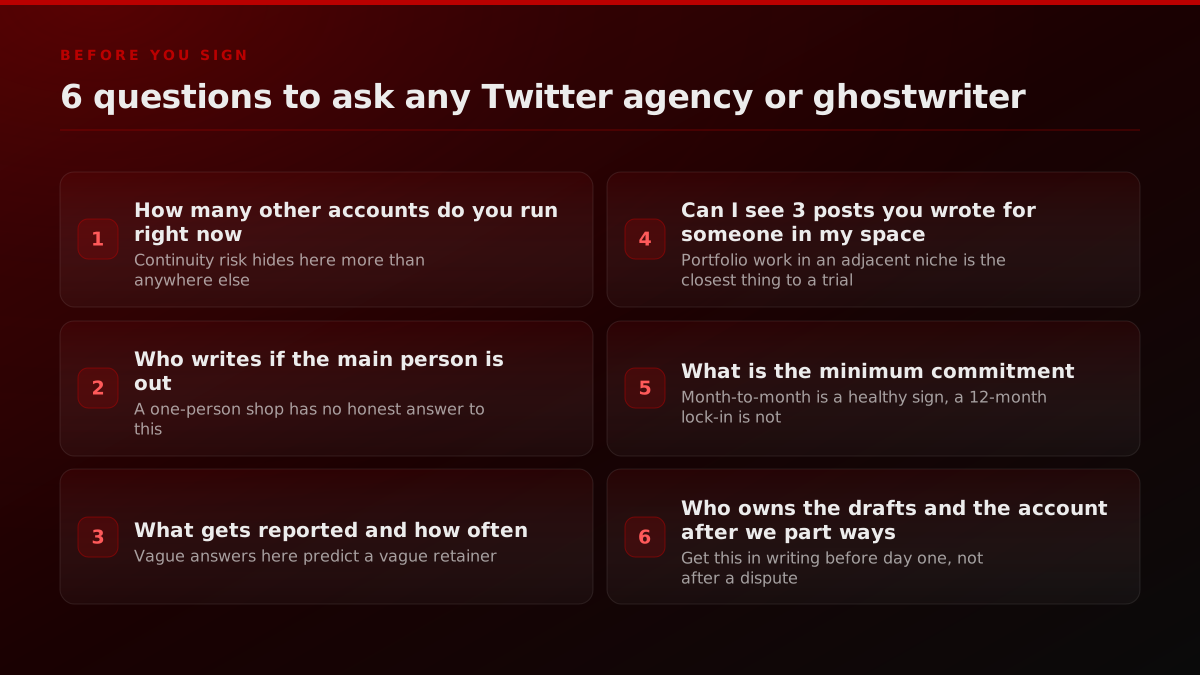
Notice that none of those six questions are about writing quality. A sample post is the easiest thing for anyone to fake or cherry-pick, the harder, more honest signal is how a candidate answers when asked what happens on a bad week, when they are sick, or when a client's needs change mid-contract. That answer is where an agency's structural advantage, or a freelancer's honest limits, actually shows up.
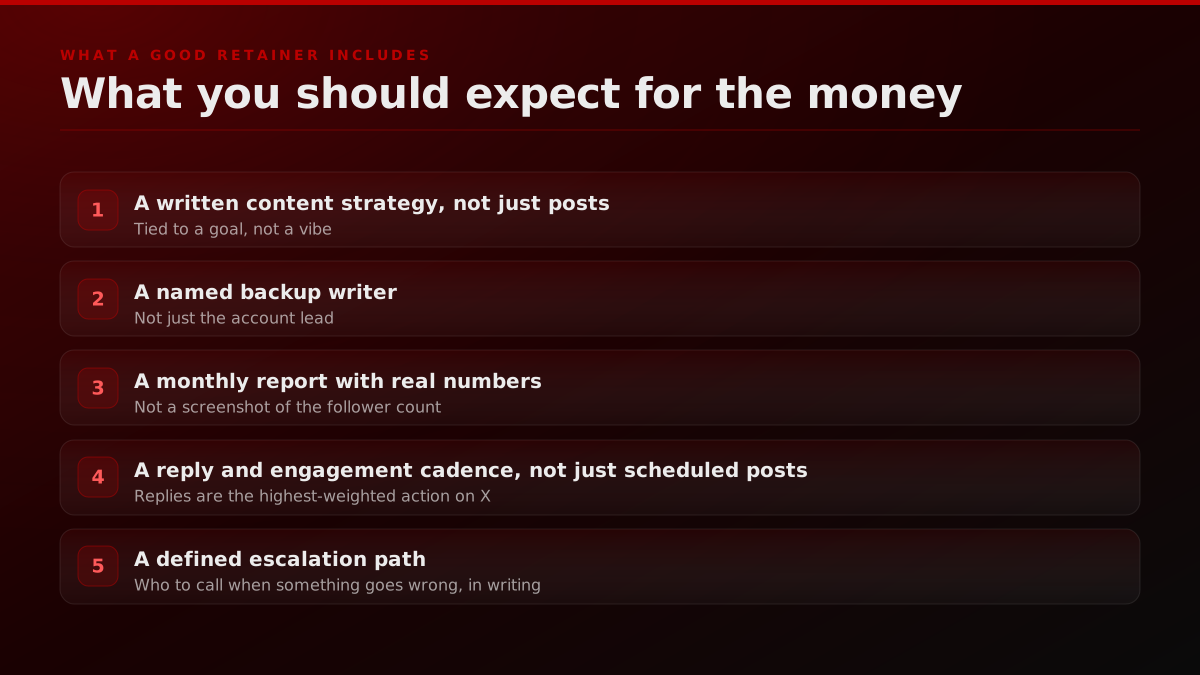
That checklist is also a good filter for a retainer that looks priced right on paper but is actually thin underneath. A $3,000-a-month agency retainer that skips a written strategy, a named backup, and real reporting is not meaningfully different from a $3,000-a-month ghostwriter with a nicer invoice template, you are paying agency prices for freelancer-level structure.
How do you know whether any of the three is actually working?
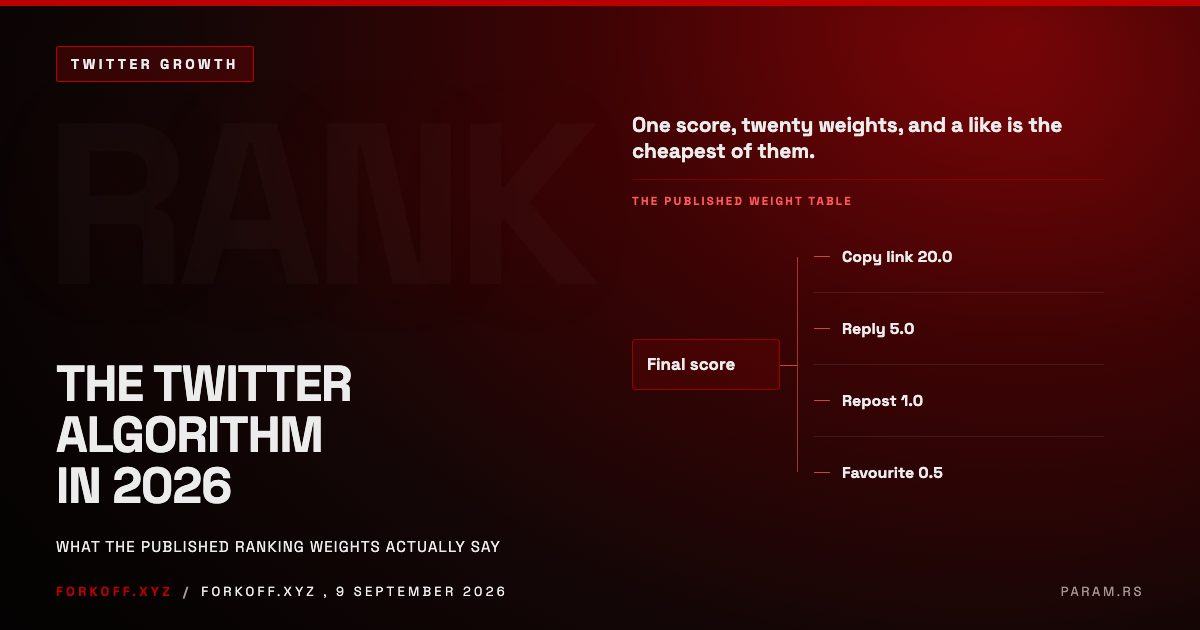
Track replies and profile visits before you track follower count, because a growing follower number can hide a dead account and a reply is a far stronger signal than a like on X's own ranking mechanics. Whoever runs the account, agency, in-house hire, or ghostwriter, should be able to hand you a number for both within the first month, not just a screenshot of the follower graph trending up and to the right.
Follower count is the easiest number to report and the least useful one to act on, because it lags whatever is actually working by weeks and it can rise from a single viral post that has nothing to do with the underlying strategy. The operator system for how to grow on Twitter leans on a different set of numbers entirely, reply volume and reply quality as the leading indicator, because the platform's own ranking weights a reply the account owner answers back far above a passive like. Whoever you hire should already be watching that number, not just the vanity one.
Measure your results in three layers
That distinction matters most when you are deciding whether to keep paying for whichever option you picked. An agency that reports only follower growth is giving you the same shallow number a $500-a-month ghostwriter gives you, just wrapped in a nicer deck. A real report separates reach (impressions, follower growth) from engagement quality (reply rate, profile-to-DM conversion, inbound mentions) from business outcome (leads, replies from the audience you actually wanted, booked calls). If whoever you hired cannot produce that breakdown by month two, the reporting gap this whole post has been describing as an agency's structural advantage is not actually being delivered, and the retainer is not earning its premium over a cheaper ghostwriter.
What does the first 30 days with an agency actually look like?
The first month is voice and strategy intake, a draft-and-revision loop, then live posting and a reporting cadence set by around week three, not an immediate flood of content on day one. Knowing that timeline up front is what separates a fair expectation from the disappointment that shows up when a founder expects agency-level output in week one and gets a strategy call instead.
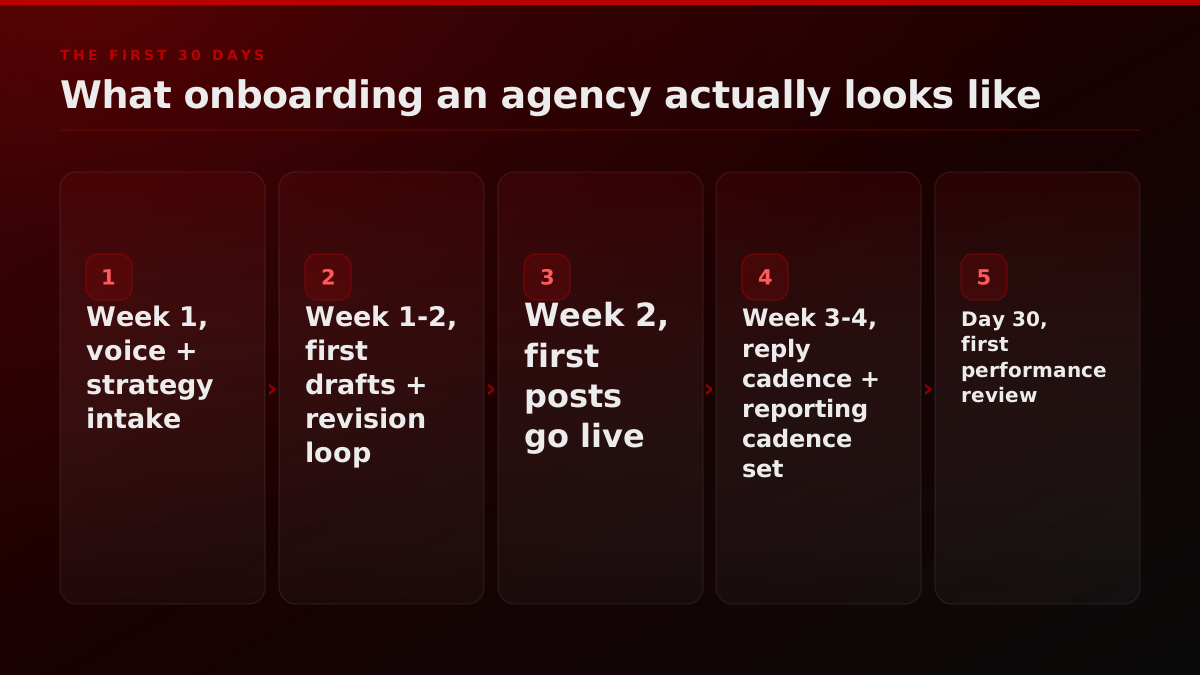
Compare that timeline honestly against the other two options rather than against an idealized version of either. An in-house hire's first month looks similar in shape, intake and drafting before real output, except it starts only after several weeks of sourcing and interviewing candidates, so the account is silent for longer before day one even arrives. A ghostwriter's first month is usually faster to a first live post, sometimes days rather than weeks, because there is no team to coordinate, but the strategy and voice-matching step still happens, it is just compressed into one person's judgment instead of a documented process a client can review. None of the three actually skips the ramp period, they just spend it differently, and the agency's version is the only one that produces a reviewable plan as a byproduct.
Whichever direction you're leaning, run the actual numbers before committing a headcount or a retainer. A $7,000-a-month in-house hire and a $3,000-a-month agency retainer are not the same decision if one of them realistically gets you live in a week and the other takes six weeks to hire, onboard and ramp.
Where X ads fit alongside whoever runs the account
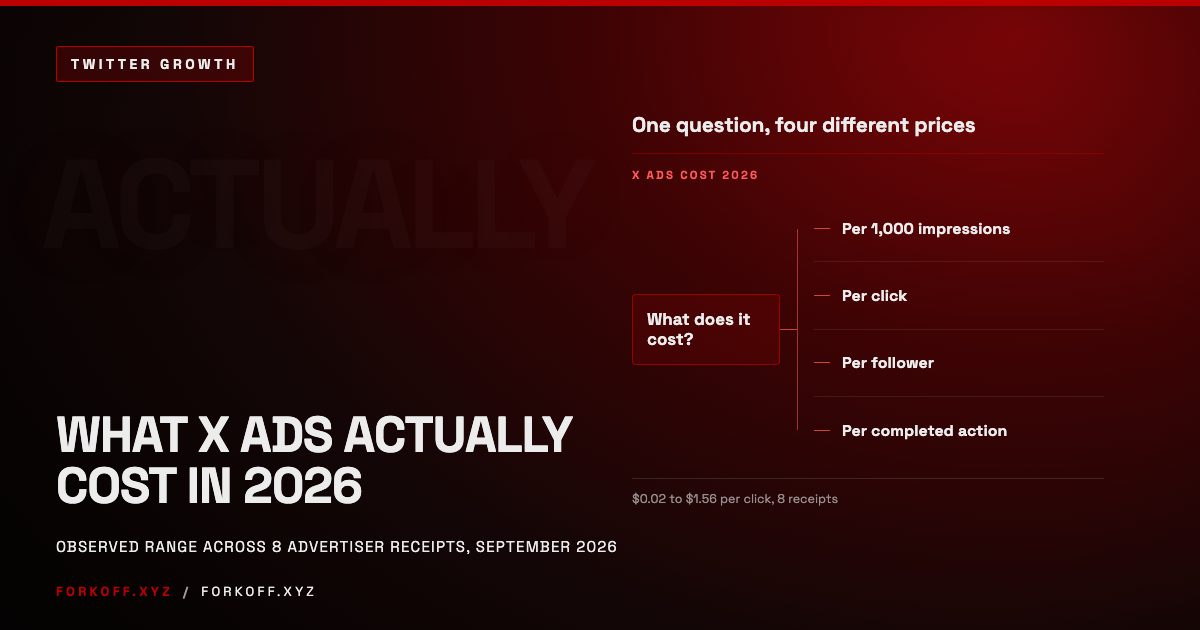
None of the three options includes paid media, and none of them should be judged on it, but most accounts eventually test ads to put their best organic posts in front of a colder audience. Budget and bidding are covered in the X ads cost breakdown. The useful thing to settle before you hire is who will run them, because an agency often can, a ghostwriter usually cannot, and an in-house hire may or may not have run a paid account before.
Types of Twitter ads
X sells a small set of formats. Promoted posts are ordinary posts (text, image, video or carousel) paid to reach people who do not follow you. Follower ads promote the account itself. Amplify places short ads before or alongside video from publisher partners. Takeover formats buy a prominent slot in the timeline or the Explore tab for a day. For most founder accounts the only format worth testing early is the promoted post, applied to an organic post that already earned replies, because a post that failed to start a conversation with followers rarely starts one with strangers.
Collection ads on X
Collection ads show one large lead image with smaller thumbnail images underneath, so a single ad can show several products or screens at once. They suit a product with several distinct things to show, such as templates, integrations or use cases, and they rarely suit a single-offer account. Whoever runs the account should supply the creative from posts that already worked organically, not brief a new set from scratch.
Why does pricing structure matter as much as the monthly number?
A retainer priced against a fixed monthly fee and one priced against an actual outcome carry the same sticker number but completely different incentives, because a flat retainer gets paid whether the account grows or not, and an outcome-priced engagement does not. That difference is easy to miss when you are comparing three options mostly on cost, but it changes what "cheap" and "expensive" actually mean once you have picked one.
A $3,000-a-month flat retainer and a $3,000-a-month outcome-priced one look identical on an invoice. The flat version is paid for activity, posts published, replies sent, whether or not the account is actually growing. The outcome-priced version is paid for a result, and the vendor only keeps charging that number if the number they promised keeps showing up. Most ghostwriters and most in-house hires are structurally flat, a salary or a monthly fee, regardless of output. Some agencies are too. The ones that are not tend to report more, not less, because their own pricing depends on the same numbers you are trying to track.
This is not an argument that outcome pricing is always better, a founder who genuinely just wants consistent posting with no growth promise attached is better served by a flat, predictable fee. It is an argument for asking the pricing-structure question explicitly, alongside the cost question, before you sign with any of the three options, because two engagements that cost the same on paper can carry very different incentives to actually deliver.
It also explains why the cheapest quote on the table is sometimes the worst deal and the most expensive one is sometimes the best, once you price in what each side is actually on the hook for. A flat $2,000-a-month ghostwriter and a $2,000-a-month outcome-priced arrangement are not interchangeable even at an identical price, because only one of them loses money the month the account underperforms. Ask directly whether the number you are being quoted moves with results or stays fixed regardless, the answer tells you more about how hard the other side will actually work for you than anything in a pitch deck.
The honest version of this decision is rarely "which one is best," it's which constraint you are actually optimizing against this quarter. Revisit it every 6-12 months, because the answer that fit a two-person team rarely fits the same company a year later once the account itself starts driving pipeline.