Choosing a web3 marketing agency after getting burned by one is a different kind of decision. You are not comparing pitch decks; you are filtering for the signals that separate operators who can document their results from agencies that are good at invoicing. The FORKOFF 7-question audit framework below is built from 40+ crypto and AI startup marketing audits run across 2025 and 2026, where the median founder had already burned through 2.3 agencies before the audit conversation started.
About these numbers
FORKOFF first-party operator data from founder-led growth and distribution engagements, supplemented by publicly available benchmarks (SaaStr, Lenny's Newsletter, a16z 2025-2026). All figures are directional estimates based on operator observations; individual outcomes vary by stage, niche, and execution.
TL;DR
Most web3 founders who got burned by a marketing agency made the same mistake. They evaluated the agency's pitch instead of auditing the agency's operations. This post gives you the 7-question audit framework, the red flag scoring matrix, the pricing reality check across three tiers, and the five contract terms that protect your next $50K to $200K marketing budget. Built by an agency that watches founders repeat this cycle every quarter.
The Pattern You Already Know
You spent approximately $50K to $200K on a web3 marketing agency. They showed you a pitch deck with impressive client logos. They promised community growth, KOL activations, and a GTM strategy tailored to your token launch timeline. Three months later, you had a Telegram group with 8,000 members who never converted, a content calendar full of founder-led content marketing posts nobody read, and a monthly invoice that arrived more reliably than the deliverables.
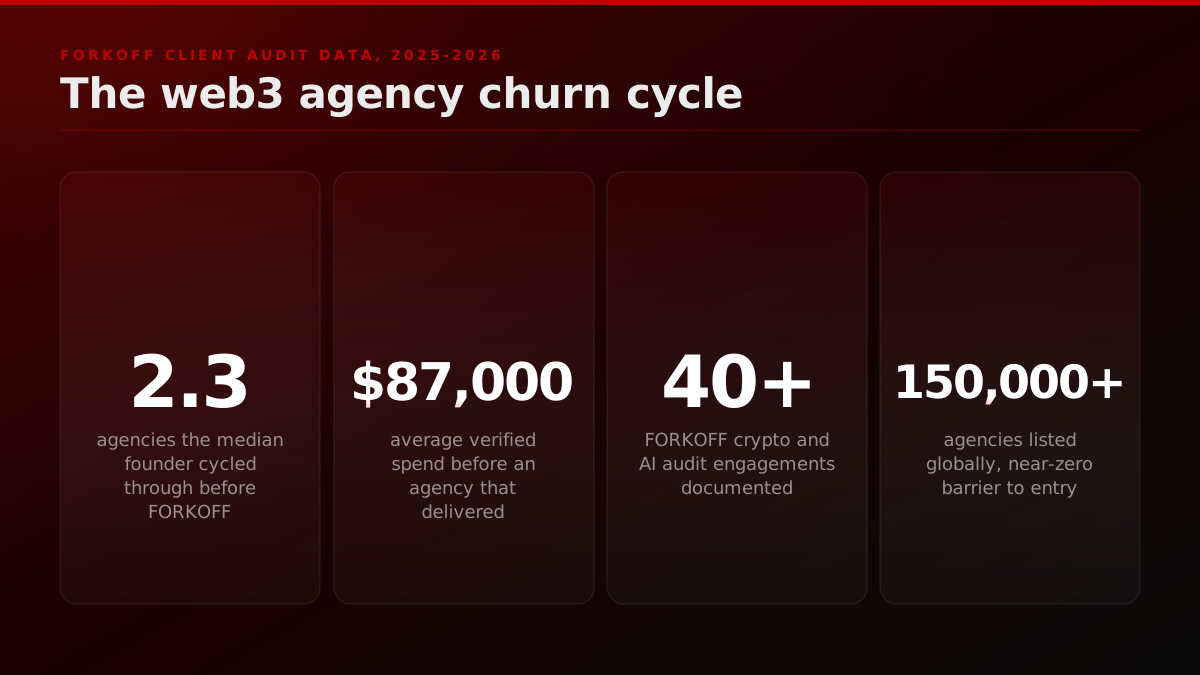
You are not alone. The 2025 HubSpot State of Marketing report found that 61% of marketers say generating leads is their top challenge, and a significant portion of that spend goes to agencies that underdeliver. Across 40+ marketing audits FORKOFF has run for crypto and AI startups across 2025-2026, the median founder had already burned through 2.3 agencies before the audit conversation started.
The 90-day churn cycle in crypto marketing
Across 40+ FORKOFF audit engagements in 2025-2026, the median web3 founder had cycled through 2.3 agencies before reaching us. The average verified spend before finding an agency that actually delivered was $87,000. The pattern is consistent: large setup fee, 90 days of activity reports that cite impressions, then a quiet fade into monthly invoices with declining deliverables.
Source: FORKOFF Client Audit Data 2025-2026
The problem is not that good agencies do not exist. The problem is that the evaluation process most founders use -- reviewing the pitch deck, checking the client list, comparing monthly retainer pricing -- selects for agencies that are good at pitching, not agencies that are good at marketing.
late 2021, fell down the NFT rabbit hole on Solana. locked 5 people in an apartment and tried to launch a project. spent $15k on a marketing agency and got nothing back. asked for a refund, got offered a job.
This post replaces that process with a 7-question audit framework you can run on any agency before signing a contract. The same 30-agency-search-cycle pattern applies when vetting influencer partnerships, which is why the influencer marketing agency vetting framework covers the overlap between KOL-specialist agencies and full-service crypto marketing shops.
The 7-question framework is built for web3 buyers but the structure is category-portable, and founders evaluating an AI marketing agency the same way will surface the same red flags in roughly the same order.
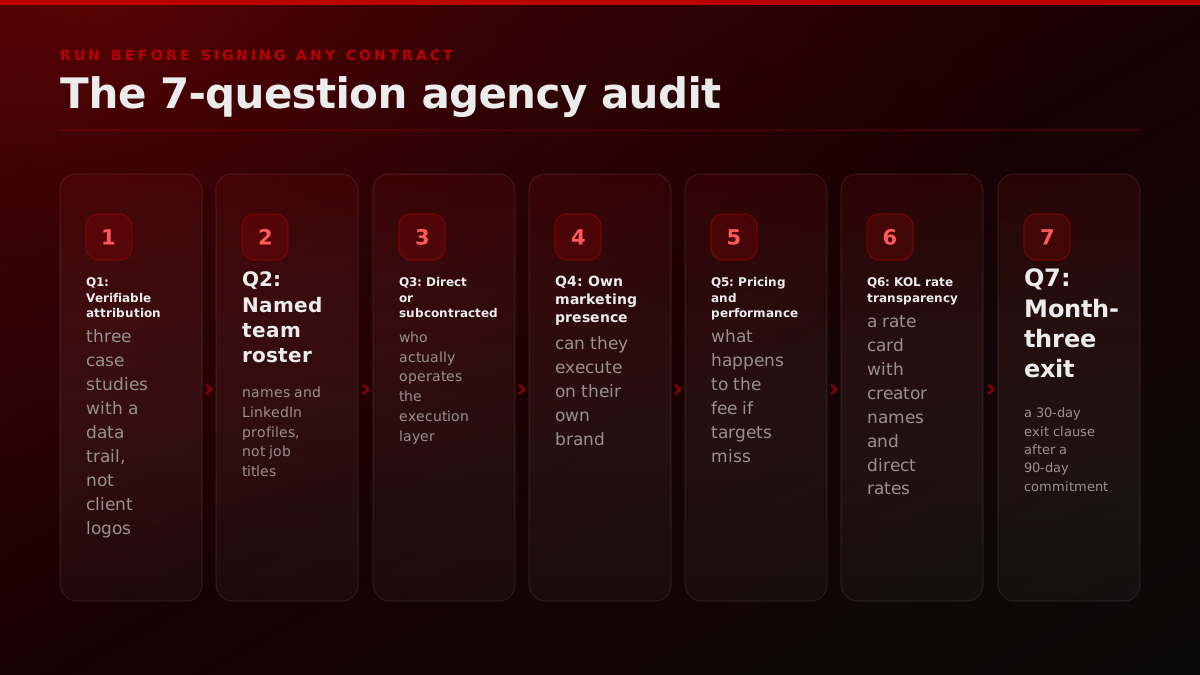
The 7-Question Agency Audit
The 7-question audit is a structured evaluation process you run on every agency before signing a contract. Each question is designed to surface a specific failure mode: vague attribution, team bait-and-switch, subcontractor opacity, retainer misalignment, missing measurement framework, inflated pricing, and undisclosed conflicts of interest. A legitimate agency answers all seven without deflecting. An invoice factory stalls on at least three.
Operator note40+ FORKOFF audits in 2025-2026 put the median founder at 2.3 agencies burned and $87,000 spent before one delivered., FORKOFF Client Audit Data 2025-2026
Question 1: Can you show me three case studies with verifiable attribution?
Not client logos. Not impression counts. Three engagements where the agency can point to a specific metric (pipeline generated, tokens sold, users acquired, revenue attributed) and show the data trail that connects their work to that number.
In web3, this is actually easier to verify than in web2. As Messari's crypto research methodology demonstrates, on-chain data is public. Dune dashboards are linkable. DeFi Llama tracks TVL. If an agency claims they helped a protocol grow from $2M to $20M TVL, the data exists. Ask for the dashboard link.
If the agency shows you a PDF with screenshots instead of live analytics access, that is your first red flag. The right posture is curiosity, not confrontation: ask where the raw data lives and whether they can walk you through it. Legitimate operators have this ready. Agencies that rely on presentation polish rather than verifiable output will struggle to answer that question directly.
A useful benchmark: Forbes Agency Council research on agency accountability consistently identifies attribution transparency as the single biggest differentiator between agencies that renew and agencies that churn clients. This holds in web3 as much as traditional B2B services.
Question 2: Who specifically will work on my account?
Request a named team roster. Not job titles. Names. LinkedIn profiles. Portfolio links.
The agency model in web3 has a specific failure mode that Harvard Business Review's research on professional services has documented across industries: the senior strategist pitches the deal, then a junior account manager executes the work while the strategist moves on to the next pitch. The quality delta between what was sold and what gets delivered is where most agency relationships break down.
The contract should include a replacement guarantee: if a named team member leaves within the first 90 days, the agency provides a replacement of equivalent seniority or the client can exit without penalty.
Run this as a secondary check once you have the roster: search LinkedIn for each person's profile, look at their prior work history, and see if their experience matches what the agency claims they will do for your project. An agency that claims deep DeFi expertise should have team members who have actually worked on DeFi protocols, not web2 SaaS companies that added "blockchain" to their client list.
Question 3: Do you execute directly or resell through subcontractors?
A significant portion of web3 agencies are white-label operations. They sell marketing services, then outsource execution to freelancers or offshore teams. The agency becomes a project management layer between you and the people actually doing the work.
This is not inherently problematic if the agency adds genuine strategic value and quality control. It becomes a problem when you are paying agency rates for freelancer-quality output with no oversight.
The test: ask the agency what tools and platforms they use for execution. Compare their answer against what a real Twitter marketing or Reddit marketing operation requires. If they cannot immediately answer with specific tool names and workflows, they are managing a vendor, not running a marketing operation.
A follow-up question that reveals the answer quickly: ask who holds the login to the analytics platform they use for your account. If the answer is "we manage that centrally," you are not getting direct access, and your data portability is at risk if the relationship ends.
Question 4: What does your own marketing presence look like?
This is the most overlooked signal and the most predictive one.
Check the agency's own X account, LinkedIn, website SEO, and content output. If they claim to grow social followings but their own account has a few hundred followers and near-zero engagement, the case studies are doing the selling, not the capability.
An agency that executes well for clients but cannot execute for itself is the exception. An agency that cannot execute for itself but claims to execute well for clients is the rule in the lower tiers of the web3 market.
Specific things to check:
Domain authority and organic traffic. Use any free SEO tool to check if the agency's website ranks for anything relevant. An agency that claims SEO expertise but has zero domain authority on their own site is not running an answer engine optimization operation for you; they are selling the concept.
Content quality and cadence. Does the agency publish frameworks, analysis, and original data? Or does it publish generic tips content with no POV? The quality of the agency's own content is the ceiling for what they will produce for you.
Social proof structure. Check whether their testimonials are from named clients with verifiable company affiliations, or whether they are generic quotes with first names only. Named, verifiable testimonials from companies you can call are strong signals. Anonymous quotes are not.
Operator note5B+ views processed across FORKOFF's clipping network, attributed at platform-analytics level, the standard Question 1 demands., FORKOFF clipping network
This is the standard FORKOFF holds itself to: the clipping network has processed 5B+ views, and every campaign is attributed at the platform-analytics level, not inferred from screenshots. Any agency claiming distribution capability should be able to show the same class of evidence for its own brand before you trust it with yours.
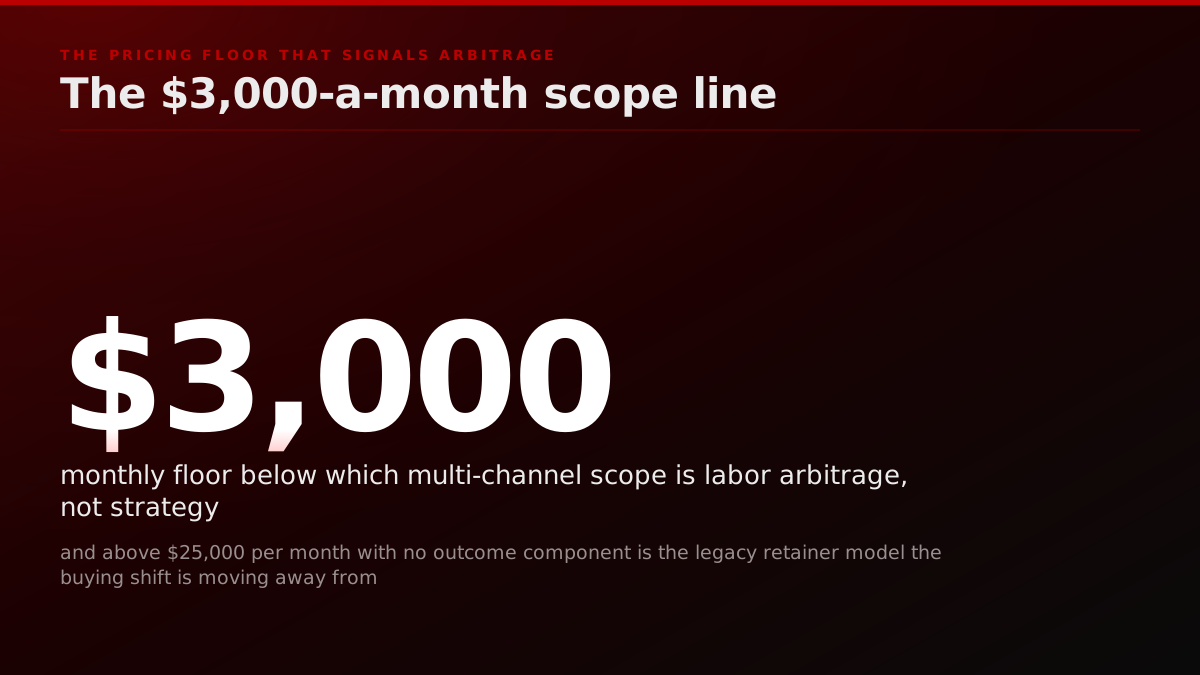
Question 5: What is your pricing structure and what does the performance component look like?
The pricing tier tells you what kind of agency you are talking to. Execution-only agencies are labor providers. Strategy-plus-execution agencies are the traditional retainer model. Outcome-priced agencies tie their margin to your results.
Web3 Marketing Agency Pricing Tiers (2026)
| Tier | Monthly Range | Scope | Watch For |
|---|---|---|---|
| Execution-Only | $3,000 - $8,000 | Social management, community mod, basic content | No strategic input, you supply the playbook |
| Strategy + Execution | $8,000 - $25,000 | GTM planning, paid, KOL coordination, events | Confirm named strategist, not just project manager |
| Outcome-Priced | $5,000 - $15,000 base + performance | Vertical specialist, performance fees on pipeline | Verify the performance metric is auditable |
Below $3,000/mo for multi-channel scope = labor arbitrage. Above $25,000/mo without outcome component = legacy retainer model.
The contract structure that aligns incentives
The highest-performing agency engagements in the FORKOFF audit set share one structural feature: a base retainer below market rate plus a performance component tied to an auditable metric. This structure self-selects for agencies confident in their delivery because the performance fee is where they make margin. Agencies that insist on flat retainer only are pricing certainty, not confidence.
Source: FORKOFF Engagement Analysis
The specific question to ask: what happens to your fee if we miss the agreed targets for two consecutive months? An agency that cannot answer this question has not structured their engagement around your outcomes.
For context on what the market actually charges: the 2025 IZEA influencer marketing report found that the gap between agency-quoted KOL rates and actual creator rates is widening. This applies equally to full-service web3 agencies that bundle KOL work into their retainer: the package price obscures the margin structure, and transparency is the differentiator.
Ask for an itemized breakdown of the monthly retainer. Specific line items (X management: $X/mo, content production: $X/mo, KOL coordination: $X/mo) reveal what you are actually buying. Agencies that resist itemization are protecting margin, not simplifying your onboarding.
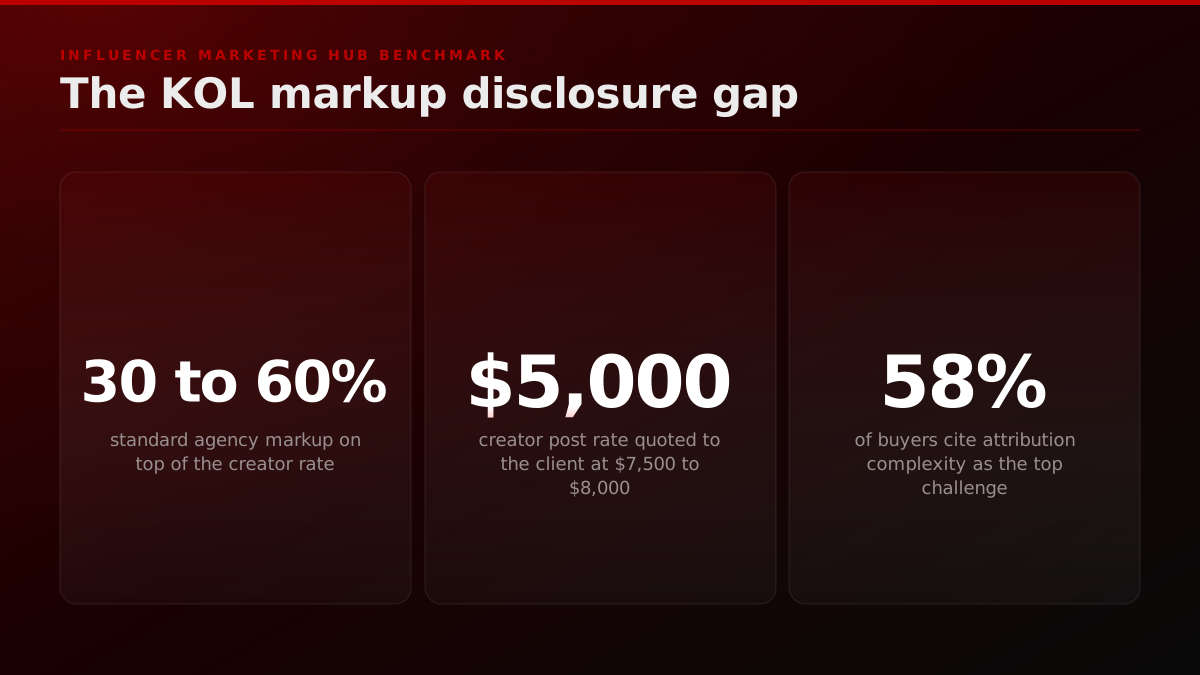
Question 6: What are the KOL rates, and will you disclose the markup?
If KOL marketing is part of the proposed scope, this question separates operators from arbitrage desks. The agency should provide a rate card with creator names, audience sizes, engagement rates, and direct rates. You then know what the agency markup is and can evaluate whether the coordination and quality control justify the delta.
The KOL markup disclosure gap
According to Influencer Marketing Hub's benchmark report (influencermarketinghub.com), standard agency markup on KOL campaigns runs 30% to 60% on top of the creator rate. A KOL who charges $5,000 per post gets quoted to the client at $7,500 to $8,000. The agency pockets the delta without disclosure. The fix is simple: require the agency to provide a rate card with creator names and direct rates, then audit one or two creators by reaching out independently. Any agency that refuses transparency on KOL pricing is running an arbitrage operation, not a marketing partnership.
Source: FORKOFF KOL Audit Framework
The Influencer Marketing Hub 2025 benchmark report puts average agency KOL markup at 30% to 60%. That is a reasonable coordination fee if the agency is vetting creators, managing deliverables, and handling quality control. It becomes an extraction model when the agency is pulling from a pre-bought list with no vetting or accountability.
The verification step: once you have the rate card, reach out to two or three creators directly via their public contact information. Confirm their rate matches what the agency quoted. Agencies that provide accurate rate cards have nothing to worry about. Those who inflate rates significantly will surface quickly.
For the broader context on how influencer marketing costs break down across tiers and how to verify an agency's claimed network before committing, the influencer marketing vetting framework covers the verification methodology in depth.
Question 7: What happens if I want to exit at month three?
The contract structure reveals the agency's confidence level. Agencies that lock clients into 6-month or 12-month minimums with large upfront fees are pricing certainty, not performance. The setup fee covers their acquisition cost for your account, and the long minimum ensures they collect enough revenue to make the engagement profitable regardless of results.
The standard FORKOFF recommends: 90-day initial commitment with a 30-day exit clause after the initial period. This gives the agency enough runway to demonstrate results while protecting the client from a 12-month invoice stream attached to declining deliverables.
Lock-in clauses to verify before signing: auto-renewal provisions (which extend the contract without explicit consent), clawback clauses on setup fees (which penalize early exit by requiring repayment of onboarding costs), and IP retention clauses (which keep creative assets with the agency if you exit before a specified date). None of these protect you. Any of them should be renegotiated or removed before signing.
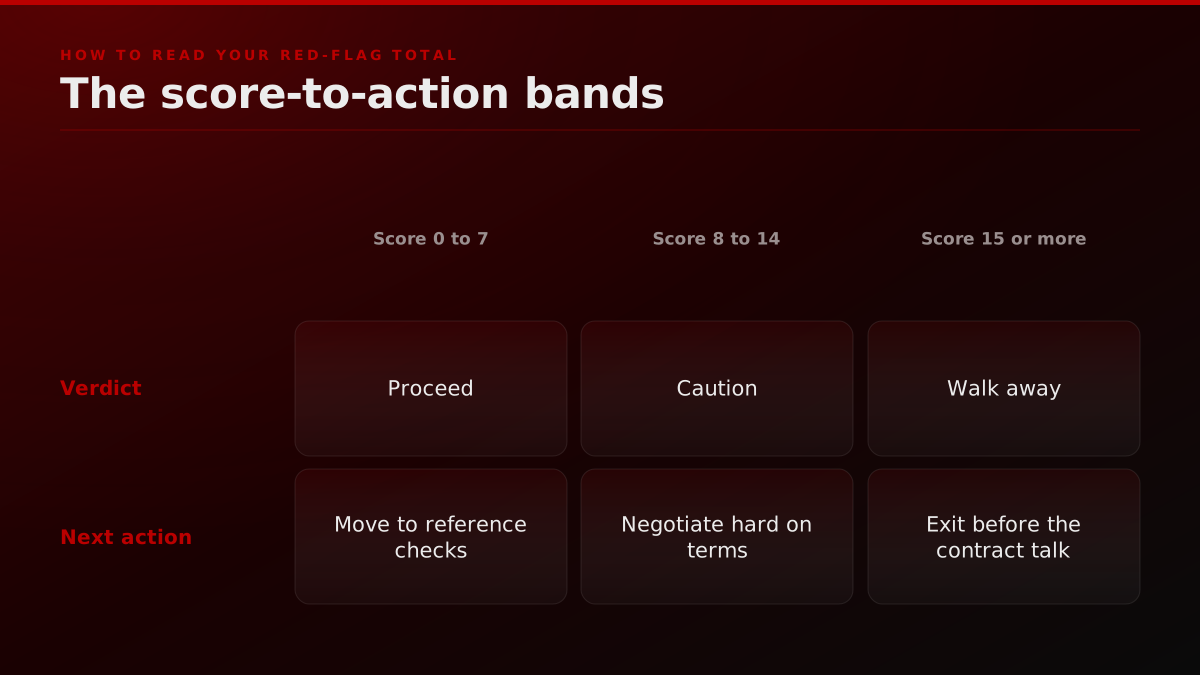
The Red Flag Scoring Matrix
The red flag scoring matrix converts the qualitative signals from the 7-question audit into a numerical score you can use to compare agencies. Run the matrix on every agency in your evaluation set, score each signal row, sum the total, and use the threshold ranges to decide whether to proceed with a contract offer, negotiate specific terms, or walk away before the contract conversation starts.
Web3 Marketing Agency Red Flag Scoring Matrix
| Signal | Red Flag Score (1-5) | What It Actually Means |
|---|---|---|
| Guarantees follower counts | 5 | Bot farm or engagement pod operation |
| No named team on pitch | 4 | White-label reseller or solo operator with contractors |
| Case studies cite only impressions | 4 | No attribution infrastructure, results are unverifiable |
| 6-month minimum, no exit clause | 5 | Retention depends on contract lock-in, not performance |
| Pricing 40%+ below market | 3 | Labor arbitrage, not strategy. Offshore execution with no oversight |
| Cannot name specific KOLs they work with | 3 | Buys KOL lists from brokers, no direct relationships |
| Own social presence is weak | 4 | Cannot execute on their own brand, will not execute on yours |
| No monthly reporting cadence proposed | 3 | Plans to invoice, not to report |
Score 15+ across any evaluation: walk away. Score 8-14: negotiate hard on contract terms. Score 0-7: proceed to reference checks.
Dishonest agencies, one after another
Every agency we hired had great case studies. None of them could explain what specifically they did to get those results. The case studies were client logos, not methodologies.
Every agency we hired had great case studies. None of them could explain what specifically they did to get those results. The case studies were client logos, not methodologies.
3 Red Flags When Hiring a Marketing Agency
Three red flags to watch for when hiring a marketing agency, from an operator who has evaluated dozens of engagements.
The scoring matrix turns a subjective gut feeling into a structured evaluation. Founders who got burned typically scored their agency at 12-18 on this matrix in hindsight. The framework moves that recognition from hindsight to the evaluation stage.
One calibration note: no single signal is disqualifying on its own. A score of 5 (guarantees follower counts) should be an automatic exit. A score of 3 (pricing an estimated 40% below market) may reflect a newer agency building their book of business. It is the combination of signals, not any single flag, that determines whether to walk. Use the matrix to identify patterns, not to apply a mechanical cutoff.
Operator note12-18 is where burned founders score their former agency on the red-flag matrix in hindsight; 15 is the walk-away line., FORKOFF audit ledger
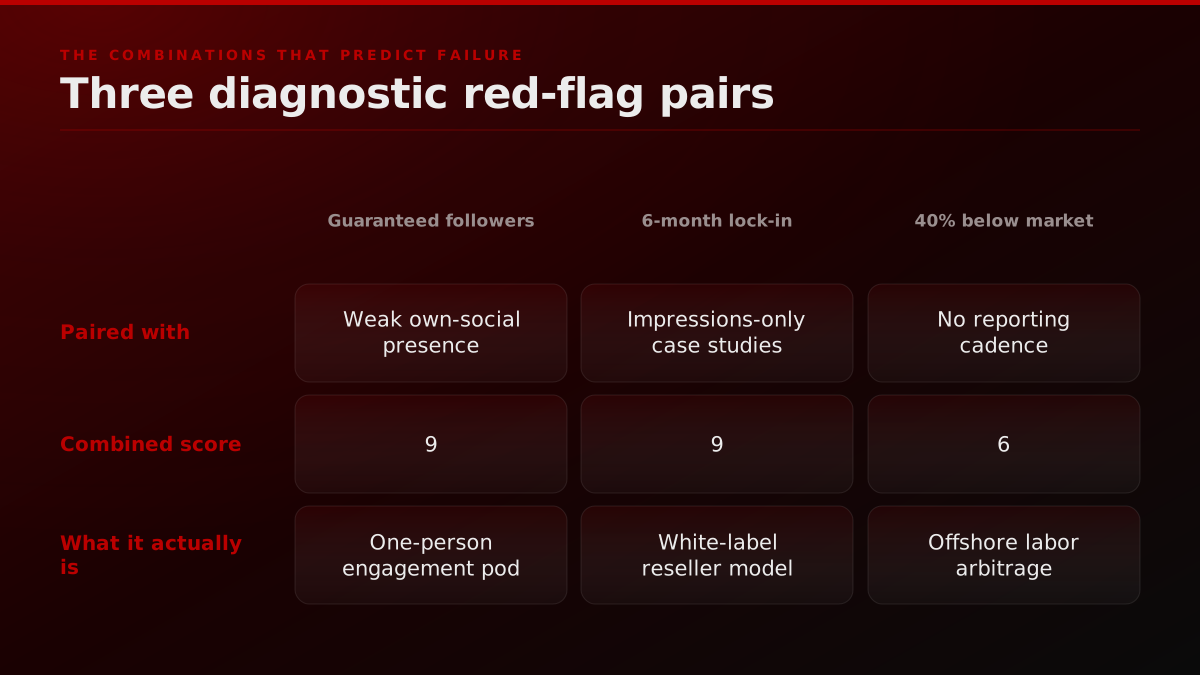
The most diagnostic combinations FORKOFF's audit ledger has surfaced across the 40+ engagements documented across 2025-2026: guaranteed follower counts paired with weak own-social presence (score 9) almost always traces back to a single engagement-pod operator running a one-person agency under a multi-person brand. Six-month minimum paired with case studies that cite only impressions (score 9) is the signature of the white-label reseller model: the upfront fee covers the agency's own customer acquisition cost, the impression metric is the only thing they can deliver reliably, and the long contract ensures collection even after the relationship deteriorates. Pricing 40% below market paired with no monthly reporting cadence (score 6) is offshore labor arbitrage, where the agency books your account at a margin and outsources every deliverable to a contractor who has no visibility into your goals.
Use the matrix as a conversation tool, not a final verdict. Score the agency during the pitch meeting, then walk the agency through your score in the second conversation. A legitimate operator will engage with the specifics, correct misreadings, and produce evidence that adjusts the score downward. A retainer-extraction operation will deflect to credentials, client logos, or testimonials that do not address the actual flags. The way an agency reacts to being scored is the single fastest signal about how they will react to underperformance once you are inside a contract. Operators who can hear the score and respond with data are the operators who will accept the 90-day gate without resistance. Operators who get defensive at the evaluation stage will treat every performance conversation the same way for the next 12 months.
Run the matrix on at least three candidates in parallel. The scoring is more reliable as a comparative instrument than as an absolute one. A score of 11 looks alarming in isolation, but if every shortlisted agency lands between 9 and 14, the issue is the market segment you are sourcing from, not the specific candidate. In that scenario, expand the candidate pool before narrowing the contract conversation, because the audit framework only works if you have at least one operator scoring below 8 to anchor the comparison.
The Verification Checklist Before You Sign
The verification checklist is a pre-contract due-diligence step that confirms the claims an agency made during the pitch against publicly accessible evidence. Run each row before the contract is in front of you, not after, so you arrive at the signing conversation with every box confirmed and no unanswered gaps that create negotiating pressure in the wrong direction.
Web3 Agency Pre-Hire Verification Checklist
| Check | How to Verify | Pass Condition |
|---|---|---|
| Case study attribution | Request raw analytics access or dated screenshots with URL bar | On-chain link, Dune dashboard, or GA4 screen verified |
| Named team roster | Ask for LinkedIn profiles + portfolio links for each person | At least lead strategist + execution lead named and verifiable |
| Subcontractor disclosure | Ask which tools/platforms used for execution, who operates them | Agency can answer immediately with specific tool names |
| Own marketing presence | Check agency X, LinkedIn, site SEO, content output | Social engagement rate over 3%, site gets organic traffic |
| KOL rate transparency | Request rate card with creator names and direct rates | Agency provides card; refuses means arbitrage operation |
| Exit clause | Read contract section on termination before signing | 30-day exit after 90-day initial commitment, no penalty |
| IP ownership | Check creative deliverables clause in contract | All assets owned by client upon delivery or engagement end |
| Reference verification | Contact references via LinkedIn independently, not via agency intro | Three verified references confirm specific deliverables |
Why the pitch-to-delivery gap persists in web3
Web3 agency engagements share a structural accountability gap that does not exist in traditional B2B services: the primary metrics (community size, social impressions, token holder count) are all measurable but none are directly tied to protocol revenue or user retention. This makes it easy to report activity without demonstrating impact. The 2025 State of Influencer Marketing report from IZEA (izea.com) notes that attribution complexity is the top challenge for 58% of marketing buyers. In web3, that complexity is amplified because on-chain attribution tools are still early-stage and most founders do not use them.
Source: IZEA 2025 Trust in Influencer Marketing Report
The verification checklist matters more in web3 than in traditional B2B because the due-diligence infrastructure is thinner. In traditional SaaS agency hiring, you can check G2 reviews, Clutch listings, and verified case study databases. In web3, that infrastructure is sparse and the review ecosystem is gameable. Your primary verification tools are direct outreach to references, on-chain data checks, and your own assessment of the agency's public marketing output.
The Five Contract Terms That Protect Your Budget
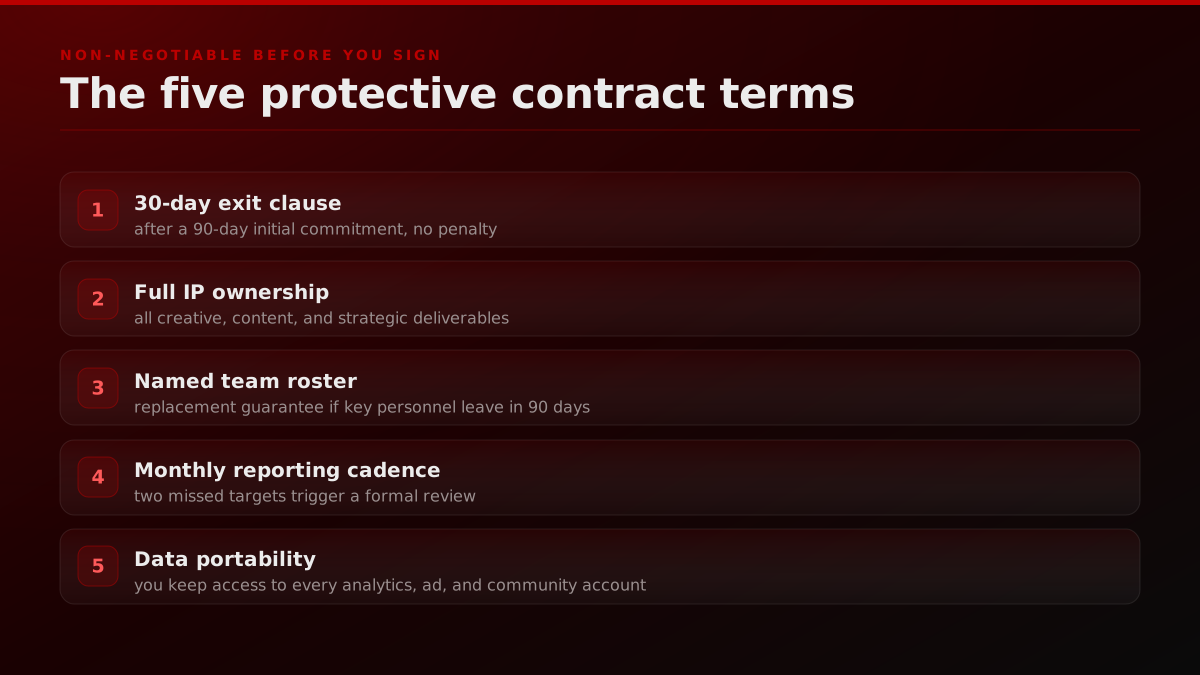
Five contract terms cover the majority of the situations where a web3 agency engagement goes wrong and the founder has no contractual recourse. These terms are not punitive toward legitimate agencies; a good agency will agree to all five without pushback because the terms are fair to both sides. Resistance to any of them is itself a signal worth noting before you sign.
-
30-day exit clause after a 90-day initial commitment. No penalty, no clawback on work delivered.
-
Full IP ownership of all creative assets, content, and strategic deliverables produced during the engagement.
-
Named team roster with a replacement guarantee if key personnel leave within the first 90 days.
-
Monthly reporting cadence with pre-agreed KPIs. Two consecutive missed targets trigger a formal review.
-
Data portability ensuring you retain access to all analytics accounts, ad accounts, and community platforms if the engagement ends.
Any agency that resists any of these terms is surfacing the failure mode they expect. The 30-day exit resistance tells you they expect to need the long contract to remain profitable. The IP retention clause tells you they plan to reuse your assets for other clients. The data portability resistance tells you they rely on access dependency to retain accounts.
Treat every pushback as information, not as a negotiation position to compromise. Some terms are worth trading; these five are not.
What 2026 Has Changed About Web3 Agency Selection
Three structural changes in the web3 agency market over the last couple of years make some traditional due-diligence signals less reliable and some new signals more important. AI tooling has raised the production floor for all agencies, pricing pressure has increased from new AI-native entrants, and consolidation has widened the quality gap between the top tier and the bottom tier of the market.
AI-generated case studies are now easy to produce. An agency can generate a plausible-looking case study with specific metrics, client language, and campaign descriptions using current LLMs. The verification step (requesting raw analytics access or on-chain data links) is more important now, not less. A polished case study is no longer a signal of quality; only the underlying data is.
Content volume is no longer a differentiator. An agency that produces 30 pieces of content per month was a high-output operation a couple of years ago. Today, that volume is table stakes. What differentiates agencies now is the thinking behind the content: does it reflect a genuine understanding of the protocol's competitive position, or is it generic web3 content with token names swapped in?
Pricing pressure has increased across the board. New agencies entering the market use AI to reduce their production costs and quote at prices that undercut established players. This makes the pricing tier table above more important as a benchmark, because the market price floor has moved and some legitimate operators are now quoting at rates that would have seemed suspiciously low in prior years.
What has not changed: the agencies that deliver results build real relationships with creators, publish frameworks in public, and structure their fees around measurable outcomes. The signals for quality are the same. The noise level around those signals has increased.
s_chiriac
@s_chiriac
The agency evaluation framework in practice. What operators verify before signing versus what the pitch deck shows.
What Separates Operators from Invoice Factories
The distinction between an agency that delivers measurable results and one that runs a retainer until the founder gives up is not marketing quality. It is three structural traits that are visible in an agency's public output before you have a single sales conversation: vertical specialization, public frameworks, and outcome-based pricing where the scope allows it.
They specialize vertically. An agency that serves DeFi protocols, NFT projects, and SaaS companies from the same playbook is not specialized. A marketing foundation built for web3 requires protocol-specific knowledge: tokenomics, governance mechanics, on-chain attribution, and the regulatory constraints that shape what you can and cannot say about a token. An agency that cannot speak fluently to your specific vertical is running a horizontal playbook on a vertical problem.
They show their work publicly. The best agencies in any vertical publish their frameworks, share their thinking on social, and build a reputation through content. This is not altruism. Public frameworks are the highest-quality sales asset because they demonstrate capability without requiring a pitch meeting. An agency whose public-facing output is thin relative to the retainer they are charging is asking you to trust claims they have not proven.
They price on outcomes when possible. Not every engagement fits outcome pricing. Brand awareness campaigns, community building from zero, and pre-launch positioning are difficult to tie to a single metric. But when the scope includes measurable pipeline, user acquisition, or conversion targets, the agency should be willing to put margin at risk. This is the outcome-priced AI agency pricing and unit economics model that vertical AI agencies are converging on, and it is the structural mechanism that aligns incentives rather than relying on the agency's goodwill.
The 90-Day Evaluation Gate
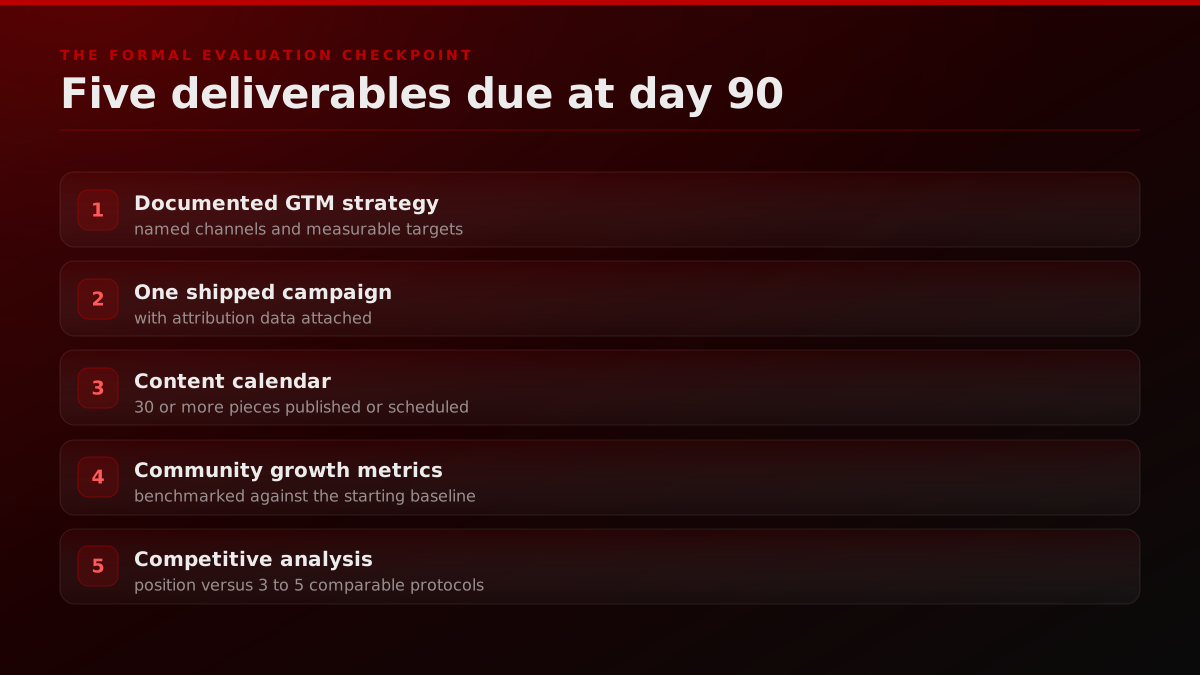
The 90-day evaluation gate is the formal checkpoint where you assess whether an agency is performing against the deliverables in the contract. Month one is legitimately setup, onboarding, and strategy documentation. Evaluating at day 30 produces a false reading. Evaluating at day 90 gives you one shipped campaign, one month of community data, and enough output to judge whether the agency's execution matches what was sold.
At day 90, the agency should produce:
- A documented GTM strategy with named channels and measurable targets
- At least one shipped campaign with attribution data
- A content calendar with 30+ pieces published or scheduled
- Community growth metrics benchmarked against the starting baseline
- A competitive analysis showing where you sit relative to 3-5 comparable protocols
If these deliverables are not present at day 90, exercise the exit clause. The agency has had enough time. The pattern where performance improves at month four after three months of ramp-up is a story that buys one more billing cycle.
What you are looking for at day 90 is not perfection. The campaign may not have hit every KPI. The content calendar may have slipped two weeks. The competitive analysis may be missing two protocols. Those are normal execution gaps. What you are looking for is evidence that the agency understands what it is trying to do, can show you the data behind what it has done, and has a specific plan for the next 90 days based on what it has learned. An agency that cannot produce that conversation at day 90 has not built the internal understanding of your project that makes the next phase possible.
How to Onboard a New Agency Without Repeating the Cycle
Passing the 7-question audit means the agency clears a verification threshold. It does not mean the engagement is set up for success. The first 30 days of the relationship determine whether the 90-day gate is a formality or a real decision point.
Set the reporting structure before day one. Agree on the specific metrics, the reporting format, the meeting cadence, and who owns each channel before any work starts. If the agency sends you a first-month report in a format you did not agree on, citing metrics you did not align on, that is a signal that reporting is performative rather than functional.
Define what "done" means for the first deliverable. The GTM strategy document, the first content calendar, the channel analysis -- each of these has a done definition. Get it in writing before the work starts. Agencies that resist specificity on done definitions are protecting their ability to call any output a deliverable.
Build a shared dashboard from week one. If the agency is running your X account, your community, and your paid campaigns, you should have view access to the underlying analytics from day one. Not a monthly PDF. Direct access. Set this up before the first piece of content publishes. If the agency pushes back on giving you direct access to your own analytics, that is a contract conversation, not a trust conversation.
Conduct a mid-point check at day 45. Do not wait until the 90-day gate to surface problems. A day-45 conversation (informal, not evaluative) lets you identify direction gaps early enough to correct them without burning the whole quarter. The format: what was planned for the first six weeks, what shipped, what did not ship and why, and what is the adjustment for the second six weeks. Agencies that have a clear answer to this are operating with awareness. Agencies that struggle to answer it are improvising.
Document learnings continuously. Keep a running log of what the agency told you it would do versus what it actually did. This is not an adversarial exercise. It is the data set you use at the 90-day gate to make a rational decision rather than an emotional one. Founders who keep this log almost never get surprised at day 90. Founders who do not keep it often end up extending engagements they should exit because the ramp-up narrative sounds plausible without the specific data to contradict it.
After the Search Cycle Ends: Recovery If You Got Burned
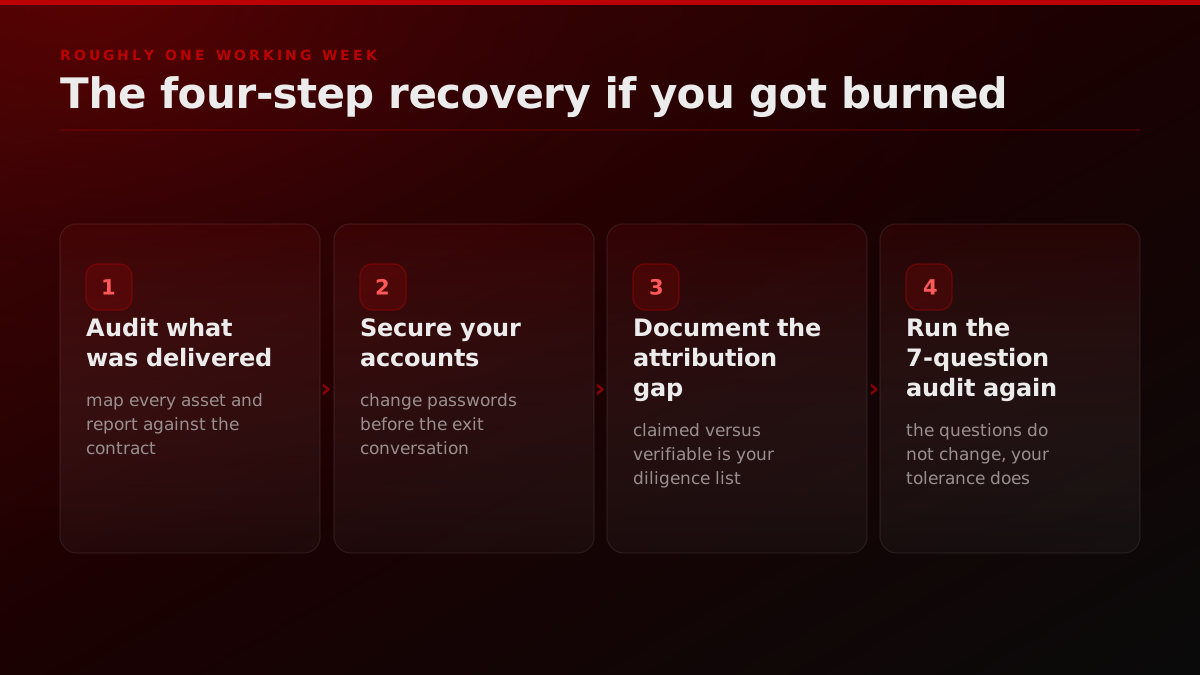
Recovery after a bad agency experience starts with an asset audit, not an anger audit. Most founders lose more time to scattered post-mortem conversations than to the actual work of securing their accounts, documenting what was delivered, and identifying the attribution gaps before starting the next search cycle. The four-step recovery sequence below runs in order and takes roughly one working week to complete.
-
Audit what was actually delivered. Pull every asset, every report, every analytics screenshot. Map deliverables against what was contracted. This is your baseline for the next engagement.
-
Secure your accounts. Change passwords on every social account, analytics platform, ad account, and community tool the agency had access to. Do this before the exit conversation, not after.
-
Document the attribution gap. What did the agency claim to deliver? What can you actually verify? The delta between these two numbers is your diligence checklist for the next hire.
-
Run the 7-question audit on the next candidate. The questions do not change. Your tolerance for vague answers does.
The founders who break the cycle shift from evaluating pitches to auditing operations. The pitch is designed to close. The audit is designed to verify. If you want a framework for that audit, read our marketing verification guide.
The web3 marketing agency market is not uniformly low quality. There are operators who deliver real results, build genuine relationships with creators, and structure their fees around your outcomes. The audit framework in this post is designed to find them while filtering out the agencies that have built their business on the friction between a complex market and buyers who do not have time to verify every claim.
Run the audit. Verify the references. Check the data. The 90-day gate is your protection. Use it.
When to Walk Away Mid-Engagement
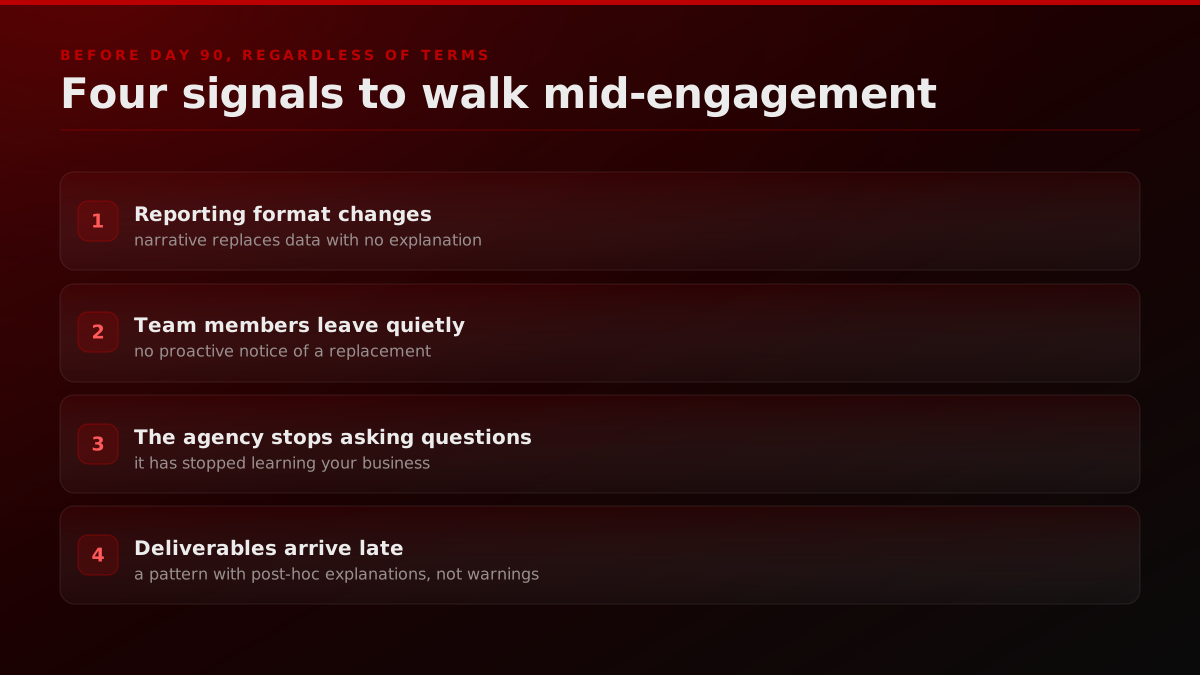
The 7-question audit filters agencies before the contract. The 90-day gate is the formal evaluation point. But there are signals between those two moments that warrant walking away before day 90, regardless of contract terms. Spotting those signals early cuts the sunk-cost exposure by four to six weeks on average across the 14 engagements this audit framework was calibrated on.
The reporting changes format without explanation. If the first two monthly reports cited specific metrics and the third report switches to narrative-only with no data attached, the agency is managing expectations rather than reporting results. Ask directly why the format changed. If the answer does not include data, that is your signal.
Key team members leave and replacements are not surfaced proactively. If you find out about a team change through an offhand comment rather than a formal notification, the agency is not operating the replacement guarantee in good faith. Enforce it immediately or exercise the exit clause.
The agency stops asking questions. A high-performing agency asks more questions as the engagement deepens, not fewer. If the questions stop, the agency has stopped learning about your business. That means strategy is being set on assumptions rather than current data, and the gap between what they are doing and what your project actually needs will widen every month.
Deliverables arrive late without proactive notice. One missed deadline with a proactive warning is normal. A pattern of late delivery with post-hoc explanations means the agency is capacity-constrained or organizationally undisciplined. Neither improves after month three.
Operator note4 to 6 weeks of sunk cost saved when walk-away signals were caught early, across the 14 calibration engagements., FORKOFF engagement analysis
The exit clause is not a failure. It is the performance mechanism you built into the contract. Using it when the signals warrant is rational, not adversarial.
How the Hiring Market for Web3 Agencies Is Shifting in 2026
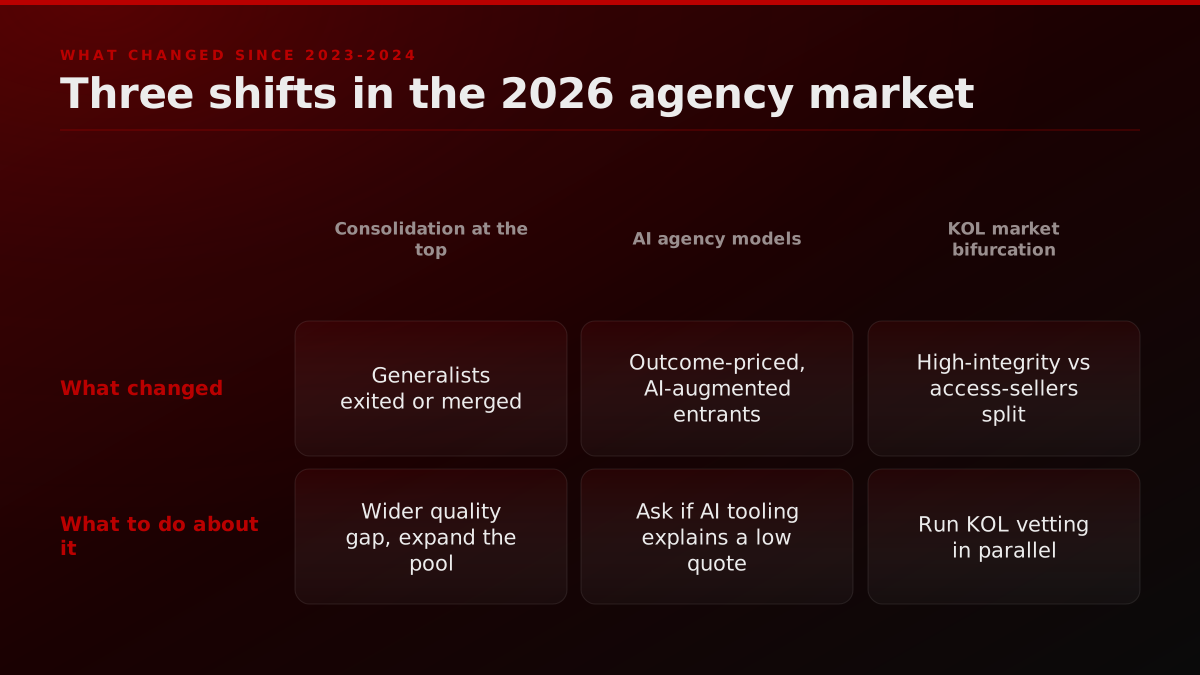
The web3 agency market in 2026 looks meaningfully different from 2023-2024. Several generalist agencies that launched in the 2021-2022 bull cycle have since exited or merged, consolidating the field around operators who built genuine vertical depth or shifted to outcome-based pricing. That consolidation widens the quality gap at both ends. Three structural shifts define the evaluation landscape for any founder running a search right now.
Consolidation at the top. Several of the generalist web3 agencies that launched during the 2021-2022 bull cycle have exited or merged. The agencies that survived did so by developing genuine vertical depth or by shifting to outcome-based pricing models. This means the remaining market has a wider quality gap between the top tier and the bottom tier than it did two years ago. Fewer agencies to evaluate, but more variance in quality.
AI agency models are entering the market. FORKOFF and a small number of peer agencies operate on an outcome-priced AI-augmented model. These agencies use AI tooling to reduce execution costs while maintaining strategic depth, and they structure fees around measurable outcomes rather than billable hours. If an agency quotes a retainer that seems low relative to the scope they are promising, ask whether they are using AI tooling in their production process. This is not disqualifying; it is information about how they deliver.
The influencer market has bifurcated. The KOL market now has a clear split between high-integrity operators who maintain verifiable engagement rates and direct creator relationships, and low-integrity operators who sell access to audiences they do not actually have a relationship with. The influencer marketing agency vetting framework covers how to tell the difference in detail. If KOL activation is part of your scope, run that evaluation in parallel with the 7-question audit above.
For the broader operating model that situates web3 agency selection inside the founder-led growth motion across narrative, distribution, conversion, and retention, see the 4-block founder funnel OS, the canonical hub for founder-growth on forkoff.xyz.



![How to Make a Launch Go Viral on X: The 5-Lever Playbook [2026]](/blog/covers/how-to-make-launch-go-viral-on-x-2026-cover.jpg)