You are looking at a tweet with a big number on it. Thousands of likes, a confident author, maybe a media kit that quotes the reach. The question that decides whether you should trust it, or pay for it, is the one the number does not answer: is any of this engagement real? You cannot see a purchase receipt. What you can see is the shape of the engagement, and bought engagement leaves a shape that earned engagement does not. This guide gives you five signals to read on a single post, ordered so the cheap reads flag most bought tweets before you spend time on the deep ones.
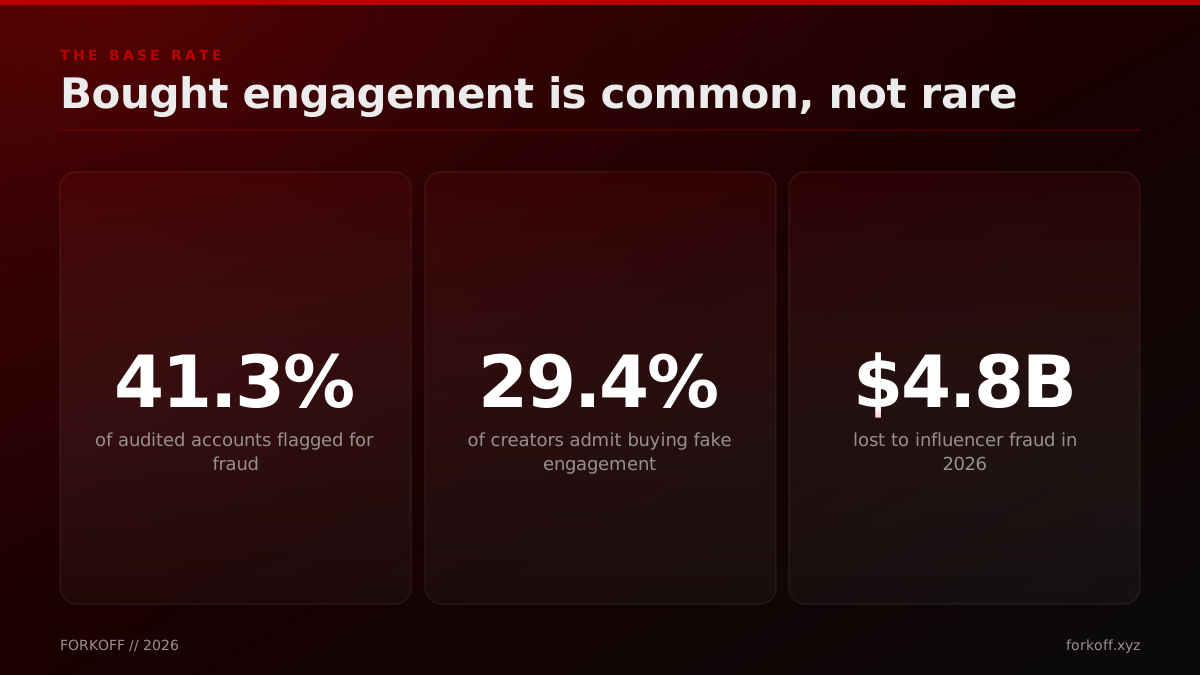
This is not a fringe worry. In HypeAuditor's 2026 audit of 8.7 million profiles, 41.3 percent of accounts showed fraud signals, and an Influencer Marketing Hub survey found 29.4 percent of creators admit to buying fake engagement outright. The person whose numbers you are judging has a direct incentive to inflate them. So the honest starting assumption for any tweet you have not read is that the engagement is partly manufactured until the signals say otherwise. One thing to set up front: every threshold below is a heuristic, a way to raise your suspicion, not a precise metric that proves fraud. The goal is to know when to stop and dig, and this is the tweet-level companion to our account-level playbook on how to vet a crypto KOL before you pay.
TL;DR: Read 5 signals before you trust a tweet's numbers.
Bought engagement is common, not rare: HypeAuditor's 2026 audit flagged 41.3 percent of accounts for fraud, and an Influencer Marketing Hub survey found 29.4 percent of creators admit to buying fakes. You cannot see a purchase receipt, so you read signals. Run five on any single tweet, in order: like-to-reply ratio (real reach earns replies, bought likes arrive alone), the follower-quality of the accounts that engaged, the timing pattern (organic decays, bought lands in a burst), reply sentiment against reply volume (empty hype at scale means pods or bots), and the view-to-engagement mismatch (impressions far out of line with likes). No single signal is proof; two or more red signals on the same post is when you stop and dig. Every number below is a heuristic, not a precise verdict.
Creators know the behavior is punishable, which is part of why detecting it matters: the same buying that inflates a number can also get the account actioned. The advice below circulates constantly among people who post for a living.
shua
@shua90761
To avoid getting a permanent pause or suspension as a Content Creator on X (Twitter), here are the things you should pay attention to: Don't spam comments or repost the same content repeatedly. Avoid fake engagement such as buying likes, followers, or using automated bots.
About these numbers
The fraud-prevalence figures (41.3 percent of 8.7 million profiles, 29.4 percent of creators admitting purchases, roughly 4.8 billion dollars in annual brand losses) are aggregated by amraandelma.com from HypeAuditor's 2026 audit, an Influencer Marketing Hub creator survey, and a Cheq and University of Baltimore loss estimate. The engagement-rate bands by follower tier are directional, synthesized from public creator benchmarks, and they are meant as a starting filter, not a cutoff. The example tweets in the comparison visuals are illustrative constructions built to show the pattern, not screenshots of specific accounts, because naming and shaming a real account on a suspicion is exactly the mistake this checklist is designed to prevent. Where a claim is a heuristic, it is labeled as one. Where it is a cited statistic, the source is linked inline. The point of the method is to move you from a gut feeling to a repeatable read you can run in two minutes on any post.
The 5-Signal Bought-Engagement Checklist
Reading a tweet for bought engagement means checking the shape of the engagement against what genuine reach produces, using signals no seller can fully fake at once. It is not the same as deciding whether you like the post. A great post can have modest numbers and a mediocre post can go viral honestly. What you are testing is narrower: does the engagement on this specific tweet look earned, or does it look purchased. The five signals below run cheapest-first, so a single strong red read early can settle it before you open a single profile.
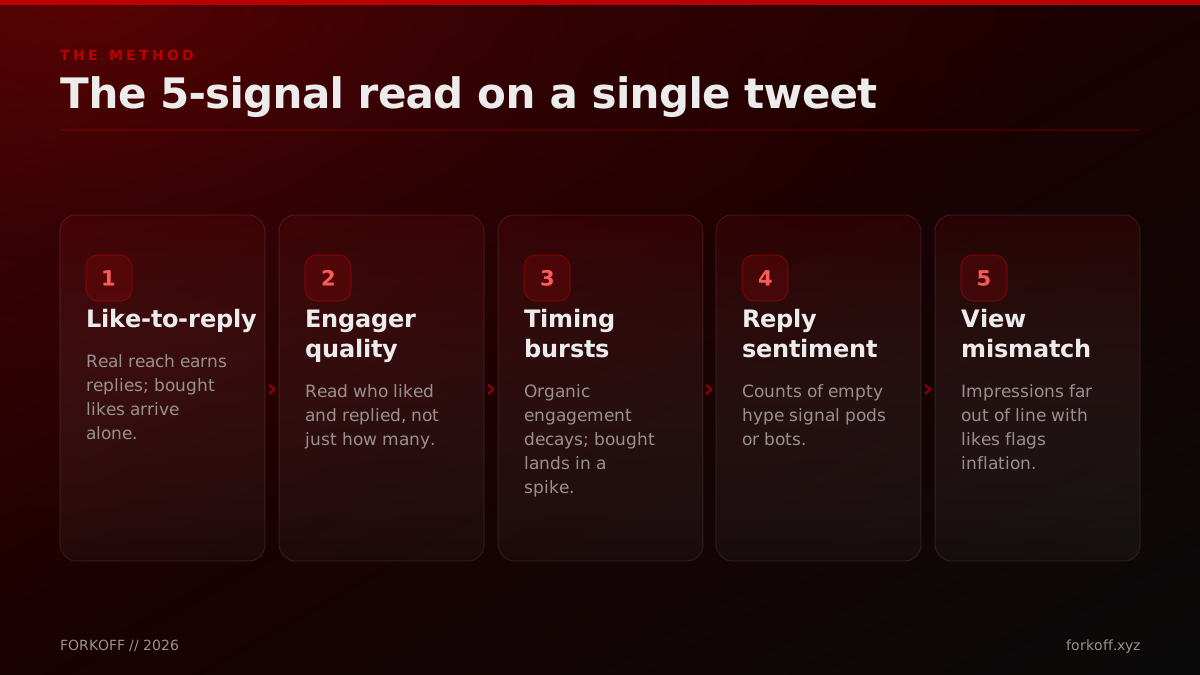
Scan the checklist, then work each signal against the tweet in front of you. Most bought posts fail signals one and two, the like-to-reply ratio and the engager quality, because those are the cheapest kinds of engagement to buy and the hardest to disguise. The deeper reads (timing, sentiment, and views) are where you separate a genuinely viral post from a seeded one.
The bought-engagement checklist at a glance
| # | Signal | What to check | Bought-engagement tell |
|---|---|---|---|
| 1 | Like-to-reply ratio | Likes against replies and reposts | Hundreds of likes, near-zero replies |
| 2 | Engager quality | Open the accounts that liked and replied | A cluster of blank, default-avatar profiles |
| 3 | Timing pattern | Counts at 10 minutes versus 2 hours | A sudden burst that then flatlines |
| 4 | Reply sentiment | Read the replies, not just the count | Wall of one-word or emoji hype |
| 5 | View-to-engagement | Impressions against likes and replies | Huge views, tiny proportional engagement |
Run them in order. The cheap reads (1 and 2) flag most bought posts before you spend time on timing and views.
Bought engagement is the base rate, not the exception
HypeAuditor's 2026 audit of 8.7 million profiles flagged 41.3 percent of accounts for fraud signals, and an Influencer Marketing Hub survey of roughly 5,100 creators found 29.4 percent admitted to buying fake engagement, with Gen Z creators at 36.1 percent. The seller has every incentive to inflate the number you are judging them on. So the honest default for any tweet you have not read is that the engagement is partly manufactured until the signals say otherwise.
Source: HypeAuditor 2026 and Influencer Marketing Hub via amraandelma.com
The base rate is the reason this is worth two minutes. If roughly two in five accounts carry fraud signals and nearly a third of creators admit buying, then the default posture of trusting the number is wrong more often than it is right. Reading the signals flips the burden of proof back onto the post.
Signal 1: The Like-to-Reply Ratio
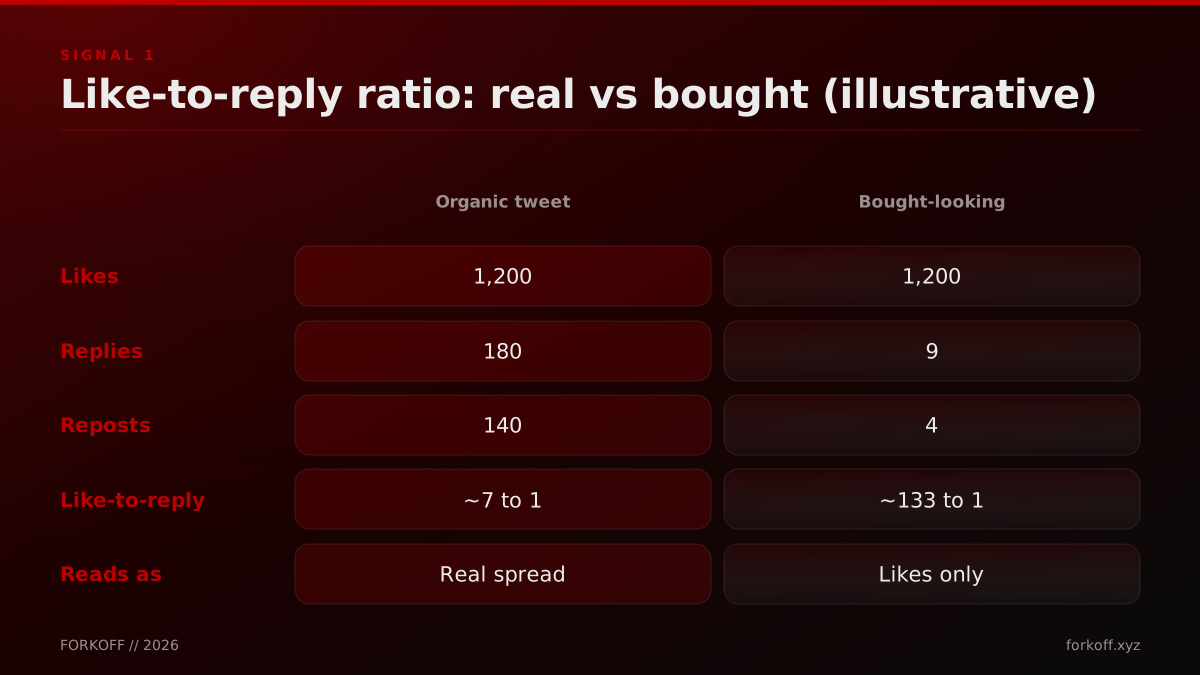
The like-to-reply ratio is the relationship between how many people liked a tweet and how many bothered to reply or repost it, and it is the first signal because it is free to read and the hardest kind of fakery to hide. A like is the cheapest engagement to buy: it is one tap, it requires no writing, and it scales to thousands of accounts in minutes. A reply is expensive to fake convincingly, because it has to say something. So a tweet with a wall of likes and almost no replies or reposts is showing you the exact shape a bulk like-purchase produces.
Read the three counts together, not the like number alone. On a genuinely engaging post, replies and reposts scale with likes: people argue, quote, add their own take, and pass it on. As a rough directional read, discussion-style posts often land somewhere around one reply for every ten to thirty likes, though this swings hard by topic and account size, which is why it is a filter and not a cutoff. The pattern that should slow you down is hundreds or thousands of likes sitting on top of single-digit replies and reposts. That is not proof of a purchase, because some formats (a clean graphic, a one-liner) genuinely pull likes without conversation. It is a flag that earns the next four checks.
The mismatch is obvious once you look for it, and people spot it in the wild constantly. One X user, working through why an account felt off, landed on exactly this read.
His account has very few likes and reshares on his posts while having almost 9000 followers
Operator noteReal reach earns replies and reposts, not just likes. A wall of likes with near-zero replies is the first tell.
There is a reason this signal is first and load-bearing. The economics of fake engagement push buyers toward likes and followers because they are the cheapest units that move the headline number, which our teardown of whether X launches are a scam or a skill issue gets into from the launch side. If you only ever learn one of these five signals, learn this one, because it catches the largest share of bought posts for the least effort. Then, when the ratio looks wrong, move to the accounts themselves.
Signal 2: The Follower-Quality of the Engagers
Engager quality is the authenticity of the specific accounts that liked, replied to, and reposted the tweet, and it is the check that turns a suspicion into a read. A bought post can show a healthy-looking number, but it cannot easily buy engagement from accounts that look like real, active humans, because the cheap engagement comes from bot farms and dormant profiles. So the number tells you the volume, and the accounts tell you whether it is real.
Open the likes and the reply thread and click into ten to fifteen of the individual accounts. You are not judging any single one, because real people have quiet, sparse profiles too. You are looking for a cluster of tells appearing together: blank or copied bios, default or stock avatars, alphanumeric usernames, a following count in the thousands paired with almost no posts, and accounts all created in the same recent window. When a run of the engagers share those traits and all landed on the same post at the same time, the engagement was seeded, not earned. This is the tweet-level version of the fake-follower audit that account-screening tools like Modash and HypeAuditor automate at the profile level.
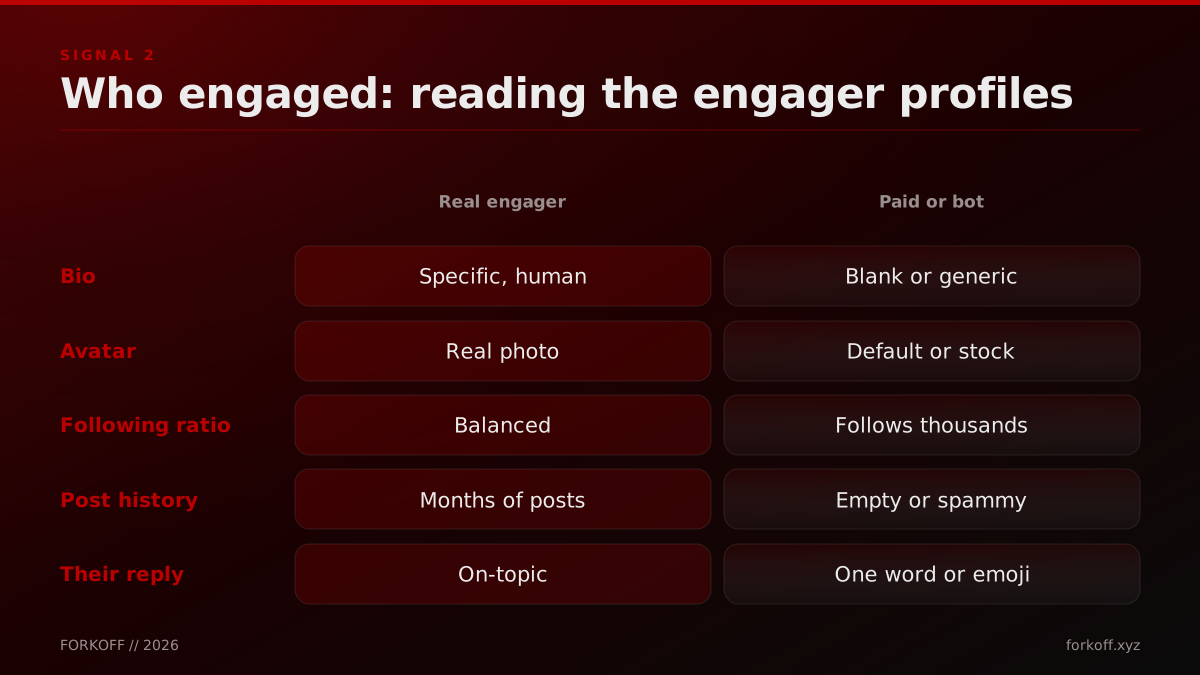
Operator noteOpen the first 15 accounts that liked or replied. A cluster of blank bios and default avatars is a bought signal.
The most visible proof of how much engagement is hollow comes from the moments the platform cleans house. When X ran bot purges, accounts shed thousands of followers overnight, which is the same fake engagement this signal reads, made suddenly visible when the bots were removed.
What is the deal with Twitter users (claiming to be) losing thousands of followers? Is it something to do with Elon Musk buying Twitter?
The engager read is also where a bought post and a genuinely viral one diverge most cleanly. A real viral tweet pulls in strangers with diverse, established profiles who found it through the network. A seeded tweet pulls the same recognizable cluster of thin accounts every time, because they are the same inventory the seller resells to every client. If you screen creators for a living, this pattern becomes a fingerprint, and it is the single most reliable manual read on a specific post. For the account-wide version of this discipline, our influencer marketing agency vetting playbook covers the questions that separate operators from brokers, and the same instinct powers the 3-layer bot detection system we run on clipping campaigns.
Signal 3: The Timing and Burst Pattern
The timing pattern is how a tweet's engagement is distributed across the minutes and hours after it posts, and it separates organic reach from a purchased spike because the two arrive on completely different curves. Real engagement follows the network: a post gets an initial push from the author's followers, then rises or falls as the algorithm tests it, spreading and decaying over hours in a jagged line. Purchased engagement is delivered by a service on a schedule. It arrives in a tight burst, often front-loaded in the first few minutes as the order fills, then flatlines because there is no real audience underneath to carry it.
You do not need analytics access to read this. Note the counts when you first see the post, then check again an hour or two later. A genuine post keeps accumulating engagement in an uneven trickle as more real people see it. A bought post shows the numbers jump early and then barely move, because the paid batch has already been delivered and nothing organic is replacing it. The burst can also show up as a run of replies arriving within seconds of each other from different accounts, which is the engagement-pod pattern: a coordinated group firing on cue rather than an audience reacting in its own time.
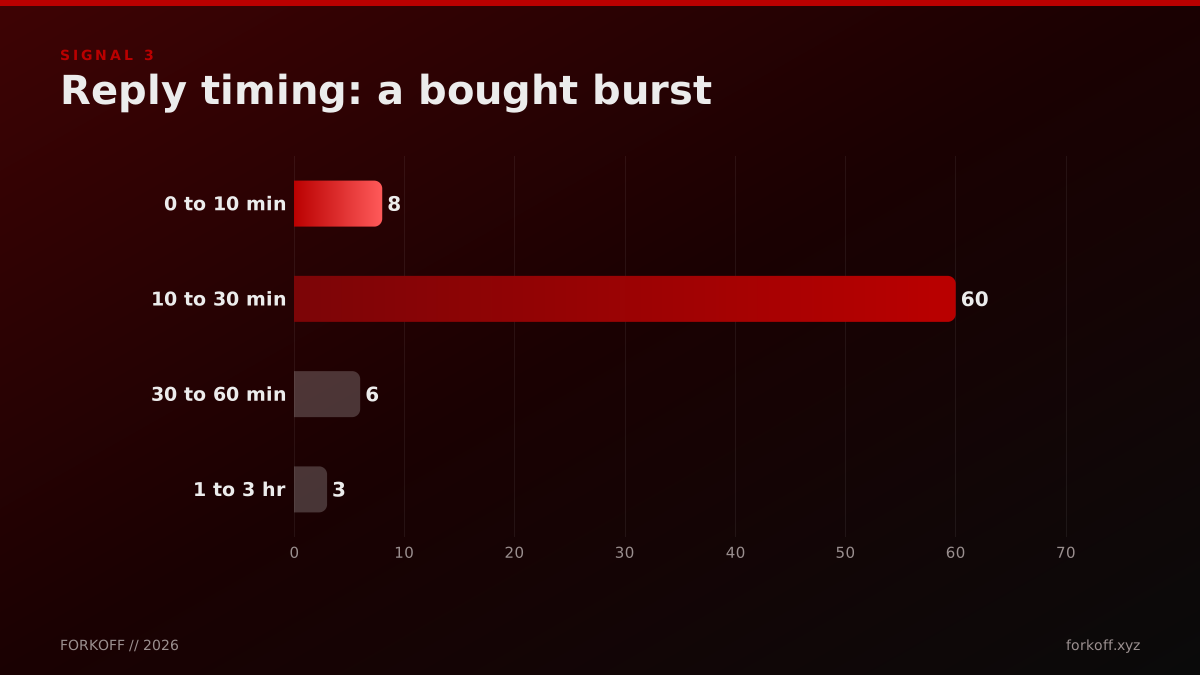
Operator noteScreenshot the counts at 10 minutes and at 2 hours. Bought engagement front-loads, then flatlines.
Detection is probabilistic, and the platform is on your side
Automated bot detection is a research field, not a certainty: work like the Observatory on Social Media's study of how social bots spread content shows you can score the likelihood of automation from behavioral features, not prove it from a single post. That is why this is a checklist of signals, not a verdict machine. It also means the platform shares your interest: buying engagement violates X's platform-manipulation rules, so a bought account carries a standing suspension risk on top of the wasted spend.
Source: Observatory on Social Media (Indiana University); X platform rules
Timing is a mid-strength signal on its own, because a legitimately well-timed post riding an algorithm boost can also spike early, which our breakdown of the Grok-era X algorithm explains in depth. The difference is what happens after the spike: real reach keeps breathing, bought reach holds its breath. Read timing together with the engager quality from signal two, because a burst of engagement from a cluster of thin accounts is a far louder signal than either read alone. That is the theme of the whole method: no single signal convicts, but the signals corroborate each other.
Signal 4: Reply Sentiment Against Reply Volume
Reply sentiment against volume is the check on whether the replies a tweet earned actually say anything, and it catches the fakery that a raw reply count misses. Signal one flags posts with too few replies. This signal flags the opposite trick: a post that bought replies to look conversational, but bought them from pods and bots that produce volume without substance. A bot can be paid to reply, but it cannot easily be paid to reply with a specific, on-topic thought, so the sentiment of the replies gives away what the count hides.
Open ten reply threads and actually read them. Real audiences argue, ask questions, disagree, correct the author, and reference specifics from the post. A manufactured reply set clusters around a narrow band of empty responses: one-word reactions, emoji-only replies, generic hype like the same three phrases repeated, and threads that go nowhere because no human is behind them. When the majority of the replies on a paid-looking post are that kind of low-substance filler, and especially when the same handful of accounts produce them under every one of the author's posts, the conversation is staged.
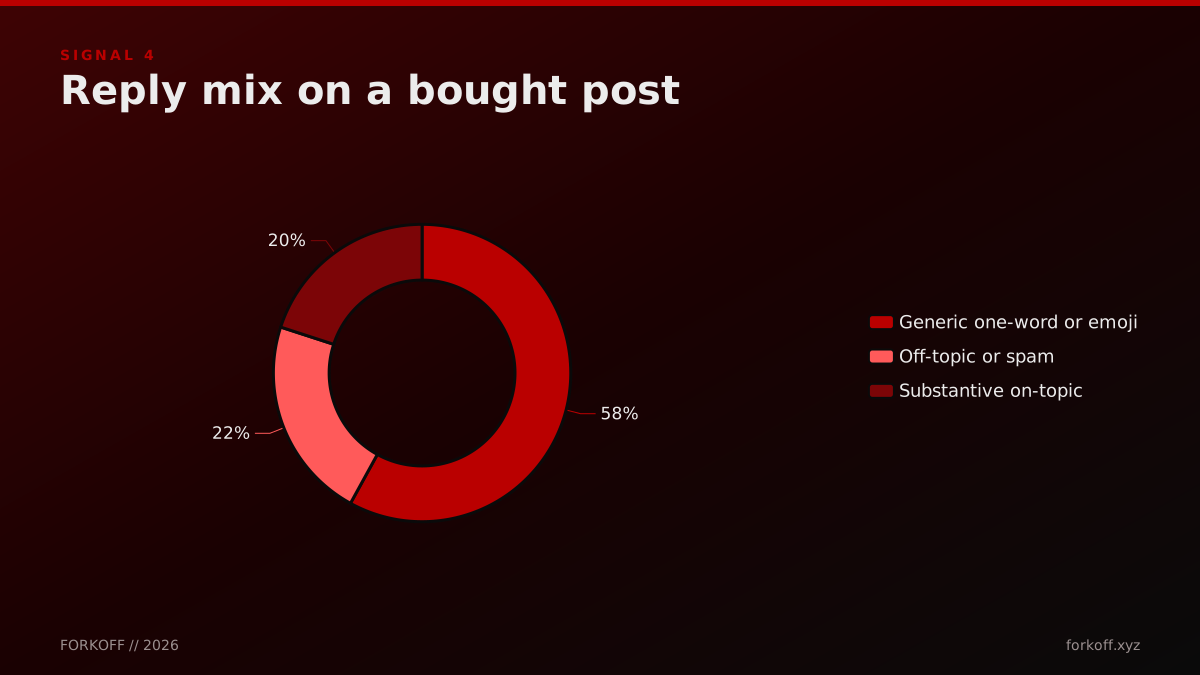
Score what you see on three rough tiers as you read: substantive replies that engage the actual claim, generic-but-human replies (nice, agreed, interesting), and bot-tier replies that are repetitive, emoji-only, or come from blank profiles. If the bot tier dominates a post that is clearly trying to look popular, the volume is manufactured regardless of what the reply count says. This is the same distinction operators keep drawing between real influence and noise.
reach without relevance is just noise
Operator noteNo single signal is proof. Two or more red signals on the same post is when you stop and ask questions.
Signal 5: The View-to-Engagement Mismatch
The view-to-engagement mismatch is the gap between how many impressions a tweet claims and how much of that audience actually engaged, and it is last because it is the noisiest signal, useful only once the first four have set the context. Impressions are the easiest number to inflate and the hardest to verify from outside, so a very high view count paired with almost no proportional likes, replies, or reposts is a flag. Either the post is being shown to an audience it does not resonate with, or the view count itself is padded. On its own that is weak evidence, which is exactly why it sits at position five and not one.
Read views against the engagement rate, and read the rate against the follower tier, because engagement naturally falls as reach grows. A rough directional frame: a typical organic post lands somewhere in the low single digits of engagement per impression, a strong post runs higher, and a post showing enormous views with a fraction of a percent of engagement is the mismatch worth investigating. Be careful here, because reach and engagement legitimately decouple for honest reasons too. An account in a ghost ban can see impressions collapse while the content is fine, and a poorly targeted paid boost can pile up views that never had a chance to convert. The mismatch is a question, not an answer.
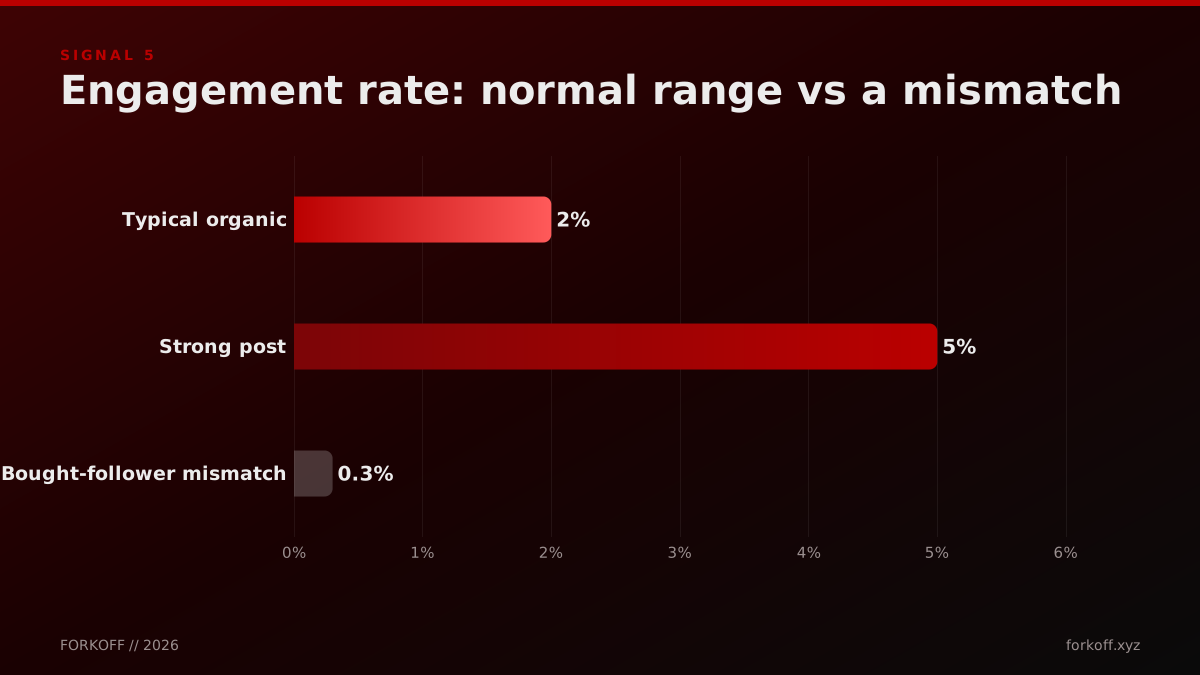
The reason to keep views last is that the consequences of getting it wrong are real, both ways. Trusting inflated reach means paying for an audience that does not exist. But wrongly accusing a real account of buying, on a weak signal like views alone, is its own failure, and the public examples of bought engagement getting exposed show why the standard has to be high before you act.
Film Critic Richard Roeper Suspended By Chicago Sun-Times After Buying Twitter Followers
The Roeper case is the cautionary tale on both sides: a real career consequence for buying, and a reminder that the accusation carried weight precisely because it was backed by a proper audit, not a single-metric hunch. If your read on a post depends entirely on the view count, you do not yet have enough to act. Pair views with the other four signals, and treat a mismatch as the prompt to look harder, not the verdict itself. For the reach you can actually count and pay against, our qualified-views metric explains why the raw impression number is the wrong unit in the first place.
Put the 5 Signals Together: A Scoring Approach
Scoring a tweet means combining the five signals into one read rather than convicting on any single one, because each signal alone has honest explanations and only the pattern is reliable. A wall of likes with no replies could be a great graphic. A cluster of thin engagers could be a coincidence. An early burst could be a well-timed post. A low view-to-engagement ratio could be a ghost ban. Any one of these has an innocent story. What does not have an innocent story is several of them landing on the same post at the same time.
The practical rule is simple: read all five, mark each green or red, and treat two or more reds on one post as your cue to stop and investigate before you trust or pay. One red is a shrug. Two is a question. Three or more is a decision. The scorecard below lays out what real and bought look like on each signal so you can run the read consistently instead of by feel, which is the difference between a repeatable screen and a vibe.
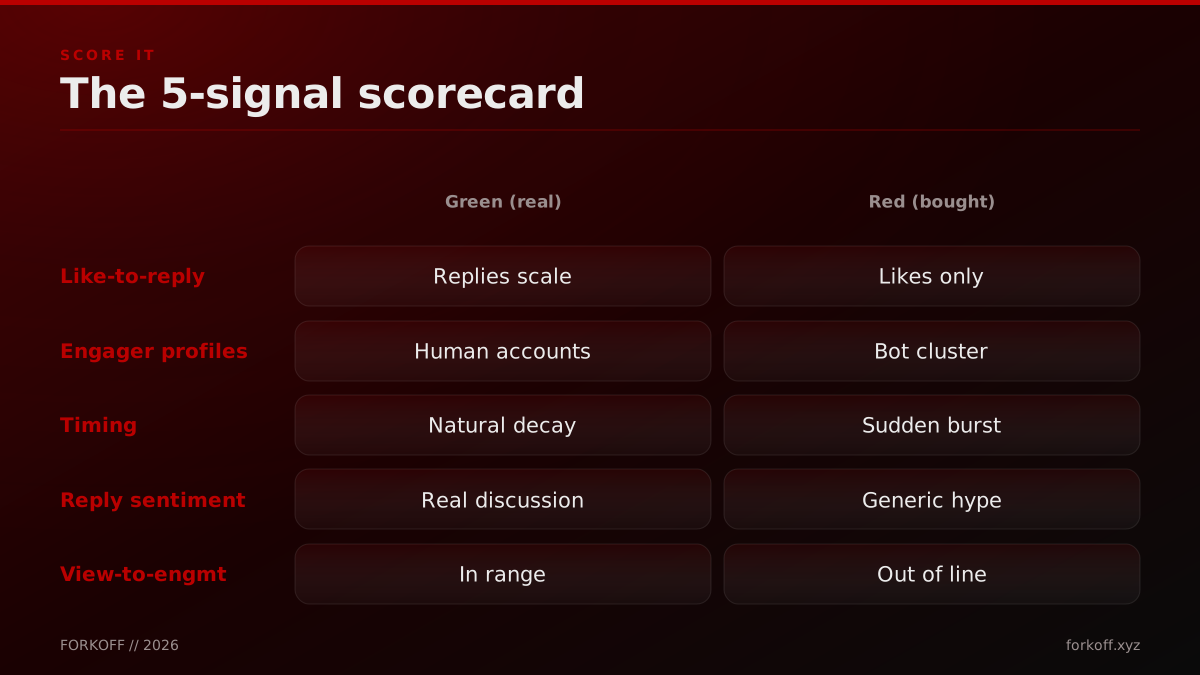
The 5-signal scorecard: what real versus bought looks like
| Signal | What real looks like | What bought looks like | What to open |
|---|---|---|---|
| Like-to-reply ratio | Replies and reposts scale with likes | Likes only, replies near zero | The reply and repost tabs |
| Engager quality | Human accounts with real histories | A cluster of thin, new, or blank profiles | The likers and repliers |
| Timing pattern | Engagement decays over hours | A spike in minutes, then flat | The counts at two time points |
| Reply sentiment | Questions, disagreement, specifics | One-word hype from the same accounts | Ten reply threads by hand |
| View-to-engagement | Engagement in a normal band for reach | Huge views, almost no engagement | The view count against the rest |
Every row is a heuristic. Weight a post red only when two or more signals point the same way.
The reason to formalize it is that a single-signal read is where both false positives and false negatives come from. Screen only for the like-to-reply ratio and you will miss a post that bought replies to look conversational. Screen only for views and you will flag an honest account in a ghost ban. The corroboration is the method. This is the same logic that drives account-level fraud screening in our crypto KOL marketing framework, scaled down to the level of a single post.
Fake engagement is a buyer problem, not just a vanity problem
When you pay a creator or a KOL, you are renting an audience. If a third of that audience is bots, you are paying full price for a fraction of the real reach, and aggregated research puts global brand losses to influencer fraud at roughly 4.8 billion dollars in 2026, up from 1.3 billion in 2019. The number on the post is the number you negotiate against, which is exactly why reading the engagement before you pay is due diligence, not paranoia.
Source: Cheq and University of Baltimore via amraandelma.com
Benchmarks: What Normal Looks Like By Tier
An engagement benchmark is the rough band of engagement a genuine account produces at a given size, and it exists to stop you from flagging a healthy mega account or excusing a bot-inflated micro one. Engagement rate, meaning likes plus replies over followers or over reach, falls predictably as accounts grow, because a bigger audience is a less uniformly interested one. So the same 1 percent engagement rate reads as healthy on a 500,000-follower account and as a warning on a 5,000-follower one. Reading the rate without the tier is how honest big accounts get wrongly flagged.
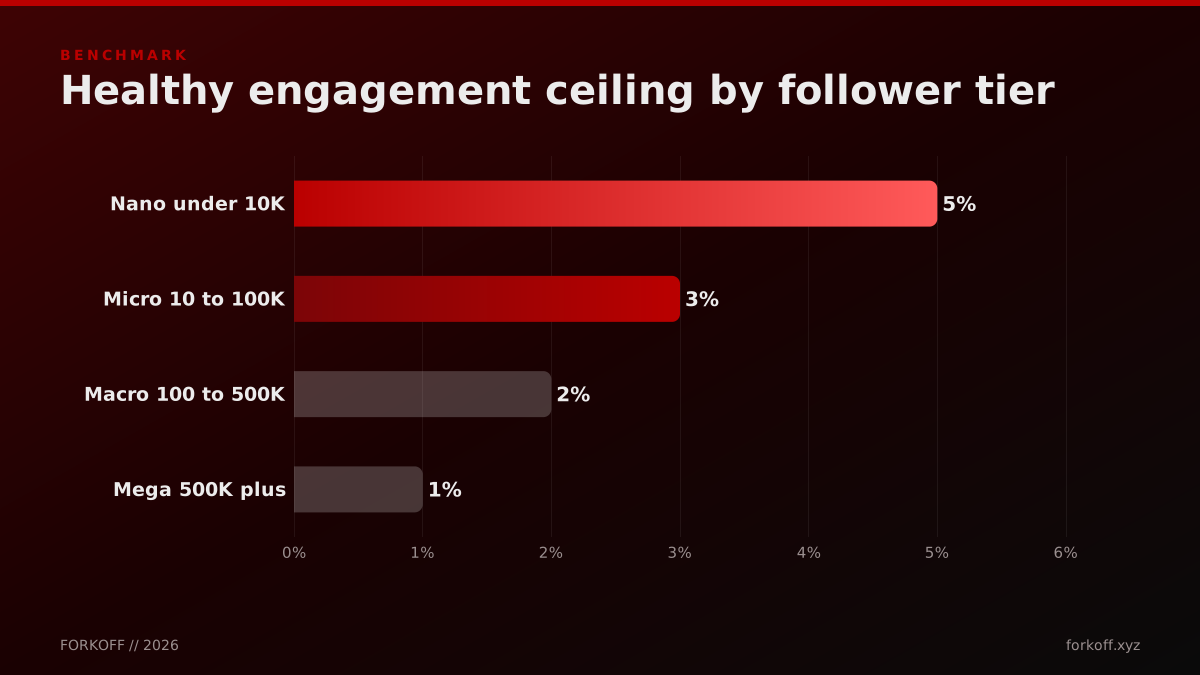
The table below disaggregates the rough bands by follower tier. Treat the numbers as directional filters synthesized from public creator benchmarks, not precise cutoffs, because the honest range varies by niche, format, and platform surface. The point is calibration: know roughly where a real account of a given size should land, so an account that sits far below its tier becomes a prompt to run the five signals rather than a conviction on its own.
Engagement-rate benchmarks by follower tier (a starting filter, not a verdict)
| Follower tier | Reads as healthy | Watch closely | Likely inflated |
|---|---|---|---|
| Nano (1K to 10K) | 3 to 6 percent | 1.5 to 3 percent | Under 1.5 percent |
| Micro (10K to 100K) | 2 to 5 percent | 1 to 2 percent | Under 1 percent |
| Macro, lower band (100K to 500K) | 1 to 3 percent | 0.5 to 1 percent | Under 0.5 percent |
| Macro, upper band (500K to 1M) | 1 to 2 percent | 0.5 to 1 percent | Under 0.5 percent |
| Mega (1M plus) | 1 to 2 percent | 0.5 to 1 percent | Under 0.5 percent |
Read the rate against the tier. Bands follow Sprout Social and Hootsuite (macro 100K to 1M, mega above 1M); the old single row above 500K is now split into upper macro and mega, same percentages. Directional, not a precise cutoff.
The tier benchmark is a screening filter, not the read itself. It tells you which posts and accounts deserve the two-minute signal check, which matters when you are evaluating a list of creators rather than a single tweet. If you are pricing a campaign against these benchmarks, our influencer marketing pricing tiers and the cost breakdown from 30 founders give you the money side, and the best crypto KOL platforms comparison covers where to run the screen.
What the Tools and Platforms Actually Do
The tooling around fake engagement mostly works at the account level, which is why the single-tweet read stays manual. It helps to know what each category of tool actually measures, so you use it for the job it does and do not over-trust a score it was never built to give. Bot-scoring research tools, fake-follower audits, and the platform's own enforcement all attack the problem from different angles, and none of them replaces reading the replies on the specific post in front of you.
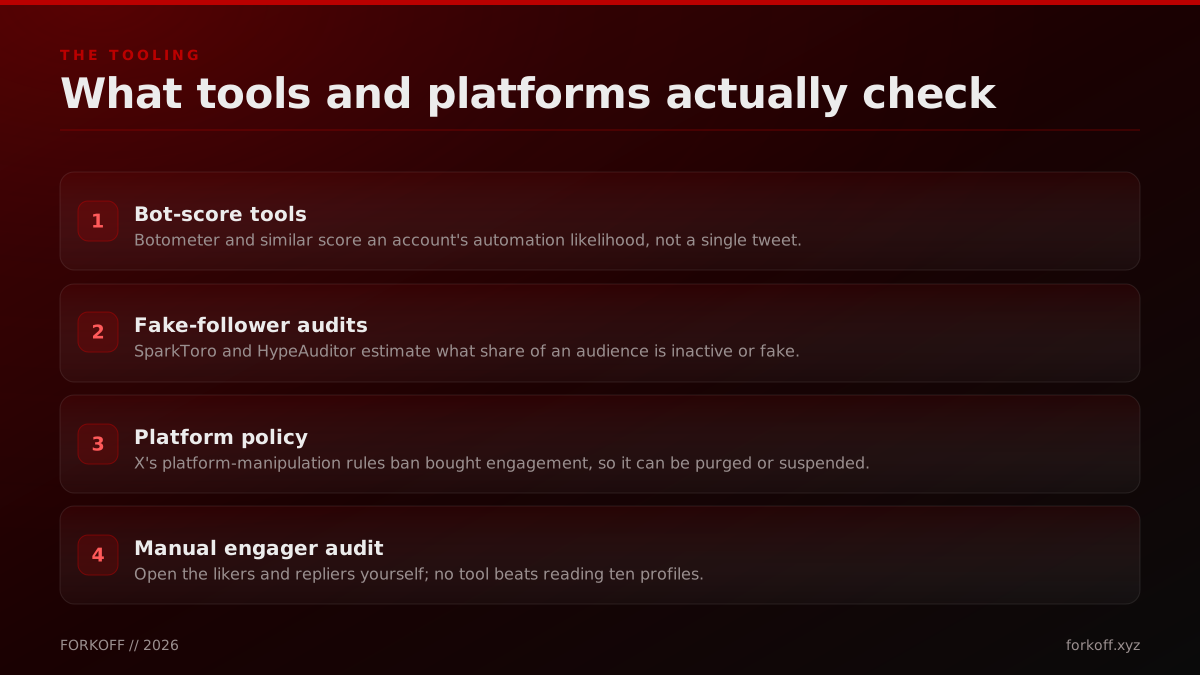
Bot-scoring tools like Botometer, built by the Observatory on Social Media, estimate how automated an account looks from behavioral features. They score an account, not a tweet, and they return a probability, not a verdict, which is the honest ceiling of automated detection. The scale of the problem these tools were built for is real: a Pew Research Center study estimated that automated accounts were responsible for around two thirds of tweeted links to popular websites, and peer-reviewed work on how social bots spread content showed that automation concentrates in the crucial early moments after a post goes out, which is exactly the burst window signal three tells you to watch. Fake-follower audits from SparkToro and HypeAuditor estimate what share of an audience is inactive or fake, again at the account level. The platform itself is the third leg: X's platform-manipulation and spam policy prohibits bought engagement, and its enforcement is why the disclosure norms in the FTC's guidance for influencers matter for anyone paying for reach. The supply side of all this, the actual bot networks, is worth understanding directly.
The Really Dark Truth About Bots
Benn Jordan
A deep look at how social bot networks actually operate, the supply side of the fake engagement this checklist is built to detect on the demand side.
The takeaway from the tooling is that it screens the account and you screen the post. A creator can pass a fake-follower audit and still buy engagement on a specific launch tweet, and a single post can look clean while the account behind it is a farm. The two reads are complementary: run the tools to shortlist who is worth your time, then run the five signals on the actual posts you are being asked to trust. This is exactly why our Twitter marketing service and KOL marketing service treat engagement screening as a gate before spend, not a report after it.
Why This Is a Buyer Problem, Not Just a Vanity Problem
Bought engagement stops being an abstract integrity issue the moment money changes hands. When you sponsor a creator, run a KOL campaign, or evaluate a launch partner, the engagement number is the number you are paying against, and every fake unit in it is money spent on reach that cannot convert. This is the difference between reading a tweet out of curiosity and reading it as due diligence: one is optional, the other protects a budget. The ad-fraud measurement firm CHEQ has put the marketing world's exposure to bots and fake engagement in the billions of dollars a year, and the share attributable to synthetic, AI-generated activity is rising as the tools to fake engagement get cheaper. FORKOFF has processed more than 5 billion views across the clip and distribution network, and the consistent lesson from that volume is that the headline number and the number that actually moves a metric are rarely the same. A creator can look like a rocket and convert like a rock, and the only way to know before you pay is to read the engagement on the posts, not the summary in the media kit.
CT is noisy: full of vanity metrics, bots, farmed engagement, fake KOLs
The structural reason fake engagement persists is incentive. The seller is judged on the number, so the seller inflates the number, and the buyer who does not read the signals pays the difference. That is why the safest structure for real spend is to screen the engagement before you commit, either with an internal person who can run the five signals or with a partner who runs the screen as a gate and writes a qualified-views floor into the agreement, so the authenticity risk sits with the people choosing the creator. The same discipline applies whether you are buying a single launch tweet, a KOL round, or a full campaign, and it pairs with the reach math in our guide to getting 100k views on a launch video and the organic groundwork in going viral on X. If your growth runs through Reddit as well, the same read-the-signals instinct carries over to our Reddit marketing service, and the KOL rate calculator helps you anchor a fair number before anyone quotes you.
The Honest Verdict: Read the Signals, Then Decide
There is no single tell that proves a tweet's engagement was bought, and anyone who sells you one is selling a false certainty. What there is, is a repeatable read: five signals that each have an innocent explanation alone and a damning one together. The like-to-reply ratio catches the cheapest fakery. The engager quality turns suspicion into evidence. The timing pattern separates a real curve from a scheduled burst. The reply sentiment catches the pods that buy volume without substance. The view-to-engagement mismatch is the final prompt to look harder, never the verdict on its own.
Run them in order, weight a post red only when two or more signals point the same way, and hold the standard high before you act, because wrongly accusing a real account is its own failure. Bought engagement is common enough (two in five accounts carry fraud signals, nearly a third of creators admit buying) that the default of trusting the number is wrong more often than right. But the fix is not cynicism, it is a two-minute read you can run on any post. If you would rather have the screen run for you before you fund a creator or a campaign, tell us what you are funding and we will read the engagement on their actual posts, flag the red signals, and write a qualified-views floor into the scope. The account-level companion to this post is how to vet a crypto KOL before you pay, and the service that runs both screens end to end is Twitter marketing.