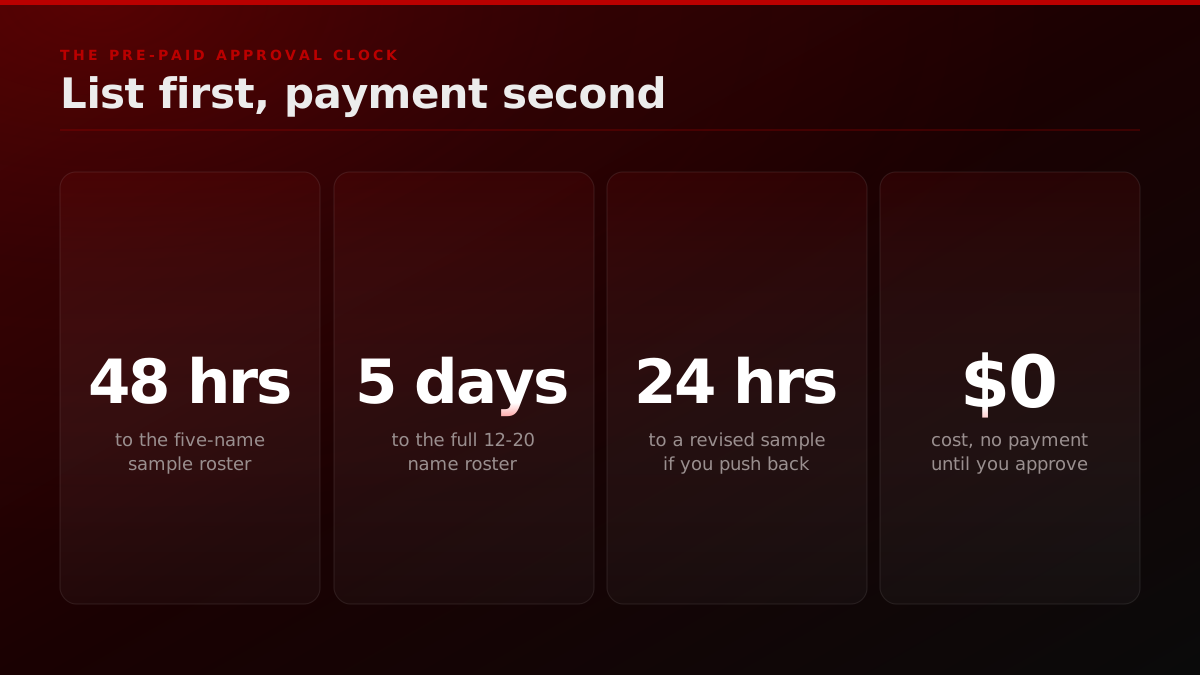
Most influencer marketing agencies require a signed contract and a deposit before showing founders the creator names. The FORKOFF pre-paid step reverses that: a five-name sample with audited engagement rates, follower counts, audience demographics, and prior brand work lands within 48 hours of submitting intake criteria, and no money changes hands until the list is approved.
About these numbers
FORKOFF first-party operator data from influencer and KOL marketing engagements, supplemented by publicly available influencer pricing benchmarks (Influencer Marketing Hub, CreatorIQ 2025-2026). All engagement rate floors, creator pricing ranges, and timeline commitments are directional estimates based on operator observations across active engagements; individual results vary.
TL;DR: List first, payment second
Most influencer marketing engagements ask for payment or a signed contract before the brand sees the influencer roster. FORKOFF reverses the sequence. A five-name sample roster filtered to your niche, audience demographics, and engagement rate floor lands in your inbox within 48 hours of the first message. You review the names, push back or accept, and only then does pricing enter the conversation. The mechanism is documented at /services/kol-marketing. The vetting workflow below is what founders run through before any payment.
The list-before-payment question every burned founder eventually asks
Every founder who reaches /services/kol-marketing after a failed influencer marketing engagement asks the same thing: can I see the list before I pay? Not a category. Not a promised "access to 10,000 creators." Specific names. Follower counts. Real engagement rates.
Jump to your situation
Already burned by a sign-then-vet agency? Start at [Why the payment-first sequence persists](#why-the-standard-workflow-puts-payment-before-the-list). Evaluating your first agency? Read [What founders actually see in the sample roster](#what-founders-actually-see-in-the-five-name-sample). Looking for a self-service audit framework? Use the [seven-question agency vetting framework](#the-seven-question-agency-vetting-framework).
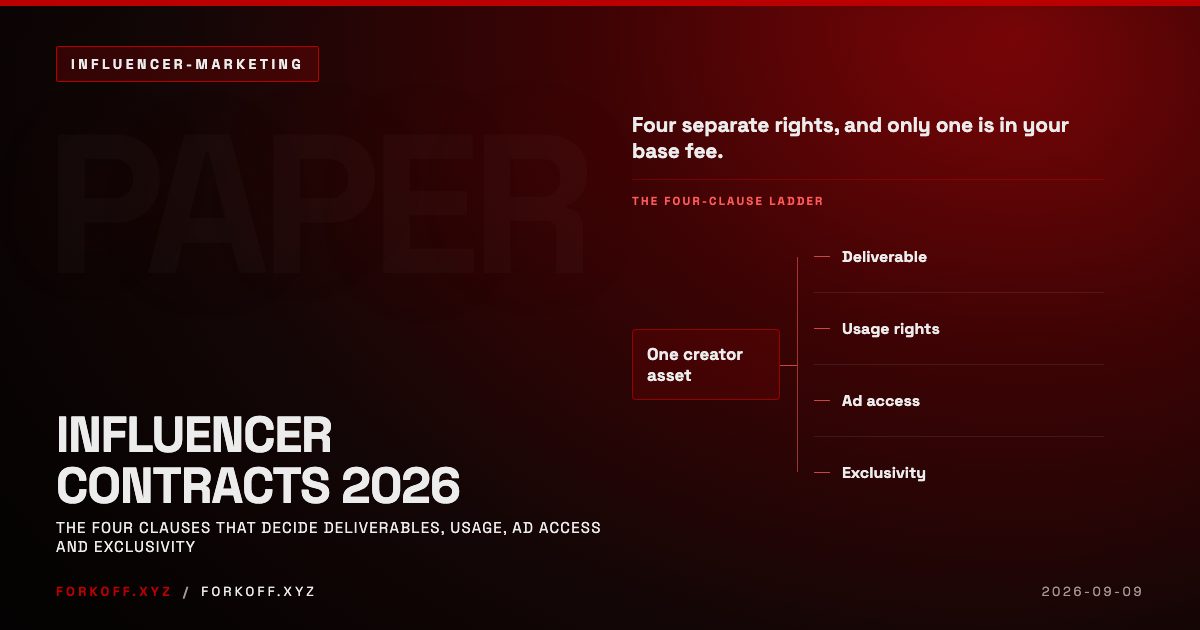
The question itself tells you something. Founders who ask it have usually been through 30 or more agency conversations before landing here. They have signed one contract where the proposed list arrived weeks after the deposit cleared. They know the pattern. What the contract itself should say once you do reach it is a separate question, and Influencer Contracts in 2026 covers the four clauses that carry the money.
This post exists to document the mechanism that makes the list-first sequence possible: how the five-name sample gets built, what it contains, how founders review it, and what happens on both paths (accept or reject) before any payment enters the picture. The influencer marketing category hub covers the broader agency landscape for context.
The workflow is live at /services/kol-marketing. This post is the operational documentation behind it.
Why the standard workflow puts payment before the list {#why-the-standard-workflow-puts-payment-before-the-list}
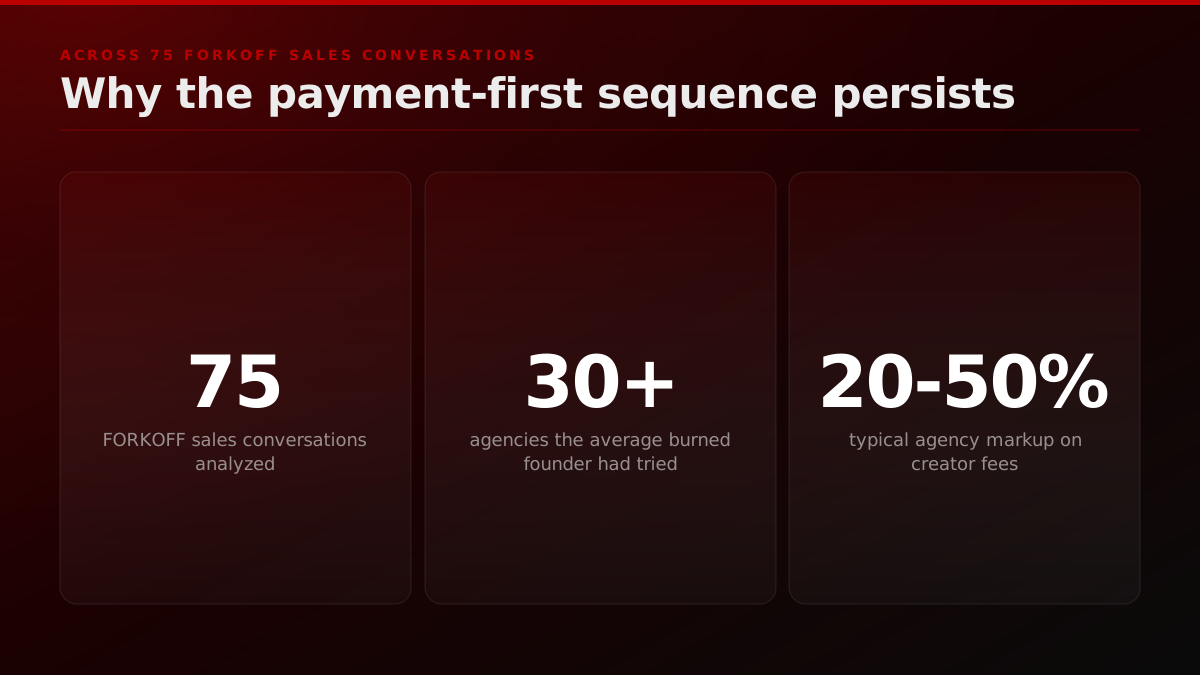
The payment-first sequence is not an accident. Three structural forces make it the industry default: scope lock shifts negotiating power after deposit, roster instability stays hidden until the contract closes, and per-creator markup arithmetic is harder to audit inside a bundled total than on a line-item proposal.
Why payment-first roster workflows persist
Three structural reasons: scope creep is easier when the brand is already invested; agencies that maintain large rosters via Rolodex relationships do not want the names public until the deal closes; and the per-creator markup is harder to defend at the line-item level if the buyer can shop the same creator directly. Pre-paid approval reverses each of these dynamics by making the names the first thing the buyer evaluates.
First: scope lock reduces negotiation surface. Once a founder has signed a contract and transferred a deposit, the negotiating position shifts. The agency knows you are invested. Pushing back on the proposed list becomes a harder conversation than it would have been before payment. The payment-first sequence is rational from an agency standpoint: it reduces churn at the proposal stage. It is also one of the terms to settle before signing, per how to choose a KOL marketing agency.
Second: roster instability is hidden by opacity. Most mid-market influencer agencies do not maintain a proprietary roster. They work from a combination of platform databases (AspireIQ, Creator.co, Grin) and personal relationships that vary by account manager. The names on your proposed list depend on which creator is available in the week your campaign launches. Showing names before the deal closes reveals this instability.
Third: markup arithmetic is harder to defend at the line-item level. Many agencies mark up creator fees 20 to 50 percent above what they negotiate with the creator. If you see the creator's name before you sign, you can price-check. If the list arrives after the contract, the markup is buried in the total.
The result is a buyer experience that 75 FORKOFF sales conversations have documented consistently: sign first, then evaluate. The pre-paid step reverses that architecture at every point.
Operator note30-plus agency conversations preceded the average burned founder's first FORKOFF call, per the 75-conversation sales corpus., FORKOFF sales corpus, n=75
How agency rosters actually get built in 2026 {#how-agency-rosters-actually-get-built-in-2026}
As of 2026, across 75 FORKOFF sales conversations (operator observation, n=75), influencer marketing agencies are split into two operating models: roster-as-asset and roster-as-service, and only one of those models supports pre-engagement approval. The difference shows up as the single most-cited frustration.
Roster-as-asset agencies maintain a curated list of creators with active relationships, verified audience data, and documented performance history. The list exists before you call. A sample can be produced within 48 hours because the sourcing work is already done.
Roster-as-service agencies assemble a list after the deal closes using platform databases and cold outreach. The pitch is "we have relationships with 50,000 creators." The reality is that the list for your campaign is built fresh, post-contract, using whatever tool their account manager prefers that week. For a comparison of how leading crypto KOL marketing platforms differ on this dimension, the honest breakdown covers which platforms have pre-screened rosters and which are database aggregators.
IZEA's official YouTube channel at youtube.com/@IZEA documents both models across their research library. The practical buyer test is straightforward: ask for a sample five-name list before the first scope call. An agency with a real roster can produce it in under 48 hours. An agency that assembles rosters post-contract cannot and will not.
At FORKOFF, the roster is built on first-party sourcing: the /blog/influencer-marketing/ category covers how creator audits are constructed across the niche verticals we run. The sourcing infrastructure runs before any campaign scope, which is what makes the pre-paid step operationally feasible.
What founders actually see in the five-name sample {#what-founders-actually-see-in-the-five-name-sample}
The five-name sample is not a teaser. It contains six data fields per creator: handle and platform link, follower count with 90-day growth trend, average engagement rate over the last 30 posts, audience demographic breakdown, prior named brand collaborations, and a per-creator risk note flagging anything that warrants a second look.
What the five-name sample contains
Each entry includes creator handle, platform, follower count, 90-day growth trend, average engagement rate over last 30 posts, audience demographics, prior named brand collaborations, and a per-creator risk note. The sample is filtered to operator-supplied niche, audience target, and engagement floor before delivery.
Source: forkoff.xyz/services/kol-marketing
Each entry in the sample contains:
- Creator handle and platform with a direct link to the public profile.
- Follower count and 90-day growth trend to distinguish organic growth from purchased growth.
- Average engagement rate over last 30 posts calculated from public data, not self-reported media kit numbers.
- Audience demographic breakdown by age band and geographic distribution, drawn from platform analytics or third-party audit tools.
- Prior named brand collaborations with dates, so you can check whether the creator has worked with direct competitors.
- Per-creator risk note flagging anything that warrants a second look: recent controversy, unusual engagement spike patterns, significant follower-to-following ratio anomalies.
The sample is filtered to the criteria the founder supplies at the start of the intake: niche category, target audience demographic, follower floor, and minimum engagement rate. Every creator in the sample has passed those filters before delivery.
What founders do with the sample varies. Some accept every name. Some reject two and ask for replacements. Some use the list as a benchmark against creators they already know. All of those are correct uses of the mechanism. The point is that the evaluation happens before any payment conversation.
Operator note48 hours is the sample clock: five names with audited engagement rates, delivered before any payment conversation., FORKOFF intake workflow
The seven red flags that surface in 30-agency search cycles {#the-seven-red-flags-that-surface-in-30-agency-search-cycles}
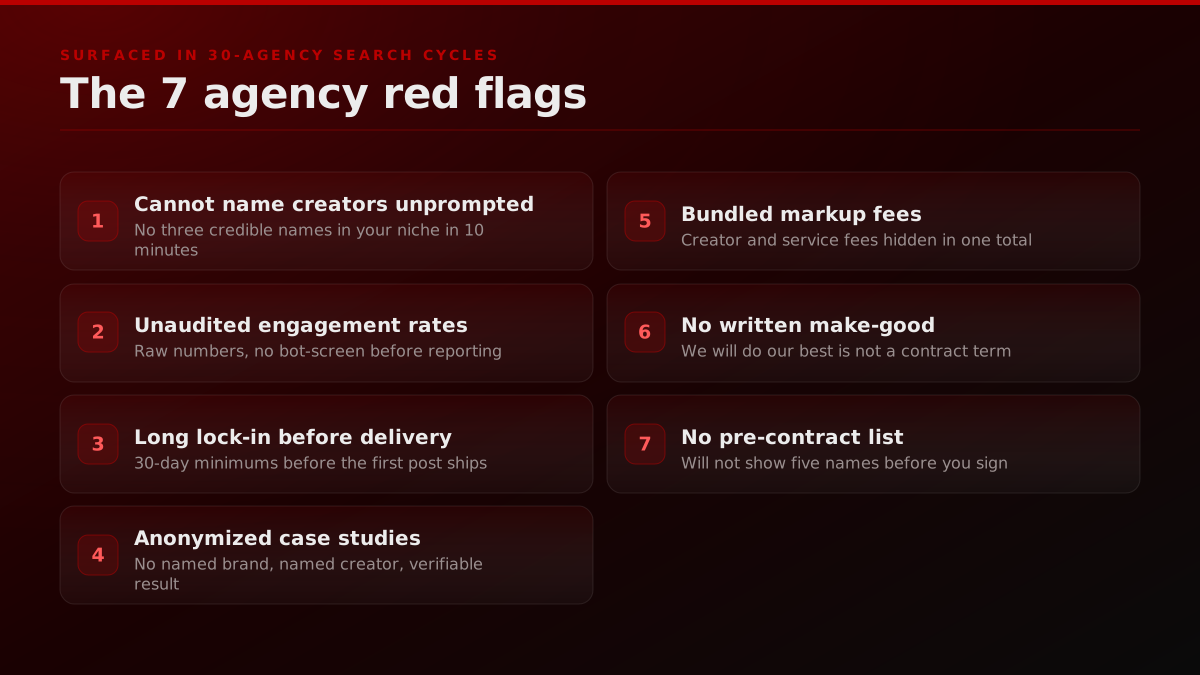
Founders who have evaluated 30 or more influencer marketing agencies before arriving at FORKOFF describe a consistent pattern of warning signals. The seven verification points below cover the most common ones: inability to name creators in your niche unprompted, unaudited engagement rates, long lock-in windows before first deliverable, anonymized case studies, bundled markup fees, no written make-good policy, and refusal to show a list pre-contract.
I had spoken to 30 agencies. All of them wanted my budget before they would tell me a single name on the list. I had built my own list by then anyway.
1. What to check: can they name three specific creators in your niche, unprompted? Any agency with an active roster in your vertical should be able to name three credible creators within the first 10 minutes of a conversation. If the answer is "we have access to many creators across all verticals," that is not an answer.
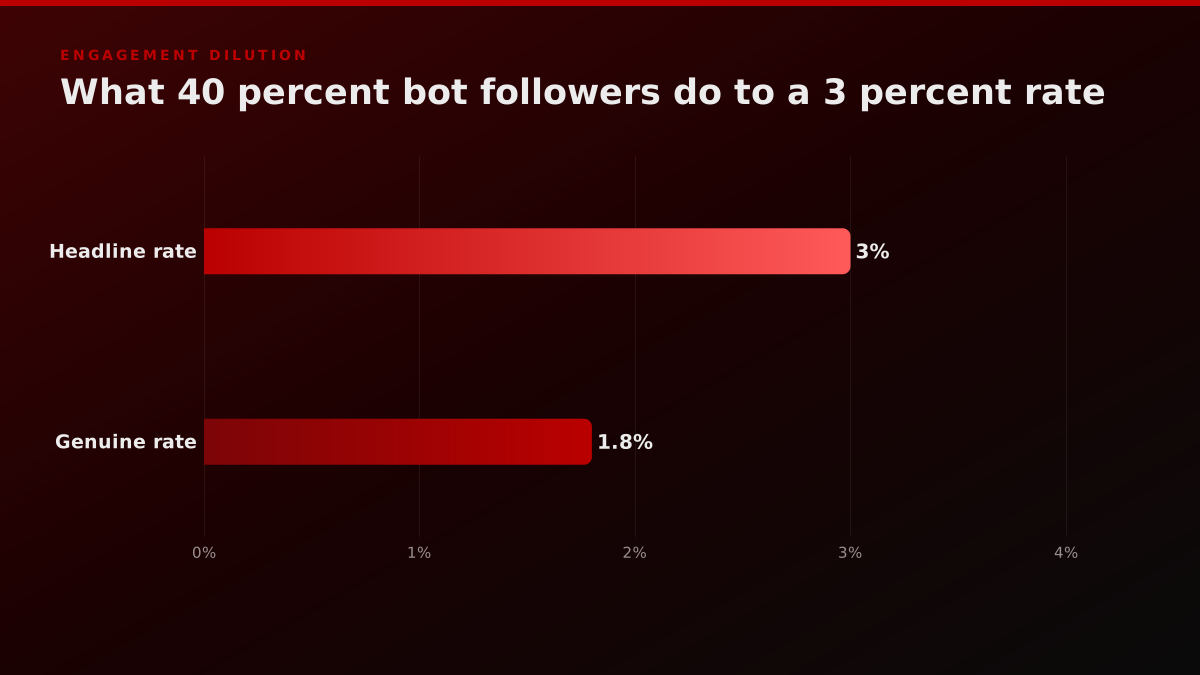
2. What to verify: is the engagement rate claim based on raw or audited data? An engagement rate of 3 percent sounds healthy. A 3 percent engagement rate that includes 40 percent bot-proximate accounts in the follower base delivers 1.8 percent genuine engagement. Ask how engagement rates are calculated and whether bot-screening is applied before the number is reported.
If you buy Instagram followers, THIS is what happens (EXPERIMENT)
Hootsuite Labs bought Instagram followers on camera and tracked what happened to reach and engagement, the bot-dilution mechanic behind the audited-rate check.
3. What to check: what is the minimum lock-in period before first deliverable? Thirty-day lock-ins before a single creator post is published are common. If you are locked in for a month before the first piece of content goes live, you have very little leverage if the proposed list does not match what was pitched.
4. What to verify: are case studies tied to named brands and named creators? "We drove 40 percent follower growth for a Series A SaaS company" is not a case study. It is a description that cannot be verified. Named brand, named creator, verifiable result is the standard. Anything short of that is a placeholder.
5. What to check: how is markup disclosed? Some agencies separate creator fees from service fees as two distinct line items. Others bundle everything into a single total. Bundled totals make it impossible to know whether a creator who quoted the agency a rate is being passed through to you at a marked-up total. Markups of 20 to 50 percent above negotiated creator rates are common. Ask before signing.
6. What to verify: what is the refund or make-good policy if placements underperform? The absence of a written refund mechanism is a significant signal. "We will do our best" is not a contractual term. A qualified-views floor with defined refund logic is the standard at /services/kol-marketing. If a competing proposal has no equivalent, ask why.
7. What to check: can you see the proposed list before the contract closes? This is the single most diagnostic question in the set. If an agency will not show you five names before you sign, every other conversation about deliverables and pricing is happening without the most important piece of information. The agency operations evaluation framework covers this and six additional audit questions in the full seven-question framework.
Engagement rate floors by follower band: what to verify {#engagement-rate-floors-by-follower-band-what-to-verify}
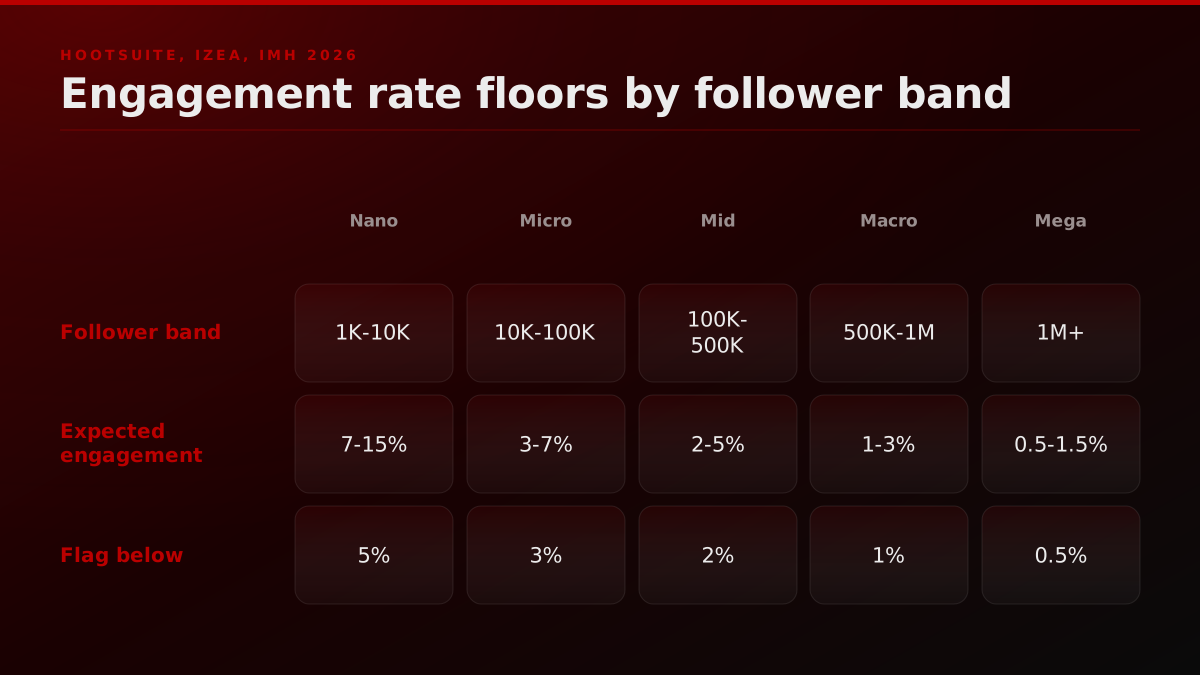
Engagement rate benchmarks vary by follower band, platform, and niche. Using a single flat benchmark to evaluate all creators produces bad vetting decisions in both directions: it disqualifies healthy macro-tier creators and passes bot-inflated nano-tier accounts. The correct floors by tier, drawn from Hootsuite, IZEA, and Influencer Marketing Hub 2026 data, run from 7 to 15 percent for nano-tier up to 0.5 to 1.5 percent for mega-tier accounts above 1M followers. Band names on this site follow the Sprout Social and Hootsuite definition, where macro spans 100K to 1M and mega starts at 1M.
The per-follower-band floors that FORKOFF applies to the five-name sample are drawn from three sources:
Hootsuite's annual influencer marketing benchmarks at blog.hootsuite.com/influencer-marketing/ document platform-level engagement rate distributions across creator tiers. Their 2026 data confirms that engagement rate declines non-linearly as follower count increases, with the steepest drop occurring at the 100K to 500K transition.
IZEA's resources library at izea.com/resources/ provides the per-platform creator audit methodology that underlies most professional influencer marketing tools. Their data on the relationship between audience size and genuine engagement rate is the most granular publicly available benchmark.
Influencer Marketing Hub's annual benchmark report at influencermarketinghub.com/influencer-marketing-benchmark-report/ surveys campaigns across verticals and produces the engagement rate medians that have become the industry reference for per-follower-band thresholds.
The floors that emerge from these sources:
- Nano tier (1K to 10K followers): 7 to 15 percent engagement rate expected. Below 5 percent at this range is a red flag for inflated follower counts.
- Micro tier (10K to 100K followers): 3 to 7 percent. The healthiest tier for audience relationship quality relative to cost.
- Macro tier, lower band (100K to 500K followers): 2 to 5 percent (per IMH 2026 benchmark). The floor at which most agency campaigns operate.
- Macro tier, upper band (500K to 1M followers): 1 to 3 percent. Lower absolute rates reflect the reality that larger audiences include proportionally more passive followers.
- Mega tier (1M+ followers): 0.5 to 1.5 percent. Any proposed creator above 1M followers with engagement below 0.5 percent warrants a bot-screen audit before placement.
One caution before you use these bands to argue with a vendor: the industry has never settled where macro ends. Sprout Social and Hootsuite both draw macro from 100K to 1M and start mega above 1M, which is the cut this post follows. Meltwater ends macro at 500K and calls everything above that mega. Influencer Marketing Hub squeezes a 50K to 500K mid-tier in between and does not start macro until 500K. The one line all of them hold is the top of micro at 100K. That is why the table above splits macro into a lower and an upper band rather than picking a single cut and pretending the disagreement does not exist: a proposal quoting "macro" rates is ambiguous until the vendor names the follower range, and asking them to name it is itself a useful screen.
Engagement rate floors by follower band (Hootsuite, IZEA, Influencer Marketing Hub 2026 benchmarks)
| Follower band | Expected engagement rate | Flagged in the sample below |
|---|---|---|
| Nano (1K to 10K) | 7 to 15 percent | 5 percent |
| Micro (10K to 100K) | 3 to 7 percent | 3 percent |
| Macro, lower band (100K to 500K) | 2 to 5 percent | 2 percent |
| Macro, upper band (500K to 1M) | 1 to 3 percent | 1 percent |
| Mega (1M+) | 0.5 to 1.5 percent | 0.5 percent |
Bands follow Sprout Social and Hootsuite (macro 100K to 1M, mega above 1M). Meltwater and Influencer Marketing Hub cut macro elsewhere, so it is shown as two sub-bands. Percentages unchanged; only labels reconciled.
Suryansh Tiwari
@Suryanshti777
This is insane😳 A nurse with 3k followers is outselling an athlete you paid six figures. And brands are still out here chasing follower count like it's 2016. Nobody wants to say it, so I will: Influencer marketing isn't broken because creators are fake. It's broken because
These floors are applied mechanically to every creator in the five-name sample before delivery. Creators who fall below the floor for their follower band are flagged in the per-creator risk note, not silently removed. The founder sees the flag and decides whether the other dimensions of the creator profile justify accepting them.
For per-activation unit economics across these tiers, the FORKOFF influencer cost study covers what each tier costs per qualified engagement across 12 campaigns with first-party data. For token and protocol campaigns where the tier mix decides wallet retention rather than reach, the crypto KOL marketing framework carries the full tier-and-pricing decision tree.
The seven-question agency vetting framework {#the-seven-question-agency-vetting-framework}
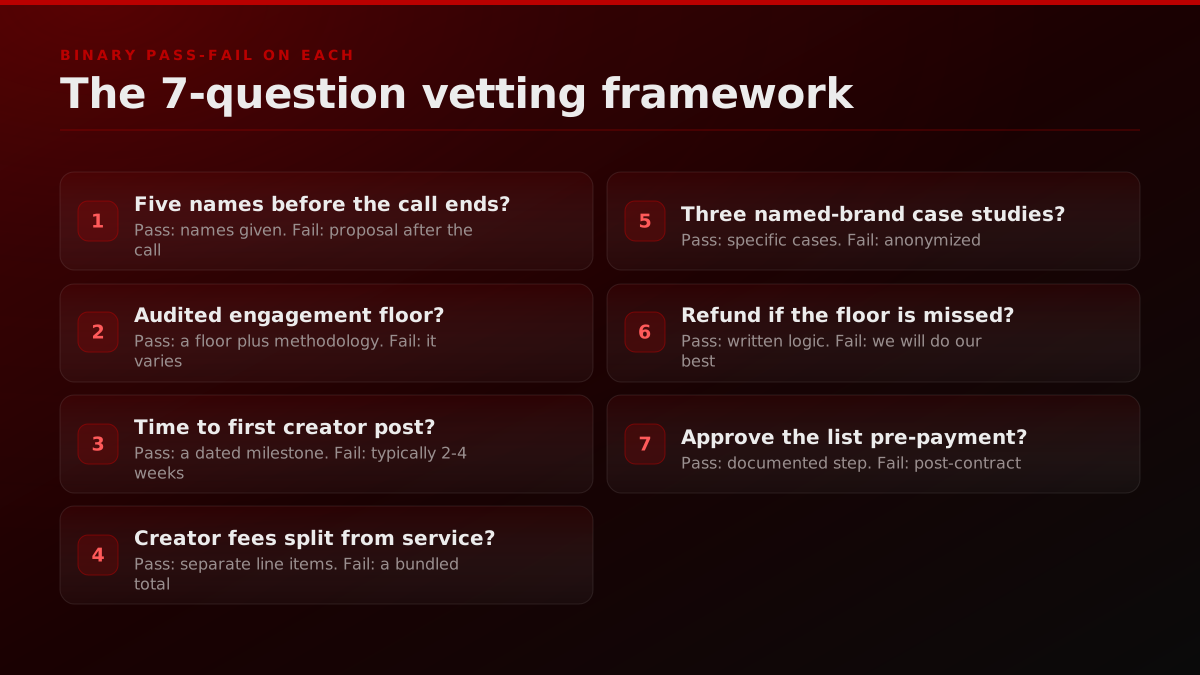
Before committing to any influencer marketing agency, seven questions produce a reliable signal on whether the agency's operating model matches what they are pitching. The questions cover creator-list access before signing, engagement rate methodology, milestone timelines, fee transparency, verifiable case studies, make-good terms, and pre-payment list approval. Any agency that fails three or more of these on the first call should be declined.
Are most marketing campaigns involving influencers tone deaf?
So is it just me or is this the general feeling when it comes to campaigns with influencers? It seems most companies or agencies have a huge blind spot when it comes to picking influencers. They keep picking creators based on a premium look or a wealthy lifestyle that has… Show more
The framework works as a binary pass-fail on each question. Any agency that fails three or more should be declined regardless of pitch quality.
Question 1: Can you show me five specific creators in my niche before the first call ends? Pass = names provided. Fail = "we will send a proposal after the call."
Question 2: What is your engagement rate floor for proposed creators, and is it audited or self-reported? Pass = specific floor with methodology. Fail = "engagement varies by creator."
Question 3: What is the minimum time between contract signing and first creator post? Pass = specific milestone with a date. Fail = "typically 2 to 4 weeks" with no milestone breakdown.
Question 4: How are creator fees separated from service fees in the proposal? Pass = separate line items visible before signing. Fail = bundled total without breakdown.
Question 5: Can you provide three case studies with named brand, named creator, and a verifiable result metric? Pass = specific cases provided. Fail = anonymized case studies or category descriptions.
Question 6: What is the refund or make-good structure if the campaign misses the qualified-views commitment? Pass = written refund logic referenced. Fail = "we will do our best to deliver."
Question 7: Will I approve the final creator list before any fees beyond the initial application are finalized? Pass = yes, list approval is a documented pre-payment step. Fail = list delivered post-contract.
FORKOFF passes all seven. The mechanism behind Question 7 is documented at /services/kol-marketing. The broader framework for evaluating Web3 marketing agencies specifically is covered in the Web3 agency evaluation guide.
Standard agency workflow vs FORKOFF pre-paid workflow {#standard-agency-workflow-vs-forkoff-pre-paid-workflow}
The comparison below maps the two workflows across seven steps that determine when the founder sees the creator list relative to when money changes hands. In the standard workflow the list arrives post-contract; in the pre-paid workflow the list arrives before any scoping or payment, which shifts vetting authority from the agency to the founder and compresses the total time to first placement.
Standard agency workflow vs FORKOFF pre-paid approval workflow
| Step | Standard agency | FORKOFF pre-paid approval |
|---|---|---|
| 1. Initial contact | Sales call to qualify budget | Send niche, audience, engagement floor |
| 2. First commitment ask | Sign contract or deposit | Approve five-name sample roster |
| 3. Roster delivery | After payment, 1-3 weeks | Sample within 48 hours, free |
| 4. Vetting authority | Agency selects, brand reviews | Brand approves before scoping |
| 5. Exit cost if names wrong | Lock-in clause or kill fee | Zero, no payment yet |
| 6. Time to first placement | 3-6 weeks from signed contract | Approve, scope, launch in 2-4 weeks |
| 7. Markup disclosure | Variable, often buried | Service fee separated from creator pass-through |
Three observations from the table that matter for buying decisions.
First: the exit cost difference at step 5 is the defining asymmetry. In the standard workflow, discovering that the proposed creators do not fit your brand happens after a contract is signed. The exit at that point involves either absorbing the sunk cost or negotiating a kill fee. In the pre-paid workflow, the same discovery happens before any payment. The information is the same; the cost of acting on it is not.
Second: vetting authority shifts from agency to founder at step 4. Standard workflows give the agency the first selection decision. The founder reviews whatever the agency proposes. Pre-paid approval gives the founder approval authority before scoping begins. These produce different lists. An agency building a list for internal selection reasons does not build the same list as an agency building a list that a specific founder must approve before any money changes hands.
Third: the time-to-first-placement difference at step 6 is counterintuitive. The pre-paid workflow appears to add steps (sample review, possible revision, full roster review). In practice, those steps compress the total timeline because scope conversations start from a foundation of mutual agreement on the creator mix. The time spent debating proposed creators post-contract in the standard workflow is longer than the time spent reviewing a pre-approved list.
Pre-paid approval timeline: 48 hours to sample, 5 days to full roster {#pre-paid-approval-timeline-48-hours-to-sample-5-days-to-full-roster}
The five-name sample lands within 48 hours of intake confirmation. The full roster (12 to 20 names for a Scale-tier campaign) lands within 5 business days of sample approval. If the founder pushes back on any names, revised slots are returned within 24 hours. No money changes hands at any stage of this timeline.
Pre-paid approval timeline: 48 hours to sample, 5 days to full roster
STEPS- 01
Step 1: Intake (0 to 4 hours)
Founder sends niche, target audience demographic, follower floor, and minimum engagement rate. These four inputs are sufficient to run the filter. No sales call, no discovery deck, no 'tell me more about your business' warm-up conversation. The filter accepts the criteria as supplied and routes them to the sourcing pipeline within the first business hours after submission.
- 02
Step 2: Sample delivery (within 48 hours of intake confirmation)
Five names with full audit data per the sample roster spec above. The 48-hour commitment includes the audit step, not just a platform database query. Each creator in the sample has had the engagement rate floor check and bot-proximity assessment run before the names leave the system. The sample arrives as a single document the founder can review at any time.
- 03
Step 3: Founder review (founder's timeline)
No time pressure on the review. The sample is delivered asynchronously. Founders can take 24 hours or 5 business days to evaluate. If they want to run their own check on individual creators using external tools, that is expected and encouraged. The review step has no implicit deadline because the sample carries no payment obligation until the founder signals acceptance.
- 04
Step 4: Revision cycle (24 hours if needed)
If any names are rejected, the filter criteria are updated and a revised sample is sent within 24 hours. This step runs as many times as needed until the founder approves a list they are comfortable with. The revision is no additional cost as part of FORKOFF intake. Each revision cycle uses the same audit standards as the original sample so the founder is comparing equivalents, not a downgraded second pass.
- 05
Step 5: Full roster (5 business days from sample approval)
For Scale-tier campaigns, the full roster (12 to 20 names) is built from the same filter logic that produced the approved sample. For Pilot-tier, the roster is smaller and typically delivered faster. For Flagship-tier, the hero candidate is identified separately and may require an additional review conversation given the named-placement specificity. The full roster carries forward every standard the sample passed.
If the names do not fit: rejection-path workflow {#if-the-names-do-not-fit-rejection-path-workflow}
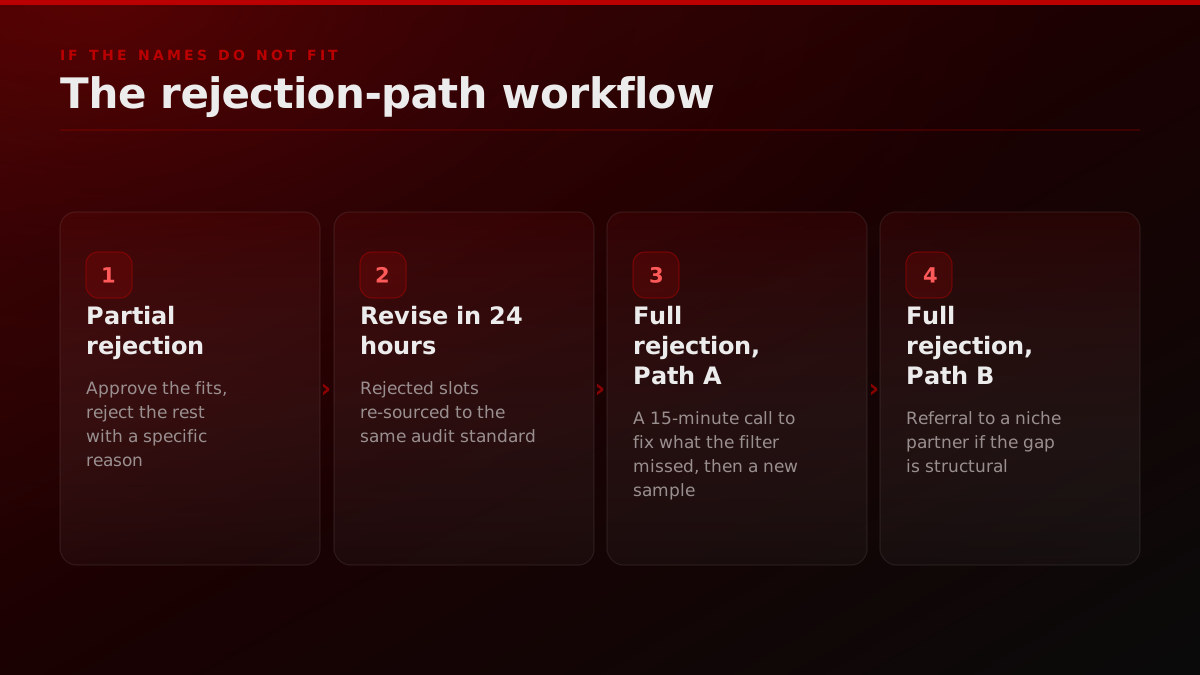
When none of the five proposed creators match the brief, two paths apply: filter revision (a 15-minute call to identify what the criteria missed, followed by a new sample) or niche referral to a partner agency if the fit gap is structural. No money changes hands on either path. The rejection path is as important as the acceptance path because it determines whether the pre-paid step is a real commitment or a gating formality.
Partial rejection (some names fit, some do not). The most common outcome. The founder approves three of five names and rejects two with a specific reason (wrong niche overlap, known competitor collaboration history, engagement rate below their manual assessment). FORKOFF revises the two rejected slots and resends within 24 hours. The approved three carry forward into the full roster.
Full rejection (no names fit the brief). Less common but not unusual, particularly for highly specific niches (sub-vertical crypto, regional SaaS, or product categories with a specific creator persona that the filter criteria did not fully capture. When this happens, one of two paths applies.
Path A: filter revision. The criteria are reviewed with the founder in a 15-minute call to identify what the initial filter missed. The revised filter runs and produces a new sample. This works when the gap is in the filter logic.
Path B: niche referral. If the gap is structural (the creator profile the founder needs does not exist at scale in the niche, or FORKOFF does not have active sourcing relationships in that specific sub-vertical), we refer the founder to a partner agency that specializes in that niche. The /contact page handles both paths.
At no point in either rejection path does money change hands. The entire rejection workflow runs before any financial commitment. If the match is never found, the founder has spent 48 hours and supplied their niche criteria, and the interaction ends there.
Why the pre-paid step is no additional cost {#why-the-pre-paid-step-adds-no-additional-cost}
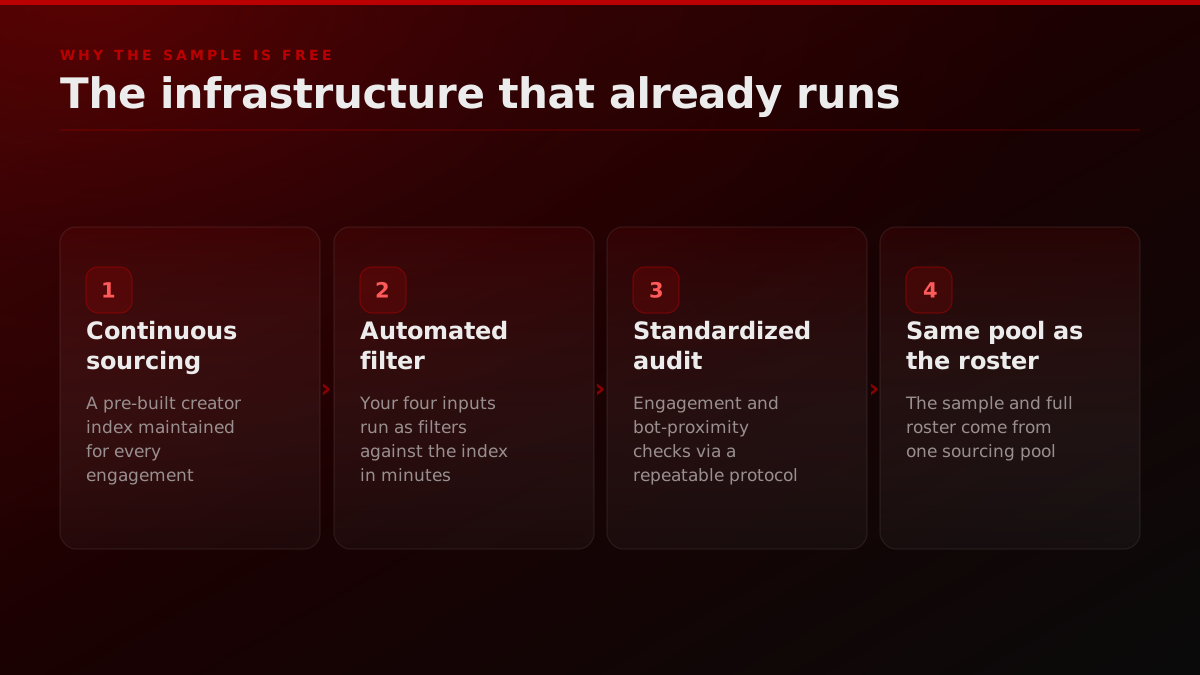
The obvious question is: why would an agency do the sourcing work before the deal is confirmed? The answer is that the sample draws from a pre-built, continuously maintained creator index. The intake criteria run as automated filters against that index. Running those filters for five creators takes minutes of compute time, not days of account-manager labor. The infrastructure already runs for every active engagement; the pre-paid sample is a marginal query against it.
The filter runs automatically against existing sourced data. The five-name sample is not produced by an account manager manually researching creators for two days. The intake criteria (niche, audience demographic, follower floor, engagement floor) are filters applied against a pre-built and continuously maintained creator index. The computation is automated. The sourcing work happens continuously, not per-inquiry.
The audit methodology is standardized. The engagement rate check and bot-proximity assessment use a repeatable protocol. Running it for five creators takes minutes, not days. The incremental cost of the sample is the infrastructure cost that already exists, not a per-sample labor cost.
The filter criteria come from the founder. The brand-supplied niche, audience target, and engagement floor mean that FORKOFF does not need to infer the brief from a discovery call. The filter runs on the inputs provided. There is no additional interpretation step that requires billable time.
The sample is the same data the full roster is built from. The five-name sample is not a preview of a different list. The five names come from the same sourcing pool and the same filter logic as the full roster. Approving the sample gives the founder direct evidence that the full roster will apply the same standards to 15 or 20 names.
The combination of automated filtering, standardized audit methodology, and founder-supplied criteria is why the pre-paid sample requires no additional cost as part of FORKOFF intake. The infrastructure that makes it possible already runs for every active engagement.
How this maps to your campaign tier (Pilot, Scale, Flagship) {#how-this-maps-to-your-campaign-tier}
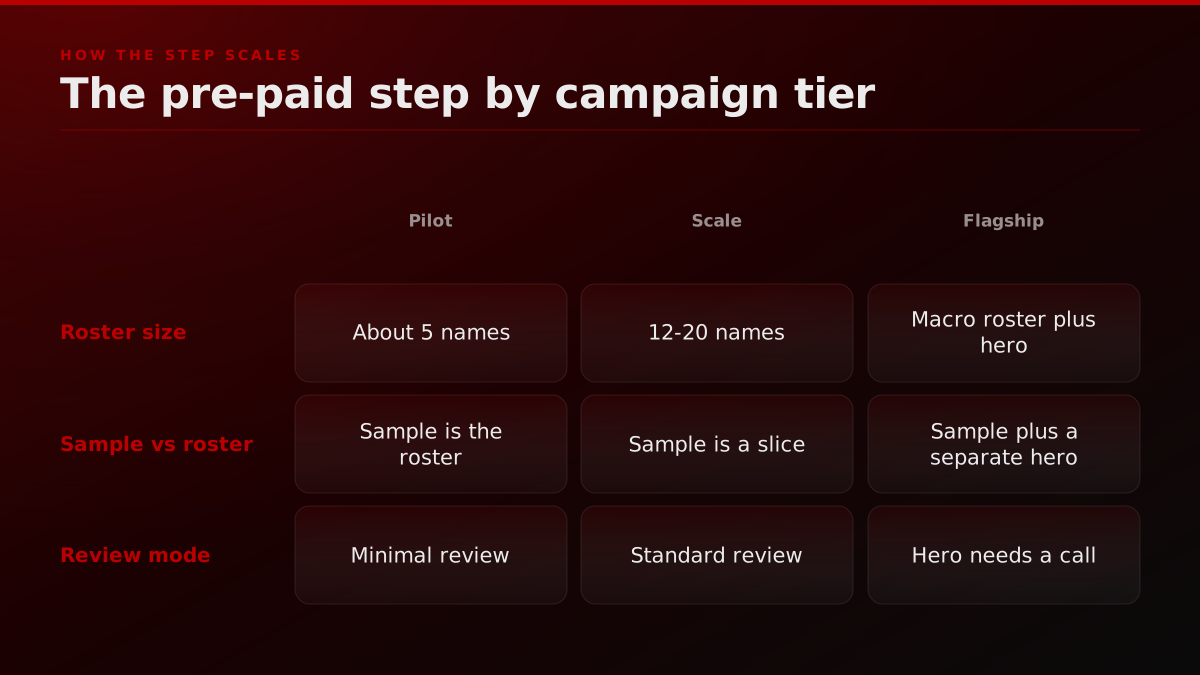
The pre-paid approval step applies at Pilot, Scale, and Flagship tiers, with roster size and review complexity scaling up per tier: Pilot anchors a full campaign on the same five names in the sample, Scale expands from five names to a 12 to 20 name roster after approval, and Flagship splits the hero placement into a separate presentation because the audience composition requirements warrant a call rather than a static document.
At Pilot tier, the pre-paid sample is the same five names that anchor the full campaign roster. Pilot campaigns run small creator mixes, so the sample and the roster are nearly identical. Review time is minimal.
At Scale tier, the five-name sample is a representative slice of a 12 to 20 name roster. The sample demonstrates the sourcing quality and filter logic. After approval, the full roster expands from the same criteria. The campaign tier breakdown covers what Scale-tier deliverables look like in full.
At Flagship tier, the pre-paid step splits into two components. The five-name sample covers the macro-tier roster. The hero candidate is identified and presented separately, often in a brief call, because Flagship-tier hero placements have specific audience composition requirements that warrant a conversation rather than a static document review.
The pre-paid step at Flagship carries the most weight because the hero placement is the highest-risk line item in the campaign. Getting it wrong costs the most. The pre-payment approval process at Flagship is therefore more detailed, not less, compared to Pilot.
For Flagship campaigns specifically, the pre-paid approval step is what makes the hero commitment credible. When FORKOFF proposes a named creator for a hero placement and the founder has approved that name before any fees are finalized, the subsequent campaign runs from a clear mandate. The approval is on record. The brief is built against a creator the founder chose, not a creator chosen after payment was accepted.
Markup transparency: service fees vs creator pass-through {#markup-transparency-service-fees-vs-creator-pass-through}
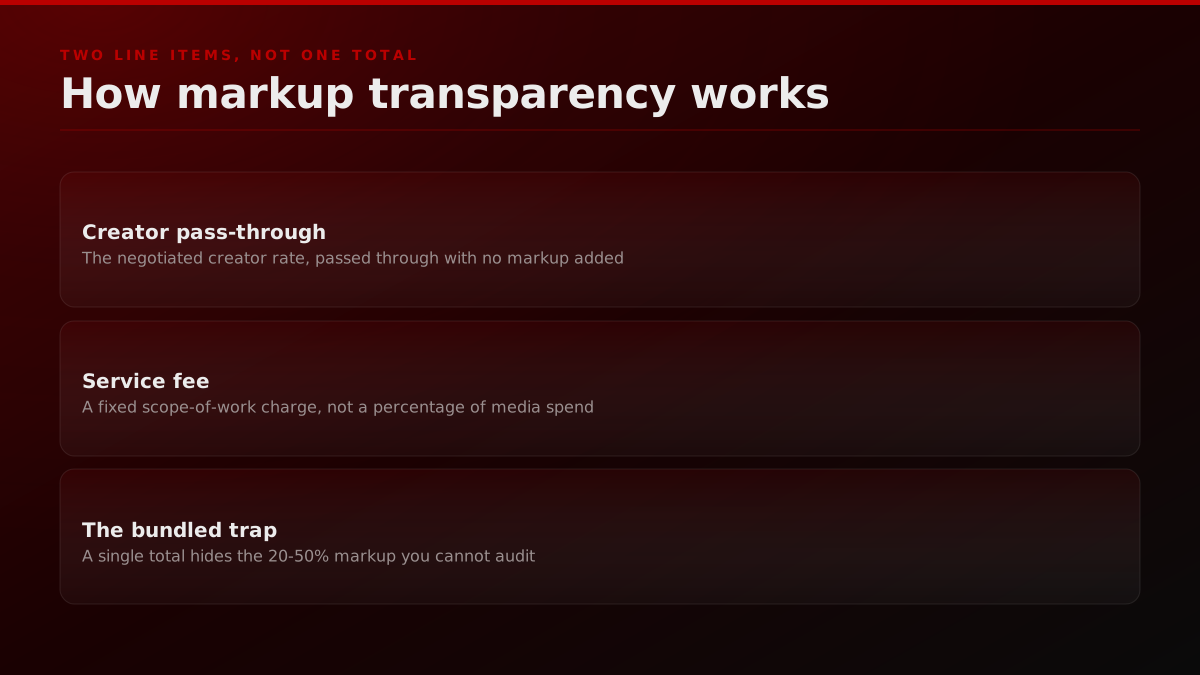
Markup opacity is one of the three structural forces that sustain the payment-first sequence. The FORKOFF service agreement resolves it by splitting proposals into two explicit line items: a FORKOFF service fee covering sourcing, brief writing, content review, and attribution infrastructure, and a creator pass-through fee representing the negotiated rate paid directly to each creator with no markup added.
At /services/kol-marketing, the service agreement separates two distinct financial components: the FORKOFF service fee and the creator pass-through cost. These appear as separate line items in the scope sent to the founder.
Creator pass-through is what the creator charges for the placement. FORKOFF negotiates this rate directly with the creator. The negotiated rate is what the founder pays for that line item. There is no markup on the creator fee.
Service fee covers creator sourcing and audit, brief writing and content review, coordinated drop management, attribution infrastructure, reporting, and mid-campaign optimization. This is a separate line item, charged at a transparent rate against the scope of work.
The combination produces a proposal where every dollar is attributed to a specific deliverable. Founders who have received bundled proposals from other agencies describe the FORKOFF proposal structure as the first one they have been able to evaluate against competing options because the line items are comparable.
Two patterns surface repeatedly in founder review of the line-item split. First, the creator pass-through column lets the founder spot-check rates against publicly listed media kits or direct creator quotes the founder may have collected during their own prior outreach. When a founder has been through 30 agency conversations, they often have rate data on the same creators a new agency now proposes. The pass-through column lets that prior research stay useful instead of being absorbed into a bundled total. Second, the service fee column is a fixed scope-of-work charge, not a percentage of creator spend. Agencies that price the service component as a percentage of media spend have a structural incentive to propose the more expensive creator in any given slot. A fixed scope fee removes that incentive at the proposal stage.
The markup transparency discussion connects to the three-ring distribution framework, where the cost structure of Ring 3 (creator and KOL distribution) is documented at the component level. Understanding what drives creator campaign cost is a prerequisite for evaluating any agency proposal accurately.
Operator note20 to 50 percent markups on creator fees stay invisible in bundled totals; the line-item split prices every creator in the open., FORKOFF proposal structure
For founders comparing FORKOFF against a competing agency proposal, the practical step is to ask the competing agency to restate their proposal as two line items: creator pass-through and service fee. If the competing agency cannot or will not produce that breakdown, the comparison itself is incomplete. A bundled total cannot be evaluated against a line-item total without first knowing the markup. Asking for the breakdown is a fair request because FORKOFF supplies it by default. Any agency that operates under a similar transparency standard will provide the same restatement on request. The agencies that decline are the ones whose proposals do not survive line-item scrutiny.
Crypto Twitter rosters: niche overlay on the pre-paid step {#crypto-twitter-rosters-niche-overlay-on-the-pre-paid-step}
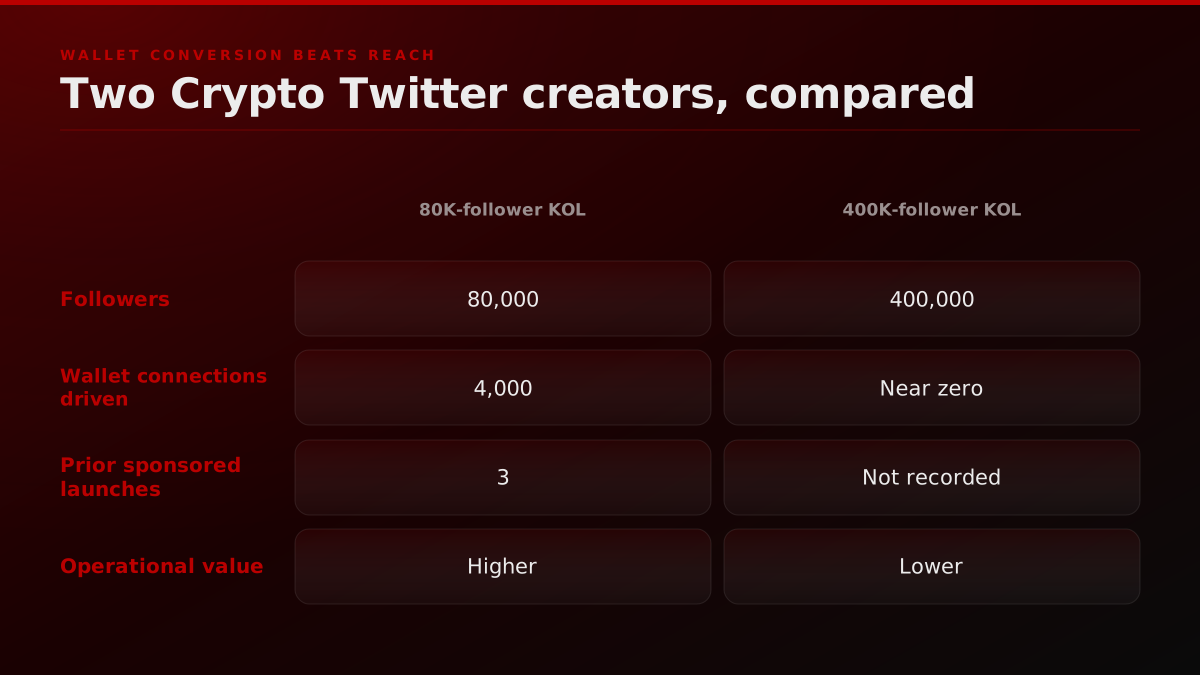
The pre-paid approval step runs the same way for Crypto Twitter campaigns, with one additional filter layer: an on-chain credibility check that evaluates prior wallet-connection volume from sponsored content, on-chain activity in the founder's protocol category, and any history of promoting projects that subsequently failed audit or compliance review. A creator with 80,000 Crypto Twitter followers who has driven 4,000 wallet connections across three prior launches is more valuable than a creator with 400,000 followers whose audience never connects a wallet to a sponsored protocol.
Crypto KOL sourcing requires an on-chain credibility check that SaaS influencer marketing does not, where the equivalent screen is whether the creator has actually run the tool. A creator in the DeFi or Web3 native space is evaluated not just on follower count and engagement rate but on their on-chain activity, community participation in relevant protocols, and whether their prior sponsored content has driven genuine wallet connections or just retweets. The signal that matters in Web3 is wallet conversion, not impression count. A creator with 80,000 Crypto Twitter followers who has driven 4,000 wallet connections across three prior sponsored launches is operationally more valuable than a creator with 400,000 followers whose audience overlaps with retail speculators who never connect a wallet to a sponsored protocol.
Cryptonkght
@cryptonkght
How do you tell a fake KOL from an authentic one? before even sliding into DMs, I run this quick vetting process every single time. managing an actual KOL campaign has given me an insight on what actually moves the needle and what just looks good on paper. I use a Tweet scout
The five-name sample for a crypto campaign includes this on-chain credibility note as a seventh data point in each creator entry, added to the six standard fields. For founders evaluating creators in the Web3 space for the first time, this note is often the most informative part of the sample. The note documents three specific signals: prior sponsored content with named protocol and disclosed wallet-connection volume where the data is recoverable, on-chain activity in the founder's specific protocol category (DeFi, NFT, infra, consumer crypto), and any history of promoting projects that subsequently failed audit or compliance review. The last signal is non-obvious from a follower count and is where the pre-paid step often catches creators who would have passed a SaaS-style filter but fail a Web3-specific risk screen.
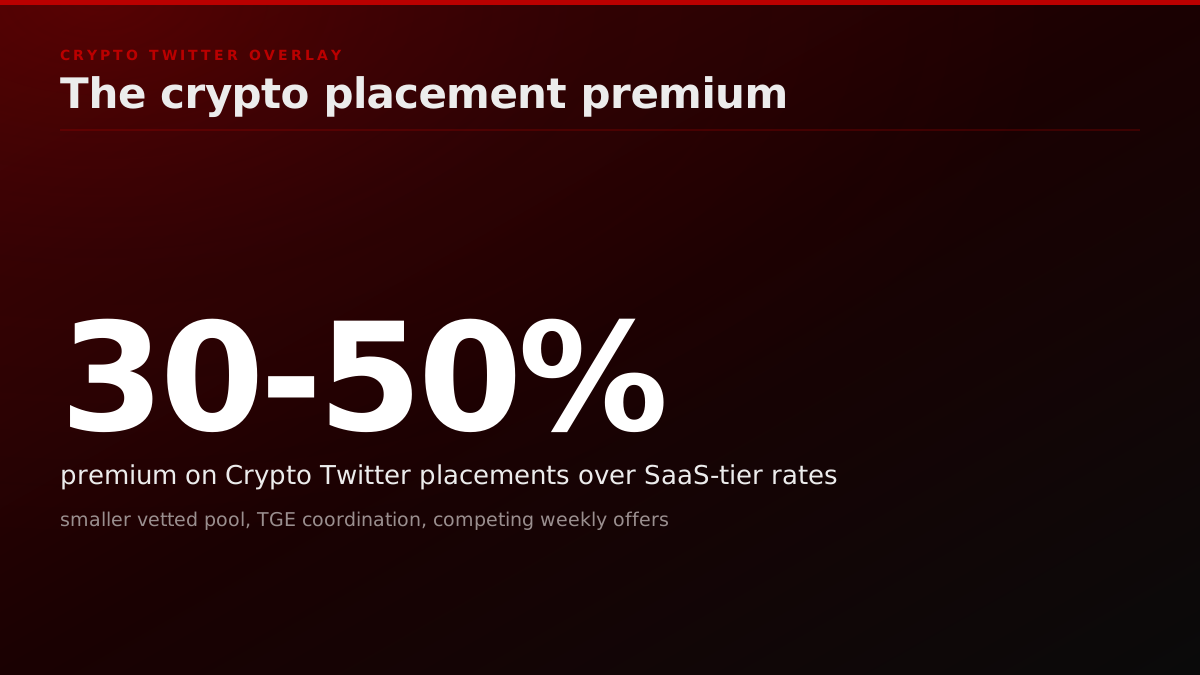
Crypto KOL placements run at a 30 to 50 percent premium over equivalent SaaS-tier rates, as documented in the X campaign tier breakdown. The pre-paid approval step makes the cost-per-creator visible before any payment, which means the premium is a visible line item in the proposal rather than a surprise in the final invoice. The premium reflects three structural costs: smaller addressable creator pool with verified on-chain credibility, higher coordination overhead around TGE timing and compliance review, and the reality that the highest-credibility Web3 creators have multiple competing offers in any given week and price accordingly.
For the full evaluation framework on Web3 marketing agencies specifically, the how to choose a Web3 marketing agency guide covers the seven-question audit in the context of crypto-specific risk factors (compliance, on-chain credibility, TGE campaign mechanics).
Why we built the pre-paid step {#why-we-built-the-pre-paid-step}
The pre-paid step is not primarily a trust-building mechanism, though it functions as one. It is primarily a scope-quality mechanism. Campaigns that start with a founder-approved creator list run better. The brief is more specific. The content review cycle is shorter. The founder's feedback during the campaign is more actionable.
Why we built the pre-paid step
Across 75 FORKOFF sales conversations with SaaS and Web3 founders, the single most-repeated frustration with prior agencies was the sign-then-vet cycle. Founders who had been through 30 or more agency conversations described the same pattern: scope acceptance, deposit, two-week silence, then a list nobody asked for. The pre-paid sample reverses that sequence as a hard rule.
When the names landed before the invoice, I knew this was a different conversation.
When a founder has never seen the proposed creators before the campaign launches, every piece of campaign feedback is filtered through a question they never got to ask: is this the right creator for my product at all? That question consumes feedback cycles that should be focused on content quality and distribution mechanics.
The pre-paid step resolves that question before the campaign starts. The creator list is settled. Feedback is about execution, not fit. At FORKOFF, we run this sequence because it produces better campaign outcomes, not because it requires more effort from us. It requires less: the brief writes faster, the content review resolves faster, and the attribution analysis is cleaner when the creator mix was chosen deliberately.
The 75-call corpus that documented the sign-then-vet frustration also documented the inverse: founders who had been through the pre-paid approval step with FORKOFF consistently described the campaign execution phase as more predictable than any prior agency engagement. The preparation work at the front end produces execution clarity at the back end.
How to get your five-name sample {#how-to-get-your-five-name-sample}
The five-name sample is available to any founder who supplies four inputs via /contact: niche category, target audience demographic, follower floor for proposed creators, and minimum engagement rate. No sales call is required, no deck, no prior relationship. The sample lands within 48 hours and no money changes hands until the founder approves the names.
Send those four inputs via /contact. No sales call required. No deck. No prior relationship. The sample lands within 48 hours of intake confirmation. Founders who are unsure how to set the engagement floor or follower floor can submit the niche and target audience alone and the sourcing pipeline will propose defaults drawn from the per-follower-band benchmarks documented above. The four inputs are recommended, not required; the intake form will accept partial specifications and the team will fill the gap rather than blocking the submission on missing fields.
If the sample does not match your brief, the revision cycle described above applies. If the sample matches, the next step is a scope conversation about which tier your campaign fits: Pilot, Scale, or Flagship. The tier breakdown covers what each tier produces before you get to that conversation. Most founders arrive at the scope conversation with a tier preference already formed from the sample data: the five names visibly fit one of the three tier profiles based on follower band, engagement quality, and prior brand work, and the conversation moves directly to roster expansion and timeline rather than re-litigating tier fit.
The /services/kol-marketing page documents the full workflow from sample request through campaign delivery. The FAQ section below covers the questions that typically surface between sample delivery and scope confirmation. For founders comparing FORKOFF against another agency in parallel, the recommended approach is to run the seven-question framework against the competing agency the same week the FORKOFF sample arrives. The contrast between an agency that produces five names in 48 hours and an agency that requires a contract before producing any names is the clearest signal in the buying process.
The pre-paid step is the mechanism. The five names are the proof. The conversation about price happens after both are in hand. Every founder who has been through the 30-agency search cycle described at the start of this post arrives at the same conclusion: the agencies worth working with are the ones that put the names first, and the agencies that resist that sequence are the ones whose roster quality does not hold up to direct inspection. The pre-paid step is structured so that the diagnostic is automatic for the founder and the proof obligation sits where it belongs, on the side of the agency that is asking to be hired.