Most advice on how to grow on Twitter (X) is a list of clever post ideas. That is why most of it fails. Growth on X in 2026 is not a content problem, it is a system problem: a single lane so people can file you, a daily cadence so the ranker gets enough signal, and a reply habit that borrows reach you have not earned yet. Do those three things every day for a few months and the follower count takes care of itself. Skip them and no thread, however good, saves you.
This guide is the operator version of that system. It is built from X's open-sourced ranking code, whose published engagement weights we read line by line, and from what accounts actually growing right now say drove their numbers, not from recycled 2019 tips. If you want the one-shot launch version instead, our runbook on how to go viral on X in 2026 covers that separately; this is the slower, more durable game of building a following.
It is worth building for. X remains one of the largest daily-active platforms in the world, with a huge share of adults reaching news and professional conversation through it (Pew Research social media fact sheet, DataReportal X stats), and the platform has been unusually transparent about how reach is decided since it open-sourced the ranker in 2023. That combination, a very large audience and a published rulebook, is rare. It means the accounts that read the rules and run a consistent system have a real, durable edge over the ones guessing.
The 30-second answer
To grow on X (Twitter) in 2026 you run a system, not a slot machine. Pick one lane so people and the ranker can file you. Post three to five times a day to get enough at-bats. Then spend most of your time on early, high-value replies, because X's open-sourced algorithm weights a reply far above a like, and a reply the author answers back is the single highest-weighted action. The operators growing fastest right now (Jeremy at 260,000 followers off 1,500 replies a day) treat replies as the engine and posts as the storefront. Consistency over weeks beats one viral swing. Growth is a streak, not a lottery ticket.
How do you actually grow on X in 2026?
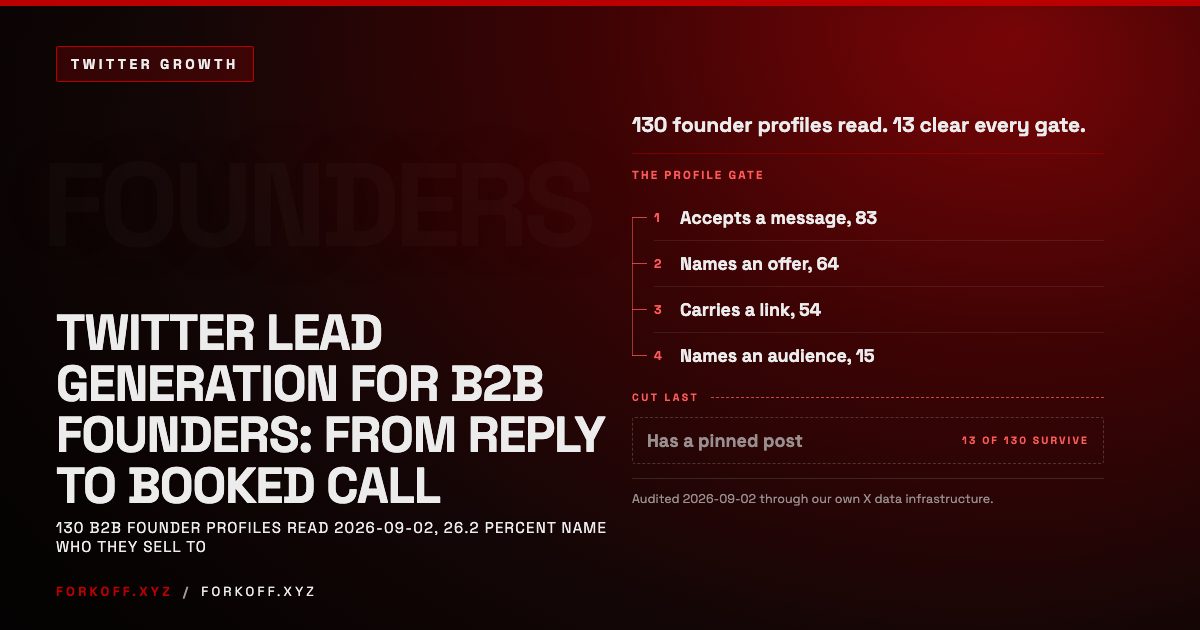
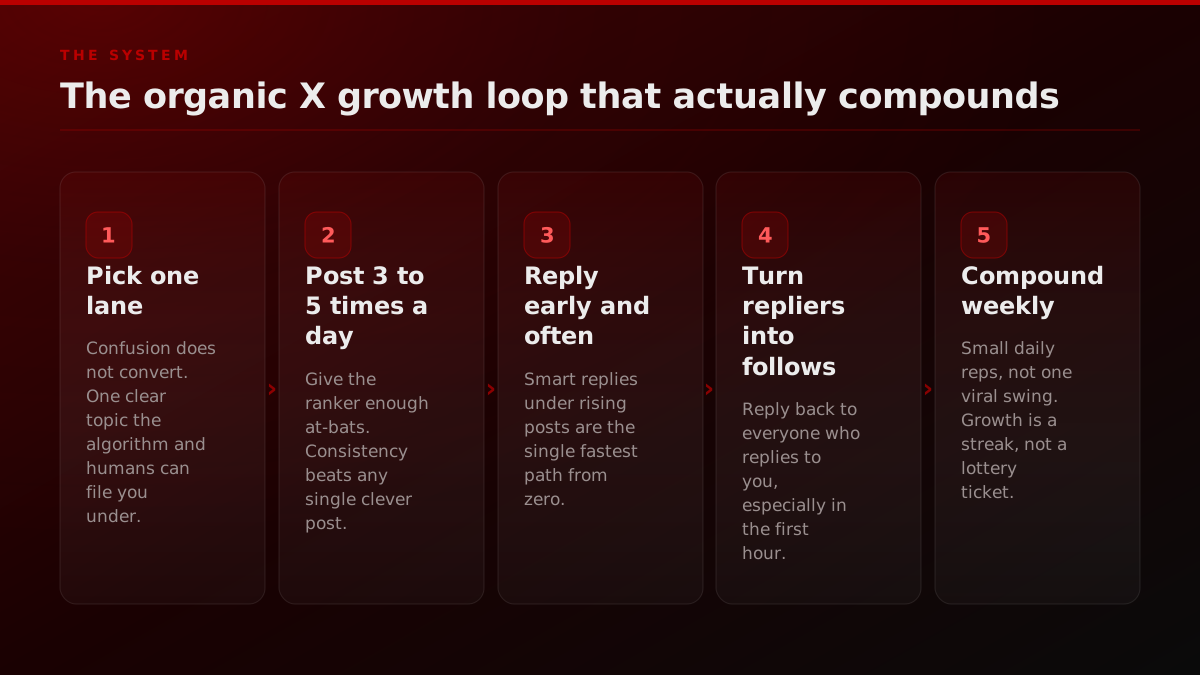
You grow on X by running a loop, not by hunting a viral moment, and not by buying reach. The loop is four parts: pick one lane so the algorithm and humans can file you, post three to five times a day to give the ranker at-bats, spend most of your time on early high-value replies under bigger accounts in your niche, and convert the profile visits those replies create with a clear bio and a strong pinned post. That last step is where most accounts quietly lose the loop: when we audited 130 B2B founder profiles against it, 100 named a product and only 34 named who it was for. Then you repeat it daily. Nothing in that loop is clever. The edge is entirely in doing it consistently while everyone else waits for inspiration.
The reason the loop works is mechanical, and we will get to the algorithm in a minute. For now, hold onto the shape of it: posts are your storefront, replies are the engine that drives traffic to the store. A great storefront with no traffic sells nothing, which is exactly why so many thoughtful accounts stay stuck. The instinct when a post dies is to write a better post. The system says something harder and more useful: the post was probably fine, the problem is that nobody saw it, and the fix for that is not in the post at all. It is in where you spend the next hour.
How To Grow On X/Twitter In 2026 (Full Guide)
Jacob C. Edmunds
A 2026 walkthrough of the same reply-and-cadence growth mechanics covered here.
Before the tactics, one honest note, because the hype accounts will not tell you: this is not fast, and the first few weeks feel like shouting into a void. That is normal and it is not a sign you are doing it wrong. The accounts that make it are the ones still posting in week three when the numbers have barely moved. This is the same discipline behind founder-led growth generally, where the compounding only shows up after the boring part. It is also why so many founders treat X as a distribution channel worth building deliberately rather than dabbling in, the same way they would treat SEO or a founder funnel. The people who win on X are not more talented, they just decided it was a real channel and staffed it like one.
Operator noteJeremy replies to 1,500 accounts a day and credits it for 260,000 followers. Replies moved the number, not posts., @Jeremybtc on X
Why does growing on Twitter feel so hard right now?
Growing on X feels hard in 2026 because the honest complaint is true: effort does not reliably convert to reach. Serious accounts pour hours into a single thread and get crickets, while low-effort rage-bait pulls millions of views. That gap is real, and pretending it is not is how most guides lose you. The 2026 timeline genuinely does reward provocation and volume, and a lot of what goes viral is not content you would want to be known for.
This is the worst moment to grow on X. The algorithm favors thirsty traps and engagement farming.
StarPlatinum
@StarPlatinum_
This is the worst moment to grow on X The algorithm favors thirsty traps and engagement farming Let's look at this example: User announces he's switching his profile and turning into a girl - 4.3M views on that post - +2,000 new followers Why does this happen? The algorithm
You can watch this play out in public. On Reddit, a marketer posting useful threads with images every single day, engaging consistently, described being stuck at 80 followers after months while brand-new hype accounts in the same niche crossed 18,000 in days. The instinct is to conclude the game is rigged. It is not rigged, it is just mechanical, and the mechanic being missed is almost always the same one: that person was doing all their work inside their own tiny reach, where almost nobody could see it.
I Don't Get It. How do you grow on Twitter
The mistake is concluding that the game is rigged and quitting, or worse, deciding to join the farming. Both are dead ends. The farming path buys you views without followers and a brand you cannot sell against, which we break down in our audit of whether X launches are a scam or a skill issue. The real move is to accept the environment and build inside it: a clear lane the farmers do not have, and a reply habit that does not depend on the lottery of the For You page. One founder documented six months of daily posting that netted 300 followers and a $100 boost that bought 200,000 views and zero customers, which is the whole trap in one screenshot. He was doing the visible things, posting and boosting, and none of them were the thing that actually compounds.
How can i grow my X(twitter) account organically?
So the difficulty is real, but it is specific, and specific problems have specific fixes. The reason your good post got no reach is almost never quality. It is that a cold post from a small account starts with almost no early signal, and without early signal the ranker never fans it out. One 88,000-follower operator described the feeling exactly, hours on a thread and then crickets. Replies solve that by starting you inside someone else's signal instead of your own empty room. Understanding exactly how that scoring works is the difference between guessing and operating, so that is where we go next.
Effort does not equal reach, and that is the trap
The most common complaint from serious accounts is not that they have no content, it is that good content gets no reach. One 88,000-follower account put it bluntly: hours or days on a single thoughtful thread, and on hitting post, crickets. The fix is not more polish on the post. It is spending that time on replies that borrow reach you have not earned yet.
Source: @_Investinq on X, July 2025 (209 likes)
How does the X algorithm decide who to show in 2026?
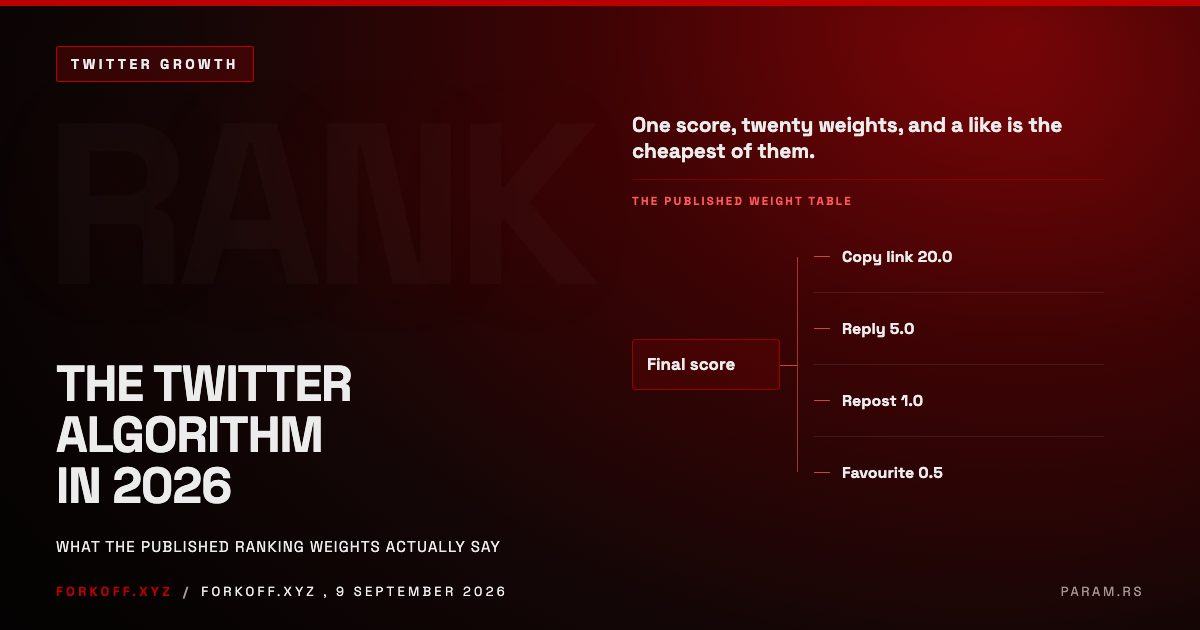
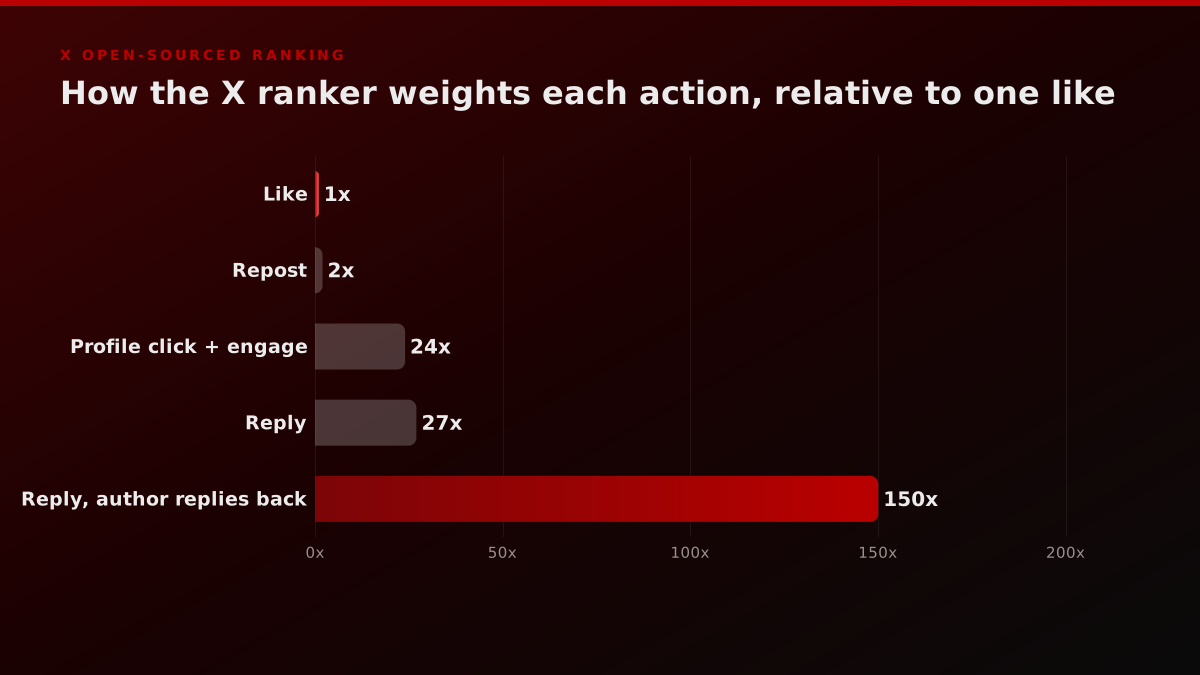
X decides who to show using predicted weighted engagement, and because the company open-sourced its recommendation algorithm, the weighting is not a secret. The repository's own README and the home-mixer ranking code lay out how candidate posts are scored and served. The model scores each candidate post by how likely you are to take various actions on it, then weights those actions very unevenly. A like is the baseline. A repost counts for more. A reply counts for far more than a like, and a reply that the author answers back is the single highest-weighted positive action in the system. Negative signals (mute, block, show less) carry heavy penalties that can bury a post.
How X weights each action (relative to one like)
| Action | Relative weight | What it means for you |
|---|---|---|
| Like | 1x (baseline) | The weakest positive signal you can earn |
| Repost | About 2x a like | A stronger share signal worth designing for |
| Profile click then engage | Roughly 24x | Why a click-worthy reply compounds |
| Reply | On the order of 27x | Why replies out-grow posts for small accounts |
| Reply the author answers back | Highest weighted | Reply to your repliers fast, in the first hour |
| Mute, block, show less | Heavy negative | One reason rage-bait growth stalls out |
Relative weights illustrated from X's open-sourced recommendation algorithm (github.com/twitter/the-algorithm). Exact production values are tuned continuously; treat these as direction, not decimals.
Read that table twice, because it quietly rewrites your whole strategy. If a reply is worth on the order of 27 likes, then an hour spent writing thoughtful replies under rising posts is worth far more than an hour polishing a post that will reach almost no one. And if the highest-weighted action of all is a reply you answer back, then replying to your own repliers fast, especially in the first hour, is not politeness, it is the highest-leverage move available to you. This is the same reason our Grok and X algorithm playbook keeps coming back to conversation over broadcast: the model is built to reward the back-and-forth, not the megaphone.
There is a second-order lesson hidden in the negatives. Rage-bait farms engagement, but it also farms mutes, blocks, and show-less taps, all of which are heavily penalized. That is part of why farming plateaus: the same post that spikes on views is quietly accumulating the signals the ranker punishes. It is also why the data on what actually makes marketing go viral keeps landing on durable audience-building over one-off spikes. The contrarian operators are not wrong that farming works short-term, they are wrong that it compounds. A spike you cannot repeat is a lottery ticket, not a strategy.
The ranker reads actions, not intentions
Because X open-sourced its recommendation code, the weighting is not a mystery. Replies and the back-and-forth they trigger are weighted far above passive likes, and negative signals like mute and block carry heavy penalties. That single fact reorganizes a growth plan: you optimize for content people reply to, and you spend your own time replying, because that is what the model rewards.
Source: X open-sourced recommendation algorithm (github.com/twitter/the-algorithm)
One more thing the open-source code makes clear: follower count is not the master input people assume it is. The model leans heavily on early velocity and predicted engagement, which is exactly why a 500-follower account with a reply that sparks a conversation can out-reach a 50,000-follower account posting into silence. That is good news if you are small. It means the game is not gated behind a number you do not have yet, it is gated behind a behavior you can start today. The lever is not your size, it is your willingness to show up in other people's conversations before you have a crowd of your own.
What is the reply system, and why is it the #1 lever?
The reply system is the deliberate practice of using replies, not original posts, as your primary growth engine, and for any account under roughly 10,000 followers it is the single highest-leverage thing you can do. It works because a reply under a bigger account's post borrows that post's reach: you get in front of an audience that already cares about your topic, before your own following is big enough to matter. Every fast-growing operator we looked at named it independently.
Want to grow on X? Stop overcomplicating it. Start replying. I reply to over 1,500 people a day. That's the #1 reason I got 260k followers.
The consensus is striking once you go looking. One co-founder credits replying to over 1,500 people a day for 260,000 followers. Another creator's whole growth thesis reduces to two cheat codes: early replies for visibility, valuable replies for followers, the move most people refuse to do properly. The specific accounts vary, the advice does not. Replies are not a supplement to posting, they are the main event, and posting is what you do so that the strangers your replies attract have a reason to stay.
Jeremy
@Jeremybtc
Want to grow on X? Stop overcomplicating it. Start replying. I reply to over 1,500 people a day. That's the #1 reason I got 260k followers. And it's really not that difficult. Reply to everyone who replies to you Especially when it's early. You train the algorithm and
The mechanic is simple to state and hard to sustain: build a list of 20 to 30 active accounts slightly bigger than you in your exact lane, reply early under their posts and under their repliers, and make every reply a real take that adds value or politely disagrees, never a fire emoji. The goal of the reply is to earn a profile click, and the goal of the profile is to earn the follow. That is the whole chain. A reply that could have been left by a bot earns you nothing; a reply that makes one person think earns you the click. That line is not a figure of speech any more: we measured what happens when Grok bots are pointed at marketing work, and the reply is the one job on that list you should never hand over.
What separates a reply that converts from one that vanishes is specificity. "Great post" is invisible. Adding the one caveat the original author left out, sharing the number you saw when you tried the same thing, or naming the exact case where their advice breaks: those are the replies people screenshot and follow. Aim to be the second-most-interesting account in the thread, right under the person who posted, because that is the position everyone reading the replies actually notices. Do that a few dozen times a day in one lane, and within weeks the same faces start recognizing your name, which is the quiet beginning of an audience.
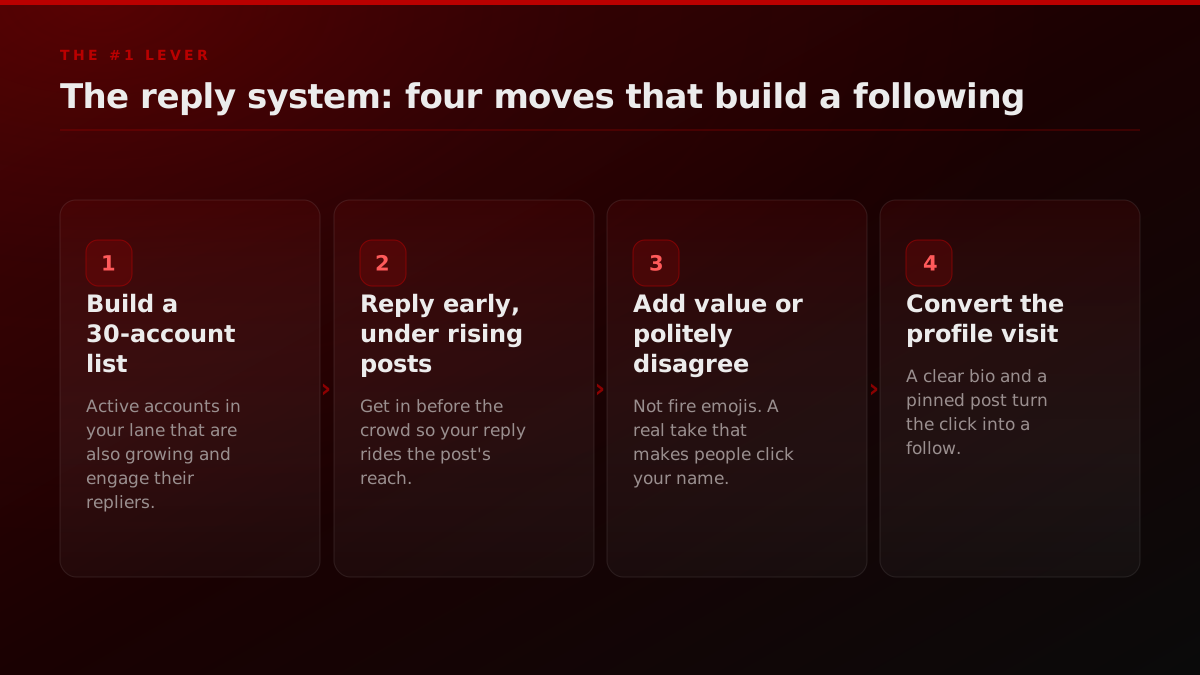
None of this is theoretical. Operators publish their exact routines, and they rhyme: dozens of early replies a day, a handful of original posts, and relentless reply-backs. The specific accounts and numbers vary, but the shape does not. The word early is doing a lot of work in that sentence. A reply left twenty minutes after a post goes up, while it is still climbing, rides its reach; the same reply left six hours later lands in a graveyard. Here is the system laid out as four repeatable moves you can run tomorrow morning without any tools beyond the app itself.
Operator noteSet a timer: 40 replies before your first coffee, under posts that went up in the last 20 minutes.
How often should you post and reply on X?
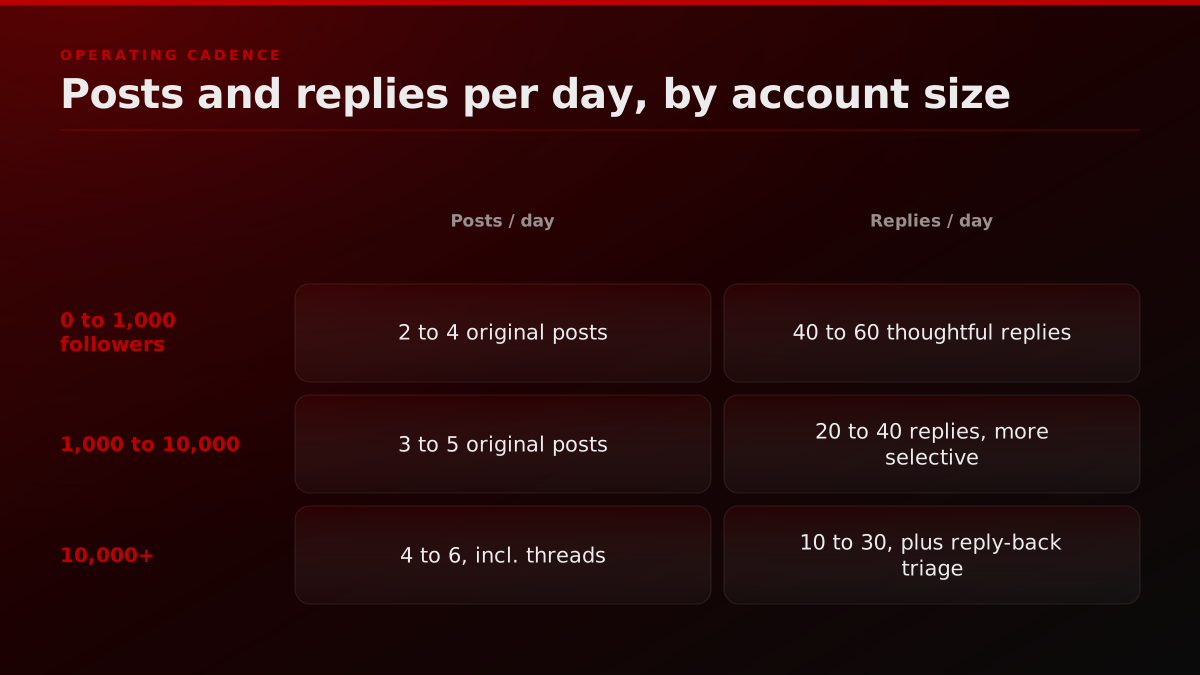
For a small account, three to five original posts a day plus 40 to 60 early replies is the working range, and the reply number is the one that actually moves growth. Posts give people a reason to follow once they land on your profile; replies are what get them to your profile in the first place. Space your posts roughly two hours apart so you are not competing with yourself, and treat replies as a separate, larger daily budget rather than an afterthought.
Posting and reply cadence by account size
| Account size | Original posts / day | Replies / day | Focus |
|---|---|---|---|
| 0 to 1,000 | 2 to 4 | 40 to 60 | Reply-heavy cold start under bigger accounts |
| 1,000 to 10,000 | 3 to 5 | 20 to 40 | Find your winning format, reply back fast |
| 10,000+ | 4 to 6 incl. threads | 10 to 30 | Relationships and reply-back triage over volume |
Operator-observed working ranges, not guarantees. Spacing is roughly two hours between original posts.
The exact numbers shift as you grow, which the cadence table above lays out by stage, but the principle is stable: reply-heavy at the start when you have no reach of your own, then gradually more selective as your posts start carrying themselves. What does not change is consistency. The accounts that stall are almost never the ones with bad numbers, they are the ones that went quiet the first busy week. If you only take one operating rule from this guide, make it a cadence you can actually hold on your worst day, not your best. A modest number you never miss beats an ambitious one you abandon in a fortnight.
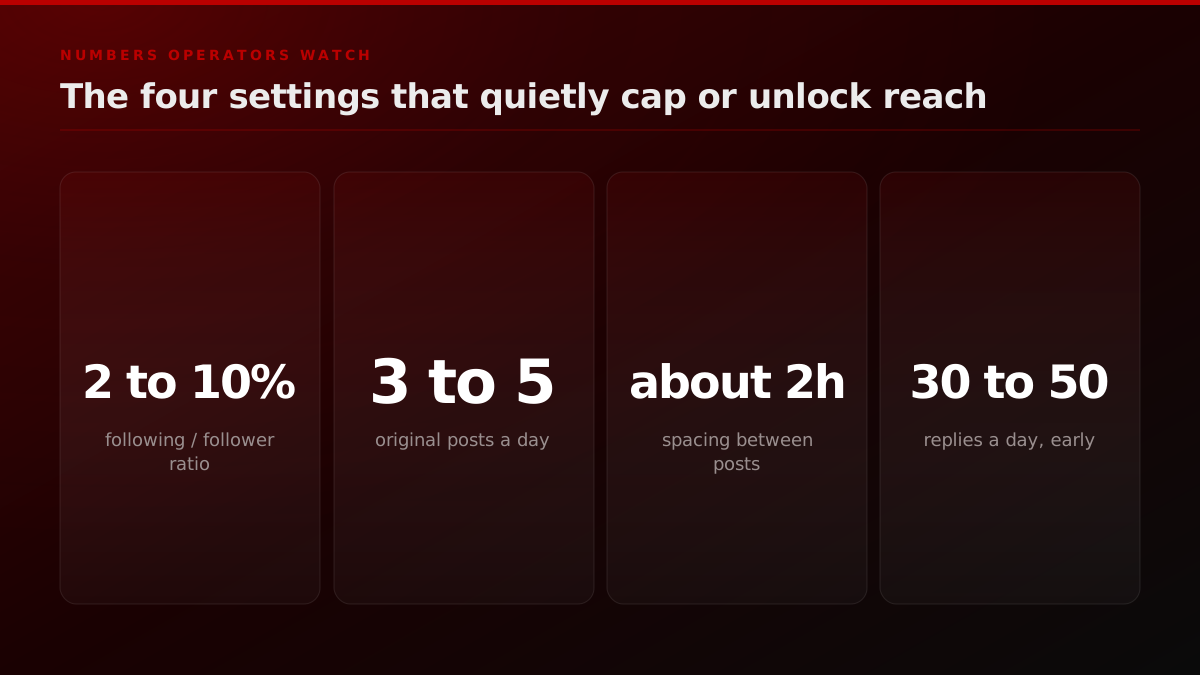
There is also a set of quieter settings that operators watch, because getting them wrong caps your reach no matter how good your content is. The following-to-follower ratio is the main one: follow far more accounts than follow you and the ranker can read it as a low-authority or spam signal. One trader advises keeping who you follow to between 2 and 10 percent of your followers and quoting posts instead of retweeting them into your own feed, so your profile stays yours. These are hygiene, not magic, but bad hygiene quietly costs you, and it is the kind of thing you can fix in an afternoon and then forget about.
One operator compresses the whole cadence into a single screenshot worth stealing: a fixed daily count of 50 replies and 4 posts, spaced two hours apart, with one post left to work overnight. The precision matters less than the fact that it is a repeatable routine rather than a mood. A number you hit every day beats a burst you hit once and then abandon, because the ranker and your audience both reward the accounts that keep showing up.
Penelope Lopez
@KCodes7777
This is literally all you need to grow on X 400 followers in 11 days: → 50 replies/day → 4 posts/day → 2h between posts → 1 post at night to let it work while you sleep → Be genuine in your replies → Reply only to people who post about your interests → Make value
How do you pick a niche and set up your profile?
Pick a niche by choosing the single topic you can post about daily for a year without running dry, then make it obvious in one line at the top of your profile. The test is simple: a stranger should be able to read your bio and pinned post in five seconds and know exactly what they will get by following you. Vague, multi-topic accounts lose because they give neither humans nor the ranker anything to file. A clear lane makes every reply you leave compound, because the people who click through already want more of that one thing.
One lane beats ten interests
Operators who grow fast almost all say the same first step: pick a lane. Confusion does not convert, and an account that posts about five unrelated things gives neither humans nor the ranker a reason to file it. A single clear topic makes every reply compound, because the audience you meet in the replies is the audience your posts are for.
Source: @Mapemaofweb3 on X, June 2026
Your profile is the conversion layer of the entire system, and most people neglect it. The reply system sends a stream of curious strangers to your profile; a weak bio and a stale pinned post waste every one of those visits. Write a bio that states the promise, pin the post that best proves you deliver it, use a clear photo, and keep your recent posts on-lane so the visit converts on the spot. Get these four elements right once and they work for you on every reply for months, which is the highest-leverage hour of setup on the whole platform.
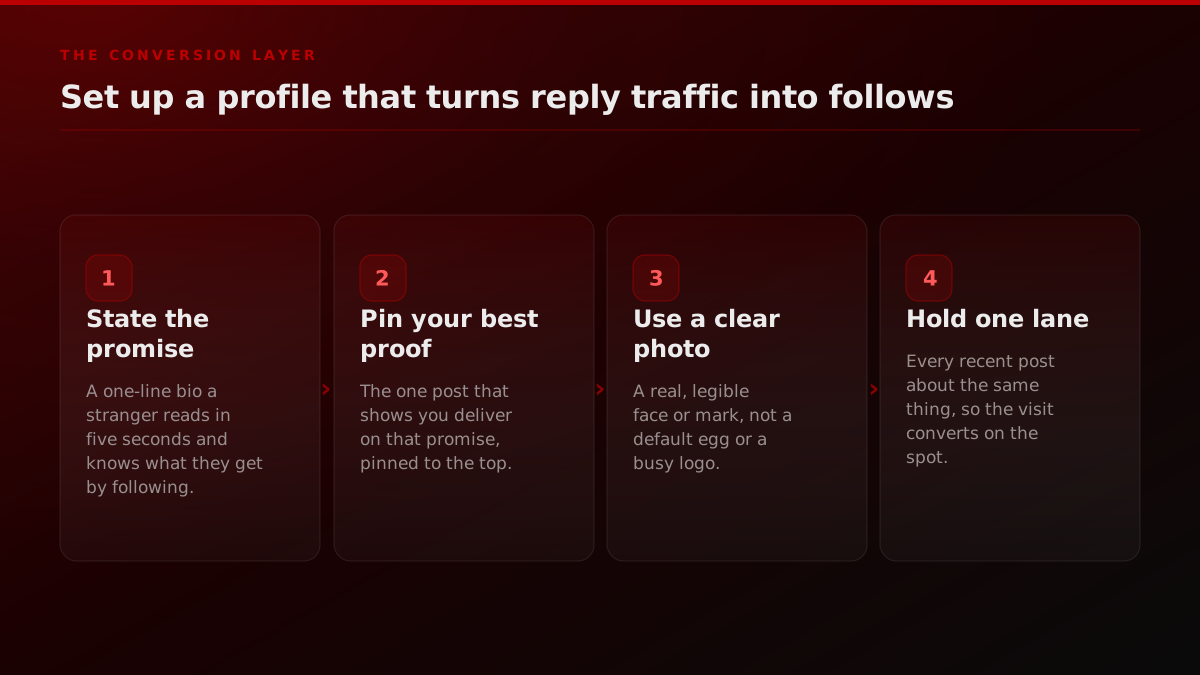
This is the same positioning discipline behind a strong founder funnel, just applied to a single social profile. It is also where X growth connects to the rest of your distribution: a sharp lane on X makes your answer-engine optimization and your other channels reinforce each other instead of confusing the market about what you do. The founders who compound fastest are recognizably about one thing everywhere, so every surface they touch adds to the same reputation instead of splitting it.
How do you get your first 1,000 followers?
You get your first 1,000 followers with a reply-first cold start, because at zero you have no reach of your own to lean on. Fix the profile first, build your list of 20 to 30 target accounts, then reply 40 or more times a day under their posts and their repliers while posting your own content daily so the profile visits have something to follow. It is unglamorous and it works. Almost every operator who documents their early growth describes some version of this exact ladder.
The community keeps arriving at the same answer the operators do, which is a useful sanity check when the hype accounts try to sell you a shortcut. Threads full of people asking how to grow, and the top answers are usually the same: engage genuinely, reply early, pick a lane, be consistent. Not every thread agrees, one Ask HN post on the same question drew mostly cynicism, one reply telling the asker to chase hype cycles with "useless threads," another to skip the platform entirely, which says more about how tired that crowd is of growth advice than it does about whether the advice works. There is no secret. There is a ladder, and most people quit on the second rung because the first fifty followers feel like they take forever. They do, and then the next few hundred come faster, because a reply from a 400-follower account is seen by more people than a reply from a 40-follower account. Here is that ladder as five concrete moves.
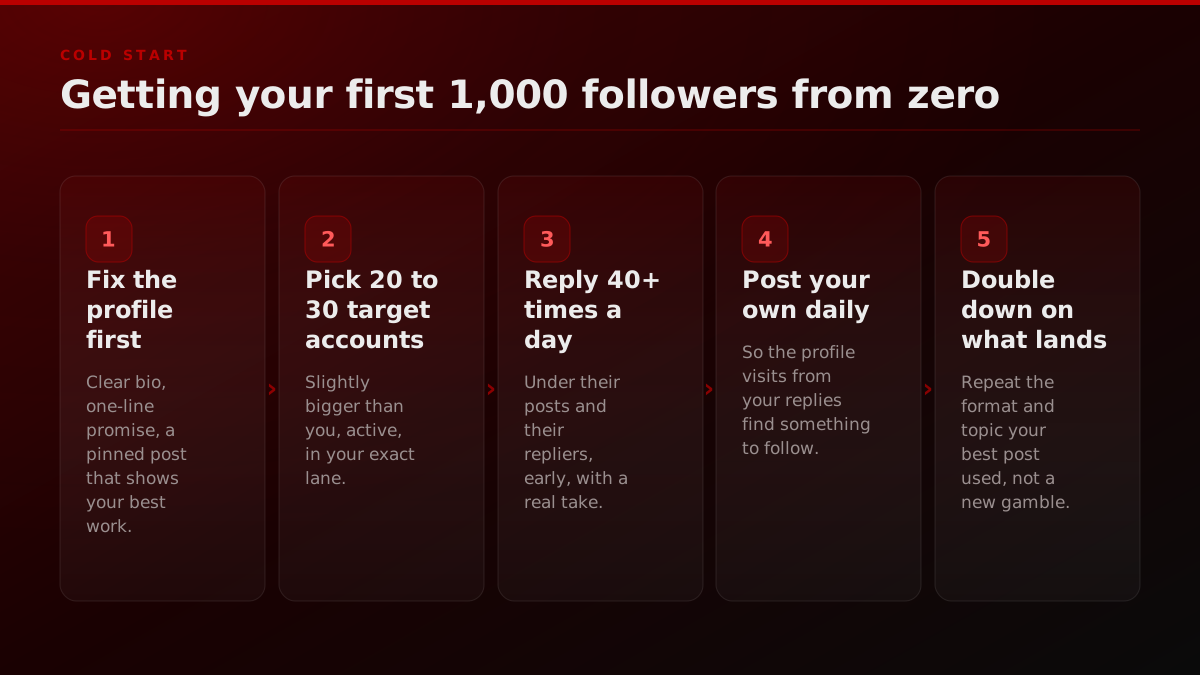
If you are coming from another platform, do not assume your audience transfers. Distribution has to be rebuilt on X specifically, which is why founders who are strong elsewhere still start near zero here. Builders say this out loud constantly; one Hacker News comment framed distribution as the bottleneck they had struggled with across X, Threads, and LinkedIn all at once. The audience does not move with you, the reputation does not port, and the reply reps reset. Our founder new-media distribution playbook covers how to run several platforms without starting from scratch on each, but the X-specific cold start is still the reply ladder above. And once you have a base, the warm-relationship layer opens up: our Twitter DM outreach playbook shows how the connections you build in replies turn into conversations that actually convert, which is where the followers stop being a vanity number and start being a pipeline.
Which growth tactics are traps in 2026?
The tactics that look like growth and quietly kill accounts are buying followers, engagement farming, follow-and-unfollow churn, and generic reply spam. Each one games a surface metric while damaging the thing that actually drives reach. Bought followers are dead accounts that drag down the engagement rate the ranker reads, so a big fake number actively suppresses you. Farming pulls views without follows. Churn creates the exact spammy ratio you are trying to avoid. And fire-emoji replies earn no profile clicks, so they earn no follows.
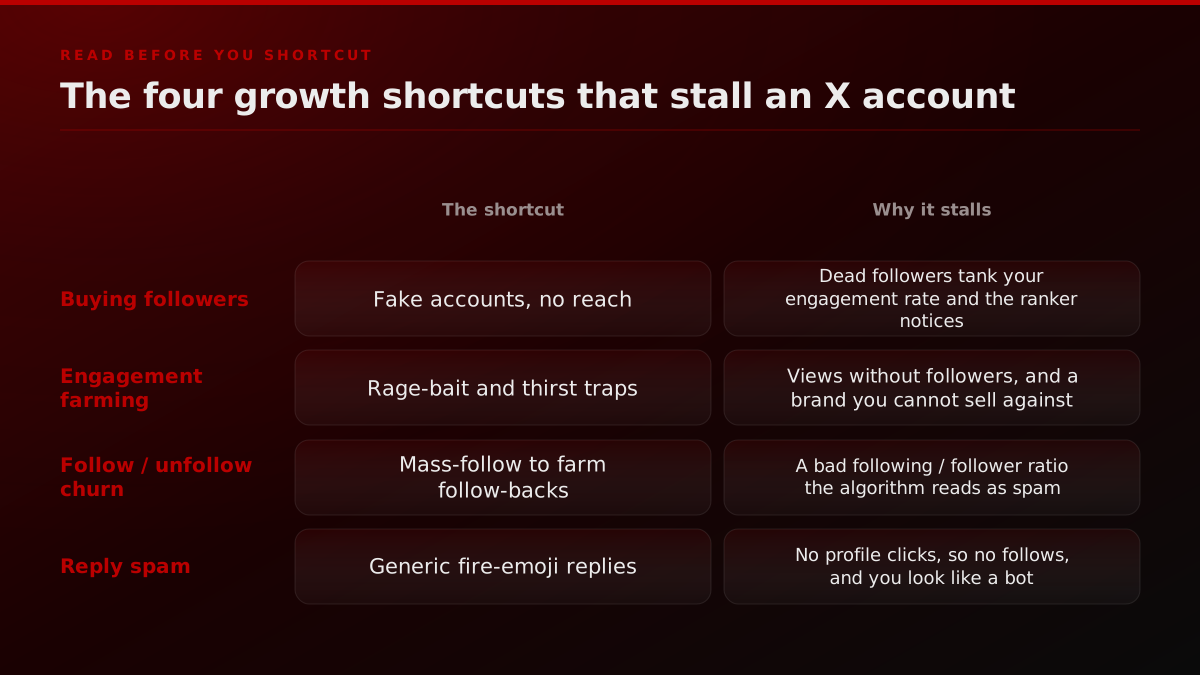
The deeper problem with all four is that they optimize for a number that does not convert. A follower who never engages, a viewer who never follows, a follow-back from someone who will unfollow you next week: none of these become customers, readers, or a reputation you can build on. If you are trying to tell real traction from bought noise, our guide on how to tell if tweet engagement is bought shows the signatures. Slow and real beats fast and fake every time it is measured, which is the same lesson behind the older 5-lever go-viral playbook: the levers that last are the organic ones, and the shortcuts all borrow against a future you have to pay back with a stalled account.
Operator noteBought followers show up as a dead engagement rate the ranker reads in a week. The shortcut costs you the account.
What does a 30-day X growth cadence look like?
A workable 30-day cadence front-loads setup and reply reps, then shifts toward format and relationships as signal comes in. Week one is profile, lane, and target list, with three posts and 40 replies a day while you log what lands. Week two you push posting to four a day and 50 replies and ship one thread to test a format. Week three you double down on whatever won and prioritize fast reply-backs. Week four you deepen relationships, DMing warm repliers and turning reply threads into real connections. The point is to make the first month a system you run, not a mood you wait for.
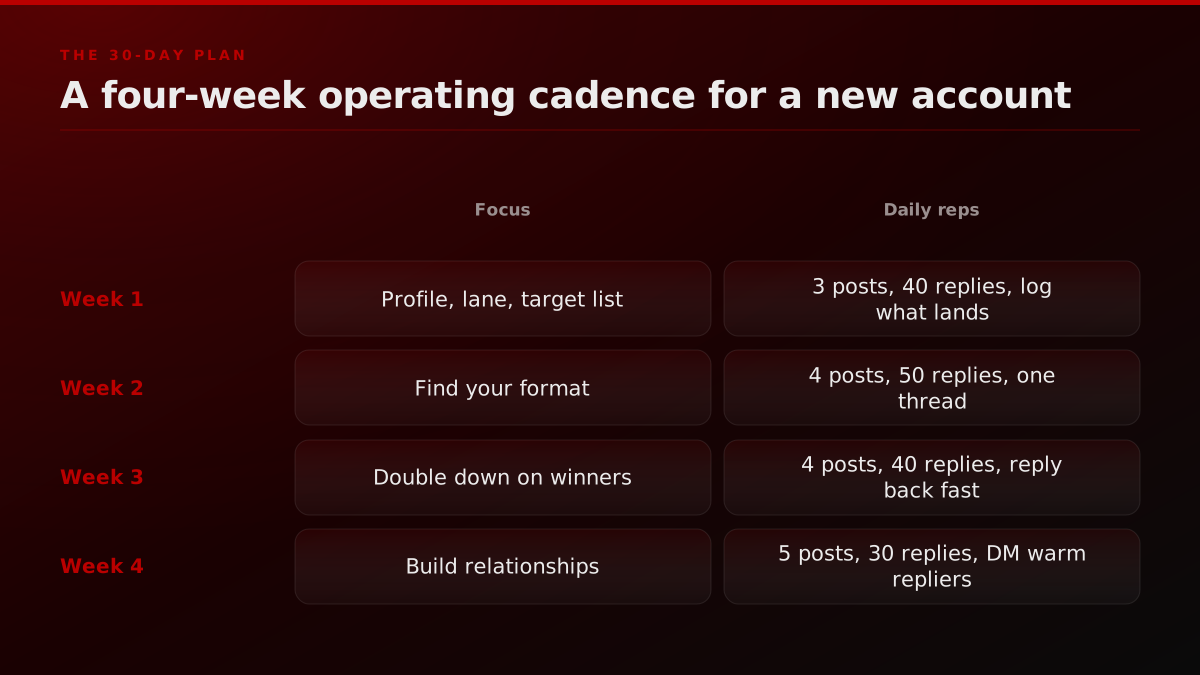
Thirty days will not make you big. It will do something more valuable: prove the loop works for you and turn it into a habit that survives a busy week. From there the math improves on its own, because a larger base means every reply lands in front of more people and every post starts with more early signal. Growth on X is famously non-linear for exactly this reason. The hard part is the flat opening stretch, and the whole job of a 30-day plan is to get you through it while the compounding is still invisible. This is the same growth-signal-over-vanity-metrics mindset applied to one channel: watch the reps, not the follower count, because the reps are the thing you control and the count is just their echo.
Keep a simple log through the first month: date, posts shipped, replies left, and the one post or reply that got the most attention. You are not tracking it to feel productive, you are tracking it to find your format. By the end of thirty days that log almost always reveals a pattern, one topic angle or one post shape that consistently outperforms the rest. That pattern is worth more than any generic tip, because it is evidence from your own account about your own audience, and everything after month one is just doing more of what the log already told you works.
When should you bring in a team for X growth?
Bring in help when the system is sound but the time is not there, which for most founders is the moment X growth starts competing with actually building the product. The loop in this guide works, but it demands 10 to 15 focused hours a week of posting and replying at the right times, and it breaks the first week you go heads-down on a launch or a fundraise. That is the honest tradeoff: the reply engine runs on human hours, and founder hours are the scarcest resource you have.
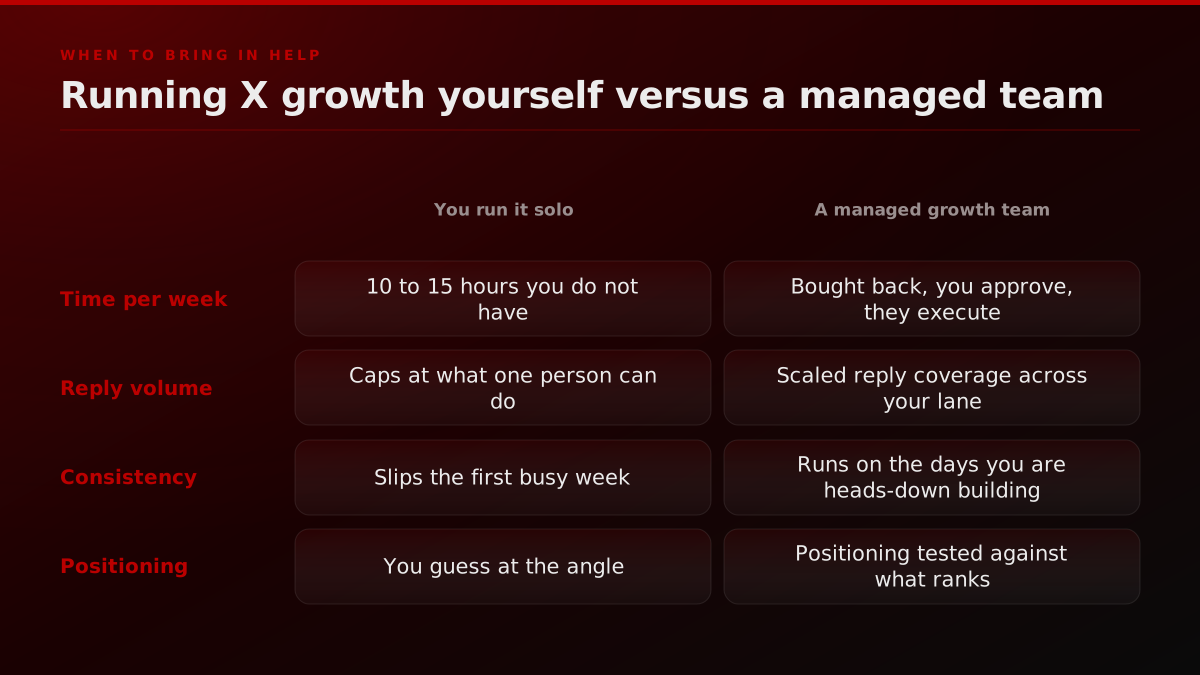
A managed team buys those hours back without losing the thing that makes X work, which is that it has to sound like a real person in a real lane. Done right, a Twitter (X) marketing service handles positioning, the daily posting cadence, and scaled reply coverage across your niche, so the account keeps compounding on the days you cannot open the app. It is the same logic as bringing in help for a 1M-view launch or a full launch-video playbook: the strategy is knowable, but execution at a daily cadence is a job. If you are weighing community-led against founder-led growth, the reply system is where the two meet, because it is founder-led in voice and community-led in mechanics.
The verdict: run the loop, count in months
Growing on X in 2026 is not mysterious and it is not a content-quality problem. It is a system: one lane, three to five posts a day, dozens of early replies, and a profile built to convert the clicks those replies create. The algorithm is open-sourced and it rewards exactly this, replies far above likes and reply-backs highest of all. The operators growing fastest are not the most clever, they are the most consistent, and they treat replies as the engine and posts as the storefront.
So pick your lane this week, set a daily reply target you can hold on your worst day, and count your progress in months rather than afternoons. Do that, and the follower number stops being something you chase and becomes something that follows the reps. If the reps are the problem, not the plan, that is exactly when a managed Twitter marketing team earns its keep. Either way, the winning move is the same: run the loop, every day, longer than everyone who quit.