A DevRel agency and a full-funnel distribution agency solve different problems and compound on different timelines. DevRel builds developer trust, protocol community, and technical adoption, measured by activated developers and shipped integrations. A full-funnel distribution agency builds inbound pipeline and qualified reach for non-developer buyers, measured by cost per qualified view. Picking the wrong type at the wrong stage does not just waste a quarter of budget, it wastes the window for building the specific kind of trust your buyer requires.
The 30-second answer on DevRel vs full-funnel agency
DevRel-specialist agencies build developer trust, protocol community, and technical adoption. Full-funnel distribution agencies build inbound pipeline, buyer narrative, and qualified reach velocity. These are not competing categories. They solve different problems for different buyer types on different timescales. The buying rule: if developers build ON your product (API, SDK, L1/L2 protocol), DevRel is the primary hire from day one. If buyers evaluate your product through a demo, a case study, or a founder tweet, full-funnel generates pipeline faster. When your runway is under 12 months, you need pipeline, not a 12-to-18-month community flywheel. FORKOFF first-party data from one 90-day founder-funnel engagement: $9,300 of delivery closed $36,000 ACV in 90 days. A DevRel program run by a specialist agency for an L2 protocol produced 41 shipped projects, 2,300 new Discord developers, and a 38 percent increase in weekly active testnet deployers over 6 weeks, at $2,100 cost per shipped project. Both receipts are real. Neither cancels the other out.
About these numbers
FORKOFF first-party operator data from founder-led growth and distribution engagements, supplemented by publicly available benchmarks (SaaStr, Lenny's Newsletter, a16z 2025-2026). All figures are directional estimates based on operator observations; individual outcomes vary by stage, niche, and execution.
The buying guide most founders miss has nothing to do with budget or agency size. It has to do with buyer type.
A DevRel-specialist agency and a full-funnel distribution agency solve completely different problems. Picking the wrong one at the wrong stage does not just waste a quarter of marketing budget. It wastes the category of trust-building or pipeline-building that your specific buyer requires, which takes months to rebuild.
This guide gives you the decision framework, the first-party data, and the 5-question buying checklist to route yourself to the right agency lane before you sign. If you want to see how FORKOFF and RZLT compare directly, the /compare/forkoff-vs-rzlt page covers the lane distinctions in detail.
DevRel-specialist vs full-funnel distribution, 2026
| Agency type | Best buyer served | Timeline to first signal | Primary metric | Best stage |
|---|---|---|---|---|
| DevRel-specialist | Developers who integrate | 3-6 months (flywheel 12-18 months) | Developer activation rate | Seed B+ with stable ICP signal |
| Full-funnel distribution | Non-technical enterprise or founder buyers | 30-90 days first qualified inbound | CPQV, ACV closed | Pre-seed through Series A, any pipeline need |
| Both sequenced | Developer AND enterprise buyers | Full-funnel first, DevRel layers Q3-Q4 | CPQV + activation rate | Series A plus with developer ecosystem moat |
Source: FORKOFF ICP diagnostic + advisory data, 2026. Both agency types compound over time on different surfaces.
Two agency types, two different jobs, at a glance
DevRel-specialist agencies build developer trust and technical adoption through hackathons, Discord community management, ambassador networks, and technical documentation. Full-funnel distribution agencies build inbound pipeline for non-developer buyers through founder-led content, podcast placements, Reddit distribution, and AI search visibility. Neither is a substitute for the other, and the correct hire is determined by buyer type, not product category.
The 30-second rule: if developers build on your product, you need DevRel. If buyers evaluate through a demo or a case study, you need full-funnel. Everything else is sequencing and timing.
DevRel-specialist agencies build developer trust, protocol community, and technical adoption. Their playbook runs through hackathons, hacker-house programs, ambassador networks, Discord community management, GitHub star funnels, and technical documentation. Their primary metric is developer activation: testnet deployers, shipped integrations, and project retention at 60 days.
Full-funnel distribution agencies build inbound pipeline, buyer narrative, and qualified reach velocity. Their playbook runs through founder-led content on Twitter/X and LinkedIn, Reddit distribution, podcast placements, event activations, KOL seeding, and AI search visibility (AEO and GEO). Their primary metric is CPQV: cost per qualified view reaching an ICP-matched buyer at a qualifying intent signal. FORKOFF's founder-funnel service runs this full-funnel engine outcome-priced.
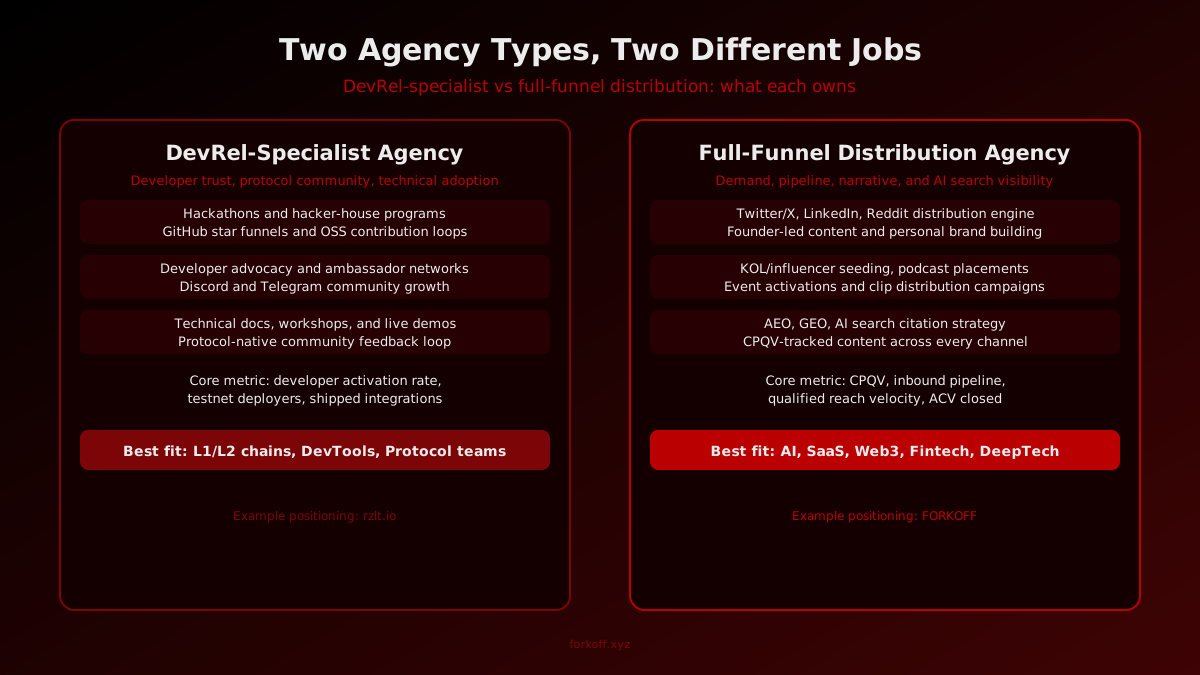
Neither agency type is a substitute for the other. A DevRel program that runs beautifully across 2,300 Discord developers and 41 shipped hackathon projects produces zero impact on a sales call with a fund manager evaluating a DeFi analytics tool. A full-funnel engine that generates 23 qualified inbound DMs from ICP-matched founders produces zero impact on a developer deciding which SDK to build their next integration on.
The agency type follows the buyer type, not the founder preference
Founders pick the wrong agency lane most often because they conflate what they want to build with who they need to reach first. A protocol team that wants an active developer ecosystem but whose first 10 paying clients were fund managers is a case where community aspiration and buyer reality diverge. The agency decision must follow the actual buyer, not the ideal product vision. Developer ecosystems and enterprise buyer pipelines both compound, but they compound on completely different channels, timescales, and success metrics. Hiring a DevRel agency to fix a pipeline problem or a full-funnel agency to fix a developer adoption problem produces the same outcome: wasted retainer on the wrong surface.
Source: FORKOFF ICP diagnostic framework, 2026
Both agencies exist in the Web3 and AI marketing space because both problems are real. RZLT positions around community-first and DevRel-adjacent marketing for crypto and Web3 protocols. FORKOFF operates in the full-funnel distribution lane for AI, SaaS, Web3, Fintech, and DeepTech founders who need pipeline. The buying question is not which agency is better. It is which problem you have right now. See the web3 marketing service overview for how FORKOFF approaches distribution in the Web3 vertical.
DevRel-specialist vs full-funnel distribution, head to head
| Dimension | DevRel-specialist agency | Full-funnel distribution agency |
|---|---|---|
| Primary buyer served | Developers who build ON the product | Non-technical buyers, enterprise, founders |
| Core output | Developer trust, integrations, community | Qualified inbound pipeline, narrative reach |
| Timeline to first signal | 3 to 6 months, flywheel at 12 to 18 months | 30 to 90 days to first qualified inbound |
| Primary metric | Developer activation rate, testnet deployers | CPQV, inbound DMs, ACV closed |
| Budget timeline fit | 18+ months runway required for full value | Works at any runway if pipeline is needed |
| Best stage | Seed to Series B, after market signal is stable | Pre-seed through Series A, any stage with pipeline need |
| Example agency | rzlt.io: DevRel-specialist positioning | FORKOFF: full-funnel distribution |
Both agency types compound. The question is which problem you have first. Source: FORKOFF advisory, 2026.
The first signal: who is your primary buyer
The agency type you need is determined by one question: does your primary buyer build on your product (developer buyer requiring DevRel) or evaluate it through a demo, case study, or founder thread (non-technical buyer requiring full-funnel distribution)? Looking at your last five closed deals and their origination channel gives you the answer faster than any agency pitch.
The decision tree starts with buyer type, not product category or founder preference.
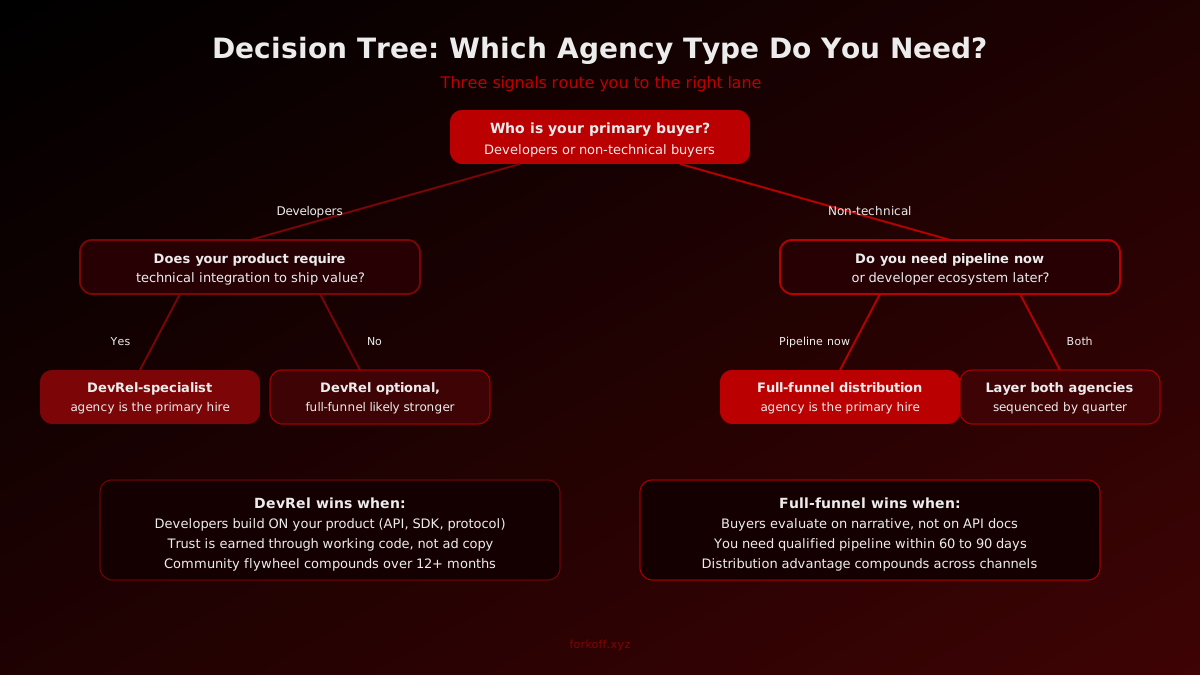
If developers must BUILD ON your product to get value from it, the developer IS the buyer. A Layer 1 blockchain needs validators and node operators. A DeFi SDK needs the engineering teams building protocols on top of it. An L2 whose core value proposition is cheap, fast transaction execution needs the developers building dApps on top. For these products, developer trust IS the adoption moat. No amount of LinkedIn content or podcast placement replaces what a hacker-house program delivers when the goal is to get 41 teams shipping integrations on your testnet.
If buyers EVALUATE your product through a demo, a pricing page, a case study, or a founder thread before deciding to pay, the buyer is not a developer in the DevRel sense. A DeFi analytics tool bought by fund managers, an AI SEO platform bought by founders, a Web3 marketing SaaS bought by CMOs, a Fintech compliance tool bought by legal teams. For these products, pipeline comes from distribution. The agency type must follow the actual buyer, not the product category.
What Is Developer Relations?
Developer Marketing Alliance
Developer Marketing Alliance walks through what developer relations actually is, clarifying the distinction between DevRel, developer marketing, and community management for founders making their first agency hire.
At FORKOFF, the ICP diagnostic we run at intake covers five questions:
- Who are the last 5 clients who signed, and what channel did they come from?
- Does your product require a developer to integrate it before the buyer sees value?
- What does your buyer evaluate during due diligence: code, docs, or demos?
- How much runway do you have, and when do you need pipeline to show up?
- Can you show us a source-traced receipt from any prior agency engagement?
The answers to these questions route every intake to the right lane before we discuss scope or pricing. The marketing foundation service is where this diagnostic starts.
Which agency type do you need? Signal matrix
| Signal | Points to DevRel | Points to full-funnel |
|---|---|---|
| Your last 5 closed deals came from | GitHub, Discord, hackathons | Twitter/X, LinkedIn, podcast, founder thread |
| Your buyer evaluates on | Code quality, API docs, developer community | Demo, case study, pricing, narrative |
| Your product requires | Developer integration to ship value | No-code or low-code to try and buy |
| Your runway is | 18+ months, ecosystem is the moat | Under 12 months, pipeline is the priority |
| Your ICP describes themselves as | Developers, engineers, protocol builders | Founders, CMOs, CTOs at non-developer companies |
Use multiple signals together. One signal pointing one direction is not sufficient. Source: FORKOFF ICP framework.
DevRel output: what a specialist agency actually delivers
A well-run DevRel program delivers developer activation metrics that full-funnel distribution cannot replicate: activated testnet deployers, shipped integrations at demo day, developer retention at 60 days, and Discord community growth. The FORKOFF first-party data from a 6-week hacker-house program for an L2 protocol shows 41 projects shipped, 2,300 new Discord developer members, and an increase of approximately 38% in weekly active testnet deployers.
A well-run DevRel program compounds in ways that paid distribution cannot replicate. The FORKOFF first-party data from a 6-week hacker-house program for an L2 protocol:
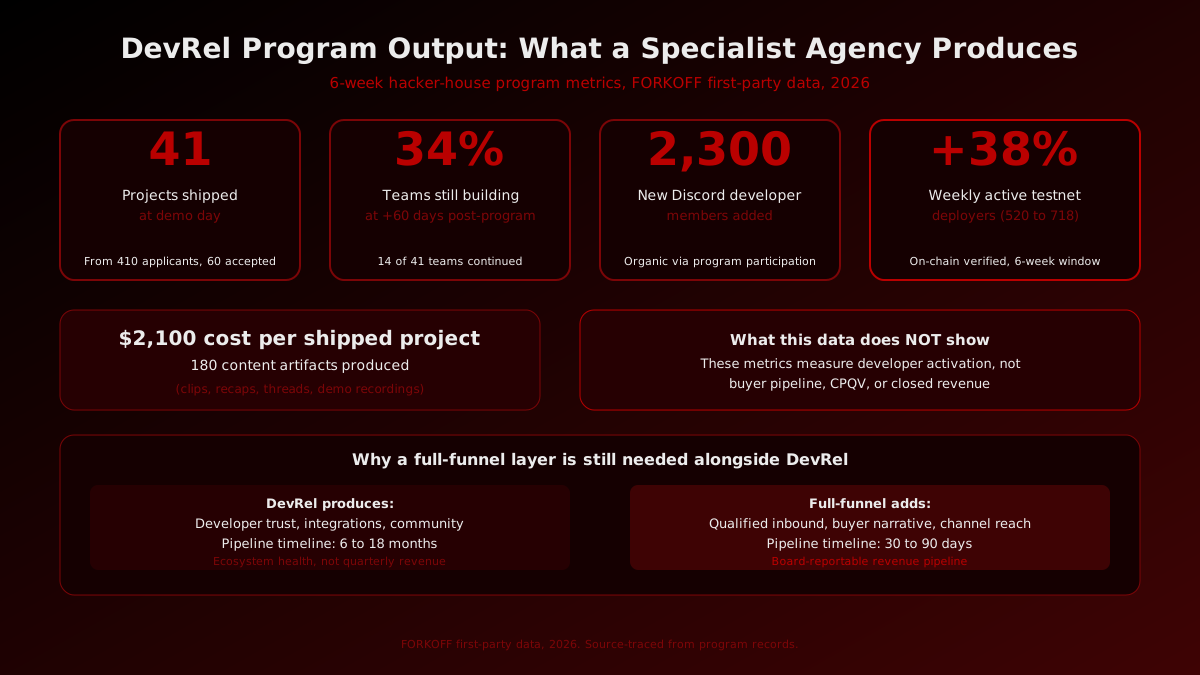
- 410 applicants, 60 accepted
- 41 projects shipped at demo day
- 14 teams (34 percent) still building at +60 days
- 2,300 new Discord developer members
- Weekly active testnet deployers up 38 percent (520 to 718, on-chain verified)
- 180 content artifacts produced (clips, recaps, threads, demo recordings)
- Approximately $2,100 cost per shipped project
These numbers are source-traced from program records. They are real. They are also explicitly NOT pipeline metrics. The hacker-house produced developer activation, not qualified enterprise buyer calls.
DevRel program output, 6-week hacker-house, FORKOFF first-party data 2026
| Metric | Result | Source |
|---|---|---|
| Applicants to accepted | 410 to 60 (7:1 selectivity) | Source-traced from application records |
| Projects shipped at demo day | 41 | Source-traced from demo day registry |
| Teams still building at +60 days | 14 (34% retention) | Source-traced, on-chain verification |
| New Discord developer members | 2,300 | Source-traced from Discord analytics |
| Weekly active testnet deployers | +38% (520 to 718) | On-chain query, Dune analytics |
| Cost per shipped project | $2,100 | Source-traced from program budget |
| Content artifacts produced | 180 (clips, recaps, threads) | Source-traced from content log |
These metrics measure developer activation, not buyer pipeline. Context: L2 protocol, 6-week structured hacker-house program. Source-traced from program records.
This is what rzlt.io's buying guide for Web3 agencies captures well: community presence and transparent process are the right evaluation criteria when the job is community health. RZLT's framework at rzlt.io/blog/how-to-choose-the-right-crypto-web3-marketing-agency applies directly to buyers in the DevRel-specialist lane. If that is your problem, that is a useful buying guide. The Developer Marketing Alliance and DevRelCon also maintain active practitioner communities where DevRel benchmarks are shared in the open.
The gap that buying guide does not cover is what to do when the problem is pipeline, not protocol community. That is the lane FORKOFF owns. For a comparison of what each lane covers in detail, see /compare/forkoff-vs-rzlt.
We stopped using gut feel to measure DevRel
A DevRel practitioner describes replacing gut-feel measurement with a quantitative model that translates DevRel activities into business outcomes, surfacing the metric gap between community health and pipeline.
RZLT and FORKOFF serve different buyer types in the same Web3 market
rzlt.io publishes a buying guide for crypto and Web3 marketing agencies that covers how to choose an agency based on portfolio, transparency, and community presence. That buying framework is useful for founders shopping DevRel-adjacent and community-first agencies. FORKOFF operates in a different lane: outcome-priced, full-funnel distribution for founders who need pipeline and AI search presence, not protocol community. Both agencies exist because both problems are real. The buying question is not which agency is better, it is which problem you have right now.
Source: rzlt.io/blog/how-to-choose-the-right-crypto-web3-marketing-agency
Full-funnel output: what a distribution agency actually delivers
CPQV is the metric full-funnel agencies track that DevRel agencies do not measure and do not need to. Cost Per Qualified View divides total content spend by the number of views that reach an ICP-matched buyer at a qualifying intent signal. It is the unit economics of distribution.
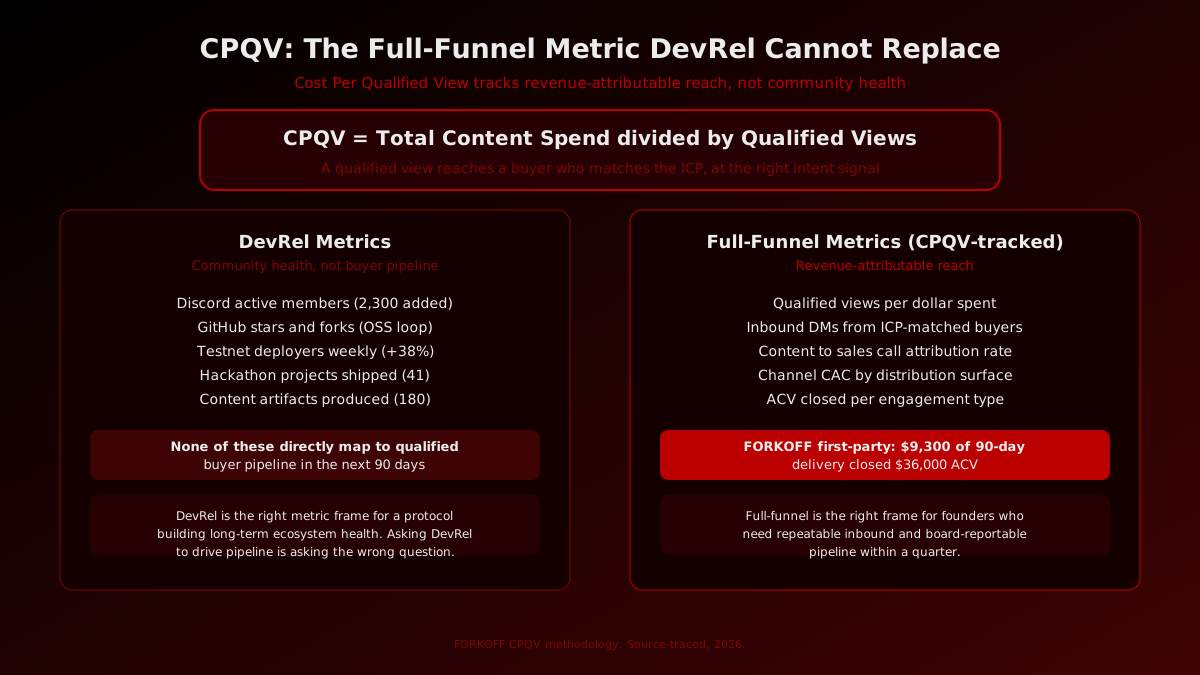
CPQV is the metric full-funnel agencies track that DevRel agencies cannot
Cost Per Qualified View is FORKOFF's core distribution metric. It divides total content spend by the number of views that reach an ICP-matched buyer at a qualifying intent signal. A DevRel agency measures developer activation rate, testnet deployers, and integration count. Those are the correct metrics for ecosystem health. Neither is the correct metric for board-reportable pipeline. When a founder asks their DevRel agency how many qualified enterprise buyers reached out last month, the agency correctly answers that this is not what DevRel measures. When a founder asks their full-funnel agency how many developers joined their Discord, the same disconnect applies. The metrics do not overlap because the jobs do not overlap.
Source: FORKOFF CPQV methodology, 2026
FORKOFF first-party data from a 90-day founder-funnel engagement, source-traced from engagement records:
- Engagement cost: approximately $9,300 total
- Founder X following: 4,200 to 11,800 (source-traced from X analytics export)
- Median post impressions: 8,400
- Qualified inbound DMs: 23 (ICP-matched buyers, logged in CRM)
- DMs to sales calls: 6 (26 percent conversion)
- Closed at ACV: approximately $36,000 (signed contract, source-traced)
- Posts delivered: 36 of 39 planned (92 percent cadence hold)
Context the receipt requires: the closed deal had full-funnel touches across 90 days. No single-touch attribution claimed. The starting audience was 4,200 X followers. A $120,000 in-house marketing hire in the same 90 days would have cost approximately $49,000 in loaded salary alone, still mid-ramp, with no pipeline produced.
Full-funnel engagement output, 90-day founder-funnel, FORKOFF first-party data 2026
| Metric | Result | Source |
|---|---|---|
| Engagement cost | $9,300 total | Source-traced engagement invoice |
| Founder X following | 4,200 to 11,800 | Source-traced from X analytics export |
| Median post impressions | 8,400 | Source-traced from X analytics |
| Qualified inbound DMs | 23 | Source-traced from CRM log |
| DMs to sales calls | 6 (26% conversion) | Source-traced from calendar records |
| Closed at ACV | $36,000 | Source-traced from signed contract |
| Posts delivered | 36 of 39 planned | Source-traced from content calendar |
Context required: closed deal had full-funnel touches; no single-touch attribution claimed. Starting audience 4,200. Source-traced from engagement records, 2026.
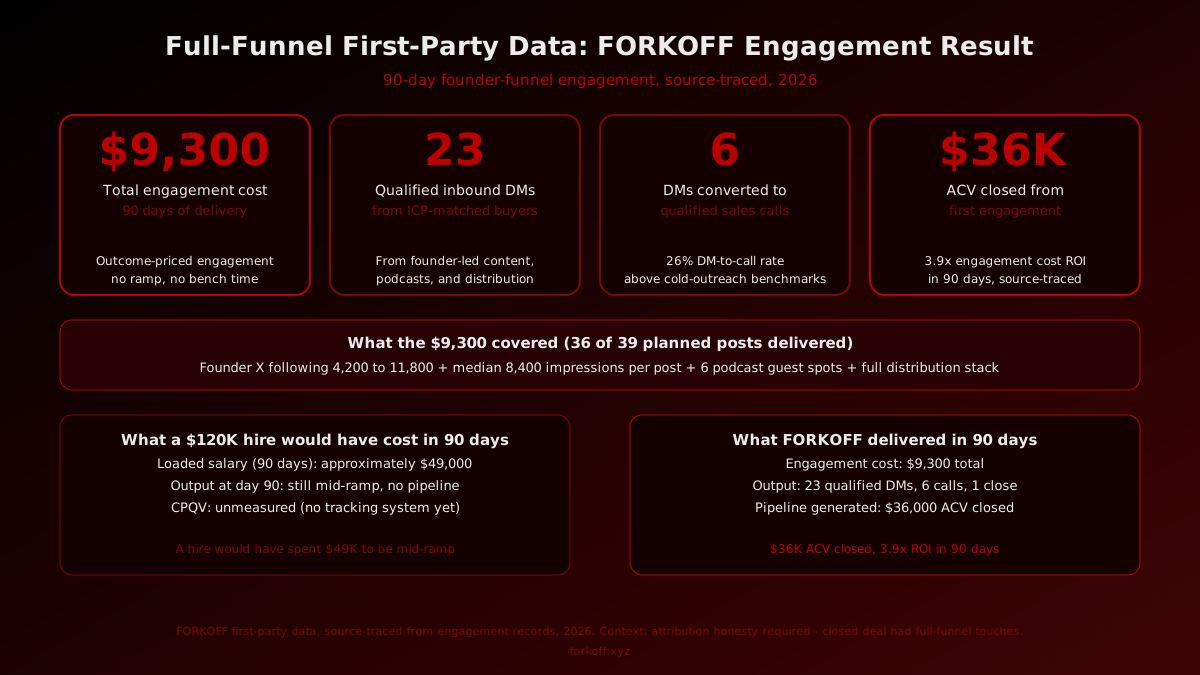
Operator note$9,300 of 90-day delivery closed $36,000 ACV. The hire equivalent burned $49,000 in salary alone mid-ramp., FORKOFF first-party engagement, source-traced, 2026
The timeline gap that makes the wrong hire company-ending
Full-funnel distribution generates first qualified inbound within 30 to 90 days. DevRel's compounding flywheel, where developers refer other developers and generate organic community content, typically kicks in at 12 to 18 months. A startup with 10 months of runway that commits budget to a DevRel program will exhaust the runway before the flywheel starts. The wrong hire at the wrong stage is not just wasteful, it is a runway calculation error.
Both agency types compound. The compound curves run on completely different timescales.
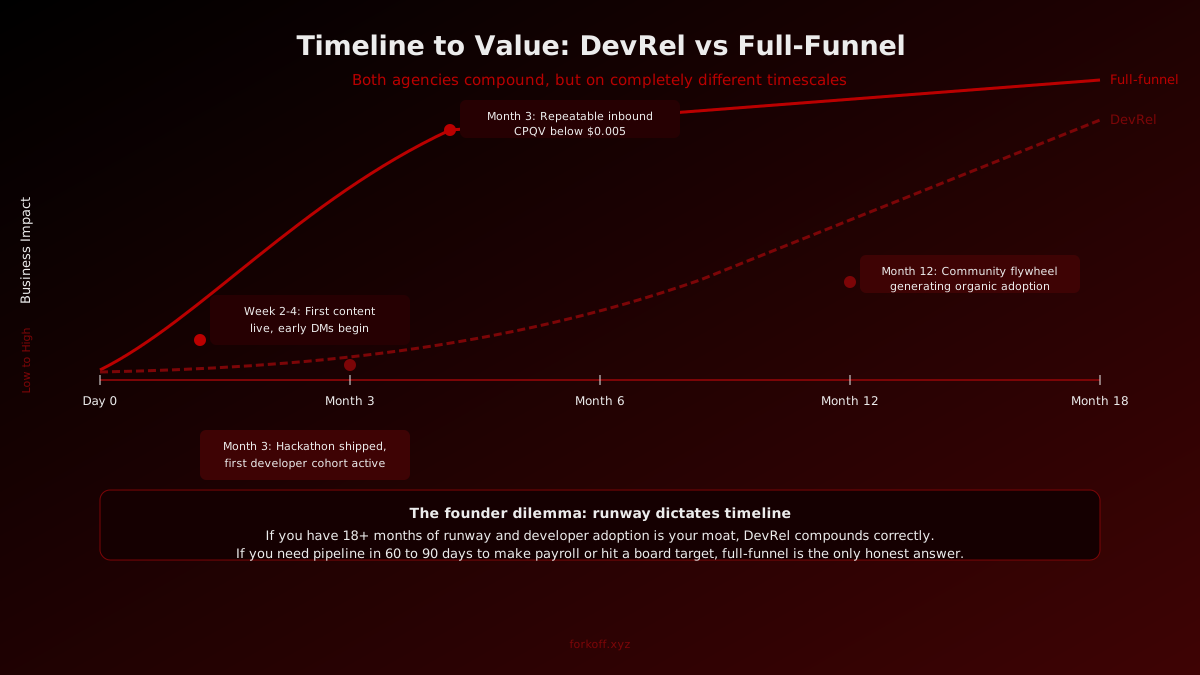
Full-funnel distribution generates first qualified inbound leads within 30 to 90 days when the content engine is running and the distribution channels are live. CPQV stabilizes and improves at 90 to 180 days as the channel mix clarifies. By month 6, a well-run full-funnel engine produces repeatable inbound at a measurable cost per qualified view. See FORKOFF's CPQV methodology for how the metric is calculated.
DevRel compounds differently. A hackathon produces developer projects at demo day, but retention at 60 days is the first real signal of stickiness. The ambassador network takes 3 to 6 months to reach critical mass. The Discord community takes 6 to 12 months to develop self-sustaining engagement. The flywheel, where developers refer other developers, share integrations, and generate organic community content, typically kicks in at 12 to 18 months. The Developer Relations Foundation 2024 practitioner report documents this timeline across hundreds of DevRel programs.
DevRel compounding takes 12 to 18 months. Most runways do not allow that
The DevRel flywheel is real. A well-run hacker-house produces shipped integrations, organic community growth, and content artifacts that compound for months after the program closes. The problem is the timeline. A developer community program typically shows meaningful ecosystem signal at 6 months and compounding flywheel behavior at 12 to 18 months. A Series A startup with 10 months of runway who needs to show pipeline traction to close a bridge will not benefit from a DevRel flywheel that peaks after they run out of money. Full-funnel distribution generates first inbound qualified leads within 30 to 90 days. That is the gap that makes the wrong hire a company-ending decision, not just a wasted quarter.
Source: Agency timeline benchmarks, FORKOFF advisory, 2026
The implication for runway is stark. A Seed-stage startup with 10 months of runway and no repeatable inbound cannot afford the DevRel timeline. If the board is asking for pipeline at the Series A in 8 months and the marketing spend is going into a DevRel program that peaks at month 14, the math does not work.
Full-funnel runs first. Once the company has pipeline and extended runway, DevRel layers on top.
Operator note12 months of runway with no pipeline: DevRel flywheel peaks after you run out of money., FORKOFF advisory intake diagnostic, 2026
Developer relations versus developer marketing: Michael Ludden
Dev Rel
Michael Ludden explains how developer relations differs from developer marketing, covering the boundary between community-building and demand generation that agency buyers most frequently confuse.
When DevRel is the wrong hire first
DevRel is the wrong first hire in three scenarios: no product-market fit yet (DevRel scales the wrong thing when developer cohorts churn above an estimated 40% at 60 days), non-technical buyer is the real ICP (a fund manager evaluating a DeFi analytics tool does not close faster because Discord has 5,000 active developers), and runway under 12 months (the DevRel flywheel peaks at month 14, which is past the Series A gate for most seed-stage companies).
Three failure patterns that cost founders 6 to 18 months:
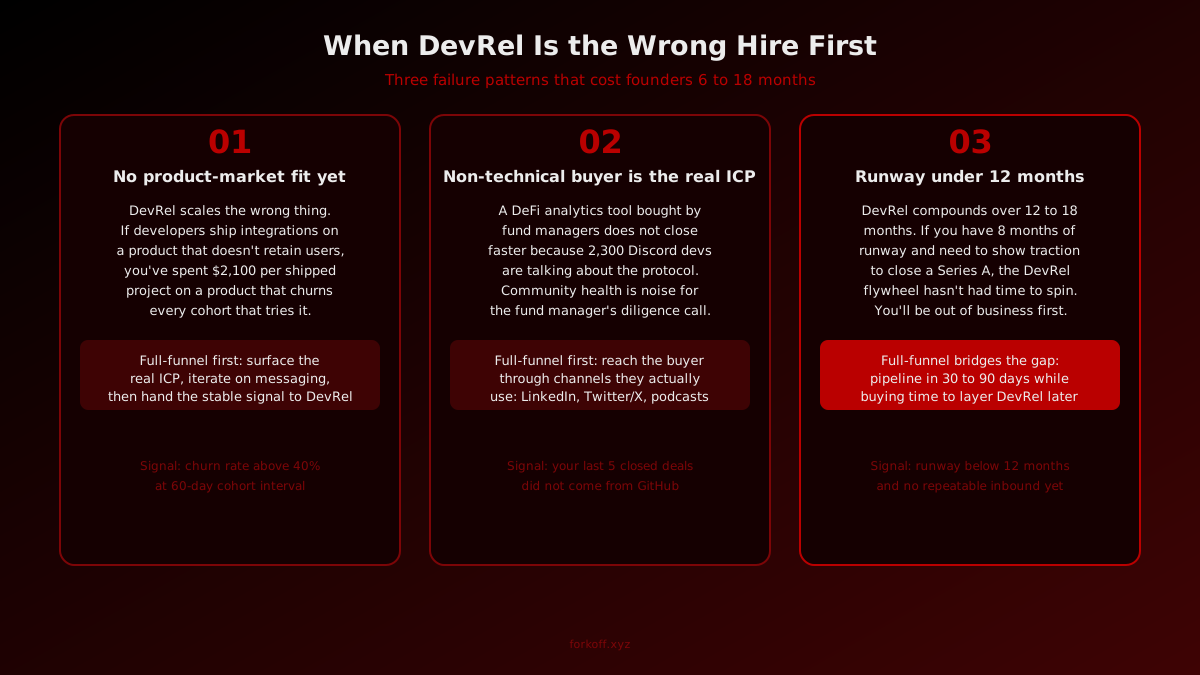
Failure 1: No product-market fit yet. DevRel scales the wrong thing when the product does not retain the developers who try it. If developer cohorts churn above 40 percent at 60 days, adding 2,300 Discord members compounds the churn problem, not the retention flywheel. Full-funnel runs first: surface the real ICP, iterate on messaging, then hand the stable signal to DevRel once retention is above threshold. See FORKOFF's ICP diagnostic for how to run this signal-stabilization exercise before committing to a DevRel program.
Failure 2: Non-technical buyer is the real ICP. A DeFi analytics tool bought by fund managers does not close faster because the Discord has 5,000 active developers. Community health is noise for the fund manager's diligence call. The signal that proves this: look at your last 5 closed deals. Did they originate from GitHub, Discord, or hackathons? If not, your actual ICP is not the developer, and DevRel is solving the wrong problem. Andreessen Horowitz's go-to-market frameworks consistently separate developer-buyer products from enterprise-buyer products in their portfolio company advice for exactly this reason; for VC-backed teams the VC portfolio GTM playbook documents how portfolio operators run the same agency-sequencing decision across a fund's companies simultaneously.
Failure 3: Runway under 12 months. DevRel compounding requires runway to live long enough for the flywheel to spin. A company with 8 months of runway that needs to show traction to close a Series A bridge needs pipeline within 60 days, not an ecosystem flywheel that peaks at month 14. Full-funnel bridges the gap and buys time to layer DevRel once the runway extends. FORKOFF's founder-funnel engagement is designed for exactly this bridge scenario.
Full-funnel before DevRel is almost always the correct sequence
The standard mistake is hiring DevRel first at Seed stage because the product is technically impressive and the founder wants developer community. The structural problem is that DevRel needs a stable ICP signal to build the right community around the right use case. That signal comes from market feedback, and market feedback comes from distribution. Full-funnel distribution, run first, surfaces which buyer type responds, which messaging resonates, and which channels carry the real ICP. Once that signal stabilizes, a DevRel program can build a community around the correct audience rather than a generic developer audience. The sequence matters because DevRel mistakes compound just as DevRel successes do.
Source: FORKOFF go-to-market sequencing playbook, 2026
How are you vetting developer influencers right now?
DevRel practitioners share how they vet developer influencers in 2026, showing the operational rigor required to run a credible DevRel program.
Operator noteFull-funnel first surfaces the ICP signal that DevRel needs to build the right community., FORKOFF go-to-market sequencing, 2026
The sequenced stack: when you need both
Products with both developer buyers and enterprise buyers need both agency types, but the sequence is non-negotiable: full-funnel runs first (quarters one and two) to establish a stable ICP signal and close the first anchor clients, then DevRel layers on top (quarters three and four) targeting the validated developer persona. Running both from day one produces a DevRel program built on an unstable signal, which compounds the wrong community.
Products with developer buyers AND enterprise buyers often need both agencies. The sequencing matters more than the allocation.
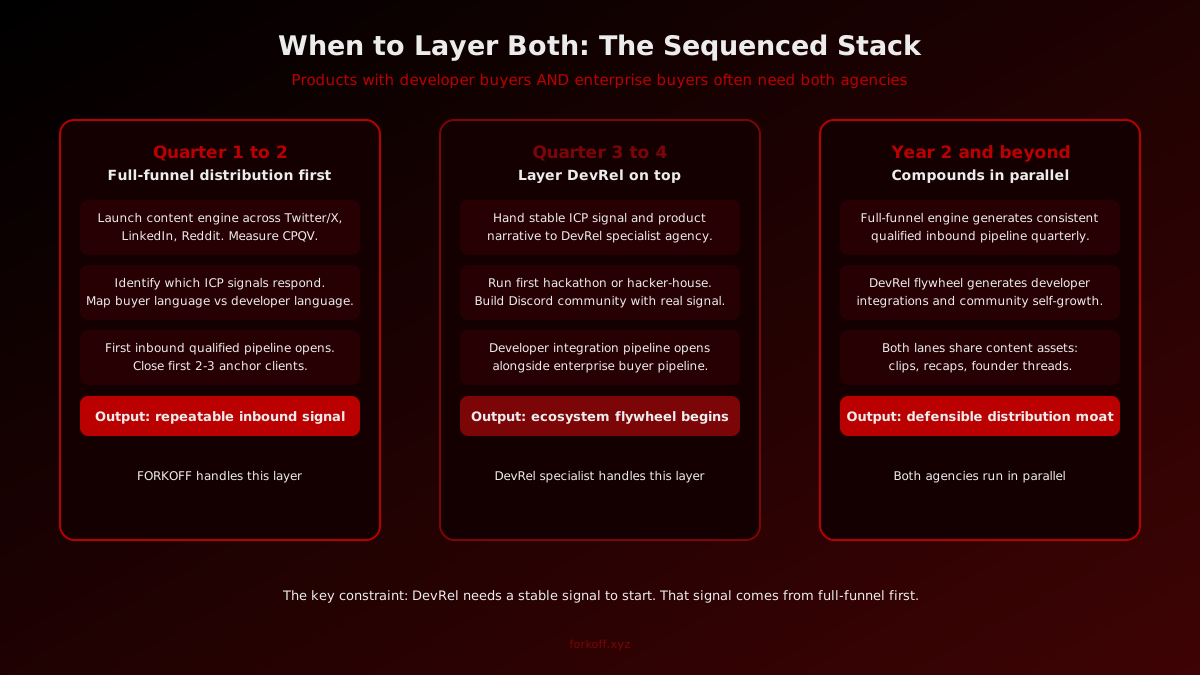
Quarter 1 to 2: Full-funnel distribution runs first. Launch the content engine across Twitter/X, LinkedIn, and Reddit. Measure CPQV. Identify which ICP signals respond. Map buyer language against developer language. Close the first 2 to 3 anchor clients. Output: a stable ICP signal and a repeatable inbound motion.
Quarter 3 to 4: Layer DevRel on top. Hand the stable ICP signal and validated product narrative to a DevRel specialist agency. Run the first hackathon or hacker-house. Build the Discord community around the correct audience, not a generic developer audience. The DevRel program builds on a foundation of validated market signal rather than guessing at which developer persona to target.
Year 2 and beyond: Both compound in parallel. The full-funnel engine generates consistent qualified inbound pipeline quarterly. The DevRel flywheel generates developer integrations and community self-growth. Both lanes share content assets: clips, recaps, founder threads, and demo day recordings. The distribution moat is harder to replicate because it operates across two distinct compounding surfaces.
Lotti Schmitt
@LottiSchmitt
Railway has 2.7 million users. Their brand name is also a common English word. Their DevRel engineer @thisismahmoud once replied to someone complaining to @railway about a 5hr train delay. The post got over 1 million impressions. That is what DevRel done right looks like.
The critical constraint in the sequenced stack: DevRel needs a stable ICP signal to start. Building community around an unstable signal produces a community for the wrong buyer. Full-funnel distribution surfaces that signal because it generates market feedback. That feedback is the input that makes the DevRel program compound correctly. First Round Capital's research on go-to-market sequencing notes that companies that stabilize ICP signal before investing in community consistently outperform those that run community and distribution in parallel from day one.
Budget split by stage
Pre-seed: Allocate 90 to 100 percent of marketing to full-funnel distribution. The goal is the first 2 to 3 paying customers and a CPQV reading below $0.01. DevRel is not yet relevant unless the product is an API or SDK with a developer buyer from day one. FORKOFF's marketing foundation service runs the ICP diagnostic and distribution setup at this stage.
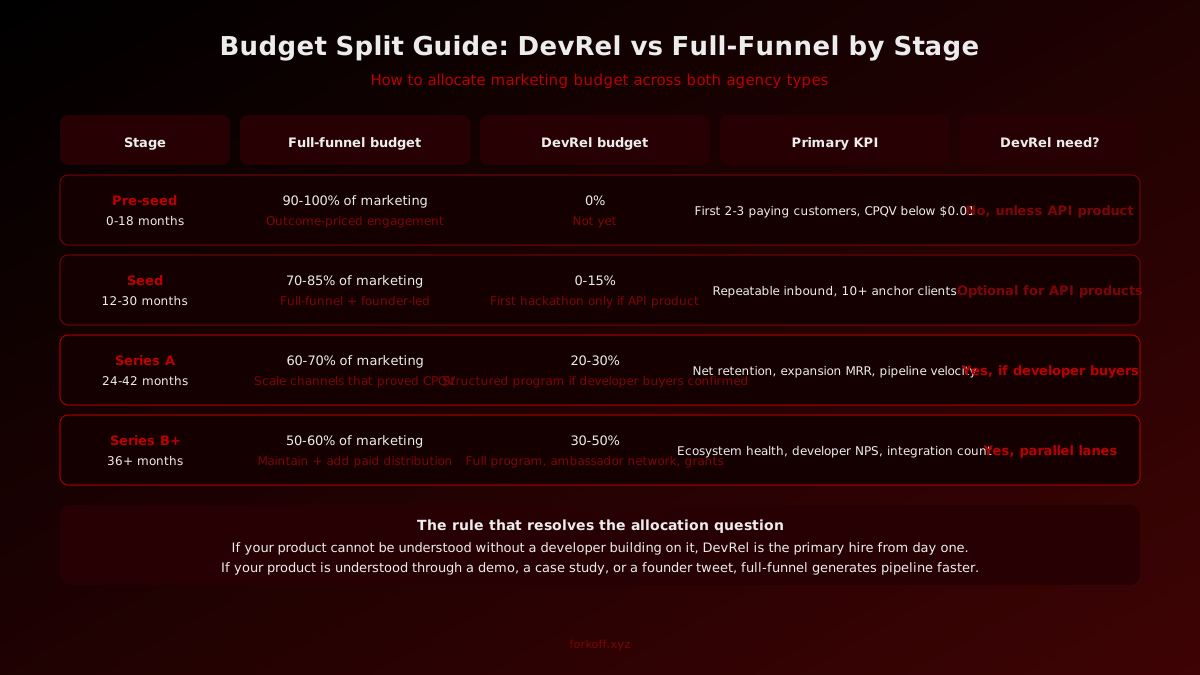
Seed: 70 to 85 percent full-funnel, 0 to 15 percent DevRel (first hackathon only if the product is an API). The primary KPI is 10 plus anchor clients and repeatable inbound. DevRel at this stage is an experiment, not a primary motion. See FORKOFF's SaaS GTM research for what repeatable inbound looks like at Seed stage.
Series A: 60 to 70 percent full-funnel (scale channels that proved CPQV), 20 to 30 percent DevRel (structured program if developer buyers are confirmed in the ICP). Primary KPI is net retention, expansion MRR, and pipeline velocity.
Series B and beyond: 50 to 60 percent full-funnel (maintain and add paid distribution), 30 to 50 percent DevRel (full program, ambassador network, grants). Both lanes run in parallel. The ecosystem health metric and the pipeline metric are separate and both matter. The FORKOFF ecosystem overview covers how full-funnel distribution fits within a larger growth OS at Series B.
The allocation rule that resolves the decision: if your product cannot be understood without a developer building on it, DevRel is the primary hire from day one. If your product is understood through a demo, a case study, or a founder tweet, full-funnel generates pipeline faster.
wwardenn
@wwardenn
Reddit is the most underused channel in Web3 marketing right now. 56 percent male 18-49, technical audience, votes decide what surfaces, no algo hacks, no paid reach. Quality wins or you disappear.
The part of this job nobody warned me about
A DevRel professional describes the internal advocacy work nobody warned them about, the gap between community success metrics and what executives understand as business impact.
What a DevRel agency brief looks like versus a full-funnel brief
Before you write the check, you should be able to read the brief that comes back from each agency type. The vocabulary, success metrics, and deliverable structure are completely different between DevRel-specialist and full-funnel. If the brief from the agency you are evaluating does not match your problem, the engagement will not match your results.
A DevRel-specialist agency brief covers:
The opening section of a DevRel brief defines the developer persona first, before any tactic. Which developers: protocol integrators, SDK builders, dApp developers, validator operators? The ICP at the developer level is more specific than the buyer-level ICP a full-funnel agency works with. A DevRel brief then sequences the activation ladder: how does an unaware developer move from discovery to their first commit to a shipped integration to a public testimonial or demo-day presentation? Each step has a distinct touchpoint: documentation, Discord onboarding, a hacker-house invitation, ambassador pairing, or a grant.
The deliverables in a DevRel brief are typically structured around a 6-to-12-week program: application and selection process for a hacker-house, weekly office hours, technical mentorship sessions, demo-day coordination, and content artifact production from the sessions (clips, written recaps, workshop recordings). Success metrics in the brief are developer-side: activated developers as a percentage of onboarded, projects shipped at demo day, retention at 30 and 60 days, Discord member growth, and weekly active testnet deployers. A well-written DevRel brief includes on-chain verification methodology for any blockchain-native metrics. A brief that does not specify on-chain verification is self-reporting, which is not verifiable.
A full-funnel distribution agency brief covers:
A full-funnel brief opens with the ICP stack: which buyer titles, in which company size range, at which funding stage, consuming which content formats, on which channels. FORKOFF's ICP diagnostic produces a 3-tier stack (primary, secondary, tertiary) with channel mapping for each tier. The brief then maps the distribution engine: founder-led content (Twitter/X threads, LinkedIn posts), podcast placements (as guest and programmatic mentions), Reddit distribution (subreddit selection, post format, engagement strategy), event activations (conference appearances, side-event hosting), KOL seeding, and AI search visibility (AEO and GEO for AI citation at the query layer).
The deliverables in a full-funnel brief are content-cadence-oriented: posts per week, podcast placements per month, distribution surfaces per content asset. The success metrics are CPQV, inbound DMs per week from ICP-matched accounts, DM-to-call conversion rate, and ACV pipeline opened per month. A well-written full-funnel brief specifies the attribution model: how does the agency distinguish ICP-matched inbound from cold outreach noise? How does the CPQV ledger account for organic versus seeded distribution? A brief that reports impressions and follower growth without CPQV is a vanity-metrics brief. The receipt is not the post count. The receipt is the qualified inbound.
The hybrid brief: what it looks like when both agencies run in parallel
A company running both agencies needs a shared brief layer that covers channel arbitrage and content asset recycling. A hacker-house demo day produces video clips, written project summaries, and developer testimonials. Those assets feed directly into the full-funnel content engine: the founder threads the best demo moment, the podcast hosts the winning builder, the Reddit post surfaces the most interesting technical use case. The DevRel agency produces the assets; the full-funnel agency distributes them. The shared brief specifies who owns what, what turnaround time looks like for recycled assets, and how the combined CPQV calculation handles content that originated in DevRel channels but was distributed through full-funnel surfaces. Without a shared brief layer, both agencies optimize independently and the recycling arbitrage is lost.
How to evaluate any agency before signing
Before signing with any agency, run five questions: who is your primary buyer (developer or non-technical), what do your last five closed deals have in common as the origination channel, how much runway do you have and when do you need pipeline, does the agency track CPQV or just impressions, and can the agency show a source-traced receipt from a real engagement. Any agency that cannot answer all five is asking you to bet on narrative over data.
The 5-question buying checklist applies regardless of which agency type you are evaluating:
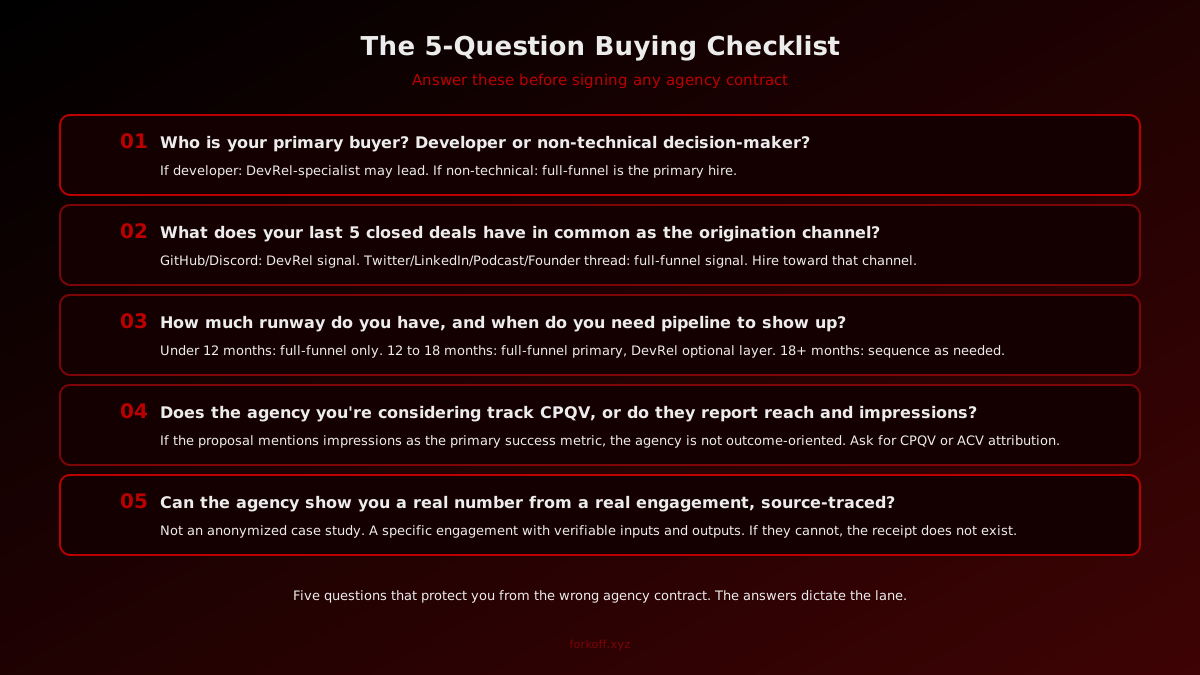
Question 1: Who is your primary buyer? Developer or non-technical decision-maker? The answer routes you to the correct agency type. If the agency you are evaluating cannot clearly describe which buyer type they serve, they have not solved the buyer-agency alignment problem.
Question 2: What does your last 5 closed deals have in common as the origination channel? GitHub and Discord point to DevRel. Twitter, LinkedIn, podcast, and founder thread point to full-funnel. Hire toward the channel that already closes deals for you.
Question 3: How much runway do you have, and when do you need pipeline? Under 12 months: full-funnel only. 12 to 18 months: full-funnel primary with DevRel optional. 18 plus months: sequence as needed.
Question 4: Does the agency track CPQV, or do they report reach and impressions? If the success metrics in the proposal are impressions or reach, the agency is not outcome-oriented. Ask for CPQV or ACV attribution methodology before signing.
Question 5: Can the agency show you a real number from a real engagement, source-traced? Not an anonymized case study. A specific engagement with verifiable inputs and outputs. If they cannot, the receipt does not exist.
Apoorv Sharma
@apoorvshrm
Last month, a client we had worked hard for cancelled the engagement. The Slack message I sent to my team afterward is below.
The Agency Business Model
Alex Hormozi
Alex Hormozi breaks down the agency business model, explaining how agencies should structure accountability and what the receipt for real outcomes looks like from the buyer side.
Operator noteAt $0.003 CPQV across 3,085 clips, full-funnel math breaks when you ledger qualified views instead of impressions., FORKOFF CPQV audit, 2026
At FORKOFF, every engagement includes a CPQV ledger. Every number in our first-party data is source-traced. The hacker-house data traces to application records, demo-day registries, on-chain queries, and Discord analytics exports. The founder-funnel engagement data traces to X analytics exports (via FORKOFF first-party X data), CRM logs, calendar records, and a signed contract. This is what a source-traced receipt looks like. Any agency that asks you to trust the outcome without showing you the trail is asking you to bet on the narrative.
The comparison you actually need to make
The comparison that actually predicts engagement results is not portfolio size or retainer pricing: it is whether the agency's playbook matches the problem you have. A DevRel specialist optimized for hacker-house programs is wrong for a SaaS CMO ICP. A full-funnel distribution agency with CPQV receipts is wrong for a developer who needs to build an integration before understanding the product's value. The incentive structure of the engagement (scope-based versus outcome-priced) determines how the agency behaves when the plan meets reality.
Most founders shopping between agency types compare portfolios, retainer pricing, and team size. The comparison that actually predicts whether the engagement generates results is: does the agency's playbook match the problem you actually have?
A DevRel specialist who is excellent at hacker-house programs and ambassador networks is the wrong hire if your ICP is a SaaS CMO who evaluates through a demo. A full-funnel distribution agency with proven CPQV receipts is the wrong hire if your ICP is a developer who needs to build an integration before they understand the product's value.
The agency type follows the buyer type. The buyer type comes from looking at your last 5 closed deals, not from what you wish your ICP was.
The deeper comparison that founders skip is the incentive structure. A retainer agency, whether DevRel-specialist or full-funnel, is paid for scope delivery. They produce the agreed deliverables regardless of whether those deliverables move the metric that matters to the founder. The 6-week hacker-house runs, the projects ship, the Discord grows. The founder asks "did we close any enterprise deals?" and the DevRel agency correctly notes that enterprise deals are not what they measure. The full-funnel agency delivers 40 posts, 6 podcast placements, and 3 Reddit threads. The founder asks "where are the qualified inbound leads?" and the full-funnel agency notes that reach and impressions were delivered as scoped.
Outcome-priced engagements break this pattern because the agency's fee is tied to the delivered result, not the delivered scope. CPQV-pricing means the full-funnel agency only gets paid well when the distribution actually reaches ICP-matched buyers at qualifying intent signals. The incentive is aligned with the founder outcome, not the deliverable count.
When evaluating any agency brief, run the incentive test: if the agency delivered exactly what the brief specifies and the metric you care about (pipeline, developer adoption, inbound) did not move, what happens? In a scope-based retainer, the agency has met their obligation and the founder absorbs the miss. In an outcome-priced engagement, the agency's return is tied to whether the outcome moved. The incentive test predicts how the engagement resolves when the plan meets reality.
RZLT's buying guide at rzlt.io/blog/how-to-choose-the-right-crypto-web3-marketing-agency is a useful framework if community-first and DevRel-adjacent agencies are the right lane for your buyer type. If your problem is pipeline, AI search visibility, or full-funnel distribution for a non-developer ICP, that is FORKOFF's lane and the /compare/forkoff-vs-rzlt comparison covers the distinction directly.
Developer relations is not marketing. Marketing converts existing demand. DevRel creates the conditions where developers want to build on your platform in the first place.
Railway has 2.7 million users. Their brand name is also a common English word. Their DevRel engineer @thisismahmoud once replied to someone complaining to @railway about a 5hr train delay. The post got over 1 million impressions. That is what DevRel done right looks like.
Both agencies are useful. The question is which one you need first, and the answer comes from your buyer, not your product vision.
Operator note410 applicants to 60 accepted: DevRel selectivity is a quality signal, not a reach signal., FORKOFF hacker-house program records, 2026
Reddit is the most underused channel in Web3 marketing right now. 56 percent male 18-49, technical audience, votes decide what surfaces, no algo hacks, no paid reach. Quality wins or you disappear.
What to do before you book any agency call
Before booking any agency call, run the 5-question checklist: buyer type, origination channel of your last five closed deals, runway and pipeline timeline, whether the agency tracks CPQV, and whether they can show a source-traced receipt. The answers tell you whether you need DevRel, full-funnel, or the sequenced stack, before you spend a dollar on scoping calls or review a retainer proposal.
Run the 5-question checklist from the previous section. The answers should tell you whether you need DevRel, full-funnel, or the sequenced stack.
Then ask any agency you are evaluating for a source-traced receipt from a recent engagement. A DevRel agency should be able to show you developer activation rate, project retention at 60 days, and community growth numbers tied to specific programs. A full-funnel agency should be able to show you CPQV, inbound-to-close attribution, and ACV closed from a specific engagement.
If the receipt is not available, that is the answer.
FORKOFF's receipts are above. The hacker-house data is source-traced to program records. The founder-funnel engagement data is source-traced to CRM logs, X analytics exports, and a signed contract. You can evaluate both before reaching out.
If the receipt matches what you need, the /services/founder-funnel page covers what an outcome-priced full-funnel engagement includes and the application process. If you need the ICP diagnostic first, /services/marketing-foundation is the starting point.
The final rule: do not let the wrong agency compound in the wrong direction. DevRel mistakes compound just as DevRel successes do. A community built around the wrong developer persona takes 12 months to unwind. A retainer spent on distribution channels that do not reach your actual ICP costs you more than the retainer fee. The 5-question checklist, run before you sign, is the cheapest insurance you have against either failure mode.


![How to Make a Launch Go Viral on X: The 5-Lever Playbook [2026]](/blog/covers/how-to-make-launch-go-viral-on-x-2026-cover.jpg)