OpusClip is a browser-based AI clipping tool. The category it defines is the long-form-to-vertical-shorts pipeline run by a single operator on a flat tool budget. A podcaster uploads a 90-minute episode, OpusClip's AI scans the audio and video for high-engagement beats, surfaces 20-30 candidate clips ranked by predicted virality, and the operator picks, captions, and exports vertical short-form to TikTok, Reels, Shorts, and X.
TL;DR verdict
OpusClip is the strongest browser-based AI clipping tool in the category for podcast, webinar, and livestream long-form-to-shorts workflows. Clip-selection AI surfaces high-engagement beats from 60-90 minute sources, auto-reframe and 20+ language captions ship in the base product, and Pro annual lands at $14.50/month equivalent ($174 upfront) for 3,600 credits per year. Where it stops working is the brand-side outcome lane. Clips ship as-is with no qualification on watch-time, geo, policy, or traffic validity. AI B-roll burns 4-6 credits per branded clip with no in-app warning. Solo clippers and in-house teams pick OpusClip. Brands buying qualified views with a per-view audit ledger sit in a different lane.
The category surface is wider than the AI clipping label suggests. OpusClip ships clip selection, auto-reframe (face-tracking on the vertical crop), animated captions in 20+ languages, AI B-roll insertion on Pro tier, hook polishing, social scheduling, and editor exports to Adobe Premiere and DaVinci Resolve. The intent is to compress the editor-pipeline workflow into a single browser tab so a clipper can ship 5-10 clips from one source in under an hour.
OpusClip is built for the operator who wants to drive their own editorial pipeline. The AI surfaces candidates. The operator picks. The tool does not run the campaign, brief the show, or qualify the views that watch the clips. That is by design: it is software, not a service. The lane it owns is the in-house clipper or the small agency operating multi-show schedules with clear editorial direction.
About these numbers
Pricing tiers and credit limits in this post are drawn from published OpusClip pricing, captured 2026-05-07 (verify at source before purchase). Engagement rate benchmarks and clip performance figures are sourced from FORKOFF operator observations across managed clipping engagements using OpusClip. All figures are directional estimates; individual results vary by content type, niche, and operator skill.
How much does OpusClip cost?
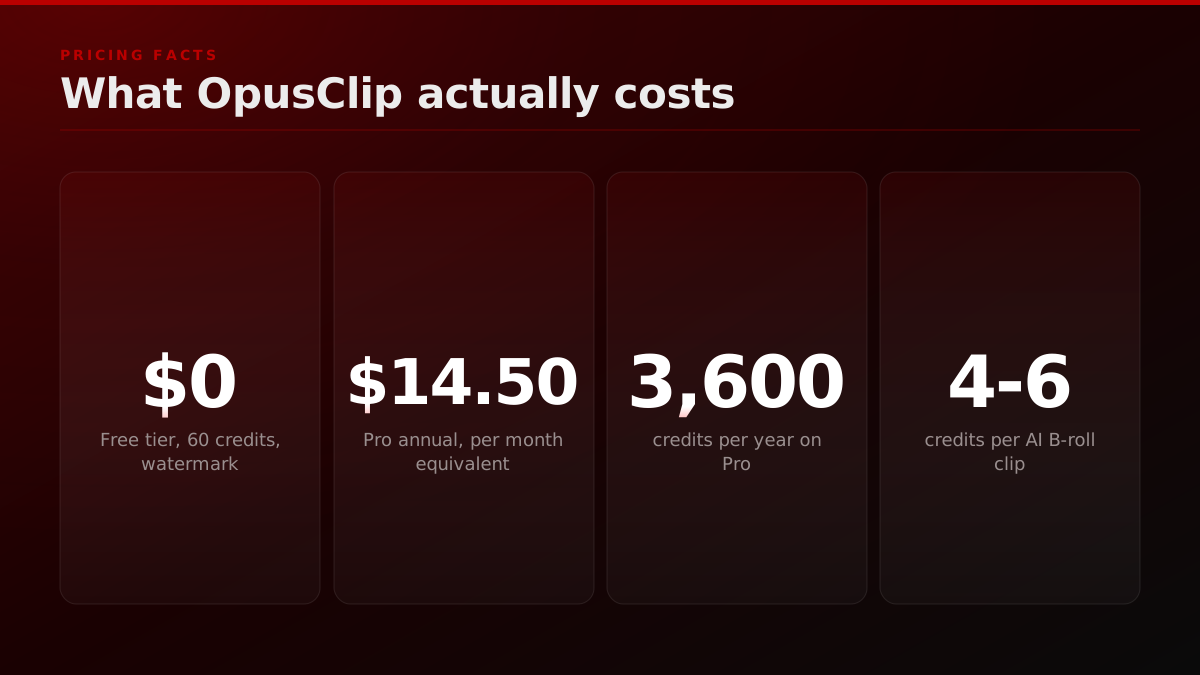
OpusClip operates on a tiered subscription with credit caps that run from a free 60-credit tier up to a custom Business plan. The full pricing breakdown lives at /blog/clipping/opusclip-review-deep-dive. The operating constraint is the monthly credit ceiling, not the seat license, because AI B-roll clips burn 4 to 6 credits each against a flat headline count. Core verified rates (verify on source · 2026-05-07):
- Free: $0 · 60 credits per month · watermark on exports · 3-day export window (opus.pro)
- Starter: $15/month · 150 credits · watermark removed · standard captions
- Pro monthly: $29/month · 300 credits/month · two seats · AI B-roll · editor exports to Premiere and DaVinci · brand templates
- Pro annual: $14.50/month equivalent · $174 upfront once · 3,600 credits per year · same Pro feature set (opus.pro)
- Business: custom · API access · team workspace · enterprise SSO · dedicated support
OpusClip 2026 tier and credit breakdown (verify on source)
| Tier | Price | Credits | Notable limit |
|---|---|---|---|
| Free | $0/month | 60 per month | Watermark on exports, 3-day export window |
| Starter | $15/month | 150 per month | Watermark removed, monthly billing only |
| Pro monthly | $29/month | 300 per month | Two seats, AI B-roll, editor exports |
| Pro annual | $14.50/month equivalent ($174 upfront once) | 3,600 per year | Same Pro feature set, 12-month commitment |
| Business | Custom | Custom | API access, SSO, dedicated support |
Tiers and credits as listed on opus.pro, captured 2026-05-07. A standard 60-second clip without B-roll spends 1 credit, AI B-roll spends 4 to 6. Verify at source before purchase.
The credit ceiling is the operating constraint, not the seat license. A standard 60-second clip without B-roll consumes 1 credit. A clip with AI B-roll consumes 4-6 credits depending on insertion density and source length. A clip with voice clone or generative reframe consumes more. Pro annual at 3,600 credits per year is the modal selection across review aggregates because the credit math works out to 300/month equivalent at the better rate, with Pro monthly priced as the convenience tier for buyers who refuse upfront billing.
Pro annual is competitively priced against Submagic Pro yearly at $23/month per member and Captions Max at $24.99 monthly. The lane it competes in is the per-seat per-credit subscription lane. The lane it does not compete in is the qualified-view denominator lane where pricing is denominated in views passing a brand-side filter rather than in credits passing through a tool.
Operator noteThe first number we correct for every client: AI B-roll burns 4 to 6 credits per clip, not the headline 1 on the pricing page., FORKOFF Clipping ops
Feature breakdown
OpusClip's feature set is built around the long-form-to-shorts pipeline: AI clip selection, face-tracking auto-reframe, animated captions in 20+ languages, AI B-roll on Pro tier, hook polishing, social scheduling, and editor exports to Premiere and DaVinci. The layer it does not ship is qualification, so whether a clipped view passes watch-time, geo, and bot filters is out of scope.
For source-platform capture before any AI tool touches it, the Twitch clipping how-to covers the manual + API paths that produce the cleanest input footage.
Scale on the tool axis, silence on the outcome axis
OpusClip publishes two numbers on its homepage that explain why it owns the DIY clipping category: 16 million creators and businesses on the platform and 97 percent caption accuracy out of the box. Both are real and both are earned on the tool axis. The number OpusClip does not publish is a per-view qualification rate, because the tool ships the clip and stops at the export. A brand buying qualified views reads the same two numbers and still carries the watch-time, geo, policy, and traffic-validity checks on its own side of the ledger. Scale on the production layer is a different thing from accountability on the outcome layer.
Source: OpusClip homepage self-reported metrics (opus.pro), verified 2026-07-23
The feature set is built around the long-form-to-shorts pipeline. AI clip selection scans audio for hooks, narrative arcs, and high-engagement beats and ranks candidate clips by predicted virality. Auto-reframe applies face-tracking on the vertical crop with adjustable framing windows. Animated captions ship with brand-customisable templates and 20+ language coverage out of the box. AI B-roll inserts contextual stock footage and motion graphics on Pro tier. Hook polishing rewrites the opening 3 seconds of every clip with platform-specific framing.
Workflow features include team workspace on Pro for collaborative review, brand templates for caption styling consistency across batches, social scheduling for direct publish to TikTok and YouTube Shorts, and editor exports to Adobe Premiere and DaVinci Resolve for clippers who want to finish in their existing pipeline rather than ship from the tool.
Where the feature set thins is the qualification layer. OpusClip ships the clip. Whether the view that watched it qualifies on watch-time (was it a 30-second watch or a sub-1-second swipe?), geo (was it the US iPhone audience the brand paid to reach or a botted geo-spoofed account?), policy (does the clip meet platform safety and brand-safety guidelines?), or traffic validity (is the view from a real user or a bot impression?), is out of scope. Brands buying outcomes carry the qualification cost separately. That is the line where the lane shifts.
Pros
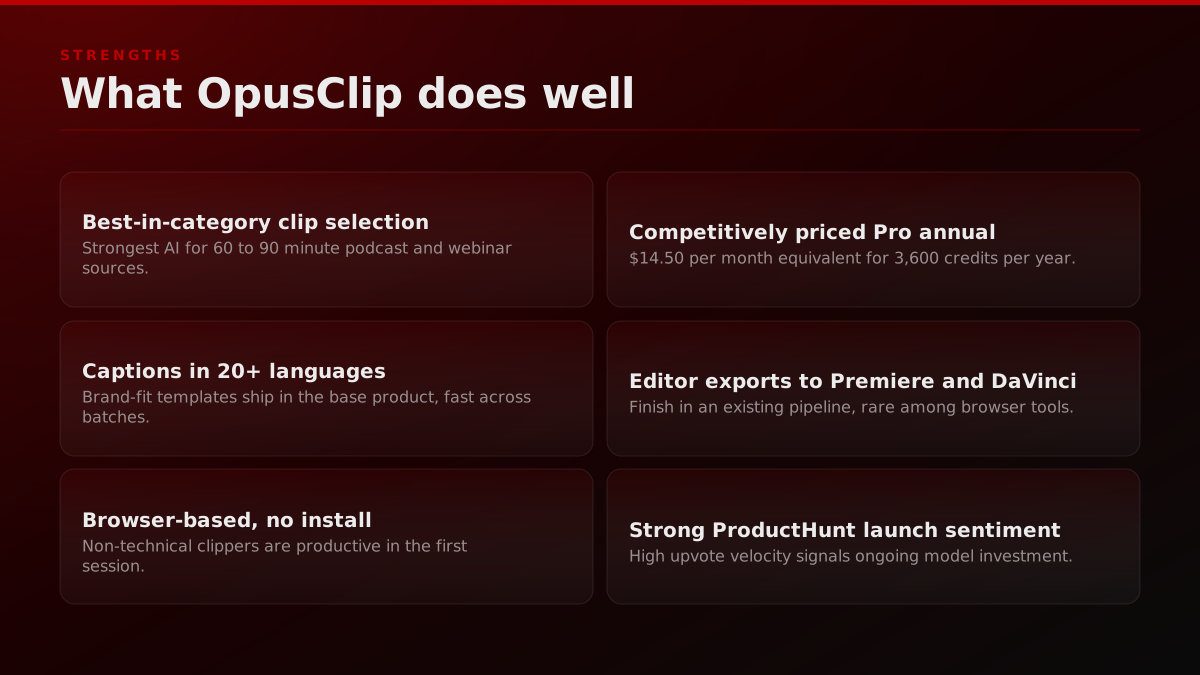
Best-in-category clip selection AI for long-form sources. OpusClip's clip-selection AI is the strongest in the category for podcast and webinar long-form. Reviews praise the auto-reframe quality and the AI's ability to flag candidate beats from a 60-90 minute source without manual scrubbing. The time-saved-per-source metric is the single largest review-cited benefit and it compounds across multi-show schedules.
Animated captions in 20+ languages with brand-fit templates. Built-in multi-language captioning with brand-customisable templates is a clear strength. Reviews call out time saved versus sourcing a separate captioning tool. The caption styling library is deep and the brand-fit application is fast across batches.
Browser-based with no install or pipeline setup. Workflow is fully browser-based. Reviews highlight friction-free onboarding for non-technical clippers and the team workspace on Pro for collaborative review. New operators are productive within the first session, which lowers the operating cost of adding seats to a clipping team.
Pro annual is competitively priced for the seat-and-credits lane. $14.50/month equivalent ($174 upfront once) for 3,600 credits per year is competitive against Submagic Pro at $23/month yearly per member and Captions Max at $24.99 monthly. Pro annual is the modal selection across review aggregates because the credit math lands cleaner than Starter for any clipper shipping more than 60 credits per month.
Editor exports to Premiere and DaVinci. Pro tier ships exports to Adobe Premiere and DaVinci Resolve project files. Clippers who finish in their existing pipeline rather than shipping straight from the tool gain workflow flexibility. This is a feature most browser-based tools do not ship.
Strong product-launch sentiment on ProductHunt. OpusClip has shipped strong launches with high upvote velocity and positive launch-day commentary. The product surface signals platform health and ongoing investment in the clip-selection model.
Cons
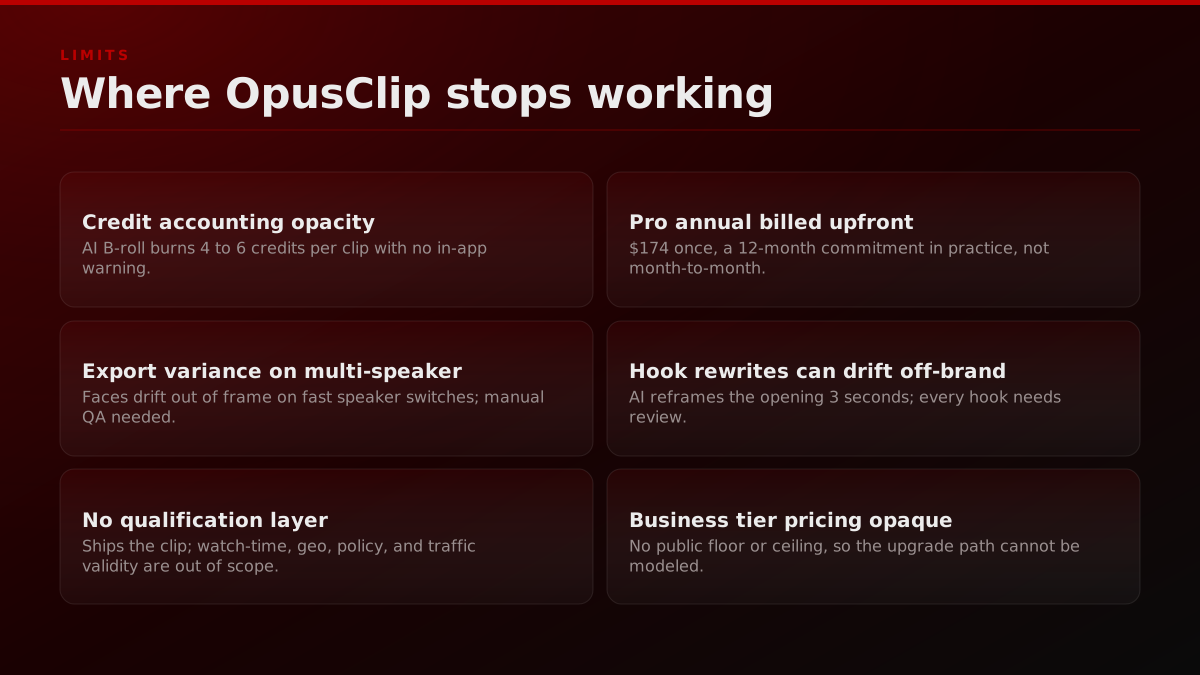
Credit accounting opacity with mid-month surprises. AI B-roll consumes credits at multipliers. A single 60-second branded clip can burn 4-6 credits instead of 1. Reviews flag credit-wall surprises mid-month with no clear in-app warning until the cap hits. Operators who model their workflow on the headline credit count are surprised when the actual credit-burn lands 3-4x the headline.
Export quality variance on multi-speaker formats. Multiple reviews flag inconsistent export quality on aggressive auto-reframe. Faces drift outside the vertical frame on multi-speaker podcast formats where the active speaker switches rapidly. Manual QA is needed on every export, which contradicts the time-saved promise on B-roll-heavy clips.
No qualification layer on outputs. OpusClip ships the clip. Whether the view that watched it qualifies on watch-time, geo, policy, or traffic validity is out of scope. Brands buying outcomes carry the qualification cost separately. This is the structural lane gap that every brand-side reviewer flags.
Pro annual billing is upfront, not monthly. The $14.50/month rate is billed $174 upfront once, not month-to-month. Reviews flag this as a friction point for teams used to per-seat monthly billing. Cancellation mid-year forfeits the annual price break, which means the annual tier is a 12-month commitment in practice rather than the price-anchor framing the pricing page suggests.
Hook polishing rewrites can drift off-brand. Reviews note that the AI hook-polishing feature rewrites the opening 3 seconds with platform-fit framing that occasionally drifts off the brand voice or the source intent. Manual review is needed on every hook and the time-saved promise weakens on brand-sensitive content.
Business tier pricing is opaque on the public page. Business tier is custom-priced with no public floor or ceiling. Reviews flag this as a comparability gap when teams are evaluating against tier-priced alternatives. The buyer cannot model the upgrade path before contacting sales.
Hridoy Rehman
@hridoyreh
3. Free Online Tools My developer built 10 free tools. 3 reasons to make simple free tools: • Get consistent traffic • Get high-quality backlinks • Increase user session time Even AI can't reduce clicks on tools.
What do real OpusClip users say?
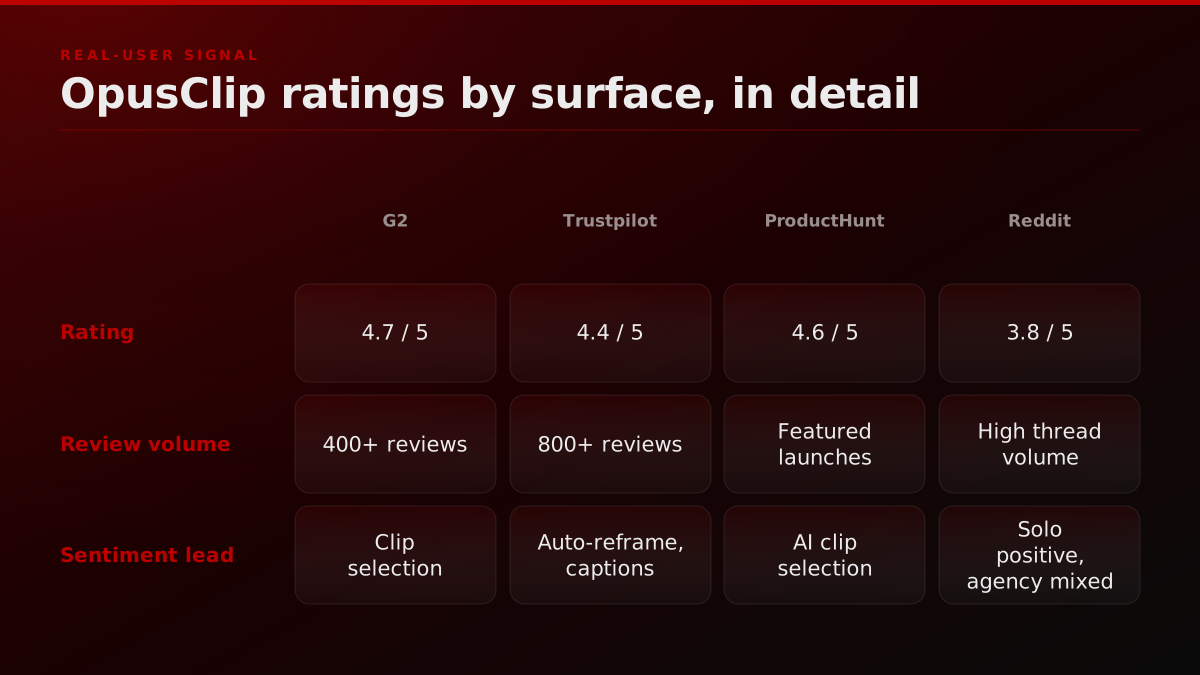
The public review signal on OpusClip skews positive on G2, where solo creators and small in-house teams rate the clip-selection AI highly, and negative on Trustpilot, where billing and credit-cap complaints surface first. Reddit threads in r/Entrepreneur carry the most useful read for multi-clipper team economics. The figures below are pulled from public review aggregates, so verify every number on source · 2026-05-07.
Tired of getting 30 clips from Opus Clip and only using 2 of them
I’ve been using Opus Clip for a few months on my youtube videos. So I end up spending around 40 minutes going through them, and in the end I only post 1 or 2, or maximum 4. Most of them either feel generic, start in the middle of a thought,… Show more
Opus Clip & all other "Viral" Clip AI Tools -- Happy with any?
Hey all, I’m finding that the AI tools like Opus Clip are cool at what they do, but that they’re not pulling the clips that I believe would shine well, or the clips are incomplete, etc. Am I too picky or is anyone else feeling underwhelmed? Or, are there better… Show more
OpusClip Review - 2026 | Can This AI Actually Find Viral Moments? (Full Test)
Daniel | Tech & Data
An independent full-test review of whether OpusClip's AI actually surfaces the viral moments in a long-form source, the clip-selection-quality question this review measures on the tool axis.
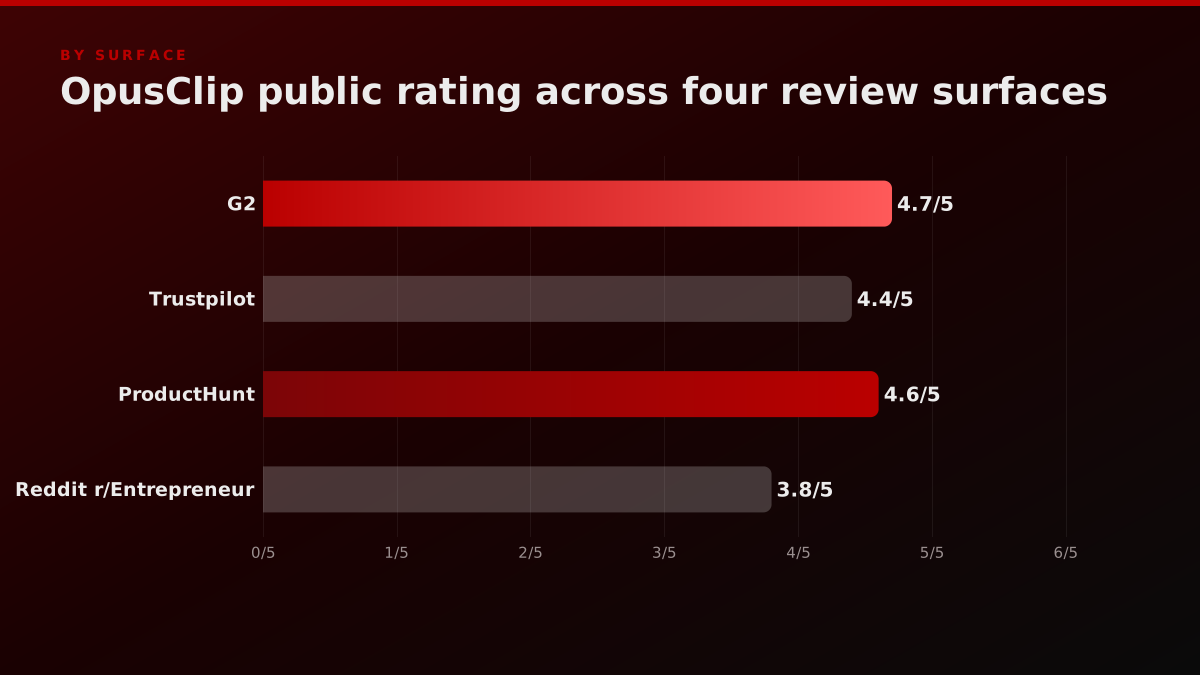
The G2 rating leads the category for AI clipping tools. Most reviewers are solo creators or small in-house teams running their own editorial pipeline, which is the lane OpusClip is built for and the lane where the product performs well. Trustpilot reviews skew toward billing and credit complaints because consumer-side dissatisfaction tends to surface there before G2. Reddit threads in r/Entrepreneur are the most useful for evaluating multi-clipper team economics: the per-seat plus per-credit pricing compounds in ways the headline price does not show.
OpusClip public review surfaces (verify on source 2026-05-07)
| Source | Rating | Review volume | Sentiment summary |
|---|---|---|---|
| G2 | 4.7/5 (approx) | 400+ reviews | Strong on clip selection and time-saved, gaps on credit accounting and export QA |
| Trustpilot | 4.4/5 (approx) | 800+ reviews | Praise on auto-reframe and captions, complaints on credit walls and billing surprises |
| ProductHunt | 4.6/5 (approx) | Multiple featured launches | Strong launch sentiment, AI clip selection drives upvote commentary |
| Reddit r/Entrepreneur | 3.8/5 (approx, mixed) | High thread volume | Solo creator positive, agency-side mixed on credit caps and per-seat economics |
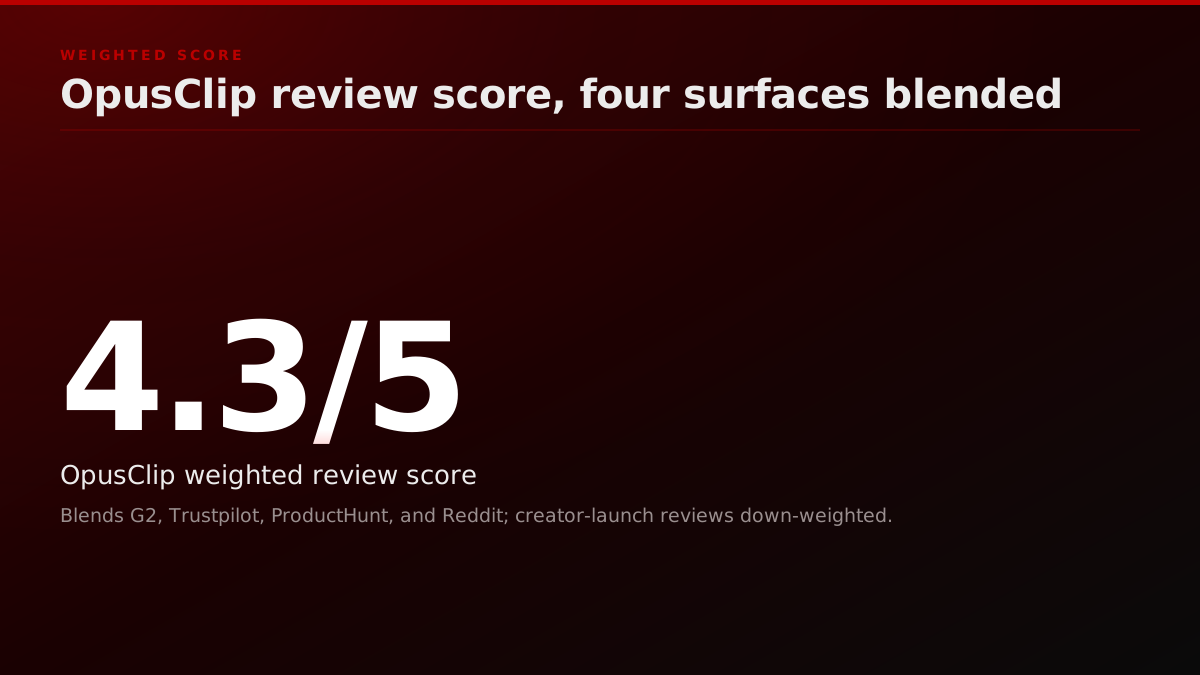
Ratings approximate, sampled 2026-05-07 from public review surfaces. FORKOFF weighted score 4.3/5 blends 4 sources with creator-launch reviews down-weighted.
I've tried the 3 top players opus clip, klap and vizard and here's what I found: opus clip = ok, but often selects random clips. klap = better quality clips but less clips per video. vizard = same as opus, but better reframing imo.
ICP fit grid
OpusClip fits the operator who drives their own editorial pipeline: solo clippers, founders clipping a back catalog, and small agencies running multi-show schedules with clear direction. It does not fit brands buying qualified views, treasury teams needing a per-view audit ledger, or buyers who refuse to operate the editing tool themselves. The grid below sorts both sides explicitly.
Best for
- Solo clippers and in-house creators with 1-3 shows on a flat tool budget
- Founders clipping their own podcast back catalog who already know which beats to lift
- Agencies operating multi-show schedules with clear editorial direction
- Clippers who want AI B-roll and auto-reframe without a manual editing pipeline
- Teams needing 20+ language caption coverage out of the box
- Clippers finishing in Adobe Premiere or DaVinci who need editor-export support
Not for
- Brands buying qualified views, not credit packs
- Treasury teams needing a per-view audit ledger with reason codes on rejection
- Web3 protocols requiring sanctioned-region geo exclusions enforced at brief acceptance
- Buyers who refuse to operate the editing tool themselves
- Networks needing a managed strategist to brief the show and qualify the output
- Brands shipping high-volume daily clips that hit the credit cap mid-month
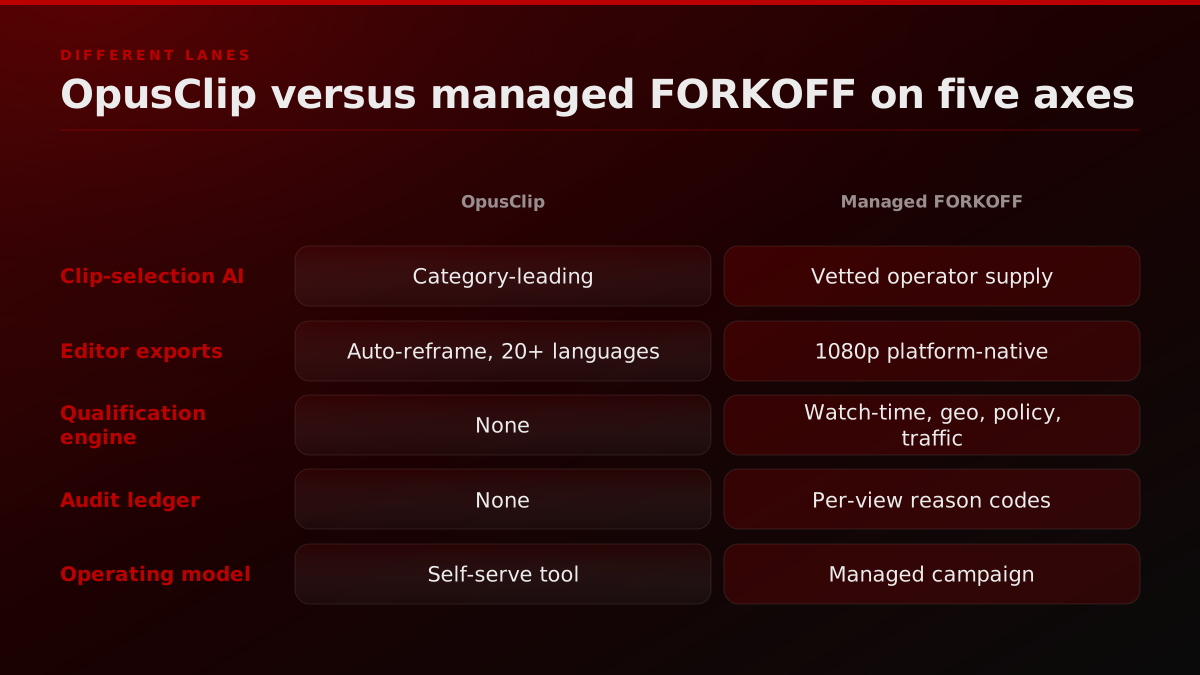
The lane-shift framing
OpusClip is software you run. FORKOFF is a campaign someone runs for you. They are not direct substitutes and they sit in different lanes. OpusClip's lane is the AI clipping tool. The wedge is clip-selection quality on long-form sources. The pricing is denominated in credits and seats. The operating model is self-serve: the operator drives the editorial pipeline, the tool ships the assist. FORKOFF's lane is the managed clipping campaign. The wedge is the per-view qualification engine and the exportable per-view ledger. The pricing is denominated in qualified views (CPQV at $0.003 per view passing four checks: watch-time, policy, geo, traffic-validity) rather than in credits or seats. The operating model is managed: a strategist briefs the show, vetted clippers ship the clips (vetted on prior qualification rates, not raw view counts), the qualification engine runs every view, and the per-view ledger ships exportable to CSV and JSON for treasury reconciliation. FORKOFF doesn't replace OpusClip. The two surfaces compose when used in their own lanes.
Source: FORKOFF Clipping operations playbook + OpusClip public pricing pages, sampled 2026-05-07
Most of my streams run 6 to 8 hours, and after each one I want to turn them into highlights for YouTube Shorts and TikTok. But in reality, I forget where the good moments even happened, scrubbing through hours of nothing.
Credit math worked through three realistic clipper profiles
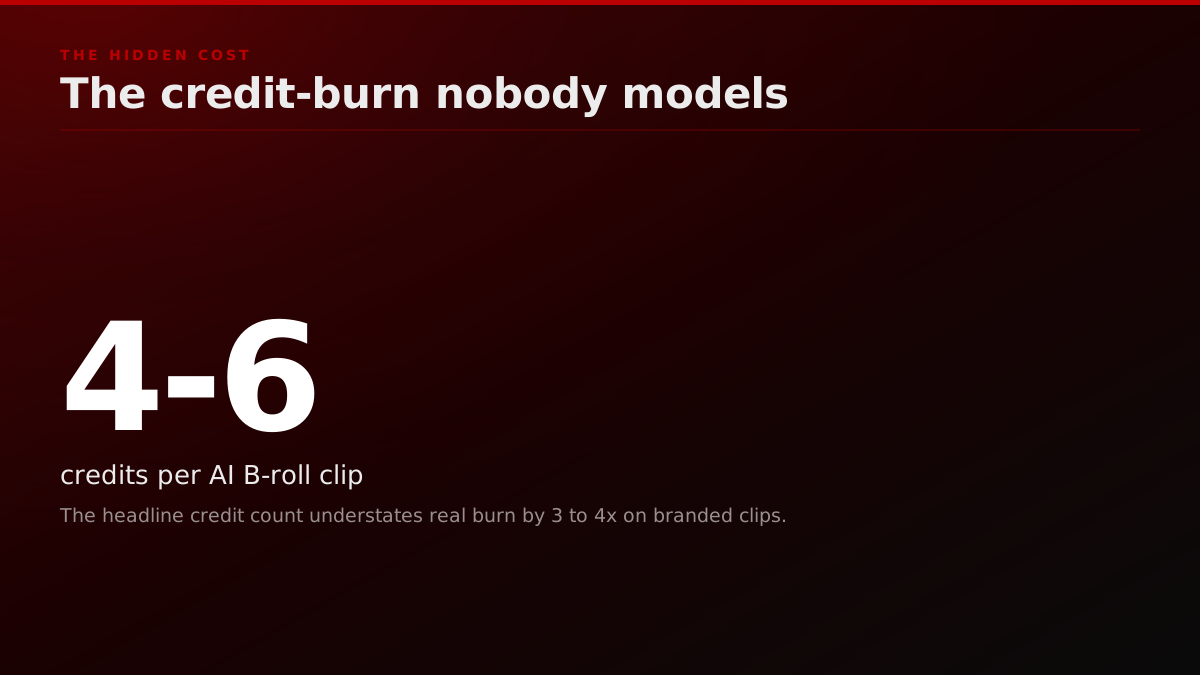
The headline credit count is the single most misread number on the pricing page, because AI B-roll multiplies the burn 4 to 6x against a flat tier ceiling. Three worked examples below map the realistic burn against the 3,600-credit Pro annual ceiling, so a clipper can size the tier on actual workload rather than the headline number before committing.
Profile one: solo podcaster with one weekly show, 5 clips per episode, no AI B-roll. Standard 60-second clips at 1 credit each ship 5 credits per week or roughly 22 credits per month. Annual burn lands near 264 credits against the 3,600 Pro annual ceiling. Pro annual is heavy for this profile and Starter at 150 credits per month covers the workload at half the upfront cost.
Profile two: in-house clipper for a creator with three weekly shows, 8 clips per show, AI B-roll on every clip at the 4-credit multiplier. Burn lands at 96 credits per week or roughly 416 credits per month. Annual burn lands near 5,000 credits, which trips the 3,600 ceiling in month nine. The clipper either drops B-roll on selected clips, tiers up to Business custom, or distributes the workload across two Pro seats. Pro annual covers about 75 percent of the workload before the cap.
Profile three: small agency operating 6 multi-show schedules across 4 clippers, 10 clips per show per week, mixed B-roll ratio averaging 2.5 credits per clip. Per-clipper burn lands near 150 credits per week or 650 per month. Per-clipper annual burn lands near 7,800 credits, well past the Pro annual ceiling. The agency runs four Pro annual seats and still trips the cap by month six on every seat. Business tier is the structural fit and the agency moves into custom pricing territory.
The pattern across the three profiles: Pro annual is sized for the solo-to-small-team operator with light B-roll usage. Heavy B-roll clippers and multi-seat agencies hit the cap and either tier up or restructure the workflow. Sizing the tier on the realistic burn rather than the headline number is the single most useful exercise a buyer can do before committing.
Operator noteEvery roster seat we push past 8 B-roll clips a week trips the 3,600 credit Pro annual cap by month six in our own tracking., FORKOFF Clipping ops
CPQV economics and why the denominator matters
The most useful frame for evaluating any clipping spend is the denominator on the invoice. OpusClip prices in credits. Submagic prices in seats. Captions prices in monthly subscription. A managed agency operating in the brand-outcome lane prices in qualified views. The unit of payment determines what the buyer actually controls.
A credit denominator means the buyer pays for the act of producing a clip, regardless of whether that clip ships a single qualifying view. A seat denominator means the buyer pays for the right to log a clipper into the tool, regardless of throughput. A qualified-view denominator (CPQV at an estimated $0.003 per view passing four checks) means the buyer pays only for views that survive a watch-time floor, a geo allowlist, a policy filter, and a traffic-validity check. The first three denominators bill on input. The fourth bills on output.
For a brand running an estimated $20,000 monthly clipping budget, the difference is operationally material. Under a credit denominator, 4,000 credits at Pro annual rates equal roughly 1,000 standard clips per year (or 250 B-roll-heavy clips). Whether those clips earn 100,000 qualified views or 10,000,000 qualified views, the bill is the same. The variance lands entirely on the brand's side of the ledger. Under a CPQV denominator at $0.003 per qualified view, $20,000 monthly buys roughly 6.6 million qualified views. The variance lands on the agency's side. Clip overproduction, audience drift, and traffic-validity loss are absorbed by the supplier, not the buyer.
The FORKOFF Clipping Ledger is the canonical reference for this denominator. Every view that flows through a managed campaign passes the four-check qualification engine, gets logged with a reason code on rejection, and ships exportable to CSV and JSON every Friday. Treasury teams reconcile the per-view ledger against the invoice line by line. Brand-side finance reviews on the campaign are deterministic and the audit trail survives external scrutiny. That structural fit is the lane shift in one sentence: the buyer who needs an audit ledger does not buy a tool, and the buyer who needs a tool does not buy an audit ledger.
The credit denominator is the correct unit when the operator runs the campaign. The qualified-view denominator is the correct unit when an agency runs the campaign on the brand's behalf. Neither is wrong. They serve different buyers.
Processing minutes bill on input, qualified views bill on output
OpusClip meters its free and trial access in processing minutes: 60 minutes per month on Free and 90 minutes on the 7-day Pro trial, which OpusClip frames as roughly 30 downloadable clips. That is a legible unit for an operator sizing their own workload. It is the wrong unit for a brand-side invoice, because processing minutes bill on input regardless of whether a single clipped view survives a watch-time floor or a bot filter. The denominator that matters to a treasury team is the qualified view, at an estimated $0.003 per view passing four checks, and no volume of processing minutes converts into that number.
Source: OpusClip Free tier and 7-day Pro trial allowances (opus.pro), verified 2026-07-23
How does OpusClip compare to Submagic?
Submagic is the closest substitute on the AI clipping tool axis, so a side-by-side is the most useful peer comparison. For the wider field, the OpusClip vs Vizard vs managed clipping data comparison benchmarks five tools on cost per qualified view, which is the axis that decides the buy past 150 clips per week. For a nine-tool ranking on pricing, ICP fit, and qualified-view economics, the best AI video editors of 2026 covers OpusClip, Submagic, Captions AI, Klap, Vizard, Munch, Vidyo, Spikes Studio, and Clipify side by side. Both ship clip selection, auto-reframe, animated captions, and editor exports. The buyer has to evaluate on the workflow margins, not the headline feature list.
On clip selection AI, OpusClip leads on long-form podcast and webinar sources of 60 minutes or longer. The clip-selection model surfaces ranked candidate clips with hook-fit scoring, and reviewer commentary across G2 and ProductHunt clusters on the time saved per source as the primary win. Submagic's clip-selection model is competitive on sources under 30 minutes but reviewer commentary thins on the long-form lane.
On captions polish, Submagic leads. The caption styling library is deeper, the animated-caption presets are more on-brand for short-form-native creators, and the manual override on individual word emphasis is faster in the Submagic timeline. OpusClip ships brand-template captions that look fine out of the box, but the styling library is wider rather than deeper.
On price, Submagic Pro yearly lands at $23/month per member and Captions Max at $24.99 monthly, both ahead of OpusClip Pro annual at $14.50/month equivalent. The pricing gap is approximately $100 per seat per year in OpusClip's favor on the annual tier. The trade-off the buyer accepts is the credit ceiling: OpusClip's per-credit billing recovers margin on B-roll-heavy workflows where Submagic's flat-tier pricing absorbs the cost.
On editor exports, OpusClip leads. Adobe Premiere and DaVinci Resolve project file export is shipped on Pro tier. Submagic ships flat MP4 export without a project-file equivalent. Clippers finishing in their existing pipeline find OpusClip the cleaner choice. Browser-only operators are indifferent.
On API access, both tools gate the API behind a Business or enterprise tier with custom pricing and no public floor. Buyers building programmatic clipping into a content pipeline cannot model the line item before contacting sales on either platform.
The verdict on the head-to-head: OpusClip wins on long-form sources, editor exports, and price. Submagic wins on caption polish and short-form-native styling. The buyer picks based on which axis dominates their workflow.
How does OpusClip compare to managed clipping?
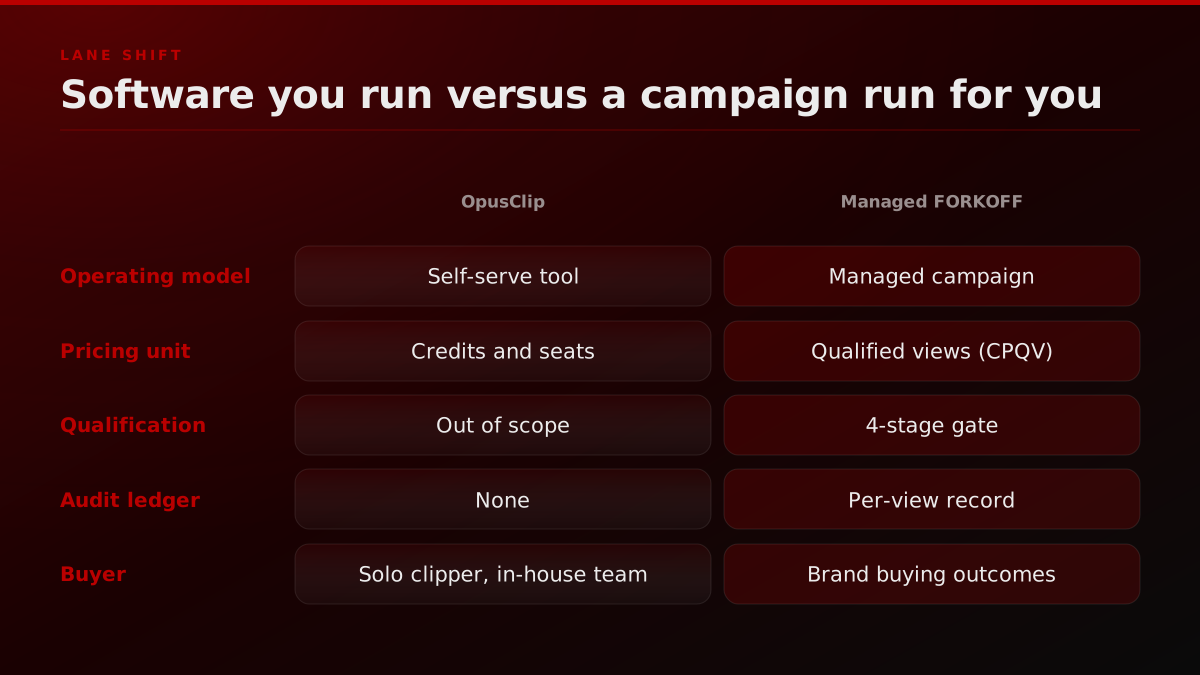
The comparison against a managed clipping agency is not a feature comparison, it is a lane comparison. OpusClip ships clips on a credit denominator and the operator runs the campaign. A managed clipping agency ships campaigns on a qualified-view denominator and carries the clipper roster, the qualification engine, the strategist, and the audit ledger. The two surfaces compose when each is used in its own lane.
A managed clipping agency operating on a CPQV denominator brings four structural assets the tool lane does not carry. First, a vetted clipper roster. Clippers are filtered on prior qualification rates rather than raw view counts. A clipper who shipped 10 million views with a 22 percent qualification rate is treated as a lower-tier supplier than a clipper who shipped 4 million views with a 78 percent qualification rate. The vetting layer is the supply-side moat.
Second, the qualification engine itself. Every view runs through a watch-time floor (typically 30 seconds on Shorts and Reels, 15 seconds on TikTok), a geo allowlist (US iPhone audience, or whatever the brand specified at brief acceptance), a policy filter (platform safety, brand safety, sanctioned-region exclusions for Web3 protocols), and a traffic-validity check (bot scoring on the impression source). Views passing all four checks count toward the invoice. Views failing any check ship to the rejection ledger with a reason code.
Third, the strategist layer. A FORKOFF strategist briefs the show before any clipper touches the source, locks the editorial direction, and reviews the qualification rate at the 24-hour and 72-hour marks to redirect supply if a clipper's output is drifting off-brief. The strategist is the operating cost OpusClip pushes onto the buyer.
Fourth, the per-view audit ledger. Every qualified view is logged with a clip ID, a clipper ID, a platform, a geo, a watch-time bucket, and the reason code on rejection (if rejected). The ledger ships exportable every Friday for treasury reconciliation. The audit trail is the structural fit for brand-side finance teams who need a defensible per-view billing record.
On the buyer side, the picks fall into two clear cohorts. The in-house clipper running their own pipeline picks OpusClip every time. The brand or web3 protocol buying qualified views with a treasury team reviewing the invoice picks the managed lane every time. Buyers in between (small agencies with editorial direction, founders clipping their own back catalog, in-house creators with a flat tool budget) sit in the OpusClip lane. Buyers running multi-show schedules at six-figure spend with brand-side qualification requirements sit in the managed lane.
Operator noteOn brand accounts we run OpusClip for the shortlist, then bill on a qualified-view ledger the moment monthly spend passes 20k., FORKOFF Clipping ops
The audit ledger and what it actually contains
For buyers evaluating the lane shift, the artifact that does the most work in the buying conversation is the per-view audit ledger itself. The ledger is the structural reason a CPQV denominator works at all. Without it, qualified-view pricing is a pricing slogan rather than an enforceable contract.
A FORKOFF Clipping Ledger row contains the timestamp of the view, the clip ID, the clipper ID, the platform (TikTok, Shorts, Reels, X), the geo (country plus device class on platforms that ship that signal), the watch-time bucket (under-3-second, 3-to-15-second, 15-to-30-second, 30-plus-second), the qualification status (pass or fail), and the rejection reason code if failed. Reason codes cover the four-check breakdown: WATCH_TIME_BELOW_FLOOR, GEO_OUTSIDE_ALLOWLIST, POLICY_VIOLATION, TRAFFIC_VALIDITY_FAIL. A view that fails on multiple checks logs the first failure in the canonical order. The treasury team gets a deterministic mapping from invoice line to source view.
The ledger ships exportable to CSV and JSON every Friday at 9am ET for the prior week, with a running monthly aggregate that rolls up on the 1st. Brand-side finance teams pull the weekly export into their reconciliation tooling, match it against the invoice, and approve the line items. The structural fit is the auditability: every dollar on the invoice traces to a row in the ledger, every row in the ledger traces to a clip ID, and every clip ID traces to a clipper.
OpusClip does not ship anything equivalent because OpusClip does not need to. The credit denominator is a self-contained ledger: 1 credit produced equals 1 credit billed. The buyer who needs that audit trail uses the OpusClip credit log. The buyer who needs a view-level audit trail uses the FORKOFF Clipping Ledger. The two ledgers answer different questions.
Workflow patterns that compose OpusClip with a managed lane
Buyers do not have to pick one lane. A clean composition pattern is to run OpusClip as the operator-side production layer and the FORKOFF managed lane as the brand-side distribution layer. The clipper runs OpusClip on the long-form source, produces the candidate clips, and exports them to the managed brief. The strategist accepts or rejects clips on brand-fit before they ship into the qualified-view campaign. The qualified-view engine runs on the live views and the audit ledger captures the per-view billing record.
This compose pattern works for founders running their own podcast back catalog at scale. The founder is the clipper, OpusClip is the editorial tool, and the FORKOFF managed lane is the paid amplification layer that runs the qualified-view ledger across paid clipper distribution networks. The founder retains editorial control on which beats lift to short-form and the brand retains audit control on which views count toward the invoice.
It also works for networks operating multi-show schedules. The network's in-house clipping team runs OpusClip on the show back catalog, ships the candidate clips into the FORKOFF brief queue, and the strategist routes the brand-fit clips to the qualified-view distribution layer. The network sees its clipping cost on OpusClip and its qualified-view cost on the FORKOFF invoice as two separate line items, each with its own audit trail.
Both patterns avoid the trap of trying to force OpusClip into a lane it was not built for. The tool wins where the operator drives the editorial pipeline. The managed agency wins where the brand drives the outcome.
Decision framework
The decision comes down to four questions, and the first is the simplest: who runs the campaign? If the answer is the buyer, OpusClip is the structural fit. If the answer is a supplier on the buyer's behalf, a managed agency is the structural fit. The remaining three questions sort on invoice denominator, compliance posture, and monthly clip volume.
The second question: what denominator does the buyer's finance team want on the invoice? If the answer is credits, seats, or flat monthly subscription, OpusClip and its peers in the tool lane fit. If the answer is qualified views with a reason-coded rejection ledger, the managed lane fits.
The third question: what does the brand-safety and policy compliance posture require? If the answer is brand-side QA on every clip with no qualification-engine requirement, OpusClip ships the clip and the brand owns the qualification. If the answer is enforced sanctioned-region exclusions at brief acceptance with a per-view audit log, the managed lane carries the compliance layer.
The fourth question: what scale of monthly clip volume is in play? Under 200 standard clips per month, OpusClip Pro annual is the cleanest budget fit. Over 200 standard clips per month with B-roll on every clip, the credit math pushes the buyer toward Business tier or toward the managed lane on the CPQV denominator. The break-even point depends on the B-roll ratio and the brand-side qualification requirements.
Is OpusClip worth it in 2026?
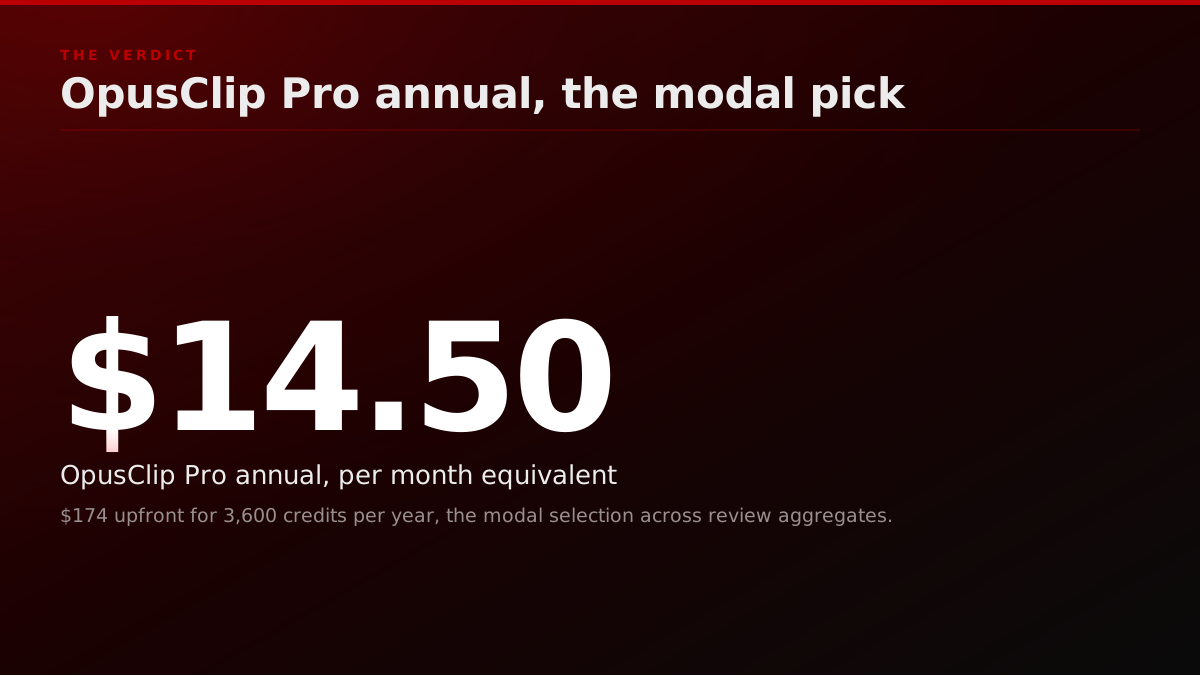
OpusClip is the right pick for the operator who runs their own editorial pipeline, and Pro annual at $14.50/month equivalent is the recommendation for solo clippers, in-house creators, and small teams on multi-show schedules. It is the wrong pick for a brand buying qualified views, because the per-credit economics do not produce the per-view audit ledger a finance team needs. The buy splits cleanly on who runs the campaign.
For operators who want the output without running the tool, FORKOFF's managed clipping service bills on qualified views rather than a monthly seat.
OpusClip is well-built for its lane and it is the right pick for the buyer it is built for. If you are a solo clipper, an in-house creator, or a small team running a multi-show editorial pipeline with clear direction, OpusClip Pro annual at $14.50/month equivalent is the recommendation. The clip-selection AI compresses the source-to-shortlist step that otherwise eats hours per source. Auto-reframe and captions ship in the base product. Editor exports keep the workflow flexible.
Two practical caveats. First, model your credit consumption against the realistic burn including AI B-roll multipliers, not against the headline credit count. If you ship branded clips with B-roll on every clip, the realistic burn is 3-4x the headline and the tier-up calculus shifts. Second, plan for manual QA on every export, especially on multi-speaker formats where auto-reframe drift is most pronounced.
If you are a brand buying outcomes, the lane shift is the right call. The per-seat per-credit economics do not produce the per-view audit ledger your finance team needs. The operating model assumes you run the campaign. The qualification layer is brand-side. A managed agency built for the outcome lane (such as FORKOFF) is the structural fit.
If your evaluation is between OpusClip and FORKOFF specifically, /compare/forkoff-vs-opusclip walks the line-by-line comparison. The /blog/clipping/opusclip-review-deep-dive landing page covers the OpusClip assessment in shorter commercial-intent form. For a category-wide ranking of brand-side outcome agencies, /best-clipping-agency ranks the available options. For the category overview, /services/clipping defines the agency model and the buyer it is built for.
For an external operator view on this, see creator workflows behind the highest-output short-form pipelines on YouTube.
Primary sources cited above: Sprout Social's 2026 short-form data. Buffer's report on creator workflows. HubSpot's State of Marketing benchmarks.