The clearest sign that performance clipping became a real ad channel in 2026 is not a think-piece. It is a number on a Google Ads report.
Performance clipping became a brand ad line item in 2026, by the numbers
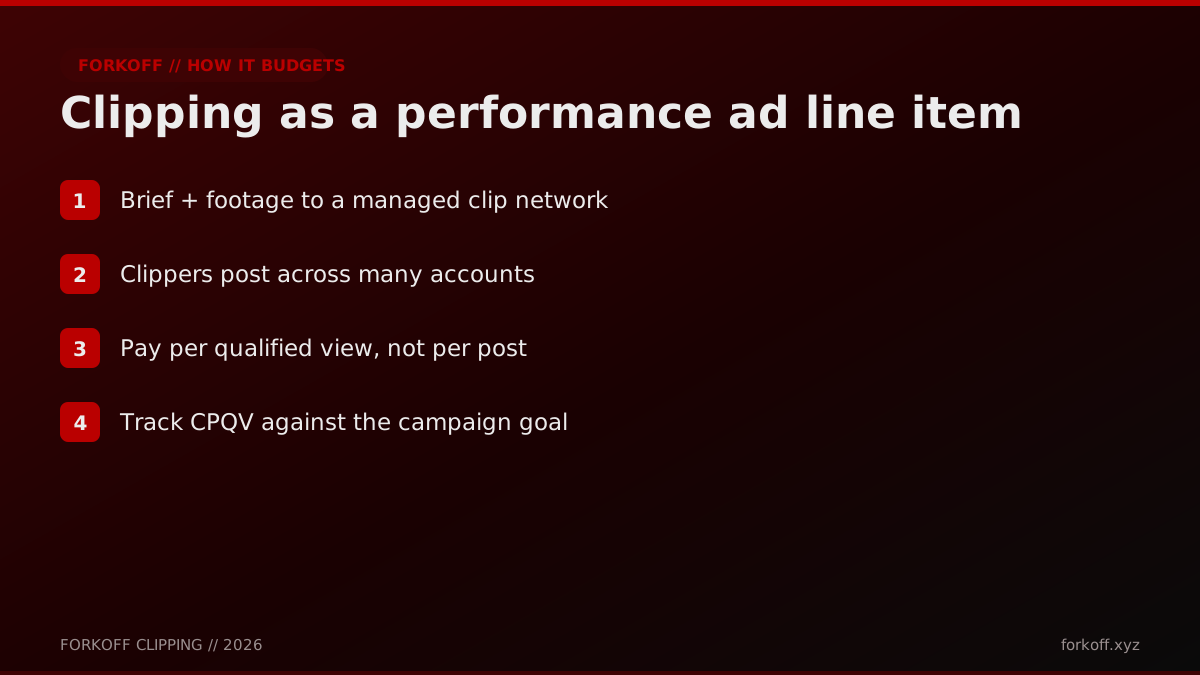
In 2026 brands started budgeting for pay-per-view clipping the way they budget for paid social. The signal is in the data. US searches for "clipping agency" rose from 110 a month in June 2025 to 720 in May 2026, a 6.5x jump, with a $10.11 cost per click (DataForSEO, US, June 2026). The reason is price. Pay-per-view clipping runs about $1 to $5 CPM against $15 to $40 CPM for paid social, a 3x to 8x gap on raw reach (Lumina for the clipping floor, Jonas Agency for the paid-social range). The deeper cause is structural. AI dropped the cost of making content close to zero, so the scarce, expensive resource is no longer production, it is distribution. Pay-per-view clipping is performance-priced distribution: you pay per verified view, not per post. Named brands already run it. MLB pays about $1 per 1,000 views, Polymarket about $0.50, one AI startup about $25 (NPR, May 2026). The risk is real too. The same mechanics that make clipping cheap also make it easy to farm fake views, which is why view verification, not raw reach, is the number that matters. FORKOFF runs clipping priced on qualified views across a network that has processed 5B+ views.
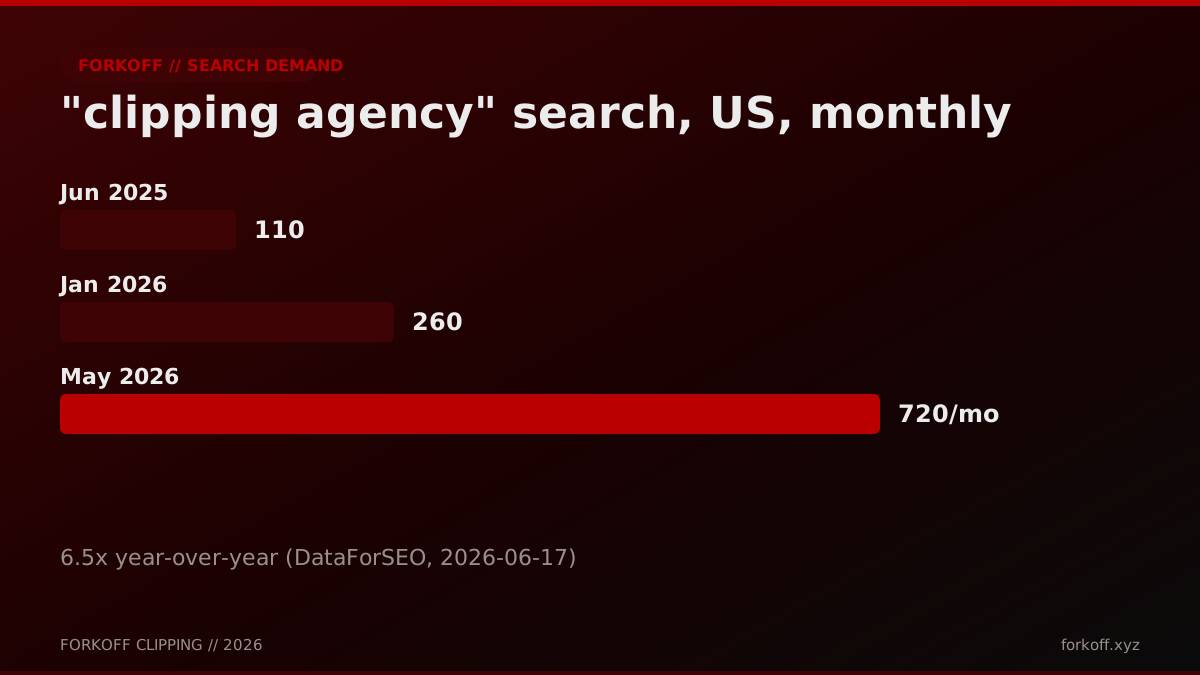
In June 2025, about 110 people a month in the US searched for "clipping agency." By May 2026 that was 720 a month, a 6.5x jump, and advertisers were paying an estimated $10.11 a click to show up against it (DataForSEO, US, pulled June 2026). A keyword does not move like that on curiosity. It moves when people with budget decide they need to buy something and start looking for who sells it.
This post is the trend, by the numbers. What the search data says, what the CPM math says, what named brands actually pay, and why the underlying cause is not a TikTok fad but a structural shift in where marketing money has to go.
What does it mean that clipping became an ad line item?
It means brands moved clipping from the experiments budget to the media plan. An experiment is a one-time test you might not repeat. A line item is recurring, planned spend with a target return, sitting next to paid social, search, and influencer.
Three things had to be true for that shift to happen, and in 2026 all three were. There had to be measurable demand, which the search data shows. There had to be a price advantage worth reallocating budget for, which the CPM math shows. And real brands with real budgets had to be running it in the open, which the named-brand rates show. The rest of this post walks each one.
The reason this matters for how you plan is that experiment budgets and line-item budgets behave differently inside a company. An experiment gets a small, discretionary pot and a marketer who is allowed to fail. A line item gets a forecast, a target return, a quarterly review, and a finance partner who expects the number to hold. When a tactic crosses from the first bucket to the second, it stops being something a growth lead tries on a slow week and becomes something the media plan is built around. That crossing is what 2026 was for clipping, and the rest of this post is the evidence that it actually happened rather than just feeling like it did.
One more framing note, because it shapes everything that follows. Clipping is not a platform, a tool, or a single vendor. It is a way of buying distribution: you take a piece of source material, you let many creators cut it into short clips and post those clips across their own accounts, and you pay based on the views those clips generate. That structure is what makes it a performance channel rather than a content tactic, and it is why the right comparison is paid media, not video editing.
US search demand for clipping terms (DataForSEO, June 2026)
| Keyword | Avg searches per month | June 2025 | May 2026 | Cost per click |
|---|---|---|---|---|
| clipping agency | 320 | 110 | 720 | $10.11 |
| clip farming | 6,600 | 8,100 | 6,600 | $6.38 |
| clipping service | 210 | 210 | 260 | $29.36 |
| content clipping | 110 | 170 | 140 | $4.78 |
Source: DataForSEO Google Ads keyword data, United States, pulled 2026-06-17. "Clip farming" peaked at 14,800 in August 2025.
A 6.5x search jump is a demand signal, not a fad
Search volume for "clipping agency" in the US went from 110 a month in June 2025 to 720 in May 2026. A keyword does not 6.5x in a year on curiosity. It moves when people with budget start typing it into Google with intent to buy, which the $10.11 cost per click confirms.
Source: DataForSEO Google Ads keyword data, United States, pulled 2026-06-17
The breakout term is "clipping agency." It is the search someone types when they have decided clipping is worth doing and they want a partner to run it. The 6.5x climb is the part that matters, but the $10.11 cost per click is the confirmation. Cheap, curious searches do not carry double-digit click costs. Expensive clicks mean advertisers see buyers behind the query.
The supporting terms fill in the picture. "Clipping service" carries an estimated $29.36 cost per click, one of the highest in the cluster, because it is a high-intent buyer keyword with low supply. "Clip farming" sits at 6,600 searches a month after peaking at 14,800 in August 2025, which tells you the practice went mainstream enough to get a name. The Cambridge Dictionary added "clip farming" to its new-words list in February 2026, which is about as clear a "this is now a category" marker as language gives you.
It is worth sitting with the cost-per-click numbers, because they are easy to skim past. Cost per click is what an advertiser is willing to pay Google for a single visit from someone who typed that phrase. A query nobody intends to buy from carries a low cost per click because no advertiser bids on it. The fact that "clipping service" clears approximately $30 a click and "clipping agency" clears $10 means agencies are bidding real money to be in front of these searchers, and they only do that when the searchers convert into contracts. So the search data is not just measuring curiosity about a trend. It is measuring a market with buyers, sellers, and price discovery, which is the definition of a real channel rather than a viral moment.
There is also a shape to the growth that rules out a one-off spike. "Clipping agency" did not jump from 110 to 720 in a single month and fall back. It climbed steadily through the year: 110 in June, around 210 to 260 through the summer and autumn, 390 in March, 480 in April, then 720 in May. Steady compounding growth across twelve months is what demand looks like when it is being driven by a structural cause rather than a single news cycle. A fad spikes and decays. This climbed and held.
Operator note720 monthly searches for "clipping agency" in May 2026, up from 110 a year earlier., DataForSEO, US, June 2026
How much does pay-per-view clipping cost compared to paid social?
This is the question that moves budget. The headline answer is that clipping reaches 1,000 people for an estimated $1 to $5, while paid social costs an estimated $8 to $45 for the same 1,000 depending on the platform.
Cost to reach 1,000 people, by channel (2026)
| Channel | Typical CPM | You pay for | Source |
|---|---|---|---|
| Pay-per-view clipping | $1 to $5 | Verified views delivered | Lumina (self-reported) |
| Meta (blended) | $8 to $14 | Impressions served | Jonas Agency |
| YouTube in-stream | $12 to $20 | Impressions served | Jonas Agency |
| $20 to $45 | Impressions served | Jonas Agency |
Clipping CPM is self-reported by clipping agencies. Paid-social CPMs are independently benchmarked by Jonas Agency, February 2026. Paid-social CPMs rose 8 to 12 percent year over year in 2025.
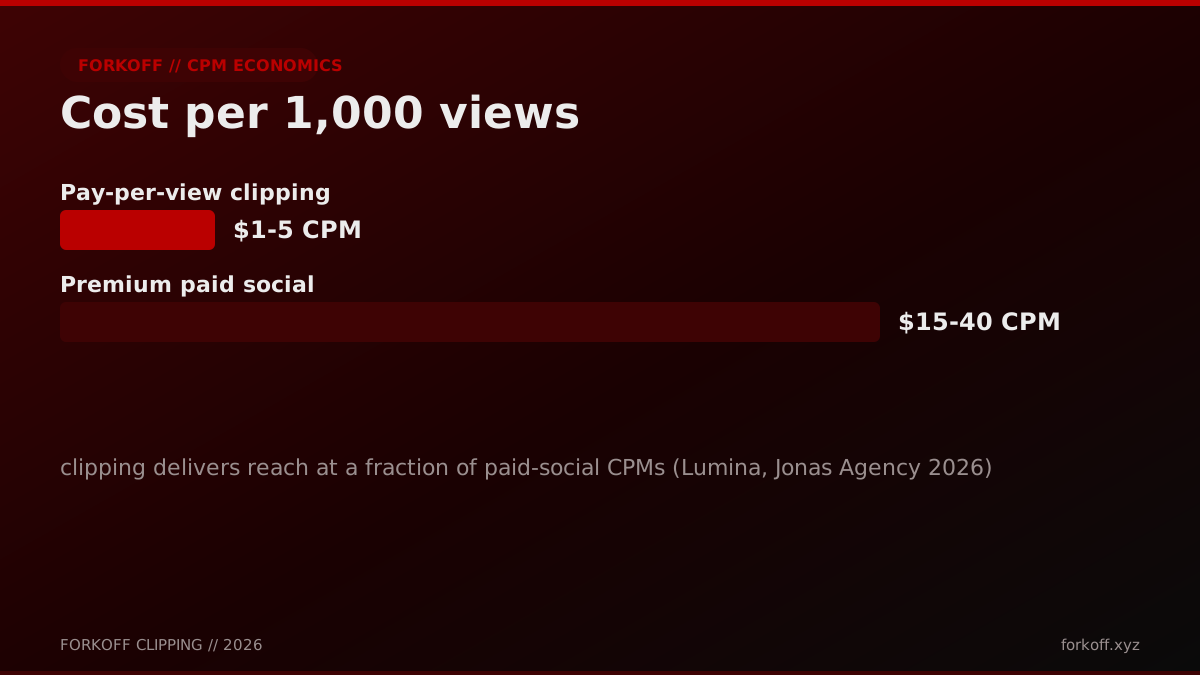
Two honesty notes before anyone reallocates a budget on that table. First, the clipping CPM floor is self-reported by clipping agencies that have a commercial interest in the number looking good. Lumina, one of the larger networks, publishes the $1 to $5 range. Treat it as the agency's claim, not an audited figure. Second, the paid-social CPMs come from independent 2026 paid-media benchmarks published by Jonas Agency (see the dataTable footnote), and they are rising 8 to 12 percent a year, which is the upward pressure that keeps making clipping look cheaper by comparison. So the gap is real and it is widening, but the two sides are not measuring the same thing. Paid social charges for impressions served. Clipping should charge for verified views delivered. That difference is the whole game, and we come back to it.
The widening part deserves attention because it is the real driver. Paid social CPMs do not just sit at an estimated $15 to $40, they climb every year as more advertisers compete for the same finite feed inventory. Meta, YouTube, and LinkedIn all sell a fixed amount of attention, and when demand for that attention rises faster than supply, the price goes up. That is exactly what an 8 to 12 percent annual CPM increase means. Clipping sidesteps that auction entirely. Instead of bidding against every other advertiser for a slot in the feed, you are paying creators to earn organic reach the platform gives away for free to content people actually watch. You are buying the output of the algorithm rather than buying around it. As long as paid CPMs keep rising and organic clip reach stays effectively free to the platform, the gap between the two does not close, it grows.
There is a second-order effect worth naming. A paid impression dies the moment the campaign budget runs out. A clip does not. A clip you paid a low CPM to seed keeps accumulating views for days or weeks after the spend stops, and if it hits the algorithm right it can carry on earning reach long after the campaign closed. You are not renting attention for the duration of a flight. You are placing a large number of small bets that keep paying out, which changes the return math in a way an impression-based channel cannot match.
Production got free, so distribution got expensive
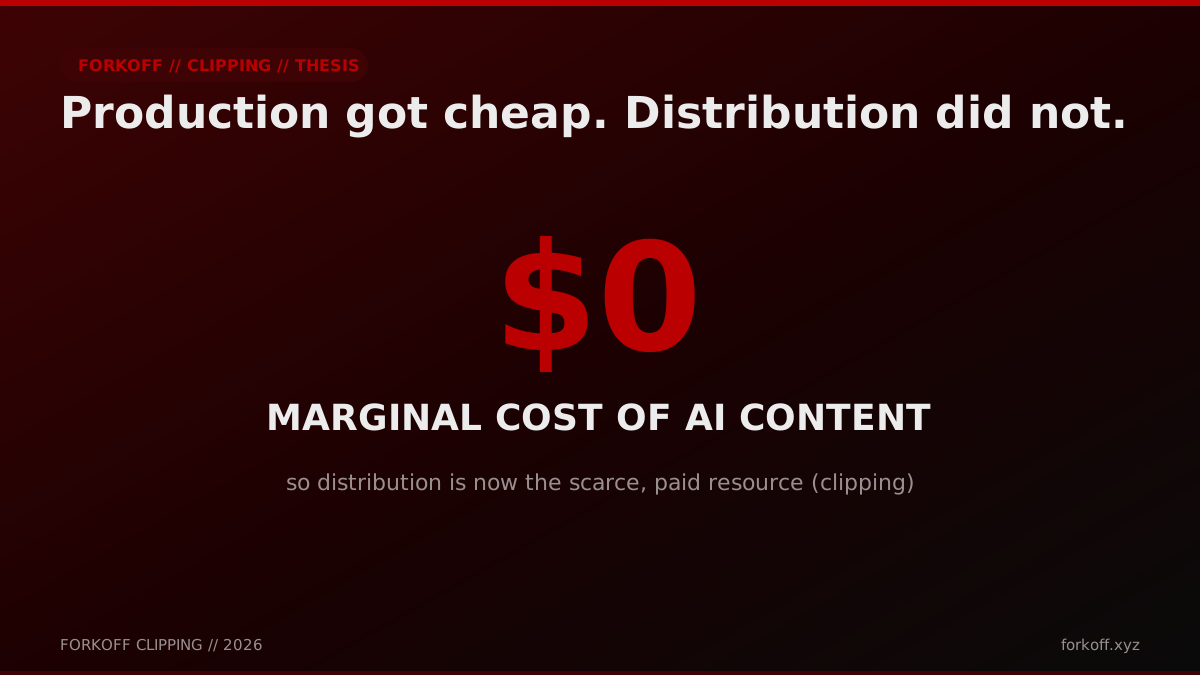
When a tool can generate a usable clip in seconds, the clip is no longer the hard part. Getting that clip in front of the right person is. That is why brands are reallocating budget from making more assets to distributing the assets they already have, and clipping is the channel priced for it.
Faded | Clipur.com
@youfadedwealth
In the last 7 days… $7,000+ paid out to clippers Top performers made $300+ The crazy part? Most experienced clippers can: • edit a clip in 10–15 mins • post it • engage with the X network • make $$$ PER post Meaning people are turning 10–20 hours/month into $500–1,500+ doing… Show more
That is the mechanic in plain terms. Clippers paid per post, on a flat weekly budget, hitting a real dollar-per-hour rate once the volume adds up. Scale that structure across a small team and the math looks nothing like a paid channel's cost curve. When the math looks like that, finance does not need convincing. The budget moves on its own.
Operator notePay-per-view clipping runs $1 to $5 CPM against $15 to $40 for paid social.
Why did searches for clipping agency jump 6.5x in a year?
Because the cause is structural, not seasonal. AI made content production close to free. Anyone can generate a usable clip, a caption, a thumbnail, a voiceover, in seconds. When making the asset stops being the hard part, the hard part becomes getting it seen.
That is the shift. For two decades the scarce resource in marketing was good creative. Now the scarce resource is distribution, and distribution is where the money has to go. Clipping is the channel built for that moment, because it is performance-priced distribution: many creators take your source material, cut it into short clips, post across platforms, and get paid on the views they actually generate.
Think about what changed on the supply side of attention. A decade ago, getting a brand message in front of a million people meant buying a million impressions through a small number of gatekeepers: a TV network, a publisher, an ad platform. The cost was high and the inventory was controlled. Short-form feeds broke that model. Now any post can reach a million people if the algorithm decides it deserves to, and the algorithm decides based on whether people watch and engage, not on who paid. That means the cheapest way to reach a million people is no longer to buy a million impressions, it is to produce a clip good enough that the platform hands you the reach. Clipping industrializes that insight. Instead of betting everything on one piece of content going viral, you flood the feed with many clips and pay only for the ones that land.
The supply of people willing to do this work exploded, which is the other half of the story. Clipping pays per view, the barrier to start is a phone and an editing app, and the upside is uncapped. That combination pulled tens of thousands of part-time and full-time clippers into the market, which is what makes the volume possible. But raw bodies are not the constraint anymore. The constraint that brands now feel is trained clippers, people who understand hooks, retention, platform-native formatting, and brand-safety, rather than people who can technically cut a video. Demand for that skilled tier is running ahead of supply, which is part of why "clipping agency" searches climbed all year: brands would rather pay a managed network that has already filtered for quality than recruit and train a clipper army themselves.
Clips aren't the promotional material for the content, clips are the content.
Ed Elson's line captures why this is not just repackaging. In a feed-driven world, the clip is not an ad for the content. The clip is the unit of attention itself. A brand that puts 200 clips into the feed is not running 200 little ads, it is buying 200 shots at the algorithm, paid only when a shot lands.
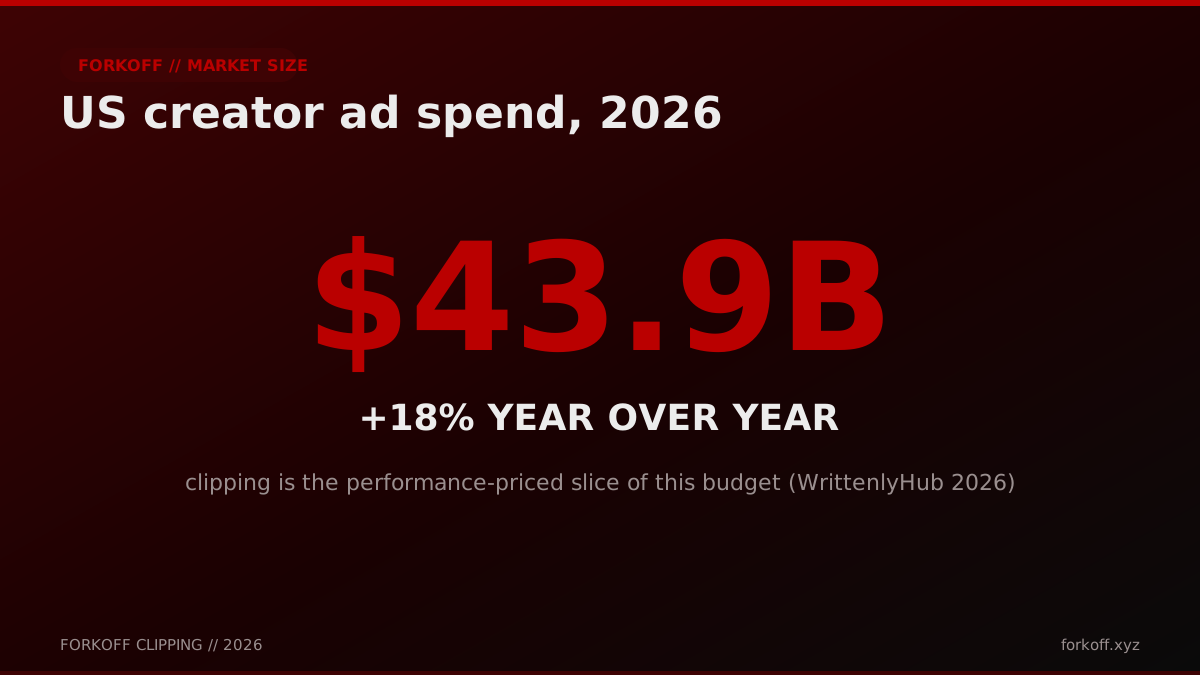
The macro budget data backs the direction. US creator advertising is projected at $43.9B in 2026, up 18 percent from $37.1B in 2025, and creator advertising is growing about four times faster than the broader media industry (WrittenlyHub, February 2026). Money is leaving traditional distribution and flowing toward performance creator channels, and clipping is the cheapest seat in that section.
How To Get Rich From Clipping
An operator breaks down the per-view economics behind clipping.
What do named brands actually pay per 1,000 views?
The most useful proof is not an agency's rate card. It is what real brands pay in the open, which NPR reported in May 2026.
What named brands actually pay per 1,000 views (NPR, May 2026)
| Brand | Pay per 1,000 views | Implied CPM |
|---|---|---|
| Polymarket | $0.50 | $0.50 |
| MLB | $1.00 | $1.00 |
| One unnamed AI startup | $25.00 | $25.00 |
Source: NPR, "The clipping economy," 2026-05-12. Rates vary with brand-safety requirements and content niche.
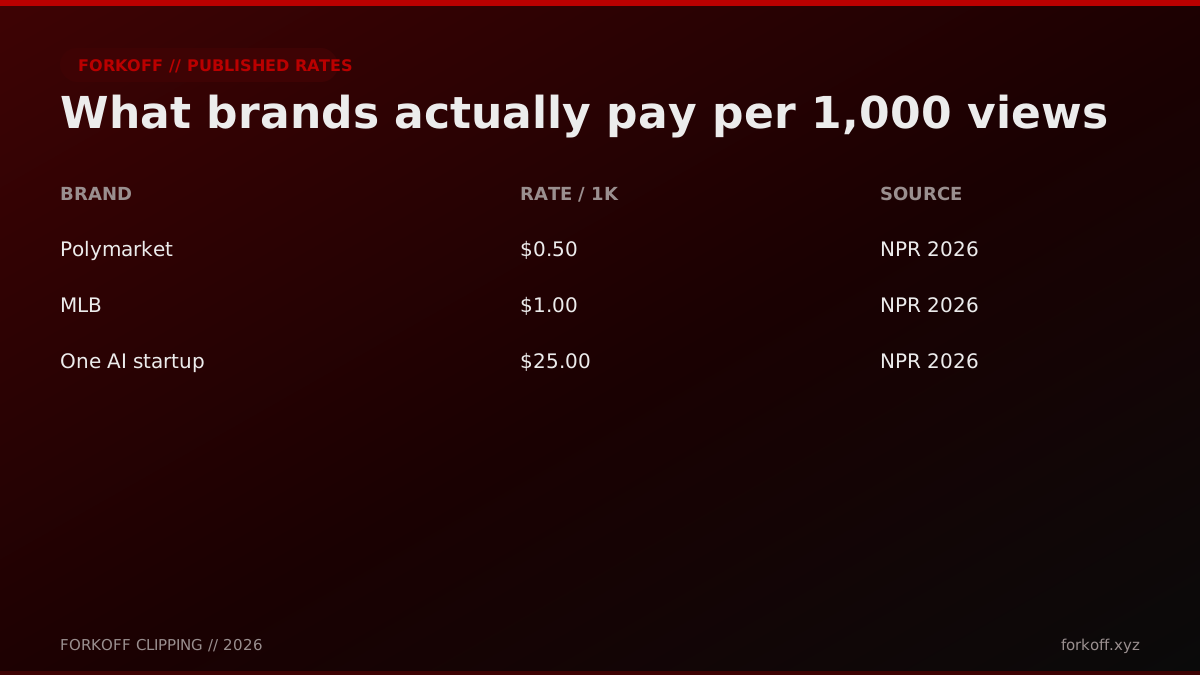
The spread is the lesson. Polymarket pays approximately $0.50 per 1,000 views and MLB about $1, both low because their content is broadly brand-safe and travels easily. One unnamed AI startup pays about $25 per 1,000 views, 25 to 50 times higher, because its requirements are narrower and the qualified audience is harder to reach. Clipping CPM is not one number. It is a function of how strict your brand-safety and targeting requirements are, the same way paid-social CPM rises when you narrow the audience.
This is the single most useful thing for a marketer to internalize before budgeting. When a vendor quotes you a clipping CPM, the first question is not "is that cheap" but "what does that rate assume about my requirements." A $1 CPM and a $25 CPM are not better and worse deals, they are different jobs. Sports highlights and prediction-market odds travel everywhere with almost no brand risk, so the clips are easy to produce, easy to place, and the views pile up fast at a low rate. A technical product that needs the right audience, accurate claims, and a specific tone is harder on every axis, so the rate climbs to reflect the work. Treat the CPM as a readout of difficulty, and you will stop being surprised by quotes that look wildly different for the same nominal channel.
It also reframes how you should compare clipping against the rest of the plan. The fair comparison is not clipping's cheapest possible CPM against paid social's typical CPM. It is clipping's CPM at your brand-safety bar against paid social's CPM at your targeting bar. Run that comparison honestly and clipping still tends to win on raw reach, but the margin narrows for strict-requirement brands, and that is the realistic picture finance should plan around rather than the headline floor.
We pay creators $5–$10 per 1k views for short clips on TikTok and Reels
That brand operator is posting its own rate in public, $5 to $10 per 1,000 views, which sits above the agency floor and below the strict-niche ceiling. It is the everyday middle of the market, and the fact that brands now post these rates openly in marketing communities is itself a sign the channel is normal. Independent write-ups of the clipping economy document the same range of real campaign rates from operators who are not selling the service.
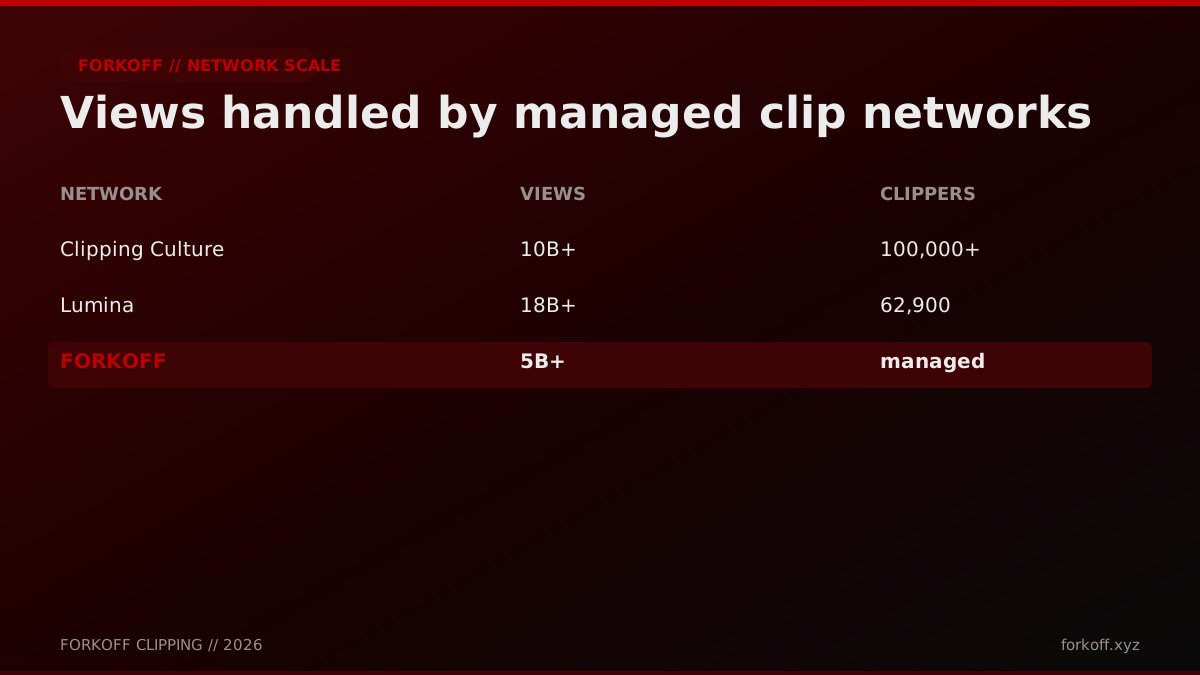
The networks running this have crossed serious scale. Clipping Culture reports more than 10B views and a six-figure clipper base. Lumina reports 18B+ views across 62,900 clippers. On the platform side, Whop reported 3.5B+ clipped views in a single month and $2.67B in lifetime GMV, per an industry teardown of clipping businesses (trends.vc, June 2026). FORKOFF has processed 5B+ views. These are not pilot numbers. This is an established distribution layer.
Is performance clipping a real channel or just arbitrage?
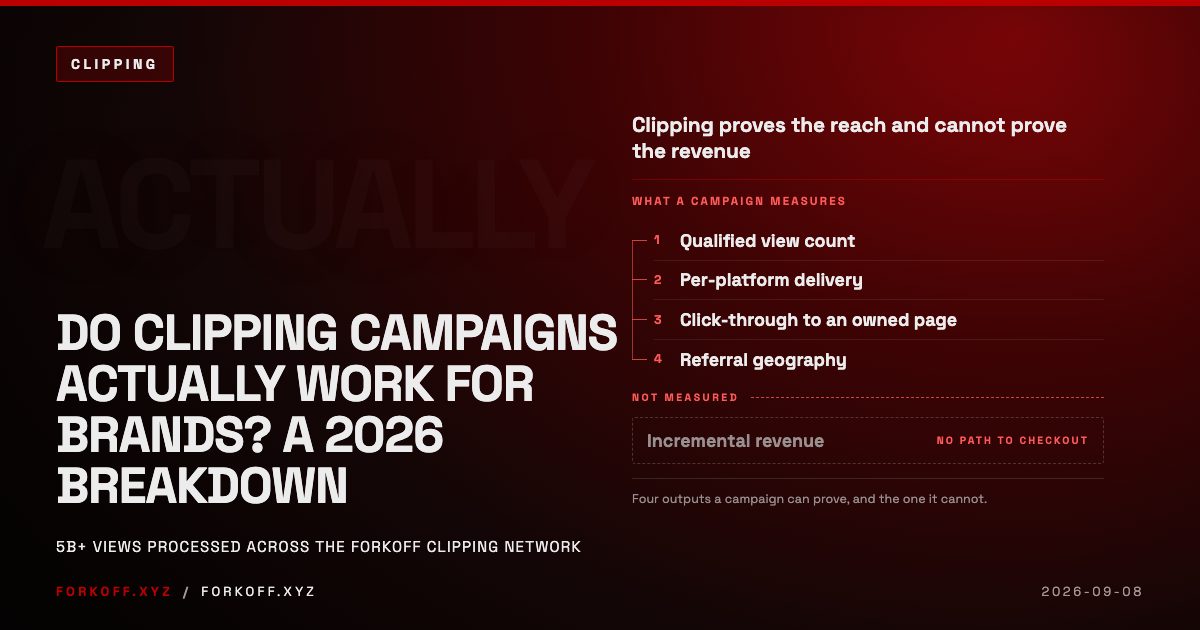
This is the fair challenge, and the honest answer is that it can be either. The deciding factor is one number: the verified-view rate.
Arbitrage players are taking this ability to re-package content as clips, and it's not satisfying the consumer, doesn't deliver good value to the advertiser and strips the originator of the content the ability to monetize it.
Lou Paskalis, quoted in the same reporting on the clipping economy, raises the real risk. The same low barrier that lets a clipper post 50 times a day lets a bad actor spin up farmed accounts that generate view counts no human ever watched. If a brand pays on raw views, it funds that fraud directly and gets nothing for it. The cheap, approximately $2 CPM becomes the most expensive media buy on the plan, because none of it reached a person.
The cheap CPM hides where budget leaks
A $2 CPM is only cheap if the views are real. The same low barrier that lets a clipper post 50 times a day lets a fraudster spin up farmed accounts. The number that protects budget is the verified-view rate, not the raw-view count, which is why view verification is the difference between a channel and a scam.
The fix is structural, not hopeful. You pay per verified view, and you verify before you pay. A view counts only after it clears geo, watch-time, brand-safety, and bot-signal checks. That single design choice is the line between a channel and a scam, and it is why the verified-view rate, not the raw-view count, is the number a brand should put on the dashboard.
Concretely, that means four filters running before a view is ever paid. Geo confirms the view came from the market you are selling into, not from wherever cheap traffic was easiest to manufacture, because a million views from outside your buying region are worth nothing to you and everything to a fraudster gaming the count. Watch-time confirms a human actually watched enough of the clip to register the message, screening out the scroll-past and the auto-play blip that platforms still count as a view. Brand-safety confirms the clip ran next to content you would be comfortable being associated with, because a cheap view on a toxic account can cost more in reputation than it ever returned in reach. And bot-signal analysis screens the engagement pattern for the fingerprints of farmed accounts. A view that clears all four is a qualified view, and qualified views are the only ones worth paying for.
The skeptics are right about the version of clipping that skips this. Pay on raw views with no gate and you will fund farmed traffic, because the incentive structure rewards exactly that: a clipper or a fraudster makes more by manufacturing cheap views than by earning real ones, and without verification you cannot tell the two apart. So the criticism is not wrong, it is a description of the unverified version. The answer is not to dismiss the channel, it is to refuse to pay for a view until it has proven it was real. Brands that do this get the cheap-distribution upside without funding the fraud. Brands that do not get burned and conclude clipping does not work, when what did not work was paying for a number they never checked.
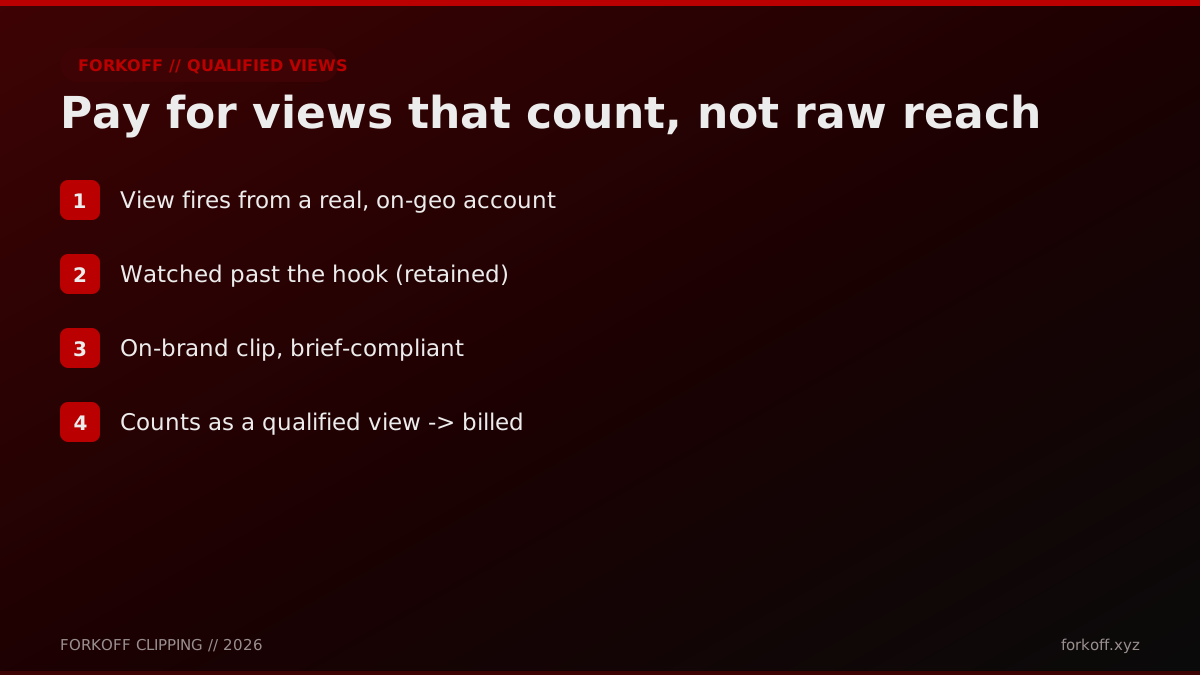
Operator notePay for verified views, not raw reach. The verified-view rate is the budget guard.
How is clipping different from influencer marketing?
They get filed under the same budget, but they solve different jobs. Influencer marketing buys one creator's audience and trust through a flat or per-post fee. The value is concentrated in a single voice, which is why it fits brand-trust goals and considered purchases. Clipping buys distribution across many creators paid on performance. The value is spread across volume and verified reach, which is why it fits top-of-funnel reach at a low, performance-priced CPM.
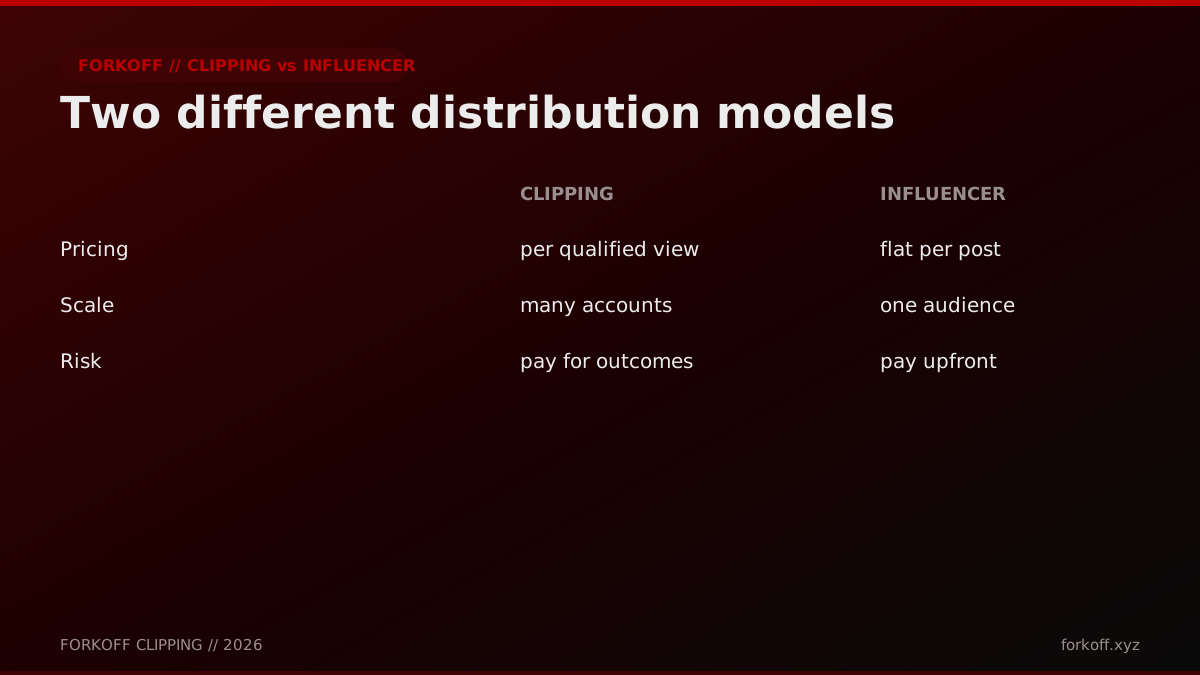
A clipping campaign is a structured distribution program where many creators edit and publish short-form clips from the same source material and get paid based on verified view performance.
Most 2026 media plans run both, for different jobs. You hire an influencer to vouch for the product to their audience. You run clipping to put the product into a million feeds at a price per view. One is trust at a premium. The other is reach at a discount, gated on verification.
The pricing models make the distinction concrete. Influencer deals are priced on the front end: you agree a fee for a creator's reach and reputation before a single view lands, and you carry the risk that the post underperforms. Clipping moves the risk the other way. You pay on the back end, per view delivered, so a clip that flops costs you almost nothing and a clip that hits costs you exactly in proportion to the reach it earned. That is why clipping feels like paid media and influencer feels like sponsorship, even though both involve creators. One transfers performance risk to you, the other keeps it on the supply side.
There is also a portfolio logic to running both. Influencer gives you a handful of high-trust placements that move consideration. Clipping gives you breadth, the wide top of the funnel that makes the influencer placements land on an audience that has already seen the brand a dozen times in the feed. Brands that treat the two as competitors pick one and underperform. Brands that treat them as a stack let clipping build the ambient awareness that makes every other channel, influencer included, convert better.
What to check before clipping earns a line on your plan
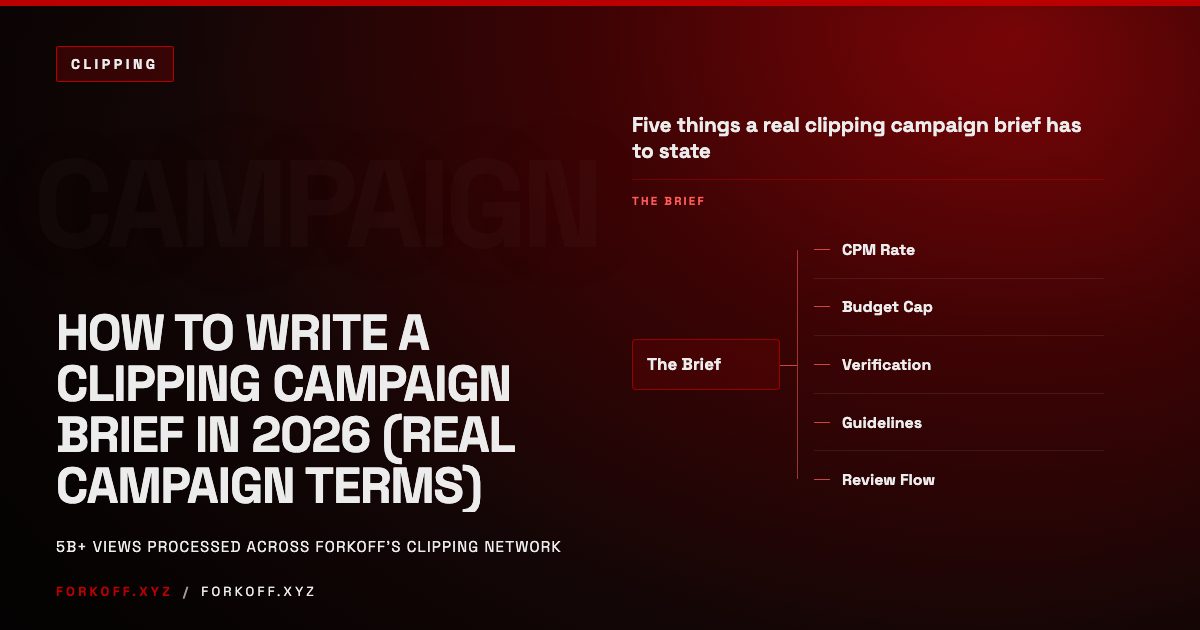
If the data has you convinced, the work is in the setup, not the spend. The mistakes that quietly drain a clipping budget are well documented, and they all trace back to paying for the wrong number.
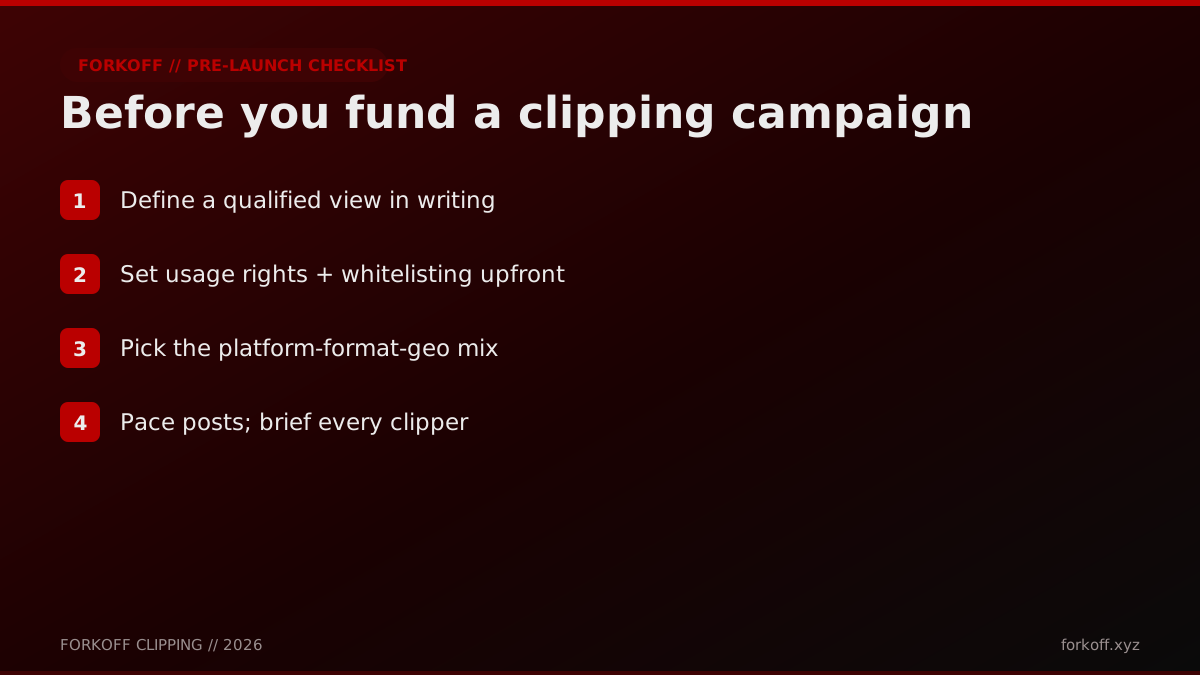
Run these before you fund a campaign. Confirm you are paying per verified view, not per raw view. Lock geo, platform, and format to where your buyers actually are. Set usage rights and whitelisting in the brief so winning clips can become paid ads later. And treat clipping as a flywheel, not a one-off, because a clip you paid a low CPM for keeps earning impressions after the spend stops.
The usage-rights point is the one most brands miss, and it quietly leaves money on the table. When a clip overperforms, you have a proven creative that already beat the algorithm with real audiences. If your brief secured the rights, you can take that winning clip and run it as a paid ad with confidence, because you have evidence it works rather than a hopeful guess. If your brief did not, you watch your best creative expire because you never had permission to reuse it. Performance clipping is not only a distribution channel, it is a creative-testing engine that surfaces winners cheaply, and the rights clause is what lets you cash that in.
Two more practical guards. Set a per-clipper and per-campaign cap so a single account farming views cannot drain the budget before your verification catches it, and structure payout so quality, not raw volume, is what gets rewarded. And measure the channel on a verified-view basis end to end, so the CPM on your dashboard reflects views that cleared the gate, not the gross number the platform reported. Do those things and the cheap headline CPM becomes a real, defensible number. Skip them and you are back to arbitrage.
Operator noteA clip you paid $2 per 1,000 views for keeps earning impressions after the spend stops.
For the full breakdown of where budget leaks, see our piece on the eight clipping campaign mistakes that burn brand budget. For how the per-view economics work, the CPM rates for clipping guide and the qualified views metric explainer cover the verification side. If you want a worked campaign, the clipping campaign cost breakdown runs the numbers end to end, and the clip economy at $200M tracks how big the category got. To run a campaign yourself, the managed clipping playbook lays out the operating model, the 90-day MRR compound loop case study shows what the compounding looks like in practice, and for the clipper-side economics, see how much clippers earn in 2026. The full clipping blog collects the rest.
Is the clipping boom sustainable, or a bubble?
The honest answer is that parts of it are durable and parts of it will get squeezed, and it is worth being clear about which is which before you build a plan around it.
The durable part is the underlying economics. As long as content is cheap to produce and platform feeds reward content people actually watch, paying creators per verified view to flood those feeds will be a rational way to buy reach. That is not a trend, it is a consequence of how the platforms work, and it does not unwind unless the platforms fundamentally change how distribution is allocated. The macro budget data points the same way: US creator advertising is projected at $43.9B in 2026 and growing about four times faster than the broader media industry, so the money flowing toward performance creator channels is structural, not speculative.
The part that will get squeezed is the easy arbitrage. Right now a lot of clipping value comes from exploiting platform algorithms that have not fully priced in the flood of clips, and from view counts that are not always verified. Platforms tighten spam and velocity detection every year, verification tooling improves, and the cheapest farmed-view tricks stop working as the gate gets stricter. The clippers and agencies that survive that tightening are the ones already operating on qualified views, brand-safety, and real audiences, because they were never relying on the loophole in the first place. The ones running pure raw-view arbitrage are the bubble, and they are the part that pops.
So the move is not to bet the plan on the loophole. It is to build on the durable layer: pay for verified views, run brand-safe placements, and treat clipping as a permanent performance channel rather than a growth hack with a shelf life. Done that way, the boom is not a bubble for you, because you were never holding the part that deflates.
The bottom line
Performance clipping became an ad line item in 2026 for one reason: the numbers finally made the case on their own. Demand 6.5x'd. The CPM came in 3x to 8x under paid social. Named brands ran it in the open. And the cause underneath is not going away, because AI is only going to make content cheaper to produce, which only makes distribution more valuable to own.
The brands that win at it will be the ones that pay for verified views and treat clipping like the performance channel it is, with the same rigor they bring to paid search. The ones that pay for raw reach will fund a lot of views no human watched and conclude the channel does not work. It works. You just have to buy the right number.
FORKOFF runs performance clipping priced on qualified views, with a per-view audit ledger and brand-safety gating, across a network that has processed 5B+ views. If you want clipping on the media plan without funding fake views, see the clipping service page, the podcast clipping service, the CPQV benchmark research, or compare the managed clipping options including FORKOFF vs Lumina Clippers, FORKOFF vs Clipping Culture, and FORKOFF vs OpusClip.