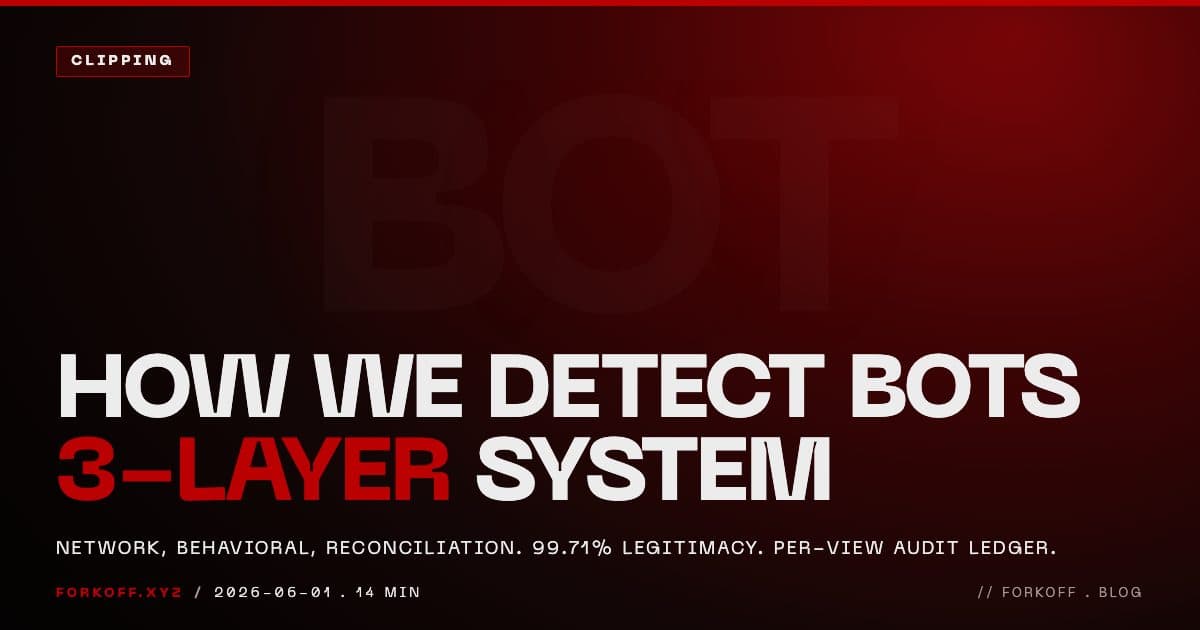
A 3-layer bot-detection system filters clipping views through network signatures at ingestion, behavioral entropy across the cohort, and reconciliation against owned analytics, in that order. Layer 1 catches General Invalid Traffic by signature, Layer 2 catches Sophisticated Invalid Traffic by behavior, and Layer 3 closes the gap on coordinated-human cohorts by reconciling platform-reported views against first-party site analytics. The output is a per-view audit ledger, not a dashboard number.
The 30-second rule
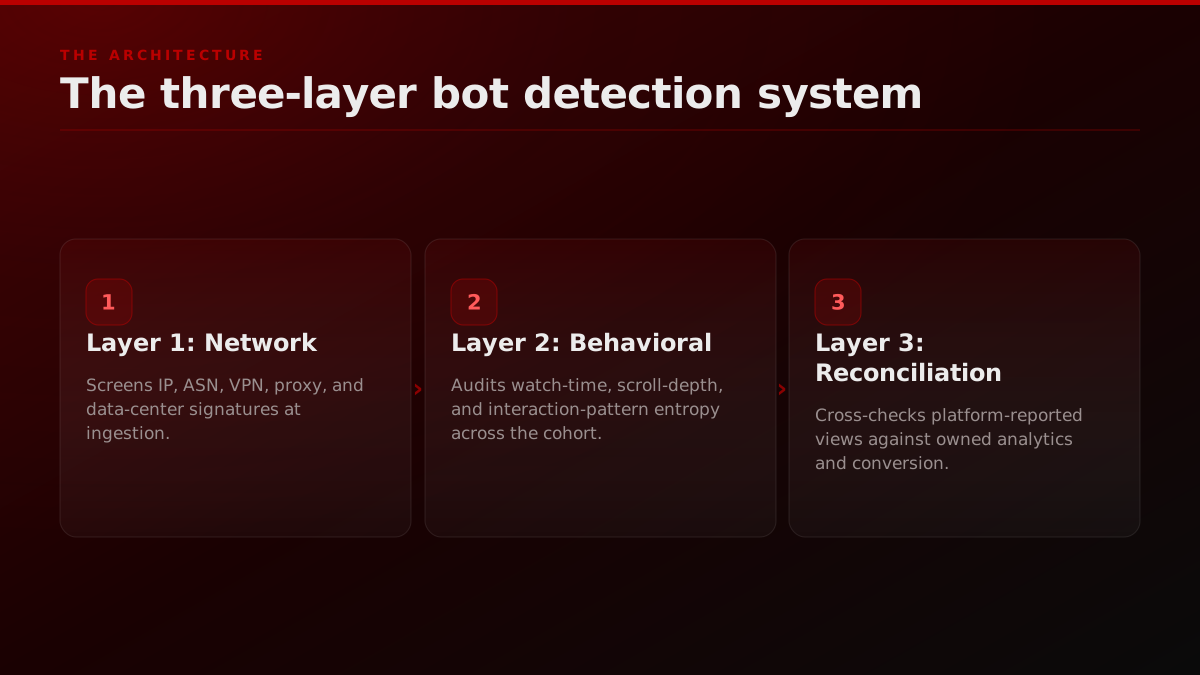
FORKOFF runs a 3-layer bot detection system on every clipping campaign. Layer 1 (network) screens IP, ASN, VPN, proxy, and data-center signatures at ingestion. Layer 2 (behavioral) audits watch-time, scroll-depth, and interaction-pattern entropy across the cohort. Layer 3 (reconciliation) cross-checks platform-reported views against owned analytics and conversion. Across one 14-day case study we shipped 99.71 percent sustained legitimacy and 68.8 percent qualification (4.2M qualified out of 6.1M raw). The output is a per-view audit ledger the operator can grep, pivot, and chargeback against. This post is the system.
About these numbers
FORKOFF first-party operator data from managed clipping and short-form video distribution engagements, supplemented by publicly available creator economy data (Whop, Epidemic Sound, Patreon 2025-2026). All figures are directional estimates based on operator observations, and individual outcomes vary by niche, platform, and the contamination level of the source clipper cohort.
Why is a platform view dashboard not a bot detection system?
Most clipping invoices include a number called "views". The number is the platform-reported view count surfaced by TikTok, YouTube, or Instagram. The platform filters some bot traffic before reporting and misses most sophisticated invalid traffic. A clipping-tool dashboard is a display layer over what the platform sent back. It is not a fraud-detection system.
This post is what detection actually looks like when an operator runs it on the buyer side, with a public ledger, against an outcome-priced contract. The system has 3 layers, and we ship it on every Managed Clipping campaign.
The honest motivation is also commercial. We sell against OpusClip, Submagic, and Whop, all three of which surface raw platform view counts on their dashboards. The wedge we drive is the ledger.
The 3-layer bot detection system, layer-by-layer
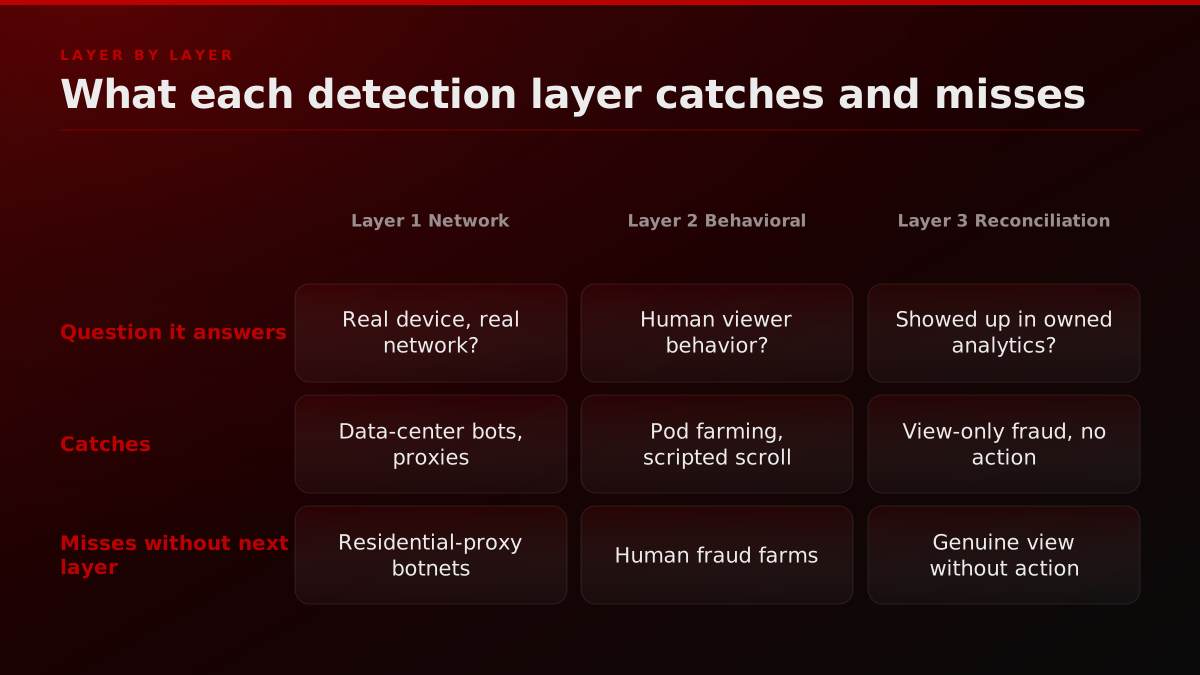
| Layer | Question it answers | Primary signals | Catches | Misses without next layer |
|---|---|---|---|---|
| Layer 1 Network | Is this view coming from a real device, on a real network? | IP, ASN, VPN, proxy, data-center signatures, browser fingerprint entropy | GIVT, known data-center bots, declared crawlers, low-rent proxy traffic | SIVT, residential-proxy botnets, click farms on real devices |
| Layer 2 Behavioral | Did this view behave like a human viewer? | Watch-time percentile, scroll depth, pause and replay timing, interaction-pattern entropy across the cohort | Pod farming, engagement-pod burst patterns, low-watch-time bot cohorts, scripted scroll behavior | Coordinated human fraud farms with real device behavior |
| Layer 3 Reconciliation | Did this view show up in owned analytics and downstream conversion? | UTM match-back, server log cross-reference, downstream conversion delta, profile-click rate, branded-search lift | Coordinated human fraud farms, view-only fraud without action surface | Genuine view-without-action (rare on clipping; flagged as low-qualification not as bot) |
The 3 layers run in sequence at ingestion. A view that passes all 3 is qualified; every reject is itemized in the per-view audit ledger.
Operator noteOpusClip dashboard shows raw platform-reported view count. No layer 1 filter, no layer 2 audit, no layer 3 ledger. Dashboard not detection.
Layer 1, network signatures at ingestion
The first layer answers one question: is this view coming from a real device on a real network? The signals are signature-based, IP, ASN, VPN, proxy, data-center fingerprint, and browser-fingerprint entropy, and the taxonomy is MRC-canonical. Layer 1 catches the General Invalid Traffic bucket cleanly and the Sophisticated Invalid Traffic bucket poorly, which is exactly why Layers 2 and 3 exist downstream.
Pixalate Inc.
@PixalateInc
Pixalate's May 2024 CTV Bundle ID Report provides a list of the top 100 Bundle IDs for the Roku, Amazon Fire TV, Samsung, and Apple TV app stores. Read the press release and access the report.
Sophisticated Invalid Traffic consists of more difficult to detect situations that require advanced analytics, multi-point corroboration and coordination, significant human intervention to analyze and identify.
Layer 1 is the easy layer. Fraudlogix reports that "many fake views come from IP ranges linked to data centers, hosting providers, VPNs, or proxy infrastructure, which can generate large numbers of repeated views with similar device fingerprints, user agents, or session patterns." This is the General Invalid Traffic (GIVT) bucket. Known data-center bots, declared crawlers, low-rent proxy networks, residential VPNs operating from server farms. All of it has signatures.
What Layer 1 catches on a typical clipping campaign:
- Data-center ASN traffic. Hetzner, AWS, GCP, OVH, DigitalOcean. Any view originating from a known cloud provider IP range gets flagged. A 23 percent contamination rate from data-center ASNs is not unusual on uncurated clipping cohorts.
- VPN and proxy infrastructure. Residential proxies (Bright Data, Oxylabs, Smartproxy) are harder to detect because the egress IP looks residential, but the HUMAN Security 2026 State of AI Traffic Report documents proxy-pool signatures at scale. Layer 1 inherits from HUMAN-style detection on the network side.
- Browser fingerprint entropy. A real Chrome on a real iPhone has 50+ entropy bits in the fingerprint. A scripted Chromium headless instance has 4. The gap is the signal.
- Declared crawlers and spiders. GoogleBot, Bingbot, IAS, DV crawlers. Flagged GIVT per MRC.
Pixalate Inc.
@PixalateInc
Pixalate's Q2 2024 Global IAB Categories IVT Trends report analyzes the invalid traffic rates across the top ten IAB categories by region, based on the share of mobile app global open programmatic ad spend. Download the reports for free today.
Layer 1 catches GIVT well. It catches SIVT (Sophisticated Invalid Traffic) poorly, because SIVT is defined by its evasion of signature-based filtering. That is what Layers 2 and 3 are for.
The Layer 1 signal stack in operator detail
Inside Layer 1 we run a stack of seven discrete checks, ordered lowest-cost-first so the obvious GIVT rows drop out of the funnel before the expensive checks fire. The order matters because the cost of running detection scales with the cohort size, and a $20K clipping invoice that ships 6M raw rows cannot eat a per-row 200ms call on every external enrichment service. The seven checks in order:
- IP allowlist and denylist match. The denylist carries every ASN published by IPinfo, MaxMind, and our own internal data-center registry. Hits drop at zero milliseconds of network cost.
- ASN classification. Every IP gets resolved to its parent ASN, then the ASN gets tagged as residential, hosting, mobile, business, or unclassified. Hosting and unclassified ASNs route to the rejection queue on the first pass.
- Geolocation versus claimed locale. A view that claims a US locale but resolves to a Vietnamese data-center IP gets flagged for the locale-mismatch rejection bucket.
- VPN and proxy database lookup. We carry a quarterly-refreshed export from IPQualityScore, IPHub, and Spur.us. Residential-proxy egress IPs get tagged at the IP level, not the ASN level, because residential-proxy pools rotate through real ISP allocations.
- Device fingerprint canonicalization. The browser fingerprint string gets canonicalized (sorted keys, lowercased values, stripped of volatile fields) and hashed. The hash gets compared against a 90-day rolling window of known-bot fingerprints.
- TLS fingerprint check. JA3 and JA4 TLS signatures get computed and compared against a denylist of automation-tool TLS signatures. A real iPhone running Safari has a recognizable TLS profile; a scripted Go-net-http client has a different one.
- Connection-pattern entropy. Same IP, same fingerprint, more than 12 view events inside a 10-minute window across more than 3 clips gets flagged as a session-replay bot pattern.
The seven checks ship in roughly 11 milliseconds per row at our current scale, batched, on a single server. The throughput cap is the rate at which the platform reporting API releases new view rows. Layer 1 has never been the bottleneck.
Why the GIVT versus SIVT split matters for billing
The MRC taxonomy is not academic. The reason the GIVT versus SIVT split is the canonical industry vocabulary is that it maps directly onto refund-eligibility and chargeback-defensibility. A vendor that ships a clipping invoice with no GIVT filtering is providing a level of detection that fell below the 2014 IAB baseline. A vendor that ships GIVT filtering but no SIVT filtering is providing roughly the level of detection a self-serve TikTok ads account already runs internally. A vendor that ships both GIVT and SIVT filtering is providing what the IAB defines as the modern accountability floor. FORKOFF ships both, plus the Layer 3 reconciliation that closes the gap SIVT detection leaves on coordinated-human cohorts.
Detection run end to end removes an order of magnitude of fraud
The proof that detection works at scale is public. TAG Certified Channels, the supply-chain lanes where every party from agency to publisher carries the Certified Against Fraud seal, held invalid traffic under 1 percent for a third straight year, 0.82 percent across the first half of 2023 per the TAG US Fraud Benchmark Study. The 2020 benchmark put the certified rate at 1.05 percent against a 10.83 percent industry average, a roughly 90 percent reduction. The lesson is not that fraud is solved. It is that detection, run seriously and end to end, strips an order of magnitude out of the invalid cohort. That certification stops at programmatic display and video; no clipping vendor carries it, and no clipping dashboard reconciles a view the way a certified supply chain reconciles an impression. <strong>The buyer-side ledger is how a clipping campaign earns the accountability floor the certified programmatic lanes already clear.</strong>
Source: TAG US Fraud Benchmark Study 2023 and 2020 (The 614 Group, on behalf of TAG)
Operator note23 percent of one campaign cohort came from 4 data-center ASNs. Layer 1 rejected at ingestion, before the dashboard saw the number.
Layer 2, behavioral entropy across the cohort
The second layer answers a harder question: did this view behave like a human viewer? The signals are behavioral, watch-time percentile, scroll depth, pause-replay timing, and interaction-pattern entropy measured across the whole cohort. This is where the bulk of Sophisticated Invalid Traffic gets caught, because SIVT is defined by its ability to evade the signature-based filtering Layer 1 runs.
Behavioral detection is where the bulk of SIVT gets caught. The Brand Safety Institute defines it directly: "Procurement must cover both General Invalid Traffic (GIVT) and Sophisticated Invalid Traffic (SIVT), where SIVT covers advanced fraud techniques designed to evade signature-based detection by mimicking real user behavior." Layer 2 closes that gap.
Three behavioral patterns Layer 2 catches:
- Low watch-time bot cohorts. A view that loads and exits inside 1.5 seconds, in a tight cluster, with identical user-agent strings, is a bot cohort. Real human watch-time distributes across a curve; bot watch-time clusters at the floor.
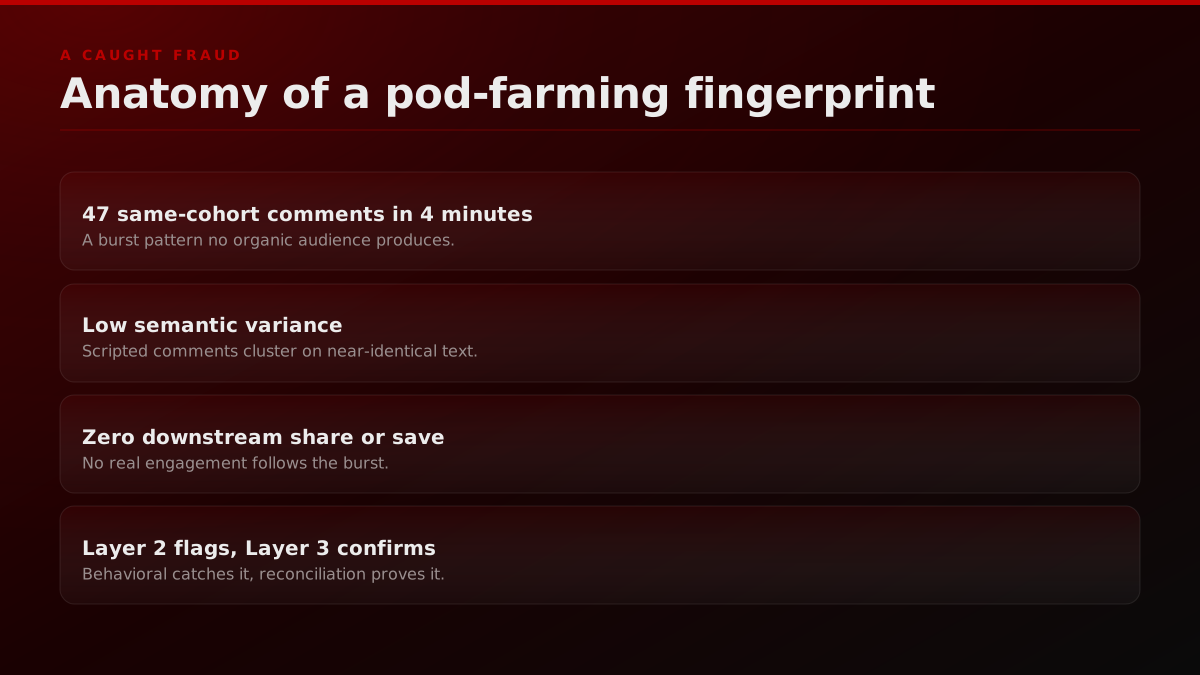
- Pod-farming burst patterns. The classic engagement-pod fingerprint is the burst, 30 to 80 same-cohort comments inside 5 minutes of post-publish, with low semantic variance and zero downstream share or save.
If you see the same group of people commenting on every single post within minutes of it going live, you are likely looking at an engagement pod in action.
- Interaction-pattern entropy collapse. Real users scroll at irregular cadence, pause on different frames, replay at different points. Scripted bots scroll uniformly, pause never, replay never. The entropy collapse is the signal.
Influencity lists the burst-comment pattern as the canonical pod fingerprint. Anura and Spider AF flag the same. The detection is well-established; the question is whether the buyer-side vendor runs it.
There is a massive loophole on YouTube right now
Creators surface an active loophole in YouTube view-count reporting that platform-side detection has not closed. Operator-side evidence that platform filtering misses sophisticated invalid traffic patterns at scale.
How Digital Ad Fraud Wastes Your Budget: Insights from Dr. Augustine Fou
AdQuick
Dr. Augustine Fou (independent ad-fraud researcher) on how digital ad fraud wastes budget; the operator-side primer on the buyer-side problem.
The Influenconnect research blog calls out the structural challenge: "Unlike fake followers, engagement pods involve real users, making them harder to detect." Real users running coordinated behavior. The signal is the coordination, not the account. Layer 2 catches the coordination via entropy collapse and burst timing.
The watch-time distribution test
The single most reliable Layer 2 signal is the watch-time distribution test, and it is worth its own subsection because operators routinely under-value it. Real human watch-time on a 30-second TikTok or Reels clip distributes across a recognizable curve. A small bucket exits inside 2 seconds (the swipe-past cohort), a larger bucket holds to 5 to 10 seconds (the partial-watch cohort), a meaningful tail watches the full clip or replays. The shape is reproducible across niches, formats, and account sizes. Bot watch-time does not match this curve.
The three classical bot-cohort signatures we flag at Layer 2:
- Spike at the floor. A view cohort where more than 40 percent of rows exit inside 1.5 seconds, with low variance, is a bot fingerprint. Real humans vary; bots clamp at the swipe-detection floor to register a view without consuming downstream attention budget.
- Spike at the ceiling. A view cohort where more than 15 percent of rows hit 100 percent watch-time on a 30-second clip, with no replay variance, is the inverse fingerprint. Pod farms instructed to "watch the full clip" produce this shape.
- Bimodal collapse. A cohort that bifurcates into "exits at 1 second" and "watches the full 30 seconds" with no middle, no partial-watches, no scrub-and-exit, is a coordinated cohort. Real audience watch-time is unimodal with a long tail.
The test is low-cost to run and devastatingly hard to fake at scale. Pod operators can instruct a 50-account ring to "watch the full clip" or "swipe past after 2 seconds" but cannot reproduce the real-human distribution curve, because the curve is the output of a thousand uncoordinated micro-decisions. Layer 2 reads the curve and flags the rows.
Sentiment, semantic variance, and the comment fingerprint
Pod-farming comments carry a separate fingerprint that closes the case when watch-time alone is ambiguous. Real engagement comments distribute across a wide vocabulary, mix length, mix sentiment, and reference specific frames or moments in the clip. Pod comments do the opposite. We run three checks on every comment cohort attached to a clip we ingested:
- Length-variance check. Real comments range from 3 to 200 characters with wide variance. Pod comments cluster at 8 to 25 characters with low variance, because the pod operator wrote a short template and the pod members copy it with minor tweaks.
- Semantic-similarity check. Vector embeddings of every comment in the cohort get compared pairwise. A cohort with average cosine similarity above 0.72 is a coordinated cohort. Real comment cohorts sit at 0.18 to 0.34.
- Frame-reference check. Real comments reference specific clip content ("the part where she pulls out the laptop", "00 had me dead"). Pod comments stay generic ("amazing content!!", "love this!!", "first!"). We tag the frame-reference rate and route low rates to the pod-suspicion bucket.
The three checks compose. A clip with 47 comments inside 4 minutes, average length 18 characters, semantic similarity 0.81, frame-reference rate 0 percent is not a real engagement cohort. The comment fingerprint plus the watch-time distribution plus the burst timing is three independent signals pointing at the same cohort. Layer 2 ships a verdict only when the signals agree.
Operator note47 same-cohort comments inside 4 minutes of post-publish. Pod fingerprint. Layer 2 flagged on the third campaign day.
Layer 3, reconciliation against owned analytics
The third layer answers the question the first two cannot: did this view show up in owned analytics and downstream conversion? The signals are first-party, UTM match-back, server log cross-reference, downstream conversion delta, profile-click rate, and branded-search lift. A coordinated human farm on real residential IPs passes Layers 1 and 2 but never reconciles here, because the cohort has no incentive to click through or search the brand.
Layer 3 closes the gap that Layers 1 and 2 leave. A coordinated human fraud farm running on real residential IPs, mimicking real human behavior, will pass Layer 1 and Layer 2. It will not show up in owned analytics, because the cohort has no incentive to convert.
What Layer 3 reconciles:
- UTM match-back. Every clip carries a per-clip UTM. Layer 3 cross-references the platform-reported view count against UTM-tagged inbound on the owned domain.
- Server log cross-reference. Profile-page visits, link clicks, search engine referrals. The legitimate-cohort signature is a 0.2 to 2 percent profile-click rate on qualified views.
- Downstream conversion delta. The conversion gradient between the bot-rejected cohort and the qualified cohort is the final reconciliation. A 0 percent conversion gradient on the rejected cohort versus a 1 to 3 percent gradient on the qualified cohort confirms the split.
- Branded-search lift. Aggregate Google Trends lift on the brand term lagging the campaign launch by 7 to 21 days. Bot cohorts produce zero lift; qualified cohorts produce measurable lift.
For advertisers, fake views waste budget, distort campaign reports, and teach ad algorithms to optimize toward traffic that never becomes a real customer.
The reconciliation discipline is where the buyer-side ledger earns its keep. Tapper's view-bot research summarizes the cost of failure plainly: "For advertisers, fake views waste budget, distort campaign reports, and teach ad algorithms to optimize toward traffic that never becomes a real customer." Layer 3 is the layer that refuses to let the algorithm get poisoned.
Click fraud rates by ad network for September
Month-over-month click-fraud rate breakdown across major ad networks. Operator-side data on platform-side detection drift and where buyer-side audit needs to close the gap.
Why first-party reconciliation cannot be replaced by platform analytics
A reasonable buyer-side objection at this point: TikTok, YouTube, and Instagram already publish their own analytics surface. Profile-visit counts, link-click counts, follower-conversion rates. Why does Layer 3 reconcile against owned analytics rather than against the platform's own first-party analytics surface?
Three reasons, each a separate failure mode of the platform-side number:
- The platform analytics number is the same number Layer 2 already audited. If a coordinated cohort produces 100 fake profile visits inside the platform, the platform reports 100 profile visits. The number is internally consistent with the inflated view count, because both come from the same source. Reconciling fake views against fake profile visits is a circular check.
- Owned-domain UTM match-back lives outside the platform's measurement boundary. A click that lands on the operator's owned domain carries a per-clip UTM, hits the operator's server log, and triggers the operator's analytics pixel. None of those signals are under the platform's control. A coordinated cohort that does not click through cannot fake the absence.
- Branded-search lift is the cleanest control. Bot cohorts do not produce Google search queries for the brand. The branded-search lag (the 7-to-21-day gap between a campaign launch and the corresponding spike in Google Trends for the brand term) is the most fraud-resistant signal in the stack, because it requires the cohort to leave the platform, open a search engine, and type a brand name. Bots do not do this. Qualified humans do.
The discipline of owning the reconciliation layer is the discipline of owning the chargeback. A vendor that cites only platform-side analytics has cited a number that the platform produced. A vendor that reconciles against owned analytics has cited a number the operator can independently verify. The buyer-side asymmetry is the entire commercial point.
What we do when reconciliation rejects a row
Layer 3 rejects roughly 1.5 to 3 percent of the cohort that passed Layers 1 and 2. The rejection bucket gets tagged no-reconciliation in the ledger, and the row gets routed through one of two downstream paths:
- Path A, soft reject. The view is flagged as unreconciled but billable at a reduced CPQV. This applies when the view passed Layers 1 and 2 cleanly, the cohort context is plausible, and the absence of downstream action could reflect a genuinely view-only audience (e.g., a hot-take clip that gets watched but rarely clicked). The operator decides per contract whether soft-rejects bill at full, partial, or zero CPQV.
- Path B, hard reject. The view is flagged as unreconciled AND sits inside a cohort that also failed Layer 2 entropy checks at the cohort level. The combination of weak Layer 2 plus zero Layer 3 reconciliation is treated as a confirmed coordinated cohort. Hard-rejects bill at zero CPQV and get flagged as chargeback-eligible against any vendor upstream of FORKOFF in the supply chain.
Most FORKOFF Managed Clipping contracts default to Path B on the rejection bucket. The defensible answer to "why did you not bill us for these 100K views" is the row-level ledger plus the rejection reason plus the cohort-level entropy report. Three independent artifacts pointing at the same cohort.
Operator note6.1M raw, 4.2M qualified, 100K rejected at Layer 3 for zero downstream profile-click. Row 4193887 reason no-reconciliation.
What 99.71 percent legitimacy and 68.8 percent qualification looks like
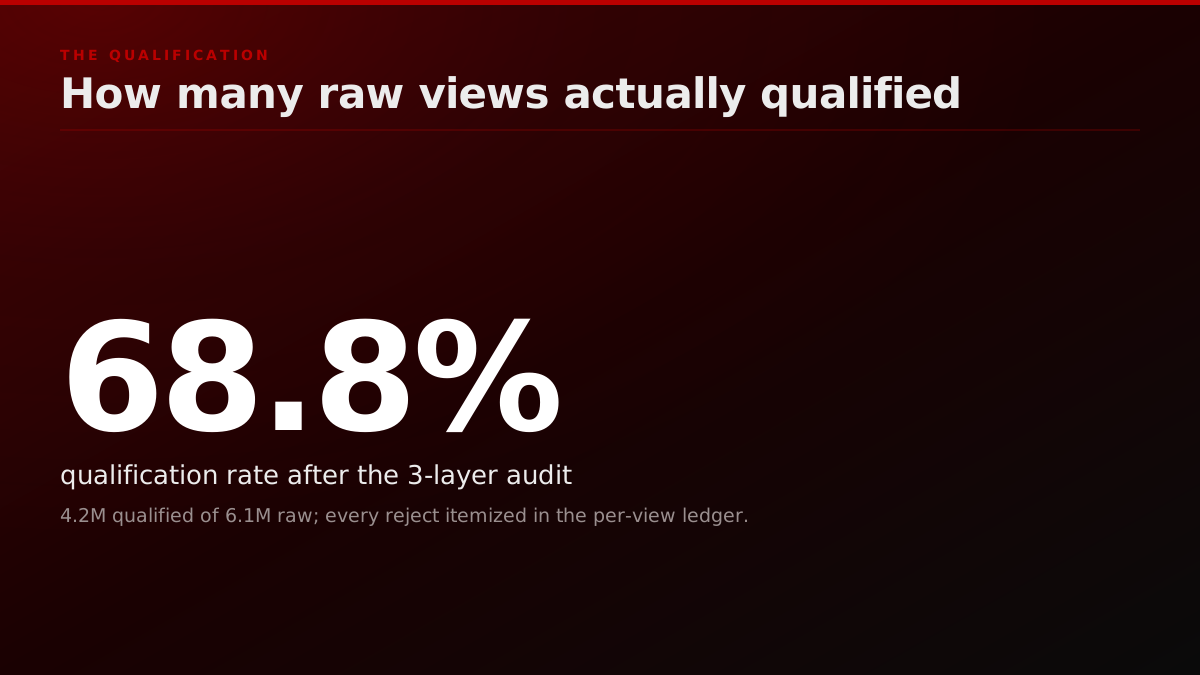
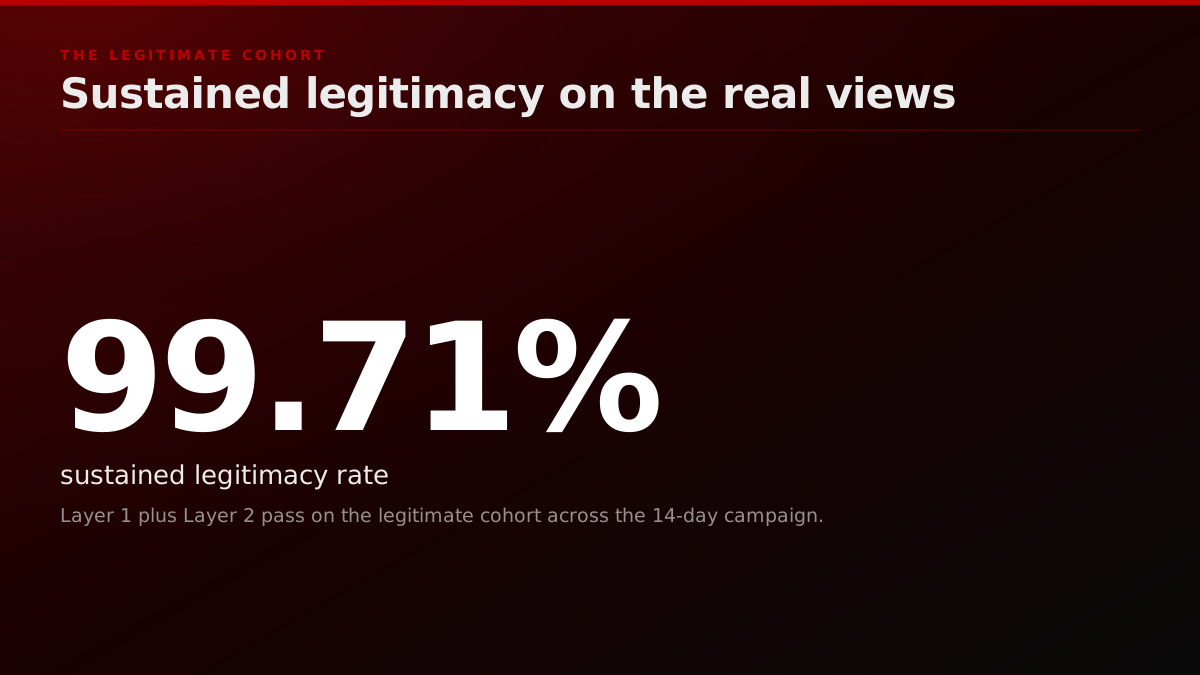
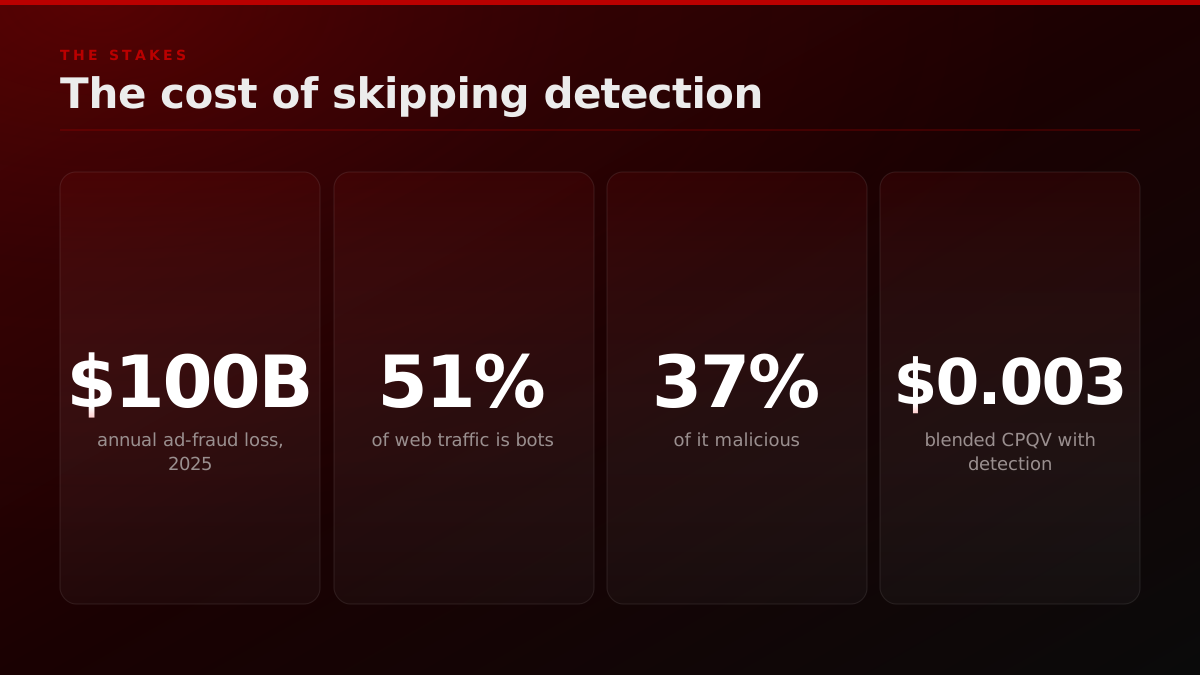
On one 14-day FORKOFF Managed Clipping case study, 6.1M raw views filtered down to 4.2M qualified views, a 68.8 percent qualification rate, with 99.71 percent sustained legitimacy across the window at a $0.003 blended CPQV. The legitimacy figure matters more than the qualification rate, because it proves the qualified cohort holds across 14 days rather than decaying. The headline numbers below are sourced from the per-view ledger and carried verbatim in lib/proof-data.ts CASE_STUDY_STATS:
- 6.1M raw views submitted. Platform-reported, pre-audit.
- 4.2M qualified views. Audit-passed across all 3 layers.
- 68.8 percent qualification rate. Forty-two hundred thousand of sixty-one hundred thousand.
- 99.71 percent sustained legitimacy. The legitimate cohort holds its qualification across the 14-day window without drift.
- $0.003 blended CPQV. Total spend divided by qualified views.
One case, 14 days, the real numbers
| Metric | Value | Source |
|---|---|---|
| Raw views submitted | 6.1M | Platform-reported, pre-audit |
| Qualified views after 3-layer audit | 4.2M | Per-view ledger, 14-day window |
| Qualification rate | 68.8 percent | 4.2M of 6.1M |
| Sustained legitimacy rate | 99.71 percent | Layer 1 + Layer 2 pass on the legitimate cohort |
| Blended CPQV | $0.003 | Total spend divided by qualified views |
| Industry CPV (unmanaged) | $0.01 to $0.10 | FORKOFF audits 2025-2026 |
Case data from one FORKOFF Managed Clipping campaign, 13-day shipment, public ledger available on request under NDA. Source numbers carried in lib/proof-data.ts CASE_STUDY_STATS.
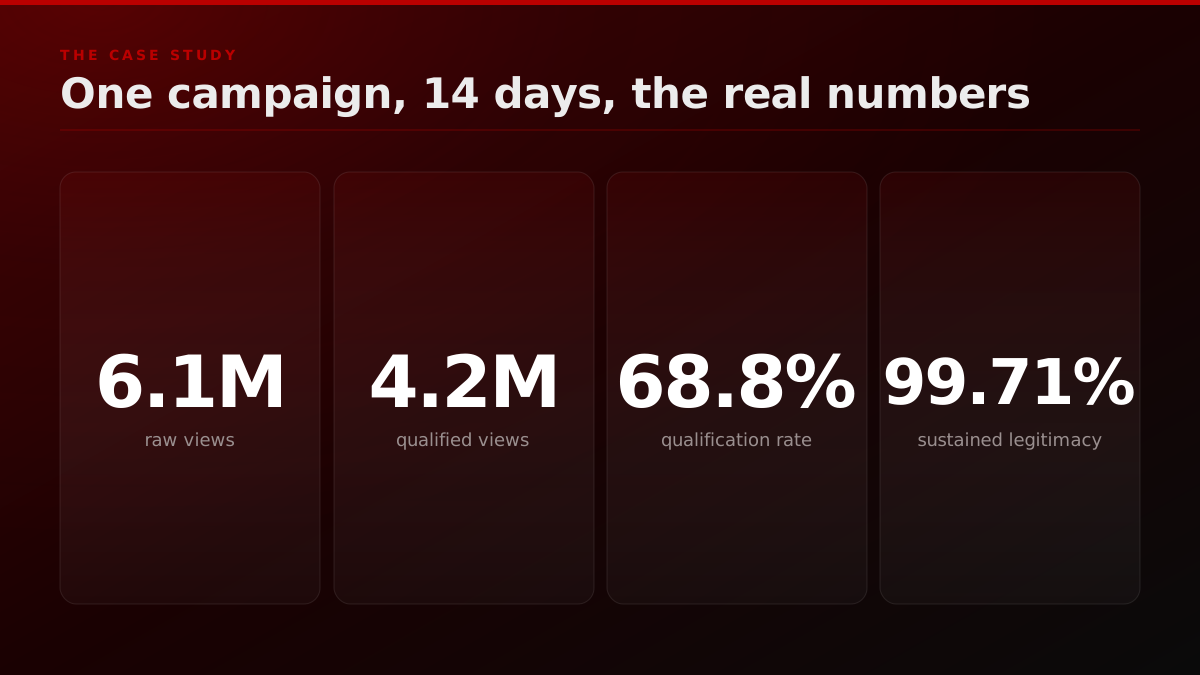
The 99.71 percent legitimacy number is the more important of the two. Sustained legitimacy means the qualified cohort does not decay; the views that pass on day 1 are still passing on day 14. That stability is the test for whether the detection system is calibrated against the campaign or just noise-filtering at ingestion.
Operator note$20K invoice, 6.1M views, $0.003 CPQV. Same invoice on raw-view CPM = $14K real spend lost to bots without the ledger.
The wedge against OpusClip, Submagic, Whop
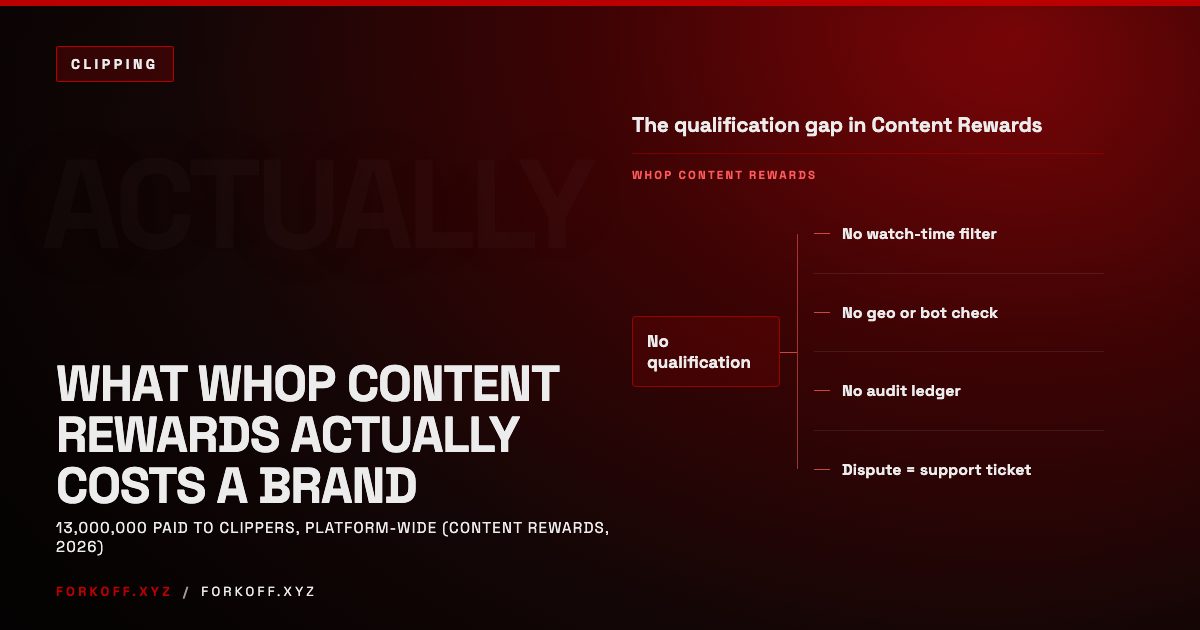
The three category leaders surface raw platform view counts on their dashboards. We grep their public documentation, their reviews, their pricing pages, and find no published bot-filtering methodology, no per-view audit ledger format, no third-party verification offer.
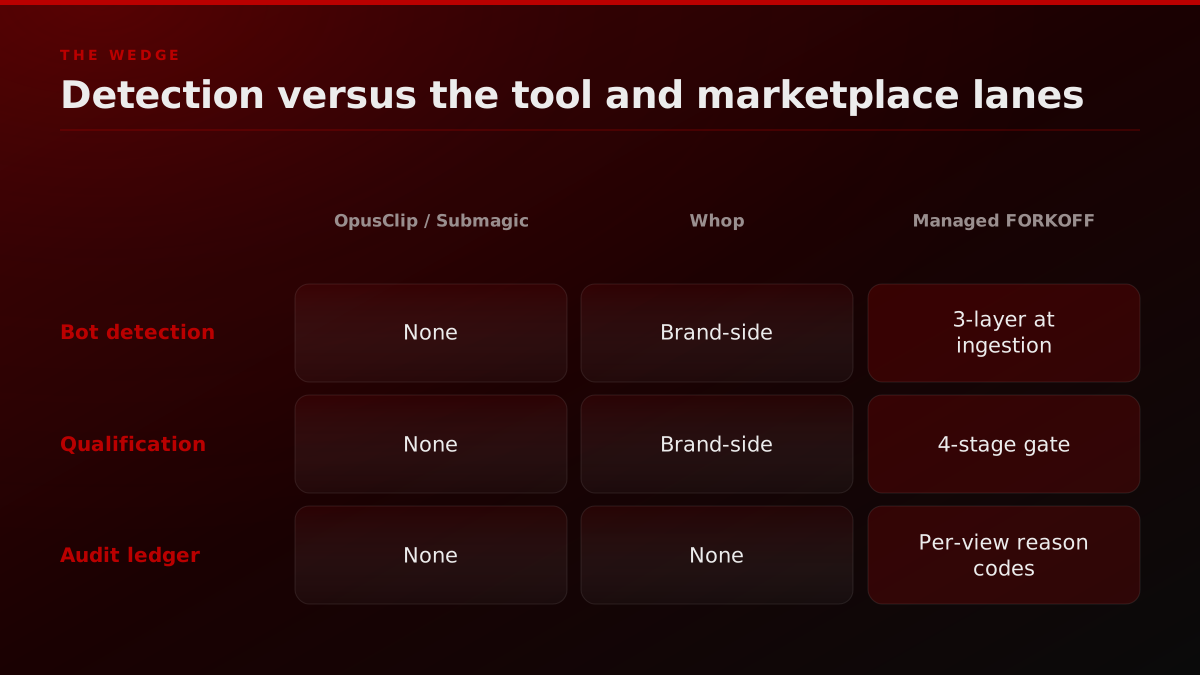
The IndishMarketer review of Whop's clipping program notes that "payments are processed once your views are verified." The verification mechanism is platform-side. The same is true of OpusClip and Submagic. The detection runs on the platform; the dashboard displays the result. The buyer pays whatever the dashboard shows.
Follower count is the worst metric for picking influencers
r/marketing thread on why follower count fails as an influencer-selection metric. Adjacent operator-voice on the vanity-versus-qualified split that maps directly to the qualified-view discipline.
The FORKOFF position runs the other way. The detection runs on the buyer side, the ledger is the deliverable, the invoice charges only for qualified views.
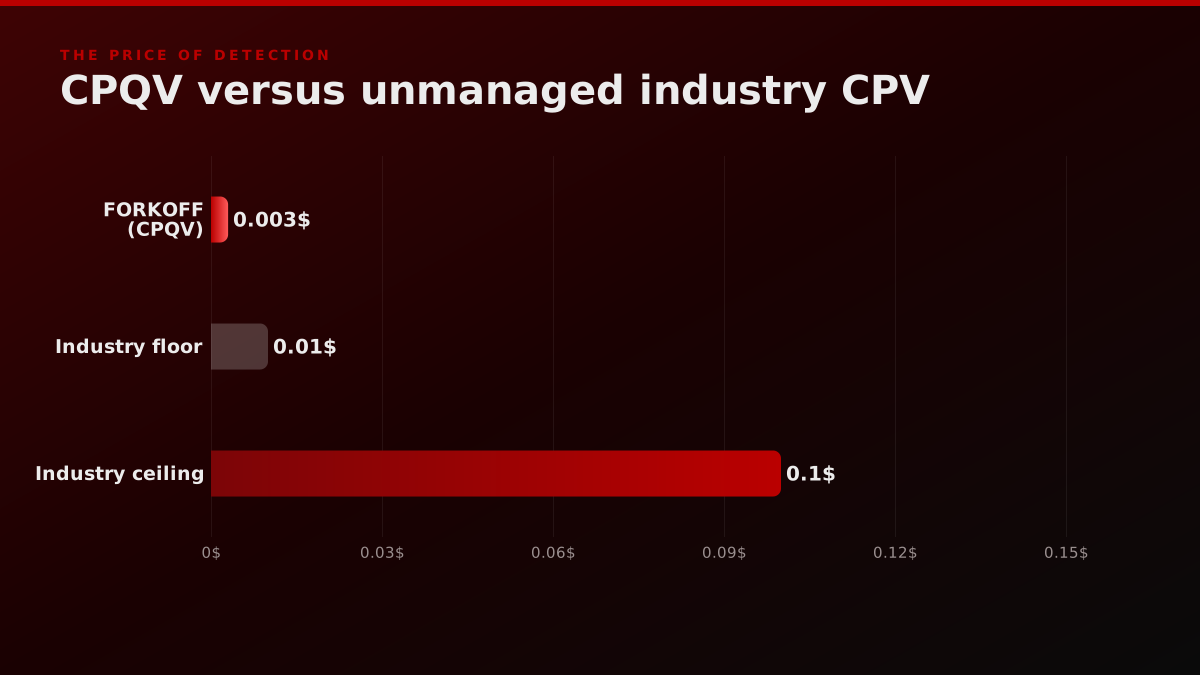
The order-of-magnitude gap matters. The blended FORKOFF CPQV at $0.003 versus unmanaged industry CPV at $0.01 to $0.10 (per FORKOFF clipping audits 2025-2026 documented in the Qualified Views metric pillar) means the unmanaged retainer pays 3x to 30x more per qualified view. The gap is the price of running detection at all.
Platform-side detection is necessary, not sufficient
YouTube, TikTok, and Instagram all run platform-side bot detection. YouTube's "inauthentic content" policy (renamed from "repetitious content" in July 2025) targets AI-generated mass-produced video farming views at scale. The honest read on platform-side filtering, it catches GIVT well and SIVT poorly. Sophisticated invalid traffic by definition mimics human behavior; signature-based filtering loses ground year over year as residential-proxy botnets and pod-farming operations professionalize. Even X (formerly Twitter) has publicly said its search and bot-detection codebase was "getting hammered by AI agents" and required a full overhaul. <strong>The buyer-side ledger is not optional in 2026.</strong> It is the layer that closes the gap platform-side filtering cannot.
Source: Improvado ad-fraud detection guide 2026; YouTube inauthentic content policy; HUMAN Security 2026 State of AI Traffic Report
Operator noteOpusClip, Submagic, Whop. Zero published per-view ledgers across the three category leaders. Dashboard-only.
The per-view audit ledger format
Every FORKOFF Managed Clipping campaign ships with a per-view audit ledger: one row per submitted view, delivered as CSV or JSON, carrying the timestamp, platform, clip ID, salted IP hash, ASN, device fingerprint hash, watch-time percentile, qualification verdict, rejection reason, and a Layer 3 reconciliation flag. That row-level itemization is what makes a chargeback defensible. The ten columns:
- Timestamp (ISO 8601, UTC).
- Platform (TikTok, YouTube Shorts, Instagram Reels).
- Clip ID (FORKOFF internal clip identifier).
- IP hash (SHA-256 of the originating IP, salted; the salt is operator-rotated quarterly so historical hashes do not leak).
- ASN (numeric autonomous system number).
- Device fingerprint hash (SHA-256 of the canonicalized fingerprint string).
- Watch-time percentile (the percentile rank of this view's watch-time within the daily distribution).
- Qualification verdict (qualified or rejected).
- Rejection reason (one of: data-center-asn, vpn-proxy, fingerprint-entropy-low, watch-time-floor, pod-burst, entropy-collapse, no-reconciliation; null if qualified).
- Reconciled? (boolean, layer 3 pass).
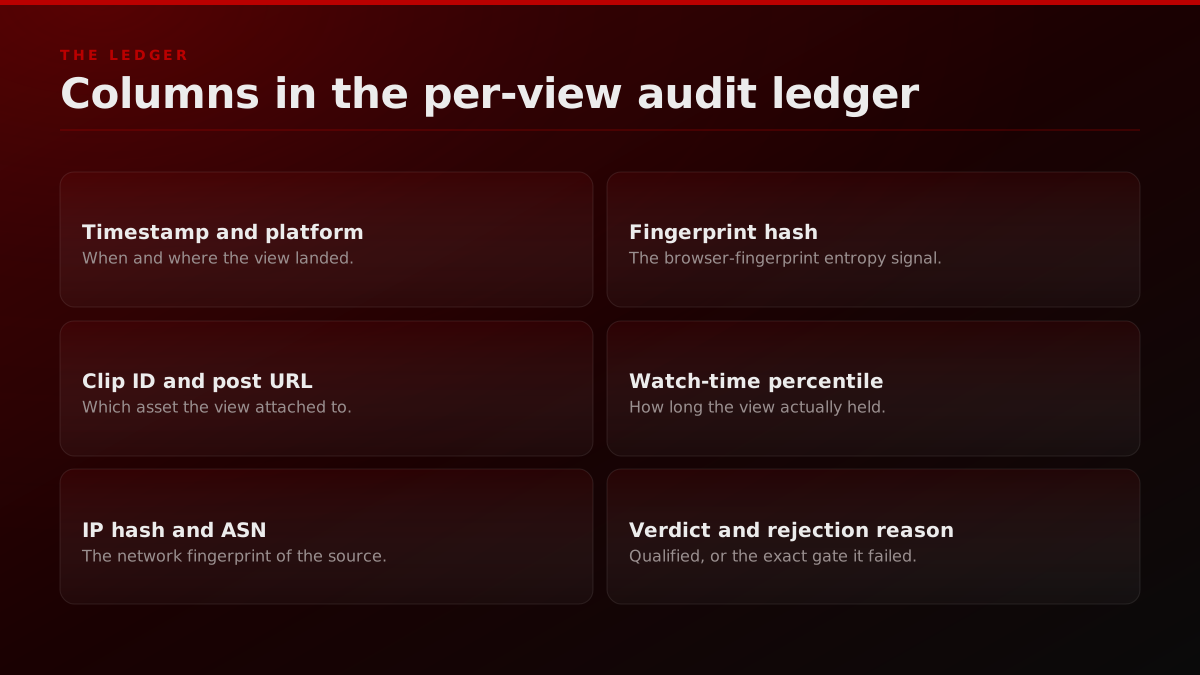
The ledger is the chargeback. With a per-view audit ledger that itemizes every rejection and rejection reason, the operator hands the vendor a row-level breakdown of the invalid cohort. A vendor that invoices on raw-view CPM has no contractual hook to dispute. A vendor that invoices on outcome-priced CPQV charges only for the rows that pass.
Operator noteOperator chargebacked $4,200 against a clipping vendor using row IDs 8142 through 11330 from our ledger. Refunded in 9 days.
At FORKOFF we run this on every campaign
The 3-layer detection runs on every Managed Clipping engagement we deliver. The system is not an add-on, it is the unit-of-account: the ledger is the deliverable, the qualified-view count is the billed quantity, and the CPQV is the invoice. We will audit one of your existing campaigns in 5 business days, free, and hand back the ledger plus a chargeback recommendation.
If you are running clipping today through OpusClip, Submagic, Whop, or any vendor that surfaces raw platform view counts without a per-view ledger, we can audit one campaign in 5 business days. Free. The output is the ledger plus a chargeback recommendation against the vendor. Hand a strategist your last invoice on a 30-minute call.
The deeper play is the move from CPM clipping to outcome-priced CPQV. The math we run is laid out in the qualified-views metric pillar, the CPQV calculator, and the managed clipping revenue case study. The 3-layer detection is the mechanism that makes outcome pricing legitimate. Without detection, "qualified view" is a marketing term. With detection, it is a contractual unit-of-account.
The order-of-magnitude cost of skipping detection
Ad fraud losses surpassed $100 billion annually in 2025 per multiple independent industry reports, with projections at $172 billion by 2028. The Imperva-Thales 2025 Bad Bot Report flagged automated traffic at 51 percent of all web traffic, with 37 percent malicious. On a $20K monthly clipping retainer, a 30 percent SIVT contamination rate is the difference between paying for 4M qualified views and paying for 6M raw views, $6K of real budget burning per month on bot cohorts. The buyer-side question is not whether bots are in the cohort, but what percent and whether the vendor can prove it. <strong>A vendor with no per-view ledger has no answer.</strong>
Source: Imperva-Thales 2025 Bad Bot Report; TAG 2024 US Ad Fraud Savings Report; FORKOFF clipping audits 2025-2026
Operator noteLedger ships on every Managed Clipping engagement. Not optional, not upsell. Default deliverable since 2024.
How do you charge back a clipping vendor for bot views?
Operators charge back bot views by handing the vendor the per-view ledger, filtering to the rejected rows, computing the invalid-cohort spend as a fraction of the invoice, and issuing a one-page chargeback that cites the TAG Certified Against Fraud framework. Most vendors refund inside 10 business days when handed row-level evidence. The five-step flow with a per-view audit ledger:
- Hand the vendor the ledger. CSV or JSON, every row tagged with verdict + rejection reason.
- Filter to the rejected rows. Sort by rejection reason. Group by ASN, fingerprint hash, watch-time percentile cluster.
- Calculate the invalid-cohort spend. Rejected-row count divided by total-row count, multiplied by the invoice line item.
- Issue the chargeback. Email the vendor a one-page summary, the row-level CSV, and the invalid-cohort spend calculation. Cite the TAG Certified Against Fraud framework as the industry-standard authority for SIVT-based refund claims.
- Escalate on refusal. Most vendors refund inside 10 business days when handed row-level evidence. The few that refuse get publicly flagged in the best clipping software comparison.
The ledger is the contractual hook. The 3-layer detection is what produces the ledger. Without detection, there is no chargeback; there is only the dashboard number and the vendor's word.
Operator noteEvery answer above is auditable. Numbers ledger-row-cited, definitions MRC-cited, vendor claims sourced. Grep welcome.
How does the 3-layer system perform across niches and platforms?
The 3-layer architecture is platform-portable but the calibration shifts. The signals that flag a pod farm on TikTok are not identical to the signals that flag a pod farm on Instagram Reels, and YouTube Shorts has its own quirks driven by the ranking algorithm sitting on top of long-form parent channels. Three calibrations worth knowing if you operate across multiple platforms:
TikTok-specific calibration
TikTok is the easiest platform to detect coordinated cohorts on, and the hardest to detect single-account residential bots on. The reason is the For-You algorithm. The For-You distribution layer routes views from a wide audience pool, so the natural cohort attached to any single clip is high-entropy by default. A coordinated cohort sticks out against that baseline. The Layer 2 entropy collapse test catches pods reliably on TikTok because the baseline entropy is so high. The cost is that single-account residential bots blend into the high-entropy baseline; we lean harder on Layer 1 TLS-fingerprint and JA4 checks to catch them.
Instagram Reels-specific calibration
Reels has the inverse problem. The Reels algorithm routes more views through follower-graph distribution than For-You distribution. The natural cohort attached to a clip is lower-entropy because it skews toward the creator's existing audience. Coordinated cohorts blend more easily into the baseline because the baseline is already coordinated by graph proximity. We lean harder on Layer 3 reconciliation on Reels, because the entropy test is less discriminating. Branded-search lift and UTM match-back close the gap that behavioral entropy alone cannot.
YouTube Shorts-specific calibration
Shorts carries a third pattern. The view counts surfaced on Shorts route through YouTube's long-running view-count infrastructure, which has the most aggressive platform-side bot filtering of the three platforms. The Layer 1 GIVT bucket is smaller on Shorts because YouTube already filtered the obvious data-center traffic before the row hit our ingestion. Layer 2 still flags pods reliably (pod-farming behavior looks similar across all three platforms), but the absolute reject rate is lower because the platform already did the easy work. The Layer 3 reconciliation rate is the highest on Shorts, because YouTube's behavioral filtering is strong but its first-party reconciliation against owned-domain analytics still misses everything that happens outside the YouTube boundary.
The takeaway for any operator running clipping campaigns across all three platforms: the same 3-layer architecture ships across all of them, but the relative weight of each layer shifts. Layer 1 carries the most reject volume on TikTok, Layer 2 carries the most reject volume on Reels, Layer 3 carries the most reject volume on Shorts. The ledger looks identical across the three; the cohort composition behind the ledger looks different.
The system in operator code, not vendor copy
A working 3-layer detection system is a real piece of software, not a marketing claim. It runs as six discrete components: an ingestion service, a Layer 1 enrichment pipeline, a Layer 2 behavioral analyzer, a Layer 3 reconciliation worker, a ledger writer, and a chargeback packager. None of the shapes are novel, the novelty is that they run on the buyer side and the output is contractually binding. The components we ship on every Managed Clipping engagement:
- An ingestion service that pulls platform-reported view rows on a 6-hour cadence via the TikTok Display API, the YouTube Data API v3, and the Instagram Graph API.
- A Layer 1 enrichment pipeline that hits IPinfo, MaxMind, IPQualityScore, and Spur.us in parallel, caches results, and writes the enriched row to the ledger store.
- A Layer 2 behavioral analyzer that runs the watch-time distribution test, the comment fingerprint check, and the entropy collapse test on rolling 24-hour cohort windows.
- A Layer 3 reconciliation worker that joins UTM rows from the operator's owned-domain server log, the operator's analytics pixel, and the operator's branded-search Google Trends export.
- A ledger writer that persists every row with verdict, rejection reason, and reconciliation status to a Postgres table, then exports a signed CSV and JSON copy at month-end.
- A chargeback packager that filters the ledger to the rejected rows, computes the invalid-cohort spend, and renders a one-page summary for the operator to hand to upstream vendors.
The components are not state of the art. They are the same shapes any honest detection vendor (HUMAN, DoubleVerify, Integral Ad Science) has been shipping for a decade. The novelty is not the detection. The novelty is that the detection runs on the buyer side, the output is contractually binding, and the ledger ships to the operator on every invoice.
This is the FORKOFF wedge in plain English. We are an AI Agency, our default contract is outcome-priced, and the unit-of-account on a clipping engagement is the qualified view as defined by the 3-layer ledger. Vendors that price on raw views need the dashboard. Vendors that price on outcomes need the ledger. We ship the ledger.
How do you audit your current clipping vendor for bot views?
If you are running a clipping retainer today and want to apply the 3-layer canon yourself before talking to us, ask your current vendor five questions: do they publish a per-view ledger by default, what is their Layer 1 ASN denylist, what is their Layer 2 watch-time baseline, how does their reconciliation join views against owned-domain UTM rows, and what is their contractual remedy when the rejected cohort exceeds 5 percent. The five questions in full:
- Do you publish a per-view audit ledger as a default deliverable on the monthly invoice? A "we can pull a report on request" answer is not a ledger. A ledger is a row-level artifact attached to every invoice.
- What is your Layer 1 ASN denylist, and how often is it refreshed? A vendor that cannot name the ASN providers it filters against (Hetzner, AWS, GCP, OVH, DigitalOcean at minimum) is not running Layer 1 detection.
- What is your Layer 2 watch-time distribution baseline, and how do you flag cohort deviation? A vendor that cannot describe the watch-time curve test in operator language is not running Layer 2.
- How does your reconciliation join the platform view count against owned-domain UTM rows? A vendor that does not run UTM match-back on the operator's owned domain is not running Layer 3.
- What is your contractual remedy when a rejected cohort exceeds 5 percent of the invoice? A vendor with no contractual remedy has no skin in the game on the rejection rate.
If the vendor answers all five clearly, they ship a comparable system to FORKOFF, and the operator is in a healthy supply relationship. If the vendor cannot answer any of the five, the operator is buying a dashboard, not detection, and the bot-cohort spend is invisible. The audit we offer is the bridge between the two.
What does this system not cover?
This post is scoped to short-form video views on TikTok, YouTube Shorts, and Instagram Reels, and it deliberately ducks three adjacent fraud surfaces: connected-TV ad fraud, display ad click fraud, and account-level influencer fraud. Each runs against a different signal set and earns its own treatment. The three surfaces this post leaves out:
- CTV ad fraud. Connected-TV fraud (server-side ad insertion abuse, app spoofing) is a separate problem with separate detection mechanics. The 3-layer system above is calibrated for short-form video on TikTok, YouTube Shorts, and Instagram Reels.
- Display ad click fraud. Click fraud on display networks (paid search, paid social ads, programmatic display) is in scope for the same 3-layer architecture but runs against different signal sets. Layer 1 IP-and-ASN logic transfers; Layers 2 and 3 differ on the behavioral and reconciliation specifics.
- Influencer fraud at the account level. Fake-follower audits (the SparkToro Fake Followers Audit is the industry-canonical reference) target the account; our 3-layer system targets the view. The two compose, an audited account running on a real audience still produces views FORKOFF will pass through the 3 layers.
Each of the above is a candidate for a future spoke under the qualified-views pillar.
Operator noteCTV fraud, display click fraud, account-level influencer fraud. Three adjacent surfaces. Three future spokes.
The pricing implication
The pricing implication is direct: if the dashboard is the unit-of-account the vendor invoices on raw views, and if the ledger is the unit-of-account the vendor invoices on qualified views only. On a $20K retainer with 30 percent untracked SIVT contamination, the first model burns an estimated $6K monthly on bot cohorts that never get refunded. The 3-layer ledger moves that spend from invoice line item to chargeback, and CPQV billing removes the line item entirely.
The same three-layer filter runs on every FORKOFF managed clipping campaign, which is why the ledger reports a cost per qualified view of $0.003 after bot views are excluded.
If the dashboard is the unit-of-account, the vendor invoices on raw views. If the ledger is the unit-of-account, the vendor invoices on qualified views. FORKOFF runs the second model. The pricing gap is laid out across CPQV vs CPM, managed-clipping playbook, and the free CPQV calculator.
The TAG 2024 US Ad Fraud Savings Report (TAG on behalf of ANA, IAB, 4A's) attributed over $10.8 billion in annual industry savings to certified-channel buying. On a single $20K clipping retainer with a 30 percent SIVT contamination rate untracked, the operator burns $6K monthly on bot cohorts the vendor never refunds. The 3-layer detection moves that $6K from invoice line item to chargeback. The CPQV billing structure removes the line item entirely.
The buyer-side question reduces to one sentence. Does your clipping vendor publish a per-view ledger? If the answer is no, the vendor cannot detect the fraud and cannot refund the spend. If the answer is yes, the operator owns the ledger and the chargeback path.
FORKOFF is the vendor that publishes the ledger.
Operator noteBuyer-side question reduces to one row. Does the vendor publish a per-view ledger? If no, no chargeback path.