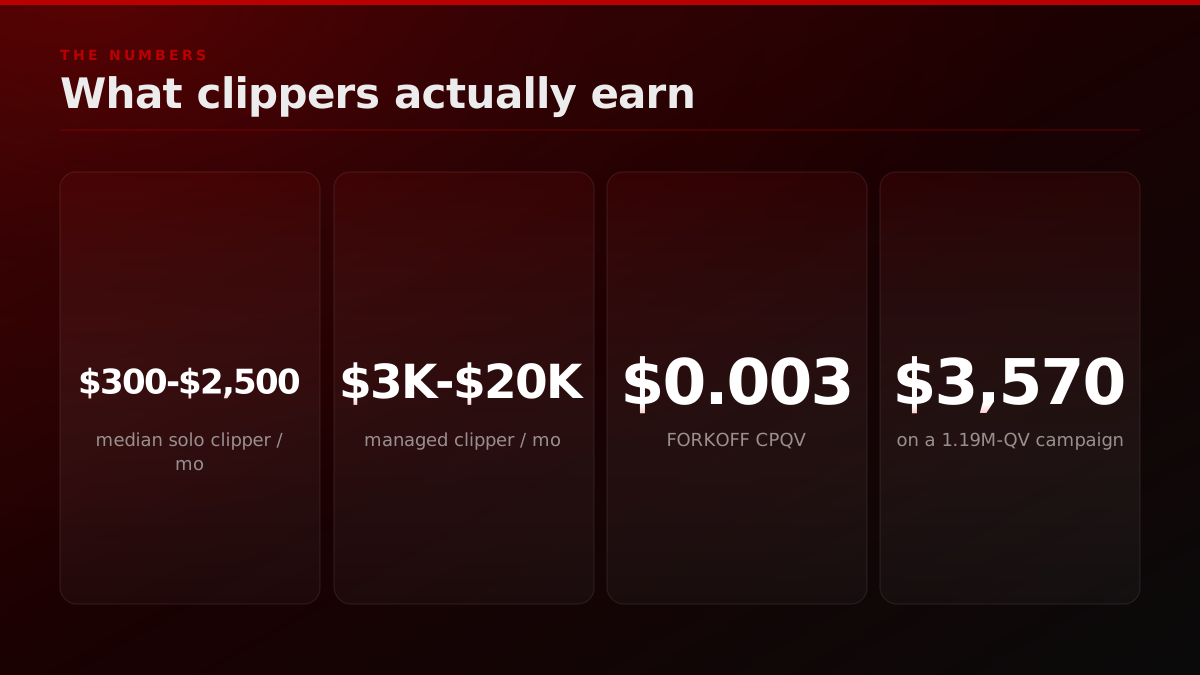
The 30-second rule: the median full-time clipper earns an estimated $300 to $2,500 per month on solo CPM campaigns. Managed clipping through direct retainer or agency pushes that to $3,000 to $20,000. The difference is the deal structure, not the platform.
The 30-second earnings breakdown
The median full-time clipper earns $300 to $2,500 per month on solo CPM campaigns. Managed clipping through a direct retainer or agency relationship pushes that range to $3,000 to $20,000 per month. The difference is the deal structure, not the platform. FORKOFF managed campaigns pay clippers $1.00 to $1.25 per 1,000 qualified views, with the CPM stated on the brief before you accept, which would put an estimated $1,190 to $1,488 into the clipper pool on a 1.19M-view campaign.
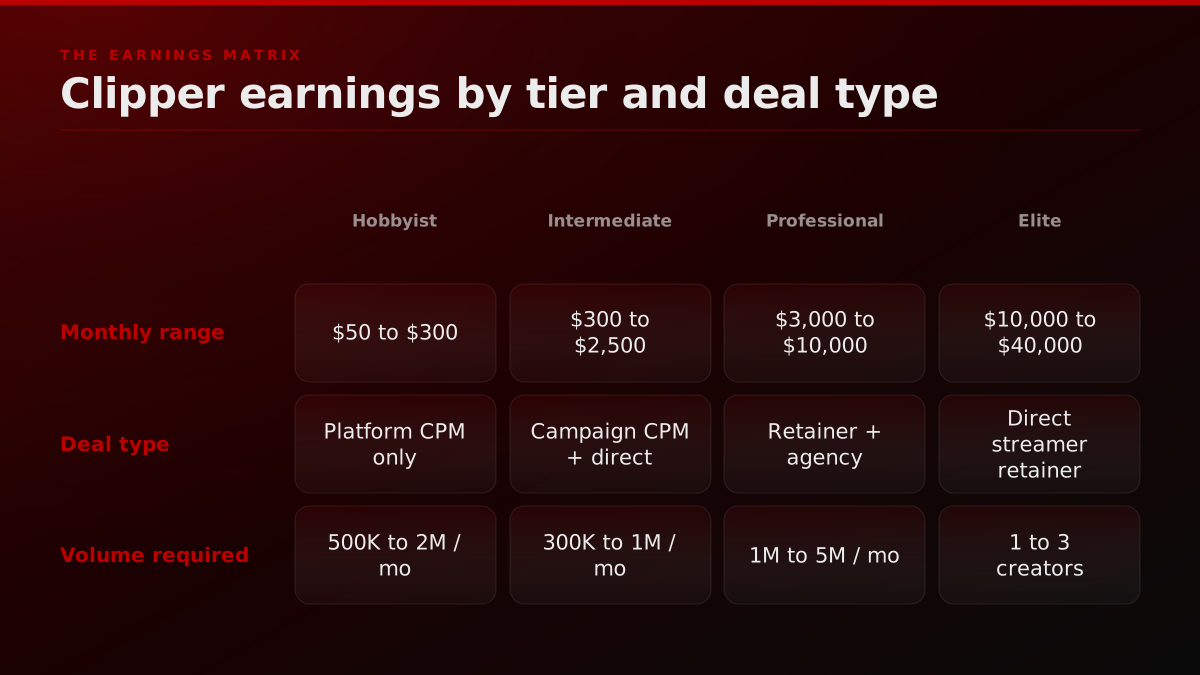
The matrix below breaks the four tiers by deal type, monthly range, and the volume required to hit each band.
Clipper earnings by tier and deal type (2026)
| Tier | Monthly range | Deal type | Volume required |
|---|---|---|---|
| Hobbyist | $50 to $300 | Platform CPM only | 500K to 2M views/mo |
| Intermediate | $300 to $2,500 | Campaign CPM + direct deals | 300K to 1M views/mo |
| Professional | $3,000 to $10,000 | Retainer + managed agency | 1M to 5M views/mo |
| Elite | $10,000 to $40,000 | Direct streamer retainer | Dedicated to 1 to 3 creators |
Sources: AI Overview synthesis, Reddit r/passive_income, Business Insider 2026, FORKOFF campaign data.
The top-ranking Reddit thread for "how much do video clippers make" opens with a warning: video clipping is not as profitable as social media makes it seem. That thread, which sits at position 1 on Google, gets one thing right. Solo CPM clipping at $1 per 1,000 views is thin economics. What the thread misses is that CPM farming is only one of four deal structures available to clippers in 2026. The other three pay 5x to 60x more per view.
Business Insider reported in March 2026 that "elite clippers" are earning thousands per month with guaranteed pay from podcasters and livestreamers. The article maps a market that barely existed 18 months ago. BlackHatWorld documented a case study of a clipper going from $0 to $16,000 per month in four months. Both sources confirm the same pattern: the math does not support the hype unless you pick the right deal structure.
For readers evaluating whether to start clipping or scale an existing operation, the FORKOFF clipping category hub covers every major decision point: the clipping tools comparison, podcast clipping agency pricing, and what managed campaigns actually return. This post focuses specifically on the income side: what clippers earn, which deal structures produce which income bands, and what separates the $500 per month clipper from the $20,000 per month clipper.
Before comparing deal structures, it helps to understand what "clipper earnings" actually measures. The figure most social media posts show is gross income, not net. Marketplace cuts, self-employment tax, tool subscriptions ($20 to $100 per month), and storage costs all reduce the effective take-home. A $2,000 per month gross clipper income nets approximately $1,200 to $1,500 after marketplace cuts (20% to 50%) and a 20% tax set-aside. The deal structure analysis below uses gross figures throughout; apply a 30% to 50% reduction to estimate net income depending on your cost structure and deal type.
Video clipping isn't profitable as social media makes it seems
Saw Adin Ross say he pays clippers $30-40k/month, and people act like clipping is an easy way to make money. In reality, most clippers get paid around $1 CPM, and agencies usually take a big cut between 20-80% and cap payouts per clip (often $100-$200). So even if a clip… Show more
Four deal structures clippers actually get paid through
Clippers get paid through four distinct deal structures: platform CPM, campaign CPM, per-clip flat fees, and monthly retainers. Each is effectively a different job with a different income profile. Platform CPM is the floor at a fraction of a cent per view, campaign CPM pays 5x to 60x more, flat fees run $5 to $500 per clip, and retainers reach $30,000 to $40,000 per month at the top. The model matters more than the platform.
Platform CPM is what most beginner guides describe. You post clips, the platform pays you a fraction of a cent per view through its creator fund or ad share program. This is the floor. TikTok Creativity Program pays an estimated $0.50 to $1.00 CPM on content it classifies as original. YouTube Shorts RPM sits at $0.01 to $0.07 per 1,000 views. Neither number supports full-time income unless you are producing 15 to 20 clips per day across multiple accounts.
Campaign CPM is the step up. Brands and creators post campaigns on platforms like Whop and clipping.net offering $1 to $10 per 1,000 views for clips of their content. Campaign CPM is 5x to 60x platform CPM. The catch: agencies running these campaigns often take a 20% to 80% cut, and some cap per-clip payouts at $100 to $200 regardless of how many views your clip gets.
The agency cut compresses your margins
Reddit data from r/passive_income surfaces agency cuts between 20% and 80% on campaign CPM payouts. Some agencies also cap per-clip payouts at $100 to $200 regardless of view count. Before signing with a clipping marketplace, verify the cut structure and whether there is a per-clip ceiling.
Source: Reddit r/passive_income, ranked position 1 for clipper earnings
Per-clip flat fees range from $5 to $500 per clip depending on the creator's budget and the clipper's editing skill. This model rewards quality over volume. Podcasters and B2B creators tend to pay flat fees because they care about hook quality, not raw view count. The FORKOFF clipping tools comparison breaks down which AI tools produce clips fast enough to make the flat-fee model profitable.
Monthly retainer is the structure that scales. A clipper on retainer earns $500 to $3,000 per month from a single creator or agency. At the top end, top streamers like Adin Ross reportedly pay their dedicated clippers $30,000 to $40,000 per month. Retainer is the only deal structure with predictable monthly income.
At FORKOFF clippers earn $1.00 to $1.25 per 1,000 qualified views, and the exact CPM is on every brief before you accept. A qualified view is a view audited against hold rate, audience match, and bot filtering, so it is a stricter unit than the raw views most marketplace offers pay on. At that rate, a campaign of 1.19M qualified views would put an estimated $1,190 to $1,488 into the clipper pool.
How much do clippers earn on TikTok, Kick, and YouTube?
Each platform pays clippers differently, and the gap between platform CPM and campaign CPM varies by platform. TikTok runs the highest view volumes but pays $0.50 to $1.00 CPM only on original content. YouTube Shorts sits at $0.01 to $0.07 per 1,000 views, while long-form clips earn $2 to $8 CPM. Kick has no creator fund and pays an estimated $50 to $300 per clip in direct deals. The 2026 data shows a clear hierarchy.
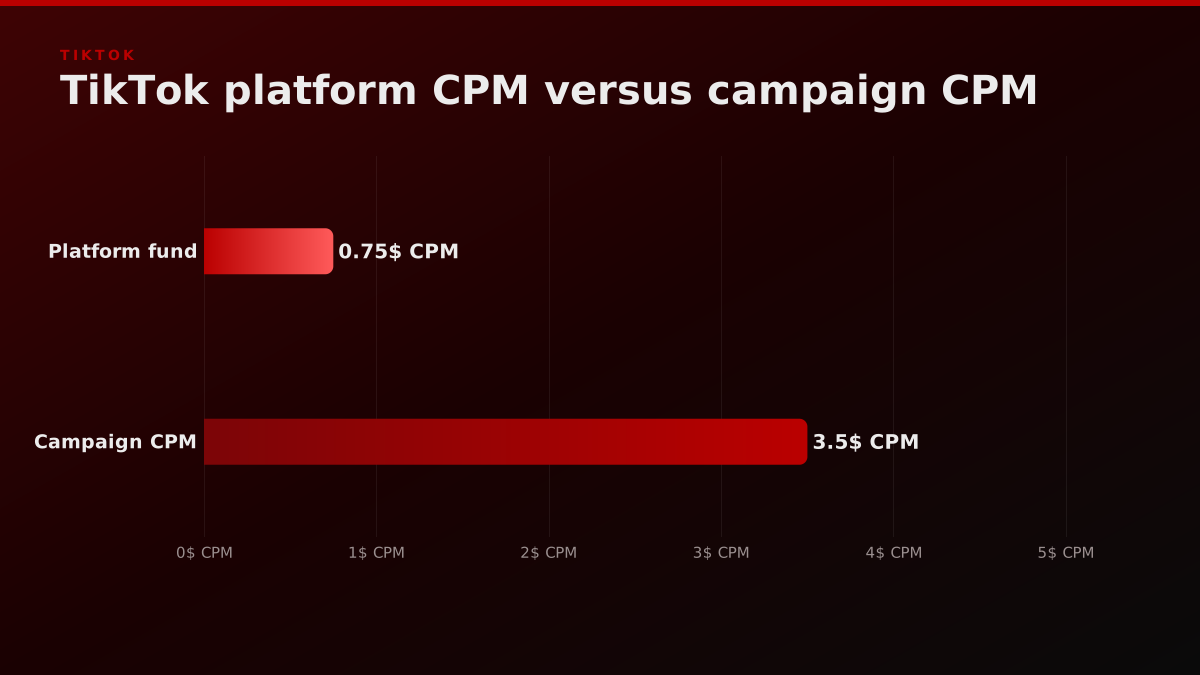
TikTok runs the highest raw view volumes but the lowest per-view payouts among the four major clipping platforms. The Creativity Program pays $0.50 to $1.00 CPM on content it classifies as original. Clips reposted from another creator's podcast or stream earn $0 from TikTok directly.
TikTok pays clippers zero without original-content status
The TikTok Creativity Program applies only to content it classifies as original. Clips reposted from another creator's stream or podcast earn $0 from TikTok's fund. All clipper income on TikTok flows through campaign CPM from brands and creators, not the platform itself.
Source: TikTok Creativity Program documentation, confirmed via r/Tiktokhelp
Campaign CPM on TikTok ranges from $1 to $6 through marketplace campaigns on platforms like Whop. TikTok clips with viral hooks regularly hit 500K to 5M views, which is the volume floor for campaign CPM to generate meaningful income. Clippers running TikTok-first strategies need 10 to 15 clips per day at 500K average views to hit $2,000 per month at an estimated $4 campaign CPM after the marketplace cut.
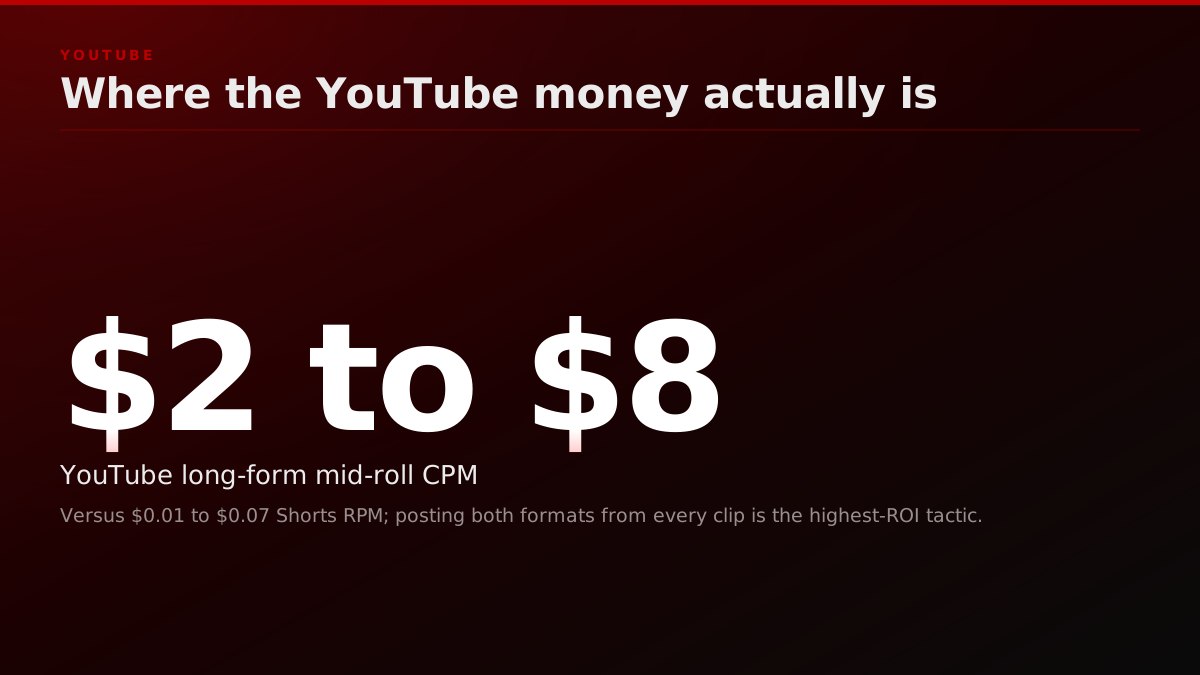
YouTube Shorts RPM sits at $0.01 to $0.07 per 1,000 views through the YouTube Partner Program. That number looks terrible until you account for long-form clips. Clips over 60 seconds uploaded as regular videos earn $2 to $8 CPM through mid-roll ads, which is 30x to 120x the Shorts RPM for the same content. The smartest YouTube clippers post both a Short and a long-form version of every clip. The dual-format strategy documented by multiple clippers in the YouTube creator economy community shows individual clippers earning $40,000 or more in two months when they treat every clip as two assets: a Short for discovery volume and a long-form for monetization CPM.
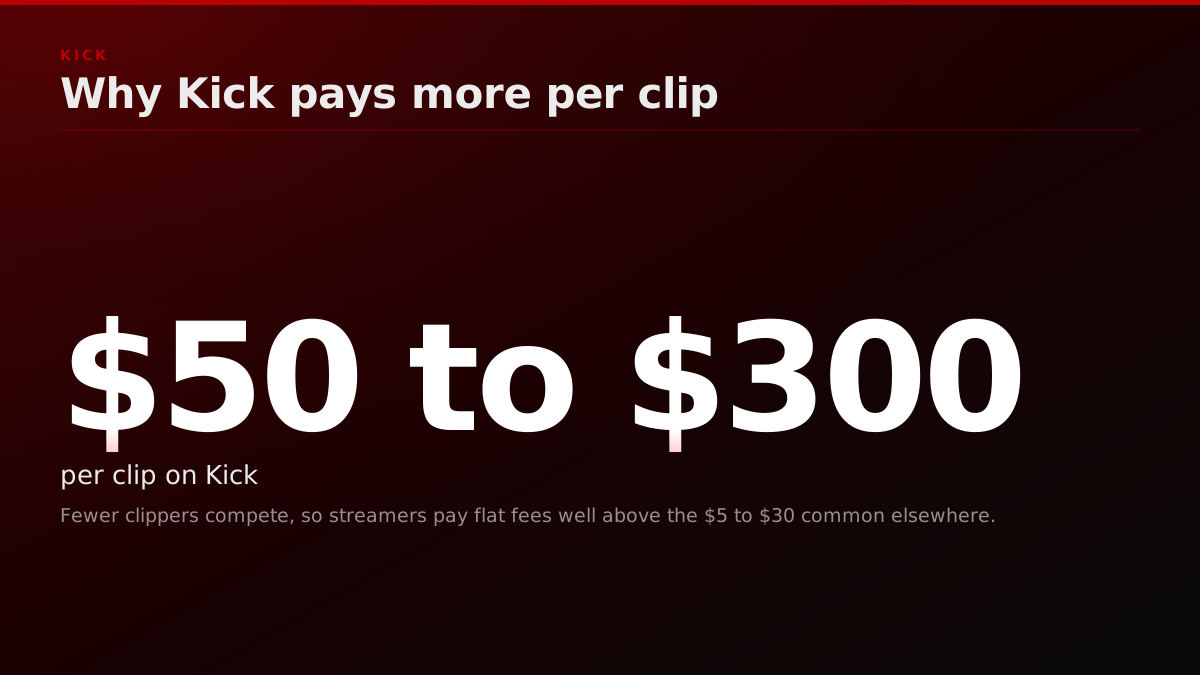
Kick has no creator fund. Every dollar a Kick clipper earns comes from a direct deal with a streamer or a marketplace campaign. The absence of a platform fund is actually an advantage: streamers on Kick know they have to pay clippers directly, so they do. Kick streamers tend to pay higher per-clip flat fees ($50 to $300) because the clipper supply on the platform is a fraction of TikTok or YouTube.
Kick pays higher flat fees because there are fewer clippers
Kick does not operate a creator fund. Every dollar a Kick clipper earns comes from a direct deal with a streamer or a marketplace campaign. Because the clipper supply on Kick is a fraction of TikTok or YouTube, streamers routinely pay $50 to $300 per clip instead of the $5 to $30 per-clip rates common on other platforms.
Source: Kick community forums, r/KickStreaming, direct campaign data
Instagram Reels bonuses are inconsistent and Instagram does not publish a public CPM. Most clipper earnings from Reels come from campaign CPM through brand-sponsored clip distribution. Instagram clips convert better for B2B creators because the platform skews older and higher-income than TikTok. The FORKOFF clipping service runs Instagram Reels clip campaigns for SaaS and B2B clients where audience quality matters more than raw view volume. See the FORKOFF services overview for the full platform coverage and campaign types.
Elite clippers earn big paychecks from podcasters and livestreamers. Top tier clipping creators can now earn thousands of dollars a month, with guaranteed pay.
What do Whop clipping campaign CPM rates actually pay?
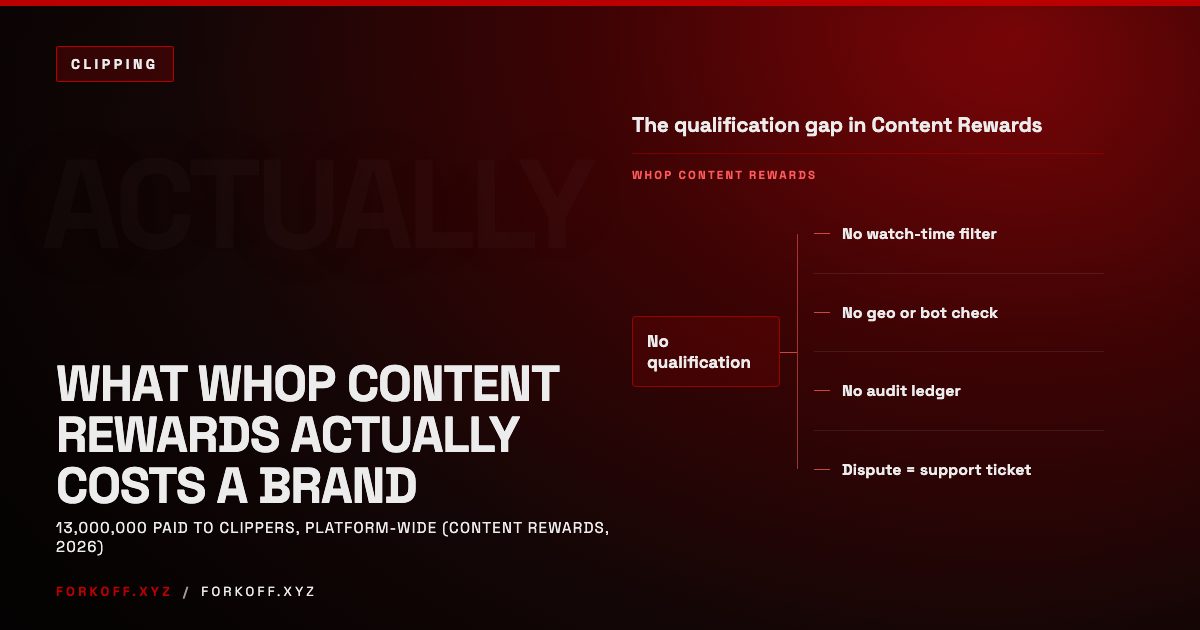
Whop is the largest marketplace for paid clipping campaigns, but the headline CPM rates overstate what clippers actually net. A $10 CPM campaign on Whop means $10 per 1,000 views before the marketplace and agency cut, and most campaigns apply a 20% to 50% cut off the top. After the cut, that $10 headline becomes $5 to $8, and per-clip caps of $100 to $200 can compress earnings further regardless of view count. The full Whop clipping review breaks down the real net-rate math campaign by campaign.
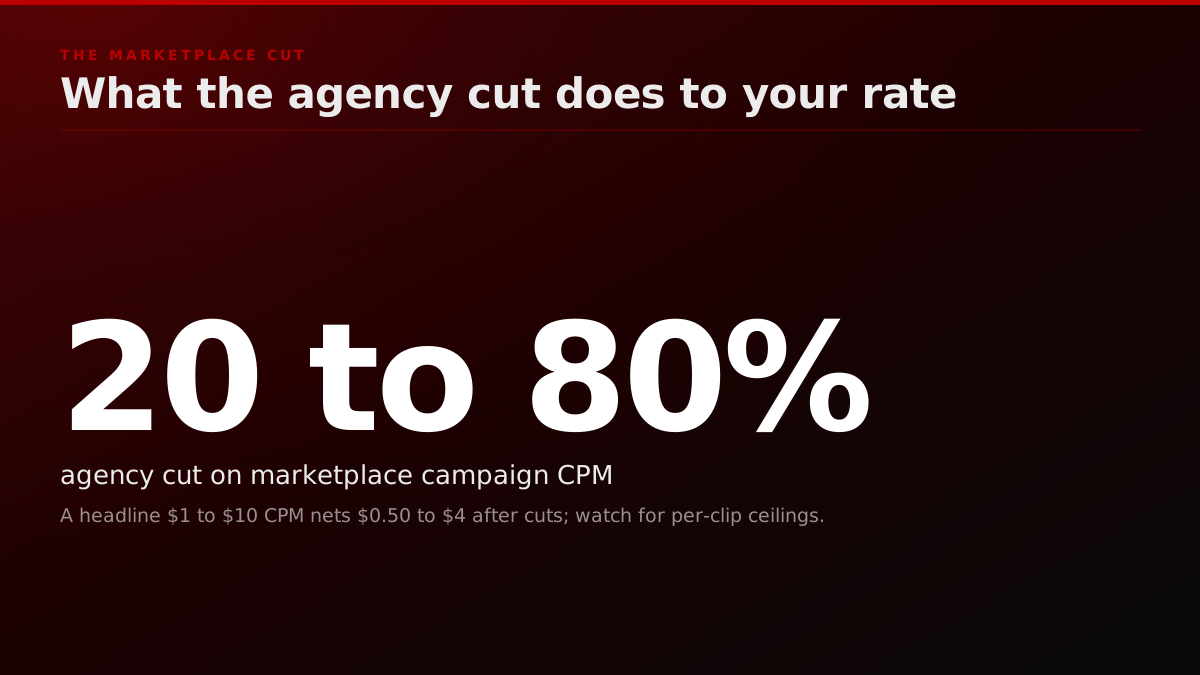
Most Whop campaigns apply an agency cut of 20% to 50% off the top. A $10 CPM headline rate becomes $5 to $8 after the cut. Some campaigns also cap per-clip payouts at $100 to $200 regardless of view count. A clip with 1 million views on a $10 CPM campaign with a $200 cap earns $200, not $10,000. Always read the cap structure before joining a campaign. For the full headline-to-net-to-qualified-view CPM benchmark across every platform and niche, see the 2026 CPM rates for clipping breakdown.
The exception is FORKOFF managed clipping campaigns, which price on qualified views with no per-clip cap and a transparent audit ledger. The $1.00 to $1.25 per 1,000 qualified views clipper rate applies to every qualified view, regardless of how many views a single clip generates.
Operator note$1.00 to $1.25 per 1,000 qualified views with no per-clip cap: a 2M-view clip pays on every qualified view, not a $200 ceiling., FORKOFF managed campaign pricing
The mechanics of the marketplace path are well documented on YouTube. The most-watched tutorial on Whop clipping walks through finding campaigns, producing clips with AI tools, and getting paid on verified views.
How To Actually Make Money with Whop Clipping - It's Simple
Dan Kieft
Dan Kieft's walkthrough of making money with Whop clipping, 1M+ views. The most-watched practitioner tutorial on the marketplace path this post describes.
Whop also offers direct creator campaigns where a creator posts a campaign themselves without an agency intermediary. These campaigns tend to have better payout rates ($3 to $10 CPM, no additional cut) but require more clipper-side hustle to find and apply. The FORKOFF audit tool can benchmark your current clip channel performance against campaign CPM benchmarks to show exactly how much you are leaving on the table with platform-only monetization.
Managed clipping vs DIY: the income ceiling gap
The gap between the DIY income ceiling and the managed ceiling is structural, not marginal. DIY clipping through platform CPM tops out around $2,500 per month for a solo clipper, while managed or retainer clipping pushes the ceiling to $10,000 to $40,000 per month. The n=12 FORKOFF campaign dataset shows 2.4x more usable reach per dollar than per-clip pricing and 3.1x more than a flat retainer without qualified-view tracking. The difference is the measurement layer, not the clippers.
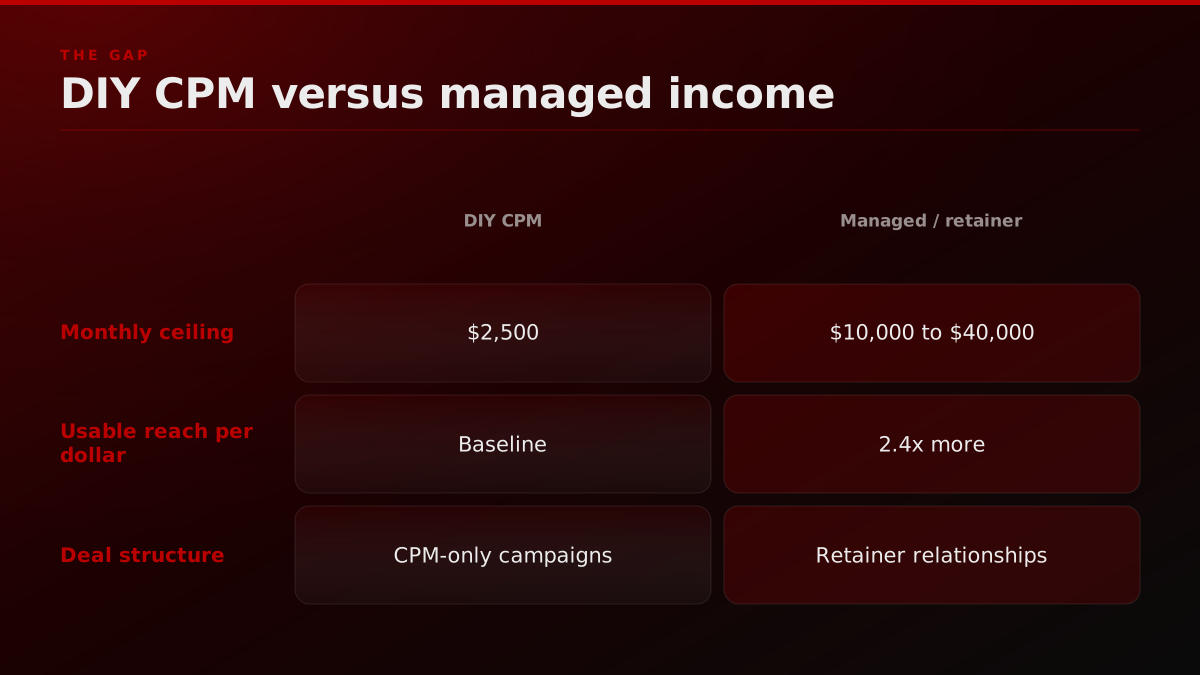
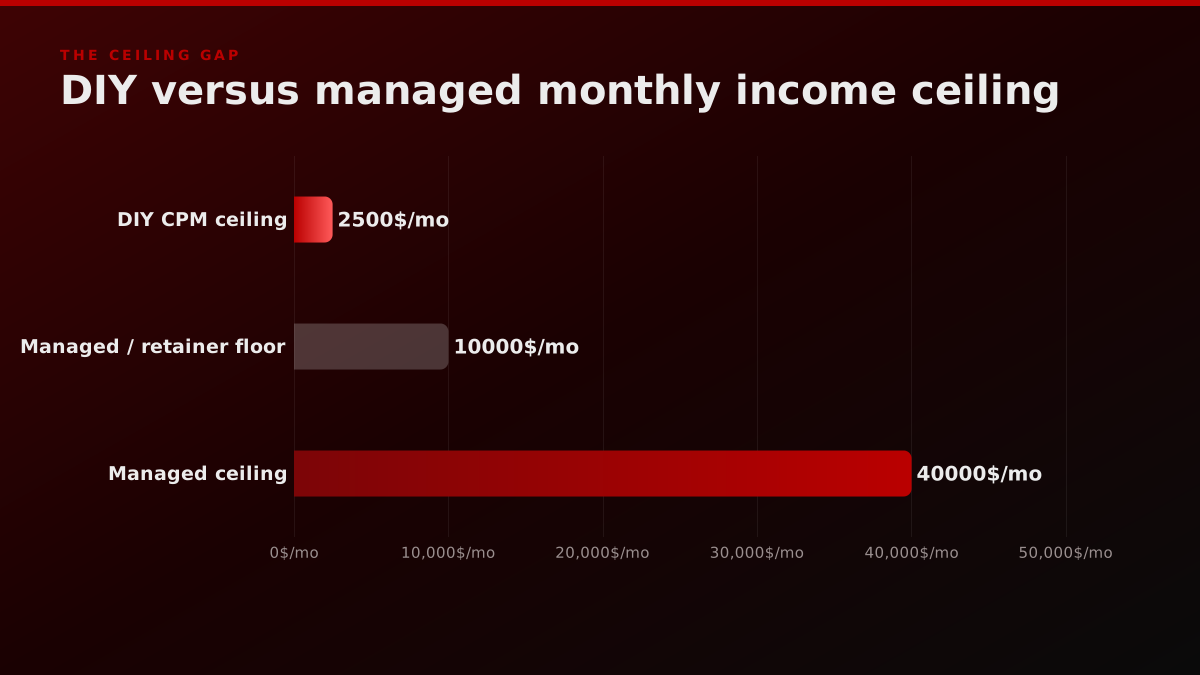
DIY clipping through platform CPM tops out around $2,500 per month for a solo clipper posting 10 to 15 clips per day. Reaching that ceiling requires a monetized channel on YouTube Shorts, active TikTok campaigns through Whop, and consistent daily output. Most clippers plateau at $500 to $800 per month because they cannot sustain that volume without a production system.
Managed or retainer clipping pushes the ceiling to $10,000 to $40,000 per month. The n=12 FORKOFF campaign dataset shows 2.4x more usable reach per dollar compared to per-clip pricing and 3.1x compared to flat monthly retainer without qualified-view tracking. The difference is not the clippers. It is the measurement layer.
Spencer Pratt's paid clipping campaigns illustrate the managed model at scale. Taylor Lorenz reported that Pratt is running two simultaneous paid clipping campaigns, paying creators to post clips from his debate appearances and podcast episodes.
Taylor Lorenz
@TaylorLorenz
Spencer Pratt is currently running 2 paid clipping campaigns. Creators are being offered $$ to post clips of Pratt from the recent debate, along with Pratt's recent podcast appearances. Pages need to have 50%+ USA audience to participate, but do not need to be based in CA.
The same structure applies at any budget. At FORKOFF we run managed clipping campaigns for clients across crypto, SaaS, and B2B podcasting. The managed clipping revenue case study follows one creator's paid community from 12 paying members in February to 35 in May 2026, including an April retention dip to 59%. See the clipping tools comparison and the qualified views metric for vertical-specific data.
The retainer path: from $500 to $40,000 per month
Most clippers treat retainer deals as something that happens after you prove yourself on campaign CPM, but the data suggests it should be the starting point. A $500 per month retainer from one creator requires roughly 20 clips on a predictable schedule and is worth more than $500 from campaign CPM, which demands 100,000 to 500,000 never-guaranteed views. The path to $5,000 runs through 3 to 4 retainer clients at $1,000 to $1,500 each, and top streamers like Adin Ross reportedly pay $30,000 to $40,000 per month.
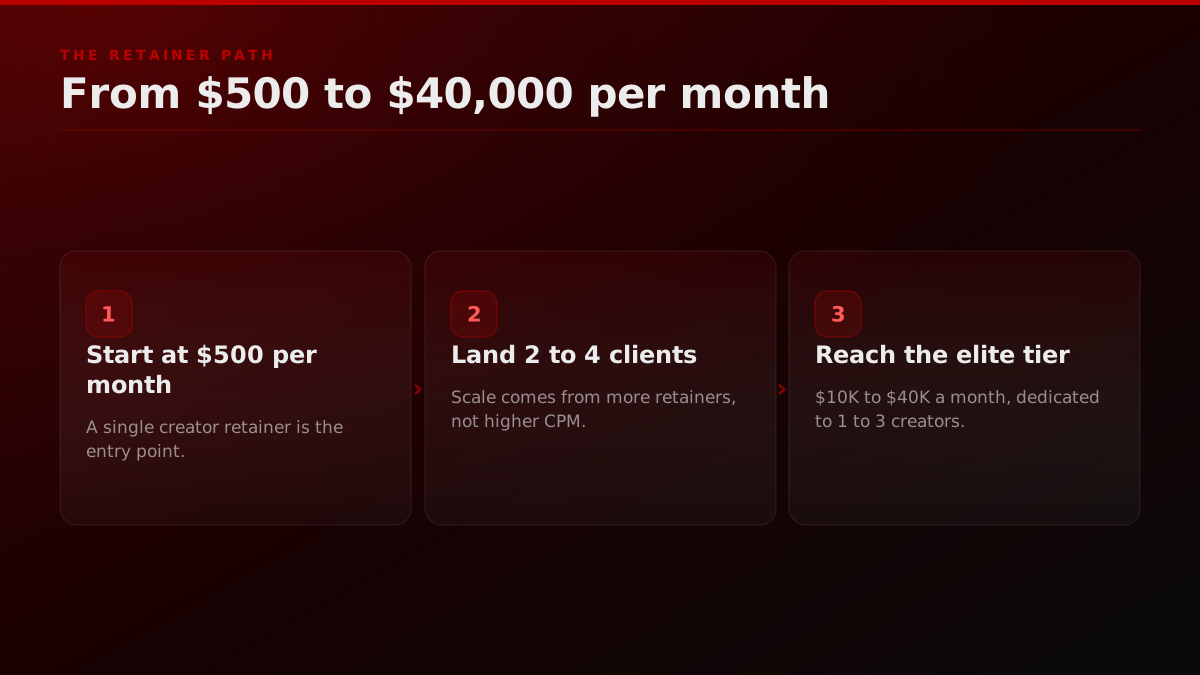
A retainer at $500 per month from one creator is worth more than $500 per month from campaign CPM. The retainer requires roughly 20 clips per month at a predictable schedule. Campaign CPM at $500 per month requires 100,000 to 500,000 views per month depending on the rate, and that view count is never guaranteed.
The path to $5,000 per month on retainer:
- Land 3 to 4 retainer clients at $1,000 to $1,500 each
- Deliver 15 to 20 clips per client per month across 2 to 3 platforms
- Track which clips perform and use performance data in the next client pitch
The path to $20,000 per month on retainer requires either one major streamer relationship or a managed agency arrangement where the agency handles client acquisition and you focus on editing. FORKOFF recruits clippers for its managed campaigns across crypto, SaaS, and B2B verticals, which is one route to agency-level income without the sales overhead. Clipper applications run through that program page, and brand campaign inquiries start on the FORKOFF contact page.
Top streamers like Adin Ross reportedly pay dedicated clippers $30,000 to $40,000 per month. Those arrangements are not advertised publicly. They come from consistent performance over 6 to 12 months on the creator's content, often starting with a direct outreach pitch and a 7-day free trial.
Qualified views: why the measurement layer determines income
Every managed campaign runs on some definition of what counts as a view, and that definition determines your effective CPM. Raw views include bot traffic, sub-3-second scrolls, and low-audience-match impressions, so on lower-quality channels raw views run 3x to 5x above qualified views. A campaign paying $5 CPM on raw views where four raw views stand behind every qualified one pays the effective equivalent of an estimated $1.25 CPM on qualified views. FORKOFF qualifies a view at 3 seconds or more watch time, 50% or more scroll depth, a bot-filter pass, and an audience match.
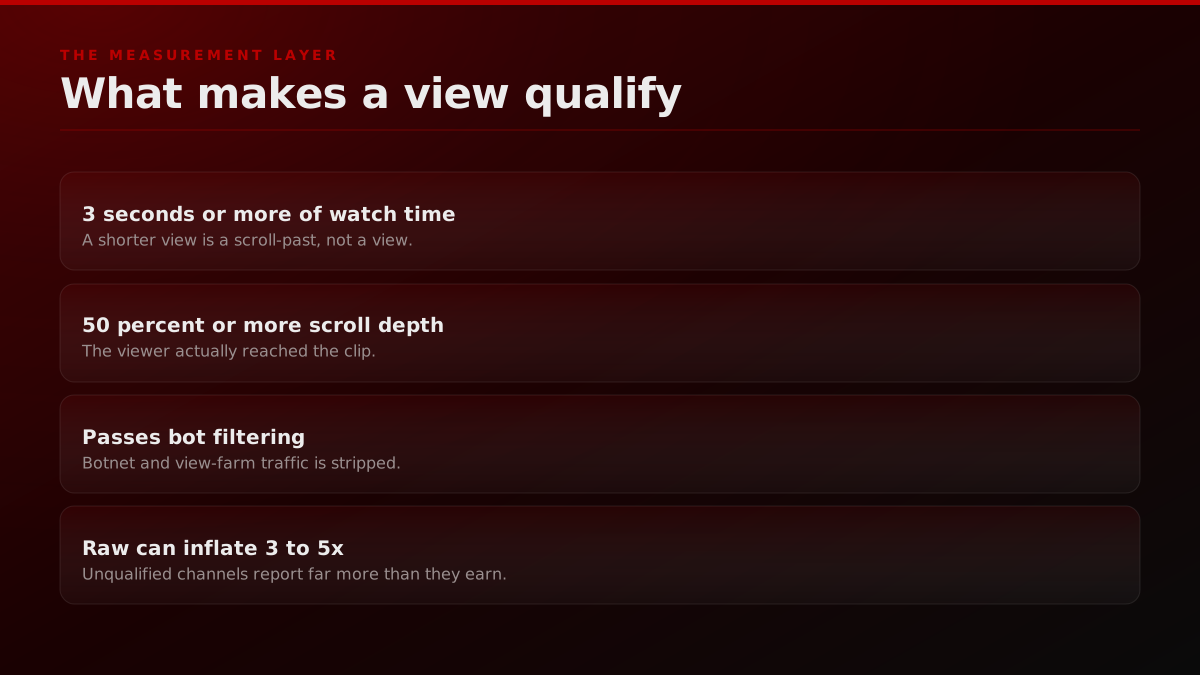
Raw views include bot traffic, sub-3-second scrolls, and low-audience-match impressions. On lower-quality clip channels, raw views can run 3x to 5x above qualified views. A campaign paying $5 CPM on raw views where four raw views stand behind every qualified one pays the effective equivalent of $1.25 CPM on qualified views.
FORKOFF qualified-view criteria:
- 3 seconds or more watch time (signals genuine interest, not an accidental swipe)
- 50% or more scroll depth on Reels and TikTok (signals the viewer did not immediately bounce)
- Bot filter pass (verified against known bot fingerprints and view-velocity anomalies)
- Audience match (US percentage gate for campaigns with geo requirements)
The benchmark campaign (3,085 clips, 1.19M views) was priced at $0.003 per qualified view, so the client paid per qualified view, not per raw view. The qualified views metric explainer covers the full audit methodology. For buyers comparing this approach against traditional CPM campaigns, the OpusClip vs managed clipping cost breakdown shows the full cost comparison across deal types.
How do you evaluate a clipping agency before signing?
Before accepting any campaign deal, ask four questions that separate a managed agency from a marketplace arbitrage operation. First, what is the payout rate, and is it per raw view or per qualified view? Second, is there a per-clip cap, since a $100 or $200 cap destroys the economics of a clip that hits 2 million views? Third, what is the agency cut percentage, because anything above 50% on campaign CPM is predatory? Fourth, does the agency audit view counts or just trust platform numbers that can be gamed?
-
What is the payout rate and is it per raw view or per qualified view? A $5 CPM on raw views can be a worse deal than $3 CPM on qualified views depending on the traffic quality of your channel.
-
Is there a per-clip cap? A per-clip cap of $100 or $200 destroys the economics of high-performing clips. A clip hitting 2 million views on a $10 CPM campaign should earn $20,000. A $200 cap means you earn $200 regardless of performance.
-
What is the agency cut percentage? Cuts above 50% on campaign CPM are predatory. The floor for a fair agency cut on a managed arrangement is 20% to 30%.
-
Does the agency audit view counts or trust platform numbers? Platform analytics can be gamed. Agencies that accept unaudited platform numbers expose both the brand and the clipper to fraud risk.
The podcast clipping agency pricing guide covers what to ask before signing with any agency and how to compare agency structures side by side.
Questions to add in writing before you sign:
- What is the exact per-view or per-clip rate after all cuts?
- Is there a per-clip earnings cap, and at what view threshold does it trigger?
- How does the agency verify view counts? Which data source?
- What happens if the platform revises view counts downward after payout?
- Does the agency offer performance history from prior campaigns?
These questions separate serious managed agencies from marketplace arbitrage operations. An agency that cannot answer all five in writing is not operating a managed campaign. See the FORKOFF clipping service page for the contractual structure we use on every campaign.
How do you get clipping work in 2026?
There are three paths to clipping work in 2026, ranked by time to first dollar. The marketplace path (Whop, clipping.net) is fastest, paying $1 to $5 CPM with a 20% to 50% cut and a first payout within 7 to 14 days. The direct outreach path takes 2 to 4 weeks to land a client but pays 3x to 10x more per clip through per-clip fees or retainers. The agency path puts you on managed campaigns earning $1,000 to $5,000 per month while the agency handles client acquisition.
- Marketplace path (fastest): join Whop, clipping.net, or similar platforms. Browse active campaigns, apply, start posting. Expect $1 to $5 CPM with an agency cut of 20% to 50%. First payout within 7 to 14 days. This is the fastest entry point but the lowest per-view rate.
Operator noteMulti-platform posters net more qualified-view yield than single-platform clippers inside the first 72 hours., FORKOFF Clipping ops
-
Direct outreach path: find podcasters, streamers, or YouTube creators who post long-form content but do not have a clip channel. Pitch a 7-day trial: clip 3 to 5 highlights from their latest episode, post them to TikTok and Shorts, and show them the view counts. If the trial works, negotiate a per-clip fee (an estimated $25 to $100) or a monthly retainer ($500 to $1,500). This path takes 2 to 4 weeks to land the first client but pays 3x to 10x more per clip.
-
Agency path: apply to managed clipping agencies that recruit and deploy clippers across multiple client campaigns. Agencies handle client acquisition, campaign management, and payment. You clip and post. The agency handles the business side so you can focus on editing. Earnings range from $1,000 to $5,000 per month depending on volume and campaign performance. FORKOFF's clipper program recruits clippers for managed campaigns across crypto, SaaS, and B2B verticals.
The direct outreach pitch is underused because it requires more upfront work than joining a Whop campaign. However, the per-clip rate on a direct retainer is 5x to 20x better than most marketplace campaigns. A short free trial on a few clips is a common way to land a first retainer client.
Clipping income tax and self-employment considerations
Clippers operating as independent contractors owe self-employment tax on their earnings, a detail most beginner guides skip but one that matters for income planning. At $3,000 per month gross, a US-based clipper owes roughly 15.3% self-employment tax plus federal income tax, for an all-in effective rate of about 22% to 28% on $36,000 per year. That puts post-tax take-home at $26,000 to $28,000. Clippers running at $10,000 per month or above should set up a single-member LLC and consider an S-corp election to save on the distribution portion.
At $3,000 per month gross, a US-based clipper owes roughly 15.3% self-employment tax plus federal income tax on the remainder. The effective tax rate on $36,000 per year net self-employment income is approximately 22% to 28% all-in depending on deductions. That puts the post-tax annual take-home at $26,000 to $28,000, which is below the $36,000 gross.
Clippers running at $10,000 per month or above should set up a single-member LLC and, at higher volumes, consider an S-corp election. The pass-through structure saves approximately 7.65% on the portion of income treated as distributions rather than salary.
The practical implication for income targets: if you want to net $5,000 per month after tax as a solo contractor, your target gross is approximately $6,500 to $7,000 per month depending on your deduction situation.
The FORKOFF clipping pricing and contract structure reflects this for managed campaigns: rates are gross to the clipper, and the 1099 or equivalent is issued based on total campaign payout.
Creator economy clipping data for 2026
The creator economy data from 2026 confirms the same structural pattern across every source we checked: platform CPM alone does not support full-time income, campaign CPM through marketplaces is the most accessible step up but agency cuts compress margins, and retainer or managed arrangements are where income becomes predictable and scalable. The measurement layer of qualified versus raw views determines effective CPM more than the headline rate. Creator.co data projects the creator economy reaching $480 billion by 2027, with clipping a small but fast-growing subset.
The table below collects every campaign in this post whose payout structure is documented by a primary source, from the buyer-side spend on the Clavicular campaign to the clipper-side distribution surfaced by the r/passive_income agency interviews.
Documented clipping campaign payouts (2026)
| Campaign | Documented scale | Payout data | Source |
|---|---|---|---|
| Clavicular (Devin Nash breakdown) | 1,500+ clippers, nearly 70,000 clips in a month | Est. $650,000+/mo, about $9 per clip | Jake Lucky on X, April 2026 |
| Spencer Pratt debate and podcast clips | 2 simultaneous paid campaigns | Paid per clip; 50%+ USA audience required | Taylor Lorenz on X, May 2026 |
| r/passive_income agency interviews | Communities of 6,000+ clippers each | <5% earn $100+/mo; ~1% earn $1,000+/mo | r/passive_income, January 2026 |
| FORKOFF benchmark campaign | 3,085 clips, 1.19M views, 13-day sprint | $1.00 to $1.25 per 1,000 qualified views to clippers ($0.003 per qualified view brand price) | FORKOFF campaign audit ledger |
Every row traces to a primary source re-verified July 2026: the Jake Lucky and Taylor Lorenz posts on X, the r/passive_income thread, and the FORKOFF audit ledger.
- Platform CPM alone does not support full-time income at any reasonable clip volume
- Campaign CPM through marketplaces is the most accessible step up, but agency cuts compress margins
- Retainer and managed arrangements are where income becomes predictable and scalable
- The measurement layer (qualified vs raw views) determines effective CPM more than the headline rate
Creator.co data shows the creator economy is projected to reach $480 billion by 2027, a Goldman Sachs Research estimate. The clipping sector is a small but fast-growing subset of that market. Business Insider, Forbes, and Bloomberg have all published pieces in 2025 and 2026 documenting the rise of professional clipping as a full-time income path.
Across the campaigns FORKOFF has shipped, three patterns hold across verticals: (1) clippers who post the same clip natively to 3 or more platforms net more qualified-view yield than single-platform posters within the first 72 hours, (2) clip channels older than 90 days tend to produce higher qualified-view rates than new channels at identical hook quality, because the audience-match dial moves with channel age, and (3) the gap between the top clippers and the median clipper inside a single campaign is real but far smaller than the 10x or 20x the social-media narrative suggests. The 90th-percentile clippers are not running secret hook libraries. They are running tighter feedback loops on the first 24 hours of each clip and reposting the winners across formats.
The market is real. The economics work if you choose the right deal structure. The worst outcome is spending 6 months at platform CPM rates when a 7-day free trial could land a retainer worth 10x more per month. The second worst outcome is treating every campaign as the same job: a managed campaign that states its CPM per qualified view before you accept is a different deal from a marketplace headline rate paid on raw views with an agency cut taken out afterwards. Always price the deal on net-to-clipper terms and on the unit being counted, not the marketing headline.
What is the real income ceiling for a clipper?
The numbers at the top of the market are not representative of the median, and understanding both is useful. The median full-time clipper running 2 to 3 Whop campaigns earns $800 to $1,500 per month, while the $10,000 to $20,000 figures circulating on social media represent the top 5%. Inside any single managed campaign the distribution is sharply Pareto: a small group of top clippers captures most of the qualified-view payout.
The median full-time clipper running 2 to 3 Whop campaigns earns $800 to $1,500 per month. That is the honest number. The author of the top-ranking r/passive_income thread put hard numbers on it after interviewing multiple clipping agencies.
I interviewed multiple clipping agencies, <5% of clippers earn over $100/month, and ~1% earn over $1k/month (these communities all have >6000 clippers).
Social media clips of clippers earning $10,000 or $20,000 per month represent the top 5% of the market, not the median. FORKOFF sees the same pattern from the buyer side: a small group of top clippers in a campaign captures most of the qualified-view payout. The income distribution inside any single managed campaign is sharply Pareto, which is why a clipper landing one premium retainer changes their economics more than three additional marketplace campaigns ever will.
Operator noteAcross 5B+ FORKOFF clipping views, top clippers out-earn the median, but not by the 20x the social narrative claims., FORKOFF Clipping ops
Niche-by-niche, the gross campaign CPM also varies more than most beginner guides admit. Crypto and Web3 campaigns clear an estimated $4 to $9 net CPM on qualified views because the buyer-side budget per attributed lead is high. Long-form podcast clipping (B2B founders, VC interviews, finance) lands $3 to $7 net CPM because audience match is the dominant pricing input and the supply of clippers who can hold a B2B viewer past 7 seconds is thin. Gaming and stream clipping runs $1 to $4 net CPM because raw view volume is high but advertiser yield per view is the lowest of the four major niches. Coaching, fitness, and lifestyle clipping sits at an estimated $1.50 to $5 net CPM with sharp seasonality around January and September. The path to above-median income runs through three decisions:
-
Move off platform CPM and onto campaign CPM as fast as possible. Even a $2 campaign CPM with a 30% agency cut beats an estimated $0.75 platform CPM.
-
Treat your first retainer client as a portfolio piece. One month of consistent delivery and view data from a retainer relationship is worth more in the next pitch than six months of Whop campaign screenshots.
-
Pick a niche before a platform. A clipper who specializes in B2B podcast hooks across TikTok and Shorts simultaneously will out-earn a generalist running the same volume across four niches, because the next retainer pitch lands on the strength of a tight portfolio rather than a broad one.
Clipper tools and production speed
Income potential at any tier is bounded by clip throughput. A clipper who produces 5 clips per day cannot hit $2,000 per month on campaign CPM regardless of the CPM rate. Production speed is the variable that unlocks scale.
The major AI clipping tools (OpusClip, Submagic, Vizard, Klap) reduce editing time per clip from 45 to 90 minutes to 5 to 15 minutes by automating hook detection, caption generation, and vertical crop framing. For a side-by-side ranking of all nine tools on pricing and ICP fit, see the best AI video editors of 2026. At 15 minutes per clip, a clipper can produce 8 to 12 clips per day working 4 hours. That is the minimum volume required to hit $1,500 per month on $3 campaign CPM.
The FORKOFF clipping tools comparison benchmarks the major tools on clips per hour, caption accuracy, and hook-cut quality. The right tool depends on the content type: talking-head podcasts run differently from gaming streams, which run differently from B2B webinars. The best clipping software ranked post scores 13 operators across the DIY, managed, and marketplace lanes. For clippers targeting crypto or Web3 clients specifically, the Spencer Pratt clipping case study maps the premium rate differential on that vertical.
For clippers operating inside managed agency campaigns, the tool choice matters less than consistency. Managed campaigns in FORKOFF's clipper program provide content asset access and clip briefs, which reduces the research overhead that consumes most of a solo clipper's non-editing time.
What buyers pay vs what clippers earn
The gap between what brands pay agencies and what clippers receive is one of the most under-documented aspects of the clipping market. The same net rate can come from very different gross structures: on an estimated $0.005 per qualified view brand-side campaign with a 40% agency cut, the clipper receives $0.003, and on a $0.010 per qualified view campaign with a 70% cut, the clipper still receives $0.003. Agencies competing on brand-side price sometimes justify higher gross rates with promises of premium quality, but the clipper earns the same $0.003 regardless of the brand-side premium. Those are illustrative agency structures, not FORKOFF's numbers: FORKOFF bills brands $0.003 per qualified view and pays clippers $1.00 to $1.25 per 1,000 qualified views, with the CPM on the brief before they accept.
The buyer-side numbers occasionally surface in public. When Devin Nash broke down the Clavicular clipping campaign, Jake Lucky reported over 1,500 clippers producing nearly 70,000 clips in a month at a likely spend of $650,000 or more, which works out to roughly $9 per clip across the whole operation.
Jake Lucky
@JakeSucky
Devin Nash breaks down the cost of the Clavicular clipping campaign - Over 1,500 clippers working for him - Nearly 70,000 clips in a month - Likely $650,000 monthly OR MORE to run it The streaming algorithm, completely paid for
On a $0.005 per qualified view campaign (brand-side), if the agency takes a 40% cut, the clipper receives $0.003 per qualified view. On a $0.010 per qualified view campaign with a 70% agency cut, the clipper receives $0.003 per qualified view. The same net rate can come from very different gross structures.
This matters because agencies competing on brand-side price sometimes justify higher gross rates by promising premium clip quality or better audience targeting. The clipper on the other side of that arrangement earns the same $0.003 per qualified view regardless of the brand-side premium.
Understanding the full rate stack is why the podcast clipping agency pricing guide recommends asking for the gross brand-side rate and the clipper net rate separately before accepting any campaign.
The clipping job market in 2026 is real but the economics depend entirely on which of the four deal structures you pursue. If you are on the buyer side, the FORKOFF clipping service publishes its pricing structure openly: $0.003 per qualified view to the client, with clipper rate transparency included in every campaign ledger.
Related reading:
- Podcast clipping agency pricing: What agencies charge brands and what clippers net
- Best clipping software 2026: 13 tools ranked across three lanes
- Managed clipping revenue case study: One creator's paid community from February to May 2026, a 59% April renewal dip and a May close of 35 paying members and $1,832.25
- Qualified views metric: How the audit criteria work and why they matter
- FORKOFF clipping service: Outcome-priced managed campaigns
The question is not whether clipping pays. The question is which model you choose.