
Ask ChatGPT which liquid staking protocol leads the category. It will name three or four. Ask Perplexity which crypto exchange has the lowest fees, and it will return a ranked shortlist with citations. Notice what did not happen. The engine did not return ten links and let the user decide. It made the decision, named the projects, and moved on. If your project was not in that answer, the user never learned you existed, and no amount of on-page SEO would have changed it.
This is the part the crypto industry keeps describing in the future tense. The framing is wrong. Web3 SERPs are AI-driven now. An estimated 30 percent or more of all research queries in 2026 begin inside an AI engine rather than a traditional search bar, and crypto audiences sit above that baseline because they are technically literate and adopt new tooling before anyone else. The behavior already moved. The budgets, the org charts, and the language teams use to describe the problem have not caught up.
The 30-second read on GEO for crypto
Web3 SERPs are AI-driven now, not soon. Over 30 percent of research starts in an AI engine in 2026, and crypto audiences skew higher because they adopt AI search faster than mainstream users. When someone asks ChatGPT or Perplexity which protocol leads a category, the engine names three or four projects, and the brand site is consulted in only 5 to 10 percent of that path. Earned media carries the rest. Crypto projects also trip an LLM skepticism gate that other industries do not: anonymous founders, yield claims, and regulatory ambiguity all read as low-trust. Fewer than 15 percent of crypto projects have optimized for this, so the gap is a first-mover advantage today and a permanent disadvantage in 18 months. GEO for crypto is the work of closing it.
About these numbers
The "over 30 percent of research queries start in an AI engine" figure is a directional estimate based on practitioner community observation and publicly cited trend data from 2026; individual vertical baselines vary. The 4.4x conversion premium for LLM-referred visitors is sourced from FORKOFF campaign management observation (operator estimate). The 5-to-10 percent brand-site vs 85-to-90 percent earned-media split is based on the cited Princeton GEO research and FORKOFF citation lab methodology. The 34 percent citation-rate improvement figure is from the FORKOFF GEO Citation Lab rerun (linked inline); treat as directional, not a guaranteed outcome. Keyword-difficulty and 45-to-60 day estimates are FORKOFF operator estimates based on current lab measurements. The "fewer than 15 percent of crypto projects" adoption figure is an operator estimate from campaign sourcing experience.
GEO for crypto, generative engine optimization applied to Web3, is the discipline of becoming the project an answer engine names. It is not a rebrand of SEO. It is a different game with different inputs, and crypto plays it on hard mode because of trust obstacles that other industries do not carry. This post makes the argument that the shift is complete, explains why crypto is disproportionately exposed, and lays out the protocol-level stack that moves citation share. The opinion is simple and the data backs it: the projects optimizing for this today own a window that closes inside 18 months.
The shift already happened, the framing has not caught up
Most crypto marketing still treats AI search as a future problem. The data says it is a present one. Over 30 percent of all research queries in 2026 begin inside an AI engine rather than a traditional search bar, and crypto communities sit above that baseline because they are technically literate and adopt new tooling first. The complex, multi-source nature of crypto research, where a buyer needs tokenomics, audit status, team background, and on-chain metrics in one view, is exactly the kind of query an answer engine handles better than ten blue links. The behavior moved. The budgets and the language used to describe the problem have not.
Source: 2026 crypto AI-search adoption research
Why Web3 SERPs Have Already Shifted
The shift is not a forecast. The behavior already moved. In 2026, an estimated 30 percent or more of all research queries start in an AI engine, and the crypto slice runs higher because crypto users are the early-adopter cohort for almost every new interface. They moved to Perplexity and ChatGPT for research the same way they moved to hardware wallets and Layer 2s before the mainstream noticed. When a buyer wants to compare three protocols, an answer engine that synthesizes tokenomics, audit status, team background, and on-chain metrics into one response beats a page of blue links that forces the buyer to assemble the picture themselves.
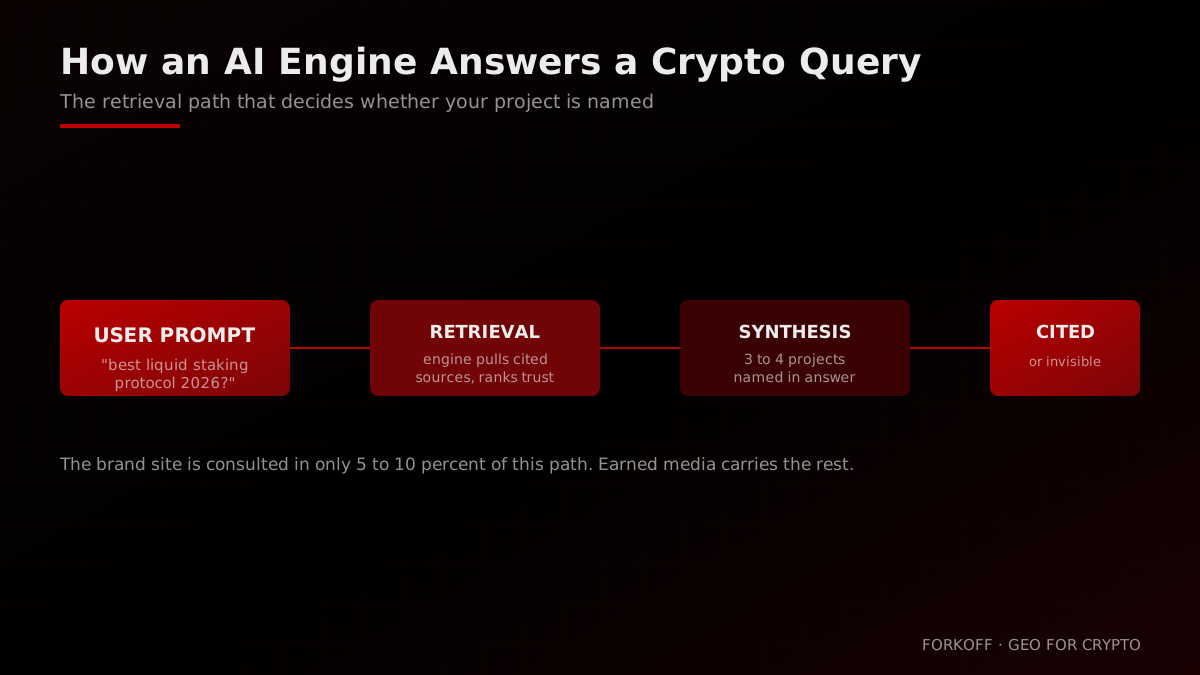
Look at the path an answer engine actually takes. It receives the prompt, retrieves a set of sources it considers trustworthy, ranks them, and synthesizes a response that names a handful of projects. The brand site is consulted in only 5 to 10 percent of that path. The decision about which projects to name is made upstream of your domain entirely, inside the retrieval and ranking step, using sources you do not control. That is the structural fact that breaks the old playbook. You can have a perfect website and still lose, because the website is not where the answer is built.
Sahib
seeksahib
Ask ChatGPT: "Which crypto exchange has the lowest fees?" It will name 3-4 projects. If AI doesn't recommend your product, you will lose a user on every targeted search. How we research has completely changed. We now use AI for everything. We've been watching this shift
The practitioner consensus is forming faster than the industry's vocabulary. Threads across marketing communities now describe SEO as the work of getting cited by AI rather than ranking for a keyword. The Princeton research team that named generative engine optimization in their GEO paper quantified how specific content moves, citing authoritative sources, adding statistics with dates, and using precise terminology, raise the odds of being included in a generated answer. The mechanics are documented. What is missing in crypto is the discipline to apply them.
SEO in 2026 feels less like ranking and more like getting cited by AI
A practitioner argues the 2026 reality of SEO is shifting from ranking for keywords to earning citations inside AI-generated answers, with the thread agreeing the change has already happened.
Traditional search still exists, and it still matters for the long tail. The point is not that Google is dead. The point is that the highest-intent, highest-value crypto research queries, the comparison and recommendation questions a buyer asks right before they commit capital, are exactly the queries that now resolve inside an answer engine. Those are the queries worth winning, and winning them requires a different input than a meta description.
Operator noteA protocol with top-five TVL got one-line ChatGPT mentions while a smaller rival got full citations. The rival had 14 editorial placements., FORKOFF Web3 GEO audit, 2026
The 4.4x Reason This Is Worth Doing
If GEO for crypto were only about defending traffic, it would be a maintenance task. It is more than that, because the traffic it produces is structurally better. An LLM-referred visitor converts roughly 4.4 times better than traditional organic traffic for Web3 products. That number is not a coincidence and it is not marketing spin.
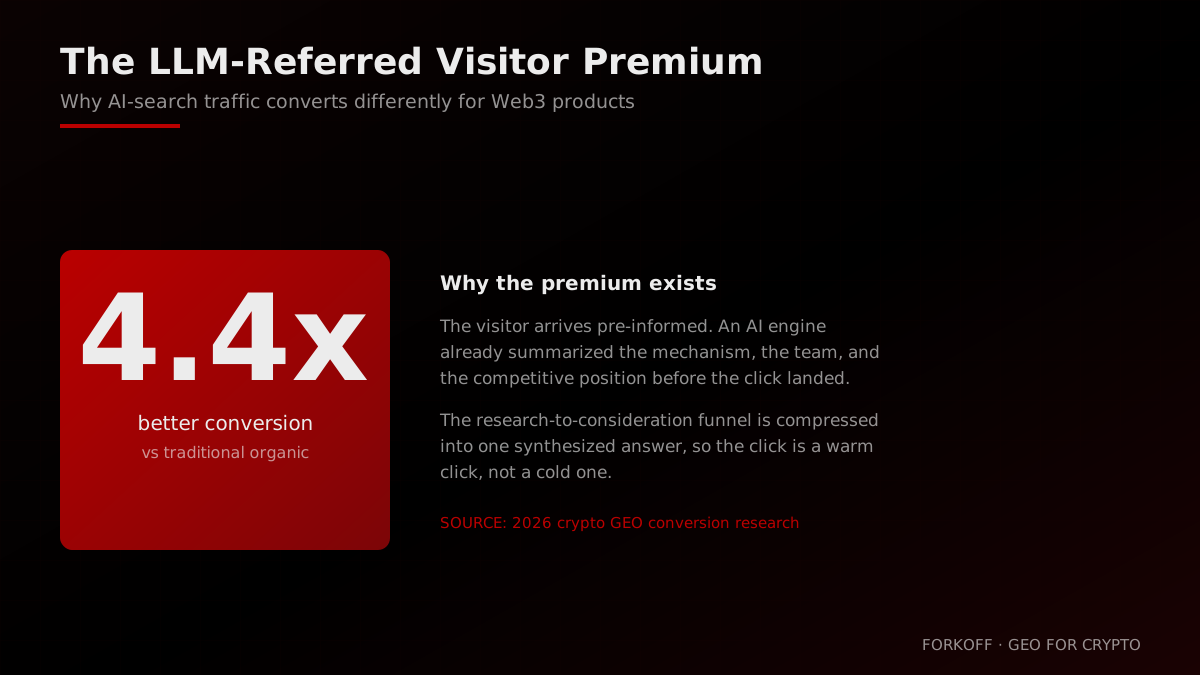
The reason is the compressed funnel. A traditional organic visitor lands cold, often at the top of their research, and has to be educated from scratch. An AI-referred visitor lands warm. By the time they click, an engine has already explained the protocol's mechanism, summarized the team, and positioned the project against competitors. The click is the end of a research session, not the start of one. For a crypto project that means the return on citation investment shows up in lead quality and conversion rate, not only in raw visit counts. A protocol cited in 20 percent of relevant answers generates a materially different pipeline than one pulling the same visit volume from cold search.
This reframes the budget question. Spend on GEO for crypto is not a traffic line item competing with paid acquisition. It is a quality-of-pipeline investment that compounds, because once a project is established as a trusted entity in the engines, that status persists across many future queries rather than resetting every campaign cycle. A crypto team can see which surfaces already cite them, and where the gaps are, by running the free FORKOFF GEO audit before allocating that budget.
AI-referred visitors are warmer, so citation pays back on quality
An LLM-referred visitor converts roughly 4.4 times better than traditional organic traffic for Web3 products. The reason is structural, not magical. The visitor arrives after an AI engine has already summarized the mechanism, the team, and the competitive position, so the click is the end of a research session, not the start of one. For a crypto project this means the return on AI citation shows up in lead quality and conversion, not only in raw traffic. A protocol cited in 20 percent of relevant answers generates a materially different pipeline than one pulling the same visit count from cold search.
Source: Web3 GEO conversion benchmark, 2026
Why Earned Media Outweighs Your Website
Here is the finding that reorders every crypto content budget. Brand-owned content accounts for only 5 to 10 percent of what an AI engine draws on when it answers a category question. The other 85 to 90 percent is earned: editorial coverage, research-grade data, and developer signal that independent sources publish about a project.
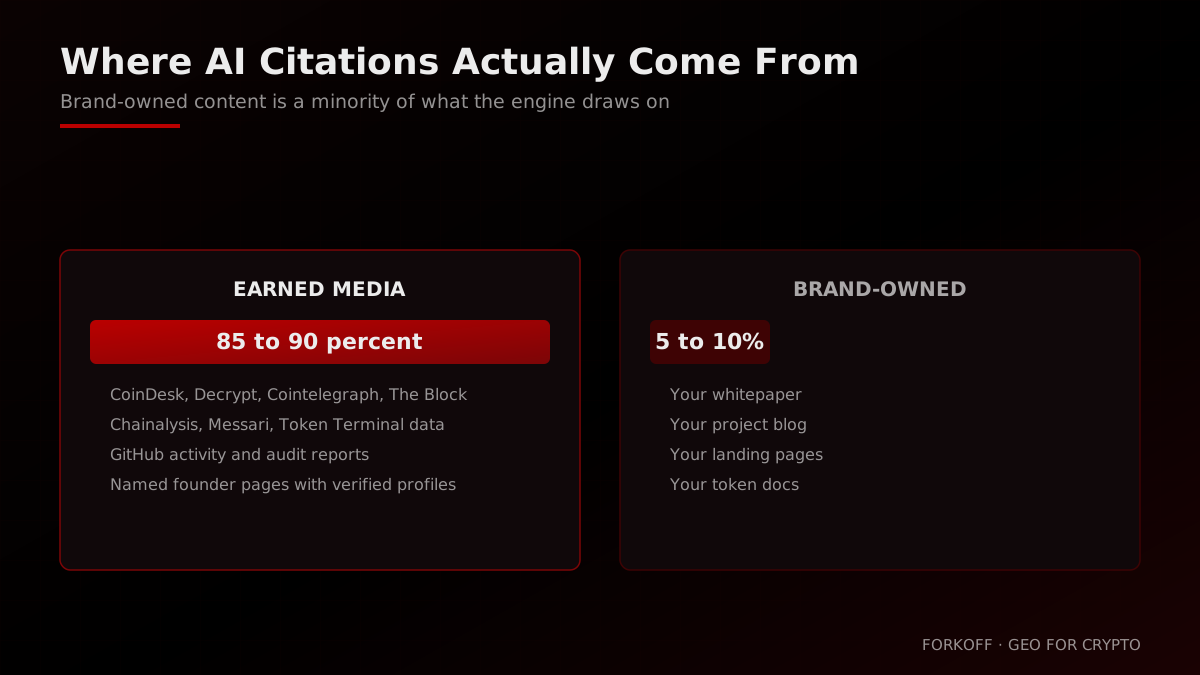
For a Web3 team, this inverts the usual instinct. The reflex is to perfect the whitepaper, polish the landing page, and write more blog posts. Those efforts are not worthless, but they sit in the 5-to-10-percent bucket. The leverage is in the other bucket. Coverage in CoinDesk, Decrypt, Cointelegraph, and The Block carries far more citation weight than anything on your own domain, because the model treats independent verification as a trust signal and self-description as noise.
A DeFi founder on r/ethereum traced this exact dynamic in a head-to-head comparison.
Our protocol gets cited by Perplexity consistently for liquid staking queries. A competitor with similar TVL gets almost nothing. The difference is editorial coverage, not the whitepaper.
The data side reinforces the editorial side. Research and analytics providers that LLMs treat as authoritative for crypto, Chainalysis for on-chain analysis and Token Terminal for protocol financials, function as trusted data surfaces. When your TVL and revenue appear on those platforms, the engine has a verified number to cite instead of a self-reported figure it has to discount. Getting your project onto recognized data providers is an earned-media move even though it does not feel like press.
Liam | Coinpresso
LiamCryptoSEO
Hot take: your crypto project's biggest SEO problem in 2026 isn't your rankings. It's that you don't show up when someone asks an AI tool about your category. Google AI Overviews, Perplexity, and ChatGPT are now the first touchpoints for a massive chunk of search intent. And
This is the single hardest reframe for crypto teams to accept, because it means the highest-leverage marketing work happens off your own properties. The website is table stakes. The citation engine runs on what other credible sources say about you, and that is a function of earned coverage and verified data, not copywriting.
Earned media is the citation engine, not your whitepaper
Brand-owned content accounts for only 5 to 10 percent of what an AI engine draws on when it answers a category question. The other 85 to 90 percent is editorial coverage, research-grade data, and developer signal that independent sources publish about a project. For a Web3 team this inverts the usual instinct to perfect the whitepaper and the landing page. The higher-leverage move is earning coverage in CoinDesk, Decrypt, Cointelegraph, and The Block, and getting a TVL surface on a recognized data provider. The model trusts what other people say about you far more than what you say about yourself.
Source: AI citation source analysis, 2026
The LLM Trust Problem for Web3
Crypto does not get to play GEO on the same difficulty setting as a SaaS company. It plays on hard mode, because answer engines apply implicit credibility filters and crypto content fails those filters more often than almost any other category.
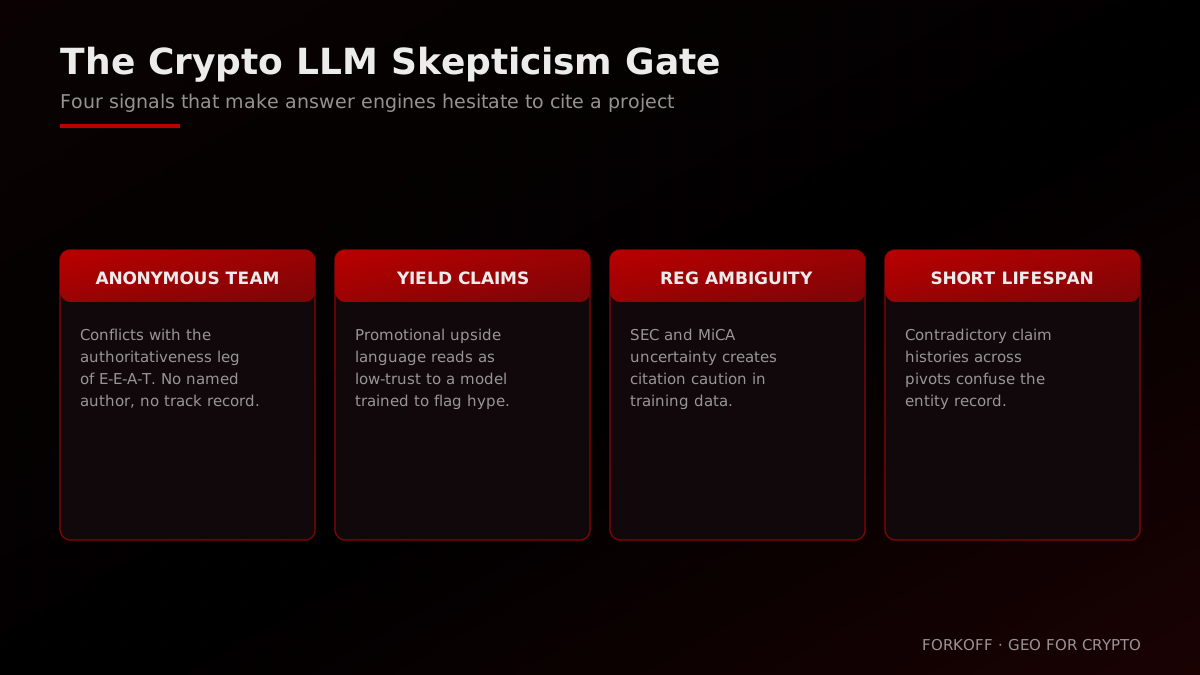
Four obstacles do most of the damage. Anonymous founding teams conflict with the authoritativeness leg of E-E-A-T, because there is no named author and no verifiable track record for the engine to anchor on. Yield claims and aggressive upside language read as promotional, and models are trained to discount promotional framing. Regulatory ambiguity around SEC enforcement and MiCA creates citation caution that is baked into the training data, where coverage of crypto enforcement actions sits next to coverage of projects. Short or pivoting project histories leave contradictory claim records that lower the engine's confidence in any single statement.
The crypto LLM skepticism gate and how to clear each signal
| Trust obstacle | Why the engine hesitates | The fix that works |
|---|---|---|
| Anonymous team | No named author breaks E-E-A-T | Named founder page + verified LinkedIn and X |
| Yield and upside claims | Reads as promotional, low-trust | Factual mechanism copy, third-party framing |
| Regulatory ambiguity | Citation caution in training data | Cite audits from recognized firms |
| Short or pivoting history | Contradictory claim record | Consistent claims across editorial and chain |
| Community-only footprint | Discord and X are not cited | Convert reach into editorial placements |
Each row maps to a citation obstacle FORKOFF sees repeatedly in Web3 GEO audits, not a hypothetical.
None of this is fixed by sanitizing the copy. Removing the word "yield" from your homepage does not change the training data or the editorial record. The fix is building independent signal the engine can verify, which is why the trust problem and the earned-media finding are the same finding viewed from two angles. The way you clear the skepticism gate is by giving the engine credible third-party evidence to cite instead of your own claims.
Crypto trips a skepticism gate other industries do not
Answer engines apply implicit credibility filters before they cite a source. Crypto content fails those filters more often than most verticals. Anonymous founding teams conflict with the authoritativeness leg of E-E-A-T because there is no named author or verifiable track record. Yield claims and aggressive upside language read as promotional, which models are trained to discount. Regulatory ambiguity around SEC enforcement and MiCA creates citation caution in the training data. Short project lifespans leave contradictory claim histories. None of this is fixed by sanitizing the copy. It is fixed by building independent signal the engine can verify.
Source: FORKOFF GEO audit observations, 2026
Founder Identity as a Trust Signal
The anonymity penalty deserves its own section because it cuts against crypto culture so directly. Named, LinkedIn-verified founders get full summaries and citations in AI answers, while anonymous teams get a one-line mention with a disclaimer about limited information available. The engine cannot anchor authoritativeness to a pseudonym with no verifiable history, so it hedges, and a hedge means your project gets the disclaimer instead of the recommendation. A crypto researcher on r/CryptoCurrency ran a controlled comparison across five protocols in the same category.
The three protocols with named, LinkedIn-verified founders got full summaries and citations. The two with anonymous teams got one-line mentions with a disclaimer about limited information available.
The pattern was clean. Named, LinkedIn-verified founders got full summaries and citations. Anonymous teams got one-line mentions with a disclaimer about limited information available. Anonymity might be defensible for the crypto ethos, but it is a citation liability in AI search. The engine cannot anchor authoritativeness to a pseudonym with no verifiable history, so it hedges, and hedging means your project gets the disclaimer instead of the recommendation.
Operator noteTwo anonymous-team DeFi protocols pulled disclaimers about limited information. Their named-founder competitors pulled full summaries.
The practical move is not to dox a founding team that has principled reasons to stay pseudonymous. It is to build whatever named, verifiable credibility the project can support: a named spokesperson, a credentialed advisor, a doxxed lead with a LinkedIn and X footprint, or at minimum a consistent, named editorial presence across the publications the engines trust. The goal is to give the model a verifiable human anchor. Without one, the project competes from behind in every answer.
DeFi and Protocol-Specific GEO
DeFi protocols have a sharper version of the problem and a sharper version of the solution. A DeFi protocol growth lead on r/defi laid out what actually moved their citation share, and it maps almost exactly to the stack the data predicts.
My client asked why they don't show up in ChatGPT results, I had no answer. Help?
A marketer describes being unable to answer a client's question about why their brand does not appear in ChatGPT results, surfacing the AI-search visibility gap practitioners now face.
The protocol GEO stack, ordered by citation impact, is concrete and short.
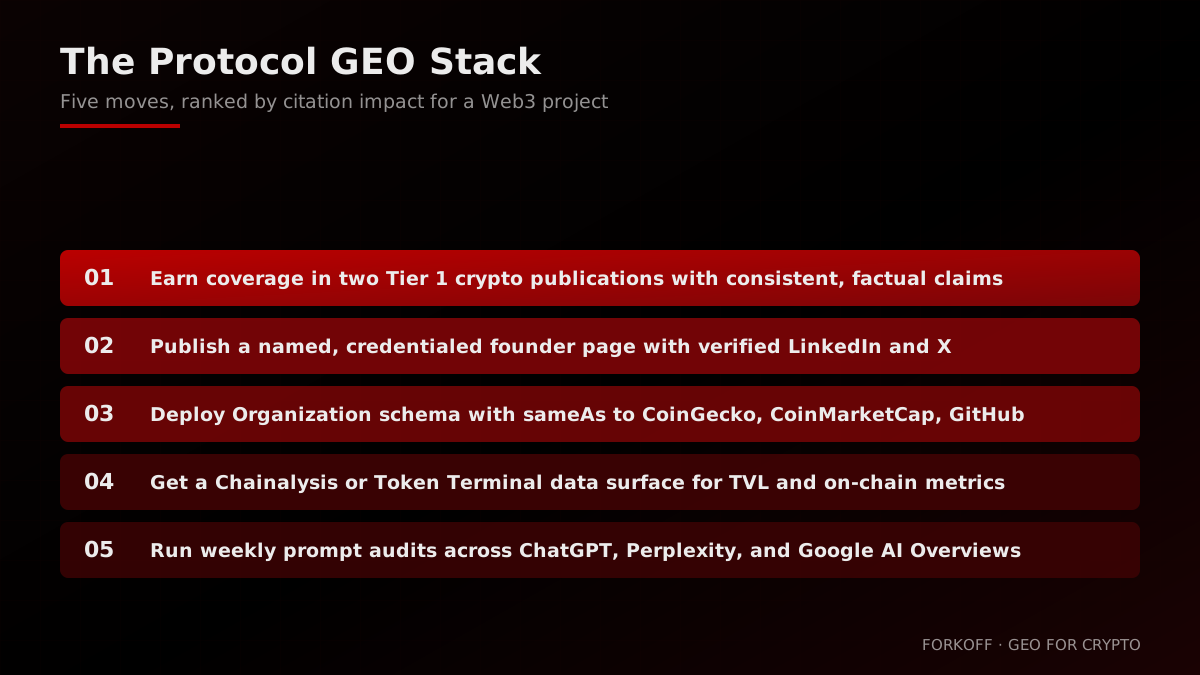
First, earn coverage in at least two Tier 1 crypto publications with consistent, factual claims about the protocol's mechanism and TVL. Second, publish a named, credentialed founder page with verified LinkedIn and X profiles that link back to the protocol site. Third, deploy Organization schema with sameAs links to CoinGecko, CoinMarketCap, and the GitHub organization. Fourth, get a Chainalysis or Token Terminal data surface so the engine has a verified TVL and revenue figure to cite. Fifth, run weekly prompt audits across ChatGPT, Perplexity, and Google AI Overviews so you measure share of voice rather than guessing.
How this Web3 Brand Took Over ChatGPT: GEO Case Study (AI SEO Secrets Revealed!)
Victoria Olsina: AI Content Systems + SEO
A GEO case study walking through how a Web3 brand became the one ChatGPT names for its category.
That order is deliberate. Editorial coverage sits at the top because it carries the most citation weight and clears the most trust obstacles at once. Schema and data surfaces matter, but they amplify an entity the engine already trusts. Putting schema first without editorial coverage is optimizing the packaging on a product the engine has not decided to recommend.
The Web3 Entity Graph
Once the editorial foundation exists, technical entity work makes the engine confident about which project you are. This is where Organization schema and the sameAs array do real work for Web3 specifically. A populated sameAs array connects your project name on your own domain to its verified external identities (CoinGecko, CoinMarketCap, the GitHub org, LinkedIn, X, Wikidata), and those links function as entity disambiguation anchors that stop an engine from blending your data with a similarly named token.
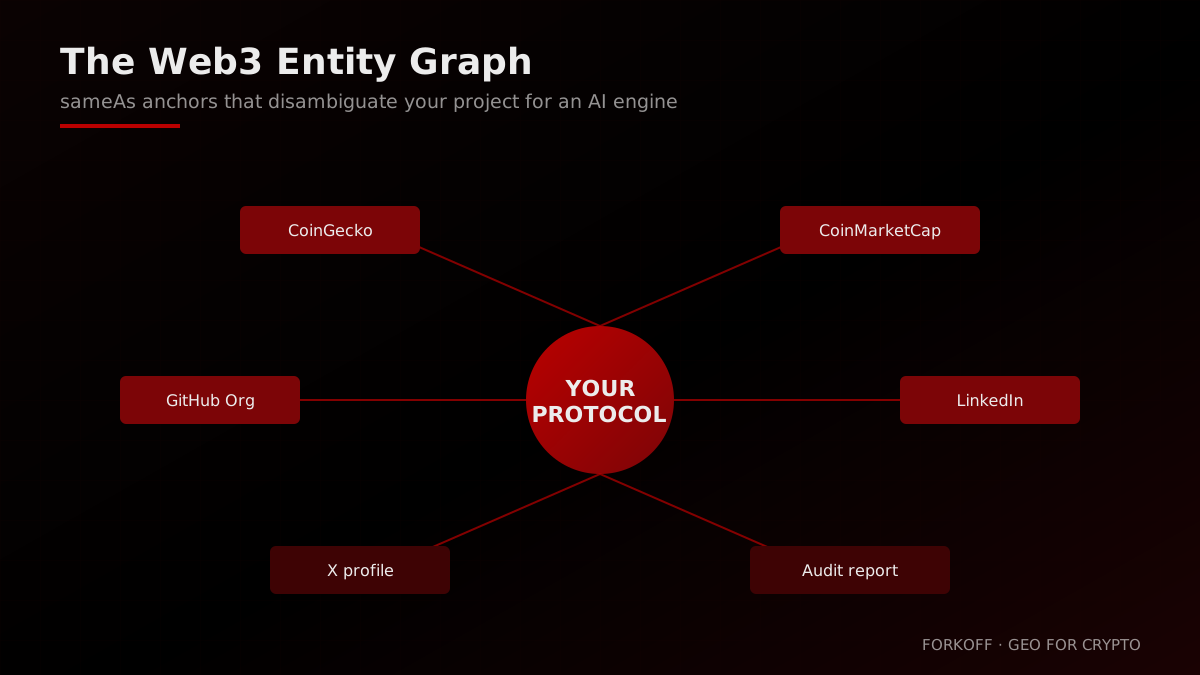
A populated sameAs array connects your project name on your own domain to its verified external identities: CoinGecko, CoinMarketCap, the GitHub organization, LinkedIn, X, and any relevant Wikidata entry. When an engine processes a query about your project, those links function as entity disambiguation anchors. They reduce the chance your project gets confused with a similarly named token, and they raise the engine's confidence that your page is the authoritative source for the entity. The field-level requirements live in Google's Organization structured data guidance and the schema.org Organization vocabulary, both of which the major engines consume.
This matters more in crypto than elsewhere because token names collide constantly. There are dozens of projects with overlapping or near-identical names, forks, and copycats. Without explicit entity disambiguation, an engine answering a query about your protocol may blend your data with a lookalike's, or hand your category position to the wrong project. The sameAs graph is how you tell the engine, unambiguously, which on-chain and off-chain identities belong to you.
Warden
wwardenn
this is the exact 5-step GEO playbook every Web3 project needs right now the part that actually works is Citation Share of Category. track who shows up instead of you in AI search, thats your real baseline do this first run 10 audience questions through ChatGPT, Perplexity, and… Show more
Developer Content and Audit Reports as Trust Signals
Crypto has a credibility asset most industries lack: a public, verifiable development record. AI engines cite GitHub activity, protocol documentation, and audit reports from recognized security firms because those are exactly the independent, hard-to-fake signals the trust filter is looking for.
An active GitHub organization linked from your domain, with a real commit history, signals a live project rather than a landing page with a token. Detailed technical documentation gives the engine specific, factual material to draw on instead of marketing claims. Audit reports from recognized firms address the regulatory and security caution baked into crypto's training-data reputation. Each of these is a trust signal the engine can verify without taking your word for it.
The major model providers publish how their systems weigh and surface information, and the through-line is consistency. OpenAI, Anthropic, and Perplexity all describe systems that reward verifiable, consistent signal over volume. Developer content and audits are the most verifiable signal a crypto project can produce, which is why they punch above their weight in citation impact.
There is a sequencing point that teams miss. Developer signal is necessary but not sufficient on its own. A protocol can have an immaculate GitHub history and a clean audit and still go uncited if no editorial source has ever written about it, because the engine has no narrative to attach the technical proof to. The developer record is the evidence; the editorial coverage is the story that makes the engine reach for the evidence. Projects that ship the code but never earn the coverage build a credible foundation that no answer engine ever surfaces, which is the most common failure mode for technically strong but marketing-thin protocols. Pair the two, and each makes the other more citable. The ecosystem-native infrastructure work, including Farcaster mini-app distribution, follows the same rule: build the verifiable thing, then earn the coverage that makes engines cite it.
Why Community Size Does Not Translate
The most painful lesson for many Web3 teams is that the asset they invested most in, community, does almost nothing for AI citation. AI engines do not read Discord, and they weight a project's own X account as self-description rather than independent verification. An 8,000-member Discord and strong social engagement produce zero citations for target queries, while two CoinDesk placements produce citations within weeks. An NFT community manager on r/NFT put it plainly.
We have 8,000 Discord members and strong engagement. Perplexity does not know we exist for our target queries. AI engines do not cite Discord. Community is not the same as authority in AI search.
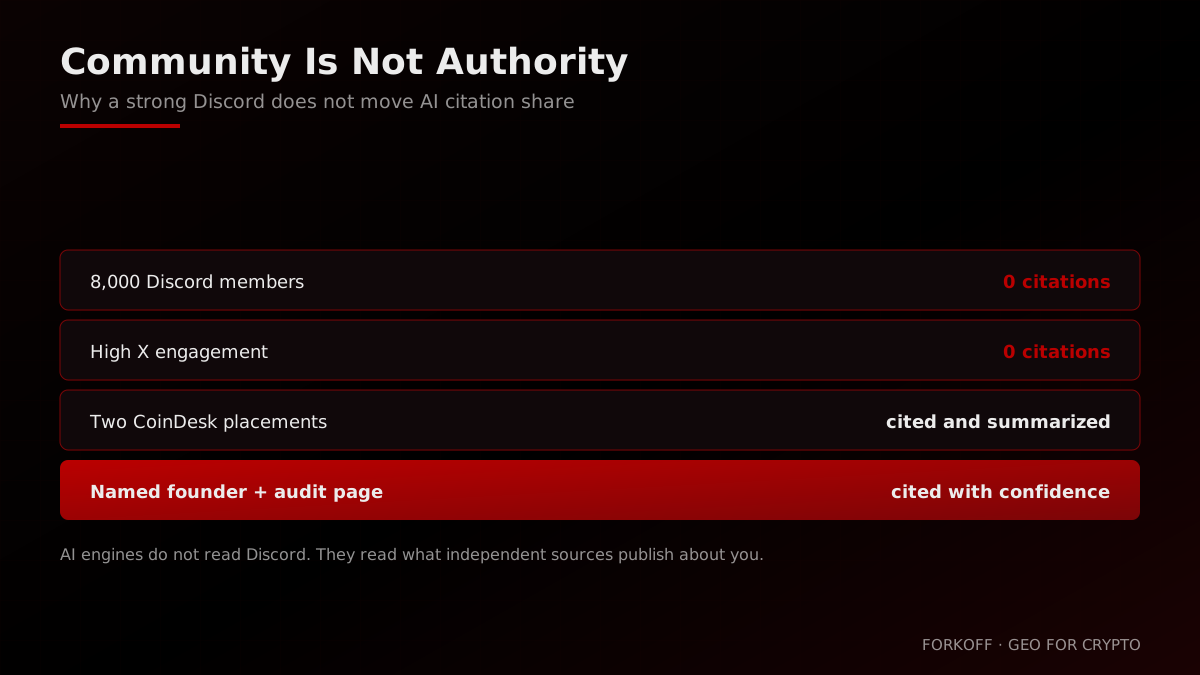
The mechanism is simple. AI engines do not read Discord, and they weight a project's own X account as self-description, not independent verification. An 8,000-member Discord and strong social engagement produce zero citations for target queries, while two CoinDesk placements produce citations within weeks. Community is a real asset for retention, distribution, and culture. It is not an authority signal in AI search, and treating it as one is how projects with massive followings end up invisible in the answers their buyers actually read.
Operator note8,000 Discord members produced zero Perplexity citations. Two CoinDesk placements produced citations within a month.
The move is to convert community reach into editorial outcomes. A large, engaged community is leverage for earning coverage, because journalists and researchers pay attention to projects with genuine traction. Use the community to generate the on-chain activity, the milestones, and the stories that earn the independent coverage the engine will cite. The community feeds the citation engine indirectly. It does not feed it directly.
How the Engines Differ for Crypto Queries
The five major engines do not handle crypto queries identically, and the differences change where you put effort. The structural pattern, favoring earned and verifiable signal, holds across all of them, but the emphasis shifts. ChatGPT rewards editorial presence plus structured data, Perplexity is the fastest to reflect fresh coverage, Google AI Overviews lean hardest on schema and the entity graph, Gemini grounds in its knowledge graph, and Claude is the most source-cautious, so clean editorial signal matters most there.
How the major AI engines handle a crypto category query
| Engine | What it favors for crypto | Where citations come from | Web3 implication |
|---|---|---|---|
| ChatGPT | Synthesized multi-source answers | Editorial + structured data | Name in editorial or be omitted |
| Perplexity | Cited, link-forward answers | Fresh editorial + research data | Earned coverage drives inclusion |
| Google AI Overviews | Schema-rich, indexed pages | Indexed editorial + entity graph | sameAs and FAQ markup matter most |
| Gemini | Entity-grounded answers | Knowledge graph + web | Entity disambiguation is the gate |
| Claude | Conservative, source-cautious | High-trust editorial + docs | Skepticism gate hits crypto hardest |
Directional. Behavior shifts as engines update; the structural pattern of favoring earned, verifiable signal holds across all five.
ChatGPT synthesizes broadly and rewards being present in editorial and structured data. Perplexity is the most citation-forward and the most sensitive to fresh editorial coverage, which makes it the fastest engine to reflect new placements. Google AI Overviews lean hardest on schema and the entity graph, so sameAs and FAQPage markup matter most there. Gemini grounds answers in its knowledge graph, which raises the stakes on entity disambiguation. Claude is the most conservative and source-cautious, which means the crypto skepticism gate hits hardest there and clean editorial signal matters most.
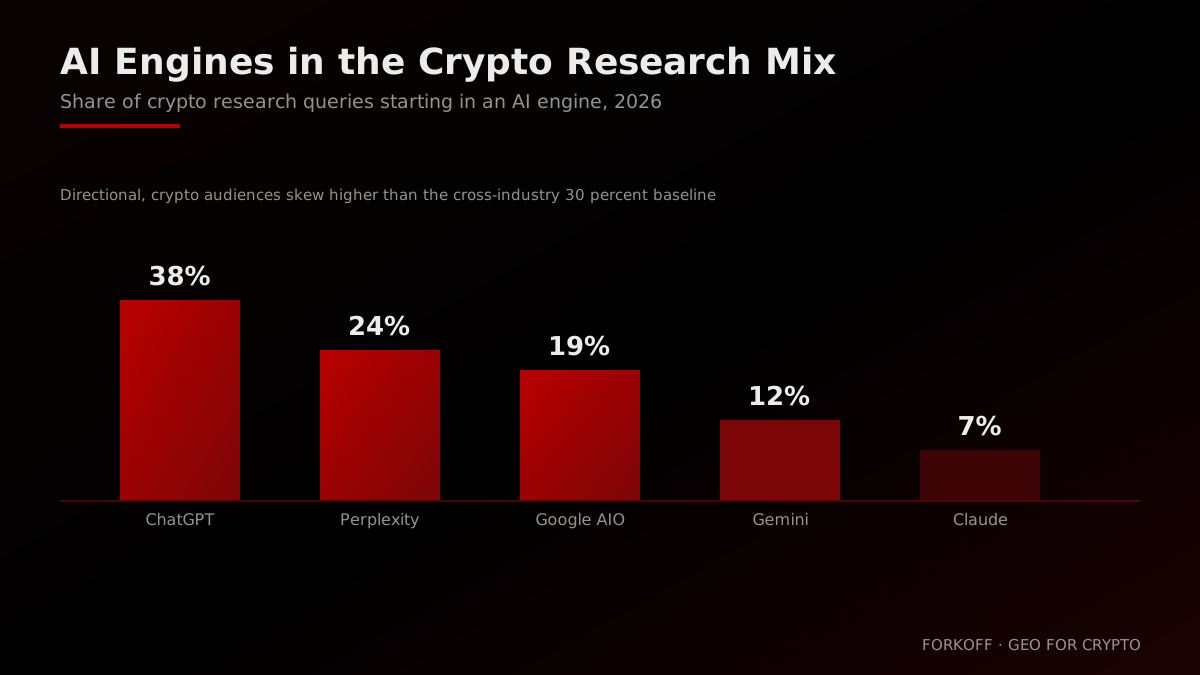
The practical implication is to build the foundation, editorial plus schema plus data, and then weight measurement toward the engines your buyers actually use. For most crypto projects in 2026 that means watching ChatGPT and Perplexity first, because that is where the disproportionate share of crypto research is happening, with Google AI Overviews as the schema-sensitive third surface.
How Perplexity Handles Crypto Queries Differently
Perplexity deserves a closer look because it is the engine most crypto buyers reach for first, and it behaves differently enough to change tactics. Perplexity is citation-forward by design: it shows its sources inline, which means inclusion is not a black box. You can see exactly which articles it pulled and reverse-engineer why a competitor made the cut. It is also the most sensitive of the engines to fresh editorial, so a new placement in a Tier 1 publication can show up in Perplexity answers within days rather than weeks. For a project running an active editorial push, Perplexity is the fastest feedback loop you have.
The flip side is that Perplexity punishes thin signal hard. If the only thing it can find about your protocol is your own domain and a few low-authority aggregator pages, it will either skip you or attach a hedge. That makes Perplexity an honest mirror of your earned-media position. If you are invisible there, you are invisible in the place your most research-driven buyers look, and the cause is almost always that independent sources have not written enough about you for the engine to synthesize a confident answer.
ChatGPT, by contrast, synthesizes more broadly and is less transparent about sources, which means the path to inclusion runs through being present across editorial and structured data rather than chasing a single citation. The two engines reward the same underlying work, earned coverage plus clean entity signal, but Perplexity gives you a scoreboard while ChatGPT makes you infer the score. Running prompt audits across both, plus Google AI Overviews, is how you stop guessing. The measurement discipline here mirrors what we built for SaaS in the generative engine optimization for SaaS breakdown, applied to crypto's harder trust environment.
Where GEO Fits the Wider Web3 Stack
GEO for crypto is a discovery layer, not a standalone channel, and it works best wired into the rest of a Web3 program rather than run in isolation. The editorial coverage that drives citations is the same coverage that builds brand credibility for a token launch, which is why the citation track and a launch plan reinforce each other. The entity and schema work that makes you legible to an engine is the same work that makes you legible to an AI Overview ranking system, so the technical track pays off across surfaces. And the measurement track, tracking share of AI citations over time, is the only honest way to prove the program is compounding rather than coasting.
The schema side specifically rewards rigor. Getting Organization, FAQPage, and Article markup right is not a one-time deploy; it is an ongoing discipline that the schema markup for AEO work treats as a living surface. For agencies running this across multiple clients, the operational pattern is documented in the ChatGPT citation strategy for agencies breakdown, which covers how to scale prompt audits and editorial pipelines without the program collapsing into ad-hoc reporting.
For protocols specifically, the vertical pages matter. A DeFi protocol has a different citation profile than an NFT project or an infrastructure play, which is why our work for DeFi protocols and the broader Web3 protocol program treats the trust gate and the data-surface requirements as protocol-specific rather than generic. The LLM SEO service covers the technical and measurement layers, while the editorial layer ties back into the full crypto marketing agency guide. If you are still deciding between partners, the best GEO agency comparison and the best crypto marketing agency comparison lay out the evaluation criteria that actually predict citation outcomes rather than vanity metrics.
What a Web3 Marketing Agency Should Be Building for You
If you are evaluating help for this, the bar is specific. A capable web3 marketing agency runs three tracks at once: editorial placement in the publications engines trust, technical optimization (Organization schema, sameAs links, FAQPage markup), and weekly citation measurement across ChatGPT, Perplexity, and Google AI Overviews. A partner missing any one of those three delivers partial results, because the tracks compound rather than stand alone. Separately, if the distribution strategy also relies on creator amplification, the crypto KOL marketing framework documents how to tier and vet that layer so it reinforces rather than contradicts the citation work.
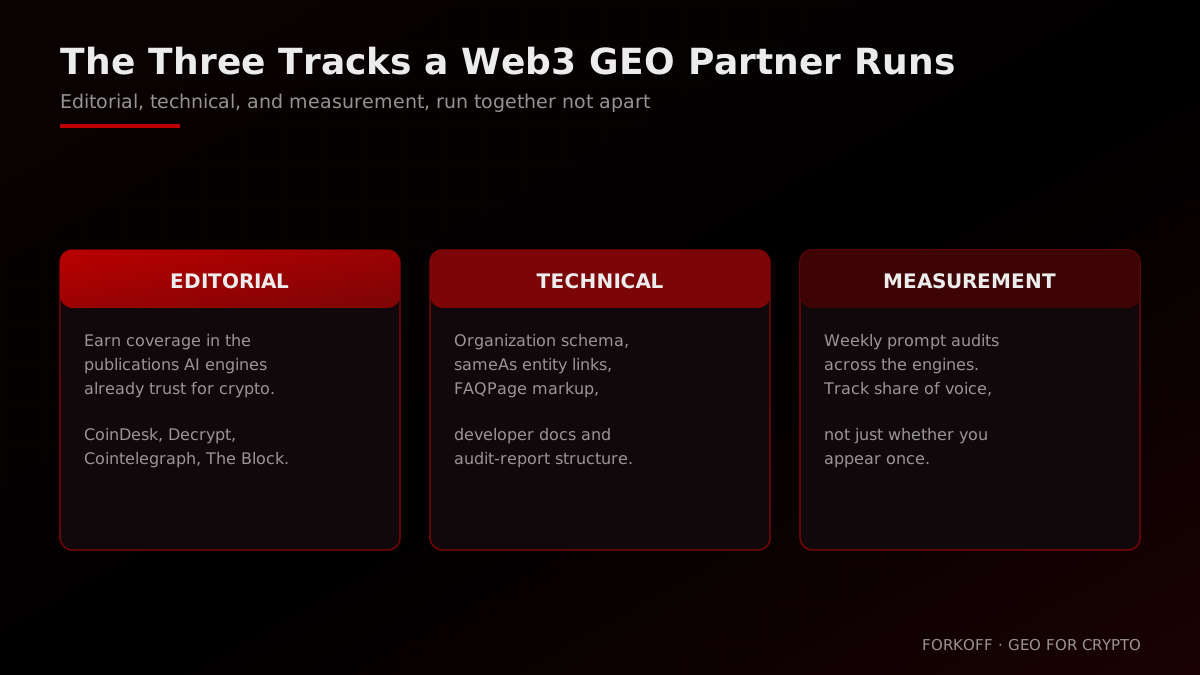
The first track is editorial placement: earning coverage in the publications AI engines trust, which is relationship-driven, slow, and the highest-leverage work. The second is technical optimization: deploying Organization schema, sameAs entity links, FAQPage markup, and structuring developer documentation and audit references so the engine can parse them. The third is citation measurement: running weekly prompt audits across ChatGPT, Perplexity, and Google AI Overviews to track share of voice, because without measurement you cannot tell whether the first two tracks are working.
How a Crypto Wallet Became the Brand AI Recommends When Trust Matters Most
Citeworks Studio
How a crypto wallet became the brand an AI engine recommends when trust is the deciding factor.
Most agencies do one track and call it GEO. SEO shops do the technical track and skip editorial. PR shops do editorial and skip schema. Almost nobody runs disciplined weekly citation measurement, which means almost nobody can prove the work moved anything. The reason to insist on all three is that they compound: editorial earns the trust, technical makes the trust legible, and measurement tells you where to push next.
How We Run This at FORKOFF
At FORKOFF we run GEO for crypto as a single program across all three tracks, because we learned the hard way that splitting them produces reports instead of citations. A first read on your technical baseline is available through the free AEO checker, which surfaces AI crawler access gaps, schema gaps, and llms.txt status in one pass before committing to a deeper engagement. Our GEO service then starts with a full citation audit: we run structured prompt sets across the engines for your category and map exactly where you appear, where competitors appear, and which sources the engine is drawing on to make those decisions. That audit is the diagnostic, and it usually surfaces the same pattern, the project is invisible not because its product is weak but because its earned-media and entity signal are thin.
From there we build the editorial track against the publications the engines actually cite, deploy the technical entity work, and stand up weekly measurement so share of voice is a number we watch rather than a hope. We have run this for DeFi, infrastructure, and NFT teams, and the directional benchmark from our own GEO citation lab rerun showed a 34 percent citation-rate improvement on the optimized set, which we cite as directional rather than a guarantee because every category and engine behaves differently. The point of the number is the direction of travel: disciplined GEO work moves citation share, and it moves it inside a measurable window.
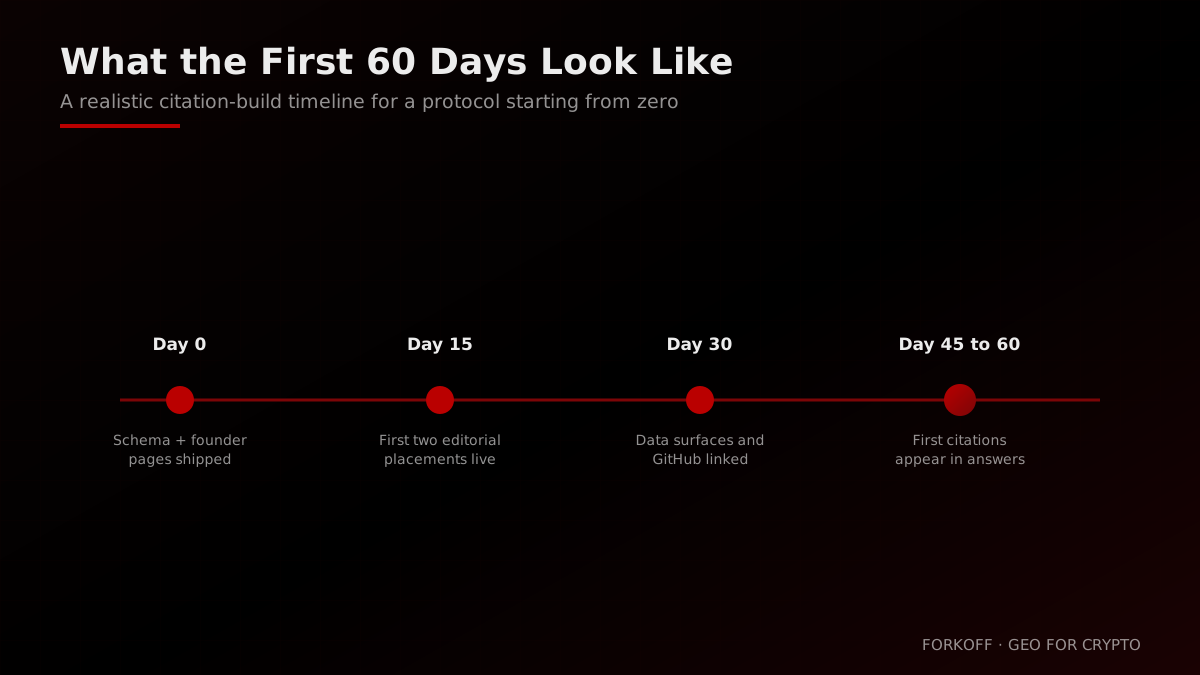
That window is the reason this is urgent. Keyword difficulty across the crypto GEO stack sits in the single digits because the niche is young, which means a focused project can build first citations inside 45 to 60 days. That advantage exists precisely because most competitors have not started. As the category matures and the editorial slots fill, the difficulty rises and the window narrows. The first-mover advantage in crypto GEO is real and it is dated.
Operator noteKeyword difficulty across the crypto GEO stack sits in the single digits. The 45-to-60-day citation window closes as competitors notice.
For teams that want the full distribution picture around this, the Web3 GTM playbook covers the channel layer, and the answer engine optimization playbook covers the operator-grade detail on running the three tracks. GEO is the discovery layer that sits underneath all of it.
The Verdict
Web3 SERPs are AI-driven now. That is not a prediction to plan around, it is the current state of how crypto buyers research before they commit capital. Over 30 percent of research starts in an engine, crypto runs higher, and the engine names three or four projects while the brand site sits out 90 percent of the decision. The projects that get named are the ones with earned editorial coverage, verifiable founder identity, a clean entity graph, and developer signal the engine can trust. The projects that get the disclaimer are the ones still optimizing their whitepaper.
Crypto plays this game on hard mode because of the trust gate, anonymous teams, yield claims, regulatory ambiguity, and contradictory histories all push the engine toward caution. That is the bad news. The good news is that the same hardness means the field is wide open: fewer than 15 percent of crypto projects have done this work, keyword difficulty is in the single digits, and the citation window opens in under two months. The advantage is available today and it expires. The projects that treat GEO for crypto as present-tense work, not a future line item, are the ones that will be named when their buyers ask. Everyone else is optimizing for a search box their customers have already stopped using.
The Ultimate Guide for LLMO SEO (GEO & AEO) for Blockchain, Crypto, Web3 Projects & Brands [2026]
A community guide laying out LLMO, GEO, and AEO specifically for blockchain and crypto projects, covering how AI answer engines decide which Web3 brands to cite.
#70 AI Search & Automation for Web3: How to Show Up on ChatGPT & Scale Marketing w Victoria Olsina
Out of Ordinary - a Web3 Marketing Podcast
A Web3 marketing podcast on AI search and how projects get surfaced on ChatGPT at scale.