GameFi player acquisition is the work of getting real players, not airdrop farmers, to install, play, and hold a web3 game's token. It is different from Web2 user acquisition in one decisive way: the goal is not an install, it is a retained wallet that becomes token and mint demand instead of sell pressure. Get the player right and the token takes care of itself. Get the player wrong and no amount of emissions saves you.
Most web3 games do not lose because the game is bad. They lose because they buy the wrong player. When the reason to show up is a yield, the people who show up are optimizing for extraction, and they leave the moment the yield drops. The studios that win treat marketing as distribution, not as ad spend, and they earn players on the merits of the game rather than renting them with token incentives.
This is the playbook we run for web3 game teams at FORKOFF, written for the founder and growth lead, not to sell you a retainer. It covers what actually acquires players today, why launches leak, the four earned-distribution channels that work, how to drive token demand rather than installs, and how to sequence all of it to the three triggers a studio really has.
GameFi player acquisition in one scroll
Web3 games do not lose because the product is bad. They lose because they buy installs from farmers who dump the token instead of earning players who hold it. The fix is distribution, not more emissions. Run four earned channels: clipping to manufacture reach, KOL waves seeded from the small accounts up, Reddit to reach real genre players, and a launch video the whole wave points to. Sequence them to the three triggers a studio actually has, launch, token event, and season. We run this loop for web3 teams at FORKOFF.
How do web3 games actually acquire players?
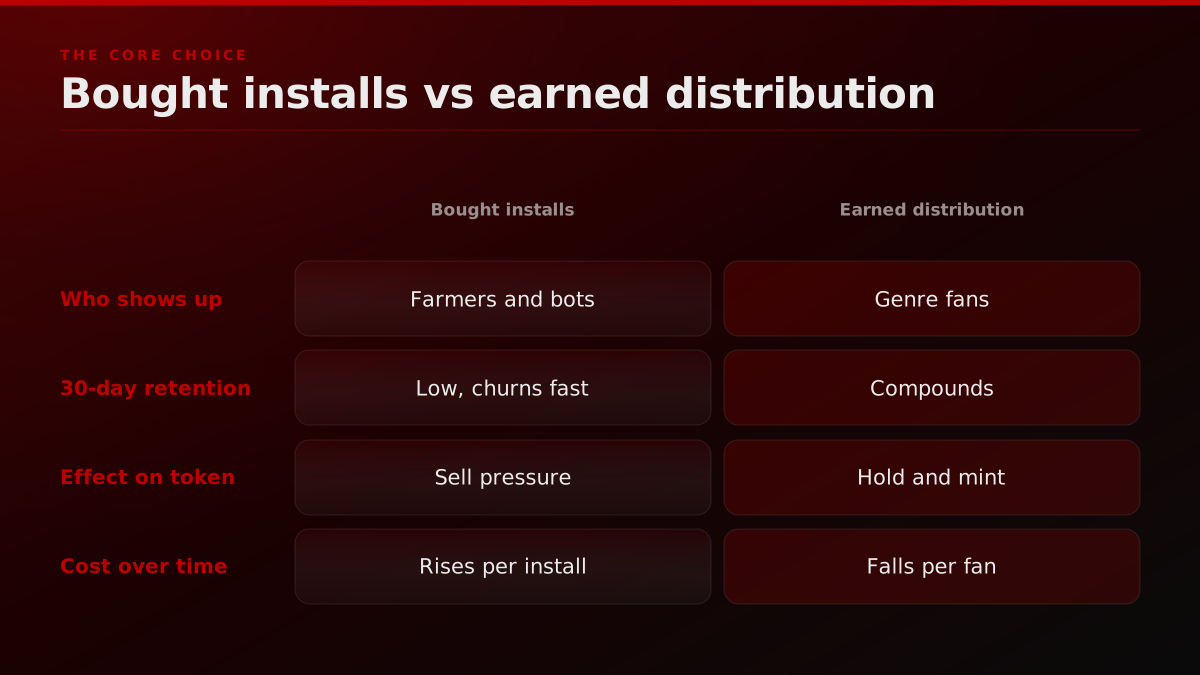
There are only two ways to acquire a player: buy the install or earn the attention. Buying means paying for installs, or worse, paying in token emissions and airdrops, which brings farmers and bots that spike your on-chain activity chart and then vanish. Earning means manufacturing reach and trust through content and community so the players who arrive came for the game. The earned path now wins decisively for web3 games, because the bought path does not just cost money, it actively damages the token by importing sellers. The whole strategy reduces to a single decision made a hundred times: earn the player, do not rent the farmer.
This is the distribution-not-product thesis, and it is worth being precise about it. A good game is necessary. It is not sufficient, and it is not distribution. Plenty of genuinely fun web3 games have died with a great build and no audience, while mediocre ones have grown because a studio treated getting the game in front of the right people as a real discipline. The founder-led growth motion that works elsewhere in crypto, documented in our web3 GTM playbook and the broader web3 ecosystem growth OS, applies here with one gaming-specific twist: the audience you are earning is a player, and players can smell a cash grab across a room.
The market itself is asking for this. When a well-followed web3 gamer posts that he wishes the category would branch into more genres, that is a demand signal, not a complaint. The players are there and they want more games to reach them well.
I really wish web3 gaming would branch out more. There are so many genres that could work really well in web3.
ᴋɪĸꜱ
@Kiksman_
I really wish Web3 gaming would branch out more. We’ve already got enough MMORPGs, TCGs, and strategy games. Where are the sports games? The horror games? The racing games? The survival games? The adventure games? There are so many genres that could work really well in Web3.
The genre gap that @Kiksman_ points at is also an acquisition opening. Every genre with real players and no serious web3 entrant is an audience nobody is competing for yet. If your game is a survival builder or a racing game, the acquisition question is not how do I reach crypto people, it is how do I reach survival and racing players, most of whom have never connected a wallet and never will unless the game earns it.
This reframes the entire funnel. Most GameFi teams position inside the crypto conversation, competing with every other token for the same finite pool of speculators, which is why their acquisition costs rise every cycle. The teams that grow position inside the gaming conversation, where the audience is orders of magnitude larger and has never been marketed a web3 game before. The wallet becomes a detail you introduce after the player already wants to play, not the headline that scares them off before they see a second of gameplay. That single positioning shift, from token-first to game-first, changes which channels work, which creators matter, and which subreddits are worth your time, and it is the through-line of everything below.
Why do most GameFi launches lose players within 30 days?
Because the incentive selects for the wrong player. A launch built around an airdrop or a play-to-earn yield is a launch built around a bounty, and a bounty attracts bounty hunters who complete the minimum action, claim, and leave. The retention math is brutal and well documented: Layer3 and Galxe quest data shows the large majority of airdrop hunters abandon within a month. The wallets that spike your dashboard on launch week were never players, they were extractors, and they were always going to sell the token they farmed. This is the single most expensive mistake in GameFi, and it is entirely self-inflicted, because the studio chose an acquisition mechanic that pays people to not care about the game.
The airdrop that prints wallets and loses players
Layer3 and Galxe aggregate data shows 68% of airdrop hunters abandon inside 30 days [Source: Layer3 and Galxe quest data]. An airdrop or a play-to-earn yield is a bounty, and a bounty attracts bounty hunters. They complete the minimum task, claim, and leave, and the on-chain activity chart spikes then collapses. The wallets were real. The players were not. Every dollar of emissions spent to acquire an extractor is a dollar that creates sell pressure on the token you are trying to build demand for.
Source: Layer3 and Galxe aggregate quest and airdrop data
The numbers are unforgiving. When the churn stat sits next to the farmer economics, the pattern is obvious: paid extractive acquisition prints activity and loses players.
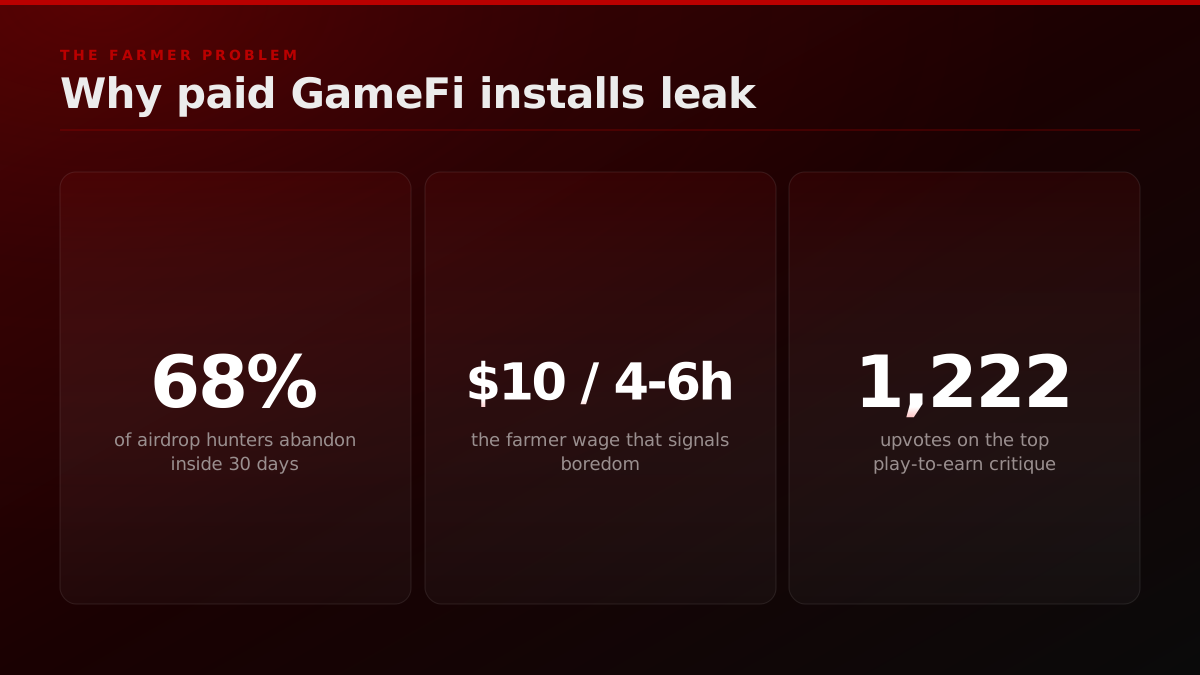
The clearest articulation of the problem does not come from a crypto marketer, it comes from the players and critics themselves. On the most-upvoted Hacker News thread about play-to-earn, one commenter reframed the whole mechanic in a single sentence.
When a player is earning $10 every 4-6 hours by automating chopping logs, that's a sign that some of your playerbase isn't enjoying what's happening to them.
That is the diagnosis. If a meaningful slice of your playerbase is grinding a repetitive action for a small hourly yield, you have not built a game they love, you have built a job they tolerate, and people quit jobs the moment the pay stops. The sharper critics go further, arguing that a game whose core loop is earning has quietly become something other than a game.
Now that the veneer of such games is dropping away to reveal that they've just been casinos all along, the bright side is that society might finally start taking gaming addiction as seriously as gambling addiction.
You do not have to fully agree with kibwen to take the lesson. When extraction is the reason to play, the studio is competing on yield, and there is always a higher yield somewhere else. The founders wrestling with this in public, like the one asking r/marketing how to market a web3 game amidst industry skepticism, are asking exactly the right question.
Strategies for marketing a web 3 game amidst industry skepticism, seeking insights.
Strategies for Marketing a Web 3 Game Amidst Industry Skepticism: Seeking Insights
The skepticism is real and it is earned, which is why the games that break through do it by leading with the game. The most honest signal of all came from a crypto commentator who spent a year believing web3 gaming was dead, then actually played one, a wallet-gated strategy game on Immutable, and admitted the product had gotten good.
Martian
@DementorHere
web3 gaming is dead. that's been the consensus for a year, so I did the responsible thing and actually played one after 12 months away. @MedievalEmpires on @Immutable. it's Age of Empires. if Age of Empires made you connect your wallet first. the pros are real:
When a self-described skeptic writes that a wallet-gated strategy game is genuinely fun, that is the whole thesis in one post. The build caught up. Distribution, aimed at players rather than farmers, is now the constraint.
What does leading with the game actually look like in practice? It means your first touch with a new player is gameplay, not tokenomics. It means the retention loop is a reason to keep playing, a season, a ladder, a guild rivalry, that would still matter if the token were worth nothing tomorrow. It means the token is a status and utility layer on top of a game people already enjoy, not the entire reason to log in. Studios that get this build a retention curve that flattens into a real player base, while studios that lead with earn build a spike that collapses on the first emissions cut. The uncomfortable test is simple: if you turned the rewards off for a week, would anyone still play? If the honest answer is no, you do not have a player-acquisition problem, you have a game problem wearing a marketing costume, and no distribution stack fixes that.
What does a distribution-first player-acquisition stack look like?
A distribution-first stack is four earned channels doing four different jobs, run together so they compound. Clipping manufactures reach from content you already make. KOL waves borrow the trust of creators players already follow. Reddit reaches the skeptical, high-retention players who research before they install. A launch video gives the entire effort one anchor to point at. None of these is a paid-install buy, and none of them pays a farmer to show up. Run as a set, they earn a player who came for the game, which is the only player who becomes real token demand. This is the stack we build and operate for game teams, with KOL marketing as the trust layer.
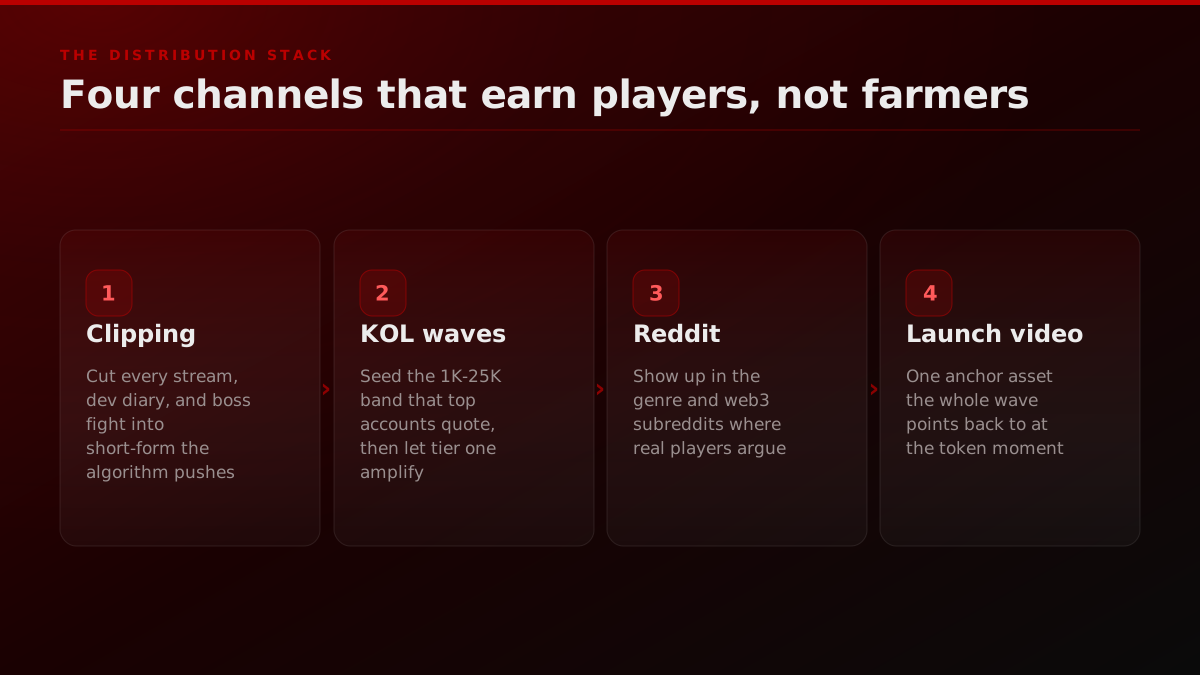
The four channels are not interchangeable, and the most common mistake is to run one and call it a strategy. A KOL push with no clip engine underneath it spikes once and dies. A clip engine with no community to catch the viewers leaks them straight back out. The table below is the job description for each channel, including the player it is best at earning and the trigger it fires on.
The four earned-distribution channels for a web3 game
| Channel | What it does | Player it earns | Primary trigger |
|---|---|---|---|
| Clipping | Cuts long-form into short videos the feed pushes | Genre-curious viewers who never searched | Always on |
| KOL waves | Seeds small accounts, then lets big ones amplify | Players who trust a creator they follow | Launch and token event |
| Shows up where real players argue about games | Skeptical, high-retention researchers | Always on, spikes at launch | |
| Launch video | One anchor asset the whole wave points to | The undecided who needs to see it move | Launch and season |
Read that table as a system, not a menu. The always-on channels, clipping and Reddit, build the warm audience. The event channels, KOL waves and the launch video, convert that warm audience at the moments that matter. Skip the always-on layer and your launch fires into a cold room. Skip the event layer and your warm audience never gets a reason to act.
How does clipping drive player acquisition for a web3 game?
Clipping is the top of a GameFi acquisition funnel, and it is the most underused channel in the category. A web3 game generates an enormous amount of raw footage, dev streams, gameplay, boss fights, tournament runs, community events, and almost none of it gets cut into the short-form video the algorithms on TikTok, Reels, YouTube Shorts, and X actually distribute for free. Clipping turns that raw footage into hundreds of short videos engineered for reach, which is how you put the game in front of genre players who never searched for it. It is earned distribution at scale, and the reach compounds because clips keep working long after you stop posting.
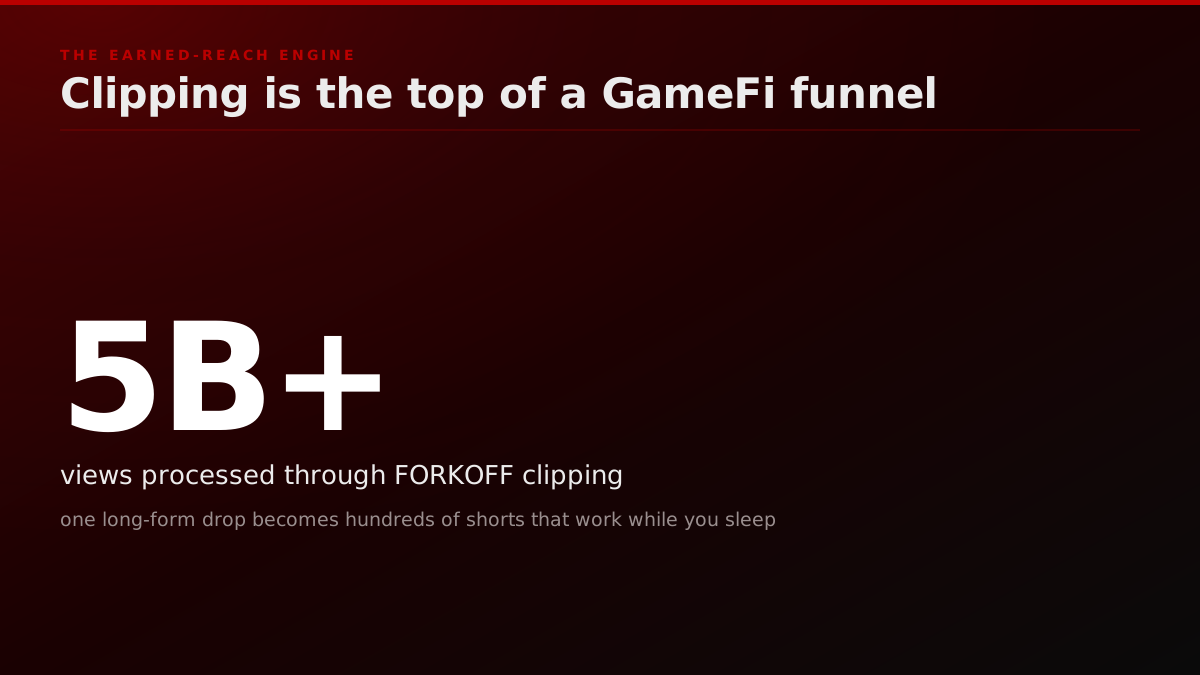
The scale is the point. We have processed more than 5 billion views through clipping, and the mechanic that produces those numbers is volume, not a single hero video. One long stream becomes dozens of clips, each testing a different hook, and the few that catch carry disproportionate reach.
Operator noteOne 40-minute dev stream becomes 30 to 60 clips. Volume, not one hero video, is what feeds the algorithm.
For a web3 game specifically, clipping does something paid installs cannot: it shows the game moving. A static ad asks a skeptical player to trust you. A 20-second clip of an actual fight or an actual build lets the game make its own case, which matters enormously in a category where the default assumption is that the game is a wrapper around a token. The mechanics of building this engine are the same ones we detail for any creator-led motion, and for a game the raw material is already sitting in your Twitch VODs. The teams teaching user acquisition at the ecosystem level say the same thing about earned video.
The operational shape of a clip engine for a game is worth spelling out, because the difference between a channel that works and one that does not is process, not luck. Capture everything: dev streams, playtests, community tournaments, and the moments players themselves create. Cut for a hook in the first second, because that is the window the feed gives you. Test many angles per source, the funny fail, the satisfying combo, the genuinely impressive build, and let watch time tell you which hook the audience wants more of. Post natively to each platform rather than cross-posting a watermarked reupload the algorithm suppresses. Then feed the winners back into your KOL briefs, because a clip that already performed organically is a clip a creator can amplify with confidence. None of this requires a token, an airdrop, or a paid install, which is exactly why it earns the player instead of renting them.
Effective User Acquisition Strategies for Web3 games
A conference talk on effective user acquisition strategies for web3 games.
If you only stand up one channel before your next season, make it clipping, because it is the one that keeps paying after the campaign ends. You can run it in-house or have us run it as a managed clipping engine, but run it.
How do you run a KOL wave for a GameFi launch without buying farmers?
A KOL wave is amplification, not origination, and the trick is to seed it from the bottom. The instinct is to pay the biggest gaming or crypto account you can afford, but a single large placement into a cold audience is the KOL version of a paid install: one spike, no compounding, and often a wave of farmers who follow the account for alpha, not games. The wave that actually acquires players seeds the small, genre-native accounts first, the ones in the roughly 1,000 to 25,000 follower band where signal originates, and then lets the large accounts amplify a story that already has momentum. Vet every account for real audience over bought engagement, and you get players who trust a creator they already follow.
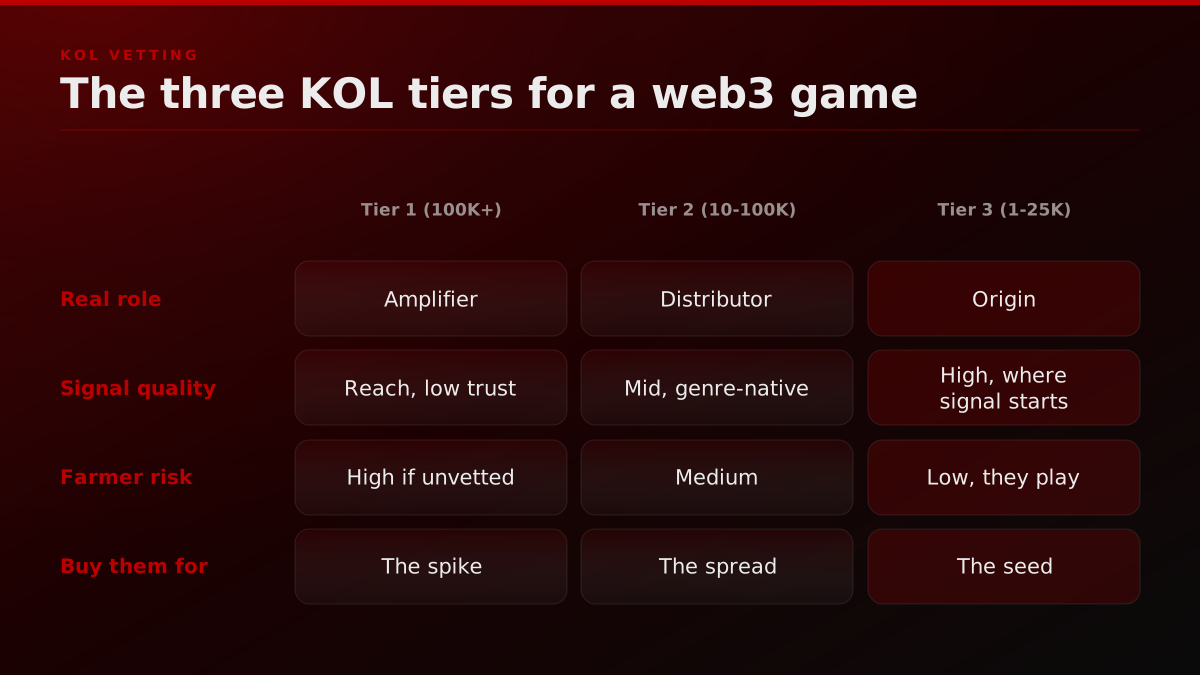
The tiering matters because the tiers do different jobs. Tier three, the small genre-native creators, are where a game first looks real, because their audiences are players not speculators. Tier two spreads it. Tier one amplifies at the peak. Buy tier one without seeding tier two and three and you get a spike with nothing under it.
Operator noteSeed the 1K to 25K follower band first. Signal originates there, and top accounts quote up, not down.
Vetting is the whole game, because the web3 KOL market is full of accounts with impressive follower counts and hollow audiences. We wrote the full method in our guide to vetting a crypto KOL and covered the tooling in our roundup of crypto KOL platforms, and the crypto KOL marketing framework ties it together. For a game, add one filter the generic frameworks miss: does the creator actually play games, or do they only post charts. A trading account posting about your game reaches speculators. A gaming account posting about your game reaches players. The people who run this well talk about it openly.
Web3 game marketing, KOLs, creatives
A practitioner breakdown of web3 game marketing, KOLs, and creatives.
There is one more filter that separates a KOL wave that acquires players from one that just moves a chart. Watch what happens in the replies, not just the likes. A creator whose audience replies with questions about the game, screenshots of their own runs, and genuine argument has a playing audience. A creator whose posts about your game draw only price talk and rocket emojis has a speculating audience, and that audience will farm the airdrop and leave. The follower count tells you reach, but the reply quality tells you whether the reach is players or traders, and only one of those becomes token demand that lasts. Ecosystem creator programs, like the one Enjin runs for its games, show how much of this distribution is now earned and creator-led rather than bought. Brief every creator with the same game-first angle you use everywhere else, give them real gameplay to react to rather than a marketing script, and the wave reads as organic because it is.
Run the wave through a managed KOL marketing motion if you want it vetted and sequenced properly, but whatever you do, seed small and amplify up.
How do you use Reddit to acquire web3 game players?
Reddit is where the highest-retention players in your funnel already live, and where the least farmer-heavy audience gathers. Real players research a game before they commit, and that research happens in genre subreddits and web3 subreddits where people argue honestly and downvote marketing on sight. The channel does not reward broadcasting. It rewards showing up as a participant who happens to be building a game, answering the skeptical questions directly, and letting the game earn its reputation in public. Done right, Reddit acquires the players who stay, because a player who found you through a genuine thread arrived already half-convinced.
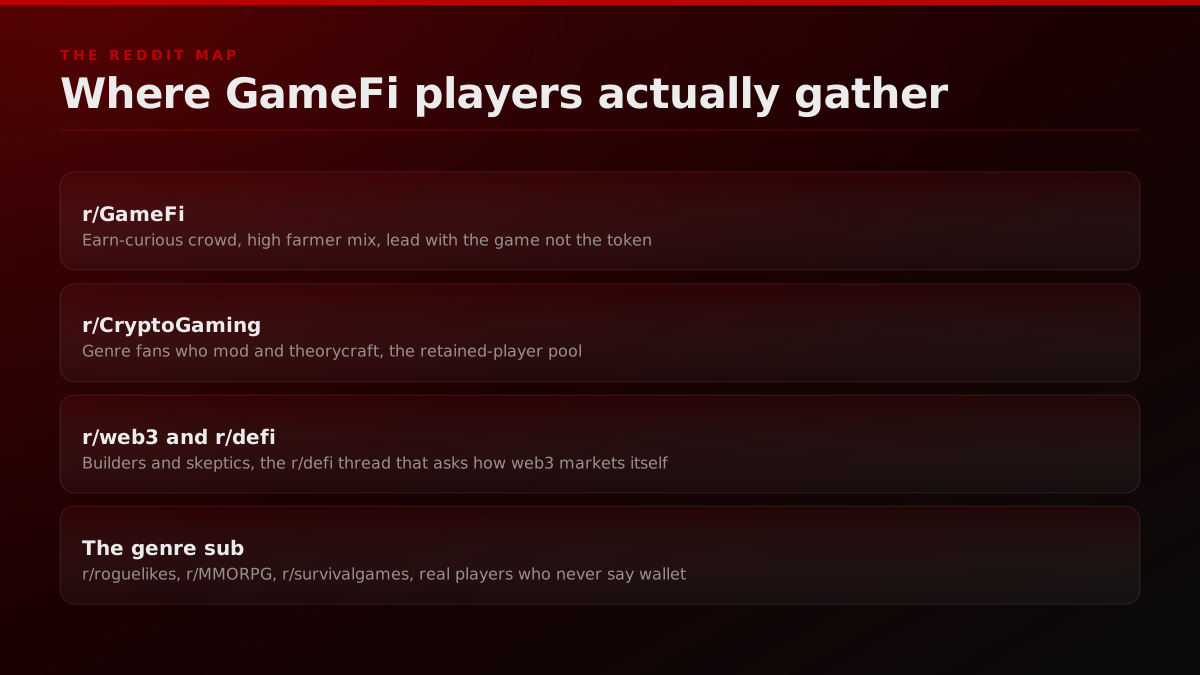
The map matters more than the message. The earn-curious subreddits like r/GameFi have real interest but a higher farmer mix, so lead with the game and never with the token. The crypto-gaming subreddits hold the genre fans who mod and theorycraft, the retained-player pool. And the general web3 subreddits are where the skeptics live, including the r/defi thread where a researcher openly asked how web3 companies even do their marketing.
How are Web3 Companies Doing Their Marketing? For Research Purposes
That thread is a gift, because it is a room full of your exact audience telling you what they find credible and what they dismiss. The way to win these subreddits is documented in our Reddit marketing strategy, and the principle for a game is simple: contribute more than you promote, and go to the genre subreddits where the real players are, not just the crypto ones. We run this as a managed Reddit marketing motion for teams that want presence without getting the account banned in week one.
The tactical difference between the crypto subreddits and the genre subreddits is worth internalizing, because it decides what you post and how. In a crypto subreddit, the token is the entry point, but the audience is heavy with speculators, so you lead with the game to filter for the players hiding in the crowd. In a genre subreddit, the token is a landmine, so you never lead with it at all. You show up as a studio building a game in that genre, you answer the mechanics questions the community actually cares about, and you let the wallet come up only when a player asks. A dev who posts a genuinely interesting devlog in a genre subreddit and answers every comment earns more retained players than a hundred thousand dollars of paid installs, because the players who arrive from that thread came pre-sold on the game and pre-warned that it is web3, which is the only combination that survives 30 days.
How do you drive token and mint demand, not just installs?
Token and mint demand follow retained players, they do not precede them. The failed sequence tries to manufacture demand first, with emissions and airdrops, and ends up manufacturing sell pressure. The working sequence earns attention, converts the players who came for the game, gives the token a genuine reason to be held, and then lets those retained wallets become the proof that pulls in the next wave. Demand that is built on players who would keep the token even without a price incentive is demand that compounds. Demand rented with yield is demand that dumps the instant the yield stops.
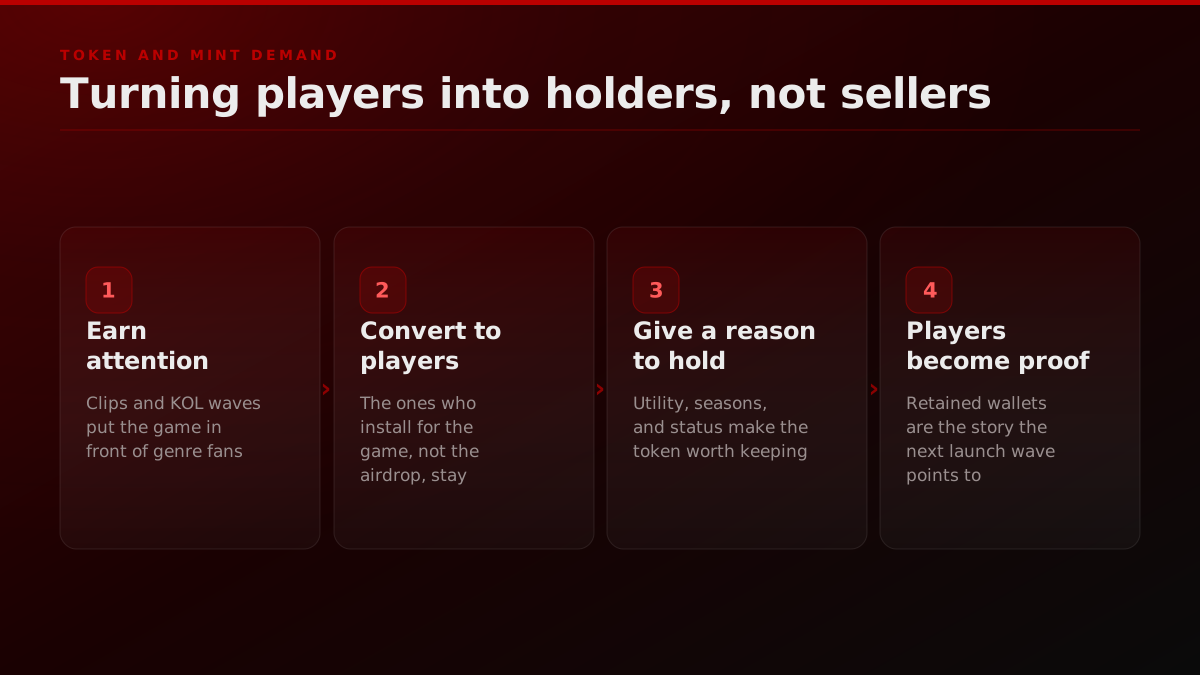
The order is everything. Decide the game loop before the token loop, because a token attached to a boring game just accelerates the churn you are trying to prevent.
Once the game loop is real, the token demand levers are mechanical. Give the token a sink, a reason it leaves circulation, whether that is crafting, upgrades, season passes, or entry into competitive modes, so that playing the game consumes the token rather than only emitting it. Tie status to holding, so that the players who care most about the game are the ones with the most reason to keep the token rather than sell it. Gate genuinely desirable content, cosmetics, early access, governance over seasons, behind holding rather than behind buying, so demand comes from engagement and not just speculation. Mint demand for in-game assets follows the same logic: an asset people want because it is useful or scarce in a game they love holds value, while an asset that exists only to be flipped becomes supply the moment sentiment turns. The studios that get this build a token whose demand curve tracks their retention curve, which is the only demand curve that survives a token vesting schedule.
Operator noteDecide the game loop before the token loop. A token bolted onto a boring game just speeds up the churn.
The context here is more encouraging than the doom-posting suggests. DappRadar tracking has consistently placed blockchain games among the largest categories of on-chain activity, and a16z has argued that consumer crypto, with games at the front, is where the next wave of mainstream users arrives. This is a real, contested market with real players, and the studios competing for attention well are winning it.
Web3 gaming is a real, contested market, not a dead one
The obituary is louder than the data. DappRadar's industry tracking has consistently shown blockchain games among the largest categories of on-chain activity by unique active wallets, and a16z's crypto team has repeatedly argued that consumer crypto, with games at the front, is where the next wave of mainstream users arrives. The point for a founder is not whether the sector is fashionable. It is that attention is winnable right now precisely because so many teams have stopped competing for it well.
Source: DappRadar industry reports, a16z crypto consumer thesis
The proof shows up in the numbers of games that got distribution right. When a web3 game reports tens of thousands of genuinely new players in a month, that is not a farmed spike, that is a retained-player engine, and it is exactly the kind of demand that makes a token worth holding.
RollerCoin 🐹
@rollercoin_com
🚀 65,000+ NEW PLAYERS JOINED ROLLERCOIN LAST MONTH Our community keeps growing, and so does the adventure 🎮 If you're new to Web3 gaming… …there's never been a better time to jump in. Join RollerCoin, and earn up to 5 USDT to spend in-game
That kind of growth is what makes a token event work, because the demand is already there when the token arrives. The mechanics of the event itself, timing, sequencing, and the launch video, are covered in our token launch video guide, and the broader distribution mechanics in the airdrop marketing playbook and the DeFi protocol growth breakdown, which apply the same earn-do-not-rent logic to adjacent web3 niches. Anchor the token side with a proper launch video so the demand is real before the first tokens vest.
How do you sequence acquisition across launch, token, and season?
A web3 game has three natural triggers, and the acquisition loop should be sequenced to all three: the launch, the token event, and each new season. The mistake is to treat marketing as a launch-day event, firing a cold campaign at a cold audience on the one day everyone is watching. The sequence that works warms the audience for about 90 days before launch with the always-on channels, fires the KOL wave and the launch video into that warm audience at launch, treats the token event as a community moment because the marketing already happened, and then restarts the entire loop every season at a higher baseline than the last. Distribution is a calendar, not a campaign.
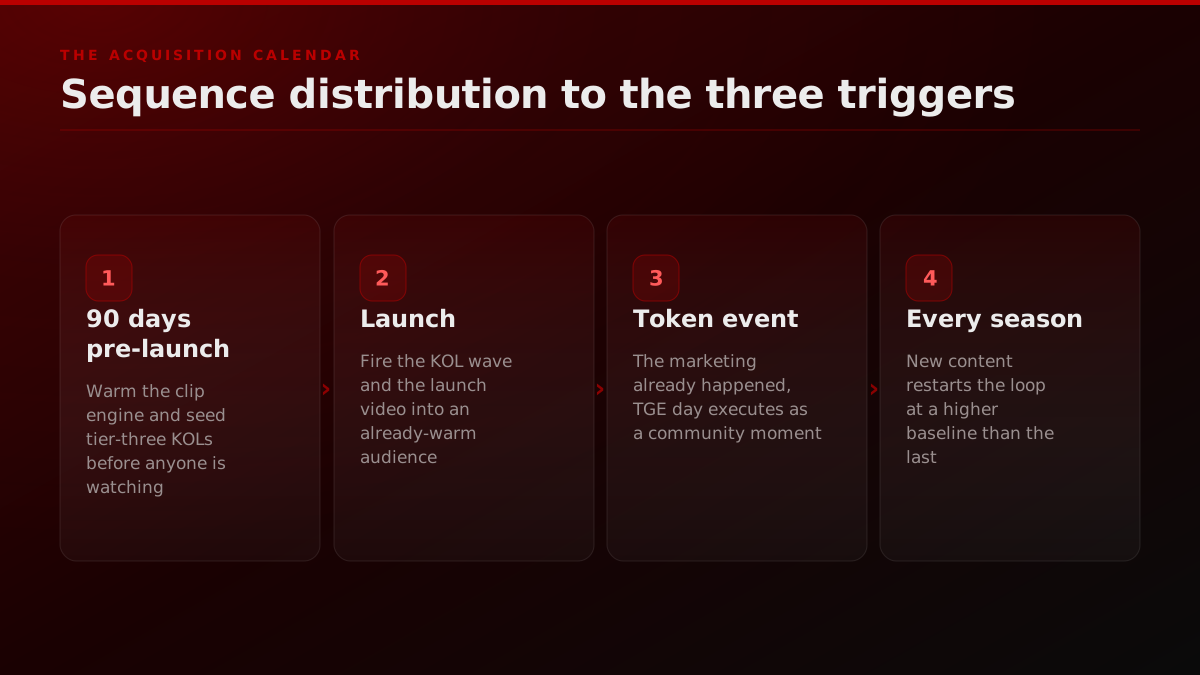
The 90-day warm-up is non-negotiable, because the clip engine and the small-account KOL seeding both take weeks to build the audience the launch converts. Start on launch day and you are paying full freight to reach strangers. Start 90 days out and launch day is a conversion event on an audience you already earned. The always-on channels do the patient work, and the event channels cash it in.
By the time the token event arrives, the marketing is behind you, which is what makes a token generation event feel like a celebration rather than a scramble. The launch video is the anchor the whole wave points to, and the way to build one that carries a launch is in our token launch video guide; we produce them as a product launch video service. Then every season is a smaller version of the same loop, which is how a game compounds an audience instead of resetting it. This is the same compounding logic behind our full web3 ecosystem growth OS, applied to the specific rhythm of a game.
How much does web3 game marketing cost, and what should a studio budget?
There is no honest single price, and the reason you keep seeing vague answers is instructive. Search the topic and the results are almost entirely agency sales pages quoting retainers, not studios explaining what distribution actually costs. That opacity is a market gap, not a fact about the work. The useful way to think about budget is not a number, it is an allocation: weight your spend toward earned reach that compounds, clipping and community, and away from paid installs that leak. A distribution-first default is roughly 35% to clipping and creators, 25% to KOL waves, 20% to Reddit and community, and 20% to a launch video, adjusted to your calendar.
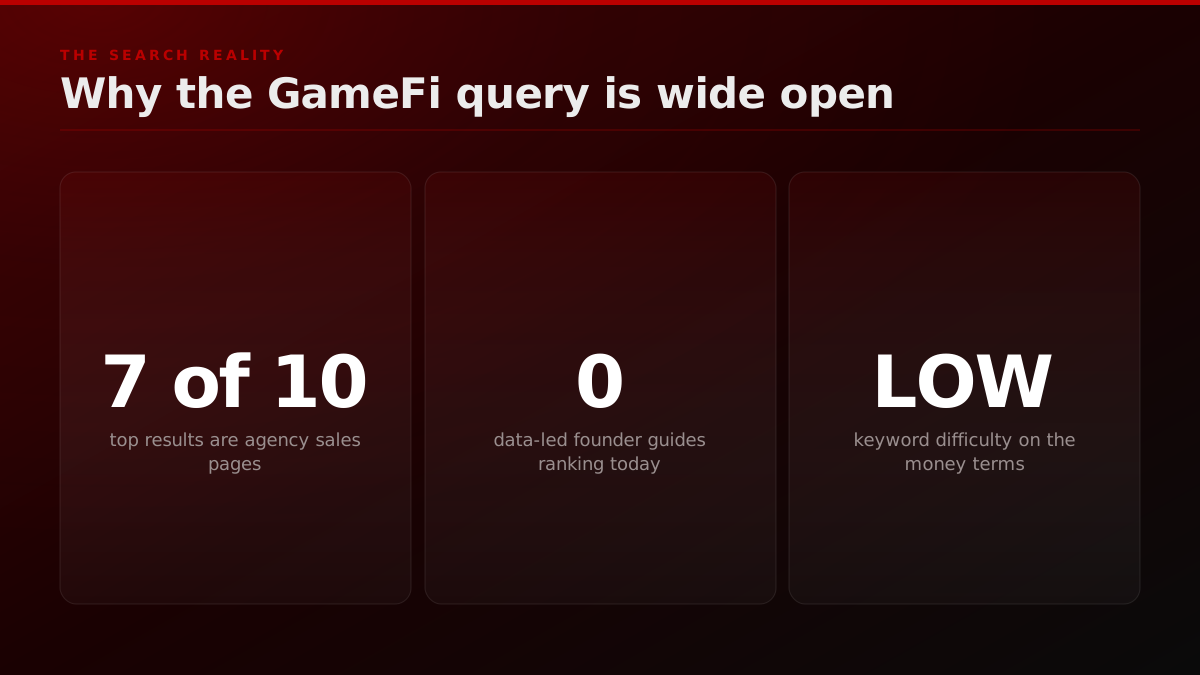
Understanding why the advice market is so thin tells you how to budget against it. The pages selling you a service have every incentive to make distribution sound mysterious and expensive.
Why founders get bad web3 game marketing advice
Search how to market a web3 game and the live results are almost entirely agency sales pages, one forum thread, and a video, with no data-led founder guide ranking. That is not a coincidence. The people who write about the topic are selling the service, so the advice is shaped to sell a retainer, not to teach a studio how distribution actually works. The gap in the market is honest, specific, distribution-first education, which is exactly what this playbook is.
Source: Live firecrawl.dev SERP pull, United States, 2026-07-19
Once you see that, the allocation gets simpler. Spend on the channels that keep working after the invoice is paid.
A default distribution-first budget split
| Line | Share | Why |
|---|---|---|
| Clipping and creators | 35% | The always-on engine that keeps working |
| KOL waves | 25% | Amplification fired at launch, seeded small |
| Reddit and community | 20% | Reaches the pool paid installs never touch |
| Launch video | 20% | The anchor that converts at the token moment |
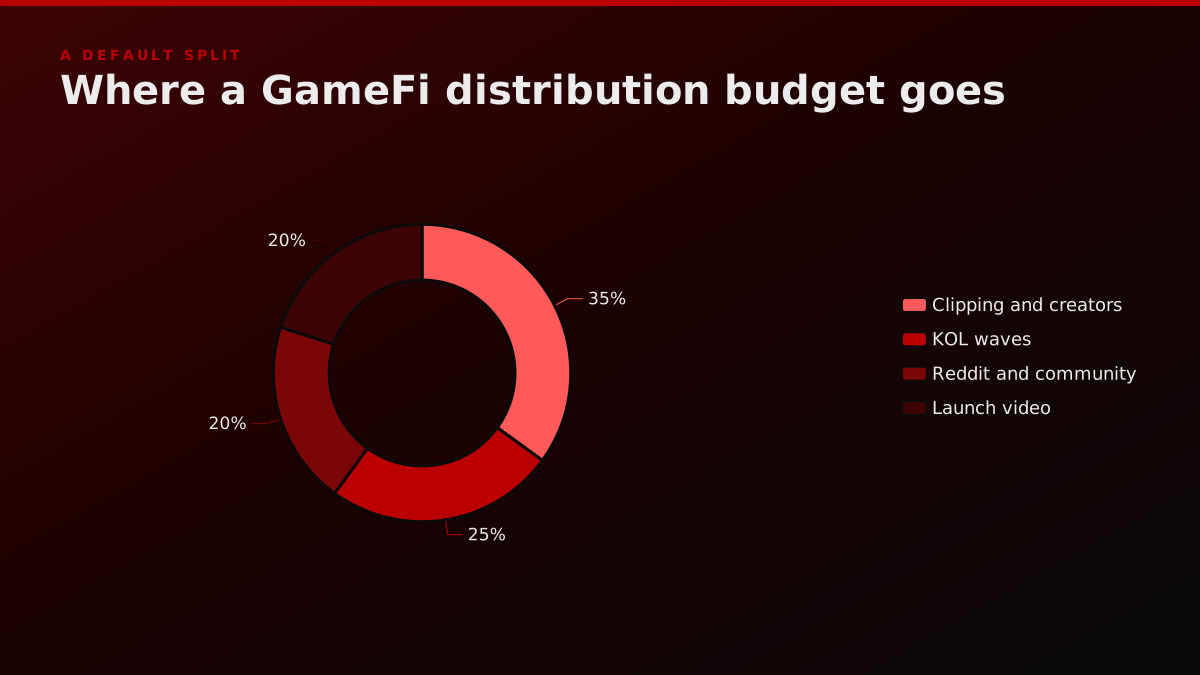
Read the split as a bias, not a rule. The exact percentages move with your game, your genre, and whether you are pre-launch or mid-season, but the shape holds: the biggest line is the always-on engine, not a one-time launch spike, because the always-on engine is what turns a launch from an event into a baseline. The full budget logic, including how this maps to different web3 verticals, is in our web3 GTM playbook and the broader view of how web3 marketing agencies actually operate.
The verdict on GameFi player acquisition
Web3 games do not have a product problem today, they have a distribution problem, and the two are constantly confused. The game got good. The obituary is louder than the data, even as outlets from TechCrunch to research desks like Messari have tracked the sector through every cycle. What separates the games that grow from the games that die is whether they earn players or rent farmers, and that choice is made in the acquisition stack, not in the build. Buy installs against token emissions and you import sellers who churn in 30 days. Earn attention through clipping, KOL waves, Reddit, and a launch video, sequenced to launch, token, and season, and you build a retained-player base that becomes the token demand every studio is chasing the wrong way.
The four-channel loop is not exotic and it is not expensive relative to what studios already waste on farmers. It is a discipline: run the always-on engines continuously, fire the event channels at the moments that matter, and treat distribution as a calendar you keep rather than a campaign you spend. Do that and the token takes care of itself, because the players who came for the game are the players who stay for it. That is the whole playbook, and it is the one we run for web3 gaming studios.