
Every week another chain launches a mainnet, posts a TVL screenshot, and goes quiet. The technology works. The block explorer fills up for a few days. Then the incentives taper, the farmers rotate to the next testnet, and the chain becomes what builders on r/ethdev call a ghost town: a real number and nobody there.
Ecosystem growth is the work of not letting that happen. It is how an L1, L2, rollup, or appchain goes from a fresh mainnet to a chain developers build on and users actually use. And it is a distribution problem, not a technology one. Below is the playbook, grounded in what the 2025 and 2026 data actually shows and what the chains that grew an ecosystem actually did.
A note on the numbers
Chain metrics are noisy and easy to game, so this piece leans on a few sources with clear methodology and states what each number is. Sector and developer figures are from a16z's State of Crypto 2025 and the Electric Capital Developer Report, the two most-cited developer and adoption censuses. TVL and volume figures are from DefiLlama and public project reporting, cited inline with dates. Scaling and rollup data is from L2Beat. Where a figure is project-reported or third-party-estimated rather than independently verified, it says so. TVL in particular is a lagging, gameable metric, so treat every TVL number here as one signal among several, never as proof a chain is being used.
What is rollup ecosystem growth, really?
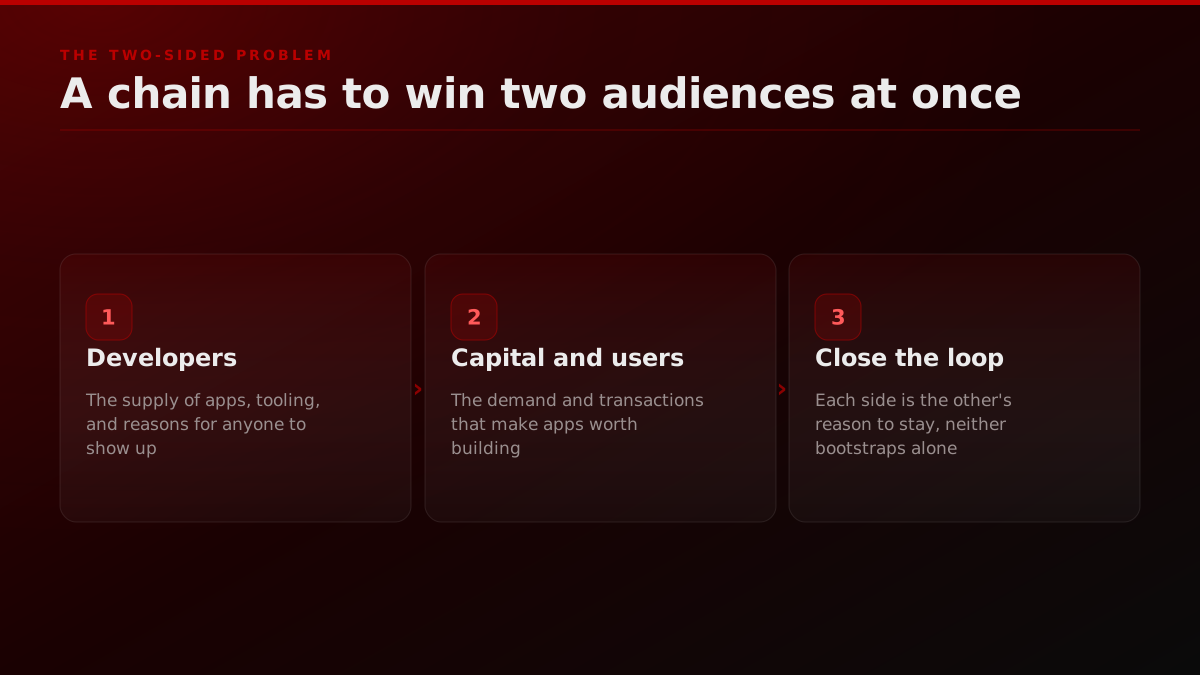
Rollup ecosystem growth is the go-to-market work of taking an L1, L2, or rollup from a fresh mainnet to a chain developers build on and users actually use. It is fundamentally a two-sided problem. A chain has to win developers, who supply the apps and tooling, and it has to win capital and users, who supply the demand that makes those apps worth building. Neither side bootstraps alone, and a token incentive that only buys one side produces activity, not an ecosystem.
That two-sided shape is what separates growing a chain from marketing a single app. A protocol sells one product to its users. A chain sells a platform to the developers who will build many products on it, and then to the users of all of them. It has to run developer growth and demand growth at the same time, which is a different and harder job than the narrower funnel of a single DeFi protocol going from zero to first TVL.
The job also changes shape depending on what kind of chain you are growing, even though the two-sided principle holds across all of them. A general-purpose L1 has to win developers across many categories at once, which means the message cannot be too narrow. An L2 or rollup usually inherits the tooling and the wallet base of its settlement layer, so the pitch is less "learn a new stack" and more "same tools, cheaper and faster, plus these reasons to come here specifically." An appchain built for one vertical has the easiest developer story and the hardest demand story: the builders it wants are obvious, but it has to manufacture the users for a single use case rather than borrowing them from a broad ecosystem. Whatever the architecture, the growth question is identical: who builds here, who uses what they build, and why does either group stay. L2Beat's activity tracker is a useful reality check here, because it shows how few of the hundred-plus rollups now live have any real activity behind their existence.
The confusion this creates is visible everywhere. Users trying to evaluate a chain cannot tell whether a big number means a real ecosystem or a rented one, and they say so in public. That legibility gap, being unable to tell alive from dead, is itself a growth problem a chain has to solve.
Researching L1s and can't quite place Cardano.
A user trying to evaluate an L1's ecosystem and struggling to place it, the exact legibility problem a chain has to solve to convert interest into adoption.
The mechanics of rollups themselves are well understood at this point. A rollup executes transactions off the main chain and posts data back to it, which is how it inherits security while cutting costs, a design Vitalik Buterin laid out in his incomplete guide to rollups and Ethereum's own Layer 2 docs explain plainly. If you want the technical grounding before the growth strategy, this explainer is a good primer.
ROLLUPS - The Ultimate Ethereum Scaling Strategy? Arbitrum & Optimism
Finematics
A clear explainer on how rollups like Arbitrum and Optimism actually work.
The technology is not the differentiator anymore. Dozens of chains ship comparable performance. The differentiator is whether anyone builds on it and anyone uses it, which is a distribution question.
Why do most new chains stall after mainnet?
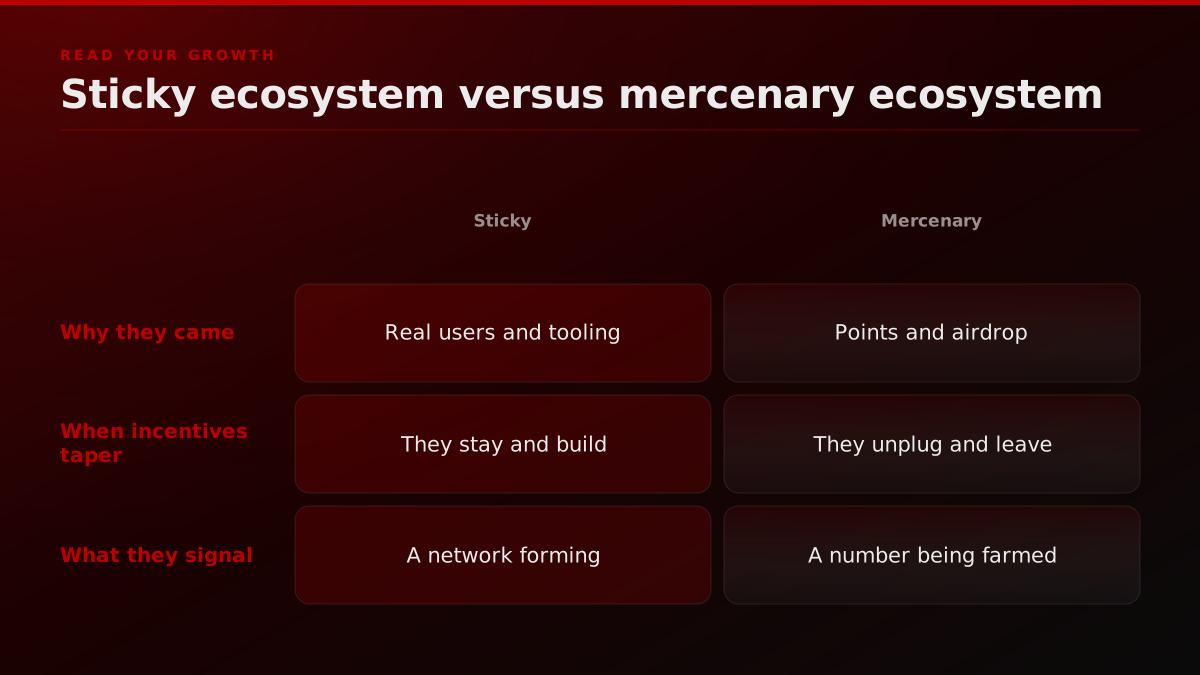
Most chains stall after mainnet because a working chain and a living ecosystem are different problems, and teams that nail the first assume the second follows. It does not. After mainnet you have blockspace and a token, but no apps worth using, no users, and an incentive budget that can conjure a wave of farmers who leave the day the airdrop lands. The output is a ghost chain: a genuine TVL number sitting on top of a dead network.
Developers describe the failure mode better than any analyst. This is the pattern that kills launches, stated by someone who has been building for a decade.
I'd hear about some 'revolutionary' chain with billions in TVL, innovative, fast, ZK/AI/GASLESS/PASSKEY and so on. Went to build there or use something on it, and find... nobody. Ghost town. Tumbleweeds rolling through empty dapps.
The root cause is a one-sided growth motion. A token incentive is the cheapest way to move a number, so teams optimize the number. But the number they move, testnet transactions or farmed TVL, is the mercenary side of the market, not the sticky side. The same activity count can be an asset or a liability depending on why the activity came.
You can watch this play out in the data. Independent trackers that measure daily active wallets rather than TVL consistently find chains with large locked value and almost no real usage, the empty dapps and tumbleweeds builders complain about. TVL is loud because it is a single big dollar figure. Real usage is quiet because it is a thousand small transactions, and it is the one that matters.
TVL is loud, users are quiet, I charted the users: live map of chains + guides (39 EVM networks)
A developer with 10+ years in crypto describes the ghost-chain problem: a revolutionary chain with billions in TVL where, when you go to build or use something, nobody is there. The exact TVL-versus-real-usage gap this guide addresses.
There is also a timing trap inside the stall. The incentive budget is finite, and most teams spend the largest share of it in the loudest, earliest window, the testnet and the airdrop, precisely when the activity it buys is the least sticky. By the time real builders would have shown up, drawn by working apps and a credible community, the budget that could have funded them is gone, spent manufacturing a number for a launch screenshot. The chains that stall front-load spend on vanity and starve the phase that actually compounds. The chains that grow do the opposite: they spend patiently on developer experience and real demand, and they treat the token event as one moment in a longer sequence rather than the whole strategy.
The chains that avoid the stall treat the two-sided problem as a coordinated motion from day one. They do not launch a token and hope developers appear. They win developers first, anchor real demand, and design the incentives so the activity they buy is the activity that stays. That coordination is the whole web3 ecosystem growth operating system this post sits under.
The post-mainnet ecosystem growth playbook
The playbook is a sequence, and the order matters because each phase produces the raw material the next one needs. Prove the chain is alive with real apps and transactions. Win the first developers with docs, grants, and support. Anchor real TVL and demand by seeding the flagship apps users transact with. Earn mindshare through distribution so builders and capital can see the ecosystem forming. Then retain the activity past the incentives with switching costs and real usage. Skip a phase and the later ones have nothing solid to build on.
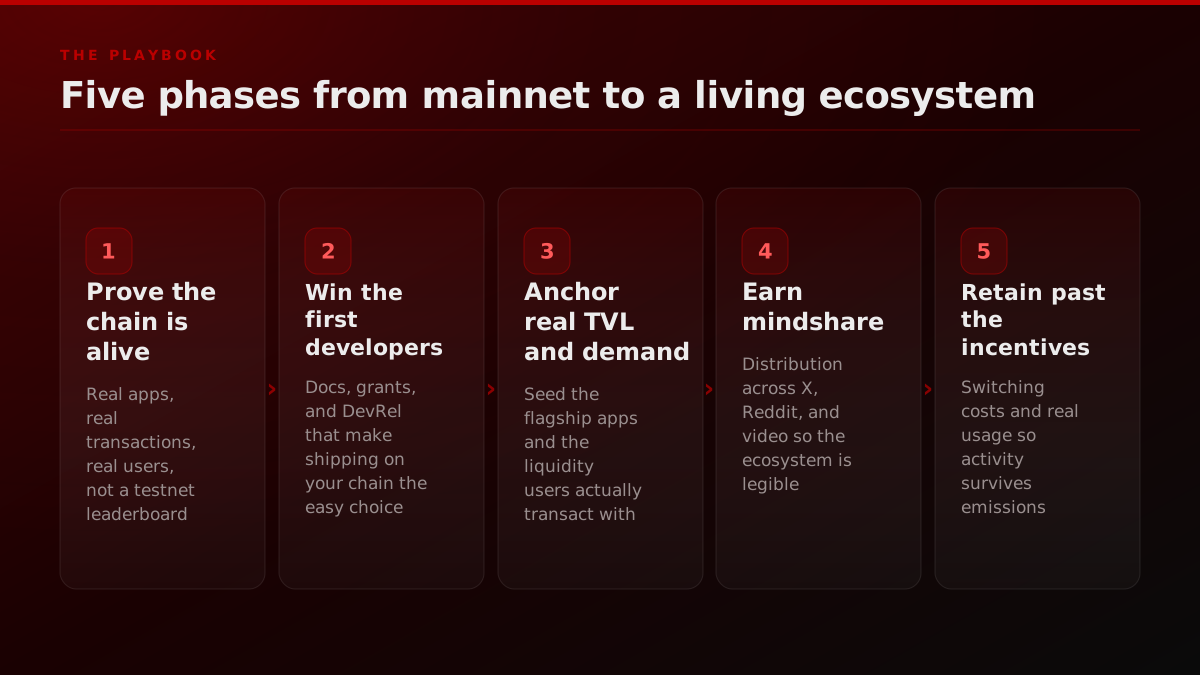
The phases are worth walking through one at a time, because the failure at each one is specific. Phase one, proving the chain is alive, fails when a team launches with a landing page and a testnet leaderboard instead of a working app anyone can use on day one. Phase two, winning developers, fails when the docs are stale and the grant program funds pitch decks instead of shipped products. Phase three, anchoring TVL and demand, fails when a chain rents liquidity that exists only to farm an incentive and calls it growth. Phase four, mindshare, fails when a chain buys impressions that never convert a single serious builder. Phase five, retention, fails when everything before it was farmed, so there is nothing to retain once the emissions stop. Get the order right and each phase feeds the next; get it wrong and you are pouring incentives into a bucket with no bottom.
None of these phases is a marketing afterthought bolted on after the engineering. They are the growth engine, and they run in parallel with the technical work, not after it. The clearest way to see the sequence is to watch how experienced teams talk about building a global developer community, which is phase two done deliberately.
The Future of Layer 2 Blockchains
Chainalysis
Chainalysis on the trajectory of Layer 2 blockchains and where the ecosystems are heading.
Each phase maps to a specific growth lever, and each lever can be run to farm a number or to build a network. Developer relations can fund real products or fund decks. Liquidity can anchor real volume or rent a TVL figure. Mindshare can convert builders or buy vanity impressions. Incentives can reward work or reward farming. The lever is neutral; the design decides the outcome.
The four growth levers and what each one actually buys
| Lever | What it does | Failure mode | What good looks like |
|---|---|---|---|
| Developer relations | Docs, grants, support that make shipping easy | Grants that fund decks, not products | Working apps live within weeks of mainnet |
| Liquidity and TVL | Seed the capital users transact against | Rented TVL that leaves at the unlock | Volume and users that outlast emissions |
| Mindshare and distribution | Make the chain legible to builders and capital | Vanity impressions, no builder conversion | Serious developers evaluating the chain |
| Incentives | Reward the behavior you want repeated | Farmers optimizing the leaderboard | Real work and real usage rewarded |
Framework based on public L1/L2 launch patterns from 2023 to 2026. Every lever can be run to farm a number or to build a network; the design decides which.
The teams that win run all four levers as one coordinated motion, sequenced from mainnet through the token event. That is exactly the shape of a full web3 go-to-market playbook, applied to the chain rather than to a single app on it.
How do you actually attract developers to a new chain?
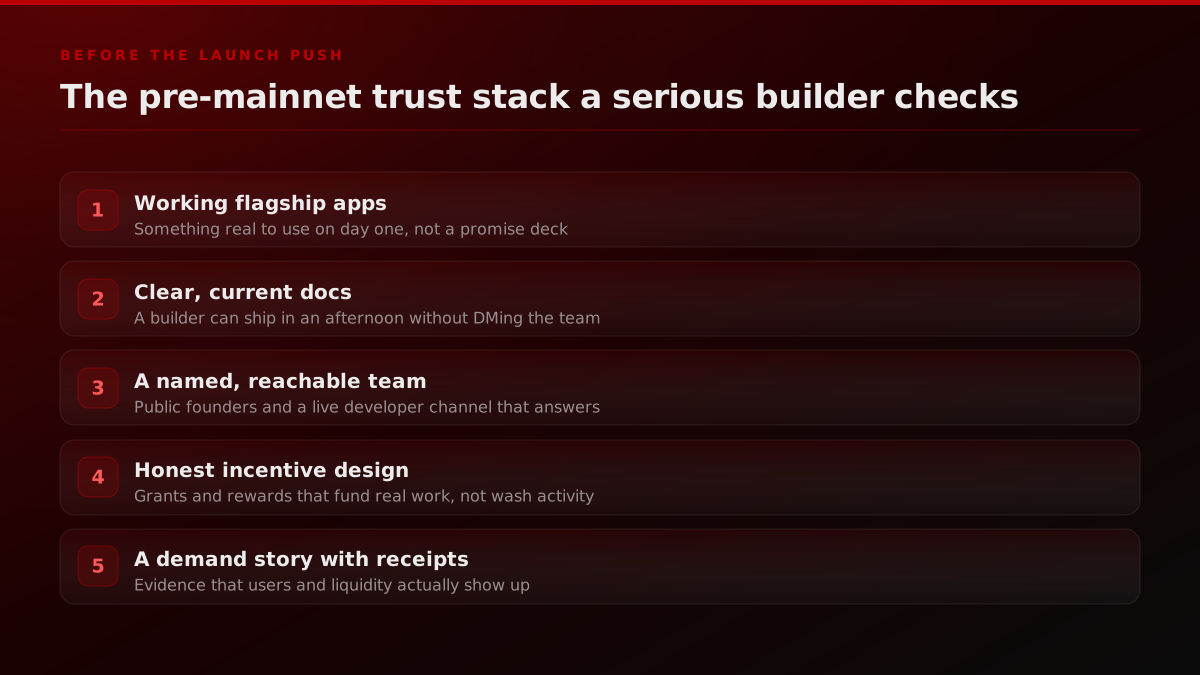
You attract developers by making shipping on your chain the easy, obvious choice, then distributing that fact where developers actually decide. The easy part is a product problem: clear and current docs a builder can follow in an afternoon, working flagship apps that prove the chain is alive, milestone-based grants that fund real products rather than promises, and a reachable DevRel team in a live channel that answers questions. The distribution part is a marketing problem: getting that developer experience in front of the right builders.
The developer race is not a nice-to-have. It is the growth race. a16z's State of Crypto 2025 found Ethereum and its L2s are the top destination for new crypto developers, and that Solana's builder interest rose 78 percent over two years. Developers are the leading indicator of every other number, because they build the apps that attract the users that attract the liquidity that attracts more developers.
The developer race is the growth race
Developers are the leading indicator of every other number a chain cares about. a16z's State of Crypto 2025 found that Ethereum and its L2s are the top destination for new crypto developers, and that Solana saw a 78 percent rise in builder interest over two years. The mechanism is simple: developers build the apps, apps attract users and liquidity, and liquidity attracts more developers. A chain that wins the first hundred serious builders has bought itself the flywheel. A chain that wins a testnet leaderboard has bought itself a bill.
Source: a16z crypto, State of Crypto 2025
Before a serious builder commits, they run a checklist, whether or not they call it one. They want working apps, current docs, a named and reachable team, honest incentive design, and evidence that real demand exists. In crypto this stack is public and on-chain, so its absence is as visible as its presence. Ship it before the launch push, not after.
The reason cheap blockspace made this a developer race rather than a fees race is that the cost barrier is gone. L2 transaction costs fell from roughly $24 in 2021 to under a cent by 2025. When it costs nothing to transact, the constraint on a chain's growth is no longer the fee, it is whether anyone wants to build and use the apps.
Operator noteL2 transaction costs fell from roughly $24 in 2021 to under a cent by 2025, removing the cost barrier that once gated onchain apps., a16z crypto, State of Crypto 2025
Distribution to developers happens in specific rooms. Developers evaluate chains in developer-heavy Reddit communities and forums, on crypto X, in Discords, and at hackathons. The signal you want is organic: a builder shipping something on your chain and recruiting collaborators because it was the pragmatic choice, not because they were paid to.
Built a working MEV bot on Base, looking for collaborators
A developer shipping a working project on Base and recruiting collaborators, the kind of organic builder activity a growing chain ecosystem produces.
Getting that signal reliably is where a distribution motion earns its keep. Chain founders who have grown developer communities talk about it as a deliberate, sustained effort, not a launch-week spike.
Blockchain Founders: Growing Global Developer Communities
Chainlink
Chainlink's panel with chain founders on how to grow a global developer community.
There is a hierarchy to what actually converts a developer, and it runs opposite to how most chains spend. At the top is the product itself: a builder who tries your chain and ships something in an afternoon is worth more than any campaign, because their experience is the marketing. Next is peer proof, other respected builders shipping and saying it was good, which is why organic Reddit and X activity outweighs paid promotion. Below that is founder and KOL amplification, useful for reach but only credible when the product underneath it is real. At the bottom, and least effective, is generic paid attention with no developer substance. A chain that inverts this, spending most of its budget on the bottom of the hierarchy, gets impressions and no builders. A chain that spends on the top, a genuinely great building experience amplified by credible voices, compounds.
The amplification layer on top of docs and grants is KOL and founder-led marketing: vetted technical voices your target developers already trust, saying something specific and true about the developer experience. That is how a chain converts a good product into a growing developer base, and it pairs naturally with Twitter and X growth aimed at the same technical audience.
Do blockchain grants and incentives work, or just farm activity?
Grants and incentives work when they reward real work and real usage, and they backfire when they reward the biggest number. This is the single most misused instrument in ecosystem growth. A points campaign designed to inflate a testnet metric attracts rotators who optimize the leaderboard and unplug at the unlock. A grant program designed around shipped products and real usage attracts builders who stay. Same budget, opposite ecosystems.
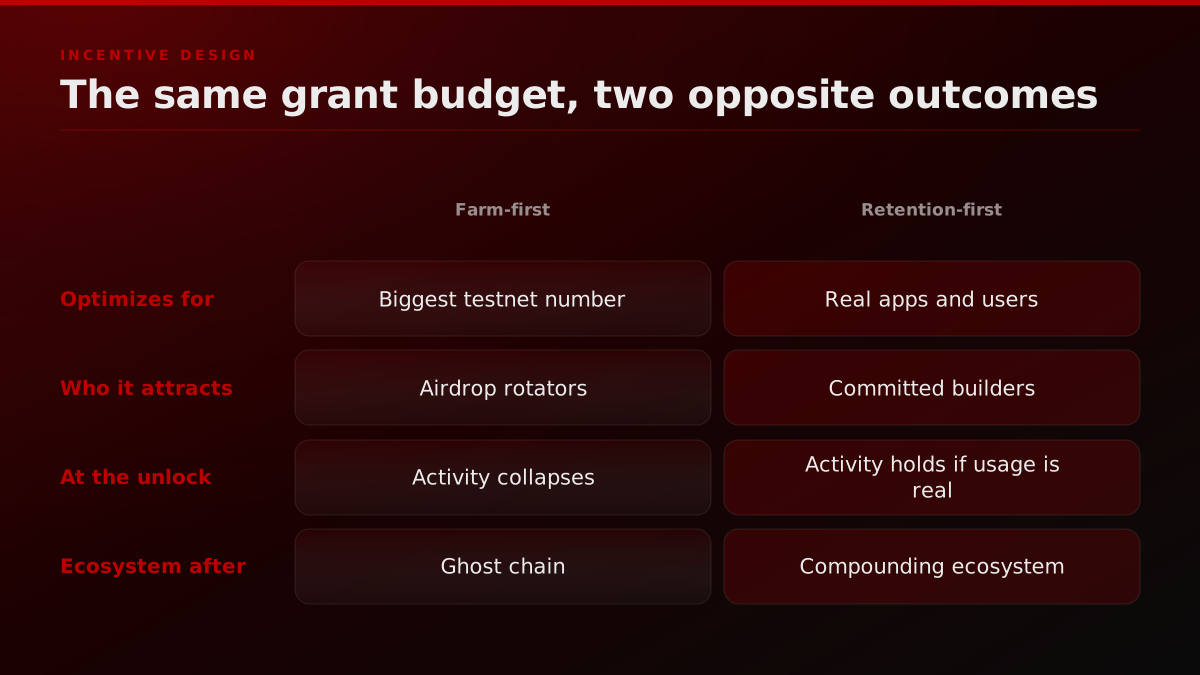
The design principle that separates the two is paying for proof, not promise. Optimism's Retro Funding pays contributors after they have shipped something the ecosystem actually used, which flips the incentive from a bet on future work to a reward for delivered work. How Retro Funding works is worth studying as a model. Arbitrum takes a related path, routing grants through DAO governance so the ecosystem itself decides what to fund.
Incentives are a coordination tool, not a growth hack
Grants, points, and emissions are the most misused instrument in ecosystem growth. Designed to reward the biggest number, they attract rotators who leave at the unlock. Designed to reward real work and real usage, through milestone-based grants, retroactive funding, and demand-linked rewards, they attract the builders who make the chain durable. Optimism's Retro Funding pays contributors after they have shipped something the ecosystem used, which flips the incentive from promise to proof. The incentive design and the growth strategy are the same decision, made twice.
Source: Optimism, how Retro Funding works
The projects that survive say the quiet part out loud: incentives cannot be the whole economy. They are a bootstrap, not a business model.
A sustainable token economy cannot depend on speculation alone. It must be supported by real utility, network activity, incentives, and growing adoption.
A useful test before you fund anything: ask whether the thing you are paying for would exist if the reward disappeared tomorrow. A developer building a product with real users would keep building; a farmer optimizing a leaderboard would vanish. Fund the first and you are buying durable ecosystem; fund the second and you are buying a number you will have to keep re-buying. The best programs also stagger their rewards, favoring vesting and milestones over instant payouts, so the incentive keeps pulling in the same direction as real usage instead of paying out in a single moment everyone races to exit. Structure decides behavior, and behavior decides whether the ecosystem you funded is still there a quarter after the money stops.
There is a whole discipline to designing the token event so the activity it buys is the activity that stays, rather than a spike that reverses the moment the airdrop lands. That is the subject of the airdrop marketing playbook, and it is where most of the retention battle is won or lost.
What good looks like: chains that grew a real ecosystem
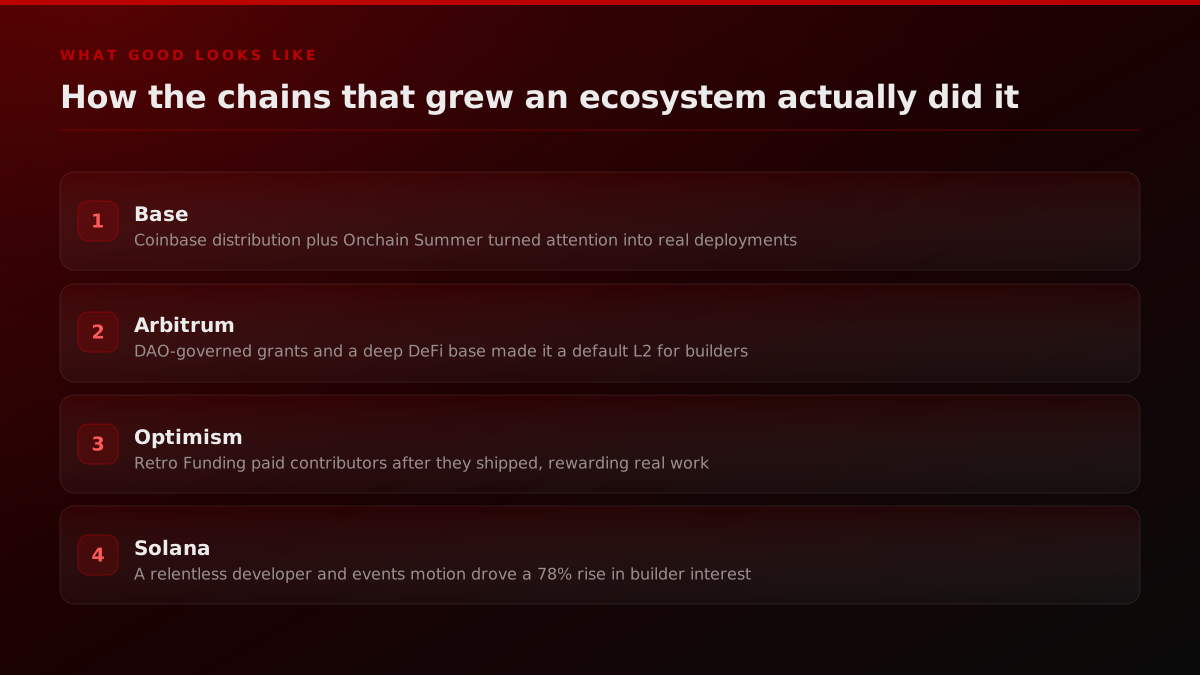
The chains that grew a real ecosystem did not win by advertising a TVL number. Each built a specific, durable reason for developers to show up and stay, and the mechanisms differ by chain. Base leaned on Coinbase's distribution and the Onchain Summer campaign to turn attention into real deployments. Arbitrum used DAO-governed grants and deep DeFi liquidity to become a default L2 for builders. Optimism paid contributors retroactively for public goods. Solana ran a relentless developer and events motion. Four chains, four mechanisms, one shared refusal to mistake a number for a network.
The proof of real growth is activity that survives the incentives being turned down. DefiLlama reported Robinhood Chain attracting over $290M in stablecoins, $134M in TVL, and $4B in cumulative DEX volume in its first months, activity anchored to an existing distribution channel rather than a cold-start testnet. That is what launching into real demand looks like.
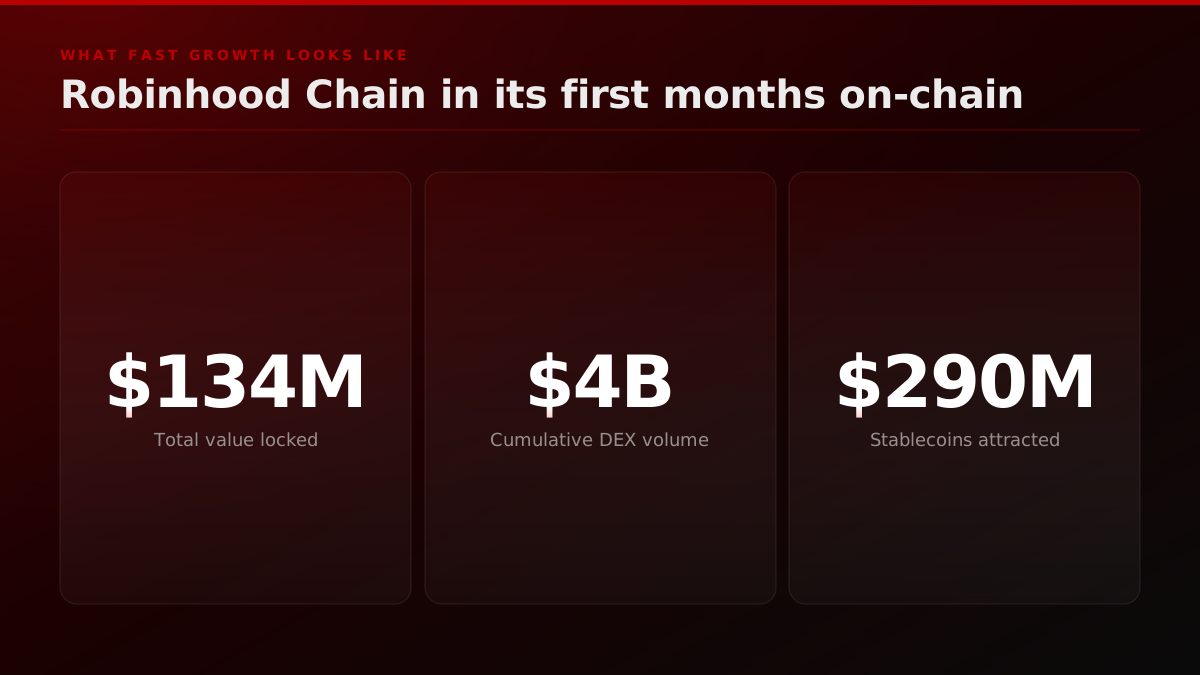
DefiLlama.com
@DefiLlama
Since launch, Robinhood Chain has attracted over $290M in stablecoins, $134M in TVL, 12M in RWAs, and $4B in cumulative DEX volume.
Stellar is the other shape of the same lesson: slow-compounding usage rather than a launch spike. Its TVL grew from around $50M in early June 2025 to a $244M all-time high in mid-June 2026, roughly a 4.9x increase in a year, driven by real payment and asset-issuance activity.
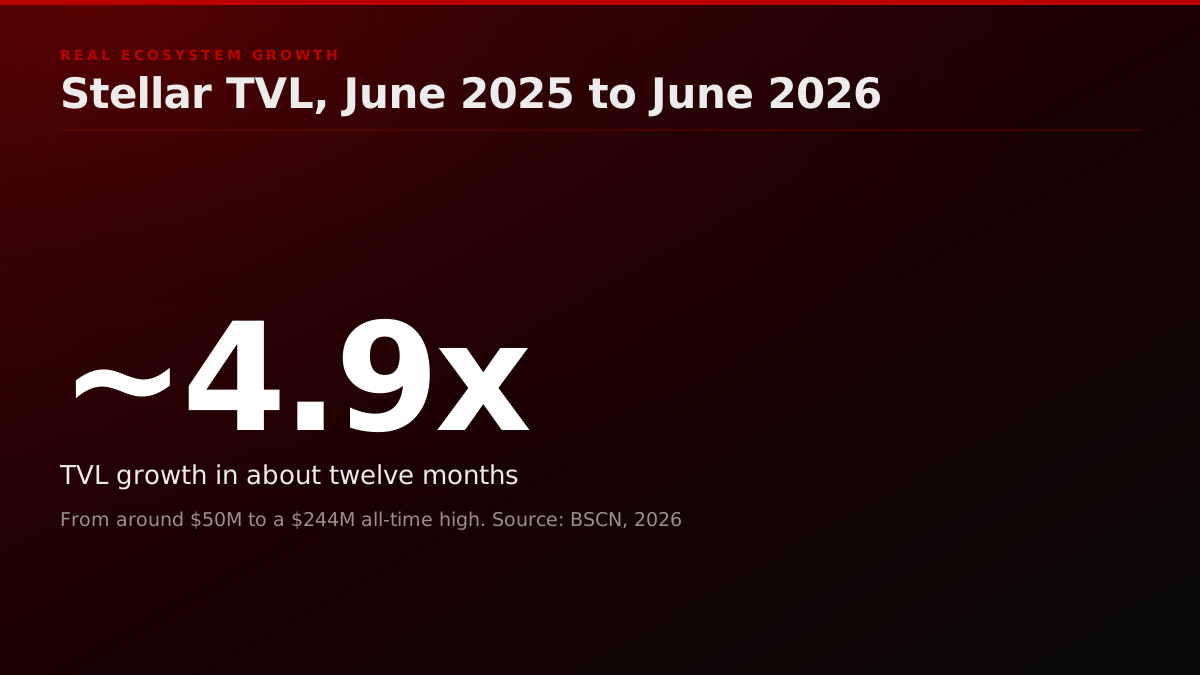
BSCN
@BSCNews
Stellar has been UNSTOPPABLE in 2026. Despite $XLM being down more than -60% over the past year, 2026 has so far been incredible for @StellarOrg's fundamentals. Its TVL reached an ATH of more than $244M in mid-June (up from around $50M in early June 2025).
The common thread is real demand, and real demand is the only retention engine that outlasts emissions. When users transact because they have a reason to, developers stay because their apps have customers. When activity is farmed, it leaves.
Real demand is the only retention engine that outlasts emissions
The clean tell that a chain has crossed from launch to ecosystem is activity that survives the incentives being turned down. When a chain grows real TVL and volume that comes from users transacting rather than from farming, the developers stay because their apps have customers. DefiLlama reported Robinhood Chain attracting $134M in TVL and $4B in cumulative DEX volume in its first months, activity anchored to a real distribution channel. A chain funded entirely by its own emissions is a countdown. A chain with real demand is a business.
Source: DefiLlama, 2026
How the chains that grew an ecosystem actually did it
| Chain | Primary growth mechanism | Reported signal | Source |
|---|---|---|---|
| Base | Coinbase distribution plus Onchain Summer | Leads EVM contract deployments (independent data) | r/ethdev, Buildscape data |
| Arbitrum | DAO-governed grants plus deep DeFi liquidity | A default L2 for builders by ecosystem depth | Arbitrum Foundation |
| Optimism | Retroactive public-goods funding | Rewards contributors after they ship | Optimism Collective |
| Solana | Relentless developer and events motion | 78% rise in builder interest over two years | a16z State of Crypto 2025 |
Base contract-deployment lead is from an independent community indexer (Buildscape, r/ethdev, Sept 2025). Solana builder-interest figure is a16z. Directional, project- and third-party-reported.
Notice what none of these stories is: a chain that grew by posting a bigger TVL screenshot. Every one built a specific demand-side reason for the supply side to stick around.
How do you measure a healthy ecosystem?
You measure a healthy ecosystem by the numbers that are hard to fake, not the one that is easy to rent. The single most important metric is active developers, because it is the leading indicator of everything downstream and it cannot be bought cheaply, which is why the Electric Capital Developer Report is the census the whole industry watches. After that comes real usage: daily active wallets that send transactions, transaction volume that reflects users doing something rather than bots cycling, and the count of applications with genuine users rather than deployed-and-abandoned contracts. TVL belongs on the dashboard, but near the bottom, and always read next to usage so you can catch the gap between capital parked and capital used.
The tell of a farmed ecosystem is a set of metrics that move together during an incentive and collapse together when it ends. The tell of a real one is metrics that hold, or keep climbing, after the emissions taper, because the activity was never about the reward in the first place. A practical rule for any chain team: for every dollar of TVL you report, be able to answer what a real user did to put it there. If the honest answer is "farmed an airdrop," you do not have growth, you have a liability with a countdown on it. Build the internal scorecard around developers and usage first, and the whole organization starts optimizing for an ecosystem instead of a screenshot.
TVL is a scoreboard, not a strategy: winning mindshare
TVL is a lagging, gameable scoreboard, and treating it as the strategy is how chains end up with a big number and no ecosystem. Mindshare, the attention and credibility a chain holds among developers and capital, is upstream of the real numbers, but only when it is earned honestly. Vanity impressions convert no one. What moves a chain is being legible and credible in the rooms where builders and investors form their opinion.
TVL is a scoreboard, not a strategy
A high TVL number and a working ecosystem are not the same thing, and the market keeps proving it. Builders describe the pattern plainly: a "revolutionary" chain with billions locked, and when you go to build or use something on it, nobody is there. TVL measures capital parked, often incentivized, not developers shipping or users transacting. Treat TVL as one lagging signal among several. The numbers that predict a durable ecosystem are active developers, daily active wallets, and real transaction volume, not a headline figure a chain can rent.
Source: r/ethdev, TVL is loud, users are quiet
The builders who have watched cycles are blunt about what durable looks like: tooling and clarity over headlines. The ecosystems that last make it easy to understand what is happening across the network, which is a mindshare strategy and a developer-experience strategy at once.
One thing I appreciate about strong blockchain ecosystems is that they focus on giving builders better tools, not just bigger headlines. The projects that last are usually the ones that make it easier to understand what's happening across the network.
Mindshare is won on specific surfaces, and each one has to speak to developers and capital at the same time. Clipping and short-form video turn talks and launches into clips that travel. Crypto X and Spaces are where opinions form. Reddit and developer forums are where skeptics ask real questions. KOL and founder amplification borrows trust from voices developers already follow. Events and hackathons convert attention into shipped code.
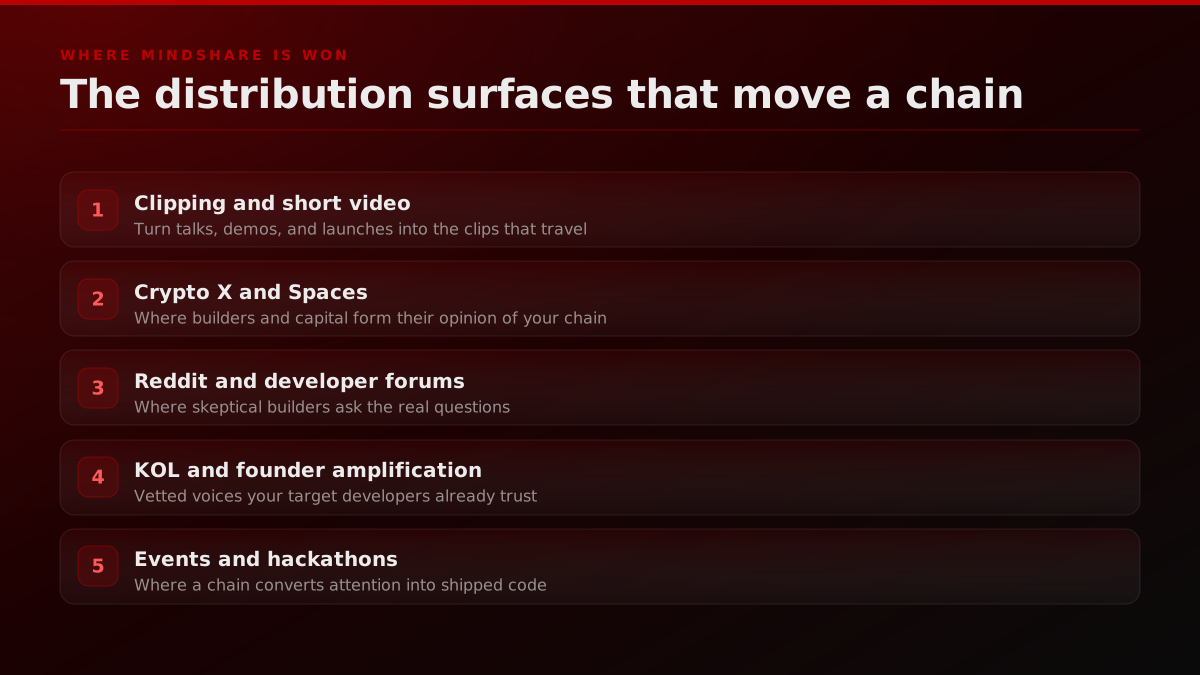
The macro backdrop is that there is a fixed pool of active users every chain is competing to route through its own ecosystem, roughly 181 million monthly active onchain addresses in 2025. Mindshare is how a chain wins a larger share of that pool's attention before it wins its transactions.
Operator noteAbout 181 million monthly active onchain addresses existed in 2025, the pool of users every chain competes to route through its ecosystem., a16z crypto, State of Crypto 2025
The shift every chain is trying to make is the one Ethereum is making at the ecosystem level: from being valued as a speculative asset to being used as infrastructure. Mindshare earned on real usage is what carries a chain across that line.
Ethereum Daily
@ETH_Daily
Tom Lee: Ethereum is moving from its 1.0 era to its 2.0 era. Ethereum 1.0 was defined by crypto-native cycles: ICOs, NFTs, DeFi, ETFs, and stablecoins. Those waves proved demand, but the market still treated $ETH mostly as a speculative asset. Ethereum 2.0 is different.
FORKOFF's edge on this surface is distribution at scale: over 5B video views processed through the clipping network, real Web3 KOL vetting, and Reddit and X distribution built for exactly the two-sided audience a chain has to reach. Mindshare is the lever where a distribution partner compounds fastest.
When should you bring in a Web3 go-to-market partner?
The right time to bring in a Web3 go-to-market partner is when you have a chain to distribute and a window that rewards distribution, which means mainnet and the token event, not before. Pre-mainnet, a partner is premature because there is no product to grow yet; your effort belongs in the developer experience. The mainnet and TGE window is the highest-leverage moment, because that is when distribution decides whether the launch converts attention into an ecosystem. Post-token, a partner becomes a steady-state function keeping developers and mindshare compounding.
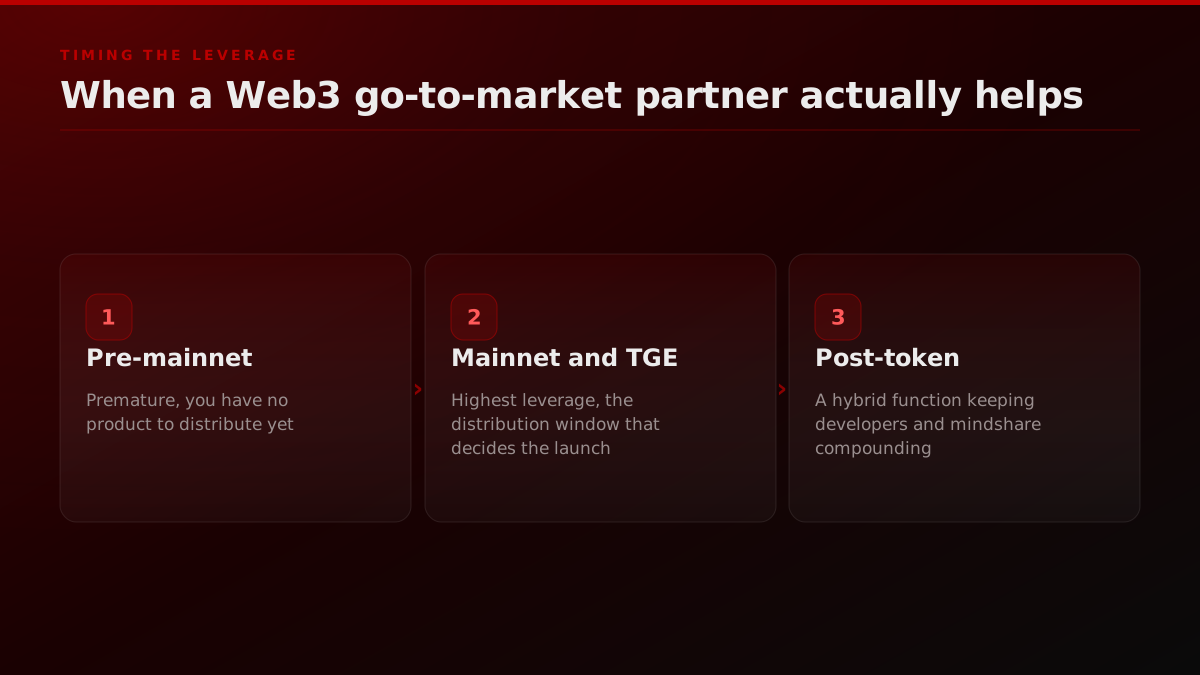
The reason the mainnet and TGE window matters so much is that it is a one-shot distribution event. You launch a chain into public attention once. If the distribution is not ready, the attention dissipates and the incentives end up buying farmers instead of builders. That is the moment a partner who runs clipping, KOL marketing, Reddit, and TGE-timed launch distribution as one motion earns the engagement.
A serious partner should be able to point to distribution proof and to a two-sided plan, not a generic KOL blast. The failure mode is hiring a marketing shop that treats a chain like a memecoin and buys attention with no developer conversion. What you want is a plan for the developer side and the demand side at once, which is the same discipline that separates a growing chain from a ghost chain.
The other thing to insist on is measurement tied to real outcomes, not vanity reach. A partner worth the engagement will report against developers evaluating the chain, apps deployed, and usage generated, and will price against those outcomes rather than a flat retainer that pays the same whether the ecosystem grows or not. That alignment is rare in crypto marketing, where most shops bill a fixed monthly fee regardless of result. FORKOFF runs this on an outcome-priced model for web3 protocols, pre-TGE protocols, and crypto founders, scoped to the mainnet or TGE window, with the distribution stack, clipping, KOL, Reddit, and launch timing, run as one coordinated motion rather than a menu of disconnected tactics.
The verdict: build an ecosystem, not a TVL chart
Rollup ecosystem growth comes down to one discipline: measure and build for real usage, not a rented number. A chain grows when it wins developers with a genuinely easy building experience, anchors real TVL and demand, earns mindshare on real usage, and designs its incentives so the activity it buys is the activity that stays. It stalls when it launches a token, farms a testnet leaderboard, and hopes an ecosystem appears.
If you take one operating change from this, make it the scorecard. Stop leading standups and investor updates with TVL. Lead with active developers, apps with real users, and transaction volume from actual usage, and put TVL where it belongs, as one lagging signal read alongside the rest. What a team measures is what it optimizes, and a team that measures a rentable number will keep renting it. A team that measures developers and usage will keep building the thing that produces them. The whole difference between a compounding ecosystem and a ghost chain often comes down to which number the org treats as the truth.
The technology is table stakes now. Blockspace is cheap and abundant, and dozens of chains ship comparable performance. The scarce thing is a living ecosystem, and that is a distribution problem, the same problem whether you are a DeFi protocol, a DePIN network going from testnet to token, a GameFi chain chasing player acquisition, an ecosystem distributing through Farcaster mini apps, or an L2 chasing developers. Build the ecosystem, and the chart takes care of itself. Farm the chart, and you build a ghost chain.