A video marketing agency for a funded launch is a partner that both produces your launch or product video and owns getting it seen by buyers, investors, and press. That second half, distribution, is the part that decides whether a launch works, and it is the part almost every agency ranking for this term quietly skips. They sell the film. Nobody sells the reach.
The short version
A video marketing agency for a funded launch is a partner that produces a launch or product video AND owns getting it in front of buyers, investors, and press. Every agency ranking for this term sells production and never mentions distribution, which is the part that decides whether the launch works. This guide ranks 10 real agencies on a transparent, distribution-aware scorecard, breaks pricing down by funding stage, and names the cases where you should not hire an agency at all. The first-party benchmark behind the distribution thesis is the FORKOFF clipping network, which has processed 5B+ views moving short-form across platforms. Production is solved in 2026. Distribution is the gap.
If you are a funded founder shopping for a video marketing agency in 2026, you have a budget, a launch window, and a real question that no listicle on the first page of Google answers: will anyone actually see this video after we make it? Every ranking guide treats production as the deliverable. They rank agencies on craft, speed, and price, then stop. This one ranks them on the axis that decides whether your launch lands, distribution, and it scopes the whole thing to your situation: you raised money, you have a date, and you cannot afford a beautiful video that 400 people see.
Here is the trap most founders walk into. You raise a round, you decide the launch deserves a real video, you book a polished agency, you get back something that looks great in the deck, and then it goes live to a few hundred views and dies. The video was not the problem. The plan to get it watched was never written, because the agency you hired does not sell that plan and you did not know to ask for it. The volume of video being produced has gone vertical: Wistia's 2026 State of Video report tracks businesses publishing more videos per year than ever, which is the real story behind the attention crunch. More video gets made every quarter, the average buyer's attention does not expand to match, and so every additional video competes harder for the same finite minutes. In that math, the file you commissioned is not the asset. The watched minute is the asset, and almost nobody on the agency side is selling watched minutes.
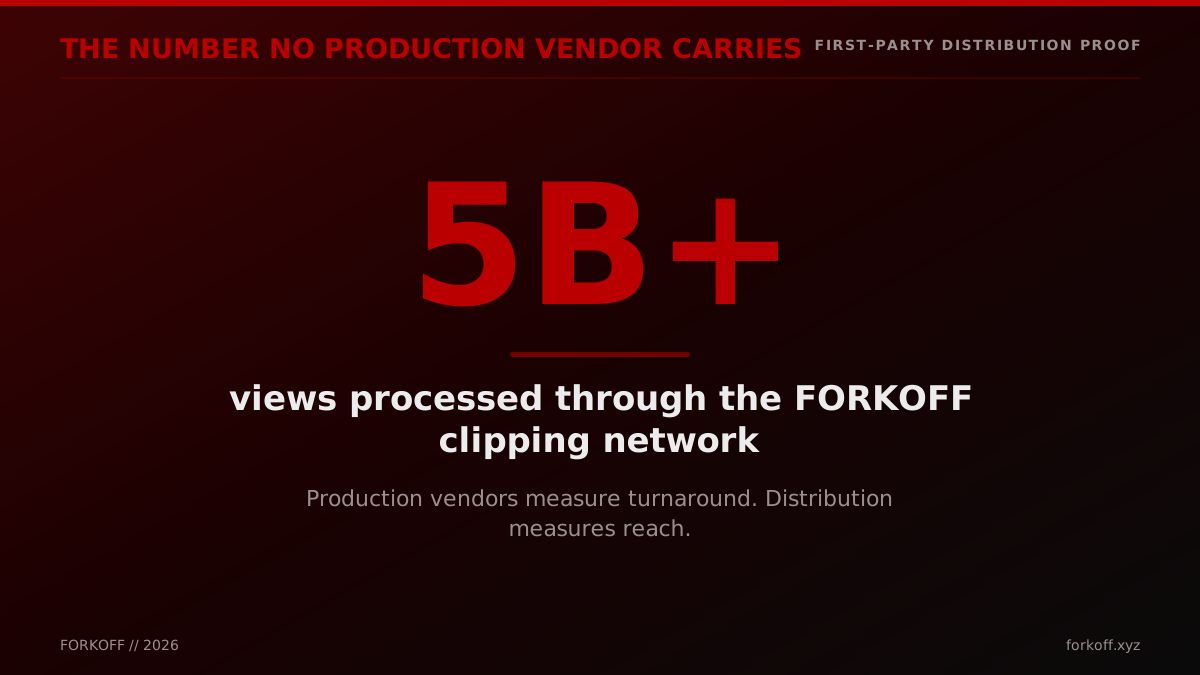
The first-party number that frames this guide is simple. The FORKOFF clipping network has processed 5B+ views moving short-form content across platforms. No production vendor on any best-video-marketing-agencies list carries a distribution figure like that, because production vendors do not measure reach. They measure turnaround. That difference is the entire thesis below.
AlbertAnaBoss
@AlbertAnaBoss
We're reaching the point where building the product is becoming the easy part. Distribution is the hard part. AI shifted the bottleneck.
What is a video marketing agency, really?
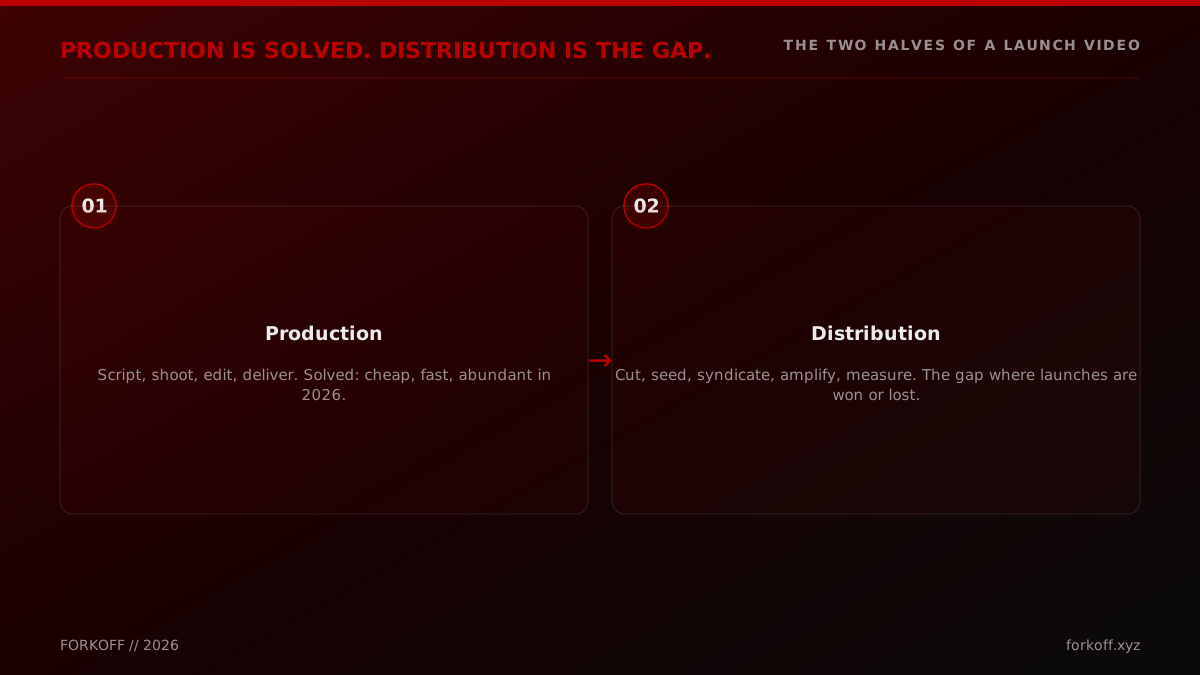
A video marketing agency, in the full sense of the term, is a partner that produces a video AND owns its distribution: which platforms it is cut for, how it is clipped into short-form, where it is seeded, whether it gets paid amplification, and how reach is measured against a goal. In practice, most agencies that use the label are production agencies wearing a marketing badge. They script, shoot, edit, and deliver. What happens to the file after delivery is your problem. The fastest way to tell the two apart is to ask a single question on the discovery call: how will this video reach an audience after it is made? A real video marketing agency has an answer with channels and numbers in it. A production shop hands the file back and wishes you luck.
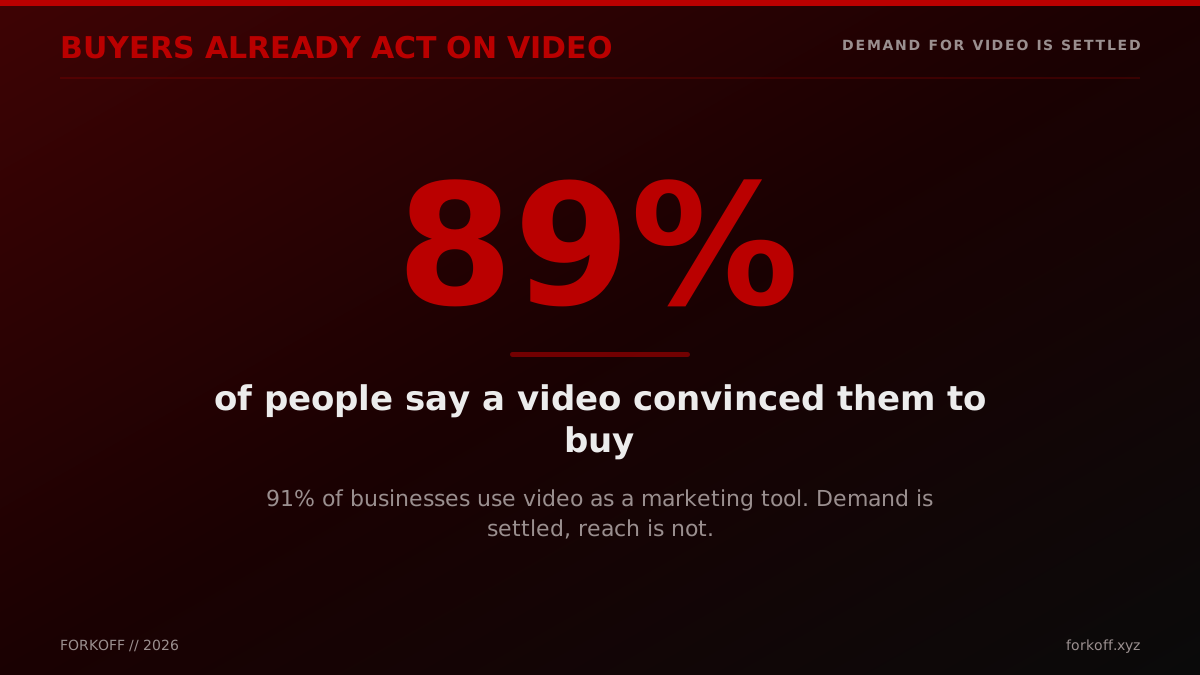
This matters more during 2026 than it did even two years ago, because the cost and difficulty of making a competent video has collapsed while the difficulty of getting it seen has gone up. AI tooling, template motion libraries, and a generation of fluent editors mean a clean product video is no longer scarce. Attention is. The demand-side case for video itself is not in dispute: Wyzowl's 2024 State of Video found 89% of people say a video convinced them to buy, and HubSpot's video marketing research reports similar pull across B2B buyers. That inversion, settled demand and scarce attention, is why the smartest founders talk about distribution as the bottleneck, not production.
It helps to spell out what distribution actually involves, because the word gets used as if it means one thing when it means at least five. First, cut-downs: a single shoot becomes a 16
hero film, a set of vertical 9 shorts, a square feed cut, and a handful of 6-to-15-second hooks, each edited for how its platform behaves rather than cropped from the same master. Second, seeding: getting those cuts into the feeds that matter, owned channels, founder accounts, communities, and the early-watch pockets that signal a piece is worth surfacing. Third, creator and KOL placement: handing the asset, or a version of it, to accounts that already hold the attention you are trying to rent, so the video arrives inside an audience instead of waiting for one. Fourth, paid amplification: putting spend behind the cuts that are already earning organic watch time, so you pour fuel on signal instead of guessing. Fifth, measurement: tracking watched minutes, qualified views, and downstream signups rather than impressions, so you can tell which cut and which channel actually moved a buyer. A production agency does the shoot and the edit and stops at step one. A real distribution partner runs all five as a loop, reads what the early data says, and reallocates.The platform side of this has its own logic that production-only vendors rarely internalize. Sprout Social's 2026 video statistics roundup documents how short-form has become the dominant consumption format across social platforms and how heavily the feeds reward native, vertical, fast-hook video over repurposed long-form. That is not a stylistic preference, it is a ranking input. A film shot for a website hero and then cropped to a phone reads as foreign to the feed and gets throttled accordingly, while a clip built natively for the format clears the same gate and earns reach. The agency that understands this designs the shoot so the vertical cut is first-class, not an afterthought, which is a production decision made for a distribution reason. That is the seam where production and distribution stop being two jobs and become one.
Operator note5B+ views processed through the FORKOFF clipping network is a distribution proof point no production vendor on these lists carries.
Why is distribution the gap nobody ranks on?
Distribution is the gap because it is the hard half of the problem and the half that does not photograph well. Production is visible, demoable, and easy to sell on a portfolio reel. Distribution is unglamorous plumbing: ingestion gates, format-native cuts, seeding, amplification, measurement. So agencies sell the part that looks good and stay quiet on the part that decides outcomes. Founders feel this in their bones. The most common post-mortem on a launch is not the video was bad. It is the video was fine and nobody saw it.
Distribution is one of the genuinely hard startup problems
Y Combinator and seasoned founders consistently rank distribution alongside product-market fit and hiring as the small set of truly hard problems in building a company. A video agency that solves only production is solving the easy half. The half that kills launches, getting the asset in front of the right audience at the right moment, is the half almost no production vendor touches.
Source: Y Combinator, Startup Library
The market voice on this is loud and consistent. Founders who have shipped products keep landing on the same conclusion: the building got easy, the getting-seen stayed hard. Read enough founder threads and the pattern is impossible to miss.
building is the easiest step in 2026, but it's the distribution that actually matters. This hit me hard as well. Building is a blast, but when it comes to marketing, I would stress out so much.
That is not a fringe view. It is the central anxiety of a funded founder with a date on the calendar. You raised money partly to buy speed and reach, and then you discover that the money buys a great video far more easily than it buys an audience.
Iam_nex
@Iam_nex
I’ve built startups where the product was good but nobody saw it because distribution was a mess. @UseFastlane turning account sourcing and posting into something you can actually deploy hits a painful truth: content wasn’t the bottleneck, the distribution setup was. Feels like… Show more
There is also a hard, technical reason a great video can fail. Platforms gate content before any human sees it. The ranking and throttling happen at ingestion, on signals like early retention and watch velocity, which means a video with zero views did not lose an audience test. It never got to the test. A partner who understands those mechanics is doing something categorically different from a partner who only knows how to make the file look good.
Walk through how the gate actually works and the production-only model starts to look fragile. When a new video goes live, the platform shows it to a small seed audience and watches what they do in the first few seconds and the first few minutes. Did they keep watching, or did they swipe away inside two seconds? Did anyone share, save, or comment? If the early signals are strong, the platform widens the audience in waves. If they are weak, the video is quietly capped and never recovers, regardless of how good the back half is. This is why a slow-burn brand film that pays off at the ninety-second mark can die in the feed while a clip that lands its point in the first three seconds runs for a week. The craft that matters for the gate is front-loaded attention engineering, not cinematography, and it is a different skill set than most production shops sell. Think with Google's video marketing research is blunt about this shift: the early moments of a video carry most of the outcome, and the brands that win design for the hook and the first seconds rather than the production budget. A partner who plans the cut around that gate is buying you reach. A partner who hands you a beautiful master is buying you a portfolio piece.
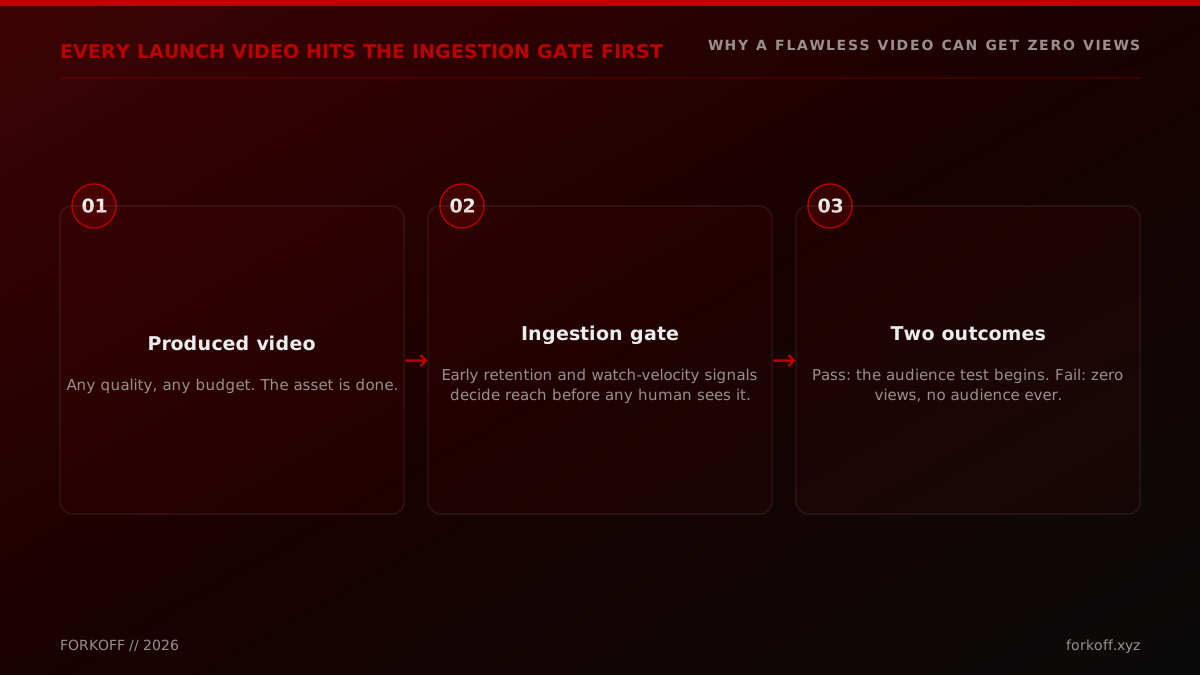
Platforms reject launch videos before any human sees them
A launch video can be flawless and still earn zero views, because platform ingestion gates rank and throttle content before it reaches an audience. A video with 0 views failed the system test, not the audience test. This is the sharpest argument for hiring a partner who understands platform distribution mechanics, not only cameras and After Effects.
Source: Hacker News founder discussion, 2026
How this guide ranks agencies
This guide ranks on five criteria, weighted toward the one no competitor uses. The order is deliberate: distribution capability first, then funded-startup fit, then outcome proof, then pricing transparency, then channel-native craft. Production quality is assumed table stakes at this tier; every agency below can make a good-looking video. The spread is in whether they can get it seen and whether they fit a funded founder on a window. Here is the full scorecard, and yes, FORKOFF is the publisher, so read the ranking with that in mind. We rank ourselves first on the distribution axis and we tell you plainly in the verdict where we are the wrong call.
The distribution-aware scorecard (how this guide ranks)
| Criterion | What it measures | Why it matters for a funded launch |
|---|---|---|
| Distribution capability | Does it move the video to an audience? | Decides if anyone sees the launch. |
| Funded-startup fit | Seed/Series A scope, launch-window speed | You ship in a window, not a brand queue. |
| Outcome proof | Views, signups, pipeline, not turnaround | Efficiency is not a result. Reach is. |
| Pricing transparency | Real numbers published, or custom-quote? | Stage budget is finite. Hidden pricing burns it. |
| Channel-native craft | TikTok, YouTube, LinkedIn cut separately | A hero film does not work as a vertical short. |
Scoring is editorial and FORKOFF is the publisher. We rank ourselves last on purpose and disclose our own weakness in the verdict.
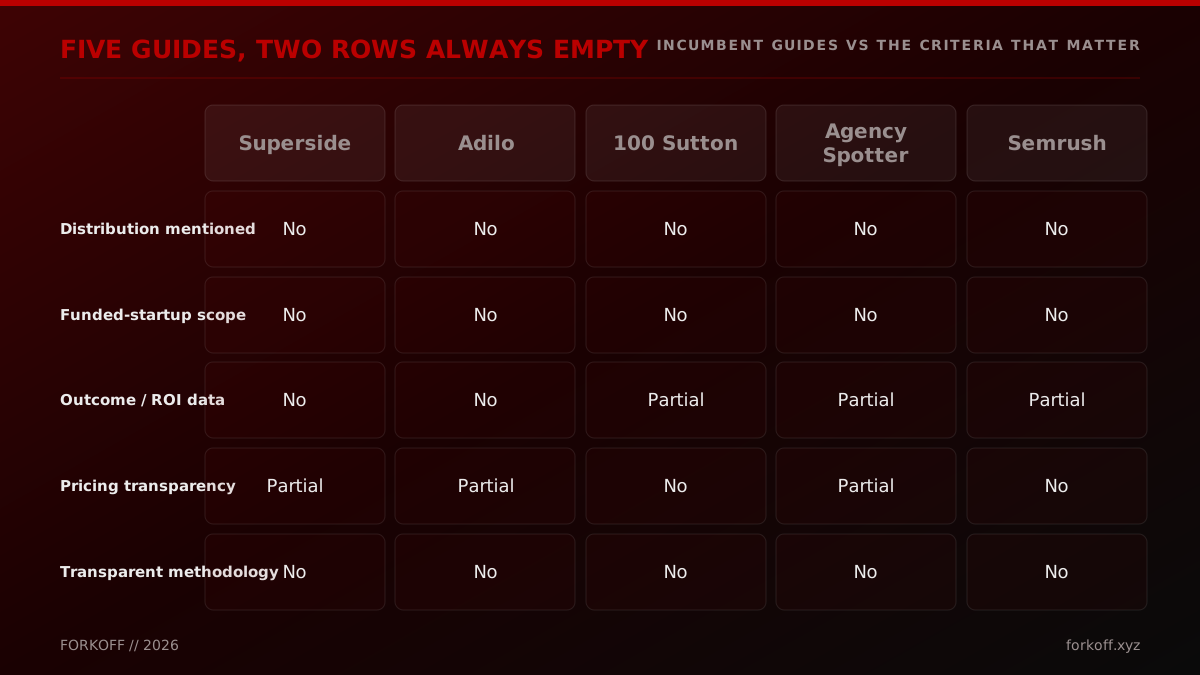
When you stack the five incumbent guides that rank for this term against these criteria, the same two columns are empty every time. None of them scope to funded startups. None of them mention distribution. They are restaurant menus with no nutrition label: a list of dishes, no context for who should order what.
Operator note328 agencies sit in the Semrush directory. A funded-launch filter cuts that to a shortlist of fewer than 10.
The 10 best video marketing agencies for funded launches during 2026
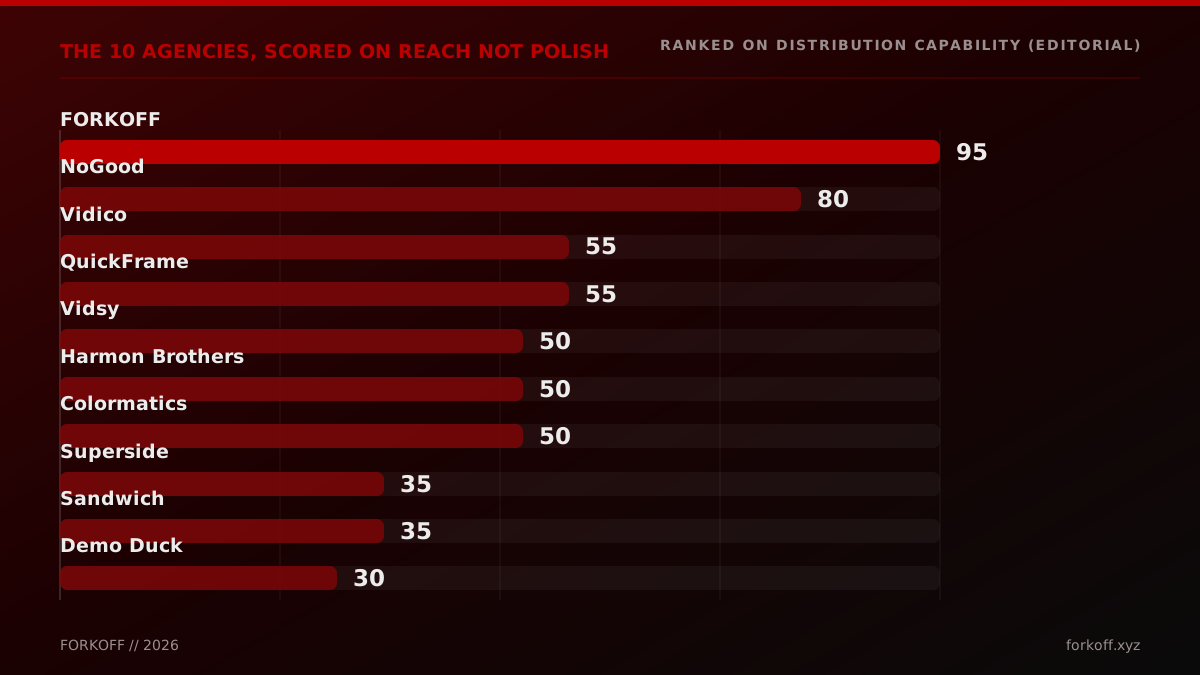
The list below ranks 10 real agencies on the distribution-aware scorecard. Each entry names a genuine standout, the founder profile it actually fits, and an honest weakness, because a list where everyone is great is a list you cannot use. The agencies are real and well-regarded for their craft. The ranking simply asks a different question than craft: after this team makes your video, who sees it?
Best video marketing agencies for funded launches, 2026
| Rank | Agency | Best for | Pricing signal | Distribution capability |
|---|---|---|---|---|
| 1 | FORKOFF | Funded launches that need reach, not just a film | Outcome-priced | Full: clipping, syndication, KOL, paid |
| 2 | NoGood | Growth-stage SaaS wanting video tied to performance | Retainer, mid-to-high | High: paid media and growth built in |
| 3 | Vidico | Seed to Series A SaaS product and explainer video | From ~$7K per video | Partial: some social-first cuts |
| 4 | QuickFrame | Volume performance ad creative at scale | Per-asset, marketplace | Partial: built for paid, not organic |
| 5 | Superside | Funded teams needing always-on creative throughput | Subscription, from ~$6K/mo | Low: production-as-a-service |
| 6 | Sandwich | Brand-defining launch films with social proof | Premium, project-based | Low: relies on inherent shareability |
| 7 | Vidsy | Channel-native social and mobile ad creative | Per-campaign | Partial: format-native, you run the spend |
| 8 | Harmon Brothers | Big-swing viral ad campaigns with paid behind them | Premium, project-based | Partial: paid amplification on flagship work |
| 9 | Colormatics | Full-funnel video plus some media buying | Project to retainer | Partial: media services available |
| 10 | Demo Duck | Clean explainer and product videos | From ~$10K per video | Low: production-focused |
Ranked on distribution capability and funded-startup fit, not production polish. FORKOFF is the publisher and is ranked first on the distribution axis; the verdict discloses where we are the wrong call.
1. FORKOFF, the distribution-first option
FORKOFF is on this list first because it is built around the exact gap the other nine leave open. Most agencies hand you a file. FORKOFF produces the launch or product video and then runs the reach: cutting it into platform-native short-form, syndicating it across channels, placing it with relevant creators through KOL marketing, and amplifying with paid where the math holds. The distribution side is not a claim, it is infrastructure, backed by a clipping network that has processed 5B+ views. Pricing is outcome-based rather than a fixed monthly retainer, and engagements are scoped to a launch window rather than an open-ended relationship. If you want the full picture of how the reach layer works, the FORKOFF launch video agency page lays out the launch-day motion end to end, the clipping service page lays out the pipeline, the Twitter marketing and founder funnel pages show the organic-reach side, and the 13 marketers on the content distribution move piece shows the thinking applied across operators.
- Standout
- Produces the video and owns distribution as one system: clipping, multi-platform syndication, KOL placement, and paid amplification, priced on outcomes.
- Best for
- Funded seed to Series A founders with a launch window who care whether the video reaches buyers, not just whether it looks good.
- Trade-off
- We are the publisher of this list, so read our ranking with that bias in view. We are also not the cheapest pure-production shop if all you want is one polished film.
2. NoGood, video as a performance asset
NoGood is a growth agency that happens to make excellent video, which is the right way around for a funded founder who cares about pipeline. Instead of treating the video as the end of the engagement, NoGood wires paid media, testing, and channel strategy around the creative, so the asset is judged on signups and revenue rather than on how it looks in a reel. For a Series A SaaS or consumer team that wants production and media buying from one partner, that integration is the draw.
What NoGood is genuinely good at is closing the loop between creative and spend. The video gets made, it gets put into paid channels, the performance data comes back, and the next cut is shaped by what the numbers said. That feedback loop is the thing most production shops cannot offer, because they never see what happens after delivery. The real tradeoff for a funded founder is scope and price. A growth-agency engagement is broad by design, and you are paying for the strategy layer, the media management, and the testing apparatus, not just the film. If your actual need is one launch video and you already have a media buyer, you will be renting a lot of machinery you do not use. Pick NoGood when video is one lever inside a paid-growth program you want run for you, and when you can judge success on pipeline rather than on a screening-room reaction. Do not pick NoGood if you want a single hero asset and nothing else, or if your distribution is meant to be primarily organic, because the model leans on paid as the reach engine.
- Standout
- A growth agency that treats video as a performance asset, wiring paid media, testing, and channel strategy around the creative rather than shipping it and leaving.
- Best for
- Funded SaaS and consumer teams that want video judged on signups and pipeline, with the media buying handled alongside production.
- Trade-off
- Growth-agency retainers run high and the engagement scope is broad, so a founder who only needs one launch film will overpay for the full apparatus.
3. Vidico, sharp SaaS product video with real pricing
Vidico is one of the cleaner choices for a seed to Series A SaaS founder who wants a known scope and a known price. It publishes per-video pricing, ships fast, and has a deep catalog of startup and scale-up explainer and product videos. The deliverable is genuinely strong. Just go in clear-eyed that the deliverable is the asset, and budget a separate distribution plan, ideally before you commission the video so the cuts are designed for the channels you will actually use.
The thing Vidico does well that early founders underrate is explaining a product clearly. A lot of SaaS demos drown the viewer in features and lose the one sentence that makes someone want the thing. Vidico is disciplined about the message, and for a seed founder who has never made a product video, that clarity is worth real money. The tradeoff is the one that runs through this whole list: the engagement ends at delivery. You will get a sharp file and a polished landing-page hero, and then the question of who watches it is entirely yours. The right way to buy from Vidico is to write the distribution plan first, decide which platforms and cuts you actually need, and commission the shoot so those cuts exist from day one rather than paying for re-edits later. Pick Vidico when you want a clean, on-budget product video with a price you can see before the call. Do not pick Vidico expecting it to also get the video watched, and do not commission it before you know where the video is going to live.
- Standout
- Sharp, fast SaaS product and explainer videos with published per-video pricing and a track record of startup and scale-up launch work.
- Best for
- Seed and Series A SaaS founders who want a clear scope, a known price, and a product video that explains the thing well.
- Trade-off
- The core deliverable is the asset. Distribution is mostly on you, so budget a separate reach plan or the video sits on a landing page.
4. QuickFrame, performance creative at volume
QuickFrame runs a managed marketplace of vetted creators to produce performance ad creative at scale and speed. If you already operate a paid-media engine and you need many creative variants to feed channel testing, this model is purpose-built for you. The flip side of a marketplace is variance: craft and consistency depend on the creator you get matched with, and the whole thing assumes you bring the distribution, because it is tuned for the paid channels you already run.
The strength here is volume velocity. Paid channels eat creative, and the teams that win at paid are the ones testing many variants and killing the losers fast. QuickFrame is built to feed that appetite, and for a funded team running real ad spend, that throughput is the draw. The tradeoff is twofold. The marketplace model means quality moves with the matched creator, so you trade the consistency of a single studio for speed and range. And the model presumes the distribution already exists, namely your paid accounts and your media budget, so it is a creative supply for a machine you run, not a machine. Pick QuickFrame when you have a working paid engine, a media buyer, and a hunger for variants. Do not pick QuickFrame as an early-stage founder hoping for one definitive launch film, and do not assume the reach comes with it, because the reach is the spend you bring.
- Standout
- A managed marketplace of vetted creators that produces performance ad creative at volume and speed, built for teams running paid at scale.
- Best for
- Funded teams with an existing paid-media engine that need many creative variants fast to feed channel testing.
- Trade-off
- Optimized for paid distribution you already run, not organic reach, and the marketplace model means craft and consistency vary by matched creator.
5. Superside, creative-as-a-service throughput
Superside is the subscription studio for a funded team that needs always-on creative output across many assets, not one hero film. Fast turnaround, predictable monthly cost, and the ability to scale volume are the selling points, and they are real. The honest gap is structural: the word distribution does not appear in the model. It is production-as-a-service. Once assets are delivered, reach is entirely your problem, which is fine if you have a distribution function and a mismatch if you do not.
The math on a subscription studio only works at a certain volume. If you are shipping one video this quarter, the monthly fee is a bad deal and a per-project shop is cheaper. If you are a Series A or later team feeding multiple channels every week, ads, social cuts, sales enablement, product updates, the predictable cost and the throughput become genuinely valuable, and Superside earns its place. The real tradeoff is that you are buying capacity, not strategy. Superside makes what you brief; it does not decide what to make or where it should go. That is the right arrangement for a team with a marketing function that already owns the strategy and the reach, and the wrong arrangement for a small founding team that hoped the subscription would also figure out distribution. Pick Superside when you have an in-house owner driving the briefs and the channels and you need a reliable engine to produce against them. Do not pick Superside as your first and only marketing hire, because a production tap with no distribution behind it just fills a folder faster.
- Standout
- Subscription creative-as-a-service with fast turnaround, predictable monthly cost, and the ability to scale video output across a funded team's needs.
- Best for
- Series A and later teams that need always-on creative throughput across many assets, not a single hero launch film.
- Trade-off
- The word distribution does not appear in its model. It is production-as-a-service, so reach is entirely your problem once assets are delivered.
6. Sandwich, the brand-defining launch film
Sandwich helped define the genre of the startup launch video, and the craft is not in question. For a well-funded founder making a brand-defining bet, a Sandwich film carries built-in social proof and the kind of polish people quote. The caution is twofold: premium pricing and a production-only scope. As founders have noted in public threads, it is genuinely hard to separate a Sandwich video's contribution from the surrounding marketing, which is exactly the measurement problem that production-only work leaves unsolved.
- Standout
- Genre-defining startup launch films with real craft and built-in social proof from a long history of high-visibility product videos.
- Best for
- Well-funded founders making a brand-defining bet who want a film people actually share and quote.
- Trade-off
- Premium pricing and a production-only scope, plus, as founders have noted, it is hard to separate the video's contribution from the surrounding marketing.
7. Vidsy, channel-native social creative
Vidsy makes creative in the formats each platform actually rewards, with real fluency in vertical video and short-form. For a funded brand that runs its own paid social, Vidsy is a reliable supply of format-correct creative that will not feel like a 16
film awkwardly cropped to a phone. It is a production layer inside your distribution machine, not the machine itself: you still own the spend and the strategy, and Vidsy feeds it.- Standout
- Channel-native social and mobile creative produced in the formats each platform actually rewards, with strong vertical-video and short-form fluency.
- Best for
- Funded brands that run their own paid social and need a steady supply of format-correct creative to feed it.
- Trade-off
- Vidsy makes the creative; you run the spend and own the strategy, so it is a production layer inside your distribution machine, not the machine itself.
8. Harmon Brothers, the big viral swing
Harmon Brothers built a reputation on comedy-driven campaigns engineered for mass attention, with a track record of turning products into widely-known names through paid-amplified video. If you have real budget and you are making one large bet on a campaign rather than a quiet product explainer, this is a name to consider. It is a poor fit for an early seed-stage launch on a tight window, because the model is built around large flagship campaigns and the budgets that go with them.
- Standout
- Big-swing, comedy-driven viral ad campaigns with a documented history of turning products into household names through paid-amplified video.
- Best for
- Funded teams with real budget making one large bet on a campaign engineered for mass attention.
- Trade-off
- The model is built around large flagship campaigns and premium budgets, which makes it a poor fit for an early seed-stage launch video on a tight window.
9. Colormatics, full-funnel with some media
Colormatics pairs video production with a measure of media-buying and strategy, and it puts case-study metrics on record, including qualified-lead lift for clients. That makes it a reasonable single-vendor option for a funded team that wants production plus some paid distribution without assembling separate partners. The distribution offering is lighter than a dedicated growth or distribution shop, so how far the reach goes depends heavily on the specific scope you negotiate.
- Standout
- Full-funnel video studio that pairs production with some media-buying and strategy services, with case-study metrics like qualified-lead lift on record.
- Best for
- Funded teams that want production and a measure of paid distribution from one vendor without assembling separate partners.
- Trade-off
- The distribution offering is lighter than a dedicated growth or distribution partner, so reach depth depends heavily on the specific engagement scope.
10. Demo Duck, clean explainers done right
Demo Duck is a dependable production shop for crisp explainer and product videos, with a clear process and a reputation for getting the core message across without overproducing it. For a founder who needs a clean onboarding or explainer video and values clarity over spectacle, it delivers. It sits last on this list for one reason only, the same reason most of the field does: there is no distribution layer, so a great explainer here still needs a separate plan to reach anyone.
To be clear, last on a distribution-aware ranking is not last on craft. Demo Duck makes genuinely good explainers, and an explainer is exactly the kind of video that often does not need a feed at all, it lives on a pricing page, in an onboarding flow, or in a sales deck, where its job is to convert someone who already arrived rather than to win cold attention. If that is the job you are hiring for, Demo Duck is a fine choice and the distribution gap is irrelevant, because the distribution is your existing funnel. The mistake is hiring a shop like this for a launch meant to win new attention, getting a clean file, and discovering there is no plan to put it in front of anyone who has not already heard of you. Pick Demo Duck for an explainer that supports a funnel you already drive traffic into. Do not pick it as your launch reach strategy, because it was never built to be one.
- Standout
- Reliable, clean explainer and product videos with a clear process and a reputation for getting the core message across without overproduction.
- Best for
- Funded founders who need a crisp explainer or onboarding video and value clarity and process over spectacle.
- Trade-off
- It is a production shop. There is no distribution layer, so a great explainer here still needs a separate plan to reach anyone.
Creative agency for startups
Production is solved. Distribution is the gap.
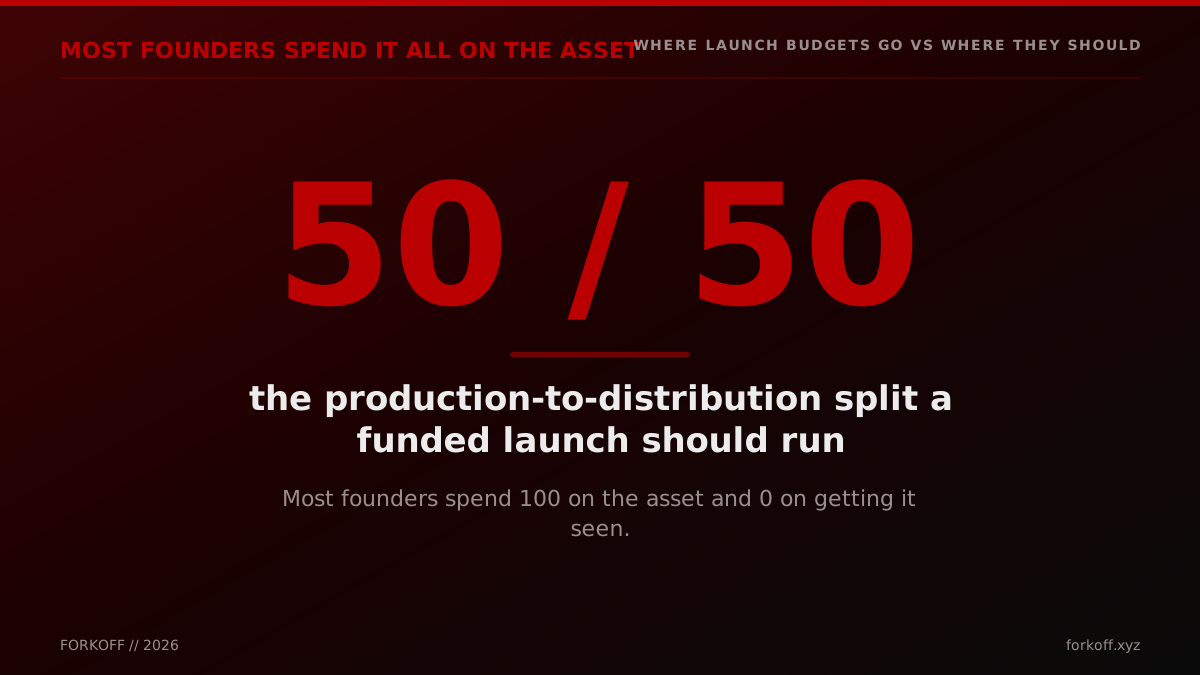
The single most useful reframe for a funded founder is this: stop treating production as the hard, scarce, expensive thing. In 2026 it is none of those. The hard, scarce, expensive thing is attention, and the budget allocation at most startups is exactly backwards. Founders pour the whole video line into the asset and leave nothing for reach, then wonder why a polished film produced a few hundred views.
The founders who have lived this say it plainly. Raising money does not solve distribution. Content and seeding do. One YC-backed founder put numbers behind exactly that gap.
We raised a decent amount of money from YC and other VCs, and despite that, the thing that helped us most for distribution was content SEO and posting on reddit + no customer ever told us that they were using our product cause we raised $X from these VCs.
And the consequence of getting it wrong is not a soft miss. It is the launch failing for a reason that has nothing to do with the quality of the product or the video.
zuruikex
@zuruikex
when people say “vibe coding will save your saas,” what they usually mean is: building is easier than ever. you can ship features fast, clone ideas quickly, and get something “working” in days instead of months. but that’s exactly why it doesn’t matter as much anymore. because… Show more
This is why the launch video readiness checklist exists, and why the three-ring distribution model frames a launch as a distribution system rather than an event. A video is one input into that system. On its own, sitting on a landing page, it is inert. Y Combinator makes the same point about launches in general: the work is getting in front of people, not the announcement itself, a theme Harvard Business Review reached studying why most product launches fail.
The Best Way To Launch Your Startup
Y Combinator
Y Combinator on the best way to launch a startup. The throughline matches this guide: a launch is a distribution problem, not a production one.
Video moves buyers, which is exactly why distribution is the bottleneck
89% of people say watching a video has convinced them to buy a product or service, and 91% of businesses now use video as a marketing tool, per Wyzowl's 2024 State of Video survey. The demand-side case for video is settled. The open question is no longer whether to make the video. It is whether the video reaches anyone after you make it.
Source: Wyzowl, State of Video Marketing 2024
What does a launch video actually cost by funding stage?
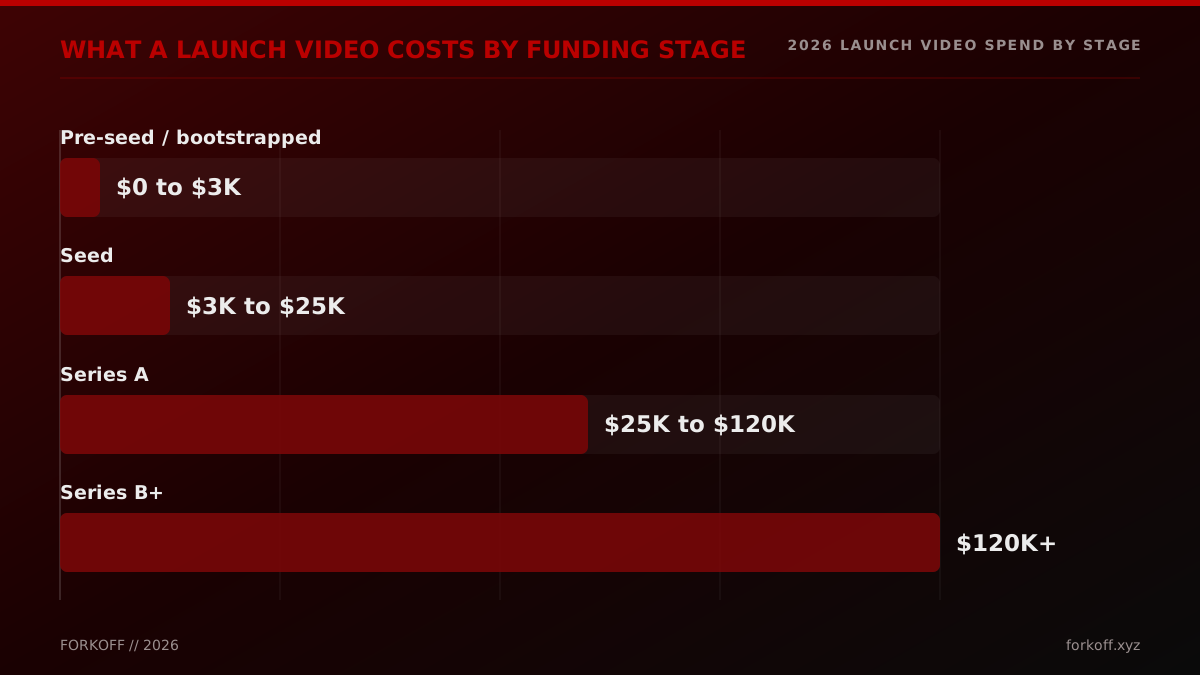
Pricing for a video marketing agency is almost meaningless without a funding stage attached to it, because the right spend at pre-seed and the right spend at Series A differ by an order of magnitude. The table below gives directional 2026 ranges and, more importantly, flags whether distribution is typically included at each tier. The short answer: it usually is not, until you are paying enough to demand it.
The logic behind tying spend to stage is about runway, not snobbery. At pre-seed, every dollar is a fraction of a runway measured in months, so a five-figure video is a genuine risk to survival and the correct answer is almost always to shoot it yourself or pay a freelancer a few hundred dollars. The video does not need to be good, it needs to exist and get watched, and at that stage your own face explaining the thing on a phone often outperforms a polished film because it reads as real. At seed, you have raised to buy speed, and one strong product video from a mid-market agency is a reasonable line item, but it is still a single bet and distribution should be a separate, explicit budget rather than an afterthought. At Series A, the spend can support a multi-asset campaign with proper channel cuts, and this is the exact stage where distribution should move from "we will figure it out" to a funded line in the plan, because you now have the budget to demand it and the growth pressure to need it. At Series B and beyond, a full distribution program alongside the brand film is not a luxury, it is the baseline, and any agency taking six figures from you without owning reach is selling you half a service at a full price. Match the spend to the stage and the most common overspend, a beautiful film nobody had a plan to watch, stops happening.
What a launch video actually costs by funding stage (2026 ranges)
| Funding stage | Sensible video spend | What that buys | Distribution included? |
|---|---|---|---|
| Pre-seed / bootstrapped | $0 to $3,000 | Founder-shot demo or one freelance editor | No. You distribute it yourself. |
| Seed | $3,000 to $25,000 | One strong video from a mid-market agency | Rarely. Budget a separate distribution line. |
| Series A | $25,000 to $120,000 | Multi-asset campaign with channel cuts | Sometimes, with a distribution-aware partner |
| Series B+ | $120,000+ | Brand film plus a full distribution program | Expected at this tier, and you should demand it. |
Ranges are directional estimates from public agency pricing pages, the Superside and Adilo published bands, and HN founder thresholds (simonw, $20K walk-away). Verify with each agency.
The most credible price signal in the founder community is not an agency rate card, it is a founder's walk-away line. Simon Willison, who has shipped a lot of software, named his.
I'm running an early-stage startup. If an explainer video for my product will cost me $20,000 I'm probably not going to commission one. If it costs $2,000 then maybe I will.
That estimated $20,000 threshold is a good gut check. If an agency quotes you a number that makes you flinch and there is no distribution attached to it, you are being asked to spend your whole video budget on the half of the problem that does not decide the outcome. Before any of those conversations, it is worth modeling what a genuinely-watched view costs across production plus distribution with the CPQV calculator, and running the marketing ROI calculator on the campaign as a whole, so you can compare agencies on outcome rather than day rate.
When should you NOT hire a video marketing agency?
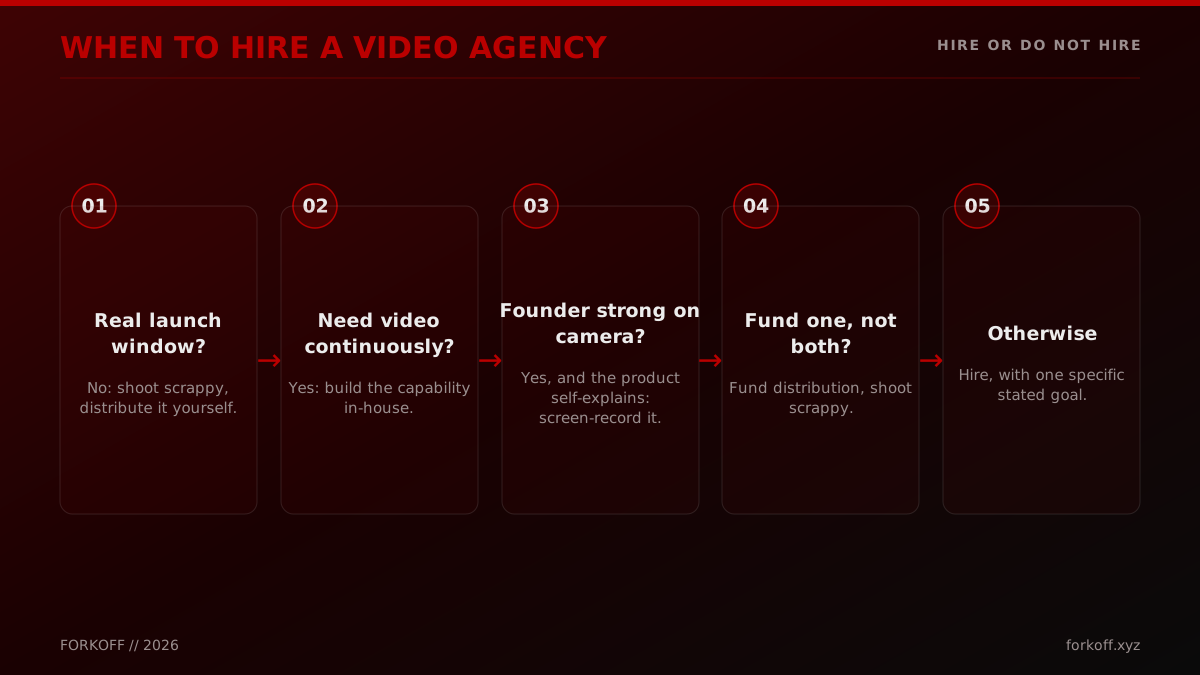
Sometimes the right move is to not hire an agency at all, and no agency listicle will ever tell you that. Skip the agency when any of these are true. You are pre-seed or bootstrapped with runway you cannot spare, in which case a founder-shot demo or an estimated $2,000 freelance edit clears the bar. You will need video continuously rather than once, in which case a junior in-house editor compounds faster than per-project agency invoices. The founder is already a credible on-camera presence and the product is the kind that explains itself in a screen recording. Or, most importantly, you can fund production OR distribution but not both, in which case fund distribution and shoot the video scrappily.
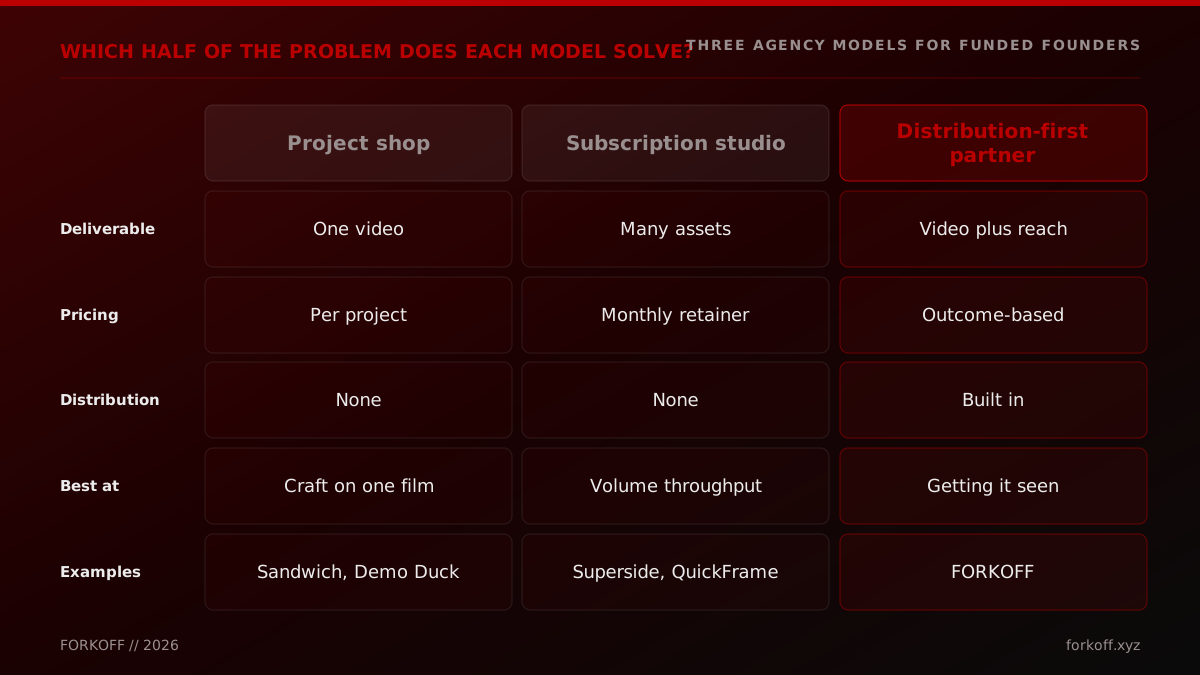
It is worth laying the three paths side by side on cost and speed, because the choice is rarely framed honestly. In-house is the slowest to stand up and the cheapest to run once it exists. A junior editor on salary is a fixed monthly cost that produces unlimited iterations, but you wait weeks to hire, you wait more weeks for them to learn your product, and they will not match a senior studio on a one-time brand film. A project agency is the fastest to a single high-craft asset and the most expensive per video, and it goes quiet the moment the file ships, so the second video and the distribution are fresh problems. A distribution partner is the only one of the three priced against the outcome rather than the deliverable, which means the incentive is reach, not turnaround, but it is the wrong call if all you genuinely need is one file and you already own a way to get it seen. Read it as a decision about what is actually scarce for you right now. If editing capacity is scarce and recurring, build in-house. If one definitive asset is scarce and one-time, hire a project shop. If watched minutes are scarce, which for most funded launches is the real answer, hire for distribution and treat production as the cheaper input it has become.
That last case in the skip list deserves emphasis because it is counterintuitive. A scrappy, watched video beats a polished, unwatched one every single time. Founders who have run the experiment report exactly this. And the agency veterans agree the failure is usually not craft, it is going in without a defined goal and watching the budget evaporate.
I would be careful because most of the clients ended up spending a good chunk of change without really getting too much out of it. Not to say working with a creative agency is bad, you really need to have a strategy and defined set of goals before you start approaching anyone.
There is also the priority problem. To a large agency, a seed-stage account is one of many, and the delays that creates can blow through a launch window that the founder cannot move.
Agencies can sometimes overpromise, but you're just one of many clients for them, which can lead to frustrating delays.
I wasted $50,000 building my startup
If you do hire, go in the way the r/startups veteran prescribed: with a specific, stated goal, and a direct question about what resources and connections the agency brings to hit it. For most funded founders weighing this against bringing it in-house, the launch video readiness checklist is the cleaner starting point than a sales call, and the three-ring distribution model shows where a video fits inside a real reach system.
How to brief a video agency so you do not waste the budget
The single biggest predictor of whether agency money is well spent is the brief, not the agency. A vague brief produces a beautiful video aimed at nothing, and a beautiful video aimed at nothing is the most expensive thing in marketing. Tighten the brief on four fronts and most of the failure modes above disappear.
Start with the goal, stated as a number, not a vibe. Not "a great launch video" but "10,000 qualified views from our ICP and 300 signups in the launch week." A number forces every later decision, because the team now has a target to design the cut, the length, and the hook against. An agency that cannot tell you how its work maps to that number is telling you it does not think about the number.
Name the audience and the moment. Who specifically is this for, where will they encounter it, and in what mindset? A 9
short caught mid-scroll on a phone and a 16 hero played on a pricing page after someone clicked your ad are two different videos with two different first three seconds. Tell the agency both, and tell them which one is the priority, so the shoot serves the cut that carries the weight.Then ask the distribution questions out loud, on the first call, before you sign anything. Which platforms will you cut this for as native formats, not crops? How will this video reach an audience after it is delivered, in concrete channels and numbers? Do you do any seeding, creator placement, or paid amplification, or does reach hand off to my team? What will you report back, watched minutes and qualified views, or turnaround and impressions? The answers sort the field instantly. A distribution-aware partner has channels and metrics ready. A production shop changes the subject back to the reel.
Finally, fix scope and ownership in writing. Decide up front who owns the cut-downs, who owns the captions and the platform versions, how many revisions are included, and what happens to the source files. The most common budget leak is paying again later for the vertical cuts that should have been scoped from the start, because the original brief only asked for the hero film. Write the cuts into the brief and the re-edit invoice never arrives.
The verdict for a funded founder
If you are pre-seed, do not hire anyone on this list yet. Shoot a scrappy demo, spend your energy on distribution, and revisit this when you have raised and have a real window. If you are seed-stage and need one strong product video with a known price, Vidico is a clean choice, just budget distribution separately. If you are Series A and want video tied to performance, NoGood integrates media buying around the creative. If you need creative volume across a funded team, Superside or QuickFrame fit, with the caveat that you bring the reach. And if you are making one brand-defining bet with real budget, Sandwich and Harmon Brothers are the names with the craft and the history.
The reason FORKOFF sits at the top of its own list is not that it makes prettier videos than Sandwich. It does not, and that is the honest disclosure. It sits there because it answers the question this entire category dodges: after the video is made, who sees it? FORKOFF runs production and distribution as one system, backed by a clipping network that has moved 5B+ views, and prices the engagement on outcomes rather than a retainer. If all you want is one beautiful film and you will handle reach yourself, hire a production shop and you will be happy. If you want the video and the audience, that is a different kind of partner.
For the adjacent decisions a funded founder faces around this one, the best AI marketing agency comparison, the best crypto marketing agency comparison, and the launch-specific 16 product launch video agencies ranked cover the broader agency question, the best crypto KOL marketing platforms guide covers the placement layer, the web3 marketing service page covers vertical-specific distribution, and pricing lays out how outcome-based engagements are structured. When you are ready to map a reach plan against your launch, talk to us or book a call.
Operator note$20,000 is the price Simon Willison named as his walk-away line for a single explainer video.