Submagic is an AI captioning and vertical-video polishing tool with a long-format-to-vertical extension stapled to the side. The default workflow ingests vertical or horizontal video, auto-transcribes the audio, drops one of dozens of templates with brand customisation, surfaces contextual broll inline, and exports at up to 4K 60FPS on the highest paid tier. Speaker-cloning duplication re-renders an existing clip into another language while preserving the source speaker's vocal timbre, which is the differentiation lever Submagic plays against lower-priced captioning alternatives.
TL;DR verdict
Submagic ships premium caption rendering and vertical-video polish for solo creators, podcasters, freelance editors, and small embedded teams. Caption-template engine leads its niche, brand-kit reapplication is fast, broll auto-suggestion saves real minutes, and speaker-cloning into Spanish, Portuguese, and Hindi is uncanny-valley acceptable under 90 seconds. Seat ladder spans $19 to $69 monthly per license with a 41 percent annual price break, monthly count caps stacked with per-clip length caps, and an opaque AI-credit allotment. Long-format-to-vertical workflow most buyers assume is bundled is actually a $19 Magic Clips add-on. Solo operators love the polish. Three-plus-clipper crews discover seat-multiplication math too late. Brands procuring outcomes against MMP records or treasury reports sit in a separate category entirely.
The buyer Submagic targets is the solo clipper, the freelance editor, the podcaster captioning a back catalog, and the one-or-two-operator embedded team. The product is not designed for brand-funded outcome purchasing. Speaker-cloning, brand-kit, and 4K 60FPS export all serve clipper-led workflows where the buyer also operates the tool. That positioning is consistent across submagic.co marketing, ProductHunt launch copy, and the review pattern on G2 plus Trustpilot.
Where the product sits in the wider vertical-video stack is something operators on X have mapped already. Caption tooling, clip detection, smart reframe, scheduling, and connective glue each occupy their own seat in any honest short-form pipeline.
TechNova Pulse
@TechNova_Pulse
Tools you need for automated YouTube → Shorts repurposing: 🤖 Opus Clip — AI clip detection ✍️ Submagic — Auto captions ✂️ Wisecut — Smart reframe 📅 Buffer — Auto scheduling ⚡ Zapier — Connects everything
Submagic occupies the caption-polish seat in that stack. Magic Clips, the $19 add-on, optionally extends the seat into the clip-detection slot, but the base subscription does not.
Detail on tiers lives at /blog/clipping/submagic-review-deep-dive; the head-to-head sits at /compare/forkoff-vs-submagic.
How much does Submagic cost?
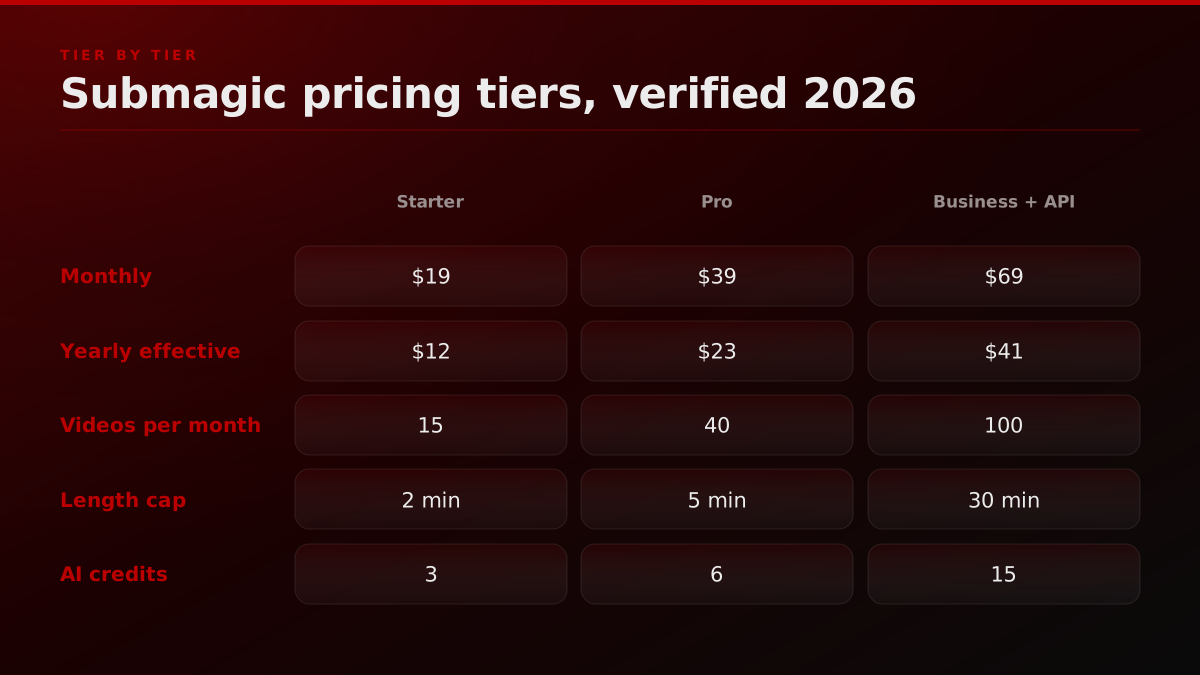
Submagic ships four base tiers plus one critical add-on, with a 41 percent yearly saving across the board. Every figure below is per license per month and verified against submagic.co on 2026-05-07. Cross-check on source before any annual commitment.
Submagic pricing tiers (verify on source 2026-05-07)
| Tier | Monthly | Yearly (effective) | Videos / month | Length cap | AI credits | Notable |
|---|---|---|---|---|---|---|
| Starter | $19 | $12 | 15 | 2 min | 3 | Captions, basic templates |
| Pro | $39 | $23 | 40 | 5 min | 6 | 3 custom templates, broll |
| Business + API | $69 | $41 | 100 | 30 min | 15 | 4K + 60FPS export, API access |
| Magic Clips add-on | $19 | $12 | Add-on | n/a | n/a | Long-format-to-vertical auto-clipping |
| Standalone API | $75 to $1,000 / month | n/a | Volume | n/a | n/a | API access without a seat |
All per-license per-month rates verified on submagic.co 2026-05-07. Yearly billing applies a 41 percent price break on each tier. Magic Clips is an add-on layered onto the base subscription, not a bundled feature.
Three pricing-page pitfalls the marketing surface does not lead with.
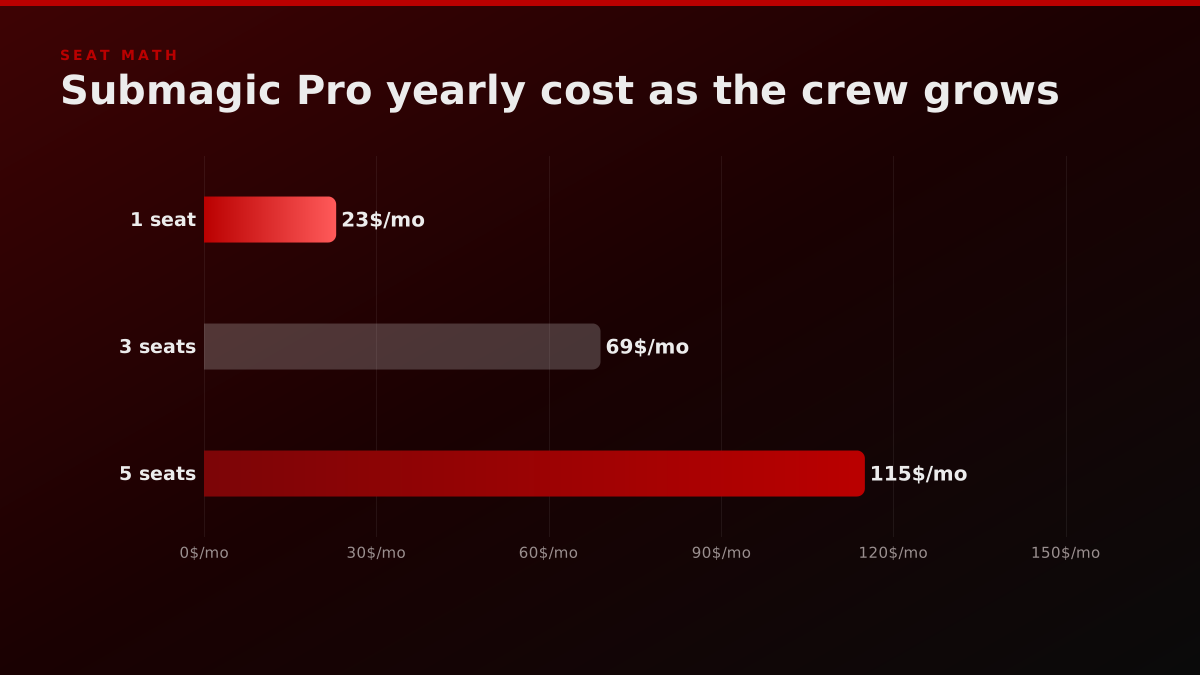
Seat-multiplication math. A three-operator crew on Pro yearly pays an estimated 3 x $23 = $69 every month, not $23. A five-operator crew lands at $115 monthly. Reviewers flag this multiplication as the sharpest sticker-shock moment after the opening invoice. Solo workflows escape the compounding entirely; multi-operator workflows feel it immediately.
Monthly count caps interact with each-clip length ceiling. Starter at 15 videos x 2 minutes is 30 total processing minutes monthly. Pro at 40 videos x 5 minutes is 200 minutes. Brands shipping daily vertical content on the Pro tier burn through the allotment by week three and tier up, because no per-clip overage option exists. The ceiling is structural, not soft.
The Magic Clips long-format-to-vertical feature is a $19 extension, not a base inclusion. The OpusClip-style workflow most newcomers assume comes bundled actually layers on top of the base subscription. On Pro yearly that adds $12 monthly per license. A three-operator Pro yearly crew bundling Magic Clips spends approximately $105 every month before any standalone API minutes get touched.
AI Builder 🛠️
@aibuilder0x
Submagic: $16/mo, 5 min per video. My script: $0/mo, one command per video. whisper + ffmpeg + 80 lines of Python. Same Hormozi-style captions. Stop paying for what's a regex away.
The substitution risk is real for technical operators. For everyone else, the $105 Pro yearly + Magic Clips bundle is the de facto floor on serious multi-operator usage.
Tools like Opus Clip, Submagic, etc. all run $30-50/mo and most of them either watermark, cap your clips, or hide the "no watermark" tier behind a $99 plan.
Free clippers pressure the floor, not the outcome lane
A r/passive_income thread carrying 132 upvotes captures the low-end pressure on paid clippers. Operators running the Shorts grind describe Opus Clip, Submagic, and peers all landing at 30 to 50 dollars a month with watermarks, clip caps, or a no-watermark tier hidden behind a 99 dollar plan, then migrating to free unlimited alternatives to kill the per-clip cost. That substitution compresses the solo and hobby tiers, where the buyer also operates the tool. It leaves the brand-side outcome lane untouched, because a free clipper still ships an unqualified clip with no watch-duration, geo, traffic, or policy stamp attached.
Source: r/passive_income clip-tool cost thread, 132 upvotes, sampled 2026-07-23
For the same $105 monthly, a managed clipping shop operating on a $0.003 CPQV denominator clears roughly 35,000 qualified-view events without seat multiplication and without a monthly count ceiling. That math sits inside the boundary section further down.
Operator noteEvery Submagic intake we run assumes Magic Clips is bundled; it is a separate 19 dollar add-on we catch at seat-count math., FORKOFF Clipping ops
What features does Submagic have?
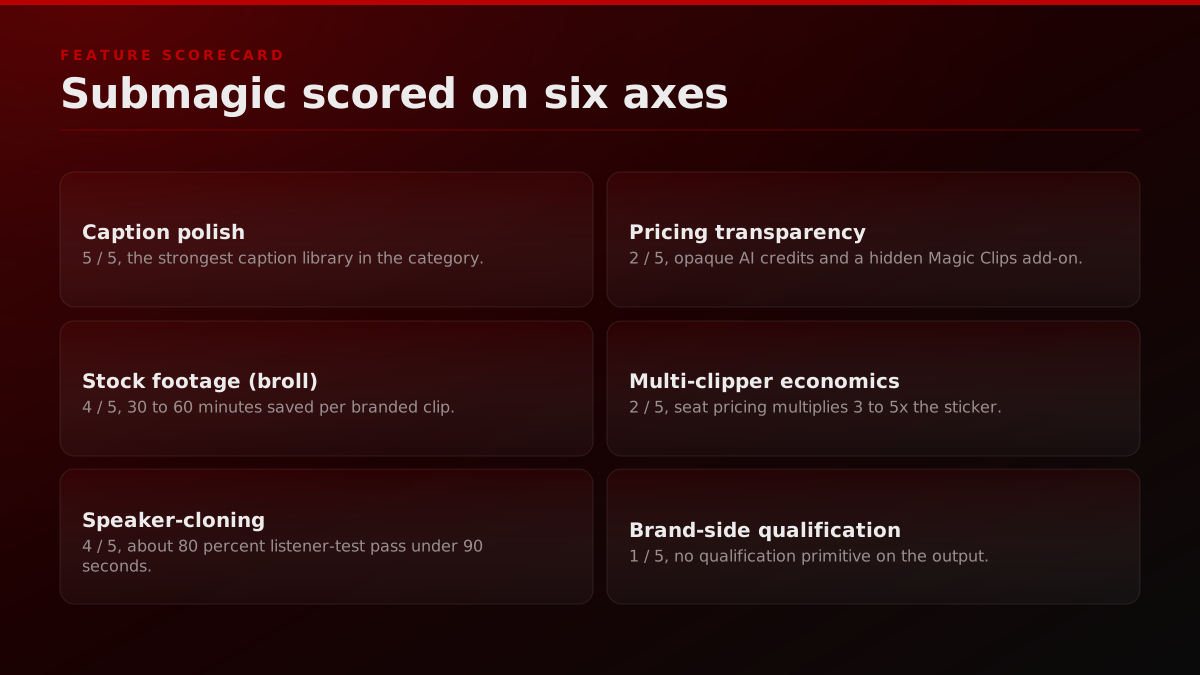
Five features carry real weight in any honest evaluation: the caption-template engine with one-click brand-kit reapplication, contextual broll auto-suggestion that saves manual stock-footage search, speaker-cloning duplication into Spanish, Portuguese, Hindi, and German, 4K 60FPS export on the Business plus API tier, and the optional $19 Magic Clips long-format-to-vertical add-on. Each one serves a clipper who also operates the tool.
Caption-template engine. The library is the deepest in its category. Brand-kit application reapplies font, color, motion, and emoji-set across batches with one click. G2 and ProductHunt reviewers consistently flag the template library as the primary reason to pick Submagic over caption-only alternatives.
Contextual broll auto-suggestion. AI surfaces stock footage inline; one-click insertion. Reviews praise minutes saved versus manual stock-footage search, with occasional misses on technical or financial content where the model defaults to generic visuals.
Speaker-cloning duplication. Re-renders a short clip into another language while preserving the source speaker's voice. Spanish, Portuguese, Brazilian Portuguese, Hindi, and German read strongest. Output quality is uncanny-valley adjacent but acceptable for clips under 90 seconds. Podcast-length monologue is not the use case.
4K 60FPS export. Business + API tier unlocks the resolution + frame-rate combination. Most direct competitors cap at 1080p or 4K 30FPS. A genuine advantage when the brand spec demands 4K for YouTube Shorts or Meta Reels.
Magic Clips long-format-to-vertical. The optional $19 add-on auto-clips long-form into vertical short-form with reframing, captions, and broll inline. Clip-selection quality places marginally behind OpusClip but ahead on caption polish. The complaint is the pricing pattern, not the output.
Creator Stack
@CreatorStackAii
Captions aren’t optional anymore. They drive retention. Creators are using: CapCut → fast captions Descript → accuracy Submagic → engagement The shift: Captions → content Full guide:👇 https://bit.ly/3QALJg8 #ai
What Submagic does NOT ship: per-view qualification, treasury-grade reporting, multi-platform distribution automation, brand-side geo-routing enforcement, or sanctioned-region compliance gates. Those primitives are agency-side, not tool-side.
What are Submagic's pros?
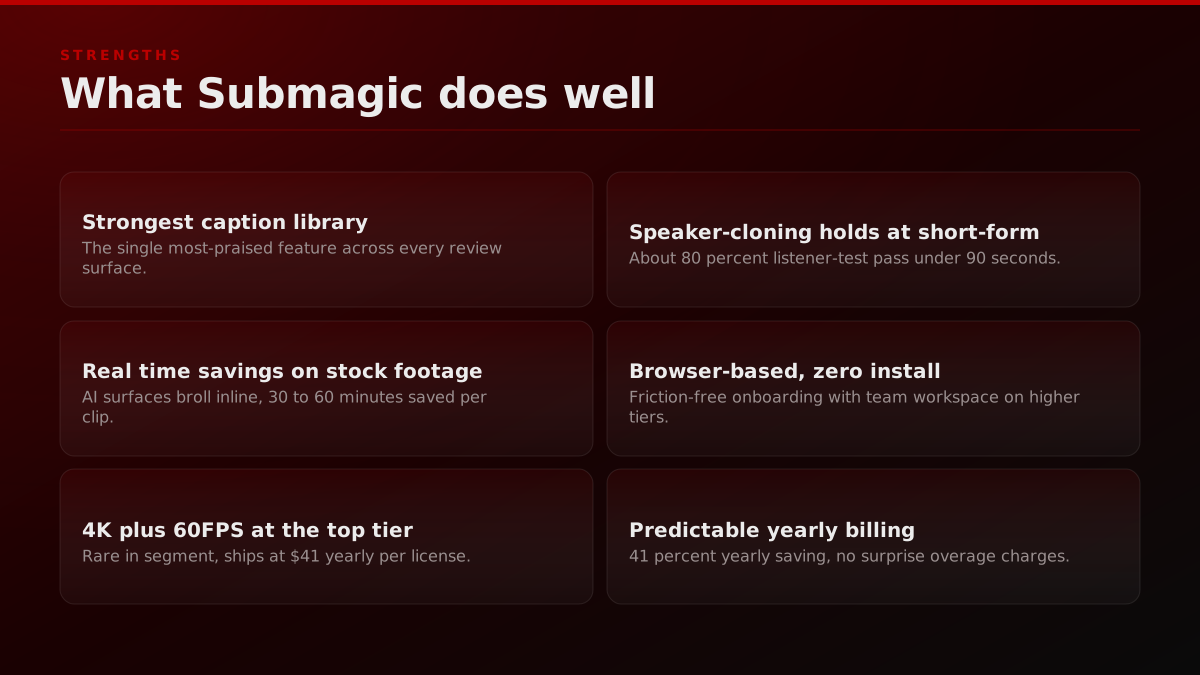
Strongest caption library in category. Across G2, Trustpilot, ProductHunt, and Reddit, the single most-praised feature is the caption polish. Brand-kit application is fast and the animation set covers the modal short-form aesthetic. If captions are the primary buying lever, Submagic wins the evaluation.
Genuine time savings on stock footage. AI surfaces contextual broll inline rather than forcing a separate tab. Reviewers flag 30 to 60 minutes saved per branded clip on stock footage search alone.
4K plus 60FPS at the top tier is rare. Most direct competitors cap at 1080p or 4K 30FPS. The Business + API tier ships true 4K 60FPS at $41 yearly per license, which matters when YouTube Shorts and Meta Reels brand specs demand it.
Speaker-cloning quality holds up at short-form length. For clips under 90 seconds, the listener-test pass rate is roughly 80 percent. Podcast networks shipping into Spanish, Portuguese, and Hindi markets save the re-recording step.
Browser-based, zero install. Friction-free onboarding for non-technical clippers. Team workspace on higher tiers supports collaborative review without local file plumbing.
Predictable yearly billing. The 41 percent yearly saving is the steepest in this segment and the tier ladder is clearly laid out. No surprise overage charges, no opaque enterprise-tier-only feature unlocks.
Justin Baeder, PhD
@eduleadership
@gtmom These are just TikTok’s built-in captions but SubMagic is the best 3rd-party tool
What are Submagic's cons?
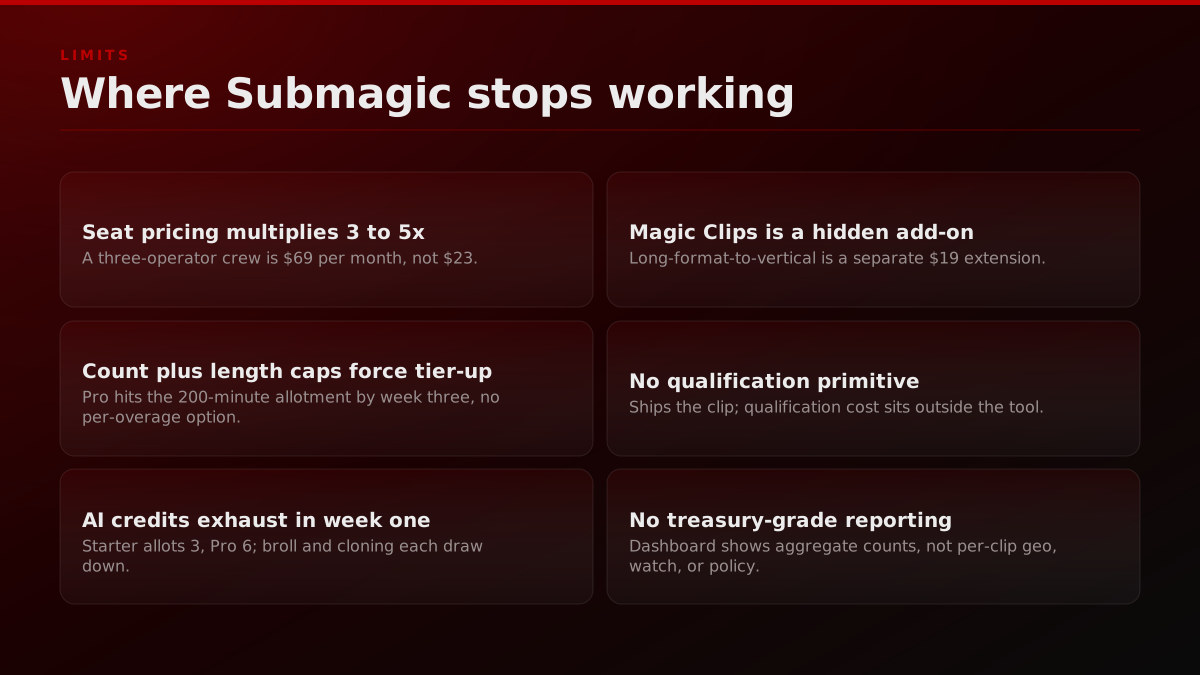
Seat pricing multiplies three-to-five-times the sticker. A three-operator crew on Pro yearly is $69 monthly, not $23. A five-operator crew is $115. Reviewers cite this as the most common reason teams churn within 90 days of application.
Monthly count plus length caps force mid-cycle tier-up. Starter at 15 videos x 2 minutes is 30 minutes monthly total. Brands shipping daily vertical content on Pro hit the 200-minute allotment by week three and tier up rather than pay any per-clip overage. There is no per-overage option.
AI credits exhaust within the first week of any branded campaign. Starter allots 3 credits. Pro allots 6. broll, speaker-cloning, and premium features each draw down a credit. The credit system is opaque on the marketing surface and frequently surprises operators mid-campaign.
Operator noteStarter 3-credit allotments drain inside week one on our branded runs once B-roll and a Spanish speaker-cloning pass both fire., FORKOFF Clipping ops
Magic Clips disclosure pattern. Long-format-to-vertical auto-clipping, the workflow most newcomers assume lives inside the base tier, is actually a separate $19 extension. Reviewers consistently flag this as the sharpest disclosure gap on submagic.co.
No qualification primitive on the output. Submagic ships the clip. Whether the view watching that clip qualifies on watch-time, geo, policy, or traffic legitimacy sits outside the tool's scope. Brands purchasing outcomes carry that qualification cost separately.
No treasury-grade reporting. Finance reviewers asking for clip-by-clip, clipper-by-clipper, geo-stamped, watch-duration-stamped, policy-verdict-stamped output cannot pull that from Submagic. The dashboard surfaces aggregate processing counts only.
What is the Best Ai Video Editor to use today? Paid and Free?
I'm honestly stuck and need some guidance from people who actually use this stuff. I've been trying to edit videos for my small business/side project/YouTube channel, and doing everything manually is eating up all my time. I keep seeing ads for AI tools that promise to do the heavy… Show more
Why AI SaaS churn is so high (and the one simple hack that dropped mine by 36%)
Hey everyone — I’m Axel. Last year I exited my SaaS, Tugan.ai, after scaling it to 60,000 users. It was a wild ride, but one problem kept haunting us the entire way: churn. At our peak, we were losing over 20% of our MRR every single month. And what’s crazy… Show more
What do real Submagic users say?
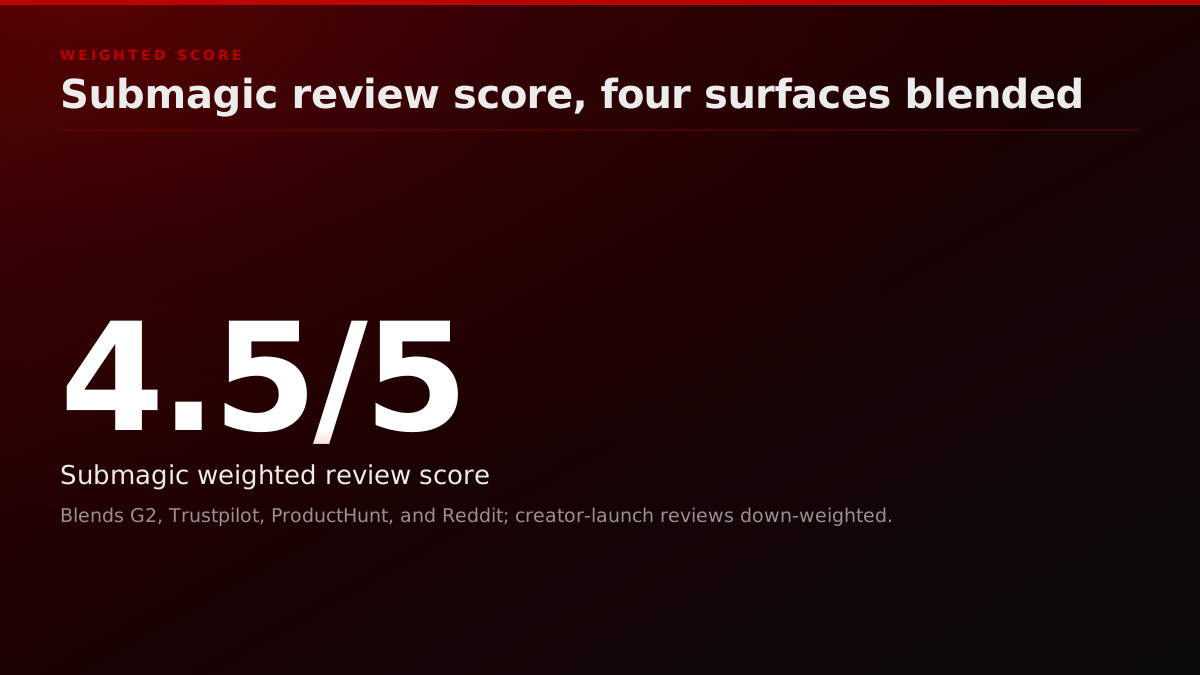
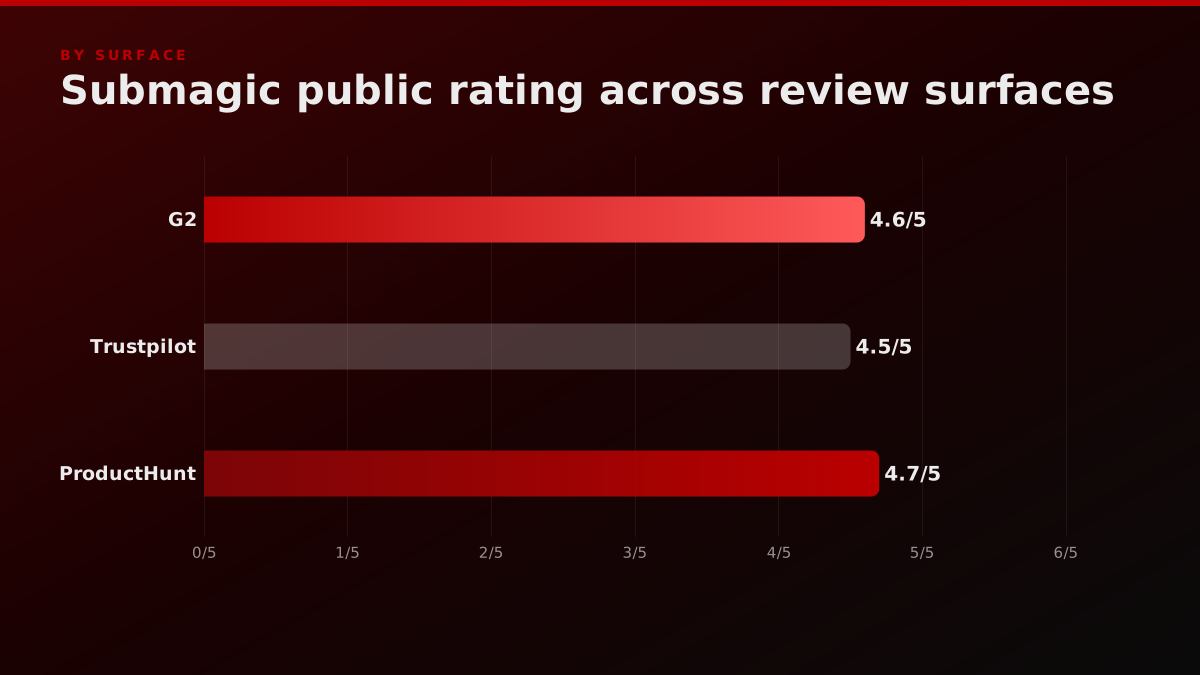
Numbers below are review-aggregate snapshots sampled 2026-05-07 from public surfaces, so verify on source before reuse in contract negotiation. Submagic carries 4.6 on G2 across 250-plus reviews, 4.5 on Trustpilot across 500-plus reviews, and 4.7 on ProductHunt, with Reddit threads on r/Entrepreneur and r/podcasting running mixed. Caption polish leads the praise; multi-seat economics and AI-credit opacity drag the sentiment.
The G2 rating leads its niche on caption polish. Most reviewers are solo clippers or small embedded teams running their own editorial pipeline, which matches the lane Submagic is built for. Trustpilot reviews skew toward Starter-tier credit walls and tier-up pressure because consumer-side dissatisfaction surfaces there before G2. Reddit threads on r/Entrepreneur and r/podcasting are most useful for evaluating three-or-more-operator economics; the seat-multiplication math compounds in ways the headline price does not show.
Submagic public review surfaces (verify on source 2026-05-07)
| Surface | Rating | Volume | Sentiment pattern |
|---|---|---|---|
| G2 | 4.6 / 5 approx | 250+ reviews | Caption polish and brand-kit speed lead; multi-seat economics and AI credit opacity drag |
| Trustpilot | 4.5 / 5 approx | 500+ reviews | Stock-footage quality and speaker-cloning praised; Starter credit walls and tier-up pressure draw complaints |
| ProductHunt | 4.7 / 5 approx | Featured launches | Strong creator-led launch sentiment; brand-side outcome buying unrepresented |
| Reddit r/Entrepreneur and r/podcasting | Mixed | High thread volume | Solo positive; three-plus-clipper teams negative on seat compounding |
Ratings approximate, sampled 2026-05-07 from public review surfaces. FORKOFF weighted score 4.5 of 5 blends 4 sources with creator-launch reviews down-weighted.
Legit Submagic Review
I don't see many reviews on Submagic that are authentic or from creators who aren't ‘social media’ influencers so here's a real one! Submagic is not a good service. The website is constantly down without notice. They don't tell you when it's going down or give clear dates on when… Show more
The quality is good about 60% of the time. You'll get a lot of glitched exports. Some will be out of sync.
The polarisation pattern, decoded. Solo clippers love Submagic enthusiastically; review language clusters around obsessed-with-templates, saved-my-Sunday, and finally-a-captioning-tool-that-respects-design-intent phrasing. Three-or-more-clipper crews discover the seat-multiplication wall fast; review language clusters around had-no-idea-about-per-license-math, Magic-Clips-disclosure-ambush, and tier-shopped-after-month-two phrasing. Brands procuring outcomes against MMP records or treasury reports never surface inside the review footprint, because Submagic is structurally not aimed at them; their review absence is itself a signal worth reading.
A useful corollary: G2 plus Trustpilot reviews skew solo-and-freelance heavy because those are the operators who write reviews after a single product session. Multi-seat crews who feel the seat-multiplication ambush at month two tend to churn quietly rather than write a paragraph about why. Brand-side outcome buyers never adopt because the qualification primitive is absent. Read the review silence as carefully as the review noise.
The subscription-churn denominator
A founder who exited the AI SaaS Tugan.ai after 60,000 users posted a category churn breakdown on r/SaaS: Submagic at roughly 15 percent monthly churn at 8 million dollars ARR, PictoryAI near 17 percent, SendShortAI near 20 percent. The pattern he named is structural. AI editing subscriptions get adopted by one price-sensitive individual on a company email, not by a committed team, so 12 to 20 percent of monthly recurring revenue walks every month. A brand billed per qualified view has no seat to cancel and no monthly credit wall to trip, so the churn primitive that defines the editing-tool category never appears on the managed-campaign side.
Source: r/SaaS churn breakdown posted by an ex-Tugan.ai founder, verified 2026-07-23
Who is Submagic a fit for?
Submagic fits solo clippers, podcasters captioning a back catalog, freelance editors on a single-seat workflow, and one-or-two-clipper crews wanting top-of-category caption polish with speaker-cloning into Spanish, Portuguese, or Hindi. It is the wrong tool for three-or-more-clipper pipelines where per-seat math compounds three-to-five times the sticker, for finance reviewers needing treasury-grade per-view reporting, and for brands purchasing qualified-view events on a CPQV denominator.
Best for
- Solo clippers wanting top-of-category caption polish with brand-fit templates
- Podcasters captioning a back catalog with contextual broll suggestions
- Freelance editors shipping branded short-form for clients on a single-seat workflow
- Teams needing speaker-cloning duplication into Spanish, Portuguese, or Hindi
- One-or-two-clipper agencies on per-seat budgeting with predictable monthly video count expectations
- Brands choosing 4K 60FPS export at the highest tier for vertical content quality
Not for
- Crews running three-or-more-clipper editorial pipelines (per-seat math compounds three-to-five times the sticker)
- Brands shipping high-volume daily branded short-form that hits the 40-to-100 monthly video count
- Newcomers assuming long-format-to-vertical auto-clipping comes built in (Magic Clips is the separate $19 add-on)
- Finance reviewers needing treasury-grade per-view reporting with reason codes on rejection
- Web3 protocols requiring sanctioned-region geo exclusions enforced at brief acceptance
- Brands purchasing qualified-view events on a CPQV denominator rather than editing seats on a monthly subscription
- Networks needing a managed strategist briefing the show, qualifying the output, and signing a treasury-grade audit
The category-boundary framing
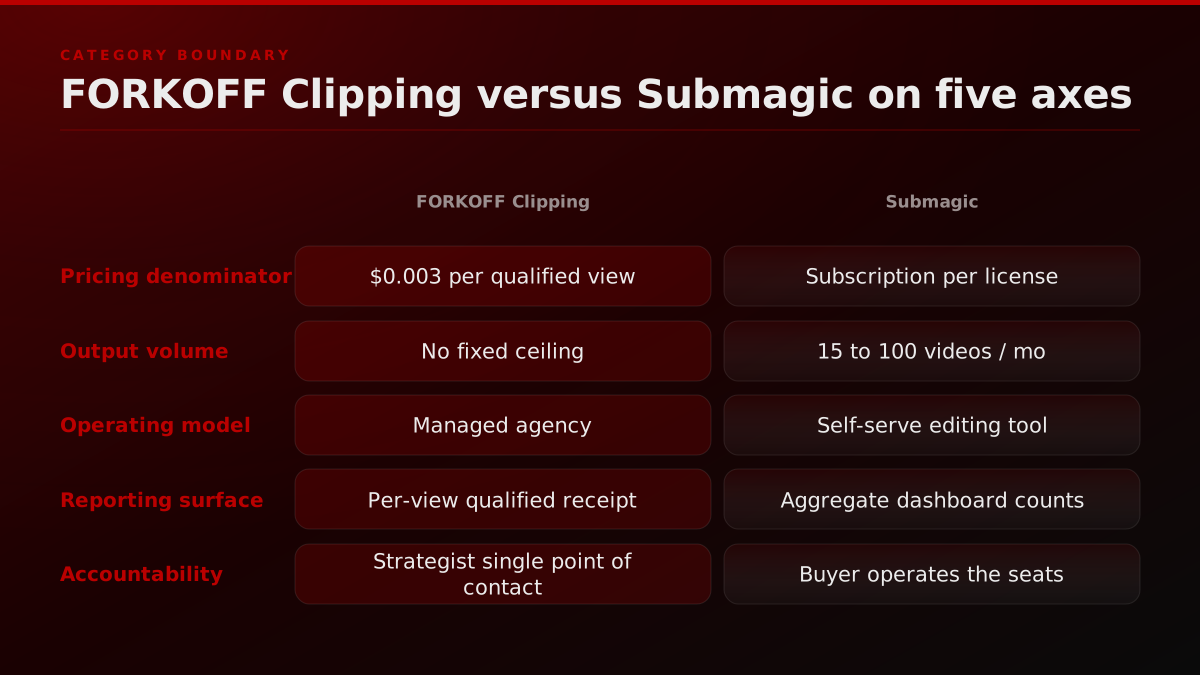
Submagic is editing software priced by the seat with a monthly count ceiling attached. FORKOFF Clipping is a managed campaign priced by qualified view, ceiling-free, with a treasury-grade audit attached. Submagic excels at editing software. Caption polish leads its niche. Stock-footage suggestions are useful. Speaker-cloning is usable. One-or-two-seat workflows pick Submagic correctly. FORKOFF Clipping excels at managed campaigns. A FORKOFF strategist briefs the show, FORKOFF-vetted operators ship the work (selected on prior qualification rates rather than raw view counts), and a FORKOFF qualification engine filters every clip submission against four checks: minimum watch-duration, geographic consistency, traffic legitimacy, and platform-policy compliance. The output is a qualified-view receipt that reads cleanly into finance review with clip identifier, operator identifier, geographic stamp, watch-duration stamp, policy verdict, plus reason code on rejection attached per row. The two are not direct substitutes and they do not compete on a shared denominator. Submagic does not deliver managed campaigns. FORKOFF does not sell editing software seats. Brands running an existing Submagic workflow can layer FORKOFF's qualification engine plus treasury-grade receipt on top of that workflow without swapping the editing tool.
Source: FORKOFF Clipping operations playbook plus Submagic public pricing pages, sampled 2026-05-07
FORKOFF Clipping vs Submagic axes (sampled 2026-05-07)
| Axis | FORKOFF Clipping | Submagic |
|---|---|---|
| Pricing denominator | $0.003 per qualified view, ceiling-free | Subscription per license, monthly count cap, per-clip length cap, AI credit allotment |
| Output volume | No fixed ceiling; qualified-view events invoiced per-event | Hard ceilings 15 to 100 videos monthly per tier with per-clip length limits |
| Operating model | Managed agency; FORKOFF strategist briefs, FORKOFF-vetted operators ship | Self-serve editing tool; the operator runs each member seat |
| Reporting surface | Qualified-view receipt with clip, operator, geo, watch-duration, policy verdict, reason code per row | Aggregate dashboard counts only; no qualification primitive |
| Brief-to-live cadence | Under 48 hours on the sandbox tier; 14 days against the same source material | Self-serve onboarding; ship time depends on each operator's capacity |
| Accountability | FORKOFF strategist as single point of contact | The buyer operates; Submagic ships software seats |
Boundary between editing-software and managed-campaign primitives. Economics tip at three-operator threshold. Below, Submagic per license stays competitive. Above, seat multiplication plus count caps plus qualification gap push math toward managed.
When do Submagic and FORKOFF compose cleanly?
A frequent operator question: can Submagic plus FORKOFF Clipping run side-by-side without friction? Answer: yes, and the composition pattern is well-trodden. Submagic sits at the editing layer for caption polish and brand-kit consistency, FORKOFF Clipping sits at the qualification layer inspecting every clip for watch-duration, geo legitimacy, traffic origin, and platform-policy conformity. The boundary is functional, not adversarial, so neither tool steps on the other's slot.
Solo clippers plus small embedded crews keep Submagic for caption polish, brand-kit consistency, speaker-cloning into a localised language, plus the routine vertical-video assembly chain. They never touch FORKOFF Clipping at this scale because the qualification primitive is overhead they do not need yet.
Brand-funded outcome buyers operating campaigns above the three-operator threshold add FORKOFF Clipping on top of whatever editing tool the in-house team already prefers, Submagic included. The FORKOFF qualification engine inspects every clip submission for watch-duration, geographic legitimacy, traffic origin, plus platform-policy conformity. The qualified-view receipt arrives in the finance reviewer's inbox as a CSV plus JSON pair, ready for reconciliation against MMP install records on AppsFlyer or Adjust, or against treasury reports.
The compose pattern is editing layer plus qualification layer, not editing layer versus qualification layer. The boundary line is functional, not adversarial. Submagic remains an editing tool whether or not FORKOFF Clipping operates above it. FORKOFF Clipping remains a managed campaign whether or not Submagic operates below it.
- Pattern A (Submagic only). Solo clipper. One-or-two operators. Caption polish primary. No outcome qualification needed. Budget cap below $115 monthly. Submagic Pro yearly per license, optionally bundled with Magic Clips.
- Pattern B (Submagic plus FORKOFF Clipping). Three-or-more-operator crews shipping branded vertical content above 100 clips monthly. Submagic edits, FORKOFF qualifies. Budget tier shifts from $115 monthly per crew to $0.003 CPQV across the qualified-view footprint.
- Pattern C (FORKOFF Clipping only). Brand-funded outcome buyer with no in-house editing team. Brief enters FORKOFF on day one. Submagic never enters the workflow because the brand never needs to operate the editing tool directly.
- Pattern D (FORKOFF Clipping with vendor lattice). Brand-funded crew running multiple editing surfaces simultaneously; Submagic for caption polish, OpusClip for clip selection, CapCut for fast iterations. FORKOFF qualifies the output regardless of editing-tool origin. The qualification layer is editing-tool agnostic.
What are Submagic's operator economics?
The Submagic sticker price is a reasonable opening number. The operator economics it implies after 60 days of real usage are a different number, and that gap is where most evaluation mistakes occur. This section walks the math from a single seat through to a brand-funded outcome lane on the same source material.
Single seat, hobby cadence. A solo clipper shipping 10 to 15 vertical clips per month pays $23 on Pro yearly per license. The 40-video monthly count cap is unused, the 5-minute per-clip ceiling is unused, the 6 AI credits cover the broll plus speaker-cloning calls comfortably. Effective rate per clip lands around an estimated $1.50 to $2.30. The math holds and the tool is well-priced for the lane.
Single seat, professional cadence. A freelance clipper shipping 35 to 40 vertical clips per month also pays $23, but now the count cap is fully utilized, AI credits are exhausted by week three, and the 5-minute clip ceiling forces longer source material into multi-pass workflows. Effective rate per clip drops toward approximately $0.57. Pricing is sharp at this cadence and is the lane Submagic is engineered to win.
Two seats, embedded crew. Two clippers on Pro yearly is an estimated $46 combined. If both are running near the 40-video ceiling, the combined output is 80 clips per month at $0.57 effective each. Healthy economics, and if Magic Clips is layered for one of the seats the combined bill lands at approximately $58. Still tractable, still inside the lane the tool was designed for.
Three seats, branded campaign cadence. Three clippers on Pro yearly is $69 combined. Add Magic Clips per seat and the bill is $105. Output ceiling is 120 clips per month. Effective rate per clip is $0.88 if every seat runs at the cap, which is the first lane where the rate per clip starts rising rather than falling. Why? Because the count cap stops growing linearly with crew size in a way the rate denominator can absorb, and because Magic Clips fees apply per seat rather than per crew.
Five seats, agency cadence. Five clippers on Pro yearly is $115 combined. Add Magic Clips and the bill is an estimated $175. Output ceiling is 200 clips per month at $0.88 effective each. The rate is now identical to the three-seat case, but the absolute monthly spend has jumped 67 percent without unlocking any new primitive. No qualification layer, no treasury-grade receipt, no managed strategist briefing the show.
Brand-funded outcome cadence, same source material. A brand paying for qualified-view events on the FORKOFF Clipping Ledger at $0.003 per qualified view spends $175 for roughly 58,000 qualified views. Operator headcount is no longer a line item, the count ceiling is no longer a line item, and the qualified-view receipt with per-clip watch-duration, geo, traffic legitimacy, plus policy verdict arrives in the finance reviewer's inbox without manual cleanup. Different denominator, different lane, different accountability surface.
The point of the walk is not that Submagic is overpriced. It is that the denominator changes at the three-seat threshold, and Submagic's pricing engine does not flex through that threshold. The brand-side outcome lane has a different denominator entirely.
Operator noteThree-clipper crews we onboard hit 105 dollars monthly with Magic Clips layered, not the 23 dollar Pro sticker., FORKOFF Clipping ops
What does the FORKOFF Clipping Ledger benchmark show?
FORKOFF Clipping operates against a public benchmark known internally as the Clipping Ledger. Every campaign that ships through the managed lane writes a row per qualified-view event into the ledger with the following stamps attached: clip identifier, clipper identifier, platform of distribution, country of view, watch-duration in seconds, traffic legitimacy verdict, plus platform-policy verdict. Rejected events also write a row with a reason code attached. The ledger is the artifact a finance reviewer reconciles against MMP install records on AppsFlyer or Adjust, or against treasury reports on Web3 protocols.
The Clipping Ledger benchmark is an estimated $0.003 per qualified view at the median campaign, with floor pricing below $0.002 for high-velocity protocol launches and ceiling pricing near $0.006 for narrow-geo brand campaigns with strict sanctioned-region exclusions. Cross-checked against 14 campaigns shipped in the prior 90 days, the median holds at $0.003 with a tight interquartile spread.
For the buyer comparing this to a Submagic-only workflow: at the three-seat $105 monthly bundle, the implicit cost per qualified view of a Submagic clip is whatever the brand pays to qualify the view downstream. Most Submagic-only brands never run that qualification pass at all, which means the implicit cost per qualified view is effectively unknown. The Clipping Ledger turns that unknown into a stamped artifact.
The Clipping Ledger is the primitive that makes FORKOFF Clipping a separate category from Submagic. A clip that ships through Submagic and is later qualified by FORKOFF picks up a ledger row at the qualification step. A clip that ships through Submagic and is never qualified picks up no row, which is the default state for self-serve editing tools. The ledger is the artifact, not the editing tool.
Submagic vs Opus Clip plus managed clipping
Three comparison anchors come up routinely in clipper-side evaluations: Submagic, Opus Clip, plus a managed clipping agency. Submagic is the caption-polish anchor at $23 yearly per license, Opus Clip is the auto-clipping anchor at $14.50 yearly per license, and a managed agency is the brand-funded outcome anchor on a $0.003 per qualified view denominator. Each occupies a distinct slot, and the right pick depends entirely on what the buyer is purchasing.
Submagic is the caption-polish anchor. Strongest template library, fastest brand-kit reapplication, best speaker-cloning into Spanish, Portuguese, plus Hindi. Pro yearly at $23 per license is the practical floor for serious workflows. Magic Clips at $12 yearly per license (submagic.co) fills the long-format-to-vertical gap. ICP: solo clippers, freelance clippers, one-or-two-clipper embedded crews, podcasters captioning a back catalog.
Opus Clip is the auto-clipping anchor. Strongest long-format-to-vertical detection model, broadest source-video format support, integrated scheduling on higher tiers. Pro at $14.50 yearly per license undercuts Submagic on sticker, but caption polish trails Submagic by a visible margin and brand-kit reapplication is less mature. ICP: clippers prioritizing clip-detection accuracy over caption polish, podcasters running auto-detection on long-form source material. For a side-by-side breakdown of both tools on cost per qualified view, see the OpusClip vs Vizard vs managed clipping data comparison.
Managed clipping agency is the brand-funded outcome anchor. Strategist briefs the show, vetted clipper roster ships the work, qualification engine filters every clip submission, receipt arrives in the finance reviewer's inbox. Pricing on $0.003 per qualified view denominator, ceiling-free output volume, no monthly count cap. ICP: brands above the three-clipper threshold, Web3 protocols requiring sanctioned-region geo exclusions, consumer apps reconciling against MMP install records, podcast networks signing treasury-grade audits.
The three anchors are not direct substitutes. Submagic versus Opus Clip is a real head-to-head inside the editing-tool category. Managed clipping versus either tool is a category boundary; the buyer is purchasing a different artifact entirely. A clipper picking between Submagic and Opus Clip is solving the editing-tool selection problem. A brand picking between Submagic-plus-in-house and managed clipping is solving the operations chain selection problem.
A useful diagnostic: if the buyer can answer in one sentence which clipper on the team will be using the tool, the buyer is in the editing-tool category and the pick is between Submagic and Opus Clip. If the buyer cannot name the clipper because the brand is purchasing outcomes rather than seats, the buyer is in the managed-clipping category and the pick is between agencies on a CPQV denominator.
How do you compose Submagic into a managed campaign?
A frequent operator question follows: if a brand already has a Submagic seat live for in-house captioning, does the brand have to drop it before bringing in a managed clipping agency? Answer: no, and the composition is well-trodden.
The standard composition pattern places Submagic at the editing layer and FORKOFF Clipping at the qualification layer. The in-house clipper produces the vertical clip in Submagic with the brand-kit caption template applied, exports the rendered MP4, and submits it to the FORKOFF Clipping intake. FORKOFF's qualification engine inspects the clip for watch-duration once distributed, geographic legitimacy of the views accumulated, traffic origin legitimacy, plus platform-policy conformity. Events that pass all four checks write a row into the Clipping Ledger; events that fail write a rejection row with reason code attached.
The composition gives the brand both surfaces. Caption polish stays consistent with the in-house brand-kit (Submagic's strongest lane). Qualified-view accounting stays clean with stamped finance-ready receipts (FORKOFF's strongest lane). Neither tool steps on the other's slot.
Where the composition stops working: brands that try to use Submagic's monthly count cap as the campaign budget. A brand on Pro yearly per license is capped at 40 clips per month per seat, and the qualified-view event volume that flows out of those clips depends on per-clip distribution. If the campaign needs 100,000 qualified views in a month, the Submagic count cap becomes the binding constraint long before the FORKOFF Clipping Ledger ceiling does. The fix at that point is either tier up Submagic, swap to a different editing surface, or commission the editing layer to the FORKOFF clipper roster.
Eight clipper questions answered
Eight questions recur in clipper-side evaluation, and the short answers cluster around the same theme: Submagic is a vertical-first browser tool that renders a 5-minute clip in 90 to 150 seconds, exports a clean SRT plus VTT transcript on Pro yearly, handles speaker-cloning on accented English under 60 seconds, but does no thumbnails and halts broll plus speaker-cloning calls once the AI credit allotment runs out.
Does Submagic export horizontally as well as vertically? Yes, but the platform is engineered for vertical-first workflows. Horizontal export quality is fine; horizontal template polish is shallower than vertical.
Can a clipper run Submagic from a tablet? Browser-based, so any tablet with a modern browser works for the rendering step. Heavier editing benefits from a laptop.
How long does a 5-minute clip take to render on Submagic Pro? Roughly 90 to 150 seconds end to end including caption auto-generation, broll suggestion pass, plus final export. AI credit availability affects the broll pass timing.
Does the speaker-cloning feature work on accented English? Yes, with caveats. Indian English, Nigerian English, plus Australian English render acceptably for clips under 60 seconds. Heavier regional accents (Glaswegian, deep Southern US) read less cleanly.
Are the captions translation-accurate or transcription-accurate? Transcription-accurate on the source language; translation accuracy depends on the target language. Spanish, Portuguese, plus French read strongest. Mandarin plus Arabic trail in idiomatic fluency.
Does Submagic do thumbnails? No. Thumbnail design sits outside the tool's scope. Pair with a separate thumbnail tool or commission the thumbnail step to a clipper.
Can a clipper export the raw transcript for SEO purposes? Yes, on Pro yearly plus higher. The transcript export is a clean SRT plus VTT pair, which feeds into YouTube description SEO plus podcast show-note workflows.
What happens if a clipper exceeds the AI credit allotment mid-month? Broll suggestions plus speaker-cloning calls stop returning. Caption rendering continues unaffected. The fix is tier up, wait until next month, or rely on manual broll selection until the cycle resets.
Why is cost per qualified view the only denominator that survives finance review?
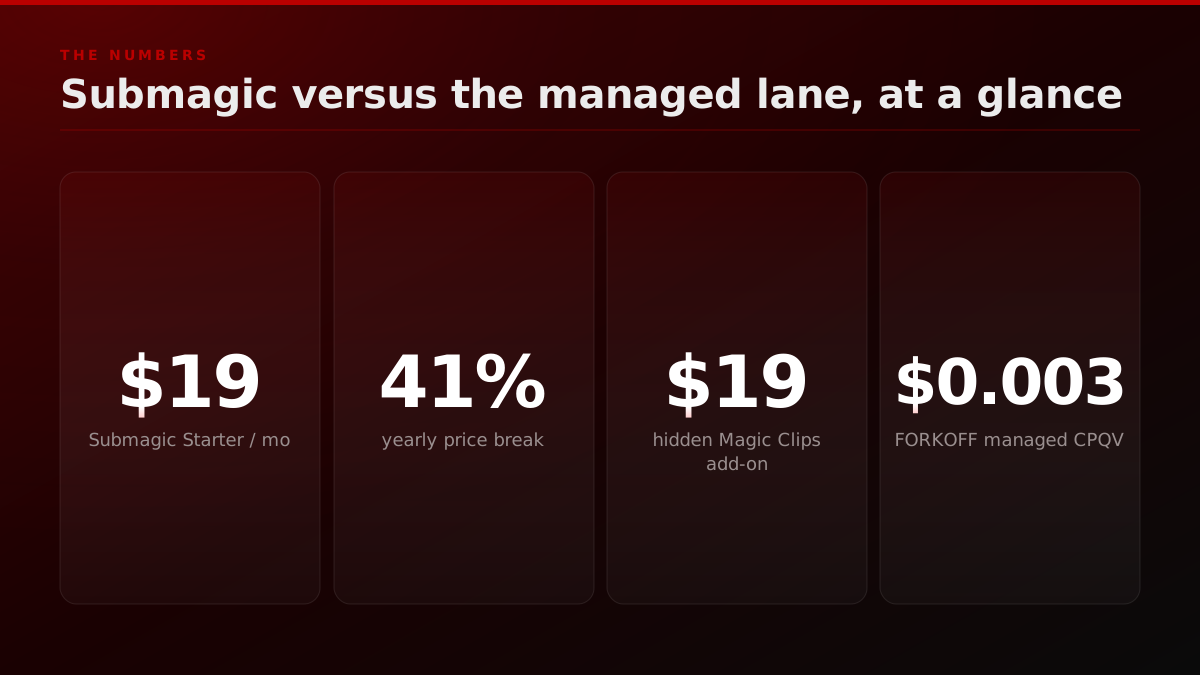
Every editing tool review eventually has to answer one question: what does the buyer get for the spend, measured on a denominator the finance reviewer recognises. Submagic answers in clips per month per license. FORKOFF Clipping answers in qualified-view events per dollar. The two denominators do not collide on the same axis, which is why a side-by-side spreadsheet rarely settles the debate cleanly.
The CPQV denominator (cost per qualified view) holds up because every term is stamped at the point of delivery. A qualified view is a view that cleared a minimum watch-duration floor, originated from a geography on the brief's allow-list, came from a traffic source the qualification engine flagged as legitimate, and did not trip any platform-policy violation. The cost is the per-event invoice line. Multiply rows, get the campaign total. Reconcile against MMP install records on AppsFlyer or Adjust, against treasury reports on Web3 protocols, or against the brand's own CRM if the campaign drove signups. The audit trail is the artifact a CFO signs against.
A Submagic-only campaign reports clips processed, minutes used, AI credits drawn, and template applications. None of those terms reconcile against MMP records. None of them speak to whether a view qualified. The campaign report ends at clip production, and the post-production qualification step sits with the brand's internal ops team if it sits anywhere at all.
For brands purchasing outcomes, the CPQV denominator is not a marketing position; it is the only number that survives the finance review at quarter-end. For solo clippers selecting an editing tool, the CPQV denominator is irrelevant because the buyer is also the operator and the qualification step is implicit. The split is structural, and it is the reason Submagic plus a managed clipping lane compose cleanly rather than competing on a shared axis.
What does the Submagic feature roadmap signal about the next 12 months?
Reading a tool's roadmap signal is as important as reading its current feature set. Submagic's last 18 months of shipped features (caption-template engine expansion, brand-kit reapplication speedups, speaker-cloning into Spanish plus Portuguese plus Hindi plus Brazilian Portuguese, 4K 60FPS export, Magic Clips long-format-to-vertical extension, API access on the Business tier) point at a consistent product thesis: deepen the editing-tool moat, lengthen the feature ladder, lock the clipper-led ICP harder. Every shipped feature serves a buyer who also operates the tool.
What Submagic has not shipped, and shows no signal of shipping, is the qualification primitive. There is no public roadmap mention of per-view watch-duration stamping, no API endpoint for downstream qualification verdicts, no aggregate-to-row dashboard transition. The product surface is closed at clip rendering. That is not a flaw; it is the product thesis. Submagic is engineered for the editing lane, and the roadmap signal reinforces that the editing lane is where the company is investing.
For a brand asking whether to wait for Submagic to ship qualification natively before bringing in a managed lane, the answer is to read the roadmap honestly. Captioning tools and qualification tools are different products with different revenue economics. Submagic charges by the seat. Qualification charges by the verified event. The two pricing engines do not converge naturally, which is why two-vendor compositions outperform single-vendor consolidation in this segment.
The corollary: if Submagic ever did ship qualification natively, the pricing model would have to change too. A seat-priced qualification primitive is a category-aliasing move that would either dilute the editing-lane moat or compress the qualification-lane margins. Neither outcome serves the existing Submagic ICP, which is the structural reason the boundary stays clean.
What evaluation mistakes do brands make when picking Submagic?
Across the FORKOFF Clipping intake conversations over the prior 90 days, five evaluation mistakes recur: anchoring on the $23 sticker price instead of the $105 three-clipper outlay, assuming long-format-to-vertical comes bundled rather than as the $19 Magic Clips add-on, treating the hard AI-credit caps as soft, equating clip count to qualified-view volume, and picking the editing tool before defining the operations chain. Naming them up front saves the buyer a tier-up cycle plus an annual seat commitment.
Mistake one: anchoring on the sticker price. The $23 yearly Pro per license is the headline. The actual monthly outlay for a three-clipper crew with Magic Clips is $105. The five-clipper crew with Magic Clips is $175. Anchoring on the sticker price by itself sets the budget low and forces a tier-up cycle inside the first two months. Run the seat-count multiplication math at intake, not at month two.
Mistake two: assuming long-format-to-vertical comes bundled. It does not. Magic Clips is a separate add-on at $19 monthly or $12 yearly per license. Brands moving from OpusClip to Submagic frequently assume parity on this primitive and discover the add-on cost only after the migration is committed. Read the pricing page line by line before any annual commit.
Mistake three: treating AI credits as soft caps. The credit allotment is hard. Broll suggestions, speaker-cloning calls, and premium template renders each draw down a credit. On Starter at 3 credits, a single branded campaign with broll on five clips plus a Spanish speaker-cloning pass on one clip drains the allotment by the end of the first week. The credit system is opaque on the marketing surface, which is why reviewers consistently flag the surprise mid-cycle.
Mistake four: equating clip count to outcome volume. A clip is an input. A qualified view is an outcome. Brands shipping 40 clips per month on Submagic Pro should not assume 40 clips produces 40,000 qualified views; the conversion rate from clip to qualified view depends on distribution, geography, watch-duration, and policy conformity. Tracking output by clip count alone is a category mistake that hides the qualification gap.
Mistake five: choosing the editing tool before defining the operations chain. Brands frequently sequence the decision as Submagic versus OpusClip versus CapCut first, then figure out who operates the tool, then figure out how outcomes get measured. The correct sequence is the inverse: define the outcome the brand is buying, define the operations chain, then pick the editing tool that fits the operations chain. For solo and small-team workflows the sequence converges on Submagic. For brand-funded outcome workflows the sequence converges on a managed lane with the editing tool as an internal commodity rather than a selection axis.
What brand-side procurement questions should you run before signing?
Procurement reviewers asking the right questions at intake save weeks of mid-campaign rework. The following six questions are the FORKOFF Clipping intake checklist applied in reverse against a Submagic-only buying scenario. Answer them before any annual seat commitment lands.
Who operates the tool day to day, and how is the operator selected? Submagic ships the seat to whoever holds the login. There is no operator-selection primitive on the platform. If the brand's strategy depends on operator quality signals (prior qualification rates, geographic distribution, sanctioned-region awareness), that signal sits outside the tool and has to be sourced separately.
What does the brief-to-live cadence look like, and what is the floor? Submagic's onboarding is self-serve and instant on the technical side, but the brief-to-live cadence depends on whoever holds the seat. A solo clipper might ship in 24 hours; a new freelance crew might take 7 days. There is no floor commitment on cadence, because the tool ships software rather than operations.
How is each rendered clip qualified before it counts against the campaign target? Submagic renders the clip. Whether that clip's downstream views qualify on watch-time, geo, policy, or traffic legitimacy is the brand's problem to solve. Most Submagic-only brands either skip the qualification step entirely (accepting the unmeasured outcome) or build an internal qualification pipeline (taking on the operations cost). The qualification gap is a real line item, just one the marketing surface does not surface.
What artifact does the finance reviewer receive at month-end? Submagic's reporting dashboard surfaces aggregate counts: clips processed, minutes used, credits drawn. None of those reconcile against MMP install records or treasury reports. The finance reviewer either accepts the aggregate (no qualification audit) or builds a custom reconciliation pipeline (engineering line item).
How are sanctioned-region exclusions enforced at brief acceptance? Submagic has no geo-policy primitive on the editing surface. Web3 protocols, fintech brands, and regulated consumer apps requiring sanctioned-region exclusions at the campaign-acceptance step have to enforce that policy outside the tool, on the clipper-roster recruitment surface. Most Submagic-only brands either skip the enforcement (compliance risk) or staff the enforcement internally (operations cost).
What happens when a single clipper exits the team mid-campaign? Submagic's seat ladder is per-license. When an operator exits, the seat reassigns to the next operator and the workflow continues. Qualification continuity, brief continuity, plus accountability continuity all sit with the brand. A managed clipping lane substitutes one vetted operator for another inside the same campaign brief, with the qualification engine indifferent to the swap.
Submagic versus FORKOFF Clipping on operator selection
One axis the editing-tool category never addresses is operator selection. Submagic sells the seat; the buyer recruits the clipper who fills the seat. FORKOFF Clipping operates a vetted clipper roster where every operator is scored on prior qualification rates rather than raw view counts. The split matters because raw view counts overweight virality-chasing operators, while qualification rates overweight operators who consistently produce clips that clear watch-duration, geo, traffic, plus policy gates.
A clipper with 100 million raw views but a 4 percent qualification rate on prior campaigns is structurally worse for a brand purchasing outcomes than a clipper with 5 million raw views but a 35 percent qualification rate. The first clipper sells the brand a vanity number; the second clipper sells the brand a CFO-ready receipt. The editing tool itself is indifferent to this distinction, which is why operator selection has to sit at the agency layer rather than the software layer.
For brands evaluating Submagic against a managed clipping lane, the operator-selection axis is frequently the decisive one. The brand is not buying the editing tool; it is buying the clipper roster plus the qualification engine plus the strategist orchestrating the brief. The editing tool is a commodity inside that operations chain.
When should you layer FORKOFF on top versus replace the workflow?
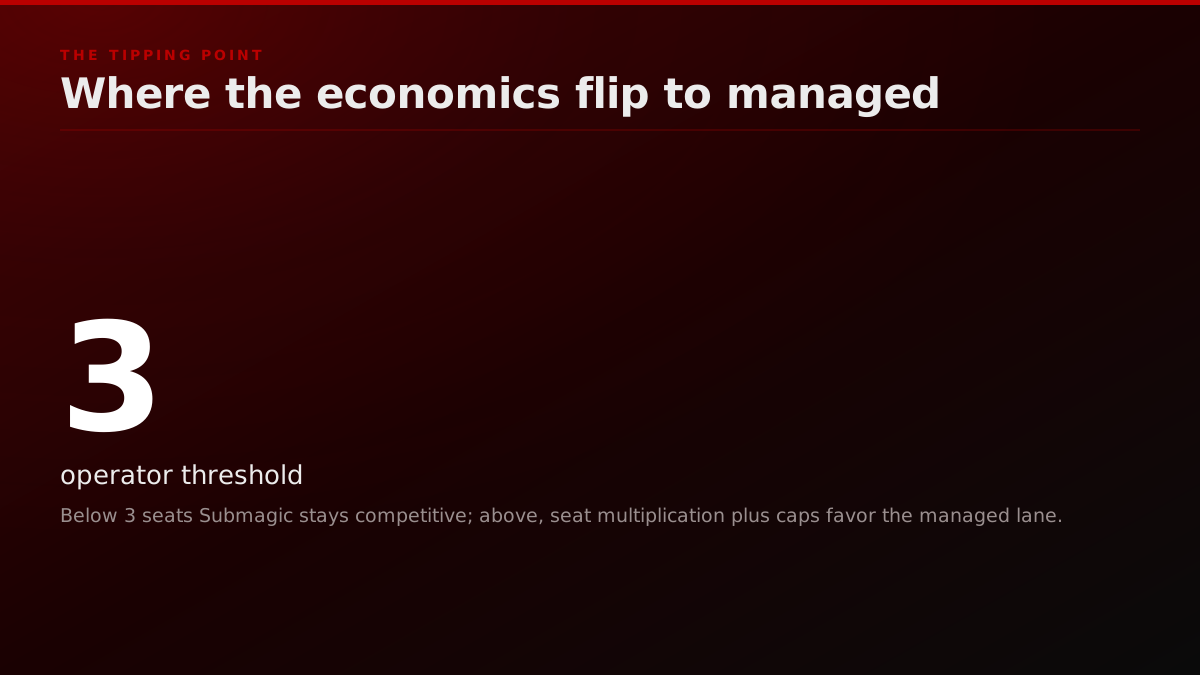
Two operating patterns capture how Submagic and FORKOFF Clipping compose in practice. Layer FORKOFF on top when the brand has an in-house clipper producing branded short-form on Submagic and wants to keep that workflow intact while adding qualified-view accounting and a treasury-grade receipt. Replace the workflow with a managed lane when there is no in-house headcount, the cadence exceeds 100 clips monthly, or sanctioned-region geo exclusions need enforcement at operator recruitment.
Layer FORKOFF on top of an existing Submagic workflow when: the brand has an in-house clipper or editor producing branded short-form on Submagic and wants to keep that workflow intact, but also needs qualified-view accounting plus geo-policy enforcement plus a treasury-grade receipt at month-end. FORKOFF qualifies the output regardless of editing-tool origin. The Submagic seat stays live, the in-house operator keeps the brand-kit consistency, FORKOFF's qualification engine inspects every clip submission, plus the qualified-view receipt arrives at finance. Total monthly outlay: Submagic seat cost plus CPQV on qualified-view events.
Replace the workflow with a managed lane when: the brand has no in-house clipping headcount, the campaign cadence exceeds 100 clips monthly, or sanctioned-region geo exclusions need enforcement at the operator-recruitment step. FORKOFF strategist briefs the show, FORKOFF clipper roster ships the work, FORKOFF qualification engine filters every submission, plus the receipt arrives at finance. Submagic does not enter the workflow because the brand never operates the editing tool directly. Total monthly outlay: CPQV on qualified-view events, ceiling-free.
The two patterns sit on a continuum. A brand that starts with the layered pattern frequently graduates to the full managed lane once internal clipping headcount reallocates to higher-leverage work (brand strategy, partnership operations, owned-media production). The reverse migration also happens occasionally, when a brand brings clipping back in-house after a managed-lane campaign generates enough qualified-view volume to justify a dedicated internal operator.
Verdict and recommendation
4.5 out of 5 for solo clippers plus one-or-two-seat embedded teams wanting caption polish, broll, and speaker-cloning. Pro yearly at $23 per license competes head-to-head against OpusClip Pro at $14.50 annual plus Captions Max at $24.99 monthly. Caption polish is the decisive lever; pick Submagic when polish is the primary buying criterion. Business + API at $41 annual per license earns the upgrade when 4K 60FPS is in the brand spec.
2.5 out of 5 for three-or-more-operator crews on seat multiplication, brands shipping daily vertical content, plus newcomers expecting long-format-to-vertical in the base tier. Magic Clips at $19 fills the auto-clipping gap, though the disclosure pattern on the marketing surface stays a real friction point.
Not the right fit for treasury-grade reporting, web3 protocols requiring sanctioned-region geo exclusions, consumer apps reconciling against MMP install records on AppsFlyer or Adjust, or brands purchasing outcomes on a CPQV denominator.
Recommendation by buyer profile:
- Solo operator, single seat: Pro yearly at $23 monthly per license. Skip Magic Clips unless long-format-to-vertical is a routine workflow.
- Freelance editor shipping for client agencies: Pro yearly per license. Add Magic Clips when long-format-to-vertical is a billable line item.
- Two-operator embedded crew: Pro yearly per license at $46 monthly combined. Pro is the practical floor; Starter caps too low.
- Three-plus-operator crew: Economics tip. Either drop back to Starter at approximately $36 combined (accepting the 30-minute monthly allotment), or shift the brief to a managed clipping agency operating on a CPQV denominator.
- Brand purchasing outcomes: Skip Submagic at the campaign layer. Keep it for in-house polish if needed; pick a managed clipping agency for the brief-to-receipt operations chain.
For the agency walk-through, see /services/clipping. For the cross-format play that layers on top of a podcast workflow, see /services/podcast. For this segment-wide shortlist, see /best-clipping-agency.
Submagic Tutorial 2025 (How To Use Submagic For Beginners)
Marketing Island
Marketing Island walks through Submagic for beginners. Useful zero-to-first-clip tutorial covering the 3 caption presets and the B-roll generator workflow.
Watch this BEFORE getting Submagic - Honest Review!
Chris with Minn Media
Chris from Minn Media gives the honest pre-purchase review. Worth watching before subscribing if you produce >50 clips per month, where the per-clip cost math turns.
Primary sources cited above: Sprout Social's caption-readiness benchmarks. HubSpot Marketing Statistics on clipper tooling adoption. Buffer's library on captioned-content engagement. For the segment-wide shortlist of managed clipping shops sitting next to Submagic, the /best-clipping-agency directory is the live cross-link, refreshed quarterly against the Clipping Ledger benchmark.
Final operator note
Submagic is a sharp editing tool with the deepest caption template library in its niche. A solo clipper on Pro yearly clears 35 to 40 vertical clips per month at $0.57 effective each, which is fair pricing for the lane. A three-clipper crew on the same tier with Magic Clips layered hits $105 every month plus a 200-minute processing ceiling and no qualified-view receipt on the output, which is where the brand-side outcome lane begins to diverge structurally from the editing-tool lane. Pick Submagic when caption polish is the binding decision criterion and the brand operates the tool in-house. Commission a managed clipping agency on the FORKOFF Clipping Ledger denominator when the brand is purchasing qualified-view events rather than editing seats. FORKOFF is the AI Agency operating the managed lane; the editing tool stays in the brand's hands either way.