What Is Clipping? The Creator Clip Economy, Explained (2026)
Clipping is the practice of cutting one piece of long-form content (a podcast, stream, interview, or talk) into many short, platform-native clips and distributing them across TikTok, Reels, Shorts, and X to buy reach you would never get from the long-form alone. A clipper is the editor who makes the cuts; the clip economy is the marketplace of creators, clippers, and brands that pays for that distribution, usually per view. It went mainstream because distribution, not production, became the scarce input in 2026, and one recording can become hundreds of clips in hundreds of feeds at once.
What is clipping?
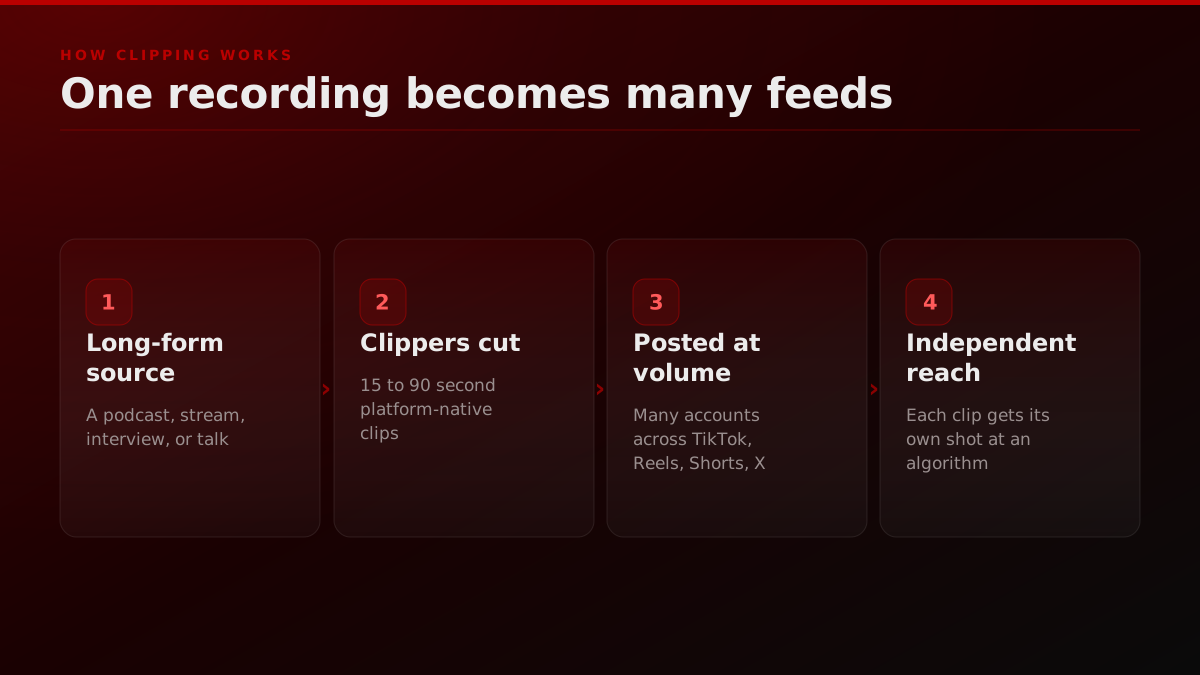
Clipping is the practice of taking one piece of long-form content and cutting it into many short, platform-native clips that get distributed across short-form feeds. The long-form source is usually a podcast, a livestream, an interview, a keynote, or a founder's talking-head video. The output is a stream of fifteen-to-ninety-second clips posted to TikTok, Instagram Reels, YouTube Shorts, and X, often across many accounts at once. The person who does the cutting is a clipper, and the whole marketplace of creators, clippers, and brands paying for this is the clip economy.
The defining idea is that clipping is a distribution strategy, not an editing trick. The editing, cutting a good moment out of a long recording, is the easy and commoditized part. The value is in the multiplication and the distribution: one recording becomes a hundred clips, and those clips get posted across a network of accounts so that each one gets its own independent shot at an algorithm. That is reach you would never get by posting the long-form once on your own channel. If you only take one idea from this guide, take that one, because it explains everything else about why the model exists.
Operator noteClipping is a distribution strategy, not an editing trick. Reach comes from posting cadence across many accounts, the part most people skip.
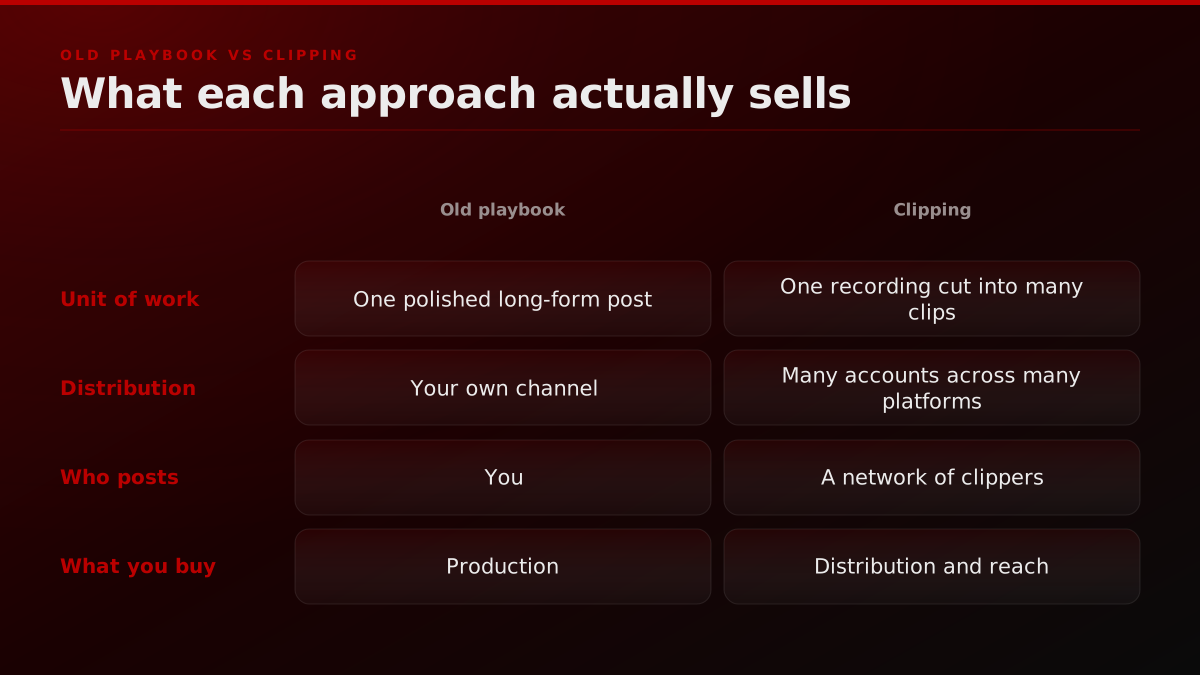
Clipping vs the old content playbook
| Dimension | Old playbook | Clipping |
|---|---|---|
| Unit of work | one polished long-form post | one recording cut into many clips |
| Distribution | your own channel | many accounts across many platforms |
| Who posts | you | a network of clippers |
| What you buy | production | distribution and reach |
What are the key terms in the clip economy?
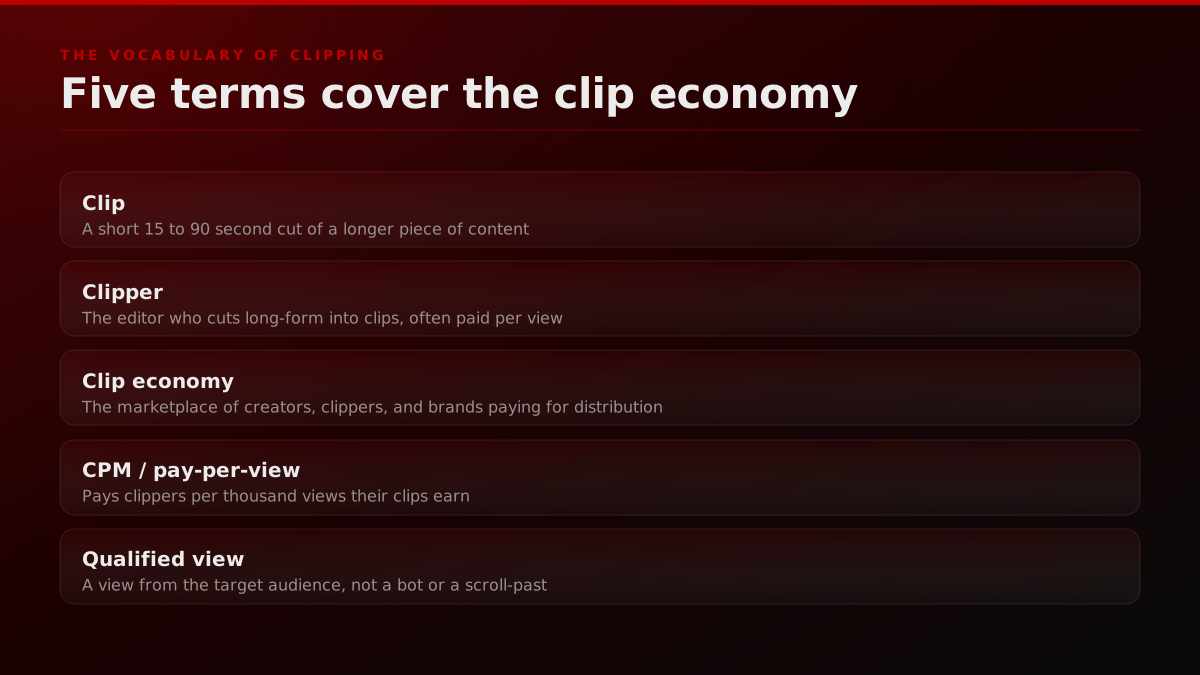
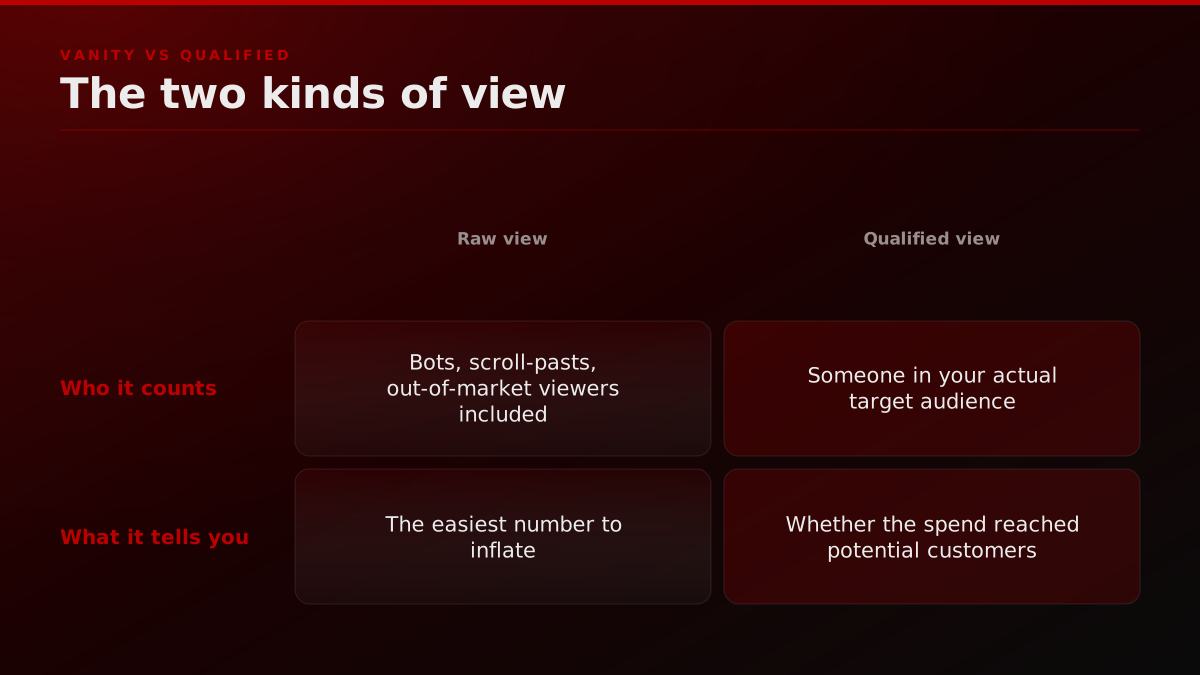
A handful of terms cover most of the clip economy, and once you know them the rest of the model reads clearly. A clip is a short cut of a longer piece of content. A clipper is the editor who makes the cuts, usually paid per view. The clip economy is the marketplace where creators and brands pay clippers to distribute clips. CPM or pay-per-view is the pricing model that pays per thousand views. And a qualified view, the most important term for anyone spending money on clipping, is a view from someone in the actual target audience rather than a bot or an accidental scroll-past.
The vocabulary of clipping
| Term | What it means | ||
|---|---|---|---|
| Clip | a short 15 to 90 second cut of a longer piece of content | ||
| Clipper | the editor who cuts long-form into clips | often paid per view | |
| Clip economy | the marketplace of creators | clippers | and brands paying for clip distribution |
| CPM / pay-per-view | the model that pays clippers per thousand views their clips earn | ||
| Qualified view | a view from someone in the target audience | not a bot or a scroll-past |
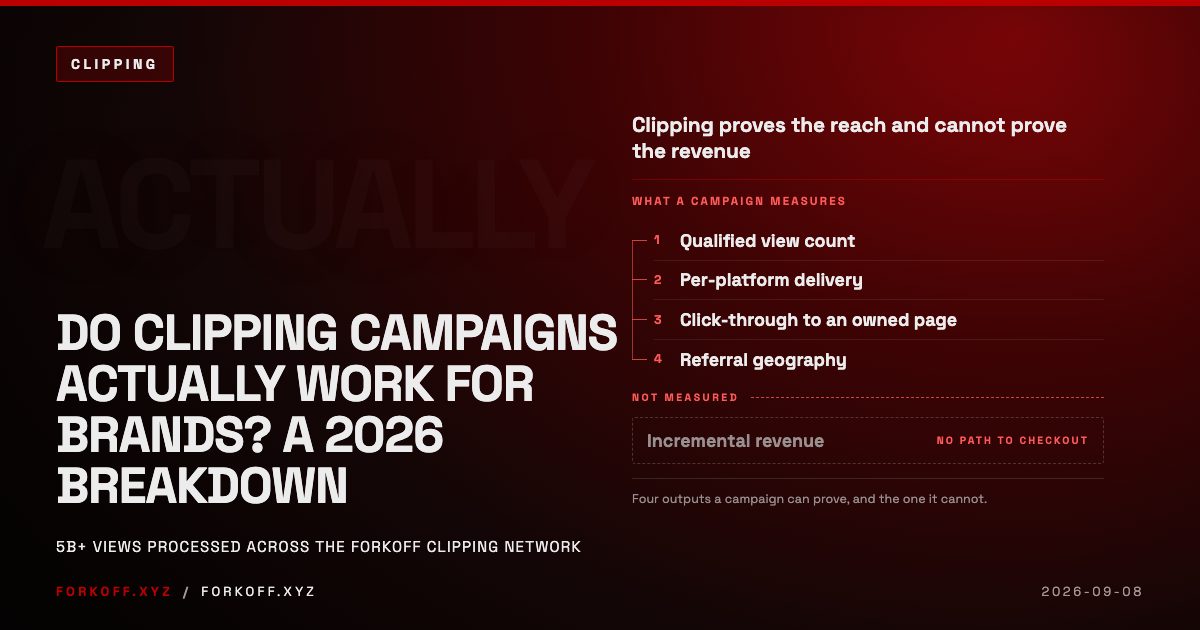
These words matter because the clip economy has its own incentives, and the incentives do not always point at the buyer's interest. A clipper paid per raw view is incentivized to chase any view, qualified or not. A platform reporting view counts is incentivized to report generously. The buyer who only knows the word "views" and not the word "qualified views" is the one who overpays. The qualified views metric guide is the deeper reference on that single distinction, and the 3-layer bot-detection system explains why raw counts are so easy to game.
Emily Lai
@emilylai
CLIPPING: crypto marketers are just discovering what it is. Here's a breakdown and how it's used for growth The purpose of clipping is to get your video content distributed at scale. 1. You attract editors and creators via your own pages (like the crypto marketers we're seeing
Where did clipping come from?
Clipping is not new, and understanding its history explains why it suddenly became a paid category in 2026. Short clips of longer streams have existed since the early days of Twitch, where viewers cut and shared highlight moments for free, out of fandom. The behavior was organic: people clipped because they wanted to share a funny or impressive moment, not because anyone paid them. For years that was the entire clip ecosystem, a fan activity with no economy attached to it.
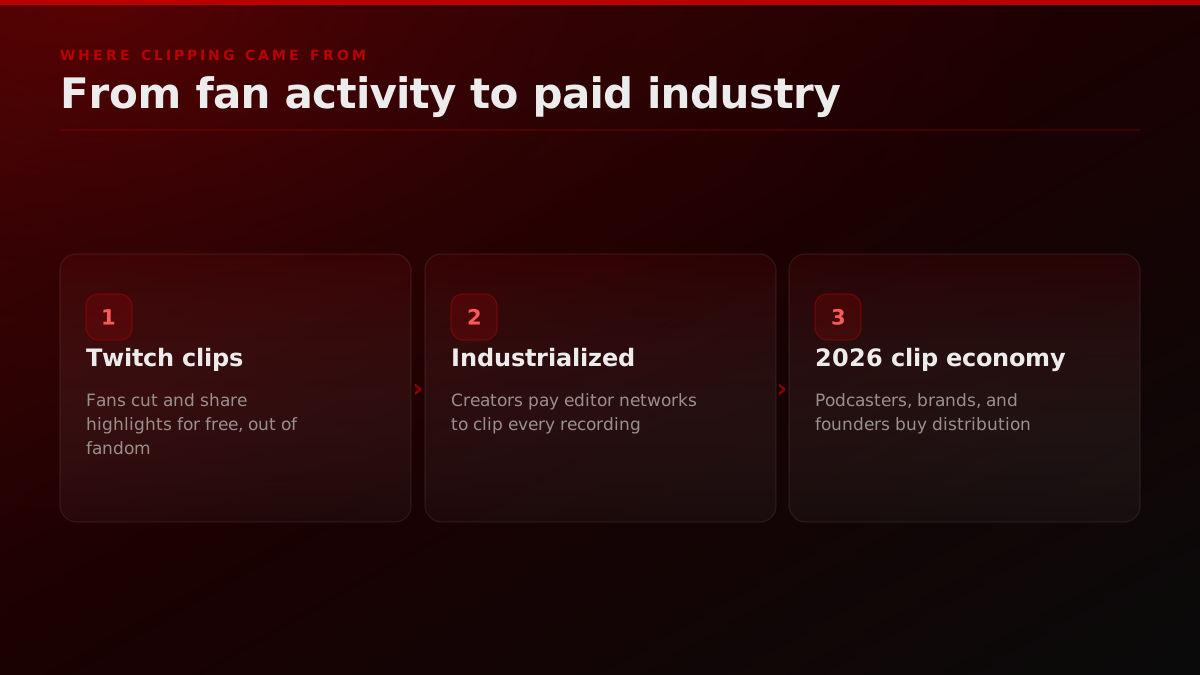
What changed is that creators realized the fan behavior could be industrialized and paid for. Instead of waiting for fans to clip the good moments, a creator could pay a network of editors to systematically cut every recording into dozens of clips and post them across many accounts. Large creators ran this at scale, and the results were impossible to ignore: one creator's long-form catalog, cut and posted by a paid network, generated reach an order of magnitude beyond what the creator's own channel produced.
Alex
@alexxgrowth
did .@Cobratate actually invent clipping? short answer: kind of long answer: tate's team didn't invent the model but he's the reason it went mainstream back in the early 2020s, clipping existed in small pockets. twitch streamers had people cutting highlights. podcasts had… Show more
By 2026 the model had spread well beyond streamers. Podcasters use it to turn episodes into feeds of clips. Brands use it as a distribution channel. Founders use it to build pipeline. The clip economy piece covers how far the category has come, and the how much do clippers earn breakdown shows the pay side that turned clipping into a real side-income market. The through-line is that clipping went from a free fan activity to a paid distribution industry in a remarkably short window.
Industry Context
Reddit communities and AI Overviews increasingly surface short clips as the entry point to a creator, so a single clip on many platforms now matters more than the polish of any one edit.
How does clipping actually work?
The mechanic of clipping is a multiplication followed by a distribution, and most people only see the multiplication. You start with one piece of long-form content. A clipper, or a network of them, cuts it into many short clips, each built around a single moment with a hook and a payoff. Those clips are then posted, natively and vertically, across short-form platforms, frequently from many accounts rather than just the creator's own. Each clip gets its own independent shot at the algorithm, which is why the volume matters.
The part people skip is the distribution. Making a hundred clips is easy; getting them posted at the right cadence across a real network of accounts is the hard, operational work that actually produces reach. A clip dropped from a single cold account dies. The same clip posted into a warm network at the right cadence travels. This is why clipping at any serious scale is a distribution problem disguised as an editing problem, and why the people who win at it are organized around posting volume, not edit quality. The managed clipping playbook documents how that distribution layer is operationalized.
Is clipping still worth it for newcomers?
Newcomers discuss whether clipping is still worth starting in 2026, the participant-side view of the clip economy and what it actually pays.
How do clippers get paid?
Most clippers are paid on a pay-per-view or CPM basis, a set rate per thousand views their clips earn, and this payment model is what turned clipping from a fan hobby into a real market. A clipper who posts a clip that earns a hundred thousand views gets paid for those hundred thousand views at whatever rate the campaign set, commonly a low single-digit dollar amount per thousand. The model rewards clips that travel and pays nothing for clips that flop, which pushes clippers to optimize relentlessly for the hook and the format.
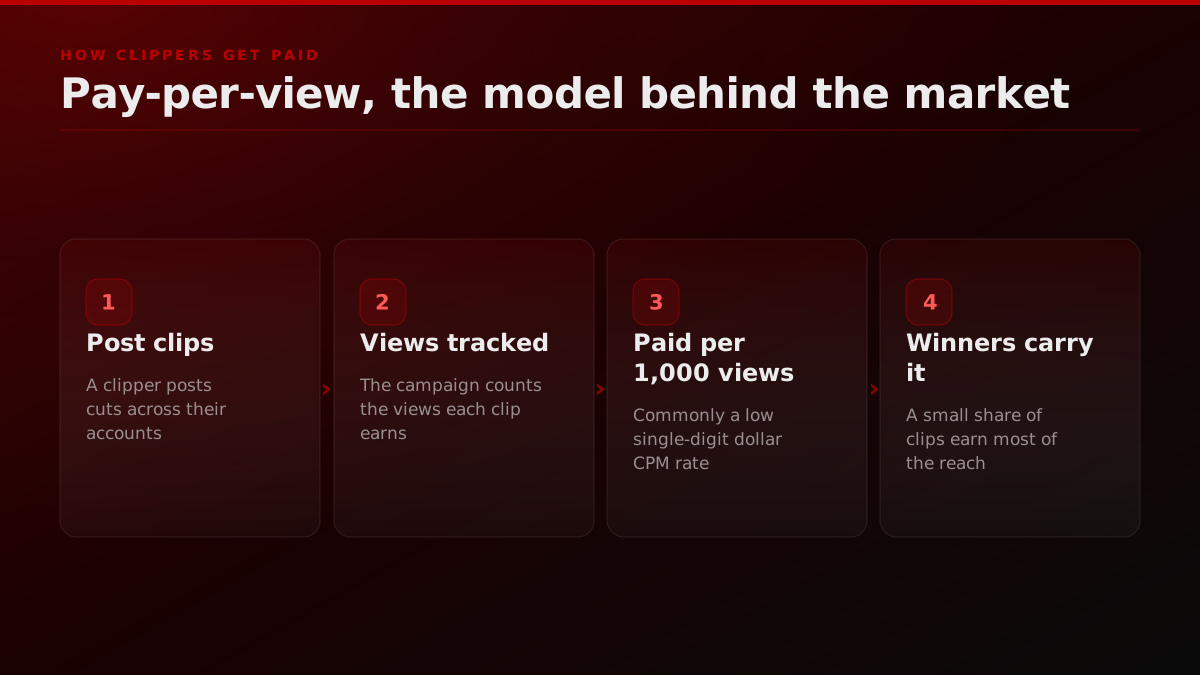
The economics cut two ways. For clippers, the top performers in large campaigns can earn substantial monthly income, but the median is far lower and highly variable, because most clips underperform and a small share carry most of the reach. For the creators and brands paying, the pay-per-view model looks attractive because it ties spend to output, but it carries the vanity-view risk: if you pay per raw view, you pay for bot views and out-of-market views just the same as qualified ones. The CPM rates for clipping guide covers the real numbers, and the how much do clippers earn breakdown shows the earning distribution from the clipper's side.
Industry Context
The 2026 shift is that distribution, not production, is the scarce input; anyone can make a clip, but getting it in front of the right audience at volume is the hard part, which is why clipping became a paid category.
What makes a clip actually work?
A clip lives or dies in its first second, and understanding why explains what clippers are really optimizing for. Short-form algorithms decide whether to push a clip beyond the posting account's followers based on early signals, mostly watch-time and engagement in the first thirty to ninety minutes. A clip that hooks a viewer in the first second and delivers a payoff before they scroll earns those early signals and gets pushed; a clip that takes ten seconds to get going loses the viewer and dies. The hook is the whole game.
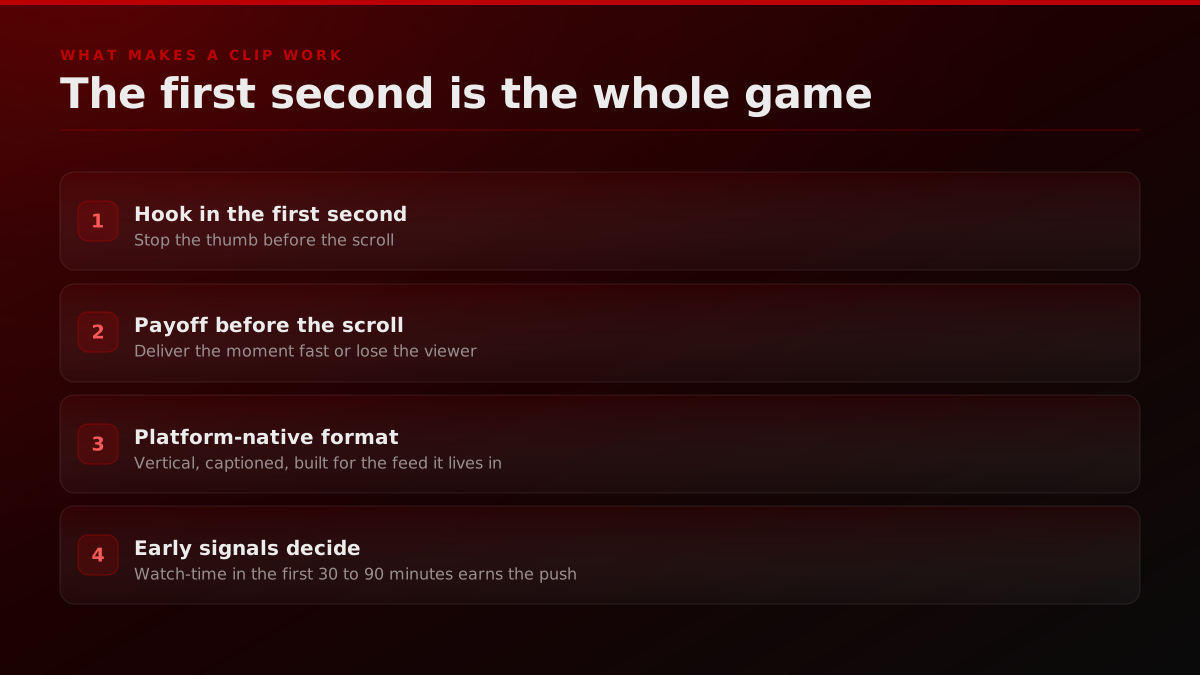
This is why the craft of clipping is not really about editing polish, it is about moment selection and framing. A great clipper finds the ten seconds of a two-hour podcast that will stop a thumb, frames it with a hook in the caption and the first frame, and formats it native to the platform, vertical, captioned, fast. The best clipping software and the clipping tools comparison cover the tools that make the mechanical part fast, but the moment selection is the human judgment that separates a clip that travels from one that does not.
Who pays for clipping, and why?
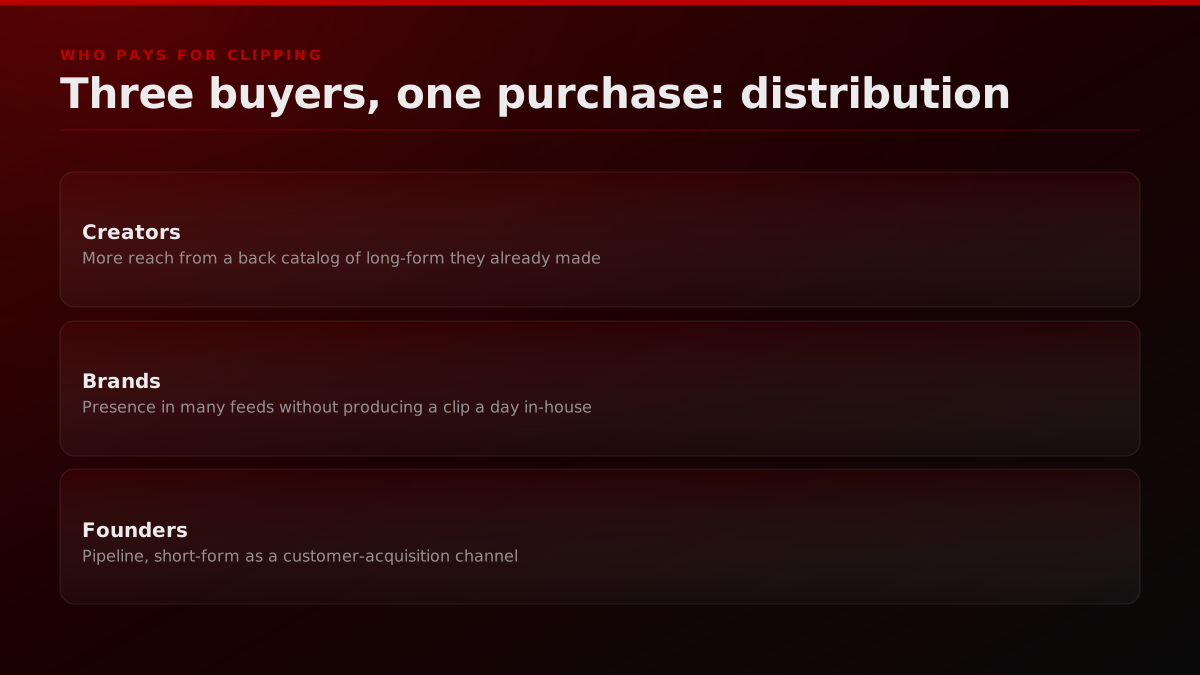
Three groups pay for clipping, and they are all buying the same thing: distribution they cannot run themselves. Creators with a back catalog of long-form buy clipping to extract more reach from content they already made, turning a single podcast into months of short-form feed presence. Brands buy clipping as a distribution channel, a way to be in many feeds at once without producing a clip a day in-house. Founders buy it to build pipeline, because short-form clips have become a customer-acquisition channel rather than just a vanity one.
I spent 2 months making $0 clipping for creators. 10 months later it hit 1.5B views.
A clipper's account of grinding from zero earnings to 1.5 billion views over ten months, the inside view of how clipping pays out at the edges.
What unites them is that the bottleneck is distribution, not production. A creator already has the content; a brand already has the message; a founder already has the talk. What none of them has is the operational capacity to cut that into hundreds of clips and post them across many accounts at the right cadence, week after week. That is the gap clipping fills, and it is why the buyers who get the most out of it are the ones who already have long-form content and just cannot get it distributed. The vertical-specific versions, AI startup clipping and crypto launch clipping, show how the same model is tuned per niche.
The dark side: vanity views and clip farms
The dominant failure mode of clipping is volume without accountability, and it has a name: the clip farm. A clip farm runs the multiplication, hundreds of auto-generated, un-briefed clips, without the parts that make clipping actually work for a business: brand-aligned moment selection, audience-matched distribution, and attribution. The result is a big raw-view number and almost no qualified views, because the clips reached bots, out-of-market scrollers, and engagement-bait traffic rather than potential customers.
Industry Context
Vanity views are the dominant failure mode of clipping; a clip can rack up a million views that contain zero potential customers, which is why qualified views, not raw views, are the real unit of value.
The Clip Economy Is Eating Everything
The Atlantic
The Atlantic on how the clip economy is reshaping feeds, useful context on the scale, the paid-clipper armies, and the vanity-view dynamics.
This is why the single most useful concept for anyone spending money on clipping is the qualified view. A clip can rack up a million views that contain zero potential customers, and a clip farm will happily sell you that million as a success. The 3-layer bot-detection system explains how raw-view counts are inflated and how qualified views are measured, and the clipping CPQV benchmark shows the gap between what raw views cost and what qualified views actually cost once the junk is stripped out. If you take clipping seriously as a channel, you measure it in qualified views or you are flying blind.
The clip is the ad now. The question is whether the views it buys are from people who would actually buy.
Is clipping worth it, and who should use it?
Clipping is worth it when distribution is your bottleneck and you are not going to run the posting volume yourself, and it is not worth it when your bottleneck is somewhere else. The clean test is to ask what is actually stopping your content from reaching people. If you have plenty of long-form content and the problem is that it only ever reaches your existing audience, clipping is the cheapest reach you can buy. If the problem is that you do not have content to clip in the first place, no amount of clipping fixes that, and a tool plus your own posting is the cheaper starting point.
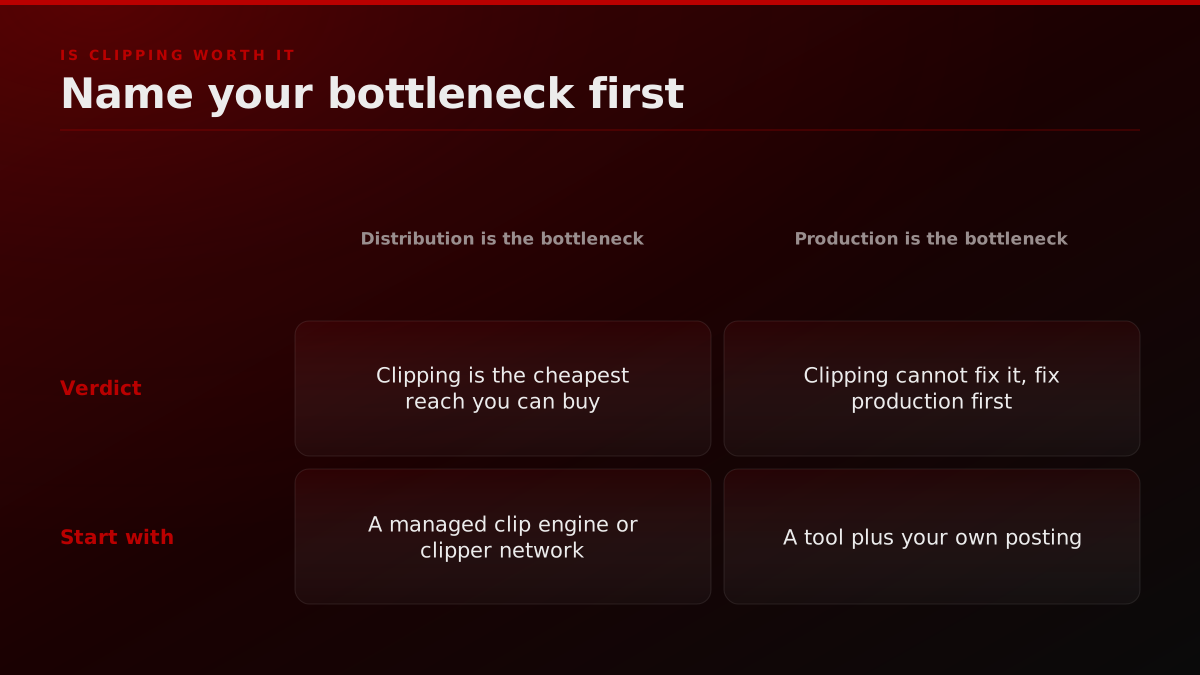
Operator noteFounders, the question is not "what is clipping" but "is distribution my bottleneck." If yes, clipping is the cheapest reach you can buy.
For a solo creator, the honest answer is often to start with a best AI video editor and your own posting until distribution becomes the real constraint. For a brand or founder who already has long-form and needs reach at volume, clipping run as a managed engine is usually the better economics once you price in the operational load. The agency vs in-house vs Opus Clip breakdown and the Opus Clip vs managed clipping comparison cover the cost decision in detail, and the what a clipping agency does guide explains what you are actually buying when you hire one.
How does FORKOFF think about clipping?
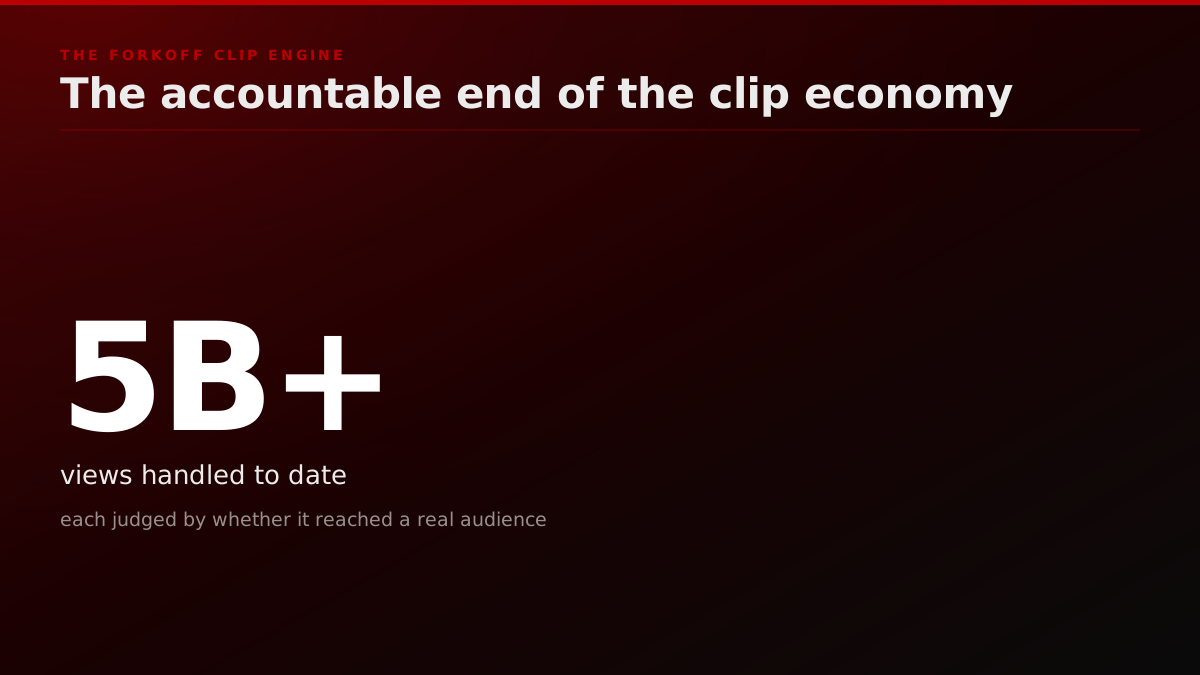
Everything above describes the clip economy as it exists; it is worth being explicit about where FORKOFF sits inside it. The whole field runs on a spectrum, from clip farms at one end (raw volume, no accountability) to accountable clip engines at the other (briefed clips, audience-matched distribution, reporting tied to outcomes). FORKOFF operates at the accountable end of that spectrum. The number behind the claim is more than 5 billion views handled to date, and the rule behind the number is that a view only counts as a win when it reaches someone who could plausibly become a customer.
Clipping did not invent short-form. It industrialized it, one recording, cut by many hands, posted everywhere at once.
That is the throughline of this whole explainer. Clipping is easy to define, one recording cut into many clips and pushed across many feeds, and genuinely hard to run as an accountable channel rather than a volume game. The line that separates the two is whether anyone is measuring who the views actually reached. The clipping service page covers how FORKOFF runs that, and the managed clipping revenue case study shows the output when content and audience match. The reason clipping became a paid category is the same reason it is hard to do well: distribution at this volume is an operations job, not a creative one.
Clipping vs influencer marketing vs paid ads
Clipping is often confused with influencer marketing and paid ads, but it is a distinct channel with a different cost structure, and seeing the difference clarifies what you are actually buying. Influencer marketing pays a creator for access to their existing audience: you rent their followers for a post. Paid ads pay a platform to inject your content into feeds: you rent the algorithm's distribution directly. Clipping sits between the two. You are paying a network of clippers to manufacture distribution by flooding many accounts with many clips, each earning its own organic reach.
The economics differ in a way that matters. Influencer marketing is priced per post and capped by the influencer's audience size, so scaling means finding more influencers. Paid ads are priced per impression or click and scale with budget, but the moment you stop paying, the distribution stops. Clipping is priced per view and produces reach that compounds: a clip that takes off keeps earning views long after it was posted, and the back catalog of clips keeps working. The trade-off is control. With ads you control exactly who sees what; with clipping you are betting on volume and the algorithm, which is why the qualified-view question matters so much more in clipping than in a targeted ad buy.
None of the three is strictly better; they solve different problems. Ads are best when you need precise targeting and can measure conversion directly. Influencer marketing is best when you need a trusted voice's endorsement. Clipping is best when you have content worth distributing and the bottleneck is simply getting it in front of enough of the right people at a cost per view that ads cannot match. Many brands run all three, and the smart ones measure clipping the way they measure ads, on qualified reach and downstream pipeline, not on the raw view counter.
Which platforms does clipping target, and how do they differ?
Clipping targets the short-form feeds, and each platform behaves differently enough that a clip tuned for one is not automatically right for another. TikTok is the highest-velocity platform: its algorithm pushes fresh clips aggressively to non-followers, which makes it the best place for a cold clip to find an audience, but its viewers scroll fast and the hook has to land instantly. Instagram Reels rewards a slightly more polished aesthetic and keeps clips circulating longer, which favors clips with rewatch value. YouTube Shorts sits attached to the largest long-form library on the internet, so a Short that performs can funnel viewers into the creator's long-form, making it the best platform for clips that are meant to drive deeper engagement rather than just reach.
X (formerly Twitter) is the outlier. Its video distribution is weaker than the dedicated short-form platforms, but it is where commentary and discourse happen, so a clip posted to X can travel through quote-tweets and replies in a way that a TikTok clip cannot. For founder and B2B clipping in particular, X often produces lower raw view counts but higher-quality, more qualified reach, because the audience is closer to the buyer. This is exactly why measuring clipping in raw views across platforms is misleading: ten thousand X views from operators in your category can be worth more than a million TikTok views from a general audience.
The practical implication is that serious clipping posts the same clip natively to several platforms at once and reads the results per platform rather than in aggregate. A clip that flops on TikTok may carry on Shorts; a clip that buries on Shorts may spark a thread on X. The clipping tools comparison covers the production side of formatting for each platform, but the strategic point is that cross-posting multiplies the shots on goal, and per-platform measurement is what tells you which audience your content actually reaches.
Five myths about clipping, corrected
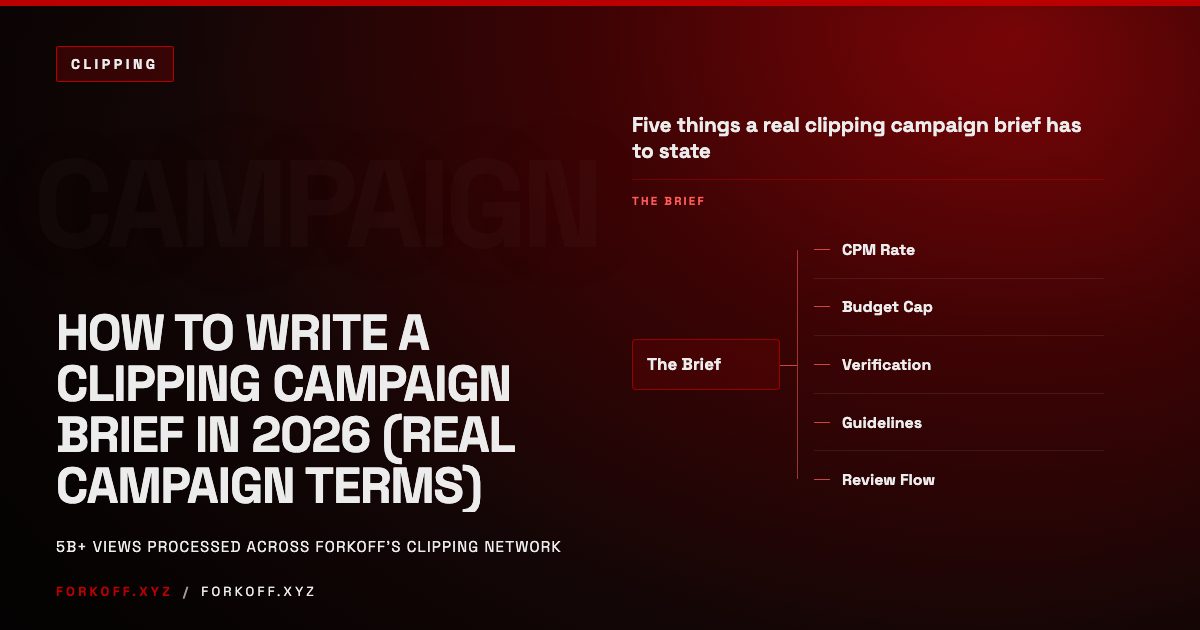
Clipping carries a handful of persistent myths, and each one leads people to either over-buy or misjudge the channel, so they are worth correcting directly. The first myth is that clipping is just reposting; in reality, a good clip is a deliberate moment selection with a hook and a native format, which is closer to editorial judgment than to reposting. The second myth is that more clips always means more reach; past a point, un-briefed volume produces off-brand clips that reach no one who matters, so volume without a brief is wasted motion, which is exactly what how to write a clipping campaign brief covers in detail, the document that turns raw clipping volume into on-brand reach.
Operator noteThe clip economy rewards volume, but volume without a brief dilutes a brand. Ten on-brand clips beat a thousand off-brand ones.
The third myth is that clipping is free reach; it is cheaper than ads per qualified view, but it is not free, because the operational load of running a clipper network at volume is real and someone has to pay for it, in money or in their own time. The fourth myth is that clipping only works for big creators; in fact, a founder or small brand with a single good talk can get more from clipping than a large creator who never repurposes, because the bottleneck is distribution, not fame. The fifth and most expensive myth is that views are the goal; the goal is qualified views, and a million unqualified views move nothing, as the qualified views metric guide lays out in full.
Correcting these five is most of what it takes to think about clipping clearly. The thread running through all of them is the same: clipping is a distribution channel that has to be measured by who it reaches, not by how loud the raw number is. Treat it as reposting, chase raw volume, or assume the reach is free, and you get the clip-farm outcome, a big number and no business result. Treat it as briefed, audience-matched distribution measured in qualified views, and it becomes one of the cheapest real reach channels available.
How do you actually start clipping?
If you want to start clipping, the practical path depends on whether you are doing it for yourself or having it run for you, and starting in the right place saves a lot of wasted spend. For a solo creator or small brand, the cheapest start is a clipping tool and your own posting: take your existing long-form, use a best AI video editor to cut it into clips, and post them yourself across TikTok, Reels, and Shorts for a few weeks to learn what travels for your audience. This costs little beyond your time and teaches you the hooks and formats that work before you spend money on volume.
The moment the bottleneck shifts from "I cannot make clips" to "I cannot post enough of them across enough accounts," you have outgrown the DIY path, and the choice becomes hiring individual clippers or using a managed engine. Hiring clippers directly is cheaper per clip but puts the sourcing, briefing, quality control, and payment back on you, which is the operational load that quietly becomes a full-time job. A managed managed clipping absorbs that load and is accountable for the qualified-view outcome, which is the better economics once distribution volume is the real constraint. The what a clipping agency does guide covers exactly what that managed path includes.
Whichever path you take, start by writing down what a qualified view means for your business, because that single definition shapes everything downstream: which clips you make, which platforms you weight, and how you judge whether the channel is working. Most people skip this and end up optimizing for raw views by default, which is how the clip-farm outcome happens. The CPQV benchmark is a useful reference point for what a qualified view should actually cost once you have your definition, and the managed clipping playbook walks the full operating model if you decide to run it seriously.
The clip economy by the numbers
The scale of the clip economy is easier to grasp through a few representative figures, with the caveat that campaign numbers are self-reported and vary widely. On the pay side, Forbes reports that clippers are typically paid between roughly one and five dollars per thousand views, with some campaigns paying less, which sets the floor for what a raw view costs to buy through this channel. That CPM range is the single most useful number for understanding the economics: it tells you that raw views are cheap, which is precisely why qualified views, the ones that actually contain potential customers, are the figure worth paying attention to.
On the campaign side, the figures that circulate are large. Operators describe creator campaigns paying out seven figures to clipper networks over a matter of weeks, and reporting on individual streamer campaigns has put monthly clipping spend in the high six figures with networks of well over a thousand clippers producing tens of thousands of clips a month. These numbers should be read as order-of-magnitude signals rather than audited accounts, but the direction is unambiguous: clipping has moved from a fan hobby to a distribution channel with real budgets behind it. The reach side follows the spend, with large campaigns generating view counts in the billions, which is exactly where the vanity-view problem becomes acute, because a billion raw views says nothing about how many were qualified.
The number that the figures above do not show, and the one that matters most, is the qualified-view rate, the share of all those views that came from the target audience. That rate is rarely published because most campaigns never measure it, which is the entire reason the clipping CPQV benchmark and the 3-layer bot-detection system work exists. The headline numbers make clipping look like a pure volume game; the qualified-view rate is what turns it back into a business decision. When you read a clip campaign's results, the spend and the raw views are the easy figures to find and the wrong ones to optimize, and the qualified-view rate is the hard figure to find and the right one to demand.
How does clipping work for founders and B2B, specifically?
Clipping is usually explained through streamers and entertainment creators, but the version that matters most for a founder or a B2B brand works differently, and the difference is worth spelling out. For an entertainment creator, the goal of clipping is raw reach, the more eyeballs the better, because attention itself is the product. For a founder, raw reach is close to worthless; what matters is reaching the specific operators, buyers, or investors who could become pipeline. The same mechanic, one talk cut into many clips, serves a completely different objective, and that objective changes how you run it.
The practical consequence is that founder and B2B clipping weights platforms and measures results differently. It leans harder on X and LinkedIn, where the audience is closer to the buyer, even though those platforms produce smaller raw view counts than TikTok. It briefs clippers to pull the moments that signal expertise and provoke discussion rather than the moments that are merely entertaining. And it judges success on qualified reach and downstream conversations, a demo booked, a reply from a real prospect, not on a view counter. A founder who runs clipping like an entertainment creator gets a big number and no pipeline; a founder who runs it like a targeted distribution channel gets fewer views and more meetings.
This is also why the niche tuning matters so much in B2B clipping. The communities that matter for an AI startup are different from the ones that matter for a crypto launch, and a generalist clipper network distributing into the wrong communities produces views that never qualify. A founder evaluating clipping should ask not "how many views will I get" but "which communities will these clips reach, and are my buyers in them." The answer to that question, more than any raw number, determines whether clipping is a real channel for a B2B brand or just expensive noise.
The honest summary for founders is that clipping is a distribution multiplier for content you have already produced, and its value scales with how well it is targeted. If you have a talk, a podcast appearance, or a long-form explainer that lands well with your buyers, clipping turns that one asset into months of targeted presence in the feeds where your buyers spend time. If you do not have that content yet, clipping has nothing to distribute, and the first move is to produce the long-form, not to buy the clips. The managed clipping revenue case study shows what targeted clipping produces for a brand when the content and the audience match.
Verdict: clipping is distribution, priced by the view
Clipping is the practice of turning one piece of long-form content into many short clips and distributing them across platforms to buy reach, and the entire model makes sense once you see it as a distribution strategy rather than an editing one. The clipper is the editor, the clip economy is the marketplace, pay-per-view is the pricing, and the qualified view is the number that separates real reach from vanity. If distribution is your bottleneck and you have content to clip, it is the cheapest reach you can buy. If you want it run as an engine with accountability, talk to a strategist about a managed managed clipping, or compare the field first in our best clipping agency guide.
External references: short-form distribution and the creator clip economy are documented across TikTok's creator resources, YouTube's Shorts documentation, Instagram's Reels guidance, reporting on the clipping economy at NPR and The Verge, the paid-clipper market at Business Insider and Forbes, and creator-economy analysis at a16z.