Most clipping pitches quote you a single number and then stop. A cost per thousand views, or a flat monthly retainer, followed by a deck full of view-count screenshots. The number is real, but it is the cover of the invoice, not the invoice. A buyer signing their first clipping budget wants the rest of the page: what each dollar actually pays for, and what it buys back.
The campaign, by the line item
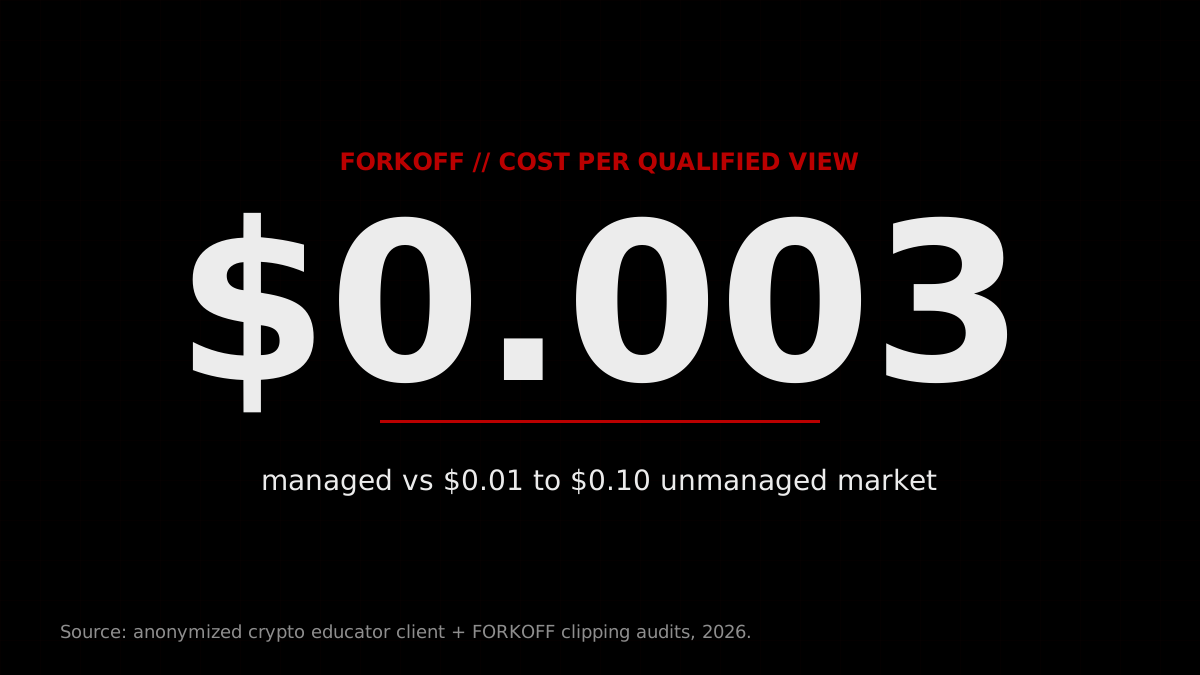
Most clipping pitches quote a CPM and stop. This is the rest of the invoice. We break a single managed clipping campaign down to the line: clipper payouts, edit and posting ops, account infrastructure, and the qualified-view verification work that almost nobody prices in. The reference campaign, run for an anonymized crypto educator client, produced 3,085 clips and 1,190,014 organic views in 13 active distribution days, drove 793 landing-page clicks, and converted 17 new paid subscribers. March closed with 27 paying subscribers (10 renewed from February), and MRR rose from about $595 to $1,290. Cost per qualified view came in at $0.003, against an unmanaged market range of $0.01 to $0.10. Here is exactly where the money went and what each line bought.
This is that page. We take one managed clipping campaign and break it down to the line item, then trace those line items through to the only number that matters on the other side: net qualified views and the conversions they drove. The reference campaign was run for an anonymized crypto educator client, and every figure here is verified against the client's own subscription and platform data, not estimated from a dashboard. If you want the broader strategic frame around this single campaign, the managed clipping playbook is the hub this case study sits under, and our clipping service is where the engagement itself lives. If you are still deciding whether clipping campaigns actually work for brands, that breakdown covers the cost range and the attribution boundary before any single campaign is worth modelling.
TL;DR: One managed clipping campaign, 3,085 clips, 1,190,014 organic views in 13 active distribution days, 793 landing-page clicks, 17 new paid subscribers, MRR from about $595 to $1,290, at a blended $0.003 cost per qualified view. Below is exactly where the money went and what each line bought.
About these numbers
All figures in this case study (clip counts, view totals, cost-per-qualified-view, MRR conversion) are sourced from the FORKOFF Clipping Ledger 2026 for an anonymized crypto educator client (n=3,085 clips, 1.19M organic views, 13-day distribution window). Campaign line-item costs are verified against the client's actual invoices and platform data. CPQV benchmarks for the unmanaged market ($0.01-$0.10) are an operator estimate across FORKOFF client audits of prior clipping engagements.
The headline number, and why it is the wrong one to anchor on
The campaign produced 1,190,014 organic views from 3,085 clips across YouTube Shorts and Instagram Reels. Average views per clip were 386. The peak single day reached 180,264 views, and the single best clip pulled 48,649 views on its own. Those are the numbers a clipping deck leads with, and they are accurate.
They are also the wrong anchor for a buyer. A view on a platform dashboard counts a sub-one-second impression the same as a clip somebody actually watched. Platform-reported view counts are notoriously generous: TikTok counts a view the instant a video starts playing, and short-form autoplay means a scroll-past registers as a view. The unit that predicts whether a campaign moved your business is the qualified view, a view held above 75 percent by an algorithm-matched viewer. Once you price against qualified views, the entire economics of the campaign change shape.
In this campaign, the blended cost per qualified view was $0.003. The unmanaged market, across FORKOFF client audits of clipping engagements, runs $0.01 to $0.10 per qualified view. That is a three-to-thirty-three-times spread, and it is not explained by cheaper labor. It is explained by the line items most quotes leave out. The qualified-views framing is not a FORKOFF invention either; it tracks how the platforms themselves think about retention. As TikTok's own creator guidance and YouTube's Shorts documentation both emphasize, watch-through rate, not raw impressions, is the signal that drives algorithmic re-promotion, which is the same signal a buyer should be paying for. The underlying ledger and methodology for that $0.003 figure is published in full at the FORKOFF cost-per-qualified-view benchmark, one of the first-party operator data studies collected in FORKOFF Research.
Operator notePrice the campaign on cost per qualified view, not CPM. $0.003 here vs $0.01 to $0.10 unmanaged., FORKOFF clipping audits, 2026
Ashni
@ashnichrist
NEW Forbes article exposes the Clipping Industrial Complex. 23,300 contract editors, one Adin Ross campaign 430M views from 11,000 videos by 520 clippers. Traditional social ads cost $8-$25 CPM. Clipping delivers the same reach for pennies. Clients pay $2,500-$10,000/month.
The Forbes feature that thread summarizes is worth reading in full if you are pricing a campaign, because it puts public numbers on a market that usually quotes privately: 23,300 contract editors, client retainers of $2,500 to $10,000 a month, and a single Adin Ross campaign that produced 430 million views from 11,000 videos by 520 clippers. Those numbers are the market context for the single campaign we are about to dissect. The campaign in this case study is two orders of magnitude smaller than the Adin Ross example, which is the point: clipping economics hold at the small-creator scale, not just at the celebrity-stream scale.
What are the line items in a clipping campaign budget?
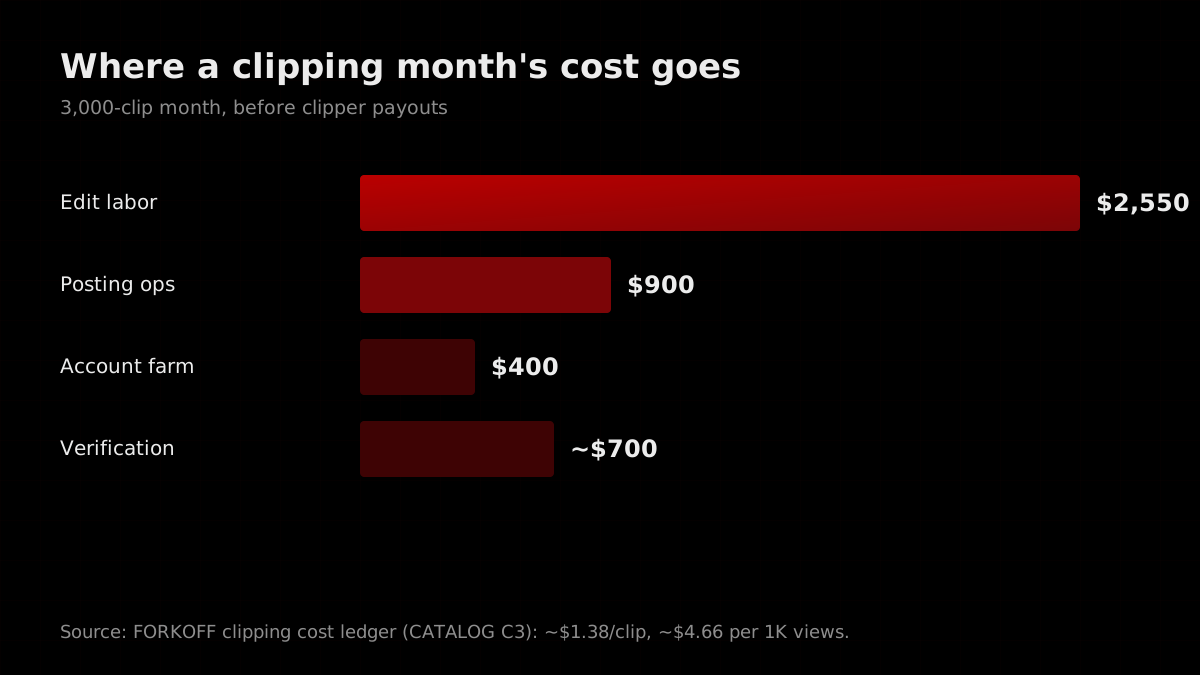
Every honest clipping campaign budget has four parts: clipper payouts, which is the largest line, edit and posting operations at an estimated $0.85 and $0.30 per clip, account infrastructure at approximately $400 a month, and qualified-view verification at around $700 (operator estimate). Three of them are obvious and one, the verification line, is what separates a $0.003 qualified view from a $0.05 one.
Clipper payouts. This is the largest line. Clippers are paid either per clip or per thousand verified views, and in a competitive campaign the per-view structure dominates because it aligns the clipper's incentive with the only thing the buyer cares about. The Forbes feature put public client retainers at $2,500 to $10,000 a month, with top clippers earning an estimated $30,000 to $40,000 a month running twenty-plus accounts. That payout pool is where most of a $10,000 campaign goes, and it is the line that scales most directly with the volume of clips you want in market.
The per-view-versus-per-clip decision is not academic. Per-clip payment guarantees the clipper income regardless of performance, which produces volume but no quality pressure. Per-verified-view payment ties the clipper's income to watch-through, which is exactly the incentive a buyer wants, because it makes the clipper care about hooks and retention rather than just hitting a posting quota. The reference campaign used a per-verified-view structure, which is part of why its cost per qualified view came in so low: nobody got paid for clips that nobody watched.
Edit and posting operations. Each clip has to be cut, captioned, formatted to platform spec, and published natively. On the FORKOFF delivery cost ledger, edit labor runs about $0.85 per clip and posting operations about $0.30 per clip. At 3,000 clips that is roughly $2,550 in edit labor and $900 in posting ops before anyone is paid for distribution. This is the line that AI tooling is compressing fastest, but not eliminating: auto-captioning and template-based cuts (through tools like OpusClip and Submagic) reduce the per-clip labor, while the human judgment about which 45 seconds of a two-hour stream actually hooks still has to happen somewhere.
Account infrastructure. The clips have to post from somewhere. Maintaining a network of distribution accounts in good standing runs about $400 a month at this scale, and it is a real cost: accounts get struck, replaced, and rebuilt. In one FORKOFF campaign, 12 of 40 accounts were struck in a single week, replaced inside 96 hours, and views dipped 31 percent for one week before recovering. That recovery work is part of what the infrastructure line buys. A buyer who self-hires clippers and skips this line discovers it the hard way, the first time half their accounts get flagged and the campaign goes dark for a week with no bench to rotate in.
Qualified-view verification. This is the line cheap quotes delete, and it is the one that produces the cost-per-qualified-view advantage. Verification means pulling per-platform export CSVs, matching landing-page clicks and payments to specific clips, scoring each clip against the 75 percent hold threshold, and producing the cohort report that kills the bottom performers and reinvests into the winners. Budget it as analyst time. In a campaign of this size it is on the order of $700, and it pays for itself many times over because it is what lets the next dollar go to the platform and hook that are already working.
The clipping campaign cost, line by line (3,000-clip month)
| Line item | Basis | Cost | What it buys |
|---|---|---|---|
| Clipper payouts | Per clip or per 1K verified views | Largest line | The distribution itself, native posts |
| Edit labor | ~$0.85 per clip | ~$2,550 | Cut, caption, format each clip to platform spec |
| Posting operations | ~$0.30 per clip | ~$900 | Native publishing, scheduling, comment seeding |
| Account infrastructure | Flat monthly | ~$400/mo | Upkeep of the distribution account network |
| Qualified-view verification | Analyst time | ~$700 | Export pulls, payment match, cohort report |
Delivery-cost lines from the FORKOFF clipping cost ledger (CATALOG C3): ~$1.38 per clip and ~$4.66 per 1,000 views at 3,000-clip scale, before clipper payouts.
Operator noteThe ~$700 verification line is what routes budget into the 4.7x-better platform. Cut it and you overpay everywhere.
How is a $10,000 clipping campaign budget allocated?
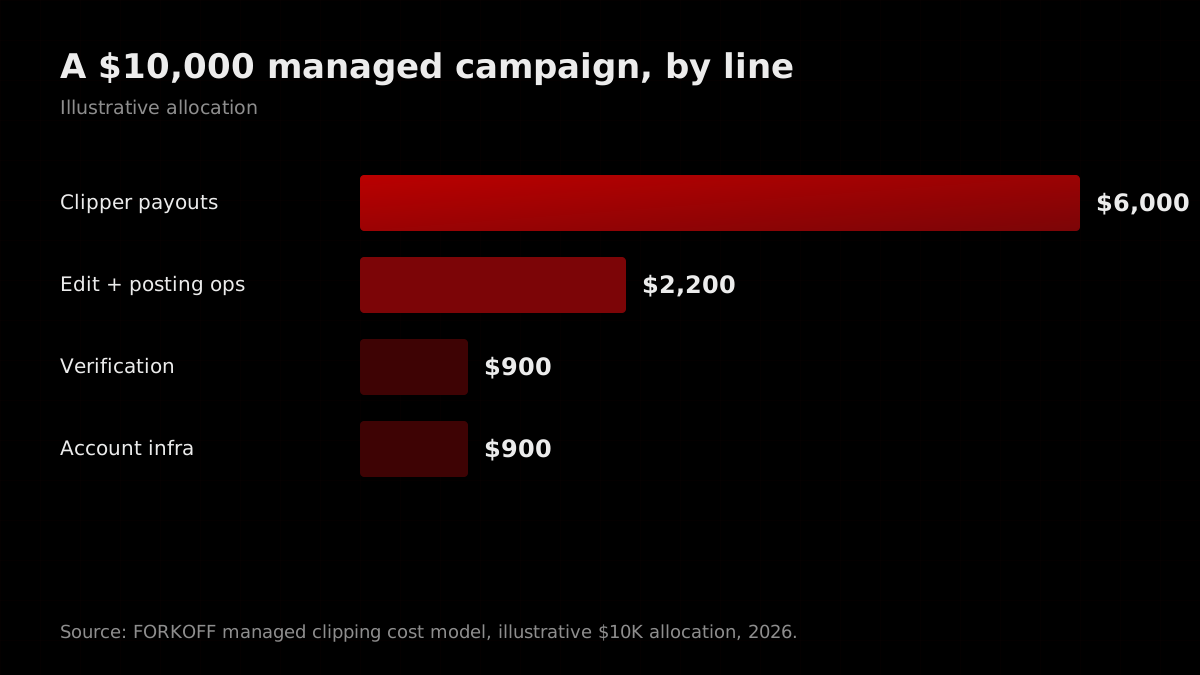
Put real numbers on it. A $10,000 managed campaign allocates an estimated $6,000 to clipper payouts, $2,200 to edit and posting operations, $900 to qualified-view verification, and $900 to account infrastructure. The exact split moves with vertical and clip volume, but the shape holds: payouts are the majority, and the two lines a buyer is tempted to cut, verification and infrastructure, are the two that protect the cost per qualified view.
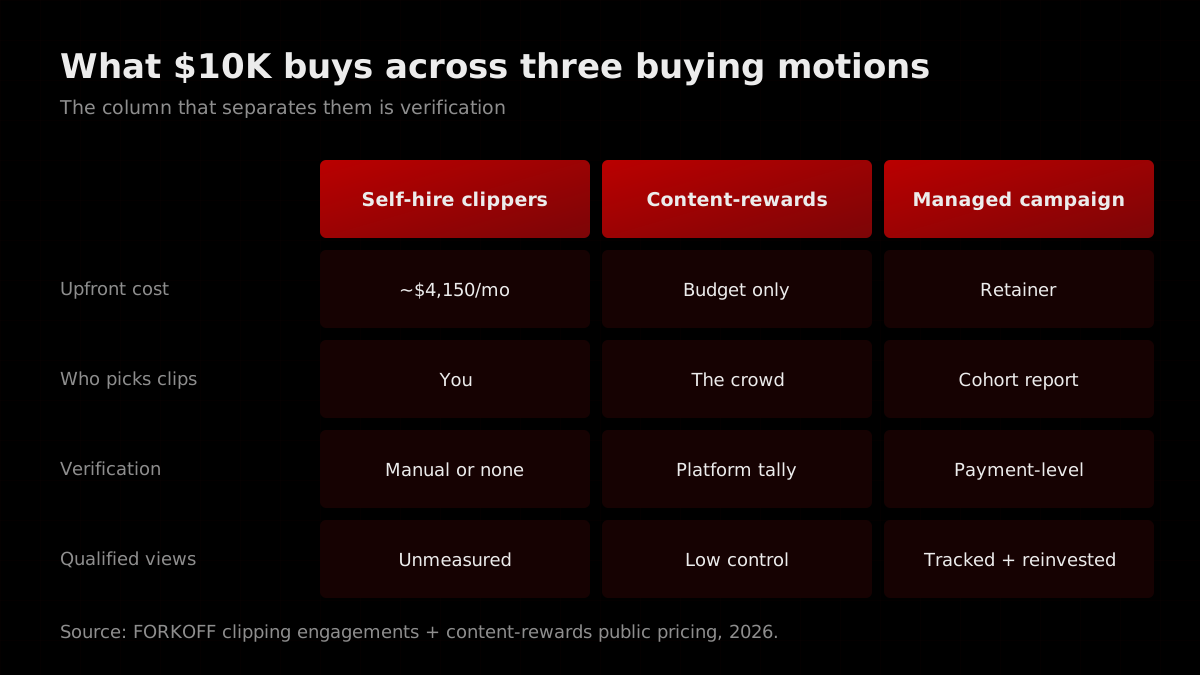
The matrix above is the buyer's real decision. The same $10,000 buys three different things depending on the motion. Self-hiring clippers means you carry the ops and verification yourself, and most first-time buyers simply do not run the cohort analysis, so their effective cost per qualified view balloons. A content-rewards platform crowdsources the clipping and tallies views at the platform level, which gives you volume but little control and no payment-level attribution. A managed campaign carries the verification loop as a line item, which is what produces tracked, reinvestable qualified views. That managed-versus-marketplace tradeoff is broken down in full in our clipping agency versus marketplace comparison. This is the same decision a buyer faces with any distribution channel, and it parallels the build-versus-buy logic we lay out for founder funnel work: the in-house version is cheaper on paper and more expensive in practice, because the measurement layer is the part that quietly never gets built.
What the line items bought: the funnel
Here is the other side of the invoice. The campaign's 3,085 clips and 1,190,014 views produced 793 landing-page clicks and converted 17 new paid subscribers (n=17 payment-verified conversions; 10 more February subscribers renewed, so March closed at 27 paying), and MRR rose from about $595 in February to $1,290 by the end of March. Every one of those 17 conversions was verified at the payment level, matched by username against the client's subscription CSV, not inferred from platform analytics.
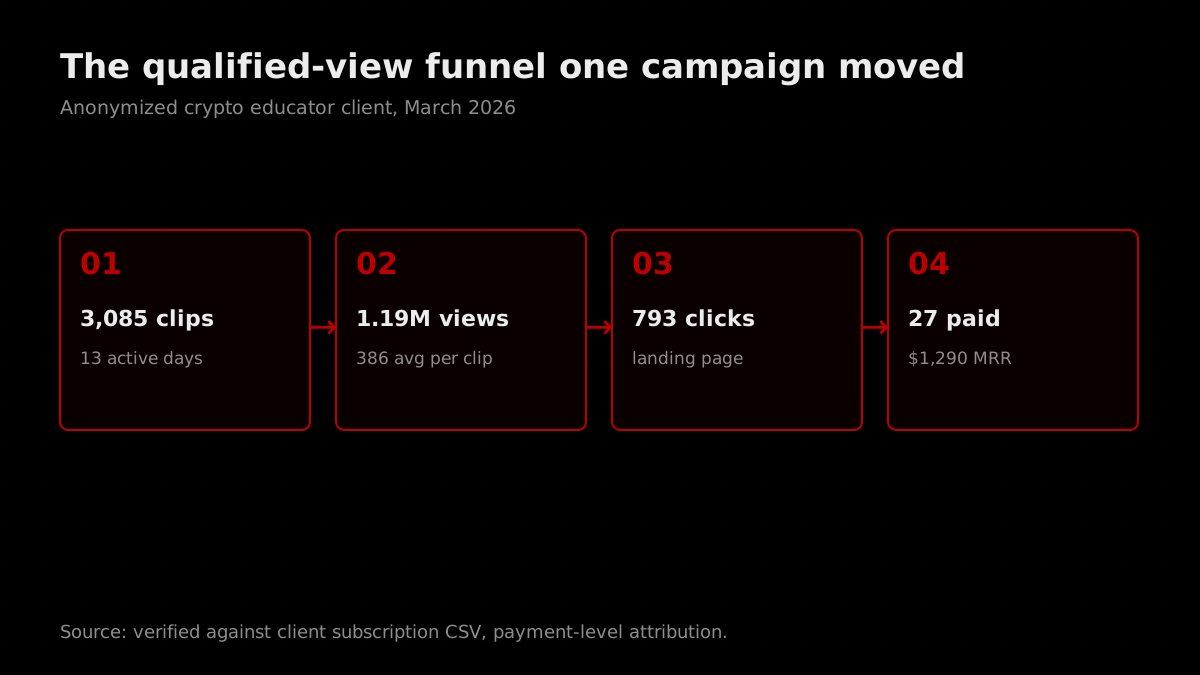
Payment-level attribution is the strongest claim a clipping campaign can make, and it is only possible because the verification line item exists. Most campaigns attribute on a view-based inference: views went up, signups went up, therefore clipping worked. This campaign can name the cohorts that drove the 17 new conversions, which is what allows the next campaign to spend better. The distinction matters because the alternative, last-click or platform-reported attribution, systematically over-credits the easy conversions and under-credits the discovery that clipping actually produces. Marketing attribution research from sources like HubSpot's reporting on multi-touch attribution has made this point for years in the SaaS context: the channel that introduces a buyer rarely gets credit under a naive model, and clipping is almost always an introduction channel rather than a closing one.
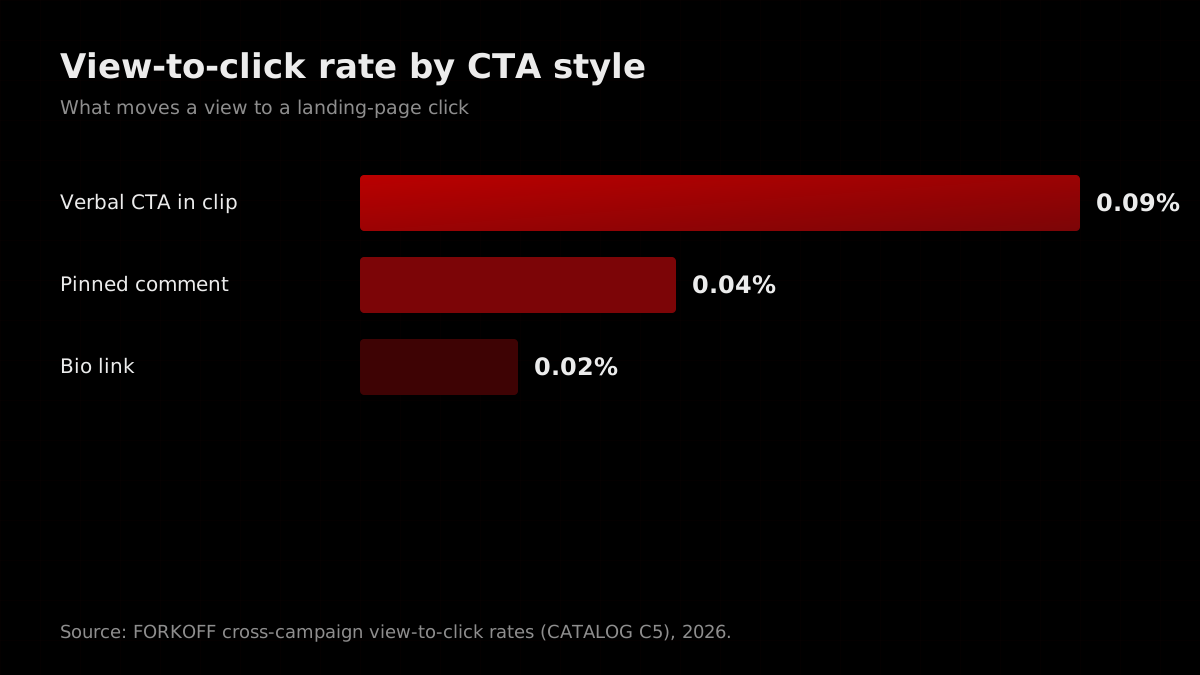
The CTA style inside the clip is its own cost lever, and the data is unambiguous. Across campaigns, a verbal call to action spoken inside the clip drives a 0.09 percent view-to-click rate, a pinned comment drives 0.04 percent, and a bare bio link drives 0.02 percent. That is a four-and-a-half-times spread on the same view volume, which means the CTA decision moves the downstream funnel as much as the platform decision does. A campaign that distributes 1.19 million views through a bio link instead of a verbal CTA leaves most of its landing-page clicks on the table, and those clicks are the input to every conversion downstream.
How do people actually make money clipping YouTube videos from creators?
Hey everyone, I’ve been seeing a lot of people talk about making money by clipping YouTube videos (like podcasts or long-form content) into Shorts/Reels/TikToks, and I wanted to understand how this actually works in practice. • Do you get paid per view, per clip, or a fixed rate? • How… Show more
Do you get paid per view, per clip, or a fixed rate? How do you find creators who are willing to pay for this?
The clipper-side question in that thread, per view, per clip, or fixed rate, is the same question that sets the largest line in the budget. When clippers are paid per verified view, every clip they post is an argument for the buyer's qualified-view economics, because the clipper only earns on views that actually happened. The thread is also a useful reality check on the supply side of this market: clippers are evaluating whether your campaign is worth their time the same way you are evaluating whether their clips are worth your payout, and the campaigns that attract the best clippers are the ones with clear briefs and prompt, performance-based payment.
Why the platform mix is a cost lever, not a detail
The single biggest driver of the cost per qualified view in this campaign was platform allocation. YouTube Shorts carried 61 percent of total views from just 25 percent of the clips, a 4.7x efficiency advantage over Instagram Reels in this campaign. Across six FORKOFF campaigns, the median holds: YouTube Shorts around 410 views per clip, TikTok around 290, Instagram Reels around 88.
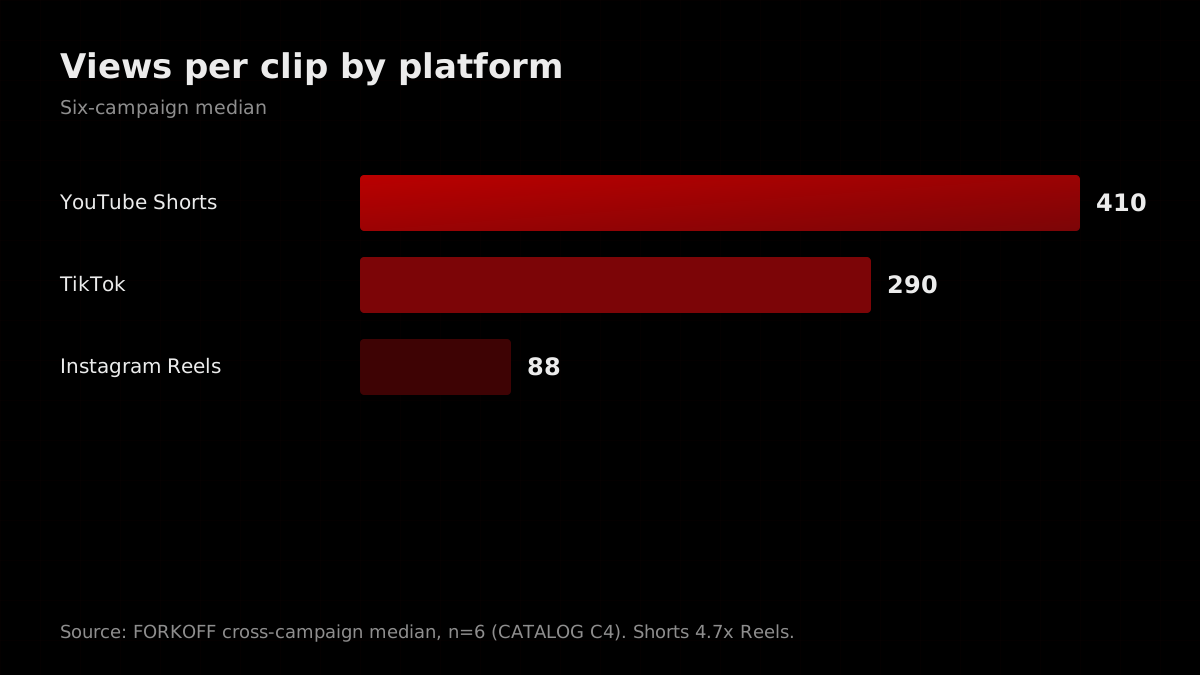
This is where verification turns into money. A campaign that scores hold-rate at the clip level can see, inside the first week, that Shorts is returning four to five times the views per clip that Reels is, and route the next wave of production accordingly. A campaign that never runs the analysis spreads clips evenly and pays the same per clip for its weakest platform as its strongest. That single decision is most of the gap between a $0.003 and a $0.05 qualified view.
The reason Shorts over-performs in operator-audience verticals is partly structural and partly audience. YouTube's recommendation engine surfaces a Short to non-subscribers aggressively when early watch-through is strong, and the crypto, finance, and AI audiences this client was reaching over-index on YouTube relative to Instagram. The lesson is not that Shorts always wins, it is that you cannot know which platform wins for your audience until you have measured it, and the measurement is the verification line item. A consumer-app campaign targeting a younger demographic might find TikTok carries the weight, and the same cohort analysis would surface that within the first week.
The verification line is what produces a $0.003 qualified view
The reference campaign's blended cost per qualified view was $0.003, against an unmanaged market range of $0.01 to $0.10 per qualified view across FORKOFF client audits, three to thirty-three times more expensive. The difference is not cheaper clippers. It is the verification line item. Because the campaign scored hold-rate at the clip level and matched paid conversions to specific cohorts at the payment level, budget could be routed into YouTube Shorts, which carried 61 percent of views from 25 percent of the clips, a 4.7x efficiency edge over Reels in this campaign. A campaign that never runs that analysis pays the same for its losing clips as its winning ones, which is the entire reason unmanaged cost per qualified view runs an order of magnitude higher.
Source: FORKOFF clipping campaign, anonymized crypto educator client, March 2026; verified against subscription CSV
How to get to $10k/month FAST with Clipping (2026 update)
Creator Abe
A clipper-side walkthrough of the per-view economics that set the clipper-payout line in a campaign budget.
The honest caveats a buyer should price in
A case study that only shows the wins is a sales deck. Three caveats belong on the invoice: the campaign's 0.97 percent engagement rate ran at or below short-form benchmarks, the headline numbers landed in 13 active distribution days out of a 31-day month rather than the full calendar, and this is one client in one vertical at a $50 subscription price point. A buyer who skips them is going to be surprised later.
First, the campaign's engagement rate was 0.97 percent, at or below published short-form benchmarks. Published short-form engagement rates vary widely by methodology, with Reels commonly cited at 1.2 to 1.5 percent and Shorts higher by some measures. Clip-farm distribution engages below a creator's native audience because the model wins on volume times conversion, not on per-post engagement rate. If a clipping pitch claims above-benchmark engagement, ask exactly how it was measured, because the honest answer for high-volume clip distribution is that engagement rate is not the metric the model optimizes.
Engagement rate ran below benchmark, and that is the model working
The campaign's engagement rate was 0.97 percent, which sits at or below published short-form benchmarks (Reels commonly 1.2 to 1.5 percent, Shorts higher by some methodologies). This is not a flaw to hide. Clip-farm distribution engages below creator-native content because the model wins on volume times conversion, not on per-post engagement rate. The honest framing for any buyer pricing a campaign: clipping buys reach and qualified attention at scale, it does not buy the engagement rate of a creator's own audience. If a clipping pitch claims above-benchmark engagement, that is the moment to ask how they measured it.
Source: FORKOFF clipping campaign data + published short-form engagement benchmarks, 2026
Second, the headline numbers landed in 13 active distribution days out of a 31-day month, not across the full calendar month. Any full-month projection from this data is a projection, not a result, and should be labeled as one. The 13-active-days detail matters for budgeting, because it means the campaign's burn was concentrated, and a buyer planning a full month at this cadence should expect to roughly double the clip volume and the spend, not assume the 13-day numbers represent a month.
Operator note3,085 clips and 1.19M views landed in 13 active days of 31, not the full month. Active days, not calendar days., anonymized crypto educator client, March 2026
Third, this is a single client in a single vertical, crypto trading education, monetized through a subscription at a $50 price point. The compounding shape of the funnel generalizes; the specific conversion rate and price point do not. Do not assume a $50-per-month crypto education funnel converts like an approximately $9-per-month consumer app or a $2,000-per-month B2B service. A higher price point means fewer conversions are needed to justify the same spend, but it usually also means a longer consideration window, which changes how you read the attribution timeline. The numbers in this case study are honest for what they are: one campaign, one niche, one price point, fully verified.
Making shorts from your long form content
Until now I've been hand making shorts that are unique from my videos, but I want to test if I can boost viewership on my long form videos by making effectively little commercials. I hand make everything and I don't use AI for anything but subtitle creation, but I'm worried… Show more
The partnered-creator thread above is the organic version of the exact motion a managed campaign productizes. A creator testing shorts-from-longform on their own channel is doing manually, for one account, what a clipping campaign does at scale across a network. The economics are why most creators eventually outsource it: the marginal clip is cheap to distribute through a managed network and expensive to distribute through your own single account, because your own account caps how many native posts you can make in a day without throttling.
How does clipping compare on cost to paid ads and influencer deals?
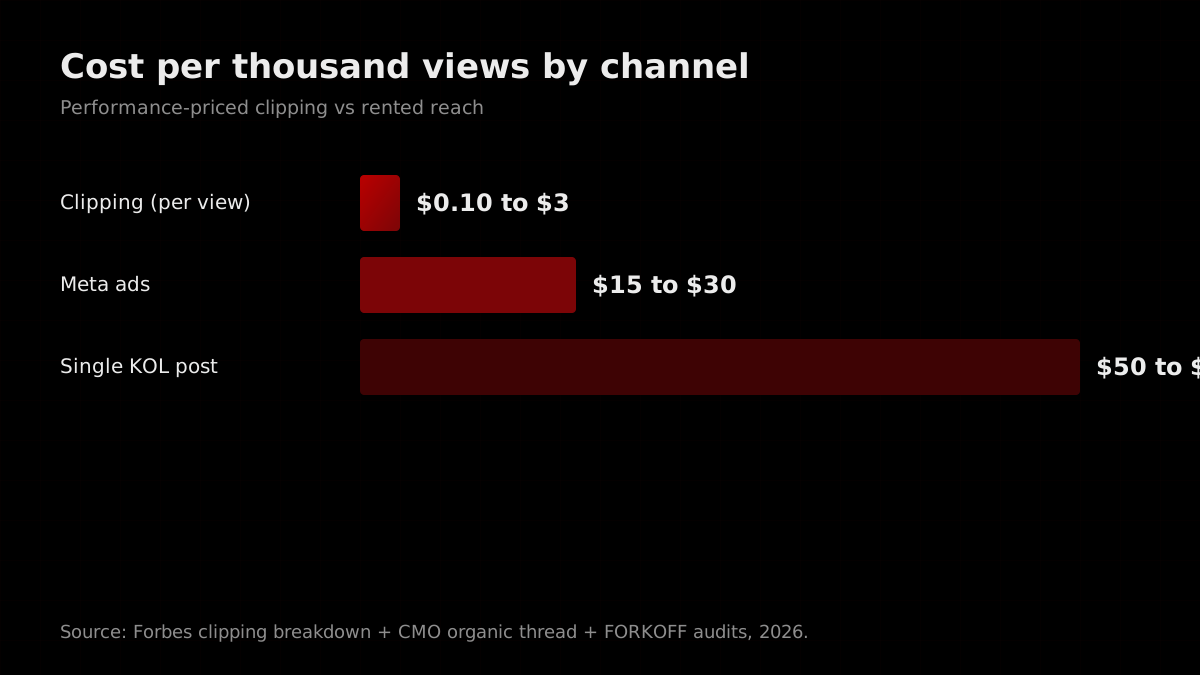
For the buyer choosing between channels, the raw cost comparison is stark. Meta ad campaigns run an estimated $15 to $30 CPM. A single crypto KOL post runs $50 to $250 CPM of rented reach. Clipping priced per verified view runs $0.10 to $3.00 CPM.
Traditional social ads cost $8 to $25 CPM. Clipping delivers the same reach for pennies.
Evan Stanfield
@evanxstanfield
I was on a call with a CMO and asked what their organic strategy looks like. They didn't have one. Entire budgets on paid ads, $20+ CPMs on Meta. The single best way to build real awareness right now is clipping: pay-per-view across TikTok, Reels, Shorts at $0.10-$3 CPM. Brands p… Show more
Cost per thousand views by channel
| Channel | CPM range | Pricing model | Reach type |
|---|---|---|---|
| Clipping (per verified view) | $0.10 to $3.00 | Performance, pay per view | Owned creator feeds, compounding |
| Meta ads | $15 to $30 | Auction, pay per impression | Rented, stops with budget |
| Single crypto KOL post | $50 to $250 | Flat, pay upfront | Rented, one message |
Channel CPM ranges from the Forbes clipping-industry breakdown, a CMO organic-strategy thread, and FORKOFF client audits, 2026. Clipping CPM is performance-priced; published clips keep accruing views after the campaign window.
The face-value comparison actually undersells clipping, for one structural reason: an ad buys a moment and a clip buys an asset. When the ad budget stops, the impressions stop and nothing is left. The clips a campaign publishes stay on the internet and keep surfacing in algorithmic feeds after the window closes. A buyer comparing line items at face CPM is undercounting the clipping line every time, because the ad line is a pure flow and the clip line builds a stock of distributed content that keeps working.
The line item buys an asset, not a moment
A Meta campaign at $20 CPM spends the budget, runs the impressions, and stops. Nothing is left. A clipping campaign leaves a library of published clips on the internet that keep accruing views after the campaign window closes. The reference campaign's 3,085 clips were active for only 13 of 31 calendar days, yet the published assets continued to surface in algorithmic feeds beyond that window. When a buyer compares a clipping line item to an ad line item at face CPM, the comparison undercounts clipping, because the ad buys a moment and the clip buys a durable distribution asset.
Source: FORKOFF clipping campaign reach data, March 2026
ClipStake
@ClipStake_X
Crypto companies waste money on KOLs. We're introducing an alternative: performance-based content distribution (clipping). Instead of betting on 5 KOLs, split your budget across 100+ creators. You only pay them per 1,000 verified views until your campaign goal is reached.
The tradeoff is control. A single KOL post is one message you approve before it goes out. A clipping campaign is hundreds of variations posting natively across accounts, and you cannot individually approve each one. That is the cost of the volume, and the verification loop is how you manage the variance after the fact instead of before it. For some buyers that loss of pre-publication control is disqualifying, and for those buyers a tighter KOL marketing motion or a focused Twitter marketing push is the better fit. The honest framing is that clipping and KOL work are not substitutes so much as different points on the control-versus-volume curve, and a sophisticated GTM motion usually runs both: KOL for the controlled, high-trust message and clipping for the high-volume discovery layer underneath it.
Hiring Clippers For My Agency
Hey everyone, I run a marketing agency and we are currently running two active campaigns. We’re looking for fast, reliable, and highly creative Short-Form Video Editors to join the team. Editors must prioritize retention over aesthetics. We don't need overly complicated, cinematic edits. You must understand how to hook a… Show more
How to start a $100k/month clipping agency (on whop)
Whop HQ
The platform-operator view of clipping-agency economics, useful for understanding where retainer pricing comes from.
The agency-hiring thread is a window into the labor market that sets the edit and posting line items. Short-form editors who understand retention over aesthetics are the scarce input, and the brief in that post, prioritize the hook and the pattern interrupt over cinematic polish, is exactly the kind of brief a managed campaign gives its clipper network. The cost of that labor is what the edit line item pays for, and it is rising as more brands discover clipping, which is one more reason the per-clip economics favor a managed network that can amortize clipper relationships across many campaigns.
The verification loop, step by step
The line item that earns its keep is worth seeing in full. The verification loop is four steps run on a weekly cadence through the campaign: pull the per-platform export CSVs, match landing-page clicks and payments against the specific clips that drove them, score each clip against the 75 percent hold threshold, then produce the cohort report that kills the bottom-performing hooks and reinvests the freed budget into the winners.
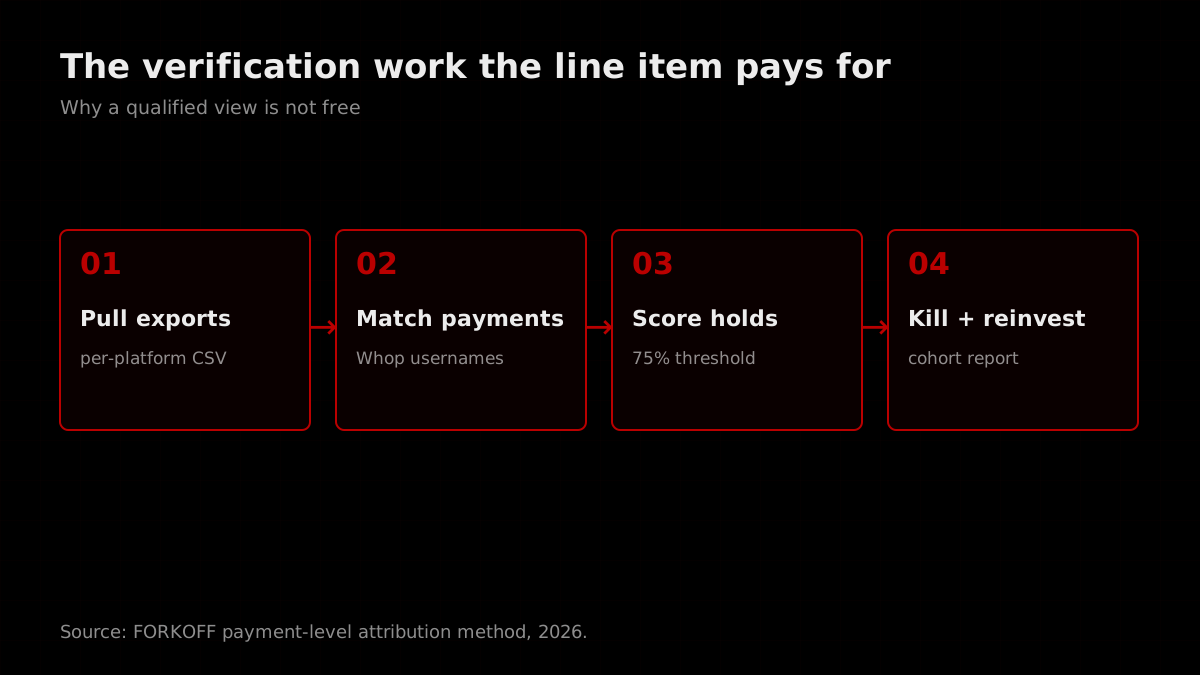
The match step is the one buyers underestimate: clicks and payments are tied to the specific clips that drove them by username, wherever the monetization platform exposes it, which is what turns a view total into payment-level attribution. The hold-rate score is what separates real qualified views from sub-one-second impressions, and the cohort report is the artifact the client actually keeps.
I Clipped For 137 Brands & Discovered This
Connor Savage
A clipper who ran campaigns for 137 brands on what actually moves views, the variance the verification line is built to measure.
That loop is the difference between a clipping campaign and a clipping spend. The campaign in this case study could name the 17 new conversions, tie them to cohorts, and hand the client a report that made the next campaign cheaper per qualified view. That is what the verification line item buys, and it is why pricing a campaign on cost per qualified view, rather than CPM, is the single most important move a first-time buyer can make.
The loop also compounds across campaigns, which is where the real economics live. Because the first campaign produced a cohort dataset, the second campaign starts with a kill-list and a winner-list already in hand, so its seed phase is shorter and its blended cost per qualified view starts lower. This is the same compounding shape we document in the managed clipping revenue case study, where a host's MRR bent upward not because of more spend but because each campaign inherited the measurement from the last one.
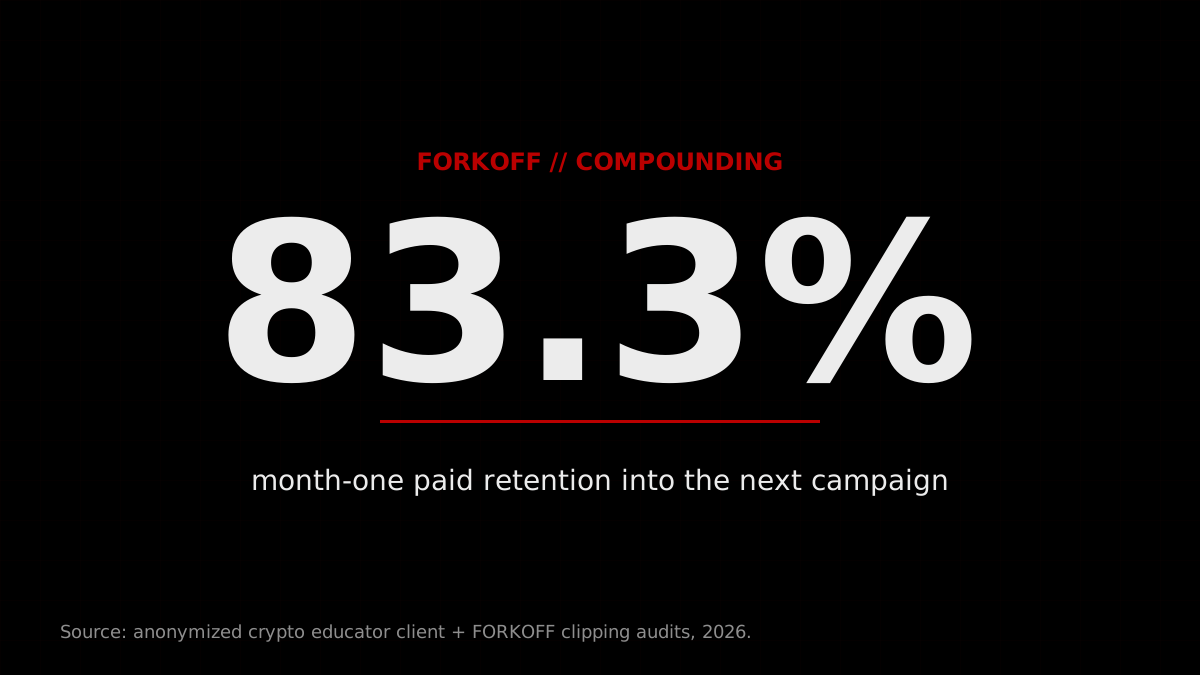
The retention number is the proof that the compounding is real and not just a spend story. The first campaign cohort retained 83.3 percent of its paid subscribers into the following month. For a creator-membership subscription, that beats the rough 75 percent first-term retention benchmark that subscription operators treat as the line between healthy and leaky. The honest caveat, again disclosed: a later month in the same client's history showed a 59.3 percent retention dip before recovering to 82.8 percent, so the retention is strong but not monotonic. Two of three measured months beat the benchmark and one dipped below it, which is the normal shape of a real subscription business rather than the smooth curve a sales deck would draw.
How do you read a clipping quote you have been handed?
If a clipping shop sends you a one-line CPM, the right response is a request for the line items. Here is the four-question checklist a buyer should run against any clipping quote before signing: ask how clippers are paid, ask how views are verified, ask what happens to the losing clips, and ask where the clips post. The cheap-looking quotes usually fail at least one of these.
Ask how clippers are paid. If the answer is a flat per-clip fee with no performance component, the shop has no structural incentive to care whether the clips are watched, and your cost per qualified view will run toward the high end of the $0.01-to-$0.10 unmanaged range. If the answer is per verified view, the incentive is aligned and the quote is worth taking seriously.
Ask how views are verified. If the answer is the platform dashboard, you are paying for impressions, not qualified views, and the gap between the two is where most of a naive clipping budget evaporates. If the answer involves per-platform exports, a hold-rate threshold, and a cohort report, the verification line exists and the quote is honest. The 75 percent hold threshold is not arbitrary; it is roughly the point at which the major short-form platforms begin re-promoting a clip to non-followers, which is the mechanism that turns a paid view into an organic one. Industry coverage of short-form algorithms, including Sprout Social's ongoing benchmark reporting, has tracked the same shift toward watch-through as the dominant ranking signal across platforms.
Ask what happens to the losers. A campaign with no kill-and-reinvest cadence pays the same for its bottom-quartile hooks as its top-quartile ones for the full run. A campaign that runs weekly cohort analysis kills the losers inside the first two weeks and routes the freed budget into the winners, which is the single biggest driver of a declining cost per qualified view over the campaign's life. If the shop cannot describe its kill cadence, it does not have one.
Ask where the clips post. An infrastructure line that maintains a healthy account network is the difference between a campaign that survives a strike wave and one that goes dark for a week. The reference campaign's network absorbed a 12-of-40 account strike and recovered in 96 hours because the bench existed. A self-hired set of accounts with no bench does not have that resilience, and the hidden cost shows up as lost distribution days, not as a line on the invoice.
Run those four questions against any quote and the cheap-looking ones usually reveal themselves. A $1 CPM quote with no verification, no kill cadence, and no infrastructure bench is not cheaper than a measured campaign at a higher headline CPM; it is more expensive per qualified view, because most of the views it bills you for never qualified. The whole point of the line-item view is that the headline number and the real number diverge, and the verification line is the bridge between them. For the full list of ways brands quietly lose budget before these questions get asked, see 8 clipping campaign mistakes that burn brand budget.
Where this campaign sits in the broader distribution stack
Clipping is the high-volume discovery layer of a distribution stack, not the closing layer: in the reference client's case the clips fed a subscription funnel, but the same qualified views could warm an audience for a founder funnel, give a KOL push an organic floor, or seed a Twitter program. Every line item in this breakdown is how FORKOFF prices managed clipping campaigns: outcome-billed against the qualified-view ledger, not against raw uploads.
A clipping campaign is rarely a standalone motion. In the reference client's case, the clips fed a subscription funnel, but the same qualified views could just as easily have warmed an audience for a founder funnel booking motion, supported an influencer marketing push by giving the paid posts an organic floor to stand on, or seeded a Twitter marketing program with clip-native content to repost. The cost per qualified view is the unit that lets you compare clipping against those alternatives on equal footing, because it strips out the vanity-view inflation that makes raw CPM comparisons meaningless.
The strategic point is that clipping is the high-volume discovery layer of a distribution stack, not the closing layer. It is cheap per qualified view precisely because it trades pre-publication control for volume, which makes it ideal for the top of a funnel and wrong for a controlled launch message. The OpenAI $200M TBPN deal and the clip economy it signals is the macro confirmation of this shift: buyers at scale are paying for clip distribution, not raw content. A buyer who understands that will run clipping underneath a more controlled motion rather than in place of it, and will price the clipping line on cost per qualified view while pricing the controlled motion on conversion. That is the entire argument for breaking a clipping budget down to the line item: it is the only way to compare it honestly against the rest of the stack, and it is the discipline that separates a campaign that compounds from a spend that evaporates.
The line-item summary
One managed clipping campaign. Clipper payouts as the majority line, edit and posting operations at roughly $0.85 and $0.30 per clip, account infrastructure at about $400 a month, and qualified-view verification as the line that makes the rest pay off. On the other side: 3,085 clips, 1,190,014 organic views in 13 active days, 793 landing-page clicks, 17 new payment-verified subscribers, MRR from about $595 to $1,290, at a blended $0.003 cost per qualified view against a $0.01 to $0.10 unmanaged market.
The lesson is not that clipping is cheap. It is that a clipping campaign priced and measured at the line-item level is a different product from a clipping spend quoted as a single CPM. The buyers who win are the ones who price the verification line in, not the ones who quote it out. If you want the same line-item plan built for your channel before a dollar moves, that is exactly what our clipping service audit produces, and the broader distribution context lives in the managed clipping playbook hub.