
A launch video readiness checklist is a pre-launch audit that scores whether your launch video is ready to be distributed, not whether it is finished being edited. The distinction matters because being done filming is not the same as being ready to launch. A recently funded startup with an in-house team can produce a video that wins on craft and still stall at baseline views, because funding and a skilled team solve production, the half of the work that ends at the export button, while leaving the distribution half untouched. This post is the operational checklist for closing that gap.
TL;DR
A launch video readiness checklist scores whether your video is ready to be distributed, not just whether it is done being edited. Funding and an in-house team solve production, the half that ends at the export button. They do not solve distribution: the cut-downs, the first-48-hours seeding, and the clip distribution that decide whether a launch travels. The checklist walks five levers (hook window, cut-downs, seeding plan, clip rights, and a funded distribution budget) so you can tell the difference between being done filming and being ready to launch.
The Launch Video Readiness Checklist: Why Funding and a Team Do Not Guarantee a Viral Launch
The launch video readiness checklist scores five levers (the hook window, platform-native cut-downs, the first-48-hours seeding plan, clip rights, and a funded distribution budget) that decide whether a launch video travels rather than stalls. The sections below cover what readiness actually means, why funding and a team do not close the distribution gap, the launch-video lifecycle most teams skip, the checklist itself walked row by row, where the budget should go, the cut-down strategy, the seeding sequence, the difference between production tools and the distribution layer, readiness by launch phase, and how FORKOFF runs the distribution half.
About this guidance
This post draws on FORKOFF first-party operator experience running distribution for launches, plus publicly cited sources on launch-video production and the practitioner debate on X and Reddit. Numbers framed as splits, ranges, or mixes are illustrative and typical rather than benchmarks. The one hard figure asserted as fact is that FORKOFF's clipping network has processed 5B+ views. Individual outcomes vary by product category, audience size, and whether the distribution layer was built before launch.
What a launch video readiness checklist actually is
A launch video readiness checklist is a pre-launch audit. It does not ask whether the edit is locked, the color grade is approved, or the motion design is clean. It asks a harder question: if you pressed render and posted this right now, would anything happen? Readiness is about distribution potential, not production completeness. A video can be 100 percent done in the edit suite and score poorly on readiness, and that gap is exactly the trap funded teams fall into.
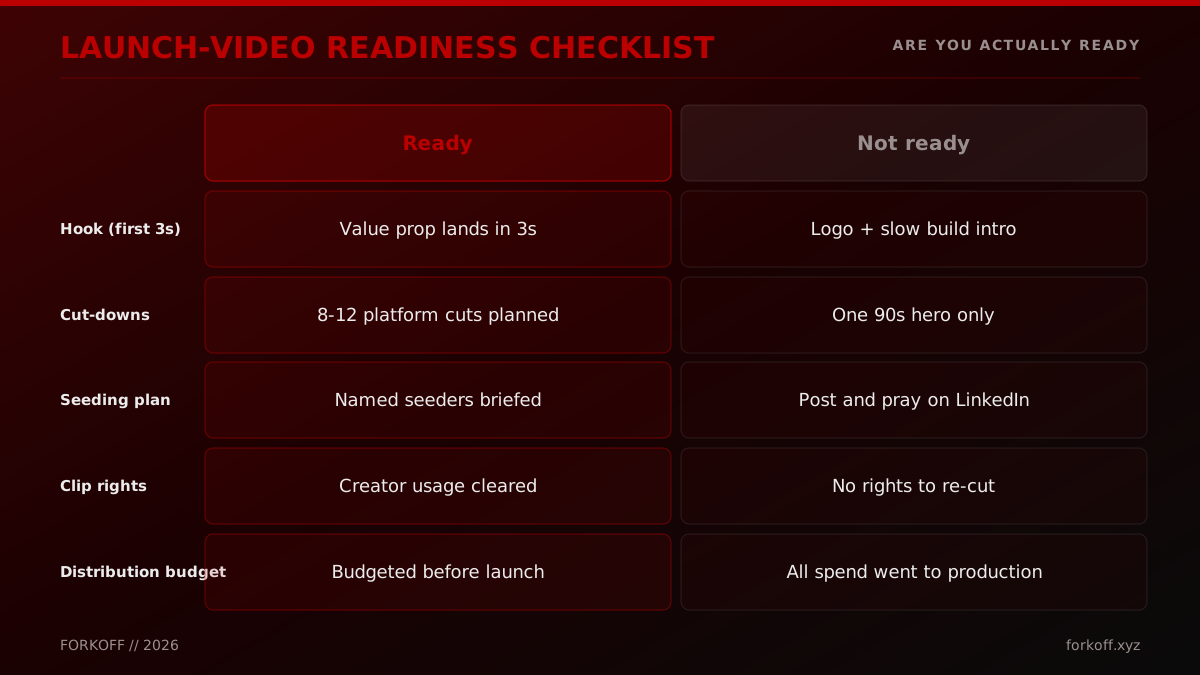
The checklist walks five levers. First, the hook: does the value proposition land in the opening seconds, or does the video burn its window on a logo animation. Second, the cut-downs: do platform-native versions exist for every channel you intend to post on, or only one aspect ratio. Third, the seeding plan: is there a named sequence for the first 48 hours across real accounts, or is the plan to post once and hope. Fourth, the clip rights: are you cleared to cut and repost the footage across many accounts. Fifth, the distribution budget: is distribution funded as its own line item, or whatever happens to be left over.
If your team can produce the hero video but cannot answer those five questions, you are done filming and not ready to launch. The rest of this post is how to get ready.
The reason this framing matters is that production completeness is loud and distribution readiness is quiet. When the edit is locked, everyone can see it: the video plays, it looks good, the founder is proud, the team shares it internally, and the launch feels imminent. Distribution readiness produces no such artifact. There is nothing to screen. A team can stand around admiring a finished hero video that scores a one out of five on readiness and feel, genuinely, that they are ready to launch, because the thing they can see is done. The checklist's job is to make the invisible half visible, to turn five quiet questions into a score on a page that someone has to look at before the launch date is set.
Funded And Skilled Is Not The Same As Viral
A recently funded startup with an in-house team can produce a launch video that wins on craft and still stalls at baseline views. The reason is structural, not creative: funding and a skilled team solve the production problem, which is the half of the work that ends at the export button. The distribution half, cut-downs, seeding, and clip distribution, is a different muscle that no amount of production budget builds on its own.
Source: FORKOFF distribution engagements, illustrative
Why funding and a team do not guarantee virality (the distribution gap)
Funding buys production capacity and a skilled in-house team buys production quality, but virality is not a production outcome. It is a distribution outcome. The two get conflated because the most visible part of a launch is the polished hero video, so when a launch flops the instinct is to blame the video and spend more next time. That instinct inverts the problem. The video was probably fine. What was missing was the machine that puts it in front of cold audiences, repeatedly, in the shape each platform rewards.
This is the gap the entire field steps around. Walk the page-one results for how to make a product launch video and you find AI tools that promise launch videos in minutes and generic guides that stop at the edit. EditShare's four steps end at production. LAI Video's five steps never reach distribution. Luma's pitch is generating launch videos in minutes, which is a production promise, not a distribution one. The example reels show finished videos with no account of how any of them traveled. The one distribution-adjacent tip anyone gives is Arcade's, share a clear value proposition ideally within the first 10 seconds, and even that lives inside the video rather than after it. Nobody owns the half that comes after the export button.
The two paths diverge the moment the edit is locked. One path funds a single polished hero and posts it once on the company account, then watches it decay to baseline within a day. The other path treats the hero as raw material for a campaign: many cuts, a seeding sequence, a clip distribution push, and a named owner for the second and third week. The table below lays the two paths side by side so the gap is concrete rather than abstract.
Production-Only Path vs Distribution-Engineered Path
| Dimension | Production-only path | Distribution-engineered path |
|---|---|---|
| What gets funded | One polished hero video | Hero video plus cut-downs, seeding, clip distribution |
| Number of assets shipped | 1 (the hero) | Many (hero plus platform-native cuts) |
| First 48 hours | Posted once on the company account | Seeded across founder, team, and network accounts |
| Aspect ratios | Usually one (16:9) | 16:9, 9:16, and 6-second teaser |
| Clip rights | Often unconfirmed | Confirmed before the shoot |
| Who owns the second week | No one | The distribution operator |
| Typical outcome | Stalls at baseline after the first day | Compounds across weeks as cuts circulate |
Illustrative comparison of the two common paths, not a benchmark. Outcomes vary by product, audience, and existing reach.
The contrarian voices on X have already named this from the buy side. One operator described paying a six-figure sum for a single video that trends for barely more than a day as a money pit. Another argued bluntly that a launch video, a UGC program, and other growth channels convert and travel when the product is good, not when the spend is large. A third pointed out that the polished launch video with elite animation and quick cuts is now a format everyone has seen many times over, which makes craft table stakes rather than a differentiator. All three land on the same place: production spend is not the lever.
Spending More Does Not Buy Virality
The contrarian voices on X make the same point from the buy side. One operator framed a six-figure single video that trends for barely more than a day as a money pit; another argued that a launch video travels when the product is good, not when the budget is large. Both land on the same conclusion the readiness checklist encodes: production spend is not the lever, distribution and product are.
Source: Practitioner commentary on X, 2026
The founders sit in the middle of this. The recurring r/SaaS questions are not about distribution, they are about production: how do you guys create product launch videos, what tool makes a nice animated intro. One founder describes the entire plan as launching on LinkedIn next month with an eye-catching animation. Produce it, post it, hope it travels. That is the default, and the default does not travel, no matter how much was raised. The same instinct shows up in r/UXDesign threads asking how to make launch videos that look like the polished ones, chasing the craft of the big launches while the distribution that carried them stays invisible.
How do you make your product demo/launch videos?
This connects directly to the broader go-to-market shift FORKOFF has written about. Single-event launches decay, distribution systems compound, the same thesis at the center of the three ring distribution model for SaaS. The launch video is just the most expensive single asset that gets this wrong.
The launch-video lifecycle most teams skip
A launch video has a lifecycle, and most teams only execute the first stage of it. The full lifecycle is produce, then seed, then clip, then distribute, then compound. The video team is brilliant at the first stage and the launch dies somewhere between the first and the fourth.
Produce is the hero video: the script, the shoot, the edit, the motion design. This is where the funding goes and where the in-house team earns its keep. Seed is the first 48 hours, when the hero and its cuts go out across founder, team, and network accounts in a coordinated sequence rather than a single company post. Clip is turning the hero into many platform-native pieces, the vertical cut, the horizontal cut, the teaser, the standalone moments worth posting on their own. Distribute is feeding those clips through a network that reposts them across many accounts to reach cold audiences. Compound is the second and third week, when the best-performing cuts keep circulating and the launch keeps generating reach long after launch day.
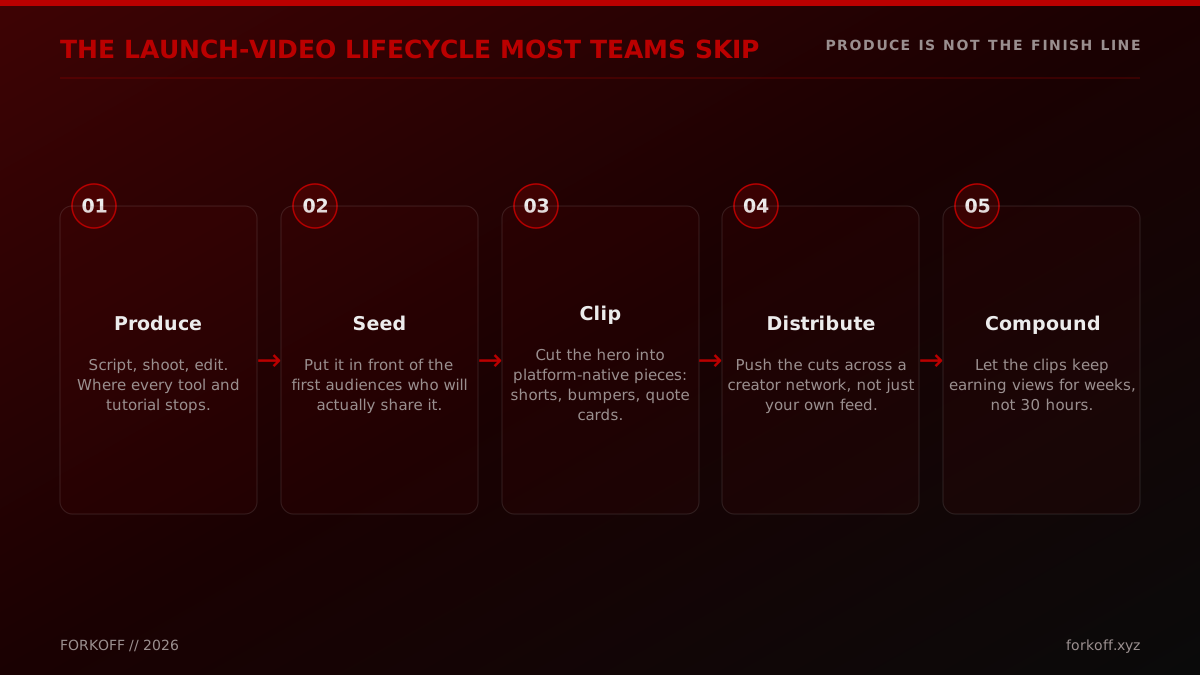
The stages after produce are not optional polish. They are where the views come from. A team that funds produce and skips seed, clip, distribute, and compound has funded a film, not a launch. The readiness checklist exists to make the skipped stages visible before launch day, when there is still time to build them.
The creators who consistently get launch videos past six figures of views understand this in their bones. Renat Gabitov's framing, in a video titled how I create product launch videos that get 100k+ views, names the real scoreboard right in the title: the metric is views, not production quality. That is the tell. When the people who actually move views talk about launch videos, they talk about the outcome, and the outcome is a distribution number. When the production-focused field talks about launch videos, it talks about steps, tools, and aspect ratios. The gap between those two vocabularies is the gap this checklist closes.
A useful way to internalize the lifecycle is to assign each stage a different owner in your head. Produce belongs to the video team. Seed belongs to the founder and the people willing to post. Clip belongs to whoever can turn one shoot into a dozen native assets at speed. Distribute belongs to the network that operates accounts at scale. Compound belongs to whoever is still watching the dashboard in week three. When all five of those owners are the same overworked marketing hire, four of the five stages quietly do not happen, and the launch dies as a beautiful, unwatched film.
The readiness checklist (the core, walk each row)
Here is the checklist, walked row by row. Each row is a question, a not-ready state, and a ready state. Score yourself honestly before you press render.
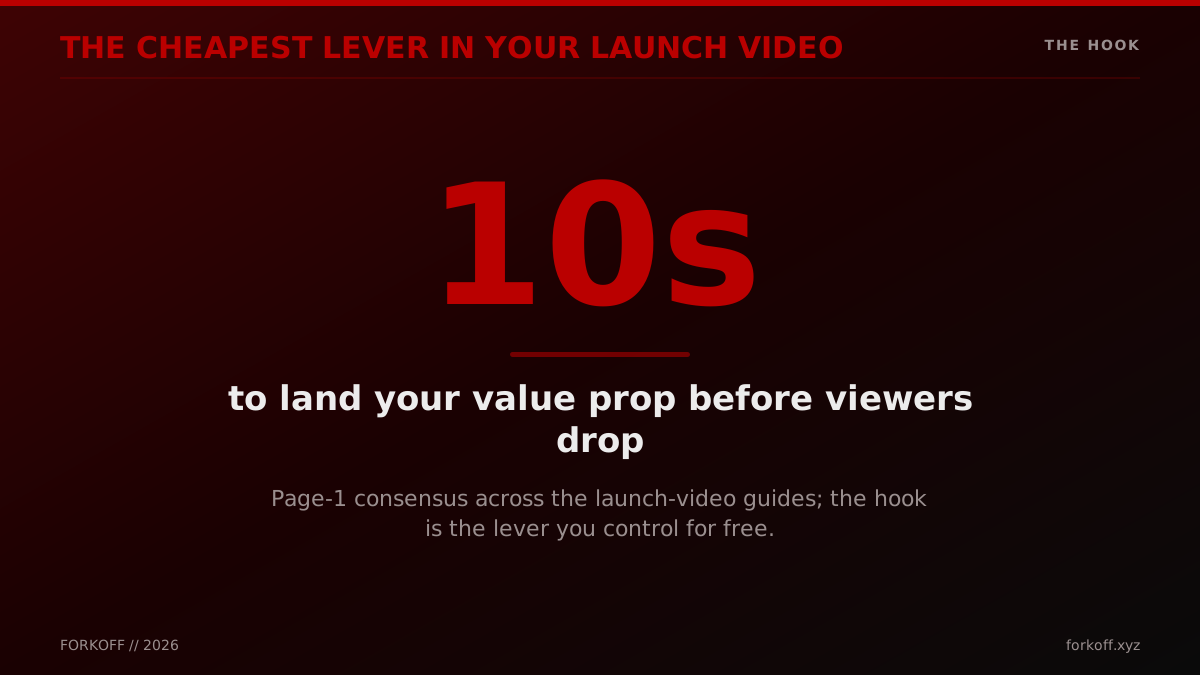
Row one, the hook window. Not ready: the video opens with a logo animation or a slow scene-setting intro, and the value proposition arrives somewhere in the middle. Ready: the value proposition lands in the first 10 seconds, the one tip the entire field agrees on, per Arcade. On vertical feed platforms the effective window is even tighter, often the first one to three seconds, because early drop-off tells the algorithm to stop distributing the video. The hook is the cheapest lever you fully control, it costs nothing to reorder the edit so the value lands first.
The 10-Second Hook Is The One Thing The Field Agrees On
Across the production-focused guides that dominate page one, the single distribution-adjacent tip everyone repeats is Arcade's: share a clear value proposition ideally within the first 10 seconds. It is the cheapest lever a team fully controls and the most common one funded teams skip, opening instead with a logo animation that burns the window before the value lands.
Source: Arcade, product launch video examples
Row two, the cut-downs. Not ready: one aspect ratio exists, usually the 16
hero. Ready: 16 for YouTube and LinkedIn, 9 for Reels, Shorts, and TikTok, and a 6-second teaser for paid placements all exist before launch. Each platform rewards content cut to its native shape and pacing. Posting the long horizontal hero everywhere unchanged wastes most of the surface area you could occupy.Row three, the seeding plan. Not ready: the plan is to post once on the company account. Ready: a named sequence for the first 48 hours that maps which accounts post which cut, in what order, with what caption. Seeding is the difference between a video that gets shown to your existing followers and a video that gets early engagement velocity, which is what feed algorithms read as a signal to show it to more people.
Row four, the clip rights. Not ready: rights to clip, repost, and distribute the footage are unconfirmed or were never discussed with the production vendor. Ready: clearance to cut and repost across many accounts is locked before the shoot. This row is mundane and it kills launches. A distribution network cannot repost footage you do not have the rights to repurpose.
Row five, the distribution budget. Not ready: distribution is funded with whatever is left over after production, which is often zero. Ready: distribution is a first-class line item budgeted before the edit is locked. A video that no one funded to travel is a sunk cost regardless of production spend.
Launch Video Readiness Scorecard
| Readiness lever | Not ready | Ready |
|---|---|---|
| Hook window | Opens with a logo or slow intro | Value proposition lands in the first 10 seconds |
| Cut-downs | One aspect ratio exists | 16:9, 9:16, and a 6-second teaser exist |
| Seeding plan | Post once and hope | A named 48-hour sequence across accounts |
| Clip rights | Unconfirmed or unclear | Cleared to clip and repost before the shoot |
| Distribution budget | Zero, or whatever is left over | A funded line item, not an afterthought |
| Second and third week | Unowned | Owned by a distribution operator with a plan |
Score each lever before you press render. Being done filming is not the same as being ready to launch.
Where launch-video budget should go
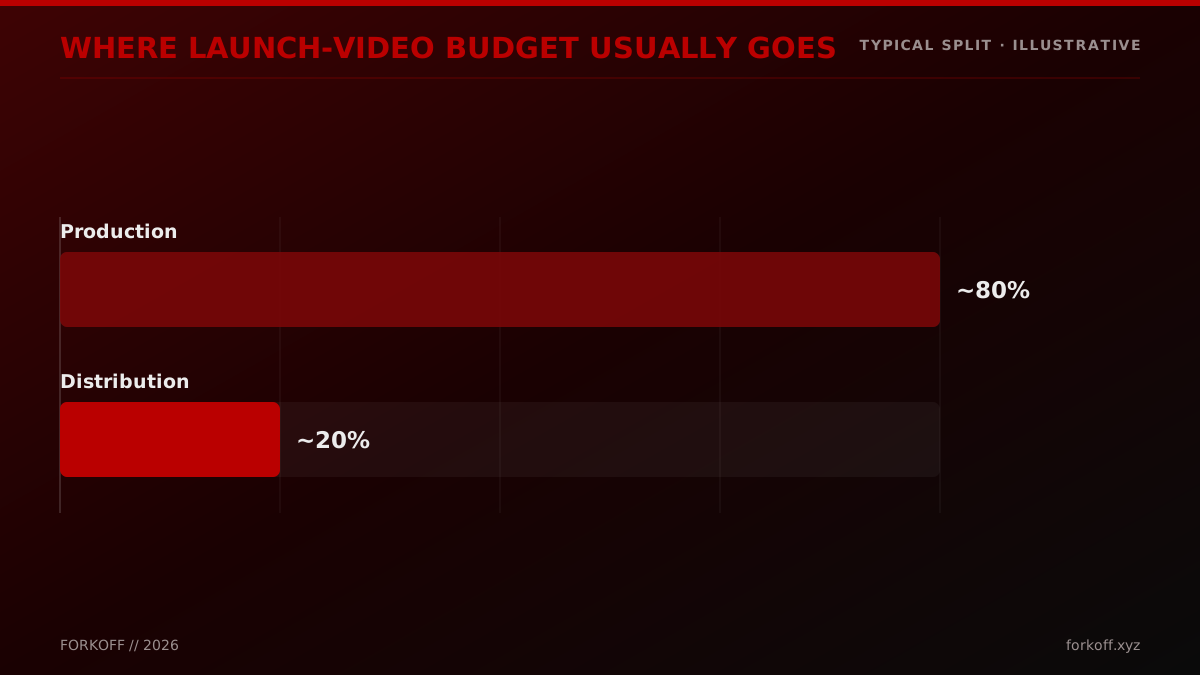
The most common budget mistake is discovered after the fact: the team learns it inverted the split. A frequent pattern is roughly 80 percent of the launch-video budget going to production and 20 percent or less to distribution, when the leverage usually sits on the other side. These numbers are illustrative, not a benchmark, because the right ratio depends on your product, your audience, and how much existing reach you can seed into. The principle is durable even when the exact split is not: a beautifully produced video that no one engineered to travel returns less than a modestly produced video that a real distribution layer carries.
The reframe that fixes this is to stop treating the hero video as the launch and start treating it as the asset. The launch is the cut-downs, the seeding, and the clip distribution that put the asset to work. Once you see the hero video as the raw material for a distribution campaign rather than the campaign itself, the budget question answers itself: fund the thing that creates the reach, not just the thing that creates the footage. FORKOFF's managed clipping playbook walks how that distribution spend is structured and measured.

Andrew
@benaratame
your launch video, UGC program, and other growth channels will convert + go viral if your product is good
Measure the spend against qualified views rather than raw impressions, so the budget chases reach that actually belongs to your audience rather than vanity counts. The economics of that distribution layer, including CPM rates for clipping and a full clipping campaign cost breakdown, are public so you can model the line item before you commit to it. Distribution can also run as a performance clipping ad line item, which is the cleanest way to fund it as its own budget rather than an afterthought.
One hero video, many cuts (the cut-down strategy)
The single most under-executed lever in the whole checklist is the cut-down. A launch in 2026 is not one video, it is one shoot turned into many videos. From a single hero you cut a vertical 9
piece for Reels, Shorts, and TikTok, a 16 piece for YouTube and LinkedIn, a 6-second teaser for paid, and several standalone moments worth posting on their own: the demo beat, the founder soundbite, the before-and-after, the one surprising statistic. One shoot, a dozen native assets.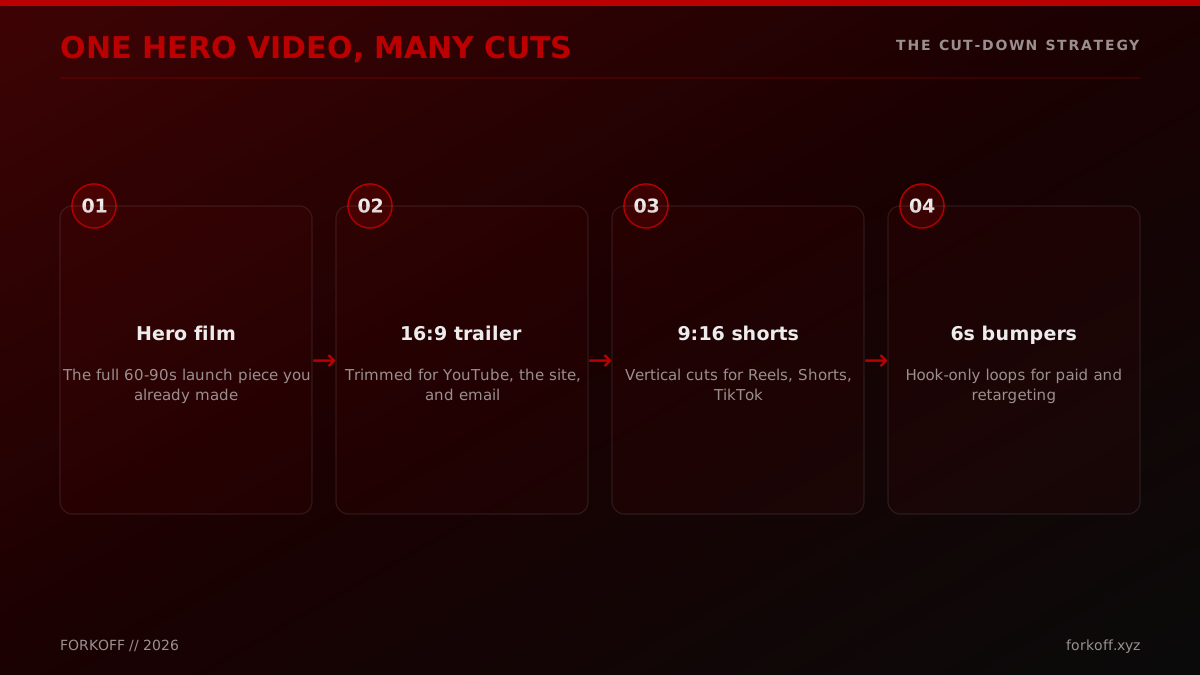
The hero video typically runs 60 to 120 seconds, the vertical cuts usually run 15 to 60 seconds, and the teaser is built for the few seconds a paid placement gets. These ranges are typical rather than rules, the point is variety from one production, not a fixed grid. Each cut is shaped for its platform's pacing, not just cropped to its aspect ratio. A 9
cut is not a 16 video with the sides chopped off, it is re-paced for a feed that rewards an instant hook and tight runtime.This is also where the in-house team and a distribution partner divide cleanly. The team produces the hero and, ideally, the first round of cuts. A distribution operator can take it from there, producing cuts at the volume and cadence a real distribution push needs, which is more than most in-house teams have the bandwidth to sustain through a launch week on top of their normal work.

Daniel A. Saedi (DataManDan)
@thatguybg
cliche but well-executed launch video - elite animations - quick cuts keep attention - script is really dialed in (clear bold statement, why it matters, who its for, etc) - sound fx are nice but - have seen this format over and over again
The seeding sequence (first 48 hours)
Seeding is what happens in the first 48 hours, and it is the difference between a video your existing audience sees and a video the algorithm decides to push. The mechanism is engagement velocity: feed platforms watch how fast a new post earns engagement relative to its early reach, and a fast start tells the system to show it to a wider, colder audience. A single company post has no velocity. A coordinated sequence does.
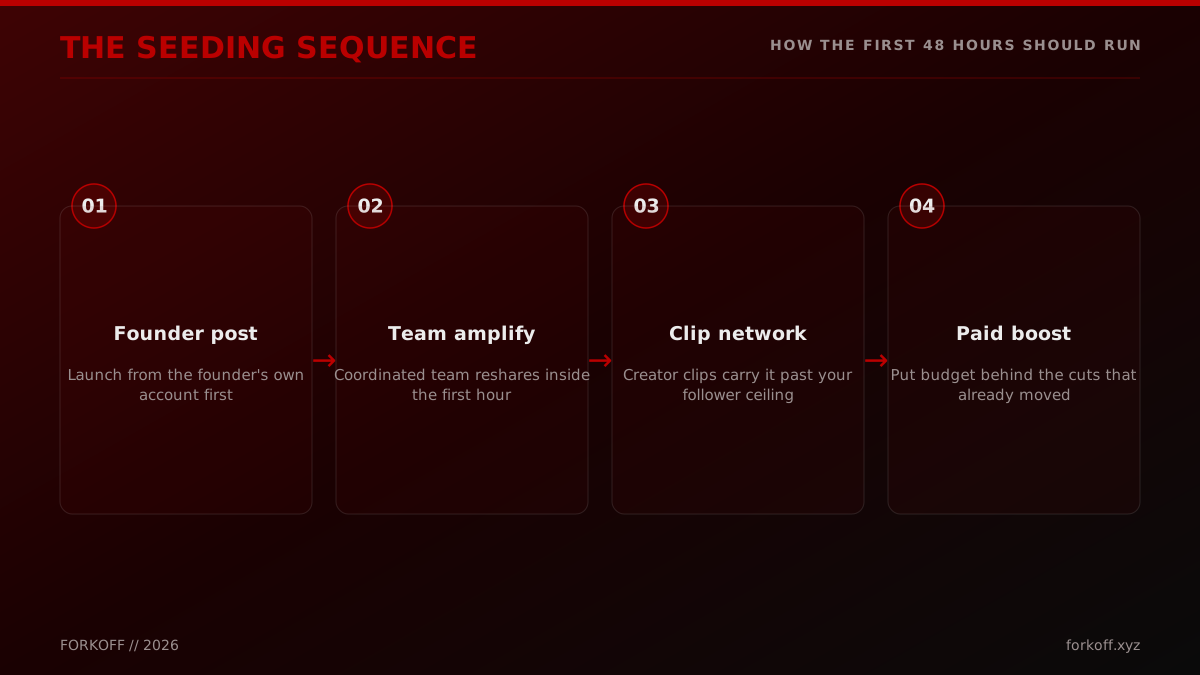
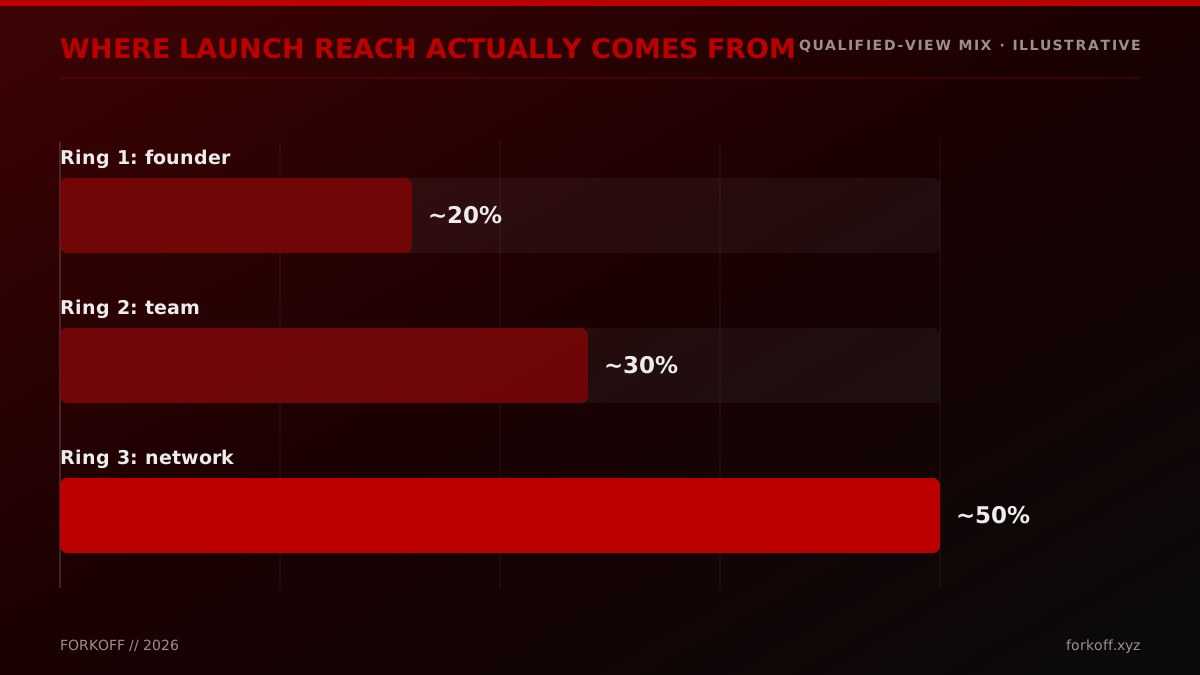
A typical seeding sequence runs in waves. The founder posts first from their personal account, because buyers follow people, not logos, which is the same principle behind founder-led distribution covered in how to go viral on Twitter. The team amplifies next, quote-posting and adding genuine commentary from their own accounts within the first few hours. The wider network follows, advisors and friendly accounts who agreed in advance to engage. Paid and clip distribution then carry the best-performing cut to cold audiences once the early engagement signal is established. This wave structure mirrors the three ring distribution model: founder voice, team amplification, paid network, in that order.
The launch video is also not the whole launch. The same 48-hour window is when you sequence the other surfaces, the announcement post, the Hacker News launch, and the launch platforms beyond Product Hunt, so the video and the channels reinforce each other rather than firing on separate days.
The most common seeding failure is timing the waves wrong. Teams that do seed often fire everything at once, founder, team, and network all posting in the same hour, which spends the entire warm audience in one burst and leaves nothing to sustain velocity through the rest of the day. A better pattern staggers the waves across the window: the founder post anchors the morning, the team layers in over the next few hours with genuine commentary rather than identical reposts, and the network and paid cuts pick up once there is an early engagement signal worth amplifying. The point of staggering is to keep feeding the algorithm fresh velocity signals across the whole 48 hours instead of one spike that decays by lunch.
The other seeding failure is treating the cuts as interchangeable. The vertical cut that works in a Reels feed is not the cut you want a measured developer audience to see first on LinkedIn. Match the cut to the account and the platform. A founder posting to a professional network leads with the cut that frames the problem and the insight; the same launch on a fast vertical feed leads with the demo beat or the surprising moment. One shoot, many cuts, and each cut pointed at the audience most likely to carry it.
How do you guys create product launch videos?
Production tools vs the distribution layer
There is a genuine and useful tooling market for the production half. Luma generates launch videos in minutes, Canva and InVideo offer free product-video makers, and avatar-driven explainer tools like HeyGen produce talking-head walkthroughs from a script. These tools are good at what they do and they keep getting better. They solve production. They do not solve distribution, and conflating the two is the core mistake the readiness checklist corrects.
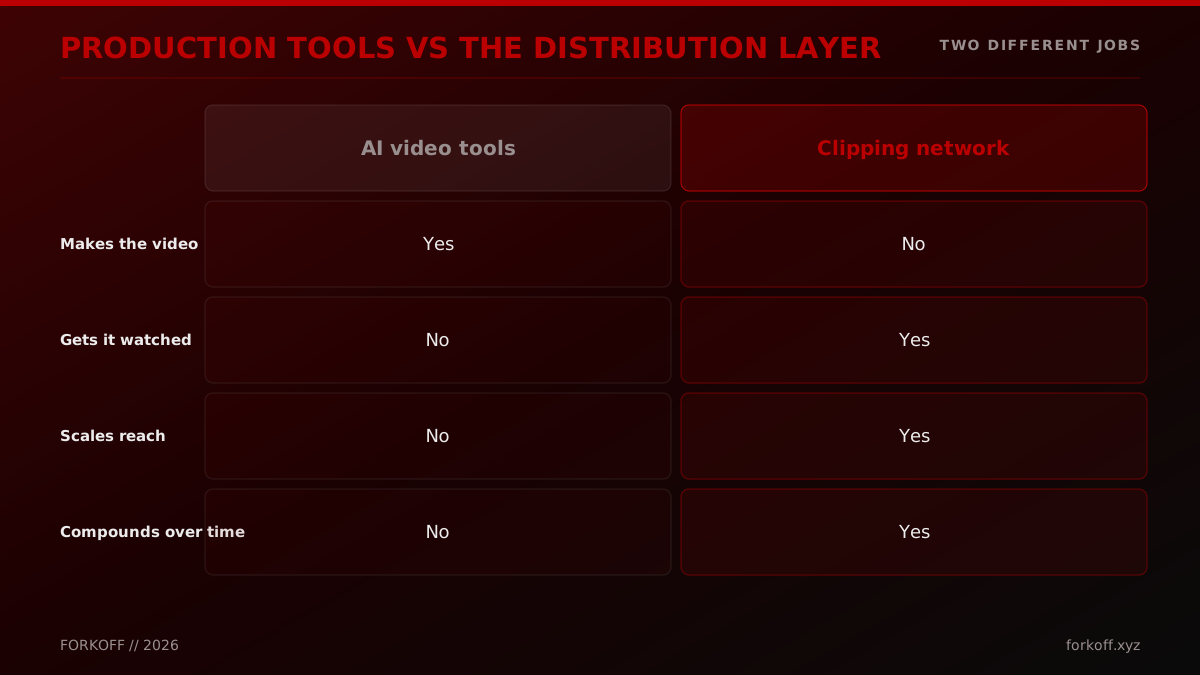
A clipping network is a different kind of thing entirely. Production tools turn a brief into footage. A distribution layer turns footage into reach by operating many accounts, posting many cuts, and measuring the result by qualified views. One is software you point at a blank canvas, the other is infrastructure you point at a finished asset. A team can own the best production stack in its category and still have zero distribution capability, because the two are different jobs. Understanding what a clipping agency does and how clippers earn makes the distinction concrete: the agency operates the repost-and-seed machine that production tools were never built to be. The managed clipping playbook is the operating manual for that machine, and it is the half of your launch that no production tool on the market replaces. If you are still choosing production tooling, the clipping software comparison marks where the editing stack ends and distribution begins.
The Distribution Layer Is A Real Machine, Not A Hope
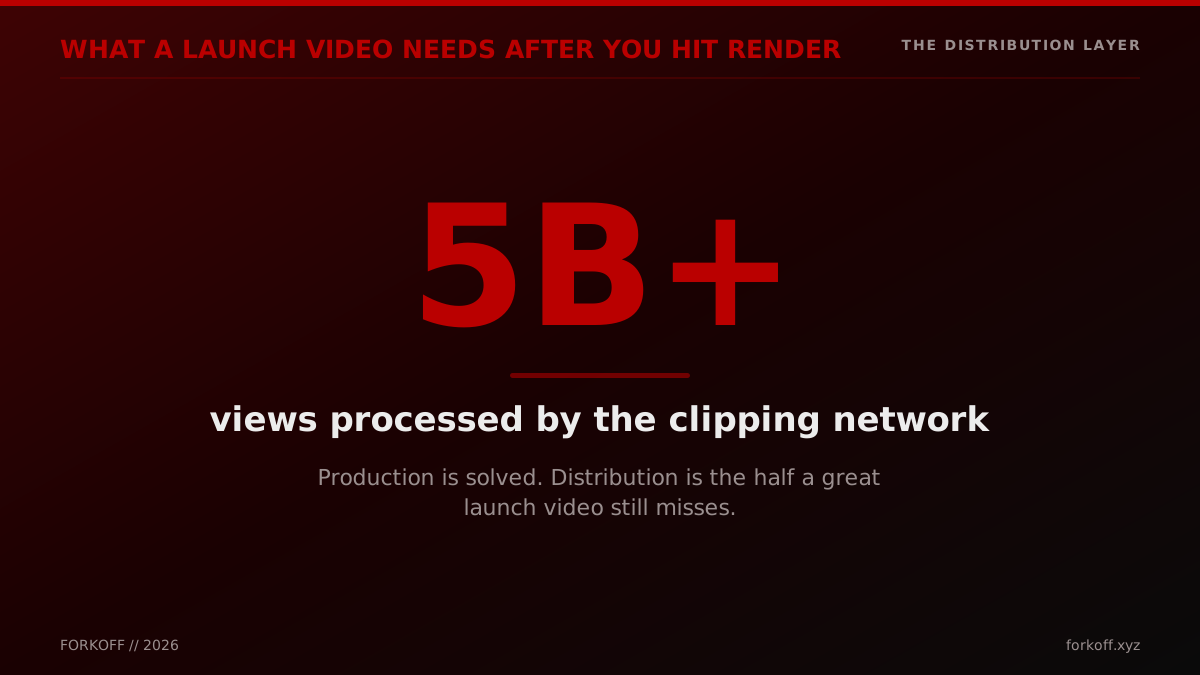
Clip distribution at scale is an operational discipline, not a posting habit. FORKOFF's clipping network has processed 5B+ views, which is what the half of the launch that comes after the export button actually looks like when someone runs it as infrastructure: many accounts, many cuts, measured by qualified views rather than raw impressions.
Source: FORKOFF clipping network
Readiness by launch phase
Readiness is not a single check at the end, it is a posture you hold from the moment the launch is scoped. Splitting it by phase keeps the distribution half from getting starved by the production half, which is what happens when distribution is only considered after the edit is locked.
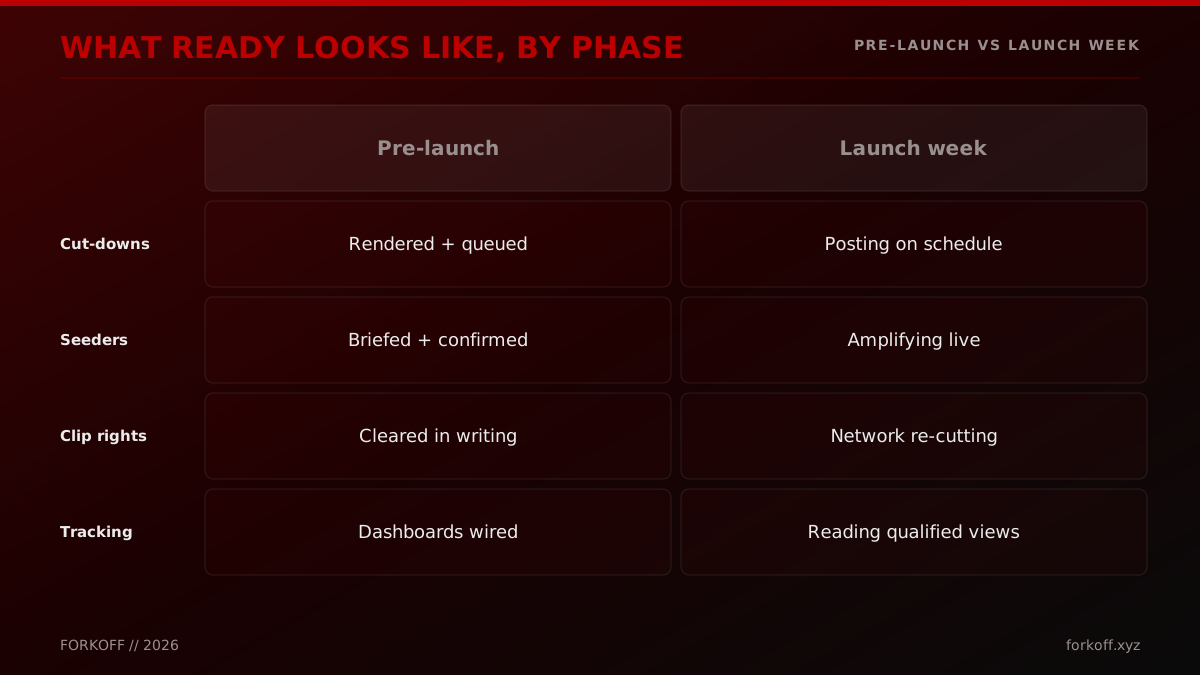
In the pre-launch phase, readiness means three things are decided before the shoot: clip rights are cleared, distribution is funded as a line item, and the cut-down list is written so the shoot captures what each cut will need. The cheapest time to fix a readiness gap is before anyone is on set. A vertical cut is far easier when the shoot was framed with vertical in mind than when an editor is salvaging it from a horizontal master afterward.
In launch week, readiness means the seeding sequence is named and the accounts are briefed, the cut-downs are produced and scheduled rather than improvised, and a distribution operator owns the second and third week so the launch compounds instead of stalling on day two. The single best predictor of whether a launch travels is whether one named person owns distribution end to end, the same way a named person owns production. When distribution is everyone's job, it is no one's job, and the video stalls.
How FORKOFF closes the distribution gap
This is the half FORKOFF runs. You and your in-house team produce the hero video, the part you are already good at. FORKOFF takes the finished asset and operates the distribution layer underneath it: cutting the hero into platform-native pieces, running the first-48-hours seeding sequence, and pushing the best cuts through a clipping network that has processed 5B+ views. Production is solved on your side. The skipped half is solved on ours.
The reason this works as a partnership rather than a hire is the same reason the gap exists in the first place: distribution at launch volume is infrastructure, not a task. It is many accounts, many cuts, and a measurement layer built on qualified views rather than vanity impressions. An in-house team staffed for production cannot spin that up for one launch week and tear it down after, which is why funded teams with great video people still watch launches stall. The distribution machine has to already exist, and running it is a different operating discipline from making the film. The upside when it does exist is concrete: a single clipped campaign can earn 25M views for a fraction of agency rates, the kind of distributed reach a one-off launch post never compounds into. It is also why some founders now ask whether twitter launches are a scam: the spectacle without the distribution underneath rarely pays back.
In practice the engagement looks like this. Before the shoot, we map the cut-down list and confirm the clip rights so production captures what distribution will need. In launch week, we produce the platform-native cuts, run the staggered seeding sequence, and push the best-performing cut through the network. After launch day, we own the second and third week, watching which cuts compound and reallocating distribution toward the ones earning qualified views. The simplest way to start is to bring your launch date and your hero cut to a strategy call and map the cut-downs, seeding, and clip distribution before the edit is even locked, so the readiness gaps surface while there is still time to close them.
How I create product launch videos that get 100k+ views
Renat Gabitov - SaaS Video Marketing
Renat Gabitov frames the metric as views, not production quality. The title itself, launch videos that get 100k+ views, names the real scoreboard.
The bottom line
Funding and an in-house team are real advantages, and they solve a real problem: production. They do not solve distribution, and distribution is what decides whether a launch video travels. The readiness checklist exists to make that distinction impossible to ignore before launch day, when there is still time to act on it. Score the five levers honestly. If the value proposition does not land in the first 10 seconds, if the cut-downs do not exist, if there is no seeding sequence, if the clip rights are unconfirmed, or if distribution is funded with leftovers, you are done filming and not ready to launch.
The fix is not a bigger production budget. It is treating the hero video as the asset and the cut-downs, seeding, and clip distribution as the campaign, then funding and owning the campaign as a first-class part of the launch. Produce the video your team can produce. Build the distribution machine underneath it, or partner with one that already exists. That is the difference between a video that wins design awards and a launch that wins users.
Run the checklist on your next launch before the edit is locked, not after. Score the hook, the cut-downs, the seeding plan, the clip rights, and the distribution budget while there is still time to fix a low score. The teams that compound on a launch are not the ones with the biggest production budgets, they are the ones who decided early that distribution was a job worth funding and worth owning. Funded is not viral. Skilled is not viral. Distributed is.