YouTube podcast discovery is the practice of engineering a show so YouTube's three distribution systems, search, suggested, and clips, surface it to new listeners. In 2026 YouTube is where most people find new podcasts: it reported over 1 billion monthly podcast viewers in 2025, and the Sounds Profitable and JAR Podcast Discovery Playbook 2026 found 40 percent of US audiences discover podcasts there. The mistake most shows make is treating YouTube as a place to dump the video feed. It is a discovery engine with three separate vectors, and each one rewards a different input. The clips vector is the one that carries a build-or-buy decision, weighed at is clipping worth it for podcasts.
YouTube is the discovery engine, treat it like three systems
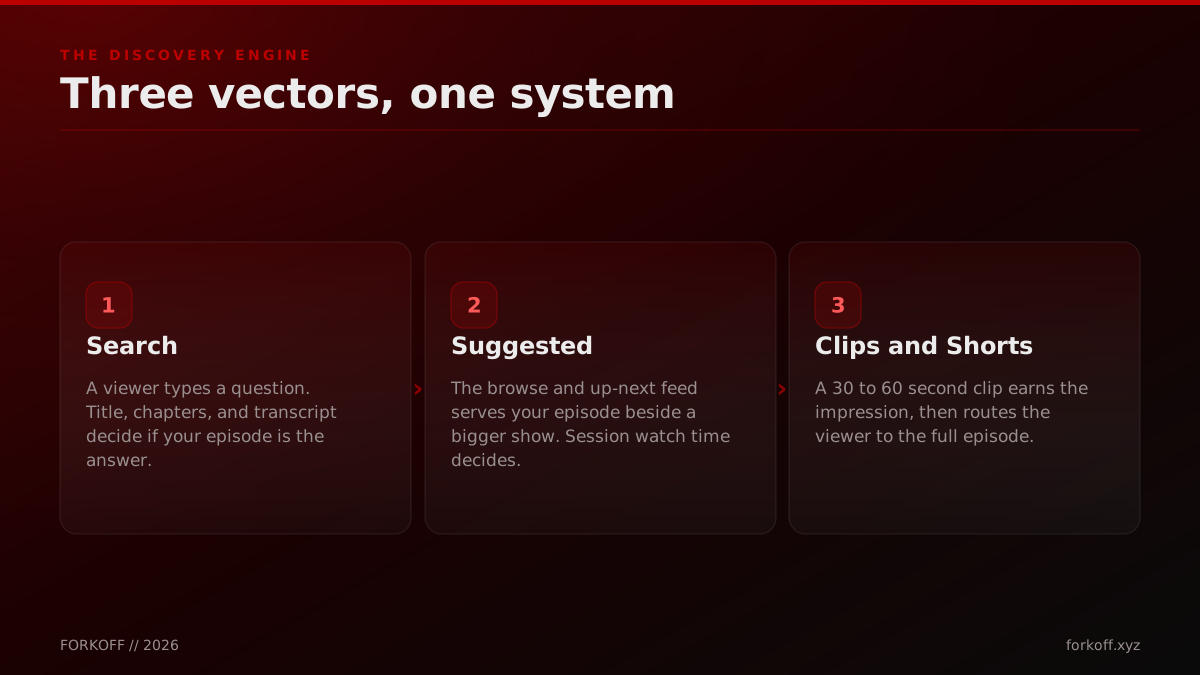
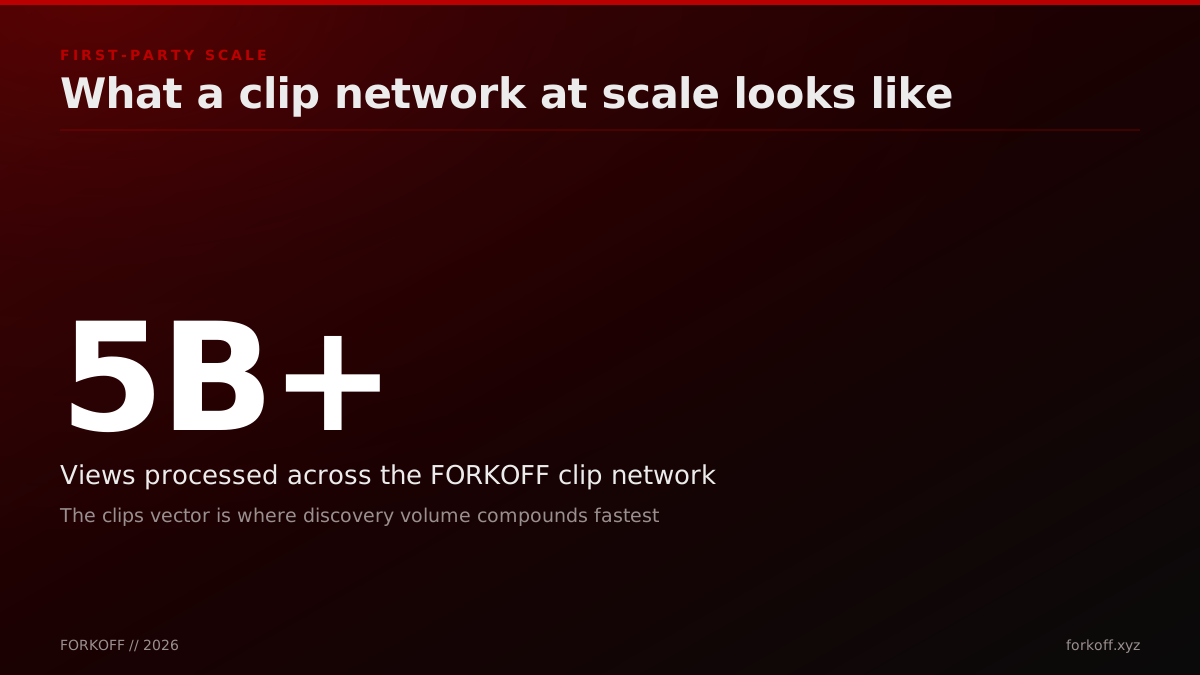
YouTube is now where most people find new podcasts, and it rewards effort in three separate systems, not one. Vector 1 is search: keyword-first titles, chapters, and an uploaded transcript decide whether your episode is the answer to a typed query. Vector 2 is suggested and browse: session watch time and topic consistency decide whether the feed serves your episode beside a bigger show. Vector 3 is clips and Shorts: a 30 to 60 second vertical clip earns the impression, then routes the viewer to the full episode. Most shows optimize none of the three because they upload an audio waveform and hope. The fix is to run all three as operable systems, then read YouTube Analytics traffic sources every week to know which vector is working and which input to fix. First-party context: the FORKOFF clip network has processed 5B+ views, and the clips vector is where discovery volume compounds fastest.
About these numbers
The external figures in this post are cited to their published sources: YouTube's own 2025 viewer count, Midia Research on living-room hours, and the Sounds Profitable and JAR Podcast Discovery Playbook 2026 (reported by Barrett Media) on discovery share. The first-party figures come from FORKOFF operations: the 5B plus views processed across the FORKOFF podcast clip network, and directional readings from the FORKOFF Podcast Ledger 2026, a set of 64 monitored video-podcast episodes across a real client portfolio. The Ledger numbers are operator observations, not a controlled experiment, and the funnel and traffic-source charts are directional operator models, labeled as such. Individual results vary by topic, niche, and existing audience. Read the numbers as market context and a directional signal, not as a guarantee for any single show.
How podcasts actually get discovered on YouTube in 2026
Podcasts get discovered on YouTube through three distinct systems that most creators blur into one. Search returns your episode for a typed query. Suggested and browse serve it in the recommendation feed. Clips and Shorts earn a cold impression and route the viewer to the full episode. The reason the distinction matters is that each system reads a different signal, so an effort that helps one does little for the others. A show that pours everything into thumbnail design is optimizing the clips vector while starving search; a show that writes perfect titles is optimizing search while ignoring the clips that could open cold reach. The operators who win treat the three as separate lanes with separate inputs.
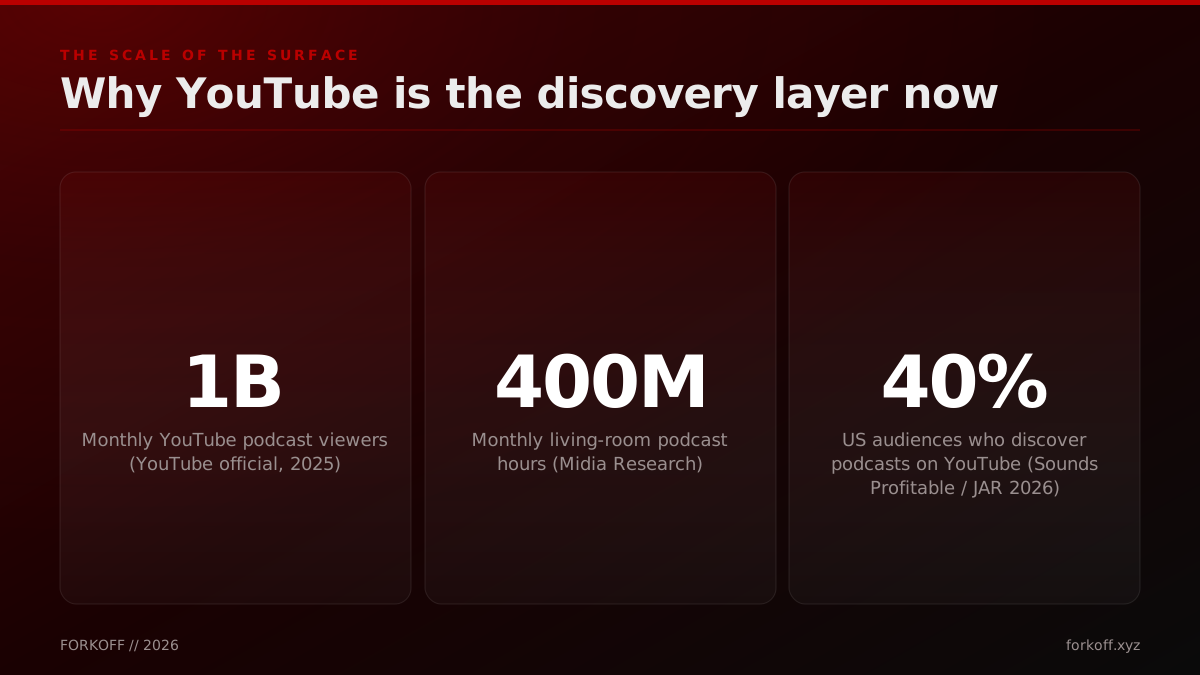
The shift to YouTube is not a matter of taste; it is where the audience already is. YouTube reported more than 1 billion monthly podcast viewers in 2025, and Midia Research on algorithmic podcast discovery estimated roughly 400 million hours a month of living-room podcast consumption, meaning people watch podcasts on the television like a show. YouTube's own podcasts product hub now treats the format as a first-class surface rather than a video afterthought, which is why the discovery mechanics below are worth operating deliberately. The Sounds Profitable and JAR data reported by Barrett Media put YouTube-and-social discovery at 61 percent of US audiences, with 40 percent naming YouTube specifically. Edison Research has tracked the same migration in its ongoing measurement of how audiences spend their listening and viewing time, with video platforms taking a growing share of the attention that podcasts compete for. When two out of five new listeners find shows on one surface, the surface is not optional.

Why YouTube became the podcast discovery layer
Two facts moved discovery onto YouTube. First, scale: YouTube reported over 1 billion monthly podcast viewers in 2025, and Midia Research put living-room podcast consumption at roughly 400 million hours a month, so the audience is already on the surface. Second, the recommendation engine: unlike an RSS podcast app, YouTube actively pushes episodes into search results, the up-next rail, the browse feed, and the Shorts feed. A podcast on an audio-only app waits to be found; a podcast on YouTube gets distributed. The Sounds Profitable and JAR Podcast Discovery Playbook 2026 found 40 percent of US audiences discover podcasts on YouTube and 61 percent discover via YouTube or social platforms combined. Ignoring the surface where discovery happens is not a principled stand for the open RSS medium; it is lost reach.
Source: YouTube official (2025); Midia Research; Sounds Profitable and JAR Podcast Discovery Playbook 2026
There is a real counterargument worth stating honestly. Audio-native podcasts distributed over open RSS have no discovery algorithm, and some operators see that as a feature, not a bug: no platform gatekeeper, no ranking to game, no single company holding the keys. That view has integrity. It also loses reach. The practitioners raising the concern are not wrong that YouTube dominance concentrates power in one company; they are wrong that ignoring the surface is a principled response. The principled response is to publish everywhere, own your RSS feed and your audio, and still show up where 40 percent of new listeners are looking. Discovery is not a place to make a stand by being absent.
Michael Girdley
@girdley
Overall, podcasts are mid, and it's a structural problem. YouTube, TikTok, and X have discovery algorithms that force creators to compete for every eyeball. The bar rises constantly. Podcasts? You just... exist. Word of mouth in, loyalty out. No signal on what's working.
The rest of this post is the operating manual: one section per vector, then the measurement loop that tells you which vector is working, then the YouTube-versus-Spotify decision, the weekly workflow, and the mistakes that keep shows invisible. It pairs with the podcast AEO citation strategy pillar, which covers how episodes get cited in AI answers, and the podcast transcript SEO spoke, which covers the on-page schema and transcript stack that the search vector depends on.
542. YouTube Is Now the Top Podcast Discovery Platform
Podcasting Morning Show
The Podcasting Morning Show makes the thesis plainly: YouTube is now the top podcast discovery platform. The rest of this post is how to operate on it.
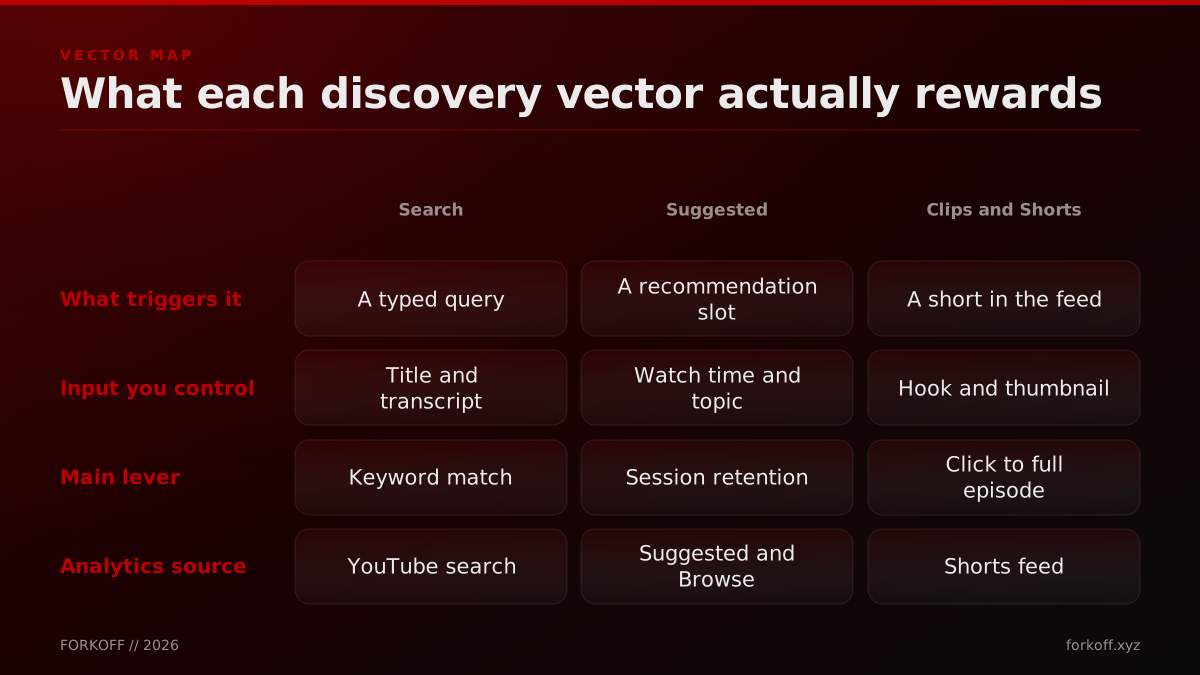
The three-vector YouTube discovery map
| Vector | What feeds it | The input you control | How to measure it |
|---|---|---|---|
| 1 Search | Typed queries on YouTube and Google | Keyword title, chapters, transcript | YouTube search traffic source |
| 2 Suggested and browse | The recommendation and up-next feed | Session watch time, topic consistency | Suggested and Browse traffic sources |
| 3 Clips and Shorts | The vertical Shorts feed | Hook, thumbnail, moment selection | Shorts feed traffic source |
The three vectors are separate systems with separate inputs. Optimizing one does little for the others, which is why a single blended discovery effort underperforms.
Vector 1: YouTube search, the episode as the answer to a query
YouTube search is the vector where your episode competes to be the answer to a typed question. YouTube is the second-largest search engine after Google, and episode pages that carry the right text rank for the exact questions the conversation answers. The inputs are concrete and fully within your control: a keyword-first title, a high-contrast thumbnail, chapters with timestamps, an uploaded transcript and captions, and a description that leads with the primary query. None of these depend on audience size or guest fame. They depend on whether the page ships the text and structure that search reads.
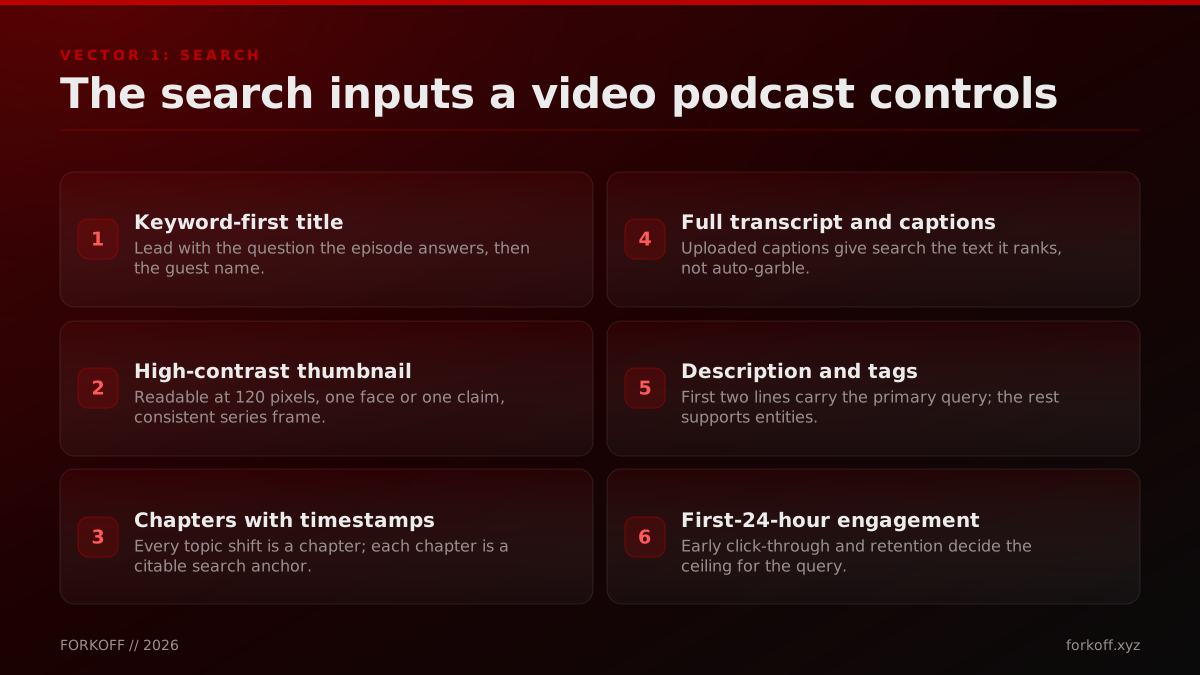
The single highest-leverage change is the title. A title that reads as the guest name and the show number targets a query almost nobody types. A title that leads with the question the episode answers, then names the guest, targets a query people actually search. The pattern that works is question or claim first, entity second: the specific problem the episode solves, followed by the guest or framework that solves it. This is the same named-entity discipline that drives classic on-page SEO, applied to the one field YouTube weights most heavily for search.
Operator noteTitle the episode with the question it answers, then the guest; a guest-name-only title targets a query almost nobody searches., FORKOFF Podcast Ledger 2026
Chapters and transcript are the other two load-bearing inputs, and they are the ones most shows skip. Chapters break the episode into timestamped topic sections, and each chapter becomes a searchable anchor that can rank on its own and can be cited at the moment level by AI systems. An uploaded transcript, not the auto-generated one, gives search clean text to index rather than garbled captions that can drag the page down. The mechanics of the transcript, the chunking, the schema graph, and the canonical handling, are covered in depth in the podcast transcript SEO spoke; the point here is that the transcript is a search input, not an accessibility afterthought. YouTube's own chapter documentation and discovery guidance confirm the platform reads this structure directly.
The thumbnail and the first-24-hour engagement finish the picture. The thumbnail decides click-through on the search results page, so it must be readable at 120 pixels, carry one face or one claim, and stay consistent with the series frame so the show is recognizable. Early engagement, the click-through rate and retention in the first day, sets the ceiling for how far search will surface the episode. A strong title and thumbnail that earn a high early click-through tell YouTube the episode is a good answer, and search widens its reach for the query. Weak early signals cap the episode no matter how good the content is, which is why the title and thumbnail are not cosmetic; they are search inputs with compounding effects.
The search vector also reaches beyond YouTube's own search box. A video episode with a clean transcript and named-entity chapters is eligible for the video results Google surfaces on the main search page, and the structured data that describes it helps both engines and AI answer systems understand what the episode covers. Marking the episode page with the PodcastEpisode schema and pairing it with a properly built episode page is the same discipline the podcast transcript SEO spoke details. This is where the discovery engine overlaps with classic search work, and it is why FORKOFF runs the page side of a show through the AI SEO service: the transcript that feeds YouTube search is the same asset that earns a citation in an AI answer, so the effort compounds across two discovery surfaces at once rather than serving only one.
What are the best tips to grow a podcast?
An r/podcasting thread collecting operator tips for growing a podcast. The recurring answer is video and clips on YouTube, mapping directly to the three-vector discovery engine.
Vector 2: the suggested and browse feed, the recommendation engine
The suggested and browse vector is the recommendation engine, and it is the one that scales a show past its search ceiling. Suggested videos appear in the up-next rail beside other videos; browse features appear on the home feed and the subscriptions page. Both are served by an algorithm optimizing for session watch time, the total time a viewer spends on YouTube across the session, not just on your video. An episode that keeps viewers watching, and keeps them on YouTube afterward, gets served more; an episode that ends the session gets served less. This is why suggested rewards shows that already hold attention and why it is the hardest vector to win from zero.
Topic consistency is the input operators underrate. The algorithm builds a model of what your channel is about and which viewers respond to it, and a channel that jumps between unrelated topics gives the model nothing stable to match. A channel with a consistent theme, consistent format, and consistent guest profile trains the recommendation system to serve its episodes to a well-defined audience. This does not mean every episode is identical; it means the channel has a recognizable center of gravity that the algorithm can map to a viewer segment. The show that wanders across topics forces the algorithm to re-learn its audience every episode and never accumulates recommendation momentum.
The measurement gap most shows never close
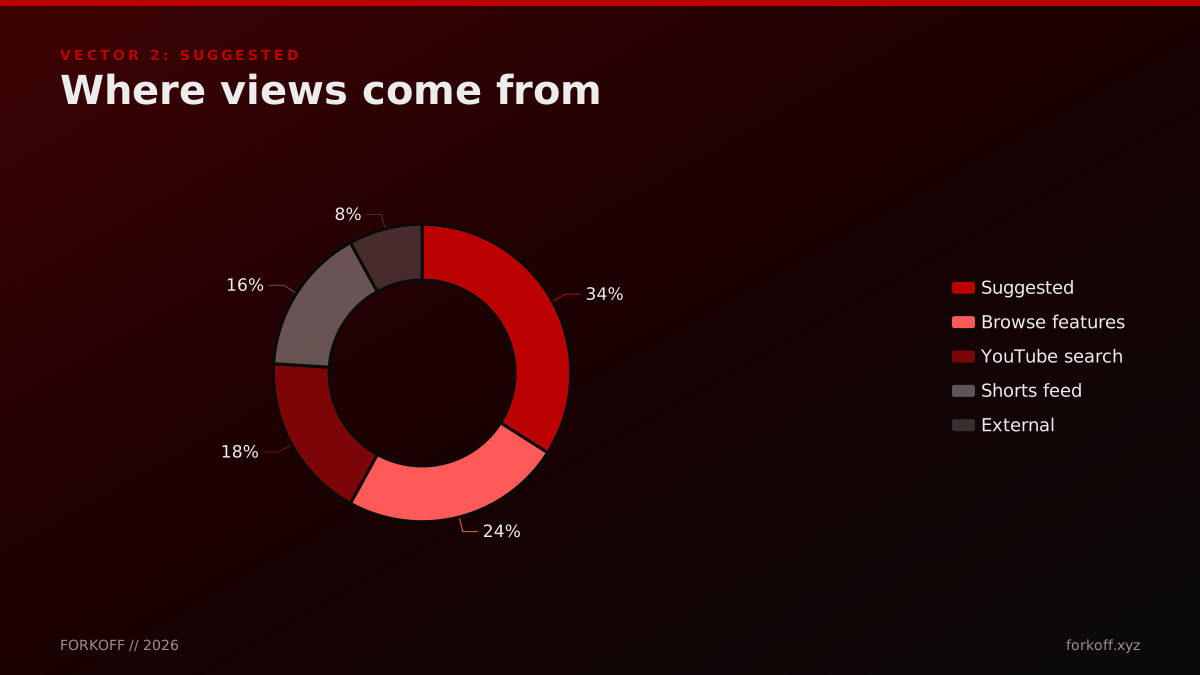
Every ranking guide mentions traffic sources in passing, and almost none teach an operator to read them. YouTube Analytics splits your views by source: Suggested videos, Browse features, YouTube search, Shorts feed, and External. Those five buckets map almost one to one onto the three discovery vectors plus off-platform push. A show that reads the split each week knows whether its titles are working (search rising), whether the algorithm trusts it (suggested and browse rising), or whether its clips are landing (Shorts feed rising), and it fixes the input on the vector that stalled. A show that never opens the report optimizes blind and cannot tell which of its efforts paid off.
Source: FORKOFF Podcast Ledger 2026 (directional, n=64 monitored video episodes)
Watch time within the episode is the other lever, and it is a production decision as much as an algorithm one. The first 30 seconds decide whether a suggested viewer stays, so the cold open matters more on YouTube than on an audio app where the listener already chose to press play. A strong hook, a clear promise of what the episode delivers, and a tight edit that removes the dead air all raise retention, which raises how often suggested serves the episode. The suggested vector, in other words, is won upstream in the edit, not just in the metadata. YouTube's AI-powered recommendation tooling keeps getting stronger, which raises the payoff on the watch-time and consistency inputs rather than lowering it.
Guest selection quietly feeds the suggested vector too. When a channel books guests whose own audiences overlap with the target viewer, the algorithm sees the show surface next to adjacent channels and learns the association faster, which is why a deliberate booking strategy is a discovery input, not just a content one. A run of guests from wildly different worlds trains the recommendation model to serve the show to no one in particular, while a run of guests from one adjacent niche compounds the channel's center of gravity. The podcast guesting playbook for AI startups covers how to line up a guest pipeline that reinforces a single audience signal rather than scattering it, which is the difference between a channel the algorithm can place and one it keeps guessing about.
YouTube now dominates podcast discovery. This may be the part I like least. YouTube, and thus Google, have way too much power.
Vector 3: clips and Shorts, the cold-start funnel
Clips and Shorts are the cold-start vector, the one a brand-new show can win with no existing audience. A vertical Short needs one strong 30 to 60 second moment and a hook that stops the scroll, and the Shorts feed serves it to viewers who have never heard of the show. Unlike search, which rewards queries people already type, and unlike suggested, which rewards watch time a show already holds, the Shorts feed hands cold reach to a single good clip. That is why clips are the on-ramp: they open the first discovery volume, and each clip that lands routes a share of viewers into the full episode where the deeper signals are built.
The funnel from a Short to a full episode is lossy, and the loss is the point to design against. Most Shorts impressions never convert to a full-episode view, and a well-built clip strategy accepts that and optimizes the two steps that matter: the hook that earns the impression, and the pointer that routes the fraction of viewers who want more. End every Short on a clear pointer to the full episode, use the pinned comment and the endcard, and title the Short so it sets up the full conversation rather than resolving it. The clip that gives away the whole answer has no reason to click through; the clip that opens a loop does.
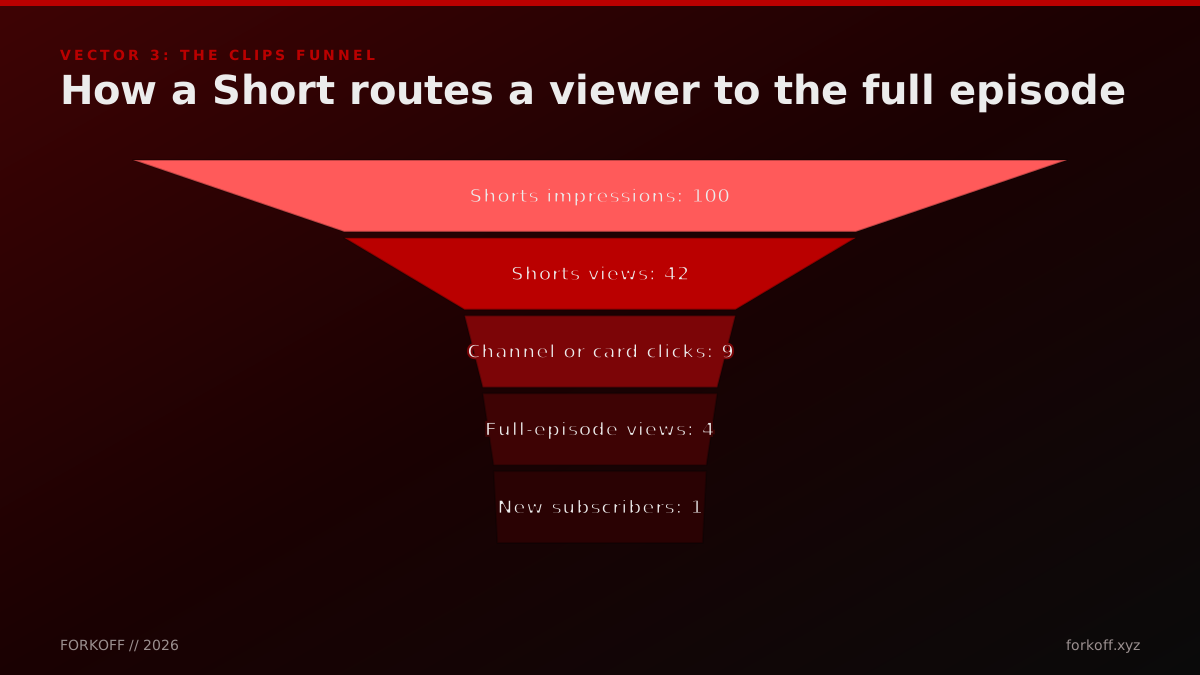
Operator noteCut 3 to 5 vertical Shorts per episode and end each one pointing at the full episode; the clip earns the impression, the card converts it., FORKOFF clip network
Clip selection is where most shows waste the vector, and it is where operating at scale changes the math. A show cutting one clip per episode by hand picks the moment that felt good in the room, which is rarely the moment that stops a cold scroll. A show cutting three to five clips per episode, chosen for a strong hook rather than for the host's favorite line, feeds the feed enough shots to find the one that lands. Across the FORKOFF podcast clip network, which has processed 5B plus views, the pattern is consistent: volume of well-chosen clips, not perfection of a single clip, is what opens the cold-start vector. The managed clipping playbook covers the production side of running this at network scale.
The clips vector is the one that compounds
Search rewards the episodes people already look for, and suggested rewards the episodes that already hold watch time, so both vectors favor shows with existing pull. Clips are the vector a new show can win from zero. A vertical Short needs one strong 30 to 60 second moment and a hook, not an established audience, and the Shorts feed serves it to viewers who have never heard of the show. Across the FORKOFF clip network, which has processed 5B plus views, the clip surface is consistently where a new video podcast opens its first discovery volume, and each clip that lands routes a share of viewers to the full episode where the deeper watch-time signal is built. The clips vector is the on-ramp; search and suggested are what a show graduates into.
Source: FORKOFF clip network (5B+ views processed)
Best podcasts you can watch on YouTube
An r/podcasts thread asking for the best podcasts to watch on YouTube. Audience demand for video podcasts on the platform is now the default expectation, not the exception.
The clips vector also feeds the other two. A viewer who finds a show through a Short, watches the full episode, and subscribes becomes a watch-time signal that strengthens the suggested vector, and a search click on the show's name that strengthens the search vector. The three vectors are not independent lanes that never touch; clips are the top of the funnel that fills the reservoir the other two draw from. This is why a show with no clip strategy caps its own search and suggested growth: it never brings in the cold audience that turns into the returning audience.
The clip format itself has inputs worth naming, because a Short is not a shrunken episode. The strongest clips open on the payoff, not the setup, since the Shorts feed judges a video in the first second and a slow build loses the viewer before the point lands. Vertical framing, burned-in captions for sound-off viewing, and a title that poses the question the clip answers all raise the odds a cold viewer finishes it, and a finished view is the signal the Shorts feed rewards with more reach. The clip that opens mid-argument, captions the tension, and ends on a hook to the full conversation outperforms the tidy clip with a polite introduction, every time. Running that judgment at volume, across every episode, is the part that separates a show dabbling in Shorts from one operating the vector, and it is the specific work FORKOFF productizes so the host never has to become a full-time editor to keep the cold-start vector fed.
Close the loop: read YouTube Analytics to know which vector is working
The measurement loop is the step that separates operators from guessers, and almost no ranking guide teaches it. YouTube Analytics has a traffic-sources report that splits every view by where it came from: Suggested videos, Browse features, YouTube search, Shorts feed, and External. Those five buckets map almost one to one onto the three discovery vectors plus off-platform push. Reading the split tells you, in one screen, which vector is actually driving your growth and which one has stalled, so you can put the next hour of effort where it moves the number rather than where it feels productive.
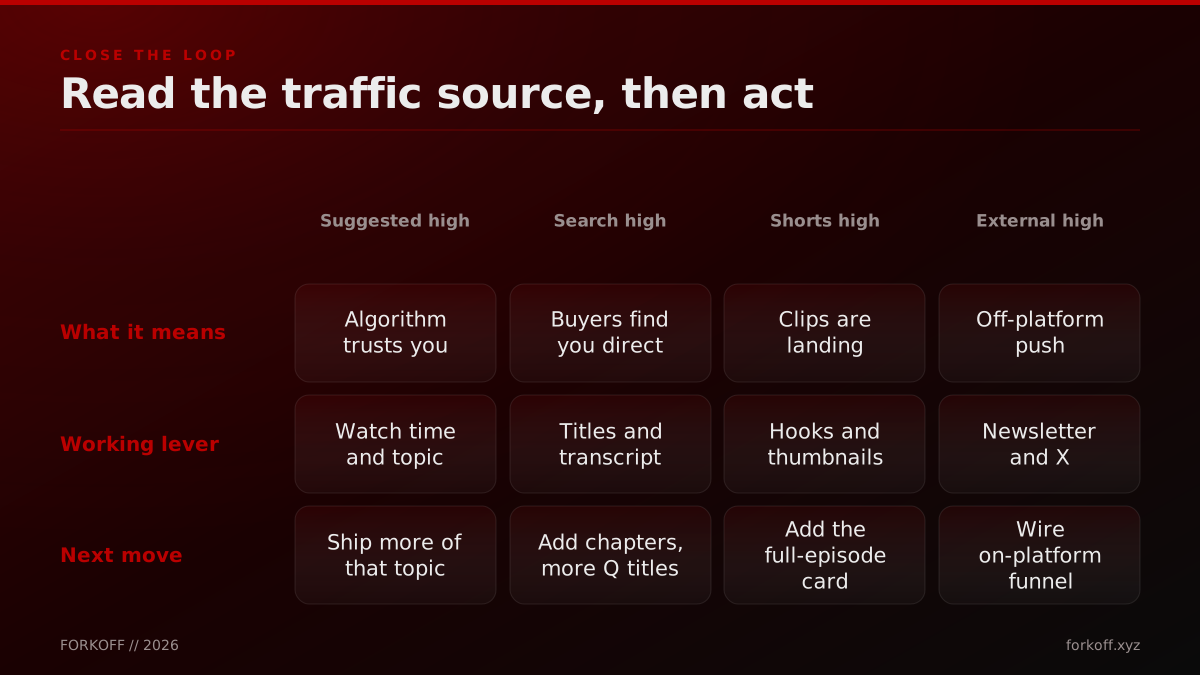
The read drives a specific next move. If YouTube search is high, buyers are finding you directly on their queries, so the lever working is titles and transcript, and the next move is to add chapters and ship more question-shaped titles on the topics that convert. If Suggested and Browse are high, the algorithm trusts the channel, so the lever is watch time and topic consistency, and the next move is to ship more of the topic that is working. If the Shorts feed is high, your clips are landing, so the next move is to add the full-episode endcard and tighten the pointer so more of that cold reach converts. If External is high, an off-platform channel like a newsletter or an X account is doing the work, and the next move is to wire a stronger on-platform funnel so the traffic compounds instead of leaking.
Operator noteOpen YouTube Analytics traffic sources every week and fix the input on the vector that stalled; optimizing without the read is guessing., FORKOFF Podcast Ledger 2026
The cadence matters as much as the read. Open the report weekly, not once a quarter, because the vectors move on the timescale of individual episodes and clips. A weekly read catches a title format that started working and a clip style that stopped, while a quarterly read averages away the signal. The operators who compound discovery are the ones who treat the traffic-sources report as the steering wheel, not the rear-view mirror, and adjust the next episode's inputs based on the last episode's split. The measurement loop is unglamorous and it is the single most reliable edge, because it is the one thing almost no competing show actually does.
YouTube vs Spotify: which surface actually drives discovery
For discovery specifically, YouTube outperforms Spotify because it actively distributes while Spotify largely waits. YouTube pushes episodes into search results, the up-next rail, the browse feed, and the Shorts feed, four separate distribution surfaces powered by a recommendation engine. Spotify has strong in-app listening and subscriber retention, but its podcast search is weaker and its clip surface is limited, so it leans on follows an audience already has rather than on serving your show to strangers. The practical read is not that one platform wins outright; it is that they play different roles, and confusing the roles is what leaves discovery on the table.
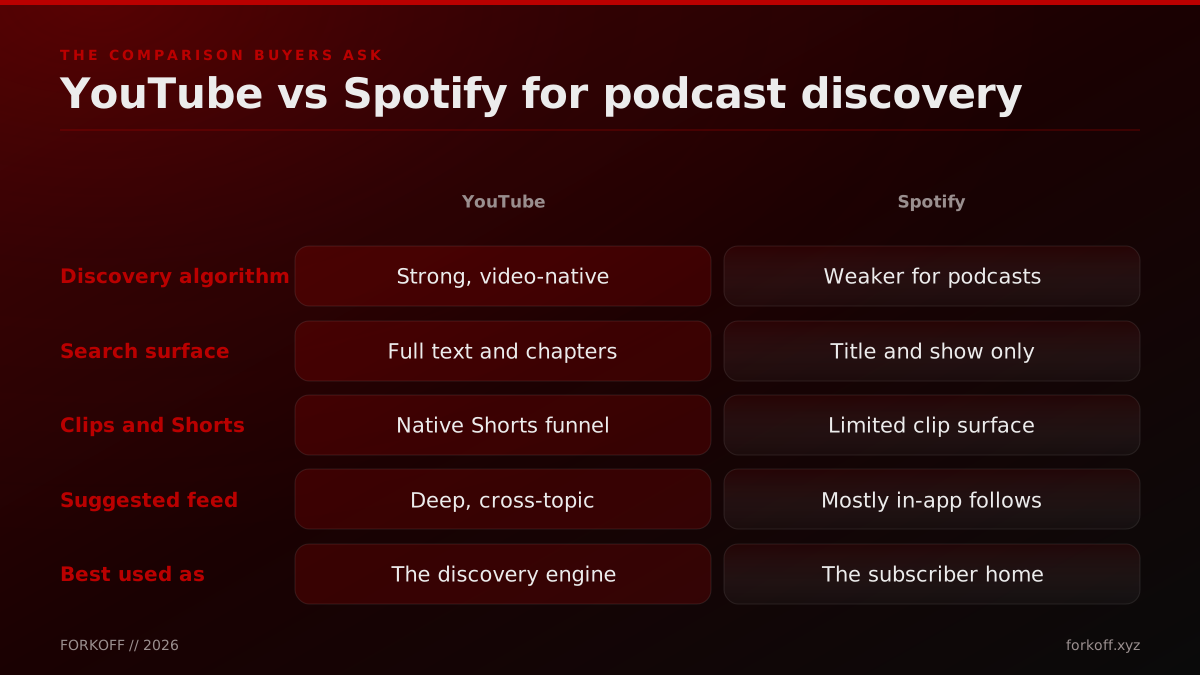
The play that works is to treat YouTube as the discovery engine and Spotify as the subscriber home, and to publish to both without expecting either to do the other's job. New listeners find the show on YouTube through the three vectors, and the ones who prefer audio-only listening subscribe on Spotify or Apple and consume there. A show that publishes only to audio apps waits to be found; a show that publishes only to YouTube leaves the dedicated audio listeners underserved. Own the RSS feed, distribute the audio everywhere, and run the discovery engine on the surface that actually distributes. The how to grow a podcast guide covers the cross-platform cadence in more detail.
The industry read backs this split. When Inside Radio covered YouTube's case to podcasters, the pitch was blunt: discovery lives in video, and the platform is where new listeners arrive. That does not make the audio apps irrelevant; it makes them the retention layer under a YouTube-led top of funnel. The off-platform push matters here as well, because a show that seeds each episode and its best clips into an active Twitter and X presence feeds the External traffic source that then compounds back into suggested. Whether a show runs this in-house or hires it out is a real decision with real tradeoffs, which the podcast agency versus DIY cost breakdown works through in numbers rather than vibes.
Podcast discovery is still really bad. YouTube is probably the place I find most podcasts. If Spotify wants to dominate podcasts, they need great, hyper-personal podcast discovery.
The Eastleigh Voice
@Eastleighvoice
YouTube unveils on-the-go mode, AI-powered recommendation tool to boost podcast discovery
There is a format decision upstream of all of this that shapes how well every vector performs: whether to produce full video, a lightweight visual, or audio-only. The suggested vector in particular rewards watch time, which a static audio waveform cannot generate, so the format decision is really a discovery decision. The video podcast versus audio-only post covers the tradeoffs, the production cost, and the minimum viable visual for a show that is not ready for full video but still wants the algorithm to have something to reward.
The weekly workflow: shipping the discovery engine on a schedule
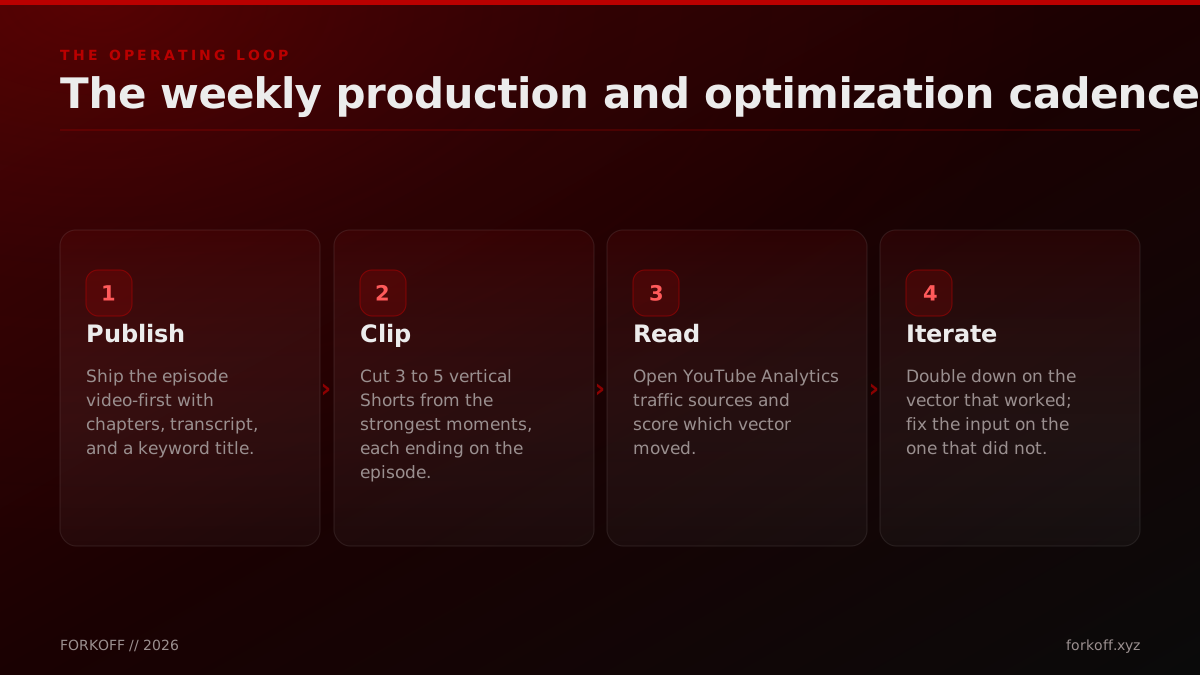
The discovery engine runs as a repeatable weekly workflow, not a one-time setup, and the cadence is what compounds. Publish the episode video-first with a keyword title, chapters, and an uploaded transcript so the search vector is fed. Cut three to five vertical Shorts from the strongest moments so the clips vector is fed. Open YouTube Analytics traffic sources and score which vector moved. Then iterate: double down on the vector that worked and fix the input on the one that stalled. Four steps, run every week, on every episode, and the discovery signals accumulate instead of resetting.
The workflow scales through delegation, and the clips lane is the one most worth productizing. Writing titles and adding chapters is a 20-minute habit the host or producer can own. Cutting three to five well-chosen clips per episode, captioning them, and wiring each back to the full episode is a production line, and running it by hand is where most shows quietly give up on the clips vector. This is exactly what FORKOFF runs as a managed pipeline: the podcast clipping and distribution service cuts, captions, and distributes the Shorts, and the FORKOFF podcast engine 6-block system covers how the production, search, and clips lanes share one transcript and one ledger so the show pays once for the underlying asset.
The upstream input to the whole workflow is a steady supply of episodes worth clipping, which is a booking and production problem more than a distribution one. A show that ships one episode a month has too little raw material to keep three vectors fed; a show with a reliable guest pipeline and a repeatable production cadence has enough surface area for the engine to work. The podcast booking system for founders covers the cadence that keeps the top of the funnel full, and the founder-led sales podcast strategy covers turning that reach into pipeline once the discovery engine is bringing in the audience.
Podcast discovery data points and sources (2026)
| Metric | Figure | Source |
|---|---|---|
| Monthly YouTube podcast viewers | Over 1 billion | YouTube official, 2025 |
| Monthly living-room podcast hours | Roughly 400 million | Midia Research |
| US audiences who discover podcasts on YouTube | 40 percent | Sounds Profitable and JAR, 2026 |
| Discover via YouTube or social combined | 61 percent | Sounds Profitable and JAR, 2026 |
| Views processed across the FORKOFF clip network | 5B plus | FORKOFF first-party |
External figures are cited to their published sources; the FORKOFF clip-network figure is first-party. Read all as directional market context, not guarantees for any single show.
The five discovery-killing mistakes, and the fixes
Five mistakes account for most shows that produce good audio and still stay invisible on YouTube, and each one starves a specific vector. The first is uploading a static audio waveform instead of video, which gives the suggested vector no watch signal to reward. The fix is a real visual, ideally full video, at minimum a dynamic frame that holds a viewer's eye. The second is shipping episodes with no chapters and no uploaded transcript, which leaves the search vector with no text to rank and no anchor to cite. The fix is chapters on every episode and a clean uploaded transcript, treated as a search input rather than an accessibility checkbox.
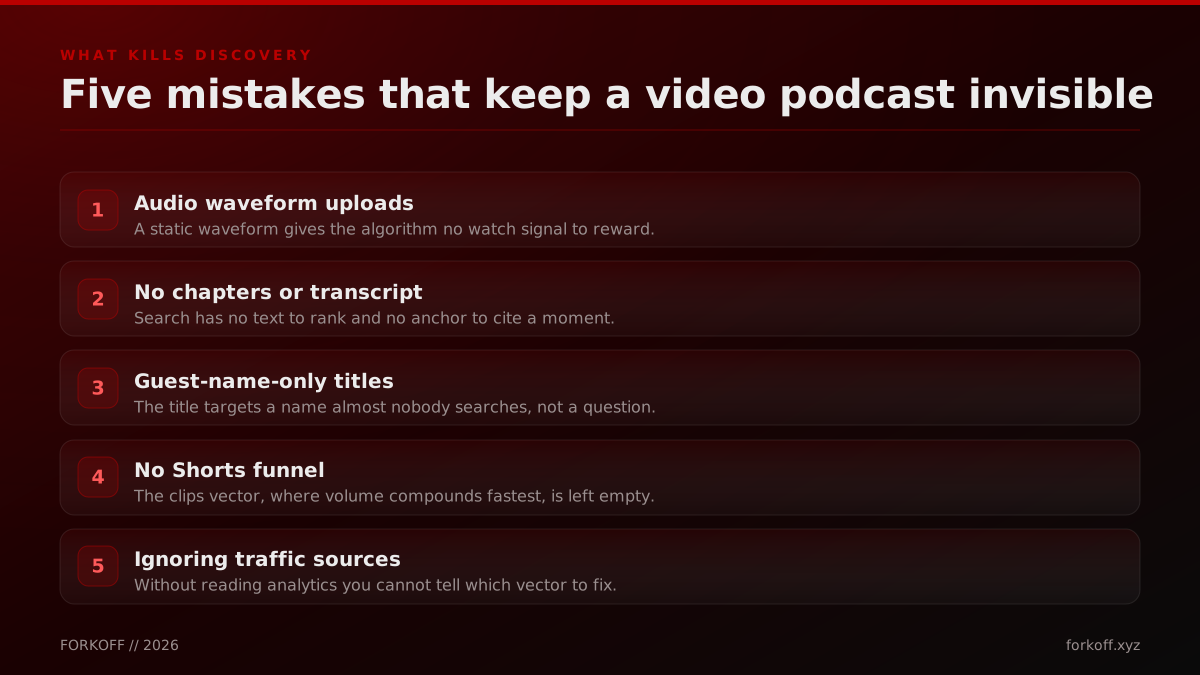
The third mistake is titling episodes with only the guest name and the episode number, which targets a query almost nobody searches. The fix is question or claim first, guest second, so the title matches how people actually search. The fourth is having no Shorts funnel at all, which leaves the cold-start vector empty and caps how much new audience the show can reach. The fix is three to five clips per episode, each ending on the full episode. The fifth is ignoring the traffic-sources report, which means optimizing blind with no idea which vector is working. The fix is the weekly read that turns effort into a steering signal.
The Definitive Guide to Podcasting on YouTube: How to REALLY Grow a Podcast on YouTube
Headliner
Headliner's definitive guide to podcasting on YouTube covers the setup and growth mechanics that feed the search and clips vectors described here.
Each of these is common, each is silent until someone checks where the show actually ranks and where its views come from, and each is fixable inside a single production cycle. The show that fixes all five does not need a bigger budget or a famous guest; it needs the discipline to feed all three vectors and to read the report that tells it whether the feeding is working. That discipline is the entire difference between a show with great audio and no reach and a show that compounds discovery month over month.
Where the YouTube discovery engine sits in the broader podcast stack
The discovery engine is one layer of a larger system, and it works best wired to the layers around it. The podcast AEO citation strategy pillar covers how episodes get cited in AI answers, which is the discovery surface beyond YouTube itself. The podcast transcript SEO spoke covers the schema graph and transcript architecture the search vector depends on. The managed clipping playbook covers the clips vector at production scale, and the podcast monetization math post covers the revenue models that justify the investment once discovery is working.
The throughline across all of them is the same: YouTube is not a place to store the video, it is the surface where discovery happens, and it rewards operators who treat it as three systems with three inputs and one measurement loop. Run the search vector on titles, chapters, and transcript. Run the suggested vector on watch time and topic consistency. Run the clips vector on well-chosen Shorts that route to the full episode. Read the traffic sources every week to know which one is working. Do that consistently and the show gets found. Skip it and the best audio in the category stays invisible to the audience already looking for it. FORKOFF builds and runs this engine end to end through the podcast clipping and distribution service and the wider founder funnel.