A video podcast records the conversation on camera and ships it to YouTube plus short-form clip surfaces, while an audio-only podcast captures sound alone and lives on Apple Podcasts and Spotify feeds. Video costs approximately 3x to 6x more per episode and pays back only when a clip operator converts each episode into 30 to 100 vertical clips. In the video podcast vs audio decision, if that downstream layer is missing, ship audio.
TL;DR
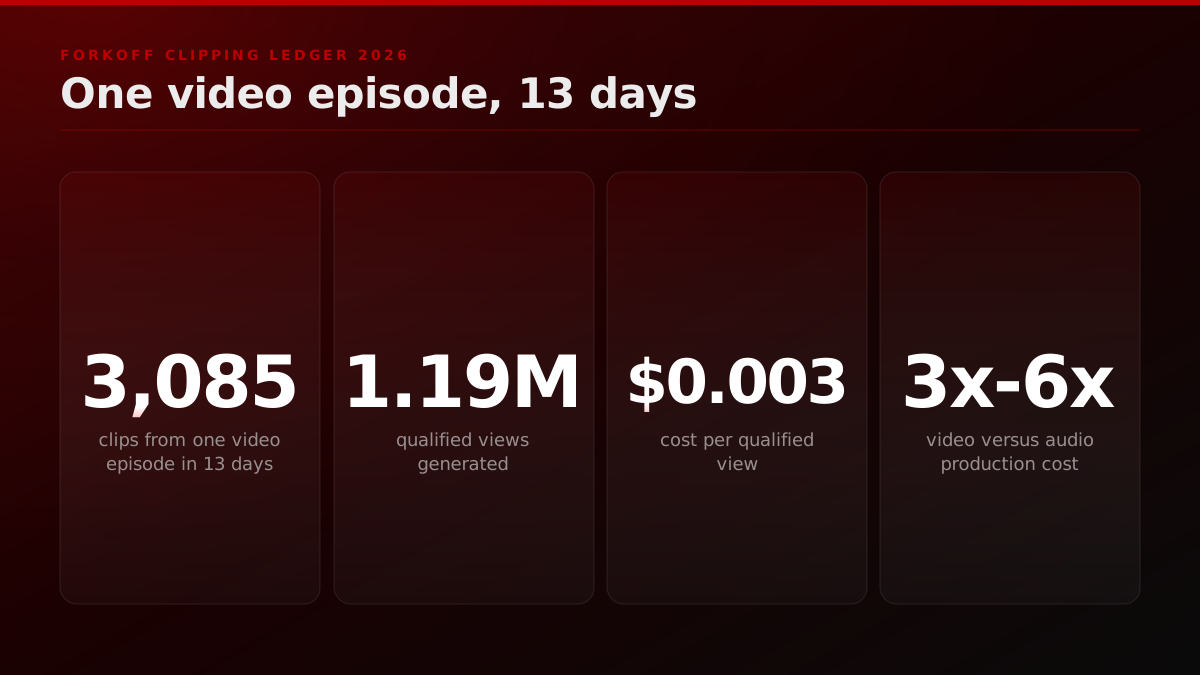
A video podcast costs 3x to 6x more than audio only and pays back only when a downstream clip-distribution engine converts each episode into 30 to 100 vertical clips. FORKOFF first-party data from one creator's video show produced 3,085 clips and 1.19M views over 13 days. If you do not have a clip operator in place, ship audio only and reinvest the production delta into one. The format decision is downstream, not upstream.
About these numbers
Production cost estimates, platform reach figures, and engagement benchmarks in this post are sourced from FORKOFF operator observations across podcast format decisions, supplemented by publicly cited data from Spotify for Podcasters and YouTube analytics documentation. All figures are directional estimates; individual production costs and platform returns vary by equipment setup, niche, and distribution strategy.
The Format Decision Is Downstream, Not Upstream
The 30-second rule: the video versus audio decision is not a production question, it is a distribution question. If your podcast asset will be converted into 30 plus vertical clips per episode by a clip operator, video pays for itself. If the asset will live only on Apple Podcasts and Spotify audio feeds, video is a 3x to 6x cost increase with no corresponding revenue lift. Decide the format based on what happens after the episode ships, not what happens during the recording.
Video Podcast vs Audio Only, the 9-axis decision matrix
| Decision Axis | Audio Only | Video Podcast |
|---|---|---|
| Production cost per episode | $300 to $800 all in | $1,500 to $4,500 all in |
| Equipment requirements | USB mic, acoustic treatment | Camera, lighting, multi-cam or remote video setup |
| YouTube discovery yield | None (audio not indexed) | 5x to 20x baseline |
| Vertical clip asset count per 60-min episode | 0 to 5 audiograms | 30 to 100 vertical clips |
| Direct audio feed download lift | Baseline | No measurable lift |
| Audience demographics (primary platform) | Apple Podcasts / Spotify (35-54, commuter) | YouTube / TikTok (25-44, screen-time) |
| Retention curve shape | Flat 40-60% at 10-min mark across episodes | Front-loaded spike, long-tail via clip discovery |
| Sponsor CPM tier (B2B niche) | $25 to $40 per thousand | $40 to $75 per thousand |
| Evergreen search value | Low (audio not crawled for visual search) | High (YouTube search + embedded transcripts) |
| Host time investment per episode | 2 to 4 hours post-recording | 6 to 14 hours post-recording (incl. clip operator time) |
| Monetization mix | Host-read ads, listener-supported, Spotify deals | Host-read ads, YouTube ad-share, brand sponsorship, clip-driven affiliate |
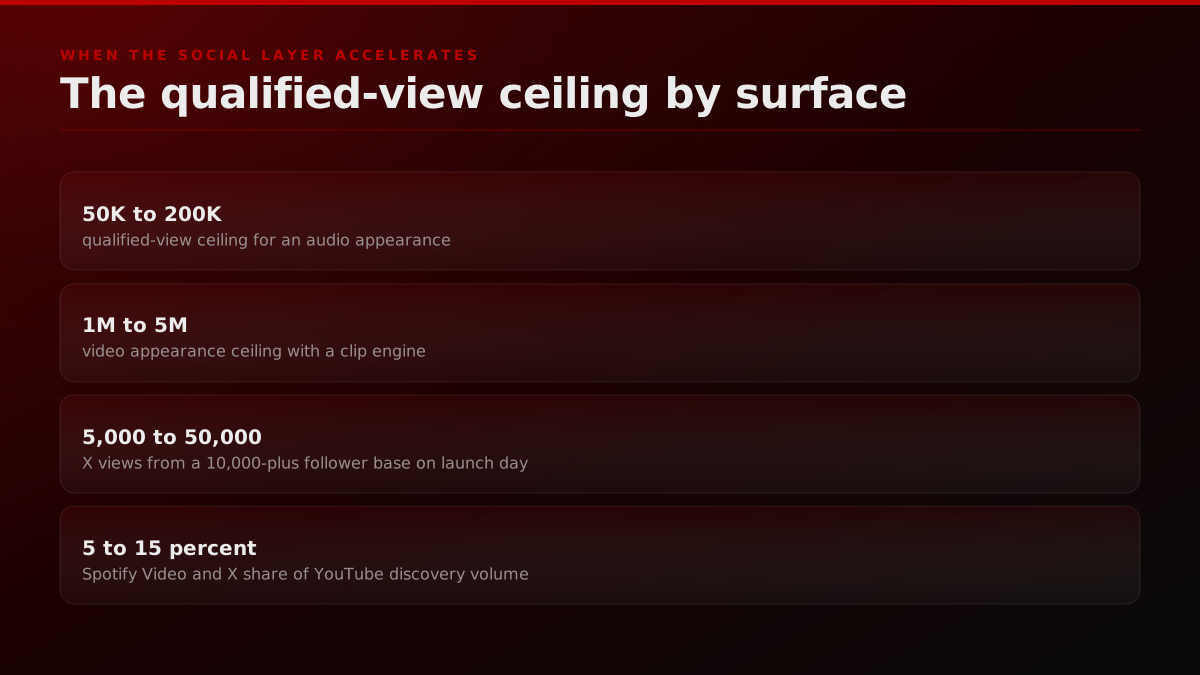
| Founder appearance, qualified-view ceiling | 50K to 200K per appearance | 1M to 5M per appearance with clip engine |
Audio download numbers do not change when you add video. The 2026 Edison Research Infinite Dial data and FORKOFF audits across podcast clients both confirm the same finding. Audio feed downloads to Apple Podcasts and Spotify audio stay flat. YouTube views, when you publish there, grow 5x to 20x against the audio-only baseline. Clip-driven views across TikTok, YouTube Shorts, and Instagram Reels grow 20x to 100x when a clip-distribution engine is in place. The relevant question is which of those three numbers actually matters to your business. For most B2B founder podcasts, the answer is the third one, which is also the one that requires the most downstream investment.
FORKOFF Clipping Ledger, one creator's video show
One creator's long-form video show produced 3,085 vertical clips over 13 days through the FORKOFF managed clipping engine. The clip set generated 1.19 million views at $0.003 CPQV. The same show in audio-only format would yield a handful of audiogram clips per episode with substantially lower engagement and no short-form discovery surface coverage. The asset-count ratio is the single most defensible argument for video.
Source: FORKOFF Clipping Ledger 2026, n=3,085 clips, 13-day window
As of 2026, Podcast Format Choice Has Become a Distribution Architecture Decision
As of 2026, the podcast format debate has fundamentally changed. Platforms have fragmented, short-form video has matured as a discovery layer, and the tools available for remote video recording, automated clip production, and multi-platform distribution have commoditized what used to be studio-only production workflows. Riverside.fm, Descript, and OpusClip have all reduced the per-clip production cost substantially in the last 24 months. The question is no longer whether you can afford video. The question is whether your operator stack extracts the full asset value from each video episode.
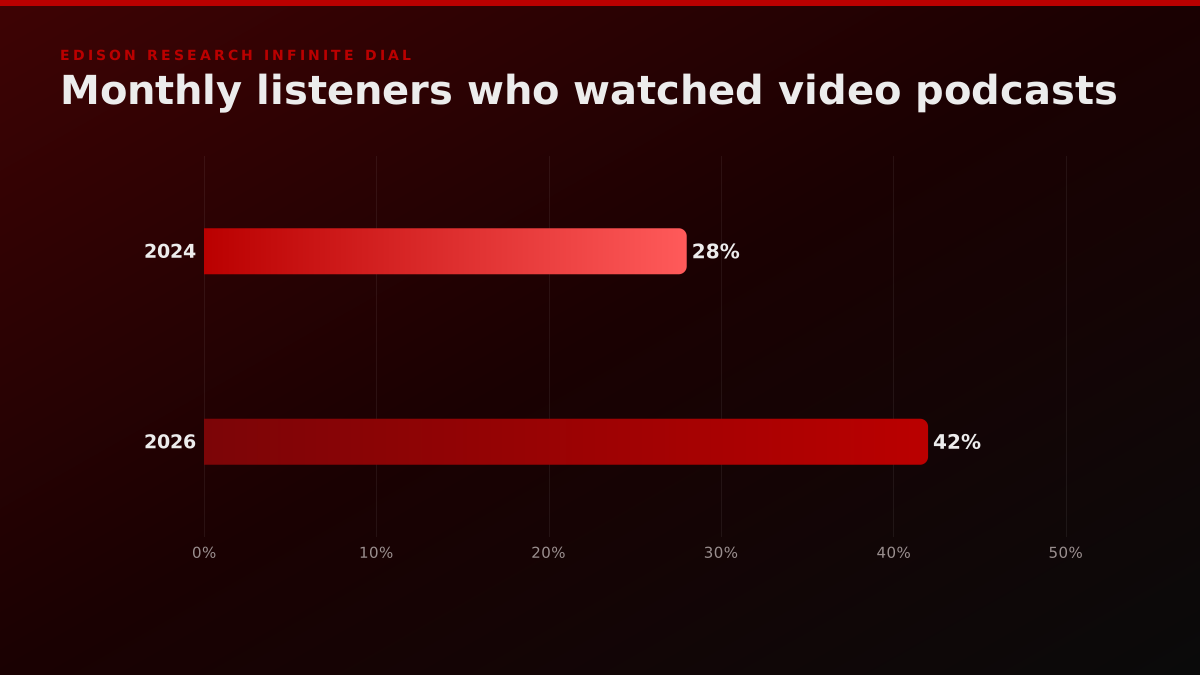
The Edison Research Infinite Dial 2026 report confirms 42 percent of monthly podcast listeners watched video podcast content in the prior month, up from 28 percent in 2024. That shift is additive, not substitutive. Audio-only consumption has not declined in absolute terms. What has changed is the ceiling: audio-only has a hard ceiling at audio feed downloads and sponsor CPM, whereas video plus a clip engine has a ceiling at total qualified views across seven distribution surfaces.
Edison Research Infinite Dial 2026, the format-split data
Edison Research Infinite Dial 2026 confirms 42 percent of monthly podcast listeners have watched video podcast content in the prior month, up from 28 percent in 2024. However, the same report shows audio-only consumption has not declined in absolute terms. The shift is additive, not substitutive. Founders who interpret rising video consumption as a mandate to switch format miss the key finding: the listeners who watch video podcasts are incremental, not converted audio listeners. The right move is to add video and clip distribution on top of the audio feed, not replace it.
Source: Edison Research Infinite Dial 2026
For founders deciding the format today, the operational context matters as much as the data. A solo founder running a weekly show without production support should start audio-only, build the catalog to 12 episodes, then evaluate whether the topic surface clusters on YouTube and whether the budget exists to add a clip operator. A founder running a funded startup with a content team should run video from episode one and build the clip-distribution system in parallel, treating each episode as a 30-clip-minimum asset rather than a single long-form post.
What Video Actually Costs
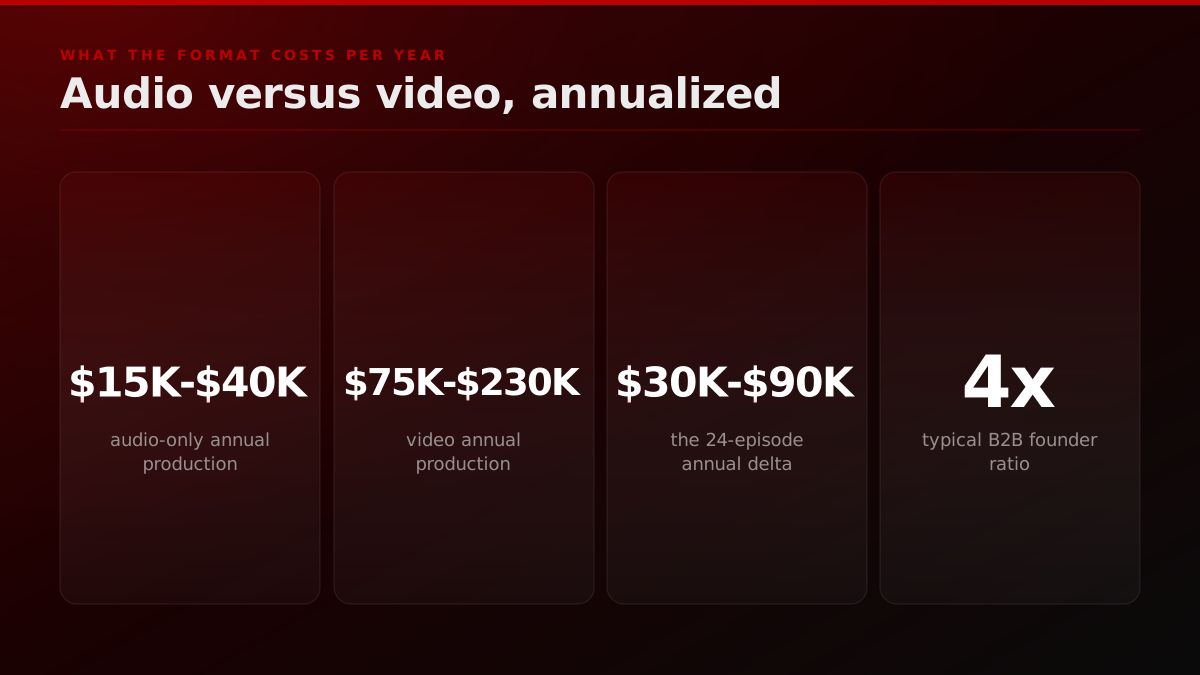
Audio-only podcast production lands at $300 to $800 per episode for a competent operator stack. That covers remote recording via a tool like Riverside or SquadCast, audio editing with light noise reduction and pace cleanup, show notes generated from a transcript, and feed delivery via a podcast host such as Buzzsprout or Castos. A founder running a weekly cadence with this stack spends $15K to $40K per year on production alone. That is the floor.
Video podcast production lands at $1,500 to $4,500 per episode. The added line items are a camera operator or multi-cam remote setup, lighting and audio gear that survives on-camera, a video editor distinct from the audio editor because the skill sets diverge, per-platform export rendering for YouTube long-form plus three to five short-form variants, and thumbnail design with iteration cycles. A founder running a weekly video cadence spends an estimated $75K to $230K per year on production alone. That is a different category of investment.
The cost ratio of 3x to 6x is the headline. The cost ratio of audio to a fully-staffed video plus clip-distribution stack is closer to 8x to 15x, because once you commit to video you are committing to the downstream clips that justify the video in the first place. Operators who add video without adding clip distribution land in the worst spot, paying video production rates and getting audio-only distribution outcomes.
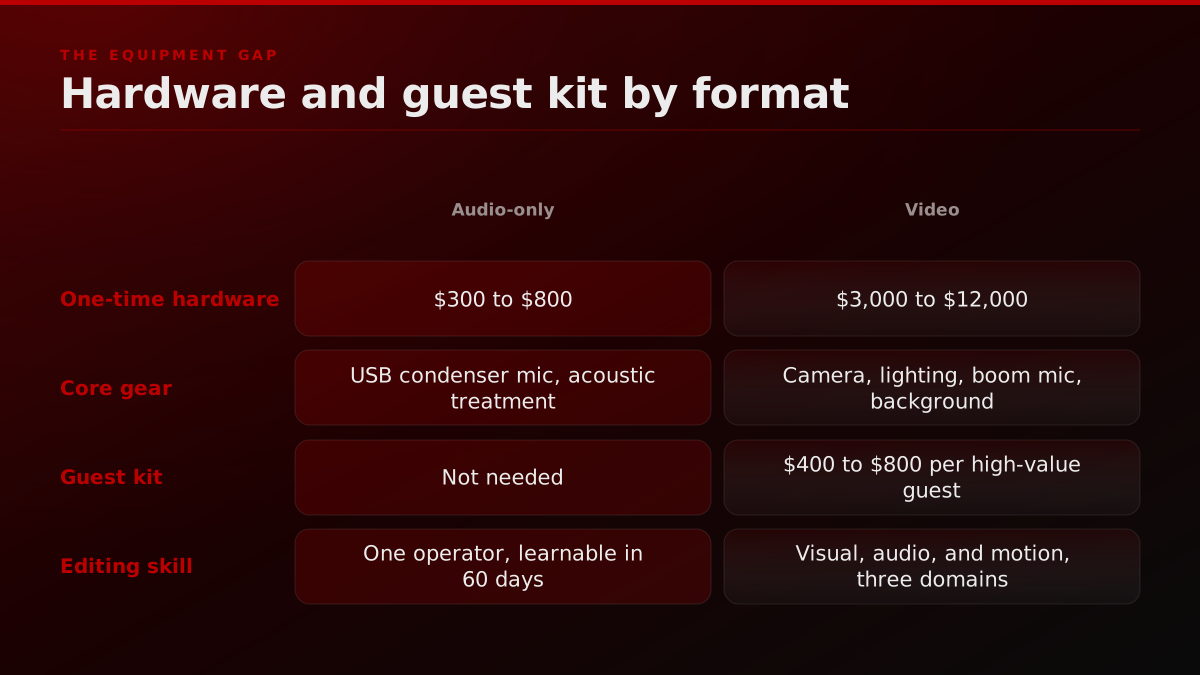
Equipment requirements differ substantially. Audio-only requires a USB condenser microphone, some acoustic treatment, and a quiet room. The total hardware investment for a quality audio-only setup runs $300 to $800 one time. Video requires a camera capable of producing clean 1080p or 4K output, a lighting kit or ring light, a dedicated microphone with boom positioning, and a background or virtual background setup that holds up on screen. Remote video recording adds a second layer: each guest needs adequate hardware, and the recording platform needs to capture isolated tracks at broadcast quality. The one-time hardware investment for a studio-quality video setup runs approximately $3,000 to $12,000. Remote video setups where you cannot control guest hardware introduce the mixed-budget waste failure mode described below.
Platform distribution comparison, audio-only vs video podcast
| Platform | Audio Only Yield | Video Podcast Yield |
|---|---|---|
| Apple Podcasts | Primary (100% of audio listeners) | Secondary (audio feed only, no video surface) |
| Spotify | Primary audio catalog | Spotify Video (growing, 5-15% of YT volume) |
| YouTube | Not indexed | Primary video discovery (search + long-form) |
| YouTube Shorts | Not available | High-volume clip surface (15-60 sec clips) |
| TikTok | Audiogram only (low engagement) | Vertical clips (face-on-cam, algorithm-native) |
| Instagram Reels | Audiogram only (low engagement) | Vertical clips (carryover from TikTok distribution) |
| X / Twitter | Not available at scale | Video clips, native upload (5-15% of YT volume) |
Equipment Requirements by Format
The equipment gap between audio-only and video is wider than most founders estimate before they start. Audio-only production concentrates the investment in the recording quality: condenser microphone, acoustic treatment, recording platform, and editing software. The skill set is linear and learnable by a single operator within 60 days. Video production splits the investment across three separate domains, visual, audio, and motion, each with its own skill ceiling.
For remote guest recordings, the equipment gap compounds because you cannot control what the guest brings to the call. A guest on a laptop camera with overhead fluorescent lighting creates a mixed-production output that requires more editing time, not less. Professional video podcasters solve this by shipping a guest kit (camera, ring light, USB mic) to high-value guests before the recording, adding approximately $400 to $800 per guest in kit cost. Hosts who do not ship guest kits live with mixed production quality that caps the sponsor CPM at the lower tier.
Audio vs Video Podcasting: Which One Should You Be Doing?
Think Media
Think Media on the audio-versus-video podcast decision and which one a new show should run. A creator-education read of the same tradeoff this post prices in operator terms.
The Backlinko 2025 podcasting statistics roundup confirms named-vertical shows compound substantially faster than generic business shows on YouTube discovery. Equipment quality correlates with sponsor CPM more directly in video than in audio, because sponsors can see the production value in the show reel in a way they cannot in audio. B2B niche video podcasts with professional lighting and camera work command approximately $40 to $75 CPM. Shows with inconsistent production quality, regardless of content quality, land at the $25 to $40 tier that audio-only commands.
Audience Demographics and Retention Curves
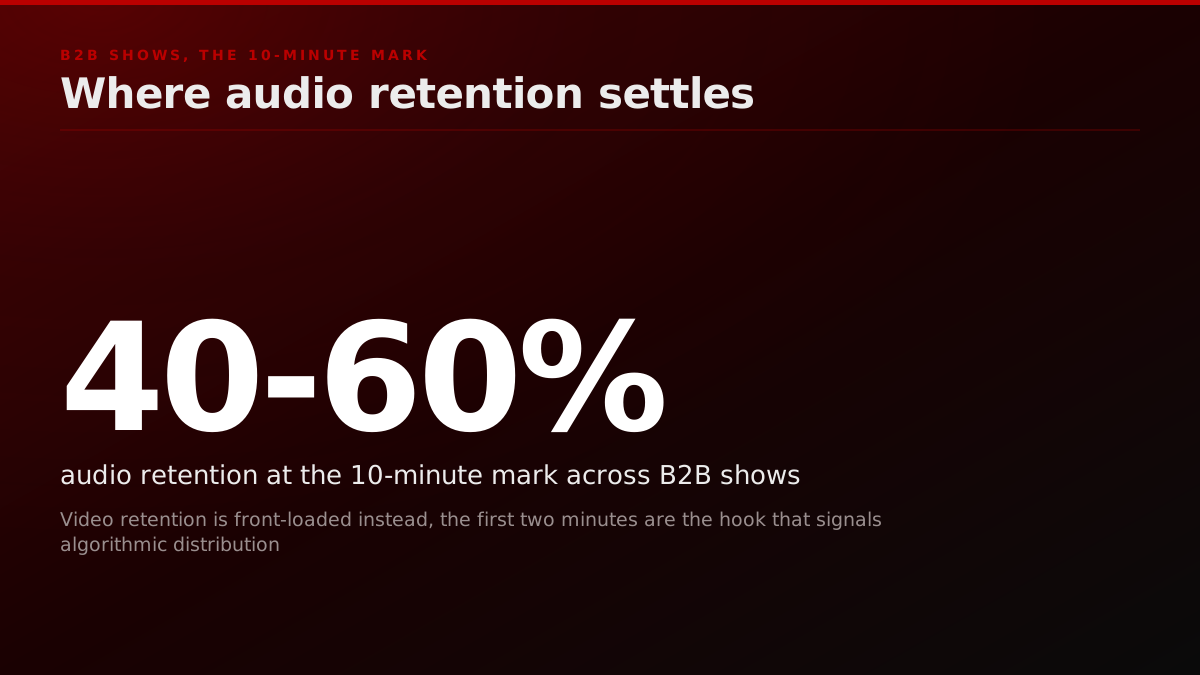
The two formats attract meaningfully different audience segments, not because of content but because of platform. Audio-only listeners skew toward the 35 to 54 demographic, concentrated on commuter and passive-listening use cases via Apple Podcasts and Spotify. The consumption pattern is linear: listeners start at the beginning, drop off at a consistent rate, and reach the end or stop somewhere in the middle. Retention curves on audio-only podcasts flatten at 40 to 60 percent at the 10-minute mark across most B2B shows in the FORKOFF client cohort.
Video podcast audiences on YouTube skew toward the 25 to 44 demographic, with consumption patterns driven by both passive viewing and active search-driven discovery. Retention curves on YouTube are front-loaded: the first two minutes are the hook, and holds above 40 percent past the two-minute mark signal strong algorithmic distribution. The clip-driven audience on TikTok and YouTube Shorts is the 18 to 34 demographic, consuming 15 to 90 second clips with a discovery pattern entirely driven by algorithm surface, not subscription.
When it works, video helps you build a second audience that (typically) only likes video.
These demographic splits matter for monetization. B2B founders targeting enterprise buyers are more likely to find their audience in the 35 to 54 audio-only cohort than the 18 to 34 TikTok cohort. Founders targeting early-career operators, developers, or founders themselves find the 25 to 44 YouTube and clip-surface cohort more responsive. The right format is the one that places your content in front of the specific segment that converts to pipeline, not the one with the highest aggregate view count.
simplypodlogical
@simplypodlogica
For SimplyPodLogical specifically, do you prefer audio only or video podcast?
Retention data from the Spotify Wrapped for Podcasters 2025 report shows audio-only shows with consistent episode lengths retain listeners at higher rates than variable-length shows. Video-first shows retain better at shorter episode lengths: 30 to 45 minutes performs better than 60 to 90 minutes in the YouTube long-form surface for most B2B verticals. The YouTube podcast strategy documentation and platform guidance both confirm the front-loaded hook and natural chapter breaks at 8 to 12 minute intervals improve algorithmic distribution on the video surface.
The Downstream Test, Three Questions That Decide
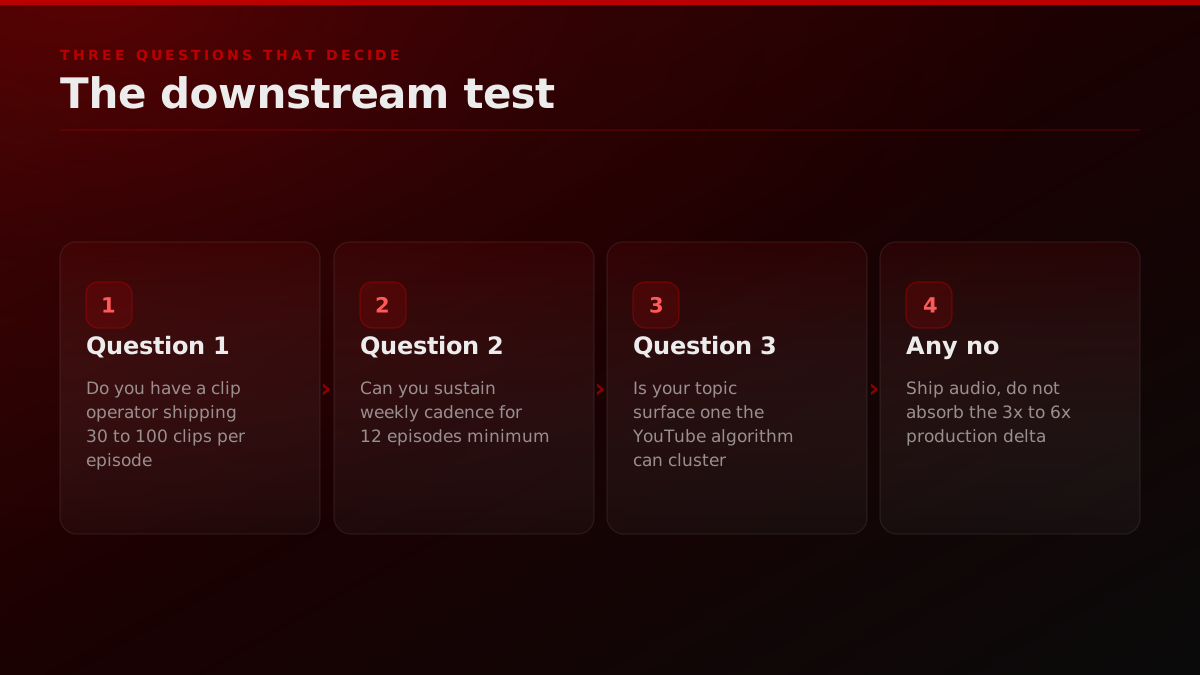
Three questions answered honestly tell you whether video pays: do you have a clip operator in place, can you sustain weekly cadence for 12 episodes minimum, and is your topic surface one the YouTube algorithm can cluster. They are sequential, which means a no on any of the three means you ship audio rather than absorb the 3x to 6x production delta with no downstream return.
Video can help a podcast grow, but only under very specific conditions. Most of the time it just adds work.
Question one, do you have a clip operator in place? The clip operator is either an in-house person whose week is dedicated to clip production or an agency running managed clipping as a productized service. If the answer is no, video does not pay. The clips are where the 20x to 100x view lift comes from, and clips do not produce themselves at the asset count required. Posting one clip per episode is the failure mode. Posting 30 to 100 clips per episode is the operator stack. The difference between those two is not effort, it is system.
Is video actually helping podcasts grow, or just adding extra work?
An operator notices more podcasters moving into video even when their shows worked as audio-only, and asks whether adding video genuinely helped growth or just added complexity, editing time, and pressure to perform on camera. Replies carry both camps: one operator reports YouTube now accounts for over 50 percent of… Show more
Question two, can you sustain weekly cadence for 12 episodes minimum? Video production is front-loaded in setup. The first three to six episodes carry production friction that goes away around episode eight to twelve, when the team has cycled enough loops to systematize the workflow. Operators who quit at episode six pay the setup tax and never collect the compound return. Operators who quit and switch back to audio at episode three pay the format-flip churn twice. Lock the format for 12 episodes minimum or do not start.
Question three, is your topic surface one the YouTube algorithm can cluster? YouTube long-form discovery is the largest single distribution lift video provides, and it depends on the topic being clusterable. Generic business shows do not cluster. Named verticals such as developer tooling, fintech infrastructure, AI agents, B2B sales operations, or named-industry podcasts cluster. Test by searching three of your planned topics on YouTube and checking whether there is a clear set of channels and a clear viewer audience. The Backlinko 2025 podcasting statistics roundup confirms named-vertical shows compound substantially faster than generic business shows on YouTube discovery. If the search returns generic content, the algorithm cannot cluster your show and the YouTube discovery lever is closed.
YouTube now accounts for over 50% of our consumption. It absolutely helps.
Monetization Mix by Format
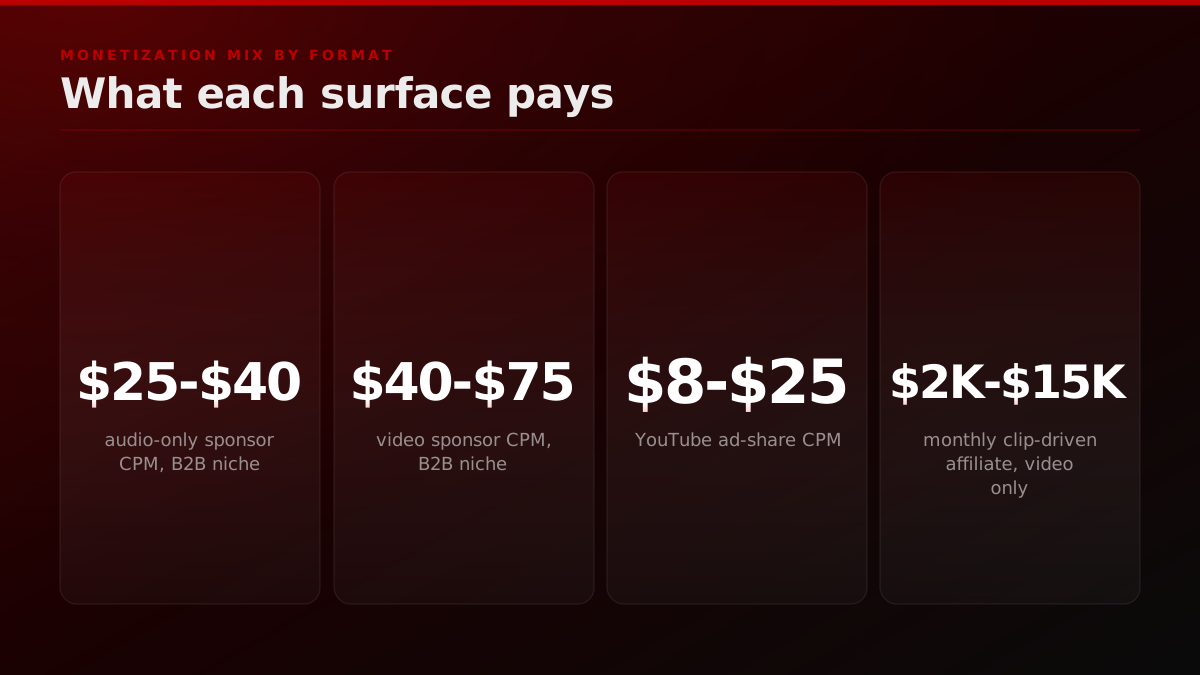
The monetization paths diverge significantly between formats, and the gap compounds over time. Audio-only monetization is concentrated in three channels: host-read advertisements at $25 to $40 CPM, listener-supported models via Patreon or Supercast, and platform deals with Spotify for shows that cross the 5,000 monthly listener threshold. The ceiling for most B2B niche audio-only podcasts is $40 CPM, achievable only when the audience is sufficiently targeted and the host can demonstrate listener engagement to sponsors. For a full breakdown of the listener thresholds that open each monetization tier, see the podcast monetization math post from the FORKOFF podcast series.
Video podcast monetization adds two substantial channels on top of the audio stack. YouTube ad-share starts paying meaningfully at 10,000 monthly views and scales linearly with the view count. For B2B niche channels, YouTube ad-share CPM runs approximately $8 to $25 depending on topic and viewer geography, with the AI tooling, fintech, and enterprise software verticals at the top of the range. Brand sponsorship on video commands a premium over audio sponsorship because the sponsor gets visual placement, on-screen product integration, and the ability to run pre-roll and mid-roll video ads, not just host reads. Video sponsorship CPM for B2B niche runs $40 to $75, which is the number that makes the production delta pay.
Buzzsprout 2026 hosting data, where audio-only dominates
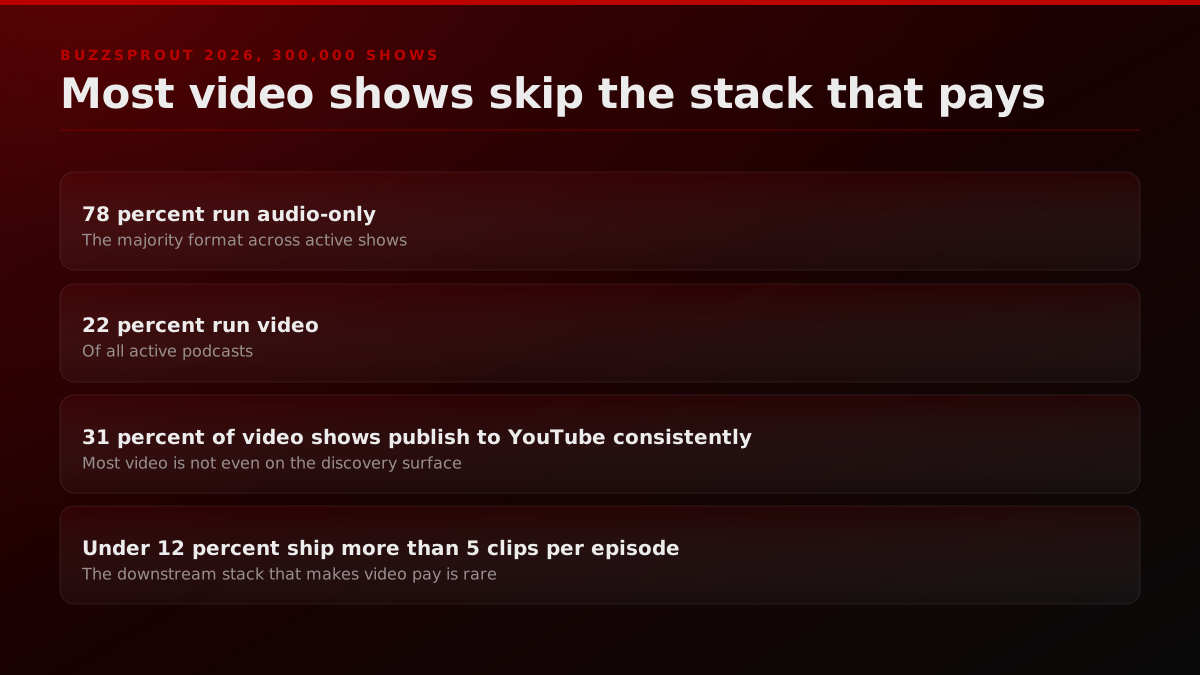
Buzzsprout 2026 hosting platform data across 300,000 active shows confirms audio-only remains the majority format at 78 percent of active podcasts. Of the 22 percent running video, only 31 percent publish to YouTube consistently, and of those, fewer than 12 percent ship more than 5 clips per episode. The data validates the FORKOFF operator position: most founders add video without adding the downstream clip infrastructure that makes video pay, producing the ghost-YouTube-channel failure mode at scale.
Source: Buzzsprout State of Podcasting 2026 (buzzsprout.com)
The clip-driven affiliate channel is the third monetization layer that audio-only cannot access. Short-form clips with product demonstrations or founder testimonials generate affiliate conversions at rates that audio content cannot match, because the viewer can see the product working. Founders in the software, productivity, and AI tooling verticals in the FORKOFF client cohort generate $2,000 to $15,000 per month in affiliate revenue from clip-driven product references, with zero equivalent from their audio-only feed. The FORKOFF KOL marketing service covers the affiliate and clip-commerce layer in detail for founders ready to run it as a dedicated channel.
Evergreen Search Value by Format
Audio-only podcast content has limited evergreen search value. Apple Podcasts and Spotify index episode titles and descriptions, but the audio content itself is not crawled for keyword matching. Show notes on a hosted website provide some long-tail search value, but the structural match between audio content and search intent is weak. Most B2B audio-only podcasts generate 80 percent of their audience through subscriber loyalty and word of mouth, not search discovery.
Video podcast content on YouTube generates evergreen search value through multiple mechanisms. YouTube transcripts are indexed by YouTube Search and, increasingly, by Google Search for video content. Episode chapters create searchable timestamps that surface in YouTube results. The qualified views metric post from the FORKOFF blog shows how this evergreen search value compounds: episodes with strong topic-cluster fit on YouTube continue generating views at the 6 to 18 month mark at 30 to 60 percent of their peak view rate, a pattern that does not exist in audio-only podcasting.
The evergreen value differential matters most for founders whose content has a long useful life: market analysis, operational frameworks, founder interviews with durable advice. For founders producing time-sensitive news or trend commentary, the evergreen gap is less significant because neither format retains audience value past 30 to 60 days. The podcast AEO citation strategy post covers how to structure episode show notes to maximize the search and AI-citation surface area on both formats.
At FORKOFF We Run the Math Per Episode
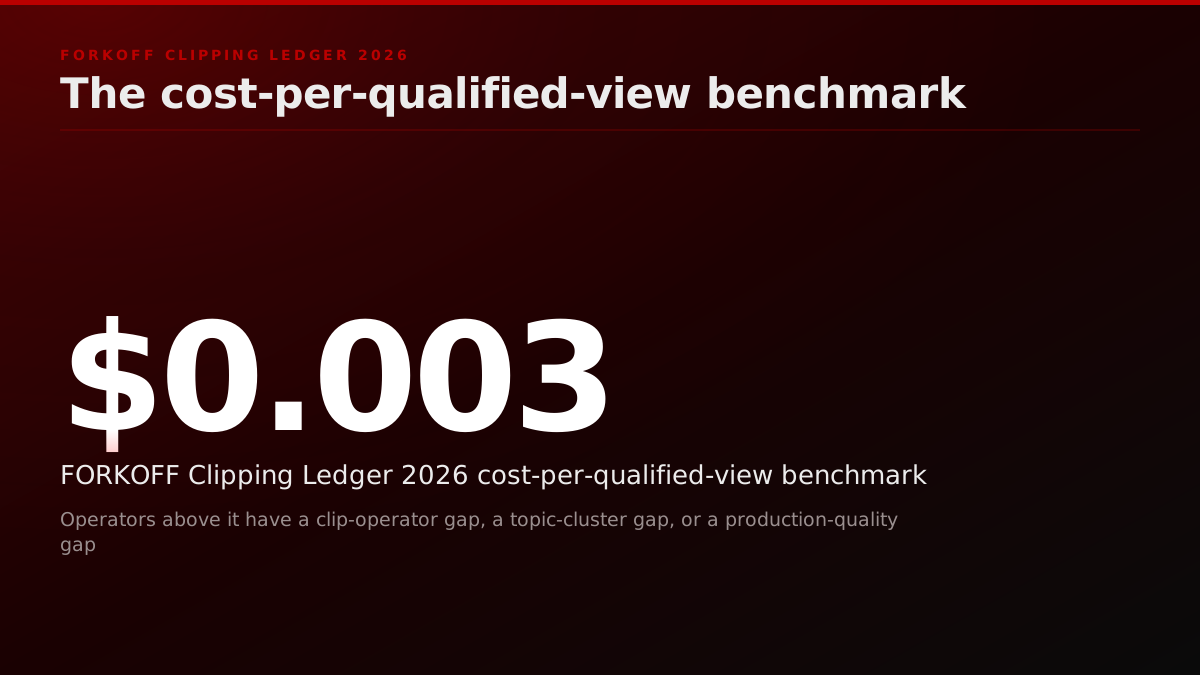
Every podcast retainer FORKOFF takes on starts with the same calculation, which is the cost per qualified clip-driven view from the prior 90 days of episodes. We pull the actual numbers from YouTube, TikTok, and the clip distribution platform, divide total clip-distribution spend by total qualified views with hold-time and bot-exclusion gates applied, and produce a CPQV number that is comparable to the FORKOFF Clipping Ledger 2026 benchmark of $0.003 per qualified view. Operators below the benchmark are spending efficiently. Operators above it have either a clip-operator gap, a topic-cluster gap, or a production-quality gap, and the audit identifies which.
Operator noteThe clipping network behind the podcast engine has processed 5B+ views. We make the format call against that capacity, not feed downloads., FORKOFF clipping network, 2026
For founders considering the format flip from audio to video, we run a different calculation, the projected clip-asset ceiling per episode under the current operator stack. A 60-minute video episode under a competent operator can yield 30 to 100 vertical clips. Most founder podcasts ship 3 to 8 clips per episode because the operator stack tops out there. The gap between 8 and 80 is the operator-stack investment, and it is the investment that decides whether the format flip pays.
Operator noteMost founder podcasts we audit ship 3 to 8 clips per episode. The gap between 8 and 80 is an operator-stack gap, not a content gap., FORKOFF podcast distribution audits, 2026
The r/podcasting community is split on video
The r/podcasting thread "Painful to hear, how podcasts rush to video is turning them into dreadful listens" reached 163 upvotes and 78 comments as the year-top entry in the subreddit. Operators argue video adds production overhead and degrades audio quality with no ROI improvement when the brand lacks downstream distribution. The counter-thread "Is video actually taking over podcasting now" with 31 upvotes and 88 comments shows the format-flip pressure is real. The community split tracks the FORKOFF operator stance, video pays only with a clip engine downstream.
Source: r/podcasting top threads, last 30 days plus year-top
The community split visible on r/podcasting is the same split visible inside the FORKOFF podcast service client cohort. Founders who add video without the downstream stack regret the production delta within six months. Founders who add video with the downstream stack compound the appearance into a distribution event that runs for weeks past the episode publish date. The format is not the variable. The operator stack behind the format is the variable.
Four Named Failure Modes
Four ways founders lose money on the format decision, each with a named operator fix: vanity video (episodes published to YouTube with no clip distribution), the ghost YouTube channel (12 plus videos under 200 subscribers), mixed-budget waste (paying video rates while recording on consumer-grade gear), and format-flip churn (switching between video and audio every quarter). Each one pays video production rates and collects audio-only distribution outcomes.
Four named failure modes when adding video without the operator stack
| Failure Mode | Symptom | Operator Fix |
|---|---|---|
| Vanity video | Episodes published to YouTube but no clip distribution | Stop video production until clip operator is in place |
| Ghost YouTube channel | Channel exists with 12 plus videos, under 200 subscribers | Audit topic-cluster fit before producing more episodes |
| Mixed-budget waste | Spending video money but recording on consumer-grade gear | Either invest fully or ship audio-only at higher quality |
| Format-flip churn | Switching between video and audio every quarter | Lock format for 12 episodes minimum before re-evaluating |
Vanity video. Episodes published to YouTube with no clip distribution, generating 200 to 2,000 views per upload and zero downstream compounding. The operator fix is brutal, stop video production until the clip operator is in place, ship audio-only at the same cadence, and re-evaluate video at episode 12 of the audio-only run. This costs ego but saves $50K to $150K per year in misallocated production budget. The FORKOFF podcast guesting vs cold email comparison covers how to maximize guest ROI before committing to video production.
Ghost YouTube channel. Channel exists with 12 plus videos, fewer than 200 subscribers, and no measurable lift in audio feed downloads. Symptom of a topic-cluster gap. The operator fix is to audit topic-cluster fit before producing more episodes. Test the planned topic on YouTube search. If the algorithm cannot cluster the show, no operator stack will compensate. Either reposition the show into a named vertical or abandon video. The FORKOFF podcast guesting playbook for AI startups covers topic-cluster testing as part of the pre-launch podcast positioning audit.
Mixed-budget waste. Spending video production money but recording on consumer-grade gear, producing visually amateur output that signals lack of investment to high-tier guests. The operator fix is binary, either invest fully in video production quality or ship audio-only at higher quality. The mixed-tier outcome looks worst on both axes. Founders running the FORKOFF managed podcast service avoid this by standardizing guest hardware requirements at the contract stage.
Format-flip churn. Switching between video and audio every quarter based on the latest internal debate about ROI. The operator fix is to lock format for 12 episodes minimum before re-evaluating. Format switching destroys the cluster signal both algorithms need to compound, costs the operator stack the setup-loop investment twice, and trains the audience to expect inconsistency. For founders who want a systematic framework to evaluate format performance at the 12-episode mark, the FORKOFF podcast engine 6-block system provides the measurement checklist used by FORKOFF client podcast operators.
Is anyone else sad about so much emphasis on video?
An audio-first podcaster reacts to hosting companies announcing a lean into podcast video and Apple rolling out more emphasis on video. They have used supporting videos on socials and YouTube Shorts for years but see the current platform push as something different, and the thread fills with operators weighing the… Show more
When the X/Social Layer Accelerates the Format Decision
The X and social media layer adds a distribution surface that changes the format calculus for founders with existing audiences. A founder with 10,000 plus X followers who ships a video clip natively to X on episode launch day generates 5,000 to 50,000 views from the existing audience that the same content in audio-only format would generate zero from. X has native video playback with autoplay in feed, and the algorithm pushes video clips with strong engagement signals into non-follower feeds within hours of publish.
The X layer is not a replacement for the YouTube and TikTok clip engine, it is an amplification surface. The format calculus for founders with existing social audiences shifts: the clip-distribution engine pays faster because the founder audience on X accelerates the initial view spike that seeds the algorithmic push on YouTube Shorts and TikTok. Founders without existing social audiences cannot rely on X acceleration and need the algorithm-driven distribution paths to work independently. The founder-led sales podcast strategy covers how to build the X audience in parallel with the podcast production schedule so both compound together.
The social layer also changes the guest booking dynamic covered in the FORKOFF podcast booking system for founders. Guests who have watched FORKOFF-produced clips from prior episodes on X before agreeing to appear have a higher episode quality on average than guests booked cold, because they understand the show format and the clip-production expectations. The social layer is a guest-quality filter as much as a distribution surface.
Production Timeline Math and the Hidden Operator Tax
The cost delta between audio and video gets most of the analytical attention, but the timeline delta is the variable that breaks more founder podcasts than the dollar number. Audio-only production runs a 48 to 72 hour turnaround from raw recording to published feed under a competent operator stack. Video production with full clip distribution runs a 5 to 10 day turnaround per episode, which compounds into a permanent backlog if the recording cadence is weekly and the production cadence drifts past the cadence floor.
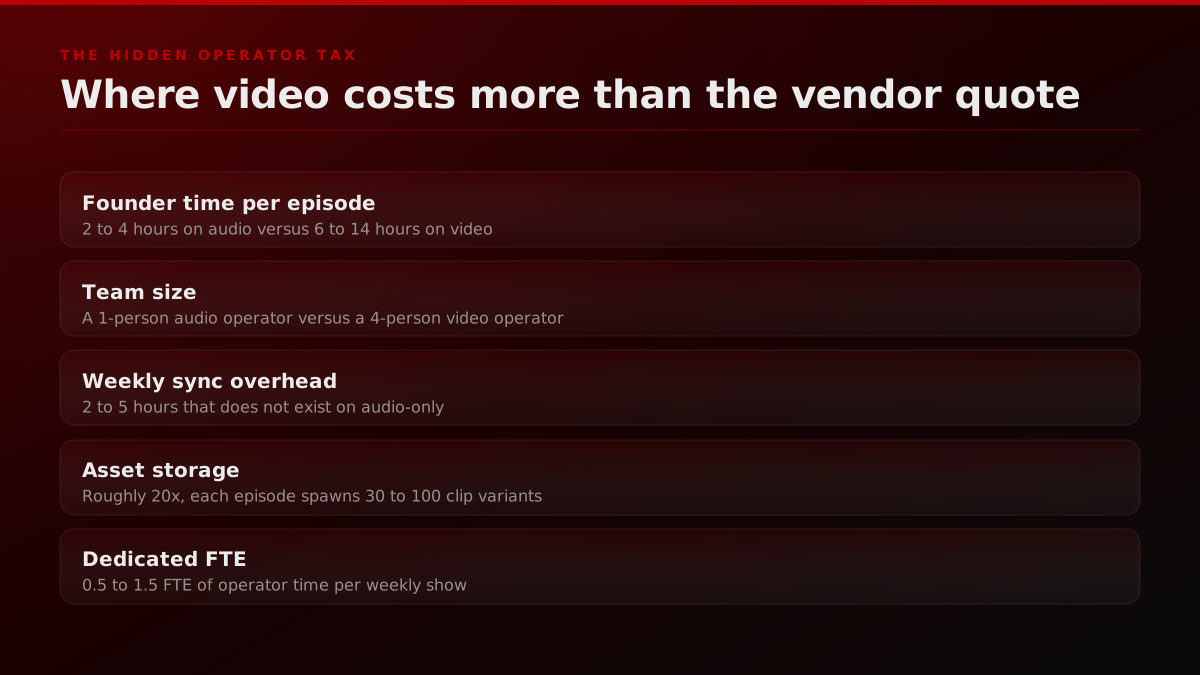
The hidden operator tax shows up in three places. First, the founder time investment per episode shifts from 2 to 4 hours post-recording on audio to 6 to 14 hours on video, because each clip needs a hook approval pass, each thumbnail needs a creative review, and each platform-specific export needs a caption pass that the founder cannot fully delegate to the editor. Second, the team coordination overhead jumps from a 1-person operator (audio editor) to a 4-person operator (video editor, clip operator, thumbnail designer, scheduling coordinator), which adds 2 to 5 hours of weekly synchronization that does not exist on audio-only. Third, the asset storage and version control overhead grows roughly 20x because each video episode generates 30 to 100 clip variants, three to five long-form exports across platforms, and a thumbnail library that compounds across episodes.
Founders running the FORKOFF managed podcast service absorb this operator tax through the agency stack, which is why the retainer math holds at the per-episode investment threshold. Founders running video production in-house need to budget a dedicated 0.5 to 1.5 FTE of operator time per weekly show, which is the line item most often missed in the initial format-flip business case. The mistake is to assume the production cost number from a vendor quote captures the full investment. It does not. The operator time is the gap, and the gap closes only when the team commits to the systematized workflow at episode 12 or hires an agency that already runs the workflow.
Topic-Cluster Fit and the YouTube Discovery Audit
The third question in the downstream test, topic-cluster fit on YouTube, deserves a deeper operator pass because it is the most commonly misread variable in the format decision. Founders evaluating a video format flip almost always overestimate whether their show topic clusters on YouTube, because the cognitive bias rewards optimism on a decision that has already been emotionally made. A structured topic-cluster audit prevents the most expensive version of the mistake.
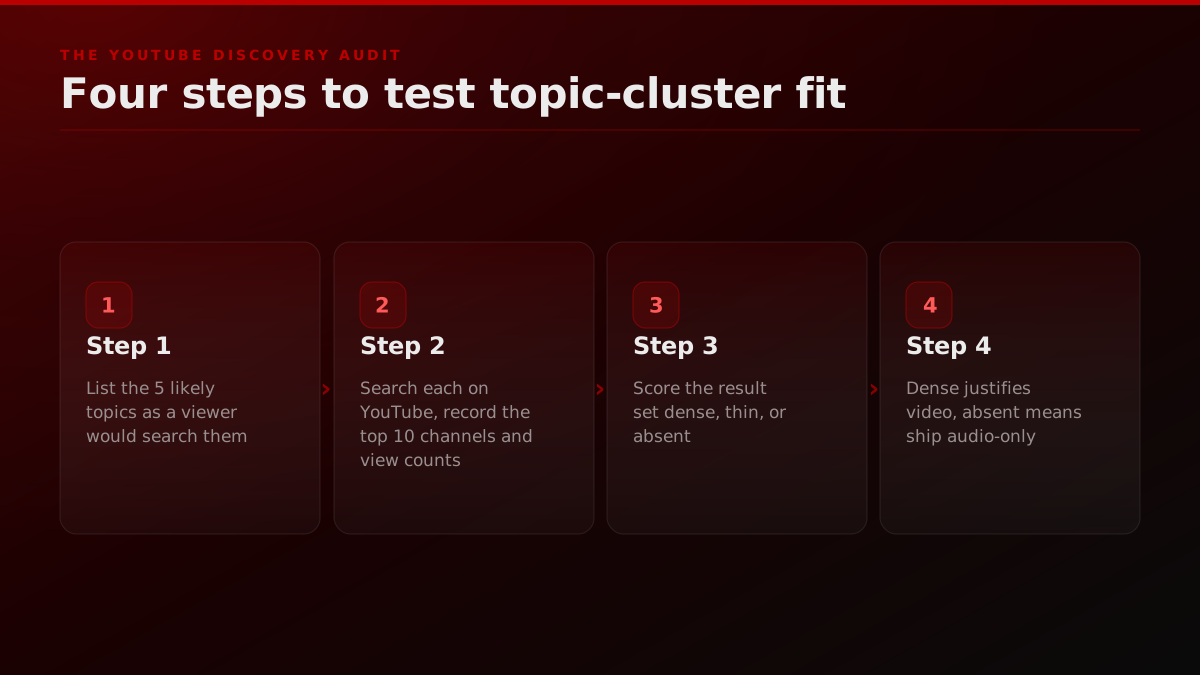
The audit runs in four steps. Step one, list the five most likely episode topics for the next quarter, written as a viewer would search for them, not as the show host would frame them. Step two, search each of the five topics on YouTube and record the top 10 results: channel name, subscriber count, average view count on recent uploads, and whether the channels are clearly within the same niche. Step three, evaluate whether the result set is dense (10 clear matches in the niche), thin (3 to 6 matches), or absent (0 to 2 matches). Step four, map the result to the format decision: dense clusters compound on YouTube and justify video; thin clusters compound only with above-average production quality and strong host authority; absent clusters mean the YouTube discovery lever is structurally closed and video does not pay independently of the clip distribution surface.
The FORKOFF podcast service runs this audit as part of the pre-retainer scoping call because it predicts retainer outcomes more accurately than any other single input. Founders in dense clusters (developer tooling, AI infrastructure, fintech, B2B SaaS sales operations) compound on YouTube at the published benchmark rates. Founders in thin clusters (early-stage operator advice, generic founder interviews, niche industry verticals) compound only with the X social layer and clip-distribution engine carrying the discovery load. Founders in absent clusters should default to audio-only with a strong show-notes layer, because video adds cost without opening the discovery channel that justifies the cost.
A topic-cluster audit at the planning stage also informs the show-naming decision, the episode title convention, and the thumbnail design system. Shows in dense clusters benefit from named-vertical title conventions (e.g. "The Fintech Operators Show") because the algorithm pattern-matches the title against the cluster. Shows in thin or absent clusters need title conventions that lean on host or guest names, because the algorithm cannot cluster the show by topic alone. The naming convention is downstream of the audit, not upstream, which is the inverse of how most founders sequence the launch decisions.
The Operator Takeaway
The format decision sits downstream of the distribution decision. Audio podcasts produce 0 to 5 clips per episode and live on audio feeds. Video podcasts produce 30 to 100 clips per episode and live on YouTube plus three short-form surfaces, but only when a clip operator runs the distribution. Without the operator, video is a 3x to 6x production cost increase that buys flat downloads and a ghost YouTube channel. With the operator, one creator's video show compounded into 3,000 plus clips and 1 million plus views over a 13-day window, per the FORKOFF clipping case study.
Operator noteThe 3,085-clip case ran 13 active distribution days on one creator's video show., FORKOFF Clipping Ledger 2026
For founders running a B2B podcast and asking whether to flip to video, the answer is yes if and only if you also build or rent the podcast clipping layer. The format alone does not pay. The format plus the operator stack pays at the asset-count ratio of 30 to 100 vertical clips per episode. Build the operator stack first or commission it from an agency, then add video. The reverse sequence is the most expensive mistake in the founder podcast playbook. For a full view of what the FORKOFF operator stack looks like across all podcast services, see the FORKOFF podcast services page and the FORKOFF influencer marketing overview.
Related reads: Podcast monetization math, Managed clipping case study, Qualified views metric, Podcast AEO citation strategy, Podcast booking system for founders, FORKOFF podcast engine 6-block system.