You grow a podcast in 2026 by treating the recording as the start of a distribution process rather than the end of a publishing one. The system that does this is the 4-Channel Podcast Distribution Engine: it routes one episode through YouTube, X, LinkedIn, and a newsletter as channel-native cuts, converting a single recording into 60 or more audience touchpoints in front of people who have never heard the show. The channels that index old content keep those touchpoints working for months. Roughly 4.4 million podcasts are active worldwide and most stop before episode 10, almost never because the content was bad, but because the host published into a vacuum, watched the download count flatline, and ran out of reasons to keep recording.
This is the difference between a podcast as content and a podcast as a system. A content podcast publishes an episode to an RSS feed and hopes. A system podcast takes that same episode and routes it through four channels engineered to reach audiences the show has never touched, which is why the engine, not the microphone, is the answer to how to grow a podcast this year.
FORKOFF runs this engine for founders as a managed podcast distribution service. In one client campaign, a single set of recordings produced 3,085 clips and 1,190,014 organic views in 13 active distribution days, attributed at the payment level rather than by view-based guesswork. The numbers come later in this guide, anonymized where consent was not granted. What matters up front is the principle: the content was fixed, and distribution did the work. For the B2B founder reading this, that distribution layer is also a founder-led growth channel, not just an audience play.
The 30-second answer to how to grow a podcast
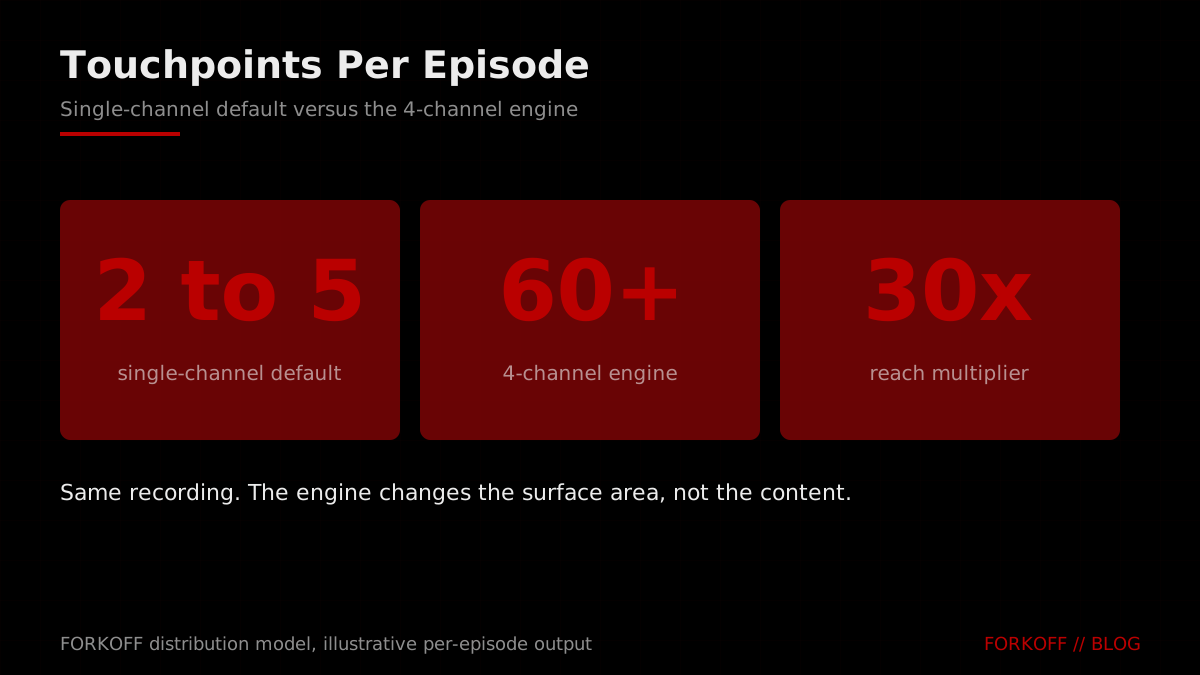
Podcast growth in 2026 is a distribution problem, not a content problem. A 45-minute episode published only to RSS and Spotify generates 2 to 5 audience touchpoints and stalls under 1,000 downloads per episode. The 4-Channel Podcast Distribution Engine processes the same recording into 60 or more touchpoints across YouTube long-form plus Shorts, X thread plus clips, LinkedIn carousel plus audiogram, and a newsletter digest. Channels that index and resurface old content compound, so an episode from month 1 still drives discovery in month 12. FORKOFF runs this engine for founders. One client appearance produced 3,085 clips and 1,190,014 organic views in 13 active distribution days, attributed at the payment level.
Growth is a distribution problem, not a content problem
The plateau under 1,000 downloads per episode is rarely caused by weak content. It is caused by a narrow distribution surface. A podcast published to RSS and one social account reaches its existing subscriber base and almost nobody else, so each episode generates 2 to 5 touchpoints and the show grows at the speed of word of mouth. The breakout shows treat every recording as raw material for a distribution system that places channel-native cuts where new audiences already scroll. The content stays the same. The surface area is what changes, and surface area is what the algorithms reward.
Source: FORKOFF podcast distribution model, 2026
About these numbers
FORKOFF first-party operator data from podcast booking and distribution engagements, supplemented by publicly available podcast industry reports (Spotify, Apple, Edison Research 2025-2026). All figures are directional estimates based on operator observations; individual outcomes vary by niche, audience, and execution. Founders who want a parallel system for getting booked as a guest on other shows can find that in the podcast booking system for founders 2026.
Why most podcasts plateau under 1,000 downloads per episode
The plateau under 1,000 downloads per episode is the single most common pattern in podcasting, and it is almost always a distribution failure dressed up as a content failure. Spotify for Podcasters data puts the median podcast under 200 downloads per episode at the 30-day mark. The top 10 percent reach roughly 2,700 per episode, and the top 1 percent clear 17,000 or more. A B2B founder show stuck between 300 and 800 downloads is therefore above the median but nowhere near the breakout line where sponsorship, paid guest slots, and inbound pipeline start to become reliable.
The mechanism behind the plateau is simple arithmetic. A podcast that publishes to an RSS feed and one social account has a discovery ceiling set by its existing subscriber base. Each episode generates 2 to 5 touchpoints: the feed entry, maybe a single promotional post, maybe a share. None of those touchpoints reach a meaningfully new audience, so the show grows only at the speed of word of mouth. Compounding never starts because nothing is placed where strangers scroll. Industry data backs the ceiling: Edison Research tracks how concentrated listening is among a small set of large shows, and directory tools like Listen Notes show how many podcasts never escape the long tail. Where the revenue line sits relative to that ceiling is covered in the podcast monetization math breakdown, and the staged path from those benchmarks up to a six-figure download month is mapped in the 12-month podcast growth playbook.
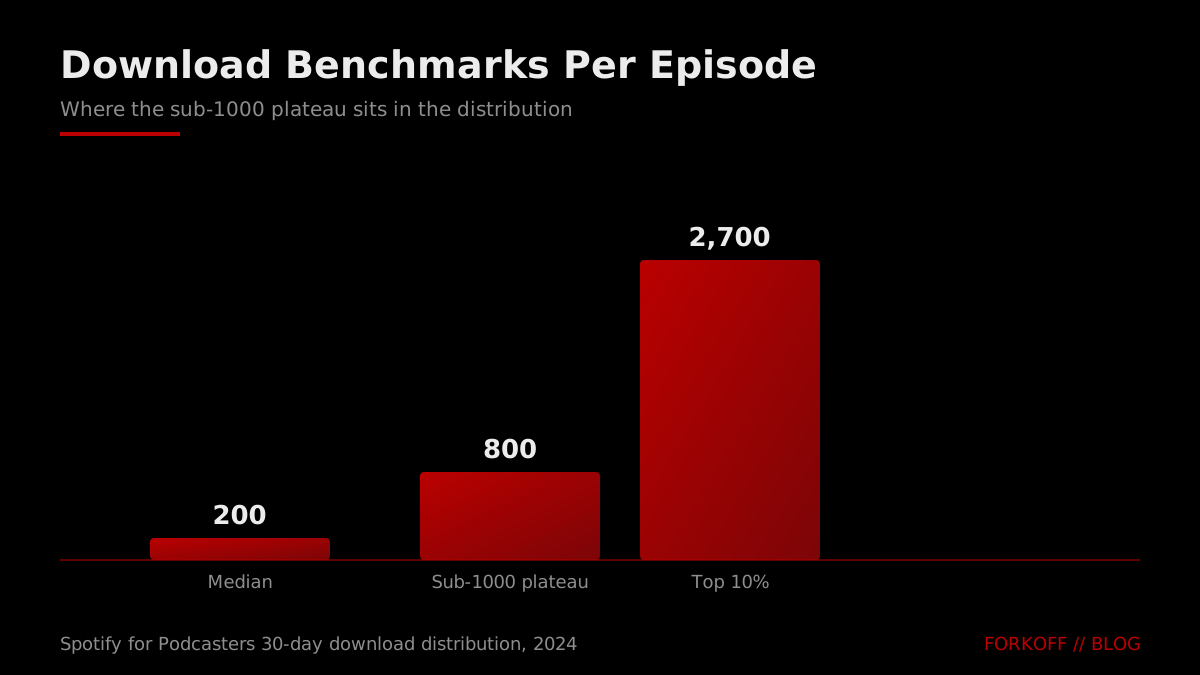
Podcast download benchmarks per episode at 30 days
| Tier | Downloads per episode | What it unlocks |
|---|---|---|
| Median | Under 200 | Hobby tier, no monetization |
| Sub-1000 plateau | 300 to 800 | Above median, below breakout |
| Top 10 percent | About 2,700 | Reliable sponsor interest |
| Top 1 percent | 17,000 or more | Paid guests and inbound pipeline |
Distribution sourced from Spotify for Podcasters 30-day data; figures are directional.
The fix is not better content or a faster publishing cadence. Founders at the plateau usually have strong content already, which is why the advice to publish more often fails them. The fix is to widen the distribution surface so each episode reaches people who do not yet know the show exists. That is the entire premise of the engine, and it is why the rest of this guide is about placement rather than production quality.
There is a second, subtler reason the plateau holds. The platforms most podcasters anchor on, Spotify and Apple Podcasts, are closed discovery environments. They rank shows largely on signals the show cannot easily influence from outside: follower count, completion rate, and how often existing subscribers stream. A new listener has to already be on the platform, already be browsing the right category, and already get served the show by an editorial team or a recommendation model the operator has no access to. Those are slow, gated surfaces. They reward shows that are already large and starve shows that are still small, which is the textbook definition of a discovery ceiling.
Contrast that with an open discovery surface like YouTube search or an X feed. There, a single strong clip can reach someone who has never browsed a podcast directory in their life. The clip does not need the listener to be inside a podcast app. It meets them where they already spend attention and pulls them toward the show. This is why the engine treats the closed platforms as the destination and the open platforms as the acquisition layer. The episode lives on Spotify; the audience is recruited everywhere else and routed in.
A useful diagnostic for any plateaued show is to count its touchpoints honestly. Open a recent episode and write down every distinct place a stranger could have encountered it: the RSS feed, any single promotional post, a share if you are lucky. Most plateaued shows land at 2 to 4. Then count the touchpoints a top-decile show generates from the same recording. The gap is rarely about talent. It is about how many doors the operator opened. The plateau closes when the door count goes up, not when the recording gets sharper.
Operator note300 to 800 downloads per episode is the most common stuck point for B2B founders with strong content., FORKOFF podcast cohort, 2026
The 4-Channel Podcast Distribution Engine
The 4-Channel Podcast Distribution Engine converts a single recording into 60-plus audience touchpoints across YouTube, X, LinkedIn, and newsletter. Each channel takes the same source material and ships it in two channel-native formats, with its own distribution window and its own compounding mechanic. The framework is deliberately not a list of tactics. It is a system, which means every episode runs through the same pipeline and the output is predictable.
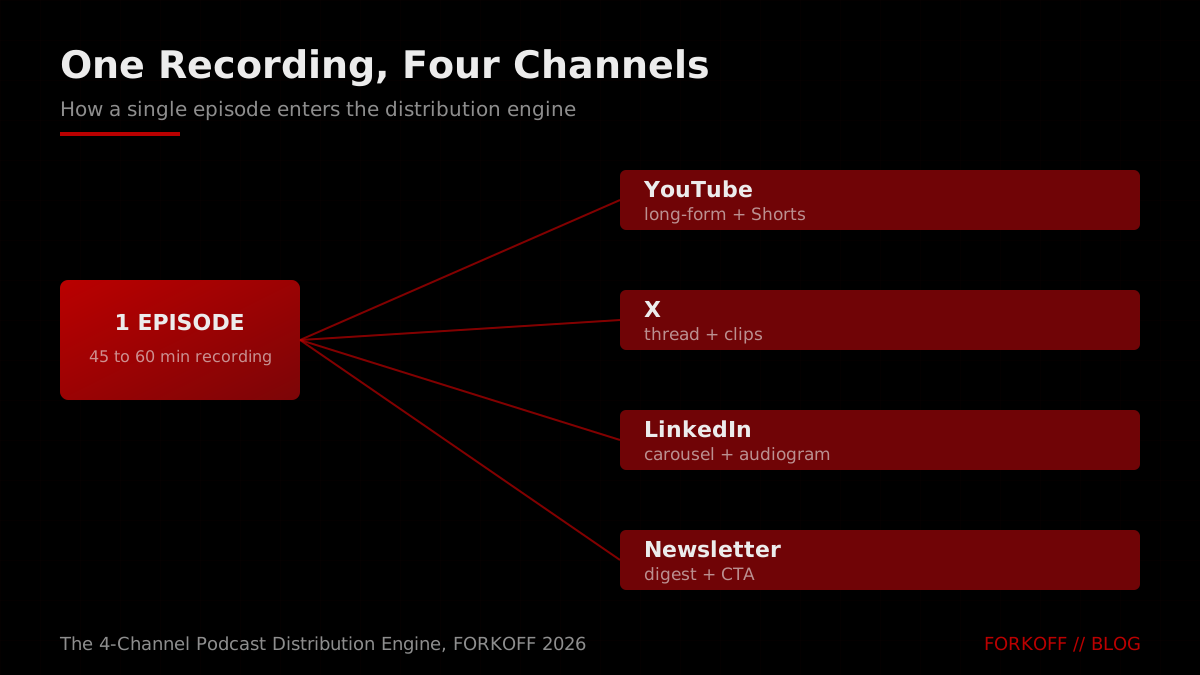
The contrast with the default approach is stark. The publish-and-wait podcast treats the episode as a finished product. The engine treats the episode as raw material. The matrix below shows what each channel produces, when it ships, and why it keeps working after publish day. Read it as the blueprint for everything that follows.
The 4-Channel Podcast Distribution Engine at a glance
| Channel | Formats per episode | Distribution window | Compounding mechanic |
|---|---|---|---|
| YouTube | Full episode plus 2 to 3 Shorts | Day 1 to day 7 | Search and suggested feed index forever |
| X | Insight thread plus 1 to 2 clips | Day 2 to day 7 | Bookmarks and reshares recirculate |
| Carousel plus audiogram | Day 2 to day 4 | Strong posts re-enter the feed | |
| Newsletter | One digest with episode CTA | Day 2 to day 3 | Owned list, no algorithm gate |
Output counts are per recording; clips recirculate for weeks beyond the window.
The 60-touchpoint figure is not marketing language. It is the sum of long-form uploads, short clips, threads, carousels, audiograms, and digest sends, multiplied by the recirculation that indexed channels produce over the following weeks. The detailed math comes in the multiplier section. For the founder evaluating whether this is worth the effort, the structural insight from the podcast distribution strategy playbook is that the work is front-loaded into one week per episode and then the channels carry it. The discovery layer underneath it is covered in the podcast AEO citation strategy guide.
It helps to understand why four channels and not three or five. The engine pairs two open acquisition surfaces with two owned retention surfaces, which is the minimum combination that both recruits new listeners and keeps them. YouTube and X are the acquisition surfaces: they are open, algorithmic, and built to put content in front of strangers. LinkedIn and the newsletter are the retention surfaces: LinkedIn carries the professional audience that converts to pipeline, and the newsletter is the owned list that survives every platform change. Drop one of the open surfaces and the show stops recruiting. Drop one of the owned surfaces and the show is renting its entire audience from an algorithm. Four is the smallest number that covers both jobs without redundancy.
The channels also fail in different ways, which is a feature. If YouTube changes how Shorts surface, X and LinkedIn keep recruiting. If a thread underperforms, the newsletter still lands in the inbox. A single-channel podcast has one point of failure and no hedge. A four-channel engine has four independent acquisition mechanics, each with its own ranking logic, so a bad week on one surface does not zero out the episode. Diversification is usually framed as a financial idea, but it is just as load-bearing in distribution.
Each of the four channels earns its place for a different reason, and the next four sections take them one at a time. Two of the channels compound through algorithmic indexing, and two of them are owned surfaces that no platform can switch off. A complete engine needs both kinds.
Channel 1: YouTube long-form and Shorts
YouTube is the compounding anchor of the engine because it is the only channel that indexes content against search and the suggested feed indefinitely. A six-month-old Short can surface to a new viewer today, which is a behavior no audio-only platform replicates. From one episode, the channel ships two distinct output types. The full episode goes up as a long-form upload that targets YouTube search and watch time. Then two to three vertical Shorts, each under 60 seconds and captioned, target discovery from people who have never heard the show.
The long-form setup matters more than most operators think. Chapters and timestamps make the episode navigable and feed the structured data that Google uses for discovery, as documented in YouTube's own guidance on chapters. A keyword-rich description and a custom thumbnail do the rest, and how YouTube works lays out why those signals drive the suggested feed. The point is to make the upload legible to the systems that decide who sees it, not just to the subscribers who already follow. If you are still deciding between formats, the video podcast versus audio-only comparison covers the tradeoffs.
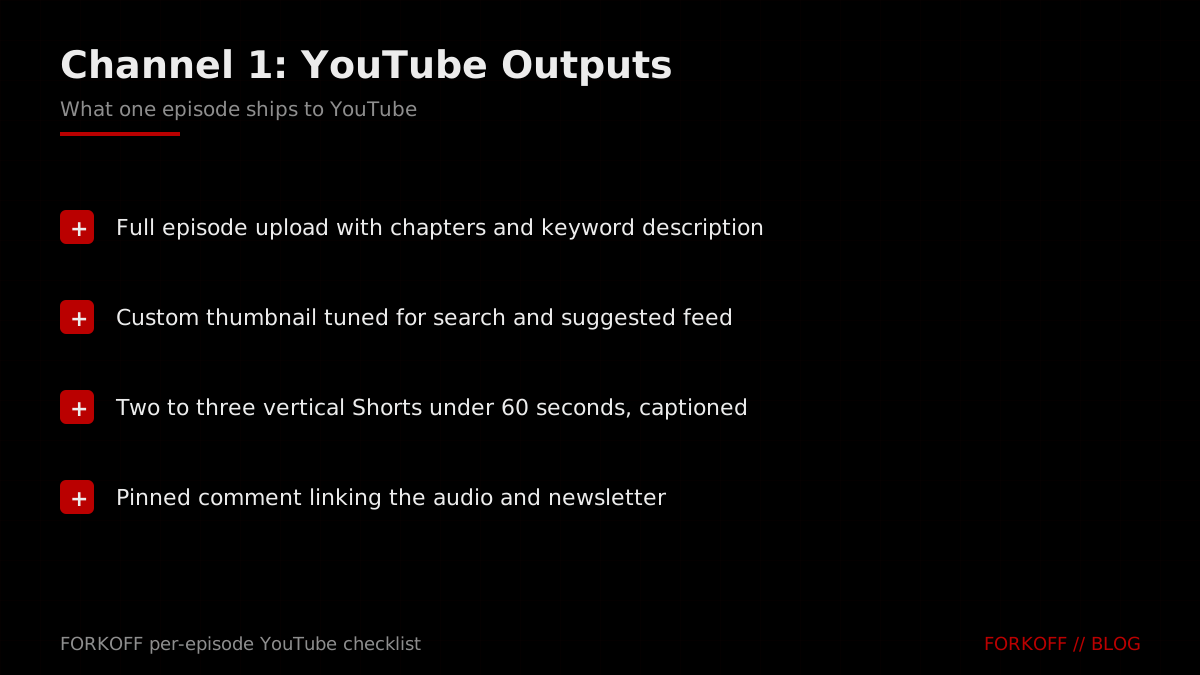
The Shorts are the discovery engine inside the discovery engine. YouTube's guidance on Shorts confirms that the format is built to surface clips to people outside the existing subscriber base, and YouTube's official blog regularly documents how that reach is expanding. One client campaign showed how lopsided the returns can be: 61 percent of views came from 25 percent of clips, all of them Shorts, at 4.7 times the per-clip yield of the equivalent Reels. The lesson is to over-index on Shorts and let the data tell you which cuts to amplify, which is the core of the short-form video workflow.
Operator note61 percent of one client's views came from 25 percent of clips, all YouTube Shorts, 4.7x the per-clip yield of Reels., FORKOFF clipping campaign, March 2026
There is a recording decision upstream of all of this. A video recording produces dramatically more clip material than an audio-only one, which is the entire case the video podcast versus audio-only comparison makes. If you are choosing a setup now, choosing video is choosing a larger YouTube surface for every episode you will ever publish.
A practical note on the long-form upload: do not treat the YouTube version as a dumping ground for the raw audio with a static image. A waveform video uploaded as a placeholder gets almost no watch time, and watch time is the metric YouTube ranks on. If you recorded on video, ship the video. If you recorded audio-only, at minimum cut a dynamic version with speaker labels, B-roll, or animated captions so the upload has visual movement. The goal is to give the YouTube ranking system something it can rank, not to check a box.
The Shorts strategy rewards quantity within reason. Two to three per episode is the sustainable floor; the cap is whatever your clip pipeline can produce without quality dropping. Each Short should open on the single most arresting sentence of the segment, not on an introduction. YouTube decides within the first second or two whether to keep showing a Short to new viewers, so the cold open is the entire game. Save the context for the caption and the pinned comment, which is where the link back to the full episode lives.
If I Started a Podcast in 2026, I'd Do this!
Think Media
A 2026 walkthrough of how an operator would launch and distribute a podcast from scratch.
Channel 2: X thread and clips
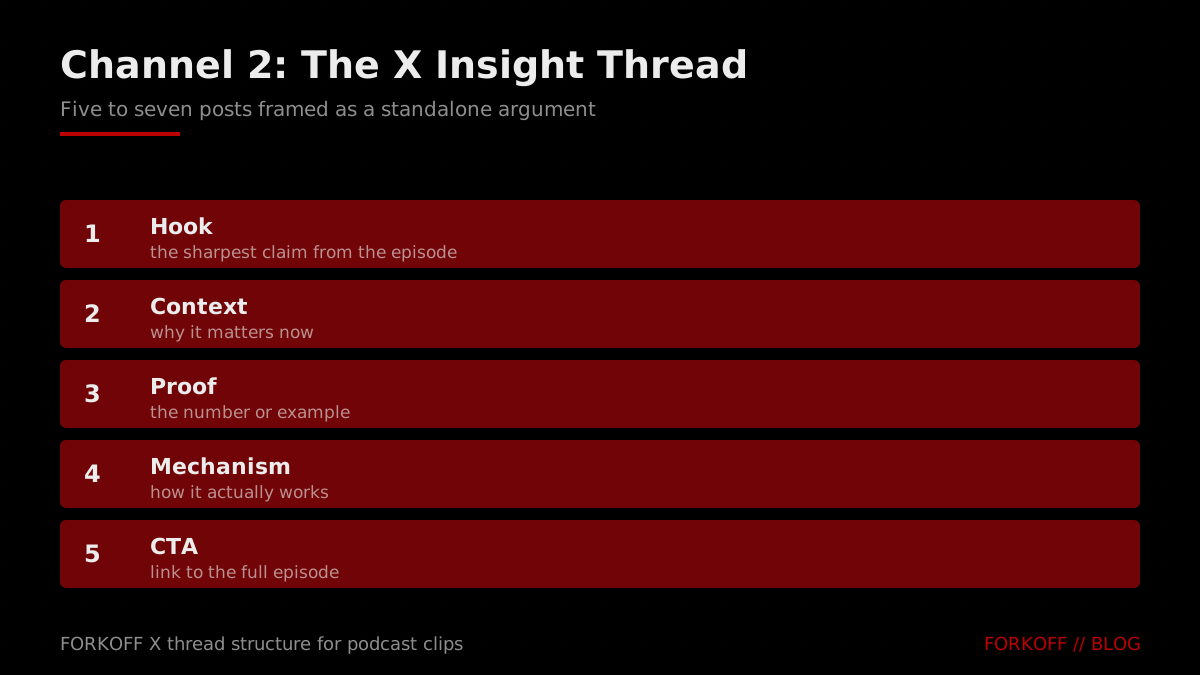
X is the channel where a sharp idea travels furthest fastest, which makes it the leverage channel for founders in tech, SaaS, and crypto. Running it well is its own discipline, and the Twitter content stack playbook covers the cadence; for founders who want it run for them, the Twitter marketing service handles it. From one episode it ships two output types. The first is a key-insight thread of five to seven posts that frames the episode's strongest argument as something that stands on its own, independent of the audio. The second is one to two short video clips under the auto-play threshold, captioned for sound-off viewing in the feed.
The thread format matters because the X algorithm rewards depth and engagement that a single tweet rarely produces. A thread structured as hook, context, proof, mechanism, and call to action gives readers a reason to keep tapping, and a strong thread gets bookmarked and resurfaced weeks later when the topic comes back around. The clip does a different job: it earns the scroll-stopping moment that text cannot, and it recirculates every time someone reshares it.
Record one hour-long piece of content, then repurpose into podcast, blog post, reels, shorts, email, and YouTube video.
The record-once principle that Cody Schneider states bluntly is the operating logic of this channel. You are not creating new content for X. You are extracting the cut of the episode that already works as a standalone argument and shipping it natively. The same recording that became a YouTube long-form upload becomes a thread here without a single new idea.
Cody Schneider
@codyschneider
"i dont know how to make content for my business". record one hour long piece of content, repurpose into podcast, blog post, reels, shorts, email, youtube video.
Iman Gadzhi's framing of a distribution system that points many accounts at one main account is the macro version of the same move: build the surface area first, then route attention through it. A podcast operator does not need a multi-account network to apply the principle. One main show, distributed natively across channels, is the founder-scale version.
We've figured out a content distribution system on TikTok, Instagram, and YouTube Shorts that can get 100M views on a slow month and 300M-plus on a good one.
The thread also doubles as a research instrument. Whichever insight from an episode performs best as a thread is a strong signal for what to clip, what to lead the newsletter with, and what to title the YouTube upload. Treat the X thread as the cheapest A/B test you have: it tells you which idea the audience actually wants before you invest production time in the heavier formats. Operators who read their thread analytics back into the rest of the engine compound faster than operators who treat each channel as a silo.
One discipline matters on X more than anywhere else: do not post the clip and the thread as disconnected objects. The thread should reference the clip and the clip caption should reference the episode. Each post is a doorway, and every doorway should point to the next room. A clip that goes viral with no path back to the show is a missed acquisition, not a win. The whole point of distribution is the route in, not the view count on the cut.
Iman Gadzhi
@GadzhiIman
We've figured out a content distribution system on Tiktok, Instagram, and YouTube shorts that can get 100M views on a slow month and 300M+ views on a good one. Main account, every other account points here in the caption.
Channel 3: LinkedIn carousel and audiogram
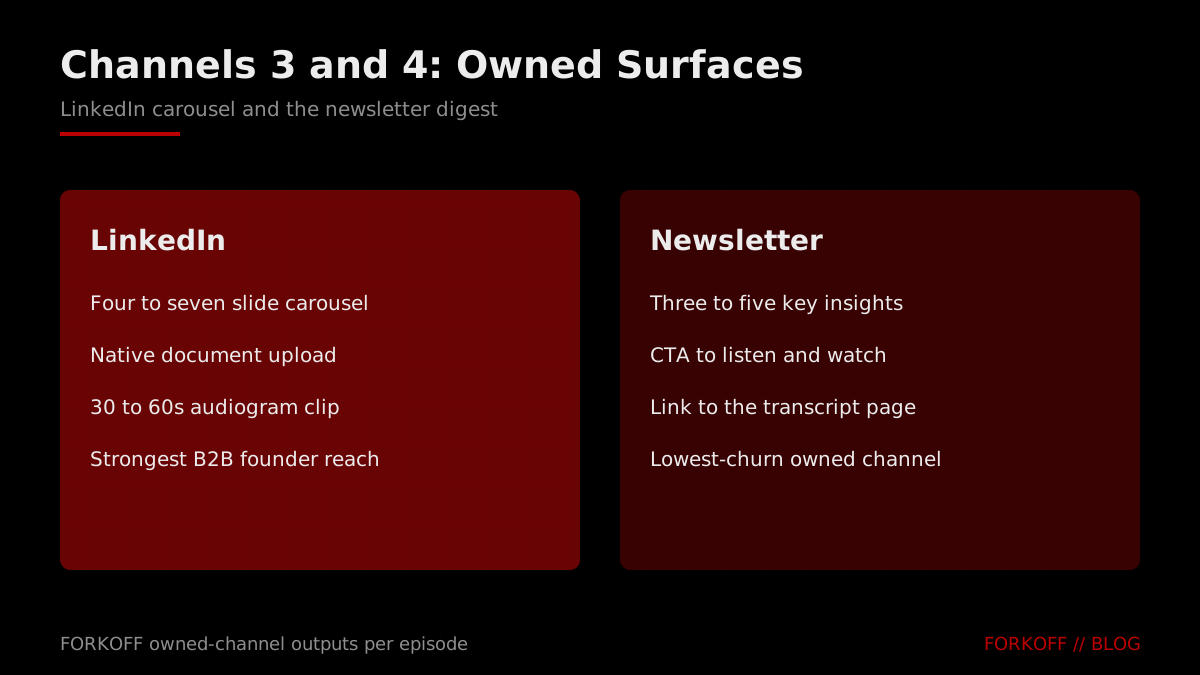
LinkedIn is where the B2B founder audience actually makes decisions, and right now organic reach there is unusually strong for founders relative to Instagram or TikTok. The LinkedIn distribution cadence playbook details the posting rhythm, and LinkedIn's own document-post guidance explains the carousel mechanics. From one episode it ships two output types. The first is a four-to-seven-slide carousel uploaded as a native document, summarizing the episode's core framework or its sharpest statistic in a format built for the feed. The second is a 30-to-60-second audiogram, a waveform with captions, for sound-off viewing.
The carousel earns its place because LinkedIn's native document format gets meaningful dwell time, and dwell time is what the feed rewards. A framework distilled into seven slides is more shareable inside professional networks than a link to a 45-minute episode, and it carries the show's authority into conversations the founder is not personally in. The audiogram is the lower-effort companion that keeps the show present in the feed between carousels.
This is the channel where the audience-and-decision-maker overlap is highest for SaaS and enterprise founders. A LinkedIn post that lands in front of the right operator does more for pipeline than a much larger view count on a consumer platform. That is why the founder-led sales podcast strategy treats LinkedIn distribution as a direct pipeline input rather than a vanity surface.
The carousel format is worth understanding mechanically. LinkedIn weights native content that keeps users on the platform, and a document carousel forces a swipe-through that registers as sustained engagement. A link to an external episode does the opposite: it signals to the feed that the post sends people away, and reach drops accordingly. So the carousel carries the substance natively and the call to action sits in the first comment, not the post body. This is a small structural choice that materially changes how far the post travels.
There is also a quieter benefit to the LinkedIn channel that founders underrate. The carousel and audiogram keep the founder visibly active in front of their professional network on a weekly cadence, which compounds personal brand alongside the show. For a founder whose company sells to the people in that network, the distinction between growing the podcast and growing the pipeline collapses. The episode is the content; the LinkedIn distribution is the part that turns content into conversations with buyers.
Channel 4: Newsletter digest
The newsletter is the lowest-churn channel in the engine and the one most operators skip, because it produces no public vanity metric on publish day. It is also the only channel where the operator owns the relationship outright. No algorithm decides who sees a newsletter. The send reaches the inbox, and the subscriber decides. From one episode it ships a single digest: three to five key insights, a clear call to action to listen or watch, and a link to the episode transcript page.
The send window matters. The digest goes out 24 to 48 hours after the episode, while the content is fresh and before the social cuts have saturated. For larger lists, segmenting by interest lifts click-through further. The compounding mechanic is referral: every subscriber who forwards the digest brings a new owned touchpoint that bypasses every platform gate.
Operator noteThe newsletter is the only channel in the engine with zero algorithm gate between you and the listener., FORKOFF distribution model
The newsletter also pairs directly with the search layer. Driving warm newsletter traffic to a transcript page improves the page's engagement signals, and Spotify for Podcasters documents discovery that rewards exactly the completion and follower-to-stream behavior warm traffic produces. The podcast transcript SEO layer is the mechanism that turns a newsletter click into durable search visibility, which compounds long after the send. Spotify's creator resources lay out the on-platform signals in more detail.
The newsletter is also the channel that monetizes most directly. Sponsorship dollars follow owned, measurable audiences, and a list with a known open rate and click rate is a cleaner sell than a download number a sponsor cannot verify. A founder using the podcast for pipeline rather than ad revenue gets an even more direct return: the newsletter is a list of people who opted in to hear from the founder regularly, which is the warmest top-of-funnel any B2B company could build. The episode is the reason to subscribe; the newsletter is the asset that keeps the relationship alive between episodes.
Format discipline keeps the newsletter sustainable. Three to five insights, one clear primary call to action, and a link to the transcript page is the entire template. Do not turn it into a second blog post. The job of the digest is to make the listen feel essential and to give the reader one obvious next step. A bloated newsletter gets skimmed; a tight one gets clicked. The constraint is the feature.
Owned channels insulate the show from algorithm changes
Every social platform can change its ranking overnight and erase a reach strategy built on it. A newsletter cannot. The email list is the only channel where the operator owns the relationship and reaches the audience without an intermediary deciding who sees the message. Spotify documents that its own discovery rewards completion and follower-to-stream conversion, both of which improve when an owned newsletter drives warm traffic to the episode page. The newsletter is the lowest-churn channel in the engine, and it is the one most operators skip because it produces no vanity metric on publish day.
Source: Spotify for Podcasters creator resources, 2026
What are the stages of your podcast?
An operator opens a community thread on the stages a podcast moves through over its lifetime, from the early no-audience grind to the point where distribution and momentum compound, with replies sharing real growth experiences.
The episode-to-touchpoint multiplier
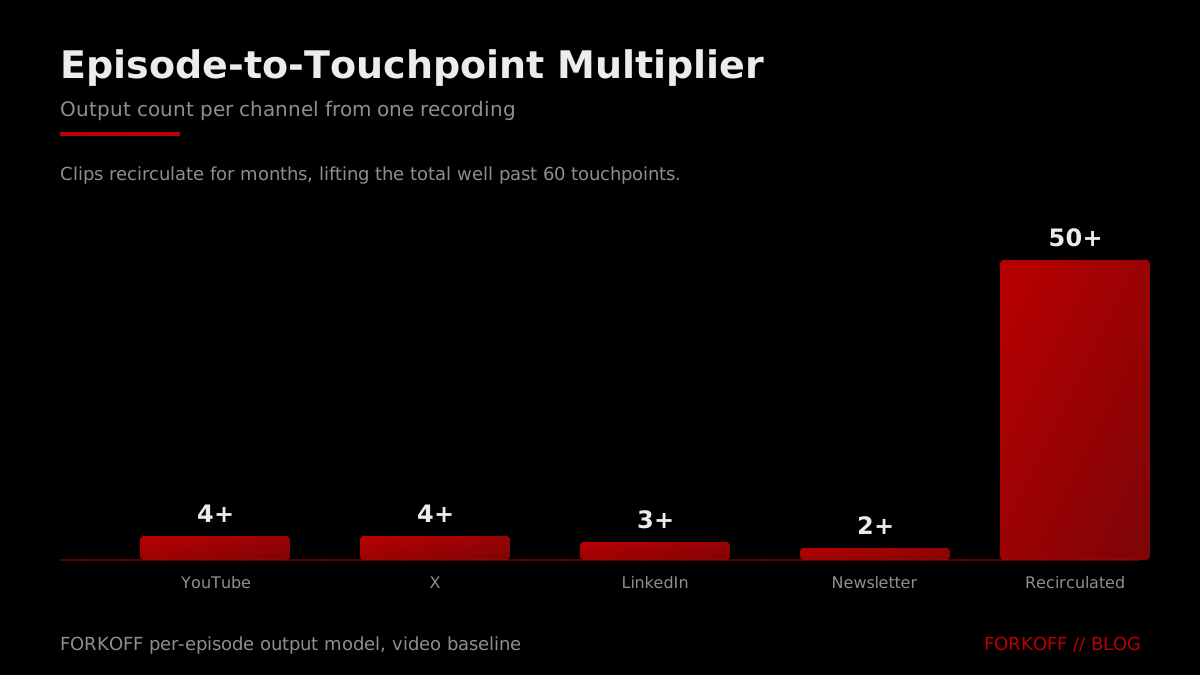
Here is the math the incumbent guides never show. One recording produces, at the channel level, one YouTube long-form upload plus three Shorts, one X thread plus two clips, one LinkedIn carousel plus one audiogram, and one newsletter digest. That is roughly a dozen distinct assets on publish week alone. Recirculation, reshares, bookmark resurfacing, search indexing, and feed re-entry, lifts the working total past 60 touchpoints over the following weeks.
The objection is always the same: that sounds like a lot of work. It is, if you do it by hand on willpower. It is not, if the post-production is a repeatable workflow. When the steps are templated, one editor or one clipping pipeline produces every channel format in a defined block, and the founder's only jobs are to record and to approve. The volume comes from the system absorbing the repetition.
Episode-to-touchpoint multiplier from one recording
| Channel | Outputs | Approx production time |
|---|---|---|
| YouTube | 1 long-form plus 3 Shorts | 40 minutes after edit |
| X | 1 thread plus 2 clips | 25 minutes |
| 1 carousel plus 1 audiogram | 20 minutes | |
| Newsletter | 1 digest | 15 minutes |
Totals reach 60-plus touchpoints once clips recirculate; video baseline produces more clips than audio-only.
This is also where the recording format compounds. A video recording produces more usable clip material per episode than audio-only, so the same workflow yields a larger multiplier on a video baseline. The clip production workflow is the operational core that makes the multiplier real, and it is the part FORKOFF most often runs end to end via its clipping service for clients.
The economics of the multiplier are what make the case. A founder who spends, say, two hours recording an episode and then nothing else gets a handful of touchpoints for those two hours. A founder who spends the same two hours recording and then routes the output through a one-to-two-hour production block gets 60-plus touchpoints. The marginal time per touchpoint drops by an order of magnitude. When that production block is run by a clipping pipeline rather than the founder, the founder's marginal time per touchpoint approaches zero. This is the unlock: distribution stops competing with the founder's calendar and starts running as infrastructure behind it.
The other thing the multiplier exposes is the cost of leaving the recording on the table. Every episode that ships to RSS alone is a recording whose latent 60 touchpoints were never produced. Over a year of weekly episodes, that is roughly 3,000 touchpoints a single-channel show simply did not generate. The content existed. The distribution did not. That gap, compounded over a publishing year, is the entire difference between a show that plateaus and a show that breaks out.
Podcast Clips: How I Turn Long-Form Videos Into Short Clips (My Workflow)
Nick Kendall
A clip-production workflow that turns long-form episodes into short clips.
A workflow, not willpower, produces the volume
The objection to multi-channel distribution is always time. The answer is a repeatable post-production workflow, not more discipline. When the steps are templated, one editor or one clipping pipeline turns a single recording into every channel format inside a defined block. Operators who try to hand-post across four channels on motivation burn out by episode 10, which is the exact point where most shows stop publishing. The volume in this engine comes from the system absorbing the repetitive work, leaving the founder to record and to approve.
Source: FORKOFF clip-production workflow notes, 2026
The weekly distribution timeline
A system needs a schedule, and the engine runs on a seven-day cycle after each recording. Day 0 is the record. Day 1, the episode goes live on RSS, the YouTube long-form upload publishes, and the newsletter draft is written. Day 2, the newsletter sends, the X thread publishes, and the LinkedIn carousel goes up. Days 3 through 7, the Shorts and clips batch-publish, two to three Shorts and two clips, spaced rather than dumped.
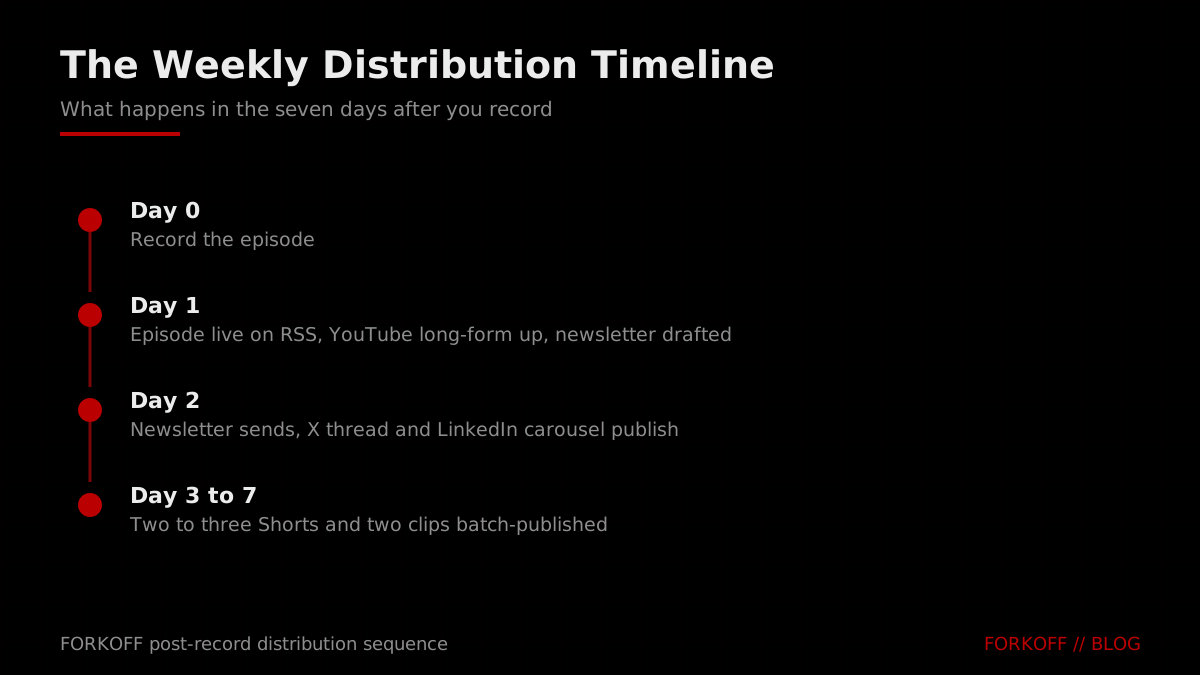
The discipline in the timeline is concentration. All the active distribution work happens inside seven days, which keeps the operator focused and prevents the slow leak of half-finished promotion across weeks. After day 7, the indexed channels take over. The Shorts keep surfacing, the thread keeps getting bookmarked, the transcript page keeps ranking, and the operator moves on to the next recording without dragging a backlog.
Maximizing YouTube with an audio podcast
An audio-first podcast that records on Riverside describes pushing harder into YouTube, posting Shorts more consistently, and moving away from relying on a single platform for discovery.
Operators in r/podcasting describe exactly this transition, from grinding to publish into a void toward a point where the distribution starts carrying itself. The mechanics of getting a feed onto every platform in the first place are well documented by tools like Buzzsprout's global stats and platform guides such as Riverside, but submission is the floor, not the strategy. The timeline is what makes the transition repeatable rather than accidental. It turns distribution from a thing you remember to do into a thing the calendar does for you. For founders using the show as a sales motion, the founder-led sales podcast strategy maps the timeline onto pipeline.
You're a startup founder and you need to market your company. Combine these growth playbooks and your revenue chart goes parabolic.
Om Patel
@om_patel5
so you're a startup founder and you need to market your company. here are 10 growth playbooks for your startups. combine these together and your revenue chart will go parabolic.
How distribution compounds
Compounding is the reason an episode from month 1 still drives listeners in month 12, and it works through a different mechanic on each channel. YouTube search and the suggested feed index uploads permanently, so a Short keeps surfacing to new viewers long after it posts. X bookmarks and reshares recirculate strong threads and clips. The LinkedIn feed resurfaces high-performing posts. And newsletter forwarding turns subscribers into a referral loop. Stack the four and old episodes never go fully dark.
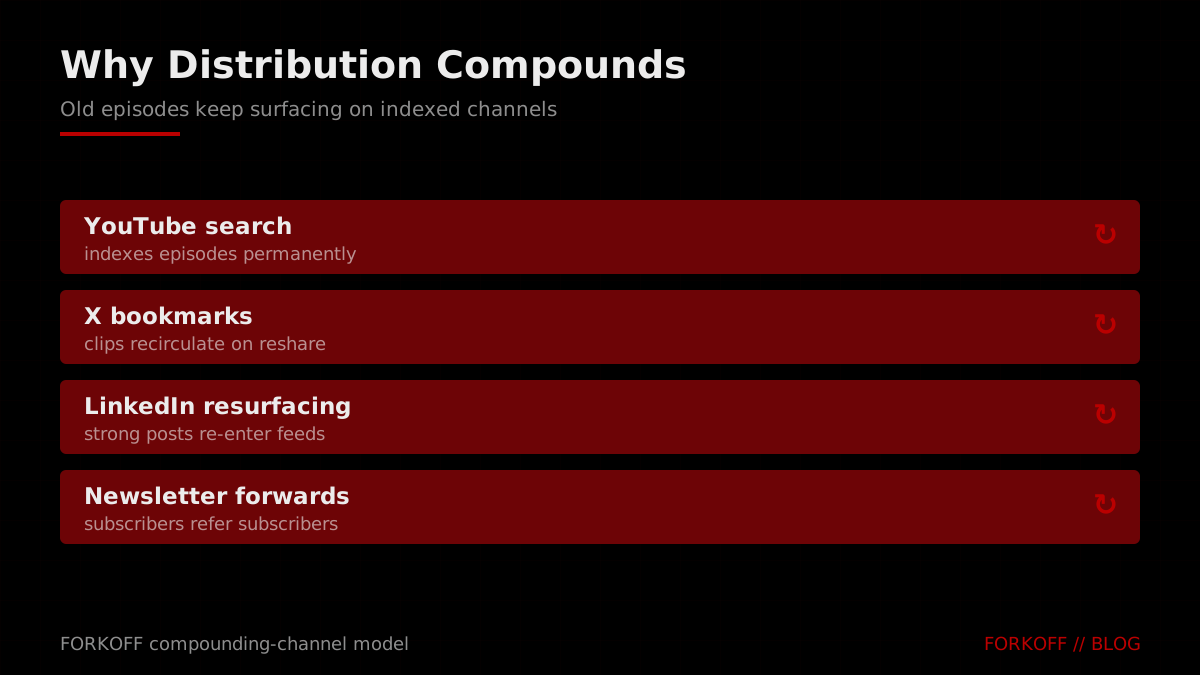
Contrast that with a single-platform podcast, where episode 1 is algorithmically dead 30 days after it published. The compounding engine inverts the decay curve: instead of every episode fading, the library accumulates working assets. This is the structural reason distribution beats frequency. A founder who publishes 20 episodes into the engine has built 20 compounding assets, while a founder who publishes 40 episodes to RSS alone has built 40 things that each went quiet after a month.
YouTube and search are the compounding layer
YouTube indexes uploads against search and the suggested feed indefinitely, which is why a six-month-old Short can still surface to new viewers. Google documents how chapters, titles, and descriptions feed that discovery, and YouTube publishes its own guidance on how Shorts reach new audiences. Audio-only platforms behave differently: an episode is algorithmically active for roughly the first 30 days, then it goes quiet. Placing every episode on an indexed channel is the single highest-leverage structural decision a growing podcast makes, because it converts a one-time publish into an asset that keeps working.
Source: YouTube Help and YouTube official blog, 2026
The first-party proof point is a FORKOFF client campaign for a crypto educator client. A single set of recordings produced 3,085 clips and 1,190,014 organic views in 13 active distribution days, with conversions attributed at the payment level rather than inferred from platform analytics. The engagement rate on clip-farm content sits below creator-native content, so the model wins on volume multiplied by conversion, not on per-post engagement. That distinction is the honest version of the result, and it is the one worth internalizing.
Operator note3,085 clips and 1,190,014 organic views landed in 13 active distribution days, not a full month., a crypto educator client, March 2026
The minimum viable distribution stack
Not every founder can launch all four channels on day one, and trying to is a common way to stall. The minimum viable stack is a priority order. Start with YouTube Shorts, because it has the widest algorithmic reach and the strongest compounding. Add the newsletter second, because it is the highest-CTR owned channel and the one that insulates you from every platform change. Those two alone produce real growth.
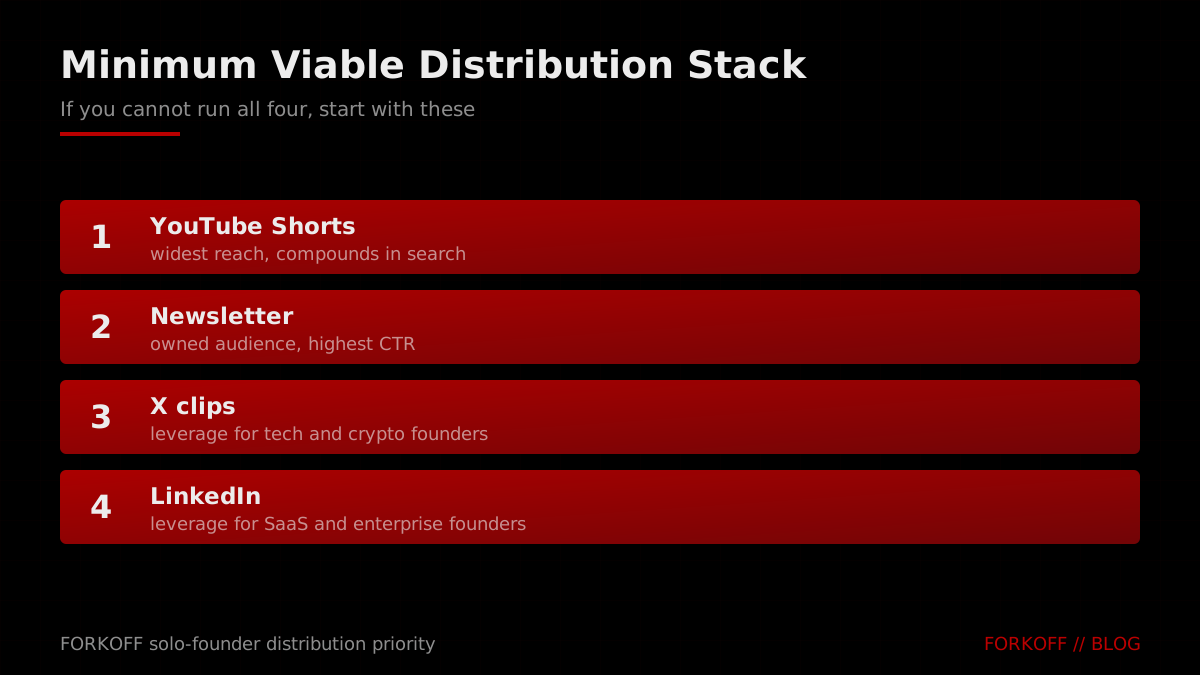
From there, X is the third priority for founders in tech and crypto, where a sharp thread travels fast among the right audience. LinkedIn is the third priority instead for SaaS and enterprise founders, where the audience-and-decision-maker overlap is highest. The point of the minimum viable stack is to give a time-constrained operator a real starting point rather than an all-or-nothing launch that never happens. Founders who also want to appear as guests on other shows alongside running their own should read the podcast guesting playbook for AI startup founders, which covers how to identify on-fit shows and pitch them.
How to Upload & Distribute Your Podcast to Spotify, Apple Music, & More!
Think Media
The mechanics of distributing a podcast to Spotify, Apple, and beyond.
This staged approach also makes the eventual full engine easier to adopt. An operator who has run Shorts plus newsletter for two months has the workflow muscle to add X and LinkedIn without it feeling like a new project. The distribution audit FORKOFF runs starts exactly here, by identifying which two channels compound fastest for a given audience before scaling to all four.
Connecting with your listeners
An operator six months and 18 episodes into an audio podcast, distributing through a host to Spotify, Apple, and YouTube, asks how to actually connect with and grow a listener base beyond the default platform routes.
What FORKOFF runs for founders who want the full system
FORKOFF operates the 4-channel distribution engine end to end for founders who want the outcome without building the workflow. The division of labor is simple: the founder records, and FORKOFF turns every episode into the full set of channel-native assets, runs the clip-production pipeline, and manages the posting cadence across YouTube, X, LinkedIn, and newsletter. The result is the 60-plus touchpoints per episode that the rest of this guide describes, produced as a system rather than as a weekly scramble.
The client result already cited, 3,085 clips and 1,190,014 organic views in 13 active distribution days for a crypto educator client, is what the engine produces at full tilt. The internal mechanics behind it are documented in the FORKOFF podcast engine system, which breaks the workflow into its component blocks. Founders who want help mapping the channel mix before committing budget can start with a strategy conversation or a fractional CMO engagement, and those weighing outside help can see how the managed lane compares in the best podcast marketing agency roundup. The marketing foundation underneath all of it lives in marketing foundation.
The verdict is straightforward. Podcast growth in 2026 is not solved by recording more or recording better. It is solved by distribution architecture, by placing every episode where new audiences scroll and where the channels compound. The 4-Channel Podcast Distribution Engine is that architecture. Build it yourself with the playbook, or have FORKOFF run it, but stop publishing into a vacuum and calling it a content problem.