Podcast monetization math has a hard line at 1,500 listeners per episode. Below that threshold, three of the four standard monetization models (CPM sponsorship, premium feed, and affiliate) produce less revenue than they consume in setup and management overhead. The only model that works below 1,500 is the founder-pipeline model, where the show generates inbound sales conversations with ICP-fit guests and listeners rather than trying to monetize the audience size directly. This post publishes the CPM calculations, the revenue ceilings by model, and the exact sequencing FORKOFF runs with founder-hosted podcasts.
The 1,500-Listener Line in one scroll
Below 1,500 listeners per episode, sponsorship CPM pays under $45 per episode at standard $30 CPM rates. Three of the four main podcast monetization models have a hard download floor that puts them out of reach for most shows. The founder-pipeline model has no floor and outperforms CPM sponsorship by 10x to 40x for hosts under 15,000 downloads per episode (FORKOFF Podcast Engine data). The four models are: (1) Sponsorship CPM, viable at 5,000+ downloads, pays $125 to $400 per episode at that floor; (2) Founder-pipeline, viable from episode one, attributes five-figure deals to shows with under 1,000 listeners if those listeners are buyers; (3) Affiliate stacking, viable at 1,000+ downloads, adds $50 to $600 per episode with the right stack; (4) Premium feed, viable at 10,000+ engaged listeners, converts 1 to 3% of total audience to paid. The structural verdict: below 15K downloads per episode, founder-pipeline is the only ROI-positive lane. FORKOFF pilot episode available. Retainer pricing is outcome-priced and gated.
| Model | Revenue ceiling (per episode) | Time to first dollar | Founder-fit score | Viable download floor |
|---|---|---|---|---|
| 1. Sponsorship CPM | $30 to $80 CPM x downloads | 60 to 90 days (sell cycle) | 2 / 5 | 5,000+ per episode |
| 2. Founder-pipeline | Uncapped (deal size x conversion) | Episode 1 (retroactive attribution) | 5 / 5 | No floor |
| 3. Affiliate stacking | $50 to $600 per episode | 7 to 30 days (link approval) | 3 / 5 | 1,000+ per episode |
| 4. Premium feed | $10 to $25 x paid subscribers | 30 to 60 days (paywall setup) | 2 / 5 | 10,000+ engaged listeners |
Is 1,500 listeners really the baseline for making money? I feel like every monetization guide I read assumes I already have 10,000 downloads. My show has 1,200 per episode, which feels like it took forever to build, and every CPM calculator I run comes out to less than my monthly hosting fee.
Is 1,500 listeners really the baseline for making money with a podcast?
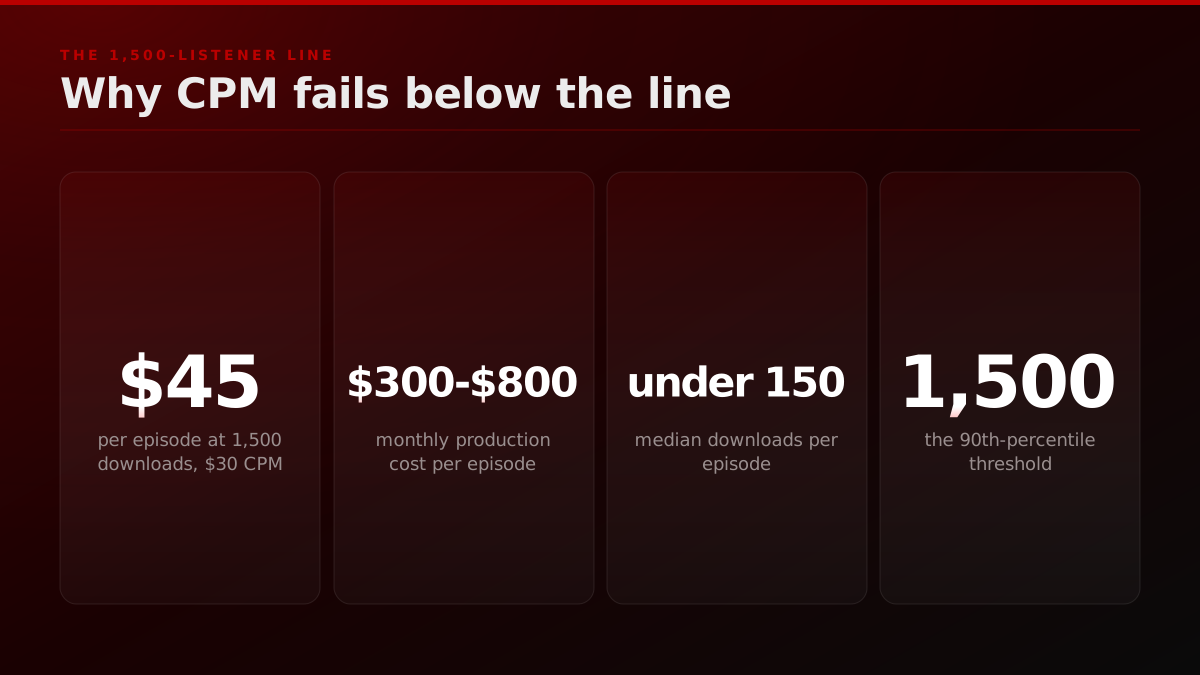
Below 1,500 listeners, three models mathematically fail
The 1,500-listener line is not an opinion. It is the point at which CPM sponsorship revenue (at the 2026 benchmark rate of $18 to $25 per thousand downloads for a mid-roll placement) first exceeds $30 per episode, which is the minimum sponsor will accept as a placement. Below 1,500 downloads per episode, the sponsorship CPM model fails the math. Premium feed fails for a different reason: listener loyalty has not compounded to the 1 percent conversion threshold. Affiliate fails because the audience is too small to generate statistically reliable attribution data. Only the founder-pipeline model survives, because it is agnostic to audience size.
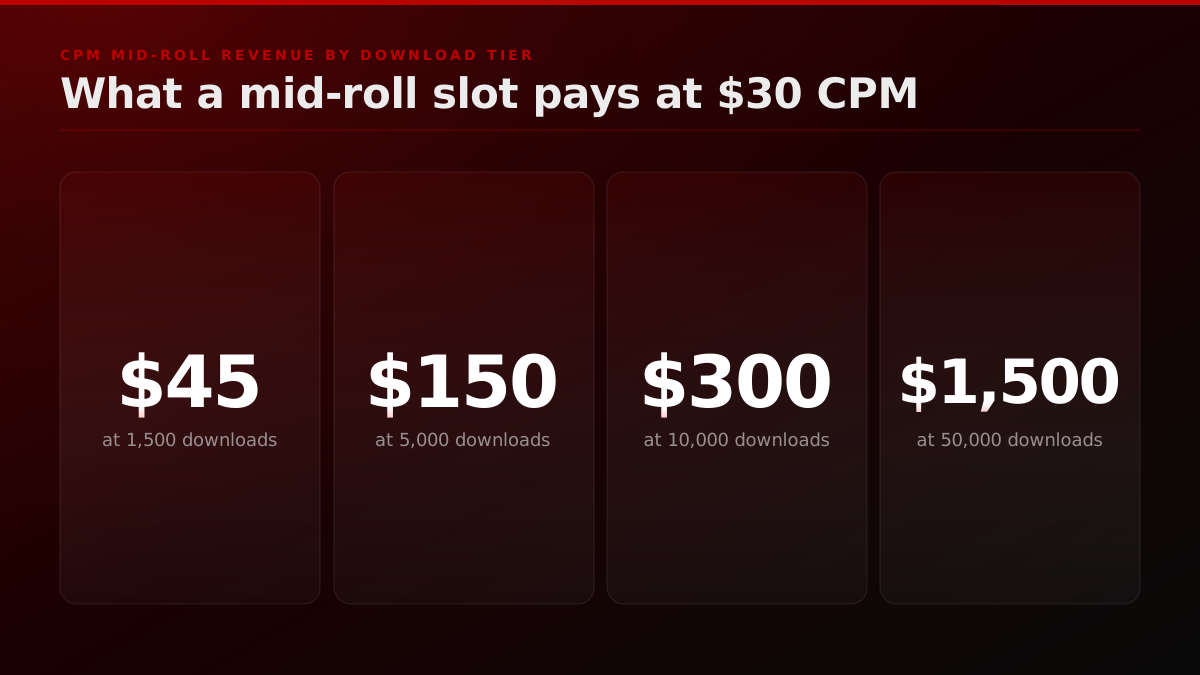
A standard mid-roll rate in 2026 runs $25 to $40 per thousand downloads. At $30 CPM, 1,500 downloads per episode pays $45 per mid-roll slot. With two placements, that is $90 per episode. Monthly production costs for a founder-quality show (audio editing, show notes, distribution) run an estimated $300 to $800 per episode. The CPM model is cash-negative at 1,500 listeners. It breaks even somewhere between 5,000 and 10,000 downloads per episode, depending on your CPM rate and operational overhead.
This is the math r/podcasting ran in a thread titled "Is 1,500 listeners really the baseline for making money?" The thread collected 59 comments and 45 upvotes because it named a frustration that most monetization guides paper over. Those guides assume a baseline audience that most working shows never reach. Buzzsprout's global podcast statistics confirm the median podcast gets under 150 downloads per episode; the 1,500 threshold is already above the 90th percentile.
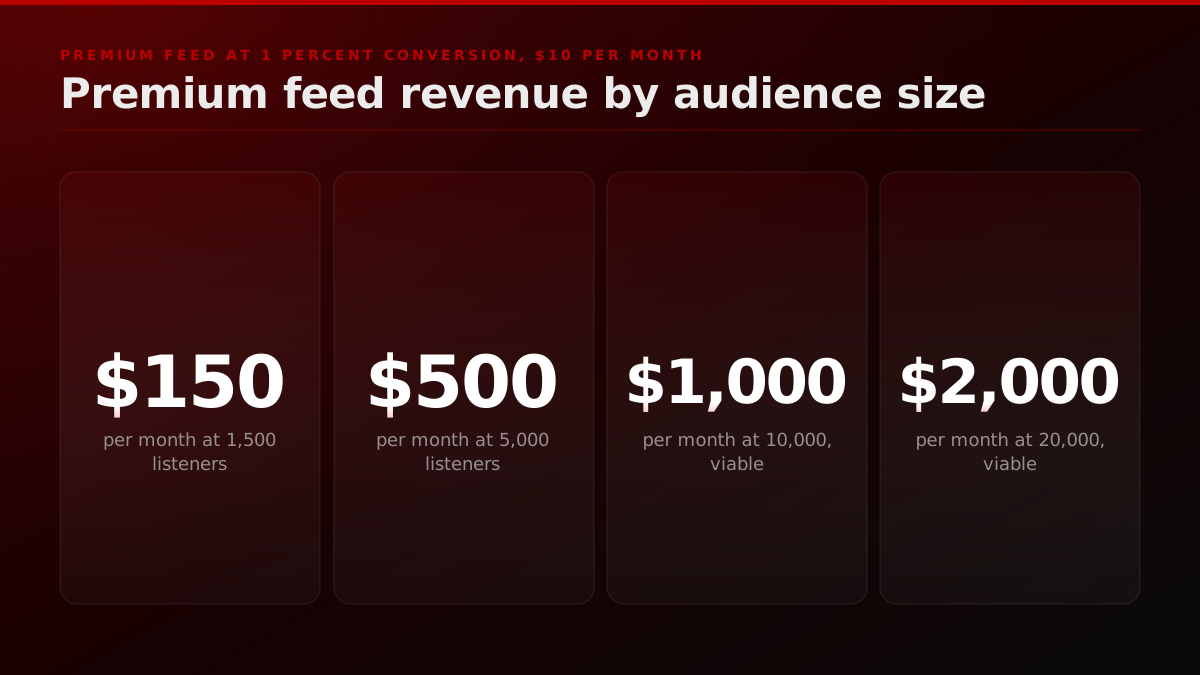
Affiliate stacking improves the number slightly. A 1,500-download episode with three affiliate links at an estimated 2% conversion and a $30 average commission adds $90 per episode at the optimistic end. Still below production cost. Premium feed at 1,500 listeners at an estimated 1% conversion rate produces 15 paid subscribers. At $10 per month, that is $150 gross, well below breakeven.
Only one model has no download floor at all. If you are evaluating podcast as a channel against cold email, the podcast guesting vs cold email comparison lays out the conversion math side-by-side.
| Show size | Reported ad revenue | Effective per month | Source |
|---|---|---|---|
| ~2,000 downloads per episode (18K per month) | ~$250 per month, dynamic ad insertion | ~$250 | r/podcasting, "The 1,000 Listeners Myth" |
| 15,000 listeners per episode | ~$14K/year ad reads + AdSense, agency nets $2K | ~$1,170 | r/podcasting, Shelby Church breakdown |
Above-average download numbers still produce near-zero ad revenue
A widely-upvoted r/podcasting thread, "The 1,000 Listeners Myth: A Reality Check," pushed back on the idea that 1,000 downloads per episode unlocks monetization. The host reported averaging 1,800 to 2,000 downloads per episode and about 18,000 downloads per month across the back catalog, numbers the host called above average, and still earned only about $250 per month from dynamic ad insertion. The datapoint confirms the 1,500-listener line from the other direction: clearing it does not make the ad model pay, it only makes the ad model non-zero.
Source: r/podcasting, "The 1,000 Listeners Myth: A Reality Check," 73 upvotes, 49 comments
Operator noteAt a $30 CPM a 1,500-download episode pays $45 against $300 to $800 in production cost, so ads run cash-negative at that size., FORKOFF audit-ledger, 2026
FORKOFF Podcast Engine data on founder-pipeline attribution
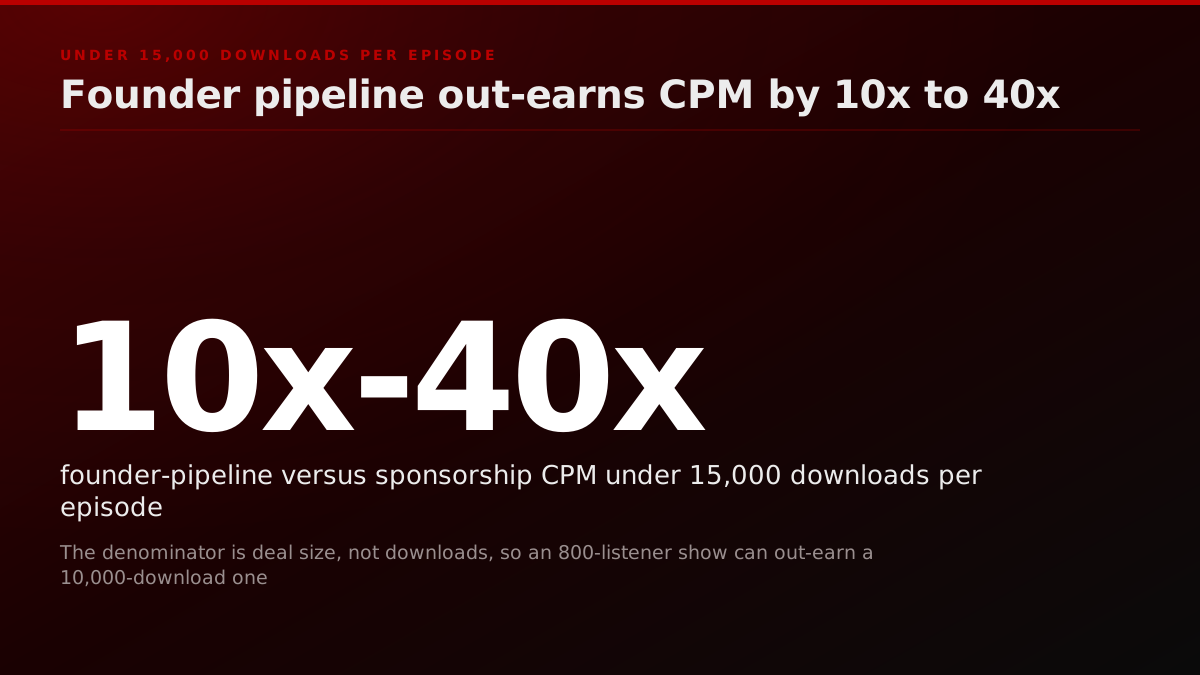
FORKOFF Podcast Engine data shows founder-pipeline attribution outperforms sponsorship CPM by 10x to 40x for hosts under 15,000 downloads per episode. The mechanism is trust transfer, not download volume. A founder-host with 800 listeners per episode and a $25K average deal size needs one pipeline conversion per 10 episodes to out-earn a 10,000-download show running two mid-roll CPM placements at $30. The math is asymmetric because the denominator in founder-pipeline is deal size, not downloads. Sponsorship CPM denominator is always downloads, which is why the model only works at scale.
Source: FORKOFF Podcast Engine, 2026 internal cohort data
The four models scored: ceiling, time-to-dollar, founder-fit
Most podcasters pick a monetization model by default, sponsorship CPM because it is the one they see other shows do. The better decision is to score each model on three axes before committing production resources to any of them. Revenue ceiling is the maximum achievable revenue per episode given unlimited time and execution. Time-to-first-dollar measures how long from launch to the first payment. Founder-fit measures whether the operational requirements match what a founder running a company in parallel can actually sustain. The matrix below scores all four models on all three axes against the 2026 benchmark figures, and the result is not close: the founder-pipeline model wins on two of the three axes for any show under 5,000 listeners.
Revenue ceiling measures the maximum achievable revenue per episode given unlimited time and execution. Time-to-first-dollar measures how long from launch to the first payment. Founder-fit measures whether the operational requirements match what a founder running a company in parallel can actually sustain.
Model 1: Sponsorship CPM
CPM sponsorship is the most visible podcast monetization strategy and the worst fit for most founders. The revenue ceiling is uncapped in theory but practically limited by download volume. A show at 50,000 downloads per episode with direct-sold B2B sponsorships can clear approximately $3,000 to $4,000 per episode. That is a legitimate business. A show at 5,000 downloads per episode nets $250 to $400 per episode with two placements.
The time-to-first-dollar is 60 to 90 days. Sponsors want three to six months of episode history, a media kit, and an audience demographics deck before committing. The sell cycle is the hidden cost most founders do not price in.
Founder-fit score: 2 out of 5. The model requires operating an ad-sales function inside a podcast. Most founders are not willing to do that and should not be.
Model 2: Founder-pipeline
The founder-pipeline model is the only monetization method with no download floor. The mechanism is trust transfer, not reach. A founder-host records episodes for an audience of buyers. Listeners who are the right ICP arrive as warm prospects when they reach out, not cold leads. The show did the nurture; the founder closes the deal.
Attribution is the hard part. Without a tracking layer, pipeline from podcast guesting is invisible to the CRM. At FORKOFF, we build attribution into the podcast service by mapping UTM parameters, intake form source questions, and call-recording transcript analysis against episodes aired. That layer turns the show from a brand exercise into a measurable pipeline channel.
FORKOFF Podcast Engine data shows this model outperforms CPM sponsorship by 10x to 40x for hosts under 15,000 downloads per episode. The math is asymmetric: a founder with an 800-listener show and an estimated $25K average deal size needs one pipeline attribution per 10 episodes to out-earn a 10,000-download show running two mid-roll slots at $30 CPM.
Model 3: Affiliate stacking
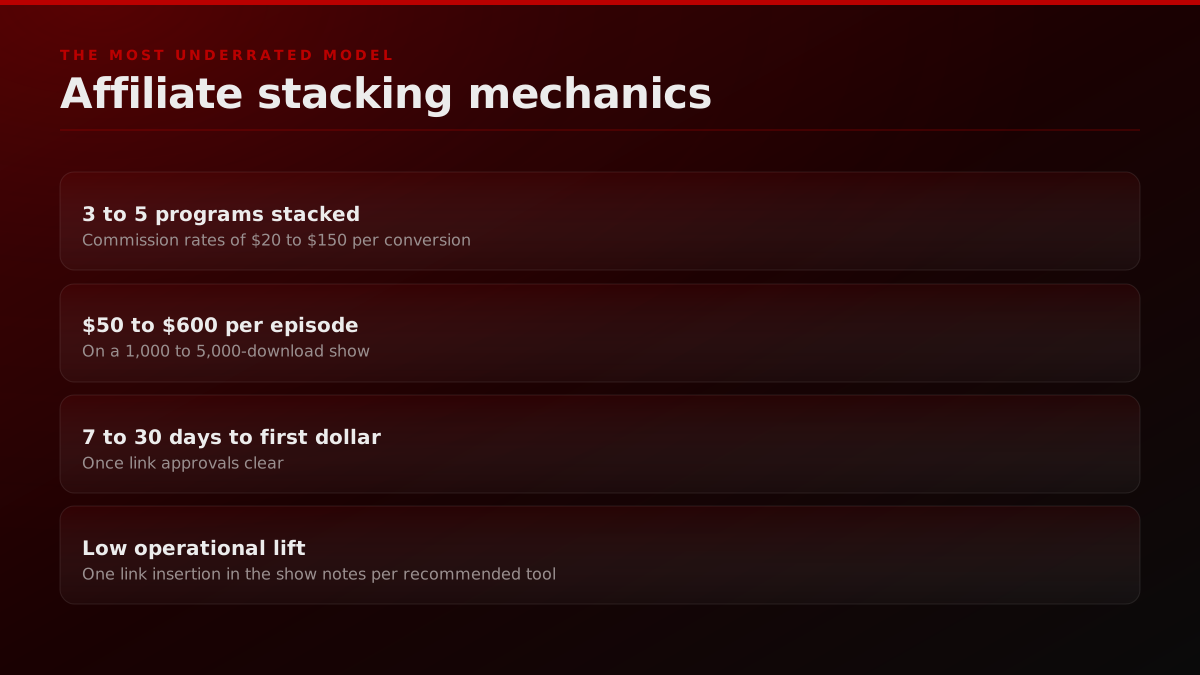
Affiliate stacking is the most underrated of the four models and the easiest to start. Every tool, platform, and service a founder recommends on air has a potential affiliate program. Stacking three to five programs with commission rates of $20 to $150 per conversion produces $50 to $600 per episode on a 1,000-to-5,000-download show.
Time-to-first-dollar is 7 to 30 days once link approvals clear. The operational lift is low: one link insertion in the show notes per recommended tool.
The ceiling is lower than CPM at scale but higher at small audiences. Affiliate stacking pairs well with the founder-pipeline model because both require an audience of buyers, not a large audience of anyone. The same 800 engaged listeners who produce pipeline revenue also produce affiliate conversions at a higher rate than a diffuse audience of 5,000 casual listeners.
Model 4: Premium feed
Premium feed is the model most founders announce and most listeners never pay for. The structure is a paywall, Supercast or Patreon or Apple Subscriptions, that gates bonus episodes, early access, or ad-free content behind a $5 to $25 per month price.
The conversion reality is 1 to 3% of total listeners. At 1,500 listeners that is 15 to 45 subscribers. At $10 per month, an estimated $150 to $450 gross. At 10,000 listeners it becomes $1,000 to $3,000 per month, a real revenue line.
Premium feed is a scale-dependent model. It is the most tempting to launch early and the least productive early. Founders who announce a premium tier before reaching 5,000 engaged listeners typically see conversion rates under approximately 0.5% because the audience has not had enough time to develop the loyalty required for a paid subscription decision.
The model makes sense as a fourth revenue layer after the first three are running, not as a primary monetization method on a show under two years old. For the full podcast booking system that feeds the pipeline model, see the companion guide.
We have about 15,000 listeners per episode and two mid-roll slots. After the ad-sales time I spend every month, I am netting maybe $600 per episode. It pays for production but it is not a business. The show pays for itself when I count the deals it closes, not the ads it runs.
Why the mid-range is the most dangerous zone
Shows between 5,000 and 15,000 downloads per episode sit in a structural trap. The r/podcasting community named this directly in a thread titled "Be very careful when you hit the mid-range point," which collected 97 upvotes and 44 comments. The thread flagged what the math confirms: mid-range shows are large enough to attract sponsor inquiries at sub-premium CPM rates, but small enough that those rates do not cover the operational cost of managing sponsor relationships.
The mid-range trap r/podcasting flagged in 2026
A thread on r/podcasting titled "Be very careful when you hit the mid-range point" (97 upvotes, 44 comments) surfaced a structural warning most monetization guides skip. Shows hitting 5,000 to 15,000 downloads per episode sit in a no-man's land: too large to run lean, too small to command premium CPM rates. Hosts in this range reported accepting CPM deals at $18 to $22 that paid less than the time cost of selling and managing the sponsor relationship. The thread consensus was that the mid-range is when the founder-pipeline model should be running parallel to any CPM experiments, not after them.
Source: r/podcasting, "Be very careful when you hit the mid-range point," 97 upvotes
Mid-range shows that accept $18 to $22 CPM deals are trading production capacity for revenue that does not compound. CPM revenue does not build an asset. It pays for the last episode. Founder-pipeline revenue builds an audience of warm prospects that compounds across quarters.
The r/podcasting host in the "How much $ a podcast with 15,000 listeners makes" thread (99 upvotes, 39 comments) captured this in one sentence: "The show pays for itself when I count the deals it closes, not the ads it runs." That framing is the correct one for any founder running a show as a business development channel.
243 | How to Monetize Any Podcast (Even With a Small Audience)
Grow The Show on monetizing a podcast without a big audience: the small-audience revenue lanes, and which lane to open at which download tier.
At FORKOFF we see this pattern consistently through the FORKOFF Podcast Service: founders in the 3,000 to 10,000 downloads per episode range who switch from CPM-first to pipeline-first attribution see their per-episode revenue equivalent increase by multiples within two quarters. The downloads did not change. The model did.
The quick test for your podcast monetization model
r/podcasting thread "A Quick Test to See If Your Podcast Will Make Money" (75 upvotes, 62 comments) surfaced a clean diagnostic: are your listeners buyers? Not potential buyers, not aspirational buyers, but people with the budget authority and the specific problem you solve.
The quick test for whether your podcast will make money is this: are your listeners buyers? Not people who might buy, but people who have the budget authority and the problem you solve. If yes, the show already makes money and you have not set up tracking. If no, you need a bigger audience before CPM math works.
The test maps directly to model selection. If your listeners are buyers, start with model 2 (founder-pipeline) and build model 3 (affiliate stacking) in parallel. Both models perform at small audience sizes when the audience is the right ICP.
If your listeners are not buyers yet, your path to monetization is audience growth first. CPM sponsorship becomes viable at 5,000 to 10,000 downloads per episode with a general audience. Premium feed becomes viable at 10,000 to 20,000 engaged listeners. Neither model can be shortcut by effort.
The honest version of the listener test is this: look at your last 30 days of direct messages and email inquiries from listeners. How many came from someone who could sign a contract with you today? If the answer is more than one or two, you have a pipeline channel that is not tracked. If the answer is zero, you have a media channel that needs scale before it monetizes.
Operator note5B+ views across the FORKOFF clipping network confirm it: buyer-fit, not download count, sets a founder podcast's pipeline yield., FORKOFF clipping network
The second variant of the test, which the FORKOFF audit-ledger uses on every podcast intake call, scores audience composition against named sponsor categories instead of generic ICP language. The categories that pay an estimated $50 to $80 CPM in 2026 cluster tightly: B2B SaaS infrastructure (Vercel, Linear, Cloudflare, Datadog), developer tools and APIs (Anthropic, OpenAI, Stripe, Twilio), B2B fintech (Mercury, Brex, Ramp), recruiting and HR-tech (Gem, Ashby, Rippling), and revenue-operations platforms (Gong, Clari, Outreach). If your listener composition maps to the decision-makers those vendors target, your show has direct-sold CPM upside whether or not your download number clears the network-CPM floor. If your audience is hobbyist or general-consumer, your direct-sold CPM ceiling is closer to network rates and the founder-pipeline lane becomes the dominant monetization route by an even larger multiple than the 10x to 40x our internal cohort data shows for mixed audiences.
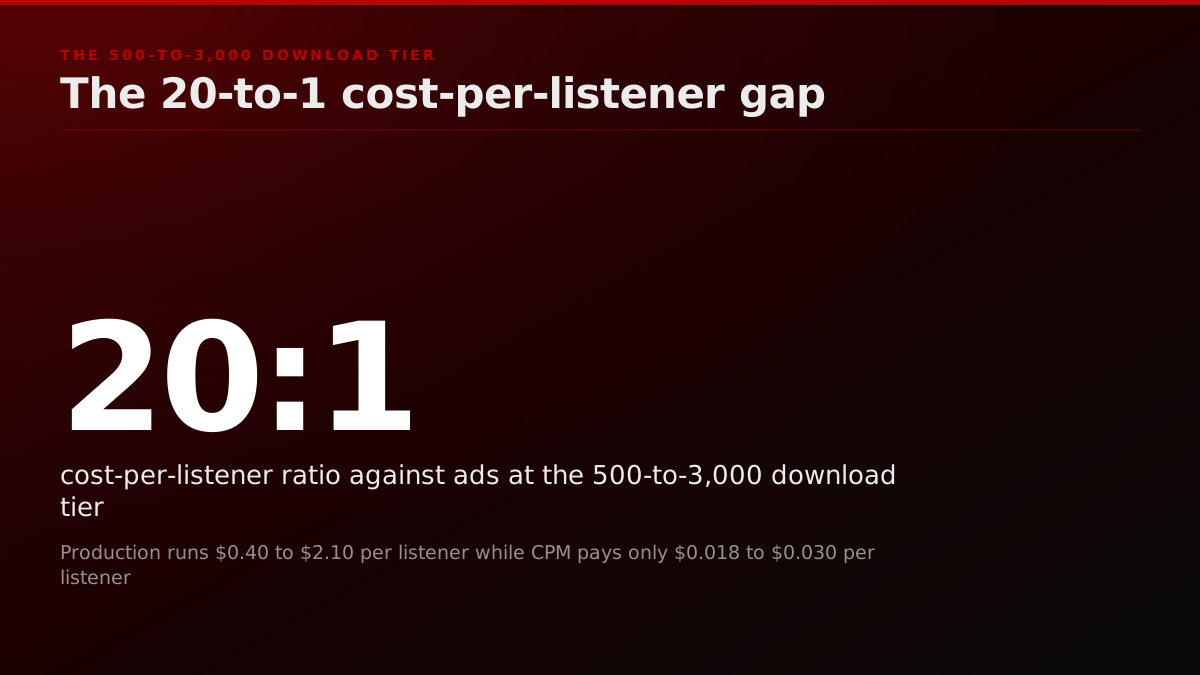
A third diagnostic worth running is the cost-per-listener cost-test. Calculate your fully loaded production cost per episode (audio editing, transcripts, show notes, distribution, host time at a notional $150 per hour) and divide by listener count. Founder-hosted shows in our audit-ledger run between an estimated $0.40 and $2.10 per listener per episode at the 500-to-3,000 download tier. CPM revenue at those tiers pays approximately $0.018 to $0.030 per listener at $30 CPM. The ratio is roughly 20
against ads. That same listener under the founder-pipeline model is worth $5 to $40 in attributed pipeline value if the audience composition test scores well, which flips the ratio by two orders of magnitude. The math does not care what model you prefer. It only cares which model the audience composition supports.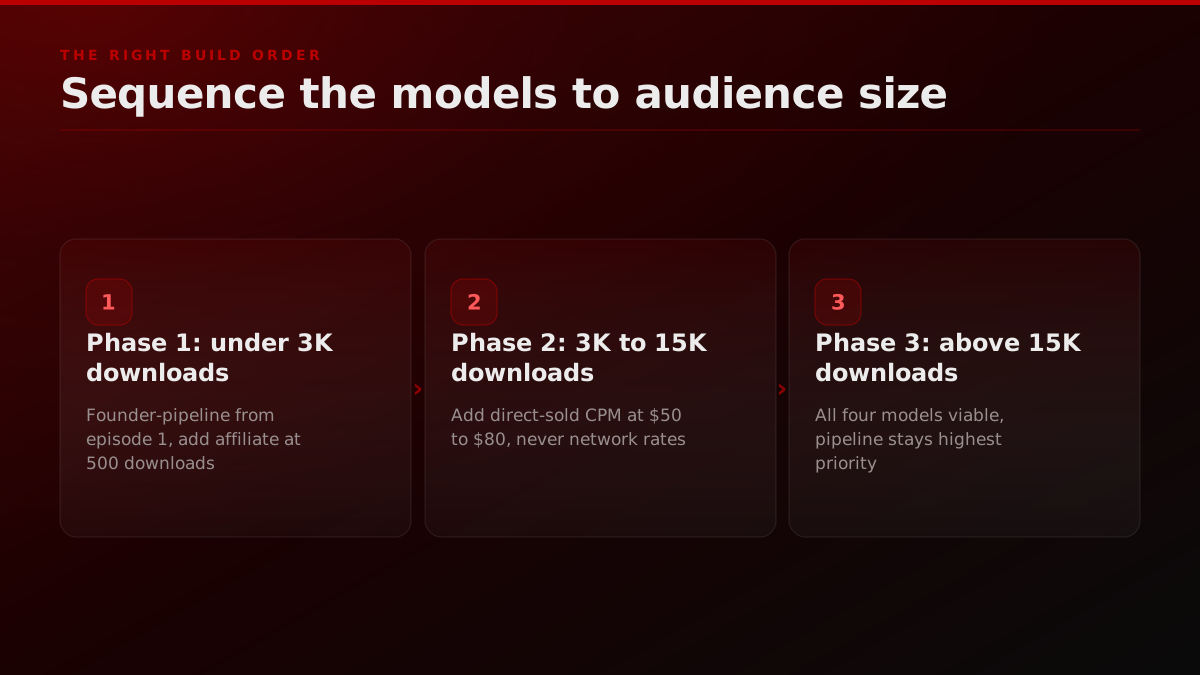
Stacking the models: the right sequence
The right sequencing for most founder-hosts is not a choice between models. It is a build order. Start with founder-pipeline in episodes 1 through 12 regardless of download count. Add affiliate placements when you cross 500 downloads per episode and have at least one product recommendation you would make without compensation. Add CPM sponsorship when you cross 1,500 downloads per episode and have 6 months of consistent data to show a sponsor. Add a premium feed only after you have 2,000 engaged subscribers who have demonstrated willingness to act on your recommendations.
Sequence for a show under 3,000 downloads per episode: Start with model 2. Set up attribution tracking from episode one. Build a pipeline tracking sheet with source, episode, date of contact, and deal status. Let three to six months of data confirm whether the audience is converting to pipeline. Add model 3 (affiliate stacking) once you have five to eight episodes with affiliate-ready tool recommendations. Do not pursue model 1 or model 4 yet.
Sequence for a show at 3,000 to 15,000 downloads per episode: Model 2 as the primary revenue channel. Model 3 as a parallel income layer. Model 1 only with direct-sold sponsorships to aligned brands at $50 to $80 CPM, never at network rates. Model 4 as a test with a small subscriber cohort if you have an email list to cross-sell against.
Sequence for a show above 15,000 downloads per episode: All four models become viable. CPM sponsorship at this download volume can generate an estimated $1,500 to $6,000 per episode with two to three placements at premium rates. The founder-pipeline model scales with the audience and should remain the highest-priority attribution track. FORKOFF KOL Marketing adds a distribution layer at this stage, placing clips through creator networks to extend the show's reach beyond its current feed subscriber base.
Podcast sponsorship rate benchmarks for 2026
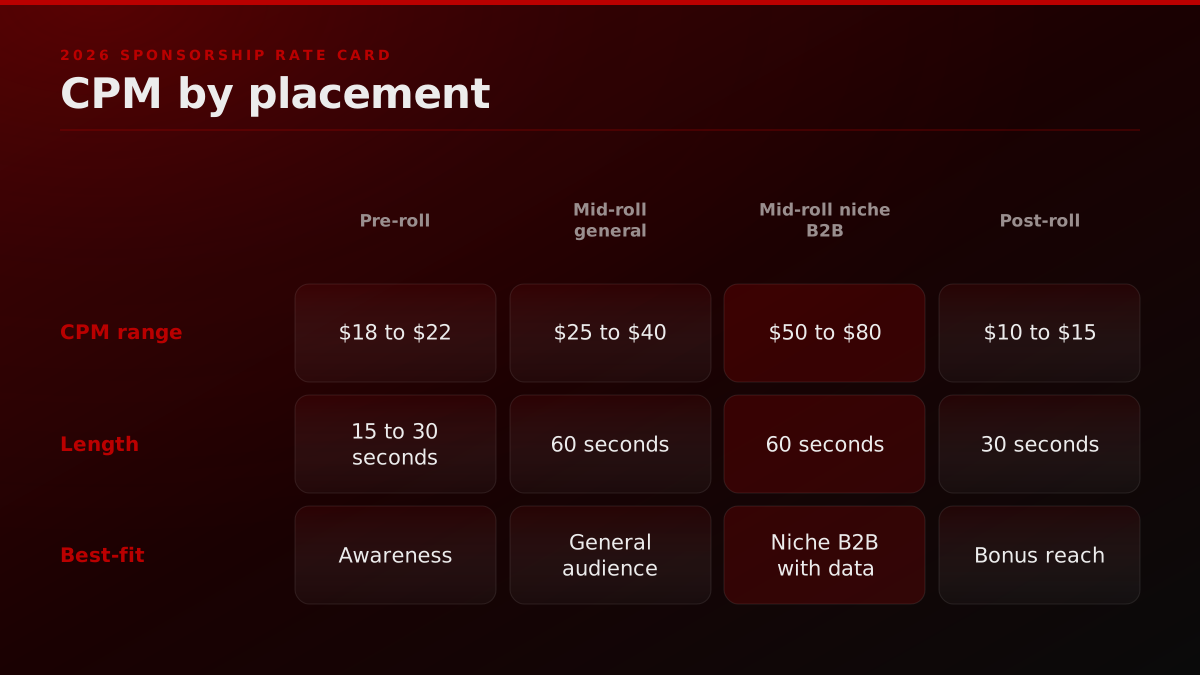
Podcast sponsorship CPM in 2026 runs $18 to $25 per thousand downloads for a mid-roll placement and $10 to $15 for a pre-roll, according to Advertisecast and Spotify Audience Network benchmarks published this year. These rates are directional and vary significantly by niche: B2B tech shows with validated ICP audiences command $40 to $80 CPM from direct-deal sponsors who need a qualified buyer, not volume. For founders evaluating whether CPM is worth pursuing at their current download level, those benchmark figures and the full rate table live at Advertisecast rate benchmarks and Spotify Audience Network data.
Pre-roll (15 to 30 seconds): $18 to $22 CPM. Mid-roll (60 seconds): $25 to $40 CPM for general audiences, $50 to $80 CPM for niche B2B audiences with strong demographic data. Post-roll (30 seconds): $10 to $15 CPM (Advertisecast rate benchmarks).
Direct-sold sponsorships to strategic partners, the kind a founder negotiates directly with a brand they use and recommend, typically command 1.5x to 2x network CPM rates. Pat Flynn's Smart Passive Income podcast income breakdowns document this direct-sold premium in detail across his portfolio. A show with 5,000 downloads per episode and a direct-sold B2B sponsor can clear $250 to $400 per mid-roll slot. That is the ceiling without a significant audience growth trajectory.
The crossover point where CPM revenue justifies the sell-cycle investment (time and ad-management overhead) typically lands between 8,000 and 12,000 downloads per episode for most founder-hosted shows. Below that number, the founder is operating an ad-sales function that pays below minimum wage in time-adjusted return.
Alex Lieberman
@businessbarista
I’ve spent over 35 hours working on my podcast “The Founder’s Journal” The show makes no money It gets several hundred downloads per episode (nothing compared to Business Casual’s 10,000's/episode) But I keep going because I have a passion for the journey. Not the outcome.
What FORKOFF measures for podcast monetization
At FORKOFF, we treat every episode as a trackable pipeline event, not a content output. The FORKOFF Podcast Service instruments this from the first episode: intake forms capture source attribution, call recordings identify prospect-mention of specific episodes, and quarterly attribution reviews map deals closed to episodes that warmed them.
The result is a monetization picture that CPM dashboards never show: how many dollars per episode the show is producing through pipeline, not through ads. The FORKOFF podcast engine 6-block system details the full attribution architecture. For founders considering how podcast guesting fits into a broader AI startup marketing strategy, the podcast surface is one of seven compounding channels. For most founder-hosted shows in the 500 to 5,000 download range, that number is 5x to 20x the CPM equivalent. The show is already making money. It is just not measured.
The 1,500-listener line matters because it marks the ceiling of CPM viability for most shows, not because 1,500 is a magic number. Any founder host who has not yet done the pipeline attribution math for their show is likely sitting on untapped revenue that requires measurement, not audience growth, to unlock. That math is where the service starts.
The pilot episode sets up the attribution layer, scores the existing audience against the ICP, and produces the first tracked pipeline event. Retainer and ongoing engagement pricing is outcome-priced and available by application.
As of 2026, an estimated 90% of podcasts never break the 150-download median
Buzzsprout's global data puts the median podcast at under 150 downloads per episode. The 90th percentile sits around 1,500 downloads per episode. That means the threshold most monetization guides treat as a starting assumption is actually a ceiling most shows never reach.
This has a practical consequence that the industry does not talk about plainly: the monetization advice that reaches podcasters is almost entirely written by or for the estimated 10% of shows above the median. The guides that circulate on r/podcasting and in podcast newsletters assume a listener count that the average working show does not have.
Jamila / JourneyToLaunch
@JourneyToLaunch
When I first started my podcast, the goal was to get to 1k downloads per episode, then I was told that 10k was the mark to standout. Now that I’m at 10k+ I’m told that I’ll need 25k to really be in the game. Once I hit that, there will be another level and another level….
The 1,500-listener line matters for a different reason from what most guides state. It is not the floor for "making money from a podcast." It is the floor for one specific model, CPM sponsorship, to produce revenue that exceeds production cost at standard rates. Three of the four models have different floors. One has no floor at all.
For founders running shows in the 200 to 1,000 download range, the actionable insight from this data is to filter every piece of monetization advice by the audience size it was written for. A playbook built for a 50,000-download show is not wrong. It is just irrelevant until the audience grows. The podcast guesting playbook for AI startup founders is one of the few resources written specifically for founders at early audience sizes.
The FORKOFF Podcast Engine 6-block system is built on the same assumption: that early-stage founder-hosted shows need an attribution system, not a download growth strategy, to produce revenue from the audience they already have. The download count matters less than whether those downloads belong to buyers.
How podcast format affects monetization model viability
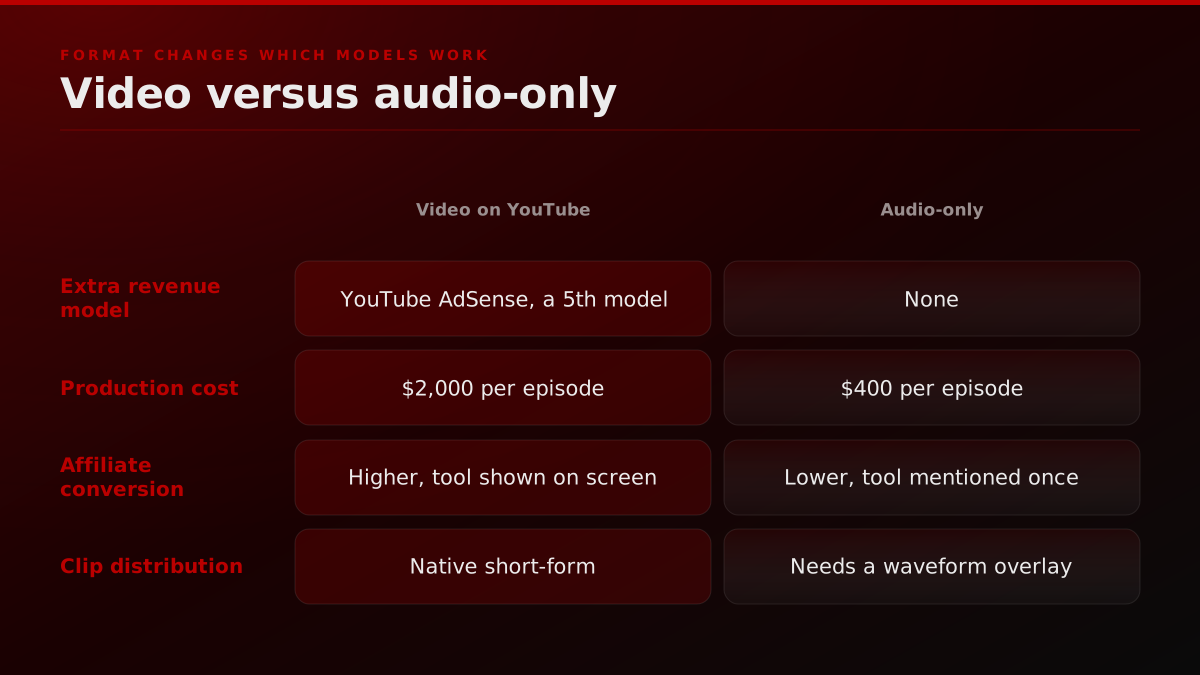
Video versus audio-only is a monetization decision before it is a production decision. A video podcast published on YouTube opens a fifth revenue model (YouTube AdSense) and changes the download trajectory through search discovery, meaning the show that starts at 600 listeners can compound to 5,000 inside 18 months via YouTube search while the audio-only equivalent plateaus at 900. The tradeoff is production cost and the founder's bandwidth. The choice between video podcast vs audio only has a direct effect on which monetization models are accessible at different audience sizes.
Video podcasts on YouTube open a fifth revenue model: YouTube AdSense. A video podcast episode with 5,000 views on YouTube generates $5 to $20 in AdSense revenue at a $1 to $4 CPM. That is below production cost for a polished studio show, but the compounding discovery advantage of YouTube search changes the download trajectory over 12 to 24 months. A show that peaks at 2,000 audio downloads per episode may compound to 8,000 to 15,000 YouTube views per episode inside two years through search traffic alone.
Audio-only shows have a simpler production overhead, which matters for the founder-pipeline model. The model performs best when the founder is the host and the content is consistent. An audio-only show with a $400 per episode production budget versus an estimated $2,000 per episode video production budget has a materially different break-even calculation for the pilot period before pipeline attribution data is available.
Affiliate stacking works the same way across both formats. The show notes link is format-agnostic. What changes is the conversion rate: video podcast audiences who see the host use a tool on screen convert at a higher rate than audio audiences who hear the tool mentioned once. For hosts where the product or tool being recommended has a visual component, video format increases affiliate yield without requiring audience growth.
Premium feed works better with audio-only because the incremental cost of a premium audio episode is near zero. A video premium tier requires separate production infrastructure. Most premium feed programs on Supercast and Patreon are audio-only even when the main feed is video.
The FORKOFF influencer marketing distribution layer operates differently for video and audio shows. Video clips from a podcast episode can be placed through creator networks as organic-style content. Audio clips do not carry natively on short-form video platforms without a waveform or video overlay. The distribution ceiling for a video podcast is materially higher when clip distribution is part of the monetization stack.
Attribution tracking: the infrastructure no one builds until it is too late
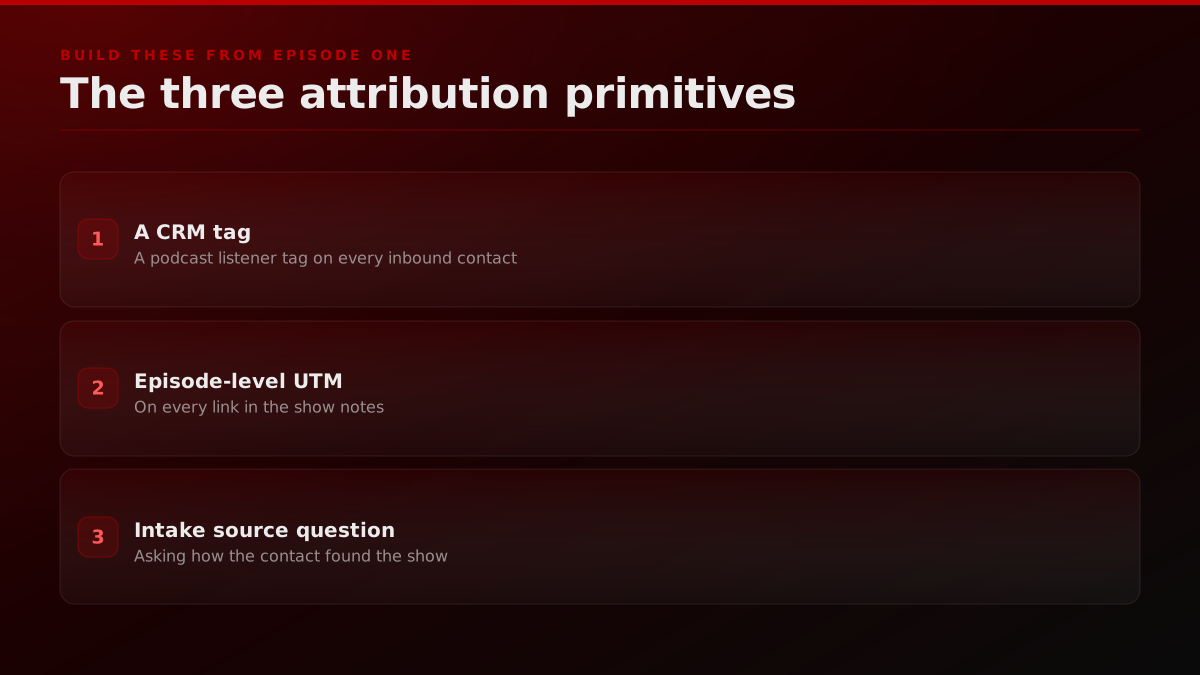
The most common reason founder-pipeline revenue is invisible after 18 months is not that the pipeline does not exist. It is that the tracking layer was never built and the inbound inquiries from listeners are scattered across email, LinkedIn DMs, and intro calls with no CRM tag connecting them to a specific episode. Every founder-hosted show needs three attribution primitives from episode one: a CRM tag for "podcast listener" on every inbound contact, an episode-level UTM on every link in the show notes, and a post-call intake question asking how the contact found the show.
A founder who has been hosting a show for 18 months with 800 listeners per episode typically has untapped pipeline that was never measured. Inbound inquiries from listeners who mentioned the show are scattered across email, LinkedIn DMs, and intro calls. None of those contacts are tagged to a specific episode in the CRM. The revenue the show has generated is real but invisible to any reporting system.
Building the attribution layer after 18 months of untracked history is harder than building it from episode one. The FORKOFF approach for the pilot episode maps three signal sources simultaneously: UTM parameters on any links in the episode or show notes, a source question on the intake form for inbound inquiries ("How did you hear about us?"), and a retroactive episode-mention review of any closed or in-progress deals from the past 12 months. That retroactive review almost always surfaces one to three deals that can be tied to specific episodes.
Operator noteA CRM listener tag, episode-level UTMs, and an intake source question from episode one make invisible podcast pipeline trackable., FORKOFF Podcast Service
The founder-led sales podcast strategy covers the 90-day operator playbook for activating this attribution layer in detail. The four failure modes named in that guide are all attribution failures: shows that drove pipeline without knowing it and switched models before the data surfaced.
For founders who are also evaluating other outbound channels, podcast attribution tracks differently from cold email, Twitter DM, and warm intro sourcing. Podcast ranks highest on close rate and lowest on volume among the four channels in the FORKOFF cohort, which is the expected result for a trust-heavy, volume-constrained channel.
Booking guests as a monetization lever
Guest booking is a monetization decision before it is a content decision. A founder-hosted show with 1,200 listeners per episode that books guests who are ICP-fit buyers is running a pipeline channel and a direct-sales motion simultaneously, at zero incremental cost on top of the production overhead you are already carrying. Each guest conversation creates context for a sales exchange that would otherwise require a cold outreach sequence. The podcast booking system for founders covers this in depth, but the monetization implication is worth stating directly here: who you book as a guest is itself a monetization decision.
A founder-hosted show with 1,200 listeners per episode that books guests who are the target ICP is running a pipeline channel and a direct-sales opportunity simultaneously. The guest relationship, the conversation recorded for the audience, and the follow-up after the episode all happen in the same motion. No additional effort. The show creates the context for a sales conversation that would otherwise require a cold outreach sequence.
This is distinct from the "book a sponsor" model that most podcast growth guides focus on. Guest-as-ICP is a founder-pipeline tactic that does not require a large audience to work. A 500-listener show with the right 10 guests over 10 episodes has created 10 warm sales conversations with the audience as the credibility layer. That is more valuable than a 10,000-download show that books entertaining guests who are not buyers.
The r/podcasting community has named this distinction in several threads. The framing that surfaces consistently is: your guest list is your target account list. Founders who treat booking as a content decision and founders who treat booking as a sales decision run very different shows with very different monetization outcomes.
For AI startup founders, the podcast guesting playbook for AI startups covers how to identify shows where the host's audience is the target ICP, and how to use guesting on those shows as a mirror for building your own show's guest list. The guest-as-ICP model works bidirectionally: being a guest on the right show and hosting the right guest both generate pipeline through the same trust-transfer mechanism.
The AEO dimension of podcast pages matters here too. A podcast AEO citation strategy ensures that when buyers search for solutions in your category, your episode pages surface in AI Overview results as authoritative answers. That is an additional distribution channel that compounds the pipeline value of each guest booking without requiring any additional production effort.
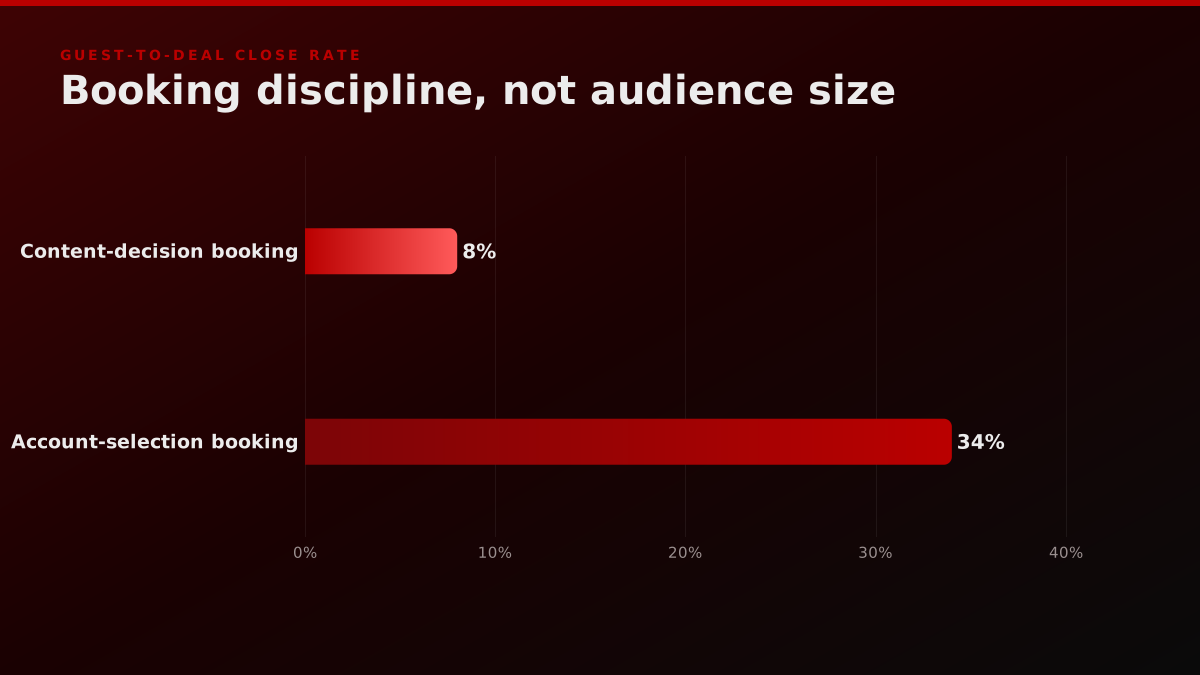
The FORKOFF audit-ledger tracks two booking-conversion metrics that most podcast operators never measure, both baked into how we run managed podcast guesting. The first is guest-to-deal close rate, the percentage of booked guests who become customers or active referrers inside 180 days of recording. Across the founder-hosted shows in our cohort, this number ranges from 8 percent on shows where the host treats booking as a content decision to 34 percent on shows where booking is treated as an account-selection decision. The 4x spread is not explained by audience size. It is explained entirely by guest-list discipline, the host's clarity on which named accounts are in scope, and the post-recording follow-up sequence. Founder-pipeline ROI per episode scales linearly with this metric, which is why the audit-ledger gates this number above almost every other production input.
The second is referral velocity, the number of warm introductions the guest produces inside 90 days of the episode airing. Guests who feel genuinely served by the conversation (their thinking surfaced, their company's positioning sharpened, a clip distributed that drove inbound to them) refer the host into two to five additional sales conversations on average. The math is meaningful: a show that books 24 guests per year at a 30 percent referral velocity produces 7 to 36 additional warm introductions on top of the original 24 sales conversations. None of that revenue is captured by CPM, ad-supported, or sponsorship reporting. None of it is captured by the premium-feed or course-revenue lanes either. All of it sits inside founder-pipeline attribution, and all of it depends on the discipline of the booking decision itself.
For founders building toward a course-revenue or training-product motion adjacent to the show, the booking layer doubles as a curriculum-development asset. Each guest is a structured 60-minute conversation with a domain expert whose lessons can be productized. Three to five well-booked guests per quarter produce enough source material for a recurring training cohort priced at $1,500 to $4,000 per seat. That course-revenue line stacks underneath the pipeline and affiliate-stacking lanes without changing the show's primary monetization architecture, and it captures revenue from the segment of the audience that wants to learn from the conversations but is not currently in-market to hire the host's company.
How founder-pipeline compares to other founder growth channels
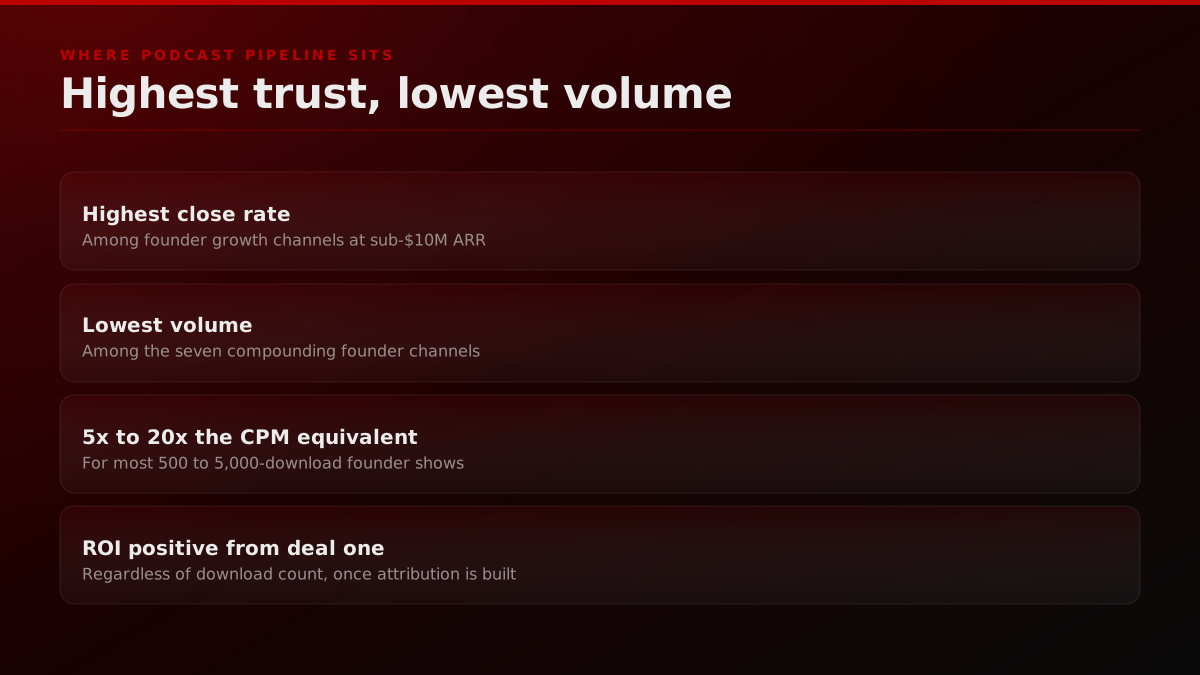
Podcast pipeline sits in a specific position on the founder growth channel stack. It is not the highest-volume channel and it is not the fastest. It is the highest-trust channel available to most founders at sub-$10M ARR, which is why it produces the best close rates in the FORKOFF cohort.
For context, the AI startup marketing strategy framework positions podcast as one of seven compounding channels. The others are: founder Twitter/X presence, long-form SEO content, event speaking, strategic partnerships, product-led growth, and community. Each channel has a different time-to-first-result and a different ceiling.
Podcast ranks highest on close rate and lowest on volume. A show with 800 listeners per episode that produces one qualified inbound inquiry per two episodes is closing at a rate that most paid channels cannot match. The challenge is that the volume is low enough that it does not register as a "channel" in most founders' attribution dashboards. Pipeline appears to come from nowhere. It is actually coming from the show.
The founder-led growth playbook covers the full channel prioritization framework. The key insight for monetization is that podcast pipeline compounds differently than paid channels. Paid channels produce revenue proportional to spend. Podcast pipeline compounds because each episode adds to the trust archive. A listener who heard 30 episodes before contacting the founder arrives with a relationship that 30 cold emails could not replicate.
At FORKOFF, the recommendation for founders under 15,000 downloads per episode is to treat the show as a trust infrastructure investment, not a media business. The monetization benchmark is not CPM. It is pipeline ROI per episode, measured against the time and cost of producing the show. For most founder-hosted shows in this range, that number is positive from the first attributed deal, regardless of download count.