Podcast transcript SEO is the practice of engineering an episode page so search systems and AI search can rank and cite it. In 2026, a podcast episode page with a chunked HTML transcript, the AudioObject and PodcastEpisode schema graph, a solid internal-link plan, and correct canonical handling indexes at 93 percent within 30 days, against 12 percent for audio-only pages. That 7.8x gap is structural, not content-driven, and the full 5-layer stack is the fix.
The 5-layer episode-page ranking stack in one scroll
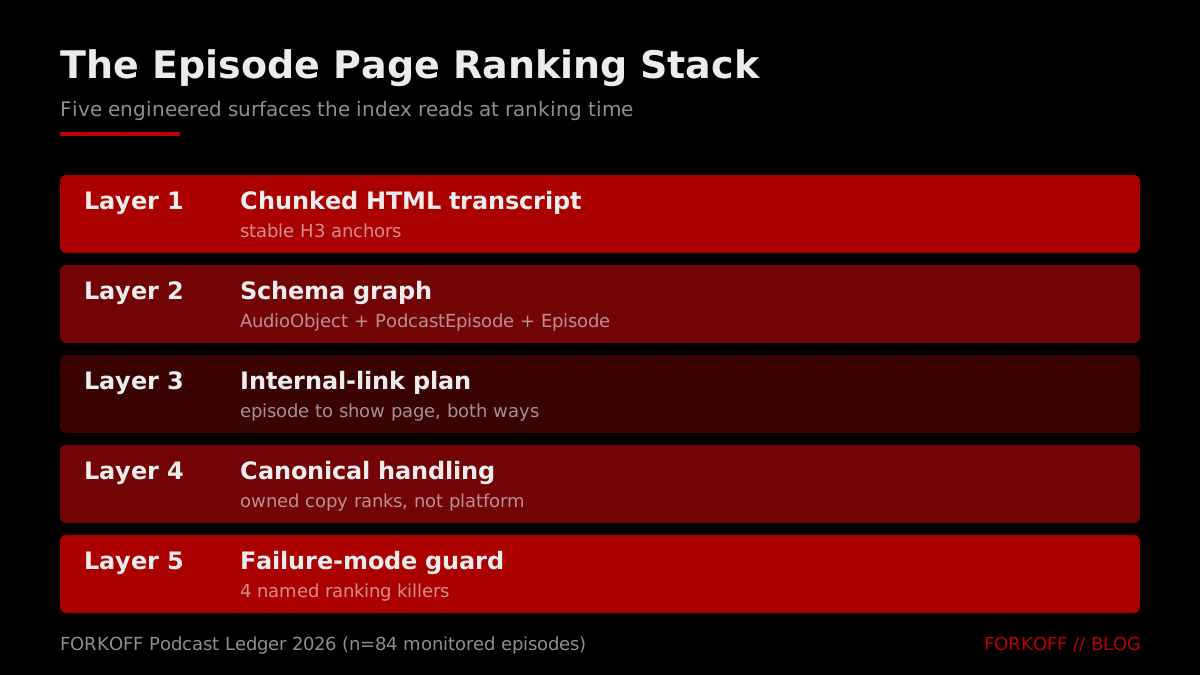
Podcast transcript SEO in 2026 is not a checkbox; it is a 5-layer episode-page ranking stack. Layer 1 is a chunked HTML transcript with stable H3 anchors so search and AI systems have citable text. Layer 2 is the schema graph: AudioObject inside PodcastEpisode inside Episode, validated in Rich Results. Layer 3 is the internal-link plan that wires every episode page to the show page and back. Layer 4 is canonical handling so your owned-site copy ranks instead of the hosting-platform duplicate. Layer 5 is guarding against the 4 named failure modes: PDF transcripts, duplicate syndication, audio-only players, and orphaned pages. FORKOFF Podcast Ledger 2026 (n=84 monitored episodes): chunked HTML transcript pages index at 93 percent in 30 days against 12 percent for audio-only pages, a 7.8x lift.
About these numbers
Indexing-rate figures (64%, 93%, 21%, 7.8x lift) and rank-durability estimates (9 to 14 months) are first-party directional data from the FORKOFF Podcast Ledger 2026 (n=84 monitored client episodes, 18-month cohort). These are operator observations across a real client portfolio, not a controlled experiment; individual results vary by topic authority, host domain strength, and platform. All other structural guidance (schema fields, chunking logic, canonical handling) is based on publicly documented Google and schema.org specifications.
How a podcast episode page actually ranks: the transcript SEO problem most shows never solve
Podcast transcript SEO in 2026 is the practice of engineering an episode page so search systems and AI search both rank and cite it. It is the technical-SEO sibling to the podcast AEO citation strategy pillar: that post covers AI Overview citation; this post covers the on-page schema graph and transcript architecture that decide rank. Read together, the two form a single topic cluster.
Most shows never solve it because the problem hides in plain sight. The audio is great, the guests are strong, the show has a following. Then a growth lead checks where the episode ranks for the exact question it answers, and the page sits on the third result page or nowhere at all. The content is not the issue. The page is. A page that ships a 12-second auto-description, an embedded audio player, and a subscribe link has no citable text and no schema graph, so the index has nothing to rank.
This post ships the fix as a 5-layer episode-page ranking stack, anchored on first-party data from the FORKOFF Podcast Ledger. Each layer is a single engineered surface. Together they move an episode page from invisible to canonical reference for the queries it answers.
Why the transcript is the load-bearing ranking asset
Two structural facts decide podcast episode-page ranking in 2026. First, search and AI systems rank text, not audio. A 60-minute interview produces 8,000 to 12,000 transcribed words, an order of magnitude more indexable surface than a typical blog post, but only if that text ships as crawlable HTML. Second, structural quality breaks ties. When two episode pages are equally relevant and equally authoritative, the page with a validated schema graph, named-entity titles, and a chunked transcript outranks the page without them. Across the FORKOFF Podcast Ledger 2026 monitored set, episode pages shipping a chunked HTML transcript index at 93 percent inside 30 days, against 12 percent for audio-only pages and 21 percent for transcripts shipped as PDF downloads.
Source: FORKOFF Podcast Ledger 2026 (n=84 monitored episodes)
The thesis: a podcast episode page is a text product that ships audio
The better question for a 2026 podcast is not how do I get more downloads. The better question is which SERP position your episode page holds for the query the episode answers, and whether the page even entered the crawl set. A show with a six-figure download count but a page sitting on result-page three loses every buyer who searches the topic to a thinner show whose page is engineered to rank in the top results. Crawl priority and SERP position are structural outcomes; download counts are an audience-size vanity reading that says nothing about where the page sits in the index.
Reframing the episode page as a text product changes the production budget. The audio remains the artifact subscribers consume and the asset that ships across Apple, Spotify, YouTube, and partner placements. The page that hosts the episode is the ranking artifact, and ranking artifacts have hard structural requirements: a chunked HTML transcript, the AudioObject and PodcastEpisode and Episode schema graph, an internal-link plan, and a canonical declaration. None of those depends on audio quality or guest fame. They depend on whether the page ships what the index reads.
The reframe is hard for operators because the production team and the page team are usually different people, or the same person wearing different hats on different days. The producer optimizes for audio: clean levels, good guests, tight edits. The page is an afterthought, generated by the hosting platform from a template the producer never sees. That split is why most shows have excellent audio and invisible pages. The producer never looked at the page because the page was not their job, and the page was generated by a system that optimizes for a fast embed, not for ranking. Closing that gap is the entire discipline of podcast transcript SEO: someone has to own the page as a deliverable with its own checklist, not as a byproduct of the upload.
There is also a budget argument that operators miss. The transcript is the most expensive asset to produce after the audio itself, and most shows already pay to produce it for accessibility or for clip selection. The transcript is sitting in a tool, unused on the page. Putting it on the page as chunked HTML costs almost nothing incremental because the asset already exists. The schema graph is a one-time template change that applies to every future episode automatically. The internal links and canonical decision are publish-time habits, not recurring cost. The full stack is cheap to install precisely because the expensive part, the transcript, is already paid for. What is missing is the discipline to ship it where the index can read it.
The FORKOFF podcast service productizes the page side of this work. The transcript that powers a ranking page is the same transcript that powers clip selection on the distribution side, so operators who run both lanes from one transcript pay once for the underlying asset. The forkoff podcast engine 6-block system covers how the production and distribution layers share infrastructure.
The 5-layer episode-page ranking stack
| Layer | What it ships | Ranking effect | Common failure |
|---|---|---|---|
| 1 Chunked HTML transcript | Timestamped HTML, H3 anchors | Citable text exists at all | Shipped as PDF or behind a form |
| 2 Schema graph | AudioObject + PodcastEpisode + Episode | Routes to podcast pipeline | Only Article schema present |
| 3 Internal-link plan | Episode to show page, both ways | Crawl depth and topic cluster | Orphaned episode page |
| 4 Canonical handling | Owned page self-canonical | Owned copy ranks not platform | Duplicate syndication uncontrolled |
| 5 Failure-mode guard | Pre-publish checklist | Stops silent ranking decay | No standing checklist |
FORKOFF Podcast Ledger 2026 (n=84 monitored episodes). Pages shipping all 5 layers index at 93 percent in 30 days against 12 percent for audio-only pages.
Layer 1: ship a chunked HTML transcript with stable anchors
The transcript is the load-bearing asset. Every episode page publishes the full transcript as crawlable HTML, not a PDF download, not a separate platform link, not audio alone. Timestamp every speaker turn in a consistent format. Use H3 sub-headings whenever the conversation shifts to a new topic, so the index can extract the heading tree and route a query to the right anchor.
The difference between flat HTML and chunked HTML is the difference between indexing and getting cited at the moment level. A flat transcript is one long block; the index can rank the page but cannot localize a query to a section. A chunked transcript with H3 anchors lets a search or AI system return the exact minute where the topic lives. In the FORKOFF Podcast Ledger 2026 set, flat HTML transcripts index at 64 percent in 30 days, and chunked HTML transcripts index at 93 percent.
The chunking logic is not arbitrary. A 60-minute interview should break into 8 to 12 topic sections, roughly one section per 5 to 8 minutes of conversation. Too few sections and each block is too broad for the index to localize a query inside it; too many and the sections fragment into noise. Name each section with the entity the conversation actually covers, not with a generic label. A section headed with the guest name and the specific framework they discuss gives the index a named anchor to rank against a buyer query; a section headed Introduction or Wrap-up gives it nothing. The named-entity section headings do double duty: they structure the transcript for humans skimming the page and they feed the same disambiguation signal that named-entity titles feed in classic SEO.
Format the transcript consistently. Timestamp every speaker turn in a fixed format so the page reads as a real transcript rather than a summary, and so the timestamps can later mirror the chapter offsets in the schema graph. Keep the speaker labels consistent across episodes, because the index learns the show structure faster when the markup is predictable. The transcript should live below the show notes in the same DOM the crawler already fetched, fully rendered server-side, not lazy-loaded behind a click or a scroll event that a crawler may never trigger. A transcript that only appears after a JavaScript interaction is, for ranking purposes, a transcript that does not exist.
There is a quality floor worth naming. Auto-generated transcripts with no cleanup hurt more than they help once they cross a certain error rate, because garbled text reads as low-quality content and can drag the page down rather than lift it. The cleanup pass does not need to be perfect, but it does need to fix the names, the numbers, and the framework labels, because those are the exact tokens the index uses to disambiguate and rank the page. A transcript that misspells the guest company and mangles the price points loses the named-entity advantage that made the transcript worth shipping in the first place.
Best Transcription Service?
Community thread surfacing operator demand for transcript tooling, confirming transcripts are top-of-mind but rarely connected to the episode-page schema graph or to ranking.
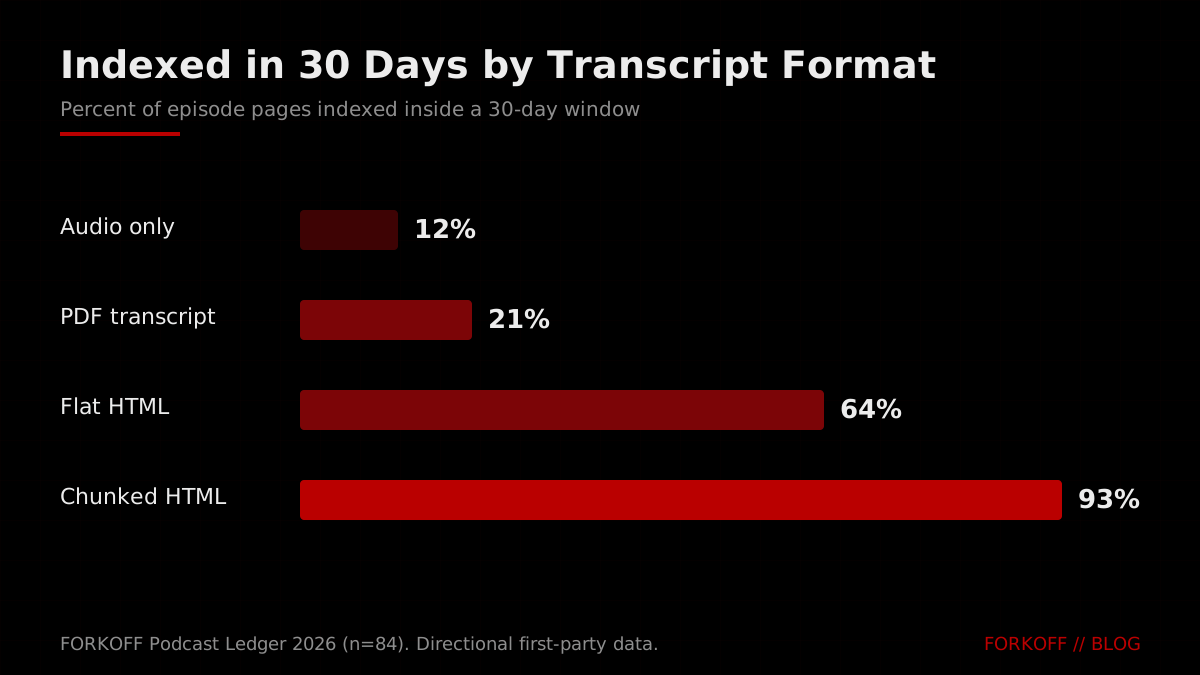
The most common failure here is shipping the transcript as a PDF or hiding it behind a request-transcript form. Both kill the citable surface. Crawlers do not reliably parse PDFs at ranking time, and forms gate every word behind a click the crawler never makes. PDF transcripts index at 21 percent in the same set, barely above audio-only. Ship the transcript as HTML at the page route, fully indexable, living in the same DOM the crawler already fetched.
Operator noteBreak the transcript into H3 topic sections with stable ids; flat transcripts index, chunked transcripts get cited at the moment level., FORKOFF Podcast Ledger 2026
Use deterministic id attributes on every H3, derived from the heading text. The index uses those ids to anchor a fragment URL into a specific moment of the episode, and stable ids survive a redeploy. Skip stable ids and the moment-level routing breaks the next time the page rebuilds.
Entertainment Lawyer
@Iamsynord
As a Podcaster, it is extremely important you have a podcast transcript. You can use tools like Rev, InqScribe or Go transcript. You can also use the voice typing feature on Google docs to record the podcast and transcribe. The advantage of transcripts to your podcast's SEO, reve… Show more
Layer 2: ship the AudioObject, PodcastEpisode, and Episode schema graph
The schema graph is the categorical signal that this page is a podcast episode. Schema.org PodcastEpisode defines the episode with required fields including name, partOfSeries, and datePublished. AudioObject carries contentUrl, duration, and encodingFormat as the associated media. Episode places the page inside the series. Together they tell the index this is an episode, not a blog post with an audio embed.
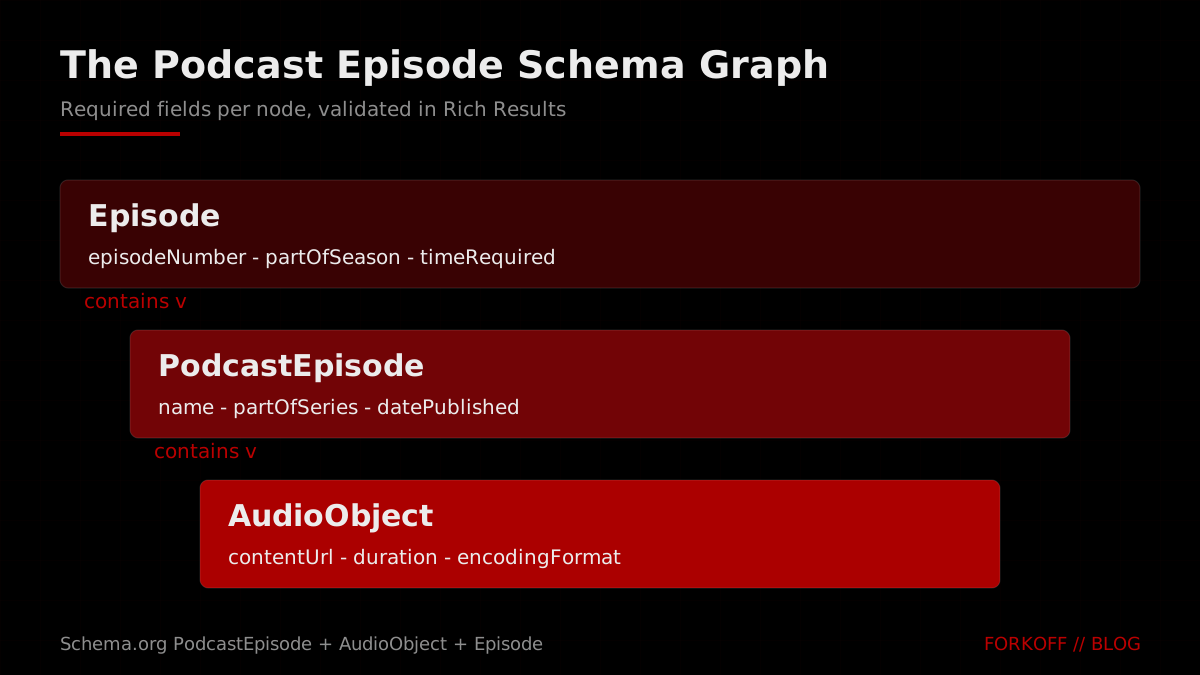
The two-pipeline problem is why this matters. A page that ships only Article schema reads to the index as long-form text with possibly an embed, which routes it through the blog-post pipeline. The podcast-episode pipeline rewards transcripts and chapters in ways the blog pipeline does not. The same content in the wrong pipeline ranks lower because the index applies the wrong scoring factors.
The schema graph routes the page to the right pipeline
A page that ships only Article schema reads to a ranking system as long-form text with an embed, which routes it through the blog-post pipeline. The podcast-episode pipeline rewards transcripts, chapters, and audio metadata in a way the blog pipeline does not. Shipping AudioObject inside PodcastEpisode inside Episode tells the system categorically that the page is a podcast episode, which unlocks the episode-specific ranking and rich-result surfaces. The graph is the single highest-leverage 30-minute change on most podcast pages.
Source: FORKOFF Podcast Ledger 2026 schema audit; Schema.org PodcastEpisode spec
The required fields are not optional decoration; the index treats a PodcastEpisode missing partOfSeries or datePublished as malformed and may ignore the markup entirely. AudioObject without a real contentUrl pointing to a hosted audio file is worse than no AudioObject, because some systems penalize stub schema that claims to describe audio it cannot find. The encodingFormat and duration fields let the index understand the asset is a real episode rather than a placeholder. Each field is a small claim the index can verify, and verifiable claims raise the page's structural-quality score while unverifiable or stub claims lower it.
The graph nests for a reason. Episode is the outer container that places the page in the series and carries the episode number and season. PodcastEpisode is the classification layer that routes the page to the podcast pipeline. AudioObject is the asset layer that describes the actual media file. A page that ships all three as a connected graph reads to the index as a fully described episode; a page that ships them as three disconnected blobs, or ships only one of the three, reads as partial and scores lower. The nesting is what tells the index these three objects describe one coherent thing rather than three unrelated fragments that happen to share a page.
Validate every page through the Google Rich Results test before publishing. Schema errors fail silently: the page looks fine, the markup is invalid, and the ranking weight never lands. The 30 minutes of validation per episode recovers ranking the content alone cannot buy. Add FAQPage schema on top with 5 to 7 question and answer pairs the episode actually addresses, because question-answer pairs are the highest-density surface for AI citation. Keep the FAQ count in the 5 to 7 range; some systems now treat pages with 20 or 30 stuffed question-answer pairs as schema spam and discount the whole block. The sweet spot is a handful of real questions the episode genuinely answers, each with a self-contained answer that reads as a quotable span.
Webdoux
@Webdoux
Google has officially discontinued FAQ Rich Results from Search results. But FAQ schema is still useful for helping AI systems and search engines understand content better.
New from Google: How to Rank in AI Search
Marie Haynes
Marie Haynes on how Google's own Gen-AI optimization guidance translates to ranking in AI search. The same structural-quality signals drive podcast episode-page rank: a readable transcript and a validated schema graph.
Layer 3: wire the internal-link plan from episode to show and back
Internal linking is the cheapest ranking move on the list and the most skipped. Every episode page links up to the show page, and the show page links down to every episode. The show page becomes the hub; each episode is a spoke. The hub-and-spoke structure raises crawl priority across the whole show and signals topical authority to the index.
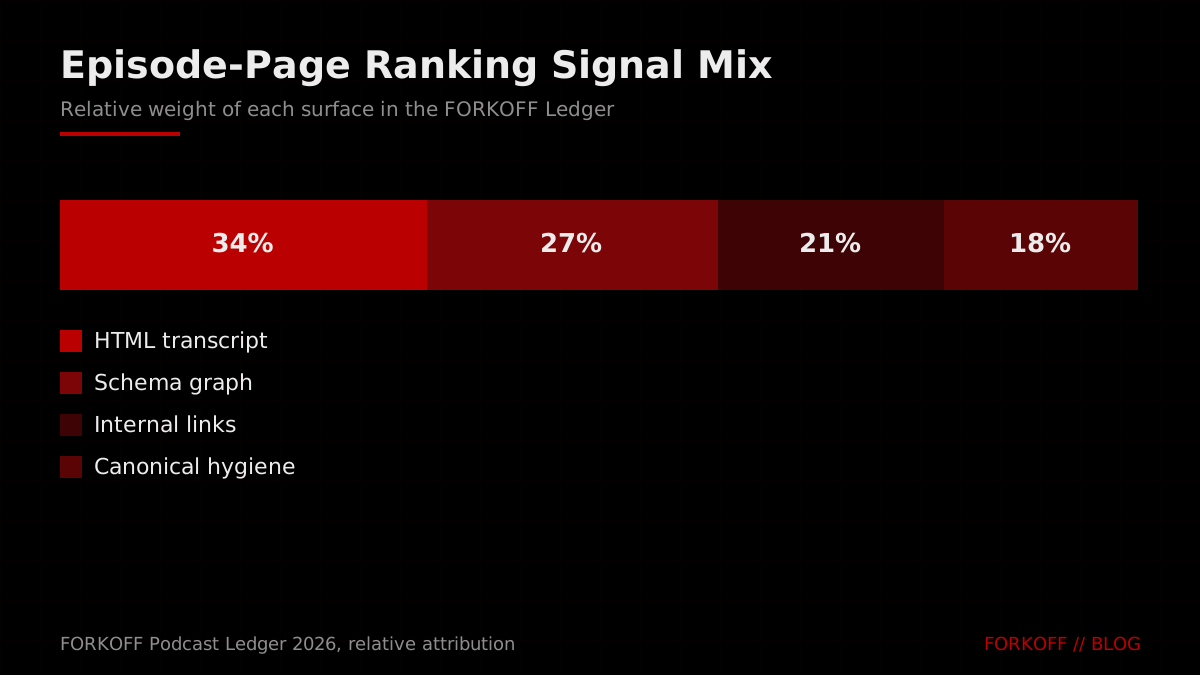
Beyond the show page, link related episodes to each other. Two episodes on adjacent topics should cross-link so the index reads them as a cluster rather than as isolated pages. The cluster signal compounds: a tightly linked set of episodes on one theme outranks the same episodes shipped as orphans, because the internal links concentrate relevance around the theme.
The anchor text matters as much as the link itself. A link that reads click here or listen now tells the index nothing about the destination. A link that reads with the descriptive topic of the target episode passes a relevance signal along with the crawl path. When the show page links down to an episode, the anchor should carry the episode's named topic; when an episode links across to a sibling, the anchor should carry the sibling's topic. Descriptive anchors turn the internal-link graph into a relevance map the index can read, which is the difference between links that only aid crawling and links that also aid ranking.
There is a structural layer above individual episodes worth building once the archive is large enough. A cluster of four to six episodes on one tightly related theme can spawn a category hub page that links to all of them, carries its own transcript excerpts, and targets the broad category query no single episode answers in depth. The episodes capture the specific moment-level queries; the hub captures the category-level query and passes authority down to the episodes it links. This hub-and-spoke pattern at the theme level mirrors the show-and-episode pattern at the page level, and it is how a podcast archive wins category search share rather than just scattered episode rankings. The same topology drives the cluster this post sits in, where the AEO citation pillar and this ranking spoke link to each other and to the broader podcast hub.
Operator noteLink every episode page up to the show page and back; orphaned pages with zero internal links cap their own crawl priority., FORKOFF Podcast Ledger 2026
Orphaned episode pages are the failure mode here. An episode page with zero internal links caps its crawl priority no matter how strong the transcript is. The index treats a page with no internal links as low-priority, crawls it less often, and ranks it below equivalent pages that sit inside a link cluster. Wire the links at publish time; retrofitting them across an archive is slow.
Layer 4: control canonical handling so your copy ranks, not the platform's
Duplicate syndication is the silent killer. The same transcript lives on the hosting platform page and on the owned-site episode page. Without a canonical declaration, the index picks one copy as the authority, and the platform domain usually wins on raw authority. The ranking you paid to produce lands on a page you do not own.
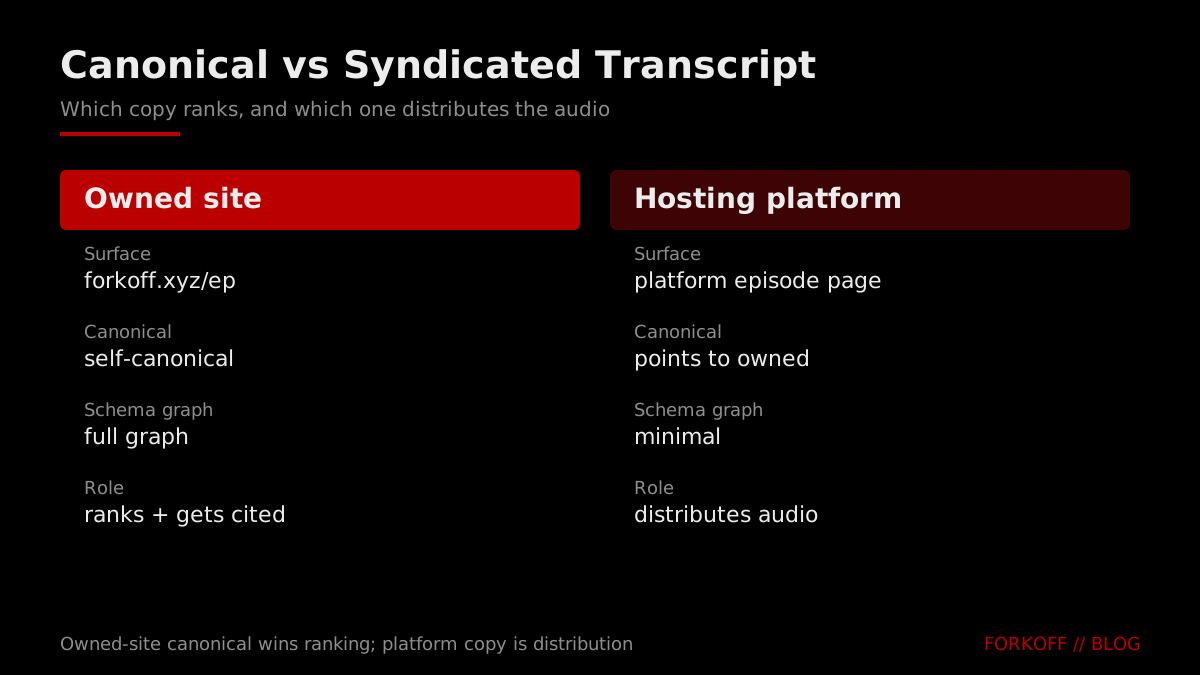
The fix is a decision made before the episode ships. Set the owned-site episode page as self-canonical, so the index treats it as the source of truth. Let the hosting platform distribute the audio to subscribers. The owned copy earns the ranking and the citation; the platform copy is the distribution surface. This is the question operators ask constantly in the community and rarely resolve cleanly.
The fear behind the question is reasonable and usually misplaced. Operators worry that publishing the same transcript in two places looks like duplicate content and triggers a penalty. The reality is that duplicate content across your own properties is not penalized so much as deduplicated: the index picks one copy to rank and ignores the other. The problem is not a penalty; it is that you do not control which copy wins unless you declare a canonical. Declare the owned page as canonical and the deduplication resolves in your favor. Leave it undeclared and the platform usually wins because it has more domain authority. The transcript on both surfaces is fine; the missing canonical declaration is the bug.
There is a second canonical trap worth flagging. Some hosting platforms auto-generate a canonical tag on their episode page that points at themselves, which is correct from their perspective and wrong from yours. If your owned page does not assert its own canonical and the platform asserts theirs, the index has one clear signal pointing at the platform and one ambiguous signal at you. The owned page must assert self-canonical explicitly to compete. Check the rendered head of both your page and the platform page; do not assume your CMS sets canonical correctly, because many templates omit it or point it somewhere unexpected. The 10-minute check of the actual rendered canonical tag prevents weeks of the platform quietly absorbing your ranking.
Canonical handling decides which copy ranks
The most common silent ranking killer is duplicate syndication. The same transcript lives on the hosting platform page (Buzzsprout, Apple, Spotify) and on the owned-site episode page. Without a canonical declaration, search systems pick one copy as the authority, and the platform domain usually wins on raw authority. The fix is to set the owned-site episode page as self-canonical and treat the platform copy as distribution. The owned page earns the ranking and the citation; the platform copy ships the audio to subscribers. Operators who skip this decision watch the platform copy absorb the ranking they paid to produce.
Source: FORKOFF Podcast Ledger 2026 canonical-handling audit
Operator noteSet the owned page self-canonical before you syndicate; syndicate first and the platform copy banks the authority you wanted., FORKOFF Podcast Ledger canonical audit
The sequencing matters as much as the decision. If you syndicate first and add canonical later, the platform copy accumulates authority for the weeks before you correct it, and that authority is slow to claw back. Decide canonical before the first publish, ship the owned page first, then push the audio out. The podcast booking system for founders covers the upstream production cadence that makes this sequencing repeatable.
Layer 5: guard against the 4 named failure modes
Layer 5 is a pre-publish checklist that guards against the four patterns that consistently appear when an operator believes their show is search-ready but the index still cannot see it. Across FORKOFF Podcast Ledger audits, each of these failure modes is common, each is silent until the rank check, and each is fixable in under an hour per episode once it is named.
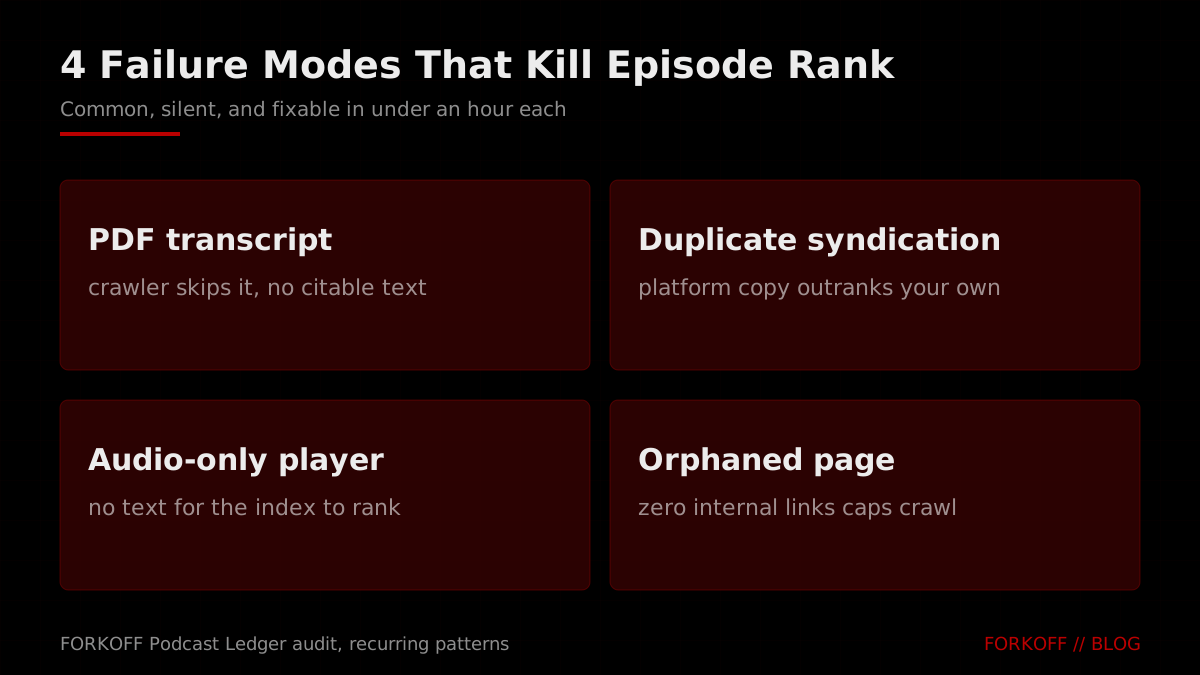
The first failure mode is the PDF or form-gated transcript. The text exists but the index cannot read it. The second is uncontrolled duplicate syndication, where the platform copy outranks the owned copy because no canonical decision was made. The third is the audio-only player, where the page ships a player and a subscribe link and nothing citable. The fourth is the orphaned page with zero internal links, which the index crawls rarely and ranks low.
Each failure mode has a tell that an audit can catch in seconds. For the PDF transcript, view the page source and search for the transcript text; if it is not in the HTML, it is not citable. For duplicate syndication, check the rendered canonical tag on both the owned page and the platform page. For the audio-only player, count the words in the rendered body excluding navigation and footer; under a few hundred words means there is nothing to rank. For the orphaned page, check the internal links pointing at the page; zero inbound internal links means the page sits outside the crawl graph. The audit is mechanical, which is why it can be a standing checklist rather than a judgment call.
A fifth pattern shows up less often but ends shows that should rank: the over-stuffed page that tries to do everything and reads as spam. Twenty FAQ pairs, a wall of keyword-stuffed tags, three competing canonical signals, and a transcript padded with auto-generated filler. The index reads the page as low-trust and discounts it. The discipline is the opposite of maximalism: ship clean, validated, content-true markup. A handful of real FAQ pairs, one clear canonical, a real transcript, and a validated schema graph beat a page that throws everything at the wall. Structural quality is about correctness, not volume, and the failure-mode guard exists to keep the page on the correct side of that line.
Renamed my podcast, went from #93 to #15 in search
Operator reports a podcast search-rank jump from position 93 to 15 after a rename, with active community discussion on what actually moves podcast discoverability in search.
Each failure mode is common, each is silent, and each is fixable in under an hour per episode. The guard is a standing checklist run before every publish: transcript is chunked HTML, schema graph validates, internal links are wired, canonical is set on the owned page. The checklist is the difference between a show that compounds search share and a show that ships great audio into an index that cannot see it.
Indexing rate by transcript format (30-day window)
| Transcript format | Indexed in 30 days | Citable text | Verdict |
|---|---|---|---|
| Audio only, no transcript | 12 percent | None | Invisible to search and AI |
| PDF transcript download | 21 percent | Not reliably crawled | Avoid, ships as a dead end |
| Flat HTML transcript | 64 percent | Yes, no anchors | Acceptable floor |
| Chunked HTML, H3 anchors | 93 percent | Yes, moment-level | The 2026 standard |
FORKOFF Podcast Ledger 2026 (n=84 monitored episodes). Directional first-party data, not a controlled experiment.
What the first-party data shows about page longevity
Rank durability differs sharply across page types, and the difference rewards the engineered episode page. A standard blog post climbs organic traffic until roughly month three to six, then slides as fresher pages crowd it out. An audio-only episode page never establishes a position worth defending. An episode page running the full stack settles into a stable SERP slot around month two to four and holds the slot for nine to fourteen months before any measurable slide, per the FORKOFF Podcast Ledger eighteen-month cohort.
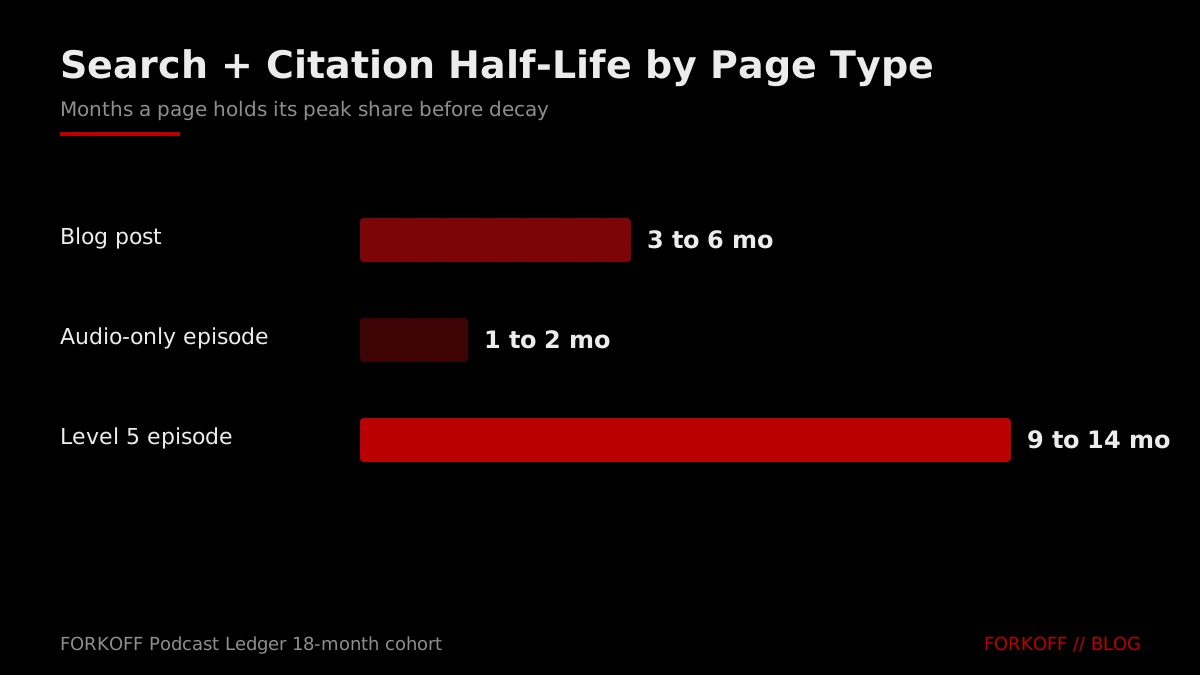
The durability comes from how crawlers treat a well-structured episode page, not from freshness. Each crawl re-reads the transcript markup and the nested graph and finds them intact, so the page keeps its position rather than aging out. The freshness discount that erodes ordinary blog rankings barely touches a page whose transcript anchors and graph keep validating crawl after crawl. The position holds because the structure keeps presenting the page as the authoritative resource for its query.
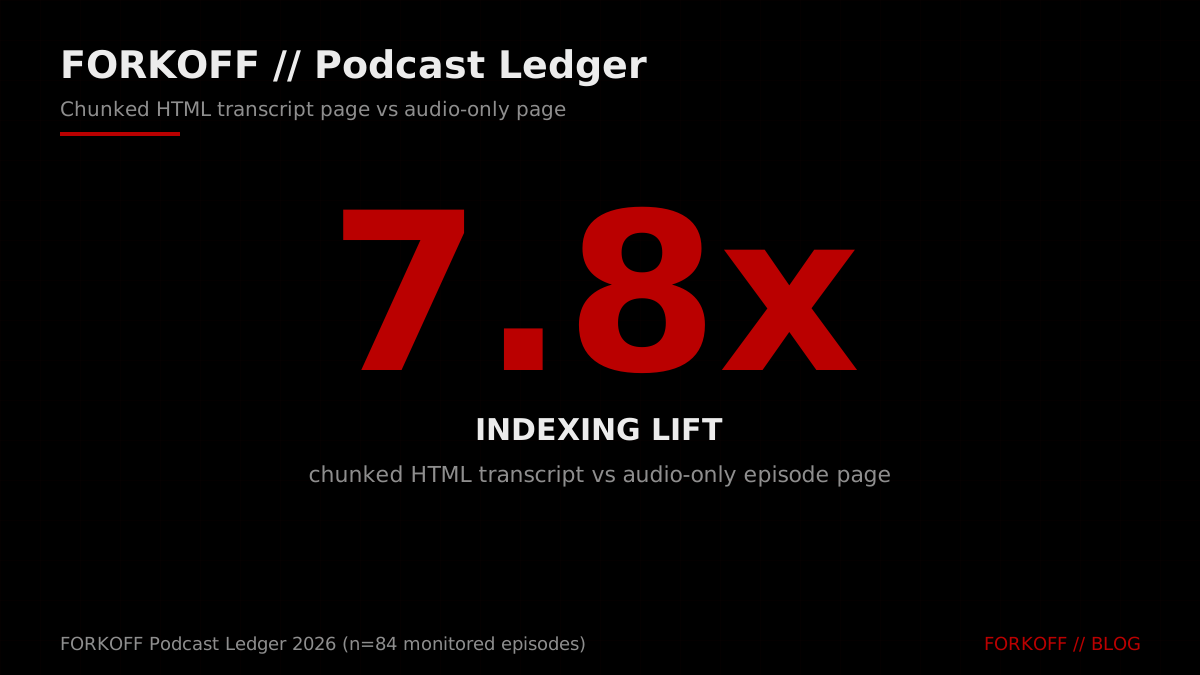
The headline first-party number is the indexing lift. A chunked HTML transcript page indexes approximately 7.8x more reliably than an audio-only page in the FORKOFF Podcast Ledger 2026 monitored set. The lift is not a content improvement; it is a structural one. Same audio, same guests, same show. The page ships the transcript and the graph, and the index can finally see it.
A word on how to read this data. The Podcast Ledger numbers are directional first-party readings across 84 monitored client episodes, not a controlled experiment with a held-out group. The episodes differ in topic, host authority, and parent-domain strength, so the indexing-rate gap between formats blends the format effect with whatever else differs across the pages. The honest claim is not that chunked HTML causes exactly a 7.8x lift on every show; it is that across a real client portfolio, the pages shipping the full stack index far more reliably than the pages that do not, and the gap is large enough and consistent enough to act on. Treat the numbers as a strong directional signal that points the same way every cohort we measure, not as a lab constant.
Renamed my podcast and the show went from position 93 to position 15 in search. The content did not change. The metadata and the page did. That is the whole lesson: the page is the product the index reads, not the audio.
Deep-dive: how the transcript, schema, and chapters cross-validate
The three transcript-side surfaces are not independent; they cross-validate, and the cross-validation is where the citation lift comes from. The chunked transcript has H3 anchors with stable ids. The schema graph can carry chapter offsets that point at the same moments. The show notes can carry clickable timestamps that mirror those offsets. When all three reference the same chapters with the same labels, the index gets three corroborating signals that a given topic lives at a given moment, and it raises the confidence with which it will cite that moment.
The mechanism runs in sequence. A search or AI system fetches the page, reads the schema graph, follows a chapter offset to the matching H3 anchor in the transcript, reads the surrounding transcript text under that anchor, and cites the span. If any of the three pieces is missing or misaligned, the system falls back to an episode-level citation rather than a moment-level one, which is a substantially lower-confidence and lower-converting result. Pages that ship the transcript anchors without the matching schema chapters, or the schema chapters without the matching transcript anchors, leave the moment-level slot on the table. The alignment is the work, and the alignment is what most shows skip.
Building the alignment is a 10 to 20 minute step per episode once the transcript exists. Derive the chapter labels from the transcript H3 headings so the labels match by construction. Set each chapter offset to the timestamp of the matching speaker turn. Mirror each offset as a clickable timestamp in the show notes. The three surfaces now agree, and the index reads the page as a precisely structured reference rather than a wall of text with an audio embed bolted on. The shows that do this consistently are the shows that get cited at the moment level for the queries their episodes answer.
Deep-dive: the archive audit and the 80-20 install order
A back catalog is not a uniform install target. The 80-20 rule is brutal here: a small fraction of archive episodes cover the topics buyers actually search, and the rest cover topics with too little search demand to rank regardless of how well the page is built. Installing the full stack on every archive episode at once wastes the budget on pages that will never rank. The discipline is to audit first and install in priority order.
The audit is a ranked list. Pull the last 18 to 24 months of episode topics. Cross-reference each against the queries that matter for the show, which come from the show's own search console data, from sales and support questions, and from competitive analysis of what the category ranks for. Score each episode by query-coverage: how many high-value queries does this episode genuinely answer. Install the full five-layer stack on the top quartile first, the flat-HTML floor on the middle, and leave the bottom quartile at audio-only because the topic match is too thin to earn a ranking even with perfect structure.
The audit also surfaces two structural moves beyond simple installs. The first is the merge: two or three thin episodes on a similar topic often rank better as a single merged transcript page than as three competing thin pages, with the highest-traffic URL kept as canonical and the others redirected to it. The second is the refresh: a high-performing archive episode on a topic that re-entered the search window can be updated with current context and republished, recovering search share that decayed naturally. Both moves come out of the same ranked audit, and both compound the return on the install budget by concentrating effort on the pages with the most ranking headroom.
The install sequence: how to ship the stack on an existing show
The stack installs as a repeatable per-episode sequence. Transcribe the audio to chunked HTML with H3 anchors. Ship the AudioObject, PodcastEpisode, and Episode schema graph and validate it in Rich Results. Wire the internal links from the episode to the show page and to related episodes. Set the owned-site page as self-canonical. Re-validate monthly to catch schema drift.
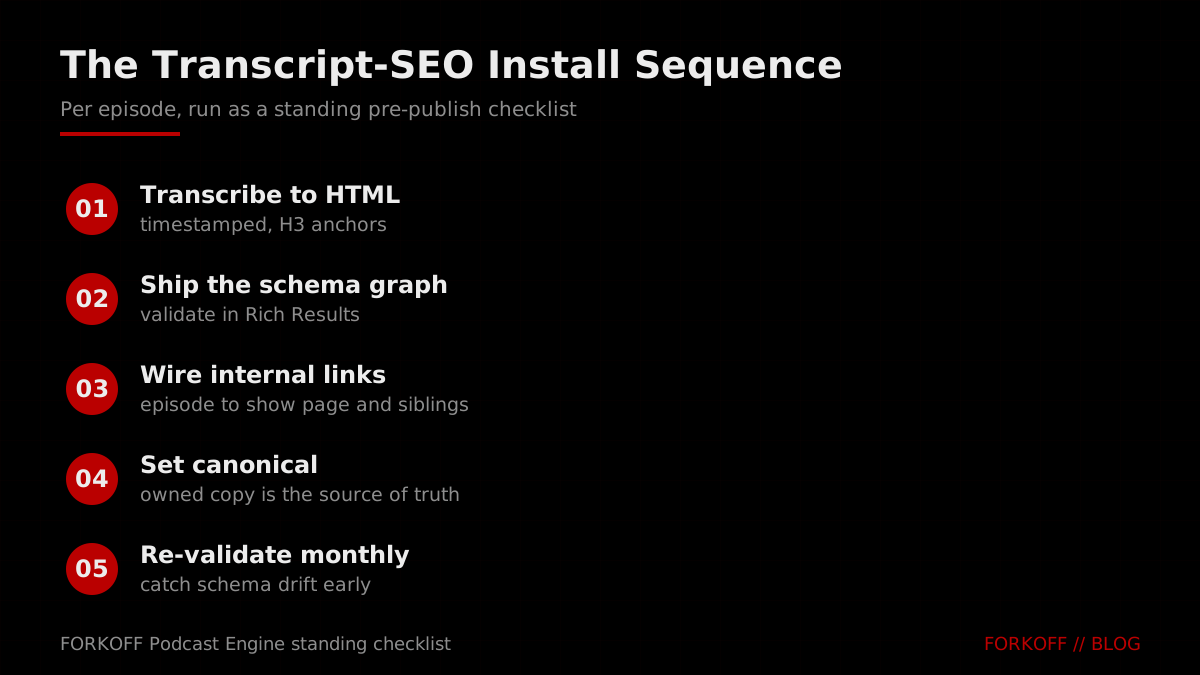
For an archive, the 80-20 rule applies. Roughly 20 percent of episodes drive 80 percent of the rankable queries. Run a structured audit, rank episodes by query-coverage, and install the full stack on the top quartile first. The bottom quartile can stay at the flat-HTML floor because the topic match is too thin to rank even with the full stack. Prioritizing the archive this way captures most of the upside in the first sprint.
If your podcast is not structured for machine retrieval, it is invisible. Add PodcastEpisode schema, host your audio on your own domain, add FAQPage schema, and include a structured transcript. This is not classic SEO; it is engineering the page so systems can read, retrieve, and cite your episode.
The standing-checklist discipline is what compounds. Every new episode runs through the five steps before publish, and every 30 days the existing pages re-validate against Rich Results. Search and citation share climb through months 1 and 2, hit steady state at month 3, and hold for 9 to 14 months. The recurring podcast service ships the install and the monthly re-validation; the video podcast vs audio-only decision matrix covers the format decision that sits upstream of the page work.
Podcast Growth Hacks
Long-running r/podcasting thread collecting operator growth tactics, including discoverability and on-page moves that map to the episode-page ranking stack.
Where transcript SEO sits in the broader podcast stack
Transcript SEO is one layer of a larger system. The podcast AEO citation strategy pillar covers the AI Overview citation side that pairs with the ranking side this post covers. The forkoff podcast engine 6-block system covers how production, schema, and distribution share one transcript and one ledger. The podcast monetization math post covers the revenue models that justify the page investment. The 12-month podcast growth playbook maps the staged, benchmark-anchored path from zero to a six-figure download month that this ranking work compounds inside.
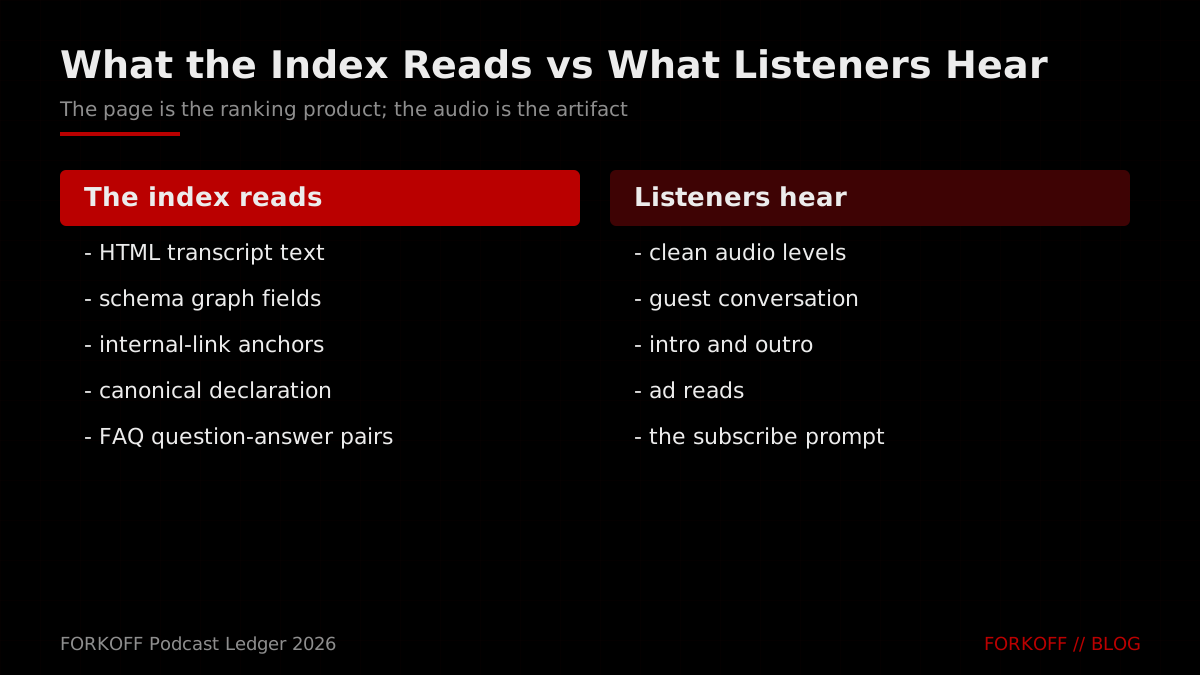
The throughline across all of them is the same: the page is the product the index reads, and the transcript plus the schema graph plus the internal links plus the canonical decision are the surfaces that make the page rank. Ship all five layers and the episode page becomes the canonical answer for the queries it covers. Ship the audio alone and the index never sees it.