Every founder who has decided podcast guesting is worth doing hits the same second decision within a week: do you pay someone to get you booked, or do you do it yourself? This guide compares the three execution models on cost per confirmed on-fit placement, using first-party booking data from FORKOFF engagements plus publicly available podcast industry benchmarks from Spotify, Apple, and Edison Research.
About these numbers
FORKOFF first-party operator data from podcast booking and distribution engagements, supplemented by publicly available podcast industry reports (Spotify, Apple, Edison Research 2025-2026). All figures are directional estimates based on operator observations; individual outcomes vary by niche, audience, and execution.
Every founder who has decided podcast guesting is worth doing hits the same second decision within a week: do you pay someone to get you booked, or do you do it yourself? The first decision is easy, because the channel works. A guest spot borrows an audience that already trusts the host, earns a link from the show notes, and leaves behind an episode that keeps surfacing in search and AI answers long after the recording. The second decision is where the money argument starts, and it is almost always framed wrong. People treat it as free versus paid, when the real question is whose hours are cheaper and whether the placements actually convert.
This guide settles that argument with numbers. It compares the three execution models for getting booked on podcasts, a booking agency, pure DIY guesting, and managed placement, on the one metric that matters to a buyer: cost per confirmed, on-fit placement. It is the buy-versus-build companion to our podcast guesting versus cold email comparison, which weighs channels rather than execution models, and it sits under the podcast AEO citation strategy hub that explains why placements compound in the first place.
The 30-second answer on agency vs DIY podcast guesting
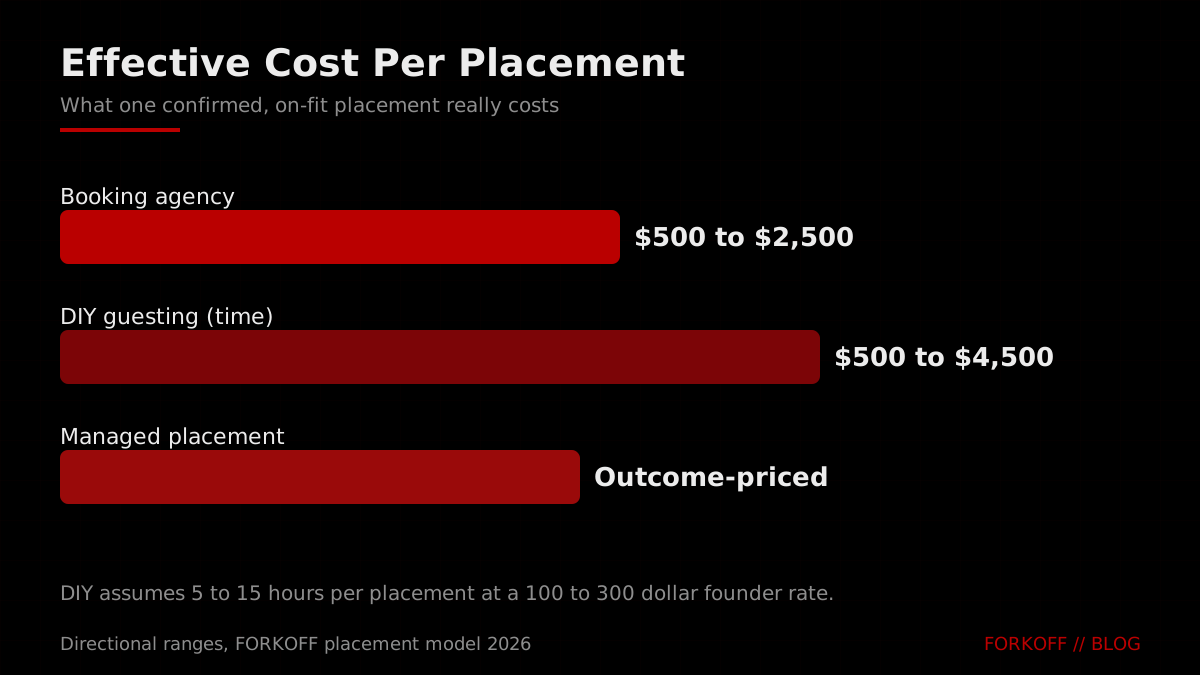
A podcast booking agency usually charges a retainer of 2,000 to 5,000 dollars a month and books 2 to 4 placements in that window, which puts the blended cost at roughly 500 to 2,500 dollars per confirmed placement. DIY guesting has no invoice, but each landed placement costs 5 to 15 hours of founder time for research, pitching, scheduling, and prep, which at a founder opportunity cost of 100 to 300 dollars an hour is 500 to 4,500 dollars of time per placement before you count the low acceptance rate on cold pitches. The honest comparison is not free versus paid. It is whose hours are cheaper and whether the placements convert. A managed placement program ties price to booked, on-fit shows and folds in the repurposing that turns one episode into pipeline. FORKOFF runs founder podcast placement this way.
Guesting is a distribution channel, not a vanity appearance
A podcast guest spot is one of the few channels where a founder borrows an already-warm audience, earns a backlink from the show notes, and produces an evergreen asset that keeps surfacing in search and AI answers. That is why the buy-versus-build question matters at all. Nobody argues over the cost of a tactic that does not work. Founders argue over podcast booking precisely because a single well-matched placement can outperform a month of cold outbound, so the only real question is which execution model gets you on the right shows at the lowest true cost.
Source: FORKOFF founder distribution model, 2026
Why podcast guesting became a line item founders argue over
Podcast guesting used to be a soft, opportunistic activity. A founder knew a host, said yes to an invite, and treated the appearance as a nice-to-have. Today it is a budgeted distribution channel with a measurable place in the founder funnel, which is exactly why the cost of getting booked is now something teams argue over in planning meetings.
The shift happened because the downstream value of a placement became legible. A guest spot is no longer just an hour of conversation. It is a backlink from an authoritative domain, an evergreen video and audio asset, a transcript that ranks, and raw material for weeks of clips. The audience side became legible too: Edison Research tracks how concentrated and habitual podcast listening has become, and Pew Research documents how large a share of professionals now get information from shows, which is what makes a single placement worth pricing. Operators now talk about guesting the way they talk about paid acquisition, with an expected return rather than a vibe. One founder listing guesting alongside digital PR and partner roundups in a backlink strategy is a small signal of how the channel is now reasoned about.
Connor Gillivan
@ConnorGillivan
My SEO & GEO Backlink Strategy: 1. Digital PR. 2. Guest Articles. 3. LLM Source Outreach. 4. Featured Answers. 5. Podcast & Webinar Guesting - Guest spots often come with backlinks from show notes, event pages, or recaps. These links build authority while also surfacing y… Show more
That reframing is what created the agency-versus-DIY debate. When a channel is fuzzy, nobody prices it. When a channel has a clear return, the question of how to staff it becomes a real budget decision. Founders started asking whether the hours they were pouring into pitching shows would be better spent building product, and whether a booking agency retainer was a cost or a saving. The honest answer depends entirely on the stage of the company and the value of the founder's time, which is why a single recommendation for everyone is always wrong.
It also matters that guesting is rarely a one-off. The founders who get returns treat it as a sustained motion, a steady cadence of placements that feed a founder-led growth engine, not a single splashy appearance. A sustained motion is what makes the staffing question urgent, because the cost, whether paid in dollars or hours, recurs every month.
The real cost of DIY is founder hours, not zero
DIY guesting feels free because no invoice arrives, but the founder pays in the most expensive currency they have, which is their own time. Researching fit, writing a non-generic pitch, following up, scheduling across time zones, and preparing talking points runs 5 to 15 hours per landed placement. At a founder opportunity cost of 100 to 300 dollars an hour, the time line alone rivals an agency retainer, and that is before the cold-pitch acceptance rate, which for unknown senders is low enough that most of those hours produce no booking at all.
Source: FORKOFF podcast placement workflow notes, 2026
There is a second reason the line item gets scrutiny. Podcast guesting has a supply side that is getting more selective. The medium kept growing, and audio measurement bodies like Nielsen and creator platforms such as Spotify for Podcasters report a steady rise in both shows and listening hours, which means more inventory but also more competition for the good slots. Strong shows curate their guests hard, screening for reputation, relevance, and the ability to carry a conversation. Booking onto a good show is not a formality, which means the work of getting booked is real work, and real work has a cost that someone has to absorb. The only question is who, and at what price.
The three execution models for getting booked on podcasts
There are three distinct ways to get a founder booked on podcasts, and most of the confusion in the debate comes from comparing only two of them. The booking agency and the DIY route are the famous pair, but managed placement is a third model that changes the math, and leaving it out is how founders end up choosing between a bad fit and a worse one. How each model is priced, and what to make an agency define before you compare two quotes, is laid out in which agencies handle podcast booking and guest placement for founders.
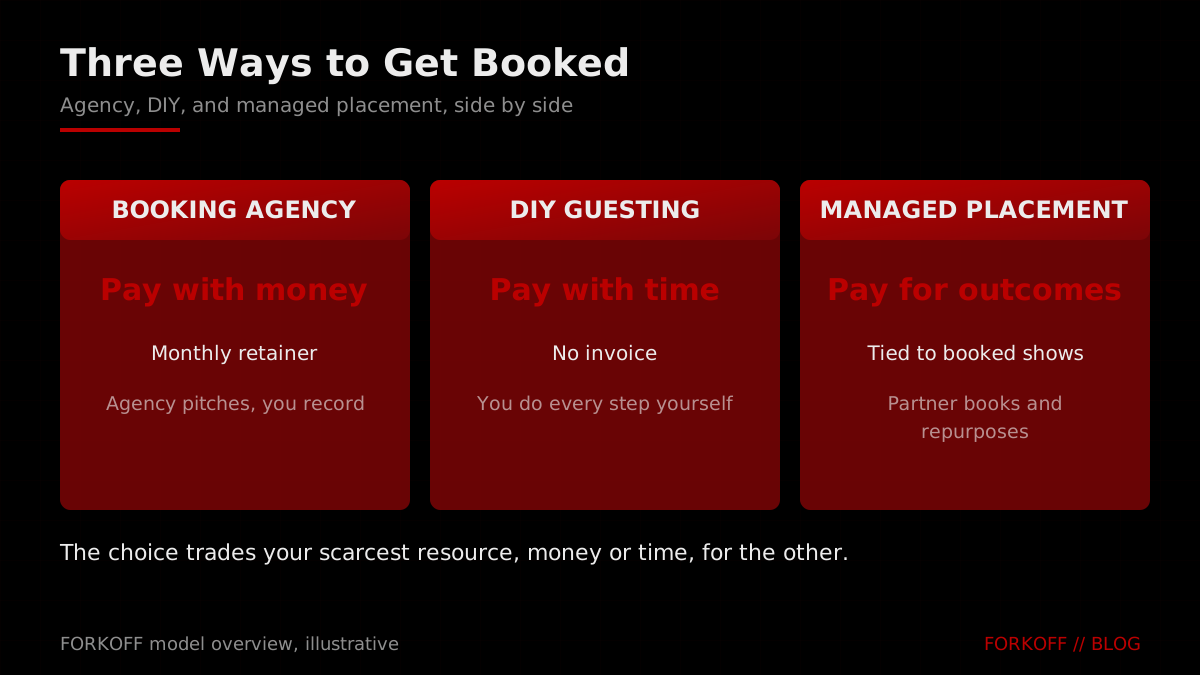
A booking agency is the outsourced-outreach model. You pay a monthly retainer, the agency pitches you to shows, and you show up to record. The value proposition is simple: trade money for time. The risk is equally simple: you are paying for outreach volume, and outreach volume is not the same as on-fit placements that convert.
DIY guesting is the founder-does-everything model. You research shows, write pitches, follow up, schedule, and prep, all yourself. The value proposition is that it costs nothing to invoice and keeps you in full control of which shows you target. The risk is that it quietly consumes the founder's most expensive resource, and that the cold-pitch acceptance rate for an unknown sender is low enough that most of the effort produces no booking.
The three execution models for podcast guesting, side by side
| Model | How you pay | Who does the work | Best fit |
|---|---|---|---|
| Booking agency | Monthly retainer | Agency pitches, you show up | Founders with budget and no time |
| DIY guesting | Founder time only | You do everything | Pre-revenue founders with hours to spend |
| Managed placement | Tied to booked, on-fit shows | Partner books and repurposes | Founders who want pipeline, not just appearances |
All three can work; the question is which trades your scarcest resource, money or time, for the other.
Managed placement is the outcome-tied model. Instead of a flat retainer for outreach, the price is anchored to booked, on-fit shows, and the engagement folds in the repurposing that turns each episode into ongoing distribution. The value proposition is that you are buying pipeline rather than appearances. This is the model that maps cleanly onto the way the founder funnel actually works, where a placement is the start of a distribution sequence rather than the end of a calendar booking.
The reason to hold all three in view is that the right answer moves between them as a company grows. A pre-revenue founder with time and no budget should not be paying a retainer. A Series A founder whose hours are worth hundreds of dollars each should not be hand-pitching shows. The models are not competitors so much as stages, and the rest of this comparison is about finding the line where one becomes more expensive than the next.
How To Choose A Podcast Booking Agency (What Most People Get Wrong)
Deven Rodriguez
A walkthrough of how to choose a podcast booking agency and the mistakes buyers most often make.
What a podcast booking agency actually costs
A podcast booking agency typically charges a monthly retainer in the range of 2,000 to 5,000 dollars. Some specialist agencies sit above that for high-profile founders or enterprise targets, and a handful sit below it with thinner service, but the middle of the market lives in that band. The retainer buys outreach: a shortlist of shows, pitches sent on your behalf, and coordination of the bookings that come back.
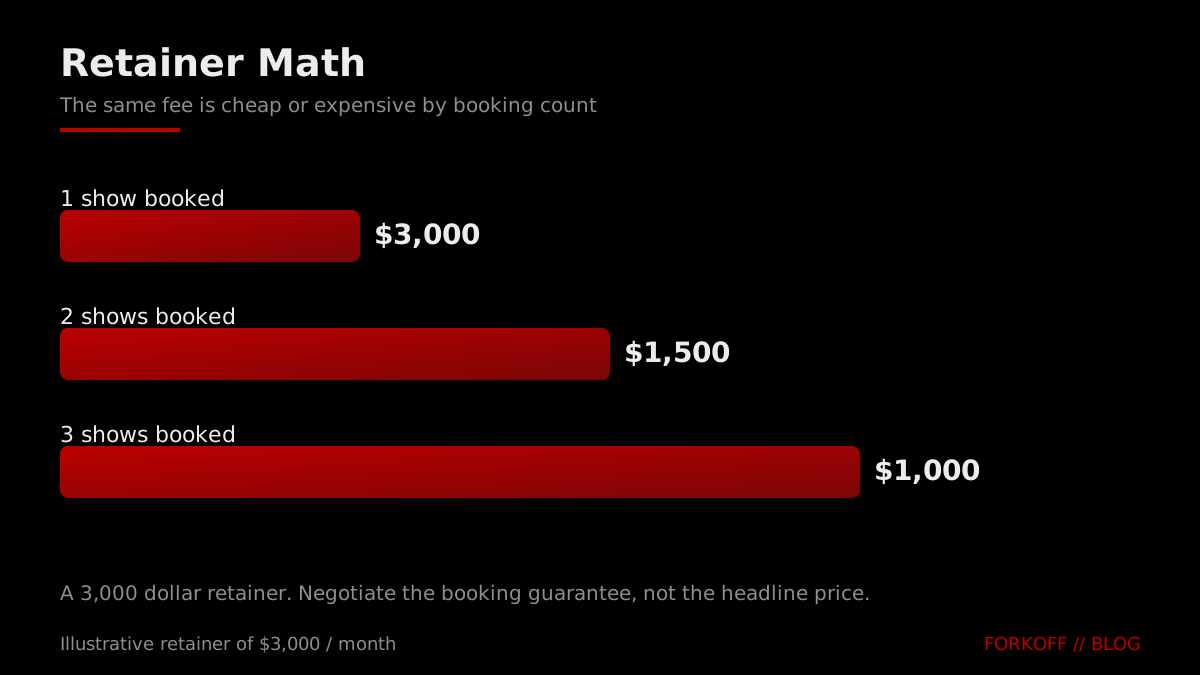
The headline retainer is not the number that matters, though. The number that matters is how many confirmed, on-fit placements that retainer produces. A 3,000 dollar retainer that books three shows in a month is 1,000 dollars per placement. The same retainer that books one show is 3,000 dollars per placement, and a retainer that books three shows your buyer never listens to is arguably infinite, because the cost per useful placement is undefined. This is why the booking guarantee, not the price, is the term to negotiate.
Cost per placement, the number that settles most of the debate
| Model | Headline price | Placements per month | Effective cost per placement |
|---|---|---|---|
| Booking agency | 2,000 to 5,000 dollars per month | 2 to 4 | About 500 to 2,500 dollars |
| DIY guesting | 0 dollars invoiced | 1 to 2 realistic | 500 to 4,500 dollars in founder time |
| Managed placement | Outcome-priced | On-fit only | Priced against booked shows plus repurposing |
DIY cost assumes 5 to 15 hours per landed placement at a 100 to 300 dollar founder opportunity cost. Ranges are directional.
Agencies vary enormously on what counts as a placement. Some count any booking, including small shows that will take almost anyone. Others guarantee a minimum number of placements above a defined audience threshold. The gap between those two definitions is the gap between a good engagement and an expensive one, and it never shows up in the retainer figure. A buyer who only compares monthly prices is comparing the wrong thing.
Operator noteA 3,000 dollar retainer booking 3 shows is 1,000 a placement; the same fee booking 1 show is 3,000, so get the booking guarantee in writing., FORKOFF client audits, 2026
There is also a ramp cost that founders underestimate. An agency needs to learn your positioning, your ideal shows, and your talking points before the first good placement lands, which often means the first month or two of any retainer is partly setup rather than output. Over a three-month engagement that ramp is amortized and fine. Over a one-month trial it can mean paying a full retainer for a single booking, which makes short agency trials look far more expensive per placement than a longer commitment would.
How to book guests on your podcast | My experience after having 72 guest episodes
A host shares the booking workflow they refined across 72 guest episodes, including how much manual outreach and scheduling each confirmed guest actually took.
The case for the agency model is strongest when a founder has clear budget and genuinely no time, and when the agency can prove an on-fit booking rate rather than a raw outreach count. The case weakens fast when the retainer is priced on volume, when the show quality is unverified, or when the engagement stops at the booking and leaves the founder to capture all the downstream value alone. That last gap, the missing repurposing layer, is where a lot of agency spend silently underperforms.
What DIY guesting actually costs
DIY guesting is the model founders reach for first because it appears free. No invoice arrives, so it feels like the responsible bootstrapped choice. The problem is that the cost did not disappear; it moved onto the founder's calendar, where it is harder to see and usually larger than expected.
Walk through the actual work of landing one placement. You research shows to find genuine fit, not just any podcast with a microphone. You write a pitch specific enough that a selective host takes it seriously, which means referencing the show and proposing a real angle. You follow up, because most first pitches are ignored. You negotiate timing and handle the back-and-forth of scheduling across calendars and time zones. Then you prepare, so the appearance is actually good. Counted honestly, that is 5 to 15 hours for every placement that gets booked, and far more hours if you count the pitches that went nowhere.
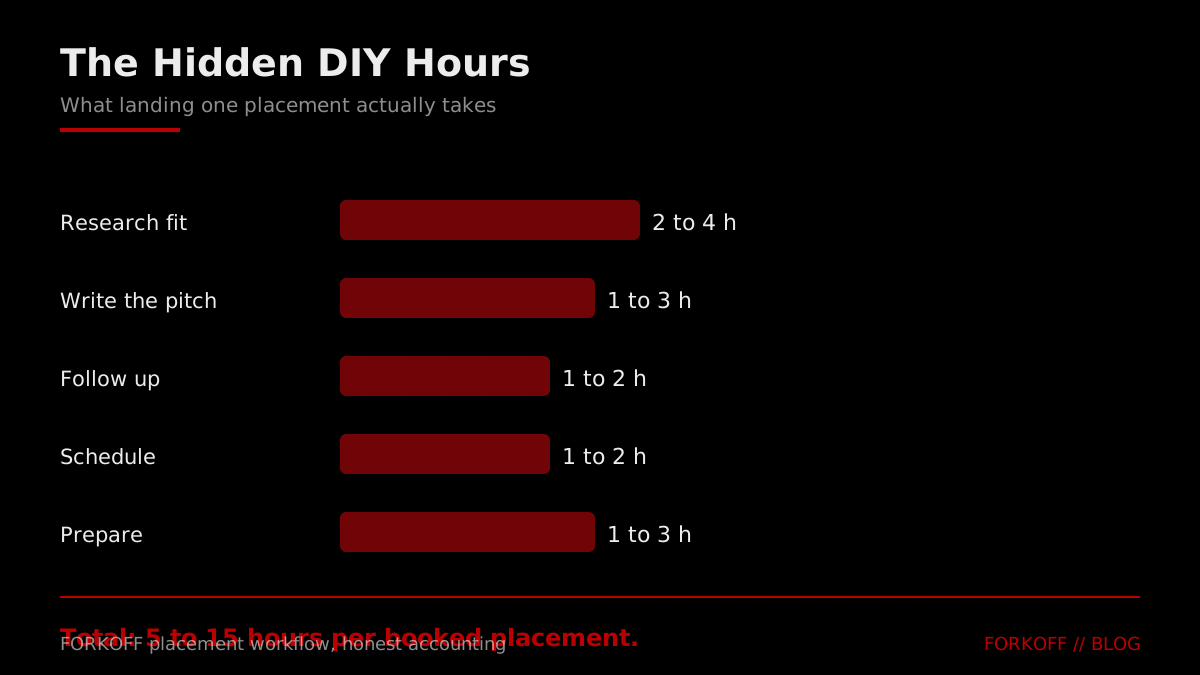
Now price those hours. A founder's time is not free; it is the most expensive labor in the company, because every hour spent pitching is an hour not spent on product, hiring, or closing. Public labor data and founder-time discussions consistently put a venture-stage founder's opportunity cost in the hundreds of dollars per hour. The Bureau of Labor Statistics framing of skilled labor cost is a conservative floor, and most founder-time analyses from places like First Round Review and Harvard Business Review push it higher. At 100 to 300 dollars an hour, 5 to 15 hours per placement is 500 to 4,500 dollars of founder time for a single booking.
That range should look familiar, because it overlaps almost exactly with the agency cost per placement. The DIY model is not categorically cheaper. It is cheaper only when the founder's time is genuinely low value, which is true pre-revenue and stops being true the moment the company has paying customers and a roadmap competing for those same hours.
The deliverable was a full podcast guesting pipeline that scrapes every guest from shows I've been on and turns them into a warm collab outreach list.
DIY does have real advantages that cost math alone misses. The founder keeps total control over which shows to target, learns the pitching motion firsthand, and builds relationships directly with hosts, which can pay off for years. Self-serve matching platforms such as PodMatch lower the discovery cost for solo founders, and operators who automate their own pitching pipeline can drive the per-placement time cost down meaningfully, turning a manual grind into a repeatable system. The smart version of DIY is not heroic hand-pitching forever; it is building a booking system that gets faster every cycle, then deciding whether to keep running it or hand it off. The guesting playbook for AI startups walks through what that systematized version looks like in practice.
Juan Benet
@juanbenet
Excited to launch a new podcast dedicated to conversations on the future of neurotech, computing, intelligence, and more. First guest: @maxhodak_ founder & CEO of @ScienceCorp_, which is building PRIMA, a retinal prosthetic that’s restoring meaningful vision for patients… Show more
The honest failure mode of DIY is not that it is expensive. It is that it silently does not happen. Founders intend to pitch, get pulled into the business, and the cadence collapses to one placement a quarter, which is too thin to compound. A channel that only works as a sustained motion fails when the person responsible has the least protected time in the company. That is the real argument against DIY at later stages, more than the per-placement dollar figure.
Operator noteA non-generic pitch that lands a placement takes most founders 5 to 15 hours once research, follow-up, scheduling, and prep are counted., FORKOFF placement workflow, 2026
Cost per placement: the number that settles most of the debate
Strip away the framing and the comparison reduces to one metric: cost per confirmed, on-fit placement. Both models converge on a similar range, roughly 500 to 2,500 dollars for a good placement, whether you pay an agency or value your own hours. That convergence is the single most useful fact in this entire debate, because it means the choice is rarely about saving money. It is about which scarce resource you would rather spend.
If money is your constraint and time is abundant, DIY wins, because you are spending the resource you have in surplus. If time is your constraint and budget exists, the agency or managed model wins, because you are buying back the resource you cannot make more of. There is no universal answer, only a correct answer for a given founder at a given stage, which is why the next section turns the cost math into a decision framework.
The metric also exposes a trap that both models share: optimizing for cost per placement instead of cost per on-fit placement. A cheap placement on a show your buyer never hears is not cheap; it is wasted, at any price. The denominator has to be useful placements, the ones on shows whose audience overlaps your market, or the whole calculation lies to you. This is why fit screening, covered later, is not a soft quality concern but a hard input to the cost math.
Placement fit decides ROI more than placement count
Both models are usually sold on volume, a number of placements per month, but volume is the wrong headline metric. One appearance on a show whose audience matches your buyer is worth more than ten appearances on shows that simply said yes. The expensive failure mode is paying for booked slots on low-fit shows, where the audience never converts and the episode becomes a clip with no pipeline behind it. Fit screening is the variable that price tags hide and the one that separates a placement that compounds from a placement that just fills a calendar.
Source: FORKOFF client audits, 2026
One more correction belongs here. Cost per placement is the right comparison metric, but it is not the right value metric. The value of a placement is not the placement; it is the pipeline that follows from it across the next 60 to 90 days. A placement that costs 2,000 dollars and seeds a 36,000 dollar deal is not expensive. A placement that costs 200 dollars and produces nothing is not cheap. Cost per placement decides which model to staff; pipeline per placement decides whether to keep doing it at all.
Where a managed placement program changes the math
The agency-versus-DIY framing has a blind spot, and the blind spot is the part of the value that lives after the recording. Both classic models tend to stop at the booking. The agency gets you on the show and moves on. The DIY founder records and then, exhausted by the pitching, rarely turns the episode into anything more. The placement becomes a single appearance instead of a distribution event, which leaves most of the return on the table.
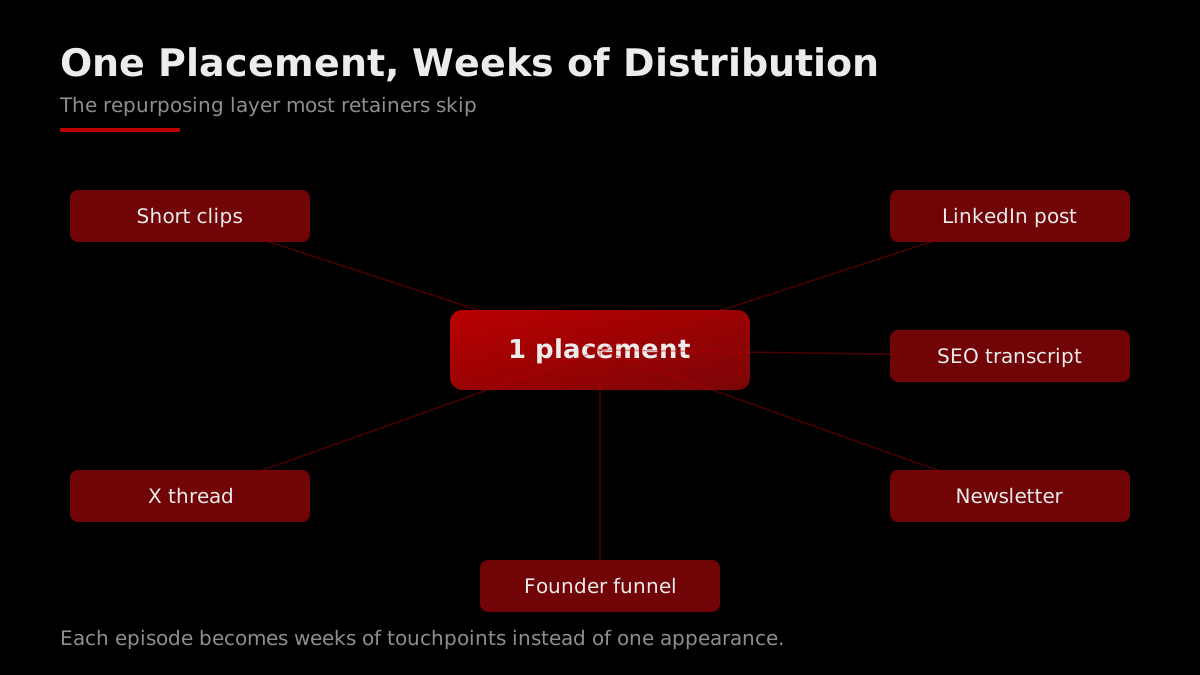
Managed placement closes that gap by treating the booking as the start of a sequence rather than the end of a task. The same recording becomes a set of short-form clips, an X thread, a LinkedIn post, a transcript optimized for podcast transcript SEO, and a newsletter mention. The video cut earns its own discovery surface, since YouTube documents how Shorts reach viewers far outside an existing audience, which is why a single placement can keep working for months after the recording. One placement turns into weeks of touchpoints, which is the entire premise of how to grow a podcast presence as a system rather than a series of one-offs. The content clipping layer is what converts a single guest spot into a compounding asset.
Attribution is blended, so judge the funnel not the single show
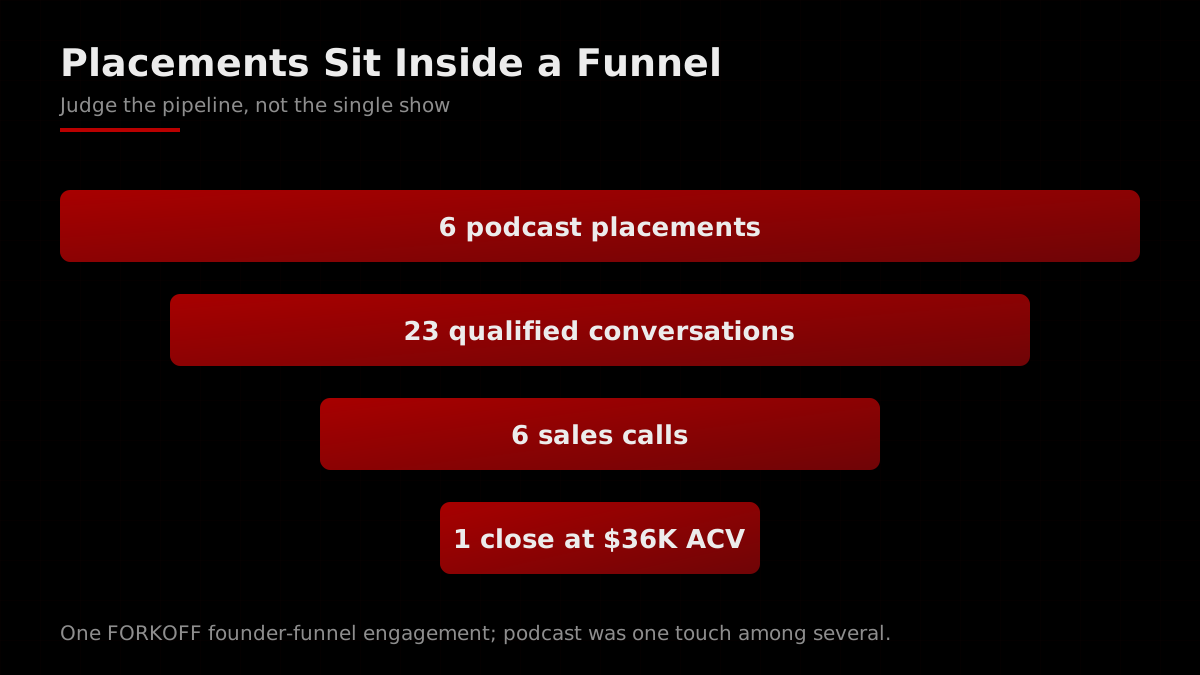
Podcast placements rarely close a deal on their own. They sit inside a founder-led motion alongside content, search, and outbound, and the honest way to value them is to watch the whole funnel. In one FORKOFF founder-funnel engagement, a 90-day motion that paired founder content with 6 podcast guest placements produced 23 qualified inbound conversations, 6 sales calls, and 1 close at 36,000 dollars in annual contract value. Podcast was one of several touches, not the sole cause, which is exactly how a buyer should reason about its cost.
Source: FORKOFF founder-funnel engagement, source-traced, 2026
This is also where attribution has to be handled honestly, because the model is sold on pipeline and pipeline is blended. In one FORKOFF founder-funnel engagement, a 90-day motion that paired founder content with six podcast guest placements produced 23 qualified inbound conversations, six sales calls, and one close worth 36,000 dollars in annual contract value. The podcast placements were a meaningful touch in that motion, but they were not the only one, and the honest way to present the number is exactly that: placements inside a funnel, valued by the funnel's output rather than by a claim that any single show closed the deal.
Operator note6 placements sat inside the founder-funnel motion that produced 23 qualified inbound conversations and a 36,000 dollar close., FORKOFF founder-funnel engagement, 2026
The reason managed placement can justify its price is this downstream multiplication. If a booking agency charges 1,000 dollars per placement and stops, and a managed program charges a comparable amount per placement but turns each episode into weeks of distribution and feeds a measurable funnel, the cost per useful outcome is lower even when the cost per booking looks similar. The buyer is not paying more for the same thing; they are paying for a larger thing. Whether that larger thing is worth it depends on whether the founder actually wants pipeline or just wants to be on podcasts, which is a real and legitimate distinction.
The decision framework: which model fits your stage
Because the cost per placement converges across models, the decision is not really about price. It is about matching the model to the founder's stage, specifically the ratio of available time to available budget. That ratio moves predictably as a company grows, which makes the decision more mechanical than it first appears.
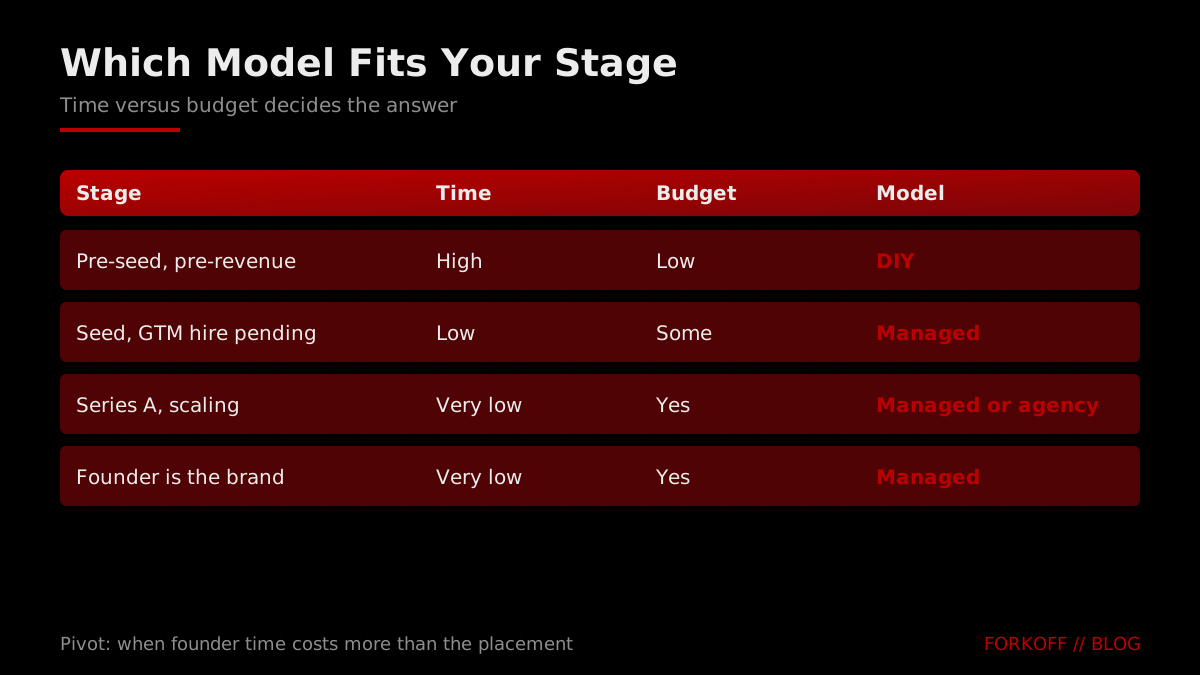
A pre-seed, pre-revenue founder almost always has more time than money. DIY is the correct model, and the goal is to systematize it so each cycle gets faster, building the relationships and the pitching muscle that pay off later. Paying a retainer at this stage is usually premature optimization, spending scarce cash to save abundant time, which is backwards.
Which model fits which founder stage
| Stage | Time available | Budget available | Recommended model |
|---|---|---|---|
| Pre-seed, pre-revenue | High | Low | DIY, then systematize |
| Seed, first GTM hire pending | Low | Some | Managed placement |
| Series A, scaling pipeline | Very low | Yes | Managed placement or agency |
| Established, founder is the brand | Very low | Yes | Managed placement with repurposing |
The pivot point is almost always when founder time becomes more expensive than the placement itself.
A seed-stage founder with a go-to-market hire still pending sits at the pivot point. Time is getting expensive, some budget exists, and the founder is increasingly the bottleneck on everything. This is where managed placement tends to win, because it buys back time without requiring the founder to manage an outreach vendor, and because the repurposing layer starts to matter as the company needs pipeline rather than just visibility.
A Series A founder scaling pipeline has very little time and real budget, and is often the brand the company sells through. At this stage either a strong agency or a managed program makes sense, and the deciding factor is whether the founder wants pure booking or wants the full distribution motion attached. The founder-led sales angle usually pushes toward managed placement, because the value is in the funnel, not the appearance.
The single most useful question at any stage is this: is an hour of my time worth more than the per-placement cost of having someone else do this? When the answer flips from no to yes, the model should flip from DIY to managed or agency. Most founders cross that line earlier than they admit, which is why so many are quietly losing money by doing their own pitching long after it stopped being the cheap option.
What the booking process looks like inside each model
Cost is easier to reason about once you can see who does what. The booking process has the same underlying steps in every model, shortlist, pitch, follow-up, confirm, schedule, prep, record, repurpose, but the ownership of those steps is what differs, and ownership is where both cost and friction actually live.
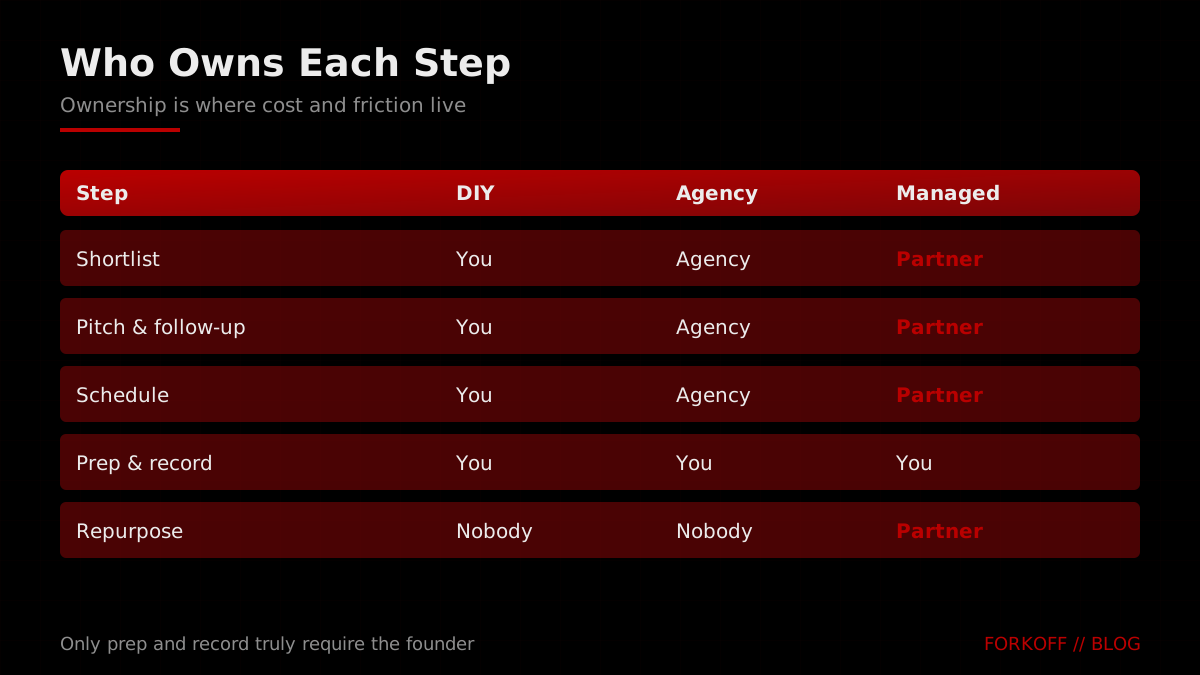
In the DIY model, the founder owns every step. That is maximum control and maximum time cost, and the friction usually concentrates in follow-up and scheduling, the unglamorous middle of the process where most placements quietly die. In the agency model, the agency owns shortlist through confirm, and the founder owns prep and record, with repurposing typically owned by nobody, which is the gap. In the managed model, the partner owns shortlist through schedule and repurpose, and the founder owns only prep and record, the two steps that genuinely require the founder.
How to Get Invited onto the BIGGEST Podcasts
KeyPersonOfInfluence
A breakdown of how to get invited onto larger podcasts as a guest without an agency.
That last point is worth dwelling on, because it is the real efficiency argument. The only steps that truly need the founder are showing up prepared and recording well. Everything else, the research, the pitching, the follow-up, the scheduling, the clipping, is delegable work that does not require the founder's specific knowledge or face. A model that leaves the founder owning only the non-delegable steps is structurally more efficient than one that leaves them owning the whole chain, regardless of the invoice.
PODCASTS DO NOT HAVE TO BE INTERVIEWS!
A 316-upvote thread pushing back on the assumption that every podcast must be an interview show, with operators debating formats that change how guesting fits a growth motion.
The booking process also has a quality gate that the cost framing tends to skip: the shortlist. Who decides which shows are worth pitching, and on what criteria? In DIY, the founder decides, which is good for control but bad if the founder lacks a reliable fit rubric. In a weak agency, the shortlist is whoever will say yes. In a strong agency or managed program, the shortlist is screened for audience overlap before a single pitch goes out, which is what keeps the cost-per-on-fit-placement number honest.
Quality, not just cost: the variables price hides
A pure cost comparison can still lead you to the wrong choice, because the cheapest model that books low-fit shows is more expensive than a pricier model that books the right ones. Several quality variables sit underneath the price and decide the actual return, and ignoring them is the most common way founders waste their podcast budget.
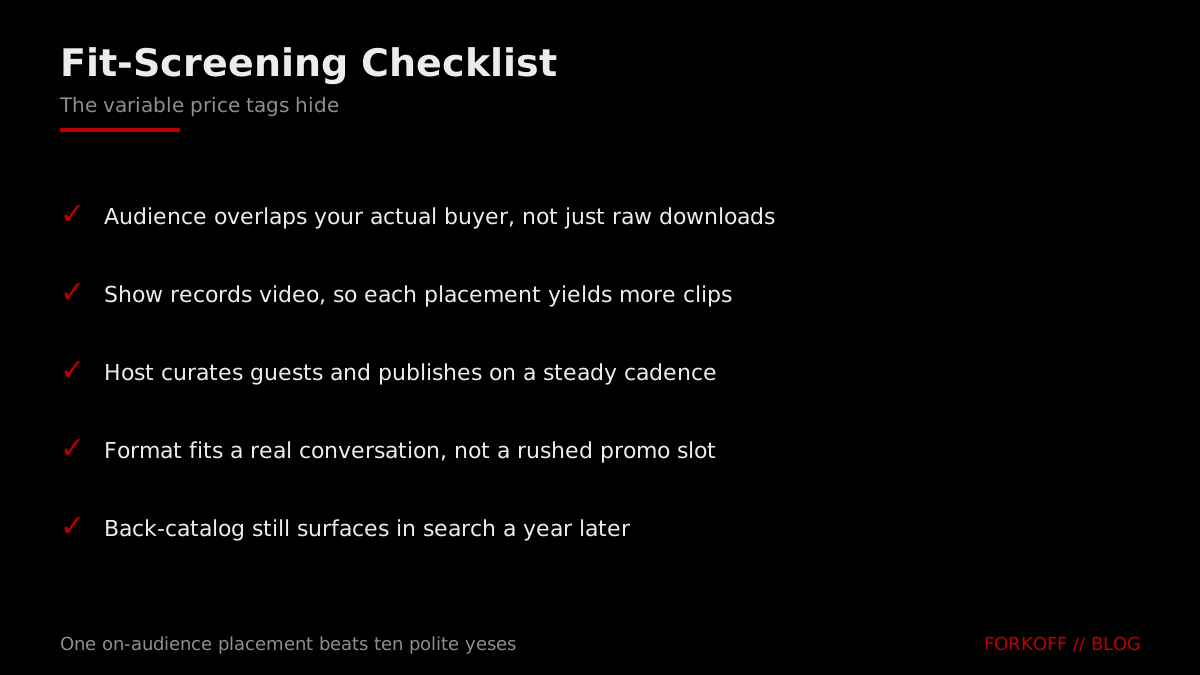
Fit is the first and most important. A placement on a show whose audience matches your buyer is worth a multiple of a placement on a larger but mismatched show. Audience overlap, not raw download count, is the variable that predicts pipeline, and it is the one a volume-priced agency has the least incentive to protect. Screening for fit is unglamorous and slow, which is exactly why it gets skipped when the model rewards booking count.
Guest spots often come with backlinks from show notes, event pages, or recaps. These links build authority while also surfacing your expertise to AI-trained content.
Show quality is the second variable. A well-produced show with an engaged audience produces an asset worth repurposing; a poorly produced one produces an awkward hour that is hard to clip and unflattering to share. Whether the show records video also matters, as the video versus audio-only comparison explains, because a video placement yields far more clip material than audio alone. Hosting platforms like Buzzsprout publish global stats showing how many shows fade after a handful of episodes, so a show's longevity and cadence are useful proxies for whether a placement will still be discoverable a year from now. The production cost of a bad placement is real, and hosts feel it from the other side too, which is why strong shows screen guests so carefully. A booking process that ignores show quality optimizes for a number that does not correlate with return.
When you have a guest who's uncomfortable on the mic and you're editing out the silence
Hosts swap stories about the hidden production cost of low-fit guests, the exact friction a booking process is supposed to screen out before a placement is booked.
The third hidden variable is preparation, which no model can fully outsource. A founder who shows up unprepared wastes a good placement no matter who booked it, and even basic audio hygiene matters, since recording quality on tools like Riverside shapes how usable the clips will be afterward. The best managed programs invest in prep precisely because they are judged on pipeline, not bookings, and a placement that does not convert is a placement that did not work for them either. That alignment of incentives, where the people booking the show also care whether it produces pipeline, is itself a quality variable worth paying for.
Upcoming guests on The Pragmatic Engineer Podcast: Thuan Pham, Uber's first and longest-serving CTO, now CTO at Faire.
Gergely Orosz
@GergelyOrosz
Upcoming guests on The Pragmatic Engineer Podcast: Thuan Pham - Uber's first (and longest-serving CTO), now CTO at Faire; Martin Kleppmann - author of Designing Data-Intensive Applications, and more.
A founder who curates fit this hard on the supply side, the way the strongest shows screen their guests, is the same founder who should expect to be screened in return, which is why a generic pitch fails and a specific one lands.
The fourth variable is consistency. A channel that compounds requires a steady cadence, and the model that actually sustains that cadence beats the model that produces a burst and then stalls. This is where DIY most often fails not on cost but on follow-through, and where a paid model earns its price simply by ensuring the motion keeps running every month rather than collapsing the first time the founder gets busy.
Operator noteThe fastest way to waste either budget or hours is booking low-fit shows; one on-audience placement beats ten polite yeses., FORKOFF podcast cohort, 2026
How FORKOFF runs founder podcast placement
FORKOFF runs founder podcast placement as a managed program for exactly the reasons the cost math points to. The thesis is that the booking is the cheap part and the value is in the funnel, so the engagement is priced against booked, on-fit shows and includes the repurposing layer that turns each placement into weeks of distribution. The founder owns the two steps that require them, preparing and recording, and the rest of the chain is handled. The operational structure behind the managed model is documented in the FORKOFF podcast engine 6-block system, which shows how each stage from booking through distribution is staffed and measured.
In practice that means fit screening before any pitch goes out, so the cost-per-on-fit-placement number stays honest, and a repurposing pipeline that converts each episode into clips, threads, posts, and a search-optimized transcript. It connects to the broader founder funnel so placements are measured by the qualified conversations and pipeline they feed, not by a booking count. For founders who also want the channel reasoned about alongside everything else they are spending on, it sits inside a marketing foundation that treats podcast guesting as one line in a coherent distribution strategy rather than an isolated tactic, and pairs naturally with Twitter and X distribution of the resulting clips.
Reaching B2B Enterprise Level Clients with Podcast Guesting
Interview Connections
A discussion of how B2B founders reach enterprise buyers specifically through podcast guesting.
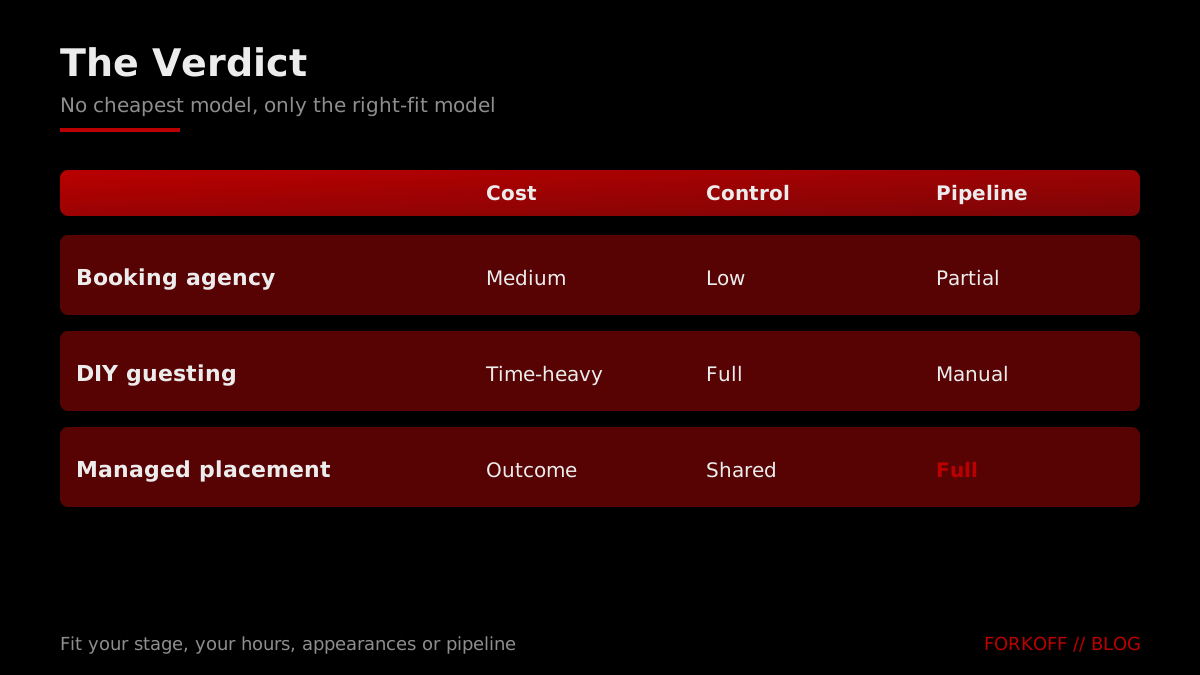
The verdict is not that managed placement is universally right. It is that the agency-versus-DIY debate is incomplete, that cost per placement converges across models so the choice is really about time versus money, and that the value of a placement is the pipeline it feeds rather than the appearance itself. A pre-revenue founder with time should DIY and systematize. A founder whose hours have become more expensive than the placement should hand it off, and should hand it to a model that captures the downstream value rather than stopping at the booking; our best podcast marketing agency comparison shows how to pick one. If that sounds like your stage, talk to a strategist and we will map the right model to your funnel.