A thread went around claiming one AI app hit 132 million views in 30 days. The author, @johnvirality, has about 4,460 followers, the app is never named, and the full breakdown is locked behind a "DM me" reply. So here is the honest version up front: that number is a lead magnet, not a case study. Treat it the way you would treat any viral launch claim with no app, no spend, and no proof behind it, which is to say, do not build a plan on it.
What actually drives AI-UGC app growth
A viral thread claimed an unnamed app hit 132M views in 30 days, but that number is unverified and DM-gated, so treat it as a hook, not a fact. The documented engines are real: Cal AI (50M-plus downloads, around 12M dollars ARR in under 12 months, roughly 150-influencer per-install model), Umax (1B-plus impressions in about 7 months, 7M-plus downloads, around 500K dollars a month), and RizzGPT (millions of views off two creators paid 50 dollars each). The playbook: seed cheap creators, build a per-install affiliate community, mass-produce AI-UGC volume, amplify winners with Spark Ads, and obsess over the first three seconds. FORKOFF runs this as outcome-priced execution, not another tool subscription.
John
@johnvirality
an AI app hit 132 million views in 30 days through organic creator content alone. 2.1 million shares. no paid media behind either number. so i broke down the ENTIRE production system behind this result... here's what's inside:
But the thread is pointing at something real, even if the number is not verifiable. There are apps right now turning user-generated-style video into millions of installs, and unlike the 132M claim, their numbers are documented, named, and citable. Cal AI, Umax, and RizzGPT each ran a version of the same engine, and each left a paper trail. This is the playbook the viral thread gestured at and never delivered: the real production system, the real spend, and the parts that actually move installs versus the parts that just look good in a screenshot.
I run growth at FORKOFF, an outcome-priced AI marketing agency. We have processed more than 5 billion views through our clipping network, so I am not writing this from the outside. This is the system as it actually runs, with the cases that prove it and the failure modes nobody screenshots. If you would rather buy it than build it, how to choose a UGC agency is the vendor test.
What does UGC video for app growth actually mean?
UGC video for app growth is the use of user-generated-style short video, filmed by creators or generated with AI tools, to drive app installs at a lower cost than studio-produced ads. The content is built to look like an organic social post rather than a brand campaign. It runs on TikTok, Instagram Reels, and YouTube Shorts, then gets amplified through paid formats like Spark Ads or creator whitelisting once a specific clip proves it converts. The mechanism is volume plus selection: you produce many clips, most fail, and you fund the few that win. That only pencils out if you know the unit price, which is at how much a UGC video costs. AI-UGC tools lower the cost of that volume, which is why the model works for apps with small budgets and no existing audience.
That definition matters because the whole category is being marketed as a tool you subscribe to. It is not. The tool generates clips. The growth comes from the system around the tool: who you seed, how you pay them, how fast you test hooks, and what you amplify. The apps that won did not win because they had the best AI generator. They won because they ran the loop harder than everyone else.
Organic-mimic content ~67% more engagement
Content that mimics organic posts shows around 67 percent higher engagement
Source: TikTok creative best-practice data
The parent term here, "ai ugc ads," is trending up sharply, and the app-growth angle is emerging net-new. That is the gap. Most of what ranks for these queries is either a generic "what is UGC" explainer or a tool homepage. Almost none of it names a real app, shows the spend, or does the cost-per-install math. So that is what the rest of this post does.
The real engines: Cal AI, Umax, and RizzGPT
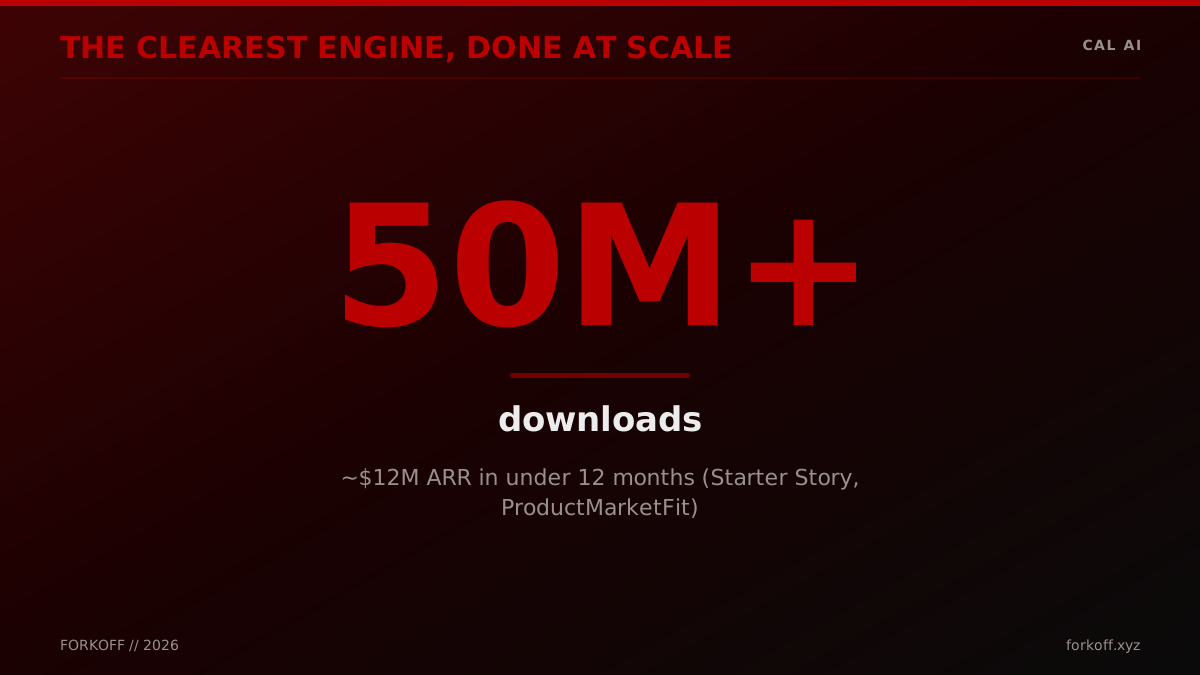
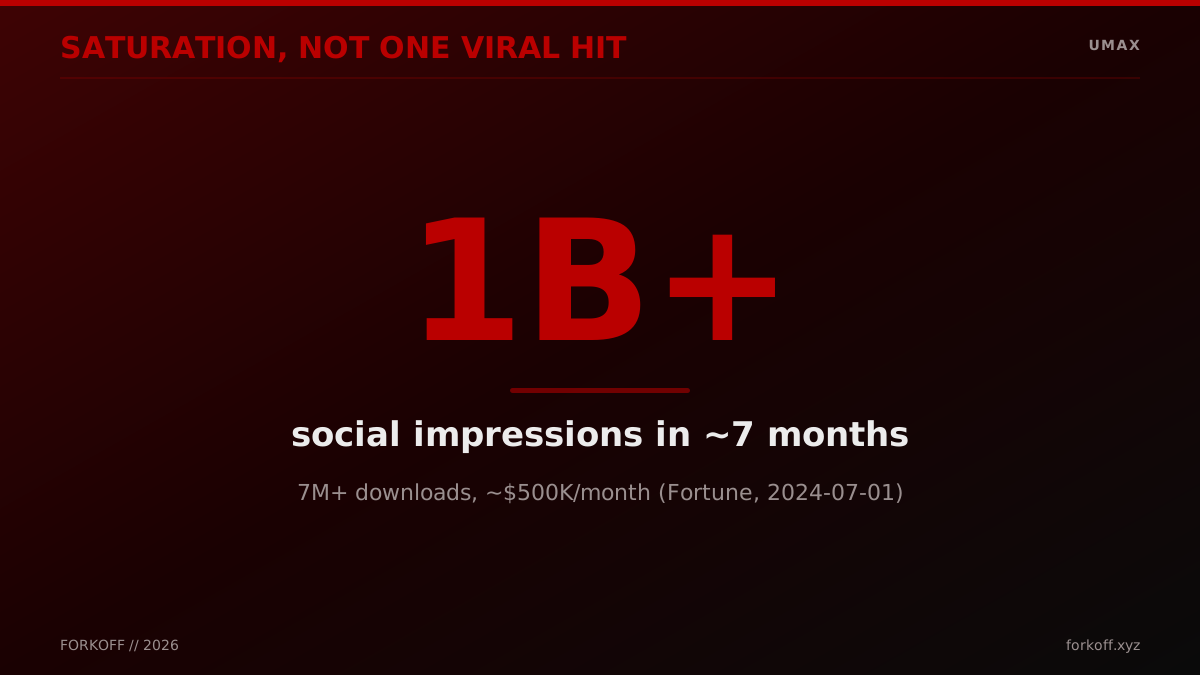
The honest case studies are not the 132M thread. They are three apps with documented numbers. Cal AI reached more than 50 million downloads and roughly 12 million dollars in ARR in under 12 months, per Starter Story and ProductMarketFit, and was later acquired by MyFitnessPal. Umax drove more than 1 billion cumulative social impressions in about 7 months and 7 million-plus downloads, at around 500,000 dollars a month, per Fortune (2024-07-01). RizzGPT reportedly paid two creators 50 dollars each and got millions of views overnight, with hundreds of thousands of downloads in 24 hours, per Whop. These are the receipts the SERP is missing.
Documented AI-UGC app engines, by the numbers
| App | Headline result | Model | Source |
|---|---|---|---|
| Cal AI | 50M-plus downloads, ~12M ARR <12mo | ~150-influencer per-install | Starter Story, ProductMarketFit |
| Umax | 1B-plus impressions ~7mo, 7M-plus downloads | Creator saturation, ~500K/mo | Fortune (2024-07-01) |
| RizzGPT | Millions of views overnight, 100K-plus installs/24h | Two creators, 50 dollars each | Whop |
| Single-clip high | ~31M views on one AI-UGC video | One clip, not an engine | Fastlane |
Cal AI, Umax, RizzGPT, and the single-video high-water mark, with sources.
Start with Cal AI, because it is the cleanest example of the engine done at scale. Founder Blake Anderson has talked openly on X about the model: roughly 150 influencers, paid on performance rather than flat fees. That last part is the lever. A flat-fee creator deal is a bet you place once. A per-install structure turns 150 creators into 150 ongoing incentives to keep posting clips that actually drive downloads. The app did not ride one viral video to 50 million downloads. It built a machine where the creators were paid to find the winning angle for it.
Umax is the same shape on a different vertical. More than a billion impressions in roughly seven months is not a single hit, it is saturation: enough clips, across enough creators, that the format itself became unavoidable on the for-you page of the target user. Seven million downloads at around 500,000 dollars a month, per Fortune, is what happens when the creative volume keeps compounding instead of spiking once and dying.
RizzGPT is the cheap-test end of the spectrum, and it is the most instructive for a founder with no budget. Two creators. Fifty dollars each. Millions of views overnight, per Whop, and hundreds of thousands of downloads inside 24 hours. The lesson is not "spend 100 dollars and go viral." The lesson is that the cost to find out whether a hook works is tiny. The expensive part comes later, when you decide to scale the winner. The seed is cheap on purpose.
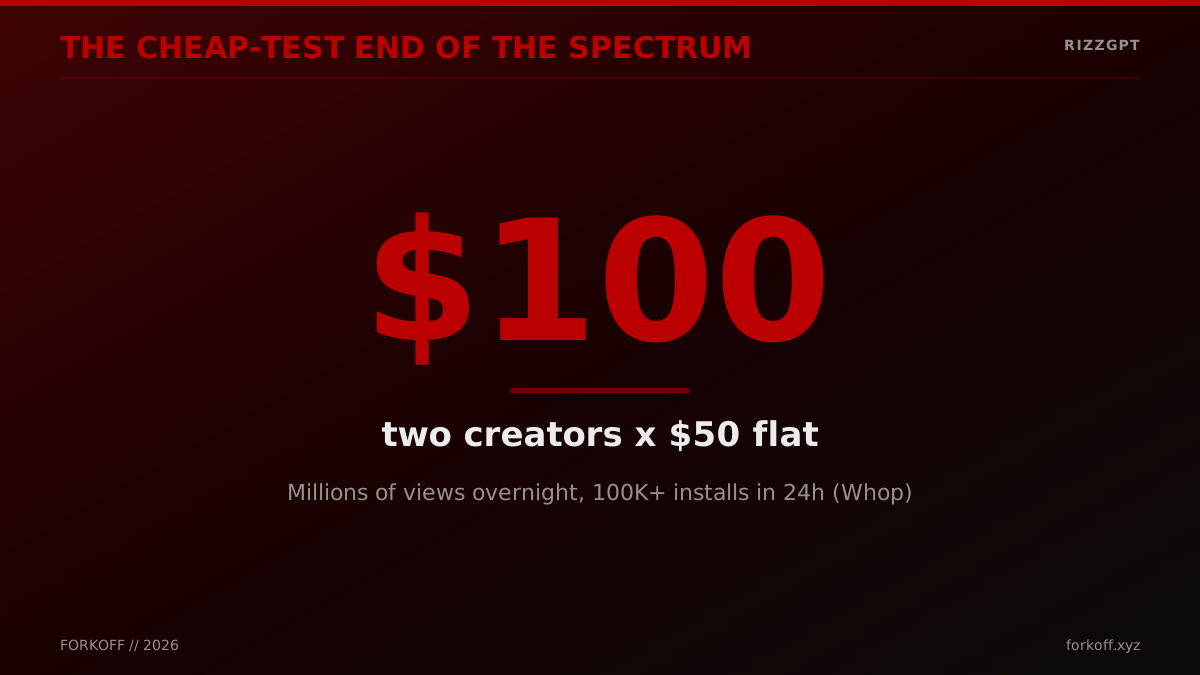
One more number to keep you honest about expectations: the single highest AI-UGC video on record sits around 31 million views, per Fastlane. So when a thread claims 132 million in 30 days from an unnamed app with a DM-gated breakdown, hold it against the documented ceiling of a single clip and the documented engines of the apps that actually scaled. The real cases are less dramatic and far more useful, because you can copy them.
Every ecom guru will tell you that you need UGC and that people buy from people and then you go look at what's actually converting in 2026 and it's AI-generated grandmothers selling vitamins to women who have never heard of ChatGPT and the conversion rates are 3-5x higher.
The AI-UGC production system, broken into its real parts
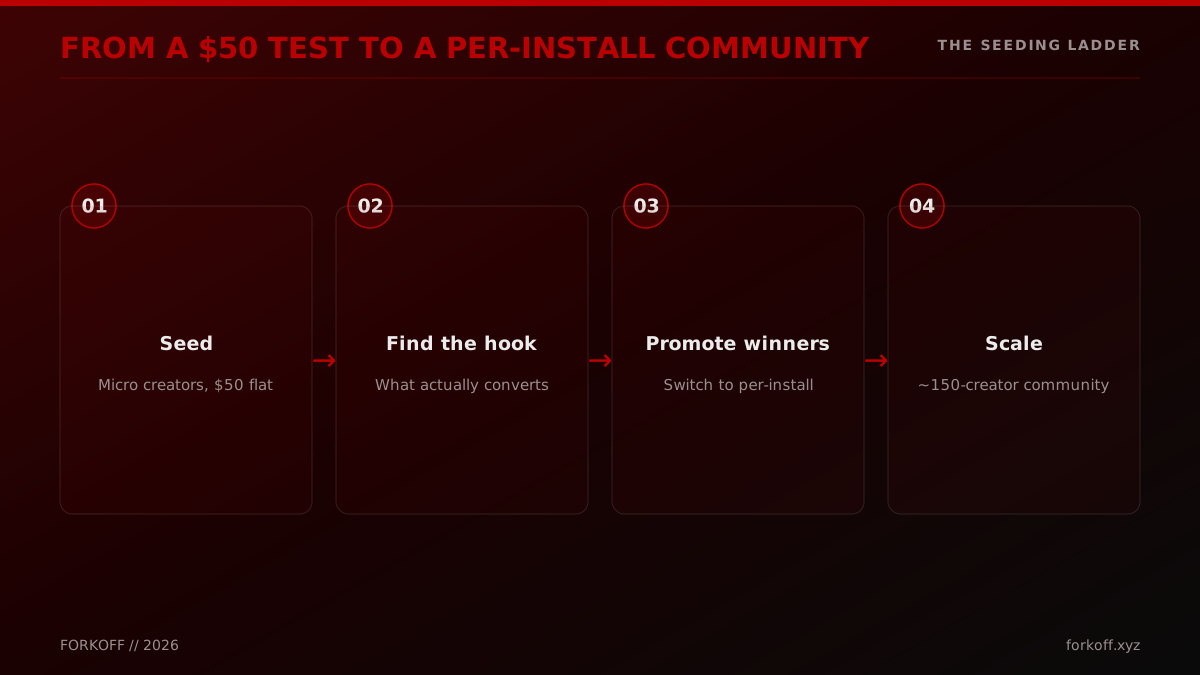
The production system has five parts, and the apps above ran all five. The cheap-to-test order is: seed paid micro and nano creators at tiny flat fees, build a per-install affiliate and performance-bonus community out of the ones who hit, mass-produce creative volume with AI-UGC tools, amplify the best organic clips with Spark Ads or whitelisting, and iterate the first three seconds of every clip relentlessly. None of these is optional, and the order matters: you do not fund a community before a 50-dollar test proves a hook, and you do not pour paid spend into a clip before it earns it organically.
Read that as a loop, not a checklist. You run it weekly, not once.
Seed cheap creators first
The first move is the RizzGPT move. Pay micro and nano creators a small flat fee, often in the 50-dollar range, to post a clip. You are not buying reach at this stage, you are buying at-bats. The goal is to find a hook and an angle that converts before you commit any real money. Most of these clips will do nothing. That is the point. You are running a cheap search for the format the algorithm and your target user respond to.
Operator noteSeed cheap before you fund anything. The 50-dollar creator test exists to find a hook that converts, not to buy reach.
Turn winners into a per-install community
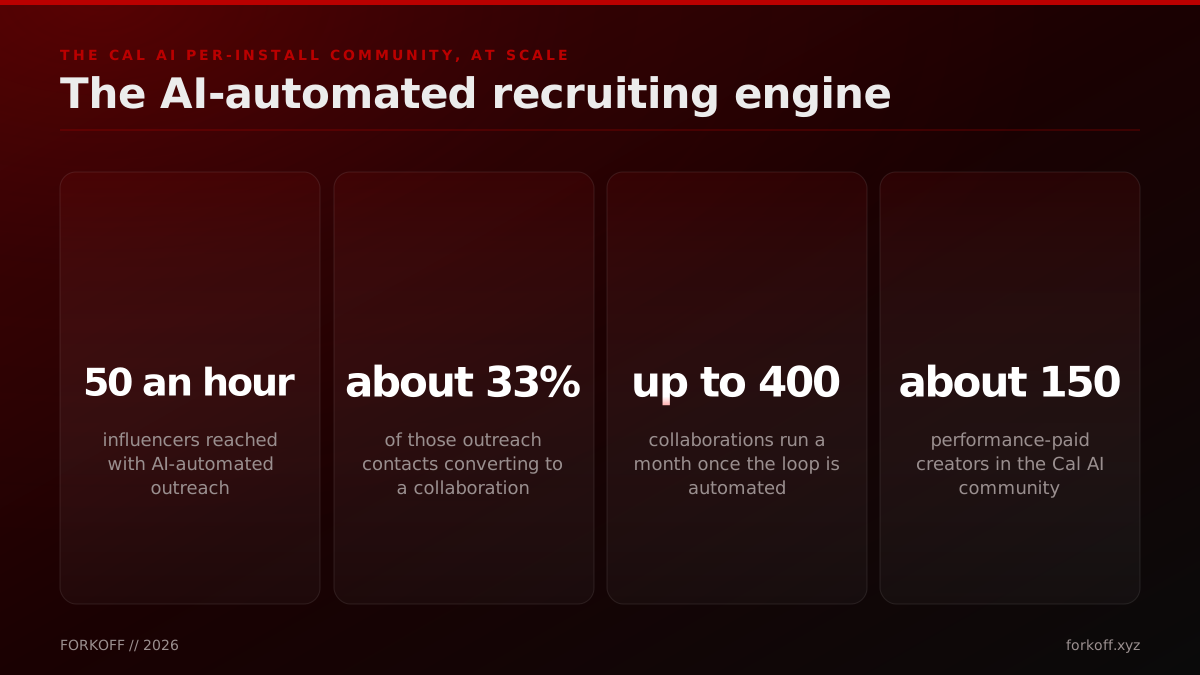
Once a creator and an angle hit, you change the payment structure. This is the Cal AI move: a community of creators paid on a per-install affiliate basis plus performance bonuses, not flat fees. Cal AI ran roughly 150 of them. The shift from flat fee to per-install does two things. It aligns the creator's incentive with your only metric that matters, and it lets you scale headcount without scaling fixed cost, because you only pay more when you get more installs. AI-automated outreach makes the recruiting tractable: operators report reaching around 50 influencers an hour, converting about 33 percent, and running up to 400 collaborations a month.
AI outreach: ~50 creators/hr, ~33% convert
AI-automated outreach at roughly 50 influencers per hour, around 33 percent conversion, up to 400 collabs a month
Source: AI-UGC operator reporting
Mass-produce creative volume
This is where AI-UGC tools earn their place. The constraint on the whole system is creative volume, because most clips fail and you need many to find a winner. Producing roughly 15 creatives a week by hand is hard. AI-UGC tools generate thousands of variants, which means you can test angles, hooks, and presenters at a volume that was previously only available to apps with a studio budget. The tool is not the strategy. The tool is what makes the volume affordable. One operator put the cost shift bluntly, on X:
I used to drop $4K to $8K per UGC campaign on creators, studios, and reshoots. This workflow just changed the math. Three AI tools. One pipeline. Zero cameras. , @spect3ral, on X
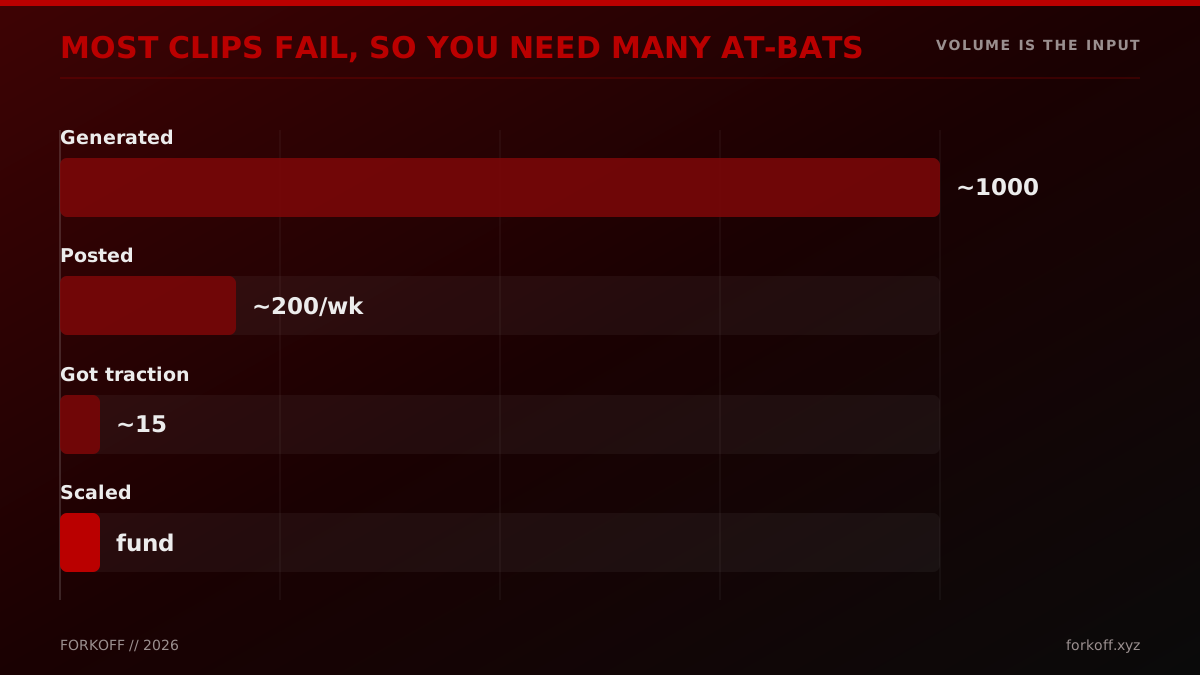
Operator noteYou are not buying one genius video. You are buying enough at-bats that a winner shows up, then funding that winner hard.
Amplify the winners with Spark Ads and whitelisting
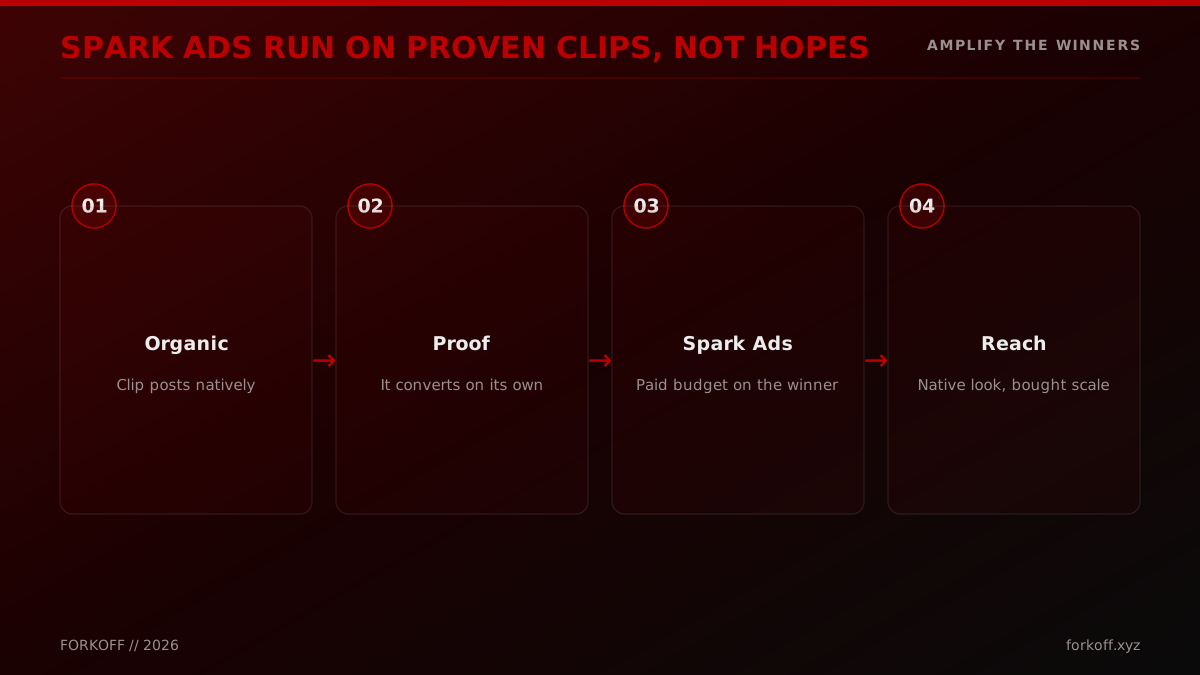
You do not run paid spend on a clip you hope will work. You run it on a clip that already worked organically. Spark Ads and creator whitelisting let you put paid budget behind an existing organic post, keeping the creator's handle and the authentic look while buying reach. The sequence is: clip goes out organically, clip proves it converts, then you amplify the proven clip. This is the opposite of the studio-ad model, where you produce one expensive asset and pray. Here, the market picks the winner first, then you fund it.
Iterate the first three seconds, forever
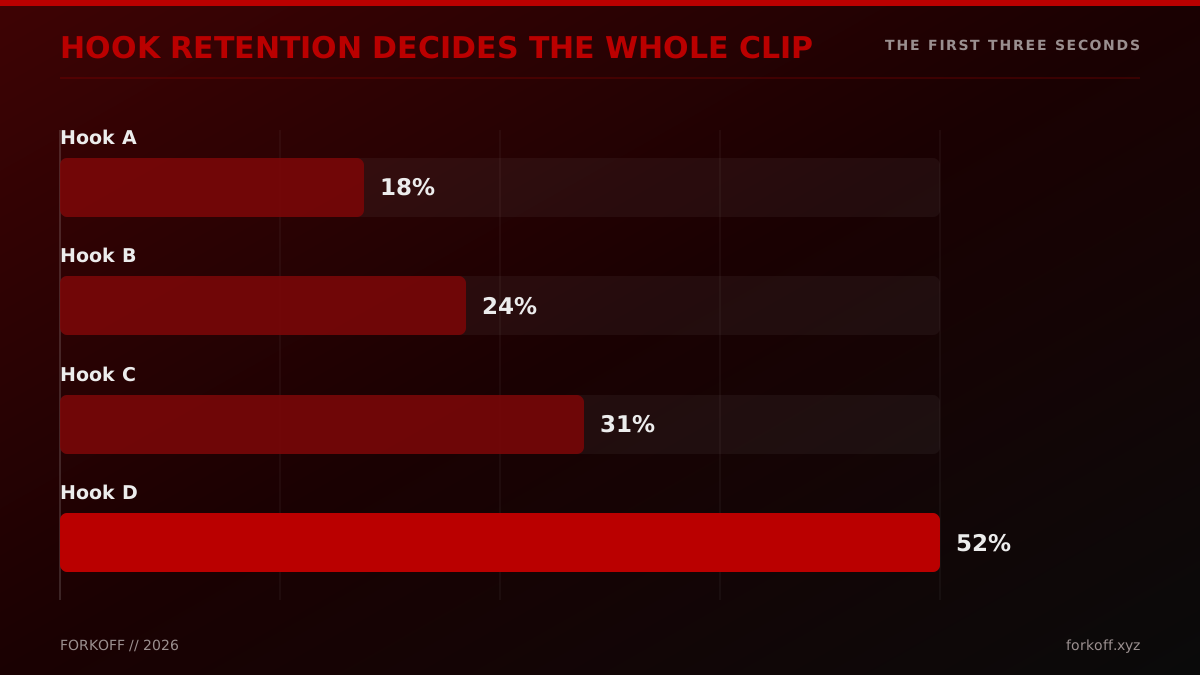
Every part above feeds one obsession: the hook. The first three seconds decide whether the clip gets watched or scrolled. The teams that win do not write one hook and move on. They test dozens of openings against the same body, because a 30 percent lift in three-second retention compounds through every downstream metric. The hook is the highest-leverage edit you can make, and it is the cheapest to change. One operator framed the whole content function as a system that does this automatically, on X:
This guy is pushing an app toward $100,000 MRR and his entire content marketing is run by an AI agent that produces the ads itself and scales them itself too. He doesn't need a creative team, editors or live UGC actors. , @theazaelov, on X
How to Make Viral AI UGC for TikTok Ads (Step by Step)
Youri van Hofwegen
A step-by-step walkthrough of producing viral AI-UGC for TikTok ads, the production layer this post describes.
There is a clear priority order to all of this, and a creator on X laid it out almost exactly the way we run it.
WANT TO SCALE YOUR APP? 3 Ways to solve it: 1. Organic Growth ASO, SEO, and UGC make viral formats competitors already proved work. 2. Pay creators OR AI UGC If you don't have time to make content yourself. 3. Paid ads comes last because you need winning creatives first. , @adel_ljaljic, on X
Paid comes last because you need a winning creative before you fund reach. That is the entire reason the seed-cheap-first order matters. Organic distribution is its own discipline too, whether you are launching beyond Product Hunt or pushing for the Hacker News front page.
Why it works: the delivery format, not the maker
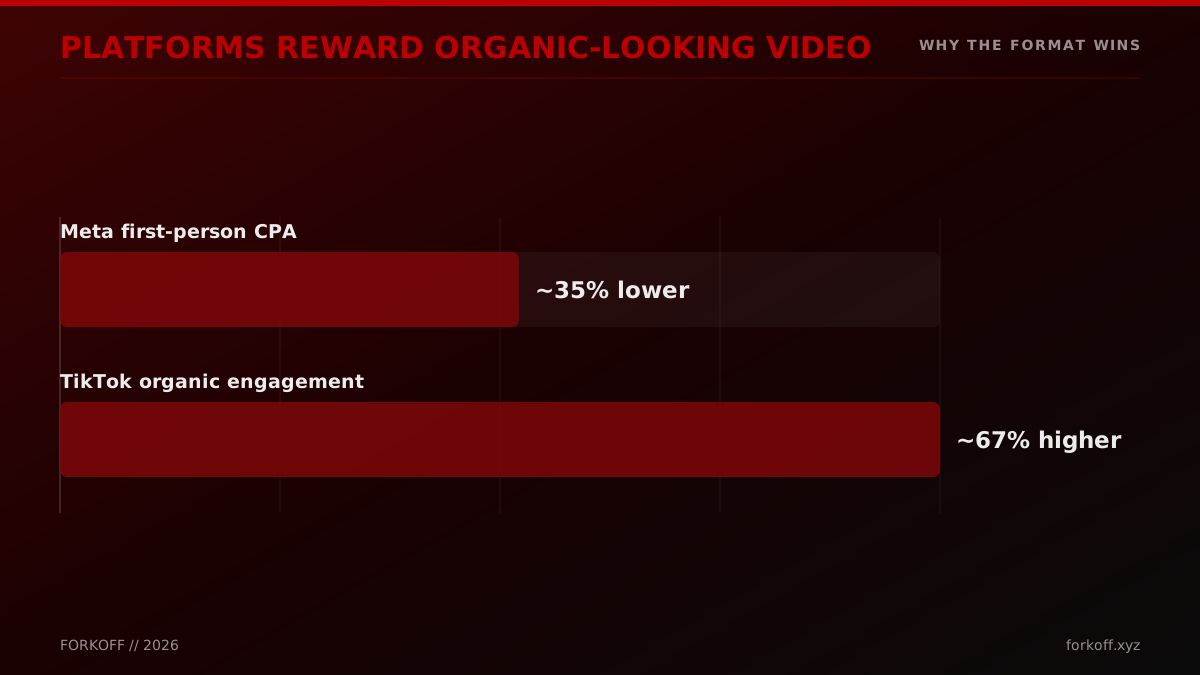
The reason this engine beats studio advertising is not novelty, it is format. The video looks like a real person talking, not a brand presenting. Meta has reported that first-person video can cut cost per acquisition by roughly 35 percent, and TikTok creative data shows content that mimics organic posts can see around 67 percent higher engagement. Those two numbers explain the whole category. The platform rewards content that does not look like an ad, and the user trusts a face over a logo. AI-UGC works because it produces that first-person, organic-looking format at a volume real creators cannot match on cost.
First-person video cuts CPA ~35%
First-person video can reduce CPA by roughly 35 percent
Source: Meta advertising performance reporting
This is also why the AI-versus-real debate is mostly a distraction. The data is about delivery format, not who held the camera. A first-person clip that looks organic outperforms a polished brand ad whether a creator filmed it or a model generated it. What decides the mix is cost per install, not ideology. On a low-consideration impulse app, AI-UGC volume often wins on pure economics. On a high-trust, high-price product, a real creator's credibility can still carry more weight. You let the install number pick.
Operator noteStop asking AI-versus-real. The data is about delivery format, first-person and organic, not who held the camera.
There is a harder claim circulating too, that AI delivery is not just cheaper but converting better in some categories. One operator put it in the most quotable form possible, and while the specific multiple is anecdotal, the direction matches what the format data predicts, on X:
Here's how a 100% AI video looks with my V3 AI UGC the fact that i'm able to clone a video in 15 mins and 99% of people scrolling past this won't even realize what just happened is the craziest part. , @0xROAS, on X
The mechanism underneath all of this is straightforward. The for-you algorithms optimize for watch time and completion. First-person, organic-looking video earns more of both. More watch time means more free distribution, which means more clips at the top of the funnel, which means more at-bats to find a winner, which means a lower blended cost per install. The format is the wedge that opens the whole loop.
the lazy app playbook: $0 to $10K MRR with 1 ad, $6K in free tiktok credits, and 0 ugc creators
What kills it: slop, survivorship bias, and one-and-done
The fastest way to waste this playbook is to generate and post without craft. The contrarian read on AI-UGC is correct: most of it looks like garbage because most of it is volume with no thought. The second killer is survivorship bias, copying the one app that went viral while ignoring the hundreds that ran the identical playbook and got nothing. The third is treating creative as a one-time deliverable instead of a weekly test loop. The format does not rescue a campaign with no hook iteration, no offer, and no install economics behind it. AI lowers the cost of volume, it does not lower the bar for quality.
honestly? most AI UGC right now looks like garbage and i'm not even talking about the model seedance 2.0 is insane, we all know that the problem is everyone's just generating and posting no thinking. no craft. just vibes and a prompt
The slop problem is real and worth taking seriously, because it is the most common failure I see. The fix is not a better model. The fix is craft on top of the model. One operator put the responsibility exactly where it belongs.
If your AI UGC looks fake, stop blaming the AI. Blame your prompt. Elite prompt = Elite result , @itsyusev, on X
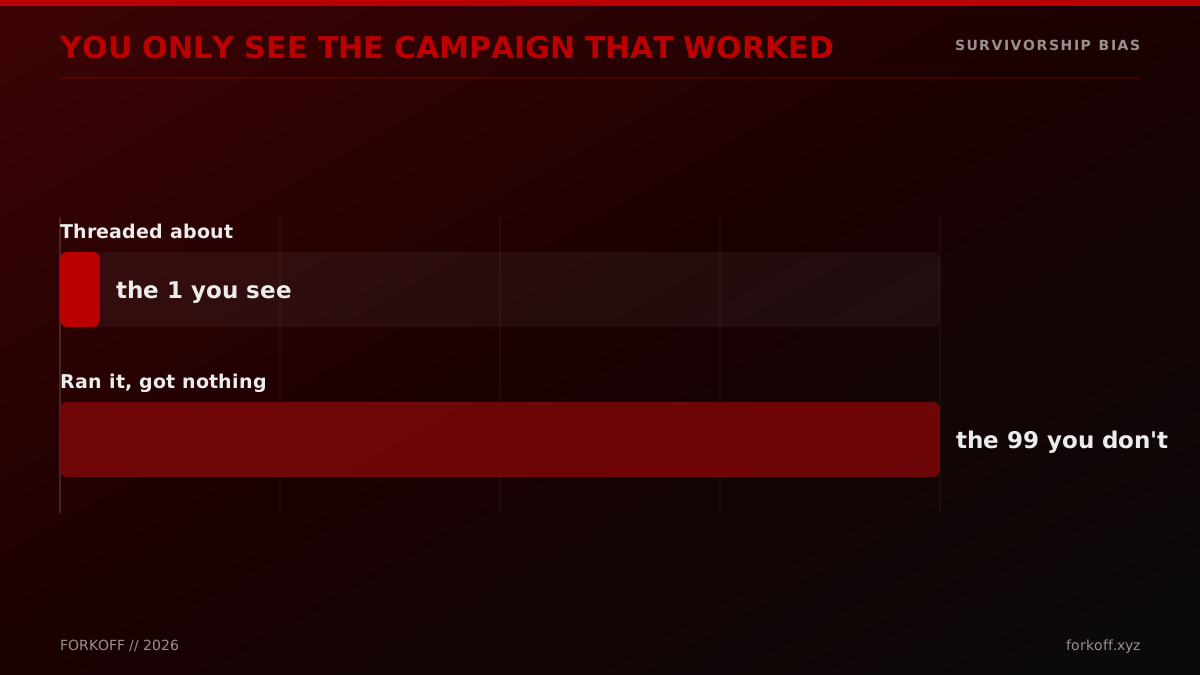
Now the survivorship problem, which is the one that costs founders the most money. When you read a thread about an app that hit millions of views, you are seeing the one that worked. You are not seeing the run of identical campaigns that produced nothing, because nobody threads about those. The 132M-views claim is survivorship bias weaponized into a lead magnet: an unnamed app, a DM-gated breakdown, and a follower count that does not match the result. The documented cases are useful precisely because they are named and citable. Build on Cal AI's structure, not on an anonymous screenshot.
The one-and-done failure is the quietest. A founder commissions a batch of AI-UGC clips, posts them, sees mediocre numbers, and concludes the channel does not work. What actually happened is they ran one round of a loop that only pays off on repetition. The engine that drove Cal AI and Umax was weekly creative volume against constant hook testing, sustained for months, not a single drop. If you are not prepared to run the loop, the channel will look broken when it is just unfinished.
The spend ladder, from test to scale
| Stage | Typical input | What you are buying | Failure mode |
|---|---|---|---|
| Seed | 50 dollars per micro creator | Hook discovery, at-bats | Funding before a hook hits |
| Community | Per-install affiliate + bonus | Aligned ongoing volume | Flat fees that kill incentive |
| Volume | ~15 creatives per week | Enough shots to find winners | One-and-done drops |
| Amplify | Spark Ads on proven clips | Paid reach on winners only | Boosting unproven creative |
From a 50-dollar creator seed to a funded per-install community.
How FORKOFF runs this as outcome-priced execution
Everything above is a system, and systems are easy to describe and hard to run. The reason the SERP is full of tool homepages is that the tools sell you the generator and leave you to build the engine yourself: the creator seeding, the per-install community, the weekly volume, the amplification, the hook testing. That is the work. FORKOFF runs that work as an outcome-priced service. You are not buying another subscription to a clip generator. You are buying the result and the team that ships it, priced on installs, not on seats.
This is the structural reason a case-study approach beats a tool listicle for this query. A SaaS tool cannot sell you the engine, because the engine is labor and judgment, not software. We have processed more than 5 billion views through our clipping network, which means the seeding, the volume, and the amplification are not theory for us, they are the daily operation. When we take on an app, we run the same five-part loop: seed cheap to find the hook, build the per-install community out of the winners, produce the creative volume, amplify the proven clips with Spark Ads and whitelisting, and iterate the first three seconds until the cost per install drops where it needs to be.
The honest version of the pitch is the same as the honest version of this whole post. There is no 132 million views in 30 days guarantee, because that number is not real. What is real is a documented, repeatable engine that drove Cal AI past 50 million downloads, Umax past a billion impressions, and RizzGPT to hundreds of thousands of installs in a day off a 100-dollar seed. We build that engine for your app and price it on the outcome. If you want the system explained, this post is the explanation. If you want it built, that is the service.
The verdict
Ignore the viral 132M-views claim, it is an unverified hook from a small account behind a DM gate. The signal it points at is real, and the documented cases prove it: AI-UGC video is the cheapest way for an app with no audience to find installs, because it produces first-person, organic-looking creative at a volume real creators cannot match on cost. The playbook is five parts run as a weekly loop: seed cheap creators, build a per-install community, mass-produce volume, amplify the winners, and obsess over the first three seconds. The format wins because Meta and TikTok reward it, around 35 percent better CPA on first-person video and around 67 percent higher engagement on organic-looking content. It dies on slop, survivorship bias, and one-and-done thinking.
If you have an app and no creative engine, the question is not whether AI-UGC works. The documented numbers settle that. The question is whether you can run the loop hard enough and long enough to find your winner. If you would rather buy installs than build the machine, that is exactly what we do.


![How to Make a Launch Go Viral on X: The 5-Lever Playbook [2026]](/blog/covers/how-to-make-launch-go-viral-on-x-2026-cover.jpg)