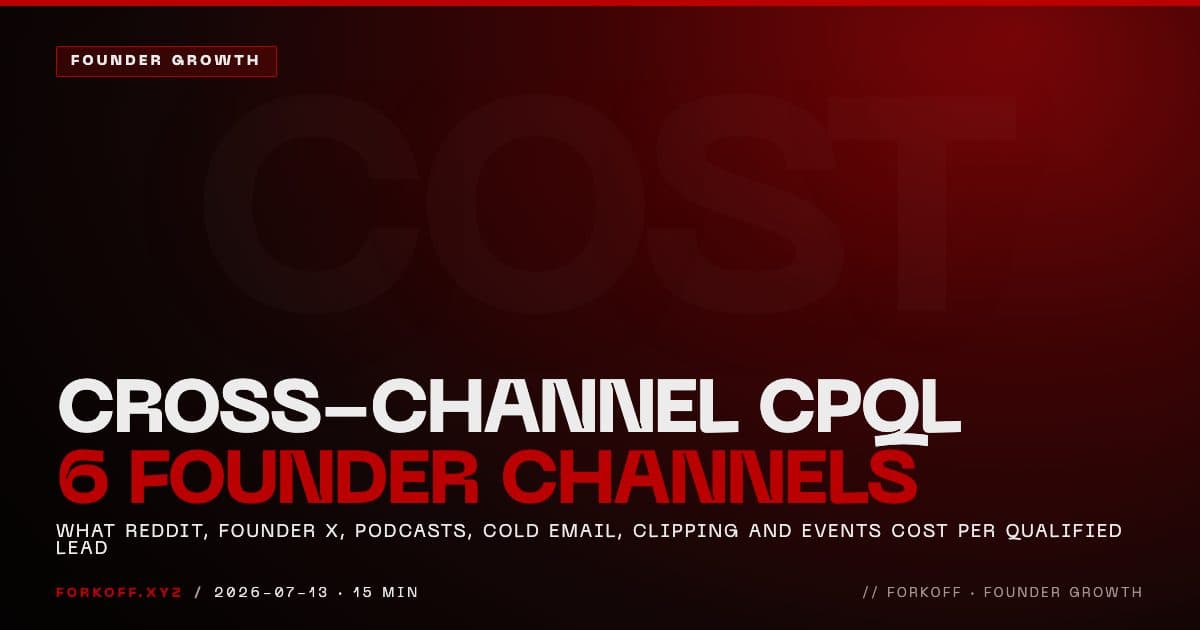
Cost per qualified lead, CPQL, is the total cost of a channel divided by the number of qualified leads it produces, where a qualified lead is an ICP-fit buyer who had a real conversation or booked a call, not a form fill or a click. It is the one distribution metric that survives contact with a profit and loss statement, because impressions, clicks, and views do not pay you, and qualified conversations do. Across the six channels a founder actually runs, Reddit, founder-led X, podcast guesting, cold email, short-form clipping, and event sponsorship, the directional CPQL spans roughly 30x, from about 60 dollars on organic Reddit to 1,974 dollars on a conference booth. This post lays out the whole table, sourced where the numbers are public and framed as directional operator estimates where they are ours, and then makes the argument the benchmark aggregators skip: the single dollar figure is the least useful part of CPQL, because it hides what you are actually paying with, cash or operator hours, and which motion each channel fits.
The 90-second version
Cost per qualified lead, CPQL, is total channel spend divided by qualified leads, where a qualified lead means an ICP-fit buyer who had a real conversation or booked a call. Across the six channels founders actually run, directional CPQL spans roughly 30x, from about 60 dollars on organic Reddit to 1,974 dollars on a conference booth. But the single number hides the real decision, which is what you pay WITH. Organic Reddit and founder-led X have the lowest cash CPQL and the highest time cost, so they are cheap only if operator hours are your loose resource. Cold email, podcasts, and events cost more cash but ramp faster and, for events, buy the highest intent. Clipping is the trap row: it is an awareness channel measured in cost per qualified view, not CPQL, so forcing a last-click CPQL onto it mis-measures it. The founders who get distribution right rank channels by CPQL adjusted for their motion and their scarce resource, then stack two or three in sequence so paid spend only ever chases demand that organic already proved.
A quick word on where these numbers come from, because a comparison like this is only worth reading if every figure is auditable. The external benchmarks are cited inline: First Page Sage's 2026 cost-per-lead and CAC-by-channel studies, Instantly's 2026 cold email benchmarks, Content Allies' podcast conversion research, and a 2026 B2B SaaS CPL synthesis. The FORKOFF figures, the event CPQL cohort and the cold-outbound and podcast ranges, come from running these channels for founders, framed as directional, not guaranteed. Treat every number as a range, because your ICP, your offer, and your skill will move it. Read the operator notes as what we see in the field, not a universal law.
What is CPQL, and why should founders rank channels by it?
CPQL is the right unit because it is the only one that ties a channel directly to pipeline. Cost per lead counts every raw lead regardless of fit, cost per click counts attention, and cost per mille counts impressions, but none of those tells you whether the channel produced a conversation with a buyer who can actually say yes. CPQL divides the full cost of a channel by the number of qualified leads, an ICP-fit buyer who engaged and is willing to talk, so it forces two honest questions at once: what did this channel really cost, including time, and how many of its leads were worth having. Rank channels on that, and the vanity numbers stop steering the budget.
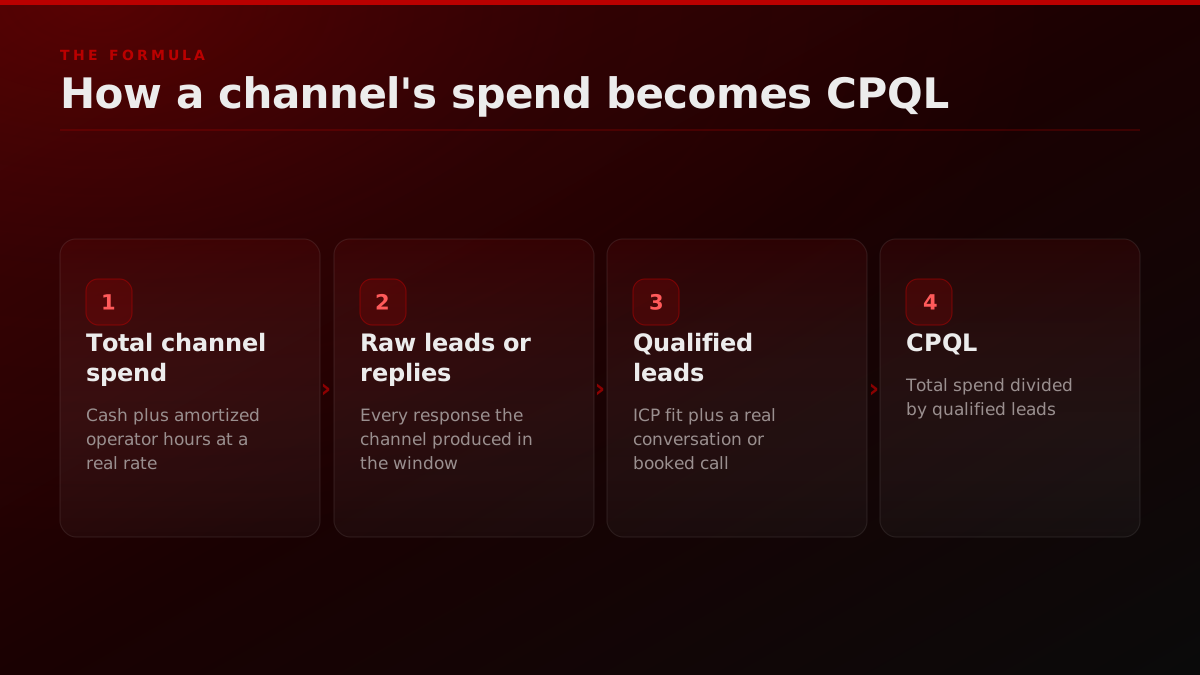
The reason this matters is that the two most common ways founders fool themselves both live inside the CPQL formula. The first is counting operator time as free, which makes organic channels look costless when they are not; an hour you spend writing Reddit answers is an hour you did not spend on product or sales, and it belongs in the numerator at a real rate. The second is calling a raw reply or a form fill a qualified lead, which inflates the denominator with people who will never buy. Get either wrong and your CPQL is fiction. The operators who take this seriously say it plainly.
Looking at a current campaign with a $98 eCPM that is crushing it's cost per qualified lead goal. IT'S. NOT. ABOUT. CPM.
That instinct, to reject impression and click metrics in favor of qualified-lead economics, is not a fringe view among people who actually run spend. It is the consensus among operators who have watched a great-looking dashboard produce no revenue. The same discipline shows up on the buy side of paid too, where the teams winning are the ones optimizing their systems on qualified leads rather than raw volume.
Launched Meta ads from scratch for this 9figure SaaS biz on February 3. Hit a profitable Cost Per Qualified Lead on February 8.
Cameron England
@iamcamengland
If you're not tracking these 4 metrics weekly, you're gambling: 1. Cost per qualified lead 2. Show rate percentage (goal: 70%+) 3. Close rate (goal: 30-40%) 4. Client churn rate (goal: under 10%) I see agency owners spending $10k/month on ads who can't tell me any of these
The cheapest headline lead cost often hides the most expensive qualified lead
A 2026 B2B SaaS benchmark synthesis puts the average cost per qualified lead near 198 dollars blended, but the more useful finding is the multiplier: channels with the lowest headline CPL, organic social and content, often carry the highest CPL-to-cost-per-SQL multiplier, roughly 10 to 15x, because lead quality is mixed, while higher-CPL channels like ABM and SDR outbound run a 3 to 5x multiplier because leads arrive pre-qualified. The takeaway is not to chase the lowest headline number. Chase the lowest cost per genuinely qualified lead relative to your deal size, and treat impressions, clicks, and views as inputs, never as the scoreboard.
Source: GrowthSpree, B2B SaaS CPL Benchmarks by Channel, 2026
The uncomfortable corollary is that a channel can have a low CPQL and still be a bad investment if the leads convert poorly downstream, which is why CPQL should always be read next to conversion rate and deal size, never alone. A 200 dollar qualified lead that closes at 30 percent on a 20,000 dollar contract is a bargain; a 60 dollar qualified lead that closes at 2 percent on a 500 dollar contract is a trap. This is the same logic we apply to AI agency pricing and unit economics: the headline cost only means something once you attach it to what the lead is worth. Keep that caveat in mind through the whole table, because directional CPQL ranges are a starting point for your own arithmetic, not a substitute for it.
Before splitting CPQL by channel, it helps to anchor on a single blended figure. A 2026 B2B SaaS synthesis puts the average cost per qualified lead near 198 dollars blended, which is a useful reference precisely because it is an average almost no channel actually hits. Paid channels pull the blend up, organic pulls it down, and the headline hides both. That is the core problem with any market-average CPQL: it describes a portfolio you may not be running, at a mix you did not choose. The number that should drive your decisions is not the market average, it is your own CPQL per channel, computed with operator time priced honestly, because that is the only figure that tells you where to put the next hour or the next dollar. Use the blended benchmark to sanity-check that you are in the right universe, then throw it away and work from your own channel-level numbers.
CPL, CPQL, CPA and CAC: the four numbers people confuse, and how to compute the one that matters
What is cost per lead? Spend on a channel divided by the leads it produced, where a lead is anyone who left contact details. It is the cheapest number to compute and the least useful, because it counts a newsletter signup and a booked demo as the same thing.
What is cost per qualified lead, and why does this post use it? The same spend divided by only the leads that met a written qualification bar: right company size, right role, a stated problem you solve. It is the number this post benchmarks across six channels, and it is the first number that lets you compare a Reddit thread with a paid search campaign honestly, because both are judged on the same definition of a lead.
How do CPA and CAC differ? Cost per acquisition divides spend by a specific conversion event, usually a signup or a trial; customer acquisition cost divides total sales and marketing spend by new paying customers. CAC is the board number, CPQL is the channel operator's number, and a channel with a low CPQL and a high CAC is telling you the qualification bar is wrong.
How to calculate your own CPQL. Write the qualification bar down before you look at any data. Add up every attributable cost on the channel, including the hours of the founder who wrote the posts, not just the ad spend. Count only the leads that passed the bar in the same window. Review it monthly, and when a channel's CPQL moves by more than half, look for a change in the bar before you look for a change in the channel.
What is a good B2B CPQL? There is no universal figure; the useful comparison is across your own channels over the same quarter. The benchmarks in this post are ranges observed across the founder-led programmes FORKOFF runs, and they are meant to tell you which of your channels is out of line, not what to promise a board.
For the channel this post finds cheapest at the qualified stage, Reddit lead generation for B2B without getting banned is the operating guide.
Reviewed 2026-09-22 against the live search results for this topic: the questions people ask about it, and the pages that rank for it, are reflected in the section above.
What do six founder channels cost per qualified lead?
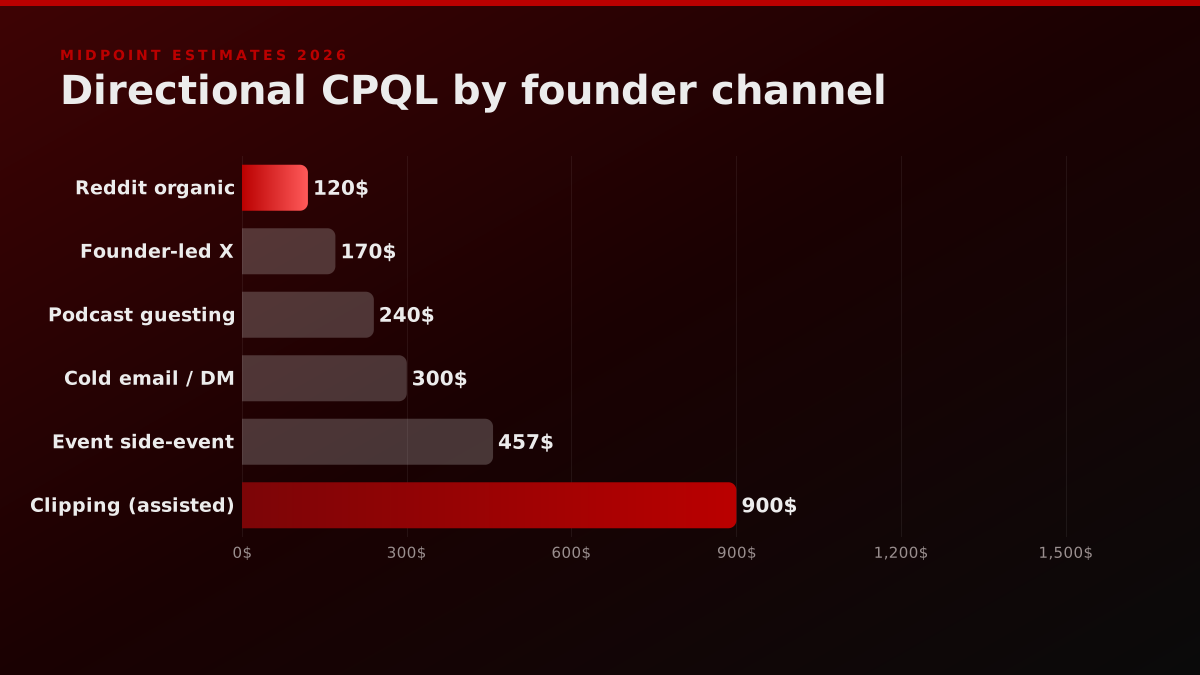
Here is the whole table in one place. Across the six channels, directional CPQL runs from roughly 60 dollars per qualified lead at the organic-Reddit end to 1,974 dollars at the conference-booth end, with founder-led X, podcasts, cold email, and event side events filling the middle, and clipping sitting outside the CPQL frame entirely because it is an awareness channel. The numbers below are FORKOFF founder-funnel estimates where they are ours and sourced benchmarks where they are public, and they are directional by design.
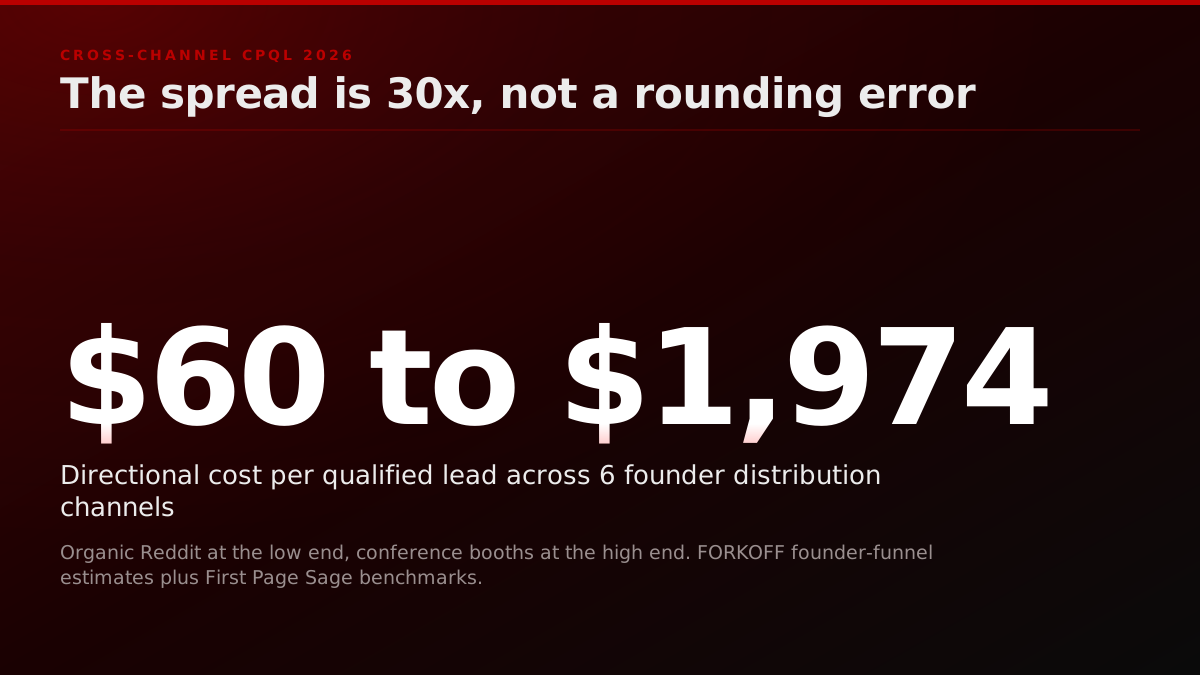
The single most important thing the table encodes is that the channels do not just differ in price, they differ in what you pay with and how fast they ramp. Read down the "pays mainly with" column and the real structure appears: two channels priced in operator time, two priced in a mix of time and cash, and two priced mostly in cash. That is the axis that actually governs your decision, and it is the one the generic benchmark tables leave out.
Directional CPQL across 6 founder distribution channels (2026)
| Channel | Pays mainly with | Directional CPQL | Compounds? | Best-fit founder motion |
|---|---|---|---|---|
| Reddit marketing (organic) | Operator time | 60 to 180 dollars | Yes, via search and AI answers | Technical and SaaS founders |
| Founder-led X content | Operator time, front-loaded | 90 to 250 dollars | Yes, audience plus search | Founder-led GTM |
| Podcast guesting | Time plus light cash | 120 to 350 dollars | Yes, 12 to 24 month asset tail | 5K-plus ACV, authority-led |
| Cold email and DM outreach | Cash tooling plus time | 150 to 450 dollars | No, per send | Sub-5K ACV, transactional |
| Short-form clipping | Cash | CPQV, not CPQL | Partly, brand plus search lift | Awareness and reach at scale |
| Event side-event sponsorship | Cash | 435 to 1,974 dollars by surface | Partly, 60-day brand lift | High-ACV, in-person close |
External benchmarks tell the same story from a different angle, and cross-referencing them keeps the FORKOFF numbers honest. First Page Sage's 2026 cost-per-lead study puts organic search near 31 dollars and email near 53 dollars per lead at the cheap end, and trade shows at about 811 dollars at the expensive end, while its separate CAC-by-channel study prices podcasts at 1,472 dollars and account-based marketing at 4,664 dollars to acquire a customer. HubSpot's CPL and CAC benchmark work lands in the same territory. None of these are founder-channel framings, but they bracket our ranges and confirm the shape: organic cheap on cash, events and ABM expensive.
The six channels against external 2026 benchmarks
| Channel family | First Page Sage B2B CAC 2026 | Benchmark CPL | FORKOFF or industry figure |
|---|---|---|---|
| Organic search and content | 647 dollars (thought-leadership SEO) | 31 dollars CPL | Cost is operator time, not cash |
| Email and cold outbound | 510 email, 1,980 SDR | 53 dollars CPL | 3.43 percent reply, Instantly 2026 |
| Podcasts and speaking | 1,472 podcast, 518 speaking | Not reported | 10 percent guest-to-client, Content Allies |
| Social and founder content | 658 dollars | Not reported | Directional, compounds with audience |
| Trade shows and events | 1,390 dollars | 811 dollars CPL | 457 side-event vs 1,974 booth CPQL |
| ABM and paid outbound | 4,664 dollars (ABM) | Not reported | Highest CAC channel in the study |
Cost per lead by channel spans an order of magnitude before you even reach qualification
First Page Sage's 2026 cost-per-lead benchmarks, built on data collected from January 2022 through June 2025, put organic search and email at the cheap end, roughly 31 dollars per lead for SEO and 53 dollars for email marketing, with Google Ads around 70 dollars and LinkedIn around 110 dollars. Trade shows and in-person events sit at the far end at about 811 dollars per lead, the most expensive B2B channel in the set. That is a more than 25x spread on raw cost per lead alone, before you filter for which of those leads is actually qualified, which is the step that makes the honest comparison CPQL rather than CPL.
Source: First Page Sage, Average Cost Per Lead by Industry and Channel, 2026
Independent benchmark sets converge on the same shape from different directions, which is the real reason to trust the ordering even while you distrust any single number. LeadHaste's 2026 cost-per-qualified-lead benchmarks and standard B2B cost-per-lead formulas both place organic and referral channels well below paid search and events, exactly the ordering the FORKOFF ranges produce. The value of cross-referencing four or five sources is not precision, because every one of them defines a lead slightly differently, it is direction: when vendor benchmarks, agency data, and our own founder-funnel numbers all agree that an event booth costs roughly ten times what a Reddit reply costs in cash, you can build a plan on that ordering while treating any single dollar figure as approximate. Build the channel plan on the ranking, then refine the exact numbers with your own funnel data as it accrues.
It also helps to hear the reality from founders rather than benchmarks, because the aggregate numbers wash out how uneven channel results actually are in practice.
50 Founders Share How They Got Their First Customers
Y Combinator
Fifty founders describe how they actually got their first customers, a useful reality check that the winning channel is the one that fit their motion, not the one with the lowest headline cost.
How the six channels group: organic, outbound, and paid presence
The six channels collapse cleanly into three archetypes, and the archetype tells you more about affordability than the raw dollar figure does. The organic archetype, Reddit and founder-led X, is priced in operator time and compounds strongly. The outbound archetype, cold email and podcast guesting, is priced in a mix of time and cash and ramps faster. The paid-presence archetype, events and clipping, is priced in cash and buys either high intent, in the case of events, or high reach, in the case of clipping. Which archetype you can afford depends less on your budget than on whether cash or hours is your loose resource.
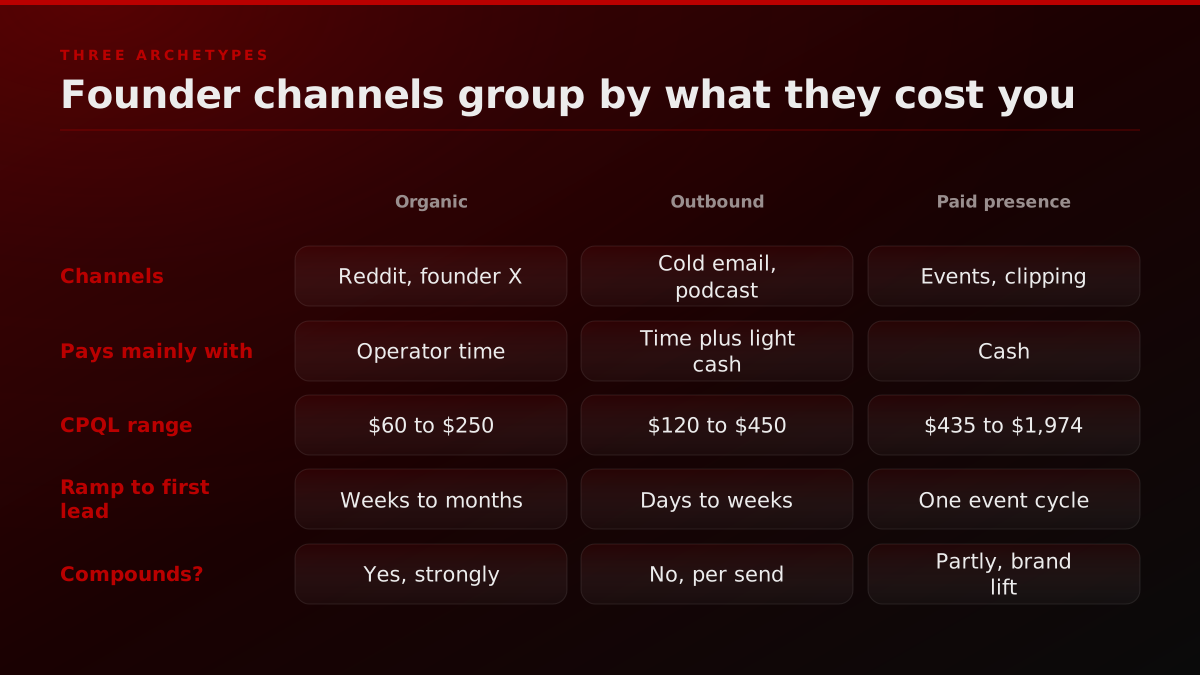
This grouping is why the common founder question, what is the cheapest channel, has no channel-agnostic answer. The cheapest archetype for a bootstrapped technical founder with time and deep product knowledge is organic, where their expertise is the currency and cash outlay is near zero. The cheapest archetype for a funded team with budget but no spare operator hours is paid presence or outbound, where dollars convert to qualified conversations fast. The mistake is importing someone else's answer: a funded founder grinding Reddit for months is burning the wrong resource, and a bootstrapped founder buying booth space is doing the same in the other direction.
Operator noteEvery CPQL is two numbers, cash and hours. The cheapest channel spends the resource you have most of, not the lowest dollar figure., FORKOFF founder-funnel desk
Reddit and founder-led X: the lowest CPQL, paid in operator hours
Reddit marketing and founder-led X content are the two lowest-cash-CPQL channels, both in the roughly 60 to 250 dollar range directionally, and both charge their real cost in operator hours and skill rather than dollars. Reddit sources qualified leads by showing up helpfully in the threads where your buyers already research a problem, at near-zero media cost, and it compounds because a good answer keeps ranking in search and increasingly gets pulled into AI answers. Founder-led X works similarly: the marginal cost of a post is zero once the audience exists, but building that audience is a front-loaded time investment measured in months. Both are cheap on cash and expensive on patience.
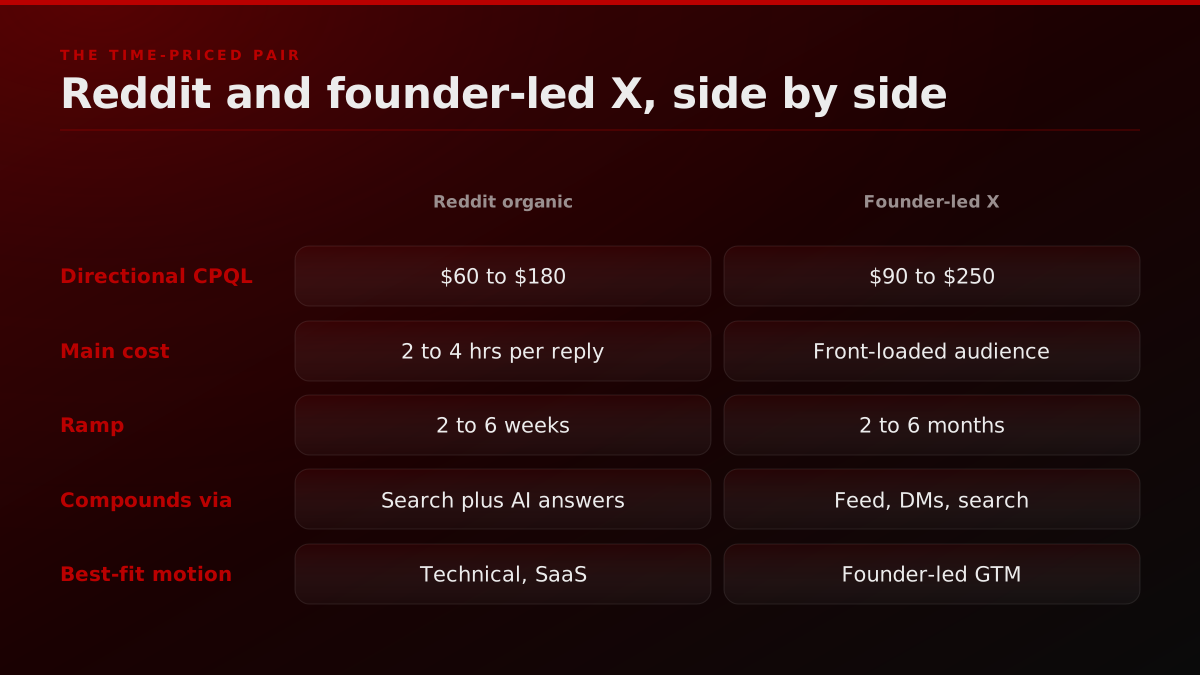
The trap with both channels is treating their low cash cost as low total cost. An hour spent writing a genuinely useful Reddit comment or a sharp X thread is a real cost, and if you price your time at anything like a market rate, these channels are not free, they are time-financed. What makes them worth it is the compounding: unlike a paid click that vanishes when the budget stops, an organic asset keeps sourcing qualified leads for months, so the CPQL falls over time as the same fixed effort keeps paying out. We walk through the Reddit mechanics in depth in the Reddit versus LinkedIn distribution breakdown and the broader Reddit marketing strategy guide, and the founder-content mechanics in the Founder Funnel strategy. The operator who understands this stops asking which channel is cheapest per click.
There is a second-order benefit to the time-priced channels that never shows up in a CPQL cell. The operator hours you spend are not pure cost, because writing a genuinely useful Reddit answer or a sharp X thread forces you to articulate the problem and the solution in your buyer's own language, which sharpens the messaging on every other channel too. A founder who has answered a hundred real questions in public knows exactly which objections to preempt in a cold email and which framing lands on a podcast, so the time invested in organic quietly lowers the CPQL of the paid channels downstream. That spillover is real and it is why the sequencing later in this post starts with organic rather than treating it as the cheap option of last resort.
Common mistake in B2B: turning off a channel because there are a large share of unqualified leads. All that matters is you have enough good ones to justify the cost per qualified lead.
On full customer acquisition cost, the channel order shifts and the spread widens
First Page Sage's separate 2026 CAC-by-channel study, drawn from about 120 firms over December 2021 to November 2024, prices the full cost to acquire a customer, not just a lead. Thought-leadership SEO lands near 647 dollars, email marketing at 510, public speaking at 518, podcasts at 1,472, industry trade shows at 1,390, LinkedIn ads at 982, SDR-driven outbound at 1,980, and account-based marketing at 4,664, the single most expensive channel in the study. Lead cost and customer cost do not rank the same, so a channel with a cheap CPQL can still carry an expensive CAC if the leads convert poorly, which is exactly why founders should track CPQL and conversion together, not either alone.
Source: First Page Sage, CAC by Marketing Channel, 2026
Founder-led X deserves one specific caution: it is the channel where the vanity-metric trap is strongest, because the platform surfaces views and likes so prominently that it is easy to optimize for applause instead of pipeline. The discipline is the same as everywhere else, count qualified replies and booked calls, not impressions, and treat a viral post with zero fit conversations as the zero it is. If you want the audience-building playbook without the vanity trap, the guide to going viral on X the right way and the Twitter DM outreach playbook both keep the focus on conversations rather than reach.
Cody Schneider
@codyschneider
an AI agent is running this facebook ads account for a software optimizing for qualified leads sent from server side conversion cost per qualified lead went from $80+ to $15 here's how it works 10 new static ad creative uploaded daily to testing losers get turned off
Operator noteCPQL is the one channel metric that survives a P and L. Impressions and views are inputs. Count qualified leads per dollar, not clicks., FORKOFF founder-funnel desk
Podcast guesting: a mid CPQL that keeps falling
Podcast guesting produces qualified leads in the roughly 120 to 350 dollar directional range, and its defining feature is that the CPQL falls over time because a single appearance keeps working long after the taping. The cash cost is light, mostly booking operations and a few hours of the founder's time per appearance, and the conversion is strong when the show is chosen well: Content Allies' 2026 research puts average guest-to-client conversion near 10 percent, with sharp operators hitting 25 to 40 percent by picking shows whose listeners directly overlap their ICP. The appearance itself is a fixed cost, and it spins off assets that keep sourcing leads.
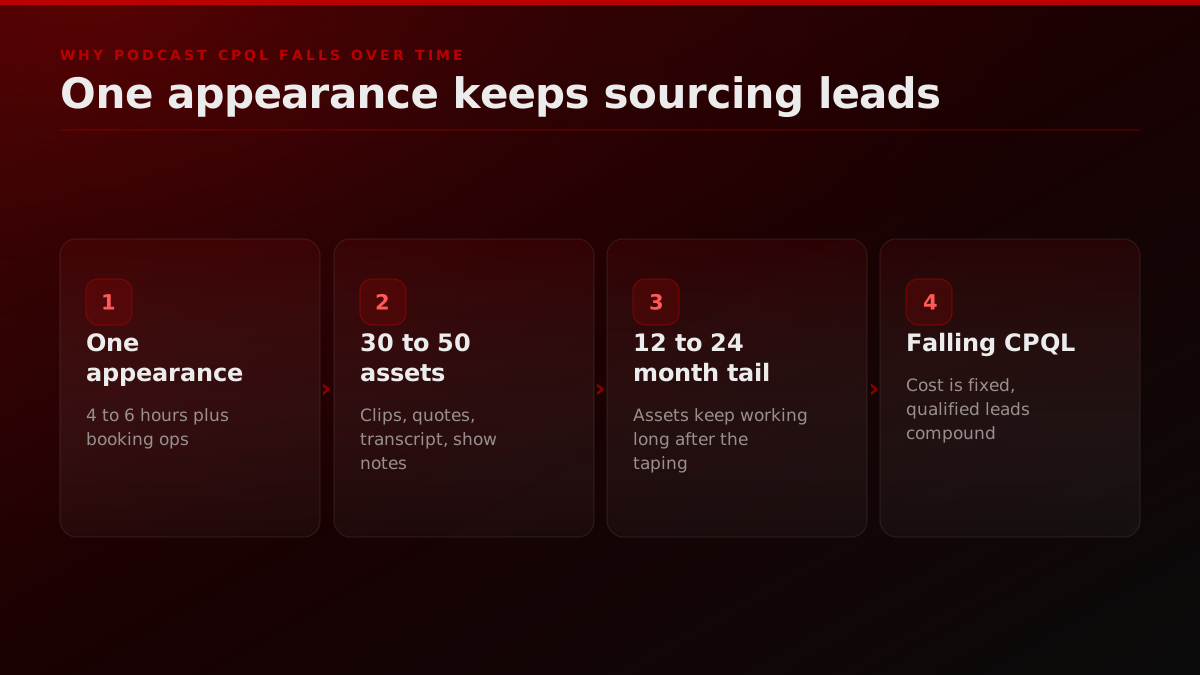
That asset yield is the whole reason podcast CPQL compounds rather than decays. One appearance produces 30 to 50 distribution assets, clips, quotes, a transcript, show notes, that keep circulating for 12 to 24 months, so the same fixed cost spreads over a growing pile of qualified leads and the effective CPQL keeps dropping. This is the opposite of cold email, where every qualified lead requires a fresh send. The catch is that podcasts are an authority channel, not a volume one, so they fit founders with a 5,000 dollar or higher ACV and a longer sales cycle, where being heard as a credible voice moves the deal. We compare the two motions directly in podcast guesting versus cold email and cover the measurement side in podcast ROI attribution for B2B.
SaaS Marketing Strategies That Actually Work in 2026
Rob Walling
A veteran SaaS founder walks through the marketing channels that actually work in 2026, reinforcing the stack-and-sequence conclusion rather than a single-channel bet.
Cold email and DM outreach: scalable CPQL, zero asset yield
Cold email and DM outreach produce qualified leads in the roughly 150 to 450 dollar directional range, and the number is set almost entirely by conversion, not by send cost. A send costs a few dollars including tooling, but the industry-average B2B reply rate is 3.43 percent, per Instantly's 2026 cold email statistics, and only a fraction of replies are positive and ICP-fit, so the CPQL is really a function of how tightly you target and how well you personalize. Cold email is the most scalable channel in the table, you can send more tomorrow, but it has zero asset yield: every qualified lead requires a fresh send, so it never compounds the way organic or podcasts do.
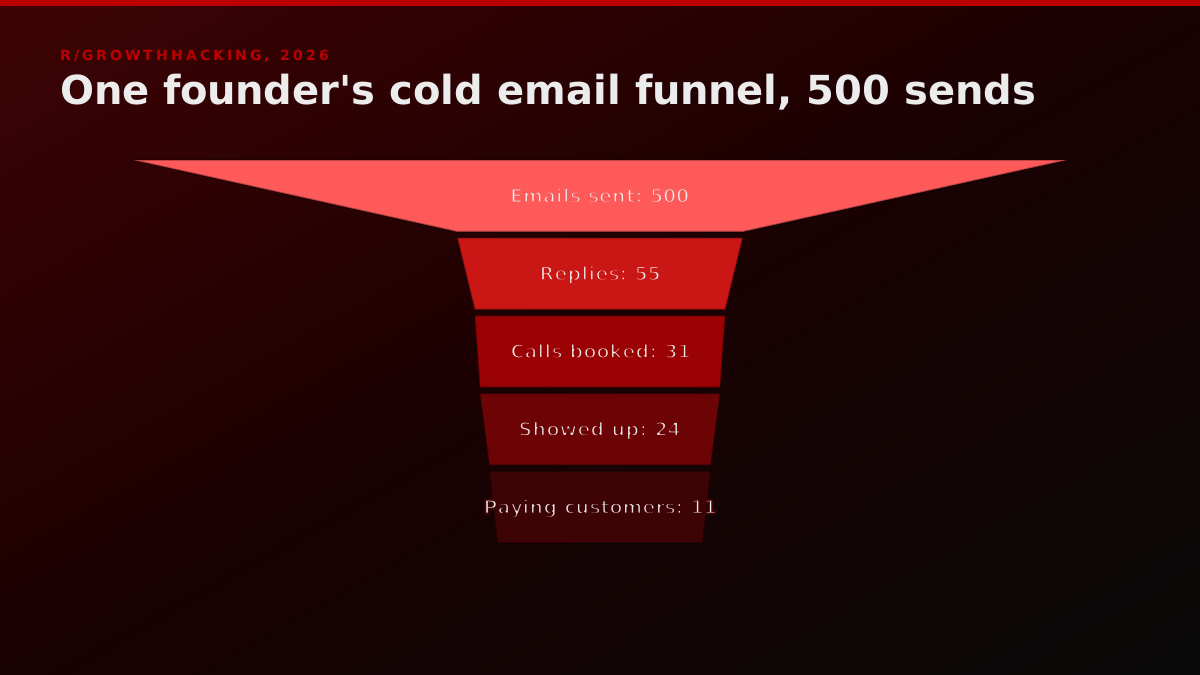
The funnel above is a real one, documented by an operator who sent 500 intent-targeted emails in a week, meaning emails to people who had publicly described the exact problem the product solved. An 11 percent reply rate, well above the industry average because of the intent targeting, produced 55 replies, 31 booked calls, 24 shows, and 11 paying customers. The gap between 500 sent and 11 closed is the entire argument for judging cold email on CPQL rather than reply rate: two campaigns with identical reply rates can have wildly different CPQL depending on how many replies were actually qualified.
I sent 500 cold emails in one week. Here's what actually happened.
Cold email and podcast conversion set the qualification math for two of the six channels
The industry-average B2B cold email reply rate sits at 3.43 percent per Instantly's 2026 benchmark data, with top-quartile campaigns near 5.5 percent and elite hyper-personalized lists above 10 percent, so at a few dollars per send the cost per qualified lead lands in the low hundreds once you filter replies down to fit buyers who will talk. On the other side, Content Allies' 2026 study puts average guest-to-client conversion on B2B podcasts at about 10 percent, with strong operators reaching 25 to 40 percent by choosing shows whose listeners overlap the ICP. Those two conversion rates, not the media cost, decide most of the CPQL for outbound and for podcasts.
Source: Instantly cold email benchmarks and Content Allies podcast study, 2026
This is exactly where vanity reporting does the most damage, because cold email agencies love to report reply rates, which look busy, rather than qualified pipeline, which shows whether the money worked. Operators who run outbound at scale are blunt about it.
The reporting most agencies send is designed to look good, not to tell you if the money was well spent. None of those numbers answer the only question that matters: is this investment making me money.
i run cold email for 49 clients right now. heres what ive learned that you wont find in any course or youtube video
The practical read for a founder is that cold email fits a sub-5,000 dollar ACV and a shorter, more transactional sale, where volume and speed matter more than authority, and that the lever that moves its CPQL is not sending more, it is targeting tighter. The Twitter DM outreach playbook applies the same intent-first logic to social DMs, and the same rule holds: a smaller list of people who have signaled the problem beats a bigger list of strangers every time.
Short-form clipping: why it is a CPQV channel, not a CPQL channel
Clipping is the row where forcing CPQL onto the channel is a category error, because clipping is an awareness and reach channel, not a direct-response one. Its native unit is cost per qualified view, CPQV, and its pipeline contribution is assisted rather than last-click: a buyer sees a clip, remembers the brand, and converts weeks later through search or a warm intro that attribution will credit to some other channel. Try to compute a last-click CPQL for clipping and it will always look terrible, not because the channel failed, but because you measured it with the wrong instrument.
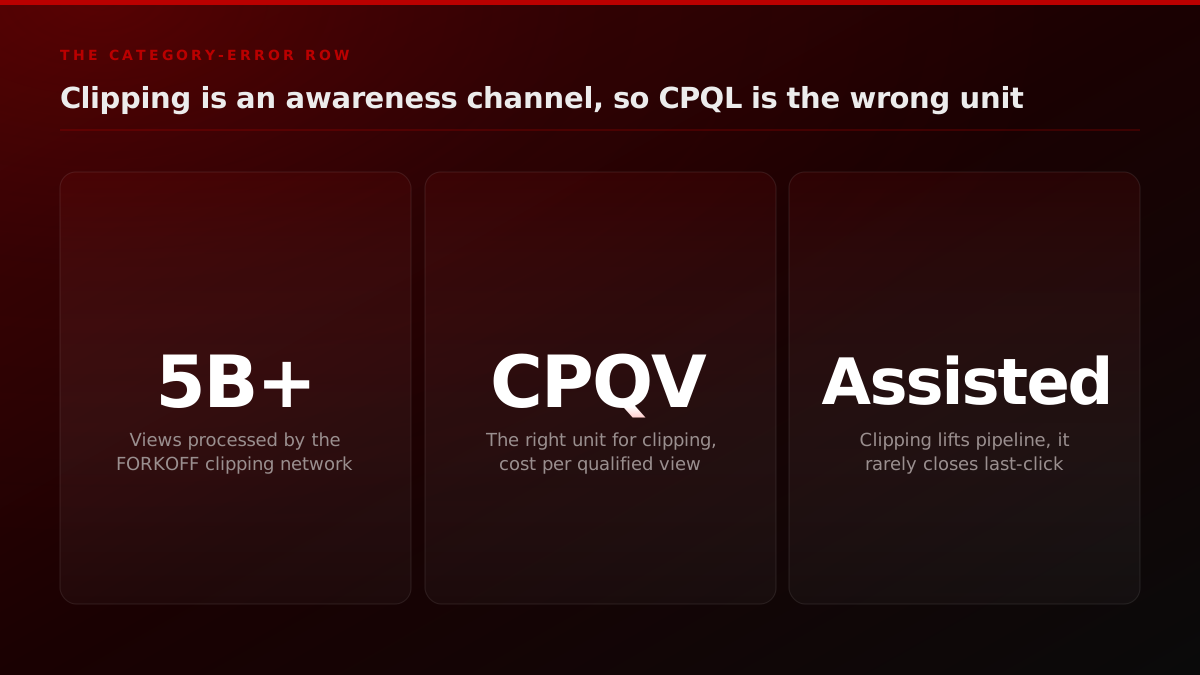
The reason this distinction matters is that it changes both the metric and the expectation. The FORKOFF clipping network has processed more than 5 billion views, and the honest way to value that reach is on cost per qualified view and assisted pipeline, using the qualified views metric rather than a last-click CPQL, and pricing the media on clipping CPM rates rather than on leads. Clipping earns its place in a founder's stack as the top-of-funnel awareness engine that makes every other channel convert better, warmer buyers reply to cold email, recognize the founder on a podcast, and show up to the side event, but it is a force multiplier, not a lead source you can attribute cleanly. The mistake is expecting a reach channel to close, and the correction is measuring it on the reach it actually delivers.
Operator noteDo not force CPQL onto clipping. It is an awareness channel measured in cost per qualified view, and its pipeline is assisted., FORKOFF clipping desk
Event sponsorship: the highest cash CPQL, and the surface that swings it 4.3x
Event sponsorship carries the highest cash CPQL in the table, but the headline number hides the real decision, which is not whether to do events but which surface you buy inside them. Across a FORKOFF H1 2026 sponsor cohort of three clients and 231,500 dollars in spend, the conference booth produced a 1,974 dollar CPQL, while the side-event surface produced 457 dollars and the sponsored dinner 435 dollars, a 4.3x spread on the same budget. Events buy the highest intent in the whole table, a real in-person conversation with a fit buyer, which is why they justify their cost for high-ACV motions, but only if you pick the right surface.
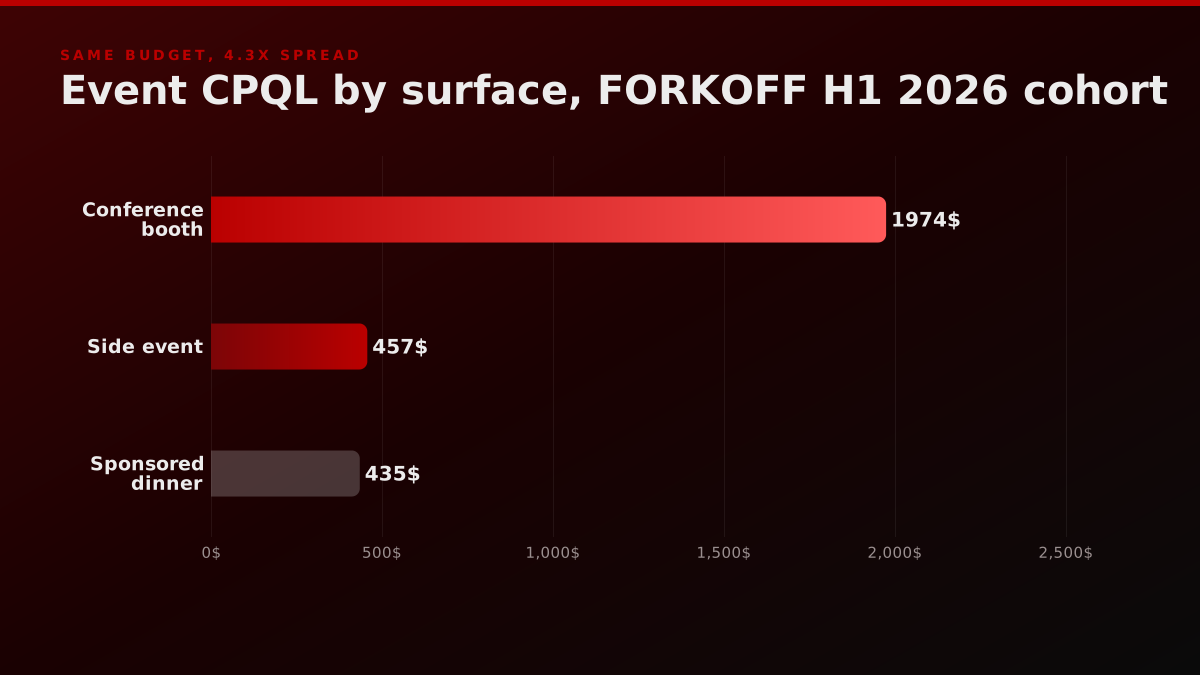
The mechanism behind the 4.3x spread is structural, not tactical. A booth sells impressions at a high-traffic, low-intent surface, most people walking a conference floor are operators or job seekers, not buyers, while a side event or a sponsored dinner sells time at a low-traffic, high-intent surface, where an RSVP gate and a curated invite list filter for exactly the founders you want and give you two to three hours of real conversation instead of 45 seconds. This is the same booth-versus-side-event logic we cover in the host-side-event playbook, and it is why, for sub-50,000 dollar budgets, a hosted side event almost always beats a booth on CPQL by a wide margin. The external benchmark agrees on direction: First Page Sage prices trade shows at a 1,390 dollar CAC, near the top of its channel set, confirming that events are expensive unless you engineer the surface for intent.
Customer Acquisition Cost: How to track it and calculate it
Slidebean
A clean walkthrough of how to track and calculate customer acquisition cost, the measurement discipline that CPQL sits on top of.
How should you read a CPQL table?
The single most useful way to read the whole table is to stop reading it as a ranked list of dollar figures and start reading it as a function of your scarce resource. Sort the six channels by whether they are time-priced or cash-priced, and the decision becomes obvious: if operator hours are your loose resource, lead with the time-priced channels, Reddit, founder X, and podcasts, where your expertise is the currency; if budget is your loose resource and hours are tight, lead with the cash-priced channels, cold email, events, and clipping, which convert dollars to qualified conversations fast. The lowest CPQL for you is the channel that spends the resource you have the most of.
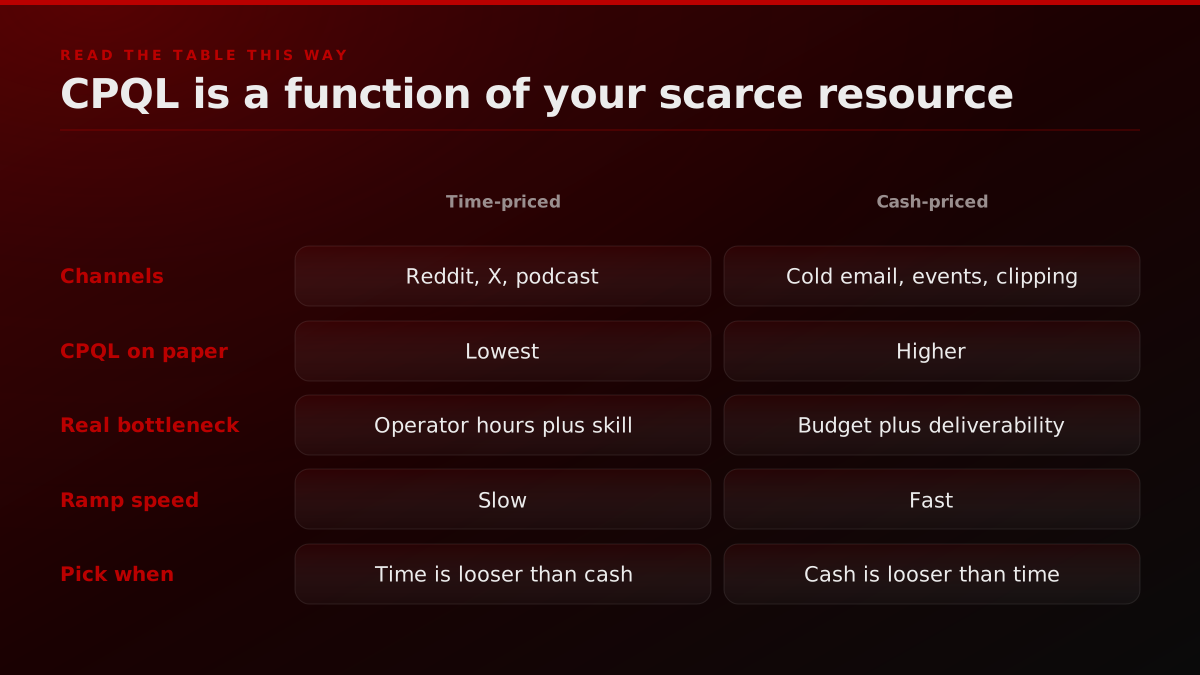
This reframing dissolves most channel debates, because the people arguing usually have different constraints and are both right for their own situation. It also explains why copying another founder's channel mix so often disappoints: their CPQL reflected their scarce resource, their skills, and their ACV, none of which are yours. It is also why distribution stays unstaffed at so many companies, the owner is never named, so the channel is never run. The founders who get this right tend to concentrate ruthlessly rather than spread thin, a pattern that shows up again and again in the field.
None of this works without honest attribution, which is the quiet reason most founders never learn their true CPQL. If every inbound lead is tagged to whichever channel touched it last, the organic and awareness channels, Reddit, founder content, and clipping, will always look worse than they are, because they do their work early and hand a warm buyer to whatever channel happens to close the deal. The fix is not complicated, just disciplined: ask every inbound where they first heard of you, tag first-touch and last-touch as separate fields, and accept that a channel can deserve credit for pipeline it did not personally close. Founders who skip this step end up defunding their cheapest real channels because a naive last-click report made them look expensive, then watch their blended CPQL climb after they cut the very channels that were feeding the closers. Measure the assist, not just the finish.
How to read the table by your scarce resource
| If your scarce resource is | Lead with these channels | Because | Watch out for |
|---|---|---|---|
| Time (funded, few operator hours) | Cold email, events, clipping | Cash converts to qualified leads fast | Buying clicks against an unproven offer |
| Cash (bootstrapped, hours to spare) | Reddit, founder X, podcasts | Your expertise is the currency | Quitting before the compounding starts |
my saas just crossed 680 paying customers. if i had to start over tomorrow, here's my first 30 days
Operator noteRun the arithmetic on your own funnel, full cost divided by qualified leads. The channel that wins per qualified lead surprises founders., FORKOFF founder-funnel desk
Which channels should a founder stack, and in what order?
The honest conclusion is that most founders should not pick one channel at all, they should stack two or three in sequence, because the cheapest blended CPQL comes from sequencing rather than from any single channel. The play is to seed organic first, Reddit and founder-led X, to find the message and the ICP that actually convert at near-zero cash cost, then point faster paid channels, cold email, podcasts, and events, at that proven message so budget only ever chases demand that organic already validated. Paid spend against an unproven offer is the fastest way to a terrible CPQL on any channel, and sequencing is what prevents it.
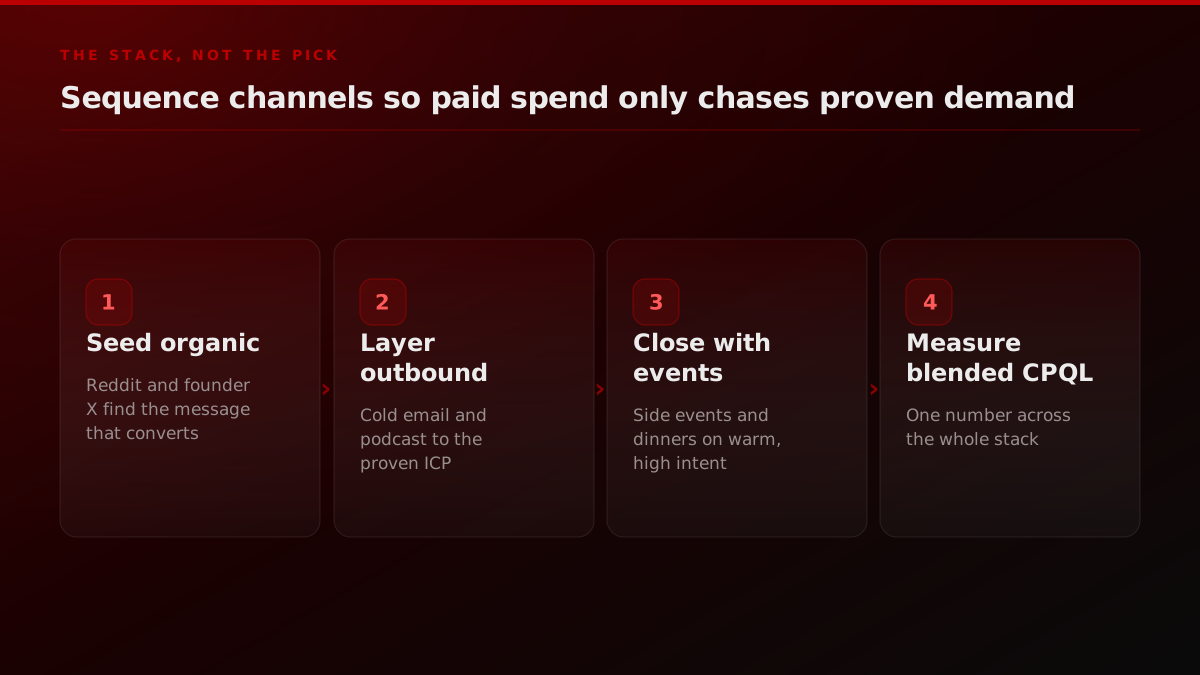
Sequencing also produces a compounding effect the individual CPQL numbers miss, because each channel makes the next one convert better. A buyer who saw a clip, then read a helpful Reddit answer, then got a cold email that referenced the exact problem they had described, replies at a far higher rate than a cold contact, so the blended CPQL across the stack comes in below what any single channel would produce alone. This is the three-ring distribution logic we run for launches, and it is why we treat channel choice as one part of a founder-led growth system rather than a standalone bet. The goal is not the lowest CPQL on one channel, it is the lowest blended CPQL across a stack that compounds.
Operator noteSeed organic to find the message that converts, then point paid at it. Paid against an unproven offer is the fastest route to bad CPQL., FORKOFF founder-funnel desk
How FORKOFF prices the founder funnel on CPQL
This whole table is the operating logic behind how FORKOFF runs the Founder Funnel, and it is why we price on outcomes rather than on activity. We seed the organic channels to find the message that converts, layer Reddit distribution, podcast guesting, and outbound on the proven ICP, use clipping as the awareness multiplier that warms every other channel, and close on high-intent in-person surfaces through events management and marketing, then report a single blended CPQL across the stack instead of per-channel vanity reach. As an AI agency built on the outcome-priced thesis, we would rather be measured on qualified pipeline per dollar than on impressions, because that is the number that actually decides whether the distribution was worth it.
The reason to run it as one program rather than six disconnected experiments is the compounding covered above: sequenced channels produce a lower blended CPQL than the sum of their parts, and a single owner of the whole stack can move budget to wherever the CPQL is currently lowest. That is the difference between hiring six vendors who each optimize their own channel's vanity metric and running one funnel optimized for the number that matters. The channels in this table are not competitors for your budget, they are stages in one system, and priced that way they compound.
If you take one number away from this whole comparison, make it the ratio rather than any single dollar figure: a conference booth costs roughly thirty times what an organic Reddit reply costs in cash, and yet the booth can still be the right buy for a high-ACV founder with budget and no operator hours, while the Reddit reply is the right buy for a technical founder with time and deep product knowledge. Neither number is wrong, and neither is universal. The only mistake is choosing a channel by its headline CPQL instead of by the resource it spends, the motion it fits, and the stage it owns. Get those three right, sequence the channels so paid always chases proven demand, measure a single blended CPQL across the stack, and the thirty-times spread stops being a menu of prices and becomes a map of where your next lead is cheapest to earn.


![How to Make a Launch Go Viral on X: The 5-Lever Playbook [2026]](/blog/covers/how-to-make-launch-go-viral-on-x-2026-cover.jpg)