X launch campaign pricing in 2026 runs across three structural tiers: Pilot (launch validation, micro-creator mix, 2 to 4 weeks), Scale (funded distribution, 10 to 20 mid-tier accounts, syndicate layer, 4 to 6 weeks), and Flagship (hero placement plus macro amplification, 8 weeks). Each tier carries a qualified-views floor in the service agreement, not an impressions count. This post decomposes all three so founders can match their budget to the right scope before a single sales call.
About these numbers
FORKOFF first-party operator data from influencer and KOL marketing engagements, supplemented by publicly available influencer pricing benchmarks (Influencer Marketing Hub, CreatorIQ 2025-2026). All figures are directional estimates based on operator observations; individual engagements vary. The 75 sales conversations referenced in this post cover Q1-Q2 2026 across crypto, Web3, and SaaS verticals.
TL;DR: Three tiers, decomposed. Three routes to your fit.
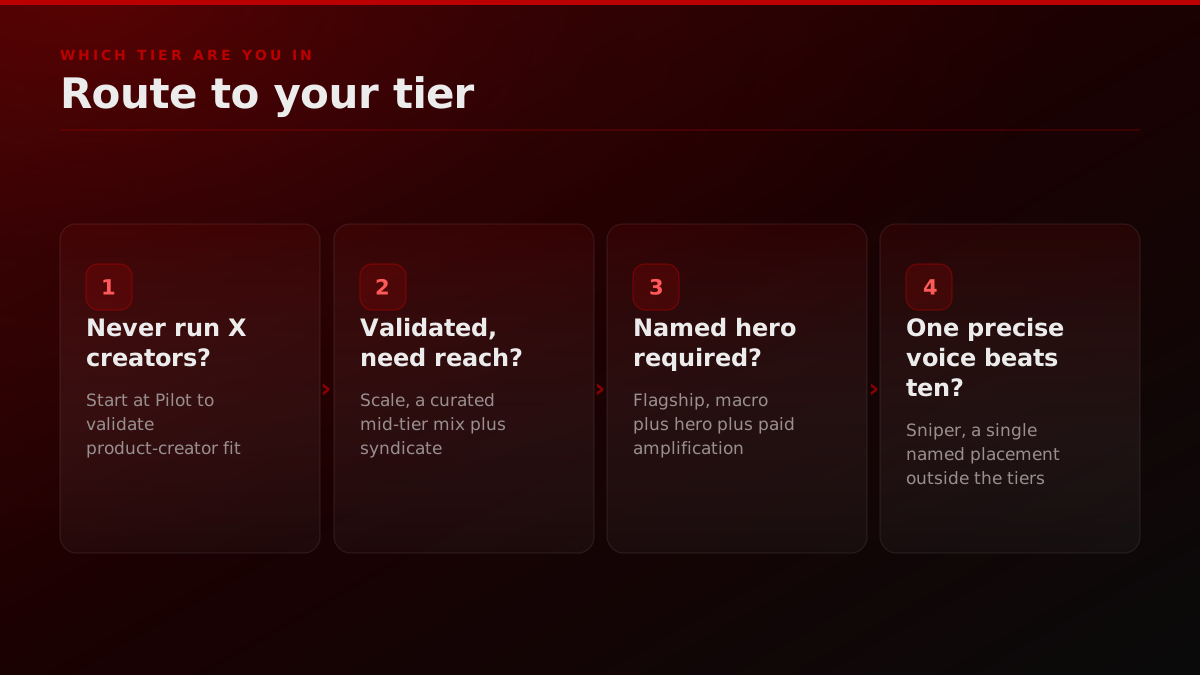
A Pilot tier validates whether your product fits X creators at all before bigger spend. A Scale tier broadens distribution with a curated influencer mix and full clip syndication. A Flagship tier adds hero placements with paid amplification. Each tier has a qualified-views floor with refund logic. Pricing is by application against the tier you select. ROUTING: First X campaign? Start at Pilot. Funded launch ready to broaden? Use Scale. Series A+ with a named hero creator in mind? Flagship. Jump to your tier in the comparison table below.
The pricing question most founders ask before they call us
Every founder who reaches /services/kol-marketing eventually asks the same thing: what does my budget actually buy? Not impressions. Not followers. Not a list of KOL names. The question is: which tier am I in, what does that tier produce, and is there a qualified-views commitment attached?
The problem is that most influencer marketing agencies answer that question only after a sales call. You get on a 30-minute intro, describe your product and timeline, and then receive a proposal with numbers that bear no visible relationship to any public framework. There is no anchor. There is no decomposition. You are negotiating against opacity.
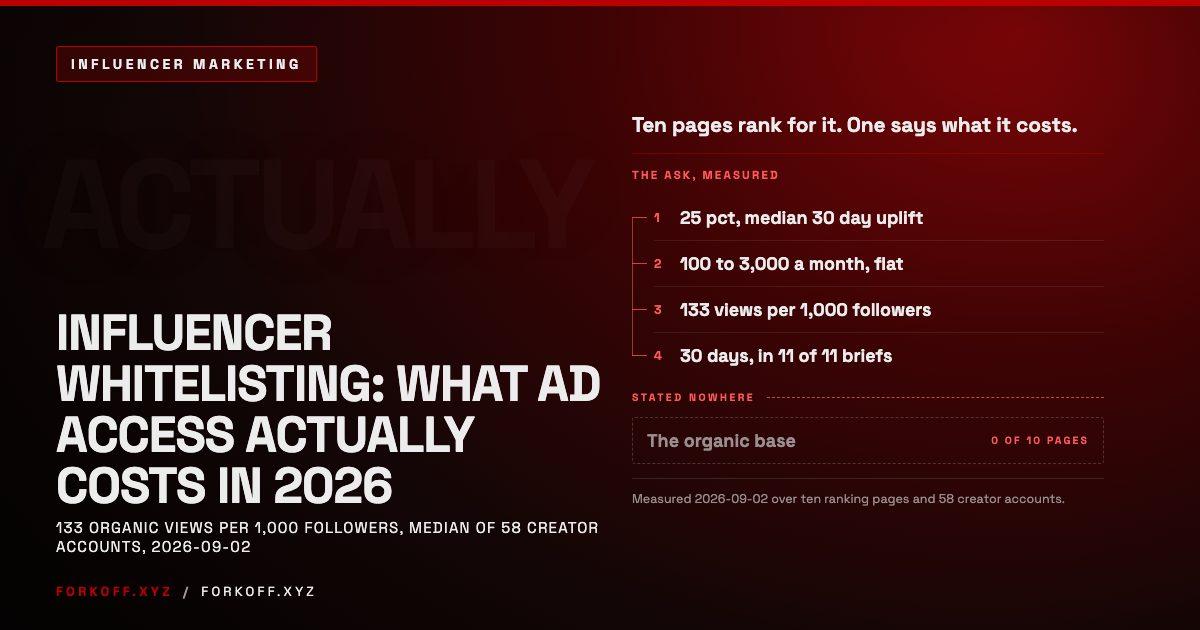
This post exists to remove that opacity. We break the three structural campaign tiers on X (Twitter) into their constituent parts: influencer mix, pipeline length, clip distribution model, amplification budget split, and the qualified-views floor attached to each. You can read the full tier you are targeting, match it to your launch moment, and arrive at a scope conversation with your own numbers already in hand. One line sits outside these tiers and is quoted separately by almost every creator, which is paid ad access on the creator's own handle.
Jump to your tier
First X campaign and need to validate fit? Start at the [Pilot section](#tier-1-pilot-launch-validation). Funded launch and ready to broaden? Use the [Scale section](#tier-2-scale-funded-distribution). Series A+ with a named hero creator in mind? Read the [Flagship section](#tier-3-flagship-hero-amplification). Or skip straight to the [side-by-side comparison](#how-the-three-tiers-actually-decompose).
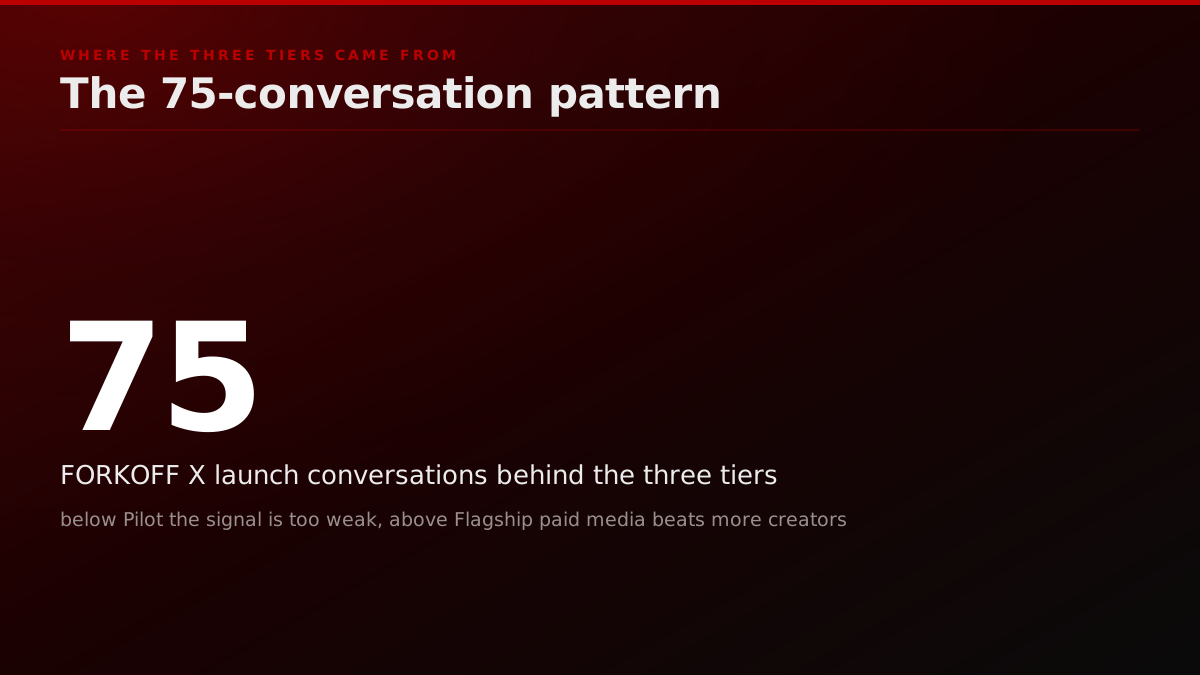
The three tiers covered here map directly to what FORKOFF runs on /services/kol-marketing. This is not a theoretical framework. These are the three shapes that have emerged from 75 sales conversations and the campaigns those conversations produced.
Why pricing transparency matters before you sign
Most influencer marketing agencies keep pricing opaque on purpose: it makes mid-scope additions easier to justify and prevents cross-agency proposal comparisons. Transparent tier pricing removes that friction by giving founders a decomposition framework before any scope conversation begins. Transparent pricing alone does not vet an agency, but it does let you hold an agency accountable to what the tier commits to. The influencer marketing agency vetting playbook ships the 9-question audit FORKOFF uses to separate operator agencies from broker agencies before any retainer signs.
Campaign pricing opacity has three structural causes that show up before the tiers are even defined.
Why pricing transparency matters before you sign
Three patterns drive opacity in campaign pricing: scope creep is easier without a public price anchor; losing a lead who only wants one tier feels worse than ambiguity; and the cost model at the per-line level is rarely published proactively. The result is a long search cycle for founders before they find pricing they can plan against. Putting tier-level deliverables in writing in advance is the buyer-side fix.
The opacity is structural. Most X campaign pricing structures have three reasons to stay hidden: (1) it is easier to adjust scope after the prospect is emotionally invested in the agency relationship; (2) a published price anchor makes mid-scope additions harder to justify; (3) the actual cost model, especially the split between service fees and creator fees, is rarely published proactively at the per-line level.
For founders on the buying side, this creates a specific problem: you cannot compare proposals across agencies because no two proposals use the same line items. One agency bundles creator fees into a total; another separates them. One includes clip distribution; another charges it as an add-on. The comparison is impossible without a common decomposition framework.
The tier structure we use at FORKOFF gives you that framework. Not because we are obligated to publish it, but because founders who understand their tier before the first call make better clients. They know what they are buying. They hold us to what we promised.
IZEA's official YouTube channel at youtube.com/@IZEA is a good starting point for the broader market context. The pricing decision for any distribution channel is not about the absolute cost. It is about which problems the tier solves and which problems it does not. A Pilot tier does not solve "we need 5M impressions by Friday." It solves "we need to know whether X creators can reach our buyer before we spend more." That specificity is what makes pricing legible.
For a broader look at influencer activation cost across all KOL tiers, the FORKOFF KOL cost study breaks down per-activation unit economics from 12 campaigns with original data. The per-post rates and tier mixes there provide the cost inputs that feed into the campaign-level tier breakdowns we cover below.
The economics behind the tiers start with engagement, which moves inversely to follower count. Micro-tier creators convert attention at a materially higher rate than macro accounts, which is the structural reason a Pilot validates on the micro band before a Scale roster broadens reach.
One definitional note first, because vendors use these words loosely and it costs founders money. Throughout this post, micro means 10K to 100K, while macro stretches from 100K all the way to 1M, wide enough that the table below cuts it in half at 500K. Wherever the copy says "mid-tier" it always means 100K to 500K, which is the roster a Scale campaign is built from; a Flagship hero placement sits above that, at 500K to 1M or higher. Industry sources do not agree on where macro stops, so our agency vetting playbook sets out which cut we use and why we use it. When you put two scopes side by side, compare follower counts, never tier labels.
Median engagement rate by follower band (published 2026 benchmarks)
| Follower band | Median engagement rate range | What it means for tier choice |
|---|---|---|
| Nano (1K to 10K) | 7 to 15 percent | Highest engagement, smallest reach ceiling |
| Micro (10K to 100K) | 3 to 7 percent | Pilot validates here: real engagement at low cost |
| Macro, lower band (100K to 500K) | 2 to 5 percent | Scale roster: reach with workable engagement |
| Macro, upper band (500K to 1M) | 1 to 3 percent | Flagship hero range: reach over engagement |
| Mega (1M+) | 0.5 to 1.5 percent | Paid amplification usually beats added creators |
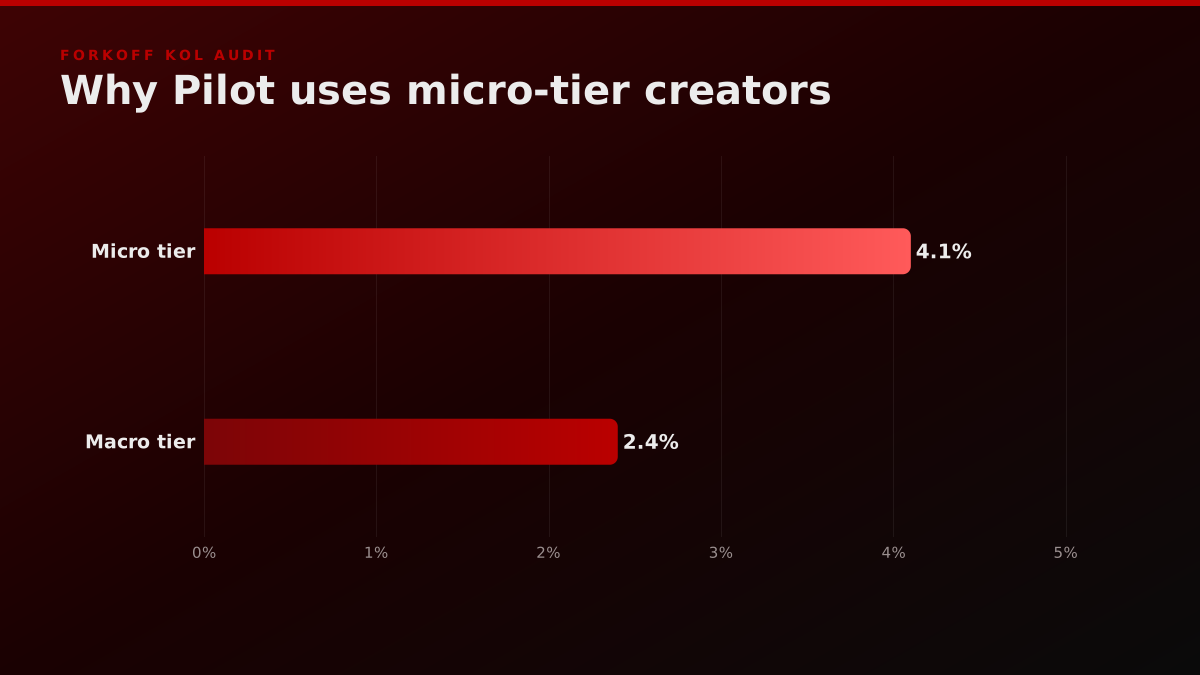
Published median ranges (Hootsuite, Influencer Marketing Hub, Sprout Social 2026); bands follow Sprout Social and Hootsuite. The first-party FORKOFF KOL audit measured 4.1 percent on 2K-25K accounts, 2.4 percent on 25K-100K.
Practitioners who track real deals see the same tiering in what brands actually pay: creator economics vary by band and content type rather than sitting at a single number, which is exactly why a campaign is scoped by application, not read off a rate card.
I tracked brand deal rates across 200+ creators this January. Here are the actual numbers by platform, tier, and content type.
I've been in the creator economy for a few years now. Worked at a YC-backed creator company, personally handled outreach for dozens of creators, and still talk to 5-10 creators every week about their deals. Every January, rates shift. Brands reset budgets. New campaigns spin up. So I spent the… Show more
How X launch campaign budgets actually behave in 2026
As of 2026, across 75 FORKOFF sales conversations (operator observation, n=75), X launch campaign budgets cluster into three structural shapes (Pilot, Scale, Flagship). The shape is not driven by budget alone. It is driven by two variables: the influencer tier mix and the presence or absence of a paid amplification layer.
Below the Pilot threshold, campaigns produce too little signal to inform next-step decisions. A single micro-creator placement is a test; it is not a campaign. Above the Flagship tier, the marginal spend on additional creators delivers diminishing returns compared to what the same budget buys in Twitter Ads or Spaces amplification. The three tiers represent the three functional zones between those limits.
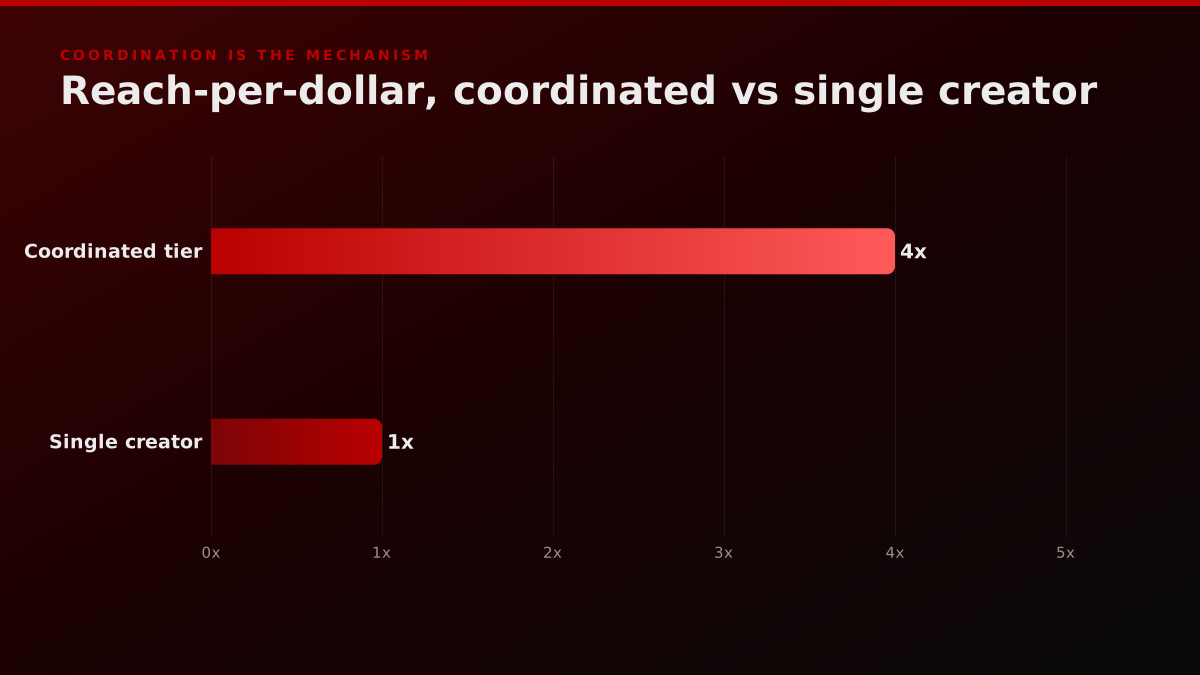
The broader market context bears this out. IZEA's resource library at izea.com/resources/ documents the per-platform mechanics of creator campaigns across social platforms. The 2026 Hootsuite social trends report confirms that coordinated multi-creator drops on X outperform single-creator placements on reach-per-dollar, which is the mechanical reason the tier structure exists. Influencer Marketing Hub's annual benchmark anchors the same finding from a B2B angle. Individual placements spike; coordinated tiers sustain.
The 2026 X platform specifically rewards coordinated drops over isolated posts in terms of algorithmic amplification. When 10 creators post within a 6-hour window on the same topic, the algorithm registers topic momentum and extends organic reach into non-follower feeds. A single creator posting alone, regardless of follower count, does not trigger that amplification cascade. This is the core reason X campaign tiers exist as a structure separate from per-post influencer rates.
Hootsuite's 2026 influencer marketing data, drawn from their annual trends report, confirms the directional finding: campaigns with multi-creator coordination see 3 to 4x the reach-per-dollar of equivalent single-creator placements. The mechanism is coordination, not budget size. A Pilot-tier coordinated drop can outperform a much larger single-creator placement for the right product.
The counter-case is the single placement bought as a reach play with no measurement attached, which is where most wasted influencer spend goes.
You're Wasting Your Money on Influencer Marketing
Neil Patel on why most influencer spend is wasted when it buys reach instead of a measured outcome, the same reason each tier here contracts a qualified-views floor.
That said, coordination costs something. The campaign management overhead to brief 10 creators, stage posts, and maintain a 6-hour window is meaningfully higher than managing one creator. This overhead is what the service fee covers at each tier. The influencer fees are the creator costs; the service fee is the coordination infrastructure. Both are transparent in the scope we send.
Operator noteTen creators posting inside a 6-hour window trigger a topic-momentum cascade a single macro post never fires., FORKOFF campaign ops
Tier 1: Pilot (Launch Validation)
The Pilot tier is a structured test campaign designed to prove product-creator fit before committing to full-scale distribution. It uses a micro-creator mix (10K to 100K followers), runs 2 to 4 weeks without a paid amplification layer, and carries a qualified-views floor based on the screened audience of the proposed creators. This is what we call a test campaign on /services/kol-marketing.
The Pilot tier is the answer to a specific question: do X creators in your vertical actually move your product? Not "can they post about it." The question is whether their audience converts to the metric that matters for you (signups, trial activations, waitlist joins, wallet connections). A Pilot produces that answer with a contained budget before you commit to Scale or Flagship spend.
Creators on the other side of the table make the same point in reverse: when a launch flops, the KOLs get blamed, but the product-creator fit was never validated in the first place. A Pilot answers that question before the budget scales.
Black Mamba 👑
@blaack_mambaa
The crypto industry loves blaming KOLs for failed launches, but rarely asks the harder question: Was the product actually worth talking about? Too many founders expect a few tweets to compensate for weak products, poor tokenomics, no retention, and no clear market fit. That's
Influencer mix: A few placements at the micro-tier (10K-100K followers). This is the structural reason the Pilot works as a validation tool rather than a reach play. Micro-tier creators have higher engagement rates than macro accounts, more authentic audience relationships, and lower per-post costs that make the tier accessible. Our own first-party numbers sit inside that band rather than across it: the FORKOFF KOL audit measured 4.1 percent median engagement on 2K to 25K accounts against 2.4 percent on 25K to 100K accounts, so the decline is already visible well below the macro threshold. The trade-off is reach ceiling. A few micro-tier accounts cap total campaign reach at a fraction of what Scale or Flagship produces. That is acceptable for validation; it is not acceptable for launch-day reach targets.
Pipeline length: 2 to 4 weeks. This covers creator outreach, brief delivery, content review, coordinated drop, and initial attribution measurement. The 2-week floor assumes creators who respond quickly and content that does not require significant revision. The 4-week ceiling is the realistic timeline for a clean Pilot including a second measurement window to capture delayed conversions.
Clip distribution: No syndicate layer. Pilot campaigns run organic only. The syndicate network (approximately 50 distribution channels at Scale tier) adds reach but also adds cost and coordination overhead. For validation purposes, the organic signal from micro-creator posts is sufficient. Syndication is a Scale-and-above feature.
Amplification budget split: 0 percent. No paid amplification at Pilot. The organic signal is the signal. Adding paid spend at the Pilot stage inflates the reach numbers in ways that obscure the underlying creator-audience fit signal. A Pilot that "works" because of paid amplification does not tell you whether the creator's organic audience converts; it tells you that paid impressions on the creator's post convert, which is a different and less useful data point.
What the qualified-views floor covers: Every Pilot carries a minimum post-bot-screen view count committed in the service agreement. If the campaign comes in below that floor, refund logic applies. This is the mechanism that makes the Pilot a commitment rather than a best-effort experiment. The floor is set against the micro-tier creator mix we propose, not against theoretical reach numbers.
Who Pilot is for: Founders validating product-creator fit. Specifically: teams that have never run an X creator campaign and do not know whether their product resonates with any creator's audience; products launching into a new vertical where creator audience alignment is uncertain; founders who want to de-risk a larger Scale or Flagship budget before committing.
The Pilot is not the right tier if you have already validated fit and need reach. If you have run a test campaign and know the product converts through X creators, the Pilot is answering a question you already have the answer to. Move to Scale.
For per-activation unit economics across the tier, the influencer marketing cost study covers the cost-per-qualified-engagement math across nano through anchor tiers. The Pilot sits at the micro-to-low-mid range of that cost curve.
Tier 2: Scale (Funded Distribution)
Scale is the campaign structure for products that have passed Pilot validation and need real launch-day reach. It uses a curated mid-tier mix of 10 to 20 accounts in the 100K to 500K follower range, runs 4 to 6 weeks, includes a full syndicate layer of approximately 50 distribution channels, and allocates 10 to 20 percent of campaign budget to Spaces hosting and selective Twitter Ads amplification. Scale is the tier most founders think they want when they first contact FORKOFF.
Influencer mix: A curated mid-tier mix, 10 to 20 accounts at the 100K to 500K follower range. This is materially different from Pilot in two ways. First, the raw reach per account is an estimated 10 to 50x higher than micro-tier. Second, the coordination requirement scales proportionally; managing 15 mid-tier creators across a 6-hour drop window is a different operational challenge from managing 5 micro creators.
The curation matters. Mid-tier creators in the 100K to 500K range vary enormously in audience composition. A 200K-follower crypto account may have approximately 40% genuine commercial-intent followers and 60% follow-for-follow empty accounts. A 120K-follower SaaS operator account may have 85% founder-and-operator audience with high product intent. In SaaS influencer marketing for developer tools the filter tightens again, because the audience signal that matters is how many of the replies come from engineers. Follower count is a floor, not a ceiling filter. The audit layer (5-signal qualified-view audit per creator before we propose them) is what produces the curated list.
Pipeline length: 4 to 6 weeks. The additional time over Pilot covers two things: a larger creator roster requires proportionally more outreach and brief cycles, and Scale campaigns include a mid-campaign optimization window where underperforming placements are reallocated before the campaign ends. The 4-week floor is aggressive and requires creators who are pre-vetted and relationship-ready. The 6-week ceiling is the standard timeline.
Clip distribution: Full syndicate, approximately 50 channels. This is one of the clearest deliverable differences between Pilot and Scale. The syndicate layer takes the top-performing clips from the creator posts and distributes them across approximately 50 content channels in parallel. The effect is an organic reach multiplier on the content that already proved it resonates with the creator's audience. A thread that hits 2% engagement with the mid-tier creator's followers gets pushed to 50 additional audiences at no additional creator cost.
Amplification budget split: 10 to 20 percent of total campaign budget goes to Spaces hosting and selective Twitter Ads amplification on the top-performing posts. The Spaces component is brand-aligned conversation, not paid reach. The Twitter Ads component is selective: only posts that hit engagement benchmarks in the first 48 hours get amplification spend. This prevents the wasted spend pattern where underperforming content gets amplified into a larger failure.
What the qualified-views floor covers: Scale carries a higher absolute qualified-views floor than Pilot, reflecting the larger creator mix and the syndicate layer. The floor is set against the curated creator roster we propose, with bot-screen methodology applied to each creator's audience before the floor calculation.
Who Scale is for: Funded SaaS or Web3 launches where product-creator fit has already been validated. Teams launching a v2 or entering a new market with a product that has demonstrated conversion in other channels. Companies with a launch date and a reach target that Pilot tier cannot satisfy.
The Three Ring Distribution framework, covered in detail at /blog/saas-gtm/saas-product-launch-three-ring-distribution-2026, positions Ring 3 (KOL/creator distribution) as the amplification layer on top of organic content and community. Scale tier is the structure that makes Ring 3 functional at a real distribution level. Without the curated mid-tier mix and the syndicate layer, Ring 3 is a theoretical position; Scale makes it operational.
Tier 3: Flagship (Hero + Amplification)
Flagship is the campaign structure for launches where a named creator placement is a strategic requirement, not just a reach goal. It pairs macro placements in the 100K to 500K follower range with a selective hero placement at 500K to 1M+ followers, runs 8 weeks with a mid-campaign optimization checkpoint, and allocates 20 to 40 percent of total budget to paid amplification targeting specifically the hero post. Flagship is for a specific figure, in your vertical, with an audience that directly overlaps your buyer.
Influencer mix: Macro placements in the 100K to 500K range, plus selective hero placements at 500K to 1M+ followers. The hero placement is the definitional feature of Flagship. At Scale, every creator in the mix is interchangeable (if one drops, another with equivalent reach can substitute). At Flagship, the hero placement is a named position: a specific podcast host, a named X operator with a specific audience composition, a crypto-native account with a specific community that overlaps your buyer.
The hero placement carries different campaign mechanics. The brief is more specific. The content review window is longer. The exclusivity clause covers more territory. The hero post is typically the first post in the coordinated drop, setting the conversation that the macro accounts amplify in the following 6 hours.
Pipeline length: 8 weeks, with a mid-campaign optimization checkpoint. The additional 2 to 4 weeks over Scale covers hero placement negotiation (named figures take longer to contract), content review cycles (hero content requires more revision cycles because it carries more brand risk), and the mid-campaign optimization window where underperforming macro posts are reallocated before the campaign concludes.
Clip distribution: Full syndicate plus paid amplification applied specifically to the hero post. The hero post clip gets distributed across the approximately 50 syndicate channels and then receives paid amplification spend on top. The paid layer at Flagship is specifically targeted: only the hero content receives the amplification budget, not the full macro roster.
Amplification budget split: 20 to 40 percent of total campaign budget. This is the highest amplification allocation across the three tiers. The logic is that Flagship campaigns are targeting reach numbers that organic creator posts alone cannot sustain. The hero placement creates the credibility signal; the paid amplification extends that signal's reach beyond the hero creator's organic follower base.
What the qualified-views floor covers: Flagship carries a floor plus a Spaces amplification commitment. The floor applies to the total qualified views across all placements. The Spaces commitment is a separate deliverable: a minimum number of branded conversation minutes in Spaces sessions attached to the campaign.
Who Flagship is for: Series A+ launches or rebrands where the named creator placement is a strategic requirement, not a nice-to-have. Token generation events where a crypto-native hero placement provides the on-chain credibility signal the community requires before participating. SaaS companies entering competitive markets where a named figure in the space explicitly endorsing the product shifts the credibility perception.
Flagship is also the correct structure when a founder has a specific named creator in mind and the creator is available for the campaign window. The pre-paid list approval process (covered below in the Pre-paid list section) applies with particular force at Flagship: the hero candidate goes through the 5-signal audit before we propose them, and the founder approves the list before any fees change hands.
How the three tiers actually decompose
The three tiers differ across seven dimensions: influencer mix (micro at 10K-100K, versus a lower-macro roster at 100K-500K, versus that same roster plus an upper-macro hero at 500K-1M+), pipeline length (2-4 weeks vs 4-6 weeks vs 8 weeks), clip distribution model (none vs 50-channel syndicate vs syndicate plus paid amplification on hero), amplification budget split (approximately 0% vs 10-20% vs 20-40%), qualified-views floor mechanism, refund logic, and overall campaign management complexity. No dollar amounts appear in the comparison because cost varies materially by creator vertical, placement count, and amplification budget.
Pilot vs Scale vs Flagship: deliverables per tier
| Dimension | Pilot (Launch Validation) | Scale (Funded Distribution) | Flagship (Hero + Amplification) |
|---|---|---|---|
| Campaign goal | Validate product-creator fit | Broaden distribution + early signal | Hero placements + amplification |
| Influencer mix | A few micro placements (10K-100K) | Lower macro (100K-500K), 10-20 accounts | Lower macro (100K-500K) + 1 hero (500K-1M+) |
| Pipeline length | 2-4 weeks | 4-6 weeks | 8 weeks + mid-campaign optimization |
| Clip distribution | No syndicate layer | Full syndicate (~50 channels) | Full syndicate + paid amplification |
| Amplification budget split | 0 percent (organic only) | 10-20 percent (Spaces + selective ads) | 20-40 percent (Twitter Ads + Spaces) |
| Engagement guarantee | Qualified-views floor | Qualified-views floor + mid-campaign reallocation | Qualified-views floor + Spaces amplification |
| Best for | Founders validating product-creator fit | Funded SaaS or Web3 launches | Series A+ launches or rebrands |
The table makes three things legible that are easy to miss in a standard agency proposal. First, the pipeline length difference between Pilot (2 to 4 weeks) and Flagship (8 weeks) is not just about the campaign window. It reflects fundamentally different creator management complexity. A Pilot can be scoped and executed in under a month. A Flagship requires 2 months minimum to execute correctly. Founders who want Flagship results on a Pilot timeline are mispricing the campaign.
Second, the clip distribution difference is a reach multiplier, not just an add-on. The syndicate layer at Scale and Flagship applies to content that has already proven it resonates with a creator's audience. This is not blind distribution; it is amplification of proven content. The Pilot tier's organic-only model produces the signal that later justifies the syndicate spend.
Third, the engagement guarantee row covers a real contractual mechanism, not a marketing claim. The qualified-views floor is in the service agreement. The refund logic applies when the floor is not met. The specifics of that mechanism are documented at /services/kol-marketing.
Qualified-views floor: how we contract delivery, not impressions
Most X campaign proposals commit to impressions. Impressions are a raw number from the platform's reporting API that includes bot views, low-engagement scroll-past views, and views from audiences with no relationship to your buyer. Impressions are easy to hit and meaningless to buy against.
Buyers feel this directly. A brand that pays for tens of thousands of impressions and a healthy engagement rate, then attributes zero sales, is the recurring pattern that a qualified-views floor and real attribution exist to fix.
Influencer drove 50K views, zero sales - how do you track what actually converts?
Paid an influencer $3K for a post last month. Stats they sent me: * 52K impressions * 4.2% engagement rate * "Great brand alignment" Sales we can directly attribute to them: 0 Maybe people bought later? Maybe the tracking is broken? I have no idea.
Qualified-views floor: what we actually contract
Every tier carries a qualified-views floor in the service agreement: the minimum post-bot-screen view count across all placements. If actual qualified views come in below the floor, refund logic applies per the signed terms. Unlike per-post impression promises, we put qualified-views floors in the signed agreement.
Source: forkoff.xyz/services/kol-marketing
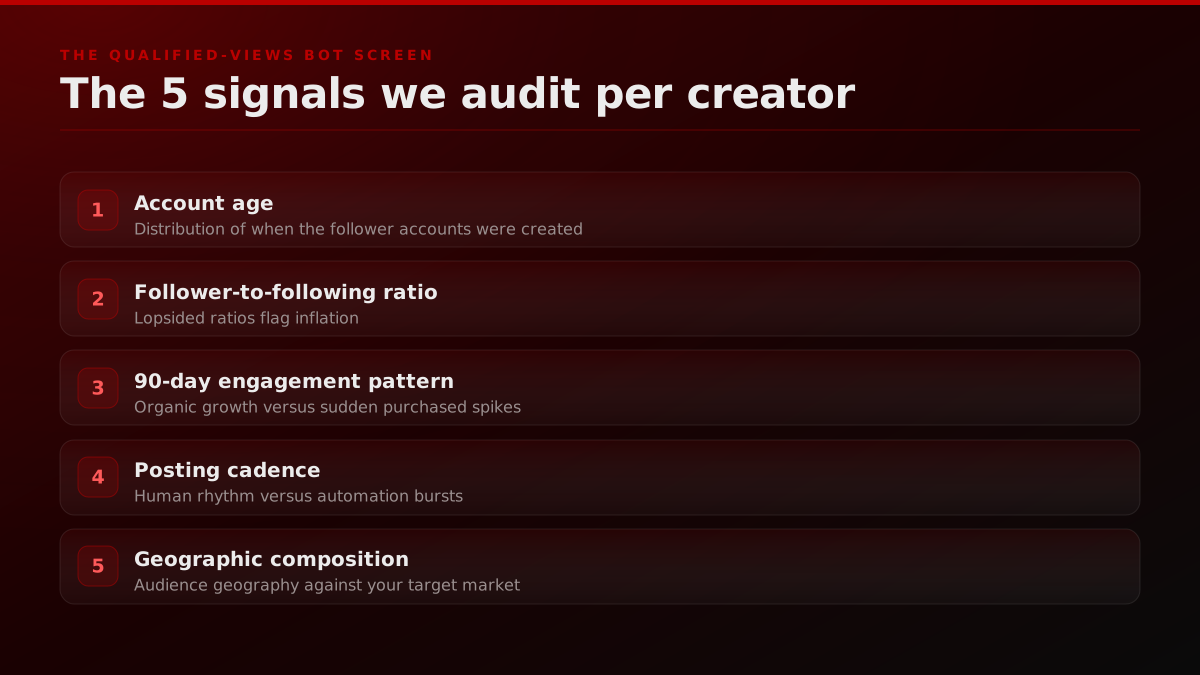
The qualified-views floor operates differently. It applies a 5-signal bot screen to each creator's audience before the campaign runs. The signals: account age, follower-to-following ratio, engagement pattern over 90 days, posting cadence, and geographic audience composition. Accounts that fail the screen on two or more signals are flagged as bot-proximate and removed from the qualified count.
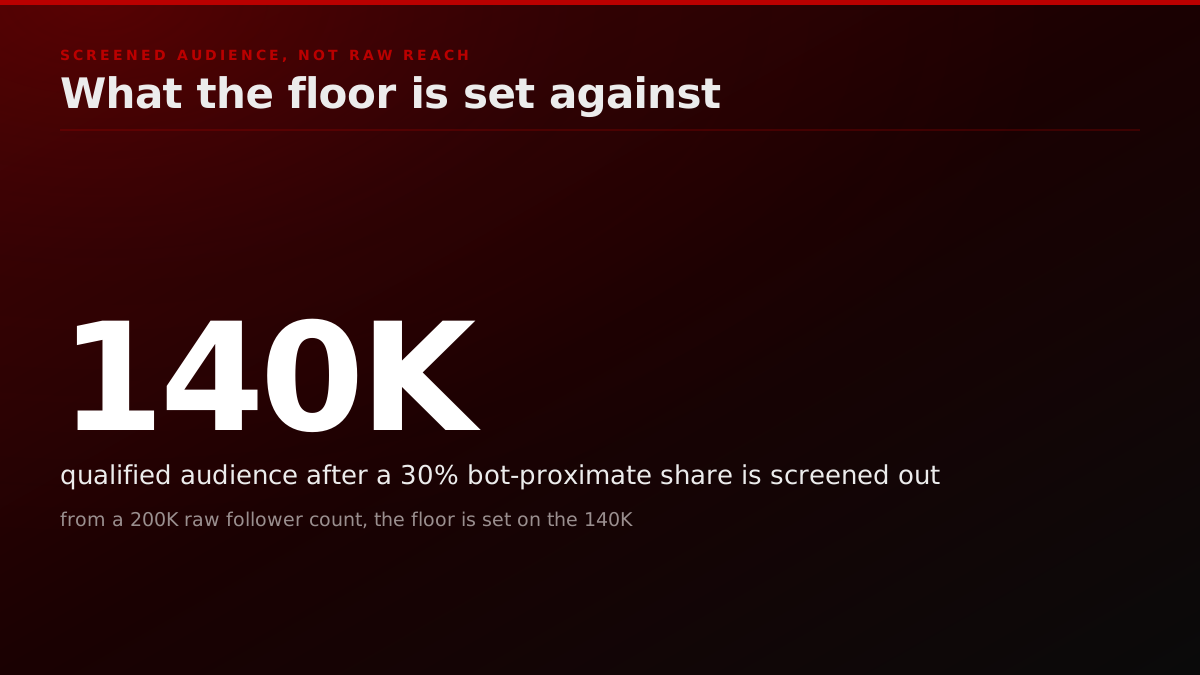
The floor is set against the screened audience, not the raw follower count. A creator with 200K followers and a 30% bot-proximate audience has a qualified audience of approximately 140K. The floor is calculated against 140K, not 200K. This is the distinction that matters: the commitment is to views from real accounts, not numbers that include the ghost population.
If the actual qualified view count across all placements comes in below the floor, refund logic applies per the signed service agreement. The exact refund structure depends on the campaign scope, but the mechanism is real. It is in the contract. It is the reason we run the 5-signal audit before proposing any creator: we do not want to commit to a floor we cannot hit.
This mechanism is covered in more detail on the KOL marketing service page. The page documents the audit methodology and the contractual structure around the floor. Founders who want to understand the specific signals and thresholds can review that page before any scope conversation.
Operator noteA 200K-follower account at 30 percent bot-proximate is contracted against 140K qualified, not the raw 200K., FORKOFF service agreement
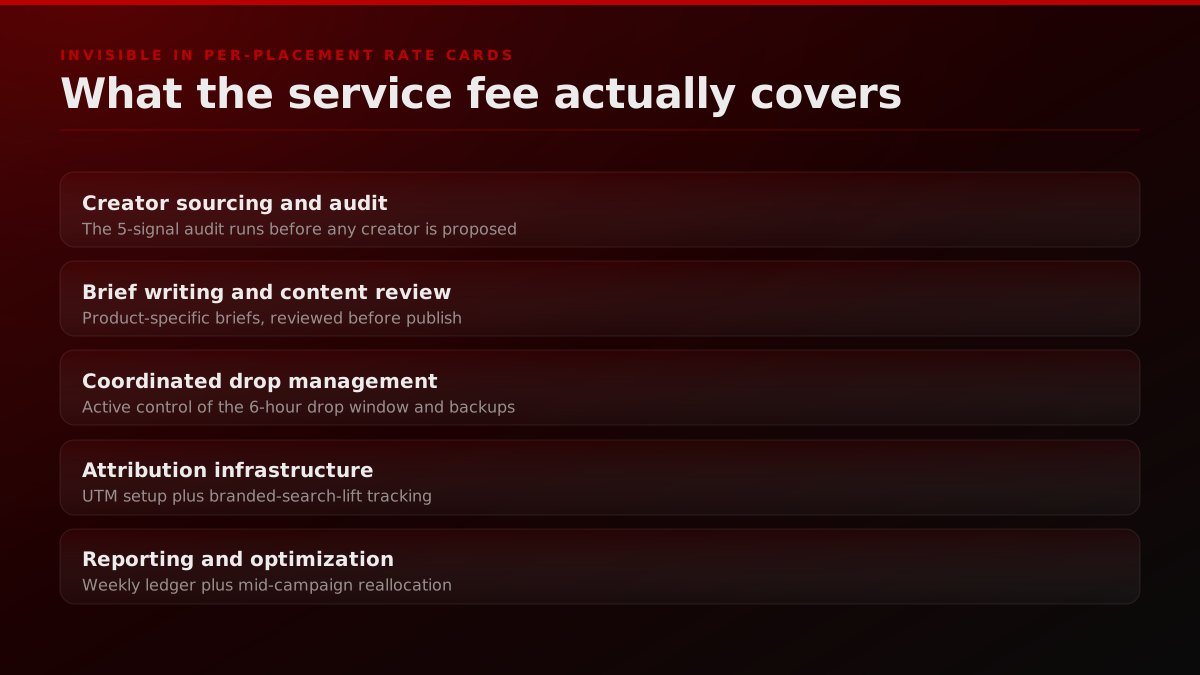
The hidden math: what each tier covers in our service fee
The service fee at each tier covers five operational deliverables that are invisible in per-placement rate cards: creator sourcing and 5-signal audit, brief writing and content review, coordinated drop management across the 6-hour window, attribution infrastructure including UTM setup and branded-search-lift tracking, and weekly performance reporting with mid-campaign reallocation. These are not line items most agency proposals surface.
Creator sourcing and audit: The 5-signal audit runs before we propose any creator. The sourcing process identifies creators whose audience composition matches the product's buyer profile, not just creators whose follower count meets the reach target.
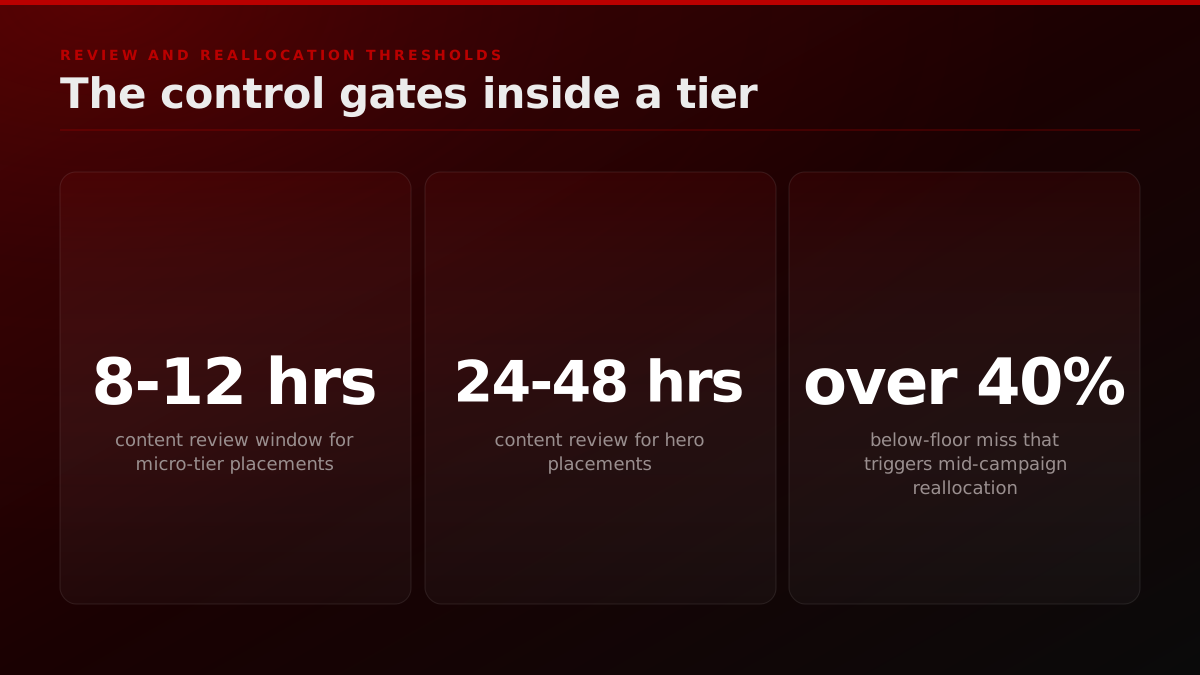
Brief writing and content review: Creator briefs are product-specific. A brief for a DeFi protocol differs materially from one for a SaaS analytics tool. Content review cycles run 8 to 12 hours for micro-tier and 24 to 48 hours for hero placements.
Coordinated drop management: The 6-hour drop window requires active management. If a creator misses the window, a backup activates. If a post underperforms in the first 4 hours, a repost or thread extension is triggered.
Attribution infrastructure: The fee includes UTM setup, creator-specific tracking links, and a post-campaign attribution model that captures branded search lift alongside direct-click conversions. The attribution layer is what connects campaign spend to metrics founders can take to their board.
Reporting and optimization: Every campaign produces a weekly performance ledger: qualified views, engagement by creator, and conversion attribution. At Scale and Flagship, mid-campaign reallocation happens when a creator underperforms the floor benchmark by more than 40%.
At Pilot tier, this overhead is a meaningful percentage of total spend. At Scale and Flagship, it amortizes across a larger creator roster. The per-qualified-view economics improve as the tier scales.
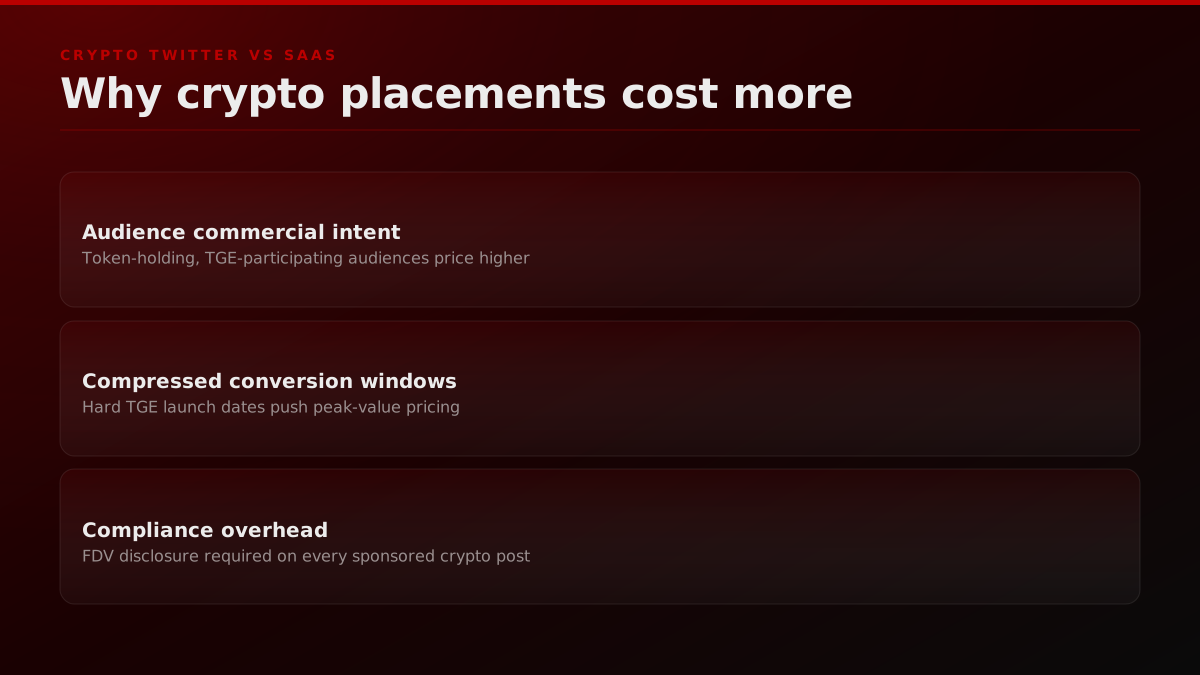
Crypto Twitter vs SaaS X campaigns: tier multipliers
Crypto KOL placements carry a 30 to 50 percent premium over equivalent SaaS-tier rates at any follower band, driven by three factors: higher audience commercial intent (token-holding, TGE-participating audiences price differently than career-operator audiences), compressed conversion windows (TGE hard launch dates push peak-value pricing), and compliance overhead (FDV disclosure requirements on sponsored crypto content). The same tier structure (Pilot, Scale, Flagship) applies to both verticals but the cost is not identical. For a breakdown of how pricing and fraud screening compare across the main crypto KOL campaign platforms, the category comparison covers marketplaces, managed services, and agency models side by side.
Crypto KOL placements carry a 30 to 50 percent premium over equivalent SaaS-tier rates at any follower band. The premium exists for three reasons specific to the crypto creator ecosystem.
Audience commercial intent: Crypto Twitter audiences have higher average commercial intent than equivalent-reach SaaS audiences. A 200K-follower crypto account whose audience holds tokens and actively participates in TGEs is a meaningfully more valuable placement than a 200K-follower SaaS account whose audience includes a large proportion of career operators who are never buying what you are selling. The creator knows this and prices accordingly.
Shorter conversion windows: Crypto launch windows are compressed. A token generation event has a hard launch date; the campaign must produce conversions in a window measured in days, not weeks. The pricing pressure of a short conversion window flows to the creator: they know the campaign has a specific window where their post has peak value, and the rate reflects that peak.
Compliance overhead: Most jurisdictions now require FDV (Fully Diluted Valuation) disclosure on sponsored crypto content. Managing compliance for 15 crypto creators across a Scale-tier campaign adds overhead that SaaS campaigns do not carry. The compliance layer is part of what the service fee covers, but the creator rates themselves reflect the regulatory complexity of crypto-adjacent content.
For a SaaS Flagship campaign, the deliverables in the tier comparison table above apply directly. For a crypto Flagship campaign, the same deliverables apply with a 30 to 50 percent cost multiplier on the creator fees, plus compliance overhead in the service layer.
This is the reason we do not publish fixed tier prices. A Pilot for a DeFi protocol costs materially more than a Pilot for a SaaS analytics tool, even with identical deliverables. The application process lets us scope against your specific vertical and provide a realistic number rather than a generic placeholder.
Operator noteCrypto KOL placements run 30 to 50 percent over equivalent SaaS rates at the same follower band., FORKOFF Q1-Q2 2026 sales corpus, n=75
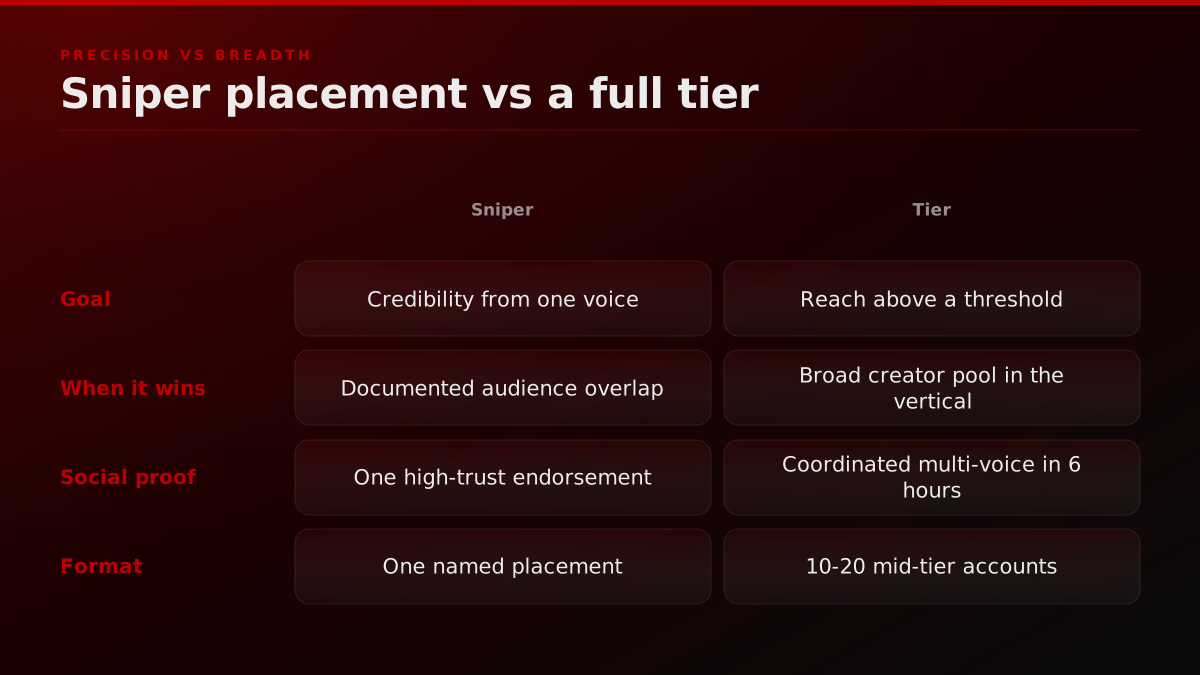
Sniper placement: when one creator beats a tier
A sniper placement is a single-creator engagement with a named figure whose documented audience overlaps your buyer with high precision, used when credibility from one trusted voice outweighs the reach of a coordinated multi-creator drop. The tier structure covers campaigns where distribution breadth is the goal. Sniper placement is the alternative structure where precision is the goal and the right named creator has more campaign value than 10 mid-tier accounts combined.
A sniper placement is a single-creator engagement with a named figure whose specific audience overlaps your buyer with high precision. The typical sniper scenarios: a founder wants a specific podcast host-read because the podcast's audience is documented (subscription revenue data, listener survey, etc.) to be approximately 70% senior engineers in the product's target vertical. A Web3 operator wants a placement with a specific on-chain community figure because that figure's community participates heavily in similar TGEs.
I would rather speak to one big creator than spread across ten mid-tier accounts I cannot fact-check.
The founder's preference for sniper over tier comes from a specific calculation: one highly credible voice in the exact right community is more valuable than 15 mid-tier voices in adjacent communities. This is correct in some scenarios and wrong in others.
Sniper wins when: The target creator has documented audience overlap with the product's buyer (not assumed; documented via creator media kit or third-party audience data). The campaign goal is credibility establishment rather than raw reach. The product converts better from high-trust single endorsements than from coordinated multi-voice campaigns.
Tier wins when: The goal is reach above a threshold that a single creator cannot hit. The product benefits from coordinated social proof (multiple voices saying the same thing in a 6-hour window) more than single-voice credibility. The creator pool in the vertical is broad enough that 10 to 20 mid-tier accounts produce more qualified views than one macro account at the same cost.
Single-hero sniper placement is available as a standalone product outside the three-tier structure. See /services/kol-marketing for the sniper placement scope, or contact us to discuss whether your specific campaign goal fits a sniper or a tier.
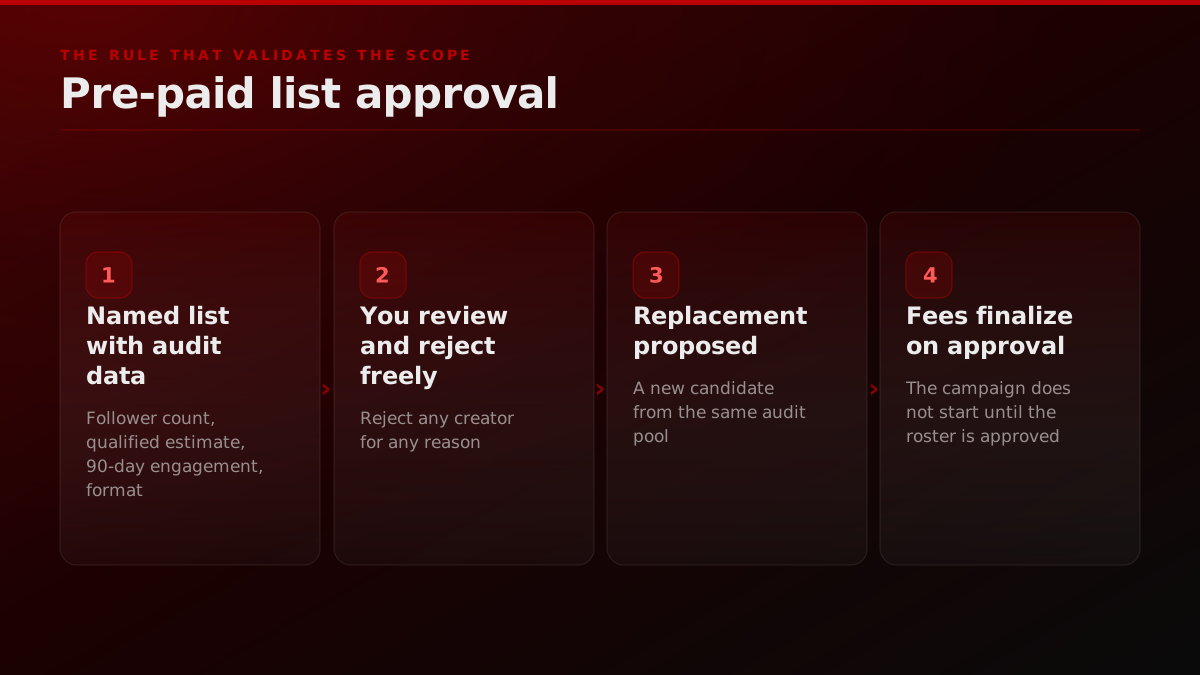
Pre-paid list approval: the rule that validates the scope
The pre-paid creator list approval is the mechanism that separates a scope commitment from a vague promise. Before any fees finalize, FORKOFF provides a named creator list with the 5-signal audit data for each proposed creator, including qualified follower estimate, 90-day engagement rate, vertical alignment, and proposed post format. The founder reviews and approves the list, rejects any creator for any reason, and the campaign does not start until the roster is approved. This step is not standard agency practice, which is exactly why it matters.
Paul Mit
@pmitu
How to get from $0 → $20k MRR: - Founder-led marketing - X / LinkedIn consistent posting - Reddit replies and posts - DM talks with people you know - Outreach new people - Being active in communities - SEO/GEO - Product-led Growth strategies - Free directories - Free launch
The pre-paid list approval works as follows: before any fees change hands beyond the initial application, we provide a named creator list with the audit data for each creator. The list includes follower count, qualified follower estimate, 90-day engagement rate, vertical alignment assessment, and the proposed post format for each creator.
You review the list. You can reject any creator on the list for any reason. If you reject a creator, we propose a replacement from the audit pool. The campaign does not start, and fees do not finalize, until you have approved the creator roster.
This step eliminates a common agency failure mode: campaigns where the proposed creator list sounds credible in the pitch but the actual placements go to creators the client never approved or would not have approved had they seen the data. The pre-paid list approval puts the creator selection decision on the table before money moves.
At Pilot tier, the list is small enough to review in an afternoon. At Scale, reviewing 10 to 20 creator profiles with audit data takes a working day. At Flagship, the hero creator candidate is the highest-priority item on the list and typically requires its own review conversation. The timeline implications of the approval step are factored into the pipeline length per tier.
The channel-selection lesson here is direct: X creator campaigns are one channel among many, and the creator list is the channel-selection decision for that lane. Getting it wrong burns the channel budget and often produces the "influencer marketing doesn't work" conclusion, which is more precisely "we bought the wrong list."
How to read an X launch campaign proposal (7-point checklist)
A sound X launch campaign proposal answers seven questions: what is the influencer tier mix and follower range, what is the pipeline length from kick-off to last placement, does the syndicate layer exist and how many channels, what percentage of budget goes to paid amplification and when, what is the specific qualified-views floor and the refund logic when it is missed, is there a pre-paid list approval step before fees finalize, and what attribution methodology connects campaign spend to conversions. Any proposal that cannot answer all seven in writing is built on opaque numbers.
How to read an X launch campaign proposal: 7-point checklist
STEPS- 01
Verify the influencer mix is specified by follower range, not a vague descriptor
A proposal that says 'a curated mix of relevant influencers' without follower bands is not scoped. Push the agency to break the mix into tier counts: how many creators in 10K to 100K, how many in 100K to 500K, how many at 500K plus. The follower band determines the campaign's reach ceiling and the per-placement cost structure. Without that breakdown, you cannot compare two proposals against each other, and you cannot back-calculate the implied creator cost vs service fee split. If the agency resists naming bands, that resistance itself is the signal: scope opacity is the default revenue protection for broker-style agencies, and a real operator will hand you the band breakdown in the first scope email.
- 02
Confirm the pipeline length is tied to specific weekly milestones
A '6-week campaign' commitment without milestone breakpoints tells you nothing about what happens in week 3. The proposal should map outreach and creator sign-off to weeks 1 and 2, content review and brief approval to week 3, the coordinated drop window specified by a named day, and attribution measurement starting the day after the drop. If the proposal collapses these into a single 6-week block, the agency has not yet decided when they will start outreach or how much time they will allow for review cycles. That ambiguity becomes scope creep later. Demand the week-by-week milestone map before signing.
- 03
Check whether the engagement guarantee names qualified views or raw impressions
If the proposal commits to '2M guaranteed impressions,' ask exactly how those impressions are screened for bot traffic. If there is no documented bot-screen methodology, the guarantee is a raw platform API number that includes ghost accounts, low-engagement scroll-past views, and audience members with no relationship to your buyer. Qualified-views floors apply a multi-signal audit (account age, follower-to-following ratio, 90-day engagement pattern, posting cadence, geographic composition) before the floor is calculated. The audit removes bot-proximate accounts from the qualified count. If the proposal does not name the audit signals, the guarantee is decorative.
- 04
Make sure the service fee is separated from creator fees line by line
A single bundled total hides how the budget splits between agency overhead and actual creator payments. The separation matters for two reasons. First, you can benchmark creator rates against per-post market data and know whether the agency is marking up creator fees beyond a fair management margin. Second, if you ever bring campaign management in-house, you know the true creator cost without the agency layer. A line-by-line split also lets you negotiate scope: keep creator fees fixed and trim service-fee deliverables you do not need, or trim creator count and keep the management overhead. Bundled totals foreclose those negotiations.
- 05
Require a pre-paid creator list approval step before fees finalize
If the creator list is not shown with audit data before fees finalize, you are buying a list you have not approved. The 'curated list' the agency described in the pitch defaults to whoever the agency has active relationships with at proposal time, which may or may not be the optimal mix for your product. The pre-paid approval step works as follows: the agency sends a named list with follower count, qualified-follower estimate, 90-day engagement rate, vertical alignment notes, and proposed post format for each creator. You can reject any creator for any reason. The agency proposes a replacement from the audit pool. Fees do not finalize until you have approved the roster.
- 06
Get the refund or make-good structure specified in the agreement
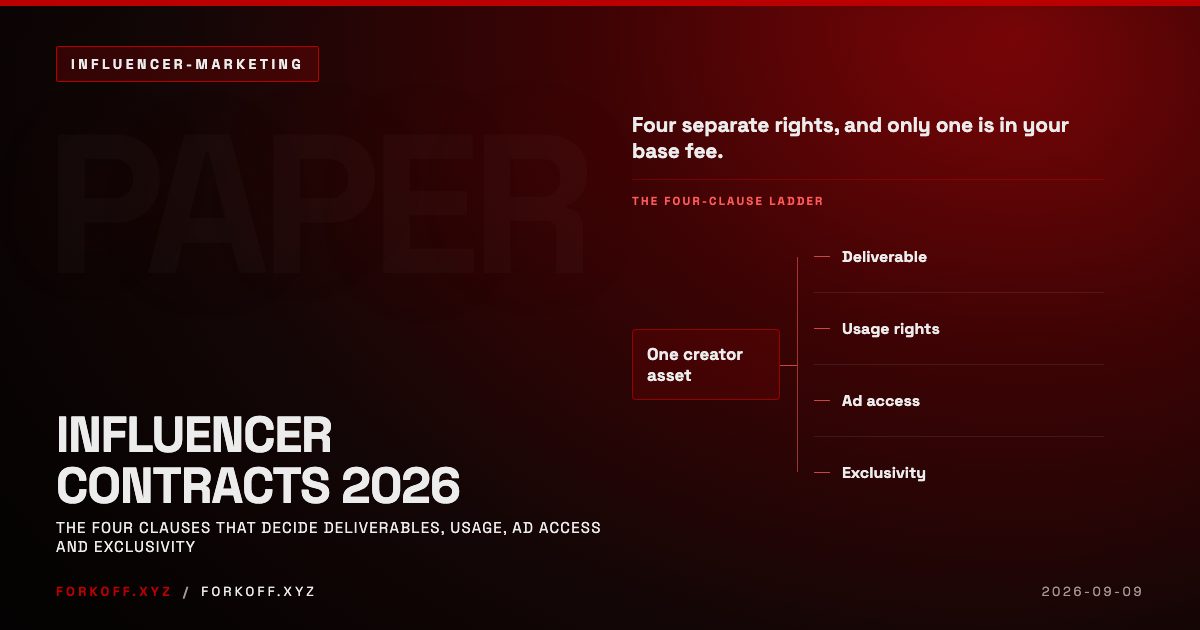
Ask the agency directly: if qualified views come in below the floor, what happens? The answer must specify a refund mechanism (partial refund of campaign cost) or a make-good (additional placements at no charge to close the gap). 'We will do our best to hit the floor' is not a contract term and produces zero recourse if the campaign underperforms. The refund structure should also specify the trigger threshold (below 100 percent of floor, below 80 percent, below 60 percent) and what each threshold produces. A floor without a refund clause is a marketing claim, not a delivery commitment. Get the trigger thresholds and the make-good schedule into the signed agreement. For the rights clauses that sit alongside those commercial terms, see Influencer Contracts in 2026.
- 07
Confirm Web3 or crypto compliance handling if the campaign is crypto-adjacent
FDV (Fully Diluted Valuation) disclosure is now a regulatory requirement in most jurisdictions for sponsored crypto content. If the proposal does not specify how disclosure language flows through creator posts, assume the compliance layer is not being managed. Specifically: the agency should name which disclosure phrasing is included in each creator brief, who reviews the final post copy for disclosure compliance, and how exceptions (creators who refuse standard disclosure language) are handled. For 15 crypto creators at Scale tier, this overhead is meaningful and is part of what the service fee covers at the crypto premium. Demand the compliance protocol in writing before signing any crypto-adjacent campaign.
For further context on evaluating Web3 marketing agencies, the FORKOFF Web3 agency selection guide covers the 7-question audit framework for vetting any crypto marketing agency before signing.
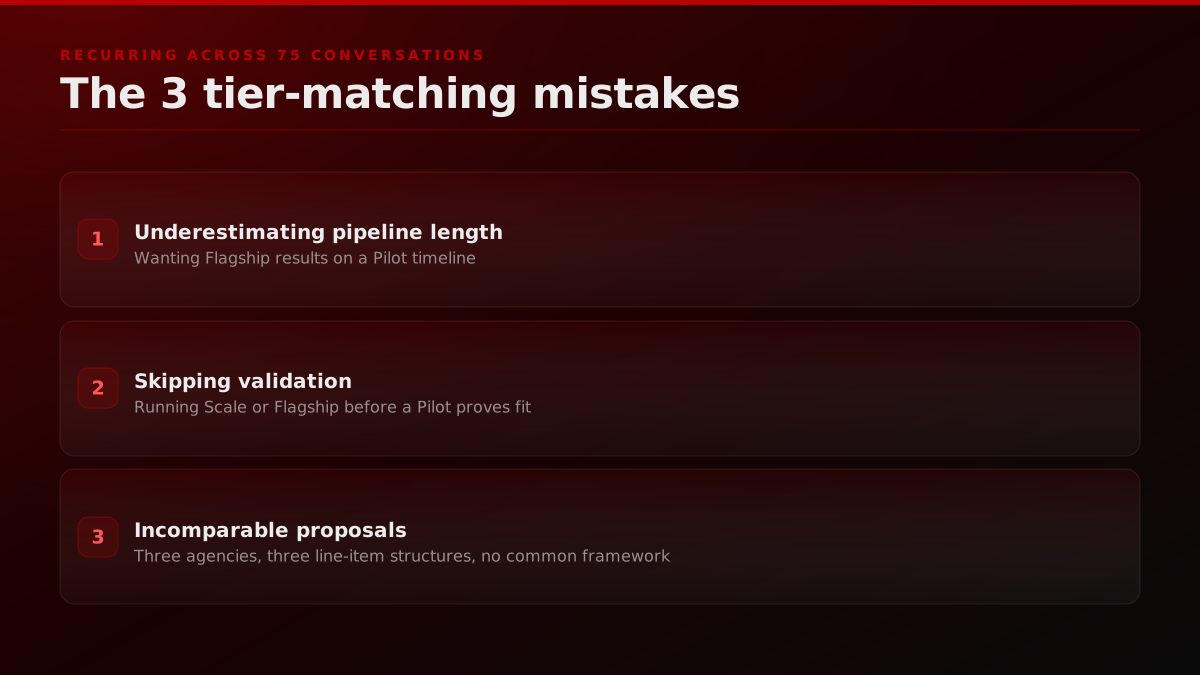
What 75 sales calls taught us about tier-matching
The three-tier structure emerged from 75 sales conversations where founders described their campaign goal and we mapped it to a scope. Three misalignments recur across those conversations: founders underestimating pipeline length (wanting Flagship results on a Pilot timeline), founders running Scale or Flagship campaigns before validating product-creator fit at Pilot, and founders receiving incomparable proposals from multiple agencies with no common decomposition framework to compare against.
I stretched my budget to the next tier because the lower one would not have bought a coherent campaign. The decomposition made the trade-off legible.
Why the three-tier pattern emerged
Across 75 FORKOFF-managed X (Twitter) launch conversations, three campaign shapes consistently emerge as the default cost-per-qualified-view structures: a small validation Pilot, a broad-distribution Scale, and a hero-placement Flagship. Below Pilot, signal is too weak to inform next-step decisions. Above Flagship, marginal spend buys paid media better than additional creators.
Three things recur across those conversations that the tier structure addresses directly.
First: founders underestimate pipeline length. The most common misalignment in a first scope conversation is a founder who wants Flagship results on a Pilot timeline. The named hero placement takes time to source, negotiate, and brief correctly. The 8-week Flagship pipeline is not padding; it is the minimum to run a hero-inclusion campaign without quality failure. Founders who compress the timeline get either a lower-tier campaign or a hero placement that was not properly briefed, which produces an underperforming post at a hero-level cost.
Second: the validation question is often unanswered. Many Scale and Flagship conversations reveal that the founder has never validated whether their product converts through X creators at all. The Pilot tier exists to answer that question. Running a Scale campaign without a Pilot creates a situation where a larger budget is committed to a channel that has not been validated. The tier structure pushes the validation question to the surface before the budget conversation.
Third: the proposal comparison problem. Founders who have talked to multiple agencies before arriving at FORKOFF consistently describe the same experience: three proposals, three different line item structures, three incompatible numbers. The tier framework gives those founders a way to read the proposals against a common structure. If an agency's "Scale" proposal does not include a syndicate layer, it is not a Scale campaign. The framework becomes a comparison tool the founder owns.
The FORKOFF about page covers the broader context of how FORKOFF operates as an AI agency with outcome-based pricing. The tier structure for X campaigns is one expression of a broader philosophy: commit to what you can measure, measure what you committed to, and make the measurement available to the client before the campaign ends.
How to get a tier match for your specific budget
The tier structure maps deliverables, not dollar amounts, because creator costs vary materially by vertical (crypto carries a 30 to 50 percent premium over SaaS), placement count, and amplification budget. The application process maps your specific budget to the tier whose deliverables it unlocks, then returns a named creator list with audit data, a qualified-views floor, and service agreement terms within 48 hours. No sales call is required to receive the tier-match recommendation.
The process: send your budget range and product context via /contact. No sales call required to receive a tier-match recommendation. Within 48 hours of receiving your budget, we send back: the tier your budget maps to, the specific creator candidate list with audit data, the qualified-views floor for your campaign, and the service agreement terms.
The recommendation covers three things you need to evaluate the scope before committing: what the campaign produces (deliverables per the tier), what it commits to (qualified-views floor and refund logic), and who is on the list (named creators with audit data). These three together let you evaluate the scope against any competing proposal using the 7-point checklist above.
There is no application minimum for Pilot tier. Scale and Flagship have minimum campaign budgets that reflect the creator mix and amplification layer required to deliver the qualified-views floor. The minimum is specified in the scope recommendation, not in a public rate card, because it varies by vertical.
For Pilot applicants: if your budget is at the Pilot level and you are running your first X campaign, say that in the application. The scope recommendation for first-time campaigns includes additional context on what signals to look for in the attribution data that tell you whether the Pilot result justifies Scale-level spend.
For Scale applicants: if you have Pilot results from a previous campaign (with us or with another agency), include that data in the application. Validated product-creator fit changes the creator selection criteria and can compress the Scale pipeline from 6 weeks to 4.
For Flagship applicants: if you have a specific named creator in mind, include that in the application. We run the 5-signal audit on the creator before the first scope recommendation and tell you whether the audit supports a hero-level commitment or whether a different creator in the same vertical would produce better outcomes.
Where to go next
The three tiers (Pilot, Scale, Flagship) give founders a structure to evaluate any X launch campaign proposal against real deliverables: influencer mix, pipeline length, clip distribution model, amplification budget split, and the qualified-views floor. The comparison table in this post maps those seven dimensions. The 7-point checklist maps the questions to pressure-test any agency proposal against the same framework.
If you know your tier, the next step is a scope recommendation at /contact.
If you are still deciding between tiers, the qualified-views floor mechanism section above covers the contractual mechanism that makes the commitment real. The KOL marketing service page covers the full service structure including pricing by application.
If you are evaluating FORKOFF against other agencies, the Web3 marketing agency selection guide covers the 7-question framework for vetting any crypto marketing agency before signing. The influencer marketing cost study covers per-activation unit economics with first-party data from 12 campaigns.
The Three Ring Distribution framework positions X KOL campaigns within the broader launch distribution structure. Ring 3 is the creator and community layer; this post is the decomposition of what Ring 3 looks like when it is properly scoped and managed.
Your /about context: FORKOFF operates with outcome-based pricing and weekly audit ledgers across every active engagement. The tier structure is the front end of that operating model. The application is the way in.