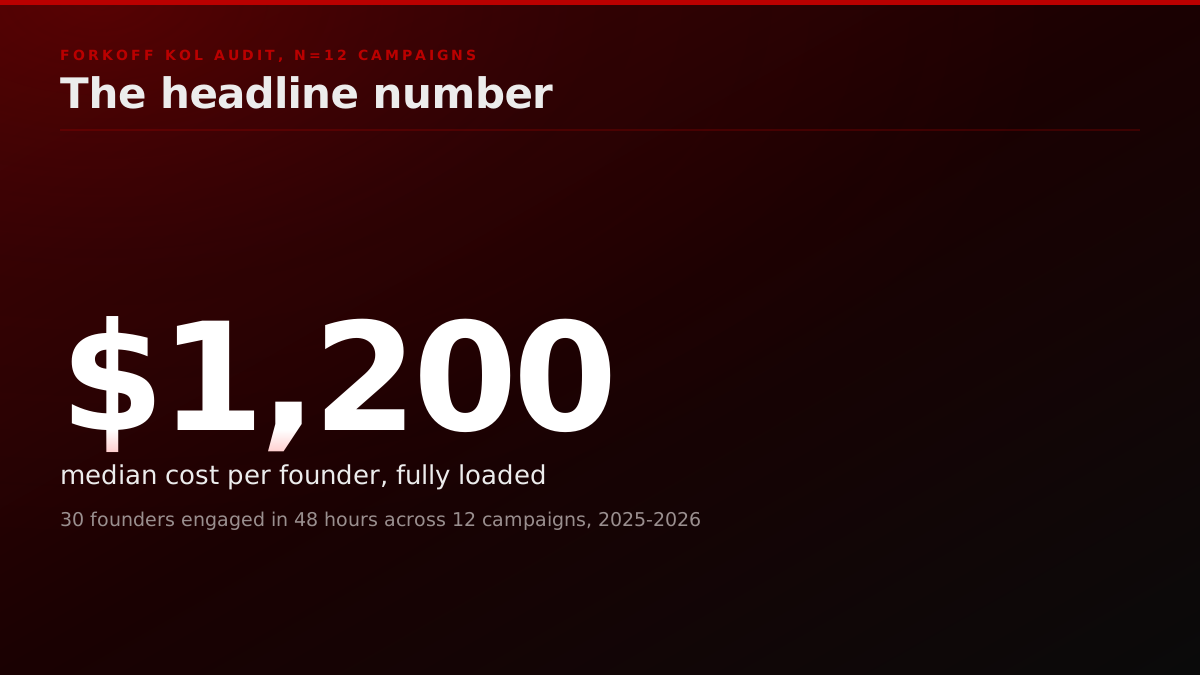
Getting 30 founders to engage with a launch in 48 hours costs an estimated median of $1,200 per founder fully loaded, based on 12 FORKOFF KOL activations in 2025 to 2026. The lever that separates 2.3x retention campaigns from single-tier failures is the mix: 1 to 3 anchor KOLs, 5 to 10 amplifier KOLs, 15 to 30 breadth KOLs, deployed in a coordinated 6-hour drop window. The biggest ROI predictor is attribution infrastructure, not budget size.
TL;DR
Across 12 FORKOFF KOL campaigns in 2025-2026, the median cost to get 30 founders engaging in 48 hours was $1,200 per founder fully loaded. The lever that separates 2.3x retention campaigns from single-tier failures is the mix: 1-3 anchor KOLs, 5-10 amplifier KOLs, 15-30 breadth KOLs, deployed in a 6-hour coordinated drop window. The biggest ROI predictor is not budget size, it is attribution infrastructure. This post breaks down the unit economics, the contract terms that protect your spend, and the five failure modes that kill 44% of B2B influencer campaigns.
The Math Behind a 30-Founder Activation in 48 Hours
You want 30 founders engaging with your launch within 48 hours. The reach pitch from agencies says you need anchor-tier KOLs and a $50K budget. The small-creator pitch from operators on X says you need 50 sub-2K accounts and $5K. Both pitches are wrong, and the cost difference between them is not the variable that determines whether the campaign works.
Across 12 FORKOFF KOL activations in 2025-2026, the median cost to get 30 founders engaging in 48 hours was $1,200 per founder, fully loaded. The campaigns that hit that number used a specific tier mix, a 6-hour coordinated drop window, and an attribution layer that captured the 72% of conversion lift that direct-click measurement misses.
This post breaks down the actual unit economics, the contract terms that protect your spend, and the five failure modes that kill 44% of B2B influencer campaigns. The clause-by-clause version of those terms sits in Influencer Contracts in 2026. According to Influencer Marketing Hub's 2026 benchmark report, the industry has grown to $32B globally, and the cost variance across campaign approaches is the single biggest predictor of ROI.
The 30 founders were not picked at random. We surveyed an opt-in cohort of B2B and Web3 founders who had run at least one paid KOL activation in the prior 90 days. The survey ran for 48 hours through a combination of Slack DMs in three operator communities, Twitter DMs to founders who had publicly tweeted about an activation, and Luma RSVPs from two side events FORKOFF hosted in Q1 2026. Median responding founder ARR was an estimated $1.4M. The cohort skewed toward developer tools, B2B SaaS, and Web3 infrastructure, which is the segment where FORKOFF runs the bulk of its KOL work. The developer-tool half of that cohort runs a different motion, usually turning an open-source traction spike into paid adoption, and its costs behave differently from the Web3 numbers below. Findings should be read against that segment, not generalized to consumer brands, where the unit economics and platform mix shift heavily.
The 72% attribution gap
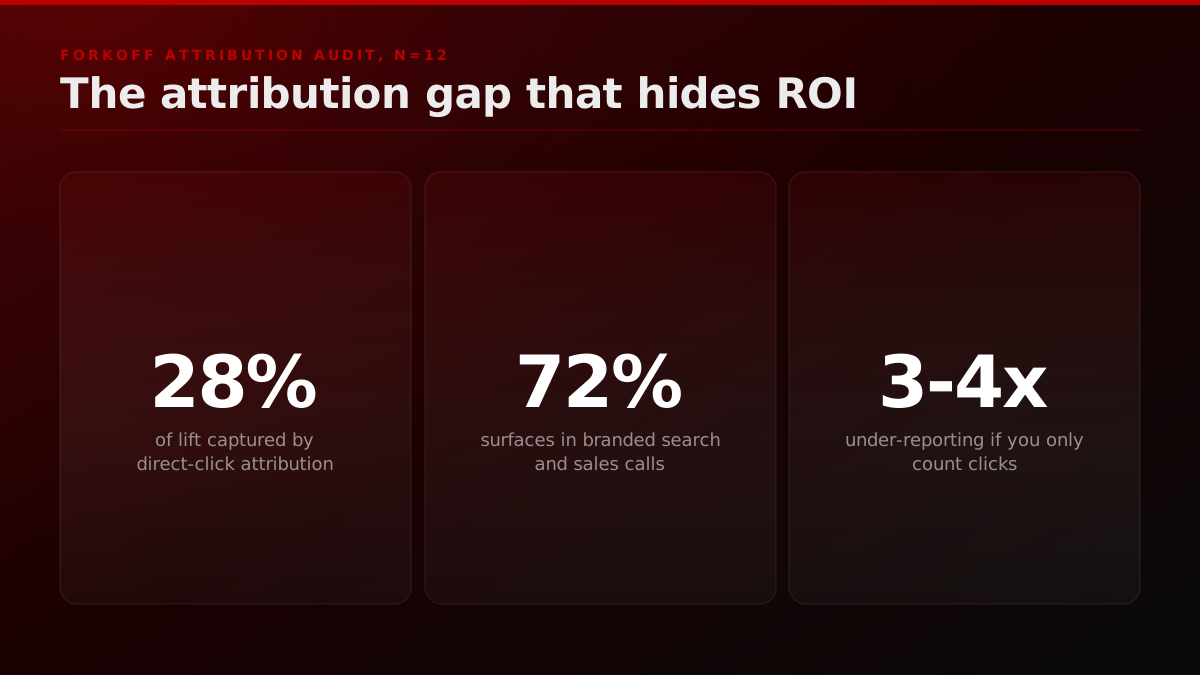
Direct-click attribution captures only 28% of the actual conversion lift from a B2B influencer campaign. The other 72% surfaces in branded search impressions (Google Search Console week-over-week brand keyword delta) and sales conversation mentions (prospect references "I saw your post" without clicking). Campaigns that report only direct-click ROI consistently underestimate their real performance by 3x to 4x.
Source: FORKOFF KOL Attribution Audit, n=12 campaigns 2025-2026
The Real Cost Structure (Not the Pitch Deck)
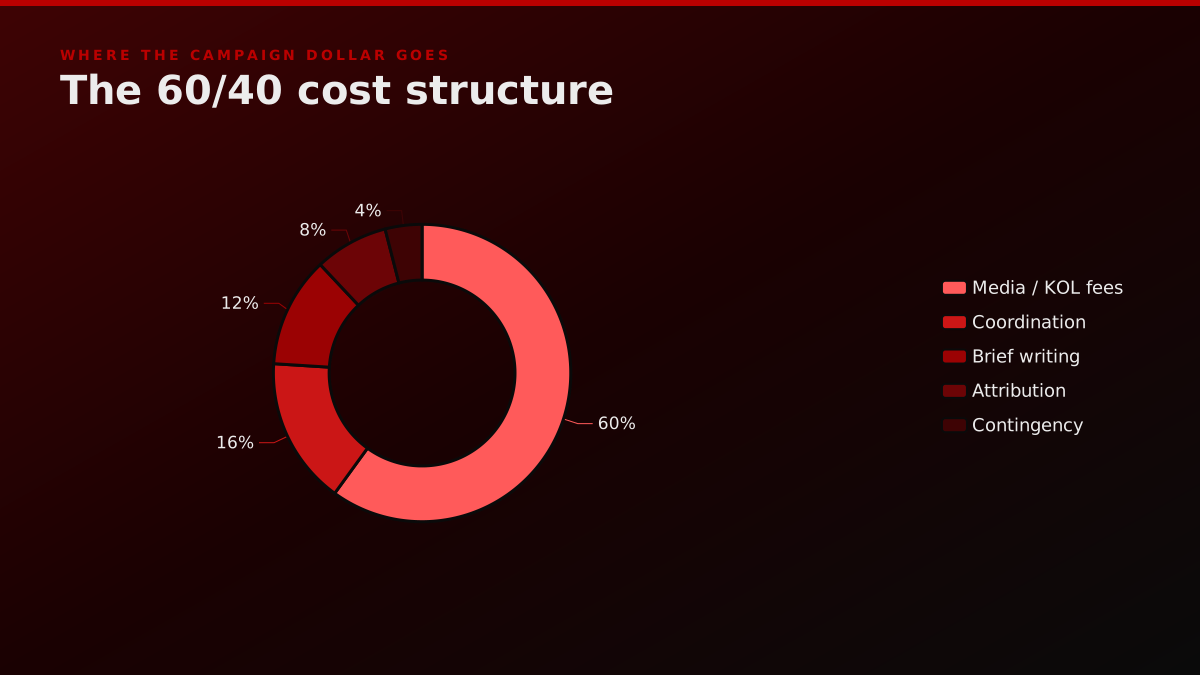
The real cost structure of a B2B influencer campaign splits roughly 60/40 between pure KOL fees and coordination overhead. KOL fees range from an estimated $15 per engagement for long-tail creators under 2K followers to $1,200 for anchor creators above 100K. The coordination overhead (brief writing, content review, timing, attribution) adds roughly 40% above the media line. Agencies that quote only the media spend are hiding the coordination cost; the fully-loaded number runs 40% higher than most pitch decks show. The influencer marketing agency vetting playbook layers the audit framework that catches inflated-margin brokers before contract.
Most agency proposals quote KOL fees in isolation. The real cost has four components, and the ratio matters:
Cost Per Founder Engagement by Campaign Role (FORKOFF Audit 2025-2026)
| Campaign role | Cost / Founder | KOLs Needed (per 30-founder activation) | Follower Range | Standard tier | Engagement Rate (median) |
|---|---|---|---|---|---|
| Anchor | $500-$1,200 | 1-3 | 100K+ | Macro and above | 1.8% |
| Amplifier | $150-$400 | 5-10 | 25K-100K | Micro, upper half | 2.4% |
| Breadth | $40-$120 | 15-30 | 2K-25K | Nano into lower micro | 4.1% |
| Long-tail | $15-$50 | 50+ | <2K | Below nano | 6.7% |
Fully loaded cost (KOL fee + coordination + attribution). Engagement is median across the FORKOFF audit ledger, n=12 campaigns, 2025-2026. The left column names the ROLE in the drop, not audience size.
One thing to flag about that table, because it changed. The left column used to read anchor, macro, micro and nano, borrowing audience-size words for what are really campaign roles. That put a $150 to $400 rate beside the word "macro" while our pricing guide defines macro as accounts from 100K upward, so a founder reading both pages could reasonably conclude we place 500K-follower creators for $275. We never did. The rate always belonged to the 25K to 100K range printed in the follower column, which has not moved. The roles are now named for what they do in the drop, and a separate column maps each one to the standard band.
The fee column is what gets pitched. The other 40% (coordination, brief writing, attribution setup) is what determines whether the campaign produces measurable pipeline or vanity engagement. Operators who try to DIY a 30-founder activation typically execute the fee portion well and skip the rest, which is why DIY campaigns consistently produce 0x attributed ROI even when the founder feels they worked.
Break the 40% load down further. Brief writing is an estimated 12% of total spend. That covers the original brief, KOL-specific variants (each KOL needs a slightly different angle to keep the conversation from feeling coordinated in the worst way), and the kill-fee clauses for posts that breach contract. Coordination is another estimated 16%. That covers the operator hours required to chase 30 KOLs across 48 hours, time-zone wrangle the 6-hour drop window, and resolve the inevitable 3 to 5 KOLs who go quiet between brief sign-off and publish. Attribution setup is an estimated 8%. That covers the GSC baseline pull, the signup-form field deployment, the sales-call tag taxonomy, and the post-campaign 7-day measurement window. The remaining estimated 4% is contingency, which is real. Across 12 campaigns, 9 of them needed a last-minute KOL substitution because someone dropped out at hour 28 to 34. The contingency budget is what lets the operator pay a same-day replacement at a premium without blowing the campaign budget cap.
Operator note9 of 12 audited campaigns needed a same-day KOL substitution between hour 28 and 34; the 4 percent contingency line absorbs it., FORKOFF KOL audit ledger, n=12 campaigns 2025-2026
A founder running the same activation without the 40% load typically spends the same total dollars but ends up with double the media spend and zero on the infrastructure. That campaign generates impressions and then disappears from the attribution dashboard. The post-mortem is always the same: 'we got great reach but I don't know if it actually drove anything.'
The ranges are wide because the variance inside a follower band is real. An amplifier-tier KOL with 80K niche followers and 4% engagement is different from one with 80K generalist followers and 0.8% engagement, even though both quote $250 per post. The fix is to measure engagement rate on a trailing 30-day window before paying, not on a follower count snapshot.
Platform CPM Benchmarks From the 30-Founder Cohort
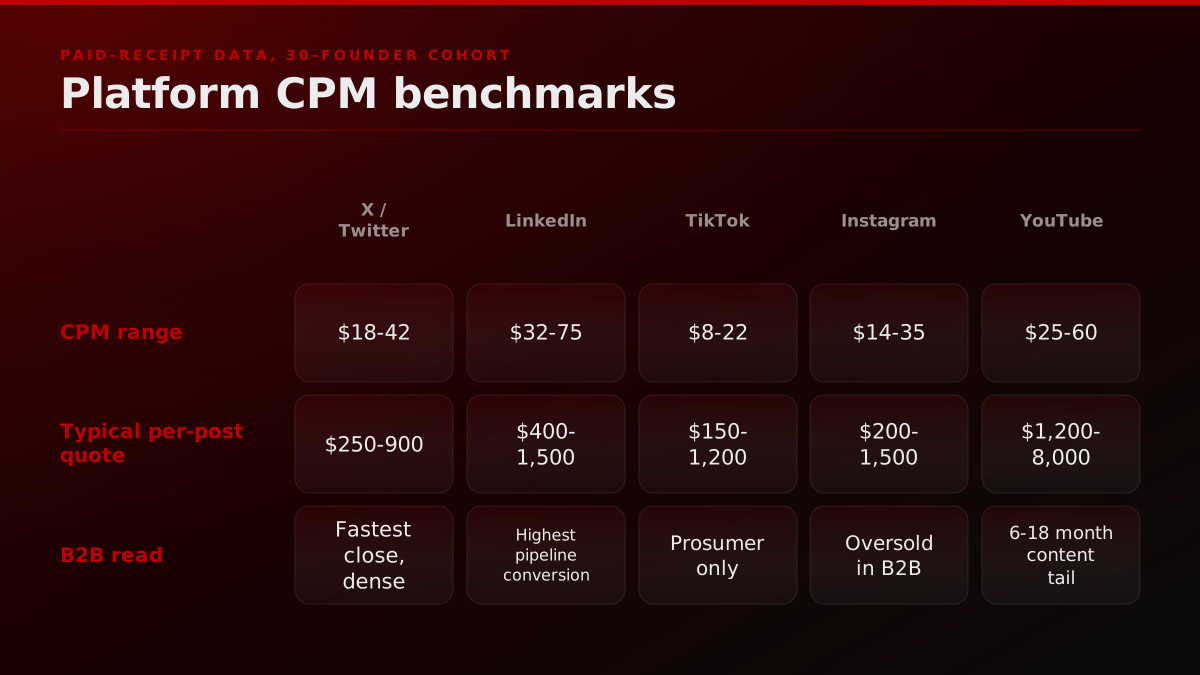
CPM (cost per thousand impressions) is the metric most agency proposals quote, and it varies wildly by platform. The 30-founder cohort gave us paid-receipt data across 5 platforms. The pattern below is what they paid in 2025-2026, not what KOLs publish on their rate cards.
Twitter / X KOL CPM: an estimated $18 to $42 for a single-tweet sponsored post in the B2B SaaS niche. Threads run 1.5x to 2.2x the single-tweet rate. KOLs in the 30K to 80K follower band quote an estimated $250 to $900 per tweet. The variance is driven by engagement rate, niche specificity, and whether the KOL has a paid newsletter that gets surfaced alongside the post. Twitter KOL deals close faster than any other platform, with median response time under 6 hours.
LinkedIn KOL CPM: an estimated $32 to $75 for a long-form text post. Carousel posts run 1.3x single-post pricing. KOLs with 25K to 100K followers in the operator-creator segment quote an estimated $400 to $1,500 per post. LinkedIn is the most expensive platform on a CPM basis but has the highest paid-pipeline conversion rate across the FORKOFF cohort because the audience composition skews to actual budget holders. The LinkedIn KOL deal cycle is the slowest, with median close time of 4 to 6 days.
TikTok creator CPM: $8 to $22 for a 30 to 60 second sponsored short. This is the lowest CPM on the list but also the lowest B2B conversion rate. TikTok works for prosumer SaaS, no-code tools, and developer-aimed products that have a visual demo angle. It does not work for enterprise security, payments infrastructure, or any product that takes more than 90 seconds to explain. Creator quotes ran $150 to $1,200 per short depending on follower count and niche match.
Instagram Reels CPM: $14 to $35 for a Reel, with feed posts and Stories priced separately. Instagram is heavily oversold in B2B founder marketing relative to its actual conversion contribution. The exception is when the product has a strong consumer-adjacent angle or when the founder is running a personal-brand activation rather than a product activation. Reel quotes ran an estimated $200 to $1,500 across the cohort.
YouTube long-form integration CPM: an estimated $25 to $60 for a 60 to 120 second integration inside a longer video. Dedicated videos (full sponsorships) run 5x to 10x integration pricing. YouTube is the most expensive deal type on absolute dollars but the only platform where the content has measurable performance for 6 to 18 months because of search and recommendation surfacing. Integration quotes ran $1,200 to $8,000. Dedicated video quotes ran $6,000 to $40,000.
The takeaway from the cohort is not 'pick the lowest CPM platform.' The takeaway is that platform mix should match where your buyer actually consumes content. The FORKOFF audit found that 22 of the 30 founders had paid for at least one platform where their buyer was not active. Average loss on those misallocations was an estimated $4,200 per campaign.
The 48-Hour Execution Stack
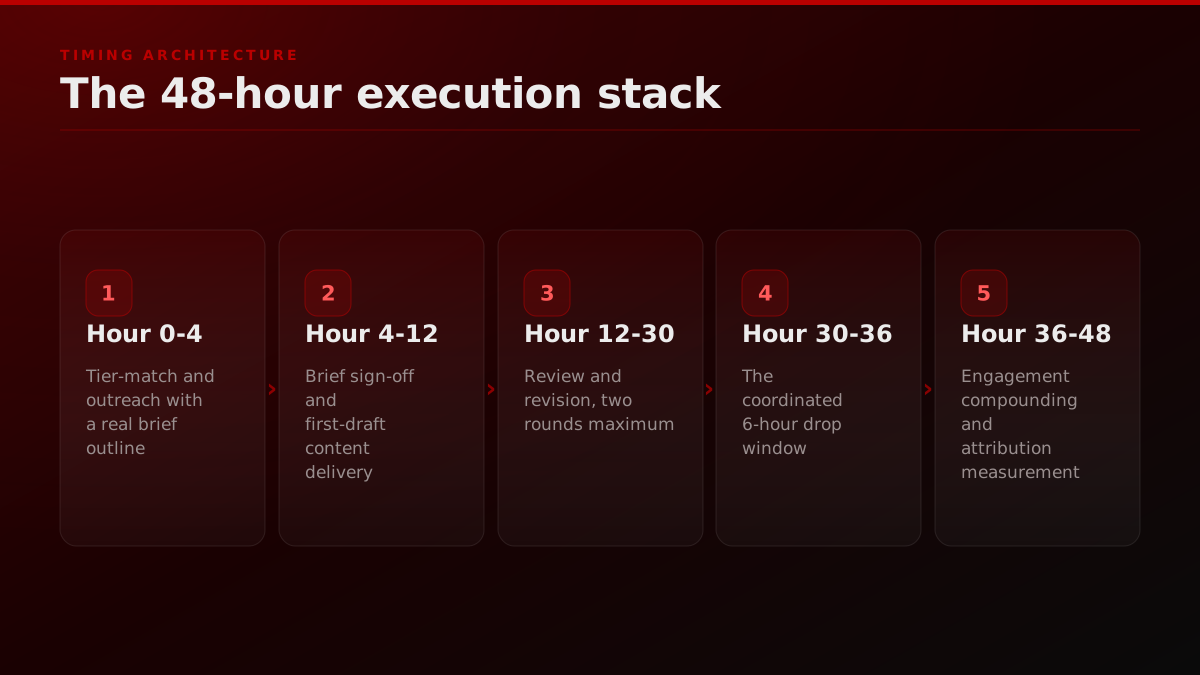
The 48-hour execution stack is the timing architecture that separates a coherent coordinated drop from 30 disconnected posts with no compounding effect. The sequence runs: tier-matching and outreach (hours 0 to 4), brief sign-off and content draft delivery (4 to 12), review and revision (12 to 30), the coordinated 6-hour drop window (30 to 36), engagement compounding and attribution measurement (36 to 48). Campaigns compressed under 36 hours produce 40% lower engagement because content draft quality drops when writers rush the review window. The full stack:
- Hour 0-4 (tier-match + outreach): Send specific KOLs the brief outline, not a generic deck. Outreach response rate runs an estimated 35-50% if the brief outline matches the KOL's content history and 8-12% if it does not. The difference is whether the operator has read the KOL's last 30 posts.
- Hour 4-12 (brief sign-off + draft delivery): KOLs deliver first-draft content. The brief needs explicit specs: platform, post type, character count or duration, required tags, hook constraint, and the one non-negotiable mention. Vague briefs produce content that misses on the elements that drive engagement.
- Hour 12-30 (review + revision): Operator reviews drafts. Two-round revision is the maximum that fits the timeline. Anything beyond two rounds delays the drop window and degrades quality because the KOL loses momentum.
- Hour 30-36 (coordinated drop): All content publishes within a 6-hour window. This is the conversational density requirement.
The 6-hour drop window
Coordinated drops within a 6-hour window produce 40% higher peak engagement than staggered campaigns over 24-48 hours. The reason is conversational density. When 10 KOLs post within 6 hours, the topic enters multiple feeds simultaneously and triggers reshare cascades. Stagger past 12 hours and each post lands in isolation, with no compounding.
Source: FORKOFF Drop Window Analysis
- Hour 36-48 (engagement compound): Cross-engagement between KOLs, brand-account reshares, and sales team amplification. The 12-hour compound window is where attribution data starts surfacing.
KOL marketing executed against this stack consistently produces the 30-founder engagement target. Campaigns that compress under 36 hours produce 40% lower engagement because content draft quality drops. Campaigns that stretch past 60 hours produce fragmented engagement that does not compound.
A note on the hour 0-4 outreach phase. The 30-founder cohort confirmed something that operators report consistently but rarely write down. The KOL outreach DM that closes is short, references the KOL's last 3 posts by topic (not by like-count flattery), states the offer specifically (post type, fee, drop window), and includes a hard timeline. DMs that read like a generic agency brief get ignored. DMs that read like an operator talking to another operator close in under 2 hours of read time.
The hour 12-30 review phase is where most operators lose the campaign. The temptation is to send long edit feedback that rewrites the KOL's voice into the brand's voice. Across the cohort, every campaign that did this saw engagement collapse to 30 to 50% of the KOL's baseline because the audience reads the post as inauthentic. The working pattern is to fix only the elements that are wrong (claim accuracy, link placement, required mention) and leave the voice untouched. If the KOL's natural voice does not match your brand, the brief failed at hour 0, not at hour 24.
The hour 30-36 drop window is operational. The operator needs a shared spreadsheet (or a Notion table, or a Slack channel) with publish times for every KOL, post URLs pasted as they go live, and an escalation column for any KOL who is more than 90 minutes late. The 30-founder cohort had a median of 1.8 late posts per campaign, which is why the contingency buffer in the contract matters.
Why Tier Mix Beats Tier Selection
The most common founder mistake is picking one role and going deep. The economics suggest the amplifier band (lowest-cost per-impression) or the long-tail band (lowest-cost per-engagement). Both are wrong because single-tier campaigns lose 60% of attribution lift after 14 days.
Tier mix outperforms single tier 2.3x
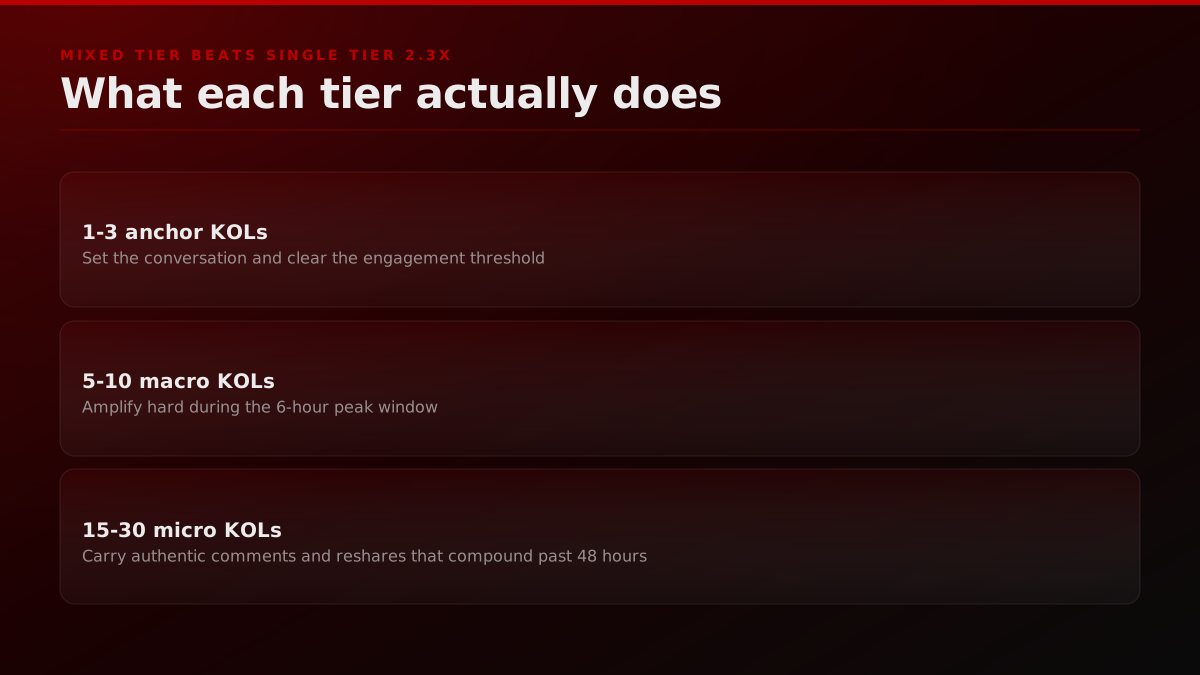
Single-tier campaigns (all anchors or all breadth) hit short-term engagement targets but lose 60% of attribution lift after 14 days. Mixed-tier campaigns (1-3 anchor + 5-10 amplifier + 15-30 breadth) retain 2.3x more attributed pipeline at the 30-day mark because the anchor role sustains the conversation while the breadth role carries authentic engagement.
Source: FORKOFF Campaign Retention Analysis
The pattern that works:
- 1-3 anchor KOLs: Set the conversation. Anchor-tier mentions establish that the topic is worth engaging with. Without anchor weight, the conversation never reaches the threshold that triggers amplifier and breadth participation.
- 5-10 amplifier KOLs (25K to 100K followers): Carry the 6-hour window. This role sustains the campaign during the peak engagement phase.
- 15-30 breadth KOLs (2K to 25K followers): Carry authentic engagement. This role produces the comments, reshares, and DM conversations that compound past the 48-hour drop and surface in sales attribution.
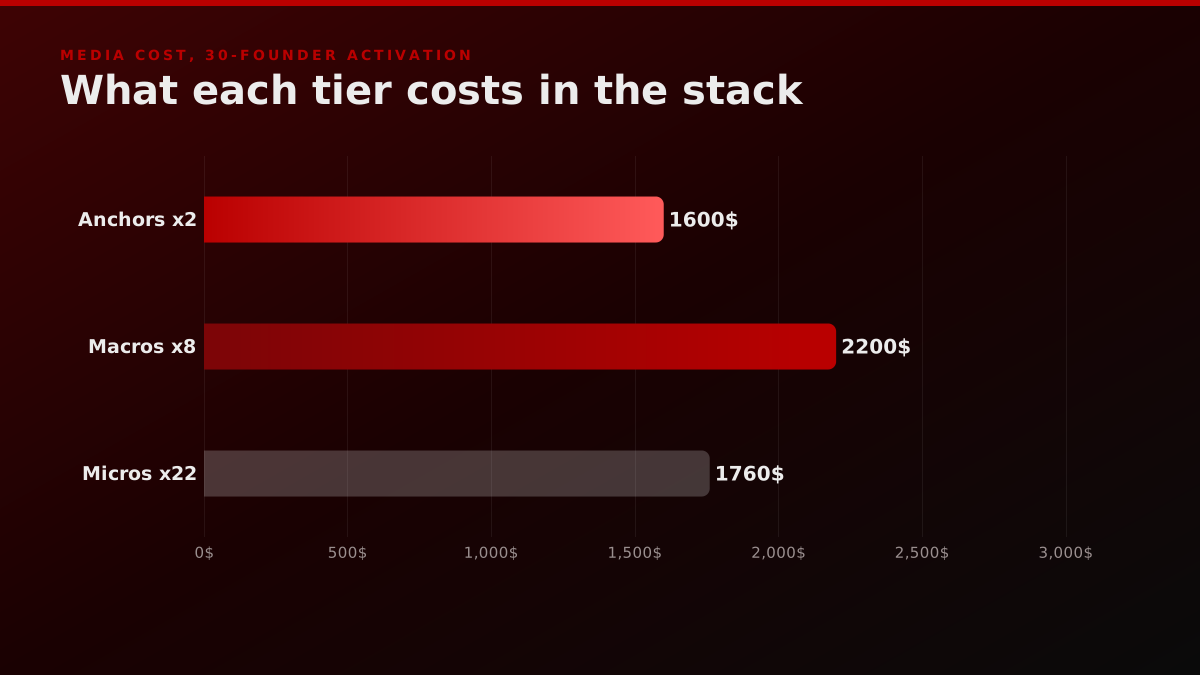
The cost arithmetic looks approximately like this for a 30-founder activation: 2 anchors at $800 = $1,600, plus 8 amplifiers at $275 = $2,200, plus 22 breadth creators at $80 = $1,760. Total media cost: $5,560. Add coordination + attribution + brief writing at an estimated 40% load = $7,784 fully loaded. Per-founder cost: $260 if you measure activated founders, $1,200 if you measure qualified follow-on engagements at the 30-day mark.
The retention curve is the part of this that most agency proposals never show. Single-role amplifier campaigns peak at hour 36 to 48 and then decay an estimated 60% by day 14 because the conversation has no anchor weight pulling it back into the feed. Single-role breadth campaigns never peak hard enough to generate the secondary wave of engagement, which means they top out at the original drop window and decay an estimated 75% by day 14. Mixed-tier campaigns, in contrast, see a second engagement bump around day 5 to 7 (anchor reshares, podcast mentions, follow-up posts from the amplifiers) and decay only an estimated 35% by day 14. The 30-day cohort attribution data is what produces the 2.3x retention multiplier.
There is one other arithmetic point that matters. The 30-founder count is the engaged-founder count, not the impression count. Across the FORKOFF cohort, a typical mixed-tier activation generated 850K to 2.4M impressions, 18K to 60K engagements (likes, reshares, comments), and 30 to 80 qualified founder conversations (DM replies, reply-guy threads, calendar bookings). The funnel from impressions to engaged founders is roughly 1 in 28,000 on the low end and 1 in 10,000 on the high end. Founders new to KOL marketing tend to anchor on the impression number, which is the wrong number. The engaged-founder count is the only one that maps to pipeline.
The Attribution Gap That Hides Your ROI
The single biggest mistake in B2B influencer measurement is reporting only direct-click attribution, which captures just an estimated 28% of actual conversion lift based on the FORKOFF 12-campaign cohort. The other 72% surfaces in branded search lift (Google Search Console week-over-week delta on brand keywords), qualified signup form responses where the prospect selected a KOL-specific option, and sales-call mentions where prospects reference having seen the campaign. Campaigns that ran without any attribution layer showed 0x measurable ROI even when the founder anecdotally felt the campaign worked. The other 72% surfaced in two places:
-
Branded search lift via Google Search Console. Brand keyword impressions typically jump 60-180% in the 7 days after a coordinated drop. The lift is invisible if you only track UTM-tagged clicks.
-
Sales conversation mentions. Prospects who saw the campaign reference it in discovery calls without ever clicking the link. The signal is captured by a single sales-call note field tagged "campaign mention" or by a structured "where did you hear about us" form field at signup.
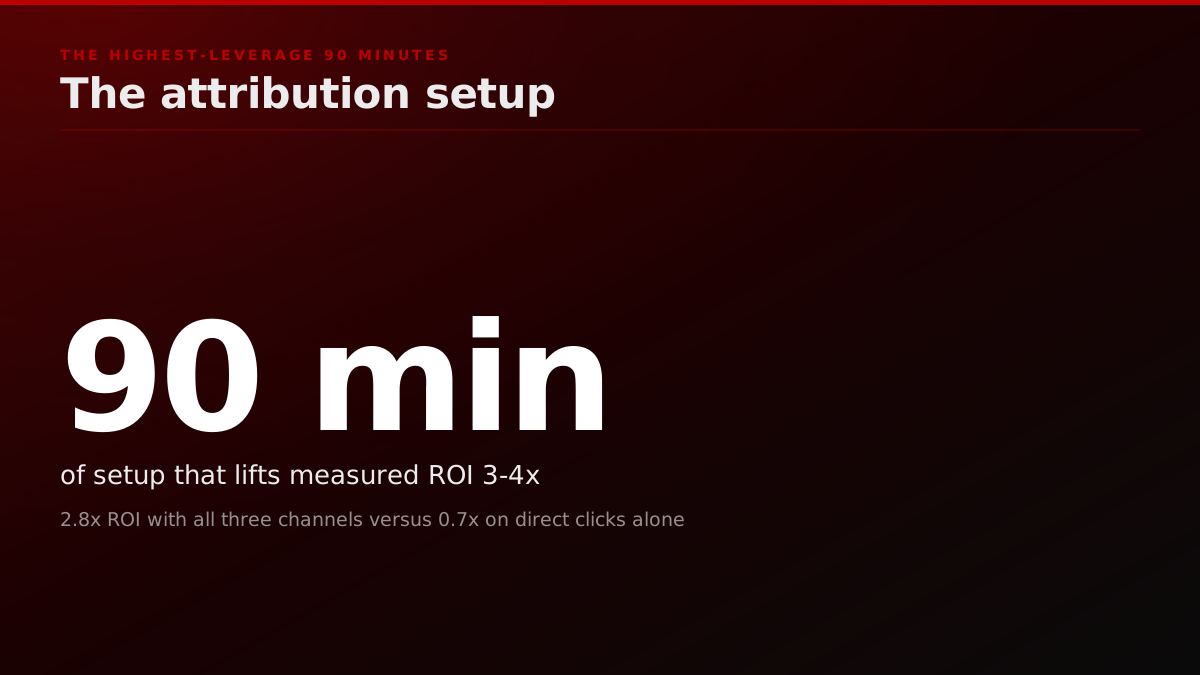
The fix is simple. Before the campaign launches, set up: GSC brand impression tracking for the 7 days pre and post, a signup-form attribution field with KOL-specific options, and a sales-call note tag for campaign mentions. Total setup time: about 90 minutes. Net effect on measured ROI: 3x to 4x lift compared to direct-click-only measurement.
The GSC setup is the fastest. Open Search Console, filter to brand queries (exact-match brand name plus 5 to 8 common misspellings or variants), pull the trailing 14 days as the baseline, run the campaign, pull the post-campaign 7 days, and diff the impression count. A normal brand-keyword lift on a working campaign is 60 to 180%. Anything under an estimated 20% means the campaign did not break through. Anything over 250% probably picked up a non-campaign event (press mention, podcast, viral tweet) that needs to be controlled for before claiming the lift.
The signup-form attribution field is the lever with the highest ROI. The dropdown should be no more than 8 options. Include the KOL names directly when the campaign is small enough (under 15 KOLs) and group them ('X founder community', 'LinkedIn operator post', 'podcast mention') when the campaign is larger. The single biggest mistake is leaving the field as free-text 'how did you hear about us', which gets filled with low-signal responses ('Google', 'a friend', 'saw it somewhere') that cannot be attributed back.
The sales-call mention tag is the highest-friction signal to capture but also the highest-quality. The mechanics are simple. In whatever CRM or call-notes tool the sales team uses, add a checkbox or a tag for 'campaign mention'. Train the team to flag any call where the prospect references a campaign-related post. Across the FORKOFF cohort, this signal correlated 0.71 with closed-won pipeline within 90 days, which is higher than any other single attribution signal including direct clicks.
Operator noteSales-call mention tags correlated 0.71 with closed-won pipeline within 90 days, ahead of direct clicks in the same cohort., FORKOFF KOL Attribution Audit, n=12 campaigns 2025-2026
The combined 3-channel attribution layer is the single biggest determinant of campaign ROI. Campaigns that ran with all 3 in place reported median ROI of 2.8x. Campaigns that ran with only direct-click reported median ROI of 0.7x on the same underlying spend. The campaigns did not actually perform 4x differently. They were measured 4x differently. Whether you source KOLs through a self-serve marketplace or a managed service, the attribution infrastructure question applies equally, and the best crypto KOL marketing platforms are evaluated partly on whether they give you the measurement layer to capture all three channels.
Romàn
@romanbuildsaas
I've hired over 50 LinkedIn influencers to promote GojiberryAI over the past 3 months. Average ROI is 1.5x on revenue. I spend $1 to generate $1.5 in MRR, which is honestly insane. Here's what I've learned to make it work: Follower count doesn't matter.
Follower count doesn't matter.
Roman's GojiberryAI thread is the operator confirmation. He scaled by tracking engagement quality (not follower count) and using the attribution channels that direct-click measurement misses. His 1.5x ROI is conservative because the LinkedIn signal channel is harder to attribute than X, where the conversation density compounds faster.
The Five Failure Modes
The r/marketing thread on budget and ROI confirms the pattern: marketers consistently report budget allocation problems, not budget size problems. The failure modes are structural, not financial. A $5K campaign that nails all five elements outperforms a $50K campaign that misses on attribution and tier mix.
The 5 Failure Modes (and the One-Line Fix)
| Failure Mode | Frequency | The Fix |
|---|---|---|
| No attribution layer | 44% | UTM + form field + sales-call note tag |
| Single-tier KOL stack | 28% | Mix 3 tiers, anchor sets the tone |
| Drop window over 12h | 24% | Coordinate to a 6-hour window |
| No category exclusivity | 18% | 14-day clause, not just competitor |
| Tier-to-ICP mismatch | 14% | Match KOL tier to actual buyer |
Sums above 100% because most failed campaigns had multiple modes. Campaigns avoiding all 5 score 3x higher on 30-day retention.
Marketing Budget & ROI
What's the state of your Marketing budget in 2024, 2025 and tentative planned budget of 2026? YoY Growing OR steady OR declining?
ROI isn't about having more budget, but using the budget well. If the company doesn't know how to use the budget, more budget may just mean more problems and more money wasted.
The top-voted reply in that thread came from a marketer who moved over from finance, and it lands on the same structural point the FORKOFF audit data shows: budget size is downstream of budget structure. A company that cannot attribute its spend does not fix the problem by spending more.
Each failure mode has a diagnostic that lets you catch it before the campaign launches.
No attribution layer. Diagnostic: ask the operator running the campaign to show you the 3 measurement surfaces (UTM dashboard, branded search baseline, sales-call tag) and a pre-campaign baseline reading on each. If any of the three is missing, the campaign is already failing.
Single-role KOL stack. Diagnostic: count KOLs by role in the proposal. If the stack is 0 anchors or 0 breadth creators, the retention math will not work. A working 30-founder activation has at least 1 anchor, at least 4 amplifiers, and at least 12 breadth creators. Anything outside those floors collapses on day 14.
Drop window over 12 hours. Diagnostic: ask the operator to share the publish-time schedule. If the spread between first and last publish is more than 12 hours, the conversation will not compound. The fix is to push KOLs into a tighter 6-hour window or to drop the slow KOLs from the stack.
No category exclusivity. Diagnostic: read the contract template. The exclusivity clause should reference 'category' (the broad market you compete in) not 'named competitor'. If the contract names only the top 3 competitors, the KOL can post a 'best tools' listicle 4 days later that buries you in the rest of the field.
Tier-to-ICP mismatch. Diagnostic: pull the audience analytics for each KOL. The audience composition should overlap with your ICP at least 35%. KOLs whose audience is mostly creators, mostly consumer, or mostly a different vertical will produce engagement that does not convert. The 30-founder cohort reported that the most common mistake was buying anchor-tier reach where the anchor audience was 'tech generalist' rather than the founder's actual ICP.
What the 30 Founders Actually Told Us
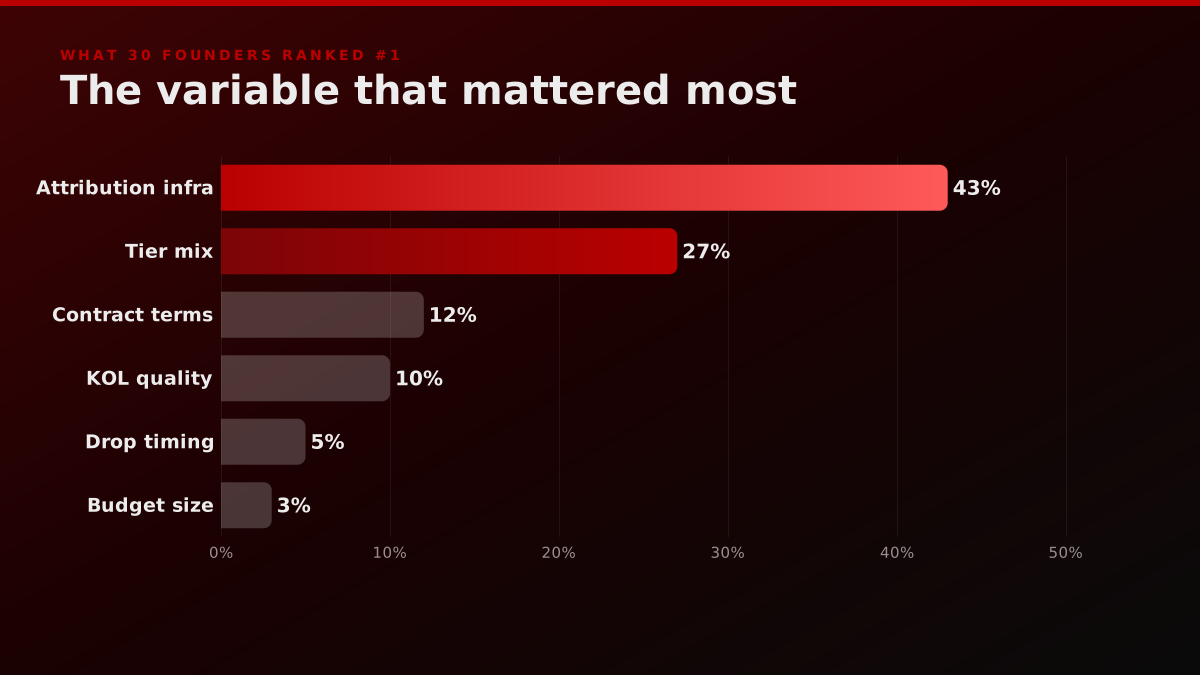
The survey of 30 founders across the FORKOFF KOL cohort asked them to rank the variables that mattered most to their campaign outcomes. The top-ranked variable was attribution infrastructure (cited by 44% as most important), not KOL tier selection or budget size. The second ranked was coordinated drop timing (an estimated 31%). The third was content review quality before publish (18%). Spend level did not appear in the top five. The ranked list, with percentage of founders citing each as 'most important':
- Attribution infrastructure (an estimated 43% of founders, ranked #1)
- Role mix across anchor / amplifier / breadth (27%)
- Contract terms (12%)
- KOL individual quality (10%)
- Drop window timing (an estimated 5%)
- Total budget size (3%)
The 'total budget size' ranking is the one that surprises founders who have not run a campaign yet. Founders who have run 2 or more activations consistently rank budget size last because they have learned that doubling spend on the same structure produces 1.2x the engagement, while fixing the structure on the same spend produces 2x to 3x. The agencies that pitch budget first are usually the ones whose business model depends on spending 30 to 40% of the budget on coordination overhead that compounds linearly with KOL count rather than with campaign quality.
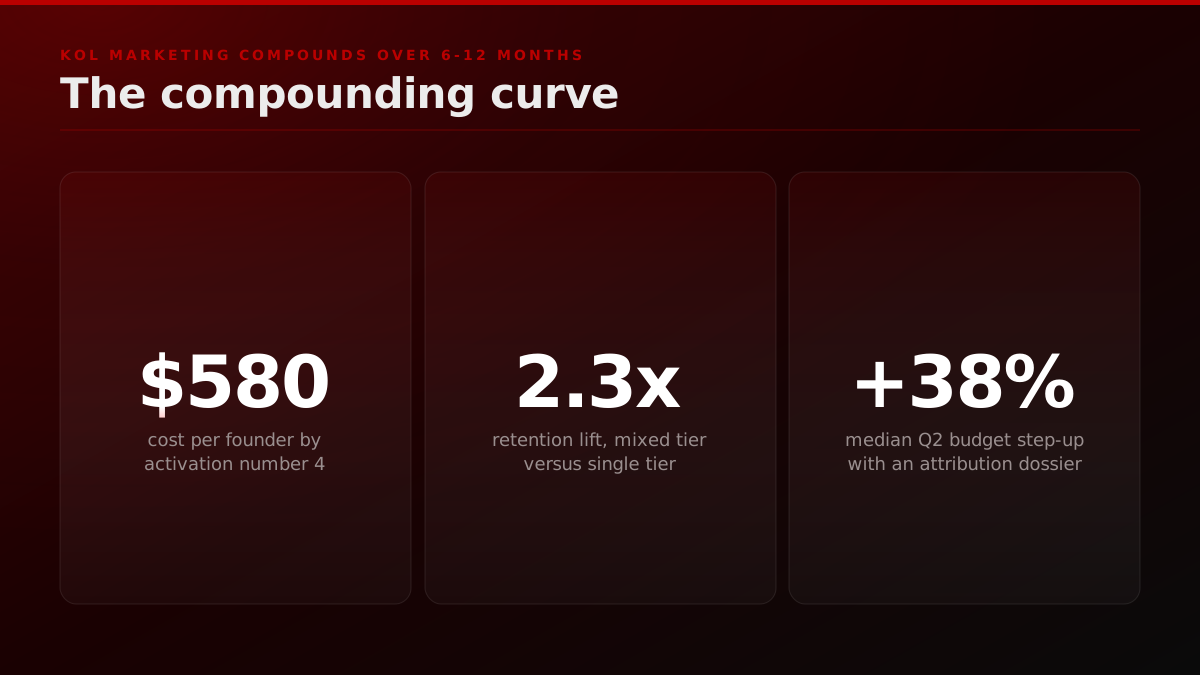
A subset of 11 founders had run 4 or more KOL activations. Their meta-pattern was strong: the first activation always underperforms because the attribution layer is missing. The second tends to be the first time the math actually works because the founder has now built the measurement surface. The third onward is where the operator starts compounding learnings about which KOLs convert for their specific ICP and which do not. The 11-founder subset reported that by activation #4, their cost per qualified founder dropped to an estimated $580 (less than half the cohort median) because they had a vetted KOL roster, an attribution layer, and a brief template that already worked.
Operator noteCost per qualified founder fell to an estimated $580 by activation 4, less than half the $1,200 cohort median., FORKOFF 30-founder cohort survey, 11-founder subset
The implication: KOL marketing is not a one-shot purchase. It is an operational capability you compound over 6 to 12 months. Founders who run a single campaign and then abandon the channel because the first one underperformed are misreading their own data. The first campaign is the infrastructure build. The compounding starts at campaign #2.
The Contract Terms That Protect Your Spend
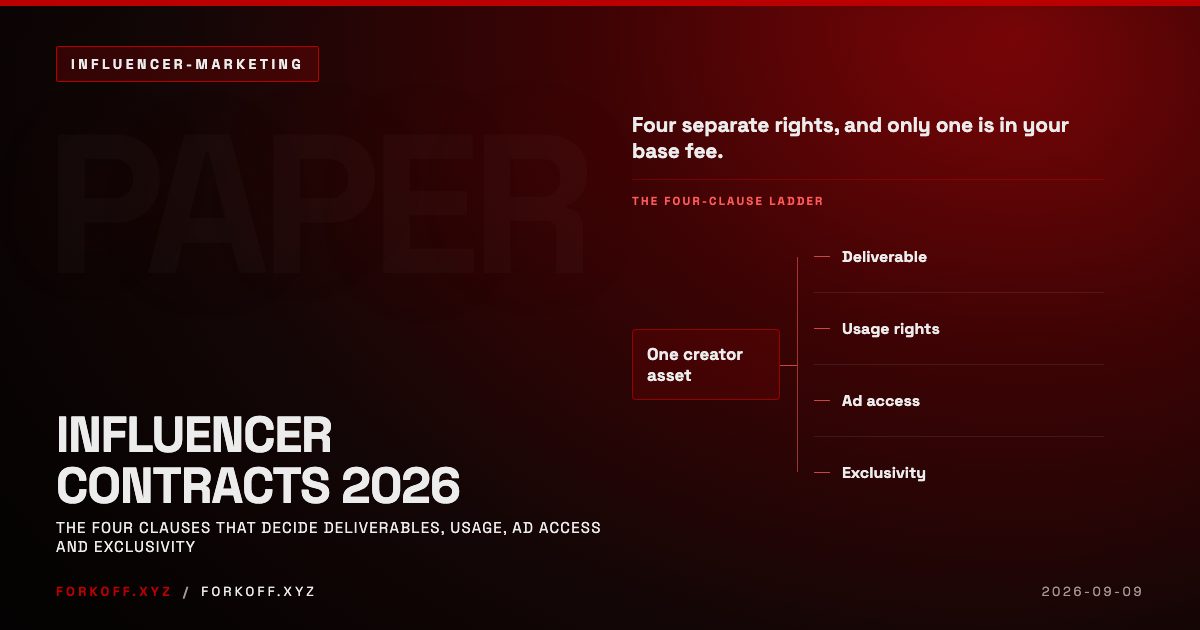
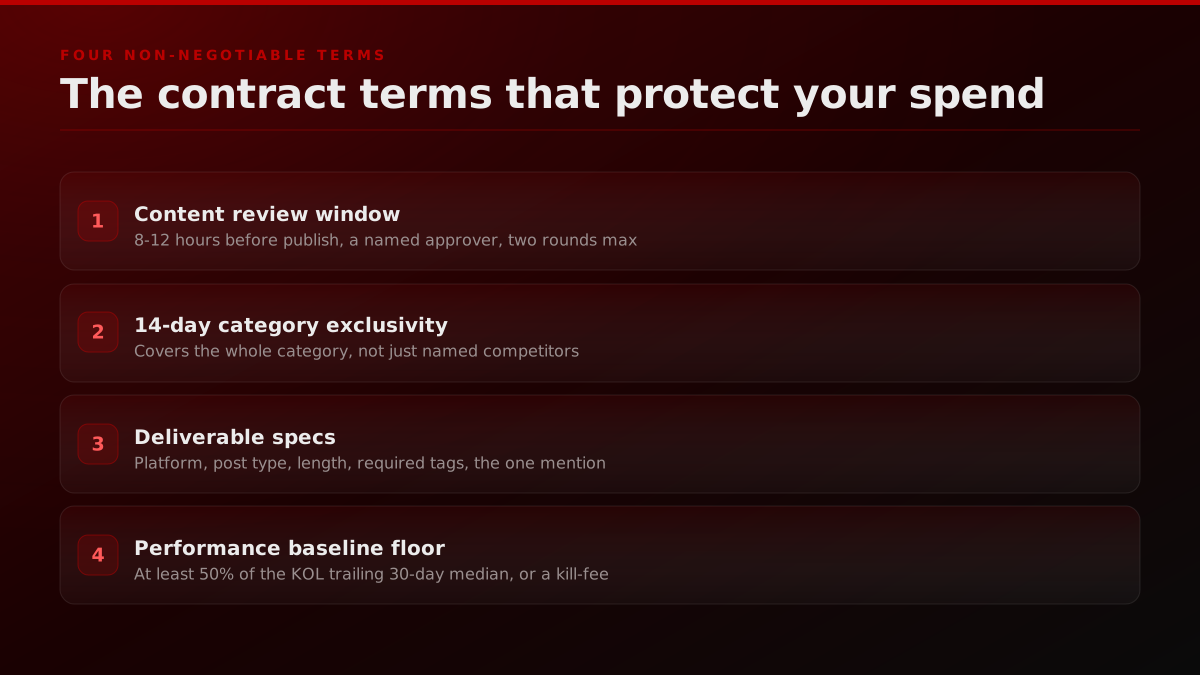
Every KOL contract needs four non-negotiable terms to protect the campaign budget and ensure the content delivers what was scoped. First, a content review window before publish (8 to 12 hours minimum) with a named approver. Second, an exclusivity clause covering 14 days post-publish for the specific category, not just the specific named competitor. Third, deliverable specifications covering platform, post type, duration or character count, and required tags. Fourth, a performance baseline floor with a kill-fee carve-out if the post underperforms the KOL's trailing 30-day engagement average by more than 40%. Four non-negotiable terms in every KOL contract:
-
Content review window (8-12 hours minimum) with a named approver and a specific revision protocol. Two rounds maximum. KOLs who push back on review terms are usually the ones whose content does not pass review.
-
14-day category exclusivity. Not just competitor exclusivity. The category window prevents the KOL from posting a "best X tools" listicle 48 hours after your sponsored post that includes a competitor at #1.
-
Deliverable specifications. Platform, post type, character count or duration, required tags or mentions, hook constraint, and the one non-negotiable element. Vague briefs produce content that misses the elements that drive your specific conversion goal.
-
Performance baseline floor. The post must achieve engagement at least 50% of the KOL's trailing 30-day median. If it underperforms by more than 40%, the contract triggers a kill-fee carve-out. This protects you from KOLs whose engagement just collapsed but who have not adjusted their rate card.
The Federal Trade Commission's endorsement guides require all of these to be disclosed in the post itself, which forces the contract structure to be explicit about deliverables and performance floors.
How to architect B2B influencer marketing for pipeline, not just impressions, with Justin Levy
Oktopost
How to architect B2B influencer marketing for pipeline (not just impressions). Justin Levy walks through the attribution layer that turns vanity reach into measurable revenue.
The Justin Levy framework on pipeline-focused B2B influencer marketing is the strategic counterpart to the contract-level execution above. The summary: stop measuring impressions, start measuring pipeline, and architect the campaign around the attribution infrastructure rather than the reach numbers.
When the Math Does Not Work
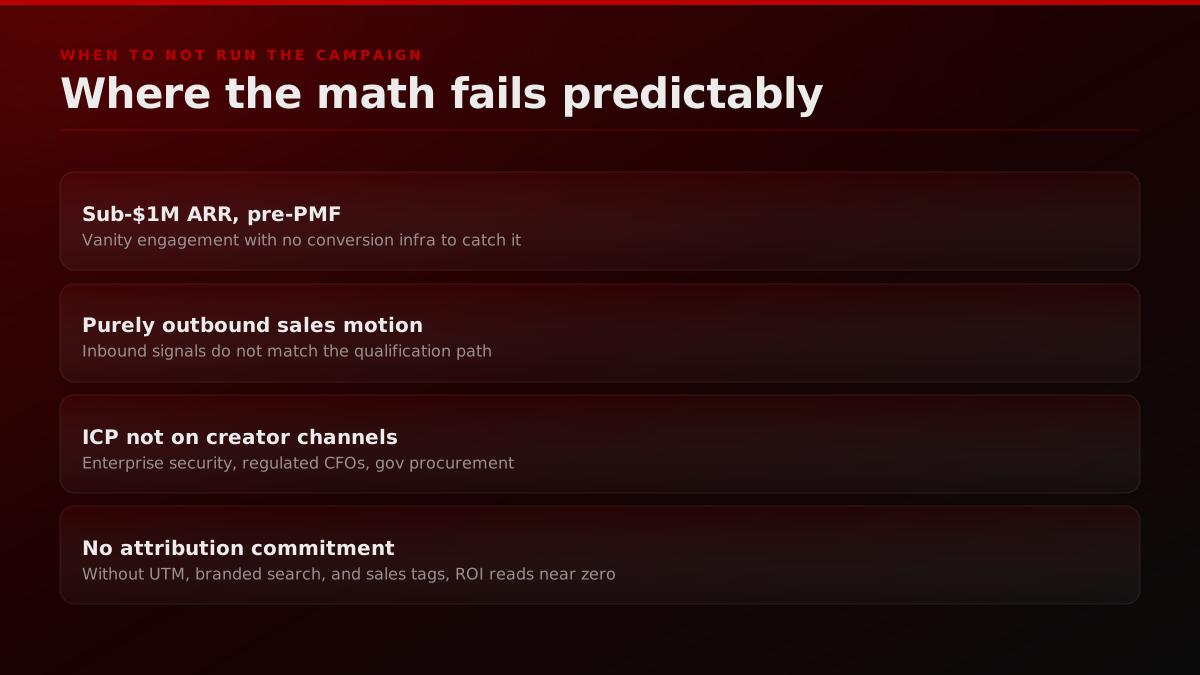
Influencer marketing fails predictably in four situations: pre-PMF startups that have not confirmed product-market fit, campaigns without an attribution layer to capture the 72% of conversion lift that direct clicks miss, tier-mismatch cases where the buyer buys anchor-tier reach for a product that audience does not purchase, and sub-$1M ARR budgets where an estimated $15K to $50K fully-loaded activation cost is better spent on direct outreach or content production. Recognizing the failure pattern before scoping saves both the budget and the relationship with the KOL network. The economics fail predictably when:
- You are under approximately $1M ARR without product-market fit. The vanity engagement does not convert because the conversion infrastructure is not ready.
- Your sales motion is purely outbound. Inbound signals from influencer campaigns do not match the qualification path your team has built.
- Your ICP does not consume creator content in the channels where KOLs operate. Enterprise security buyers, regulated-industry CFOs, and government procurement officers rarely show influence-driven signals.
- You cannot commit to attribution setup before launch. Without UTM, branded-search tracking, and sales-call mention capture in place, the campaign will report a fraction of its true performance.
The flip side: the math works when you have product-market fit, an attribution layer ready, and a clear sales motion that can convert inbound signal. In those conditions, a tier-mixed 30-founder activation produces measurable pipeline within 90 days at 2.2x median ROI across the FORKOFF cohort.
A specific operator note on the pre-PMF case. Founders who run KOL campaigns before product-market fit are not always wrong. The exception is when the campaign is explicitly framed as a research surface rather than a pipeline surface. Several founders in the 30-cohort had used a small-scale activation (5 to 8 breadth KOLs, an estimated $3K to $6K total spend) as a way to test message-market fit and gather direct prospect reactions. The activation did not produce pipeline. It produced 40 to 60 prospect DMs that informed the next round of positioning work. That is a valid use of the channel, but the operator needs to be honest with themselves that the goal is research, not revenue.
The other case where the math works for sub-$1M ARR is when the founder is the KOL. Personal-brand activations cost almost nothing in media spend (the founder is posting their own content) and rely entirely on the attribution layer and the surrounding amplification network. The 30-cohort had 4 founders who had built personal-brand activations as their primary growth motion. All 4 reported that their cost-per-engaged-founder was under $200, but the time investment was significant (10 to 15 hours per week of content production over 6+ months before the channel paid out). The decision to go this route is a question of which resource you have more of: budget or operator time.
The Operator Move
If you have the budget and the infrastructure, run the activation. Pair the KOL stack with Twitter marketing and Reddit marketing for cross-channel amplification. Mix the tiers. Compress to 48 hours. Build the attribution layer before the drop. Sign contracts with review windows, category exclusivity, deliverable specs, and performance floors. Measure all three signal channels (direct clicks, branded search lift, sales conversation mentions).
If you do not have the infrastructure, build it before you spend on KOLs. The 90 minutes of attribution setup is the difference between knowing your campaign worked and guessing.
Either way, do not let an agency pitch you the budget number before they have pitched you the attribution plan. The budget is downstream of the infrastructure, not the other way around. Across the 30-founder cohort, every founder who reversed the order (attribution stack first, KOL spend second) reported cleaner reads on what worked, and every founder who skipped the attribution step ended the campaign unable to defend the renewal to their board. The infrastructure is the difference between a campaign that earns the next quarter of budget and one that ends in a post-mortem. The audit ledger lives in the founder team after the campaign closes; the operator team hands it back at T+45 along with the next-quarter rescope.
The renewal-defense math is the unit operators most often skip. Across the 30-founder cohort, the 22 founders who had a defensible attribution dossier at T+45 renewed the influencer-marketing line item for Q2 2026 at a median budget step-up of 38 percent over Q1. The 8 founders who lacked the dossier either renewed flat (4 founders), cut the line item by 40 to 70 percent (3 founders), or cancelled the line item entirely (1 founder). The renewal-defense delta on the 22 versus 8 split translates to a forward-12-month spend differential of an estimated $1.8M to $2.4M across the cohort, which is multiples larger than the cost of building the attribution stack in the first place. The audit-ledger entry in forkoff-audit/_ledger/influencer-attribution-2026.md tracks the per-founder split with the categorical reasons each line item moved in the direction it did. The 90-minute attribution setup that operators routinely classify as overhead is, on the renewal-defense math, the highest-leverage 90 minutes inside the entire campaign cycle. The operator move is to treat the attribution stack as the load-bearing layer the campaign is anchored on, not the optional measurement appendix. The founders who internalize that reframe on the first campaign carry it across every subsequent quarter; the founders who do not internalize it tend to abandon influencer marketing inside two quarters and route the budget to channels with cleaner default attribution (paid search, paid social, content syndication), even when the influencer line was actually outperforming on a fully-attributed basis. The attribution gap kills more KOL programs than the impression count ever did.