
This is the 33-item AEO checklist for B2B teams, organized into five tiers (technical foundation, on-page structure, schema, entity authority, measurement) with per-item effort estimates and impact ratings. The checklist covers the B2B-specific moves most generic lists skip: G2 and Capterra citation building, LinkedIn entity disambiguation, sales-call FAQ mining, and the four citation networks that matter for B2B answer engines. Across 14 B2B properties we audited, the median AEO readiness score was 9 out of 100, which means almost every item here is open territory.
About these numbers
FORKOFF first-party operator data from SaaS go-to-market and distribution engagements, supplemented by publicly available SaaS benchmarks (OpenView, SaaStr, Gainsight 2025-2026). All figures are directional estimates based on operator observations; individual outcomes vary. Where third-party schema documentation is referenced, the source is linked inline.
Most "AEO checklist" posts you will find stop at ten generic items: add FAQs, write clear answers, get backlinks. That advice is fine and almost useless. It is the same list a B2C ecommerce store would get, and B2B does not work like a B2C store. Your buyer is not asking an answer engine "best running shoes." They are asking "is [vendor] SOC2 compliant," "what does [category tool] cost for a 50-seat team," and "[your product] vs [competitor] for enterprise." Those are the queries that decide B2B pipeline, and a generic checklist never touches them.
This is the exhaustive version. Thirty-three items, grouped into five tiers that map to how a B2B marketing team is actually staffed, so you can hand the technical tier to engineering, the content tier to your writers, and the measurement tier to marketing ops without anyone tripping over the others. Every item carries an impact rating and a first-pass effort estimate so a three-person team can triage. The B2B-specific moves that the generic lists skip (G2 and Capterra citation building, LinkedIn entity disambiguation, sales-call FAQ mining) get their own items, because for B2B they are not optional.
The 60-second version
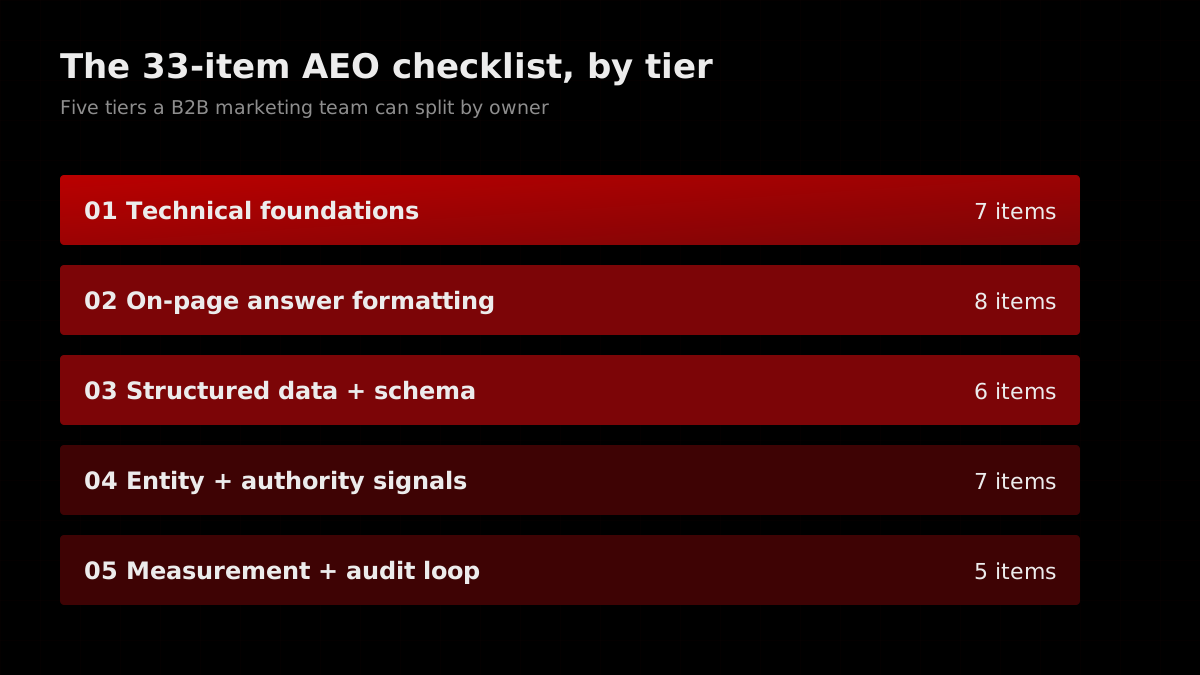
33 AEO checklist items for B2B, grouped into five tiers a marketing team can split by owner: technical foundations (7), on-page answer formatting (8), structured data (6), entity and authority signals (7), and measurement (5). If you only have bandwidth for five, do FAQPage schema on your top 10 pages, an answer capsule in the first 200 words, llms.txt at the root, a named author page with verified LinkedIn, and two Tier-1 editorial mentions. The median B2B site we audit scores 9 out of 100 on AEO readiness, so most of this list is still open territory.
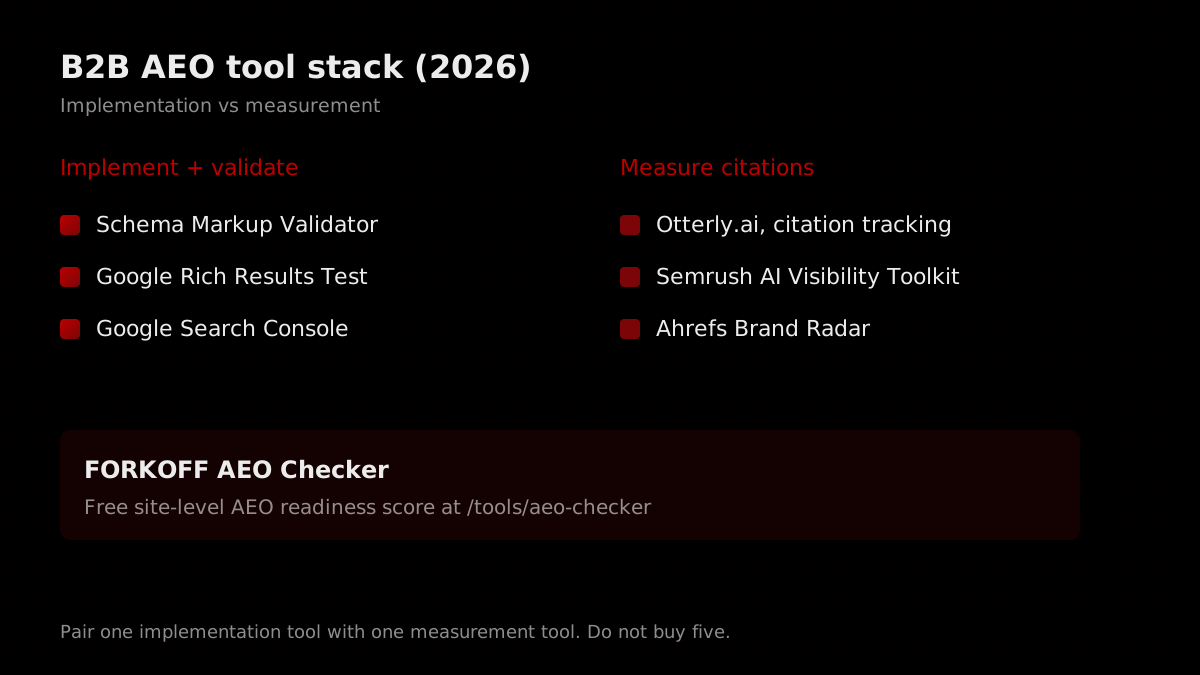
One number frames the whole exercise. Across 14 B2B properties we ran through our agentic SEO audit, the median AEO readiness score was 9 out of 100. That is not a sample of neglected sites. Several were well-funded SaaS companies with real marketing teams. The conclusion is blunt: almost nobody has done this work, so the checklist is mostly open territory. The brands that complete even the top ten items in the next two quarters will own the citations before their category catches on. To see where your own domain lands against these tiers before you start, run the free FORKOFF AEO checker for a site-level readiness score.
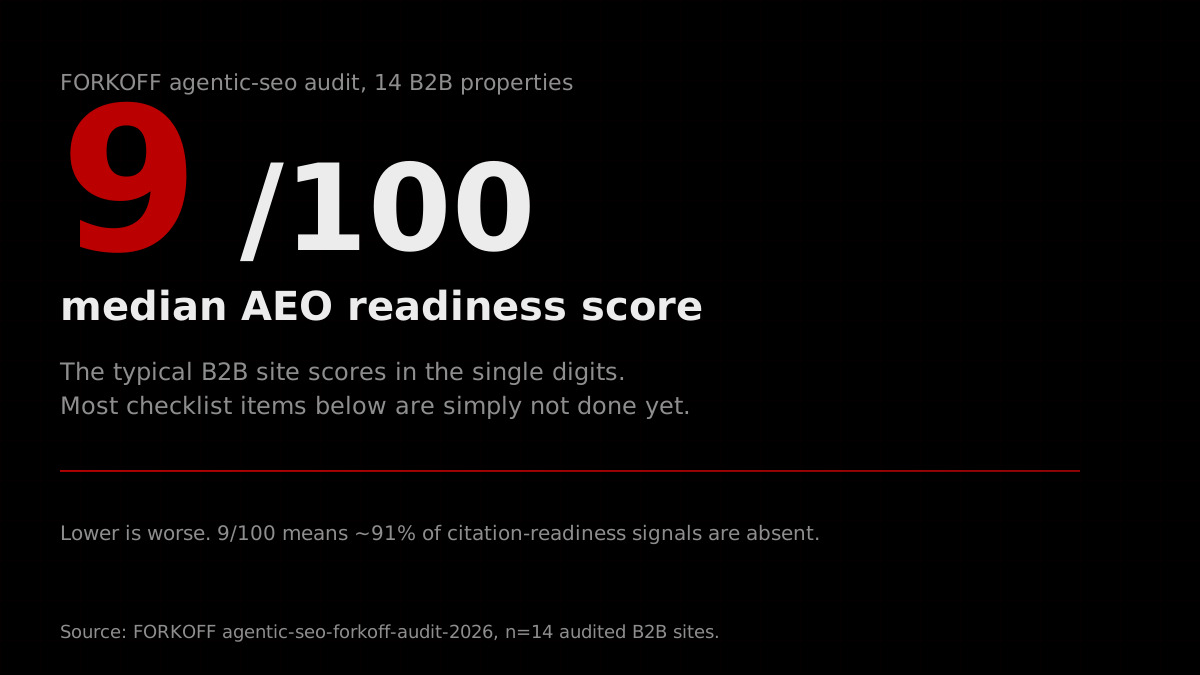
The median B2B site scores 9 out of 100 on AEO readiness
Across 14 B2B properties we ran through the agentic-seo audit, the median AEO readiness score was 9 out of 100. The gap is not exotic tactics. It is the basics: no llms.txt, no answer capsules, no FAQPage schema, no named author. Most of this checklist is open territory because almost nobody has done it.
Source: FORKOFF agentic-seo audit, n=14 B2B sites, 2026
What AEO Actually Means for B2B
Answer Engine Optimization is the practice of structuring your content so that AI answer engines cite your brand when a buyer asks a question in your category. The engines that matter for B2B are ChatGPT, Perplexity, and Google AI Overviews, with Claude and Gemini close behind. When a procurement lead asks one of them "what is the best [category] tool for a mid-market team," AEO decides whether your brand appears in the answer or whether a competitor does. Google documents how these surfaces work in its AI features and your website guidance, and Perplexity's own documentation describes how it sources and cites the live web.
The shift is structural, not cosmetic. For a decade, B2B SEO meant ranking in the ten blue links. The buyer typed a query, scanned the results, and clicked. Now a growing share of buyers read the AI Overview or the ChatGPT answer and never scroll to the organic results at all. If your brand is not cited inside that generated answer, you are invisible at the exact moment the buyer is forming a shortlist.
SEO asks how to rank on page one. GEO and AEO ask how to become part of the answer itself. The buyer never reaches page one if the answer already named three vendors and you were not one of them.
Alphamax Digital Services
@alphamaxdigital
Page 1 rankings don't matter if the buyer never reaches Page 1. They ask ChatGPT. They read the AI Overview. They never click. Your brand gets cited in those answers or it doesn't exist to them. Most stores are still optimized for how search worked in 2019.
That is the reframe. AEO is not a new channel bolted onto SEO. It is the recognition that the answer surface has moved upstream of the click. The Princeton GEO research quantified which content changes move citation rates the most, and the pattern is consistent: cited sources, statistics, and clear technical terminology lift generative-engine visibility far more than keyword stuffing ever did for classic SEO.
Operator noteB2B AI queries are pricing, SOC2, and vs-competitor. Own those answers or a rival does., FORKOFF B2B citation review
For the strategic context behind the technical work, our generative engine optimization for SaaS playbook is the parent guide this checklist supports. This post is the doing; that post is the why.
Tier 1: Technical Foundations (Items 1 Through 7)
The technical tier decides whether AI crawlers can read your site at all. Nothing in the other four tiers matters if a crawler hits a wall here. Hand this tier to engineering or your web team. None of the seven items is hard; most are an afternoon of work, and missing any one of them can zero out the rest of the checklist.
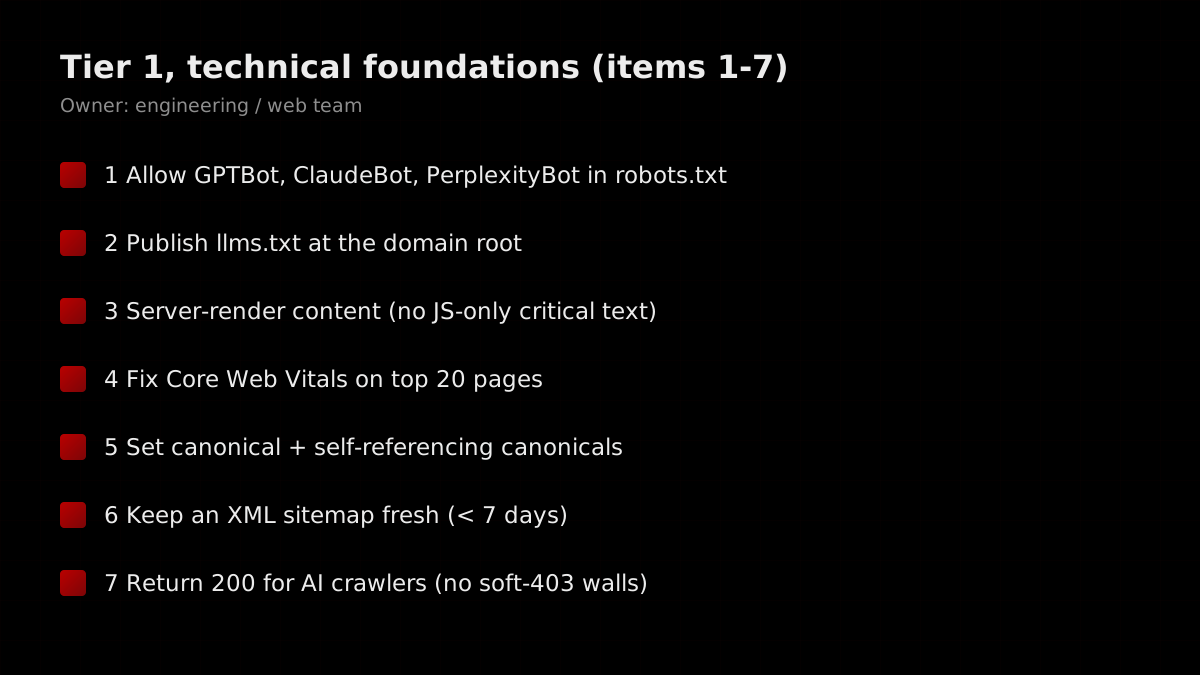
Item 1: Allow AI crawlers in robots.txt. Confirm that GPTBot (OpenAI), ClaudeBot (Anthropic), PerplexityBot, and Google-Extended are not blocked. Many B2B sites inherited a restrictive robots.txt years ago and never revisited it. Check the OpenAI bots documentation for the current user-agent strings, and confirm the same for Anthropic's documented crawler behavior. Blocking these is the single most common reason a B2B site is absent from AI answers.
Item 2: Publish an llms.txt file at the domain root. This is a plain-text manifest at /llms.txt that lists your most important content for AI systems. It costs an hour and signals which pages you want engines to prioritize. It is the AEO equivalent of an XML sitemap, aimed at language models instead of search crawlers.
Item 3: Server-render your critical content. If your answer text only appears after JavaScript hydration, some crawlers will not see it. Confirm that the answer capsule, headings, and FAQ content are present in the raw HTML response, not injected client-side. View the page source, not the rendered DOM.
Item 4: Fix Core Web Vitals on your top 20 pages. Page experience still feeds the underlying index that several answer engines draw from. A page that times out or shifts layout badly is a page the engine deprioritizes. Use Google Search Console to find the worst offenders, or run the free AI SEO audit for a faster read.
Item 5: Set canonical tags correctly. Self-referencing canonicals on every indexable page prevent duplicate-content dilution that confuses entity resolution. For B2B sites with parameterized URLs (UTM-heavy campaign pages), this matters more than usual.
Item 6: Keep your XML sitemap fresh. Regenerate it on publish and keep the lastmod dates honest. A sitemap that says everything was modified today, every day, gets ignored. One that reflects real change dates within the last seven days for active pages earns crawl priority.
Item 7: Return a 200 for AI crawlers. Some bot-mitigation layers serve a soft 403 or a challenge page to anything that is not a logged-in browser. If your CDN or WAF treats GPTBot as a threat, the engine sees a blocked page and moves on. Test with the crawler user-agent and confirm a clean 200.
Optimizing for Answer Engines is Basically Optimizing for Traditional SERPs
The agent-ready site audit guide walks through these technical checks in depth with the exact tooling. If you want the technical tier validated automatically, the free checker below covers items 1, 2, and 7.
Tier 2: On-Page Answer Formatting (Items 8 Through 15)
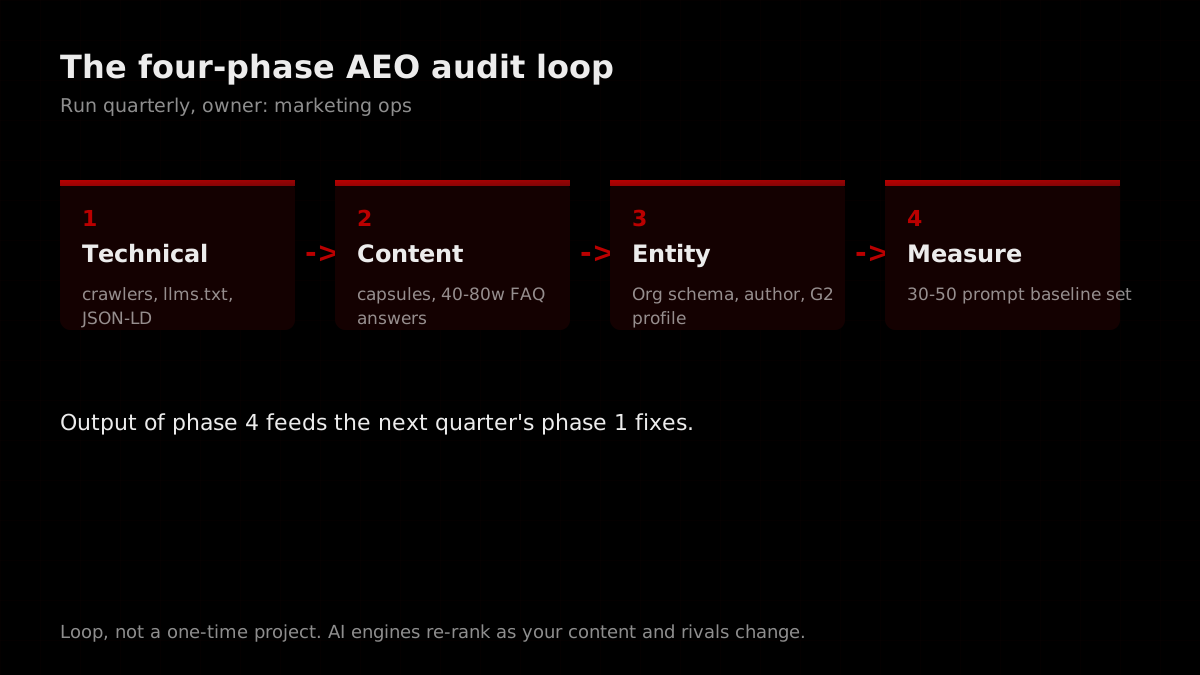
The content tier decides whether your answer is liftable. An engine can crawl your page perfectly and still skip it if the answer is buried under three paragraphs of preamble. This tier belongs to your writers, and it is where the highest-leverage single item on the entire checklist lives.
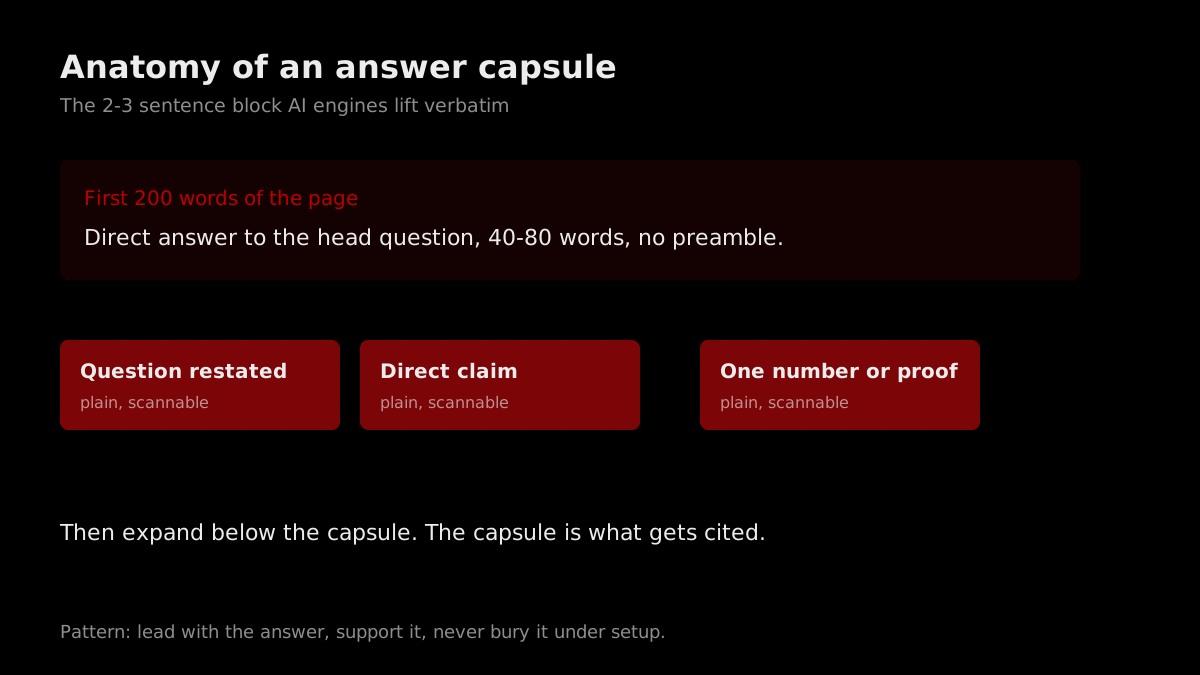
Item 8: Write an answer capsule in the first 200 words. This is the most important on-page move. For every page that targets a question, lead with a 40 to 80 word direct answer before any setup. Restate the question, give the direct claim, support it with one number or proof point. Engines lift this block almost verbatim. The expansion that follows is for depth and dwell; the capsule is what gets cited.
Operator noteCapsule first, context second. The 200-word block decides citation, the rest decides depth., FORKOFF AEO audits, 2026
Item 9: Use a question-shaped H2 for every buyer query. "What does [category] cost" beats "Pricing." Match the heading to the literal phrasing a buyer types into ChatGPT. The engines pattern-match heading text to query intent.
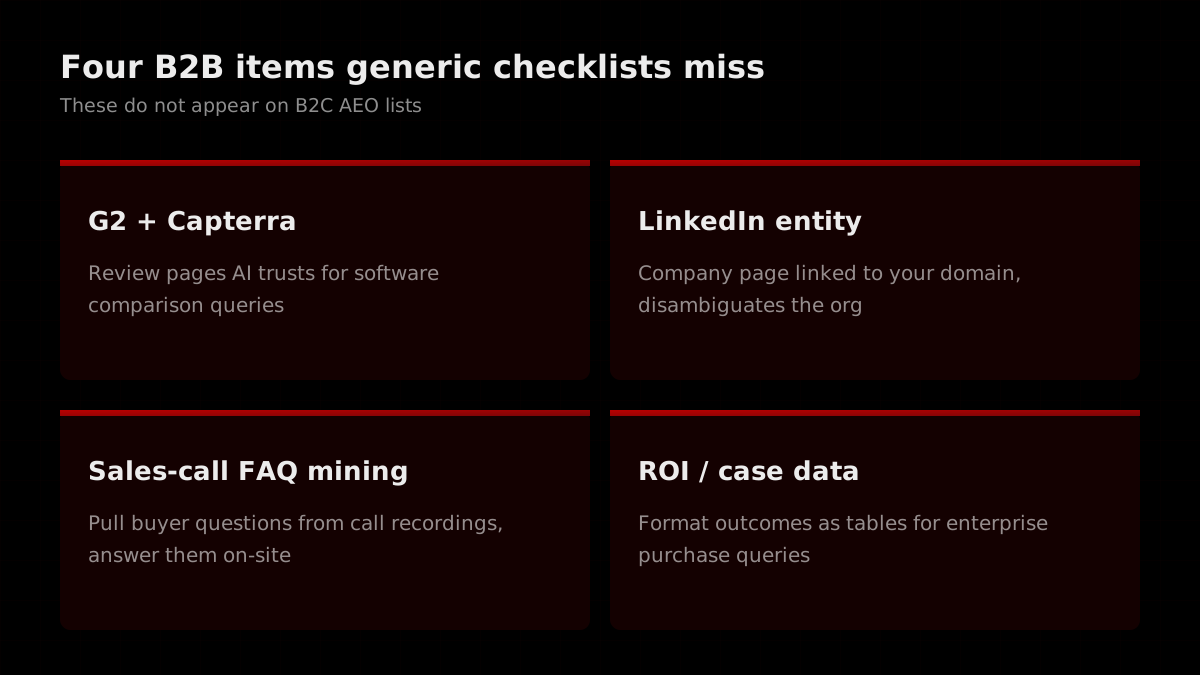
Item 10: Mine your sales calls for FAQ content. This is a B2B-specific move that no generic checklist includes. Pull the last 20 sales-call recordings and list every question a prospect asked. Those are the exact queries your buyers are typing into AI engines: "do you integrate with [tool]," "how long is onboarding," "what is the difference between your tiers." Answer each one on-site, in 40 to 80 word capsules. Your sales team has already collected your AEO content brief; you just have to write it down.
Item 11: Add 40 to 80 word FAQ answers to service pages. Not just blog posts. Your service and solution pages are where commercial-intent AI queries land. Each FAQ answer should stand alone, because the engine may cite it without the surrounding page.
Item 12: Lead listicles and comparisons with structure. When you write a "best [category]" or "[you] vs [competitor]" page, put a structured comparison near the top. Engines over-cite clean ordered lists and tables. An above-the-fold comparison block answers "which is best for X" queries directly.
Item 13: Keep pages fresh. Content older than 90 days loses citation share in fast-moving categories. Add a visible lastUpdated date and actually update the page, not just the timestamp. Freshness is a stronger AEO signal than it ever was for classic SEO.
Item 14: Write in plain, scannable prose. Short sentences, concrete nouns, no hedging. Engines extract better from declarative content than from qualifier-laden marketing copy. "Onboarding takes two weeks" beats "onboarding timelines may vary depending on a range of factors." This is also what Google's creating helpful content guidance rewards, and the same hygiene that helps AI extraction helps human readers.
Item 15: Format ROI and outcomes as tables. Enterprise purchase queries ("what is the ROI of [category]") get answered from structured numeric content. A clean table of inputs and outcomes is more liftable than the same data in prose.
Simon Wilhelm
@Simon_LeanderW
Answer Engine Optimization (AEO): The Only Marketing Skill That Will Matter in 3 Years. Most b2b marketers are still optimizing for the wrong thing. They chase google rankings, backlinks, and keyword density like it's still 2022. Meanwhile their customers have completely changed… Show more
The sales-call mining item (item 10) is worth dwelling on, because it is the cheapest unfair advantage on the list. A B2B demand-gen lead put it plainly in a community thread: the questions AI answers for B2B are different from B2C, and they are sitting in your call recordings already.
Tier 3: Structured Data and Schema (Items 16 Through 21)
The schema tier decides whether answer engines parse your content cleanly. Six items (FAQPage schema, HowTo schema, Organization schema, SoftwareApplication schema, BreadcrumbList, and Article with dateModified), owned by your dev or technical SEO person. FAQPage schema is the highest-ROI structured data type for AEO because it gives answer engines a machine-readable answer they can cite directly.
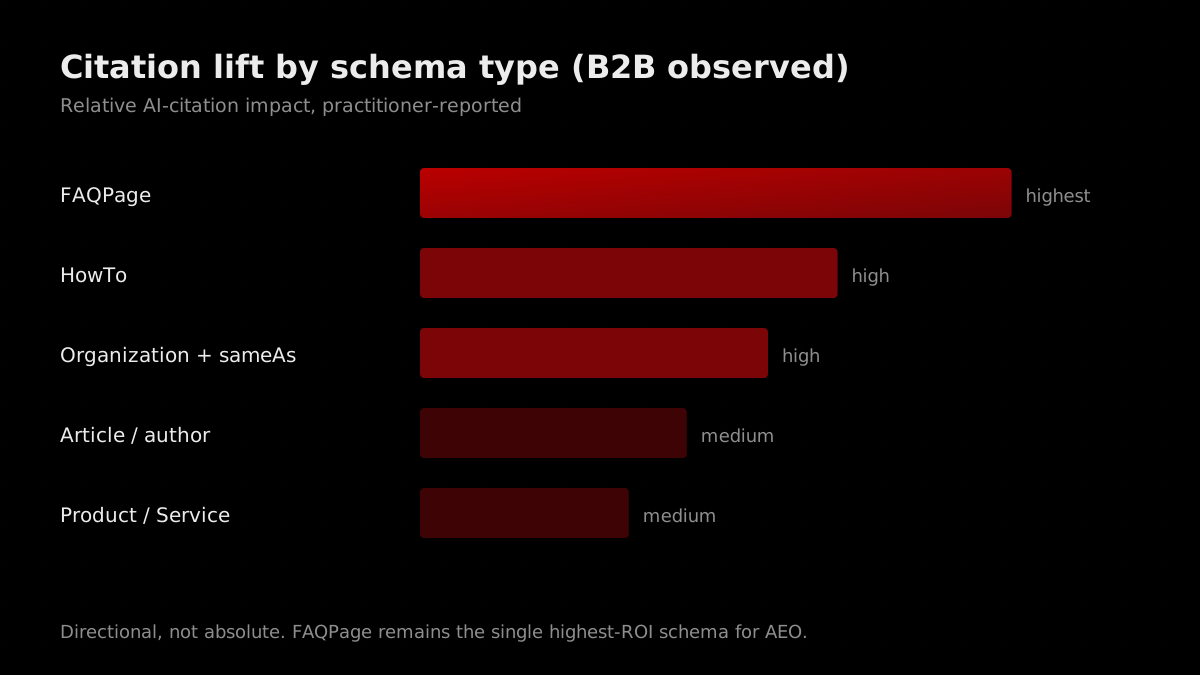
Item 16: Deploy FAQPage schema on your top 10 pages. This is the highest-ROI schema move for B2B. Mark up your service-page and solution-page FAQs with FAQPage JSON-LD. The answer engines parse it to extract answer-ready content. Validate against the Google FAQPage documentation so the markup is clean.
Operator noteFAQPage schema on 10 service pages outranks 50 blog posts with none, for AI citation., FORKOFF agentic-seo audit pattern
Item 17: Add HowTo schema to process content. For any "how to [do thing in your category]" page, HowTo schema gives engines a step structure they can lift directly. B2B onboarding and implementation guides are natural fits.
Item 18: Implement Organization schema with a sameAs array. Your Organization JSON-LD should include a sameAs array pointing to your LinkedIn, X, Crunchbase, and G2 profiles. This is the backbone of entity resolution: it tells the engine that the brand on your site, the company on LinkedIn, and the product on G2 are all the same entity.
Item 19: Add Article schema with a named author. Every blog post should carry Article schema with an author property that resolves to a real Person entity, not a generic "Admin." The author's credibility feeds the page's trust signal.
Item 20: Mark up products and services. Use SoftwareApplication or Service schema on your product pages so engines can answer feature and pricing queries from structured fields rather than guessing from prose.
Item 21: Validate everything before you ship. Run every schema block through the Schema Markup Validator and Google Rich Results Test. Malformed JSON-LD is worse than none, because it can suppress the whole block. The schema deep-dive in our schema markup for AEO guide covers the validation workflow.
A note on the May 2026 FAQ deprecation, because it confuses people. Google announced on the Google Search Central blog that it stopped showing FAQ rich results visually in search on May 7, 2026. The schema still works for answer engines.
FAQPage rich results were deprecated, FAQPage schema was not
Google stopped showing FAQ rich results in search on May 7, 2026. The schema itself still feeds answer engines. ChatGPT, Perplexity, and Google AI Overviews all parse FAQPage JSON-LD to pull answer-ready content. Removing the visual result did not remove the citation value for B2B service and solution pages.
Source: Google Search Central
The contrarian view is worth airing. A long-running r/SEO debate argued that AEO and GEO are buzzwords sold to trick clients, and that the work is just structured content with a new label. There is truth in that, though the AEO vs GEO breakdown shows where the two surfaces genuinely diverge.
AEO and GEO get sold as new disciplines, but most of the work is structured content and clear answers, the same fundamentals good SEO always rewarded. The label is new. The hygiene is not.
AEO, GEO is bullshit buzzword, intended to trick clients. Change my mind.
The label may be marketing. The hygiene is real, and the median 9-out-of-100 score proves almost nobody is doing the hygiene. Whether you call it AEO or just clean structured content, the items on this list move citation rates.
Why Adopting Schema Markup for AI Visibility Beats Traditional SEO Tactics
Tier 4: Entity and Authority Signals (Items 22 Through 28)
The entity tier decides whether engines trust you as a source. Seven items, owned by marketing. This is the most B2B-specific tier on the checklist, because B2B trust signals (review platforms, named experts, editorial coverage) are different from B2C ones.
Item 22: Complete your G2 and Capterra profiles. AI engines treat G2 and Capterra as trusted citation sources for software comparison queries. A complete profile with current reviews, accurate categories, and a filled-out product description is a citation asset. An empty or stale profile is a missed one. This is a B2B-only move; B2C lists never mention it. If you want help choosing the right operator, our best AEO agency comparison and best GEO agency comparison break down who does this work well.
Item 23: Disambiguate your LinkedIn company page. Link your LinkedIn company page to your domain and ensure the company name, description, and website match your site exactly. This resolves the entity ambiguity that otherwise splits your brand authority across two unconnected records.
Item 24: Build a named author page with a verified LinkedIn. Every author who writes for your site needs a real Person entity: a bio page, credentials, and a verified LinkedIn link. Anonymous content scores worse for trust. A named expert with a track record scores better.
Item 25: Earn two Tier-1 editorial mentions. A citation from an authoritative industry publication is worth more to an answer engine than a dozen low-quality links. Pitch your data, your point of view, or your founder to two publications your buyers actually read. This is slower than the other items (two to four weeks) but high-impact.
Item 26: Maintain consistent NAP and brand details. Name, description, and key facts should be identical across your site, LinkedIn, G2, Crunchbase, and any directory you appear in. Inconsistency degrades entity confidence.
Item 27: Publish original data. First-party benchmarks, surveys, and studies are the most citable content a B2B brand can produce, because engines prefer a primary source. Our GEO citation lab rerun is an example of the format: a repeatable study with a clear methodology.
Item 28: Seed authentic community presence. Where your buyers discuss your category (Reddit, niche communities, podcasts), a genuine, helpful presence builds the brand-mention footprint engines read as authority. Our best subreddits for B2B SaaS founders maps where to start, and the podcast AEO citation strategy covers the audio surface.
Post a few helpful threads a week in your buyer communities, and over time ChatGPT starts citing your brand while Perplexity sends warm leads. The compounding is slow, then it is not.
Devesh
@devesh_aiseo
Imagine you post 3 Reddit threads a week. ChatGPT starts citing your brand. Perplexity AI sends you warm leads. Google ranks your posts page 1. You close 5 SaaS clients a month. Zero ad budget. Zero cold calls. Congrats. You just built an inbound machine. From your couch.
LLM-referred visitors convert better than generic organic
B2B teams report that visitors arriving from an AI answer engine show higher purchase intent than blended organic traffic, because the engine has already pre-qualified the question. A buyer who clicks through from a Perplexity citation has read your answer and wants the detail. That changes AEO from an SEO chore into a pipeline lever.
Source: B2B demand-gen practitioner reports, 2026
The entity tier is where B2B and B2C diverge most. A consumer brand does not have a G2 profile or a LinkedIn company page that matters. A B2B brand lives and dies by them, and the answer engines know it.
Tier 5: Measurement and the Audit Loop (Items 29 Through 33)
The measurement tier decides whether you can prove it worked. Five items, owned by marketing ops. Skip this tier and you will do all the work above with no way to show the result, which is how AEO budgets get cut.
Item 29: Build a 30 to 50 query baseline prompt set. Before you change anything, write down the 30 to 50 questions your buyers ask in your category and run them across ChatGPT, Perplexity, and Google AI Overviews. Record whether your brand is cited for each. This is your before-picture. Without it, you have no proof.
Operator noteNo baseline prompt set means no proof. Build the 30-query list before you change a thing., FORKOFF measurement playbook
Item 30: Track citation rate monthly. Re-run the prompt set every month and chart the share of queries where your brand appears. This is your core AEO metric, the AI-era equivalent of keyword rankings.
Item 31: Measure share of voice against competitors. For each query, note which competitors are cited alongside or instead of you. Share of voice is the metric that survives a board meeting, because it is relative and competitive.
Item 32: Instrument referral traffic from AI engines. Set up analytics segments for traffic arriving from chat.openai.com, perplexity.ai, and AI Overview referrers. This connects citation presence to actual sessions and, eventually, pipeline.
Item 33: Close the loop quarterly. Treat the audit as a loop, not a project. Each quarter, the measurement phase tells you which items to revisit. Engines re-rank as your content and your competitors change, so a one-time implementation decays.
For the tooling: pair one implementation tool with one measurement tool. On the implementation side, the Schema Markup Validator, Google Rich Results Test, and Google Search Console cover validation and crawl status. On the measurement side, Otterly.ai tracks citation rate, the Semrush AI Visibility Toolkit covers share of voice, and Ahrefs Brand Radar covers Google AI Mode. The measure share of AI citations guide details the full measurement protocol.
Why AEO Is Not Just SEO With a New Label
The most common objection to this checklist is that it looks like an SEO checklist with the acronyms swapped. Half true, and the half that is false is the half that matters for B2B. The shared half is real: clean technical foundations, structured data, fresh content, and authoritative coverage helped classic SEO and help AEO too. If you have been doing serious B2B SEO, several of the 33 items are already done.
The divergence is in what the two disciplines optimize toward. Classic SEO optimizes a page to rank in a list of links the buyer then scans and clicks. AEO optimizes a passage to be extracted and reproduced inside a generated answer the buyer reads without clicking. That changes the unit of work from the page to the passage. A page can rank well and still never get cited, because its answer is buried, hedged, or unstructured. The answer capsule (item 8) exists precisely for this reason: it is a passage engineered for extraction, not a page engineered for ranking.
The second divergence is the trust model. Classic SEO leaned heavily on link quantity and domain authority. Answer engines lean harder on entity confidence and primary-source signals: is this brand a real, consistent entity across LinkedIn, G2, and its own schema; is the author a named expert; is the claim backed by original data or a cited source. That is why the entity tier carries seven items for B2B. The engines are reconstructing who you are before they decide whether to quote you, and B2B identity lives on platforms a B2C checklist never touches.
The third divergence is freshness sensitivity. A classic SEO page could rank for years untouched. Answer engines, especially Perplexity with live crawling, discount stale content faster. A page older than 90 days loses citation share in active categories, which means AEO is a maintenance discipline, not a publish-and-forget one. That is why the audit loop (items 29 through 33) is a tier, not a footnote.
So the buzzword critics are right that the fundamentals rhyme, and wrong that the work is identical. The label is marketing. The passage-level structuring, the entity consolidation, and the citation measurement are net-new effort for most B2B teams, and the median 9-out-of-100 score is the evidence that almost nobody has put that effort in yet.
How to Prioritize When You Cannot Do All 33
A three-person content team cannot ship 33 items at once, and should not try. The fastest path to citations is the 80/20 version: FAQPage schema on your top 10 pages (one day), an answer capsule in the first 200 words of key pages (two days), llms.txt at the root (one hour), a named author page with verified LinkedIn (half a day), and two Tier-1 editorial mentions (started now, lands in two to four weeks). That is roughly one focused week of work.
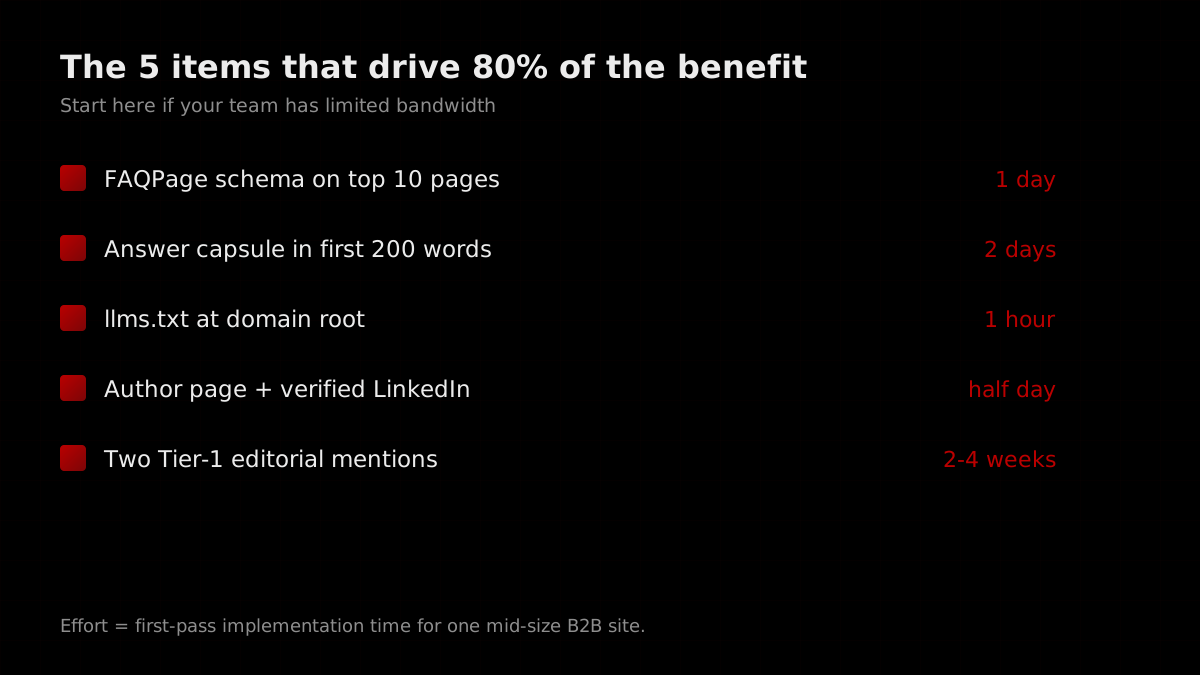
Do these five first: FAQPage schema on your top 10 pages (one day), an answer capsule in the first 200 words of your key pages (two days), llms.txt at the root (one hour), a named author page with verified LinkedIn (half a day), and two Tier-1 editorial mentions (two to four weeks, started now so it lands later). That is roughly one focused week of work plus an outreach effort running in the background.
The 33 items by impact and effort
| Item | Tier | Impact | First-pass effort |
|---|---|---|---|
| FAQPage schema on top 10 pages | Schema | High | 1 day |
| Answer capsule in first 200 words | On-page | High | 2 days |
| llms.txt at domain root | Technical | Medium | 1 hour |
| Named author page + verified LinkedIn | Entity | High | Half day |
| Two Tier-1 editorial mentions | Entity | High | 2-4 weeks |
| Allow AI crawlers in robots.txt | Technical | High | 1 hour |
| G2 + Capterra profile complete | Entity | Medium | Half day |
| Sales-call FAQ mining | On-page | High | 1-2 days |
| 30-50 prompt baseline set | Measurement | Medium | 1 day |
The reason this ordering works is the median-9 reality. When almost nobody in your category has done the basics, the basics are the differentiator. You do not need the exotic items to start appearing in answers; you need the hygiene the median site skipped.
How Fast Each Engine Reflects Your Changes
AEO results do not arrive on an even schedule. Perplexity reflects changes fastest (days, because it crawls live at query time), Google AI Overviews and ChatGPT lag behind (30 to 90 days, because they draw on indexed and trained data). Most B2B teams that complete the top ten items see measurable citation-rate improvement within 60 days.
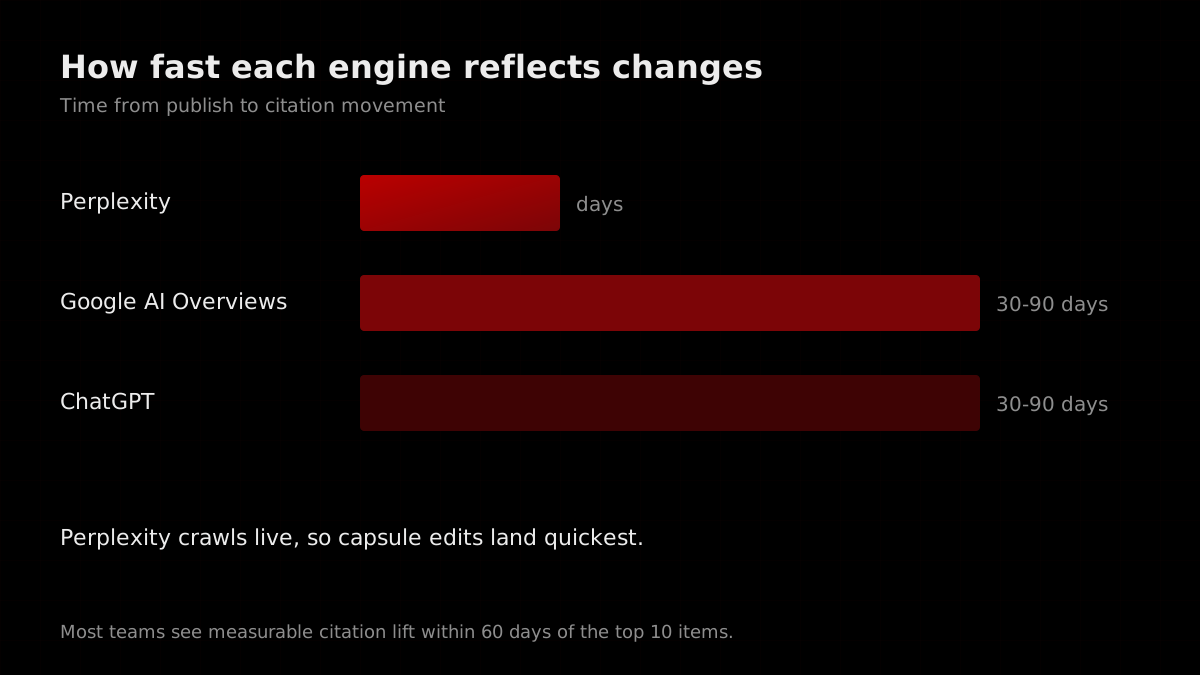
Perplexity is the fastest because it crawls the live web at query time. A newly published answer capsule can affect Perplexity citations within days, which makes it the best engine to test against first. Google AI Overviews and ChatGPT lag, typically showing citation changes within 30 to 90 days of implementation, because they draw on indexed and trained data that refreshes more slowly. Most B2B teams that complete the top ten items see measurable citation-rate improvement within 60 days, with share-of-voice gains visible in monthly reporting by the end of the first quarter.
This is also why the measurement tier matters before the implementation tier. If you change everything at once with no baseline, you cannot attribute a citation gain to a specific item. Stagger the work, watch Perplexity first for fast signal, and let the slower engines confirm over the quarter.
Who Owns Each Tier on a Real B2B Team
The tier structure is not academic. It exists so the checklist survives contact with a staffed marketing team, where the person who can edit robots.txt is rarely the person who writes the FAQ answers, who is rarely the person who runs the citation report. Forcing all 33 items onto one owner is how AEO programs stall.
Give the technical tier (items 1 through 7) to whoever owns the website build, usually a front-end engineer or a technical SEO. These are config and infrastructure changes, not content. They are also the items most likely to silently undo everything else, so they go first and they get verified, not assumed.
Give the on-page tier (items 8 through 15) to your content lead. The answer capsules, question-shaped headings, and sales-call FAQ mining are writing work, and the sales-call mining specifically needs someone who can sit with the revenue team and pull the recurring questions out of call recordings. This is the tier where a B2B content person adds the most differentiated value, because they understand the buyer questions a generalist would miss.
Split the schema tier (items 16 through 21) between dev and SEO. Writing the JSON-LD is dev work; deciding which pages get FAQPage versus HowTo versus Service schema is an SEO judgment call. Validation is shared, and it is non-negotiable: a malformed block helps nobody.
Give the entity tier (items 22 through 28) to marketing, because G2 profiles, LinkedIn consistency, editorial outreach, and community presence are brand and PR functions, not engineering ones. This tier matters most for SaaS companies and AI startups, where the buying committee researches heavily before a call. This tier moves slowest and needs the most cross-functional coordination, which is exactly why it benefits from a single accountable owner rather than being everyone's part-time job.
Give the measurement tier (items 29 through 33) to marketing ops or analytics. The baseline prompt set, monthly citation tracking, and referral instrumentation are reporting disciplines. Whoever owns your GA4 and dashboards should own this, because AEO measurement is just another data pipeline to maintain.
When the owners are clear, the checklist runs in parallel instead of serially, and a five-tier program that would take one person two months takes a coordinated team about three weeks of elapsed time.
What Most B2B Teams Get Wrong
Three failure patterns show up in nearly every audit. First, they treat AEO as a content task and skip the technical tier, so engines never read the beautiful answer capsules behind a JS wall or a soft-403. Second, they write for B2C patterns, adding generic FAQs while ignoring the pricing, compliance, and vs-competitor queries that drive B2B pipeline. Third, they ship once and never measure, so the program quietly decays and nobody can defend the budget.
The fix for all three is the tier structure in this checklist. Assign each tier to an owner, do the technical foundation before the content, mine your sales calls for the B2B-specific queries, and build the baseline prompt set before you touch anything else. The Perplexity vs Google AI Overviews comparison helps you decide which engine to prioritize for your specific buyer, and the ChatGPT citation strategy for agencies goes deeper on the ChatGPT surface specifically.
The five AEO tiers at a glance
| Tier | Items | Owner | What it controls |
|---|---|---|---|
| 1. Technical foundations | 7 | Engineering | Whether AI crawlers can read the site |
| 2. On-page answer formatting | 8 | Content | Whether your answer is liftable |
| 3. Structured data + schema | 6 | Dev / SEO | Whether engines parse your content cleanly |
| 4. Entity + authority signals | 7 | Marketing | Whether engines trust you as a source |
| 5. Measurement + audit loop | 5 | Marketing ops | Whether you can prove it worked |
The Verdict: Start With the Hygiene, Compound From There
AEO for B2B is not a new dark art. It is the recognition that the answer surface moved upstream of the click, plus the discipline to structure your content so engines can read, lift, and trust it. The 33 items here are exhaustive on purpose, but the honest read is that the first ten matter most right now, because the median B2B site scores 9 out of 100 and the basics are still unclaimed.
Run the technical tier this week. Write the answer capsules and mine your sales calls next week. Deploy FAQPage schema on your top ten pages. Build the entity signals (G2, LinkedIn, named author) in parallel. Stand up the baseline prompt set before any of it, so you can prove the result. Then close the loop every quarter, because the engines keep moving and so do your competitors. The brands that do this now will be the ones cited when your category finally wakes up to AI search, and citation is the new shortlist. If you would rather have the whole program audited, fixed, and reported for you, that is exactly what FORKOFF runs for B2B SaaS, AI, and Web3 companies.