Every founder running a token launch or a crypto product hits the same wall: you need creators on X and Telegram to vouch for you, but the market for those creators is the least transparent corner of marketing. You can spend approximately $40,000 on a roster of "vetted" KOLs and end up with bot-inflated impressions, posts that never disclosed they were paid, and zero wallets connected. The platforms that sell you those creators rarely tell you which risk you are buying.
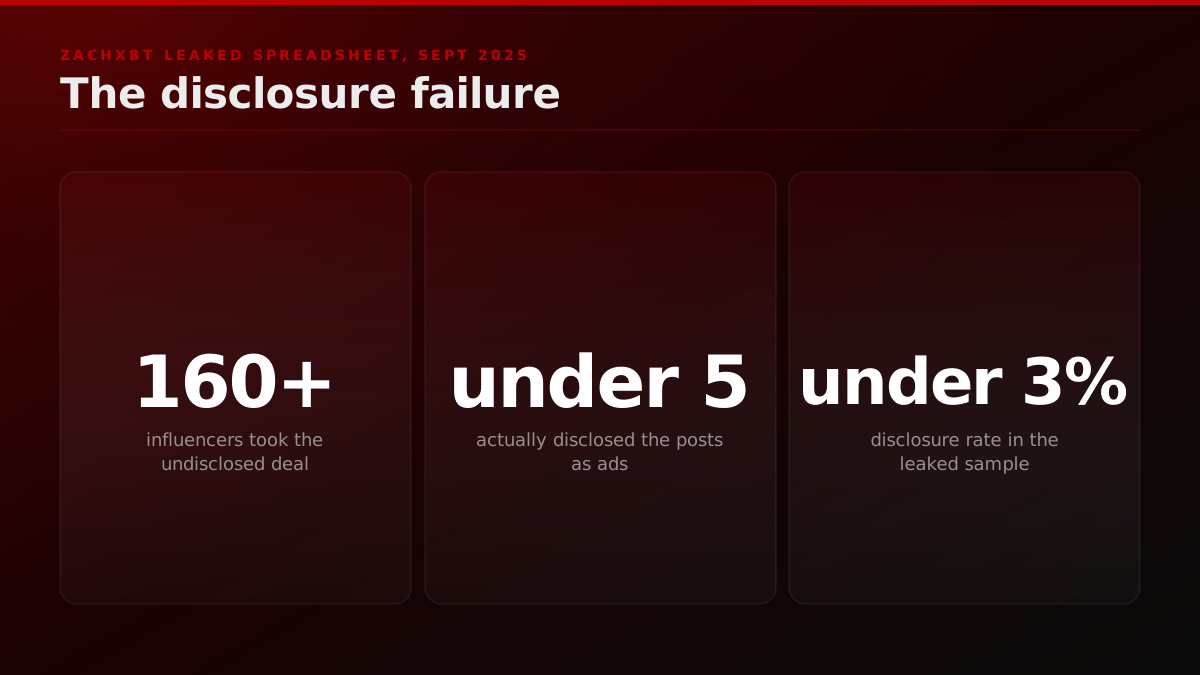
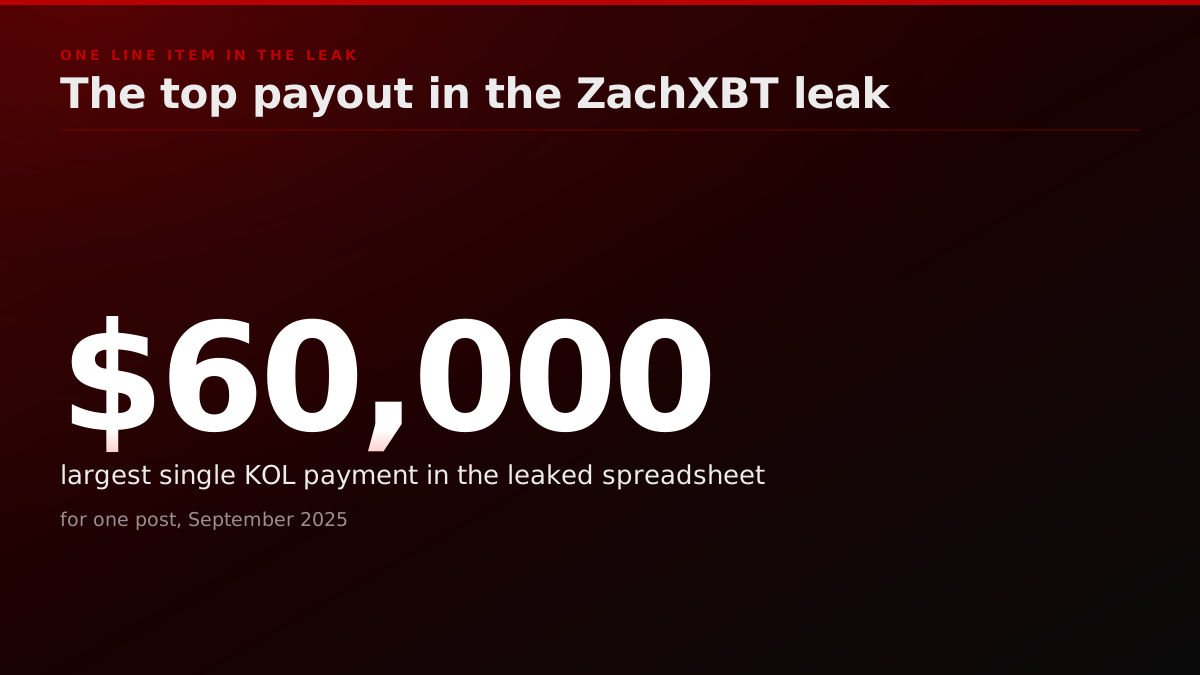
In September 2025, on-chain investigator ZachXBT published a leaked spreadsheet of more than 160 crypto influencers who took paid promotion deals for an undisclosed project. Per CoinLaw's writeup, fewer than five of them disclosed the posts as advertisements. That sub-3-percent disclosure rate is the cleanest evidence we have that a polished roster and real accountability are different products. This guide compares the platforms founders actually use, by the dimension that matters: who owns the outcome.
TL;DR: The platform you pick decides who eats the fraud risk.
Crypto KOL platforms fall into four categories: self-serve marketplaces, raw influencer databases, managed agencies, and hybrids. The split that matters is not price, it is accountability. Self-serve tools hand you a list and you absorb the bot risk, the non-disclosure risk, and the dud-post risk yourself. Managed agencies run the campaign but most still report success in impressions, not wallets. The honest third lane is an outcome-priced managed agency that screens for fraud, puts disclosure in the creator brief, and writes a qualified-views floor into the contract. ROUTING: strong internal vetting and a tight budget, use a self-serve marketplace. No bandwidth to vet, hire a managed agency, but demand a bot audit and a contractual floor first. Jump to the comparison table below.
About these numbers
Market-size figures (USD 23.59B for 2025, USD 27.54B projected 2026, USD 90B by 2034) are sourced from Fortune Business Insights influencer marketing platform market report. Crypto owner count (741 million) is from Crypto.com Research 2025. Fraud statistics (37.2% follower fraud signal rate) are sourced from the cited SociaVault 2026 study; the 63% marketer-fraud-encounter figure is from the cited HypeAuditor benchmark. ZachXBT data (160+ influencers, sub-3% disclosure) is from the linked CoinLaw writeup. Agency minimum prices (e.g., Coinzilla EUR 1,999/4,999/9,999, Coinbound ~$5,000, LKI ~$5,000/mo, Surgence $10K+) are sourced from publicly listed pricing pages or review-site benchmarks as of June 2026. Engagement-rate benchmarks (approximately 1-5% healthy, 0.5-1% watch closely, under 0.5% flag) are operator heuristics from FORKOFF campaign management observation and may vary by account size and vertical.
This is an honest comparison, not an agency listicle that ranks itself first. FORKOFF runs crypto KOL campaigns through its crypto KOL marketing service, so we have a horse in this race, and we will name where we sit. But the framework below works no matter who you hire. If you only take one thing from it, take the four-category model and the six vetting questions at the end.
Why this market is bigger and more adversarial than ever
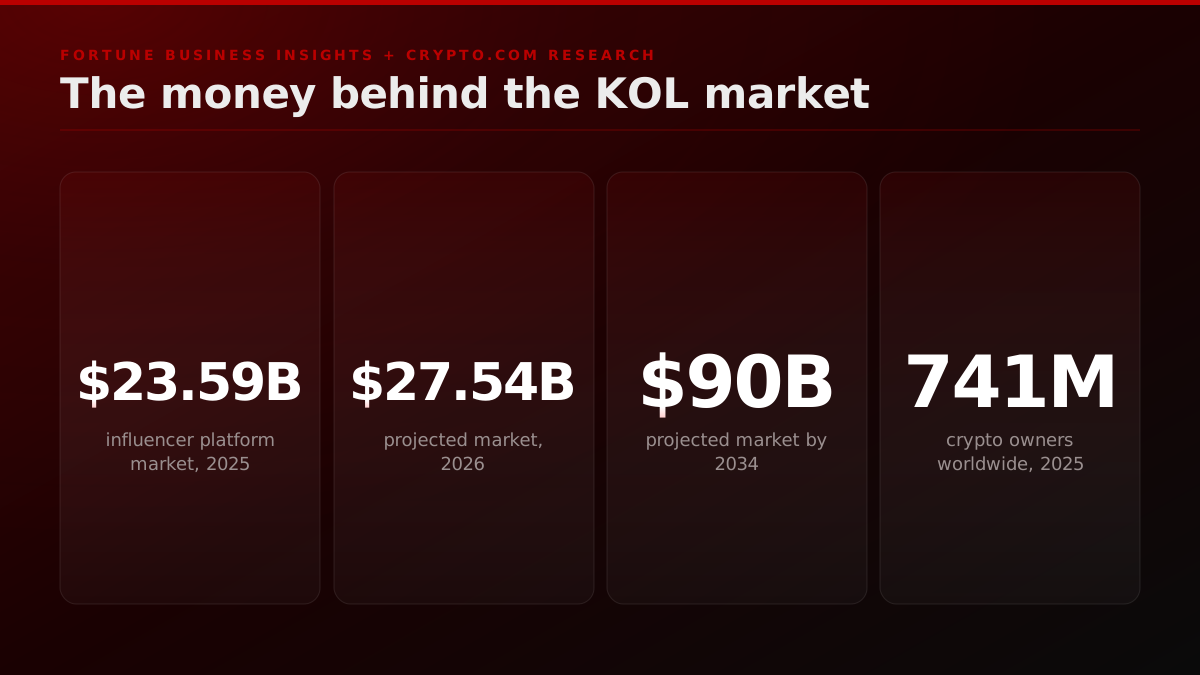
The reason KOL platforms have multiplied is that the money behind them has. The global influencer marketing platform market was valued at roughly USD 23.59 billion in 2025 and is projected to reach USD 27.54 billion in 2026, per Fortune Business Insights, on its way to nearly USD 90 billion by 2034. Crypto rides on top of that wave: Crypto.com Research counted roughly 741 million crypto owners worldwide in 2025, an audience large enough that creators with even modest reach can move real volume. When the prize grows, so does the incentive to fake the inputs.
That is the uncomfortable backdrop to every platform below. The broader Influencer Marketing Hub benchmark report has tracked fraud and authenticity as persistent top-three concerns for marketers year after year, and crypto sits at the sharp end of the distribution because the audience is transactional and the content cycle is fast. A glowing roster page tells you a platform can find creators. It tells you nothing about whether those creators' audiences are real or whether their posts will say they were paid. Those are separate, harder questions, and they are the ones this guide is built around.
What Is a Crypto KOL Platform? (And the 4 Categories You'll See)
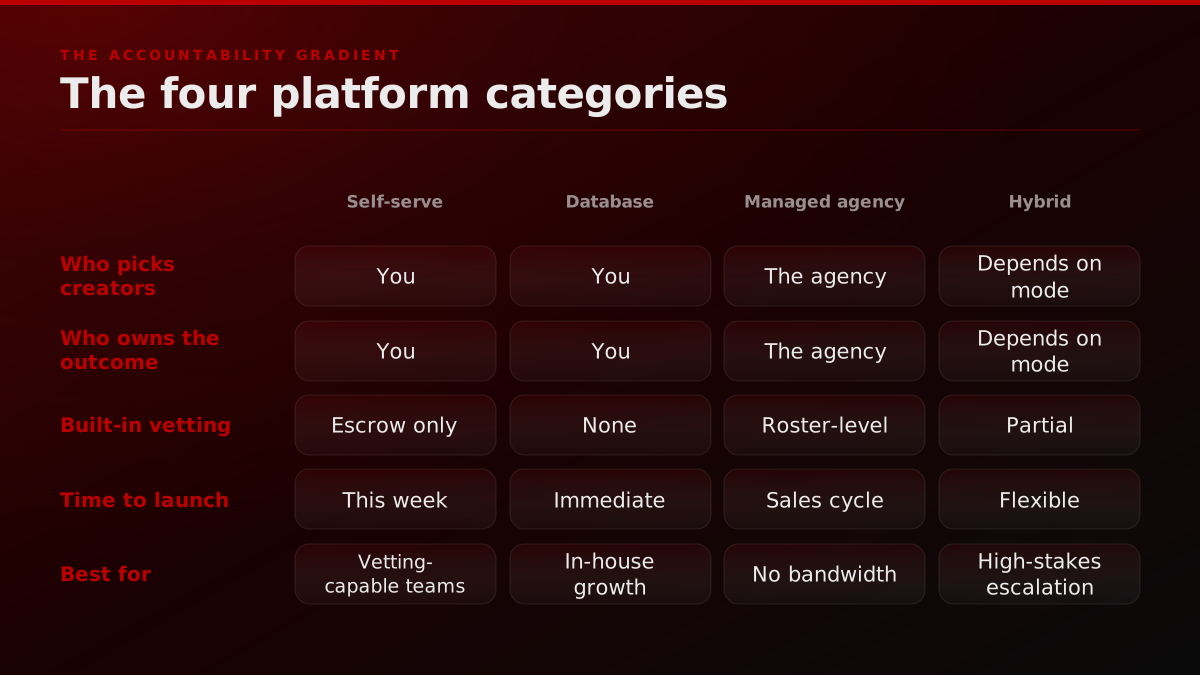
A KOL, or key opinion leader, is a creator whose audience treats their take as a signal. In crypto, that signal moves money, which is exactly why the market around KOLs is both lucrative and adversarial. A "crypto KOL platform" is any service that connects your project to those creators, and they are not interchangeable. They fall into four categories, and the category determines your risk far more than the price does.
Self-serve marketplaces let you browse a roster, see follower counts, and book creators directly, often with an escrow layer that holds your funds until a post goes live. You choose, you pay, you own the result. The appeal is speed and price: no retainer, no sales cycle, launch this week. The cost is that every judgment call (is this audience real, will this post disclose, does this creator fit my buyer) lands on you.
Influencer databases are the rawest version: a searchable list of handles and metrics, sometimes with engagement estimates, and no management layer at all. They are cheap and comprehensive, and they assume you have an in-house growth person who already knows how to run outreach, negotiate, and brief. For most early-stage founders, a database is a spreadsheet that creates work rather than removing it.
Managed agencies take the selection and execution work off your plate; they pick the creators, write and approve the briefs, coordinate the drop window, and report afterward. This is the lane most funded projects end up in, because it converts a research-and-operations problem into a single point of contact. The variable that separates good from bad here is not the roster size, it is what the agency commits to in writing.
Hybrid platforms combine a self-serve database with an optional managed layer you can switch on. They are useful when you want to start hands-on and escalate to managed for a specific high-stakes drop, but the accountability question does not disappear; it just moves depending on which mode you are in for a given campaign.
The four categories are really an accountability gradient
Self-serve marketplaces and raw influencer databases put creator selection and risk entirely on you. Managed agencies take the selection work but usually keep the success metric soft (impressions, engagements). The only structural difference that protects a founder is whether anyone is contractually on the hook for a post-bot-screen outcome. That single question reorders every platform below.
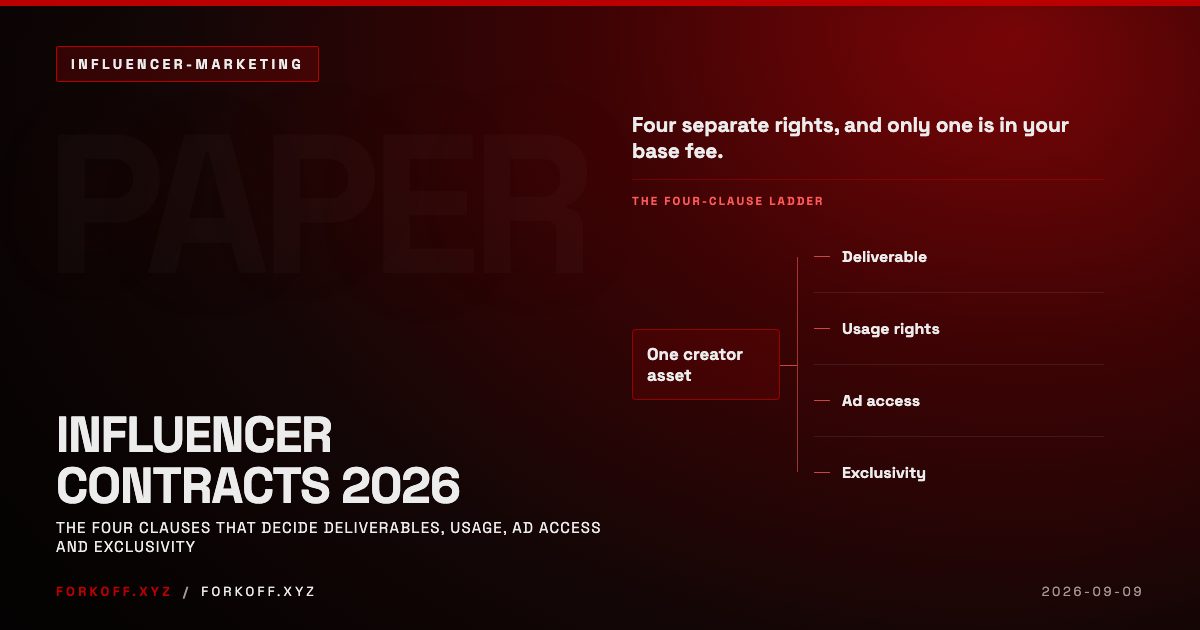
The reason this matters is that crypto creators carry incentive baggage that mainstream influencers do not, which is exactly why the paper matters more here than in a mainstream deal, and Influencer Contracts in 2026 covers the four clauses it has to resolve. Many take token allocations in exchange for promotion, which aligns them with short-term price action rather than with their audience, a structure our crypto KOL marketing framework breaks down in detail. The further up the accountability gradient you go, the more of that risk someone else is contractually carrying. A self-serve tool hands it all back to you.
The Accountability Gap: Why Most Platforms Won't Tell You This
Here is the thing no self-ranking listicle covers, because most of them are written by an agency that sits inside the gap. When you buy from a self-serve marketplace, you are buying a list, not a result. The platform's job ends when the creator posts. Whether that creator has real followers, whether the post disclosed it was paid, and whether anyone in the audience was a plausible buyer are all your problems now.
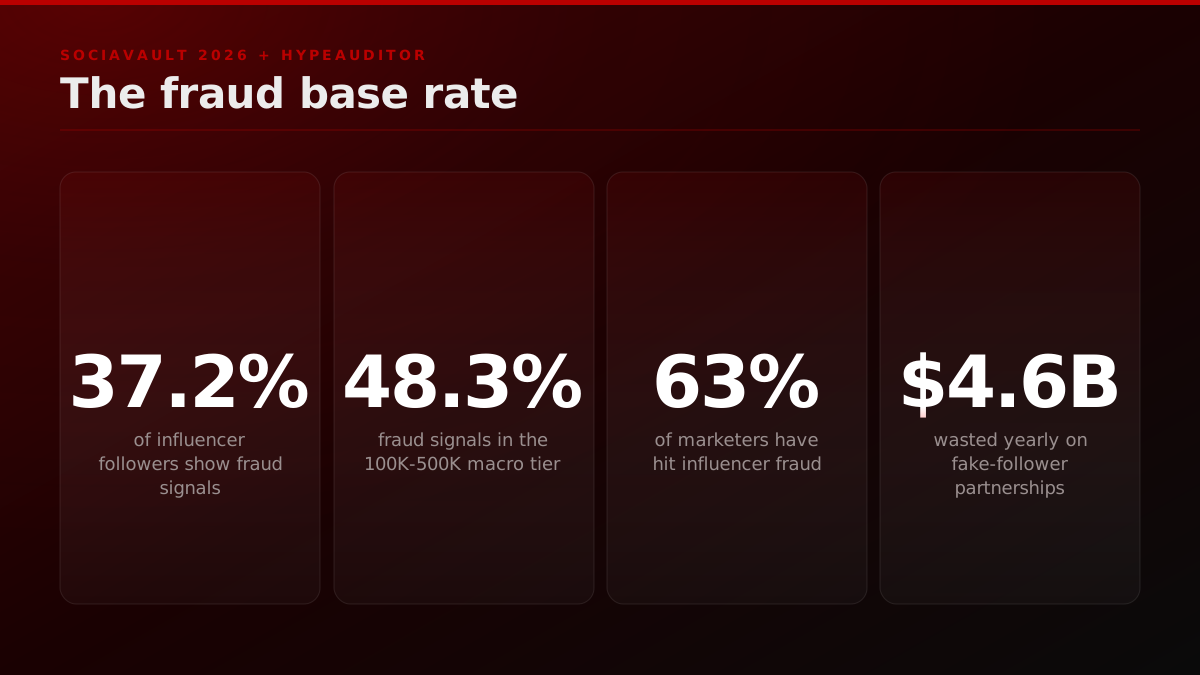
The data on how often that goes wrong is grim. The ZachXBT episode put the disclosure failure rate above 97 percent in one documented sample. On the authenticity side, a 2026 SociaVault study of 100,000 accounts found 37.2 percent of influencer followers show fraud signals, and an older but still-cited HypeAuditor benchmark reported that 63 percent of marketers have personally encountered influencer fraud. This is not a fringe problem; it is the base rate.
From 160+ accounts who accepted the deal I only saw <5 accounts actually disclose the promotional posts as an advertisement.
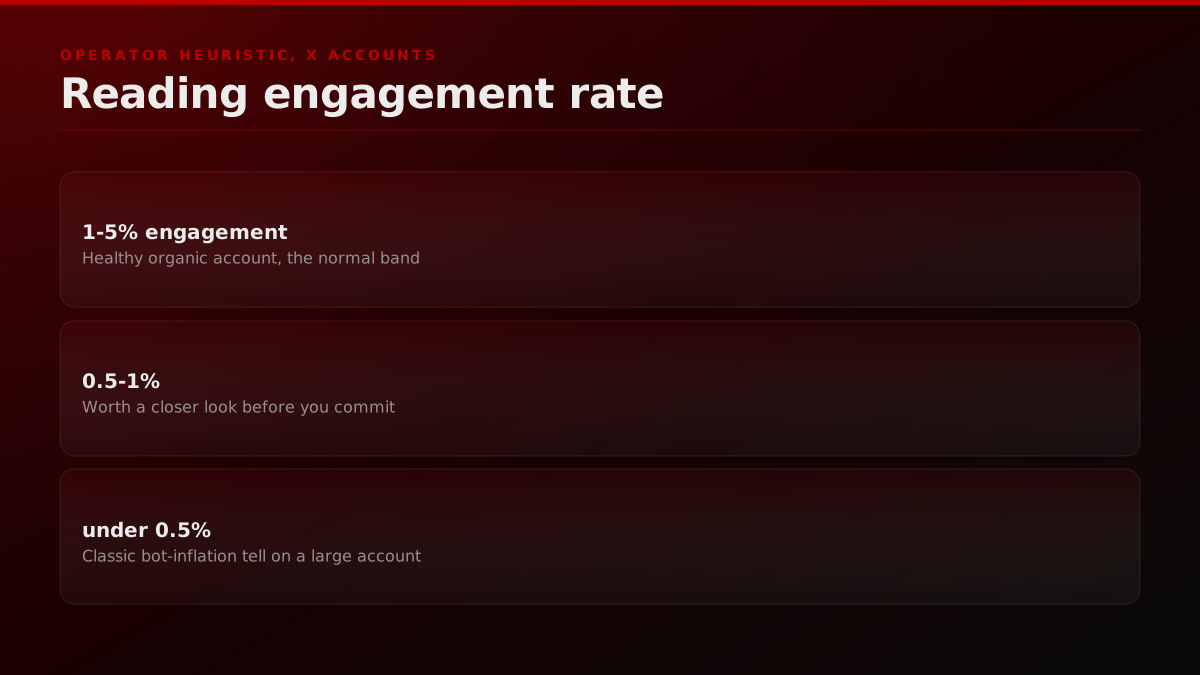
So how do you read a creator before you pay? Start with engagement rate. The rough heuristic most operators use: a healthy organic X account lands somewhere around 1 to 5 percent engagement, the 0.5 to 1 percent band is worth a closer look, and anything under 0.5 percent on a large account is a classic bot-inflation tell. It is a starting filter, not a verdict, but it surfaces the obvious problems fast.
Operator noteAsk any agency for a third-party bot audit on three proposed KOLs, then watch how they respond.
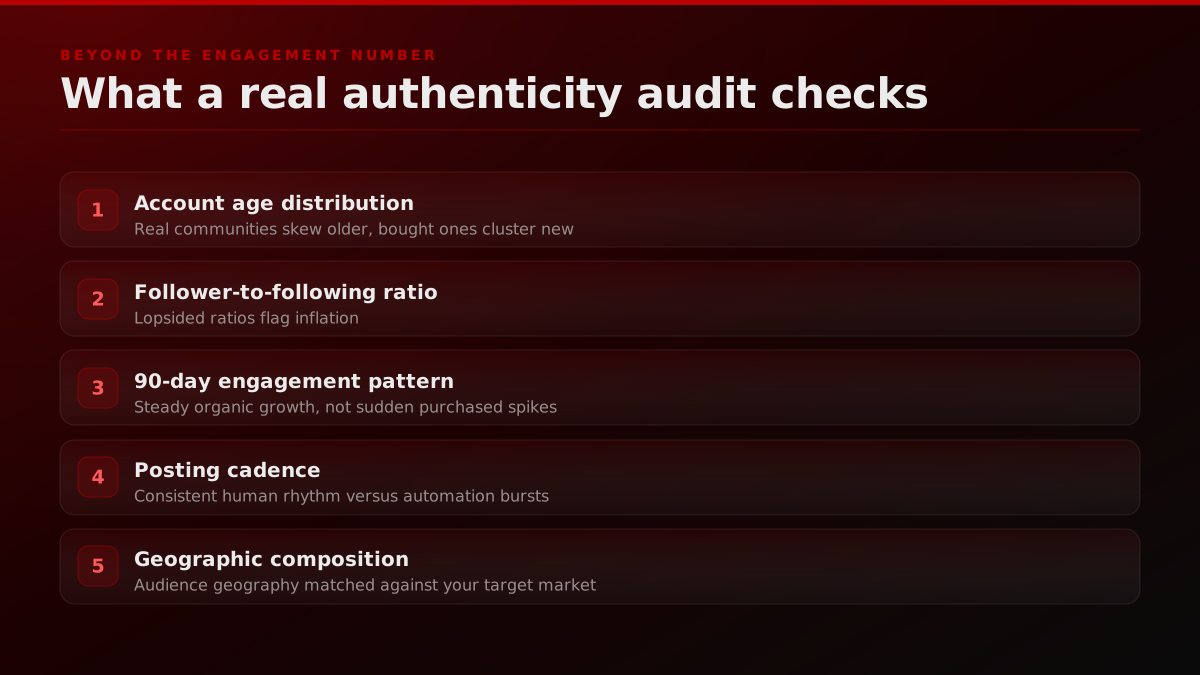
A real authenticity audit goes well beyond the engagement number. It looks at the account age distribution of the follower base, the follower-to-following ratio, the 90-day engagement pattern (steady organic growth versus sudden spikes that signal a purchase), posting cadence, and geographic composition against your target market. Each signal is weak alone; together they separate a creator with a real community from one renting an audience. The trouble is that almost no self-serve platform exposes this audit to you, and most agencies do not run it as a gate before proposing a name.
Operator noteWe screen every proposed KOL for bot-inflated followers before the name reaches a client shortlist.
Disclosure is the second half of the gap, and it is increasingly a legal one, not just an ethical one. The US Federal Trade Commission's endorsement guidance for social media requires clear, conspicuous disclosure of paid relationships, and courts abroad have reinforced the same principle (a German court ruling that paid influencer posts must be labeled as ads is one widely-cited example). For crypto specifically, undisclosed promotion is exactly the failure mode ZachXBT documented, and it exposes both the creator and the project that hired them. If the platform or agency does not say who writes the disclosure language into the brief and who checks the final post for it, assume nobody does.
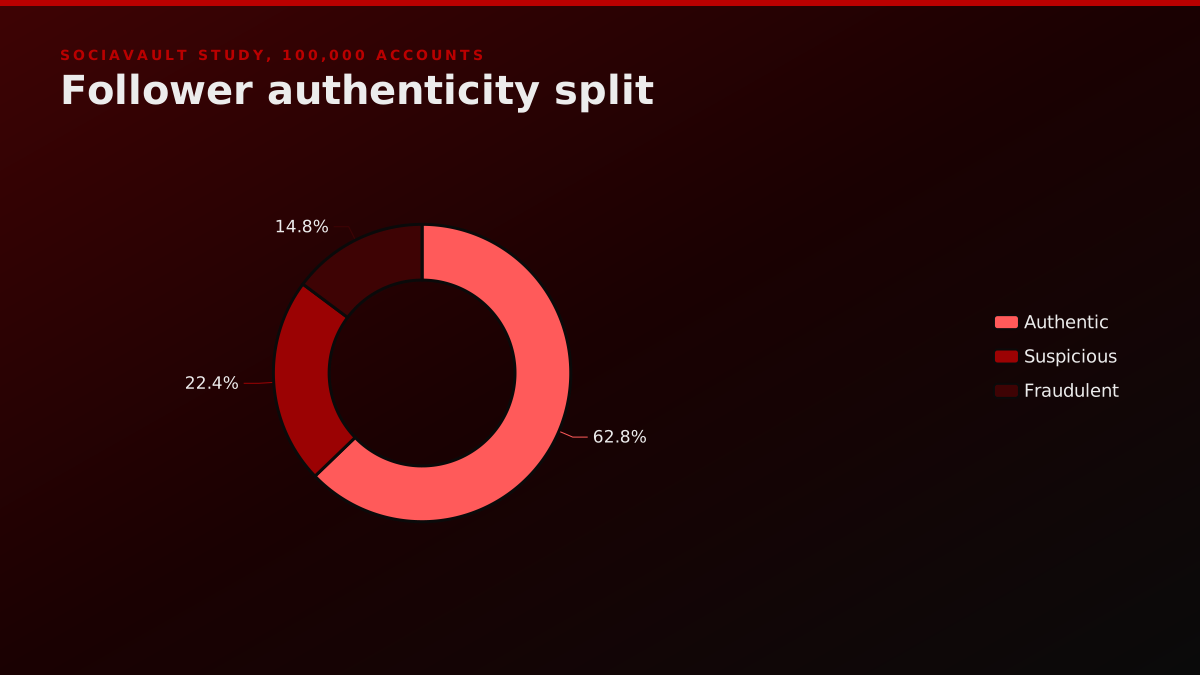
The word "vetted" is where the gap hides. Across the 100,000-account sample behind the chart above, 62.8 percent of followers read as authentic, 22.4 percent as suspicious and 14.8 percent as outright fraudulent, so on an average roster account roughly one follower in three is not a person you can sell to. Almost every agency below claims a "vetted" roster. Vetting can mean a rigorous third-party bot audit per creator, or it can mean "we have worked with them before." Those are wildly different things, and the leaked-spreadsheet creators were, by definition, on someone's vetted list. The agency vetting playbook covers the nine questions that separate the two, and the broader pattern of getting burned is documented in how to choose a web3 marketing agency.
willo2
@willo2_Poly
Polymarket is not only paying influencers for undisclosed promotion. They are also outright scamming their users, including me for $500,000. (Thread pinned)
The 10 Best Crypto KOL Marketing Platforms: Quick Comparison
Here is the master comparison. Scan it for the dimension you care about, then read the per-platform notes below. The accountability column is the one most listicles omit, and it is the one that decides whether a campaign that underperforms costs you a refund conversation or just costs you.
Crypto KOL platforms compared: category, pricing, accountability
| Platform | Category | Pricing | Fraud screening | Outcome accountability | Best for |
|---|---|---|---|---|---|
| Coinbound | Managed agency | ~$5K+/mo, by quote | Not published | Impressions-based | US-market KOL coverage |
| NinjaPromo | Managed agency | ~$5K+/mo, by quote | Not published | Impressions-based | Multi-channel integration |
| Lever.io | Hybrid marketplace | Custom, escrow | Proprietary vetting | You own outcome | Escrow-protected self-serve |
| theKOLLAB | Managed agency | By quote | Not published | Impressions-based | Token-allocation KOL rounds |
| Coinzilla KOL Spotlight | Self-serve packages | EUR 1,999 to 9,999 | Not disclosed | You own outcome | Transparent fixed-price bundles |
| Lunar Strategy | Managed agency | ~$5K+/mo est. | Not published | Impressions-based | DeFi and EU markets |
| TokenMinds | Managed agency | ~$3K+ min | Not published | Impressions-based | Early-stage + advisory |
| LKI Consulting | Managed agency | $5K+/mo | Stated, not detailed | Conversion-focused framing | Conversion-led campaigns |
| Surgence | Managed agency | $10K+ est. | Claims 2,000+ vetted | Impressions-based | VC-backed TGE launches |
| Coinband | Managed agency | $5K+ min | Not published | Impressions-based | Blue-chip, review-heavy |
| FORKOFF | Outcome-priced agency | By application | Per-KOL bot audit | Contractual floor + refund | Founders who want recourse |
A note on method: pricing reflects publicly verifiable sources as of June 2026, including review-site benchmarks where vendors do not publish rates. "Impressions-based" accountability means the contract commits to reach or engagement figures, not to a post-bot-screen outcome. None of this is a knock on the agencies; it is the standard model. The point is to show you where the standard model leaves you exposed.
Coinbound: Best for US-Market KOL Coverage
Coinbound is one of the longest-operating crypto-native agencies, founded in 2018, with a well-documented client roster that has included MetaMask, TRON, and Cosmos. Its strength is breadth of English-language and US-market creator relationships across X and YouTube, and minimum project sizes reported at an estimated $5,000 on review sites like Clutch.
The gap is the category gap, not a company flaw: as a managed agency, Coinbound selects the creators, but there is no published methodology for how it screens for fake followers or undisclosed-promotion history, and success is measured in reach and engagement rather than on-chain activity. If your priority is fast access to a deep US creator bench and you have your own way to verify authenticity, it is a credible pick. The practical move with an agency like this is to accept the breadth and supply the accountability yourself: ask for the bot audit on the proposed names, and write your own KPI into the statement of work before you sign.
NinjaPromo: Best for Multi-Channel Integration
NinjaPromo is a large, multi-service shop covering influencer campaigns alongside paid ads, PR, and community, with a client list that has included Binance and HTX. The scale is the selling point: if you want KOL spend coordinated with a broader paid and social push rather than run in isolation, an agency with that many internal functions can wire it together.
As with every managed agency in this category, the KPIs default to impressions and engagements, and there is no public bot-rate audit you can hold them to. The integration value is real; the accountability question is the same one you should ask everyone. One thing to watch with a large multi-service shop is where KOL spend sits in the priority stack: when influencer marketing is one of a dozen services, the depth of per-creator vetting can be shallower than at a KOL specialist, simply because attention is spread. Our web3 marketing agency overview covers how to weigh a generalist multi-channel shop against a KOL specialist, and the guerrilla marketing for web3 guide covers the organic groundwork that makes any paid KOL layer convert better.
Lever.io: Best Self-Serve Marketplace With Vetting
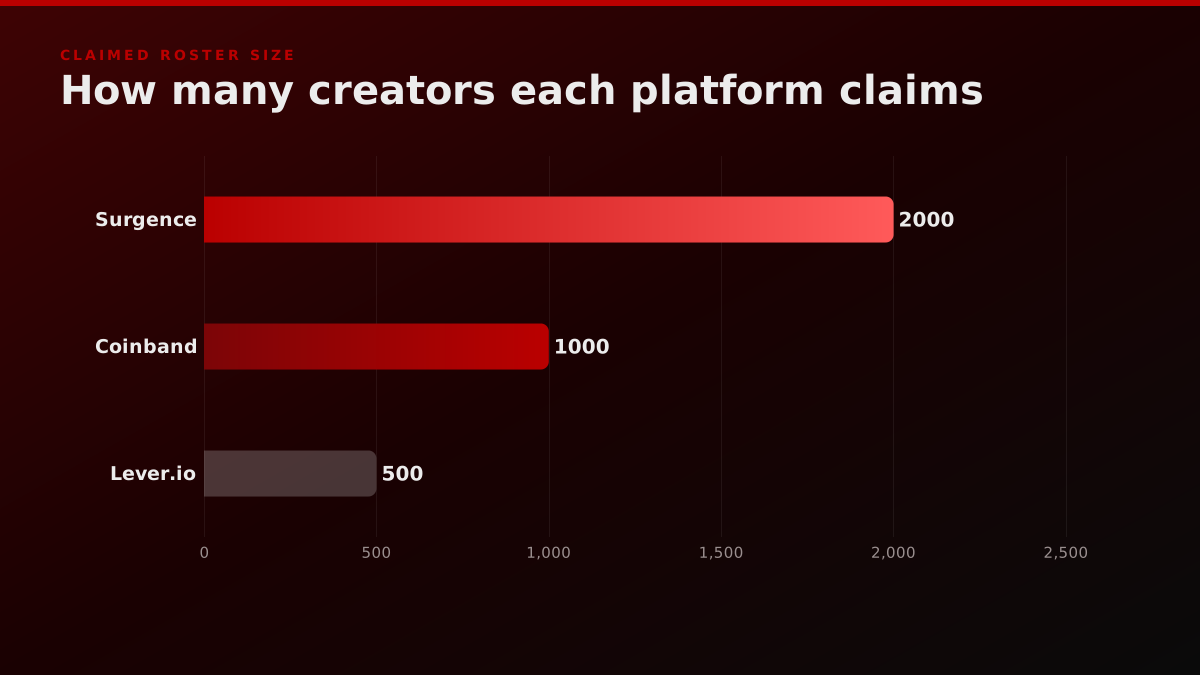
Lever.io is the most interesting self-serve option because it addresses two real pains. It uses an escrow model, so funds release on confirmed delivery rather than upfront, which cuts the ghosting risk that plagues direct creator deals. And it publishes platform-level scale figures: per its own site, 500-plus vetted Web3 KOLs and 300-plus brands. For a founder who can vet creators but is tired of chasing them, that is a genuinely useful tool.
The escrow mechanic is worth understanding because it solves a specific, real pain: in direct creator deals, paying upfront means absorbing the risk that the creator ghosts, posts late, or posts something off-brief. Holding funds until deliverables are confirmed flips that, which is genuinely valuable if you have been burned by a no-show before. It is the kind of structural protection more of this market should adopt.
The honest caveat is the category caveat. The vetting criteria are proprietary, so "vetted" is a label you cannot independently inspect, and in the self-serve model you still pick the creators and own the outcome. Escrow protects you from non-delivery; it does not protect you from a creator whose audience does not convert, because a bot-inflated account can deliver the post exactly as briefed and still produce nothing. Confirmed delivery and a real result are not the same checkpoint. It is the best transparency in the self-serve lane, but it is still a tool, not a managed result.
MAJOR Crypto Influencers Caught Planning Massive Pump And Dump Schemes
theKOLLAB: Best for Token-Allocation KOL Rounds
theKOLLAB, which announced CoinBureau backing in 2026, specializes in a model worth understanding precisely because it is the riskiest one for retail. Alongside standard campaigns, it facilitates KOL investment rounds: creators take token allocations and then promote with "skin in the game." It has access to very large English-language audiences and cites dramatic raise figures.
This is exactly the structure ZachXBT's investigation flagged. When a creator's upside is the token's short-term price, the incentive is to promote hard and exit, not to build a durable community, and disclosure of the allocation is frequently missing. The vesting terms make this concrete: industry insiders interviewed by CoinDesk described a market where, in the words of one KOL-deal operator, "nobody accepts more vesting than 12 months. Everybody wants to make a quick buck." Short vesting plus undisclosed allocation is a recipe for the creator's interests and your retail buyers' interests pointing in opposite directions. That is not a claim about theKOLLAB's specific compliance; it is a statement about the model. If you use it, demand allocation disclosure in every creator brief and the longest vesting you can negotiate.
KOL arrangements are a win for protocols, a win for KOLs, but a heavy loss for retail. These deals are not properly disclosed in most cases.
Coinzilla KOL Spotlight: Best for Transparent Fixed-Price Packages
Coinzilla deserves credit for one thing nobody else in this roundup does: fully public pricing. Its KOL Spotlight packages are listed at EUR 1,999 (Starter), EUR 4,999 (Premium), and EUR 9,999 (Ultimate), each bundling a set number of posts and video reviews across pre-selected channels with stated reach figures. You can buy and launch without a sales cycle.
Which platforms publish real pricing?
| Pricing transparency | Platforms | What it means for you |
|---|---|---|
| Fully public rate card | Coinzilla KOL Spotlight (EUR 1,999 / 4,999 / 9,999) | Buy without negotiation, zero creator customization |
| Partial (review-site benchmarks) | Coinband, Coinbound, NinjaPromo via Clutch | Anchor exists, real scope still by quote |
| Opaque, by quote only | Lunar Strategy, theKOLLAB, TokenMinds, LKI, Surgence | Plan for a sales cycle before you see numbers |
| By application, scoped to budget | FORKOFF outcome model | Budget maps to a tier with a named shortlist in 48h |
Pricing reflects publicly verifiable sources as of June 2026; opaque vendors may quote within or above these bands.
The tradeoff is baked into the bundle. You cannot customize or individually vet the creators, the reach numbers are estimated audience rather than verified authentic audience, and there is no post-campaign authenticity reporting. It is the right tool when you want a fast, predictable, low-commitment burst and you accept that you are buying a package, not a screened roster.
Lunar Strategy: Best for DeFi and European Markets
Lunar Strategy, founded in 2019 and based in Lisbon, is a strategy-first agency with an unusually strong European and DeFi footprint and long-term relationships with networks like Cardano and Polkadot. If your launch targets EU audiences or sits in DeFi specifically, that regional and vertical depth is hard to replicate with a US-centric shop.
The accountability profile matches the category: no public KOL vetting criteria, no outcome-based pricing, accountability tied to the relationship rather than the contract. The strategy-first framing is a real differentiator on the planning side; just separate "good strategy" from "guaranteed outcome" when you scope it. A strong strategic plan can still be executed against soft metrics, so treat the planning value and the delivery commitment as two separate things you are buying. The web3 GTM playbook is a useful counterpart for building that strategy layer yourself, and pairing in-house strategy with a managed agency's execution bench is often the most cost-effective structure for an EU-targeted DeFi launch.
TokenMinds, LKI Consulting, Surgence, and Coinband: The Other Agencies Worth Knowing
Four more managed agencies round out the serious-consideration set, each with a distinct geographic or stage edge: TokenMinds (Singapore, early-stage advisory), LKI Consulting (London, conversion-focused), Surgence (Dubai, VC-backed TGE launches), and Coinband (review-heavy, blue-chip clients). All four are execution-priced rather than outcome-priced, which is the thread that ties them together and the exact gap to negotiate against before you sign.
TokenMinds (Singapore, an estimated $3,000 minimum) bundles KOL marketing with token advisory and development, which suits very early-stage projects that want marketing and strategy under one roof, at the cost of KOL selection sometimes being secondary to advisory upsells. LKI Consulting (London, from $5,000/mo) uses the most conversion-focused language in the field, prioritizing creator selection by conversion history over follower count, and cites self-reported results like 50,000-plus signups in three months; the framing is right even if the "5x ROI" figure is not third-party verified. Surgence (Dubai, $10K-plus estimated) claims the largest roster at 2,000-plus "vetted" KOLs and targets VC-backed TGE launches, though a larger roster means higher quality variance and the vetting criteria are unpublished. Coinband is among the most review-heavy on Clutch and G2, with a 1,000-plus creator database and blue-chip clients, which makes client experience verifiable even though campaign ROI data is not.
A quick word on reading agency proof. Self-reported case study numbers (a "5x average ROI," "50,000 signups in three months," "1,230 percent token price increase") are marketing assets, not audited results, and you should treat them as directional at best. Review-site presence on Clutch or G2 is more useful because it reflects verified client experience, but client experience and campaign ROI are different things: a project can love working with an agency that nonetheless delivered bot-heavy reach. When you evaluate any entry here, separate three claims that vendors blur together: how pleasant they are to work with, how big their roster is, and whether your campaign actually moved your product. Only the third one pays your bills.
The common thread across all four, and across the managed category generally, is that they are execution-priced, not outcome-priced. The fees vary, the geographies vary, the rosters vary, but the success metric is reach unless you negotiate something stronger into the contract. That is the lever the next section is about.
Self-Serve vs Managed: The Accountability Gap Explained
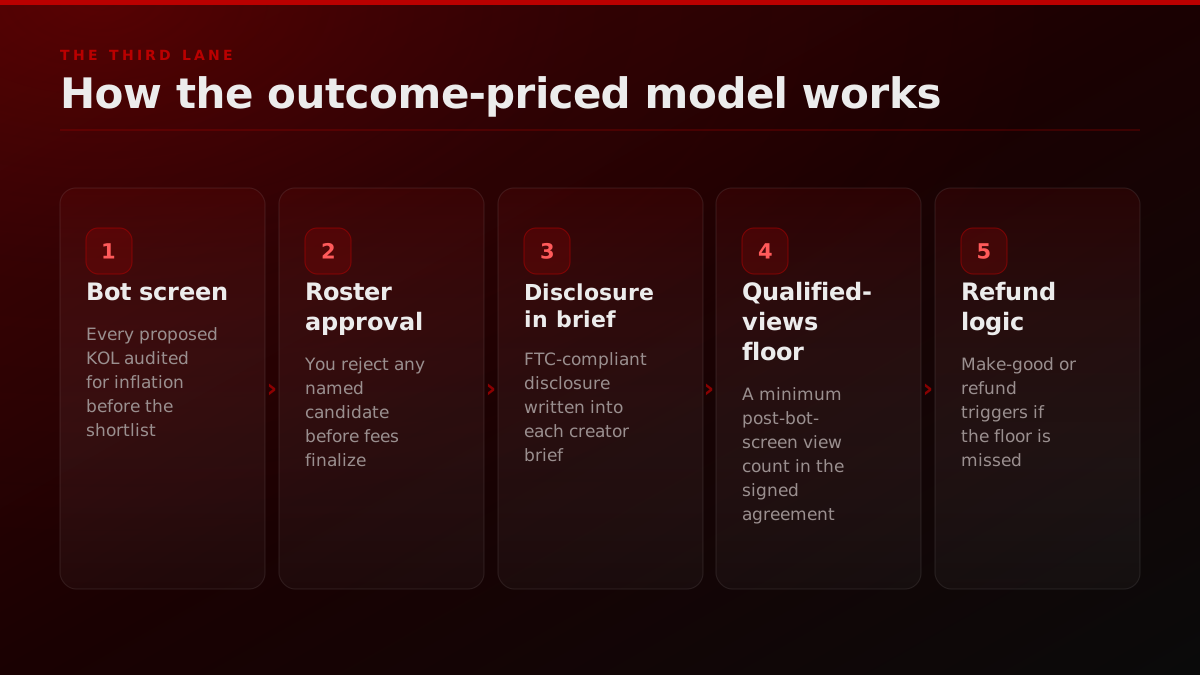
Strip away the brand names and there are really three operating models, and choosing among them is the actual decision. Self-serve marketplaces hand you a list and you absorb every risk; standard managed agencies run the campaign but still bill on impressions; outcome-priced managed agencies put a post-bot-screen result in the contract. The right pick depends entirely on whether you have the bandwidth to vet creators yourself.
The self-serve model (Lever.io, Coinzilla Spotlight, raw databases) is cost-efficient and fast, and it is the right call if and only if you have internal bandwidth to vet creators, write disclosure-compliant briefs, and read engagement data. If you do, you save the agency margin. If you do not, you are paying for a list and quietly inheriting the entire fraud, disclosure, and dud-post risk surface.
The standard managed model (most agencies above) solves the bandwidth problem. A team picks the creators, runs the briefs, and coordinates the drop. What it usually does not solve is the accountability problem, because the contract commits to impressions, and impressions include bots. You have outsourced the work without outsourcing the risk.
The outcome-priced managed model is the third lane. It screens every proposed KOL for bot inflation before the name reaches your shortlist, writes FTC-compliant disclosure into each creator brief, commits a qualified-views floor (a minimum post-bot-screen view count) in the signed agreement, and attaches refund or make-good logic if the floor is missed. That is the model FORKOFF runs as its outcome-priced KOL marketing service, and it is why we put ourselves at the bottom of the comparison table rather than the top: the claim to evaluate is not "we are the best," it is "we are the ones who will be on the hook in writing."
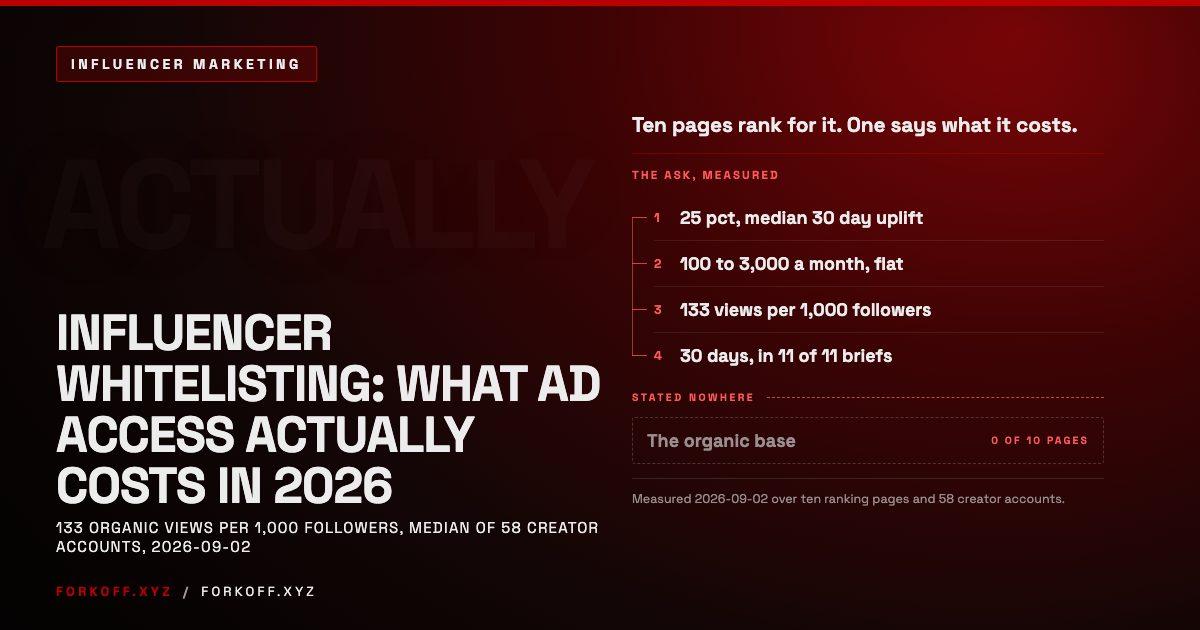
You do not need to hire an outcome-priced agency to benefit from the model; you can negotiate pieces of it into any managed engagement. Ask for a pre-paid creator-list approval step, where the agency sends named candidates with audit data and you can reject any of them before fees finalize. Ask for the success metric to be reframed from impressions to qualified views, with the bot-screen methodology named. Ask for a trigger threshold (what counts as underdelivery: below 100 percent of the floor, below 80, below 60) and a defined remedy at each level. An agency that will not write any of that down is telling you something. The pricing tiers breakdown shows what each of these clauses looks like attached to a real tier, and the crypto KOL cost study gives you the per-activation numbers to sanity-check whether a quote is fair before you start negotiating the terms.
There is a third lane between self-serve and impressions-billing
The lane founders actually want is a managed agency that prices on outcome: it screens every proposed KOL for bot inflation, writes FTC disclosure into the creator brief, commits a qualified-views floor in the signed agreement, and attaches refund or make-good logic if the floor is missed. That is the model behind forkoff.xyz/services/kol-marketing, and it is the benchmark the rest of this list is measured against.
Source: forkoff.xyz/services/kol-marketing
Operator noteA qualified-views floor only matters if the refund trigger is written into the signed agreement.
$100 Million Pump & Dump Scheme!
Patrick Boyle
Patrick Boyle breaks down the mechanics of an influencer-driven crypto pump-and-dump.
If you want to pressure-test a budget against this model before talking to anyone, the calculator below estimates a fair campaign cost from your creator count and platform mix, so you walk into any scope conversation with your own number.
What to Put in the Brief Before You Contact Any Platform
Most bad KOL campaigns are bad before anyone is booked, because the brief said "we want awareness" and the platform filled the gap with whoever was available that week. A brief a platform cannot misread has six things in it.
The asset the post points at. One URL, one action. A post driving to a Twitter profile, a Discord, a docs page and a mint in the same sentence converts on none of them.
The claim you are willing to stand behind. Write the literal sentence you want a creator to say. If you would not put it in a press release, do not put it in a paid post, because it is the same legal exposure with less review.
The audience you are buying, not the follower count. "Holders of a competing L2, English and Korean, mostly mobile" is a targetable instruction. "100K+ followers" is a budget, not a target.
The window. A launch week and an always-on quarter need opposite rosters. Say which one you are running before you see a single rate card.
The things a creator may not do. Price predictions, "guaranteed" language, undisclosed paid posts, and any comparison to a named competitor are the four that generate cleanup work.
Who approves the copy and how fast. A 48-hour approval loop kills a launch-week wave. Name the approver and their timezone in the brief.
KOL Campaign Management: Who Actually Does the Work
Campaign management is four jobs, and the platform models above split them differently. Sourcing picks names against the brief. Vetting screens those names for bot inflation and past scandals. Coordination handles briefing, scheduling, approvals and disclosure compliance. Reporting reconciles what was promised against what posted and what it produced.
A self-serve marketplace gives you sourcing and leaves the other three with you. A managed agency takes all four and usually reports on the first and the third. The question worth asking in a sales call is who owns vetting and reporting, because those are the two that cost money to do honestly and the two a brochure never separates.
Wave Campaigns: Why Timing Beats Volume
A wave campaign posts in staged groups rather than all at once. Three or four creators open the window, a larger group follows inside 24 to 48 hours, and a final group lands after the first engagement data is in.
Two reasons this outperforms a same-hour dump. A simultaneous dump reads as coordinated to both the algorithm and the timeline, and X actively suppresses duplicate-adjacent bursts. And the first wave is a live test: if the opening posts underperform on saves and replies, you can still change the message before spending the rest of the budget, which you cannot do once everyone has posted.
Creator Programs: The Case for a Program Over One-Off Posts
A one-off post buys an impression. A creator program buys a relationship, and in crypto the second is worth more because the audience has seen a thousand one-off shills.
A program means the same three to five creators covering you across a quarter, holding the token or using the product, and posting unpaid alongside the paid slots. The economics are better too: repeat creators negotiate down, they need less briefing each round, and their audience stops reading the mention as an ad by the third appearance. The trade is that a program is slower to show results and harder to attribute cleanly, so run it alongside measurable one-off waves rather than instead of them.
Channel Coverage Beyond X
Every list above sorts platforms by reach. The more useful axis is which channels they can actually staff, because a crypto audience does not live in one place.
YouTube Influencer Marketing
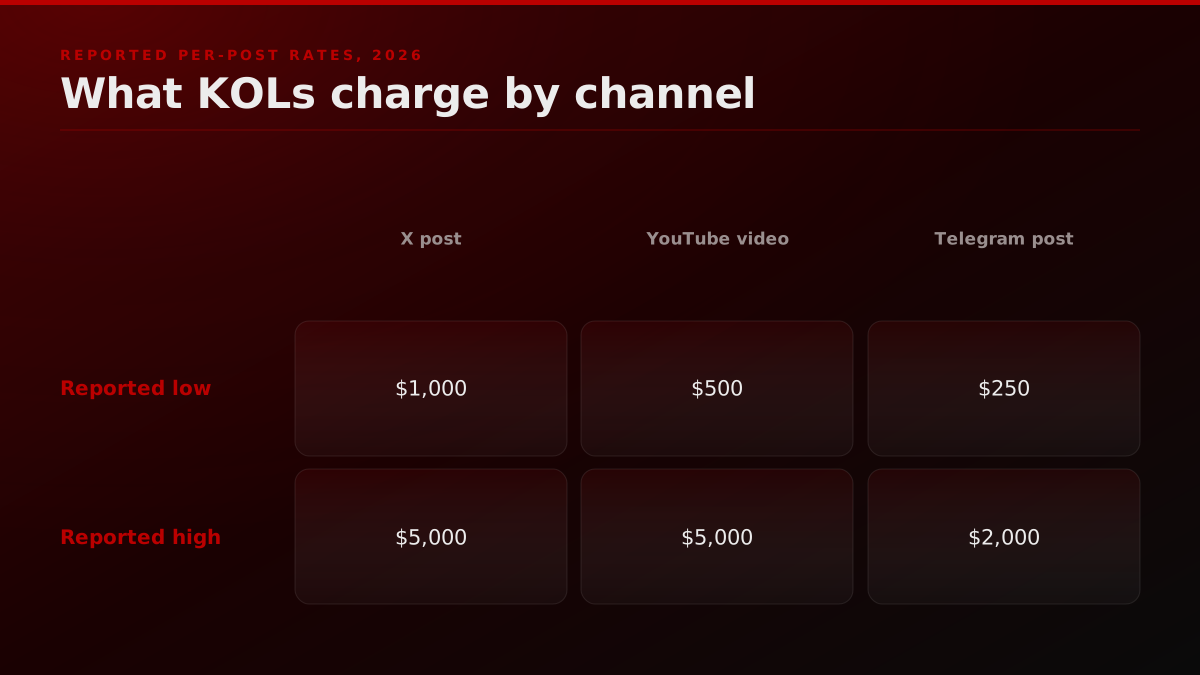
YouTube is where a buyer goes to be convinced rather than alerted, and the numbers behave differently: a video takes a week to book and produce instead of a day, costs more per placement, and keeps returning views for months while an X post is finished in 48 hours. The reported band runs roughly $500 to $5,000 per video, with a top-tier channel far above it.
Ask for the channel's last five sponsored videos before booking. A channel that runs a sponsor segment in every upload has trained its audience to skip that segment, and the view count will not tell you that.
Regional Creators and Non-English Markets
Korea, Turkey, Vietnam, Brazil and Indonesia carry a large share of retail crypto activity, and their creator ecosystems barely overlap with the English one. A platform that cannot name creators in the market you are targeting is selling you an English campaign with a translated caption.
Two things to check: whether the creator posts natively in that language (not a translated repost) and whether the platform can brief and approve in that language, because a compliance line only works if the creator understood it.
Measure What Matters: The Four Numbers Worth Reporting
Impressions and follower counts are the numbers a platform volunteers. These four are the ones that decide whether the campaign worked.
Qualified reach. Views from accounts that survive a bot screen. This is the only reach number worth comparing across platforms, and it is the one you have to ask for by name.
Saves and profile visits. Both are signals a human chose to act rather than scroll. On X these correlate with downstream visits far better than likes do.
Referral sessions with an attributed source. One tagged link per creator. If a platform reports a single blended traffic figure, the per-creator performance is unknowable and the weak half of the roster stays hidden.
Cost per qualified outcome. Whatever the outcome is (a signup, a wallet connect, a demo), divide by it rather than by impressions. This is the number that makes two very different rosters comparable.
Regulatory Compliance and Disclosure
Paid crypto promotion sits under real rules now, and the exposure lands on the advertiser, not only the creator.
In the US, the FTC's endorsement guides require a clear and conspicuous disclosure of any material connection, and "material" includes free tokens, an allocation and an affiliate share, not just cash. In the EU, MiCA's market-abuse provisions treat undisclosed paid promotion of a crypto-asset as an offence with named penalties, and the UK's FCA financial-promotion regime brought qualifying cryptoasset promotions into scope with a 24-hour cooling-off period for new investors.
What that means in practice: disclosure in the post itself rather than in a reply, no price predictions or return claims in briefed copy, a record of what each creator was paid and in what form, and an approval trail you could hand to a regulator. A platform that shrugs at the disclosure question is telling you who carries that risk.
How to Choose a Crypto KOL Platform in 2026: 6 Questions to Ask
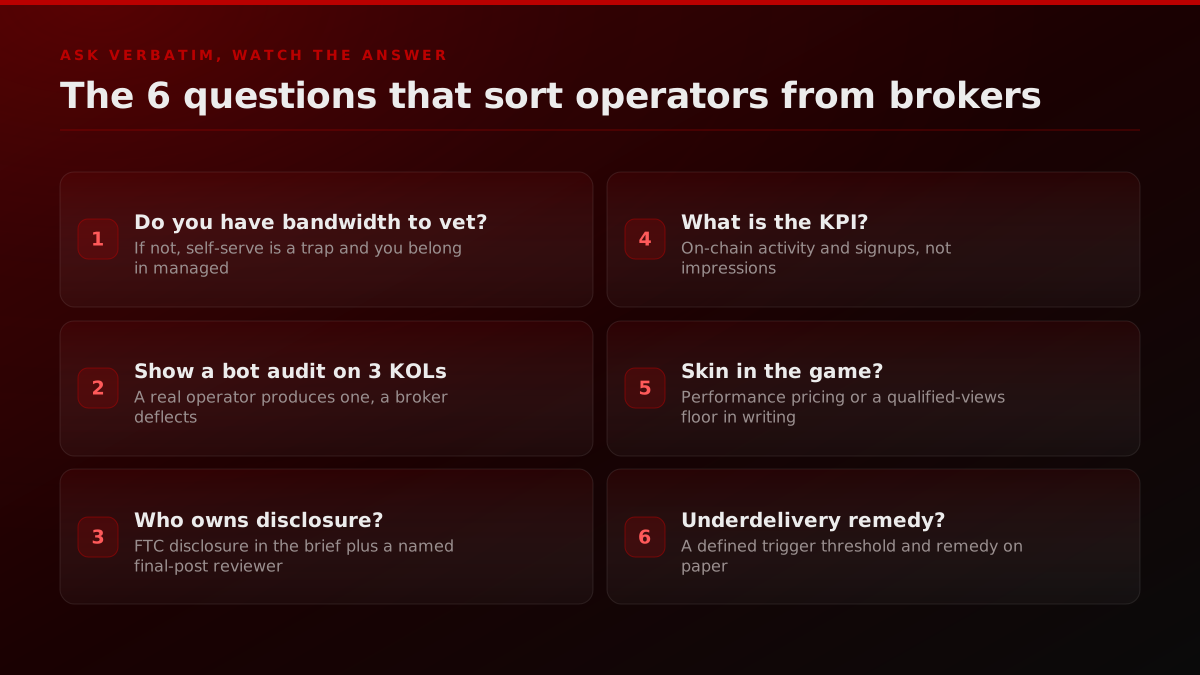
Forget the brand names for a minute. Whichever category you lean toward, these six questions sort the operators from the brokers. Ask them verbatim and watch the response, because the quality of the answer is itself the signal: a real operator answers each one in specifics with data, while a broker deflects to vague reassurance and follower-count vanity metrics.
1. Do you have internal bandwidth to vet KOLs? This is the question you ask yourself first, before you talk to anyone. If you have a growth person who can run audits and briefs, self-serve saves you margin. If you do not, self-serve is a trap and you belong in the managed lane. 2. Can you show me a third-party bot-rate audit for three KOLs you would propose? This is the single most clarifying question on the list. A real operator produces an audit; a broker explains why it is hard to get one. The deflection is the answer. 3. Is FTC-compliant disclosure written into the creator brief, and who reviews the final post for it? You want a named owner of disclosure compliance, not a shrug. 4. What is the KPI: impressions, or on-chain activity and signups? Impressions can be bought; wallet connects and signups cannot. Insist the success metric be the one that touches your product. 5. Do you have skin in the game through performance pricing or a qualified-views floor? An agency confident in its roster will commit to a post-bot-screen outcome in writing; one that is not will keep the metric soft. 6. What happens if a KOL underdelivers, and is the replacement or refund defined in the agreement? "We will make it right" is not a contract term. You want a trigger threshold and a defined remedy on paper.
I think everything at TOKEN2049 is on sale. Right from entry tickets to booths, speaker slot or Best KOL Award.
The fraud tax is real and concentrated in the lower macro band
A 2026 SociaVault analysis of 100,000 accounts found 37.2 percent of influencer followers show fraud signals, climbing to 48.3 percent in the 100K to 500K band, the lower half of the macro tier and the exact range most crypto KOL rosters sell hardest. The same study estimates brands waste roughly $4.6 billion a year on partnerships compromised by fake followers. A bigger follower count is not a safer buy; it is often a more expensive one.
Source: SociaVault Fake Follower Study 2026
Run the same six questions past a self-serve platform, a standard agency, and an outcome-priced one and the gradient becomes obvious. The self-serve tool answers questions one and two by handing them back to you. The standard agency answers three and four softly. Only the outcome lane answers five and six in writing. For campaigns that ride alongside an event or conference, the crypto event sponsorship playbook applies the same accountability lens to sponsorship spend, and guerrilla marketing for web3 covers the organic moves that make paid KOL spend go further.
The Honest Verdict
There is no single best crypto KOL platform, and any list that crowns one (especially its own author) is selling you the gap. The honest verdict is conditional, because the right answer genuinely depends on what you bring to the table. If you have strong internal vetting and a tight budget, a self-serve marketplace like Lever.io or a fixed-price bundle from Coinzilla is cost-efficient and fast. If you lack the bandwidth, a managed agency saves you time, but you must negotiate a real outcome metric into the contract or you are buying impressions that include bots. Before you commit to any KOL platform, it is worth weighing the channel itself: the breakdown of KOL marketing versus clipping for a token launch compares paid creator reach against owned clipping distribution on cost per real view.
The safest option for a founder without an internal growth team is a managed agency willing to be contractually accountable for a post-bot-screen outcome, not just for deliverables. That is the lane FORKOFF built its KOL marketing agency service into, and it is why our pricing tiers attach a qualified-views floor to every tier. Whichever way you go, run the six questions, demand the bot audit, and get the recourse in writing. If you want a vetted shortlist with audit data and a contractual floor, tell us your launch context. If you are still scoping the broader plan, our fractional CMO and AI marketing agency services cover the layers around the KOL campaign, and GEO for crypto and web3 covers how to get cited by the AI engines your buyers now ask, a discipline we run as answer engine optimization.