You have a name in front of you. A crypto KOL with a big follower count, a confident media kit, and a quote that fits your budget. The question that decides whether your next campaign returns wallets or just impressions is the one most founders skip: is any of this real? (And a step before that, whether a KOL is even the right channel: the KOL marketing versus clipping comparison weighs paid creator reach against owned clipping distribution for a launch.) In a 2026 HypeAuditor analysis of 8.7 million profiles, 41.3 percent of accounts showed signs of fraud. Crypto runs above that average because the incentive to inflate is stronger. So the honest starting assumption for any KOL you have not screened is that the audience is partly fake until the KOL proves otherwise.
This is not abstract risk. In one 19-account KOL screen FORKOFF ran, 4 accounts failed the bot-quality check at over 35 percent inauthentic engagers, and cutting them before launch saved roughly 3,000 dollars of wasted spend. None of those four looked wrong on a roster page. The fraud sat one layer below the numbers they volunteered. Which is why choosing a KOL marketing agency turns on whether the agency runs this screen at all. That is the gap this checklist closes: nine concrete pre-payment checks, ordered so the cheap filters drop the obvious problems before you spend time on the deep ones. This guide is the spoke that sits under our crypto KOL marketing framework; the framework covers strategy, this covers due diligence on a single name.
TL;DR: Run 9 checks before you pay any crypto KOL.
Roughly 41 percent of influencer accounts show fraud signals (HypeAuditor 2026), and in one FORKOFF KOL screen 4 of 19 accounts failed the bot-quality check, so vetting is not optional. Before you sign with a crypto KOL, run nine checks in order: follower authenticity, engagement rate, comment quality, disclosure history, on-chain wallet proof, paid-vs-organic ratio, geographic audience match, repeat track record, and contract red flags. The two checks no competitor blog covers in depth are on-chain wallet verification (ask the KOL to sign a message from the wallet they claim to trade from) and the paid-vs-organic ratio (a creator who only posts paid shills has no credibility left to lend you). Jump to the checklist table below, then run each point against the KOL in front of you.
The undisclosed-promotion problem that sits behind all of this is still live today. The structural reason is incentive: a creator paid in token allocations profits when the price moves, not when your product succeeds, and disclosure of that arrangement is frequently missing.
willo2
@willo2_Poly
Polymarket is not only paying influencers for undisclosed promotion. They are also outright scamming their users, including me for $500,000. (Thread pinned). They are still X's official prediction market partner.
About these numbers
The fraud-rate figures (41.3 percent of 8.7 million profiles, 52.3 percent of 4.2 million Instagram accounts) are from HypeAuditor's 2026 analysis and a Modash and Credibility Corp study, both aggregated by amraandelma.com. The engagement benchmark (1 to 5 percent healthy) is from Matas Cepulis on LinkedIn; CryptoKolz.com cites 3 to 6 percent for crypto specifically, and our tier table reconciles the two. The KOL-round figure (75 percent of major launches) and the disclosure quotes are from CoinDesk's KOL economy investigation. Three numbers are FORKOFF first-party campaign data and are labeled as such throughout: the 19-account screen (4 failures, roughly 3,000 dollars saved), a 9,000-dollar 12-KOL seeding round (41 posts, 2.1 million combined views, the 50,000 to 200,000 band driving about 5x the ROI of accounts above 500,000), and cost per 1,000 real views by band (about 1.10 dollars nano, 2.40 at 50,000 to 200,000, 6.80 above 500,000). Those are observations from campaigns we ran, not third-party audited figures, and they will vary by vertical and creator.
The 9-Point Crypto KOL Vetting Checklist
Crypto KOL vetting is the pre-payment process of confirming that a creator's audience, engagement, on-chain presence, and contract terms are genuine before you spend. It is not the same as picking a KOL. Picking is about fit and reach; vetting is about whether the reach exists at all and whether you will have recourse if it does not. The nine checks below run cheapest-first, so a single failed early check can disqualify a name before you invest hours in a wallet audit or a contract review.

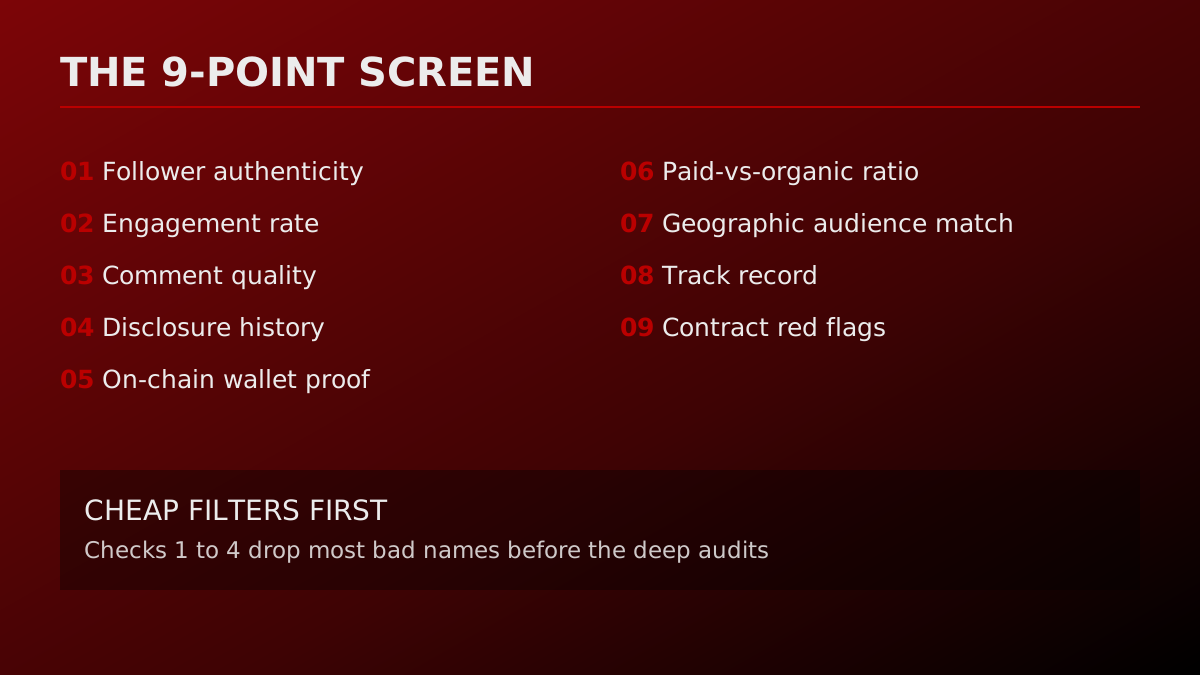
Scan the table, then work each point against the specific KOL in front of you. Most bad names die at checks one through four. The deeper checks (five through nine) are where you separate a competent creator from a genuinely credible one.
The crypto KOL vetting checklist at a glance
| # | Check | What to ask for | Hard fail signal |
|---|---|---|---|
| 1 | Follower authenticity | Social Blade chart + HypeAuditor or Modash report | Fake-follower score above 15 percent or a sudden overnight spike |
| 2 | Engagement rate | Last 20 posts, likes plus replies over followers | Under 0.5 percent on an account over 100K followers |
| 3 | Comment quality | Open 10 to 20 comment threads yourself | Same 30 accounts replying LFG with no substance |
| 4 | Disclosure history | Past paid posts with #ad or #sponsored tags | Zero disclosure on posts that were clearly paid |
| 5 | On-chain wallet proof | Signed message from their public wallet | No on-chain activity behind a deep-DeFi claim |
| 6 | Paid-vs-organic ratio | Their last 30 posts, paid versus organic | Almost every post is a paid shill |
| 7 | Geographic audience match | Audience geography panel from analytics | Audience concentrated outside your target market |
| 8 | Track record | Named past campaigns with repeat clients | No repeat clients and no verifiable past results |
| 9 | Contract red flags | Written deliverables, milestones, ownership | Full payment upfront, no milestones, deletion clause |
Run them in this order: the cheap filters (1 to 4) drop most bad names before you spend time on the deeper checks (5 to 9).
Fraud is the base rate, not the exception
HypeAuditor's 2026 analysis of 8.7 million profiles found 41.3 percent showed signs of fraud, and a Modash and Credibility Corp study of 4.2 million accounts put artificial-follower rates above 50 percent on Instagram, with the 100,000 to 500,000 follower tier the highest risk. Crypto runs above that average because the financial incentive to inflate is stronger. Start from the assumption that a given name is compromised and make the KOL prove otherwise.
Source: HypeAuditor 2026 via amraandelma.com; Modash and Credibility Corp
Point 1: Follower Authenticity, the Fake-Follower Check
Follower authenticity is the share of a KOL's followers that are real, active humans rather than purchased or bot accounts. It is the first check because it is cheap, fast, and disqualifies the worst offenders before you look at anything else. A 1-million-follower account with a 40 percent fake-follower rate has 600,000 real followers and is more expensive than an honest 300,000-follower account, not cheaper, because you pay on the headline number and reach the smaller real one.
Start with the Social Blade growth chart. Organic accounts grow in a jagged but generally upward line. A purchased account shows a vertical spike, often tens of thousands of followers appearing overnight with no corresponding event, then a flat plateau as the bots sit dormant. CryptoKolz.com treats a sudden jump of roughly 30,000 followers with no launch or viral moment behind it as a flag worth investigating, and that threshold is a reasonable default.
Then run the profile through a third-party tool. HypeAuditor and Modash both return a fake-follower score; flag anything above 15 percent and hard-fail anything above 30. These tools are not perfect, but they catch the bulk-purchase pattern reliably. The base rate justifies the effort: a Modash and Credibility Corp study of 4.2 million accounts found over half of Instagram accounts carrying artificial follower history, concentrated in the 100,000 to 500,000 tier that crypto rosters sell hardest.
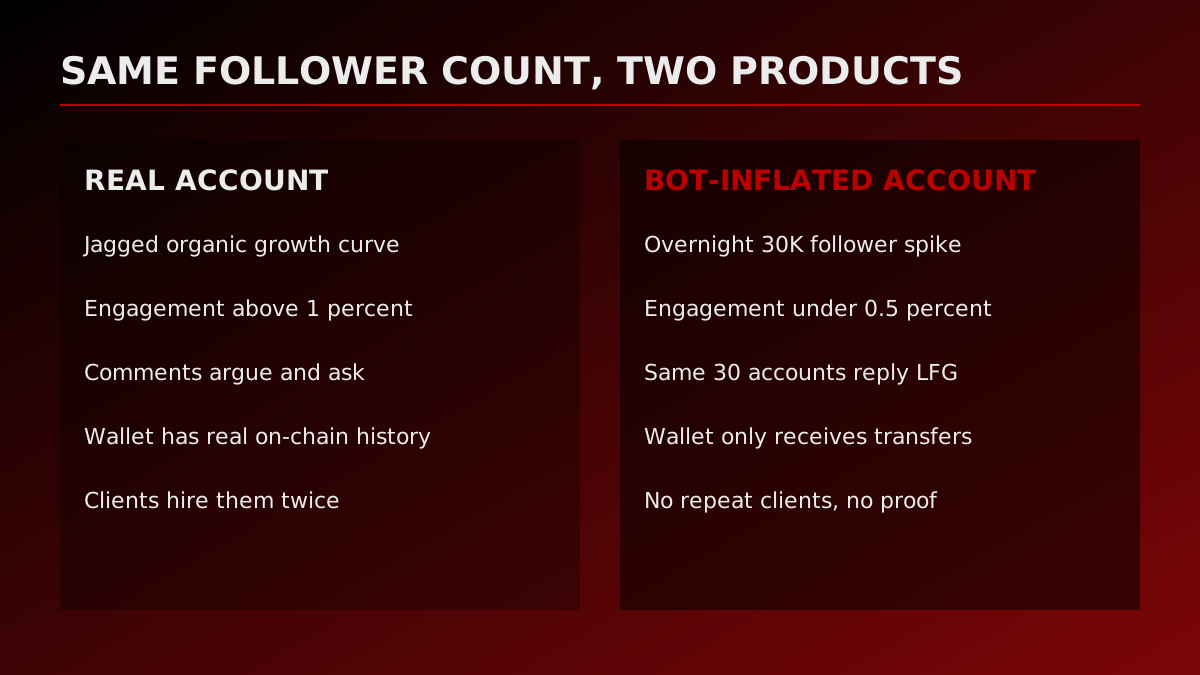
The number that makes this concrete is the dollar one. One documented CryptoKolz.com case found a protocol that spent 20,000 dollars on a KOL with 70 percent fake followers and ended up with a 138-dollar cost per acquisition, versus 42 dollars after switching to vetted micro-KOLs. The fake followers did not just dilute the campaign; they more than tripled the real cost of every customer it produced.
Operator note4 of 19 proposed KOLs failed our bot-quality check at over 35 percent inauthentic engagers., FORKOFF first-party campaign data
Point 2: Engagement Rate, the Sanity Check
Engagement rate is the share of a KOL's audience that interacts with a typical post, calculated as likes plus replies divided by followers. It is the fastest read on whether the follower count means anything, because bought followers do not engage. A healthy engagement rate for a crypto KOL on X or Instagram sits between 1 and 5 percent, with crypto content trending toward the lower end of that band because the topics are complex and the audiences large.
The number has to be read against the follower tier, because engagement falls as accounts grow. The table below disaggregates the benchmark by tier so you are not flagging a healthy mega account or excusing a bot-inflated micro one.
Crypto KOL engagement-rate benchmarks by follower tier
| Follower tier | Healthy engagement | Watch closely | Likely bot-inflated |
|---|---|---|---|
| Nano (1K to 10K) | 3 to 6 percent | 1.5 to 3 percent | Under 1.5 percent |
| Micro (10K to 100K) | 2 to 5 percent | 1 to 2 percent | Under 1 percent |
| Macro, lower band (100K to 500K) | 1 to 3 percent | 0.5 to 1 percent | Under 0.5 percent |
| Macro, upper band (500K to 1M) | 1 to 2 percent | 0.5 to 1 percent | Under 0.5 percent |
| Mega (1M+) | 1 to 2 percent | 0.5 to 1 percent | Under 0.5 percent |
Synthesizes Matas Cepulis (1 to 5 percent healthy) and CryptoKolz.com (3 to 6 percent for crypto), disaggregated by tier. Bands follow Sprout Social and Hootsuite (macro 100K to 1M, mega above 1M); no percentage changed. A starting filter, not a verdict.
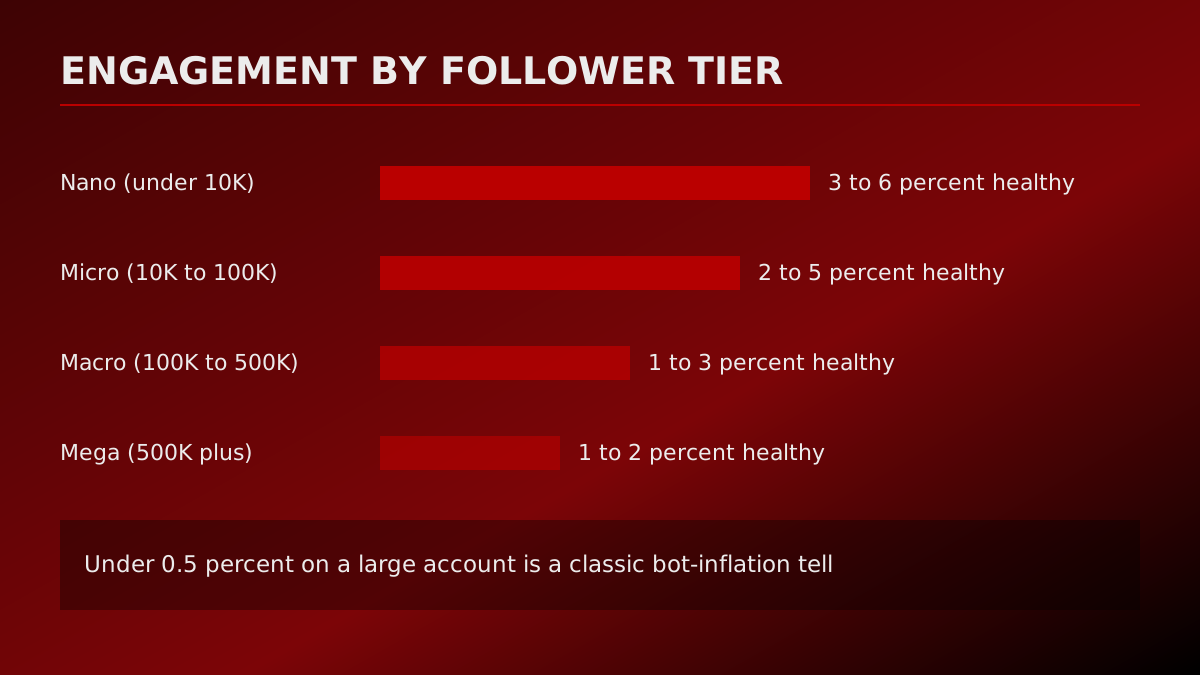
Calculate it yourself rather than trusting a media kit. Pull the KOL's last 20 posts, average the likes plus replies, and divide by the follower count. A media kit will quote a peak post; the average is the honest number. Web3 marketing practitioners debate exactly which metrics matter, and the consensus in threads like the r/web3marketing engagement discussion is that no single number is sufficient, but engagement rate is the cheapest one that separates a real audience from a rented one.
KOL arrangements are a win for protocols, a win for KOLs, but a heavy loss for retail.
Point 3: Comment Quality, the Read Below the Like Count
Comment quality is the substance and authenticity of the replies under a KOL's posts, and it catches the engagement pods that a raw engagement-rate number misses. A bot-inflated account can buy likes and even buy comments, but it cannot easily buy substantive, on-topic discussion. So the like count tells you the volume of engagement and the comments tell you whether it is real.
Open 10 to 20 comment threads on the KOL's recent posts by hand. Real audiences argue, ask questions, disagree, and reference specifics. A rented audience replies in one-word hype. The named red flag in the practitioner literature is the engagement pod: the same 30 or so accounts replying LFG or fire emojis under every post, often within minutes, with no thread that goes anywhere. CryptoKolz.com lists exactly this pattern (same 30 accounts commenting LFG) as a flag to catch with a profile-bio audit of 10 commenters.
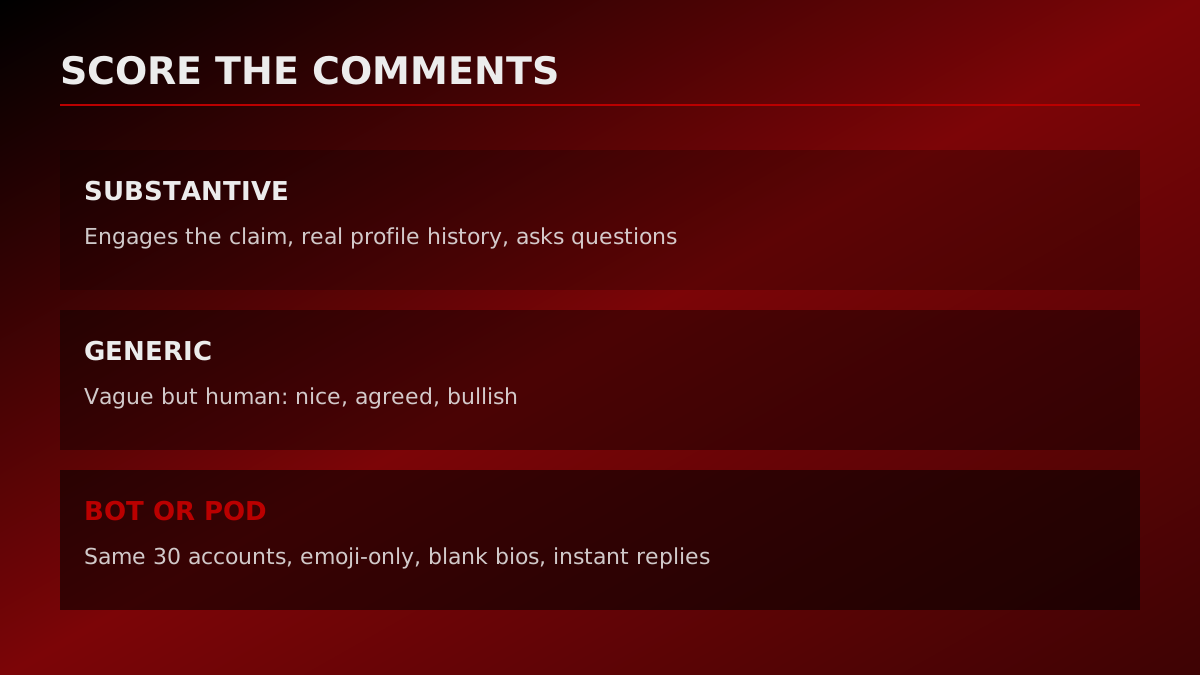
Score what you find on three tiers. Substantive comments engage with the actual claim and come from profiles with real histories. Generic comments are vague but human (nice, agreed, bullish). Bot comments are repetitive, emoji-only, or come from profiles with blank bios and alphanumeric usernames. If the bot and engagement-pod tiers dominate the threads on a paid-looking post, the audience is manufactured regardless of what the engagement-rate math said.
Operator noteOpen 15 comment threads by hand. Same 30 accounts replying LFG is a rented audience.
Why do crypto influencers claim to be right all the time? Guess what, they are not
Point 4: Disclosure History, the Legal Exposure Check
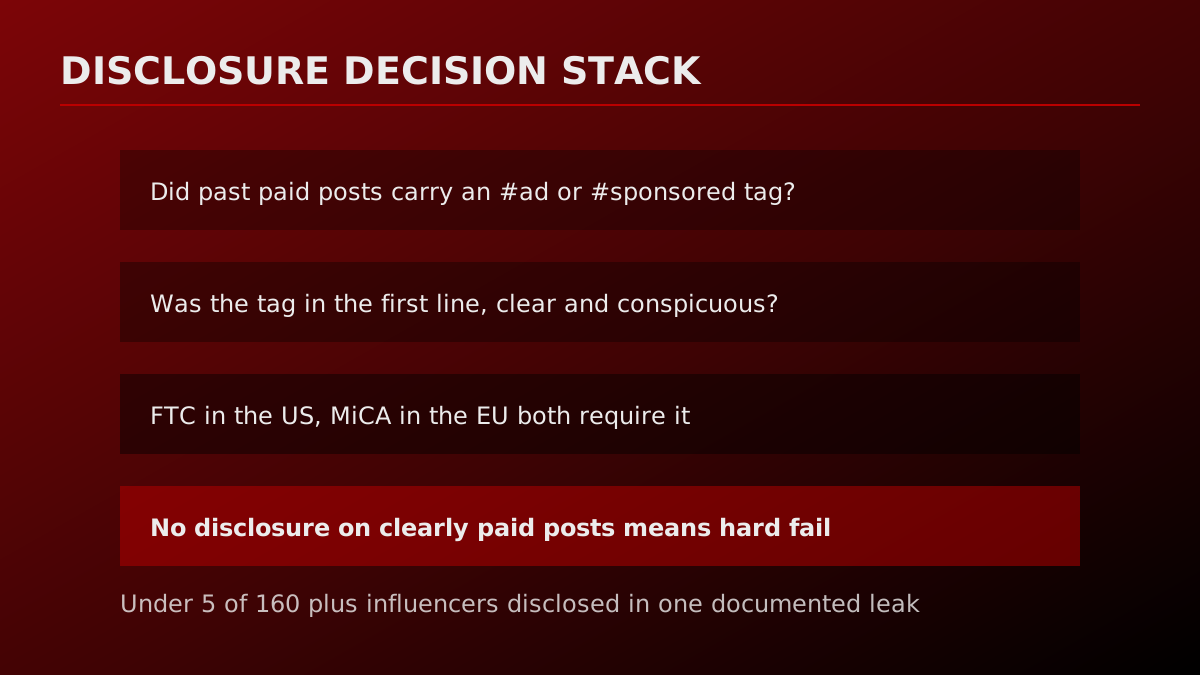
Disclosure history is the record of whether a KOL labels paid posts as advertising, and it is a legal exposure check, not an etiquette one. In the US, the Federal Trade Commission's endorsement guidance for social media influencers requires clear and conspicuous disclosure of paid relationships, and in the EU the MiCA framework adds crypto-specific promotion rules. A KOL who has never disclosed a paid post is a liability for both the creator and the project that hired them, because an undisclosed promotion can expose your project to regulatory action, not just reputational damage.
Scroll the KOL's timeline for posts that were obviously paid (a token launch shout, a coordinated drop) and check whether any carried an #ad or #sponsored tag in the first line. The base rate is grim. In a documented sample of more than 160 crypto influencers who took a paid promotion deal, fewer than five disclosed the posts as advertisements. Disclosure is the exception, which is exactly why a KOL who does disclose stands out as the safer hire.
When influencers fail to disclose such arrangements, they mislead their audience, many of whom rely on these endorsements to make financial decisions.
Watch for the technically-true non-denial. When CoinDesk asked an Altcoin Buzz employee whether the channel had invested in a project it promoted, the answer was that it had not, and on compensation, the tell was a flat not yet. A KOL who answers the disclosure question with a careful non-answer is signaling that the honest answer is bad. Project leads compound the gap: one token-launch advisor told CoinDesk that disclosure is the KOL's obligation and nothing we enforce contractually, which means the buyer has to close the gap themselves during vetting.
Point 5: On-Chain Wallet Verification, the Check a Fake Cannot Fake
On-chain verification confirms a crypto KOL actually uses the blockchain products they promote, by inspecting their wallet activity on a public explorer. It is the single highest-signal check for a crypto-native KOL and the one almost no competitor blog covers in depth, because it is the one that cannot be faked with a follower purchase. A KOL who shills DeFi protocols but has zero DeFi transactions is renting you a credibility that does not exist on the chain they claim to live on.
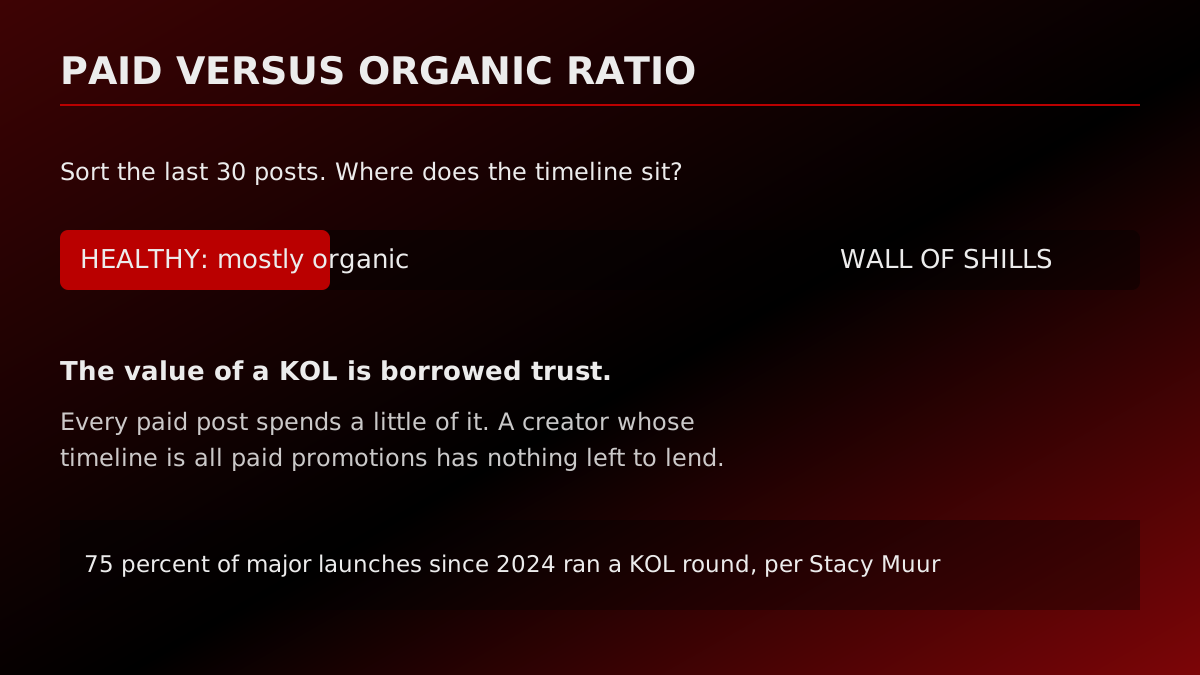
The audit runs in four steps, and the first one is the test most fakes fail.
The 4-step on-chain wallet audit
| Step | What you ask for | What real looks like | What a fake looks like |
|---|---|---|---|
| Signature | A signed message from their stated public wallet | Signs in minutes from a wallet with history | Stalls, deflects, or sends a fresh empty wallet |
| Frequency | Transaction history on Etherscan or Solscan | Regular swaps, mints, staking over months | Only incoming token transfers, no real use |
| Content match | Wallet activity that matches what they post | Trades the chains and tokens they talk about | Posts about DeFi with zero DeFi transactions |
| Dump pattern | Sell history after past paid promotions | Holds or scales out slowly | Sells the full allocation within days of posting |
On-chain verification is the single highest-signal check for a crypto-native KOL and the one almost no competitor blog covers in depth.
Operator noteA signed wallet message takes a real KOL two minutes. A stall is the answer.
Ask the KOL to sign a message from the public wallet they claim to trade from, using Etherscan or Solscan. A real KOL does this in two minutes from a wallet with months of history. A fake stalls, deflects, or sends you a freshly created empty wallet. Then read the transaction history. You want regular activity (swaps, liquidity provision, NFT mints, staking) that matches the chains and tokens they post about, not a wallet that only ever receives token transfers. Finally, check the dump pattern: pull their sell history after past paid promotions. A KOL who sells the entire allocation within days of posting is telling you what happens to your token after they cash your check.
One adversarial note, because on-chain activity can be manufactured too. Projects sometimes airdrop tokens to a KOL's wallet unsolicited, then the KOL posts about the project as if the interaction were organic. So when you see a KOL's wallet holding a project they have promoted, confirm whether they bought in or were airdropped in. Not all on-chain footprints are genuine participation, and the seeding tactic is common enough that it is worth a second look before you treat wallet history as proof. The mechanics of that seeding play are laid out in our airdrop marketing playbook, which is worth reading from the buyer side precisely so you can spot a manufactured footprint when a KOL presents one.
The reason this check carries so much weight in crypto specifically is that the product and the proof live in the same place. A mainstream beauty influencer cannot show you a public ledger of every product they have ever used, but a crypto KOL can, because the chain is public. That asymmetry is your advantage as a buyer. A KOL who treats the wallet request as intrusive has misread the deal: in a space where credibility is supposed to come from being early and on-chain, refusing to show the chain is the loudest signal there is. Pair the wallet read with the follower and engagement checks from points one and two, because a real wallet behind a bot-inflated follower base still means you are paying for reach that does not exist.
Point 6: Paid-vs-Organic Ratio, the Credibility Check
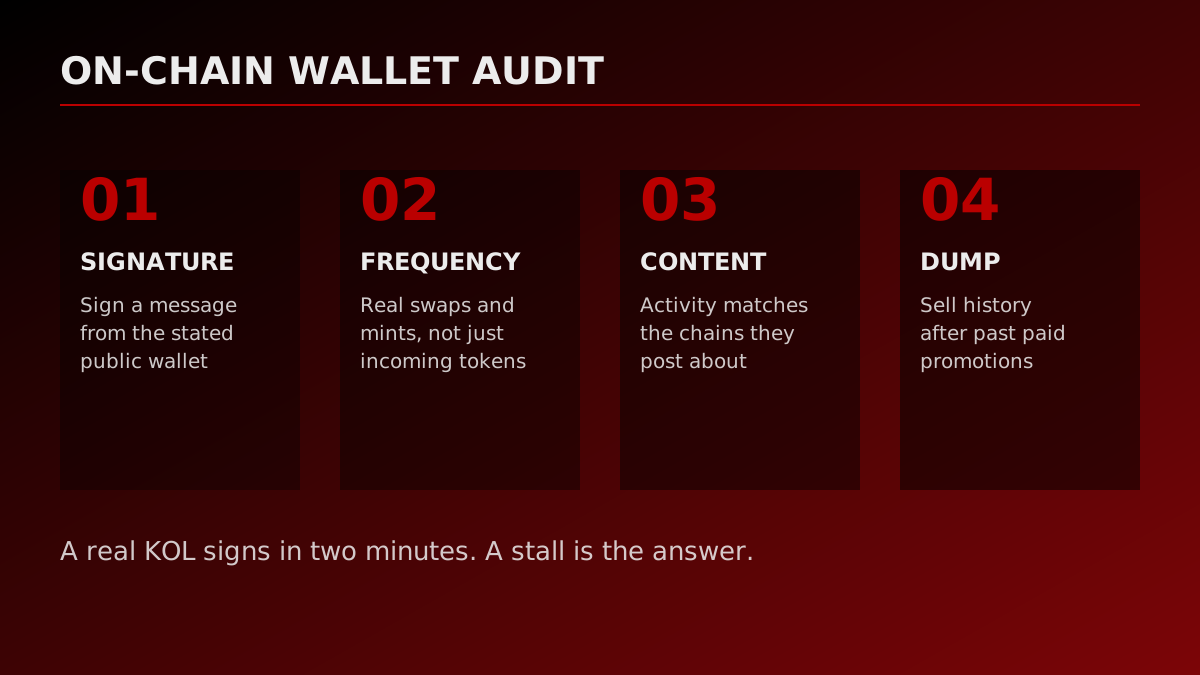
The paid-vs-organic ratio is the share of a KOL's recent posts that are paid promotions versus their own unpaid content, and it measures how much credibility the creator has left to lend you. The value of a KOL is borrowed trust. Every paid post spends a little of it. A creator whose last 30 posts are almost all paid shills has already spent the trust you are trying to rent, and their audience has learned to scroll past anything that looks sponsored.
Pull the KOL's last 30 posts and sort them into paid and organic. A healthy ratio leaves the bulk of the timeline as genuine commentary, analysis, or community interaction, with paid posts as the exception. A wall of back-to-back token shills means the next paid post (yours) lands on an audience that is already fatigued and skeptical. The structural driver is the incentive Vlad Svitanko described to CoinDesk.
The further they are gonna shill their bags, the further the token might go, which is super-good for the project and super-good for price action.
A creator who only shills has nothing left to lend you
The value of a KOL is borrowed trust. Every paid post spends a little of it. A creator whose timeline is wall-to-wall paid promotions has already spent the credibility you are trying to rent, so the endorsement lands on an audience that has learned to scroll past. Stacy Muur, a KOL insider, put the structural problem plainly in CoinDesk: KOL arrangements are a win for protocols and KOLs but a heavy loss for retail.
Source: Stacy Muur, CoinDesk, May 2024
This is also where KOL rounds matter. A KOL round is an arrangement where a project gives a creator discounted token allocations instead of cash, and per Stacy Muur, 75 percent of well-known token launches since early 2024 included one. The legitimate version of structured KOL amplification has a clear shape: a tiered campaign where a primary creator posts, smaller accounts amplify, and organic reactions follow. A KOL who cannot describe their role in that kind of structure, and only offers a single paid post for a flat fee, is running a simple shill model with no campaign logic behind it. Ask the KOL how they would fit into a tiered campaign; the quality of the answer tells you whether you are hiring an operator or a billboard. Our crypto KOL marketing framework lays out what that tiered structure looks like end to end, and if your launch is a token generation event specifically, the TGE marketing service page covers how the KOL layer sequences against the rest of the launch.
There is a measurable side to this too. The crypto market intelligence firm The Tie tracked 310 influencers posting about the top 175 cryptocurrencies and found significant positive price movement following their posts, which is the data that proves KOL impact is real enough to be worth vetting carefully rather than skipping. The same reality is why the ratio check cuts both ways: a creator with a healthy organic-to-paid balance moves markets because the audience still trusts them, while a wall-of-shills account moves nothing because the audience has tuned out. You are paying for the trust, not the follower count, so measure the thing you are actually buying.
Crypto KOL Marketing Guide
Point 7: Geographic Audience Match, the Reach-That-Counts Check
Geographic audience match is the overlap between a KOL's audience location and your campaign's target market, and it determines how much of the reach you pay for can actually become customers. A US-targeting launch promoted to a KOL whose audience is 60 percent outside the US is buying reach that cannot convert. Follower count is meaningless if the followers cannot use your product or buy your token where they live.
Request the platform-native analytics panel showing audience geography, not a self-reported claim. A healthy signal for a US campaign is no single non-US country exceeding 15 to 20 percent of the audience. CryptoKolz.com adds a time-zone tell: if you are targeting Asia-Pacific but a large share of the KOL's active viewers are awake during US night-time hours, the audience is mismatched. Cryptic Web3 found 40 to 60 percent of the KOL proposals it reviewed showed audiences concentrated in geographies that did not match the campaign target, which makes this a high-yield check.
If a KOL cannot or will not produce the geography breakdown from their own analytics, treat the entire follower count as unverified reach. The panel is one screenshot from their own dashboard. Refusal to share it is itself the answer. Geography also interacts with language and time zone in ways a raw country split hides: a KOL with a nominally US audience that engages mostly in another language is reaching a different buyer than your landing page assumes. If your launch is tied to a specific market or event, the geography check should match that target precisely, which is the same lens our web3 marketing agency overview applies to choosing where to spend across a whole campaign rather than a single creator.
One more practical move: cross-reference the KOL's audience geography against where your buyers actually convert. If your product sells best in the US and the EU but the KOL's audience concentrates in a region where you have no payment rails or compliance coverage, the reach is not just weaker, it is unusable. The geography panel is cheap to request and high-yield to read, which is why it sits at point seven rather than buried in a footnote. A creator who passes the authenticity, engagement, and on-chain checks but fails geography is real and credible and still wrong for your specific campaign.
Point 8: Track Record, the Repeat-Performance Check
Track record is the KOL's history of past campaigns and, specifically, whether clients hired them more than once. It is the check that separates a creator who got lucky once from one who reliably delivers, and the signal that matters most is repeat business. Founders in the r/BlockchainStartups vetting discussion landed on this directly: checking engagement quality is step one, but the real signal is repeat performance, because a client who pays twice is the only review that cannot be bought.
Ask for named past campaigns with results you can verify, and ask whether any of those clients came back. Then sanity-check the claim against reality. KOL impact is genuinely real (The Tie tracked 310 influencers across the top 175 cryptocurrencies and found measurable positive price movement following their posts), so a credible KOL should have verifiable wins. A legitimate KOL agency also rejects low-quality projects; one KOL marketer told CoinDesk that 95 percent of projects that approach them get turned down. By the same logic, a KOL who accepts every project and has no repeat clients is itself a flag.
Smaller accounts usually out-convert the mega names
The two studies here cut the bands differently, so read each against its own range. Matas Cepulis reports KOLs at 10,000 to 100,000 followers, the micro tier, deliver around 7 percent conversion versus 3 percent for macro influencers. FORKOFF first-party seeding data covers a wider 50,000 to 200,000 band and shows it driving roughly 5x the ROI of accounts above 500,000. Both point the same direction. A bigger follower count is not a safer buy. It is usually a more expensive, lower-trust one, which is why the screen weights authenticity over reach.
Source: Matas Cepulis, LinkedIn 2025; FORKOFF first-party data
This is also where the accounts below the headline names earn their place. Creators in the 50,000 to 200,000 band tend to have tighter, more engaged communities and out-convert the larger names, which is why a verifiable track record in that band is often worth more than a seven-figure account's reach. Our pricing tiers breakdown covers how that maps to budget, and the crypto KOL cost study gives the per-activation economics you can sanity-check a quote against.
Social media influencers paid thousands to endorse potentially fraudulent cryptocurrency projects
CNBC Television
CNBC on social media influencers paid thousands to endorse potentially fraudulent crypto projects, the failure mode this checklist is built to prevent.
Point 9: Contract and Deliverables, the Recourse Check
The contract check is the review of the written agreement for the clauses that decide whether you have recourse when a post underdelivers or disappears. It is last because it only matters once a KOL has survived the other eight, but it is the check that turns a campaign that goes wrong into a refund conversation instead of a sunk cost. The pattern across documented failures is the same: no written terms, so no recourse.
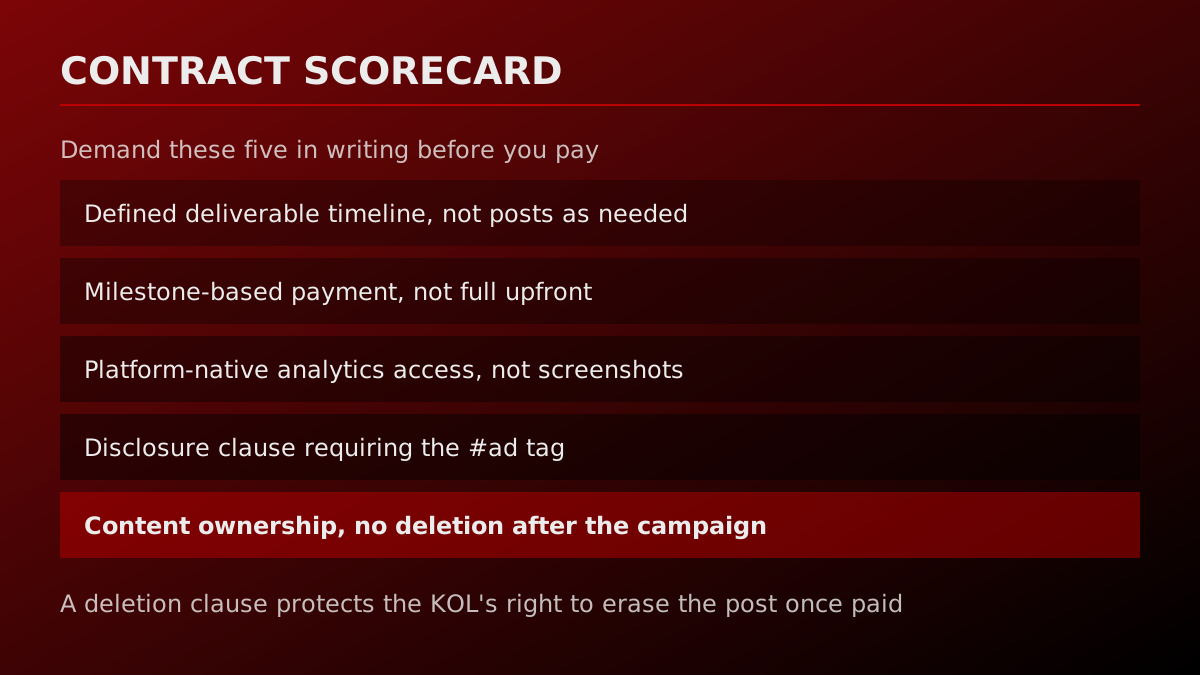
Demand a written agreement with five things in it. A defined deliverable timeline (not posts as needed), milestone-based payment rather than full payment upfront, access to platform-native analytics rather than screenshots, a disclosure clause requiring the #ad or #sponsored tag, and content-ownership terms that prevent the KOL from deleting the post after the campaign. A KOL who resists any of these is protecting their ability to take your money and walk.
Operator noteA deletion clause protects the KOL's right to erase the post once your payment clears.
Vesting is the crypto-specific clause to watch. A legitimate KOL contract in web3 often uses a retainer bundle structure (a multi-month engagement with defined deliverables and milestone invoicing) rather than a single flat-fee post. When token allocation is involved, the vesting period tells you the KOL's time horizon: Matas Cepulis describes a market where no one wants more than 12 months of vesting because everybody wants to make a quick buck. A KOL insisting on a day-one token unlock is signaling they plan to sell immediately, which means the brand association you are paying for evaporates the moment the price moves.
Right now the trend is that nobody accepts more vesting than 12 months. Everybody wants to make a quick buck.
What a Crypto KOL Actually Costs, and How to Pilot Before You Commit
Before you can judge whether a quote is fair, you need a benchmark, because the KOL who names the number first controls the negotiation. Micro KOLs typically charge 300 to 2,000 dollars per post, and the band above them runs 2,000 to 10,000 dollars per campaign, but the honest unit is cost per real view, not cost per follower. In FORKOFF first-party data, that lands at about 1.10 dollars per 1,000 real views for nano accounts, 2.40 for the 50,000 to 200,000 band, and 6.80 above 500,000, which is why the biggest names are usually the worst value despite the biggest headline reach. Quote a range back to a KOL with the follower band attached. A tier label by itself is what lets a 120,000-follower creator bill at a 600,000-follower rate.
FORKOFF first-party cost per 1,000 real views by KOL tier
| KOL tier | Cost per 1,000 real views | Why it lands here |
|---|---|---|
| Nano (1K to 10K) | About 1.10 dollars | Tight communities, high trust, low absolute reach |
| 50K to 200K (upper micro into lower macro) | About 2.40 dollars | Best ROI band; real engaged communities |
| 500K plus (upper macro and mega) | About 6.80 dollars | Largest reach but lowest authenticity per dollar |
FORKOFF first-party campaign data. In a 12-KOL seeding round the 50K to 200K band drove about 5x the ROI of accounts above 500K. That band straddles micro and macro because it is the population we measured, not a published tier.
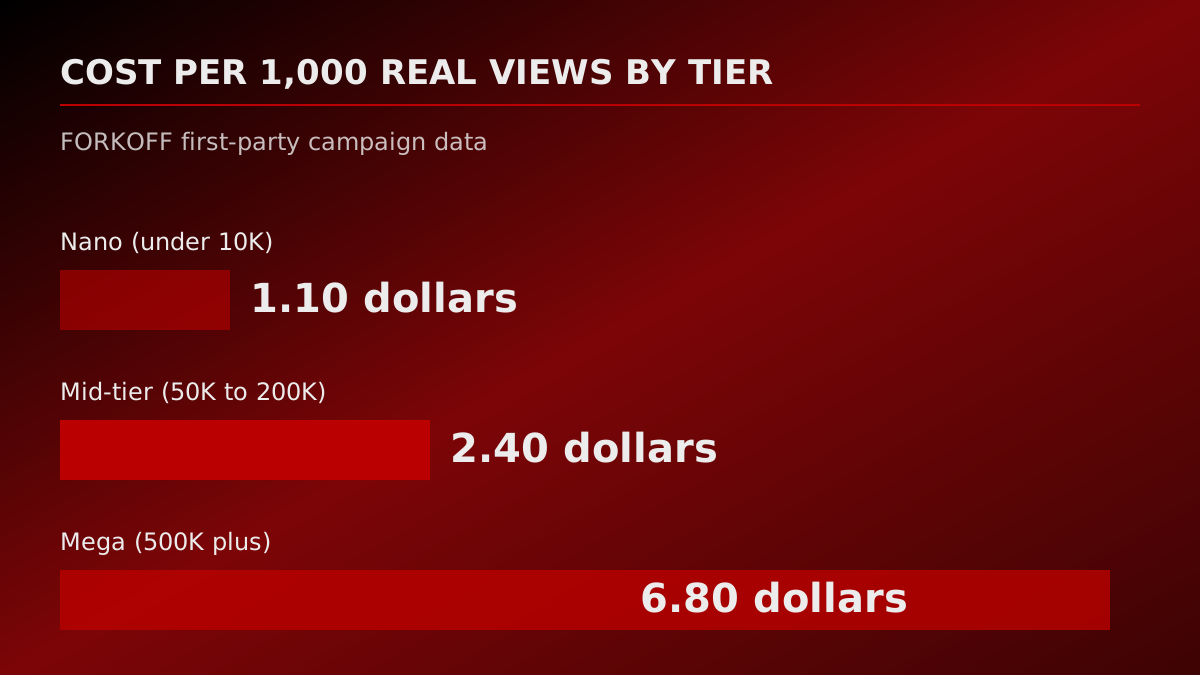
The reason cost per real view matters more than headline rate is that the fraud tax is a real line item. Aggregated influencer-fraud research puts global brand losses to fake-follower partnerships in the billions of dollars a year, and Lever.io's web3 fraud-detection writeup walks through how that waste compounds when a crypto campaign pays on inflated reach. If you price on followers, you pay that tax in full. If you price on screened real views, you cap it. For crypto launches specifically, the platform mix changes the math too: X campaigns reward coordinated multi-creator drops while Telegram and YouTube carry different per-view economics, which our Twitter marketing service page covers for the X-heavy case.
The way to de-risk the spend is a pilot. Run a single 1,000-dollar-or-smaller test post with a unique tracking link and a defined 48-hour conversion window before you commit to a full campaign. The pilot tells you what the screen could not: whether this KOL's real audience actually acts. In a 9,000-dollar, 12-KOL seeding round FORKOFF ran, the 41 posts produced 2.1 million combined views, and creators in the 50,000 to 200,000 band drove about 5x the ROI of those above 500,000 in the same round. The screen tells you who is real; the pilot tells you who converts.
Operator noteRun a 1,000 dollar pilot with a unique link and a 48-hour window before any full spend.
To pressure-test a budget before you talk to anyone, the calculator below estimates a fair campaign cost from your creator count and platform mix, so you set the anchor instead of the KOL.
What a real screen catches that a roster page hides
In one 19-account KOL screen FORKOFF ran, 4 accounts failed the bot-quality check at over 35 percent inauthentic engagers. Cutting them before the campaign launched saved roughly 3,000 dollars of wasted spend. None of those four would have looked wrong on a roster page or a follower-count sort. The fraud sits one layer below the metrics a KOL volunteers, which is exactly why the screen has to be active, not a glance at a media kit.
Source: FORKOFF first-party campaign data
The Honest Verdict: Vet First, Then Pay
There is no shortcut around the screen. A polished media kit, a big follower number, and a confident quote tell you nothing about whether the audience is real, whether the posts will disclose, or whether you will have recourse when something goes wrong. The nine checks in this article are ordered so you spend the least effort to disqualify the worst names: authenticity, engagement, and comment quality drop the obvious fakes, disclosure and on-chain proof catch the dishonest ones, and the ratio, geography, track-record, and contract checks separate a competent creator from a genuinely credible one.
If you have an internal growth person who can run all nine, run them yourself and save the agency margin. If you do not, the safest structure is a managed agency that runs the screen as a gate before any name reaches your shortlist and writes a qualified-views floor into the agreement, so the bot risk sits with the people choosing the KOL. That is the model FORKOFF runs at /services/kol-marketing: every proposed creator goes through this 9-point screen, the shortlist comes back with bot-audit data and disclosure history, and the floor is contractual. For the platforms and agencies you might run this screen against, see our honest comparison of crypto KOL marketing platforms; for vetting the agency itself rather than the KOL, the influencer marketing agency vetting playbook covers the nine questions that separate operators from brokers.
Whichever way you go, the rule is the same. Run the screen, get the on-chain proof, demand the disclosure, and put the recourse in writing before you pay. If you want a shortlist screened for you with audit data and a contractual floor, tell us your launch context. The broader strategy lives in the crypto KOL marketing framework and the web3 GTM playbook, and the organic groundwork that makes any paid KOL layer convert better is in guerrilla marketing for web3. The same vetting discipline applies to sponsorship spend, which our crypto event sponsor brand-safety vetting playbook covers for conferences and side events. If you have already been burned once, how to choose a web3 marketing agency after getting burned is the post that pairs with this one.