X product launches are not uniformly a scam and not uniformly a skill: 6 of 134 audited launches showed inorganic amplification signatures (views-to-likes ratios above 5,000 to 1), while an estimated 68.7% of genuinely viral launches came from accounts with under 10,000 followers. The scam is a specific bought-views model with a detectable ratio. The skill is engineering a launch event across three weeks before the post goes live. This post gives you the forensic data and the three-step audit to tell the difference.
Scam or skill, in one scroll
Are X launches a scam? Both camps are half-right. We audited 134 X product launch videos with our own first-party X data layer. Fewer than 2% crossed 1M views organically, the median got under 10,000 views, and 6 of 134 carried a views-to-likes ratio above 5,000 to 1, the signature of purchased amplification. The worst posted 15.6M views against roughly 1,000 likes. But 68.7% of the genuine viral launches came from accounts under 10,000 followers, which means craft, not budget, is the driver. The scam is the bought-views model. The skill is engineering a launch event. This post gives you the data and a 3-step audit to tell them apart.
About these numbers
The view counts, likes, and views-to-likes ratios in this post come from a forensic audit of 134 X product launch videos pulled through our own first-party X data layer in 2026. Positive examples are named because they are public wins. The launches that show inorganic signatures are presented anonymized, as ratios and patterns only, because the point is the mechanism, not an accusation against any one company. All external figures are linked inline. Individual results vary by audience, timing, and network effects.
Are X launches a scam? The short, data-first answer
Of 134 X product launch videos we audited, fewer than an estimated 2% crossed 1 million views organically, and 6 carried a views-to-likes ratio above 5,000 to 1, a signal pattern consistent with purchased amplification. So the skeptics are not paranoid. Some X launches are inorganic theater. But the optimists are also right, because 68.7% of the launches that genuinely went viral came from accounts with under 10,000 followers, which means the breakout was earned by craft, not bought with budget. The honest verdict is that X launches are not uniformly a scam, and they are not uniformly a skill either. The scam is a specific model, the bought-views model sold as a guaranteed view count. The skill is engineering a launch as an event. The rest of this post separates the two with the data and gives you a 3-step audit you can run yourself.
The ambient odds are worse than the feed implies
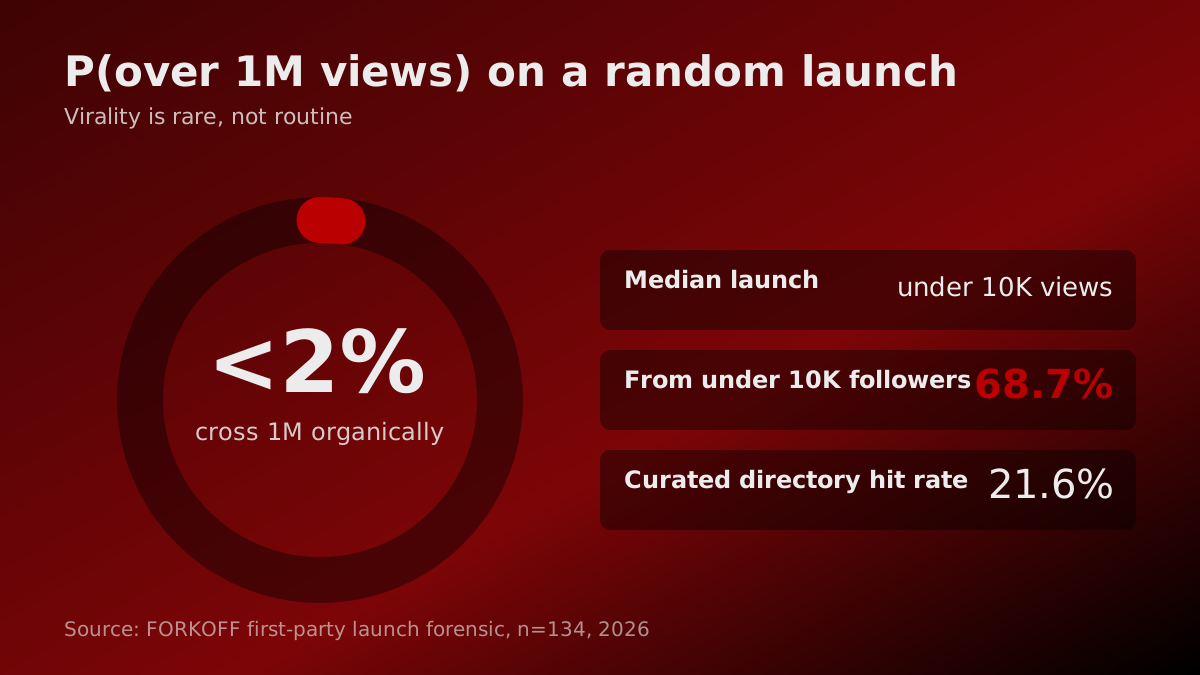
Your feed is a survivorship filter. It shows you the launches that broke out and hides the thousands that did not, which inflates your sense of how often an X launch goes viral. In our forensic audit of 134 launch videos, fewer than 2% of random launches cross 1 million views organically, and the median launch gets under 10,000 views. Even inside a directory hand-curated for notable launches, the 1M-plus hit rate was only 21.6%, and that is an upper bound. The honest planning number for an un-engineered launch is closer to the sub-2% ambient rate, which is why a launch needs to be built, not hoped for.
Source: FORKOFF first-party launch forensic, n=134, 2026
The debate did not start in a vacuum. In May 2026, the AI startup founder Paras Madan published a piece arguing that Twitter launches have become a scam, and a summary thread on r/SaaS made the rank-1 search result for the question. The irony, which tells you something about the whole topic, is that the same founder has also published a tutorial on how to build a launch video. He occupies both camps at once. So does the truth.
Paras Madan
@ParasMadan9
Twitter Launches have become a scam and its visible. You must have seen a lot of fancy twitter launch videos of AI Startups on your feed these days and surprisingly all of them have tone and script with placeholders: World's first AI...
What are the skeptics right about?
The skeptic camp is reacting to something real. In our 134-launch corpus, 6 launches posted a views-to-likes ratio above 5,000 to 1, the cleanest single fingerprint of purchased amplification, and a separate pattern of manufactured comment sections traces directly to FTC-regulated deceptive-practice territory. The data backs the core of the complaint.
Fake traction is now a purchasable commodity. You can buy GitHub stars, Product Hunt rankings, engagement, influencer quote tweets, and even VC warm intros through agencies and grey markets. The numbers investors rely on are increasingly unreliable.
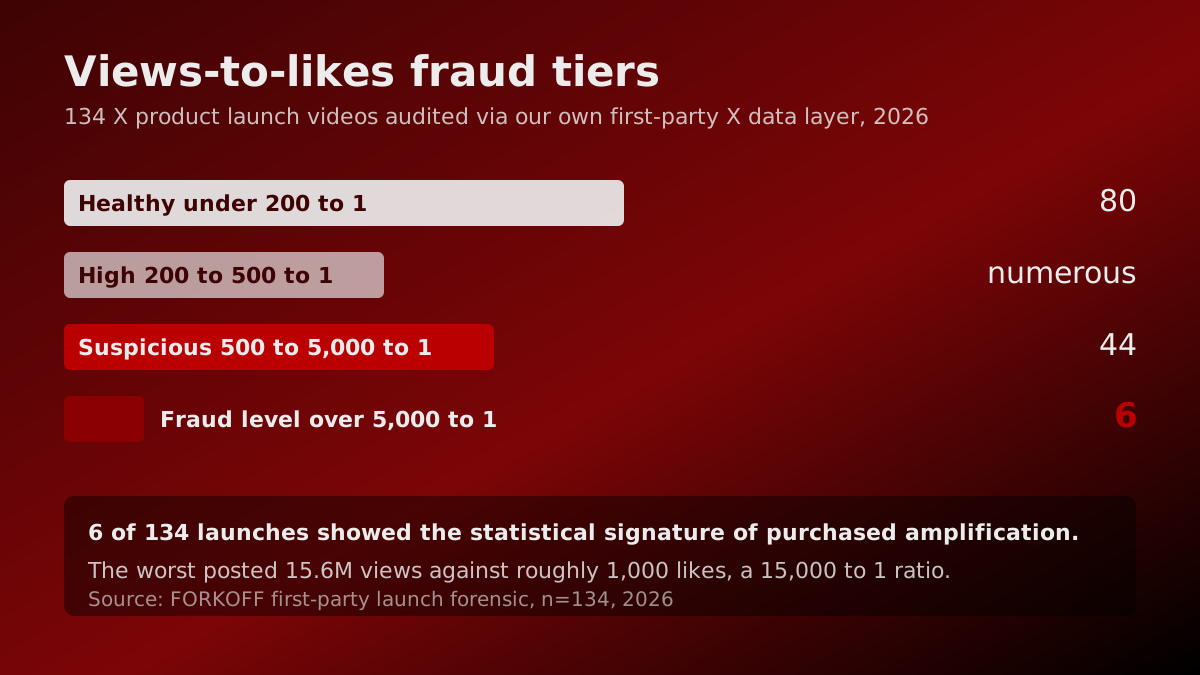
Start with the single cleanest signal, the views-to-likes ratio. Genuinely viral content on X sits in a predictable band, roughly 100 to 500 views per like. People who see something they like, like it. When views are purchased but engagement is not, that relationship breaks. In our 134-launch corpus, 6 launches posted a views-to-likes ratio above 5,000 to 1. The most extreme example crossed 15.6 million views against roughly 1,000 likes, a ratio near 15,000 to 1, on an account that was 18 days old. No genuine viral post in the history of the platform behaves that way. A real 15-million-view post pulls tens of thousands of likes. The likes are the part that is hard to fake at scale, which is exactly why they tell the truth.
Views-to-likes fraud tiers across 134 audited launches
| Views-to-likes ratio | Status | What it means | Count in corpus |
|---|---|---|---|
| Over 5,000 to 1 | Fraud level | Bought views, near-zero genuine engagement | 6 |
| 500 to 5,000 to 1 | Suspicious | Paid amplification likely or very low-engagement audience | 44 |
| 200 to 500 to 1 | High | Low-engagement audience, treat with caution | numerous |
| Under 200 to 1 | Healthy | Consistent with genuine organic reach | 80 |
Source: FORKOFF first-party launch forensic audit of 134 X product launch videos, 2026. Fraud-tier launches are presented anonymized.
The second fingerprint is the engagement layer underneath the post. On some directory pages cataloguing launches, the comment sections read as manufactured, with uniform timestamps, balanced sets of generated personas, and no matching live accounts behind the names. That pattern is not just tacky. In the United States it edges into deceptive-practice territory under the FTC final rule banning fake reviews and testimonials, which took effect in 2024 and treats fabricated social proof as an unfair practice. The point for a founder reading a launch is simpler. If the views are real, the comments come from accounts you can click into and verify. If they do not survive a click, neither does the number above them.
Operator note6 of 134 launches sat above 5,000 to 1 views-to-likes. The worst hit 15,154 to 1., FORKOFF first-party launch forensic, n=134
The third thing the skeptics are right about is more subtle, and it is about how results get reported rather than how they get bought. Watch out for the self-curated share claim. When a service says it produced or amplified some large share of all launch views, ask what the denominator is. In one case a claim of an estimated 23.2% of global launch views traced to approximately 3.7% once it was measured against an independent universe of launches instead of the provider's own hand-picked tracked set. Nothing about that requires bots. It only requires choosing which launches count. A share figure with a self-selected denominator is sales theater, not measurement, and it is the kind of number that ends up in an investor deck.
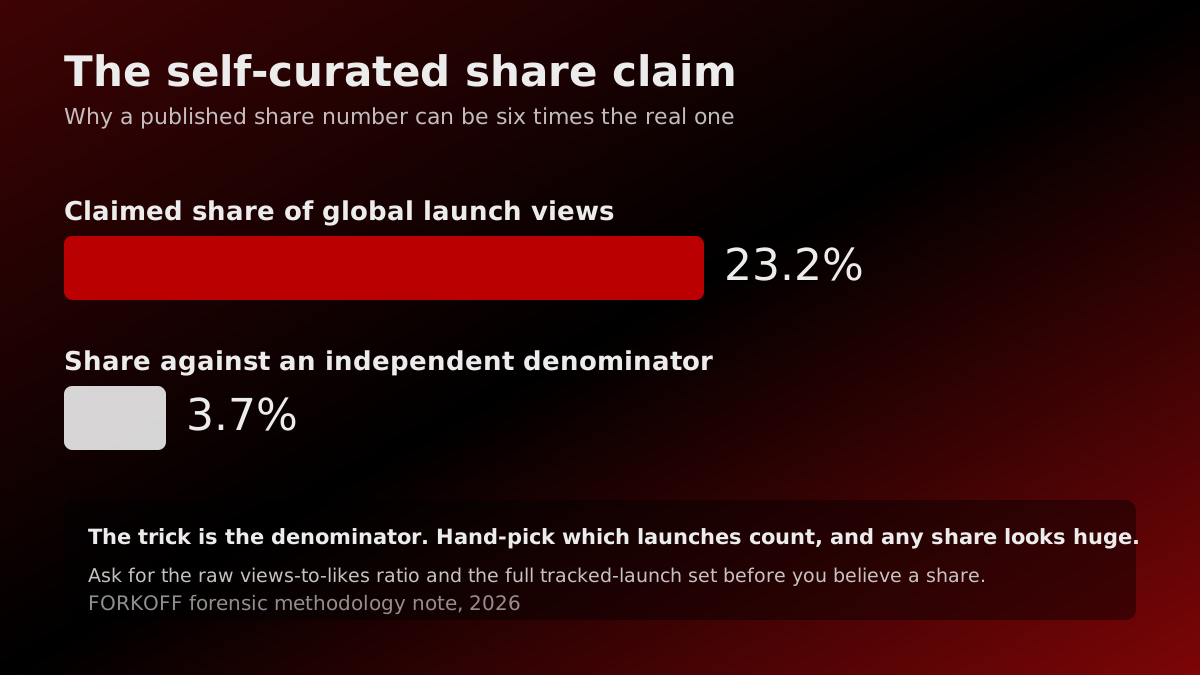
Operator noteA 23.2% share-of-views claim traced to 3.7% against an independent denominator., FORKOFF forensic methodology note
This is where the skeptic argument lands its strongest punch. These inflated numbers travel. Founders building quietly without a five-figure monthly Twitter ads budget end up competing against manufactured perception rather than against better technology, and early-stage investors end up pattern-matching on a metric that can be purchased. That is a real fairness problem, and pretending it does not exist is how the bought-views model keeps working.
A view counter is not a demand signal
The deepest reason the scam-versus-skill debate stays unresolved is that founders and investors treat the view count as the outcome, when it is only an intermediate metric. Community evidence is blunt about this. One r/startups operator reported 150,000 impressions from a paid push that converted poorly, alongside lots of fake engagement from scripts and bots. Purchased views register on the counter, but they produce near-zero replies, quote-tweets, and signups. The number that matters is the qualified view, the view that comes from a real account that can become a user. That is the metric the bought-views model cannot fake.
Source: r/startups paid-launch retrospective, 2024; FORKOFF forensic 2026
Why the bought-numbers problem is bigger than launch videos
The launch video is just the most visible surface of a wider pattern, and naming the pattern matters because it explains why founders are skeptical in the first place. Manufactured credibility is now available across most of the early-stage trust stack. The r/SaaS thread that started this debate points to it directly, citing a Carnegie Mellon study that found roughly 6 million fake GitHub stars across more than 18,000 repositories. GitHub stars, Product Hunt rankings, follower counts, and engagement are all purchasable, which means a founder can assemble a credible-looking traction profile without a single real user. The economics of this are not new either. As far back as 2013, the New York Times documented how fake Twitter followers became a multimillion-dollar business, and the supply side has only industrialized since.
The reason this matters for launch videos specifically is the investor deck. View counts and engagement numbers from a launch get screenshotted and carried into fundraising as evidence of demand. When the underlying number is purchased, the deck is reporting manufactured perception as traction, and the people pattern-matching on it, often other founders and early-stage investors, propagate the distortion forward. Platform-level skepticism makes this worse. A long-running r/Twitter thread with hundreds of comments argues the platform's own view counter inflates impressions, which means even an honest founder's real number is now read with suspicion. The fix is not to distrust every number, which is its own failure mode covered in the AI product trust recovery playbook. It is to know which signal survives a click. A view can be bought, an impression can be inflated, but a real account leaving a real reply that you can verify is expensive to fake at scale. That is the signal worth trusting, and it is the one the qualified-views metric on the clipping side was built to isolate.
What the optimists are right about
The camp that says a launch is a learnable skill has the better half of the argument once the fraud is separated out. The most important finding in the corpus is that 68.7% of genuinely viral launches came from accounts with fewer than 10,000 followers, meaning the breakout was earned by craft and timing rather than bought with audience size or budget.
The most important finding in the entire corpus is also the most hopeful one. Across the 134 launches, 68.7% of the genuinely viral ones came from accounts with fewer than 10,000 followers. If launches were purely pay-to-win, the winners would cluster at the top of the follower distribution. They do not. They cluster around craft. The lever a founder actually controls, the quality and clarity of the launch asset, is the lever that moves the views, and it is available to an account with 800 followers and a good demo.
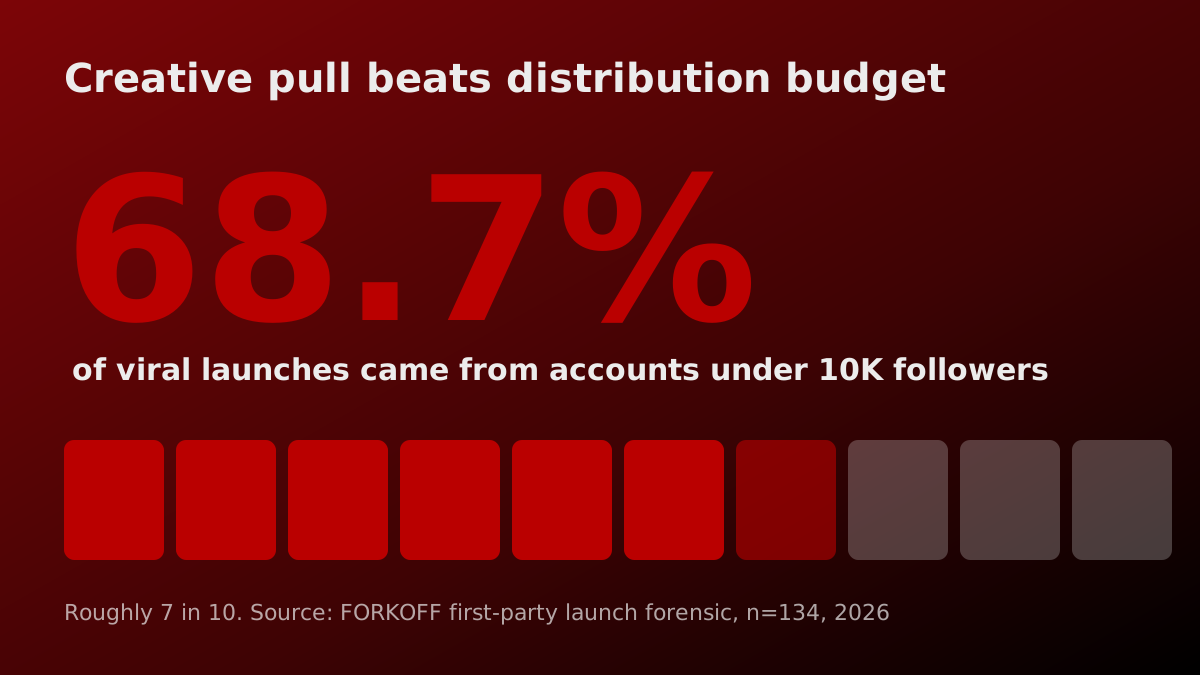
Operator note68.7% of the viral launches came from accounts under 10,000 followers., FORKOFF first-party launch forensic, n=134
The builders who do this for a living describe the same thing in plain language. The substance of the product, shown rather than narrated, is the engine.
Novelty is rewarded on X with the AI boom. It is become a legitimate distribution channel if done well. Show good use cases. And show over tell, no talking, short and straight to the point, letting everyone see the outcome for themselves.
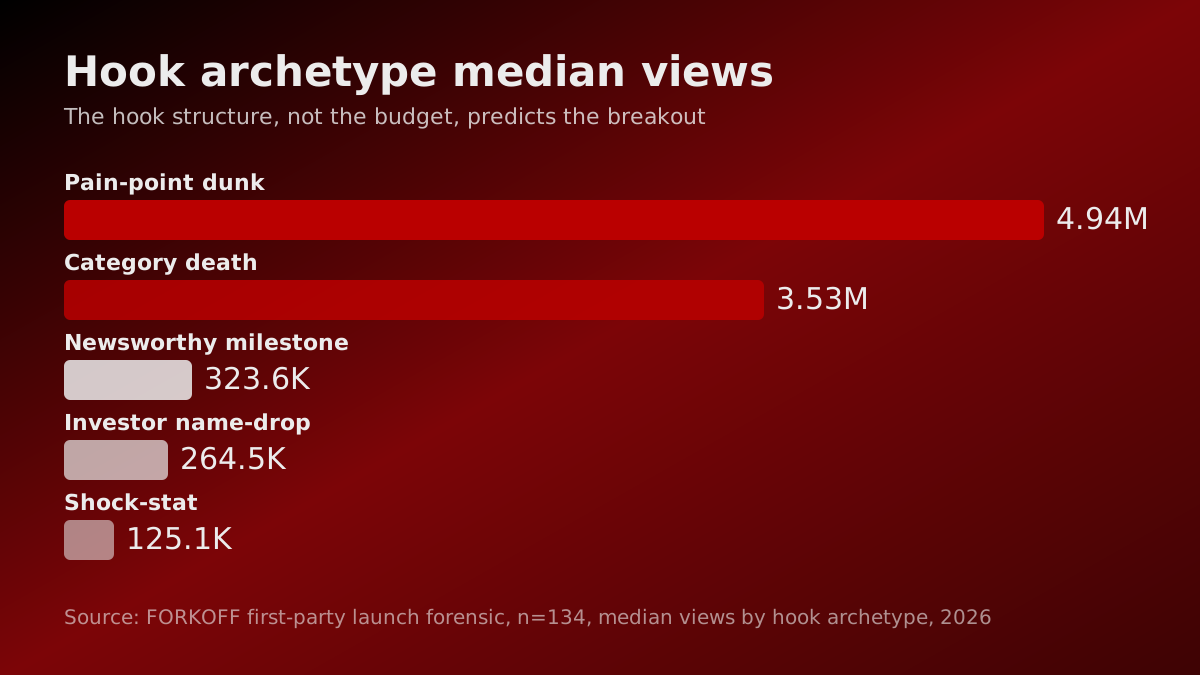
Our hook data confirms the show-over-tell instinct quantitatively. When we sorted the 134 launches by detected hook archetype, the pain-point dunk produced a median of 4.94 million views and the category-death framing produced 3.53 million, while the more decorated archetypes that stack funding figures and investor handles into the opening line produced far less. Telegraphic hooks under 25 words beat 25-to-60-word hooks by a wide margin once a creator had any distribution at all. High-specificity copy that crammed dollar amounts and named entities into the hook actually under-performed at scale, because low-distribution founders were using anchor-stacking as a substitute for an audience. Distribution beats anchors, and when you have distribution, brevity beats density.
Hook archetype median views, ranked
| Hook archetype | Median views | Share over 1M views | Share over 100K views |
|---|---|---|---|
| Pain-point dunk | 4.94M | 66.7% | 100% |
| Category death | 3.53M | 100% | 100% |
| Newsworthy milestone | 323.6K | 27.8% | 75.9% |
| Investor name-drop | 264.5K | 25% | 75% |
| Shock-stat | 125.1K | 40% | 50% |
Source: FORKOFF first-party launch forensic, n=134, median views by detected hook archetype, 2026. Small per-archetype counts mean directional reading.
The other thing the optimists get right is timing, and it is a skill, not a budget. Algorithmic boost on X is front-loaded into the first hour after a post. This is not folklore, it is in the code. When X open-sourced its recommendation algorithm on GitHub, the weighting of early engagement velocity as the primary out-of-network signal was made explicit, the published heavy-ranker model card scores a reply as its own predicted action alongside the like, and X's own guidance on how to launch on the platform leans on the same front-loaded-attention mechanic. The launches that work tend to have a coordinated cluster of real engagement arriving in that first window, not because the founder bought it, but because the founder lined it up in advance. Founders in the build-in-public community say this out loud when they are planning their own launches, asking whether they have a network ready to engage inside the first hour. That is the difference between a launch that gets read by the algorithm as an out-of-network candidate and one that quietly dies in the follower timeline.
Have you ever tried a Twitter launch? Did you get any success from it?
I'm getting ready for a launch and planning to do a Twitter/X launch within the next 7-8 days. I've been focusing on making the launch video and overall presentation as high quality as possible. However, one thing is clear: my normal tweets rarely get more than 100-150 views. I know… Show more
Twitter launches work if you already have an audience. Without one, you are tweeting into the void. Build demand first.
That last quote is the honest counterweight. A launch is a skill, but it is not magic. If your account has no audience and no warmed-up network, posting a beautiful video into the void does not summon one. The skill is partly the asset and partly the three weeks of preparation that load the room before the post goes live. We will get to that timeline. First, the data layer no other piece on this topic has.
The 134-launch forensic: methodology and findings
This is the section that turns the debate from opinion into measurement. We pulled performance data on 134 X product launch videos through our own first-party X data layer and computed, for each one, the view count, the like count, the views-to-likes ratio, the account age and follower base at time of posting, and a rule-based classification of the hook archetype and the visual framing. We then analyzed the quote-tweet engagers behind the top launches to see who was actually amplifying each post. The goal was not to grade craft. It was to measure what actually predicts a real breakout and what only predicts a big number.
Three findings matter most.
First, virality is rare. Fewer than 2% of random X launches cross 1 million views organically, and the median launch in the wild gets under 10,000 views. Even inside a directory that had been hand-curated for notable launches, the 1-million-plus hit rate was only an estimated 21.6%, and that figure is an upper bound because the set was selected for being interesting in the first place. Your feed lies to you here through textbook survivorship bias, because it only shows you the launches that broke out and silently discards the thousands that did not. The planning number for an un-engineered launch is the sub-2% ambient rate, not the directory rate.
Probability of crossing view thresholds, by context
| Context | P(over 1M) | Notes |
|---|---|---|
| Random un-engineered X launch | Under 2% | The honest ambient planning number |
| Inside a curated launch directory | 21.6% | Upper bound, the set is hand-picked for notable launches |
| Hardware and devices vertical | 100% | Tiny sample, n=2, high uncertainty |
| Developer tools vertical | 40% | Small sample, n=5 |
Source: FORKOFF first-party launch forensic, n=134, 2026. Directory-derived rates are upper bounds because the set is curated.
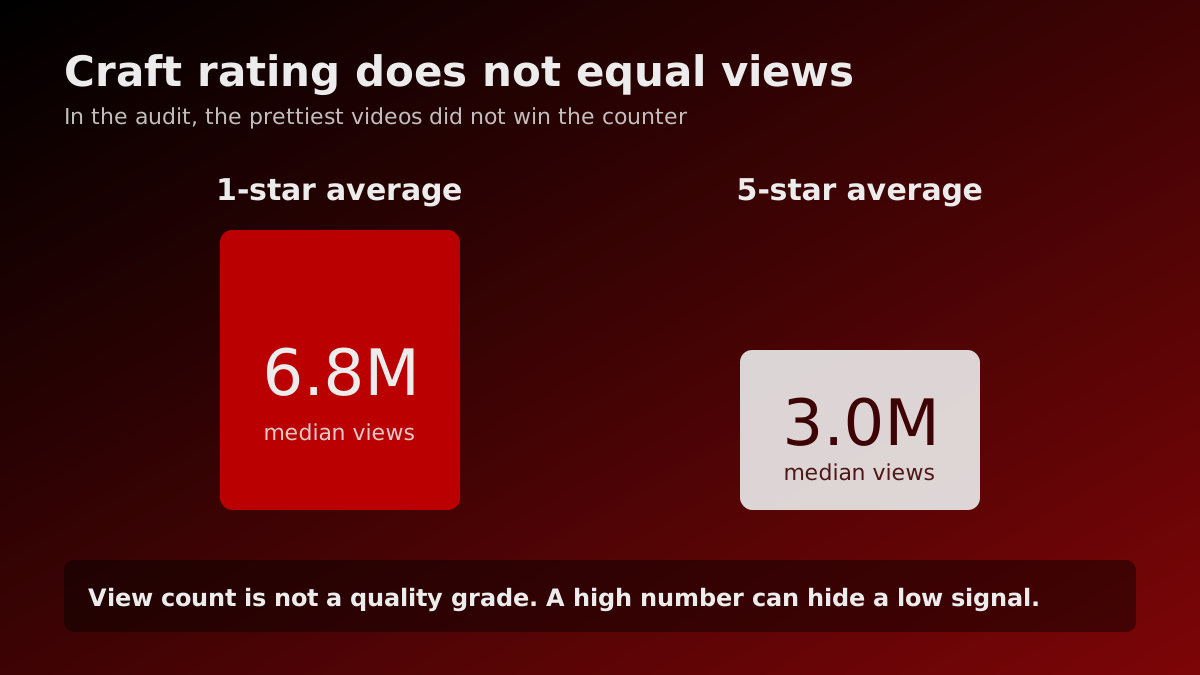
Second, craft and view count are uncorrelated, and the direction is genuinely counterintuitive. When we cross-referenced the launches against an external craft rating, the one-star-rated launches averaged 6.8 million median views while the five-star-rated launches averaged 3.0 million. A polished, beautifully shot video is not what crosses the threshold. A clear result that makes a viewer stop scrolling is. This is the empirical reason the cinematic-launch-video reflex is misplaced, and it is a trap built on the halo effect, where production gloss gets mistaken for substance. The viewer is not grading your cinematography. They are deciding in under a second whether the thing you built is worth their attention. It is also why the real hiring decision is the choice between a production studio and a distribution-led launch video agency, not which vendor shoots the prettier film.
Small accounts win more than the cynics expect
The most encouraging finding in the corpus cuts directly against the scam narrative. Across the 134 launches, 68.7% of the genuinely viral ones came from accounts with fewer than 10,000 followers. Breakout performance correlated with content craft and a real reason to care, not with audience size or distribution spend. High-specificity copy that stacked dollar figures and investor handles in the hook actually under-performed telegraphic hooks under 25 words once a creator had any distribution. The lever a founder controls, the quality and clarity of the launch asset, is the lever that moves views the most.
Source: FORKOFF first-party launch forensic, n=134, 2026
Third, the fraud is a small, detectable minority, not the whole channel. Of 134 launches, 6 sat in the fraud tier above 5,000 to 1 views-to-likes, and 44 sat in the suspicious band between 500 and 5,000 to 1, which can also reflect a genuinely low-engagement audience rather than purchased views. The remaining majority sat in healthy or merely-high bands. That distribution is the whole thesis in one shape. Most launches are not faked. A meaningful minority are. And the two are separable by a ratio anyone can compute. The strongest signal of legitimacy in the corpus was also the most boring one, real likes from real accounts moving in step with the views.
Operator noteA launch crossed 15.6M views with roughly 1,000 likes. The likes told the truth., FORKOFF first-party launch forensic, n=134
How to audit a launch before you trust the number
A launch number is auditable in five minutes without an API or a forensic team, using three steps anyone can run from the post itself: compute the views-to-likes ratio (healthy band is 100 to 500), inspect the engager accounts for real history and varied join dates, and cross-check whether conversation velocity (quotes and replies) moves with view velocity. A genuine breakout passes all three.
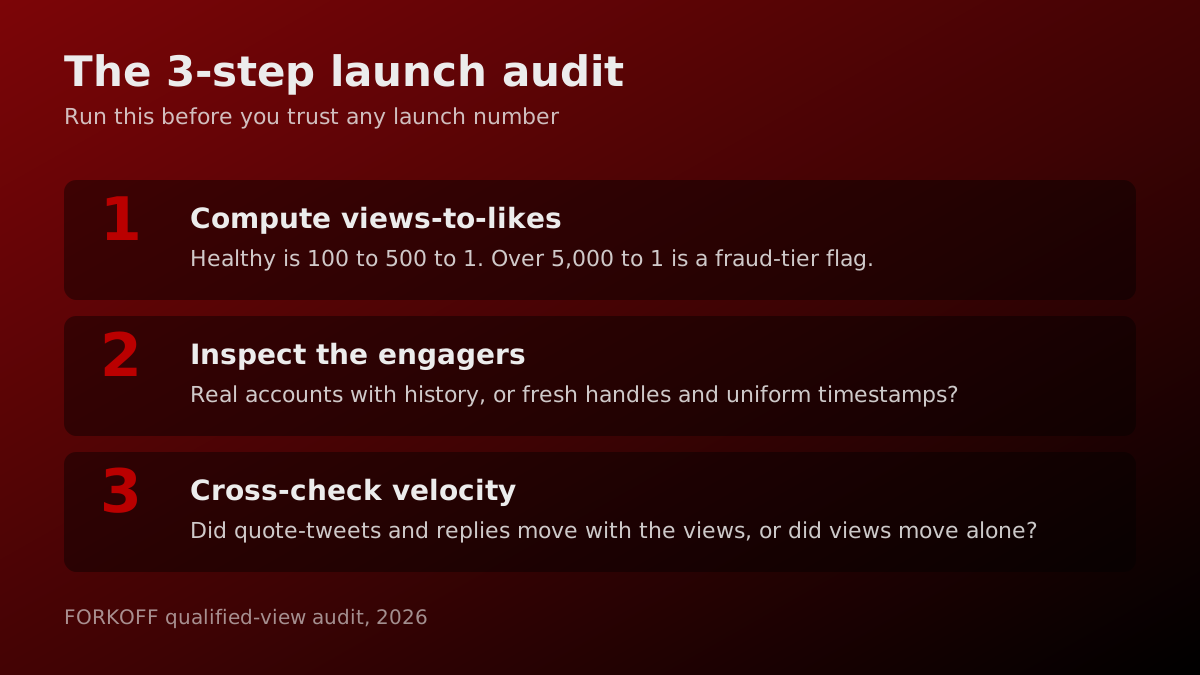
Step one, compute the views-to-likes ratio. Take the view count and divide it by the like count. If the answer is between roughly 100 and 500, the post is in the healthy organic band. If it is between 500 and 5,000, treat it as suspicious and look harder, because that band catches both purchased amplification and genuinely low-engagement audiences. If it is above 5,000, treat the view count as theater. A real viral post does not run that dry on likes.
Step two, inspect the engagers. Click into the likes and the replies. Real engagement comes from accounts with history, varied join dates, profile pictures, and their own posting record. Fraud-tier engagement comes from fresh handles, uniform timestamps, and accounts that go nowhere when you click them. If the comment section reads like a generated cast list, the views are decoration.
Step three, cross-check the velocity. On a genuine breakout, quote-tweets and replies move with the views. The post becomes a conversation. On a bought launch, the view counter climbs while the quote-tweet count stays flat, because you can buy an impression but you cannot easily buy a person taking the time to argue with you in public. A divergence between view velocity and conversation velocity is the tell.
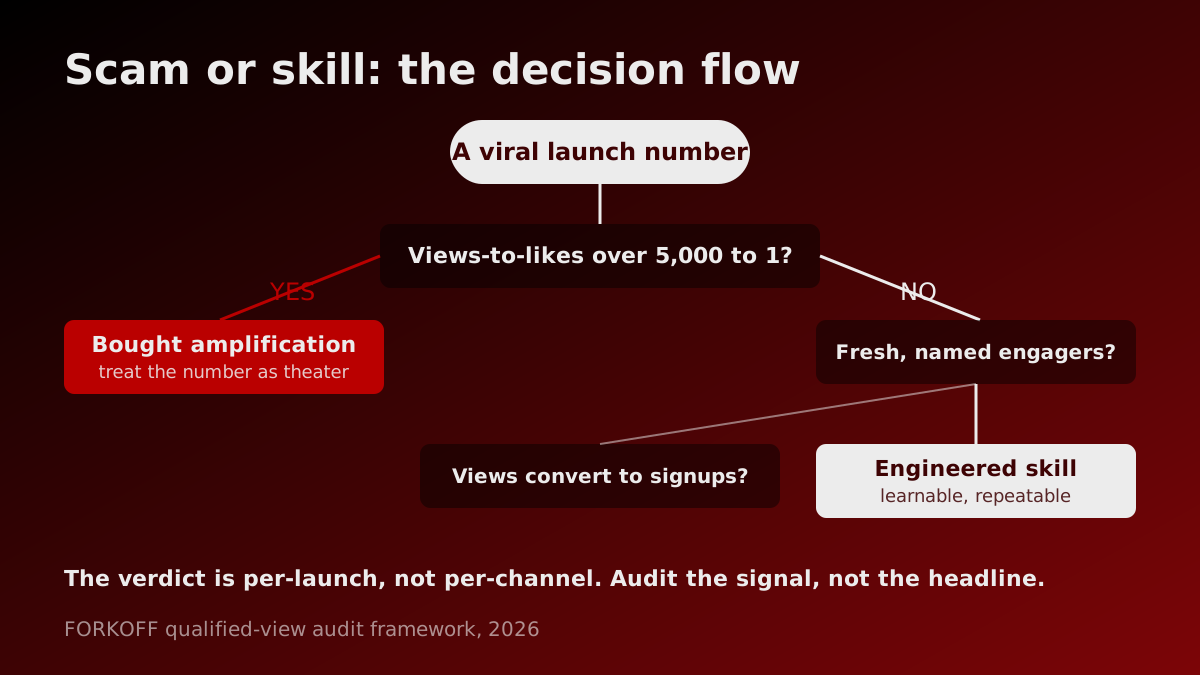
The deeper principle behind all three steps is the qualified view. A view that comes from a real account that could plausibly become a user is worth something. A view from a bot that will never sign up is worth nothing, even though both increment the same counter. The whole bought-views model rests on conflating the two. The audit above un-conflates them. If you want to run the ratio side of this automatically, the tool below estimates the qualified-view share of a launch tweet and flags the same thresholds we used in the corpus.
For the algorithm-signal side of why first-hour engagement velocity matters so much, the Grok and X algorithm marketing playbook breaks down how the 2026 ranking system reads early engagement. The point for fraud detection is that the algorithm is reading the same qualified-engagement signal you are, which is why purchased views fail to compound, they never trip the genuine out-of-network amplification the algorithm is actually looking for.
The verified organic winners and what the pattern actually is
Anonymizing the fraud is the responsible move. Naming the winners is the useful one, because these are public launches you can study. Here is a spread of verified breakouts from across the corpus, with peak public views confirmed against first-party X data.
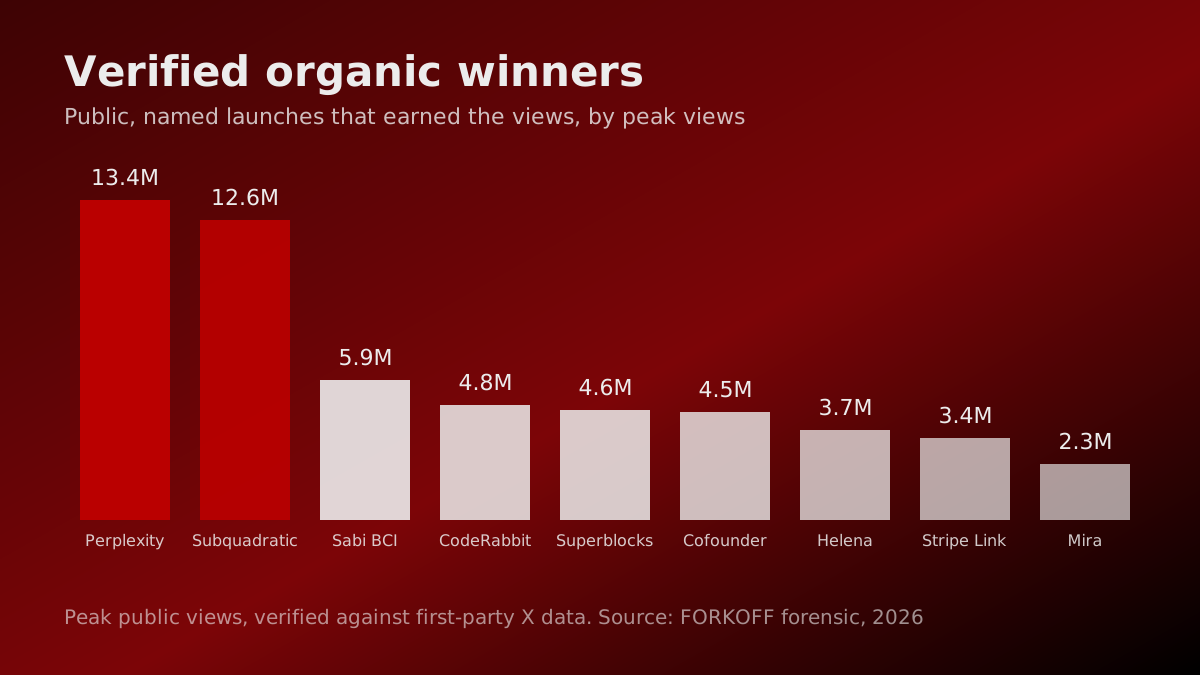
Perplexity Personal Computer crossed 13.4 million views. Subquadratic reached 12.6 million from a 24,000-follower base, a more than 500-times ratio against followers. Sabi BCI hit 5.9 million by pairing a brain-control hardware demo with a tier-one cap table. CodeRabbit reached 4.8 million from a 3,000-follower account, Superblocks hit 4.6 million, Cofounder reached 4.5 million, Helena from Enrich Labs hit 3.7 million, Stripe Link Wallet reached 3.4 million, Mira Glasses hit 2.3 million, and Grader from Adam Guild reached 2.0 million. The founders behind most of these breakouts are among the most active AI founders on X in 2026, posting at cadences that keep their accounts warm for launch windows rather than going quiet between ships. One more worth naming, because it backs the way we think about this work, is MaveHealth at 2.61 million, which came from a newsworthy funding moment plus activation inside a specific medical cluster rather than from raw reach.
Look across that list and the pattern is consistent. The follower-to-view ratios are enormous, which is the small-account-wins finding in action. The hooks lead with a visible result, a defensible number, or a body-mounted hardware demo, not with a founder talking to camera. Several of these launches show the views-to-likes ratio you would expect from genuine reach. They earned the number. The mechanism is repeatable, and once you accept that the mechanism is real, the next question is how to run it. That playbook is its own post.
If you want the step-by-step version of how the winners stack their levers, our 5-lever guide to going viral on X is the companion how-to, and the launch-specific walkthrough of how to make a launch go viral on X runs the same five levers in order for a product launch. It is the playbook you run once this post has convinced you the channel is real. For the launch-as-an-event framing applied beyond a single tweet, the model-drop 48-hour marketing playbook and the launch platforms beyond Product Hunt map show how the same engineered-window thinking ports to other surfaces.
The single most under-rated input in this whole conversation is timing, and it is not our finding alone. In a widely cited TED analysis of why startups succeed, Bill Gross found that timing outweighed team, idea, business model, and funding as the top predictor across hundreds of companies. A launch is the same idea compressed into a single post. The winners shipped into attention that already existed, an AI wave, a model drop, a live debate, rather than trying to manufacture attention from nothing. The a16z speedrun founders make the same point about novelty being rewarded during the AI boom in their breakdown of viral launch videos. Reading the wave is a skill. Buying a number is not.
The single biggest reason why start-ups succeed | Bill Gross | TED
TED
Bill Gross on the single biggest factor in startup success, timing. The launch-as-an-engineered-event thesis is the same idea at the post level, ship into existing attention rather than manufacture it.
The engineered launch event, in plain terms
The reason a launch reads as a skill rather than a scam, when it is done honestly, is that the visible post is the final sliver of the work. The rest is an event built over the preceding three weeks. This is the part the skeptics miss when they look at a 5-million-view launch and assume it must have been bought, and it is the part the optimists hand-wave when they say to just make a great video.
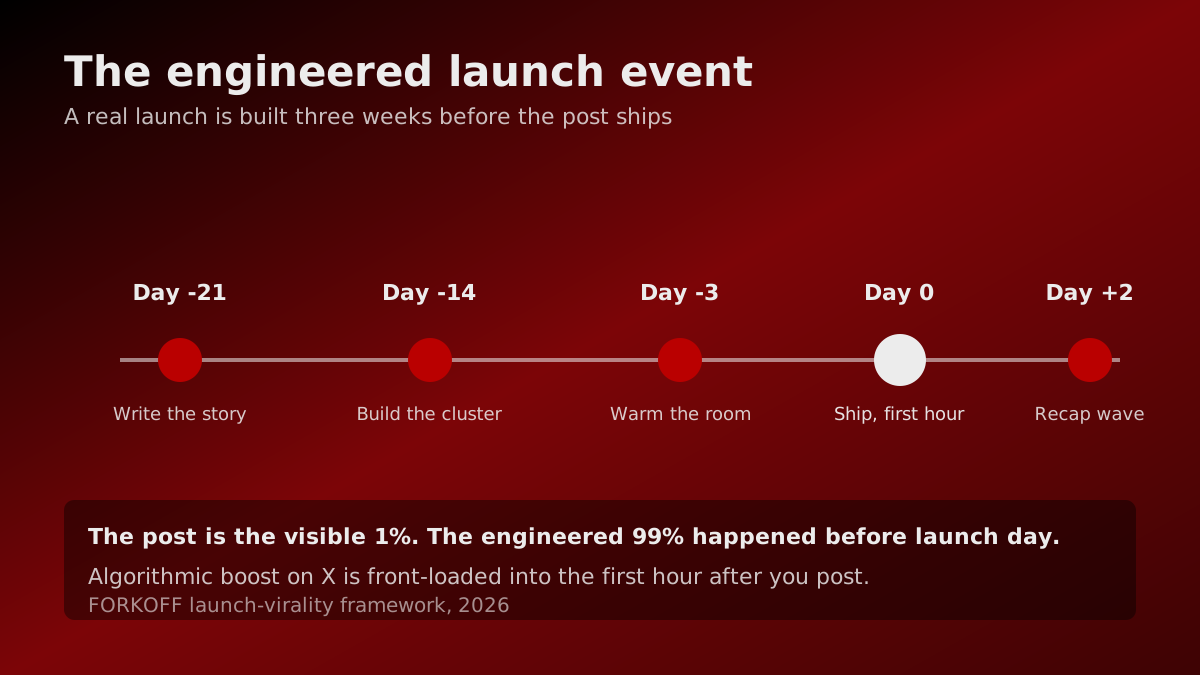
Roughly three weeks out, you write the story. Not the script, the story, the single sentence that makes a target customer say they cannot believe this did not exist before. Around two weeks out, you build the room, the cluster of real accounts who care about your category and will engage in the first hour because they actually want to, not because you paid them. In the final few days, you warm that room with genuine interaction so your launch post lands among people who already recognize your voice. On launch day, the post ships into a front-loaded first hour with a hook that creates surprise in three seconds and a demo that shows the outcome. And a day or two later, a recap wave from newsletters and roundup accounts extends the window past the normal one-day decay.
Every one of those steps produces real engagement from real people. That is the entire difference between the engineered launch and the bought one. The engineered launch and the bought launch can post the same view number on day one. Only one of them still has a pipeline on day thirty. For the distribution-and-pipeline mechanics that turn a launch spike into compounding inbound, the founder-led content marketing motion and the founder-led growth playbook cover the after-the-launch half. And the Twitter DM outreach playbook covers converting the qualified attention into conversations once the launch breaks through.
The pre-launch checklist the skill camp actually runs
If the data says a launch is engineered rather than stumbled into, the obvious question is what the engineering consists of. Here is the checklist, drawn from the patterns the verified winners share and the mechanics the build-in-public community describes when planning their own launches.
Start with the story, not the script. The strongest launches answer the question of why this should exist before they show how it works. The a16z speedrun founders frame this as working backwards from the moment a target customer says they cannot believe this did not exist before, captured in their viral launch video breakdown. If you cannot write that one sentence, no production budget will save the post.
Build the room before you need it. The first-hour engagement window on X is front-loaded, so the people who will engage in that window need to already know your voice. This is the audience-first reality check from r/buildinpublic, where founders are blunt that a launch into the void does not work, captured in the launch thread we cite throughout this piece. Practically, that means three weeks of genuine interaction inside your category, not a list of accounts to spam on launch day. The founder-led content marketing motion is the slow half that makes the fast half work, and the credibility versus user-acquisition framing explains why warming the room beats buying the room.
Show the product, not your face. The hook data is unambiguous that a visible result outperforms a talking-head, and the rating data shows polish is not the variable. Lead with the outcome the viewer can see for themselves. For the platform-mechanics layer of why early genuine engagement compounds while purchased engagement does not, the Grok and X algorithm playbook covers the 2026 ranking signals in depth, and the broader agent-ready site audit covers the surfaces a launch should point traffic toward once it breaks. The AI startups marketing strategy guide puts all of this in sequence inside an actual go-to-market.
Plan the second wave. A launch that hits the first-hour threshold still decays inside a day unless something extends it. Recap accounts, newsletters, and roundup curators that quote a self-contained, numerically-anchored post are what carry a launch into a second window. That is engineered too, through relationship warm-up, not bought through promotion. The model-drop 48-hour playbook shows the same wave-extension thinking applied to a competitor or model-launch moment.
Should you launch on X in 2026? The practical verdict
Yes, with one rule. Launch on X if you are willing to treat it as an engineered event and refuse the shortcut. The data is unambiguous that the shortcut does not work. Purchased views do not convert, they leave a detectable ratio, and they will not survive a skeptical investor or customer who knows to click into the engagers. The honest path is also the higher-EV path, because the same craft that produces a clean views-to-likes ratio is the craft that produces signups.
What you should never do is buy a guaranteed view count. We say this as the team behind the product launch video service, and we reject the bought-views model on purpose, because a view count guaranteed through amplification is exactly the purchased reach this entire post teaches you to detect. Our own guarantee is a different thing entirely: we contract a view tier and hit it with organic distribution, and if a launch misses, we keep distributing and re-run the play until it lands, or refund. It is backed by a make-good and audited on RADAR, never delivered by buying views. The published RADAR launch readings apply exactly this views-to-likes test, plus 30-minute snapshots of each launch post and its quote posts, to real public launches, so you can watch the earned-versus-bought signature read out on named launch videos with the confidence label and the source post cited. A launch is worth running when the views are a byproduct of a real event, and worthless when the views are the product. The audience that makes a launch land in the first place is built by the ongoing Twitter marketing motion, not the launch-day post. For the full distribution context on where X fits among the other launch surfaces, the agent-native GTM founder stack and the SaaS distribution reset map the rest of the board. And for how this lives inside an actual go-to-market, the marketing strategies for AI startups guide puts the launch in sequence.
The bottom line
Are X launches a scam? Both camps were half-right, and now you have the number behind each half. The scam is real but narrow, 6 of 134 launches in our audit showed the bought-views signature, and a 5,000-to-1 views-to-likes ratio is the tell. The skill is real and broad, 68.7% of the genuine viral launches came from small accounts that won on craft, and the median launch failing has nothing to do with fraud and everything to do with skipping the three-week engineering. The view counter is not the outcome. The qualified view is, the real person behind the impression who can become a user. Audit the signal, not the headline, and the whole debate resolves. If you want the launch engineered and the pipeline built behind it, with the view tier guaranteed through organic distribution and a make-good rather than bought, that is the work we do.


![How to Make a Launch Go Viral on X: The 5-Lever Playbook [2026]](/blog/covers/how-to-make-launch-go-viral-on-x-2026-cover.jpg)