
Influencer-marketing
Influencer and KOL marketing is the trust-transfer layer of the FORKOFF distribution stack: a recommendation from a creator an audience already follows converts differently than a paid placement ever will. The posts below cover crypto KOL platform selection, vetting a KOL's real audience before paying, agency-vetting checklists, pricing tiers, whitelisting ad-access costs, and how to tell whether a KOL's engagement is bought. Every play maps to the FORKOFF KOL marketing engagement. See the FORKOFF KOL marketing service.
Written by the operators running the engagements, measured on a clipping network that has processed 5B+ views.
11 articles in Influencer-marketing. All FORKOFF blog.
Influencer marketing that survives audience scrutiny
A KOL's follower count is the number a rate card is built on, and it is also the easiest number to fake. The gap between a creator's stated reach and the actual humans who see and act on a post is where influencer marketing budgets quietly disappear, so the work that matters most happens before a single dollar moves: verifying who is actually in the audience, whether their past engagement reads as real, and whether the platform or agency brokering the placement has any incentive to tell you the truth about either.
Vetting a KOL before the first payment
A creator's engagement rate and audience demographic breakdown are both spoofable with bought followers and engagement pods, so a vetting pass that only checks the numbers a platform surfaces by default is checking numbers the creator (or their manager) already knows to optimize. Pulling raw engagement data, cross-referencing comment quality against follower count, and checking whether past sponsored posts drove any traceable action are the checks that separate a real audience from a purchased one.
Pricing tiers and what actually drives them
KOL rate cards vary by an order of magnitude for creators with similar follower counts, and the driver is rarely reach alone: niche relevance, historical conversion on sponsored posts, and whether the creator's audience overlaps with the buyer's actual ICP matter more than raw numbers. Paying top-tier rates for a broad-reach creator whose audience doesn't overlap with the product's buyer is a worse trade than a smaller, tightly-matched creator at a fraction of the cost.
Whitelisting and ad-access costs
Whitelisting, running paid ads through a creator's handle rather than a brand's own account, extends organic-feeling reach but adds a separate cost layer on top of the base placement fee, and that cost varies widely by platform and by how much creative control the creator retains. Budgeting a KOL campaign without pricing the whitelisting option separately is a common way the real spend ends up materially higher than the initial rate card suggested.
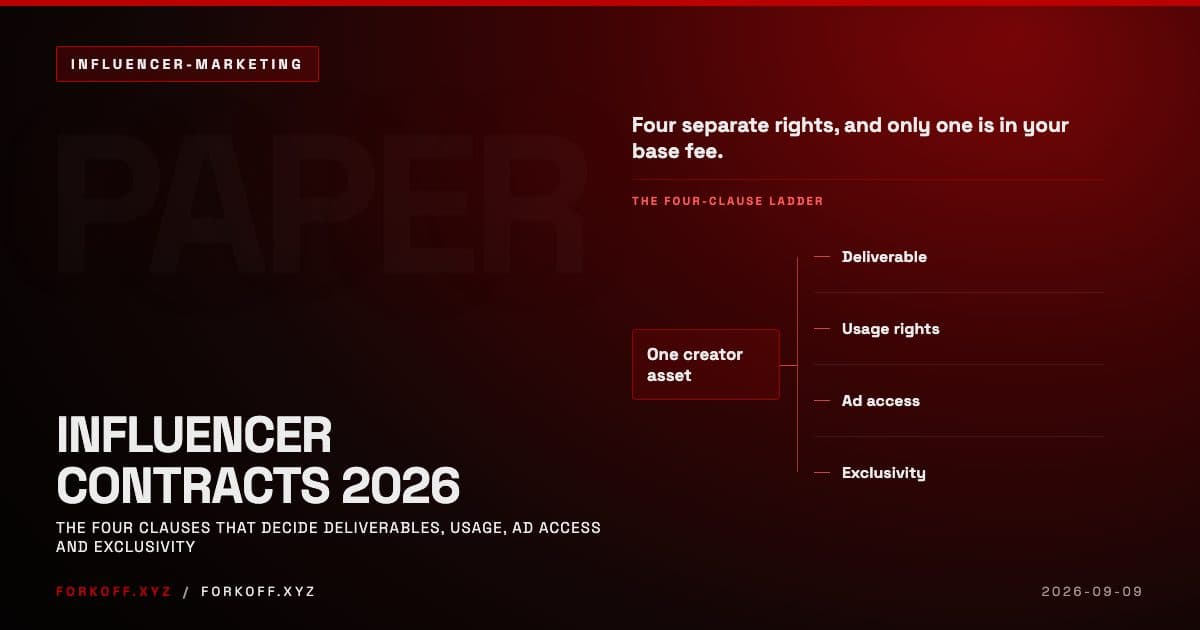
Influencer Contracts in 2026: The Four Clauses That Decide the Deal
Influencer contracts in 2026: the four clauses covering deliverables, usage rights, ad access and exclusivity, plus the AI clause most templates miss.
 Read
Read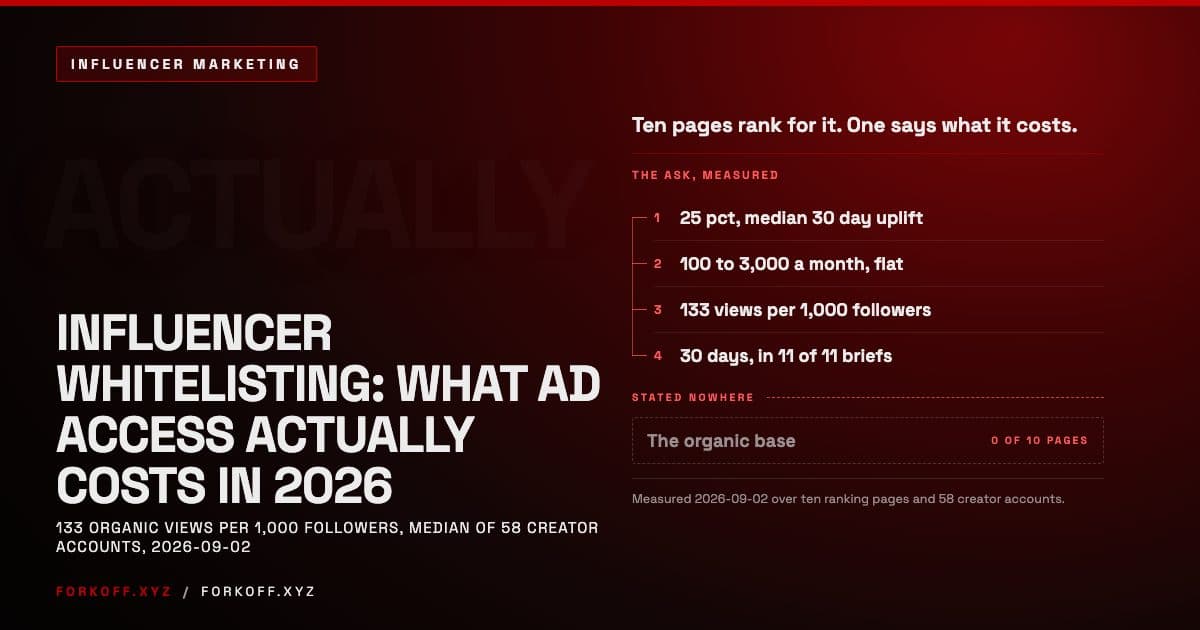
Influencer Whitelisting: What Ad Access Actually Costs in 2026
We read all ten pages ranking for influencer whitelisting. One states a price, a window and a renewal term. Here is what ad access really costs.
Read
SaaS Influencer Marketing: How AI Dev Tools Turn an OSS Traction Spike Into Paid Adoption
What to do in the 48 hours after an open-source traction spike: which creators survive a developer audit, what they cost, and how to attribute the spend.
Read
KOL Marketing vs Clipping for a Token Launch: Cost, Reach, Speed and Control (2026)
KOL marketing vs clipping for a token launch, compared on cost per real view, reach, speed, control, and believer quality, plus a budget split by stage.
Read
How to Run a UGC Ad Campaign: The Operator Playbook (2026)
How to run a UGC ad campaign in 2026: the brief, sourcing creators, usage rights, hook testing, paid amplification, and attribution to signups.
Read
How to Tell If a Tweet's Engagement Was Bought: A 5-Signal Checklist (2026)
A 5-signal checklist to tell if a tweet's engagement was bought: like-to-reply ratio, engager quality, timing, reply sentiment, and view mismatch.
Read
How to Vet a Crypto KOL Before You Pay: A 9-Point Fraud Detection Checklist (2026)
A 9-point checklist to vet a crypto KOL before you pay: follower authenticity, engagement, on-chain proof, disclosure history, and contract red flags.
Read
Best Crypto KOL Marketing Platforms in 2026: An Honest Comparison
The platforms and agencies founders use to run crypto KOL campaigns, compared by category, pricing, fraud screening, and who actually owns the outcome.
Read
How the Pre-Paid Influencer List Approval Step Works (2026)
FORKOFF's influencer roster is built, scoped, and approved by founders before any payment or contract. The vetting mechanism that closes long agency searches.
Read
Influencer Marketing Pricing Tiers: Pilot, Scale, Flagship (2026)
Three tiers of X (Twitter) launch campaign decomposed: Pilot, Scale, Flagship. Influencer mix, clip distribution, qualified-views floor per tier.
Read
Influencer Marketing Cost: 30 Founders in 48 Hours (FORKOFF Math)
The unit economics of getting 30 founders to engage in 48 hours. Tier mix, cost per founder, retention math, and the contracts that protect your spend.
ReadShowing 1-11 of 11 blogs
All 11 Influencer-marketing posts
- Influencer Contracts in 2026: The Four Clauses That Decide the Deal
- Influencer Whitelisting: What Ad Access Actually Costs in 2026
- SaaS Influencer Marketing: How AI Dev Tools Turn an OSS Traction Spike Into Paid Adoption
- KOL Marketing vs Clipping for a Token Launch: Cost, Reach, Speed and Control (2026)
- How to Run a UGC Ad Campaign: The Operator Playbook (2026)
- How to Tell If a Tweet's Engagement Was Bought: A 5-Signal Checklist (2026)
- How to Vet a Crypto KOL Before You Pay: A 9-Point Fraud Detection Checklist (2026)
- Best Crypto KOL Marketing Platforms in 2026: An Honest Comparison
- How the Pre-Paid Influencer List Approval Step Works (2026)
- Influencer Marketing Pricing Tiers: Pilot, Scale, Flagship (2026)
- Influencer Marketing Cost: 30 Founders in 48 Hours (FORKOFF Math)
Read sister categories
Clippings
Creator-led clipping that turns founder content into qualified organic reach. Geotargeted distribution. Audit ledger on every cycle.


Podcast
Founder podcasts that compound. Two to four founder hours per week converted into multi-platform recall, not vanity downloads.

Founder Funnel
Founder-led growth playbooks that survive past PMF. Distribution architecture, not single-channel hacks.

Event Management
Event activations that compound across the calendar. Founder houses, vox pops, hacker houses, and citation blitzes.

Ecosystem Strategy
Ecosystem distribution playbooks for protocols, foundations, and AI platforms past PMF. Builder grants and category narrative architecture.
AI Search and AEO
Getting cited by ChatGPT, Perplexity, Claude and Google AI Overviews. Schema, answer units, and the signals AI crawlers actually read.
Reddit Marketing
Compliant, non-spam Reddit distribution. Operator accounts, subreddit fit, and the moderation rules that decide whether a post survives.
Twitter and X Growth
Founder-led distribution on X. Thread architecture, reply surface, and follower quality over follower count.
Launch Video
Product and company launch video that carries a real launch beat, not a sizzle reel. Format, timing, and what separates reach from noise.
UGC Videos
Creator-made video ads that read as native rather than produced. Briefing, rights, and the volume needed before a winner appears.
SaaS GTM
Go-to-market for B2B SaaS past PMF. Qualified pipeline over signups, and the product-health metrics that survive a board review.
Influencer-marketing engagements that compound
Outcome-priced engagements, audit-proof on every cycle. Five active engagements per quarter, capped on purpose.
Frequently asked questions
How does the FORKOFF blog organize categories?
Each category maps to a FORKOFF service line: clipping, founder-led growth, podcast, Reddit, Discord, activations, plus uncategorized for cross-cutting posts. Each category index aggregates articles in that lane and links to the underlying service.
How often are new articles added to each category?
We publish 2 to 4 operator-grade articles per week across all categories combined. Most categories see 1 to 2 new pieces per month. Higher-velocity lanes like clipping and founder-led growth get more weekly cadence.
Who writes the category content?
Articles are co-authored by FORKOFF operators and the founders we work with. Every claim ties to an audit ledger entry from a live engagement. Each piece is reviewed against our 3-tier verification matrix before it ships.
Can I subscribe to a specific category feed?
Category-specific RSS feeds are available at /blog/<category>/rss.xml (where supported). All categories also ship to @officialforkoff on X and to the FORKOFF newsletter within an hour of publish.
How do I apply for the related engagement?
Each category page has a primary CTA pointing at the matching FORKOFF service. Apply via Calendly for a 30-minute intro. Five engagements per quarter cap, by application only.
Talk to FORKOFF about your influencer-marketing engagement.
Receipts, deep dives, and playbooks.
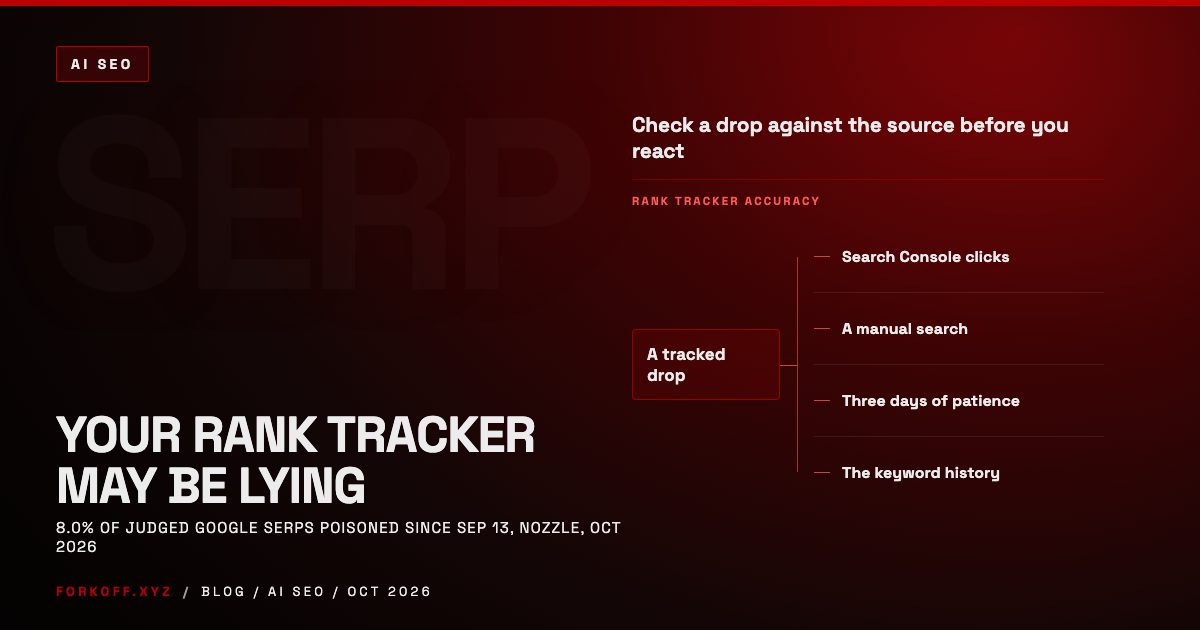
Your Rank Tracker May Be Lying: How to Report SEO and AEO After Google's Poisoned SERPs
Google is serving rank trackers poisoned SERPs. What one tracker measured, how to tell a fake drop from a real one, and how to report SEO and AEO you can trust.
Read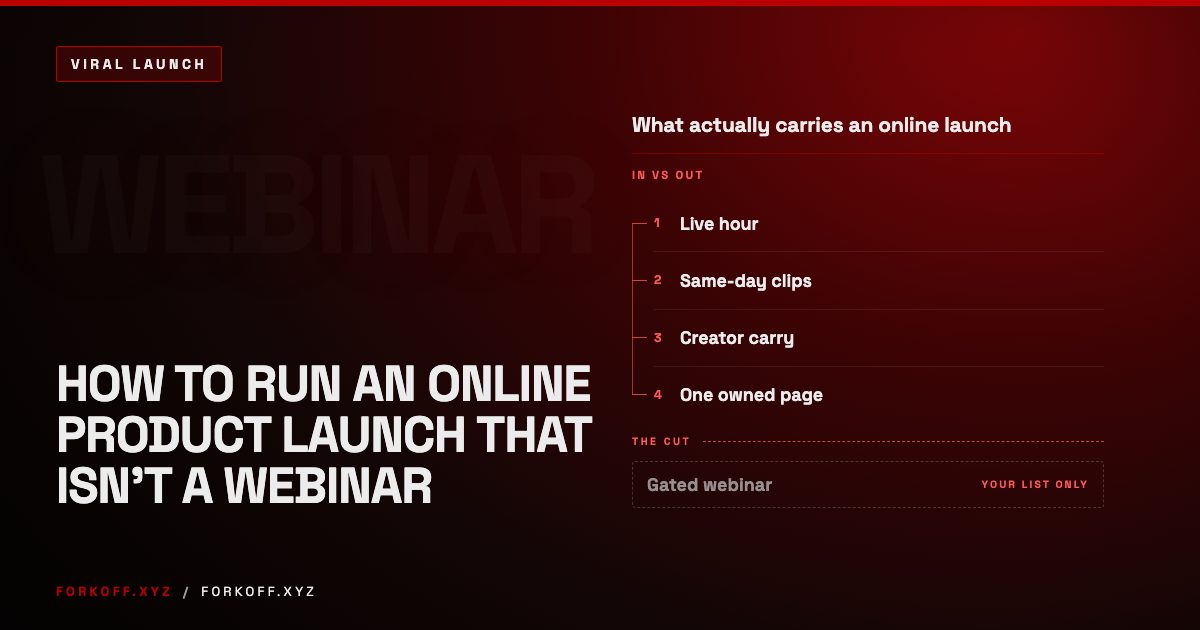
How to Run an Online Product Launch That Isn't a Webinar
An online product launch is a live moment cut into clips that creators carry, not a gated webinar. Here is the livestream, clip and creator stack for 2026.
Read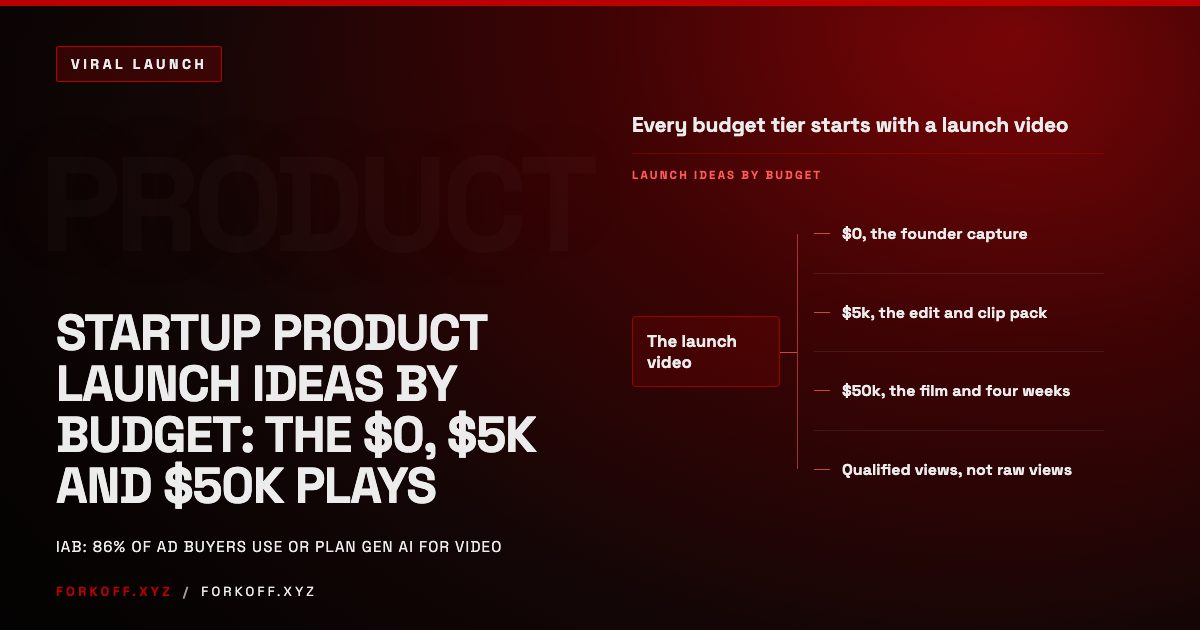
Startup Product Launch Ideas by Budget: The $0, $5k and $50k Plays
Product launch ideas for a SaaS startup sorted by budget: what the launch video should be at $0, $5k and $50k, and the distribution around it.
Read