The X algorithm in 2026 runs on Grok, an LLM that reads your post rather than counting its interactions. Every candidate post is scored by relevance to each individual user, not by total engagement velocity. The strategies that worked in 2024 (thread-engagement pods, reply-farming, retweet chains) are failing because they generated the interaction signals the old heuristic counted but do not produce the semantic relevance the new model reads. This post documents the operator playbook for marketing on an LLM-ranked feed.
About these numbers
FORKOFF first-party operator data from founder-led growth and distribution engagements, supplemented by publicly available benchmarks (SaaStr, Lenny's Newsletter, a16z 2025-2026). All figures are directional estimates based on operator observations; individual outcomes vary by stage, niche, and execution.
The Grok-ranked feed in one scroll
X open-sourced a Grok-transformer recommendation engine in January 2026 and is deleting its hand-coded heuristics, so an LLM now reads every post and watches every video to rank the For You feed. The old engagement-velocity playbook (first-hour interaction thresholds, reply-bait, follower gating) loses its leverage because the model reads the content, not just the counters. The 2026 motion is semantic fit (one clear claim per post the model can match to a real interest), save-worthy depth (the bookmark signal does the ranking work the like used to), topical account consistency, and video the model can parse. We map the operator playbook for founders and agencies marketing on an LLM-ranked X.
Correction, 9 September 2026
One claim in this post did not survive the code X published on 13 August 2026, and it is the claim in the first line. This post says the platform is deleting its engagement heuristics. That was a stated aim, posted by Elon Musk in October 2025, and it is not what shipped.
The live ranking code applies named post-score adjustments for author diversity, out-of-network discounting and new-author boosting, plus a set of ordered pre-scoring filters, all as hand-tuned constants in the same params file as the published engagement weights. Grok is real and it is in the stack, but it runs classifiers at publish time that feed visibility filtering; the ranker is a separate transformer called Phoenix. X states the separation explicitly.
What survives is the direction: the system does read your post, and semantic fit matters more than it did. What does not survive is "the heuristics are gone". We read the file line by line and published the constants in what the Twitter algorithm's ranking weights actually say, which supersedes this post wherever the two disagree.
The X algorithm in 2026 is a reader, not a counter
The X algorithm entering 2026 is the single biggest distribution variable in founder marketing, and almost every account is still optimizing for a version of it that the platform is actively deleting. In January 2026 X open-sourced a new recommendation engine built on the same transformer architecture as the Grok model, and the platform committed to deleting the hand-coded heuristics that ran the old For You feed. The practical translation is blunt: the feed used to count your interactions, and now it reads your post. An LLM scores every candidate post by reading its text and watching its video, then predicts how relevant it is to each individual user. The marketing playbook that worked on a feed of counters does not work on a feed that reads.
This post is the operator playbook for marketing on an LLM-ranked X. It is deliberately distinct from two adjacent things FORKOFF has already covered. It is not the X Commentary operator playbook, which is about a posting feature (React with Video) rather than the ranking engine. And it is not the go viral on X launch playbook, which is calibrated against the older open-sourced heuristics and the engagement-velocity threshold those heuristics created. The Grok change deletes the heuristics that playbook leveraged, so this is the companion piece that maps what replaced them. And it is the opposite half of Grok bots for marketing, which covers running Grok as an instrument rather than being read by it: this post is about the constraint you optimise against, that one is about the tool you operate.
The heuristic-deletion direction is the whole story
The single most load-bearing fact about the 2026 X feed is the stated direction of travel: delete the hand-coded heuristics and let the model read. The old For You feed was a stack of static rules with fixed weights on likes, replies, reposts, and dwell. The new feed runs candidate posts through a transformer that reads the actual text and watches the actual video, then scores predicted relevance per user. Marketers who keep optimizing for the deleted heuristics are tuning for a system that is being removed in real time.
Source: X Engineering open-source disclosure 2026-01; X recommendation-system roadmap statements 2025-2026
Engineering
@Engineering
We have open-sourced our new 𝕏 algorithm, powered by the same transformer architecture as xAI's Grok model. Check it out here:
What actually changed: from fixed-weight counting to model reading
The X algorithm changes in 2026, at a glance:
- X open-sourced a new recommendation engine in January 2026, built on the same transformer architecture as Grok and published in the xai-org/x-algorithm GitHub repository.
- The hand-coded engagement heuristics are being deleted. The old fixed-weight rules that scored likes, replies, and reposts by static values are on the stated roadmap to be removed entirely.
- An LLM now reads every post to rank it. Instead of counting interactions, a transformer reads the text and watches the video, then predicts relevance to each individual user.
- A named content-understanding component landed in the May 2026 update. The open-sourced stack is now organized into five parts: Home Mixer, the Candidate Pipeline, Thunder, Phoenix (the Grok-derived scorer), and Grox (which reads the text and watches the video so Phoenix has something to score).
- Engagement velocity was demoted from cause to confirmation. A first-hour interaction spike no longer trips amplification on its own, it now confirms or disconfirms a relevance the model already read from the content.
- The save carries more ranking weight than the like. In the open-sourced weights, a bookmark signals high intent to return and is harder to fake than a like.
Each of these is unpacked below. The old For You feed was, structurally, a stack of static rules. A candidate post earned a score by accumulating weighted interaction counts: a like was worth some fixed amount, a reply more, a repost more still, dwell time a separate input, and the first-hour velocity of those interactions was the dominant out-of-network amplification trigger. That structure is why the 2024 playbook worked the way it did. If you could engineer 1,200 weighted interactions in the first 60 minutes, you tripped the threshold and the heuristic pushed your post into the out-of-network ladder, and it did this whether or not the post said anything. The system never read the post. It counted reactions to the post.
The 2026 system reads the post. X published the recommendation code on its engineering account in January 2026 and built it on the same transformer architecture as the Grok model, and the stated roadmap direction is to delete the hand-coded heuristics entirely and let the model do the ranking. The code is public in the xai-org/x-algorithm repository on GitHub, and the TechCrunch report on the open-source release documents both the disclosure and the transparency commitments around it. Concretely, a candidate post is run through a transformer that reads the text, parses the video, and produces a predicted-relevance score for a given user based on what that user has historically found interesting. Early engagement still matters, but its role changed: it is now a confirmation signal for a relevance the model can already see in the content, rather than the cause of amplification on its own.
The repository has kept moving since the initial January disclosure, and the direction of travel has only sharpened. The largest update landed on May 15, 2026, adding an end-to-end inference pipeline, a packaged pre-trained model, and a new content-understanding component. As of mid-2026 the open-sourced stack is organized into five named parts: Home Mixer orchestrates each request, the Candidate Pipeline sources roughly fifteen hundred candidate posts from a user's follows plus machine-learning retrieval, Thunder holds posts in memory for fast access, Phoenix runs the Grok-derived transformer that scores each candidate, and Grox is the content-understanding pipeline that reads the text and watches the video so Phoenix has something to score. That the content-understanding layer is now its own named component is the whole thesis of this playbook in one commit: the system's job is to read, and the reading is now a first-class part of the stack rather than a side effect.
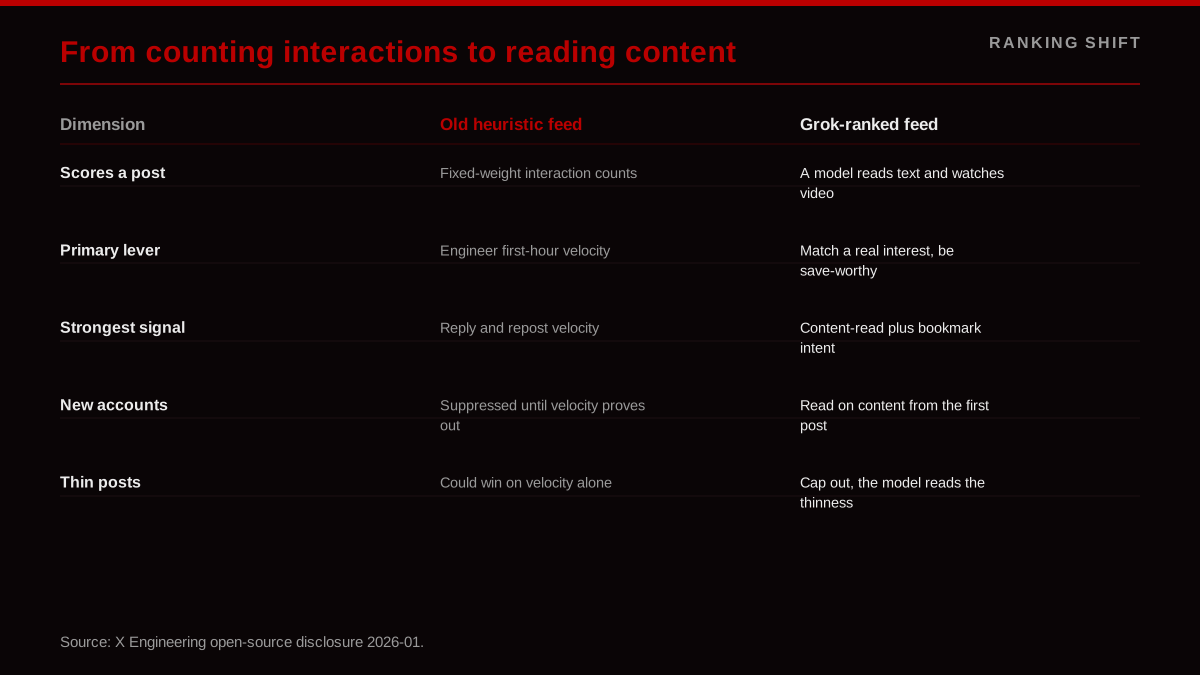
Old heuristic feed versus Grok-ranked feed
| Dimension | Old heuristic feed (pre-2026) | Grok-ranked feed (2026) |
|---|---|---|
| What scores a post | Fixed-weight counts of likes, replies, reposts, dwell | A transformer reads the post text and watches the video, then scores predicted relevance |
| Primary marketer lever | Engineer first-hour engagement velocity | Make the content genuinely match a real user interest and worth saving |
| Strongest single signal | Reply and repost velocity in the first window | Content-read relevance plus bookmark intent |
| New-account behaviour | Suppressed until velocity proves out-of-network demand | Read on content from the first post, less follower-gated |
| What dies | Nothing read the content, so thin posts could win on velocity | Thin posts cap out because the model reads the thinness |
This is the change that breaks the old playbook. When the system counts, the optimal move is to manufacture counts. When the system reads, the optimal move is to write something worth reading and matching. That sounds obvious to the point of being a platitude, which is exactly why most accounts have not actually changed their behaviour. They are still writing reply-bait designed to spike a count, on a feed that now reads the reply-bait and recognizes it as thin.
Velocity is now confirmation, not cause
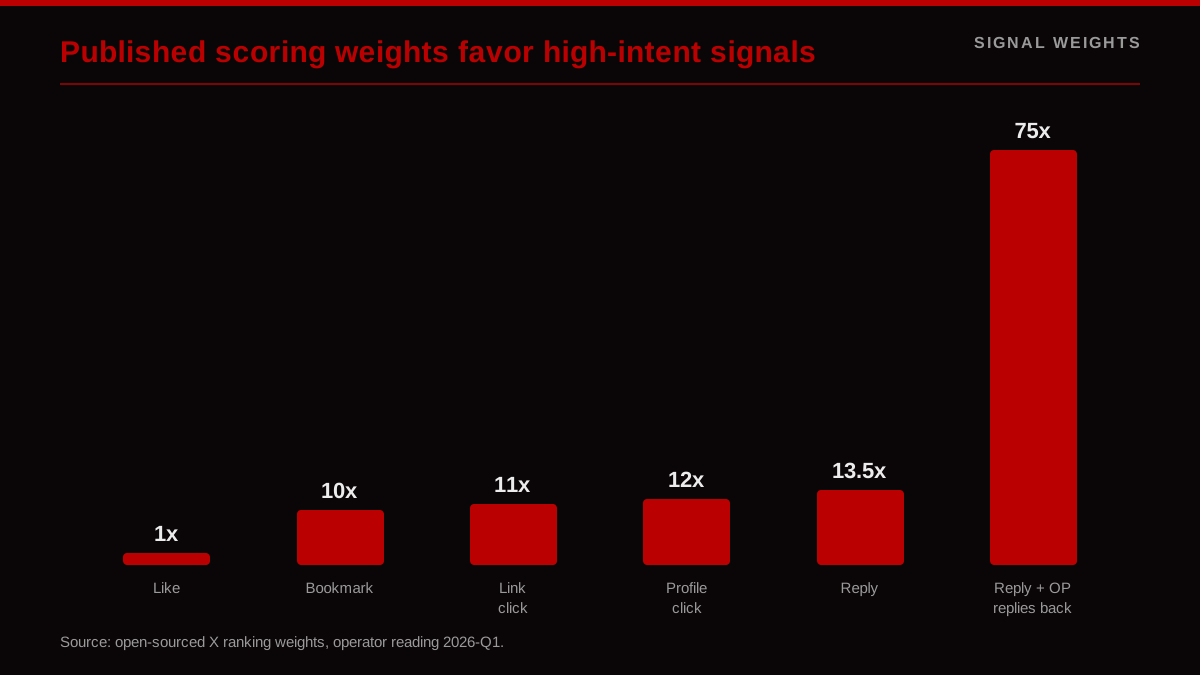
Under the old heuristic feed, early engagement velocity was the cause of amplification: trip the first-hour interaction threshold and the post entered the out-of-network ladder almost regardless of content. Under a Grok-ranked feed, the model has already read the post, so early velocity functions as confirmation of a relevance signal the model can independently see. The published scoring weights make the hierarchy explicit: a like sits near a weight of one while a bookmark sits around ten times that, a reply the original poster engages with jumps many multiples higher, and profile and link clicks both rank well above the like. A velocity spike of cheap likes on a thin post is therefore a weak lever, because the content read caps the lift and the shallow signal barely moves the score. The FORKOFF founder-funnel cohort sees roughly 2-3x more reliable distribution from save-worthy posts versus reply-bait posts of equivalent first-hour velocity in 2026, where the same comparison was closer to flat in 2024.
Source: FORKOFF Founder-Funnel Cohort 2026, n=42 retainers
Why engagement-velocity gaming lost most of its leverage
The center of the 2024 playbook was velocity. You stacked levers (clusters seeded by DM, debate-principals tagged, waves ridden) to compress a 1,200-interaction threshold into the first few minutes after a post shipped. That entire apparatus exists to defeat a heuristic that no longer carries the weight it did. On a Grok-ranked feed, the model reads your post before the velocity even arrives, and the content read sets a ceiling the velocity cannot exceed. A spike of 1,200 shallow interactions on a thin post is read as exactly that: a spike on a thin post. The model has already concluded the post is thin.
This does not mean engagement is irrelevant. It means engagement changed jobs. Under the heuristic feed, velocity was the cause: trip the threshold, win amplification. Under the Grok feed, velocity is confirmation: the model forms a relevance hypothesis from reading the content, and early engagement either confirms or disconfirms it. A save-worthy, semantically clear post that earns genuine early engagement gets a strong confirmation and rides. A reply-bait post that earns shallow early engagement gets a weak confirmation against a low content score and stalls. In our founder-funnel cohort, save-worthy posts now deliver roughly two to three times more reliable distribution than reply-bait posts of equivalent first-hour velocity, where in 2024 that same comparison was close to flat.
The cleanest external read on this is operators reading the open-sourced code directly. The signal-weight discussion in the source happens to align with what every careful reader of the repo concludes: the system is moving weight off shallow interaction counts and onto content-read relevance and high-intent signals like the save. You do not have to take a marketer's word for it. The code is public and people are reading it.
I spent 3 hours analyzing the new X algorithm source code.
When X open-sourced their algorithm back in 2023, the ranking layer was a fairly standard feature-engineered classifier. They just dropped the May 2026 update, and the architecture is fundamentally different. The biggest architectural shift is that there are no more hand-engineered features. There is no manual weighting for follower counts,… Show more
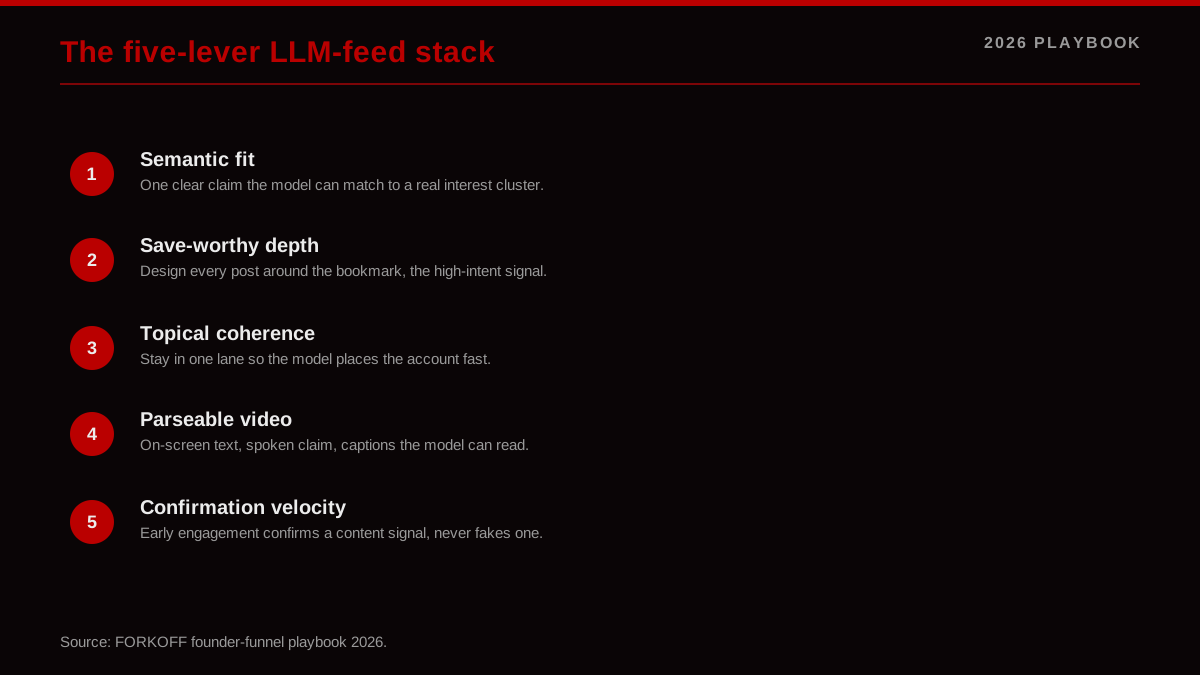
Lever one: semantic fit, the new discovery surface
The first lever on the LLM-ranked feed is semantic fit, and it replaces hashtag stacking and keyword gaming as the discovery mechanic. Discovery on the old feed was partly tag-driven and partly velocity-driven. Discovery on the new feed is a semantic match: the model reads your post, forms a representation of what it is about, and matches that representation to user interest clusters it has built from reading what those users engage with. A post the model can place cleanly inside a real interest cluster gets matched to the right audience. A vague post the model cannot place gets matched to nobody in particular and dies in low-relevance limbo.
The operator move is to write one clear, specific claim per post that the model can map. Vague aspirational posts (the kind that read well to a human skimming but say nothing concrete) are the worst-performing category on a reading feed, because the model has nothing specific to match. A post that says distribution is important is unplaceable. A post that says X deleted its engagement heuristics and your reply-bait strategy is now ranking against the actual text of your reply is placeable, because it names a specific topic, a specific change, and a specific implication. The model can match that to people interested in X strategy with high confidence.

Operator notePicture the ranking model as a reader, not a counter. If a careful reader cannot place your post, the model ranks it muddy.
Semantic fit also means your claim has to be true to a reader, not just clickable. The model reads the body, so a clickbait hook over a hollow post is a mismatch the model detects: the hook promises one thing, the body delivers nothing, and the relevance score reflects the gap. The 2026 hook is a claim you can actually back in the same post, which is a tighter constraint than the 2024 hook that only had to stop a thumb for 800 milliseconds.
Lever two: save-worthy depth, where the bookmark does the ranking work
The second lever is save-worthiness, and it is the single highest-leverage behaviour change for 2026. In the open-sourced ranking weights, the bookmark is a high-intent signal: a save means a user wants to return to a post, which is strong evidence the content delivered enough value to be worth keeping. A save is also far harder to manufacture than a like, which is exactly why the model trusts it more. The operator translation is to design every post around one question: would a stranger who is not your follower bookmark this to come back to it.
Most posts fail this test, which is why most posts underperform. A hot take fails it because nobody bookmarks an opinion. A vague motivational post fails it because there is nothing to return to. The posts that pass are the ones that package a reusable framework, a concrete number worth citing, a checklist, a specific how, or a self-contained explanation a reader will want again. This is why the listicle-of-tactics and the framework-with-a-name outperform the hot take on the 2026 feed: they are save-shaped. The save test is not a content-quality nicety. It is direct optimization for the signal the model now weights most heavily among interactions.
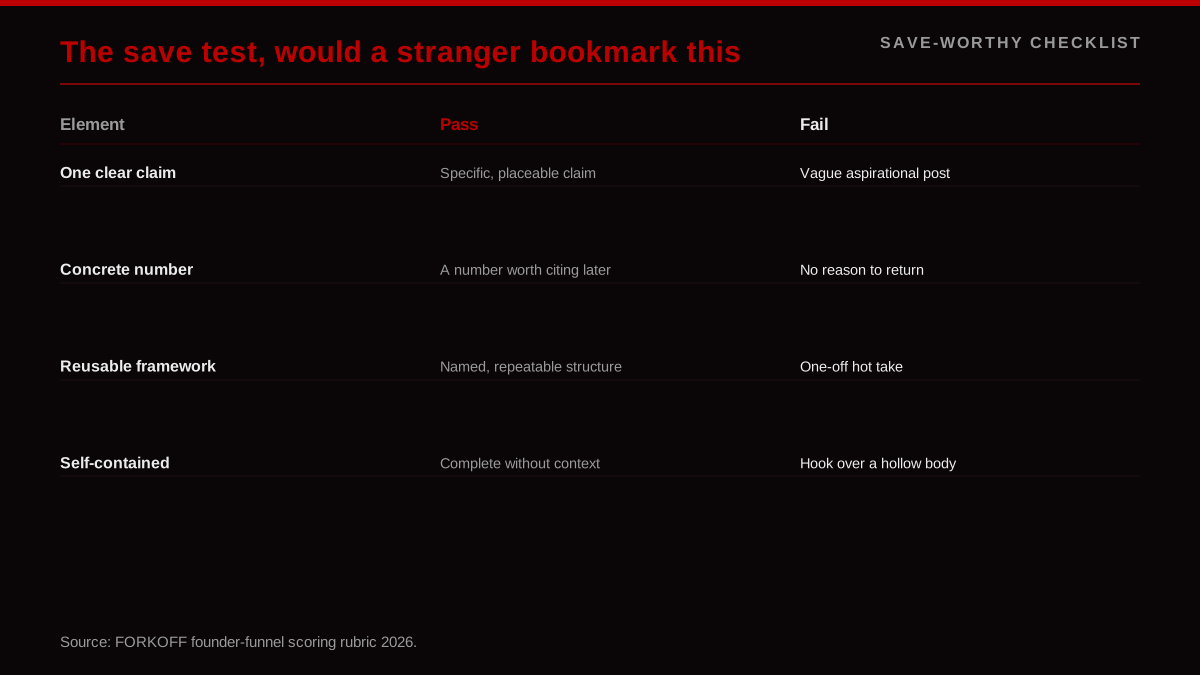
Operator noteRun the save test on every post. If a stranger would not bookmark it, the high-intent signal never fires and the post stalls.
This is also why long-form on X recovered as a format. A genuinely useful long post is save-shaped in a way a one-liner rarely is, and the model reads the whole thing and scores its density. The constraint is that the length has to earn itself. A padded long post that says one thing across 400 words reads as low density and ranks worse than a tight 120-word post that delivers a complete idea. Length is permission, not a strategy.
The published scoring weights make the save case concrete. In the read of the open-sourced code circulating among operators, a like carries a weight near one while a bookmark carries a weight roughly ten times that, and a reply that the original poster responds to carries a weight many times higher still. A profile click and a link click both sit well above the like. The hierarchy is unambiguous: the cheap shallow signal is discounted and the high-intent signals (save, deep reply, profile visit) carry the ranking. Designing for the bookmark is designing for the weight that actually moves distribution.
New X/Twitter Algorithm Explained: Phoenix, Grok, & Scoring (2026)
Alphastack
A walkthrough of the open-sourced X recommendation stack, the Phoenix transformer, Grok-based ranking, and the published scoring weights. The operator-level read on the candidate-to-rank pipeline this playbook plans against.
Lever three: topical coherence, the account-level ranking asset
The third lever operates at the account level rather than the post level. An LLM-ranked feed reads an account as a body of work, not a stream of disconnected posts, and it builds a representation of what each account is reliably about. When an account posts consistently inside one topic, the model develops a clean, high-confidence read on its subject and matches new posts to the right audience faster and more reliably. When an account scatters across ten unrelated topics, the model gets a muddy read and the account pays for it in distribution on every post, even the good ones.
This is a genuine change from the heuristic era, where topical consistency was a soft brand preference with no direct ranking consequence. On the reading feed, coherence is a measurable asset. The operator move is to narrow the account to one topic (or one tight cluster of adjacent topics) for a sustained window, long enough for the model to re-read the account and update its representation. In retainer accounts we typically see distribution lift become visible inside the first two weeks of a deliberate narrowing, and compound from there as the model's confidence in the account's topic increases.
Account topical coherence is a ranking asset
An LLM-ranked feed reads an account as a body of work, not a stream of disconnected posts. When an account posts consistently inside one topic, the model develops a clean read on what the account is about and matches its posts to the right user interests faster. Scattershot accounts that post across ten unrelated topics give the model a muddy read and pay for it in distribution. The operator implication is that topical consistency, which used to be a soft brand preference, is now a measurable ranking asset.
Source: FORKOFF account-coherence analysis across retainer accounts, 2026
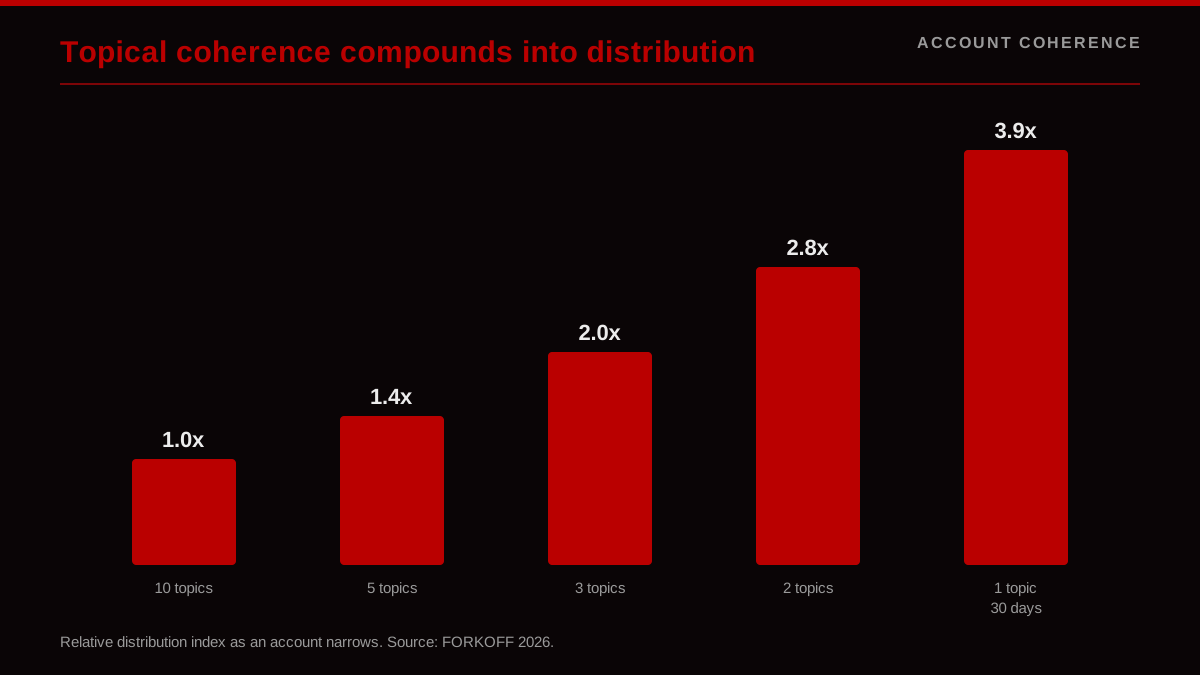
Operator noteNarrow the account to one topic for 30 days. Topical scatter gives the model a muddy read and taxes distribution every post.
The trap on this lever is the founder who insists on posting their full range because it is authentic. Authenticity and coherence are not in conflict; the fix is to pick the one topic the account exists to win and let the personality show up inside that topic rather than across unrelated ones. A founder can be funny, opinionated, and personal while staying inside the AI-distribution lane. They just cannot also be the fitness account and the politics account if they want the AI-distribution posts to rank.
May 2025-May 2026 From 13 followers to 3.5K & 14.2 million impressions with 99.8% replies
I am a pure reply-only guy. 99.8% of everything I have ever posted is replies. No long original threads, no daily posting schedule, just the same repeatable system I built and refined since May 2025. I am monetised in the creator revenue sharing program. My first three payments while I… Show more
Lever four: parseable video, because the model watches it
The fourth lever is video, and the change is that the model watches it. The roadmap is explicit that the system watches every video, on the order of 100 million per day, to match content to users. That means a video is no longer a black box scored only by its engagement. The model parses the on-screen text, the spoken audio, and the visual content, and forms a relevance representation the same way it does for text posts. A silent, text-free, context-free clip is a video the model struggles to read, so it falls back on shallow engagement signals and underperforms.
The operator move is to make every video parseable. Put a topical sentence on screen in the first two seconds so the model gets an immediate read on the subject. Speak the core claim out loud so the audio transcription carries the topic. Ship accurate captions. Open on the specific point rather than a generic hook. A parseable video gets matched on content the same way a clear text post does, which is a large advantage over the wall of unparseable clips most accounts ship.
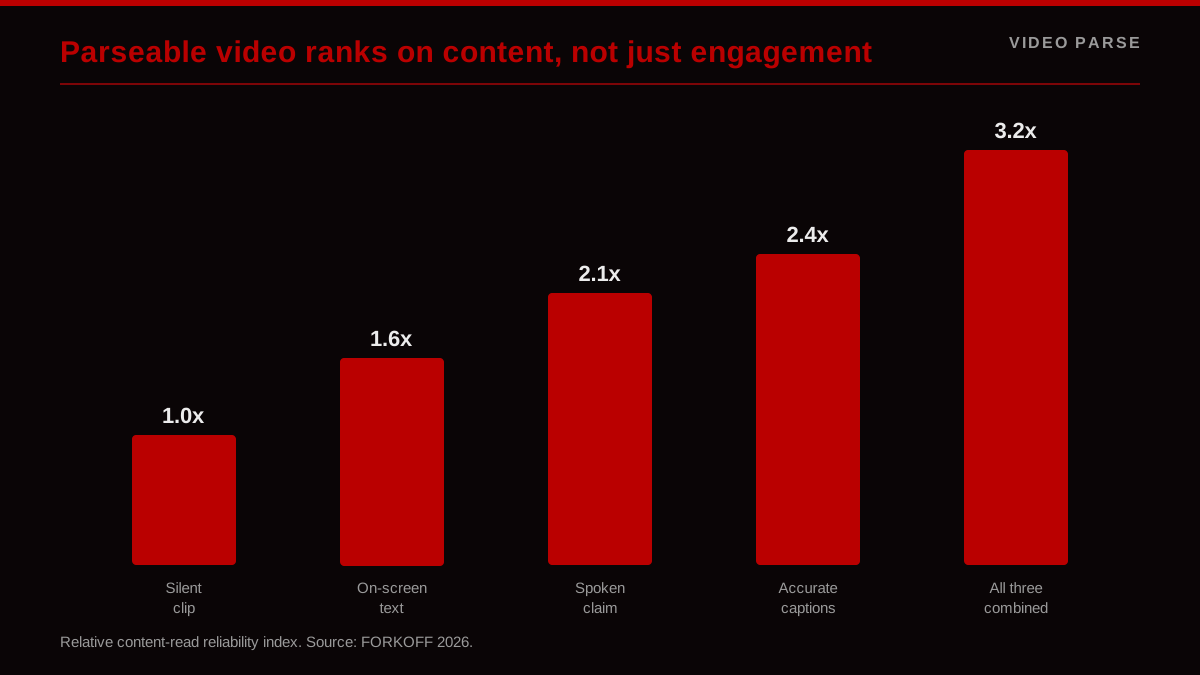
Operator noteMake video parseable: on-screen text in two seconds, the claim spoken aloud, accurate captions. The model watches it.
This is also where the React with Video feature and the ranking change intersect productively. React with Video gives you a format to attach a video reaction to a post; the Grok feed then reads that video for content. The two combine well precisely because the feature gives you a reach surface and the ranking change rewards making the video on that surface genuinely readable. Operators who treat the feature as a reach hack without making the video parseable get the format without the ranking benefit.
Lever five: confirmation velocity, the old lever in its new role
The fifth lever is velocity, demoted from its old throne to a supporting role, but not eliminated. Early engagement still matters as a confirmation signal: a post the model reads as relevant and that then earns genuine early engagement gets a strong confirmation and rides further than the same post with no early signal. The change is that you can no longer use velocity to override a weak content read. You use it to confirm a strong one.
The operator translation is that the cluster-seeding and warm-network mechanics from the old playbook still have value, but their job changed. You no longer seed a cluster to manufacture amplification on a thin post. You seed a warm network so that a genuinely save-worthy post gets its early confirmation signal quickly, which helps the model commit to the relevance hypothesis it already formed from reading the content. Velocity is now the accelerant on a fire the content lit, not the fire itself. This is why the old playbook's network assets are still worth building, but only on top of content that earns the read.
Old lever to new lever translation
| 2024 lever | Why it weakened | 2026 replacement |
|---|---|---|
| Reply-bait to spike first-hour velocity | Model reads the reply quality, not just the count | Write a claim worth a substantive reply |
| Follower-count gating workarounds | Feed reads content from the first post, less follower-gated | Topical coherence so the model places the account fast |
| Hashtag stacking for discovery | Discovery is semantic match, not tag match | One clear claim the model can map to an interest cluster |
| Padded long threads for dwell | Model reads density, padding reads as low value | Tight threads, a distinct idea per post |
| Like-farming and engagement-bait stuffing | Saves and content-read outweigh shallow likes | Design every post around the bookmark question |
Thread strategy on a feed that reads the whole thread
Threads deserve a section because the reading feed changes thread economics specifically. Under the counting feed, a longer thread accumulated more interaction surface and more dwell, so padding had a perverse logic. Under the reading feed, the model reads the whole thread and scores its density, so padding is a liability. A nine-post thread that says one thing reads as low value per post and ranks worse than a four-post thread that delivers a distinct, save-worthy idea in each post.
The 2026 thread is shorter, denser, and structured so each post is independently quotable. The opening post states the complete claim so the model places the thread immediately. Each subsequent post delivers one distinct sub-idea with a concrete example or number, so the thread reads as high density throughout. The closing post is save-shaped, a summary or framework worth bookmarking. This structure ranks because the model reads value at every step, and it also serves the human reader who is increasingly impatient with padding. Density per post is the metric, not post count.
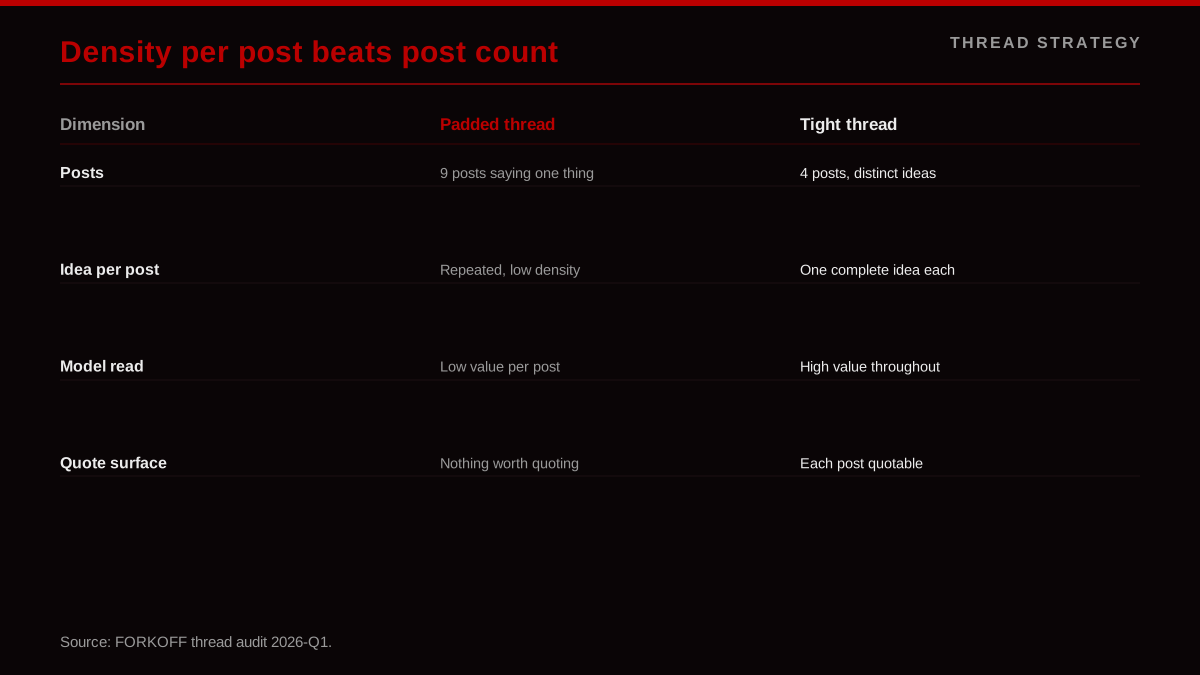
The quotability of each post matters more on the reading feed because a quote is a high-signal interaction the model reads as endorsement-plus-context. A thread where each post is independently quotable gives the audience more quote-shaped surface, and the quotes themselves carry the thread to new interest clusters the model maps from the quoting accounts. A padded thread gives nothing worth quoting and forfeits that distribution path entirely.
The reading feed and the small-account problem
One of the stated goals of the change is to fix the small-account problem, where a great post from a small account never gets seen because the heuristic feed gated distribution on follower count and prior velocity. A reading feed is structurally better for small accounts because it can read a post's quality directly rather than inferring it from the account's size. A genuinely save-worthy, semantically clear post from a 200-follower account can be matched to the right interest cluster on its content, without first proving out-of-network demand through a velocity threshold the small account cannot reach.
This should address the new user or small account problem, where you post something great, but nobody sees it.
This is the most founder-relevant implication of the whole change. The broader context is that organic discovery everywhere is being reshaped by models that read rather than count, a shift the Ahrefs study on AI Overviews reducing clicks documents on the search side and that the X feed now mirrors on the social side. The 2024 reality was that a new or small founder account was structurally suppressed until it manufactured velocity, which is why the old playbook leaned so hard on cluster-seeding and network mechanics: those were the only ways to fake the demand signal the heuristic demanded. The 2026 reality is that a small account can rank on content quality, which means the leverage moved from network engineering to content engineering. For a founder without an existing audience, this is a meaningfully more favourable feed, provided the founder actually ships content the model reads as good.
We are aiming for deletion of all heuristics within 4 to 6 weeks. Grok will literally read every post and watch every video to match users with content they are most likely to find interesting.
Failure modes: how a 2024 playbook dies on a 2026 feed
The strategies failing hardest now are the ones that were correct in 2024 and were never updated after X open-sourced the Grok-based recommendation engine in January 2026. Five failure modes recur consistently across the accounts the FORKOFF X team audits: engagement pods built for the old interaction-count model, thread chains that artificially concatenate short posts to hit volume thresholds, reply-farming strategies that generate low-relevance interactions, over-indexed hook formulas that the LLM classifies as low-information, and keyword stuffing in post text that reads as spam to a semantic scorer.
The first failure mode is reply-bait. The account posts a question or a hot take engineered to farm replies, the replies arrive, and the post still underperforms because the model read the reply-bait as low-content and the shallow reply velocity cannot override the content read. The fix is to post a claim worth a substantive reply rather than a prompt engineered to extract any reply.
The second failure mode is the thin velocity spike. The account uses its warm network to manufacture a burst of early engagement on a thin post, the burst arrives, and the post stalls because the model confirms a low content score rather than amplifying. The fix is to spend the warm network's early-confirmation value on posts that actually earn the read.
The third failure mode is topic scatter. The account posts across many unrelated topics, the model holds a muddy representation of the account, and every post pays a coherence tax. The fix is the narrowing protocol: one topic, sustained, until the model re-reads the account.
The fourth failure mode is unparseable video. The account ships silent, text-free clips, the model cannot read the content, and the video falls back on shallow engagement and underperforms. The fix is the parseable-video checklist: on-screen text, spoken claim, accurate captions, topical opening.
The fifth failure mode is engagement-bait stuffing, the comment-X-to-get-the-resource pattern that gamed the counting feed. On the reading feed the model reads the stuffing as low-quality engineered engagement and down-weights it, and the post leans on a like signal that now does little ranking work. The fix is a self-contained, save-shaped post that needs no bait.
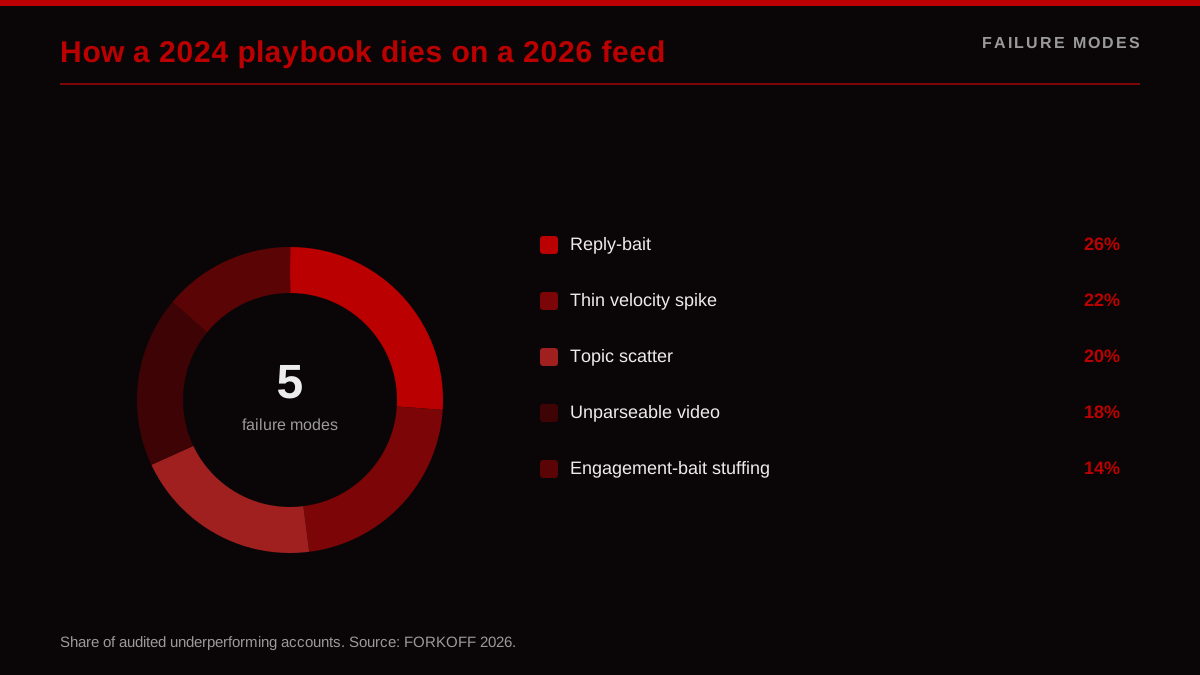
The pattern across all five is identical: each is an optimization for a deleted heuristic, executed on a feed that reads. The strategies are not lazy. They are precisely tuned, just tuned for the wrong machine. That precision is what makes them dangerous, because they feel like real work and produce real first-hour metrics while delivering worse distribution than a simpler save-worthy post would.
The 14-day account-coherence protocol
The founder-funnel install we run for retainer clients adapts cleanly to the LLM-ranked feed, and the core of it is a 14-day protocol that loads every lever above. The protocol exists because the levers are not independent; they compound, and they compound fastest when the model gets a consistent read on the account over a sustained window.
Days 1 through 3 are voice and topic lock. The founder picks the single topic the account exists to win and ships three save-worthy posts per day inside that topic, each built around one clear claim with a concrete number or example. The goal is to give the model an immediate, high-density, on-topic read on the account from the start of the window.
Days 4 through 7 are save-worthiness reps. Every post runs through the save test before it ships, and the founder deliberately practices the save-shaped formats: the named framework, the cited number, the checklist, the self-contained explanation. This is the period where the account's content score per post climbs because the founder internalizes the save constraint as a default rather than an afterthought.
Days 8 through 10 are coherence reinforcement. The founder resists the urge to broaden the topic and instead goes deeper, posting the second-layer and third-layer ideas inside the one topic. This is what moves the model's representation from this account posts about X strategy sometimes to this account is the X strategy account, which is the read that earns reliable matching.
Days 11 through 14 are video parse tuning and confirmation-network warm-up. The founder ships parseable video inside the topic (on-screen text, spoken claim, captions) and warms the small confirmation network that will provide fast early signal on the strongest posts. By day 14 the model has a clean topical read, the founder has a save-worthiness default, the video is parseable, and the confirmation network is loaded. The levers are all live.
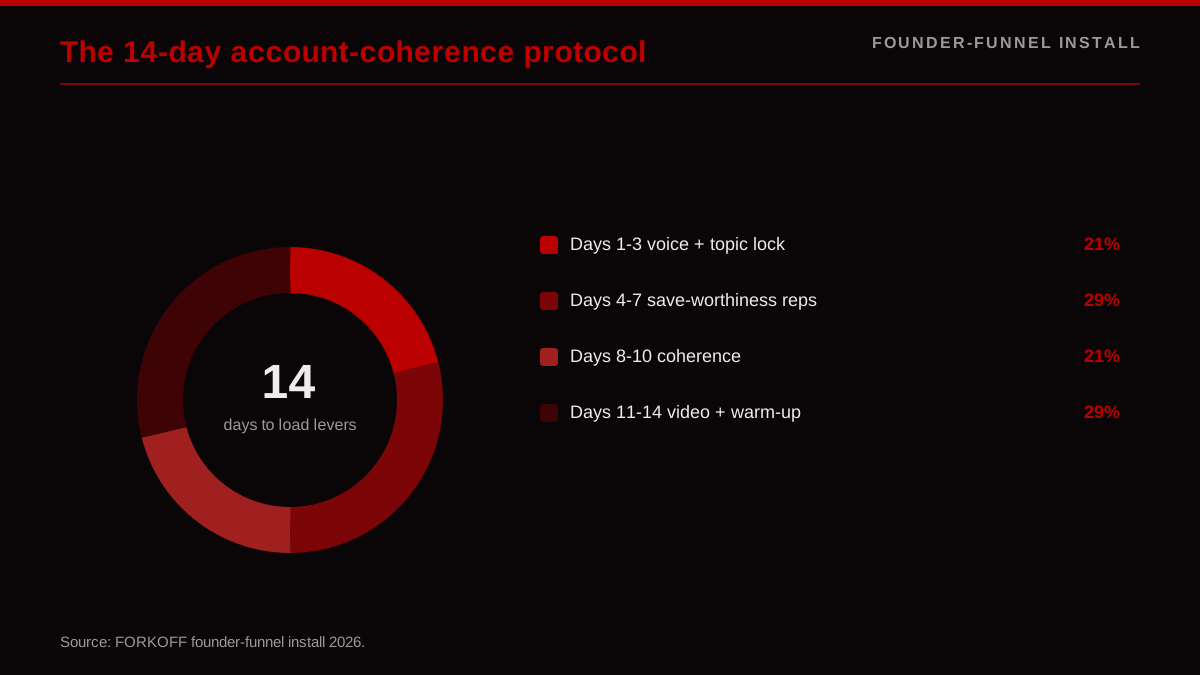
The reason this is a 60-to-90-day product rather than a single-tweet engagement is the same reason it was under the old playbook: the compounding is in the account-level read, not the individual post. The first two weeks load the levers; the subsequent weeks compound the model's confidence in the account's topic, which lifts the baseline distribution of every post. The founder-funnel retainer runs this against eight to twelve flagship posts per quarter, each engineered to be the save-worthy anchor the model reads as the account's best work. The same compounding logic underwrites the broader founder-led growth playbook and the Twitter DM outreach playbook that harvests the inbound a coherent, save-worthy account generates.
What this means for FORKOFF clients and how we run it
FORKOFF is an AI Agency that ships outcome-priced founder distribution contracts, and the X distribution motion is one of the blocks we install for retainer clients, benchmarked against the field in our best Twitter marketing agency breakdown. The Grok change did not break our model; it sharpened it, because our model was already built on content quality and account coherence rather than velocity gaming. The accounts that were gaming velocity had to rebuild. The accounts running save-worthy, coherent content kept compounding through the change.
When a client signs the founder-funnel contract, the X block runs the 14-day protocol to load the levers, then runs the compounding cycle: flagship save-worthy anchors inside one topic, parseable video on the React with Video surface, a warm confirmation network for fast early signal, and the DM harvest on the inbound. The difference between a client running it themselves with our rubric and a retainer client is the same as it always was: the retainer compresses the protocol and runs the content engineering, video production, and confirmation network on the FORKOFF distribution team rather than the founder's calendar. The playbook is shippable solo. The retainer buys the compounding speed and the production capacity.
The cross-pillar context matters here. A coherent, save-worthy X account is the top of a funnel that runs into the founder-funnel strategy and connects to the clipping infrastructure that captures distribution velocity. The X account earns the read and the match; the rest of the system converts the resulting attention into pipeline.
How to measure success on a feed that reads
The metrics that mattered on the counting feed are mostly the wrong instrument panel for the reading feed, and operators who keep watching the old dials draw the wrong conclusions. Likes and raw impressions were the headline numbers under the heuristic system because velocity drove distribution and likes were the cheapest velocity proxy. On the reading feed, those numbers are lagging and noisy. The leading indicators are different, and tracking the right ones is the difference between a strategy that improves and a strategy that thrashes.
The first metric to elevate is the save rate, bookmarks divided by impressions. A high save rate is direct evidence the content scored well on the signal the model now weights most heavily, and a save rate that climbs as you ship more save-shaped posts is the clearest confirmation the strategy is working. The second metric is the profile-visit-to-impression ratio, which reads as evidence the content earned enough interest that strangers wanted to know who wrote it. The third is the quote rate, because a quote is the high-context endorsement that carries a post into new interest clusters the model maps from the quoting accounts. The fourth is reply quality rather than reply count, which is harder to measure but is the honest read on whether the post earned a substantive conversation or a shallow farm.
The metric to actively de-emphasize is the like. A like is now a weak signal the model barely weights, so a post with many likes and few saves is a post that entertained without delivering, which the reading feed will not reward with sustained distribution. Operators who optimize for likes are optimizing for the cheapest signal on a feed that has learned to discount it. The instrument panel that actually tracks the 2026 strategy is save rate first, profile-visit ratio second, quote rate third, reply quality fourth, and likes treated as background noise rather than a headline.
The cadence we run for retainer accounts is a weekly read on those four leading metrics against the topical-coherence baseline, with the save rate as the single north-star number. When the save rate trends up week over week, the account is compounding the read the model has on it, and distribution follows on a lag. When the save rate flattens, the content has drifted off save-shaped formats or off the account's topic, and the fix is almost always a return to one clear claim per post inside the one topic. The metric discipline is what keeps the strategy honest, because the reading feed rewards a behaviour that is easy to describe and hard to sustain, and only the leading metrics catch the drift before the distribution does.
The Bottom Line
The X algorithm in 2026 reads. X open-sourced a Grok-transformer recommendation engine in January 2026 and is deleting the hand-coded heuristics that ran the old For You feed, which means an LLM now reads every post and watches every video to rank distribution. The marketing playbook that worked on a feed of counters (engagement-velocity gaming, reply-bait, follower-gating workarounds, hashtag stacking, padded threads) loses most of its leverage because the model reads the content the old playbook never had to produce.
The 2026 motion is five levers. Semantic fit, one clear specific claim per post the model can match to a real interest. Save-worthy depth, the bookmark signal that now does the ranking work the like used to. Topical coherence, the account-level read that lifts every post when the account stays in one lane. Parseable video, on-screen text and spoken claims and captions the model can read. And confirmation velocity, the old velocity lever demoted to accelerating a content signal rather than manufacturing one. The accounts that win on the reading feed are the ones that stopped trying to fool a counter and started trying to be genuinely worth reading, which is both the harder discipline and, for once, the one the platform now rewards directly. For the full distribution picture, see the founder-led growth playbook, and for the adjacent posting-feature surface, the X Commentary operator playbook. Founders who would rather have the reading-feed motion run for them can hand it to a managed Twitter marketing team.
Elon Musk
@elonmusk
The 𝕏 recommendation system is evolving very rapidly. We are aiming for deletion of all heuristics within 4 to 6 weeks. Grok will literally read every post and watch every video (100M+ per day) to match users with content they're most likely to find interesting. This should ad… Show more


![How to Make a Launch Go Viral on X: The 5-Lever Playbook [2026]](/blog/covers/how-to-make-launch-go-viral-on-x-2026-cover.jpg)